

Planning a first trip to Japan can be surprisingly deceptive. On a map, Tokyo, Kyoto, Osaka, Nara, Hakone, Hiroshima, and even destinations farther afield can seem easy to combine. Japan’s excellent rail network makes ambitious itineraries look perfectly reasonable — at least on paper.
The problem is that travel time is only part of the equation.
Checking out of hotels, getting to stations, navigating large transport hubs, storing or forwarding luggage, waiting for connections, checking into the next hotel, and simply figuring out a new city all take time and energy. Add jet lag, thousands of daily steps, crowds, weather, meals, and the occasional wrong train, and a carefully planned itinerary can quickly start to feel like a race.
First-time visitors also tend to plan Japan around a list of places they want to see rather than around how much time those places actually require. Tokyo gets squeezed into two or three days. Kyoto becomes a checklist of temples scattered across the city. Every free day turns into another tempting day trip. A 10-day vacation gradually becomes eight destinations and six hotel changes.
Most of these plans are technically possible.
That doesn’t make them good itineraries.
A better first trip to Japan is usually not about seeing as much as possible. It’s about choosing the places that matter most, grouping them intelligently, allowing realistic travel time, and leaving enough space to actually enjoy being there.
In this guide, we’ll look at the most common Japan itinerary mistakes first-time visitors make, why they cause problems, and — more importantly — what to do instead.
Because the smartest Japan itinerary isn’t the one with the most stops.
It’s the one that makes the best use of the time you have.
What Do First-Time Visitors Get Wrong?
The most common Japan itinerary mistake is simple: trying to fit too much into too little time. Japan’s fast trains make ambitious routes look easy, but frequent hotel changes, long sightseeing days, unnecessary day trips, and inefficient planning can quickly turn a first trip into a race.
Table of Contents
Quick Decision Guide: Is Your Japan Itinerary Too Ambitious?
A Japan itinerary can look perfectly manageable until you count the hotel changes, transfer days, early starts, and day trips. Use this quick check to see whether your plan is likely to feel relaxed, busy, or simply too ambitious.
2–3 Main Bases in 10 Days
Staying several nights in each place gives you more full sightseeing days and reduces the time lost to packing, transfers, and check-ins.
4–5 Bases in 10 Days
This can work, but your trip will become much more transfer-heavy. Ask whether every overnight stop adds enough value to justify another hotel change.
A New Hotel Every 1–2 Nights
Frequent moves may let you visit more places, but they reduce the amount of time you actually spend enjoying them.
Several Day Trips
Day trips avoid hotel changes, but too many can turn Tokyo, Kyoto, or Osaka into little more than places where you sleep.
If removing one destination immediately makes your itinerary feel easier, that destination probably wasn’t essential. For most first-time visitors, fewer bases and carefully chosen day trips create a better trip than maximizing the number of places visited.
Mistake #1: Trying to See Too Much of Japan
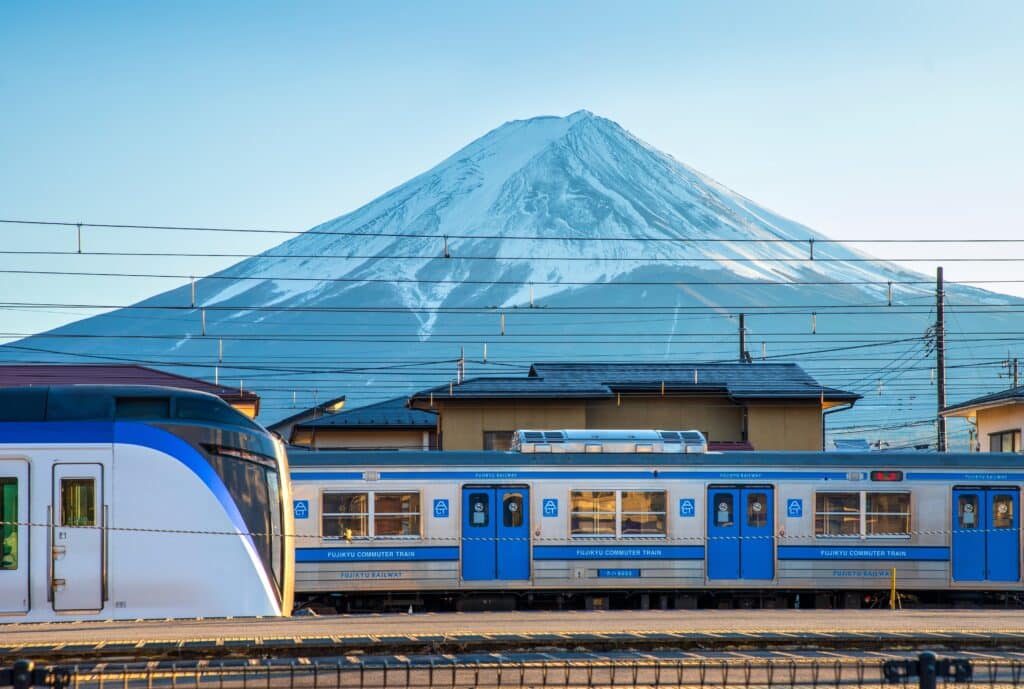
Japan makes ambitious itineraries surprisingly tempting. Tokyo, Kyoto, Osaka, Hakone, Nara, Hiroshima, Miyajima, Kanazawa, and Takayama are all connected by efficient public transport, so it is easy to look at the journey times and think, “We can fit that in.”
And technically, you often can. The problem is that being able to reach a destination does not mean you have enough time to experience it properly.
Every additional stop brings more than the train journey itself: packing, checking out, getting to the station, navigating an unfamiliar city, handling luggage, finding your next hotel, and adjusting to a new area. A route with six destinations may therefore contain considerably less real sightseeing time than a route with three.
A 10-day itinerary might gradually turn into something like:
It looks impressive, but much of the trip is now structured around moving between places rather than enjoying them. Nara, for example, can usually be visited as a day trip, while adding both Hiroshima and Miyajima may require sacrificing time elsewhere.
What to Do Instead
Start with the places that matter most to you and build the trip around them. For a first visit, Tokyo and the Kyoto–Osaka area already provide an enormous range of experiences. Additional destinations should earn their place in your itinerary rather than being included simply because they are famous.
Focus primarily on Tokyo and Kyoto/Osaka rather than trying to cover several regions.
Tokyo, Kyoto, and Osaka work well, with one or two carefully chosen day trips or an additional overnight experience.
You have more room for Hiroshima, Hakone, Kanazawa, Takayama, or another priority without making the entire trip feel rushed.
Mistake #2: Underestimating Travel and Hotel Changes
Japan’s transport system is so efficient that it is easy to underestimate how much time changing destinations actually takes. A Shinkansen journey from Tokyo to Kyoto, for example, may only take a few hours, but the train ride is not the same as the total transfer time.
You still need to check out, reach the station, find the right platform, manage your luggage, travel to your new hotel, store your bags or check in, and orient yourself in a new city. A transfer that looks short when planning at home can easily consume a significant part of the day.
Why One-Night Stays Can Be Expensive in Time
One-night stops are especially easy to underestimate. You arrive, unpack, sleep, and almost immediately begin preparing to leave again. Repeat this several times and a surprising amount of your holiday becomes a sequence of checkouts and station transfers.
That does not mean you should avoid one-night stays completely. Some destinations offer an experience that can justify the extra logistics.
For a ryokan or onsen experience, a night on Miyajima, or another destination where staying overnight is an important part of the experience.
If you are staying one night simply to tick another city off your list, consider whether it could be a day trip — or whether you need to visit it at all.
Plan Transfer Days Differently
Another common mistake is planning a transfer day exactly like a full sightseeing day. Instead, treat it as a partial day. Choose one or two flexible activities near your hotel or arrival station rather than building an ambitious attraction list around a journey that may take longer than expected.
Mistake #3: Planning Too Much Into Each Day
A common first-time Japan itinerary looks reasonable when written as a list: temple in the morning, market for lunch, museum in the afternoon, observation deck at sunset, shopping, then dinner in another neighborhood.
The problem is that sightseeing does not happen instantly. You need time to walk between stations and attractions, find the right exits, queue, eat, take breaks, and simply enjoy the places you came to see. In cities such as Tokyo and Kyoto, four attractions can easily fill an entire day if they are spread across different areas.
Use the 70–80% Rule
Instead of filling every available hour, plan roughly 70–80% of what you think you could realistically accomplish. That does not mean wasting the remaining time. It gives your itinerary room to adapt.
If everything runs smoothly, you can always add another nearby attraction. If something takes longer than expected, you do not immediately fall behind schedule.
Every attraction becomes a deadline. Spending longer somewhere means something else has to be rushed or skipped.
Choose the experiences you definitely want and keep nearby secondary sights as optional additions if time and energy allow.
Arrival and Departure Days Need Even More Space
Do not treat your arrival day as a normal sightseeing day, especially after a long-haul flight. Immigration, luggage collection, airport transfers, hotel check-in, and jet lag can make even a simple afternoon plan feel ambitious.
The same applies to your final day. A major excursion before an international flight adds unnecessary pressure. Keep arrival and departure plans simple, nearby, and easy to abandon if needed.
Mistake #4: Planning Attractions Instead of Areas
One of the easiest ways to waste time in Japan is to choose attractions first and only later think about where they are. This is particularly common in Tokyo and Kyoto, where famous sights that look close on a map may require surprisingly long journeys between them.
A better approach is to build sightseeing days around geographic clusters. Decide which part of the city you will explore, choose two or three priorities there, and add nearby sights only if you have time.
You spend a large part of the day crossing Tokyo instead of exploring it.
These areas combine naturally, reducing transport time and giving you more flexibility throughout the day.
On another day, you could combine Harajuku → Shibuya → Shinjuku rather than repeatedly traveling between the eastern and western sides of Tokyo.
Kyoto Needs Geographic Planning Even More
Kyoto is where this mistake causes some of the biggest problems. Its major attractions are spread across different parts of the city, and local transport is much slower than many first-time visitors expect.
Trying to combine Arashiyama, Kiyomizu-dera, Kinkaku-ji, Fushimi Inari, and Gion simply because they are all famous can create an exhausting day dominated by buses, trains, and transfers.
Kiyomizu-dera → Higashiyama → Yasaka Shrine → Gion
Arashiyama Bamboo Grove → Tenryu-ji → surrounding Arashiyama sights
Fushimi Inari → nearby southern Kyoto sights or an easy continuation toward central Kyoto
Kinkaku-ji → Ryoan-ji → Ninna-ji
Think in Neighborhoods, Not Pins
Before finalizing a sightseeing day, put your attractions on a map. If your route repeatedly crosses the city, reorganize it. You may discover that an attraction fits much better on another day — or that it is not worth the detour at all.
This also makes spontaneous travel easier. Once your priorities are concentrated in one area, you can explore interesting streets, shops, cafés, shrines, and restaurants nearby without worrying that you are falling behind schedule.
Mistake #5: Adding Too Many Day Trips

Day trips look like the perfect solution to an overloaded Japan itinerary. You can visit another destination without changing hotels, so adding Nikko, Hakone, Kamakura, Nara, Himeji, or Hiroshima can seem almost cost-free.
But every day trip has a hidden trade-off: it takes a day away from the city where you are staying. Add too many and Tokyo, Kyoto, or Osaka gradually becomes little more than a place where you sleep between excursions.
Kamakura, Nikko, Hakone, and Kawaguchiko are all attractive options. But including several of them on a short stay can leave surprisingly little time for Tokyo itself.
Nara, Himeji, Kobe, Hiroshima, and Miyajima are easy to add to the wishlist. The question is whether each excursion is worth sacrificing another full day in Kyoto or Osaka.
Choose Day Trips by Priority, Not Possibility
Instead of asking how many day trips you can fit into your itinerary, decide which excursion gives you something genuinely different from your main destinations.
If you already have several temple-heavy days in Kyoto, for example, another temple-focused excursion may add less to your trip than a mountain, coastal, castle, or onsen experience.
These are not strict rules. Someone who has already visited Tokyo before may happily spend several days exploring outside the city. But on a first trip, the major destinations themselves usually deserve more time than travelers initially give them.
Not Every Famous Day Trip Belongs in Your Trip
You do not need to visit Nara simply because you are staying in Kyoto. You do not need to visit Hakone because it appears on a classic Japan itinerary. And you do not need to squeeze Hiroshima into a short Kansai stay simply because the Shinkansen makes it possible.
The best day trip is the one that matches your interests and adds something your itinerary is currently missing.
Mistake #6: Allocating Your Days to the Wrong Places
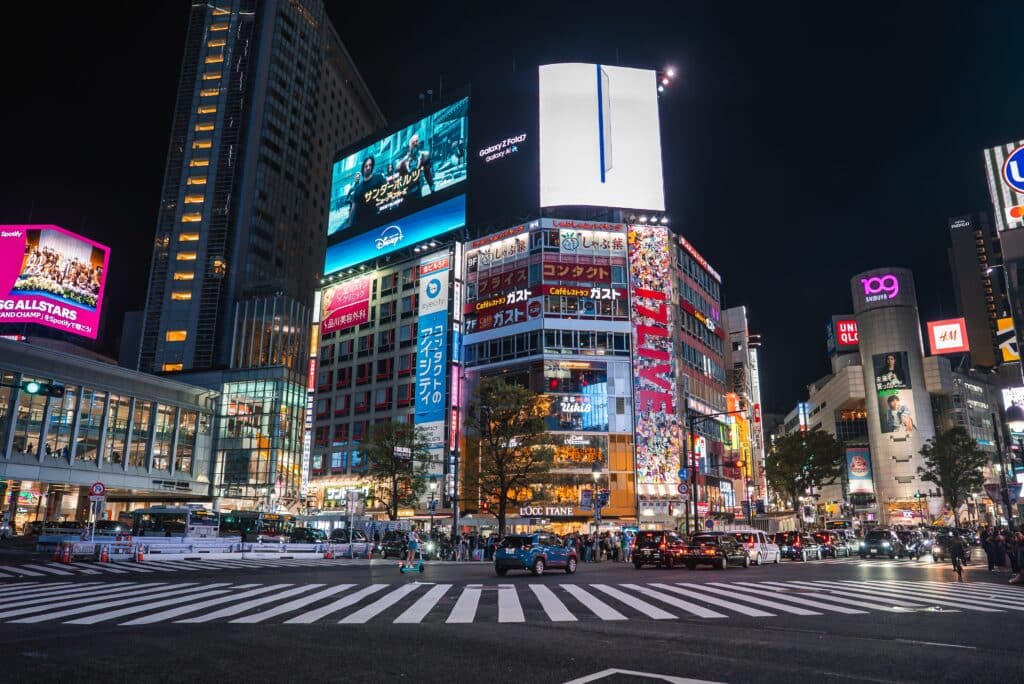
Even an itinerary with a sensible number of destinations can feel rushed if the days are distributed poorly. First-time visitors often decide how long to stay somewhere based on a standard itinerary rather than on what they actually want to experience there.
That can mean squeezing Tokyo into two days, giving Kyoto only one full sightseeing day, or spending several nights somewhere simply because it appears on almost every first-time Japan route.
Give Tokyo enough time if neighborhoods, food, shopping, nightlife, or contemporary Japan are major priorities. Two rushed days can feel very limited.
Give Kyoto more time if temples, gardens, historic streets, and traditional atmosphere are priorities. Its sights are spread across the city.
Give Osaka more time if food, nightlife, shopping, and urban energy matter to you. Not every first-time itinerary needs the same number of nights here.
Kyoto or Osaka: Where Should You Spend More Time?
Kyoto and Osaka are close enough that travelers sometimes divide their nights between them automatically. But your interests should decide the balance.
Temples, historic streets, gardens, traditional atmosphere, and early-morning sightseeing matter most.
Street food, nightlife, shopping, entertainment, and big-city energy are higher priorities.
Count Full Sightseeing Days, Not Nights
This is where many itineraries become misleading. Three nights in Kyoto does not necessarily mean three days in Kyoto.
Build Around Your Priorities
There is no perfect number of days for every traveler. Someone fascinated by Japanese history may happily spend four or five days in Kyoto, while someone more interested in contemporary culture, food, shopping, and nightlife may shift those days toward Tokyo or Osaka.
The mistake is not choosing three days instead of four. It is allocating your limited time without deciding why each destination deserves it.
Mistake #7: Making Transport Decisions Before the Itinerary
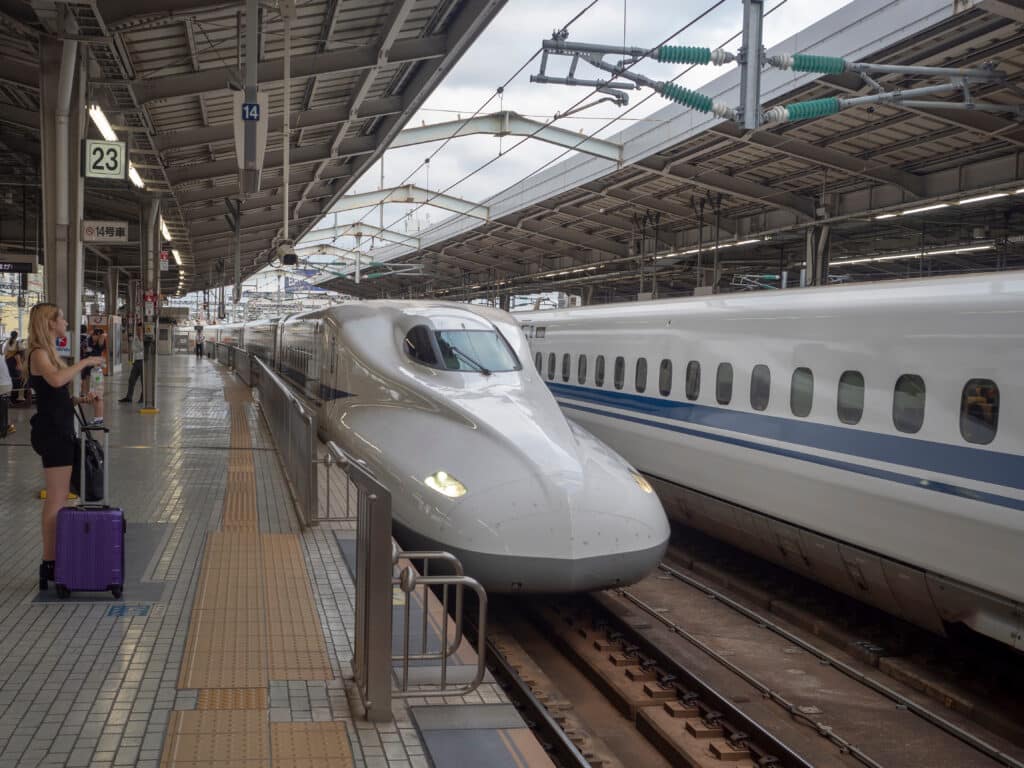
First-time visitors often make transport decisions too early. They buy a Japan Rail Pass, choose return flights from Tokyo, or start comparing train passes before they have finalized where they actually want to go.
The smarter order is the opposite: build the itinerary first, then choose the transport that fits it. Your route determines which tickets make sense, whether a rail pass saves money, and whether you can avoid unnecessary backtracking.
Don’t Build Your Trip Around the JR Pass
A rail pass should support a good itinerary — not determine one. Trying to “get your money’s worth” can encourage unnecessary long-distance journeys or tempt you to add destinations simply because the train is covered.
Build the route you actually want first, then compare the cost of the journeys involved. If you are considering the nationwide pass, see our Japan Rail Pass guide to check whether it makes sense for your itinerary.
Look for Unnecessary Backtracking
Once your route is taking shape, look at its overall direction. A classic itinerary might end up like this:
There is nothing wrong with returning to Tokyo if your best flight option requires it. But it is worth comparing an open-jaw itinerary — for example, flying into Tokyo and home from Osaka, or the reverse.
Don’t compare flights or train tickets on price alone. Compare the total cost and time of the route. A slightly more expensive flight may still be better value if it eliminates another hotel night or a long return journey across Japan.
Optimize the Trip, Not Just the Ticket Price
The cheapest transport option is not automatically the smartest one. Extra transfers, inconvenient departure times, luggage complications, or several hours of additional travel can easily outweigh a small saving.
When comparing options, consider time, convenience, luggage, cost, and itinerary flow together.
Mistake #8: Forgetting That Timing Changes the Experience
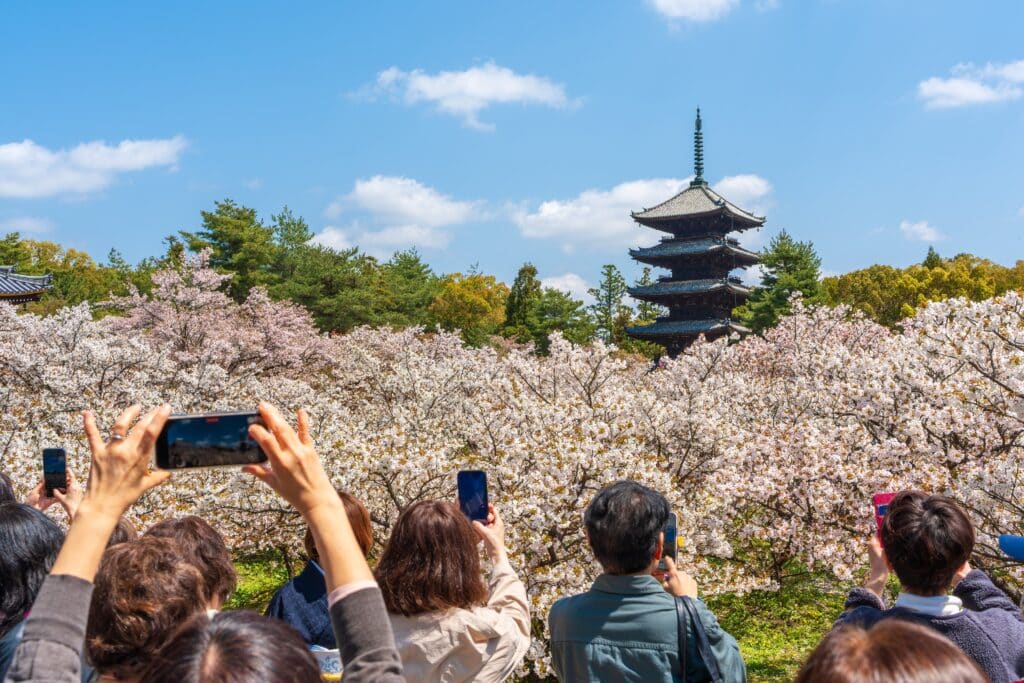
A good Japan itinerary is not only about where you go, but when you go. The same attraction can feel completely different early in the morning and in the middle of the day.
This matters particularly at Japan’s most popular sights. Crowds, opening hours, weather, visibility, and reservation times can determine whether an experience becomes a highlight or an exhausting part of the day.
Both can feel very different before the biggest daytime crowds arrive. If they are priorities, consider visiting early.
An earlier visit can make it easier to enjoy both the temple and the surrounding historic streets.
If sunset or nighttime views matter to you, treat the time slot as part of the attraction rather than fitting it in whenever convenient.
Build the Day Around the Most Timing-Sensitive Experience
You do not need to schedule every famous attraction for early morning. Instead, identify the one experience where timing matters most and organize the rest of the day around it.
Early morning: Visit your most crowd-sensitive attraction.
Late morning & afternoon: Explore nearby temples, streets, shops, cafés, or less timing-sensitive sights.
Evening: Finish somewhere that becomes more atmospheric after dark, such as Gion.
Keep Weather-Dependent Experiences Flexible
Some experiences depend on more than crowd levels. Mount Fuji is the obvious example: if seeing Fuji is a major priority, locking Kawaguchiko into one fixed day gives you no control over visibility.
Where your itinerary allows it, keep some flexibility for Fuji views, outdoor viewpoints, gardens, hiking, and seasonal scenery that can be significantly affected by weather.
Don’t Turn Every Day Into an Early Start
There is also a danger of taking itinerary optimization too far. If every day begins at 6:00 or 7:00 a.m., the trip may become exhausting for a different reason.
Start early when it genuinely improves an important experience, then allow slower mornings elsewhere. Good timing should make your trip easier, not make every day feel scheduled to the minute.
What Should You Cut From an Overloaded Japan Itinerary?
Realizing that your Japan itinerary is too ambitious is the easy part. The harder question is: what should you actually remove?
The answer is not automatically the least famous destination. Instead, look for the parts of your itinerary that consume a lot of time while adding relatively little that is new or important to you.
What Should You Avoid Cutting First?
Do not automatically remove the experiences that take the most time. Some of them may be the entire reason you wanted to visit Japan.
If staying in a ryokan, seeing Mount Fuji, exploring Kyoto’s temples, visiting Hiroshima, experiencing Tokyo nightlife, or going to a particular museum is one of the reasons you booked the trip, build around it rather than cutting it simply because it takes time.
Use the “Would I Miss It?” Test
When two destinations are competing for the same day, imagine returning home without visiting each one.
Which omission would genuinely disappoint you? Which one would you probably forget about once the trip began?
That simple question is often more useful than rankings, “must-see” lists, or the number of five-star reviews an attraction has.
Travel Owl Japan Itinerary Stress Test
Not sure whether your Japan itinerary is realistic? Before you book everything, run your plan through this quick test. Answer each question with Yes or No and give yourself 1 point for every Yes.
Is Your Japan Itinerary Too Ambitious?
Count how many of the following statements apply to your itinerary.
Your itinerary has a healthy amount of flexibility. You should have enough time to enjoy your priorities without constantly watching the clock.
Your trip will be active, but it can work. Check the busiest days and identify a few attractions that can become optional if needed.
Your itinerary is likely trying to do too much. Start by removing an extra day trip, one-night stop, hotel change, or low-priority attraction.
Final Thoughts: A Better Japan Itinerary Usually Has Less in It
The biggest first-time Japan itinerary mistakes usually come from the same instinct: trying to make the most of the trip by fitting in as much as possible.
But more destinations do not automatically create a better trip. Every extra hotel change, day trip, cross-city journey, and tightly scheduled attraction takes time away from actually experiencing Japan.
A strong itinerary gives your priorities enough space. It groups sightseeing intelligently, treats transfer days realistically, leaves room for unexpected discoveries, and accepts that you do not need to see everything on your first visit.
Instead of asking:
“How much of Japan can I fit into 10 days?”
Ask:
“Which combination of places will give me the best 10 days in Japan?”
That small change in thinking can completely change the way you plan your trip. You may visit fewer places, but you will have more time for the experiences you chose Japan for in the first place.
And if your itinerary still feels difficult to complete after planning it, that is usually a sign to remove something — not find a faster way to travel.
Japan First-Time Itinerary FAQ
Still unsure whether your first Japan itinerary is realistic? These are some of the most common questions travelers have when deciding how much to fit into their trip.
How many cities should I visit on my first trip to Japan?
For a 7–10 day first trip, focusing on two or three main bases is usually more comfortable than changing cities every one or two nights. Tokyo, Kyoto, and Osaka already provide very different experiences, with plenty of optional day trips nearby.
Is 7 days enough for Tokyo, Kyoto, and Osaka?
It is possible, but seven days is tight for all three. If you want to include Tokyo, Kyoto, and Osaka, keep hotel changes and day trips to a minimum. Another option is to focus primarily on Tokyo and Kyoto and visit Osaka only if it is a priority.
Is 10 days enough for a first trip to Japan?
Yes. Ten days is enough for an excellent first Japan trip if you keep the route focused. Tokyo, Kyoto, and Osaka can fit comfortably into a classic itinerary, with room for one or two carefully selected excursions depending on your priorities.
How many days should a first-time visitor spend in Tokyo?
Around three to five full days works well for many first-time visitors. Tokyo is enormous, and its neighborhoods offer very different experiences. If you also plan several day trips from Tokyo, consider adding extra nights rather than taking those days from the city itself.
How many days should I spend in Kyoto?
Three full sightseeing days is a useful starting point for a first visit. Kyoto’s major attractions are spread across different parts of the city, so additional time makes it easier to plan geographically and visit popular places at better times of day.
Should I stay in both Kyoto and Osaka?
Not necessarily. The cities are close enough that you can visit one from the other, but staying in both can be worthwhile if you want to experience Kyoto early in the morning and Osaka’s nightlife after dark. On a short trip, using one as your base can reduce hotel changes.
How many attractions should I plan per day in Japan?
A good starting point is two or three major priorities per day, with nearby attractions kept as optional extras. The right number depends on distances, opening hours, queues, and how long you want to spend at each place.
How many day trips should I include in a Japan itinerary?
For a short first trip, be selective. If you have only three days at a base, one day trip is usually enough and you may be better off taking none. With four or five days, one or two well-chosen excursions can work without overwhelming the itinerary.
Should I buy the Japan Rail Pass before planning my itinerary?
No. Build your itinerary first and then calculate the journeys you will actually take. Compare the cost and convenience of individual tickets, regional passes, and the nationwide JR Pass before deciding which option fits your route.
How can I tell if my Japan itinerary is too ambitious?
Warning signs include changing hotels every one or two nights, planning several day trips during short stays, fitting four or more major attractions into most days, unnecessary backtracking, and leaving almost no unplanned time. If one delay could disrupt the rest of your day, your itinerary probably needs more flexibility.