

Should Osaka be part of your Japan itinerary? For many first-time visitors, that’s one of the biggest planning decisions. While Tokyo is famous for its endless attractions and Kyoto for its historic temples, Osaka offers a completely different experience—one built around incredible food, lively neighborhoods, and a relaxed atmosphere that many travelers end up loving.
The challenge is knowing whether Osaka matches your travel style. Is it worth spending two or three days here? Should you stay in Osaka or Kyoto? Which attractions deserve your limited time? And if you’re visiting Japan for the first time, where does Osaka fit into your itinerary?
This guide is designed to answer those questions.
Instead of simply listing attractions, you’ll find practical advice to help you make smarter travel decisions—from choosing the right neighborhood and deciding how many days to stay to understanding which experiences are truly worth your time. Along the way, we’ll also compare Osaka with Tokyo and Kyoto, helping you decide how to build the itinerary that suits you best.
Whether you’re planning your very first trip to Japan or refining an existing itinerary, this guide will help you decide if Osaka deserves a place on your journey—and how to make the most of it if it does.
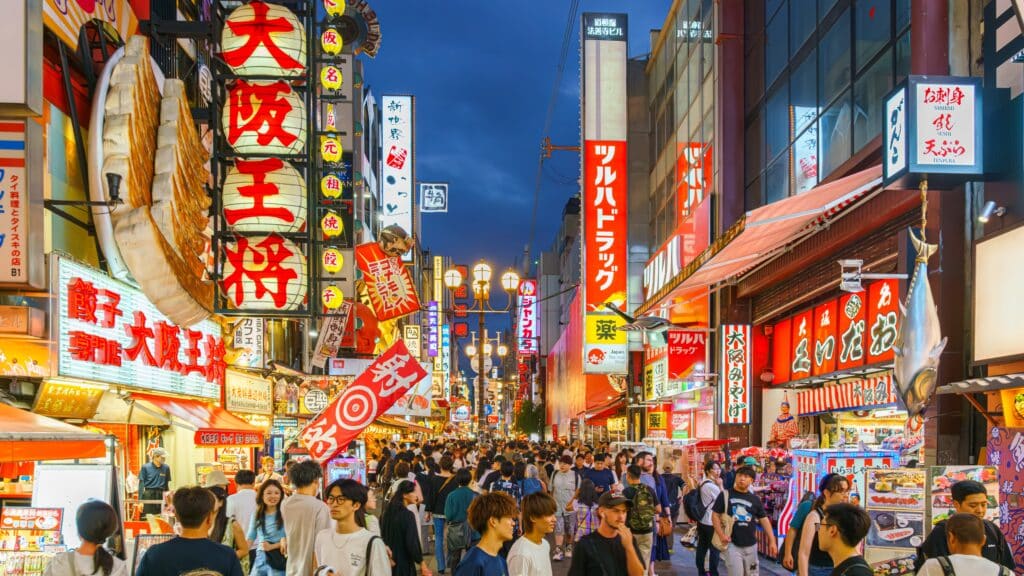
Table of Contents
🦉 Should You Visit Osaka?
Every destination is great for someone—but not for everyone. Before adding Osaka to your itinerary, see whether it matches your travel style.
✅ Osaka is a Smart Choice if…
- Food is one of your biggest travel priorities.
- You enjoy lively neighborhoods after dark.
- You’re already planning to visit Kyoto or Nara.
- You prefer authentic city experiences over famous landmarks.
- You want a relaxed base for exploring Kansai.
❌ Consider Another Destination if…
- You only have 5 days in Japan.
- Historic temples are your main priority.
- You prefer peaceful towns over vibrant cities.
- You’ve already visited Osaka before.
🦉 Travel Owl Verdict
Osaka isn’t Japan’s most famous city—it might be its most enjoyable. If you’re planning your first trip, we recommend spending 2–3 days here and combining it with Kyoto and Nara. Rather than replacing Kyoto, Osaka complements it with outstanding food, vibrant nightlife, and a more relaxed atmosphere.
✔ Travel Owl Recommendation: Include Osaka in almost every first-time Japan itinerary.
🦉 The Travel Owl Method: How to Experience Osaka Smarter
The smartest Osaka trips aren’t the ones that visit the most attractions. They’re the ones that experience the city the right way.
Many first-time visitors arrive expecting Osaka to be another sightseeing city like Kyoto. They rush from Osaka Castle to Dotonbori, squeeze in a few more attractions, and leave wondering why so many people love Osaka.
At Travel Owl, we believe Osaka should be approached differently. The city’s greatest strength isn’t a long list of famous landmarks—it’s the atmosphere you experience while exploring its neighbourhoods, discovering great food, and slowing down enough to enjoy everyday Japanese city life.
① Prioritise Experiences Over Landmarks
The memories most travelers take home from Osaka rarely come from a museum or a famous monument. They come from eating freshly made takoyaki, wandering through neon-lit streets after dark, discovering a hidden izakaya, or stumbling upon a lively shopping arcade.
Travel Owl Insight: Don’t judge Osaka by the number of attractions. Judge it by the experiences you collect.
② Explore One Neighbourhood at a Time
Instead of travelling back and forth across the city, group nearby attractions together. Spend an afternoon around Osaka Castle, dedicate an evening to Namba and Dotonbori, or enjoy Osaka Bay without feeling rushed.
You’ll spend less time on trains and more time actually experiencing Osaka.
③ Don’t Try to Eat at Just One Restaurant
Osaka is known as “Japan’s Kitchen” for a reason. Rather than booking one expensive dinner, experience the city’s food culture by trying several smaller dishes throughout the day.
A plate of takoyaki, a few kushikatsu skewers, fresh sushi at Kuromon Market, and late-night ramen will often create a far more memorable experience than one formal meal.
④ Experience Osaka After Dark
Many visitors leave Osaka too early. That’s a mistake.
After sunset, districts like Dotonbori, Namba, and Shinsekai become completely different places. The neon lights switch on, restaurants fill with locals, and the city comes alive in a way daytime visitors never experience.
If your schedule allows, make sure at least one evening is dedicated entirely to exploring Osaka after dark.
🦉 Travel Owl Insight
Throughout this guide, we don’t simply recommend what to see. We explain which experiences deserve your time, who they’re best for, when you should visit them, and when another option might be a smarter choice. That’s how better decisions create better trips—and why so many travelers end up enjoying Osaka far more than they expected.
Osaka at a Glance
Food lovers, nightlife, first-time visitors, and travelers exploring the Kansai region
Street food, neon districts, casual energy, and easy access to Kyoto, Nara, and Kobe
2 to 3 days for the highlights, or longer if you want to use Osaka as a Kansai base
Namba for atmosphere, Umeda for transport, and Shinsaibashi for shopping and central access
Lively, informal, food-focused, and more relaxed than Tokyo
Osaka is less about major landmarks and more about neighborhoods, local food, and city atmosphere
Where Is Osaka and Why Visit It?
Osaka is located in the Kansai region of Japan, in the western part of the country. It sits just 30 minutes from Kyoto and less than an hour from Nara, making it one of the most convenient bases for exploring central Japan.
From Tokyo, Osaka is easily reached in about 2.5 hours by Shinkansen, which makes it a natural stop on most first-time Japan itineraries.
But Osaka isn’t just a convenient location—it offers a completely different experience from Japan’s other major cities.
While Kyoto is known for temples and tradition, and Tokyo for its scale and variety, Osaka stands out for its energy, food culture, and relaxed atmosphere. It’s a city where the focus shifts from sightseeing to experiencing everyday life—eating, exploring neighborhoods, and enjoying the moment.
Another big advantage is how easy Osaka is to navigate. The city is more compact than Tokyo, with key areas like Namba, Dotonbori, and Shinsaibashi all within walking distance of each other.
So why visit Osaka?
- It’s the best place in Japan for street food and casual dining
- It offers a more local, less formal atmosphere
- It’s an ideal base for day trips to Kyoto, Nara, and Kobe
- It provides a refreshing contrast to more traditional destinations
If you want to experience a side of Japan that feels more spontaneous, social, and food-driven, Osaka is one of the most rewarding cities to include in your trip.
Osaka Map & Best Areas to Know
This map highlights the most important areas, attractions, and food spots in Osaka to help you plan your trip efficiently.
Tip: Save this map to your Google account so you can easily access it during your trip.
Which Osaka Attractions Are Actually Worth Your Time?
Osaka isn’t a city packed with traditional landmarks like Kyoto—but that’s exactly what makes it special.
The best things to do here are a mix of iconic districts, food experiences, and city viewpoints rather than a long sightseeing checklist.
🍜 Dotonbori & Namba
Best for: First-time visitors, food lovers, nightlife, photographers, couples, and anyone wanting to experience Osaka’s unique atmosphere.
🦉 Travel Owl Snapshot
🦉 Why Travel Owl Recommends It
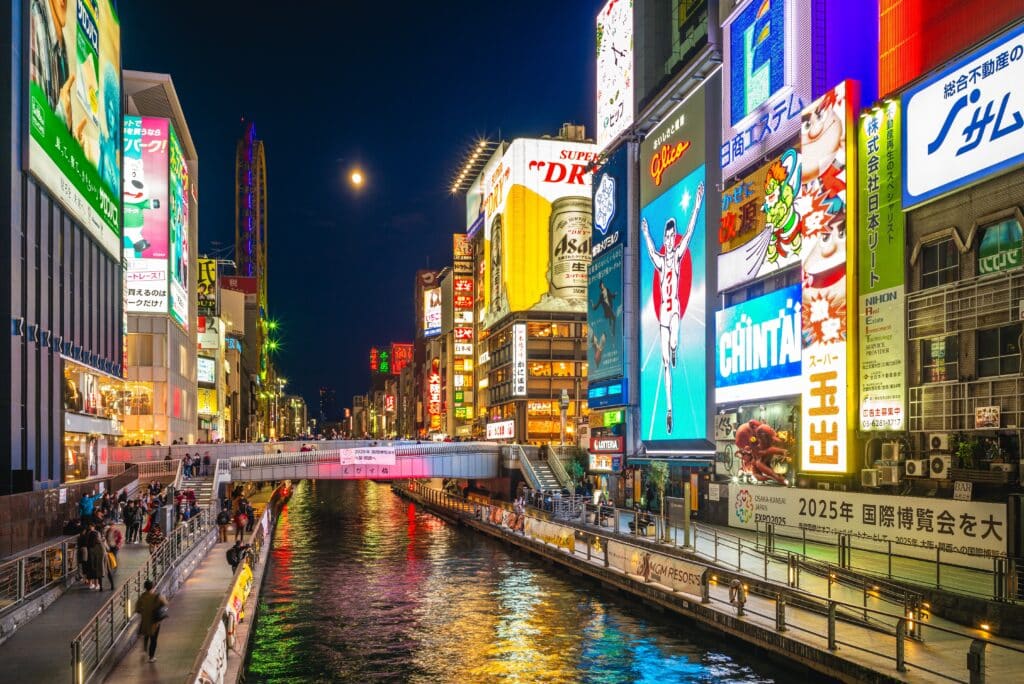
If Osaka has a heart, it’s here. Dotonbori and neighbouring Namba combine everything that makes the city special—bright neon lights, lively streets, incredible street food, hidden alleyways, and an atmosphere unlike anywhere else in Japan.
Many visitors make the mistake of taking a quick photo of the famous Glico Running Man sign before moving on. The real experience begins when you leave the main canal behind and explore the smaller streets filled with izakaya, tiny ramen shops, local bars, and independent restaurants.
For the best experience, arrive about an hour before sunset. You’ll see the district transform from daytime shopping streets into Osaka’s vibrant nightlife centre, making it one of the city’s most memorable experiences.
🎯 Combine It With
Dotonbori works best as part of a relaxed evening in central Osaka. Explore nearby streets instead of rushing to another attraction.
👍 Perfect If…
- It’s your first trip to Osaka.
- Food is one of your biggest travel priorities.
- You enjoy lively nightlife and vibrant city streets.
- You love photography, especially after dark.
- You want to experience Osaka’s famous local atmosphere.
🤔 Think Twice If…
- You dislike large crowds and busy tourist areas.
- You’re looking for quiet temples or traditional gardens.
- You only plan to visit during the middle of the day.
🦉 Travel Owl Decision
If you’re visiting Osaka for the first time, Dotonbori and Namba are essential. They capture the city’s personality better than any single landmark and offer one of Japan’s most memorable evening experiences.
Our recommendation: arrive before sunset, stay well into the evening, wander beyond the main canal, and try several different local dishes instead of eating at just one restaurant. That’s the smartest way to experience Osaka.
🏯 Osaka Castle
Best for: First-time visitors, history lovers, photographers, cherry blossom season, and travelers wanting to see one of Osaka’s most recognizable landmarks.
🦉 Travel Owl Snapshot
🦉 Why Travel Owl Recommends It
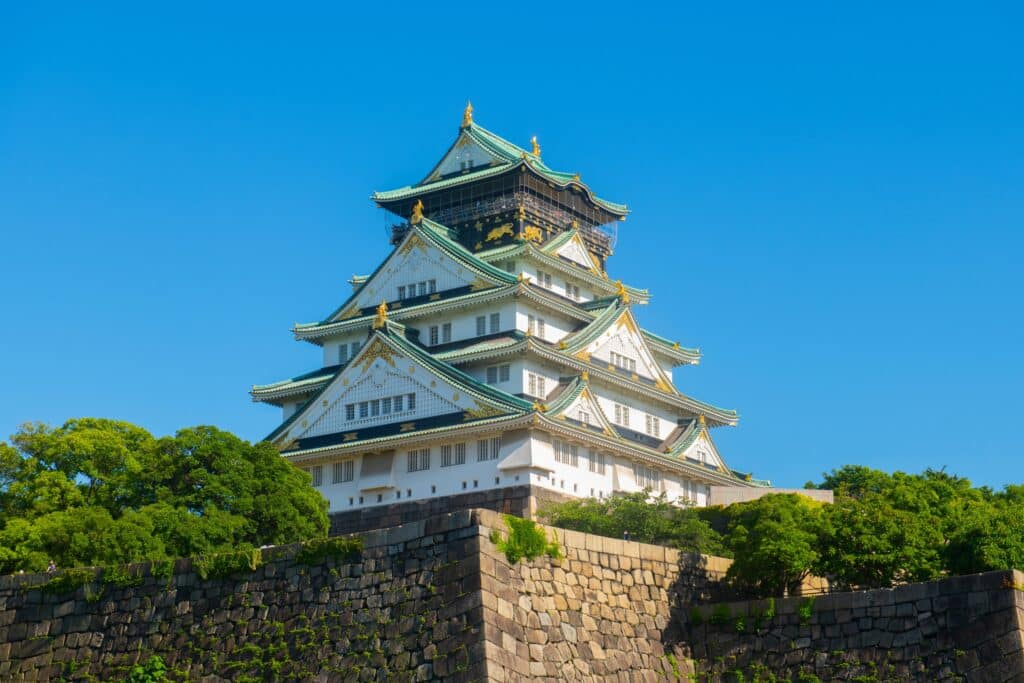
Osaka Castle is worth visiting—but with the right expectations. The current main tower is a reconstruction, so travelers expecting the atmosphere of an original Japanese castle may find the modern museum interior less impressive than the exterior.
The real highlight is the castle as part of the wider park. Massive stone walls, moats, gardens, and the white-and-gold tower create one of Osaka’s most impressive historic settings. The grounds are especially beautiful during cherry blossom season, when the park becomes one of the city’s most popular spring destinations.
If you’ve already visited Himeji Castle, Osaka Castle becomes less essential. Himeji offers the more authentic historic castle experience, while Osaka Castle is better appreciated for its exterior, park, views, and role in the city’s history.
🎯 Combine It With
Don’t cross the city just to see the castle tower. Explore the surrounding area at the same time and turn your visit into a relaxed half-day rather than another isolated sightseeing stop.
👍 Perfect If…
- It’s your first visit to Osaka.
- You’re interested in Japanese history.
- You’re visiting during cherry blossom season.
- You enjoy castles, parks, architecture, and photography.
- You haven’t visited one of Japan’s original castles yet.
🤔 Think Twice If…
- You’ve already visited Himeji Castle and want a different experience.
- You’re expecting an original historic castle interior.
- You only have one day in Osaka and food, neighbourhoods, and nightlife are higher priorities.
- You don’t particularly enjoy museums or historic landmarks.
🦉 Travel Owl Decision
For most first-time visitors, Osaka Castle is worth seeing—but you don’t necessarily need to spend a long time inside. The castle exterior, massive fortifications, and surrounding park are arguably the most rewarding parts of the experience.
Our recommendation: visit in the morning, explore the castle grounds, and decide whether to enter the museum based on your interest in history. If you’ve already visited Himeji Castle or you’re short on time, enjoy Osaka Castle from the outside and use the saved time to explore Osaka’s neighbourhoods.
🌃 Umeda Sky Building
Best for: Skyline views, couples, photographers, architecture lovers, sunset, and travelers wanting to experience Osaka from above.
🦉 Travel Owl Snapshot
🦉 Why Travel Owl Recommends It
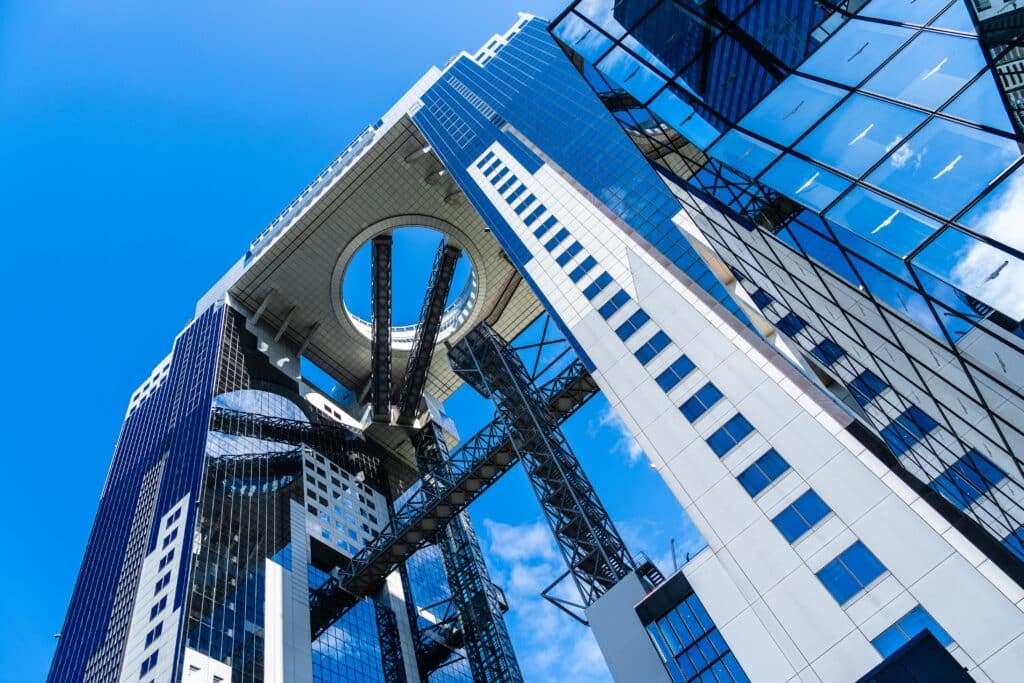
Osaka is enormous, but it’s difficult to appreciate the scale of the city until you see it from above. Umeda Sky Building offers one of Osaka’s most memorable skyline experiences, with sweeping views across the city from its distinctive Floating Garden Observatory.
What makes it especially worthwhile is the timing. Visit during the day and you’ll get impressive views, but arrive around sunset and the experience becomes much more rewarding. You can watch Osaka change from a sprawling daytime city into a sea of lights.
The open-air rooftop also makes the experience feel different from many enclosed observation decks. If you’re choosing just one viewpoint in Osaka, Umeda Sky Building is one of the strongest choices.
🎯 Combine It With
Don’t travel to Umeda solely for the observation deck. Make it the final stop of an afternoon or evening exploring the northern city centre.
👍 Perfect If…
- You love panoramic city views.
- You enjoy sunset or nighttime photography.
- You’re travelling as a couple.
- You’re already exploring the Umeda area.
- You want a calmer evening experience than Dotonbori.
🤔 Think Twice If…
- City viewpoints aren’t particularly important to you.
- The weather is poor and visibility is limited.
- Your Japan itinerary already includes several observation decks in Tokyo.
- You have only one day in Osaka and would rather prioritise neighbourhoods and food.
🦉 Travel Owl Decision
If you enjoy city views, Umeda Sky Building is one of Osaka’s best evening experiences. But timing makes a major difference—visiting in the middle of the day isn’t nearly as rewarding as watching the city change around sunset.
Our recommendation: arrive around 45–60 minutes before sunset, enjoy the daylight views, stay as Osaka lights up, and combine the experience with dinner in Umeda. If you’ve already visited several observation decks elsewhere in Japan, however, this is one attraction you can skip without missing the essence of Osaka.
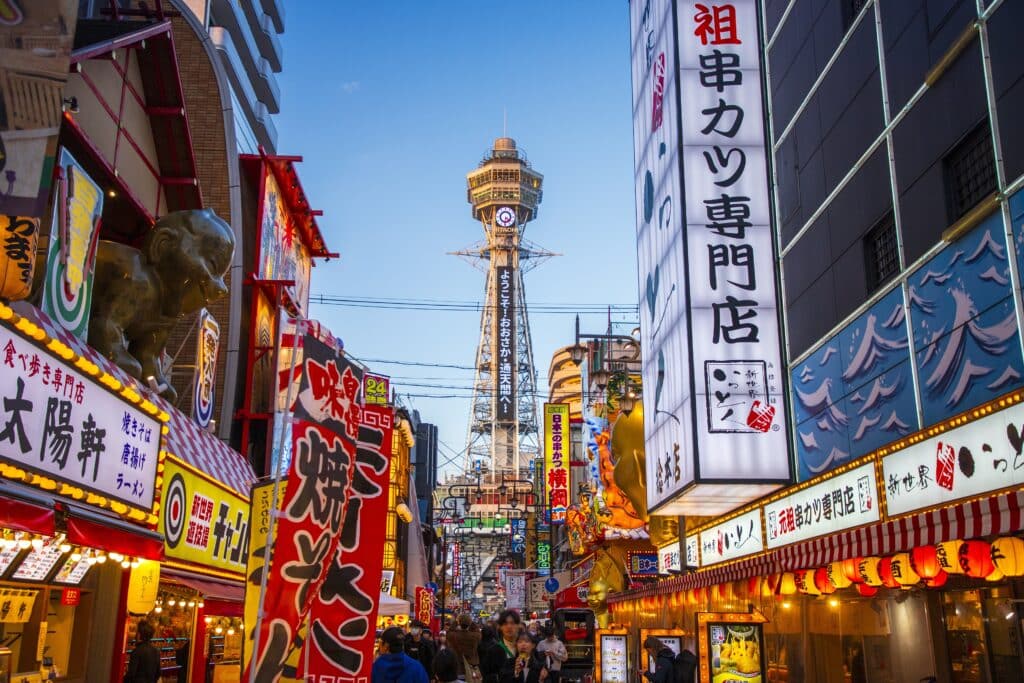
🍢 Shinsekai & Tsutenkaku
Best for: Food lovers, street photography, retro atmosphere, casual evenings, and travelers wanting to experience a different side of Osaka.
🦉 Travel Owl Snapshot
🦉 Why Travel Owl Recommends It
Shinsekai is one of the best places to experience Osaka’s retro, unpolished personality. Colourful signs, old-fashioned restaurants, game arcades, narrow streets, and the distinctive Tsutenkaku Tower create an atmosphere that feels very different from modern Umeda or the intense neon of Dotonbori.
The biggest mistake is treating Tsutenkaku Tower as the main attraction. The tower is the district’s visual landmark, but Shinsekai itself is the real reason to come. Wander the surrounding streets, look into the smaller restaurants, and try the neighbourhood’s famous kushikatsu—deep-fried meat, seafood, and vegetables served on skewers.
Late afternoon works particularly well. You can explore the neighbourhood while it’s still light, stop for food, and then watch the signs and Tsutenkaku illuminate as evening begins.
🎯 Combine It With
Shinsekai fits naturally into a southern Osaka day. Rather than making a separate trip across the city, combine it with nearby Tennoji and finish with food and an evening walk through the neighbourhood.
👍 Perfect If…
- You enjoy neighbourhoods with strong local character.
- You love casual food and want to try Osaka-style kushikatsu.
- You enjoy retro streets and colourful photography.
- You want to experience something different from Dotonbori and Umeda.
- You prefer wandering through neighbourhoods to visiting museums.
🤔 Think Twice If…
- You have only one day in Osaka and still haven’t seen the city’s main highlights.
- You prefer polished modern neighbourhoods and upscale shopping.
- Retro streets and casual food aren’t particularly interesting to you.
- You’re visiting mainly because you think Tsutenkaku itself is a must-see attraction.
🦉 Travel Owl Decision
Shinsekai is worth visiting for the neighbourhood—not just for Tsutenkaku Tower. It offers a more nostalgic and down-to-earth side of Osaka that complements the brighter, busier atmosphere of Dotonbori.
Our recommendation: arrive in the late afternoon, wander the streets without a strict plan, try kushikatsu, and stay until the lights come on. You don’t need to go up Tsutenkaku unless observation decks particularly interest you—the smartest choice is to spend your time experiencing Shinsekai at street level.

🍣 Kuromon Market
Best for: Food lovers, seafood fans, casual lunches, first-time visitors, and travelers who want to sample several Japanese foods in one convenient place.
🦉 Travel Owl Snapshot
🦉 Why Travel Owl Recommends It
Kuromon Market is one of the easiest places in central Osaka to sample several different Japanese foods without committing to a full restaurant meal. Seafood, sushi, grilled scallops, meat, fruit, sweets, and other snacks are concentrated along a covered shopping street within easy walking distance of Namba.
But it’s important to visit with the right expectations. Kuromon has become increasingly popular with visitors, and some stalls are clearly geared toward tourists. If you’re expecting a quiet traditional market filled mainly with locals doing their daily shopping, you may be disappointed.
That doesn’t make Kuromon a bad choice—it simply changes how you should use it. Rather than treating the market as a major Osaka attraction, use it as a convenient food stop while exploring Namba. Try a few things that genuinely interest you, then continue sightseeing.
🎯 Combine It With
Kuromon’s central location is its biggest advantage. Visit in the late morning or around lunchtime, then continue on foot toward Namba, Dotonbori, and Shinsaibashi instead of planning a separate journey to the market.
👍 Perfect If…
- You enjoy trying several small dishes rather than having one large meal.
- Seafood and Japanese food are major priorities for your trip.
- You want an easy lunch stop while exploring central Osaka.
- You’re already planning to spend time around Namba and Dotonbori.
- You enjoy markets but don’t need an entirely local, non-touristy experience.
🤔 Think Twice If…
- You’re expecting an undiscovered local market.
- Food isn’t one of your main interests.
- You have a very limited Osaka itinerary and would rather prioritise neighbourhoods and major experiences.
- You prefer sitting down in smaller restaurants and izakaya to grazing at market stalls.
🦉 Travel Owl Decision
Kuromon Market is worth visiting as part of your day—but it doesn’t need to become the focus of your day. Its greatest strength is the combination of food variety and convenient location rather than an especially authentic local-market atmosphere.
Our recommendation: visit in the late morning, allow around 45–90 minutes, sample two or three foods that genuinely appeal to you, and then continue toward Namba and Dotonbori. That’s a smarter use of your time than spending several hours trying to see every stall.
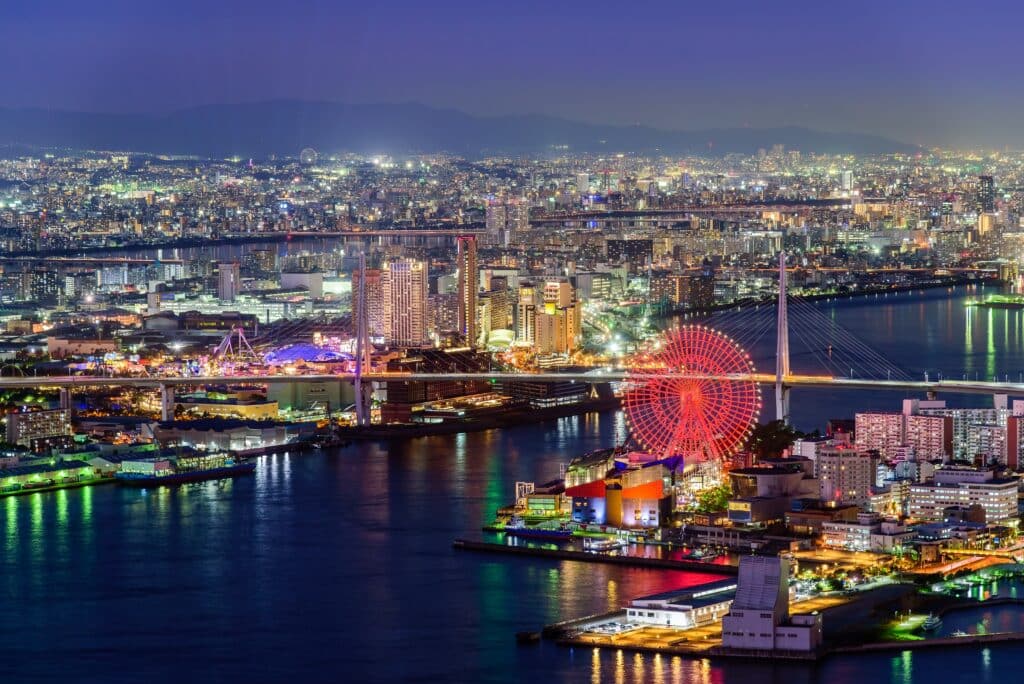
🌊 Osaka Bay & Kaiyukan Aquarium
Best for: Families, aquarium lovers, rainy days, repeat visitors, and travelers with enough time for a relaxed half-day away from central Osaka.
🦉 Travel Owl Snapshot
🦉 Why Travel Owl Recommends It
Osaka Bay is worth the journey mainly if Kaiyukan Aquarium genuinely matches your interests. The aquarium is the area’s standout attraction, with large-scale marine exhibits and a distinctive route that gradually takes visitors through different habitats around its central tank.
The surrounding waterfront gives you a completely different experience from Dotonbori, Namba, or Umeda. It’s more spacious, slower-paced, and particularly useful when you’re travelling with children or want a break from Osaka’s busy shopping and entertainment districts.
But there is an important trade-off: visiting Osaka Bay takes a significant part of your day. If you only have one or two days in Osaka, that time may be better spent experiencing the neighbourhoods, food, and nightlife that make the city distinctive.
🎯 Combine It With
If you decide to visit Osaka Bay, treat the area as one self-contained half-day rather than travelling back and forth to central Osaka.
👍 Perfect If…
- You’re travelling with children.
- Aquariums and marine life are genuine interests.
- You have three or more days in Osaka.
- You need a strong indoor option for a rainy or very hot day.
- You want a slower break from Osaka’s busy central neighbourhoods.
🤔 Think Twice If…
- You only have one day in Osaka.
- Aquariums aren’t particularly important to you.
- This is your first visit and you haven’t explored Dotonbori, Namba, or Shinsekai yet.
- You would rather spend your limited time on food, neighbourhoods, and nightlife.
🦉 Travel Owl Decision
Osaka Bay is a great choice for some travelers—but an easy skip for others. Families and aquarium lovers can comfortably dedicate half a day to the area, while first-time visitors with limited time will usually get more from central Osaka.
Our recommendation: include Osaka Bay if you have three or more days, you’re travelling with children, or Kaiyukan is high on your personal wish list. With only one or two days, prioritise Osaka’s food, neighbourhoods, and evening atmosphere instead. That’s the smarter trade-off.
🦉 Which Osaka Experiences Deserve Your Time Most?
You don’t need to see everything in Osaka to experience the city well. The smartest choices depend on how much time you have and what matters most to you.
⏱️ What Should You Prioritise?
1 Day in Osaka
Focus on the experiences that make Osaka feel different from the rest of Japan.
- Osaka Castle – morning
- Shinsekai – afternoon
- Dotonbori & Namba – evening
Skip: Osaka Bay and Kuromon if necessary.
2 Days in Osaka
This is the sweet spot for most first-time visitors.
- Dotonbori & Namba
- Osaka Castle
- Shinsekai
- Kuromon Market
- Umeda Sky Building
You’ll see the highlights without turning Osaka into a checklist.
3+ Days in Osaka
Slow down and choose extras based on your interests.
- Add Osaka Bay & Kaiyukan
- Spend longer exploring neighbourhoods
- Try more local food
- Consider a day trip to Nara or Himeji
Don’t add attractions simply because you have extra time.
🎯 Choose Based on Your Travel Style
Dotonbori → Kuromon → Shinsekai
Osaka Castle → Umeda → Dotonbori
Osaka Castle → Museum of History → consider Himeji
Kaiyukan → Osaka Bay → Dotonbori
Shinsekai → Dotonbori → Namba
Osaka Castle → Namba → Dotonbori
🦉 Travel Owl Recommendation
For most first-time visitors, two days is enough to experience Osaka well. Prioritise Dotonbori & Namba, Shinsekai, Osaka Castle, and one viewpoint rather than trying to visit every attraction.
If you only have one day, don’t sacrifice Osaka’s evening atmosphere just to squeeze in another daytime sight. Dotonbori after dark is more important to the Osaka experience than completing a long sightseeing checklist.
With three days or more, don’t automatically add more attractions. Use the extra time to explore neighbourhoods more slowly, eat well, or take a day trip. The smartest Osaka itinerary isn’t the one where you see the most—it’s the one where you experience the city properly.
Is Osaka Worth Visiting?
Yes—for most first-time visitors, Osaka is worth visiting. But whether it deserves one, two, or three days depends on what you want from your Japan trip.
Osaka isn’t the destination to choose for Japan’s most beautiful temples, traditional streets, or historic atmosphere. Kyoto does those things better. Osaka earns its place for different reasons: food, nightlife, energetic neighbourhoods, easy-going atmosphere, and excellent access to the rest of Kansai.
The smartest question therefore isn’t simply “Is Osaka worth visiting?” It’s “Does Osaka add something to my itinerary that my other destinations don’t?”
Should Osaka Be on Your Japan Itinerary?
Use your travel priorities—not Osaka’s popularity—to decide.
Choose Osaka If…
- Food is one of your biggest reasons for visiting Japan.
- You enjoy lively neighbourhoods and nightlife.
- You want a contrast to Kyoto’s temples and traditional atmosphere.
- You prefer exploring city streets to visiting museums all day.
- You’re travelling through the Kansai region.
- You want an excellent base for Nara or Himeji day trips.
Consider Osaka If…
- You have 7–10 days in Japan and need to choose destinations carefully.
- You’re deciding between staying in Kyoto or Osaka.
- You’re interested in Universal Studios Japan.
- You want a convenient Kansai transport base.
- You enjoy big cities but already have several days planned in Tokyo.
Skip Osaka If…
- You only have around five days for your entire Japan trip.
- Traditional temples, gardens, and historic streets are your main priorities.
- You strongly prefer quiet destinations over large cities.
- Your itinerary already feels rushed.
- Adding Osaka would mean sacrificing somewhere you care about more.
🎯 What Does Osaka Add to Your Trip?
This is where Osaka makes the strongest case for itself. It doesn’t need to compete with Kyoto or Tokyo—it works best when it adds something different.
⏱️ How Much Time Does Osaka Deserve?
Worth it if Osaka fits naturally into your Kansai route. Prioritise atmosphere, food, and one or two major sights.
The best choice for most first-time visitors. Enough time for the highlights without sacrificing too much of your Japan itinerary.
Best for food lovers, families, slower travelers, Universal Studios visitors, or anyone using Osaka as a Kansai base.
🦉 Travel Owl Decision
For most first-time visitors, yes—Osaka deserves a place on a Japan itinerary. But it usually doesn’t need as much sightseeing time as Tokyo or Kyoto.
If you have 10 days or more in Japan, spending around two days in Osaka creates an excellent contrast to Kyoto. You’ll experience a different side of urban Japan built around food, nightlife, neighbourhoods, and a more relaxed atmosphere.
If you have only five days, Osaka becomes easier to skip. Tokyo and Kyoto will usually give a first-time visitor a broader introduction to Japan, while Osaka can wait for a longer itinerary.
Our recommendation: don’t visit Osaka because you feel you have to. Visit because its food, evening atmosphere, neighbourhoods, or Kansai location add something your other destinations don’t. That’s when Osaka becomes one of the smartest additions to a Japan trip.
How Many Days Do You Need in Osaka?
For most first-time visitors, 2 days in Osaka is the sweet spot. That’s enough time to experience the city’s food, neighbourhoods, nightlife, and major highlights without taking too much time away from Kyoto, Tokyo, or other destinations.
But there isn’t one perfect answer for everyone. A traveler spending ten days in Japan should make a different decision from someone spending three weeks in the country. Your interests matter too: food lovers, families, and nightlife fans can easily justify more time.
The smartest way to decide is to ask what an extra day in Osaka gives you—and what you would have to give up elsewhere.
How Long Should You Stay in Osaka?
Choose your stay based on your overall Japan itinerary—not on how many Osaka attractions you can fit in.
1 Day in Osaka
One day works if Osaka is part of a short Kansai itinerary or you’re more interested in experiencing the city’s atmosphere than seeing everything.
Prioritise:- Osaka Castle or Shinsekai
- Namba
- Dotonbori after dark
- Osaka street food
Travel Owl take: Enough for a taste of Osaka—but don’t fill the day with too many attractions.
2 Days in Osaka
For most first-time visitors, this is the smartest choice. Two days give you enough time to see the highlights while still leaving room to enjoy Osaka rather than simply rushing through it.
Prioritise:- Osaka Castle
- Kuromon Market
- Shinsekai
- Dotonbori & Namba
- Umeda Sky Building
🦉 Best choice for most first-time visitors.
3+ Days in Osaka
Three or more days makes sense when Osaka itself is one of your priorities rather than simply another stop on your Japan itinerary.
Use the extra time for:- Osaka Bay & Kaiyukan
- Universal Studios Japan
- Slower neighbourhood exploration
- More food experiences
- Day trips from Osaka
Travel Owl take: Excellent for food lovers, families, repeat visitors, and slower travelers.
🦉 Quick Decision: 1, 2 or 3 Days?
🗾 How Much of Your Japan Trip Should Osaka Get?
This is often the more useful question. Osaka shouldn’t be planned in isolation—it has to compete for time with Tokyo, Kyoto, Hiroshima, Mount Fuji, and other destinations.
0–1 Day
Osaka is optional. Prioritise Tokyo and Kyoto unless Osaka strongly matches your interests.
1–2 Days
Include Osaka if food, nightlife, or the Kansai experience is important to you.
2 Days
An excellent fit. Osaka adds a different urban experience without dominating the itinerary.
2–3 Days
Enough time to experience Osaka properly while still exploring other regions of Japan.
🤔 Should You Add Another Day to Osaka?
Before adding a third or fourth day, ask what that extra day could give you somewhere else.
Add another Osaka day if…
- You want to visit Universal Studios Japan.
- You’re travelling with children and want to visit Kaiyukan.
- Food and nightlife are major priorities.
- You prefer slower travel and neighbourhood exploration.
- You’re using Osaka as your base for Kansai.
Give that day to somewhere else if…
- You haven’t allowed enough time for Kyoto.
- You want to visit Hiroshima and Miyajima.
- You haven’t included Nara or Himeji.
- You’re mainly interested in temples, history, and traditional Japan.
- Your itinerary already includes many large cities.
🦉 Travel Owl Decision
For most first-time visitors, 2 days in Osaka is the smartest choice. One day gives you a good introduction, but two days allow you to experience both the city’s major sights and the food-and-neighbourhood atmosphere that makes Osaka special.
A third day is worthwhile when you have a specific reason for it—such as Universal Studios Japan, Kaiyukan, deeper food exploration, or a slower travel style.
Our recommendation: don’t add extra Osaka days simply to see more attractions. If you’ve already experienced the city’s essential neighbourhoods and food culture, an extra day in Kyoto, Nara, Himeji, Hiroshima, or another destination may add more variety to your Japan trip.
How to Get to Osaka: Which Option Makes the Most Sense?
Osaka is one of Japan’s easiest cities to reach, but the best transport option depends on where you’re coming from, your budget, and where you’re staying in the city.
For most first-time visitors travelling along Japan’s classic Tokyo–Kyoto–Osaka route, the train is the simplest choice. Flying becomes more useful for longer domestic journeys, while travelers coming from Kyoto or Nara usually don’t need the Shinkansen at all.
The important thing is not simply finding the fastest train—it’s choosing the option that saves time across your entire journey.
What’s the Smartest Way to Reach Osaka?
Don’t compare transport by journey time alone. Also consider transfers, station location, luggage, and where your Osaka hotel is located.
🗼 From Tokyo → Take the Shinkansen
For most travelers coming from Tokyo, the Tokaido Shinkansen is the smartest option. It takes you from central Tokyo to Shin-Osaka without the airport transfers, security procedures, and waiting time involved in flying.
The important detail is that the Shinkansen arrives at Shin-Osaka Station, not Osaka Station. From there, continue by local train or metro to your hotel.
Choose the Shinkansen unless airfare is significantly cheaper or your wider itinerary makes flying more convenient. For a typical Tokyo → Osaka journey, rail is simpler from city centre to city centre.
⛩️ From Kyoto → Don’t Automatically Take the Shinkansen
Kyoto and Osaka are extremely close, so this is one journey where the fastest-looking option isn’t always the smartest.
The Shinkansen connects Kyoto Station with Shin-Osaka very quickly, but many travelers then need another train to reach their actual destination in Osaka. Depending on where you’re staying, a JR or private railway may take you closer to your hotel with fewer transfers.
Choose the railway that gets you closest to your Osaka neighbourhood. Travelers heading toward Osaka/Umeda, Namba, or other parts of the city shouldn’t automatically assume the Shinkansen is best just because it’s faster between stations.
🦌 From Nara → Choose Your Osaka Destination First
Both JR and Kintetsu connect Nara with Osaka, but the better option depends largely on where you want to arrive.
For travelers heading toward Namba, Kintetsu is often particularly convenient because Osaka-Namba places you directly in one of the city’s main sightseeing and entertainment areas.
If you’re staying around Namba, compare Kintetsu first. If another Osaka station fits your hotel or rail pass better, JR may make more sense. Choose based on your final destination, not simply the train company.
⛩️ From Hiroshima → Shinkansen Is the Easy Choice
The Sanyo Shinkansen makes Hiroshima and Osaka surprisingly easy to combine in one Japan itinerary. The journey to Shin-Osaka takes roughly an hour and a half on the fastest services, making rail far more practical than flying for most visitors.
Take the Shinkansen. The city-centre connections and relatively short journey make flying unnecessary for most travelers.
✈️ From Kansai International Airport → Choose Based on Your Hotel
Kansai International Airport (KIX) is connected directly to Osaka by rail, but there isn’t one airport train that’s best for everyone.
The Nankai Railway is usually the most logical choice because it runs directly toward Namba.
JR services can be more convenient depending on your hotel and connections.
Consider convenience as much as speed. A direct train or airport bus may be preferable to saving a few minutes with multiple transfers.
❗ Don’t Confuse Shin-Osaka with Osaka Station
This is one of the easiest mistakes for first-time visitors to make.
🚄 Shin-Osaka
Osaka’s main Shinkansen station. You’ll arrive here when travelling by bullet train from Tokyo, Kyoto, Hiroshima, and other cities.
🚉 Osaka Station
Located in Umeda and surrounded by shopping, hotels, restaurants, and local transport connections. It is not a Shinkansen station.
If your hotel says it’s close to Osaka Station, don’t assume you can step directly off the Shinkansen there. Allow additional time to travel from Shin-Osaka.
✈️ Should You Fly or Take the Train?
🧳 The Smarter Choice When You Have Luggage
A route that’s five or ten minutes faster isn’t necessarily better if it requires dragging large suitcases through several crowded stations.
When comparing routes, look at the entire hotel-to-hotel journey: how many transfers are required, whether stations have elevators, and how far you’ll need to walk at each end.
If you’re moving between major Japanese cities with large luggage, consider using a luggage-forwarding service and travelling with only a small overnight bag. It can make train journeys and station transfers considerably easier.
🦉 Travel Owl Decision
For most first-time visitors travelling through Tokyo, Kyoto, Osaka, and Hiroshima, trains are the smartest way to reach Osaka. They’re fast, frequent, and usually remove the extra transfers associated with airports.
But don’t automatically choose the fastest train on paper. From nearby destinations such as Kyoto and Nara, the best railway depends heavily on where you’re staying in Osaka.
Our recommendation: compare your journey hotel to hotel, not station to station. A direct train that leaves you close to your accommodation can be smarter than a faster service requiring several transfers. That’s especially true when you’re travelling with luggage.
How to Get Around Osaka: What’s the Smartest Option?
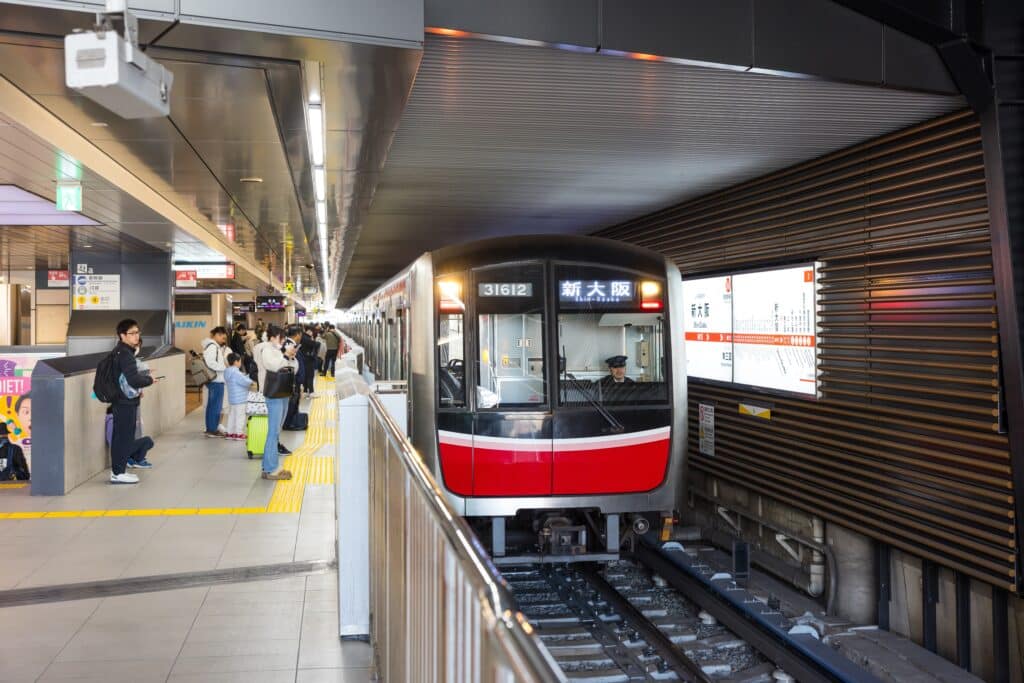
Osaka’s transport system looks complicated at first, but most visitors don’t need to understand every railway line. For sightseeing, a combination of the Osaka Metro and walking is usually the easiest way to get around.
The bigger mistake is trying to optimise every journey. Osaka’s main sightseeing areas are spread across several neighbourhoods, so the smartest strategy is to group attractions geographically and explore each area on foot rather than constantly jumping on trains.
Which Transport Should You Use in Osaka?
You don’t need one transport method for everything. Choose based on the journey you’re making.
🚇 Osaka Metro → Best for Most Sightseeing
For most first-time visitors, the Osaka Metro will do most of the work. It connects many of the areas you’re likely to visit, including Umeda, Namba, Shinsaibashi, Tennoji, and the Osaka Bay area.
The Midosuji Line is particularly useful because it runs north–south through several of Osaka’s most important areas, including Shin-Osaka, Umeda, Shinsaibashi, Namba, and Tennoji.
Use the metro as your default for longer journeys within central Osaka. You don’t need to memorise the whole network—learn the stations around your hotel and the neighbourhoods you plan to visit.
🚶 Walking → Better Than You Might Expect
Some of Osaka’s best experiences happen between attractions rather than inside them. Once you’ve reached a neighbourhood, walking often makes more sense than taking another train for one or two stops.
This is particularly true around Namba, Dotonbori, Shinsaibashi, and Kuromon Market, where several major sights can easily be combined on foot.
Take the train to a neighbourhood, then explore that neighbourhood on foot. You’ll spend less time navigating stations and discover more of Osaka along the way.
🚆 JR Trains → Useful, but You Don’t Need Them for Everything
JR trains are useful for certain journeys around Osaka and especially when arriving from or travelling onward to other cities.
The Osaka Loop Line connects several important areas, but don’t assume JR is always the best choice simply because you have a rail pass or already know the system from another Japanese city.
For many sightseeing journeys within central Osaka, the metro will take you closer to where you actually want to go.
Use JR when the route is convenient, but don’t build your Osaka sightseeing around JR alone. Compare the actual destination station—the metro is often better for neighbourhood-level sightseeing.
💳 IC Card → The Easiest Way to Pay
For most visitors, an IC card is the simplest way to use Osaka’s public transport. Instead of buying individual tickets for every journey, you can tap in and out as you travel.
Compatible IC cards used elsewhere in Japan can generally be used across Osaka’s major transport networks, making this particularly convenient if Osaka is part of a longer Japan itinerary.
For most first-time visitors, use an IC card rather than buying separate tickets for every ride. It’s simpler and gives you the flexibility to choose whichever train or metro route makes the most sense.
🎫 Do You Need an Osaka Transport Pass?
Not necessarily. Transport passes can save money, but only when your sightseeing plans match the pass well enough.
This is where travelers sometimes make the wrong decision: they buy a pass first and then start planning their day around getting maximum value from it.
- You’ll make many paid journeys in one day.
- The included transport matches your itinerary.
- Included attractions are places you genuinely want to visit.
- You’ve compared the pass price with normal fares.
- You plan to explore one or two areas per day.
- You’ll walk extensively between nearby attractions.
- You’re buying it only because it seems convenient.
- You’d change your itinerary just to “get your money’s worth.”
Plan your itinerary first. Choose the transport pass second. A pass should make a good itinerary cheaper or easier—it shouldn’t determine where you go.
🚖 When Is a Taxi Actually Worth It?
Osaka’s public transport is excellent, so taxis aren’t necessary for most sightseeing. But there are situations where paying more can be the smarter decision.
A taxi can be worthwhile when the alternative involves several station transfers.
Splitting the fare can make short taxi journeys more reasonable.
A taxi may be worth the extra cost when you’re tired or public transport is less convenient.
For some short cross-neighbourhood journeys, saving time can matter more than saving a small amount of money.
🧭 The Smarter Way to Sightsee Osaka
The biggest transport saving in Osaka doesn’t come from choosing the cheapest ticket. It comes from avoiding unnecessary journeys across the city.
Instead of bouncing between attractions, group places that naturally belong together.
❌ Transport Mistakes That Waste Time
Group attractions by neighbourhood instead of following a random sightseeing list.
Nearby attractions are often easier and more enjoyable to reach on foot.
Decide what you want to see before choosing a transport pass.
Saving a small amount isn’t worthwhile if the route adds transfers and wastes sightseeing time.
🦉 Travel Owl Decision
For most first-time visitors, Osaka Metro + walking is the smartest combination. Use trains to move between major neighbourhoods, then explore each area on foot.
Don’t worry about finding the perfect transport pass before your trip. An IC card gives you flexibility, while passes only become worthwhile when they genuinely match your itinerary.
Our recommendation: organise your sightseeing geographically. Explore Namba and Dotonbori together, Shinsekai and Tennoji together, and Umeda as another cluster. You’ll spend less time inside stations and more time actually experiencing Osaka.
Where to Stay in Osaka: Which Area Is Best for You?
Choosing where to stay in Osaka can make a bigger difference than choosing the perfect hotel. The city is large, and staying in the wrong area can mean spending unnecessary time on trains every day.
For most first-time visitors, the decision comes down to Namba vs Umeda. Namba puts you close to Osaka’s food, nightlife, and famous evening atmosphere, while Umeda offers better transport connections for exploring Osaka and taking day trips.
Neither is automatically better. The smartest choice depends on what you want to do after you leave your hotel each morning—and where you want to be when your sightseeing day ends.
Which Osaka Neighborhood Should You Choose?
Choose your base around how you plan to experience Osaka—not simply where you find the cheapest hotel.
🌃 Namba → Best for Most First-Time Visitors
If this is your first visit to Osaka and you want to experience the city’s famous food and evening atmosphere, Namba is usually the strongest choice.
You’ll be within easy reach of Dotonbori, Hozenji Yokocho, Shinsaibashi, Kuromon Market, and countless restaurants and bars. Instead of taking a train back to your hotel after dinner, you can simply walk through one of Osaka’s most interesting areas.
Namba is particularly valuable at night. Osaka is a city where the experience doesn’t end when the daytime attractions close, so staying close to the action makes spontaneous evening exploration much easier.
- It’s your first Osaka visit.
- Food is a major priority.
- You enjoy nightlife.
- You want to walk to Dotonbori.
- You prefer atmosphere over transport efficiency.
- You want quiet evenings.
- You’re taking several day trips north of Osaka.
- You dislike crowded entertainment districts.
- Rail connections are your highest priority.
Choose Namba for the Osaka experience itself. For a first visit of one or two nights, being able to walk to Dotonbori, restaurants, and nightlife often matters more than saving a little time on daytime train journeys.
🚉 Umeda → Best for Transport & Day Trips
Umeda, centred around Osaka Station, is the smarter alternative when transport convenience matters more than being beside Dotonbori.
The area has excellent rail connections, extensive shopping, restaurants, hotels, and easy access to northern Osaka. It’s particularly useful if you’re planning several trips outside the city or continuing through the Kansai region.
Umeda doesn’t lack nightlife or restaurants, but the atmosphere is different. It feels more modern and polished than Namba and doesn’t deliver quite the same classic Osaka street experience when you step outside your hotel.
- You’re taking several day trips.
- Transport convenience is important.
- You prefer modern shopping and dining.
- You want easy access to Osaka Station.
- You’re staying several nights.
- Dotonbori is your main Osaka priority.
- You want to walk home after exploring Namba at night.
- You’re only staying one night.
- You want Osaka’s most distinctive street atmosphere outside your door.
Choose Umeda for the wider Kansai trip. If Osaka is your base for exploring other destinations, the transport advantage can become more valuable than staying beside Dotonbori.
⚖️ Namba vs Umeda: Which Should You Choose?
For many first-time visitors, this is the only accommodation decision that really matters.
First visit + 1–2 nights → Namba.
Several day trips + 3 or more nights → Umeda.
🏮 Tennoji → A Smart Alternative for Value
Tennoji is worth considering if you want good transport connections and easy access to southern Osaka without staying directly in the busiest parts of Namba.
You’re close to Shinsekai, Shitennoji Temple, Tennoji Park, and Abeno, while Namba remains easy to reach by metro.
For some travelers, Tennoji offers a useful middle ground: convenient without feeling quite as intense as central Namba.
Consider Tennoji if you find a significantly better hotel for your budget. But for a first Osaka visit, don’t choose it over Namba just to save a very small amount. Location has real value when you only have one or two days.
🚄 Shin-Osaka → Convenient, but Should You Stay There?
Seeing hotels beside the Shinkansen station can make Shin-Osaka look like the perfect base. For most tourists, however, transport convenience doesn’t automatically make it the best place to stay.
You’ll have excellent access to bullet trains, but you’ll still need to travel into Osaka’s main sightseeing and entertainment areas.
- You have an early Shinkansen.
- You’re staying only overnight between journeys.
- Rail convenience matters above everything else.
- This is your first Osaka visit.
- You want nightlife and restaurants nearby.
- You’re staying two or more nights.
- You want to walk out of your hotel into an interesting neighbourhood.
Don’t stay at Shin-Osaka simply because your Shinkansen arrives there. For most visitors, spending a few extra minutes travelling to Namba or Umeda gives you a much better base for experiencing the city.
🌊 Osaka Bay → Only for a Specific Kind of Trip
The Osaka Bay area can work well for families or travelers whose itinerary revolves around attractions in that part of the city, but it isn’t where I’d send most first-time visitors looking for a general Osaka base.
You’ll sacrifice some convenience for central neighbourhoods such as Namba and Umeda, so there should be a clear reason for staying here.
Choose Osaka Bay when its attractions are a major part of your itinerary. Otherwise, Namba or Umeda will usually give a first-time visitor a more convenient and rewarding base.
🎯 Best Osaka Area by Travel Style
🌃 Namba
Best overall balance of atmosphere, food, and sightseeing.
🌃 Namba
Walk to Dotonbori, Kuromon, and countless restaurants.
🌃 Namba
Stay close to Osaka’s strongest evening atmosphere.
🚉 Umeda
Strong rail connections make repeated journeys easier.
🏮 Tennoji
Worth comparing when accommodation savings are meaningful.
🚄 Shin-Osaka
Useful when catching an early Shinkansen the next morning.
💡 Better Hotel or Better Location?
If two hotels are similar in price and quality, choose the better location. On a short Osaka stay, being able to walk to dinner, nightlife, or a major station can save more valuable time than having a slightly larger room.
But don’t overpay simply to be directly beside Dotonbori. A hotel within easy walking distance of a useful station can give you nearly the same convenience without putting you in the busiest streets.
For a 1–2 night stay, prioritise location. For a longer stay, hotel comfort and transport connections become more important because you’ll spend more time using Osaka as a base.
🦉 Travel Owl Decision
For most first-time visitors, Namba is the best area to stay in Osaka. Being able to walk to Dotonbori, restaurants, shopping, and nightlife gives you more of the Osaka experience without adding extra transport at the beginning and end of each day.
Choose Umeda instead if you’re staying longer, taking several day trips, or prioritising rail connections. Tennoji can be a smart value alternative, while Shin-Osaka is mainly useful for travelers with very specific transport needs.
Our recommendation: for a typical first-time stay of two nights, choose Namba. If Osaka will be your base for exploring Kansai, choose Umeda. Don’t choose your hotel by room price alone—the right neighbourhood can save time every single day of your trip.
Best Time to Visit Osaka: Which Season Should You Choose?
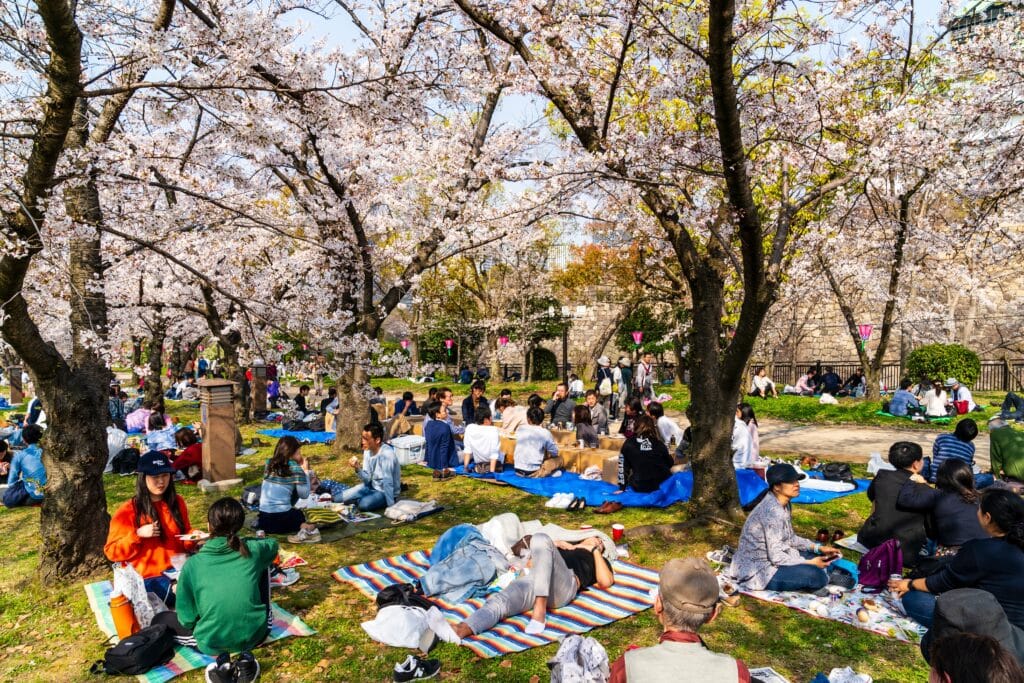
There isn’t one perfect month to visit Osaka. The best time depends on what matters most to you: comfortable weather, cherry blossoms, autumn colors, lower crowds, festivals, or cheaper accommodation.
For most first-time visitors, spring and autumn offer the best overall conditions. But they also bring some of the highest demand. If avoiding crowds and keeping costs down matters more than perfect weather, another season may actually be the smarter choice.
Instead of asking only “When is the weather best?”, decide which trade-off you’re happiest to make.
When Should You Visit Osaka?
Choose your travel dates based on your biggest priority—not simply the most popular season.
*Cherry blossom timing changes from year to year, so don’t plan around an exact bloom date too far in advance.
Spring
Spring combines pleasant sightseeing weather with one of Osaka’s biggest seasonal attractions: cherry blossoms.
Osaka Castle Park becomes especially attractive during blossom season, but popularity is the trade-off. Expect more visitors and stronger accommodation demand around peak bloom.
Choose spring if:- Cherry blossoms are a major priority.
- You want comfortable walking weather.
- You don’t mind paying more for popular dates.
Summer
Summer brings festivals and lively evenings, but heat and humidity can make intensive sightseeing tiring.
That matters in Osaka because much of the city’s appeal comes from walking through neighbourhoods, markets, shopping streets, and entertainment districts.
Choose summer if:- Festivals are important to you.
- You tolerate heat and humidity well.
- You don’t mind slowing down during the hottest part of the day.
Autumn
For many travelers, autumn offers Osaka’s best overall balance. Temperatures become more comfortable for walking, and autumn colors add another reason to explore parks and make day trips around Kansai.
It’s particularly attractive if your wider itinerary includes Kyoto, Nara, or other destinations known for autumn foliage.
Choose autumn if:- You want comfortable sightseeing weather.
- Autumn colors interest you.
- You plan to explore Osaka on foot.
- You’re combining Osaka with Kyoto or Nara.
Winter
Winter doesn’t offer blossoms or autumn foliage, but that doesn’t make it a poor time to visit. Osaka is primarily an urban destination, so food, nightlife, shopping, and many major experiences work throughout the year.
If seasonal scenery isn’t a priority, the cooler months can offer a good alternative to Osaka’s busiest periods.
Choose winter if:- You don’t mind cooler temperatures.
- Food and city experiences matter more than scenery.
- You prefer travelling outside peak blossom season.
🌸 Spring vs 🍁 Autumn: Which Is Better?
If your dates are flexible, this is probably the most useful seasonal comparison for a first Osaka trip.
If seeing Japan’s cherry blossoms is a dream, choose spring. If blossoms aren’t essential and you simply want an excellent overall time to explore Osaka and Kansai, we’d give autumn a slight edge.
📅 Osaka Month-by-Month: Quick Decision Guide
*Japan’s Golden Week holiday period can make parts of late April and early May significantly busier, so check your exact travel dates.
🤔 Is There a Bad Time to Visit Osaka?
Not really. Osaka works better year-round than destinations that depend heavily on outdoor scenery. But some periods involve bigger compromises.
Think twice if you struggle with heat and humidity or plan long sightseeing days on foot.
Wonderful if blossoms are your priority, less attractive if you mainly want lower crowds and easier accommodation choices.
Popular domestic travel periods can increase crowds and accommodation demand, so check the calendar before booking.
🗾 Don’t Choose Your Dates for Osaka Alone
If Osaka is part of a larger Japan trip, your other destinations should influence your travel dates more than Osaka itself.
For example, cherry blossom timing may matter enormously if you’re visiting Kyoto, while autumn foliage could influence a trip through Kyoto, Nara, or the Japanese Alps. Osaka is flexible enough to fit comfortably into either itinerary.
Choose the season that works best for your overall Japan itinerary, then fit Osaka into it. Osaka’s food, nightlife, shopping, and neighbourhoods make it one of the easier major Japanese destinations to enjoy throughout the year.
🦉 Travel Owl Decision
For most first-time visitors, October–November and late March–April are the strongest periods for Osaka. Spring wins if cherry blossoms are one of your Japan priorities, while autumn offers an excellent combination of comfortable sightseeing weather and seasonal scenery.
Winter is a perfectly reasonable alternative if you care more about food, nightlife, and urban experiences than seasonal landscapes. Summer can also be rewarding—especially around festivals—but the heat and humidity make it a more demanding choice for intensive sightseeing.
Our recommendation: don’t plan an entire Japan trip around finding the “perfect” month for Osaka. Choose the season that gives you the experiences you value most across Japan, because Osaka itself works well in almost every season.
What to Eat in Osaka: Which Foods Are Actually Worth Trying?
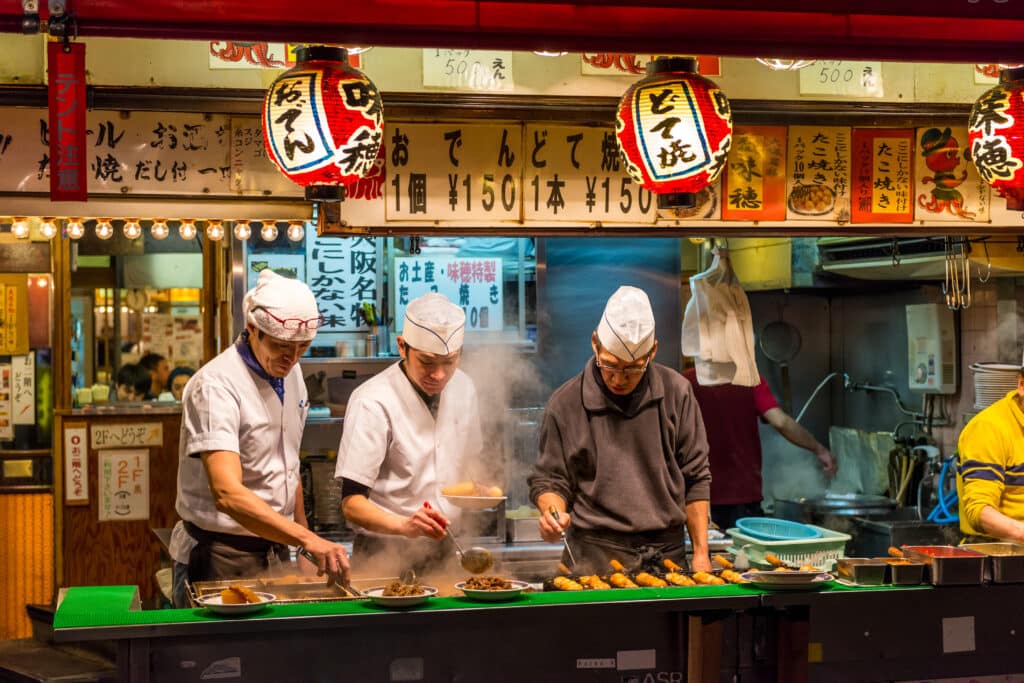
Osaka’s food scene is one of the strongest reasons to visit the city—but you don’t need to chase every famous dish or queue at every restaurant you see on social media.
For a first visit, focus on the foods that are closely connected to Osaka and choose different neighborhoods for different experiences. Dotonbori is excellent for atmosphere, Shinsekai is the classic place for kushikatsu, and some of your best meals may come from an unremarkable-looking restaurant away from the busiest streets.
If you only have one or two days, the real question isn’t “What can I eat in Osaka?” It’s “Which Osaka food experiences deserve my limited time?”
What Should You Prioritize Eating in Osaka?
You can’t try everything. These are the Osaka food experiences we’d prioritize on a first visit.
🐙 Takoyaki → The Osaka Food You Should Try at Least Once
Few foods are more closely associated with Osaka than takoyaki—soft, savory batter balls traditionally filled with pieces of octopus and cooked in distinctive round molds.
Part of the experience is watching them being prepared at small counters and street-food stands. They’re typically served piping hot with sauce and toppings, so don’t make the classic first-timer mistake of eating one immediately.
- It’s your first Osaka visit.
- You enjoy street food.
- You’re exploring Namba or Dotonbori.
- You want an inexpensive Osaka food experience.
- You don’t eat octopus.
- You dislike very soft textures.
- You’re considering a long queue just for a famous shop.
Absolutely try takoyaki once—but don’t spend an hour queuing for it. Part of Osaka’s food culture is the abundance of choice. A good-looking busy stand with a short queue can be a smarter experience than chasing one famous name.
🥞 Okonomiyaki → Our Pick for One Essential Osaka Meal
If takoyaki is Osaka’s essential snack, okonomiyaki is one of the city’s essential meals.
This savory pancake typically combines batter, cabbage, and other ingredients before being cooked on a hot griddle and finished with sauce and toppings. Restaurants vary in style—at some, the food is prepared for you; at others, the hotplate becomes part of the dining experience.
If your Osaka itinerary is short and you only have time for one deliberately planned local dinner, this would be one of our strongest choices.
Make room for okonomiyaki. Unlike a quick street-food snack, it gives you a proper Osaka dining experience and is worth prioritizing even on a one-day visit.
🍢 Kushikatsu → Best Combined with Shinsekai
Kushikatsu consists of ingredients placed on skewers, coated, and deep-fried. You’ll find it throughout Osaka, but Shinsekai is the classic neighborhood to combine with a kushikatsu meal.
This is a good example of how to plan Osaka intelligently: instead of travelling somewhere solely for a particular food, combine the meal with an area you’re already exploring.
If Shinsekai is already on your itinerary, kushikatsu is one of the easiest foods to prioritize. The food and neighborhood complement each other and turn a sightseeing stop into a fuller Osaka experience.
🍜 Kitsune Udon → Worth It When You Want Something Simple
Not every Osaka meal needs to become a major event. Kitsune udon—udon topped with sweet-savory fried tofu—is closely associated with Osaka and works particularly well when you want something quick, comforting, and relatively simple.
Worth trying, but don’t prioritize it over takoyaki or okonomiyaki on a very short visit. Think of it as an excellent lunch or lighter meal when it fits naturally into your day.
🥩 Yakiniku → Worth a Detour for Meat Lovers
Osaka has an excellent yakiniku scene, and the Tsuruhashi area is particularly well known for Korean-influenced food culture and grilled meat restaurants.
But unlike Dotonbori or Shinsekai, Tsuruhashi isn’t an essential stop for every first-time visitor. Whether you should go depends on how important food exploration is to your trip.
Food-focused trip? Consider Tsuruhashi. Short first visit? Enjoy yakiniku if you find a good restaurant near where you’re already exploring rather than adding another neighborhood simply to tick it off.
🐡 Fugu → Famous, but Not Essential
Fugu is one of Japan’s most famous specialty foods, and Osaka has a long association with it. For some travelers, trying professionally prepared pufferfish is a memorable experience in itself.
But fame doesn’t automatically make something essential. If you’re choosing between limited meals in Osaka, fugu wouldn’t rank above the city’s more distinctive everyday food culture for us.
Try fugu if you’re genuinely curious about it—not because a checklist tells you it’s something you “must eat” in Japan. For most first-time visitors, takoyaki, okonomiyaki, and kushikatsu offer a more essential Osaka food experience.
📍 Where Should You Eat in Osaka?
The smartest food strategy isn’t to find one “best food district.” Different neighborhoods work better for different experiences.
🌃 Is Dotonbori Actually Worth Eating In?
Yes—but go for the combination of food and atmosphere rather than expecting every famous restaurant to be Osaka’s best.
Dotonbori is touristy, crowded, bright, noisy, and unmistakably Osaka. That’s precisely why first-time visitors should experience it. Grab a snack, wander the side streets, enjoy the signs and crowds, and make the evening itself part of the experience.
Don’t skip Dotonbori because it’s touristy—but don’t assume touristy means best food either. Use Dotonbori for atmosphere and casual food exploration, then eat elsewhere too.
🐟 Is Kuromon Market Worth It for Food?
Kuromon Market is convenient for sampling different foods in one place and works particularly well when you’re already exploring the Namba area.
However, it shouldn’t become the centerpiece of your Osaka food experience. Prices and the visitor-oriented atmosphere mean that you don’t need to eat everything here simply because the market is famous.
Visit if it fits your Namba day, sample one or two things that genuinely appeal to you, then continue exploring. There’s no need to turn Kuromon into an expensive food checklist.
⏱️ If You Only Have One Day: What Should You Eat?
A short Osaka stay makes prioritization especially important. You don’t need six “must-eat” dishes squeezed into a single day.
🐙 Takoyaki
Try Osaka’s most iconic street food while exploring Namba.
🍢 Kushikatsu
Combine a few skewers with your exploration of Shinsekai.
🥞 Okonomiyaki
Finish with one of Osaka’s most satisfying classic meals.
🤔 Osaka Food Mistakes to Avoid
A long social-media queue isn’t automatically evidence that the meal will be better than dozens of nearby alternatives.
Three memorable Osaka foods are better than rushing through eight dishes simply to say you’ve tried them.
Experience Dotonbori, but also eat in other neighborhoods to see a broader side of Osaka’s food culture.
Leave at least one meal flexible. Osaka is one of the best cities in Japan for simply following what looks good.
🍽️ What Does “Kuidaore” Really Mean for Your Trip?
Osaka is famously associated with kuidaore—often interpreted as eating until you drop or spending extravagantly on food.
But you don’t need expensive restaurants or an enormous food checklist to experience that spirit. Osaka’s food culture is just as much about casual meals, small restaurants, street food, and enjoying what you discover along the way.
Plan the food experience, not every restaurant. Know the dishes you want to try and the neighborhoods where they fit naturally, but leave enough flexibility to follow your appetite when something interesting appears.
🦉 Travel Owl Decision
If this is your first Osaka visit, prioritize takoyaki, okonomiyaki, and kushikatsu. Together they give you three very different sides of the city’s food culture without turning your trip into an eating checklist.
Use Dotonbori for atmosphere, Shinsekai for kushikatsu, and the wider city for your sit-down meals. Kuromon Market is worth exploring when it fits naturally into your Namba itinerary, but you don’t need to make it your main food destination.
Our recommendation: don’t spend your limited Osaka time chasing famous restaurants across the city. Choose a few foods you genuinely want to try, combine them with the neighborhoods you’re already exploring, and leave room for spontaneous discoveries. That’s a smarter—and much more enjoyable—way to eat your way through Osaka.
Best Day Trips from Osaka: Which One Should You Choose?
Osaka is one of Japan’s best bases for day trips—but that doesn’t mean you should fill every spare day with one.
Kyoto, Nara, Kobe, and Himeji are all within easy reach, while even Hiroshima can be reached quickly by Shinkansen. The harder decision is which destination adds the most to your Japan itinerary without duplicating experiences you’re already getting elsewhere.
For most first-time visitors, Nara and Himeji are the strongest day-trip choices from Osaka. But the smartest option depends on your interests and, just as importantly, what other destinations are already included in your trip.
Which Osaka Day Trip Is Best for You?
Choose the destination that adds something new to your trip—not simply the most famous place within reach.
*Travel times vary considerably depending on your departure station and train type.
🦌 Nara → Best Overall Day Trip for Most First-Time Visitors
If you only have room for one easy day trip from Osaka, Nara is difficult to beat.
The city combines some of Japan’s most important historic sights with a completely different atmosphere from Osaka. Todai-ji, Nara Park, Kasuga Taisha, and the famous deer can all be experienced without turning the day into a complicated transport exercise.
Nara also works particularly well as a day trip because many of its main sights are concentrated within a relatively manageable area.
- It’s your first Japan trip.
- You want temples and cultural sights.
- You enjoy walking.
- You want an easy day trip.
- You’re travelling with children.
- Your itinerary already contains many temple-heavy days.
- You’re spending very little time in Osaka itself.
- Historic sights aren’t a priority.
Nara is our best all-round day trip from Osaka for a first-time visitor. It’s close, easy to explore, and gives you an experience that feels completely different from Osaka without consuming half the day in transit.
🏯 Himeji → Best for History & Castle Lovers
If you’ve already seen plenty of temples and want something different, Himeji is arguably the smarter choice than another temple-focused excursion.
Himeji Castle is one of Japan’s great surviving historic castles and offers a very different experience from reconstructed Osaka Castle.
This makes Himeji especially valuable if Osaka Castle left you wanting to see what an original Japanese castle feels like inside.
- Japanese history interests you.
- You want to see an original castle.
- You’ve already visited Nara.
- You want something different from Kyoto.
- Castles don’t particularly interest you.
- Your itinerary already includes Himeji while travelling west.
- You only have one full day for Osaka itself.
Don’t visit Osaka Castle and assume you’ve experienced Japan’s best castle architecture. If castles genuinely interest you, Himeji deserves the extra journey.
🥩 Kobe → Best for Food & a Relaxed Change of Pace
Kobe is extremely easy to reach from Osaka, but that doesn’t automatically make it an essential first-trip destination.
Its appeal lies more in food, waterfront scenery, neighborhoods, and relaxed urban exploration than in a long checklist of must-see attractions.
That can make Kobe very enjoyable—but it also means travelers with limited time may get more contrast from Nara or Himeji.
Choose Kobe if food and relaxed city exploration appeal to you more than major sightseeing. If you’re looking for the most memorable first-trip day excursion, we’d prioritize Nara or Himeji first.
⛩️ Kyoto → Easy Day Trip, but Should You Really Visit This Way?
Technically, Kyoto is one of the easiest major day trips from Osaka. Trains connect the two cities quickly, making it perfectly possible to sleep in Osaka and sightsee in Kyoto during the day.
But possible doesn’t necessarily mean optimal.
Kyoto has enough major sights, neighborhoods, temples, gardens, and evening atmosphere to justify several days on a first Japan trip. Using it as a single rushed Osaka day trip can mean spending too much of your day moving between attractions and too little time actually experiencing the city.
- Your accommodation is firmly based in Osaka.
- You only want to see a small number of Kyoto highlights.
- Changing hotels would complicate your trip.
- You’ve visited Kyoto before.
- It’s your first Japan trip.
- Kyoto is one of your main destinations.
- You want early mornings at popular sights.
- You want more than one full day there.
For most first-time visitors, Kyoto deserves its own stay rather than being treated as another Osaka day trip. The cities are close geographically, but they reward very different styles of travel.
🕊️ Hiroshima → Possible in a Day, but Is It Smart?
High-speed trains make Hiroshima surprisingly accessible from Osaka, and a day trip is certainly possible.
But this is where Travel Owl would separate “possible” from “recommended.”
A Hiroshima visit deserves enough time for the Peace Memorial Park, museum, and city itself. Many travelers also want to combine Hiroshima with Miyajima, which makes a rushed return trip to Osaka even less attractive.
A Hiroshima day trip is feasible, but we’d usually prefer an overnight stay—especially if Miyajima is also on your itinerary. Choose the day trip mainly when your schedule genuinely prevents staying overnight.
⚖️ Nara vs Himeji: If You Only Have Time for One
For many first-time visitors, this is the most useful Osaka day-trip decision.
First trip + want variety → Nara.
Already spending several days in Kyoto + love history → Himeji.
⏱️ How Many Osaka Day Trips Should You Take?
This depends less on what’s reachable and more on how many days you’re actually staying in Osaka.
0 Day Trips
Experience Osaka itself. Don’t use your only full day to immediately leave the city.
1 Day Trip
The best balance for most travelers using Osaka as more than a quick stop.
2–3 Day Trips
Nara, Himeji, Kobe, and Kyoto become much easier to combine while keeping Osaka as your base.
🧳 Should You Use Osaka as Your Kansai Base?
Staying in one hotel and taking day trips can be much easier than repeatedly packing and moving luggage. But convenience shouldn’t come at the cost of experiencing destinations properly.
- You dislike changing hotels frequently.
- Nightlife and food matter to you.
- You’re visiting Nara, Kobe, or Himeji.
- You find better-value accommodation in Osaka.
- You prefer returning to one familiar base.
- Kyoto is one of your main destinations.
- You want early mornings and evenings in Kyoto.
- You’re continuing west toward Hiroshima.
- Repeated commuting would waste significant time.
- You want to experience different cities after dark.
🧭 Day Trip or Onward Stop? Sometimes There’s a Smarter Option
Not every nearby destination needs to be a round trip from Osaka. If you’re continuing through Japan, some places work better as stops along your route.
Don’t automatically return to Osaka just because you can. If your Japan route continues west, visiting Himeji on the way to Hiroshima can be smarter than making a separate round trip from Osaka.
🦉 Travel Owl Decision
If you only have time for one Osaka day trip, choose Nara for the best all-round first-time experience or Himeji if history and castles are more important to you.
Kobe is an excellent alternative for food-focused travelers, while Kyoto deserves more than a rushed day trip on most first Japan itineraries. Hiroshima is technically possible in a day, but an overnight stay makes much more sense if you also want to experience Miyajima.
Our recommendation: don’t collect day trips simply because Osaka makes them easy. Choose the destination that adds the most variety to your overall Japan itinerary—and check whether it would work even better as your next stop instead of a round trip.
Osaka Time Optimizer: Travel Smarter, Waste Less Time
Osaka is relatively easy to explore, but small planning mistakes can quickly eat into your sightseeing time. Long station transfers, unnecessary cross-city journeys, restaurant queues, and poorly grouped attractions can turn a relaxed day into one spent navigating rather than experiencing the city.
The good news is that you don’t need a perfectly optimized itinerary. A few smart decisions can make Osaka considerably easier.
🦉 Osaka Time Optimizer
The decisions that can save you the most time in Osaka
1. Explore Osaka by Neighborhood, Not by Attraction
This is probably the single biggest improvement you can make to an Osaka itinerary.
Don’t create a list of attractions and visit them in whatever order they appear online. Instead, divide Osaka into sightseeing clusters and spend several hours exploring each area.
Take public transport to an area, then explore that area on foot. Only get back on the train when you’re ready to move to another part of Osaka.
2. Don’t Waste Your Best Hours in Dotonbori
Dotonbori is one of Osaka’s essential experiences—but you don’t need to give it your prime daytime sightseeing hours.
The area becomes much more atmospheric after dark, when the signs illuminate and the streets fill with people. During the day, use your time for attractions that benefit more from daylight.
Explore Kuromon, temples, museums, Osaka Castle, or other daytime sights first. Save Dotonbori and the surrounding Namba streets for late afternoon and evening.
3. Don’t Queue Just Because a Restaurant Is Famous
Osaka is one of the worst cities in Japan to waste an hour waiting for food simply because one restaurant went viral.
The city has an enormous number of restaurants, takoyaki stands, izakaya, noodle shops, and casual eateries. If a famous restaurant has an enormous queue, there is often another good option only a few streets away.
If the queue is longer than the experience is worth to you, walk away. In Osaka, flexibility is often more rewarding than chasing one famous restaurant.
4. Know Which Osaka Attractions Need Advance Planning
Most of Osaka can be explored spontaneously, but a few popular experiences work better with advance planning.
Timed-entry attractions, major theme parks, observation decks, special exhibitions, and popular restaurants may require reservations or become significantly harder to visit at your preferred time.
- Universal Studios Japan
- Popular timed-entry attractions
- Special exhibitions
- Restaurants you absolutely don’t want to miss
- Dotonbori
- Shinsekai
- Shinsaibashi
- Neighborhood wandering
- Most casual meals
Reserve the experiences where timing genuinely matters and leave the rest of your day flexible. Overbooking Osaka removes one of the city’s biggest advantages: its spontaneity.
5. Don’t Confuse Osaka Station and Shin-Osaka Station
This is a simple mistake, but it can cause unnecessary stress.
Shin-Osaka is the city’s main Shinkansen station, while Osaka Station is the major transport hub in the Umeda area. They are not the same station.
If you’re catching a Shinkansen, check your departure station carefully before leaving your hotel.
If you’re staying around Namba or Umeda, allow time to reach Shin-Osaka before a Shinkansen departure rather than assuming your long-distance train leaves from central Osaka Station.
6. Don’t Try to See Osaka and Kyoto the Same Way
Kyoto rewards early starts, carefully planned routes, and strategic timing around major temples.
Osaka is different. Some of its best experiences happen later in the day—over dinner, beneath neon signs, inside shopping streets, and while wandering neighborhoods without a strict sightseeing objective.
Don’t force Osaka into a sunrise-to-sunset attraction schedule. Leave energy and time for the evening. That’s when parts of the city become most memorable.
7. Use Your Hotel Location to Save Time Every Day
Saving ten minutes on one train journey isn’t especially important. Saving ten or fifteen minutes every morning and every evening quickly adds up.
That’s why your accommodation location matters. For most first-time visitors, staying near Namba or Umeda makes it easier to start and finish each day without unnecessary transfers.
For a short stay, pay slightly more for a useful location rather than saving a small amount on a hotel that adds inconvenient journeys every day.
8. Don’t Overuse Day Trips
Osaka makes Nara, Himeji, Kobe, and Kyoto remarkably easy to reach. That can create a new problem: using Osaka only as a place to sleep.
If you’re staying two nights, don’t immediately sacrifice your only full day to a day trip. Osaka deserves enough time for its neighborhoods, food, and evening atmosphere.
2 nights → Osaka only.
3–4 nights → add one day trip.
5+ nights → Osaka can work as a wider Kansai base.
9. Don’t Automatically Buy Every Tourist Pass
Transport and sightseeing passes can be useful, but they’re only good value when they match what you were already planning to do.
A pass becomes a bad decision when you start adding attractions simply because they’re included.
Build your itinerary first. Price the pass second. If the pass makes your existing plan cheaper or easier, buy it. If it changes your itinerary just to justify the price, skip it.
10. Leave Space for Osaka to Surprise You
This may sound like the opposite of a time-optimization strategy, but it’s actually one of the most important.
Osaka isn’t a city where every memorable experience needs a reservation or an entrance ticket. Some of the best moments come from finding a tiny restaurant, walking through an unfamiliar shopping street, or following an interesting side street.
An itinerary packed from morning until night can actually reduce what makes Osaka special.
Plan the structure of your day, not every minute. Choose your main neighborhood and one or two priorities, then leave enough flexibility for discoveries along the way.
⏱️ If You Remember Only Five Osaka Travel Tips
Don’t zigzag across Osaka between unrelated attractions.
Dotonbori and surrounding streets are at their best after dark.
Osaka has too much good food to spend an hour waiting unnecessarily.
Use trains between areas and your feet within them.
Leave room for food, side streets, and spontaneous discoveries.
🦉 Travel Owl Decision
The smartest Osaka itinerary isn’t the one that fits in the most attractions. It’s the one that minimizes unnecessary travel while leaving enough time to actually experience each neighborhood.
Group your sightseeing geographically, walk whenever it makes sense, avoid unnecessary queues, and don’t schedule every meal and attraction.
Our recommendation: choose one or two main areas per day, add a small number of genuine priorities, and leave the rest flexible. You’ll spend less time navigating Osaka—and more time enjoying the food, streets, neighborhoods, and atmosphere that make the city worth visiting.
Osaka vs Tokyo vs Kyoto: Which Fits Your Trip?
Tokyo, Kyoto, and Osaka are often grouped together on a first Japan itinerary, but they offer very different experiences. The question isn’t really which city is best—it’s which one deserves more of your limited time.
For most first-time visitors, we wouldn’t recommend choosing only one. Instead, decide what each city contributes to your trip and allocate your days accordingly.
🦉 Tokyo, Kyoto or Osaka?
Choose based on the experience you want—not simply which city is most famous.
For Variety
Tokyo is the strongest choice if you want maximum variety—modern neighborhoods, shopping, museums, nightlife, food, pop culture and major attractions.
Best for:- First-time Japan visitors
- Shopping
- Pop culture
- Big-city experiences
- Travelers who want endless choice
For Culture
Kyoto should receive more of your time if temples, gardens, shrines and traditional neighborhoods are among the main reasons you’re visiting Japan.
Best for:- Japanese history
- Temples and shrines
- Traditional atmosphere
- Gardens
- Photography
For Food & Atmosphere
Osaka is the strongest choice when you care more about food, nightlife and experiencing neighborhoods than collecting famous cultural attractions.
Best for:- Food-focused travelers
- Nightlife
- Casual city exploring
- Evening atmosphere
- Using one base for Kansai
🤔 If You’re Short on Time, Which City Should You Cut?
This is where the decision becomes more difficult.
For a first Japan trip, Tokyo and Kyoto usually provide the greatest contrast. Tokyo gives you modern, large-scale urban Japan; Kyoto gives you the country’s most famous concentration of traditional sights.
Osaka overlaps somewhat with Tokyo as another major modern city, which means Osaka is often the easiest of the three to shorten when your itinerary is extremely tight.
But that doesn’t mean Osaka isn’t worth visiting. If food, nightlife, Universal Studios Japan, or a more relaxed urban atmosphere are important to you, Osaka can easily deserve more time than another temple-heavy day in Kyoto.
Very short first trip? Prioritize Tokyo + Kyoto and add Osaka if your schedule allows.
Food and nightlife are major priorities? Don’t automatically sacrifice Osaka. Reduce the number of similar temple or sightseeing days elsewhere instead.
⏱️ How Should You Divide Your Time?
You don’t need to give Tokyo, Kyoto, and Osaka an equal number of days. Their sightseeing styles are different.
🧭 Don’t Ask Which City Is “Best”
Tokyo, Kyoto, and Osaka work particularly well together precisely because they aren’t interchangeable.
A smarter way to plan your itinerary is to give each city a different job:
Explore modern Japan and its extraordinary variety.
Experience Japan’s historic and cultural side.
Slow down, eat well and enjoy the city after dark.
Still Deciding Between Tokyo and Osaka?
If you’re deciding which city deserves more days, our dedicated comparison goes deeper into food, attractions, nightlife, costs, neighborhoods, day trips, and which city suits different travel styles.
Tokyo vs Osaka: Which Should You Visit? →🦉 Travel Owl Decision
For most first-time visitors, Tokyo and Kyoto are the two hardest cities to remove because together they provide the strongest contrast between modern and traditional Japan.
Osaka becomes particularly valuable when food, nightlife, Universal Studios Japan, a more relaxed city experience, or convenient Kansai day trips matter to you.
Our recommendation: don’t divide your days equally just because Tokyo, Kyoto, and Osaka are Japan’s famous three-city route. Give each city enough time to do what it does best—and give more days to the experiences you personally value most.
Osaka Travel FAQ
Still deciding how Osaka fits into your Japan itinerary? These are the questions first-time visitors most often need to answer before booking their stay.
Is Osaka worth visiting on a first trip to Japan?
Yes, especially if food, nightlife, and lively neighborhoods appeal to you. Osaka offers a more casual urban experience than Tokyo or Kyoto and is particularly enjoyable after dark. However, on a very short first trip, Tokyo and Kyoto may deserve priority because they provide a stronger contrast between modern and traditional Japan.
How many days do you need in Osaka?
Two full days is ideal for most first-time visitors. One day gives you enough time for a taste of Osaka, while three days makes sense if you want a slower trip or plan to visit Universal Studios Japan. With four or more days, Osaka can also work well as a base for day trips around Kansai.
Is Osaka better than Kyoto?
Neither is better overall—they offer very different experiences. Choose Kyoto for temples, shrines, gardens, and traditional atmosphere; choose Osaka for food, nightlife, and relaxed city exploring. For most first-time visitors, the smartest itinerary includes both rather than choosing between them.
Where is the best area to stay in Osaka?
Namba is our preferred choice for most first-time visitors because you’re close to Dotonbori, restaurants, shopping, and nightlife. Choose Umeda instead if transport connections and day trips are more important than staying in Osaka’s main entertainment district.
What food should you try in Osaka?
If it’s your first visit, prioritize takoyaki, okonomiyaki, and kushikatsu. Dotonbori is worth experiencing for food and atmosphere, but don’t assume the busiest or most famous restaurant is automatically the best. Osaka rewards spontaneous food discoveries.
What is the best time to visit Osaka?
Spring and autumn offer the best overall conditions for most travelers. Late March and early April are popular for cherry blossoms, while October and November combine comfortable sightseeing weather with autumn scenery. Winter can be a good alternative if seasonal scenery isn’t a priority, while summer is hot and humid.
What is the best day trip from Osaka?
Nara is our best all-round choice for most first-time visitors because it’s easy to reach and combines temples, historic sights, and the famous deer. Choose Himeji instead if Japanese history and castles are bigger priorities. Kyoto is easy to reach from Osaka, but usually deserves its own stay on a first Japan trip.
Can you visit Osaka as a day trip from Kyoto?
Yes. Osaka and Kyoto are close enough that a day trip is easy, and it can work well if your accommodation is already based in Kyoto. However, staying at least one night in Osaka gives you a better experience of Dotonbori, Namba, food, and nightlife—some of the things that make Osaka most different from Kyoto.
Final Thoughts: Should You Visit Osaka?
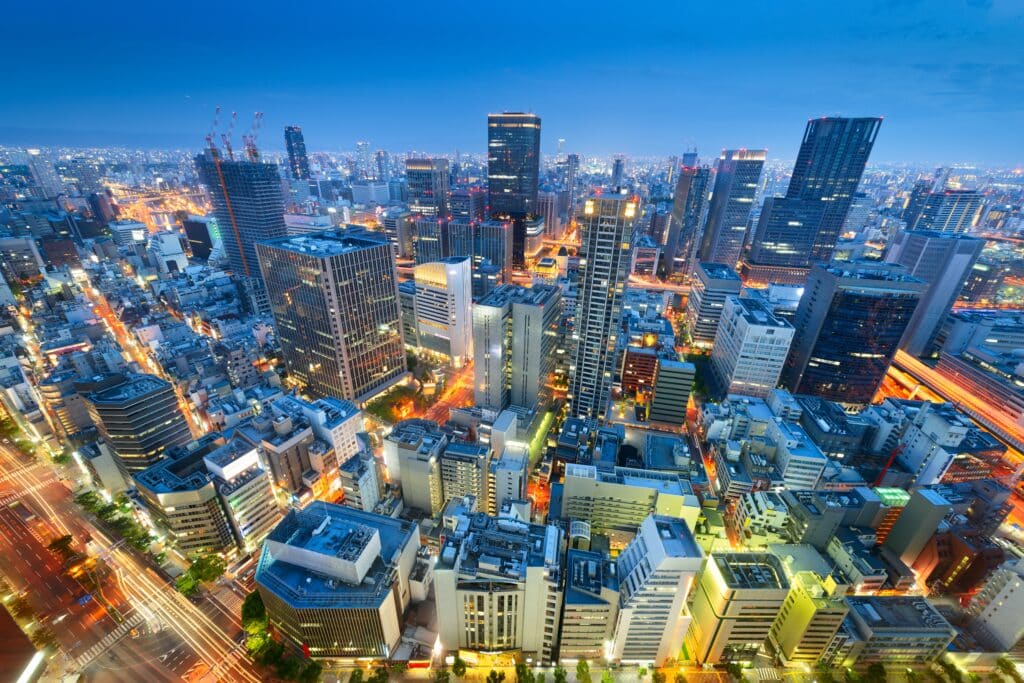
Osaka doesn’t need to compete with Tokyo or Kyoto to deserve a place on your Japan itinerary. Its strength is that it offers something different from both.
You don’t come to Osaka primarily for an endless list of famous temples or once-in-a-lifetime landmarks. You come for the food, neighborhoods, nightlife, street life, and a more relaxed way of experiencing a major Japanese city.
And that’s exactly why Osaka isn’t automatically essential for every traveler.
🦉 Is Osaka Worth a Place in Your Japan Itinerary?
- Food is one of the main reasons you’re visiting Japan.
- You enjoy lively neighborhoods and nightlife.
- You want a contrast to temple-heavy Kyoto.
- You prefer experiencing a city rather than checking off attractions.
- You want a convenient base for exploring Kansai.
- Universal Studios Japan is a priority.
- You have only five or six days in Japan.
- Traditional culture is your overwhelming priority.
- Your itinerary already contains several major cities.
- Food and nightlife aren’t particularly important to you.
- Adding Osaka would mean rushing Tokyo or Kyoto.
- You’re visiting simply because Osaka appears on every classic itinerary.
🎯 The Real Decision Isn’t “Is Osaka Worth Visiting?”
Osaka is worth visiting. The more useful question is:
Is Osaka worth giving up one or two days somewhere else on your Japan itinerary?
For a traveler with only five days, the answer may be no. Tokyo and Kyoto can provide a stronger introduction to Japan’s modern and traditional sides.
For someone with ten days who loves food, evening atmosphere, and energetic neighborhoods, the answer is very different. Osaka can become one of the most enjoyable parts of the trip.
And if you’re spending several days in Kansai, Osaka’s location makes it even more useful as a base for destinations such as Nara, Himeji, and Kobe.
⏱️ Travel Owl Shortcut
7–9 days → Consider 1–2 days in Osaka
10–14 days → Osaka is easy to recommend
Food-focused trip → Give Osaka more time
USJ is a priority → Add a dedicated park day
Using Osaka as a Kansai base → 3–5 nights can make sense
🚶 And When You Get Here, Don’t Try to “Complete” Osaka
Osaka is one of those cities where a packed sightseeing schedule can actually make the experience worse.
See the attractions that genuinely interest you. But also leave time for a long dinner, an unfamiliar shopping street, a tiny restaurant, a neighborhood you hadn’t planned to visit, or simply walking through Namba after dark.
Those moments aren’t wasted itinerary time.
In Osaka, they’re often the point.
🦉 Travel Owl Verdict
For most first-time visitors with around 10 days or more in Japan, we recommend including Osaka. Two full sightseeing days is the sweet spot, with additional time only if you want Universal Studios Japan, slower exploration, or day trips.
But don’t add Osaka simply because every classic Japan itinerary tells you to.
Add Osaka because its food, neighborhoods, nightlife, and relaxed urban atmosphere match the kind of Japan you want to experience. The smartest itinerary isn’t the one that includes the most famous places—it’s the one that gives the most time to the experiences you’ll actually value.
Osaka isn’t a city that impresses through famous landmarks or carefully curated sights.
Instead, it’s a place you experience.
It’s the energy of neon-lit streets in Dotonbori, the spontaneity of trying street food you didn’t plan for, and the feeling of a city that doesn’t take itself too seriously. Compared to Kyoto and Tokyo, Osaka feels more relaxed, more social, and more focused on enjoying the moment.
That’s exactly why it stands out.
For most travelers, Osaka works best as part of a Kansai itinerary—combined with Kyoto and a day trip to Nara. But even a short stay here can easily become one of the highlights of a trip to Japan.
If you approach Osaka with the right expectations—not as a checklist of sights, but as a city to explore, eat, and enjoy—it often ends up being the place people remember most.