
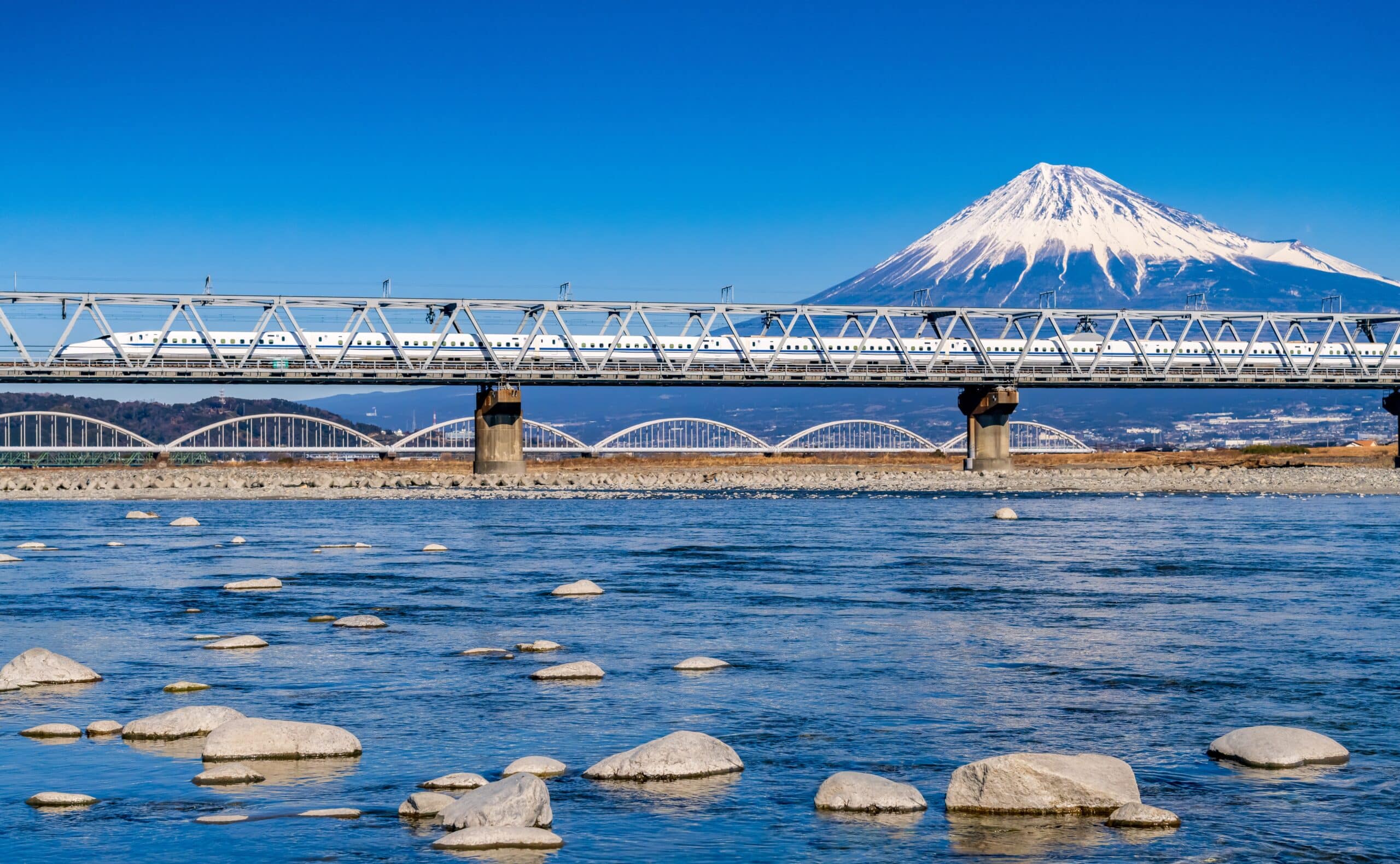
Japan’s fast and efficient transport network makes it tempting to turn almost anywhere into a day trip. From Tokyo, Kyoto, or Osaka, you can reach an impressive number of destinations in just a few hours. But just because a place can be visited in a day does not mean it should be.
Some destinations work perfectly as day trips. You can explore the highlights, return to your hotel in the evening, and avoid the hassle of packing, checking out, and moving your luggage. In places such as Nara, Kamakura, or Himeji, staying overnight often adds surprisingly little for a first-time visitor.
Other destinations are different. In Hakone, the ryokan and onsen experience can be one of the main reasons to visit. Around Kawaguchiko, staying overnight gives you another chance to see Mount Fuji when visibility changes. And on Miyajima or Koyasan, the atmosphere after most day-trippers leave can feel completely different from the busiest hours of the day.
The challenge is finding the right balance. Too many day trips can leave you spending hours repeatedly travelling back to the same base, while too many overnight stops create constant hotel changes, packing, and luggage logistics.
Travel Owl Approach
The smartest choice is not always the destination with the shortest train journey. The better question is: Does staying overnight add enough value to justify another hotel change?
In this guide, we compare Japan’s most popular day-trip and short-stay destinations and explain where an overnight stay genuinely improves the experience—and where keeping your existing hotel is the smarter choice.
The goal is simple: spend your nights where they add real value to your trip, rather than changing hotels simply because a destination appears on your itinerary.
Which Japan Destinations Need an Overnight Stay?
For most first-time visitors, Nara, Kamakura, Yokohama, Himeji, Kobe, and Uji work best as day trips. They are easy to reach from a major base, their main sights can usually be explored comfortably in a day, and staying overnight often does not add enough value to justify another hotel change.
The important distinction is that travel time alone does not determine whether a destination deserves a night. Hakone can be visited from Tokyo in a day, for example, but a ryokan and onsen stay can become one of the highlights of the trip. Miyajima is easy to visit from Hiroshima, yet staying after the day-trippers leave gives you a very different experience.
On the other hand, staying overnight in a place such as Nara or Himeji may simply mean packing your luggage, checking out, and changing hotels for little additional benefit. The smartest choice is therefore not always the destination with the shortest or longest journey—it is the one where the overnight stay gives you something worthwhile in return.
Table of Contents
Day Trip or Overnight? The Travel Owl Decision Rule
There is no single travel-time limit that determines whether a destination should be a day trip or an overnight stay. A place 90 minutes away may be perfect for a day trip, while another destination at a similar distance may be far more rewarding with a night.
Instead of looking only at the train schedule, consider what you gain by staying overnight—and what it costs you in extra hotel changes. These five questions make the decision much easier.
That final question is especially important. Consider the difference between visiting Hakone from Tokyo and returning to Tokyo that evening, and travelling Tokyo → Hakone → Kyoto. The first is a day trip; the second turns Hakone into a useful stop along your route and avoids unnecessary backtracking.
If the answer is very little, keep your existing hotel. If the answer includes a special evening atmosphere, early-morning sightseeing, a ryokan or onsen experience, more reliable time for weather-dependent scenery, or a better onward route, the extra night may be well worth it.
With that rule in mind, we can start with the easiest decisions: destinations where most first-time visitors are better off keeping their existing base and visiting for the day.
Nara: Almost Always Better as a Day Trip
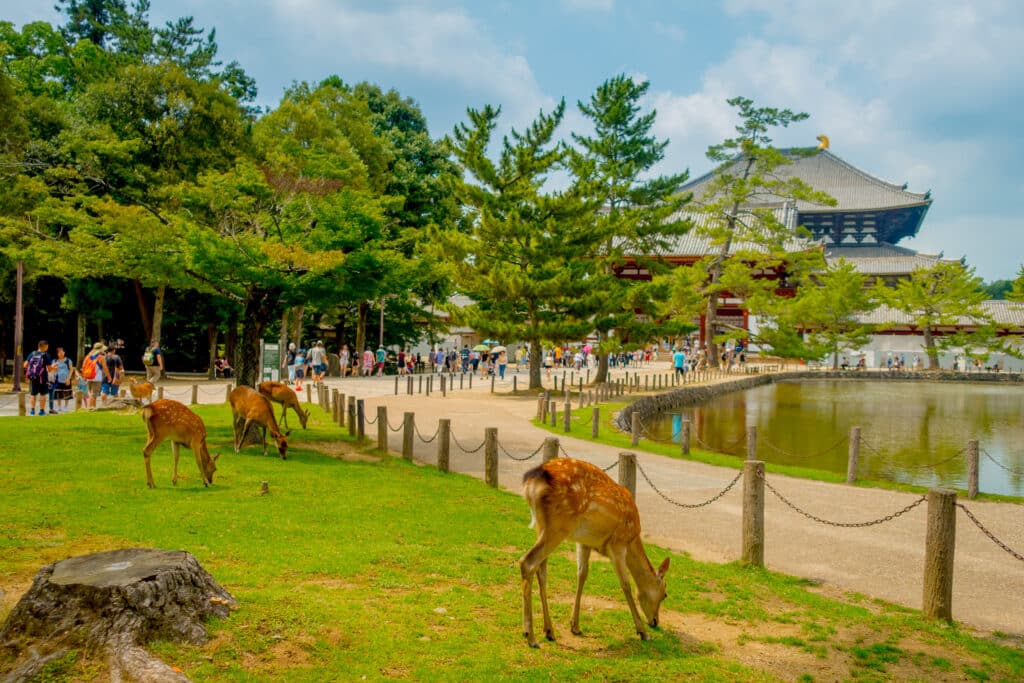
Nara is one of the clearest examples of a destination that most first-time visitors do not need to stay in overnight. It is easy to reach from both Kyoto and Osaka, many of its most famous sights are concentrated around Nara Park, and a well-planned full day gives you enough time to experience the highlights without changing hotels.
Why Nara Works So Well as a Day Trip
The biggest advantage is how conveniently Nara’s headline attractions fit together. Once you reach the central sightseeing area, you can combine Nara Park, Todai-ji, Kasuga Taisha, the deer-filled parkland, and the historic streets around Naramachi without spending large parts of the day travelling between distant neighborhoods.
That makes Nara very different from destinations where the train journey is only the beginning and you then need additional buses or long transfers. In Nara, much of the experience can be explored on foot, which makes your sightseeing time surprisingly efficient.
There is also little advantage in packing your suitcase and checking out of a Kyoto or Osaka hotel simply to move to Nara for one night. You would gain some quieter evening and early-morning hours, but for the typical first Japan itinerary, that benefit usually does not outweigh the inconvenience of another hotel change.
Consider staying overnight if you specifically want to experience Nara Park early in the morning or after the daytime crowds have thinned, prefer a slower pace, or plan to explore beyond the main central sights. A night can make Nara more atmospheric—but it is an upgrade for a particular travel style rather than something most first-time visitors need.
Nara therefore passes our day-trip test easily: the sights are compact, the journey is manageable, and staying overnight adds relatively little for the average first-time visitor.
Kamakura: Stay in Tokyo and Visit for the Day
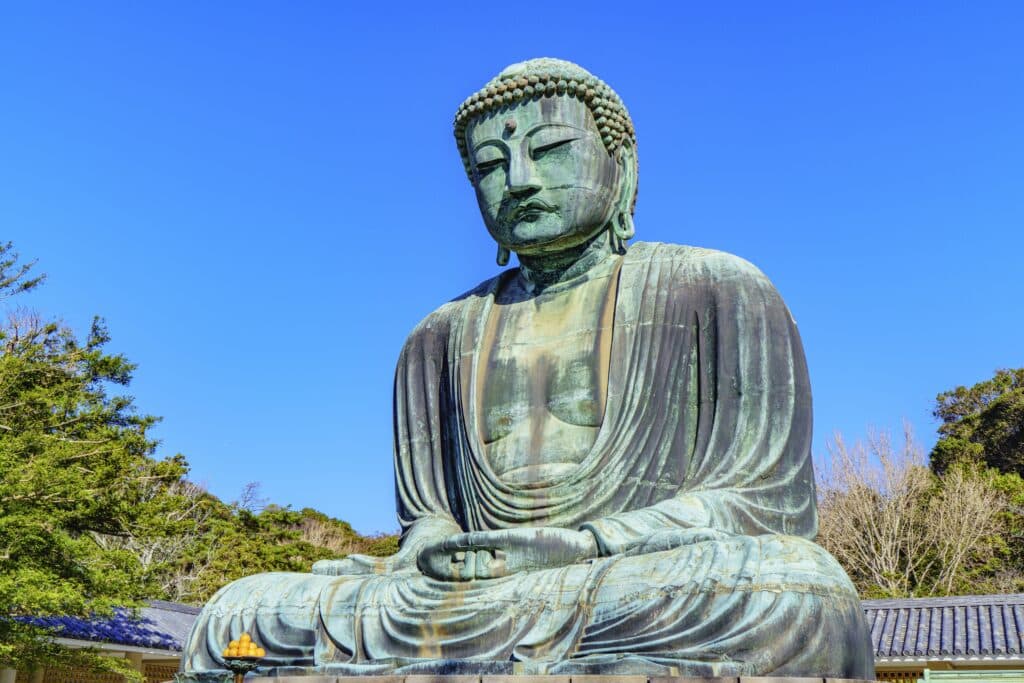
Kamakura is another destination where a day trip makes more sense than changing hotels for most first-time visitors. It feels very different from central Tokyo, with historic temples, shrines, wooded hills, traditional streets, and the coast—but it is still close enough to reach comfortably from the capital.
Why Kamakura Works Better as a Day Trip
The biggest reason is simple: Kamakura is close enough to Tokyo that staying overnight saves relatively little travel time. You can arrive in the morning, spend most of the day sightseeing, have dinner or stay into the early evening if you wish, and still return comfortably to your Tokyo hotel.
A well-planned day is enough to combine several of Kamakura’s strongest experiences, such as the Great Buddha, Hasedera, Tsurugaoka Hachimangu, Komachi Street, and one or two additional temples. The key is not trying to visit every temple simply because it appears on a sightseeing map.
Keeping Tokyo as your base also avoids the hidden cost of a hotel change. Packing, checking out, travelling with or storing luggage, checking into another hotel, and then moving again the following day can easily create more inconvenience than the overnight stay saves.
An overnight stay becomes more attractive if you want a slower coastal break from Tokyo, plan to spend time around Yuigahama or Hase, want to explore Kamakura before the busiest day-trip hours, or intend to combine Kamakura and Enoshima without rushing both into a single day.
What If You Want to Visit Enoshima Too?
This is where the decision becomes slightly less obvious. Kamakura alone fits comfortably into a day trip, but Kamakura plus Enoshima creates a much fuller day. The combination is still possible from Tokyo, especially with an early start, but you will need to be more selective about what you see.
If Enoshima is important to you and you want time for temples, the coast, sunset, restaurants, and a relaxed pace, one night in the area becomes more reasonable. If Enoshima is only an optional addition, it is usually smarter to keep Kamakura as a day trip and skip the extra hotel change.
For a typical first Japan itinerary, Kamakura therefore falls firmly on the day-trip side of the decision: it provides a major change of scenery from Tokyo without requiring you to move your luggage or add another hotel base.
Yokohama: Don’t Change Hotels
Yokohama is one of the easiest day-trip decisions in this guide. Despite being one of Japan’s largest cities, it is so close and well connected to Tokyo that most first-time visitors gain very little by moving hotels for a night.
Why Yokohama Is Better as a Day Trip
The main reason is proximity. From central Tokyo, Yokohama is close enough that the journey can feel more like travelling between different parts of one metropolitan area than making a separate intercity trip.
Once there, many of the places most visitors want to see can be combined efficiently. The Minato Mirai waterfront, Red Brick Warehouse, Yamashita Park, and Chinatown can form an easy sightseeing route, while attractions such as the Cup Noodles Museum can be added depending on your interests.
Yokohama also works particularly well as a late-starting day trip. Unlike destinations where temples and attractions encourage an early morning arrival, you can explore the waterfront during the afternoon, have dinner in Chinatown, enjoy the skyline after dark, and then return to Tokyo.
Consider staying overnight if Yokohama itself is an important part of your trip, you want a waterfront hotel experience, are attending an event in the city, or prefer to use Yokohama as your base instead of Tokyo. But adding a single Yokohama night between several nights in Tokyo rarely makes an itinerary more efficient.
Yokohama demonstrates an important principle for planning Japan: being a separate city does not automatically make somewhere a separate overnight destination. When transport is this convenient, keeping one strong base is usually the smarter choice.
Himeji: Better as a Day Trip or Stopover
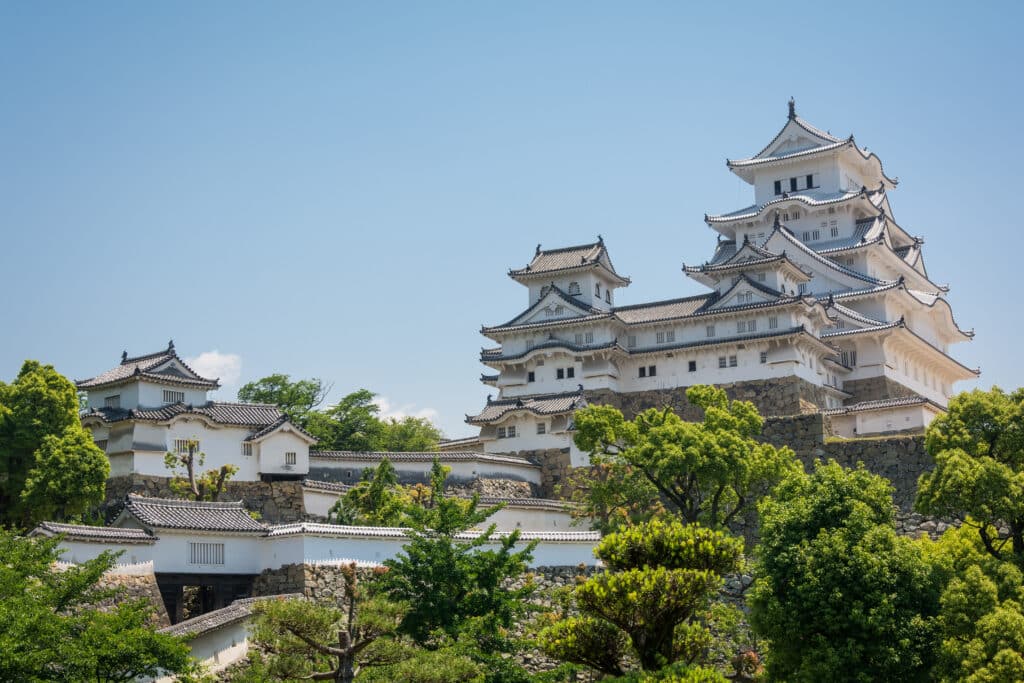
Himeji is home to one of Japan’s most spectacular castles, but that does not mean you need to spend a night there. For most first-time visitors, Himeji works best as either a day trip or a strategic stop between larger destinations.
Why Himeji Does Not Usually Need an Overnight Stay
Himeji’s greatest strength is also what makes it such an efficient day trip: the main reason most travelers come here is concentrated in one compact area. Himeji Castle dominates the visit, and the neighboring Koko-en garden is easy to combine with it.
The castle is also straightforward to reach from Himeji Station, so there is relatively little additional local transportation once you arrive. You can spend several rewarding hours in the city and still return to Osaka or Kyoto without turning the visit into an exhausting travel day.
For most first-time itineraries, spending a night in Himeji simply adds another check-out and check-in without unlocking enough additional experiences to justify it.
The Smarter Option: Use Himeji as a Stopover
Himeji becomes even more useful when you are travelling west toward Hiroshima. Instead of making a separate return journey from Osaka, you can build Himeji directly into your travel day.
Check out of your Osaka hotel, travel to Himeji, store your luggage, visit the castle and Koko-en, then continue west to Hiroshima later in the day. You see Himeji without backtracking and without adding another hotel night.
This approach can be more efficient than travelling Osaka → Himeji → Osaka on one day and then heading west toward Hiroshima shortly afterward. It turns necessary transportation into useful sightseeing time.
An overnight stay can be worthwhile if you want to visit Himeji Castle very early, explore the city at a slower pace, or add places beyond the central castle area. But for a typical first trip to Japan, these advantages rarely outweigh the convenience of keeping your existing base or continuing directly to your next destination.
Himeji highlights an important itinerary-planning principle: not every worthwhile destination needs to become either a day trip or an overnight stay. Sometimes the smartest option is to visit it on the way to somewhere else.
Kobe: Usually Better as a Day Trip
Kobe is easy to enjoy without making it another overnight stop. Its waterfront, neighborhoods, shopping streets, food scene, and mountain views can fill a rewarding day, but its proximity to Osaka makes changing hotels unnecessary for most first-time visitors.
Why Kobe Works So Well as a Day Trip
The biggest advantage is how easily Kobe fits into a Kansai itinerary. From Osaka, the journey is short enough that you can spend most of your day in Kobe rather than losing several hours simply getting there and back.
A full day can combine several different sides of the city. You might explore Kitano, Sannomiya, Chinatown, and the waterfront around Harborland, then finish with dinner before returning to Osaka.
That last point matters because Kobe does not force you to leave before evening. You can enjoy the illuminated waterfront or have a Kobe beef dinner and still return to your existing hotel afterward. Unlike destinations where staying overnight unlocks a completely different experience, Kobe’s evening atmosphere is accessible even as a day visitor.
Consider staying overnight if Kobe itself is a major priority, you want a slower city break, or you plan to combine central Kobe with places that require more time. An overnight can also make sense if Kobe fits naturally into your onward route rather than requiring you to return to Osaka.
What About Arima Onsen?
There is one important exception to the simple day-trip recommendation. If your Kobe plans include Arima Onsen, the decision changes. Instead of treating the onsen area as another attraction to squeeze into a busy sightseeing day, staying there can turn it into a proper ryokan and hot-spring experience.
In that case, the overnight is not really about needing more time in Kobe. It is about choosing an experience that is better after the sightseeing day ends—exactly the distinction that matters throughout this guide.
For the typical first-time Kansai itinerary, Kobe therefore belongs firmly in the day-trip category. You can experience the city’s strongest contrasts—from hillside neighborhoods to the waterfront and dinner—without adding another hotel base.
Uji: Definitely a Day Trip
Uji is one of the easiest destinations to classify in this guide. Located between Kyoto and Nara, it offers an appealing combination of temples, tea culture, riverside scenery, and a slower atmosphere—but for most first-time visitors, there is very little reason to move hotels just to spend a night here.
Why Uji Is Such an Easy Day Trip
Unlike destinations where reaching the train station is only the beginning of the journey, many of Uji’s main experiences are concentrated within a relatively compact area. Once you arrive, much of the sightseeing can be done on foot.
The obvious centerpiece is Byodoin Temple, but Uji is equally appealing for its historic tea shops, matcha desserts, riverside walks, and quieter pace compared with central Kyoto. You can experience all of these without needing to stay until the following morning.
Uji also works well when you do not want to sacrifice an entire sightseeing day. An early start can turn it into a half-day excursion, leaving part of the afternoon or evening for Kyoto.
Staying overnight can appeal to travelers who specifically want a quiet small-city experience away from central Kyoto or want to explore Uji at a deliberately slow pace. But this is a preference rather than a practical necessity. For most Japan itineraries, the additional hotel change creates more friction than value.
Uji completes the clearest group of destinations in this guide: places where good transport, compact sightseeing, and limited overnight advantage make keeping your existing hotel the smarter choice. The next destinations are more interesting because staying the night can genuinely change the experience.
Hakone: One of Japan’s Best Overnight Upgrades
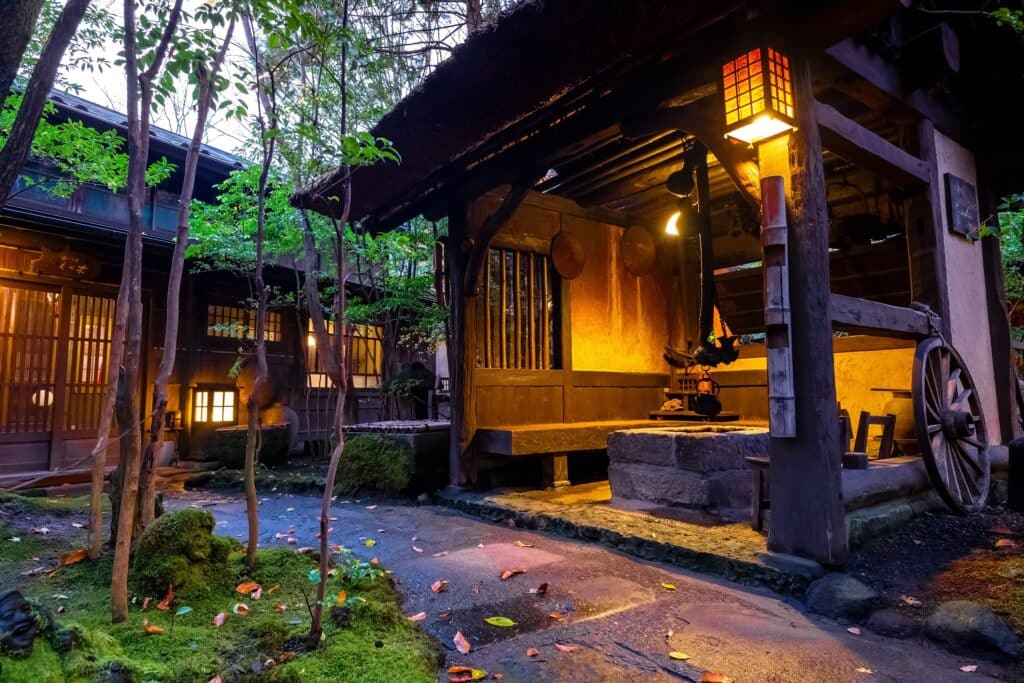
Hakone is often described as a day trip from Tokyo—and technically, it works. You can leave the capital in the morning, see several of the main sights, and return in the evening. But Hakone is also one of the clearest examples of a destination where staying overnight can significantly improve the experience.
Why Hakone Is Different from a Typical Day Trip
The main reason to stay overnight is not simply that Hakone takes time to reach. It is that some of Hakone’s best experiences happen when you stop sightseeing.
A traditional ryokan stay, soaking in an onsen, having a multi-course dinner, and waking up in the mountains can be as memorable as visiting Lake Ashi, Owakudani, or the Hakone Open-Air Museum. If you return to Tokyo the same evening, you can still see Hakone—but you miss much of what makes staying there distinctive.
Hakone is also more spread out than destinations such as Nara or Uji. Sightseeing often involves a combination of trains, buses, cable cars, ropeways, and boats. Trying to complete too much in one day can turn what should feel like a relaxing mountain escape into a race through the transport network.
Day Trip vs Overnight: What Actually Changes?
The Smartest Route: Don’t Backtrack to Tokyo
Hakone becomes particularly attractive as an overnight stop when your trip is already moving from Tokyo toward Kyoto or Osaka. Instead of visiting Hakone and returning to Tokyo, you can build it into the journey west.
Travel from Tokyo to Hakone, spend the day sightseeing, stay overnight at a ryokan, then continue via Odawara toward Kyoto the following day. This turns Hakone into part of your route rather than a return excursion from Tokyo.
This strategy also reduces one of the biggest disadvantages of overnight stops: unnecessary backtracking. You are changing hotels, but the hotel change moves your itinerary forward rather than forcing you to retrace the same journey.
Keep Hakone as a day trip if your Japan itinerary is short, you already have several hotel changes, or you are mainly interested in a few specific sights rather than the ryokan and onsen experience. In that case, an early start from Tokyo and a selective sightseeing plan can work very well.
Hakone therefore passes our overnight test for an important reason: the night gives you something you cannot fully reproduce on a day trip. You are not simply paying for a bed closer to the attractions—the overnight stay can become one of the experiences you remember most from Japan.
Kawaguchiko: Stay Overnight for Better Mount Fuji Chances
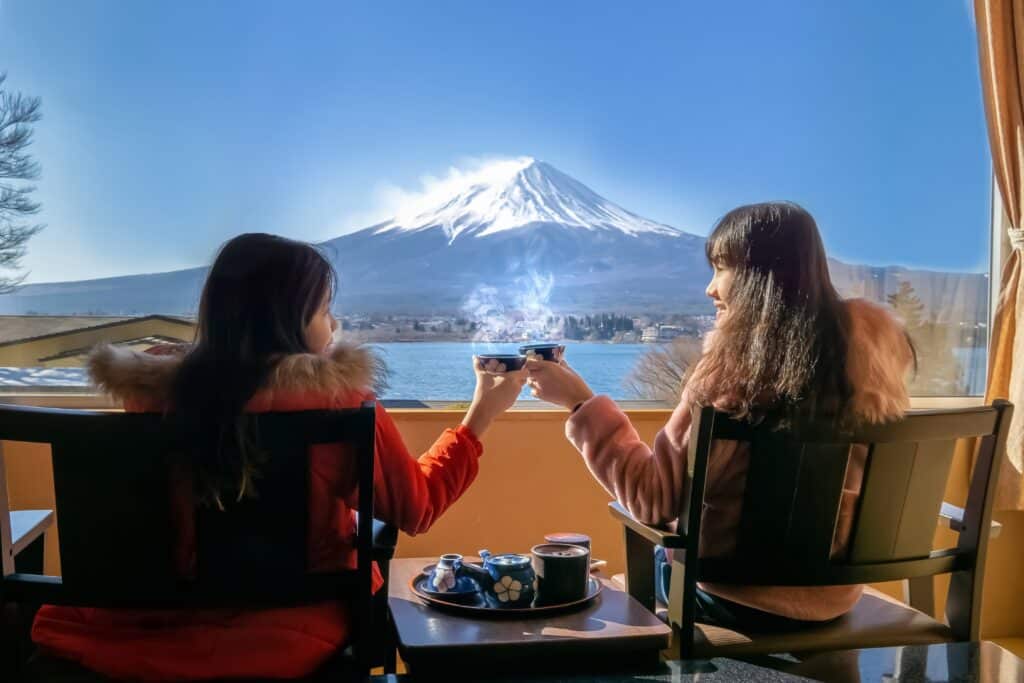
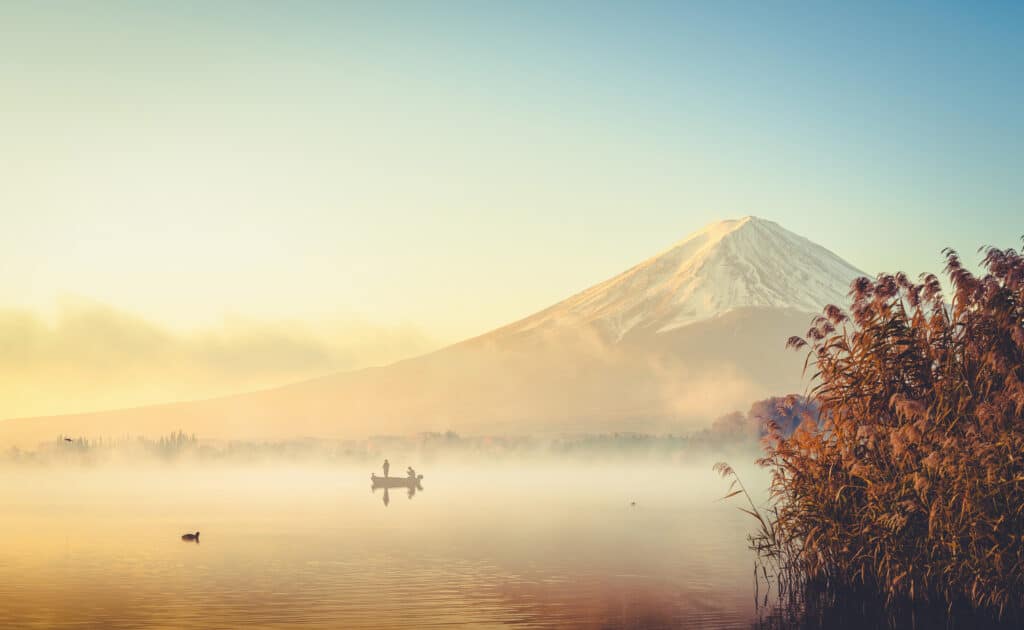
Kawaguchiko is easy to consider as a day trip from Tokyo, especially if your main goal is simply to see Mount Fuji. But this is one destination where staying overnight can substantially improve your chances of getting the experience you came for.
The reason is simple: Mount Fuji does not follow your itinerary. Clouds can hide the mountain for hours even on an otherwise pleasant day, and arriving from Tokyo gives you only a limited viewing window. Staying one night gives you an afternoon, evening, and—most importantly—another morning before you have to leave.
Why One Night Makes Such a Difference
Kawaguchiko is unusual because the quality of your visit can depend heavily on something you cannot control: whether Mount Fuji is actually visible. You can travel all the way from Tokyo and find the mountain completely hidden behind clouds.
That does not make Kawaguchiko worthless—there are lakeside walks, viewpoints, museums, seasonal scenery, and other attractions—but for many first-time visitors, seeing Mount Fuji is the main reason for making the journey.
An overnight stay gives you a much wider window. If Fuji is hidden when you arrive, conditions may improve later in the day or the following morning. And if the mountain is already visible, you have time to enjoy it from different viewpoints rather than rushing through a checklist before returning to Tokyo.
Early Morning Is Part of the Advantage
Staying overnight also gives you access to Kawaguchiko at a time most Tokyo day-trippers cannot easily experience. You can wake up near the lake, check the mountain before breakfast, and begin exploring without first spending hours travelling from the capital.
This is particularly valuable for photographers and travelers who want a quieter experience. A calm morning beside the lake with Mount Fuji visible can be more memorable than adding another attraction to a packed afternoon itinerary.
Day Trip vs Overnight: What Actually Changes?
What If Mount Fuji Is Hidden?
This is where the overnight stay earns much of its value. A day-tripper who arrives to thick cloud may have little choice but to hope conditions improve before the return journey. An overnight visitor has considerably more flexibility.
You can adjust the order of your sightseeing, save your best viewpoints for clearer conditions, and try again the following morning. One night does not guarantee a Mount Fuji view, but it gives you more opportunities than relying on a single day-trip window.
Choose a day trip if your Japan itinerary is short, you already have several hotel changes, or Kawaguchiko is mainly an optional Mount Fuji excursion rather than one of your priority destinations. If possible, keeping some flexibility in your schedule can be more valuable than committing to a specific day far in advance.
Kawaguchiko therefore earns its overnight recommendation for a different reason than Hakone. Hakone’s night adds an experience; Kawaguchiko’s night adds time, flexibility, and another chance. When the main attraction is a mountain that may disappear behind clouds at any moment, that extra chance can matter.
Nikko: Day Trip or Overnight Depends on How Much You Want to See
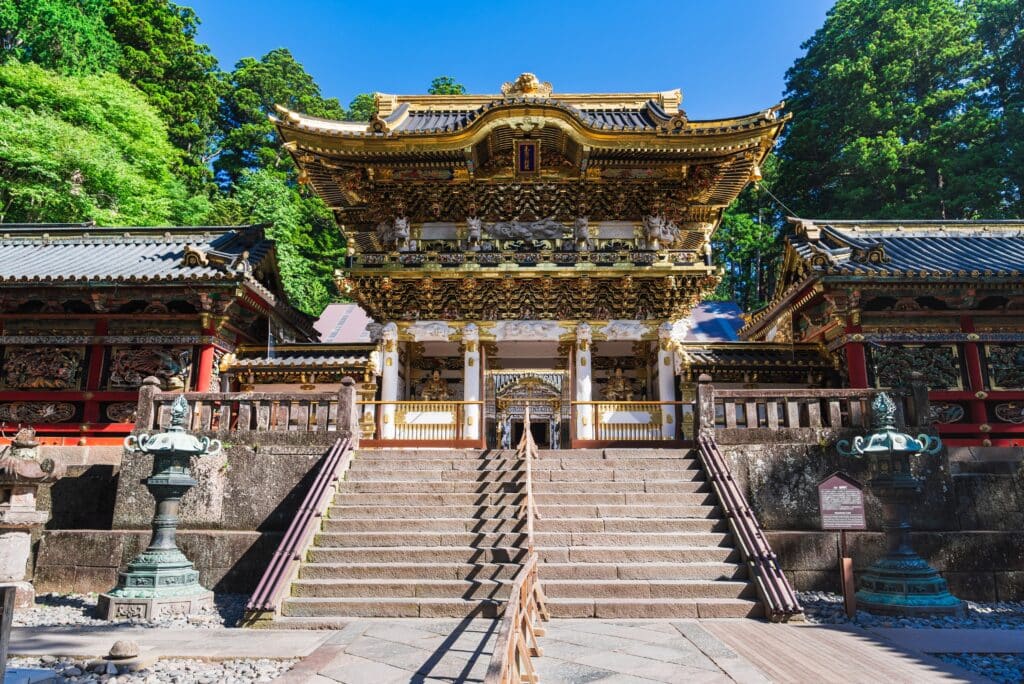
Nikko sits right on the border between an excellent day trip and a destination that deserves a night. If your priority is the famous shrine and temple area, a day trip from Tokyo works very well. But if you want to combine cultural sights with Lake Chuzenji, Kegon Falls, hiking, or an onsen stay, one night can make the trip significantly more relaxed.
When Nikko Works as a Day Trip
For many first-time visitors, the main reason to visit Nikko is the extraordinary concentration of historic temples and shrines surrounded by forest. If that is your priority, there is no need to automatically add another hotel to your itinerary.
With an early start from Tokyo, you can focus on Toshogu Shrine, Rinnoji Temple, Futarasan Shrine, and the surrounding World Heritage area before returning to the capital in the evening.
This is also the smarter option on a shorter Japan trip. If you have only a limited number of nights and already plan to change hotels several times, Nikko’s central sights offer enough value for a full day without creating another overnight stop.
When Nikko Deserves a Night
The calculation changes once you want to explore beyond central Nikko. Lake Chuzenji and Kegon Falls are not simply additional attractions next door to Toshogu. Reaching the higher Oku-Nikko area requires additional travel, and trying to combine everything with the journey from and back to Tokyo can make the day feel rushed.
An overnight lets you separate the experience more naturally: spend one part of the trip exploring Nikko’s temples and shrines, then use the remaining time for the lake, waterfalls, mountain scenery, hiking, or an onsen.
Autumn Is When the Overnight Becomes More Valuable
Nikko deserves special consideration during autumn foliage season. The combination of temples, forests, waterfalls, and mountain scenery makes this one of the most attractive times to visit—but it can also mean heavier traffic and slower bus journeys toward Lake Chuzenji and Oku-Nikko.
Trying to cover both central Nikko and the mountain area on a tightly timed day trip becomes less appealing when transport is busy. Staying overnight gives you more flexibility and reduces the pressure to fit everything around your return train to Tokyo.
If your Nikko plan is essentially “Toshogu and the historic temple area,” choose a day trip. If it becomes “Toshogu + Lake Chuzenji + Kegon Falls + nature,” stay one night. The extra night is valuable because it solves a real time and transport problem rather than simply adding another hotel.
Nikko is therefore a true “it depends” destination. Unlike Hakone, where the overnight experience itself is a major attraction, the main reason to stay in Nikko is simpler: one night gives you enough time to experience both sides of the destination properly.
Hiroshima: A Day Trip Is Possible, but Overnight Is Usually Smarter
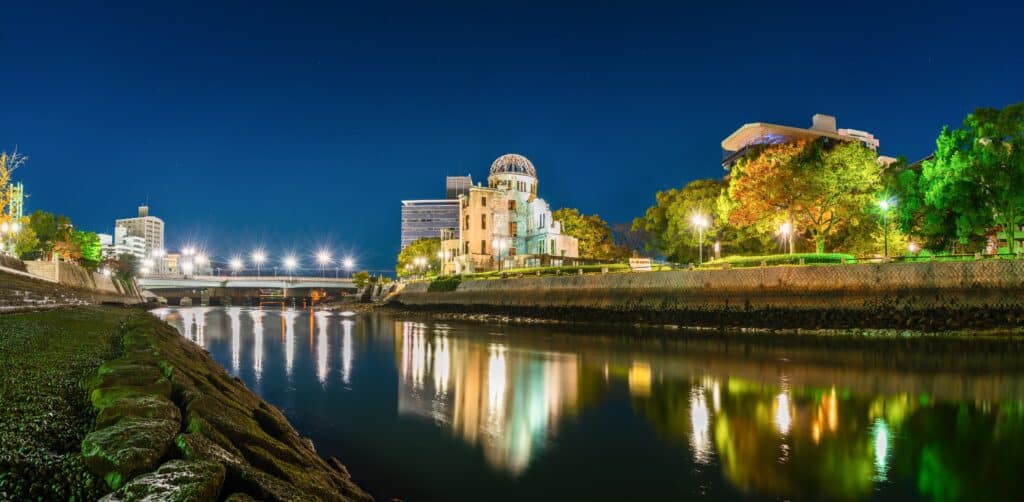
Hiroshima is fast enough to reach by Shinkansen that it sometimes appears in lists of day trips from Osaka or Kyoto. Technically, that works. But Hiroshima is a good example of why fast trains can make a destination look closer on an itinerary than it actually feels during the day.
If you only want to visit central Hiroshima, a long day trip can be reasonable. If you also want to experience Miyajima, however, staying at least one night is usually the smarter choice.
When Hiroshima Works as a Day Trip
If your priority is central Hiroshima, a focused day can work. The Peace Memorial Park, Atomic Bomb Dome, and Hiroshima Peace Memorial Museum are concentrated enough that you do not need several days simply to experience the city’s most important historical sights.
With an early departure and a late return, travelers based in Osaka can therefore visit Hiroshima without changing hotels. This can make sense on a shorter itinerary where avoiding another overnight stop matters more than having a relaxed pace.
But the Shinkansen journey is only part of the calculation. You still need to reach the station from your hotel, travel through Hiroshima after arrival, allow time for meals and sightseeing, and repeat the journey at the end of the day. The result is possible—but not necessarily efficient once you start adding more.
Hiroshima + Miyajima Changes the Decision
The biggest mistake is treating Hiroshima and Miyajima as if they were two neighboring attractions that can simply be checked off during the same day. They are two substantial experiences, and each deserves enough time to avoid turning the visit into a race against the clock.
Combining the Peace Memorial Museum, Peace Memorial Park, transport to Miyajima, Itsukushima Shrine, the island’s streets and temples, and the return journey to Osaka creates a very full day. It can be done, but the itinerary becomes optimized around transport rather than the destinations themselves.
One Night or Two?
For a fast-paced first trip, one night can be enough. You might visit Hiroshima on the day you arrive, stay overnight, and spend the following day on Miyajima before continuing to your next destination.
Two nights are better if you want a slower pace, more time on Miyajima, or additional Hiroshima sights. The important point is that you do not necessarily need a long stay—you simply need enough time to remove the pressure of returning to Osaka or Kyoto on the same evening.
If Hiroshima is already part of your route west, combine it with the stopover strategy we discussed earlier. Visit Himeji while travelling from Osaka, continue to Hiroshima for the night, then explore Miyajima before moving onward. This avoids unnecessary backtracking and turns several travel days into one logical route.
Hiroshima therefore sits on the overnight side of our decision for most first-time itineraries—not because it is impossible to reach in a day, but because the destinations travelers usually want to combine with it make the day-trip version unnecessarily compressed.
Miyajima: One of Japan’s Most Rewarding Overnight Stays

Miyajima is one of the clearest examples of a destination where staying overnight can genuinely change the experience. The island is famous for Itsukushima Shrine and its iconic floating torii gate, but its appeal goes far beyond a single landmark.
During the day, Miyajima can become busy with visitors arriving from Hiroshima. In the evening, as many day-trippers leave, the island takes on a quieter atmosphere. Staying overnight gives you the opportunity to experience both sides of Miyajima without constantly watching the clock for your return ferry.
Overnight Recommended
A day trip is easy, but staying overnight reveals a quieter and more atmospheric side of the island.
Miyajima or Hiroshima
Stay on the island for its evening atmosphere, or in Hiroshima for convenience and flexibility.
1 Day or 1 Night
A full day covers the highlights; one night makes the visit slower and more memorable.
Why Miyajima Is Different After the Day-Trippers Leave
Most visitors experience Miyajima during its busiest hours. They arrive by ferry, visit Itsukushima Shrine, photograph the torii gate, explore the shopping streets, and return to Hiroshima before evening.
There is nothing wrong with that approach. Miyajima is an excellent day trip, particularly if you are already staying in Hiroshima. But the island offers something that a typical day visit cannot fully reproduce: time to enjoy its surroundings when the crowds begin to thin.
In the evening, the waterfront becomes quieter, the atmosphere around the shrine changes, and the island feels less like a busy sightseeing destination. The following morning, you can explore before many of the day visitors arrive.
Day Trip vs Overnight: What Actually Changes?
Best for the Highlights
Visit Itsukushima Shrine, explore the waterfront and shopping streets, enjoy local food, and return to Hiroshima. This is the most practical option when time or budget is limited.
Best for the Atmosphere
Explore the island at a relaxed pace, enjoy the quieter evening, stay in a traditional inn, and experience the waterfront again before the main daytime crowds arrive.
The Torii Gate Changes with the Tides
Another reason to allow more time on Miyajima is that the famous torii gate looks different depending on the tide. At high tide, it can appear to float above the water. At low tide, visitors may be able to walk across the exposed tidal flats toward it.
A day trip can include either experience if the timing works. An overnight stay gives you a wider window to see the changing scenery without building your entire visit around one narrow period.
However, staying overnight does not guarantee that you will see both tidal conditions. Check the local tide timetable for your actual travel dates.
Stay on Miyajima or in Hiroshima?
This is an important distinction. You do not necessarily need to sleep on Miyajima to visit the island comfortably. Hiroshima offers a wider choice of hotels, restaurants, and transport connections, making it a convenient base for travelers exploring the region.
But staying in Hiroshima and staying on Miyajima are not quite the same experience. If your main priority is seeing the shrine and the island’s major attractions, Hiroshima works perfectly well. If your priority is experiencing the island after most visitors have left, staying on Miyajima itself offers the greater benefit.
If you are already spending one or two nights in Hiroshima, a full-day visit to Miyajima is a sensible choice. Add a night on the island only if its quieter evening and early-morning atmosphere are important enough to justify the extra accommodation change.
When a Miyajima Day Trip Is Better
Choose a day trip if you are short on time, already have several hotel changes, or mainly want to visit Itsukushima Shrine and the central sightseeing area. The ferry connection from the mainland makes Miyajima relatively easy to explore while keeping Hiroshima as your base.
A day trip also makes sense if you want to spend more of your available time exploring Hiroshima itself. Not every traveler needs the island’s evening atmosphere to have a rewarding visit.
Travel Owl Recommendation
Visit Miyajima as a day trip if you mainly want the highlights. Stay overnight on the island if you want its quieter evening, early morning, and a more atmospheric experience. If your Japan itinerary has room for only a few special overnight stops, Miyajima is a strong contender—but not an essential hotel change for everyone.
Miyajima perfectly illustrates the central principle of this guide: an overnight stay is most valuable when it changes what you experience. Here, the reward is not simply more sightseeing time. It is the opportunity to experience the same beautiful island at a different pace.
Koyasan: Stay Overnight or Reconsider Going
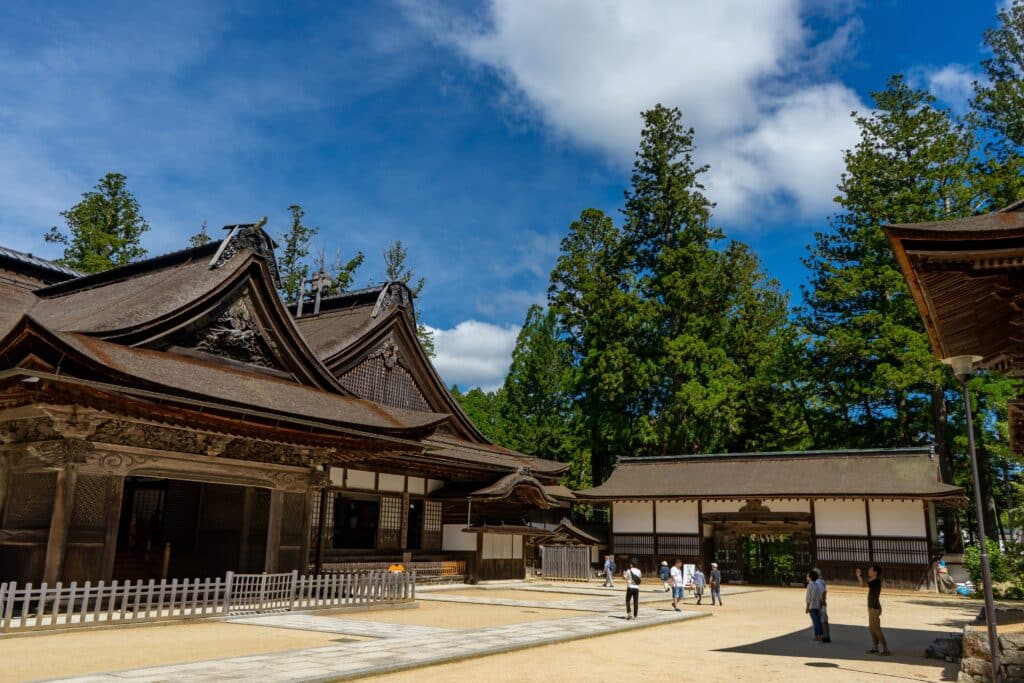
Koyasan is one of the strongest overnight recommendations in this guide. You can technically visit from Osaka in a day, but doing so removes one of the experiences that makes Koyasan truly distinctive: staying overnight in a Buddhist temple.
Unlike destinations where accommodation simply gives you more sightseeing time, Koyasan’s shukubo temple lodgings, Buddhist meals, evening atmosphere, and morning prayers are part of the reason to make the journey in the first place.
Why Koyasan Is Different
Koyasan is not simply another collection of temples that happens to be outside Osaka. It is one of Japan’s most important Buddhist centers, and the experience is as much about the setting and atmosphere as individual attractions.
During the day, you can explore places such as Kongobuji, the Danjo Garan complex, and Okunoin. But staying overnight allows the rhythm of the visit to change. Instead of constantly calculating when you need to begin the journey back to Osaka, you can remain on the mountain as the day winds down.
The journey itself is another reason not to rush. Reaching Koyasan involves more than a single fast intercity train, so using several hours to travel there and back on the same day leaves less useful time than the distance on a map might suggest.
The Temple Stay Is Part of the Destination
Many temples on Koyasan offer shukubo accommodation, allowing visitors to stay within a working Buddhist temple. The experience varies by temple, but typically includes traditional rooms and vegetarian Buddhist cuisine known as shojin ryori.
Many temple stays also offer guests the opportunity to attend morning prayers or other religious observances. You are not simply moving your hotel from Osaka to Koyasan—you are choosing an experience that cannot be replicated by returning to your city hotel at the end of the afternoon.
Okunoin Is Better When You Have Time
The approach through the forest to Kobo Daishi’s mausoleum at Okunoin is one of Koyasan’s defining experiences. This is not a place that benefits from being squeezed between arrival and departure times.
With an overnight stay, you can explore Koyasan at a slower pace and potentially experience Okunoin at different times of day. The mountain’s quieter atmosphere becomes part of the visit rather than something you leave behind as soon as the main sightseeing is finished.
Choose a day trip only if your itinerary genuinely cannot accommodate another night and visiting Koyasan’s temples is still a high priority. It is possible—but unlike Nara, Kamakura, or Himeji, you are giving up a meaningful part of the destination by returning to Osaka the same day.
Koyasan therefore passes the overnight test more strongly than almost anywhere else in this guide. The night is not an extension of the visit—it is part of the visit.
Kanazawa: Give It at Least One Night
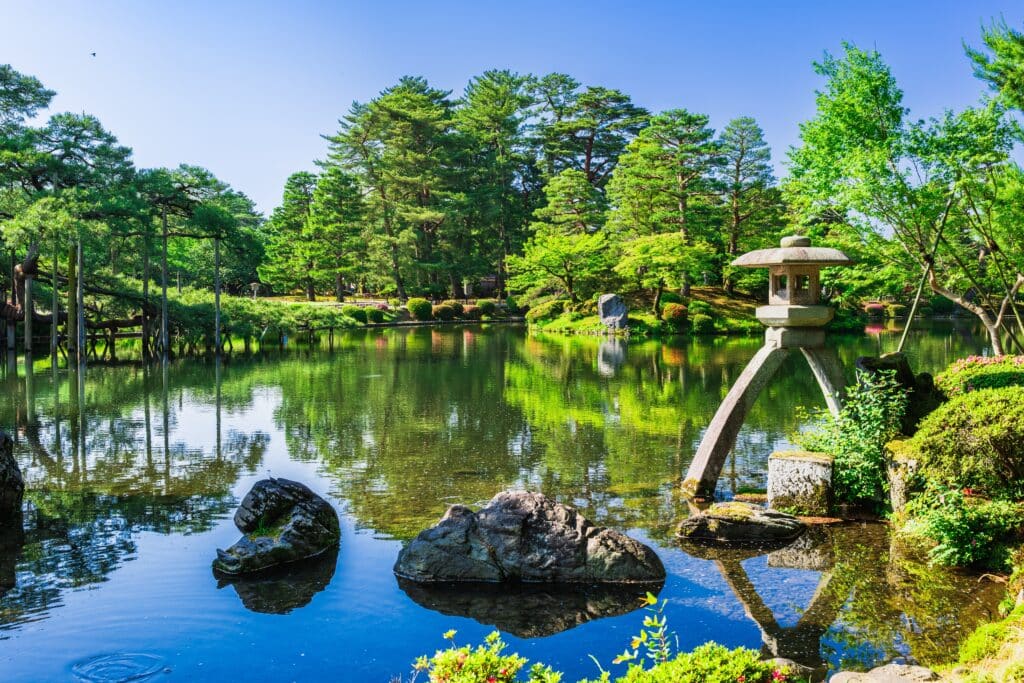
Kanazawa’s rail connections can make it look deceptively easy to squeeze into a larger Japan itinerary. But unlike Nara, Himeji, or Kamakura, Kanazawa is not really a single-attraction destination that works best as a quick excursion. It has several distinct areas worth exploring, and rushing there and back in one day usually sacrifices too much time to transportation.
For most first-time visitors, Kanazawa is better treated as a proper overnight destination or a stop along a wider route rather than a day trip from another major city.
Why Kanazawa Is Not an Ideal Day Trip
Kanazawa’s appeal comes from the combination of several experiences rather than one must-see attraction. Kenrokuen Garden, Kanazawa Castle, the Higashi Chaya district, Omicho Market, and the city’s samurai heritage all contribute something different.
The individual sights are manageable, but together they create a destination that deserves most of a day at minimum. Once you add the journey from another city and the need to return again that evening, your sightseeing window becomes unnecessarily compressed.
This is an important distinction. A fast train can reduce the time between two stations, but it does not make the destination itself smaller. Kanazawa still requires enough time to move between its different districts, explore the garden, stop for food, and experience the historic areas without constantly checking the clock.
One Night or Two Nights in Kanazawa?
The Smarter Strategy: Make Kanazawa Part of the Route
Kanazawa becomes much more compelling when you stop thinking of it as somewhere you need to visit and return from. Instead, build it into the direction your itinerary is already moving.
Instead of travelling to Kanazawa and then returning to the city you started from, stay one or two nights and continue toward your next region. The hotel change now moves your trip forward rather than creating unnecessary backtracking.
Kanazawa can also be combined with Takayama and the Japanese Alps as part of a broader route. In that case, staying overnight becomes even more logical because Kanazawa is no longer an isolated detour—it becomes one of the main bases of that part of the trip.
A day trip can make sense if you are already staying relatively nearby and only want to see a few specific highlights. But for a first-time visitor deliberately adding Kanazawa to a broader Japan itinerary, travelling there only to leave again the same evening usually misses the point.
Kanazawa illustrates another important overnight rule: a destination does not need a famous nighttime experience to deserve a night. Sometimes staying over is simply the difference between properly experiencing a city and spending too much of the day getting there and back.
Takayama: Overnight Is Part of the Experience
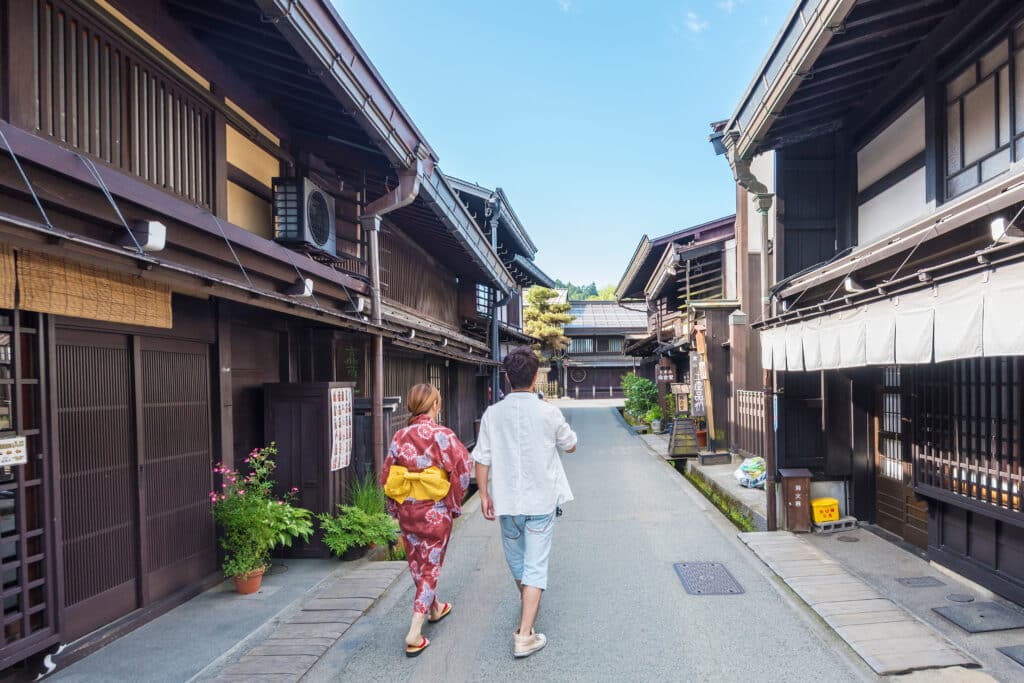
Takayama is another destination that should rarely be squeezed into a long return day trip. Its historic center is compact enough that you can see many of the main sights in several hours, but that does not make Takayama a good day-trip destination.
Part of its appeal is the slower atmosphere of a smaller mountain city—especially in the evening and early morning. Add the travel required to reach the Japanese Alps, and one or two nights usually make far more sense than trying to visit and return to a distant base on the same day.
Why Takayama Is Better Overnight
Takayama’s main sightseeing area is relatively compact. The preserved streets of Sanmachi Suji, traditional merchant houses, sake breweries, temples, markets, and riverside areas can all be explored without needing several full days.
But judging Takayama only by the number of hours required for its attractions misses the point. The journey to the Japanese Alps is significant enough that arriving, sightseeing, and immediately travelling back again wastes much of the advantage of being there.
Staying overnight lets you slow the trip down. Instead of treating Takayama as another checklist destination, you can experience the historic streets during the busier daytime hours and again when the pace becomes quieter.
Early Morning Is One of Takayama’s Advantages
An overnight also puts you in Takayama for the beginning of the next day. You can visit one of the city’s morning markets, walk through the historic center before your onward journey, and enjoy a very different atmosphere from the middle of the sightseeing day.
This is similar to Miyajima in one important way: you are not staying solely because you need more hours to complete a list of attractions. You are staying because different hours reveal a different side of the destination.
One Night or Two Nights?
One night is enough for many first-time visitors who mainly want to experience Takayama itself. Arrive with enough time to explore, stay overnight, enjoy the following morning, and continue your journey.
Two nights become more attractive when Takayama is serving as a base for the wider region. This gives you more room for excursions and prevents the Japanese Alps portion of your itinerary from becoming a sequence of arrivals and departures.
The Smarter Route: Don’t Treat Takayama as a Detour
As with Kanazawa, Takayama becomes easier to justify when the overnight moves your itinerary forward. Rather than travelling into the mountains and returning to the same city, connect Takayama with the destinations around it.
This turns Takayama into part of a logical Japanese Alps journey rather than an isolated excursion. Stay in Takayama, explore the town, then continue onward instead of retracing the same route.
What About Shirakawa-go?
Shirakawa-go does not necessarily require its own overnight for most first-time itineraries. One efficient approach is to visit it while travelling between Kanazawa and Takayama, then spend the night in Takayama.
That creates an important itinerary distinction: not every worthwhile destination needs its own hotel. Some places work best as stops between overnight bases. Shirakawa-go and Himeji are good examples of how this strategy can reduce unnecessary hotel changes without removing destinations from your trip.
A day visit makes most sense if you are already staying somewhere nearby and Takayama is only one part of your Japanese Alps itinerary. From a distant base, the amount of transportation usually makes staying overnight the more sensible choice.
Takayama reinforces one of the most useful principles in this guide: the best overnight stops do more than give you somewhere to sleep. They either unlock a better experience, eliminate inefficient backtracking, or do both. Takayama does both.
When a Day Trip Is Better Than Changing Hotels
An overnight stay can make a destination better—but that does not mean adding more overnight stops automatically creates a better Japan itinerary. Every additional hotel comes with a hidden cost: packing, checking out, moving luggage, waiting for check-in, unpacking again, and adjusting to another base.
The smarter question is therefore not simply whether a destination is worth visiting. It is whether staying there provides enough additional value to justify breaking up your existing base.
One Hotel Can Unlock Several Destinations
This is one of the biggest advantages of choosing strong bases in Japan. You do not need to sleep in every city you visit. A well-positioned hotel can give you access to several destinations while allowing you to unpack only once.
Instead of booking separate hotels in Nara, Kobe, and Himeji, keep one Osaka hotel and visit them individually. You eliminate several check-ins and check-outs while still experiencing three different destinations.
The same principle works from Tokyo with places such as Kamakura and Yokohama, and from Kyoto with Uji and Nara. A day trip is not a compromise when the destination naturally fits into a day. In many cases, it is the more efficient itinerary design.
Don’t Confuse More Hotels with Seeing More Japan
A common planning instinct is to assume that staying overnight makes a destination more meaningful. This can lead to itineraries that look impressive on paper:
But if each arrow represents another hotel change, much of the trip becomes an exercise in moving luggage and checking in. Several of these destinations can instead be visited from larger bases or incorporated as stopovers.
A smarter version might keep Tokyo, Hakone, Kyoto or Osaka, and Hiroshima as the main overnight bases while visiting the remaining destinations without constantly moving hotels.
Before booking another hotel, ask yourself: “What will I gain from sleeping here that I cannot get by visiting for the day?” If the answer is only “I will already be there,” the overnight probably needs a stronger reason.
The goal is not to minimize hotel changes at all costs. It is to save them for the destinations where changing hotels actually improves the trip. And that leads to the opposite side of the decision: when an overnight stay really is worth the extra effort.
When an Overnight Stay Is Worth the Extra Hotel Change
Hotel changes create friction, but avoiding them at all costs can also weaken an itinerary. Some destinations become significantly better when you stay overnight, and others are simply too substantial or too far from your existing base to work well as day trips.
The key is to add a night only when it buys you something meaningful: a special experience, better timing, more flexibility, less backtracking, or enough extra sightseeing time to change the quality of the visit.
The Strongest Reason: The Overnight Creates an Experience
Hakone and Koyasan illustrate this especially well. In Hakone, a ryokan stay, onsen, dinner, and slower mountain evening can be as important as the daytime sightseeing. At Koyasan, staying in a Buddhist temple and potentially joining morning observances gives you something a day trip cannot reproduce.
Miyajima offers a different version of the same principle. The attraction is not necessarily a special activity after dark. Instead, the island itself changes as many day visitors leave. Staying overnight gives you access to quieter evening and early-morning hours.
Sometimes You Are Buying a Second Chance
Kawaguchiko demonstrates another reason to stay. If Mount Fuji is hidden during your only few hours at the lake, there is little you can do about it. Staying overnight gives you additional viewing windows across two days.
The same logic can apply more broadly whenever weather plays an important role. The overnight does not guarantee better conditions, but it reduces the risk of building an important experience around a single narrow window.
Sometimes the Destination Simply Needs More Time
Not every worthwhile overnight requires a ryokan, temple lodging, or dramatic sunset. Kanazawa is a good example. Its value comes from having multiple worthwhile districts and experiences rather than one special nighttime attraction.
If reaching the city already consumes meaningful travel time, compressing everything into the hours between arrival and departure can make little sense. Staying overnight protects the sightseeing time you travelled there to enjoy.
The easiest overnight to justify is one that does two things at once: it improves the destination and moves your itinerary forward. A route such as Tokyo → Hakone → Kyoto is stronger than Tokyo → Hakone → Tokyo because the hotel change is serving both the experience and the route.
Not All One-Night Stays Are Equal
This distinction is useful when deciding which overnights deserve limited space in your itinerary.
Use Your Overnight Stops Selectively
On a first Japan trip, you usually do not need to stay overnight in every destination where doing so would be slightly better. Choose the nights with the highest return.
For example, if you already have several hotel changes, you might keep Nikko as a day trip but preserve an overnight for Hakone or Koyasan, where sleeping there changes the experience more dramatically.
This is why itinerary planning should happen at the trip level rather than destination by destination. Every overnight may look reasonable on its own, while the complete itinerary can still contain far too many hotel changes.
There is still one problem, however: travelers often judge these decisions almost entirely by the scheduled train journey. That is where many day-trip plans go wrong.
The Mistake Most Travelers Make: Looking Only at Train Time

Japan’s fast and reliable trains can make surprisingly distant destinations look easy to visit. Search a route, see a relatively short journey, and suddenly the destination appears to be an obvious day trip.
But station-to-station train time is not the same as the amount of time a day trip actually costs. Your real journey begins when you leave your hotel and ends when you reach the first place you want to visit.
What Your Route Planner Does Not Show at First Glance
A train journey may look simple when you see the headline travel time, but several smaller pieces of transportation accumulate around it.
Calculate Door-to-Door Time Instead
Before deciding that somewhere is an easy day trip, calculate the journey from your actual hotel to your first attraction—not simply from one major station to another.
Then calculate the return journey from your final attraction back to your hotel. This gives you a much better picture of how much of the day will actually remain for sightseeing.
If those journeys consume a large part of your usable day, ask whether staying overnight would convert travel time into valuable evening or morning hours.
Why Himeji and Nikko Are Different
This also explains why two destinations with manageable headline travel times can receive different recommendations.
In Himeji, the major sightseeing area is relatively straightforward once you arrive. The castle dominates the visit, Koko-en is nearby, and the city can also fit naturally into an onward journey. The arrival station puts you close to the experience you came for.
Nikko becomes more complicated if you want to go beyond the central heritage area. Reaching Lake Chuzenji, Kegon Falls, or Oku-Nikko adds another transportation layer after you have already travelled from Tokyo.
The important number is therefore not simply “How long is the train?” but “How long until I am actually sightseeing?”
Fast Trains Can Create False Confidence
The Shinkansen makes long-distance travel remarkably convenient, but it can also encourage overly ambitious planning. A city that appears surprisingly close by high-speed rail may still be a poor day trip once you include both ends of the journey.
This is especially important when travelers try to combine several major experiences into the same excursion. The fact that you can reach a destination and return on the same day does not mean doing so creates a good sightseeing day.
And transportation is only half of the equation. Staying overnight removes some travel pressure—but it introduces a different kind of friction: the hotel change itself.
The Hotel-Change Penalty: Why One Night Can Cost More Time Than You Think
Staying overnight can save you from travelling back to your original base—but it creates another kind of travel time that is easy to overlook. Changing hotels is not just the journey between two properties. It includes everything that happens before checkout and after arrival.
One hotel change is rarely a problem. But repeat it every day or two and a Japan itinerary can start to feel like a sequence of packing, stations, luggage lockers, and check-in desks rather than a holiday.
The Cost Is Not Only Measured in Minutes
The hotel-change penalty is partly about time, but it is also about fragmentation. A sightseeing day feels different when you can leave your hotel after breakfast and return whenever you want compared with a day built around checkout, luggage, transportation, and another check-in.
This becomes especially noticeable on itineraries containing several consecutive one-night stays. Even when every individual transfer looks reasonable, the repeated transitions can make the overall trip feel much busier than expected.
If staying overnight gives you a ryokan experience, a quiet evening, an important early morning, better weather flexibility, or a more efficient onward route, the answer may easily be yes. If it only gives you a different bed for one night, keeping your existing base may be smarter.
Why Consecutive One-Night Stays Are the Real Problem
A single one-night stay in Hakone between Tokyo and Kyoto can be an excellent itinerary decision. A sequence of one-night stops is different.
The problem is not that any one of those destinations is unworthy of an overnight. The problem is that the combined itinerary contains too many resets.
Keeping strong bases in Tokyo, Kyoto or Osaka, and Hiroshima while selectively adding a high-value overnight such as Hakone creates a very different rhythm.
A Simple Way to Spot Too Many Hotel Changes
Look at your itinerary and count how many mornings begin with “pack and check out.” Those are not normal sightseeing mornings. Each one introduces another logistical task before the day can properly begin.
Luggage Forwarding Can Reduce the Penalty
Japan’s luggage-forwarding services can make selected overnight stops much easier. Instead of carrying your main suitcase through every intermediate destination, you can sometimes send larger luggage ahead to a later hotel and travel with a smaller overnight bag.
This is particularly useful when your route contains a one-night experience such as Hakone or another stop where you do not need your full luggage. It does not eliminate the hotel change, but it can remove one of its most inconvenient parts.
If you are planning a strategic one-night stop between two major bases, consider forwarding your main suitcase to the next base and taking only a small overnight bag. This can turn an awkward hotel transfer into a much easier route stop.
And that final point leads to one of the smartest ways to solve the day-trip-versus-overnight problem: instead of returning to your old base, turn the overnight destination into a stop on the way to your next one.
The Better Alternative: Turn the Overnight into a Route Stop
There is a third option between taking a day trip and adding another isolated hotel stay: visit the destination while moving from one major base to the next.
This can solve two itinerary problems at once. You avoid travelling back to a city you have already left, while still giving an important destination enough time. In the best cases, the transfer day itself becomes part of the trip rather than a day lost to transportation.
Example 1: Tokyo → Hakone → Kyoto
Hakone is one of the clearest examples. You could keep your Tokyo hotel, visit Hakone for the day, return to Tokyo that evening, and then travel toward Kyoto later.
But if Hakone already deserves a night because you want a ryokan and onsen experience, returning to Tokyo afterward creates unnecessary backtracking.
Example 2: Osaka → Himeji → Hiroshima
A route stop does not always require an overnight. Himeji demonstrates another version of the strategy.
Instead of visiting Himeji from Osaka, returning to Osaka, and later travelling west toward Hiroshima, visit Himeji on the day you are already changing bases.
Check out in Osaka, travel to Himeji, store or forward your luggage, visit Himeji Castle and Koko-en, then continue to Hiroshima. You see Himeji without creating either a return day trip or an unnecessary hotel night.
Example 3: Kanazawa → Shirakawa-go → Takayama
The same idea works particularly well in the Japanese Alps. Rather than treating every destination as a separate base, use some places as stops between the cities where you actually want to sleep.
Shirakawa-go is a good example. For many first-time visitors, it does not need to become another hotel change. It can instead fit naturally between Kanazawa and Takayama.
Stay in Kanazawa, visit Shirakawa-go while moving through the region, and finish the day in Takayama. Three destinations do not automatically require three hotel bases.
Ask Where You Are Going the Next Morning
This is one of the simplest ways to decide whether an overnight makes sense. Whenever you are considering a one-night stay, ask:
If the answer is “back to the city I came from,” check whether a day trip would be simpler.
If the answer is “onward to my next major destination,” the overnight becomes much easier to justify because the hotel change is already helping you progress through Japan.
Route Stops Can Reduce Both Backtracking and Hotel Changes
At first, these goals can appear contradictory. Avoiding backtracking seems to require more hotels, while avoiding hotel changes seems to require more day trips.
But smart route design can do both. The trick is to separate destinations into three categories:
Once you start thinking in terms of day trips, overnight bases, and route stops, the decision becomes much easier. The next step is putting all the destinations from this guide into one quick comparison.
Quick Decision Table: Day Trip vs Overnight in Japan
If you do not want to analyze every destination individually, use this table as a starting point. The recommendations are designed for typical first-time Japan itineraries and assume you are trying to balance sightseeing time with the inconvenience of changing hotels.
Remember that there are really three choices: day trip, overnight stay, or route stop. The smartest option depends not only on the destination, but also on where you are coming from and where you are going next.
The Pattern Is More Important Than the Individual Verdicts
Look at the destinations that work best as day trips and a pattern appears. Nara, Kamakura, Yokohama, Himeji, Kobe, and Uji are all relatively easy to reach from a strong nearby base, and their main experiences fit naturally into a day.
The overnight destinations earn their nights for different reasons:
Still unsure about a particular stop? The next step is to run it through a simple decision test rather than relying on instinct.
Travel Owl Decision Tool: Should You Stay Overnight?
Still unsure whether a destination deserves another hotel? Use this quick test. It works not only for the places covered above, but for almost any destination you are considering adding to your Japan itinerary.
For each question, give yourself 1 point for every “Yes.” Then compare your total with the result at the bottom.
One Important Override: Count Your Hotel Changes
There is one reason not to follow the score automatically. A destination might score four points and still be better as a day trip if your itinerary already contains too many one-night stays.
Before adding another overnight, look at the entire trip rather than the destination in isolation. If you are already packing and changing hotels every one or two days, protecting a longer base may improve the itinerary more than adding another theoretically worthwhile night.
If you struggle to name anything beyond “I would have less time there,” look closely at whether that extra time is truly necessary. If the answer is “the ryokan, the quiet evening, the early morning, the temple stay, the second Fuji opportunity, or a much better onward route,” the overnight has a much stronger case.
How the Test Works with Real Destinations
Once you know which destinations deserve their own nights, the next question becomes easier: which cities make the strongest bases for the places that do not?
Best Day Trips by Base City
One of the easiest ways to simplify a Japan itinerary is to choose a few strong bases and explore nearby destinations from them. A good base can replace several unnecessary hotel changes while still giving you access to very different places.
For most first-time itineraries, Tokyo, Kyoto, Osaka, and Hiroshima are especially useful. The goal is not to take every possible day trip from each city, but to choose the ones that fit naturally with the time you already plan to spend there.
Best Day Trips from Tokyo
Best Day Trips from Kyoto
Best Day Trips from Osaka
Best Day Trip from Hiroshima
Kyoto or Osaka: Which Is the Better Kansai Base?
This is one place where there is no universal answer. Both cities can work extremely well, and you do not necessarily need separate hotels in both simply because you plan to visit both.
The difference becomes easiest to see when we put these principles into complete itineraries. The same destinations can produce either a smooth trip or an exhausting one depending on where you choose to sleep.
Sample Itineraries: Day Trips vs Overnight Stays
The easiest way to understand the difference between a good day trip and a worthwhile overnight is to see how both fit into a complete itinerary. The goal is not to minimize hotel changes at all costs. It is to use them only where they improve the trip.
These examples are not meant as fixed itineraries. They show how the same principles can help you decide where to stay, where to visit for the day, and where a route stop can eliminate unnecessary backtracking.
7-Day Japan Trip: Protect Your Main Bases
With only one week in Japan, every hotel change takes up a relatively large share of the trip. This is usually not the time to create a chain of one-night stops.
You could add Hakone, Kawaguchiko, Nara, Osaka, Kobe, and Himeji to a seven-day route—but that does not mean you should. A short itinerary benefits from subtraction.
What the Overloaded Version Looks Like
Nothing is wrong with those destinations individually. The problem is trying to turn too many of them into overnight stops within a short trip.
10-Day Japan Trip: Add One Strategic Overnight
With ten days, you have more room to add an overnight that genuinely improves the experience. Hakone is a good example because it can sit naturally between Tokyo and Kyoto.
Why Hakone Earns the Extra Hotel Change
This is very different from adding an overnight in Kamakura or Nara. Hakone gives you something the day trip does not fully reproduce: a ryokan stay, onsen time, dinner, a slower evening, and a mountain morning.
More importantly, you do not need to return to Tokyo afterward.
What About Nara?
Nara does not need another hotel in this itinerary. Visit it from Kyoto and return to the same room that evening.
The Lesson: Don’t Apply One Rule to Every Destination
These itineraries deliberately use different strategies for different places:
That is the central principle behind the entire day-trip-versus-overnight decision. So which destinations really deserve a night? Here is the final verdict.
Final Verdict: Which Japan Destinations Really Need a Night?
Japan’s excellent transportation makes it tempting to think almost anywhere can be visited as a day trip. Technically, that is often true. But “possible in a day” and “best visited in a day” are not the same thing.
The smartest choice depends on what the overnight actually gives you—and what it costs your wider itinerary.
The Most Valuable Overnights Are Not All Valuable for the Same Reason
There is no single reason a destination deserves a night. The best overnight stops usually fall into one or more of these categories:
And Sometimes the Smartest Choice Is Neither
One of the most useful lessons is that you do not always have to choose between a return day trip and an overnight stay. Sometimes the best answer is a stopover.
Build the Route Around Experiences, Not Hotel Nights
A common itinerary-planning mistake is to decide how many nights every destination should receive before looking at how those places connect.
Reverse the process. First decide which experiences actually require you to be there in the evening or early morning. Then identify the cities that make strong multi-night bases. Finally, fit the remaining destinations around them as day trips or route stops.
There is no prize for visiting Japan with the fewest hotel changes—and no prize for sleeping in the most destinations either. The best itinerary is the one that gives your time to the places where it matters most.