
Cornwall may look compact on a map, but choosing the wrong place to stay can mean spending far more time in the car than you expected. Winding roads, busy summer traffic, and attractions spread across different parts of the county make your accommodation base an important part of planning the trip.
The best place to stay in Cornwall therefore depends less on finding the prettiest town and more on what you want to see and how you want to travel. St Ives is ideal for beaches and atmosphere, Padstow puts you close to some of the highlights of the north coast, while Falmouth and Penzance can be particularly practical bases for exploring.
In this guide, we compare the best areas and towns to stay in Cornwall, including their advantages, drawbacks, and who each base suits best. We’ll also look at where to stay without a car, whether you should choose one or two bases, and which locations can help you spend less time travelling and more time actually enjoying Cornwall.
Where Should You Stay in Cornwall?
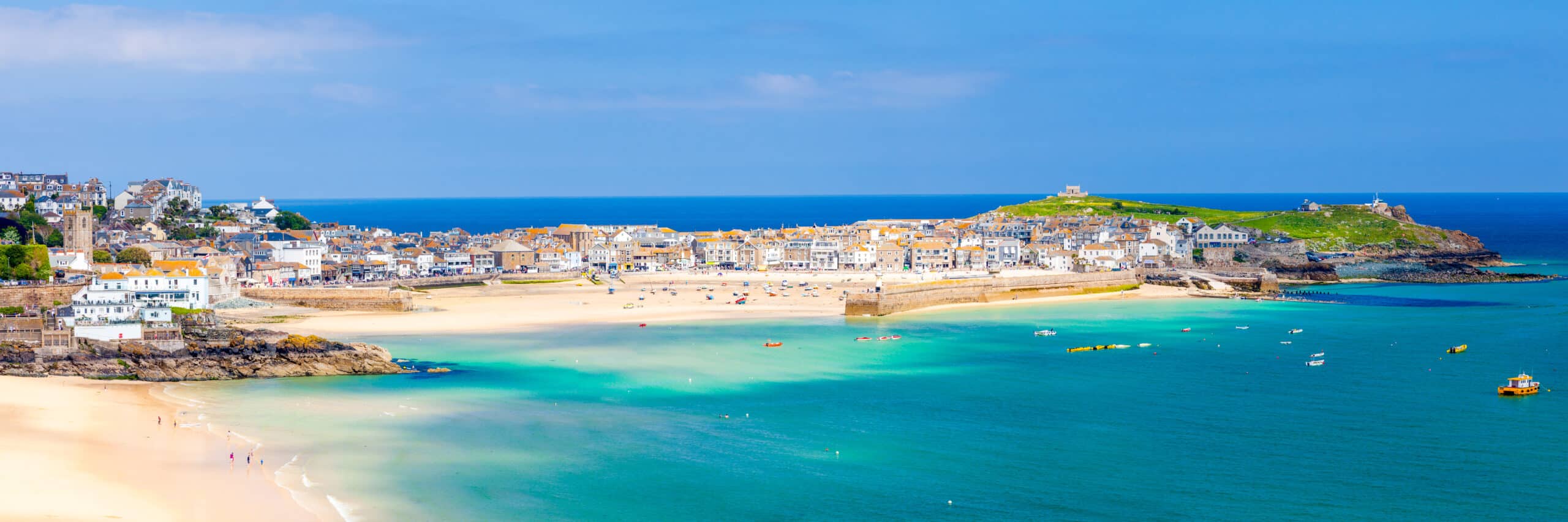
For most first-time visitors, St Ives is one of the easiest all-round choices. You get beautiful beaches, a lively town centre, restaurants, coastal walks, and enough to do without getting in the car every day.
But St Ives is not automatically the best base for every Cornwall trip. Choose Falmouth if you want a practical base for exploring the south, Padstow for food and the north coast, Newquay for surfing and beach-focused trips, and Penzance if your priority is exploring the far west.
For couples looking for a smaller harbour town with plenty of atmosphere, Fowey is another excellent option.
Travel Owl Tip: If you have 7 days or more and want to explore different parts of Cornwall, consider splitting your trip between two bases. It can save considerable driving time and lets you experience more than one side of the county.
Table of Contents
Quick Decision Guide: Where Should You Stay in Cornwall?
Not sure which Cornwall base suits your trip? Start with what matters most to you. Each of these places offers a different balance of beaches, atmosphere, sightseeing, transport, and convenience.
Stay in St Ives If…
- You want beautiful beaches within walking distance
- Atmosphere matters as much as sightseeing
- You like restaurants, galleries, and coastal walks
- You want somewhere enjoyable without a car every day
Stay in Falmouth If…
- You want a practical base for South Cornwall
- You prefer a real town with plenty of restaurants
- You want good transport options
- You are planning several day trips
Stay in Padstow If…
- Food is an important part of your trip
- You want to explore the north coast
- You like harbour towns and coastal walks
- You will have a car
Stay in Newquay If…
- Beaches are your main priority
- You want to surf or learn to surf
- You are travelling with children
- You prefer a livelier seaside base
Stay in Penzance If…
- You want to explore Cornwall’s far west
- St Michael’s Mount and Land’s End are priorities
- You want useful train and bus connections
- You value practicality over resort atmosphere
Stay in Fowey If…
- You want a smaller, atmospheric harbour town
- You are planning a romantic trip
- You prefer quieter evenings to nightlife
- You want to explore Cornwall’s south coast
The simplest choice: Choose St Ives for the classic Cornwall experience, Falmouth for flexibility, Padstow for food and the north coast, Newquay for beaches and surfing, Penzance for exploring the far west, and Fowey for a quieter couples’ trip.
Cornwall’s Best Places to Stay at a Glance
Each of Cornwall’s main bases has a different strength. Some are better for a beach-focused holiday, while others make more sense if you plan to spend your days exploring different parts of the county. This quick comparison shows where each place stands out.
What Does This Mean for Your Trip?
St Ives offers a particularly strong combination of beaches and atmosphere, while Falmouth and Penzance work especially well if sightseeing and transport are more important. Padstow and Fowey trade some practicality for character, while Newquay is particularly attractive if beaches, surfing, and family activities are at the centre of your trip.
How to Choose Where to Stay in Cornwall
The best base in Cornwall depends on more than which town looks nicest. Before booking accommodation, think about where you want to explore, whether you will have a car, what kind of trip you want, and how long you are staying. Getting these four decisions right can save a surprising amount of travel time.
1. What Do You Want to See?
Start with your must-see places. If most of them are around Land’s End, St Michael’s Mount, and West Cornwall, staying in Penzance or St Ives makes more sense than Padstow. If Port Isaac, Tintagel, and the north coast dominate your plans, choose a northern base instead.
2. Will You Have a Car?
A car gives you much more freedom, especially for smaller villages, beaches, and remote stretches of coastline. Without one, focus on places with useful rail and bus connections such as St Ives, Falmouth, and Penzance rather than choosing an isolated cottage simply because the setting looks beautiful.
3. Beach Holiday or Exploring?
If you mainly want to walk to the beach, relax, and enjoy your surroundings, the quality of the base itself matters most. St Ives or Newquay can work particularly well. If you expect to leave every morning for sightseeing, a more practical base such as Falmouth or Penzance may be the smarter choice.
4. How Long Are You Staying?
For a short Cornwall trip, changing hotels usually wastes more time than it saves. With 2–5 days, one well-chosen base is normally enough. Once you have around a week or more, splitting your stay between two parts of Cornwall can make exploring much easier.
Choose your itinerary first and your accommodation second. Mark the places you definitely want to visit, then choose a base close to the largest cluster. A slightly less picturesque town in the right location can give you a much better Cornwall trip than a beautiful village that forces you into long drives every day.
St Ives – Best for First-Time Visitors

Stay in St Ives
If you are visiting Cornwall for the first time and want beautiful beaches, a picturesque harbour, restaurants, coastal walks, and plenty to do within walking distance, St Ives is one of the easiest places to recommend.
Its biggest advantage is that the town itself is part of the experience. You can walk between Porthminster Beach, Porthmeor Beach, the harbour, Tate St Ives, galleries, shops, and restaurants without needing to plan an excursion every day.
St Ives also works well for exploring West Cornwall. With a car, you can reach places such as Land’s End, the Minack Theatre, Mousehole, and St Michael’s Mount. Carbis Bay is particularly easy to reach, including by train.
3–5 nights
No – but useful
£££
Falmouth – Best All-Round Base for Exploring
Stay in Falmouth
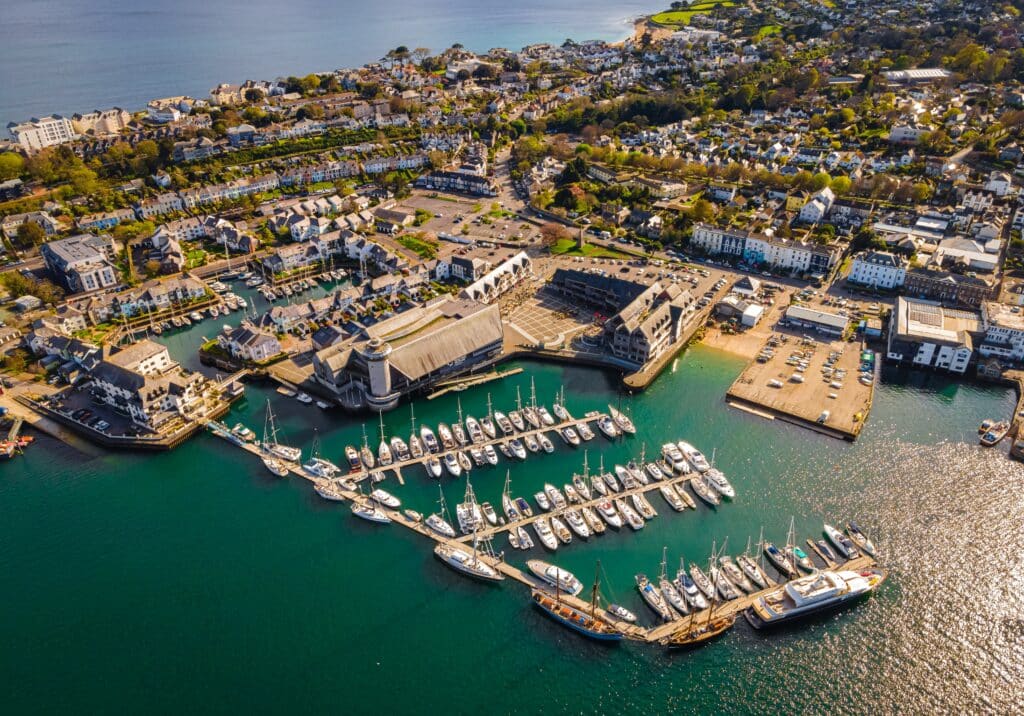
If you want a Cornwall base that combines good transport, restaurants, beaches, and easy access to the south coast, Falmouth is one of the most practical choices. It may not have quite the postcard appeal of St Ives, but as a place to actually base a trip, it has several advantages.
Falmouth is a lively harbour town rather than a small seaside resort. You have plenty of restaurants, pubs, shops, and cafés, along with attractions such as the National Maritime Museum Cornwall, Pendennis Castle, and Gyllyngvase Beach. That makes it easy to enjoy a day locally when you do not feel like sightseeing elsewhere.
Its location is particularly useful for exploring South Cornwall and the Lizard Peninsula. From Falmouth, you can plan trips towards places such as St Mawes, the Helford River, Lizard Point, Kynance Cove, and the gardens and coastal villages around the south coast.
3–5 nights
No – but useful
££
Padstow – Best for Food & North Cornwall
Stay in Padstow
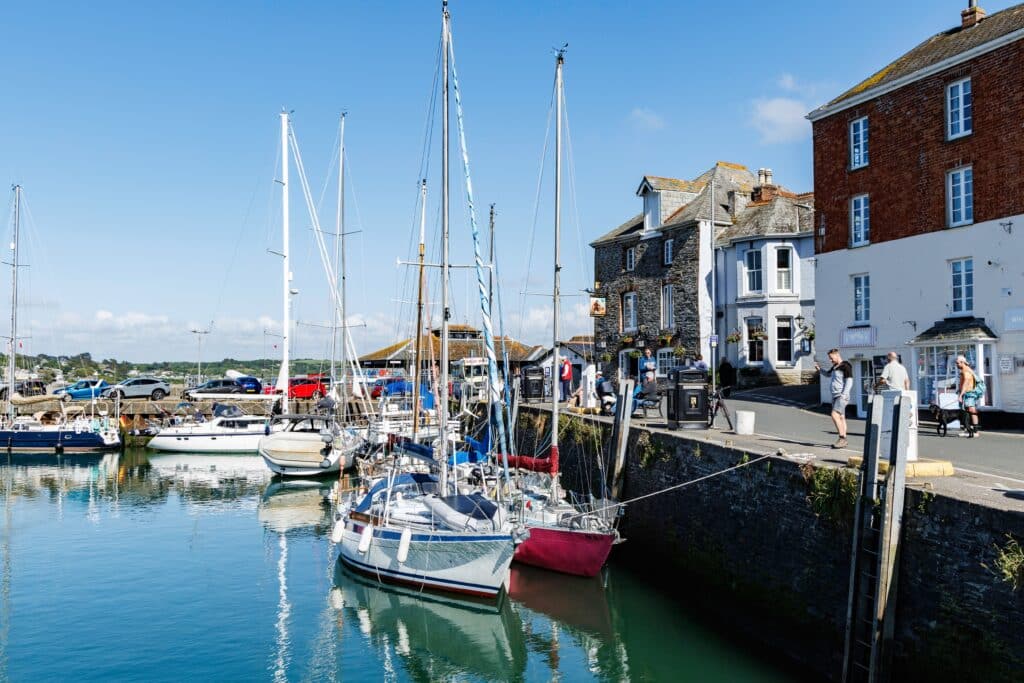
If great food, harbour atmosphere, and the dramatic north coast are high on your Cornwall wish list, Padstow makes an excellent base. The attractive working harbour sits at the mouth of the Camel Estuary and gives you easy access to some of North Cornwall’s most appealing beaches, villages, and coastal scenery.
Padstow is particularly well known for its food scene, with seafood restaurants, pubs, cafés, and bakeries packed into and around the compact town centre. But there is more to do than eat: you can walk or cycle the Camel Trail, take the passenger ferry across the estuary to Rock, or spend the day exploring nearby beaches.
With a car, Padstow also puts you in a useful position for visiting Port Isaac, Polzeath, Tintagel, and other parts of North Cornwall. This makes it a strong choice if your itinerary is concentrated on the northern side of the county rather than Cornwall as a whole.
2–4 nights
Recommended
£££
Newquay – Best for Beaches, Surfing & Families
Stay in Newquay
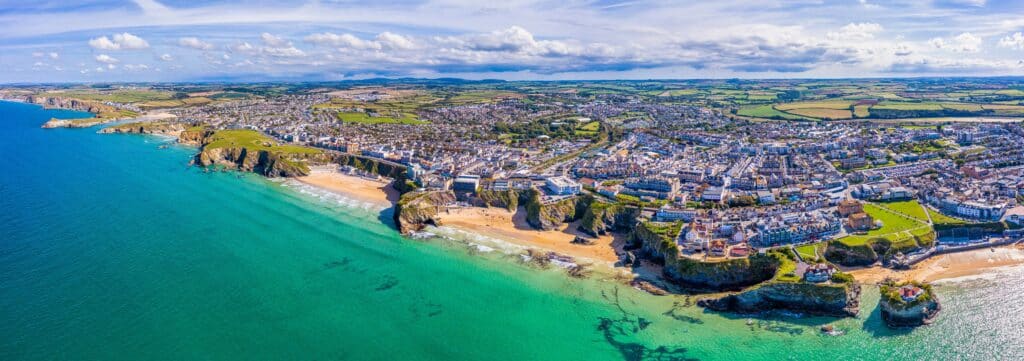
If beaches are the main reason you are coming to Cornwall, Newquay is one of the strongest bases you can choose. The town sits beside a string of sandy beaches and is Cornwall’s best-known surfing destination, making it particularly appealing for active beach holidays and family trips.
Fistral Beach is the headline attraction, but you are not limited to one stretch of sand. Towan, Great Western, Lusty Glaze, and other beaches around Newquay give you plenty of choice, while surf schools make it easy for beginners to try the sport.
Newquay is also more practical than its reputation as a surf town might suggest. Its position on the north coast makes day trips towards Padstow, the Bedruthan coastline, St Agnes, and other parts of North Cornwall relatively straightforward, while the town itself has a large choice of restaurants, shops, and accommodation.
3–5 nights
No for beaches – useful for exploring
££
Penzance – Best for Exploring West Cornwall
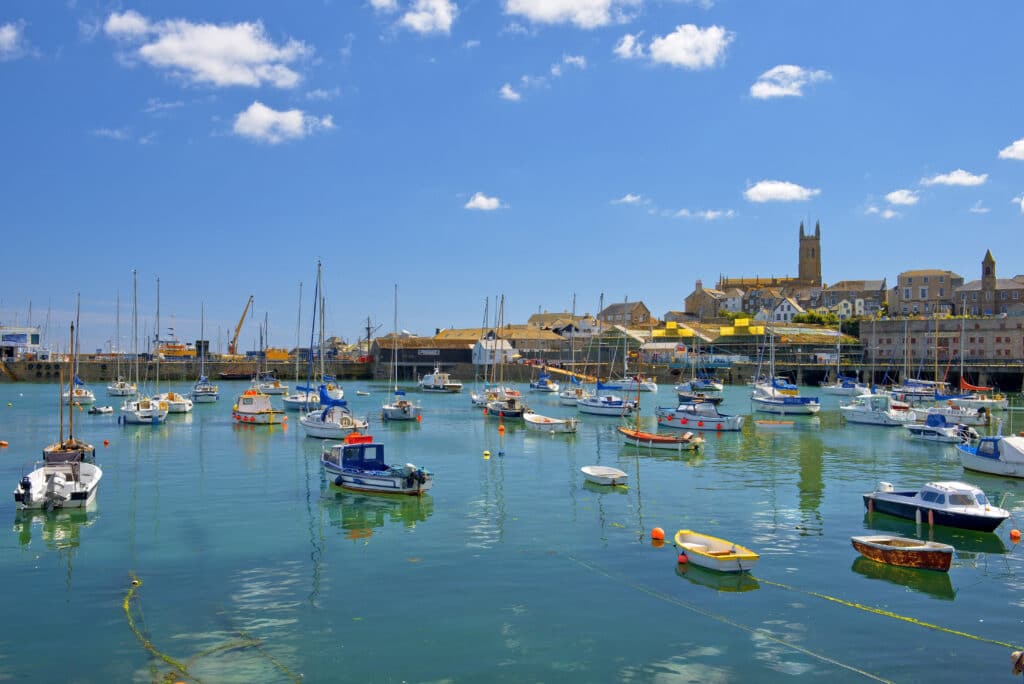
Stay in Penzance
Penzance may not have the immediate postcard appeal of St Ives, but if your priority is exploring West Cornwall efficiently, it can be one of the smartest places to stay. Its transport connections and location make it particularly useful for travelers who want to see several of Cornwall’s major sights rather than spend most of their time in one resort.
St Michael’s Mount, Mousehole, Land’s End, Sennen Cove, and the Minack Theatre are all within reach, while St Ives can also be visited as a day trip. Penzance itself has a long seafront promenade, restaurants, pubs, shops, and enough facilities to work well for a multi-night stay.
One of Penzance’s biggest advantages is public transport. The town sits at the end of the main railway line into Cornwall and has useful bus connections around the far west. That makes it particularly attractive if you want to explore this part of Cornwall without relying entirely on a car.
3–5 nights
No – but useful
££
Fowey – Best for Couples & Harbour Charm
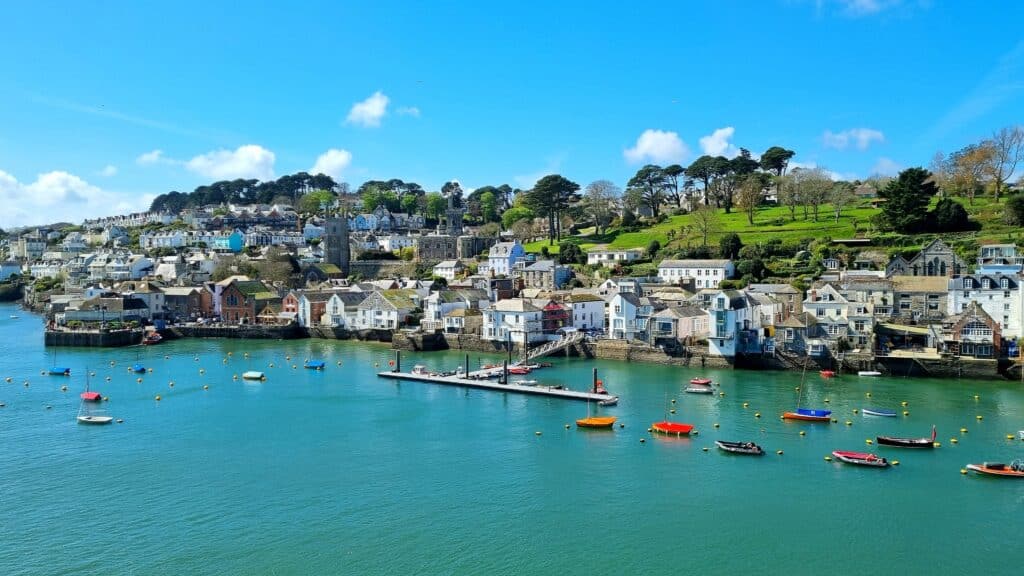
Stay in Fowey
If you picture your Cornwall stay in a small harbour town with narrow streets, waterside views, independent shops, and relaxed evenings, Fowey may be exactly what you are looking for. It is particularly appealing to couples and travelers who prefer atmosphere and character to the facilities of a larger resort.
Fowey sits on the Fowey Estuary on Cornwall’s south coast and is enjoyable even when you are not sightseeing. You can explore the town on foot, walk towards Readymoney Cove, take in the harbour views, or use the passenger ferry to visit Polruan on the opposite side of the estuary.
With a car, Fowey also works well for exploring parts of South and Mid Cornwall. The Eden Project, Lost Gardens of Heligan, Charlestown, Mevagissey, and the Roseland Peninsula can all fit naturally into an itinerary based in this part of the county.
2–4 nights
Recommended for exploring
£££
Other Places Worth Considering in Cornwall
St Ives, Falmouth, Padstow, Newquay, Penzance, and Fowey will suit many Cornwall trips, but they are not your only options. Depending on your itinerary, you may be better off in a smaller village, a quieter coastal area, or a more centrally located town.
Bude
A good choice if you want beaches, surfing, and the quieter northern end of Cornwall. Bude also works well if your trip combines Cornwall with North Devon.
Port Isaac
One of Cornwall’s most atmospheric fishing villages. Staying overnight lets you enjoy the village after many day visitors have left, but its small size and location make it less practical for extensive sightseeing.
Looe
A traditional seaside town with a beach, harbour, restaurants, and a compact centre. Its eastern location can be useful if you are arriving from Devon or combining Cornwall with Plymouth and the surrounding area.
St Mawes
A small waterside village on the Roseland Peninsula with a relaxed, slightly more upmarket feel. It is ideal for slowing down, although less convenient if your goal is to cover large parts of Cornwall.
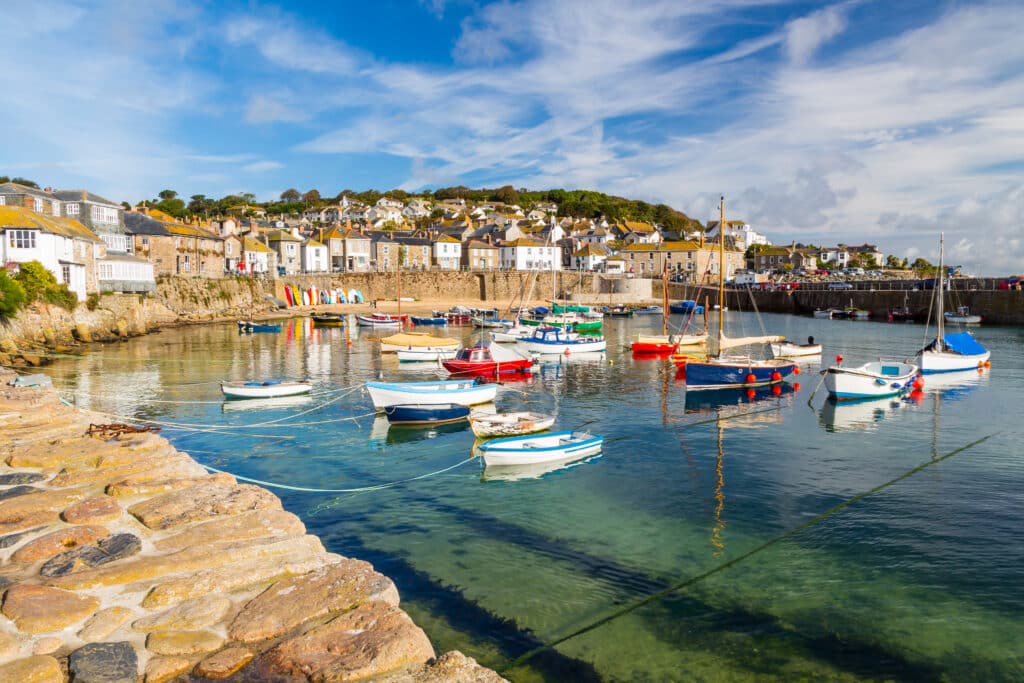
Mousehole
Tiny streets, stone cottages, and a picturesque harbour make Mousehole particularly appealing for a romantic stay. It works best if atmosphere matters more than convenience.
Marazion
Stay here for memorable views of St Michael’s Mount and easy access to West Cornwall. It is much smaller than nearby Penzance, making it better for travelers who prefer a quieter coastal base.
Truro
Cornwall’s cathedral city is not the obvious choice for a seaside holiday, but its central location and transport connections can make it a practical base for travelers focused on sightseeing.
The Lizard Peninsula
Choose the Lizard if you want dramatic coastline, walking, small villages, and a quieter side of Cornwall. A car is highly useful, and this is better for slowing down than for trying to see the entire county.
Worth choosing over the main bases? Yes — but mainly when one of these places fits a specific itinerary. Choose Bude for the far north, Looe for East Cornwall, Truro for practicality, Mousehole or St Mawes for atmosphere, and the Lizard when scenery and a slower pace matter more than covering lots of ground.
North Cornwall vs South Cornwall vs West Cornwall: Where Should You Stay?
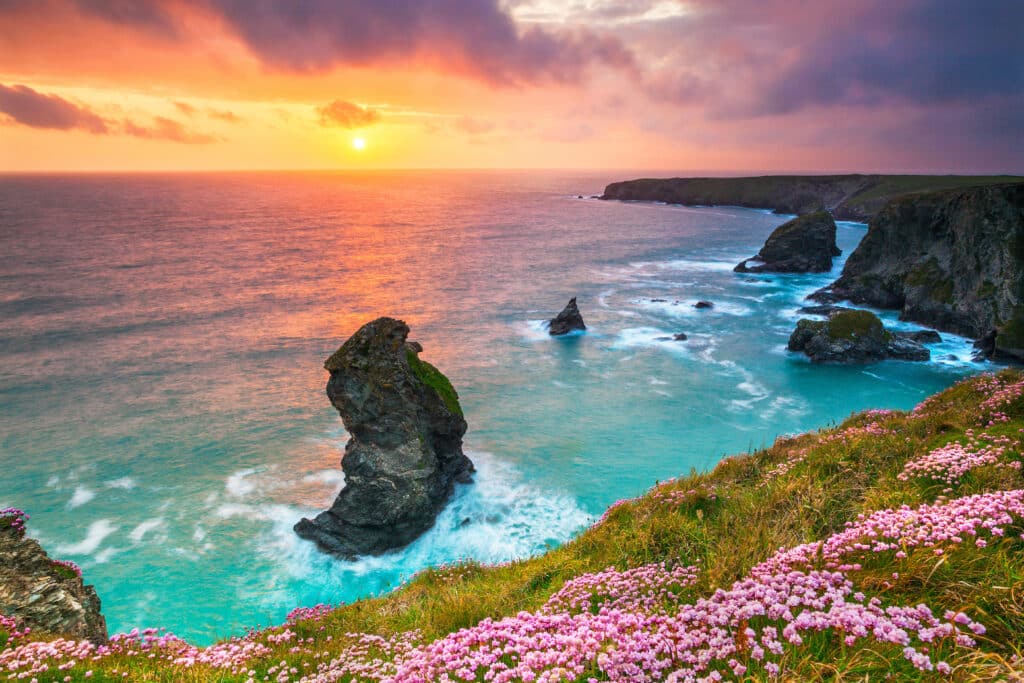
If you are still unsure which town to choose, it can be easier to decide on the right part of Cornwall first. The north, south, and far west offer noticeably different experiences, and your choice can have a bigger impact on your trip than the individual hotel you book.
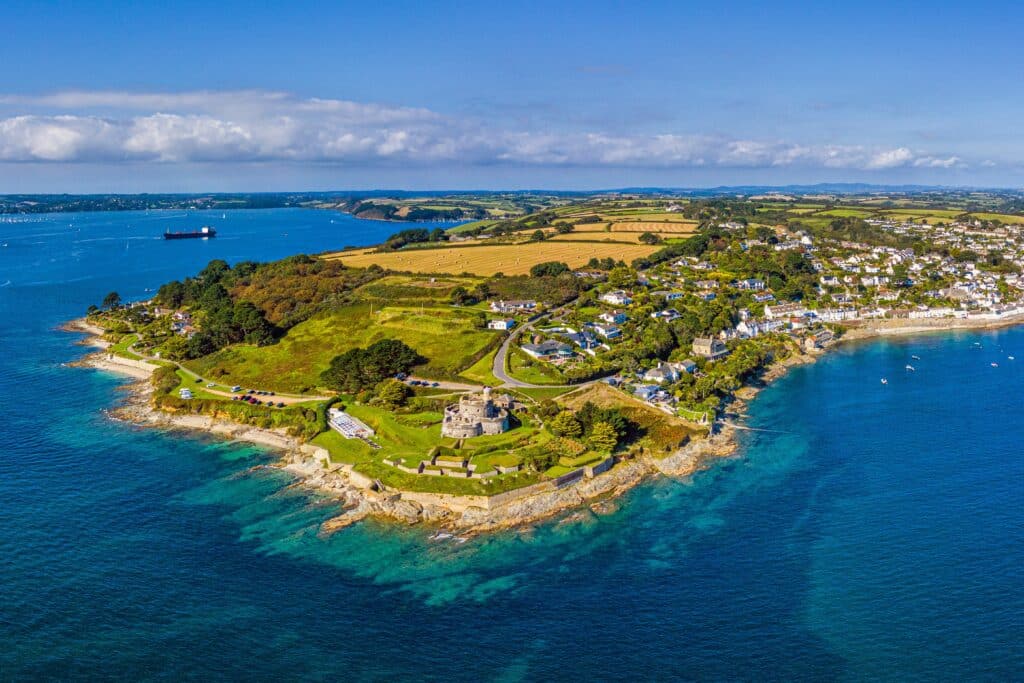
North Cornwall
North Cornwall faces the Atlantic and is the strongest choice if your ideal trip revolves around big beaches, surfing, cliffs, coastal walks, and dramatic scenery. The coastline generally feels wilder and more exposed than the south.
Popular bases include Padstow, Newquay, Bude, and the area around Port Isaac. It is particularly appealing for active travelers, families, surfers, and anyone planning to spend a large part of the trip outdoors.
South Cornwall
South Cornwall is characterized more by sheltered estuaries, harbour towns, sailing, gardens, coves, and fishing villages. It often feels gentler than the Atlantic-facing north and works particularly well for slower sightseeing trips.
Falmouth and Fowey are two of the strongest bases, while St Mawes, Looe, and smaller coastal villages offer quieter alternatives. This side of Cornwall is especially appealing if beaches are important but not the sole focus of your trip.
West Cornwall
West Cornwall delivers many of the landscapes and places people picture when imagining a Cornwall trip: St Ives, St Michael’s Mount, Land’s End, the Minack Theatre, fishing villages, and rugged Atlantic coastline.
St Ives is the stronger choice if you want beaches and atmosphere, while Penzance is particularly useful for sightseeing and public transport. The main disadvantage is simple geography: you are a long way from many attractions farther north and east.
📍 What About Central Cornwall?
Central Cornwall is less obvious if you want a classic seaside holiday, but it can make sense for a sightseeing-heavy road trip. Staying around Truro or another central location reduces the distance to different parts of the county. The trade-off is that you give up the experience of waking up beside the coast.
→ North Cornwall
→ South Cornwall
→ West Cornwall
→ Central Cornwall
Where to Stay in Cornwall Without a Car
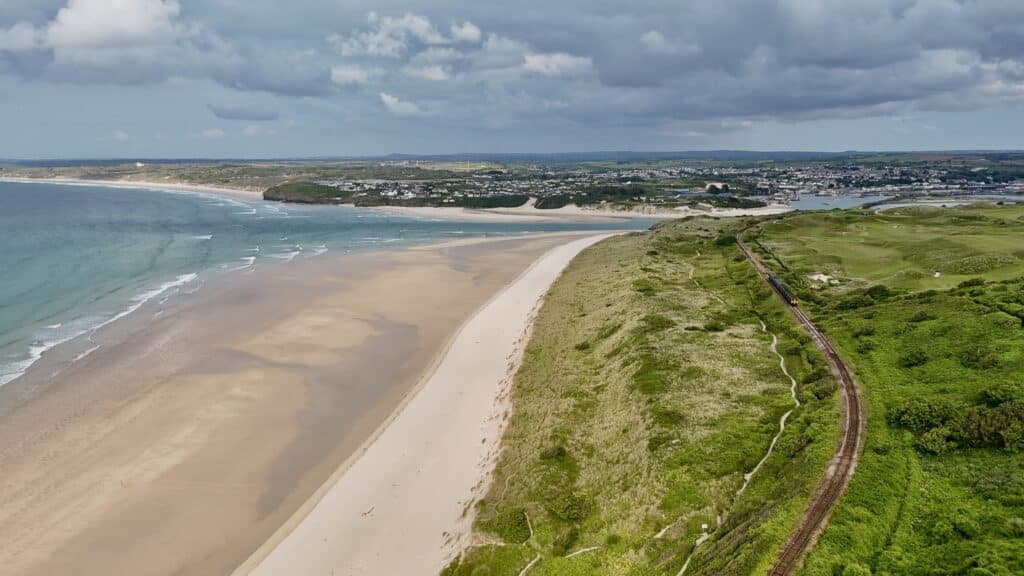
You can enjoy Cornwall without a car, but choosing the right base becomes much more important. Some towns have railway stations, useful bus connections, and plenty to do on foot, while many smaller villages and remote coastal areas are considerably harder to explore by public transport.
For a car-free trip, focus on a base where you can walk to restaurants and attractions, reach nearby places by train or bus, and still enjoy the town on days when you do not travel anywhere.
St Ives
Best if you want a car-free holiday rather than constant sightseeing. Beaches, galleries, restaurants, shops, and coastal walks are all available without needing transport every day.
Penzance
Best if you want to explore West Cornwall by public transport. The combination of rail and bus connections makes Penzance particularly useful for a sightseeing-focused trip.
Falmouth
Best if you want a mix of local attractions and day trips. Rail, bus, and seasonal ferry connections give you more options than in many smaller Cornish coastal towns.
For a relaxed car-free Cornwall holiday, St Ives is hard to beat. For sightseeing around West Cornwall, Penzance is more practical, while Falmouth offers perhaps the best balance between an enjoyable town and useful transport connections. Avoid choosing a remote cottage or tiny coastal village unless you are comfortable planning your trip around limited public transport.
Where to Stay in Cornwall for Your Type of Trip
Still undecided? Sometimes the easiest way to choose a Cornwall base is to forget about geography and focus on what you actually want from the trip. Beaches, food, romance, family activities, and sightseeing can all point you towards a different place.
St Ives
A strong introduction to Cornwall with beaches, harbour atmosphere, coastal walks, restaurants, and classic West Cornwall scenery all within easy reach.
Fowey or St Ives
Choose Fowey for a smaller, quieter harbour-town stay or St Ives if you want more beaches, restaurants, and things to do.
Newquay
Large beaches, surf schools, plenty of accommodation, and lots of facilities make Newquay particularly easy for an active family holiday.
St Ives or Newquay
Choose St Ives for beaches combined with atmosphere and sightseeing, or Newquay if the beach itself is the main focus of your trip.
Newquay
With Fistral Beach, multiple surf schools, and several nearby beaches, Newquay is the obvious base if surfing is central to your Cornwall trip.
Padstow
Padstow combines its harbour setting with one of Cornwall’s best-known food scenes, making it particularly appealing if restaurants and seafood are part of the experience.
Falmouth or Penzance
Choose Falmouth for South Cornwall and a wider variety of day trips, or Penzance if most of your must-see attractions are in the far west.
St Ives, Penzance or Falmouth
St Ives is excellent for staying local, while Penzance and Falmouth give you more options if you want to explore by public transport.
The Lizard or St Mawes
Look beyond the busiest resorts if your priority is peace, scenery, walking, and slower days. A car is highly useful for both.
Newquay
If you want pubs, bars, and a livelier evening scene alongside your beach holiday, Newquay offers more nightlife than Cornwall’s smaller harbour towns.
Classic first trip → St Ives
Beach holiday → St Ives or Newquay
Surfing → Newquay
Food → Padstow
Couples → Fowey or St Ives
Exploring → Falmouth or Penzance
Without a car → St Ives, Penzance or Falmouth
Peace & scenery → The Lizard or St Mawes
One Base or Two? Where to Stay in Cornwall by Trip Length
Because Cornwall is larger and slower to travel around than it may appear on a map, choosing the right number of accommodation bases can save a surprising amount of time. But moving hotels also costs time, so more bases are not automatically better.
For most trips, the sweet spot is simple: one base for shorter stays and two bases once you have about a week.
Choose One Base
With only a few days, changing accommodation usually wastes more time than it saves. Pick one part of Cornwall and explore it properly.
St Ives, Falmouth or Padstow
Usually One Base
One well-positioned base still makes sense. You can combine local sightseeing with several day trips without packing and checking into another hotel halfway through your stay.
Falmouth, St Ives, Penzance or Newquay
Consider Two Bases
This is where splitting your stay starts to become worthwhile. Two bases allow you to experience different parts of Cornwall while reducing repeated long drives.
St Ives + Falmouth
Two Bases Work Very Well
With more than a week, two bases usually give you a better balance between exploring widely and still having time to slow down. There is rarely a need to change accommodation every two nights.
West Cornwall + North or South Cornwall
Two or Three Bases
Longer trips give you enough time to divide Cornwall into regions. Two bases remain perfectly workable, while three can make sense if you want to explore the west, south, and north in more depth.
St Ives + Falmouth + Padstow
🧳 One Base Is Better If…
- You have five days or less
- You dislike changing hotels
- You want a slower-paced trip
- Most of your must-see places are in one region
- You are happy taking day trips
🚗 Two Bases Are Better If…
- You have around a week or longer
- You want to explore different coasts
- Your must-see places are widely spread out
- You want to reduce repeated long drives
- You enjoy experiencing different towns
Up to five days: choose one base. Around one week: consider two. Eight to ten days: two bases usually work extremely well. Only move to three bases when you have enough time to make each stop worthwhile. The goal is not to cover every corner of Cornwall — it is to reduce unnecessary travel without turning your holiday into a series of hotel changes.
Best Base for Cornwall’s Major Attractions
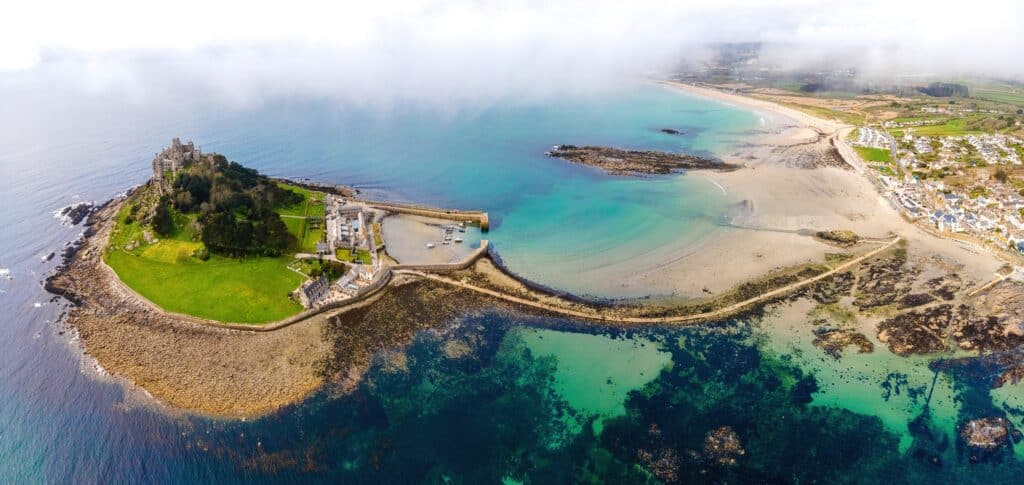
If you already know which places you most want to visit, work backwards. Instead of choosing the prettiest town first, choose a base close to the largest cluster of attractions on your itinerary. This can save far more time than staying somewhere central and driving across Cornwall every day.
Cluster Your Must-See Places
Stay in Penzance or St Ives.
Stay in Falmouth or Fowey.
Stay in Padstow or Newquay.
Consider two bases instead of one.
Where NOT to Stay in Cornwall
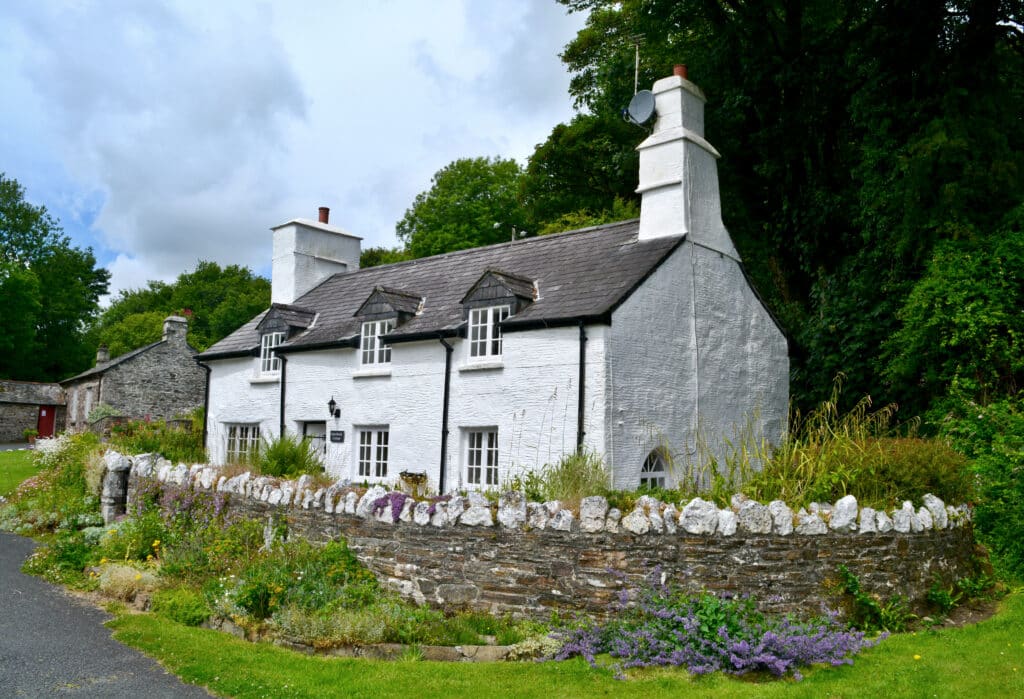
There is no single place in Cornwall that everyone should avoid. A remote fishing village can be perfect for one trip and frustrating for another. The real mistake is choosing accommodation that does not match your itinerary, transport, or travel style.
A Remote Cottage If You Want to Sightsee
That countryside cottage may look perfect in photos, but staying far from main roads can mean extra driving every morning and evening. Remote accommodation works better for slowing down than for a sightseeing-heavy first trip.
The Opposite Side of Cornwall
If most of your must-see places are around St Ives, Land’s End, and St Michael’s Mount, choosing a base in far North or East Cornwall creates unnecessary travel. Match your base to your sightseeing cluster.
A Tiny Village Without a Car
Small villages can be wonderfully atmospheric, but they may leave you dependent on limited public transport. Without a car, St Ives, Penzance, or Falmouth will usually give you considerably more flexibility.
Inland If the Coast Is Your Priority
An inland base can be practical for exploring, but if your dream is to wake up near the sea, walk to the harbour, or watch the sunset from the coast, saving a little money inland may weaken the experience you actually came for.
A Busy Resort If You Want Peace
St Ives and Newquay have major advantages, but they can also be busy during peak periods. If quiet evenings and uncrowded surroundings matter more than restaurants and facilities, a smaller coastal base may suit you better.
The Prettiest Accommodation at Any Cost
A beautiful sea-view cottage can still be the wrong choice if parking is difficult, restaurants require driving, or every attraction is far away. Location should usually come before the accommodation itself.
Use the “Daily Drive” Test
Before booking, look at your planned sightseeing days and check the driving or public-transport time from the accommodation. If you repeatedly find yourself making long journeys just to reach the area you actually want to explore, you are probably looking at the wrong base.
Common Accommodation Mistakes in Cornwall
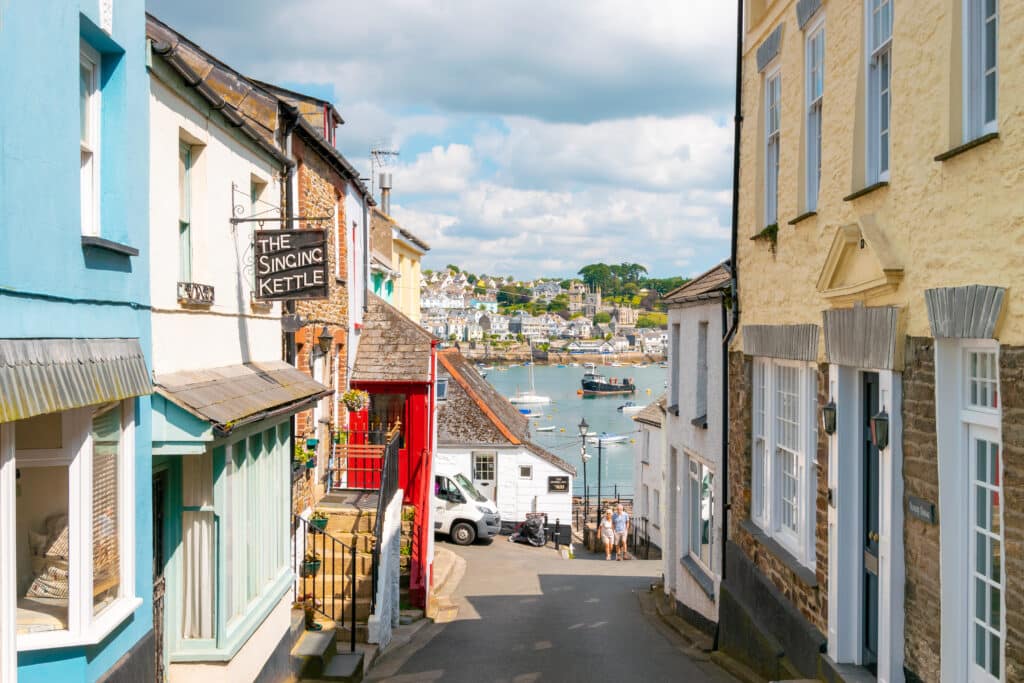
Choosing the right town is only half the decision. Cornwall has a few accommodation quirks that can turn an otherwise good booking into an inconvenience. Before you confirm your stay, watch for these common mistakes.
Booking Too Late
Popular coastal towns can have strong demand during summer and holiday periods. Waiting too long may leave you choosing between higher prices, weaker locations, or accommodation farther from the centre.
Assuming Parking Is Included
Historic coastal towns were not designed around modern traffic. A hotel or cottage may look perfectly located but have no private parking or parking some distance away. Always check before booking.
Underestimating Driving Times
Distances can look short on a map, but narrow roads, villages, summer traffic, and slower coastal routes can make journeys take longer than expected. Do not plan your base using distance alone.
Changing Accommodation Too Often
Moving every one or two nights may look efficient on paper, but packing, checking out, driving, parking, and checking in all consume time. For most trips, one or two well-chosen bases are enough.
Choosing the Cheapest Location
Saving money by staying farther away can backfire if you then spend more time and money driving every day. Compare the accommodation saving with the extra travel, parking, and lost holiday time.
Not Checking the Exact Location
“St Ives,” “Falmouth,” or “Padstow” in a listing does not necessarily mean you will be staying in the walkable centre. Check the map and see how far the property really is from restaurants, beaches, stations, and the harbour.
Ignoring Hills and Access
Some Cornish coastal towns are steep, and accommodation may involve hills, steps, or narrow streets. If mobility is important, check the route between your accommodation, parking, station, and town centre rather than relying only on distance.
Skipping the Booking Conditions
Holiday cottages and smaller properties may have different arrival days, minimum stays, deposits, or cancellation terms. Check these details carefully before building the rest of your itinerary around the booking.
Check These Five Things
- Exact location: How far are you from the places you will actually use?
- Parking: Is it included, nearby, or an additional cost?
- Daily travel: How long will your planned day trips really take?
- Access: Are steep hills, steps, or narrow roads an issue?
- Booking terms: Check minimum stays, arrival days, and cancellation conditions.
Travel Owl Base Optimizer: Where Should You Stay in Cornwall?
Still not sure? Use this quick decision tool. Start with the statement that best describes your trip and follow the recommendation. It will not cover every possible itinerary, but it should narrow your choice to the one or two Cornwall bases most likely to suit you.
What Matters Most to You?
Choose the option that comes closest to your ideal Cornwall trip.
“I want the classic Cornwall experience.”
Beaches, harbour atmosphere, restaurants, coastal walks, and plenty to enjoy without getting in the car every morning.
“I want to explore as much as possible.”
Your priority is sightseeing and day trips rather than spending most of your holiday around the accommodation.
“Food is a major part of my trip.”
You want restaurants, seafood, harbour atmosphere, coastal walks, and easy access to North Cornwall.
“Beaches and surfing come first.”
You want easy access to multiple beaches, surf schools, and a livelier seaside atmosphere.
“I want to see as much of West Cornwall as possible.”
St Michael’s Mount, Land’s End, Porthcurno, Mousehole, and other western sights dominate your itinerary.
“Atmosphere matters more than convenience.”
You would rather stay somewhere smaller, romantic, and atmospheric than choose the most efficient sightseeing base.
Now Apply Your Practical Constraints
Your first choice may change once transport, trip length, and sightseeing priorities are taken into account.
Classic first trip
Flexible exploring
Food & north coast
Beaches & surfing
West Cornwall sightseeing
Couples & atmosphere
Best Two-Base Combinations in Cornwall
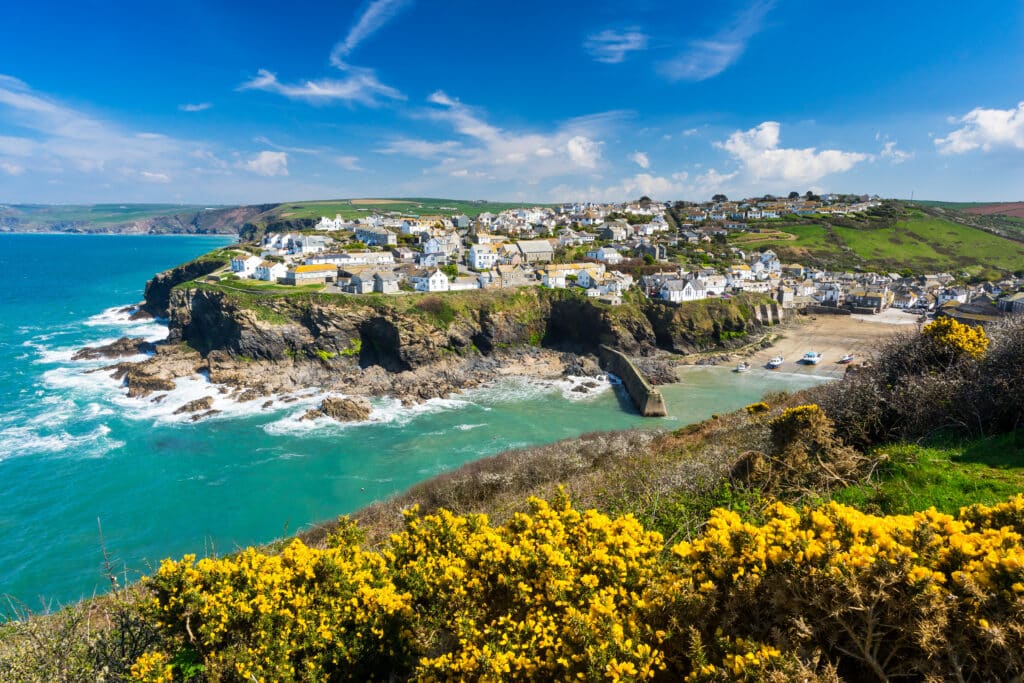
If you have around a week or longer, splitting your stay between two places can reduce driving and give you two very different Cornwall experiences. The key is to choose bases that complement each other rather than two towns covering essentially the same area.
St Ives + Falmouth
This is one of the easiest combinations to recommend for a first Cornwall trip. St Ives covers the classic far-west experience, while Falmouth gives you a stronger base for exploring the south coast.
St Ives + Padstow
Choose this combination if you want to concentrate on Cornwall’s Atlantic coast, beaches, coastal scenery, food, and harbour towns. It gives you a western base and a northern base without repeatedly covering the same roads.
Penzance + Fowey
This pairing combines a practical sightseeing base in the west with a smaller and more atmospheric harbour town on the south coast. It works particularly well if you want efficiency first and relaxation later.
Newquay + Falmouth
A useful combination if you want to experience both Cornwall’s north and south coasts. Start with beaches and surfing around Newquay, then switch to Falmouth for harbours, sightseeing, and a different coastal atmosphere.
3 + 3 nights
4 + 3 nights
4 + 4 nights
5 + 5 or 6 + 4 nights
You do not need to divide the trip equally. Give more nights to the region containing more of your must-see places or to the base where you want more time to relax.
Final Thoughts: Where Should You Stay in Cornwall?
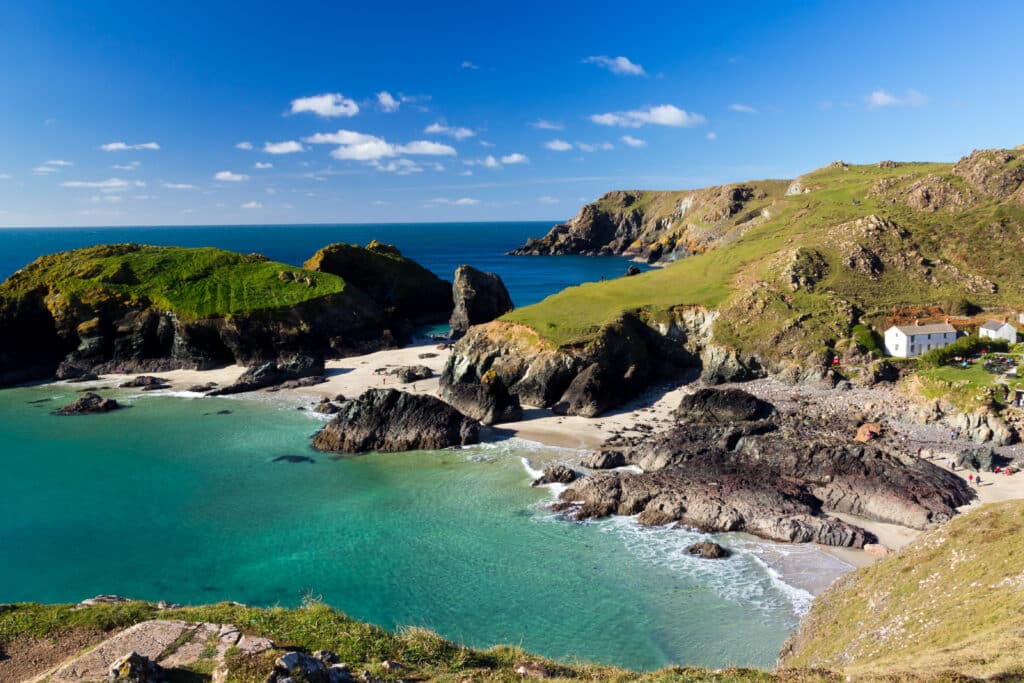
There is no single best place to stay in Cornwall. The right base depends on what you want to see, whether you have a car, and how much of the county you are trying to explore.
For a first trip, St Ives is one of the easiest choices if you want beaches, atmosphere, restaurants, and plenty to enjoy without driving every day. Falmouth is stronger if flexibility and exploring South Cornwall matter more, while Penzance is particularly practical for a sightseeing-heavy trip around the far west.
Choose Padstow for food and the north coast, Newquay for beaches and surfing, or Fowey if you want a smaller, quieter harbour town with plenty of character.
Best for a classic first trip
Best all-round exploring base
Best for food & North Cornwall
Best for beaches & surfing
Best for exploring West Cornwall
Best for couples & harbour charm
Frequently Asked Questions About Where to Stay in Cornwall
Still deciding where to stay? These answers cover the most common questions about choosing the right base for your Cornwall holiday.
What is the best area to stay in Cornwall for first-time visitors?
St Ives is one of the strongest choices for a first visit because it combines beaches, restaurants, coastal walks, galleries, and classic Cornwall atmosphere. It also works well without a car if you are happy to spend some days exploring locally.
What is the best base for exploring Cornwall?
It depends on your itinerary. Falmouth is a strong all-round base for South Cornwall, while Penzance is better for exploring the far west. If your priorities are on the north coast, consider Padstow or Newquay.
Where should I stay in Cornwall without a car?
St Ives, Penzance, and Falmouth are among the most practical choices. St Ives is particularly good if you want plenty to do locally, while Penzance and Falmouth provide useful public-transport options for exploring farther afield.
Is it better to stay in St Ives or Falmouth?
Choose St Ives if beaches, coastal atmosphere, and West Cornwall are your priorities. Choose Falmouth if you want a more practical base for sightseeing around South Cornwall, with good restaurants and transport connections.
Where should couples stay in Cornwall?
Fowey is particularly appealing for couples who want a smaller harbour town with scenic surroundings and relaxed evenings. St Ives is another strong option if you prefer more beaches, restaurants, and activities.
Where is the best place to stay in Cornwall for beaches?
St Ives and Newquay are two of the strongest choices. St Ives combines excellent beaches with a picturesque town and plenty of atmosphere, while Newquay is particularly good for a beach-focused holiday and surfing.
Should I stay in North or South Cornwall?
Choose North Cornwall for Atlantic beaches, surfing, cliffs, and dramatic coastal scenery. Choose South Cornwall for harbour towns, sheltered estuaries, gardens, sailing, and a generally gentler coastal experience.
Should I stay in one place or move around Cornwall?
For trips of five days or less, one base is usually enough. With around a week or longer, two bases can reduce driving if you want to explore different parts of Cornwall. Changing accommodation every one or two nights is rarely necessary.
Where should I stay in Cornwall for a week?
You can stay in one well-positioned base, but a week is long enough to consider splitting your trip. St Ives plus Falmouth is a balanced combination for a first visit, while St Ives plus Padstow works well if you want to focus more on Cornwall’s Atlantic coast.
Is it worth staying in a small Cornish village?
Yes, especially if atmosphere, peace, and scenery matter more than sightseeing efficiency. Places such as Mousehole or St Mawes can make memorable bases, but a car is useful and larger towns are generally easier for first-time visitors planning lots of day trips.