
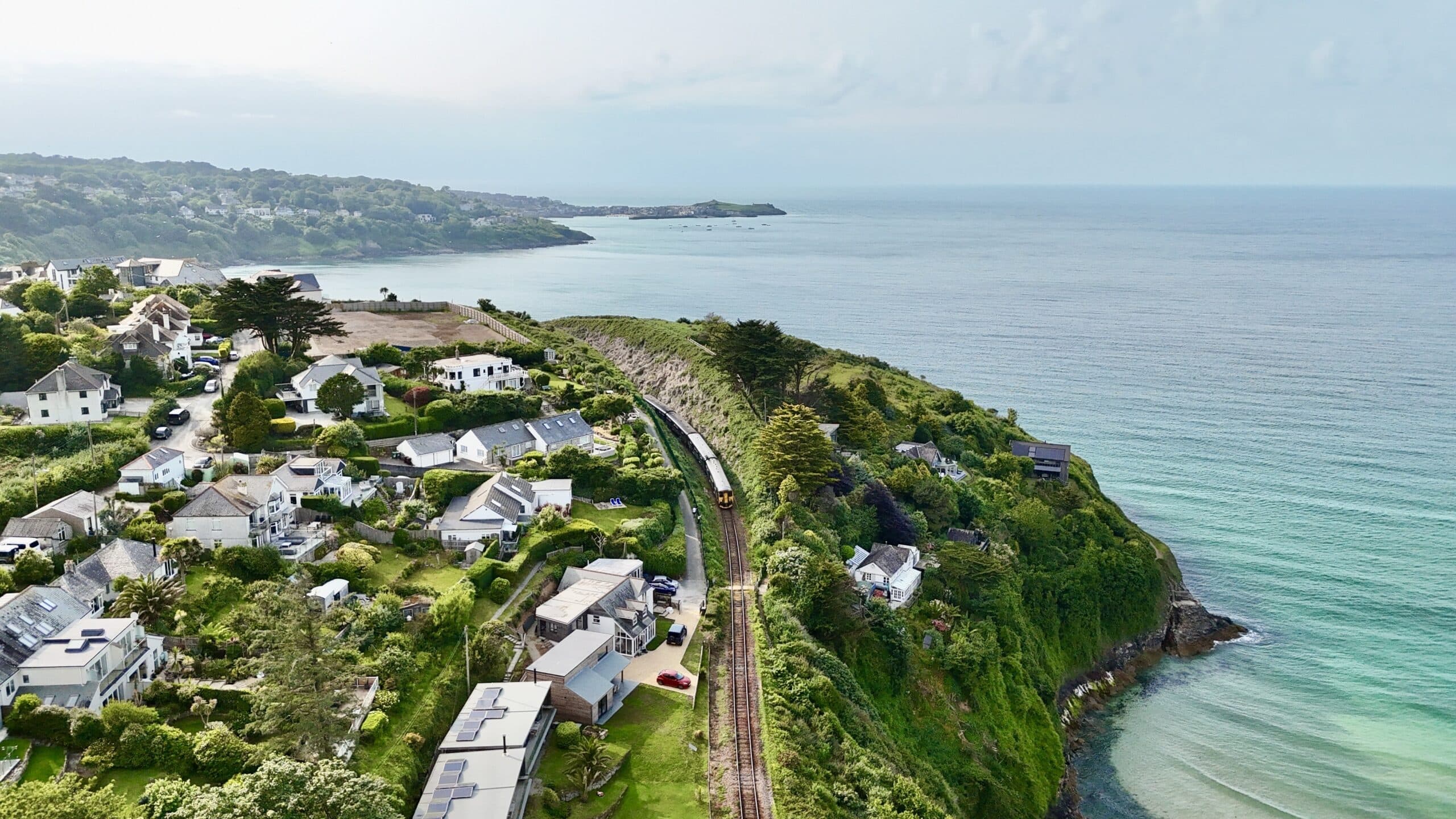
Cornwall may seem like a destination made for road trips. Its fishing villages, sweeping beaches, dramatic cliffs, and small coastal towns are scattered across a long peninsula, and many of the most beautiful places appear far from the main railway line.
But do you actually need a car to explore Cornwall?
The short answer is no. You can have an excellent Cornwall trip without driving — provided you plan it differently. Trains connect several of the region’s most useful bases, buses reach many popular coastal destinations, and some of Cornwall’s best places are surprisingly easy to explore on foot.
The key is not trying to recreate a road-trip itinerary using public transport. Without a car, where you stay becomes much more important. Choosing the right base can make the difference between relaxed days exploring Cornwall and spending hours making awkward connections.
In this guide, we’ll look at the best places to stay in Cornwall without a car, how to get around by train and bus, which destinations are easiest to reach, which places are more difficult, and how to build a realistic car-free itinerary.
Whether you’re arriving from London by train, don’t drive, or simply don’t want to deal with narrow country roads and parking, here’s how to experience Cornwall without needing your own set of wheels.
Quick Answer: Can You Visit Cornwall Without a Car?
Yes — you can absolutely visit Cornwall without a car. In fact, places such as St Ives, Penzance, Falmouth, and Newquay can work very well for a car-free trip, with trains and buses connecting many of Cornwall’s most popular towns, beaches, and attractions.
The biggest difference is how you plan your trip. With a car, you can move easily between small villages, remote beaches, and different parts of the coast. Without one, it makes much more sense to choose one or two well-connected bases and explore from there.
Travel Owl Tip: Don’t try to recreate a Cornwall road trip using buses and trains. A slower itinerary with fewer bases usually makes Cornwall much more enjoyable without a car.
Table of Contents
Cornwall Without a Car at a Glance
A car-free Cornwall trip becomes much easier when you choose the right base and build your itinerary around good transport connections. Here are the most important things to know before you start planning.
St Ives
Walkable, beautiful, connected by train, and packed with beaches, restaurants, galleries, and coastal scenery.
Penzance
A practical transport hub for reaching St Ives, Mousehole, St Michael’s Mount, and other destinations in western Cornwall.
Falmouth
A lively, walkable town with rail connections, harbour scenery, beaches, and useful options for exploring the surrounding area.
Train + Bus
Use trains for longer journeys between key towns and buses for smaller coastal destinations that are not on the railway network.
Less Driving Stress
No narrow country lanes, searching for parking, or worrying about driving after a long day of sightseeing.
Remote Cornwall
Secluded beaches, tiny villages, rural accommodation, and some stretches of coastline are considerably harder to reach without a car.
Is Cornwall Actually Good Without a Car?
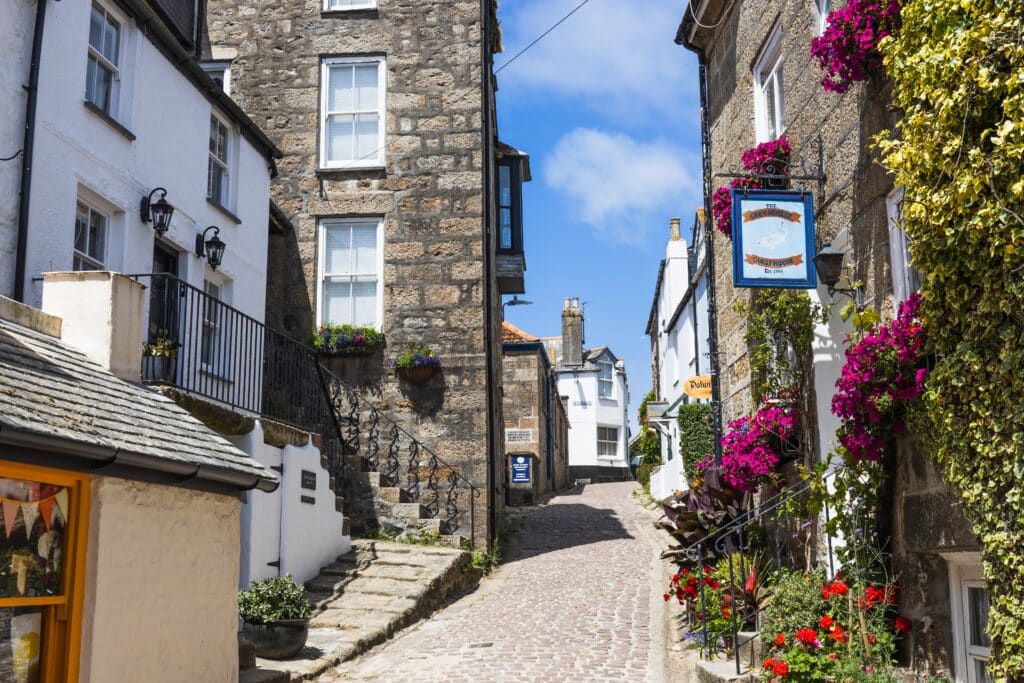
Cornwall can be a very good destination without a car, but it is not an equally easy car-free destination everywhere. The main towns and several of the most popular visitor destinations have useful train or bus connections, while remote beaches, tiny villages, and rural stretches of coastline can be considerably harder to reach.
The important question is therefore not simply “Can I visit Cornwall without a car?” but rather “What kind of Cornwall trip do I want?”
Choose a Car-Free Trip
- You are happy to stay in one or two well-connected bases.
- You want to visit places such as St Ives, Penzance, Falmouth, Newquay, or St Michael’s Mount.
- You prefer a slower itinerary rather than trying to see the whole county.
- You are comfortable combining trains, buses, walking, and occasional taxis.
- You want to avoid narrow roads, parking problems, and the cost of renting a car.
- You enjoy spending more time in each destination instead of constantly moving on.
Consider Renting a Car
- You want to explore remote coves and secluded beaches.
- Your accommodation is in the countryside rather than in a town.
- You want to visit several small villages in a single day.
- You are planning an ambitious itinerary covering different parts of Cornwall.
- You want maximum flexibility and do not want to plan around bus or train schedules.
- You are travelling with lots of luggage or want easier door-to-door transport.
For a first trip, not having a car should not stop you from visiting Cornwall. A well-planned car-free itinerary can still include beaches, fishing villages, coastal walks, historic towns, and some of Cornwall’s most famous sights.
What usually does not work well is trying to cover Cornwall at the same pace as someone travelling by car. Instead of collecting destinations, choose a strong base and explore a smaller area properly.
Best Places to Stay in Cornwall Without a Car
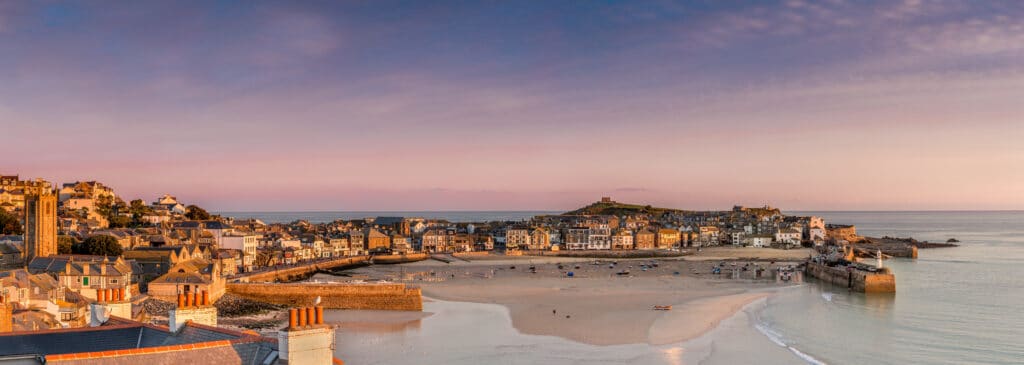
Choosing the right base is probably the single most important decision when visiting Cornwall without a car. A well-connected town can give you beaches, restaurants, coastal walks, and several easy day trips without requiring a rental car at all.
For most car-free visitors, St Ives, Penzance, and Falmouth are the strongest options. Newquay can also work well, particularly if beaches and surfing are priorities, while Truro is useful for transport connections but less appealing if you want the classic Cornwall experience directly outside your door.
St Ives
If you want the easiest combination of beautiful surroundings and car-free convenience, St Ives is difficult to beat. The town has its own railway station, and the short branch-line journey from St Erth is one of the most scenic train rides in Cornwall.
Once you arrive, you may barely need transport at all. The harbour, Tate St Ives, restaurants, shops, and several excellent beaches are within walking distance, while the South West Coast Path gives you another way to explore beyond the town.
Penzance
Penzance may not have quite the instant holiday appeal of St Ives, but for a traveller without a car it has one major advantage: location and transport connections.
It is the terminus of the main railway line through Cornwall and a useful starting point for buses around the far west. From here, you can build trips to places such as Mousehole, Marazion and St Michael’s Mount, while St Ives is also easily reached by train via St Erth.
Penzance itself is walkable, has plenty of accommodation and restaurants, and gives you more practical flexibility than staying in a small coastal village.
Falmouth
Falmouth is another excellent option if you want a base that is interesting enough to enjoy without taking a day trip every day. It combines a lively town centre, harbour atmosphere, beaches, restaurants, and several attractions within a relatively compact area.
Rail services connect Falmouth with Truro, where you can join the main Cornwall railway line. Ferries can also add another dimension to a car-free stay, including trips across the Fal estuary.
The main compromise is that Falmouth is not as convenient for exploring far western Cornwall as Penzance, so it works best when you want to concentrate on the surrounding area rather than constantly travelling across the county.
Newquay
Newquay is a practical choice if your Cornwall trip is primarily about beaches, surfing, and the north coast. The town has a railway station, bus connections, plenty of accommodation, and several beaches that you can reach without a car.
Unlike staying in a small north-coast village, Newquay gives you enough restaurants, shops, and activities to remain enjoyable even on days when you do not travel elsewhere.
Its weakness is location. If St Ives, Penzance, St Michael’s Mount, and the far west are high on your itinerary, Newquay is less convenient than basing yourself farther south or west.
Truro
Truro is one of Cornwall’s most useful transport hubs. It sits on the main railway line and provides connections toward Falmouth as well as bus services to other parts of Cornwall.
The city itself has shops, restaurants, historic streets, and Truro Cathedral, so it is certainly not just somewhere to change trains. However, it lacks the immediate beaches, harbour scenery, and coastal atmosphere that many visitors imagine when planning a Cornwall holiday.
That makes Truro extremely practical but not necessarily the most memorable base for a first visit.
Which Base Should You Choose?
For most first-time visitors without a car, St Ives or Penzance are the easiest places to start. St Ives is the stronger choice if the destination itself matters most; Penzance becomes particularly useful if you want your accommodation to function as a base for exploring several places around West Cornwall.
Best Base: St Ives vs Penzance vs Falmouth Without a Car

If you’ve narrowed your choice to St Ives, Penzance, or Falmouth, you’re already considering three of Cornwall’s most practical car-free bases. All three offer rail connections, accommodation, restaurants, and enough attractions to enjoy several days without driving.
However, they suit different types of trips. St Ives is ideal for a beach-focused holiday, Penzance is particularly useful for exploring West Cornwall, and Falmouth combines harbour life with coastal activities. The comparison below will help you decide which makes the most sense for your itinerary.
| Category | St Ives | Penzance | Falmouth |
|---|---|---|---|
| 🚆 Train Access | ★★★★☆ | ★★★★★ | ★★★★☆ |
| 🚌 Bus Connections | ★★★★☆ | ★★★★★ | ★★★★☆ |
| 🚶 Walkability | ★★★★★ | ★★★★☆ | ★★★★☆ |
| 🏖 Beaches | ★★★★★ | ★★★☆☆ | ★★★★☆ |
| 🗺 Day-Trip Potential | ★★★★☆ | ★★★★★ | ★★★★☆ |
| ⚓ Coastal Atmosphere | ★★★★★ | ★★★★☆ | ★★★★★ |
| 💰 Budget Friendliness | ★★☆☆☆ | ★★★★☆ | ★★★☆☆ |
Note: These are Travel Owl’s qualitative planning ratings rather than official transport or accommodation scores. Actual convenience depends on your accommodation, travel dates, and chosen day trips.
Choose St Ives If…
- You want several excellent beaches within walking distance.
- You prefer spending more time in one beautiful coastal town.
- Restaurants, galleries, and coastal walks are important to you.
- You want to minimize the need for daily transport.
Main compromise: Exploring destinations farther across Cornwall often involves travelling back through St Erth or using longer bus connections.
Choose Penzance If…
- You want to visit several destinations around West Cornwall.
- Mousehole and St Michael’s Mount are on your itinerary.
- You value convenient train and bus connections.
- You prefer a practical base with a range of accommodation.
Main compromise: Penzance has a waterfront and historic character, but it does not offer the same immediate beach-holiday experience as St Ives.
Choose Falmouth If…
- You want a lively town with plenty to do locally.
- You enjoy harbour scenery, beaches, and maritime history.
- You want to combine train travel with ferry excursions.
- You prefer exploring central and southern Cornwall.
Main compromise: Reaching far-west destinations such as St Ives and Land’s End generally requires longer journeys.
Don’t Choose a Base Based on the Town Alone
Before booking accommodation, identify the three or four places you most want to visit. Then choose the base that gives you the simplest connections to those destinations.
For example, if your priorities are St Michael’s Mount, Mousehole, and Land’s End, Penzance makes more sense than Falmouth. If you mainly want beaches, galleries, and relaxed coastal days, St Ives may be the better choice even if its connections are less convenient.
For a longer trip: Consider splitting your stay between Penzance or St Ives and Falmouth. This allows you to experience two different parts of Cornwall without repeatedly making long return journeys.
Getting to Cornwall Without a Car
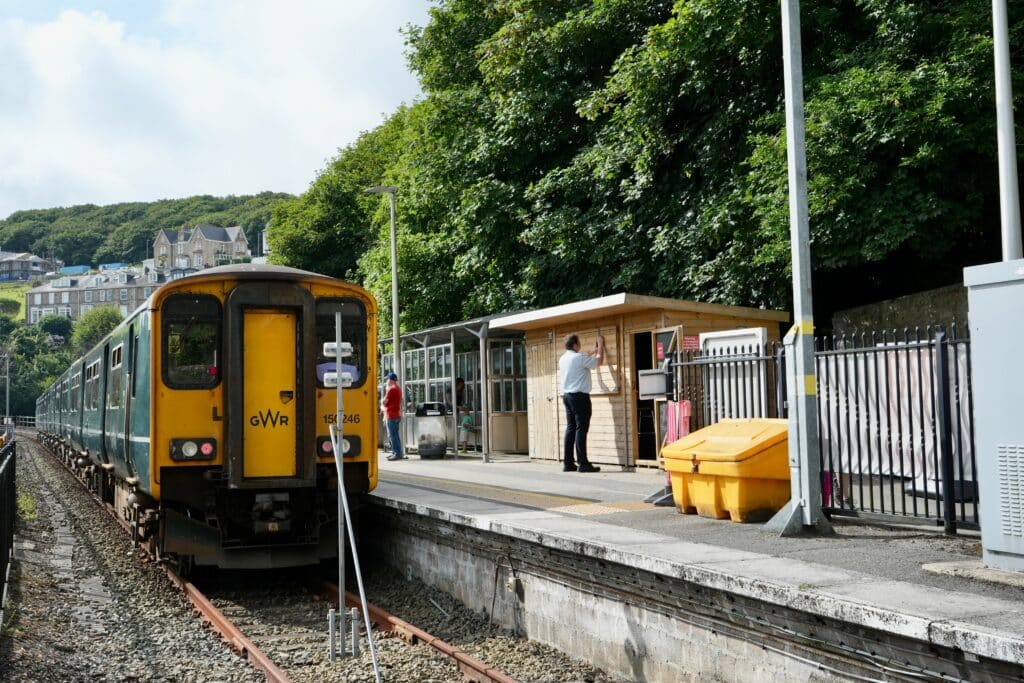
Getting to Cornwall without a car is usually easier than getting around once you are there. The main railway line runs through Cornwall to Penzance, stopping at several useful gateways along the way, while long-distance coaches provide another option for travellers who prioritize price over speed.
The best arrival point depends on where you plan to stay. If you’re heading to St Ives, you’ll normally change at St Erth. For Falmouth, Truro is the key interchange. If you’re staying in Penzance, you can simply remain on the main line to the end.
From London
For most international and UK visitors, London is the simplest starting point for a car-free Cornwall trip. Direct trains run from London Paddington into Cornwall and continue toward Penzance.
Depending on your destination, you can leave the main line at places such as Truro, St Erth, or Penzance. This makes it possible to travel from central London to your Cornwall base without needing a car at either end.
From Bristol
Bristol can be a useful gateway if you’re already travelling around southwest England or combining Cornwall with another part of the region. Rail services connect Bristol with Cornwall, although the exact journey and whether you need to change trains depends on your destination and service.
Bristol is particularly useful if Cornwall forms part of a wider trip rather than a standalone journey from London.
From Exeter
Exeter is another useful rail gateway, particularly if you’re combining Devon and Cornwall. From Exeter, trains continue west through Plymouth and into Cornwall.
This makes a Devon-and-Cornwall trip possible without renting a car, especially if you concentrate on towns and destinations with good rail or bus connections rather than trying to explore every rural corner.
By Long-Distance Coach
Long-distance coaches can be an alternative to the train, particularly if keeping transport costs down is more important than journey time.
Coach travel generally takes longer, but it can be useful for travellers with flexible schedules or when rail fares are expensive. The most important consideration is where the coach leaves you relative to your accommodation and your onward local transport.
Flying to Cornwall
Cornwall Airport Newquay can be useful for some journeys, particularly if your final destination is Newquay or the north coast. However, flying is not automatically the easiest option for a car-free holiday.
Before booking, look beyond the flight itself and check the complete door-to-door journey: getting to your departure airport, travelling from the airport to your Cornwall accommodation, and the transport you’ll need during the rest of your stay.
Which Station Should You Aim For?
For most car-free visitors, arriving by train is the simplest option. It puts you directly into Cornwall’s public-transport network and works particularly well if you choose St Ives, Penzance, Falmouth, or another rail-connected town as your base.
The biggest mistake is choosing your arrival method purely by headline price or journey time. Instead, compare the entire trip from your starting point to your accommodation. A slightly longer train journey that ends close to your hotel can be far easier than a cheaper journey followed by several awkward transfers.
Getting Around Cornwall Without a Car
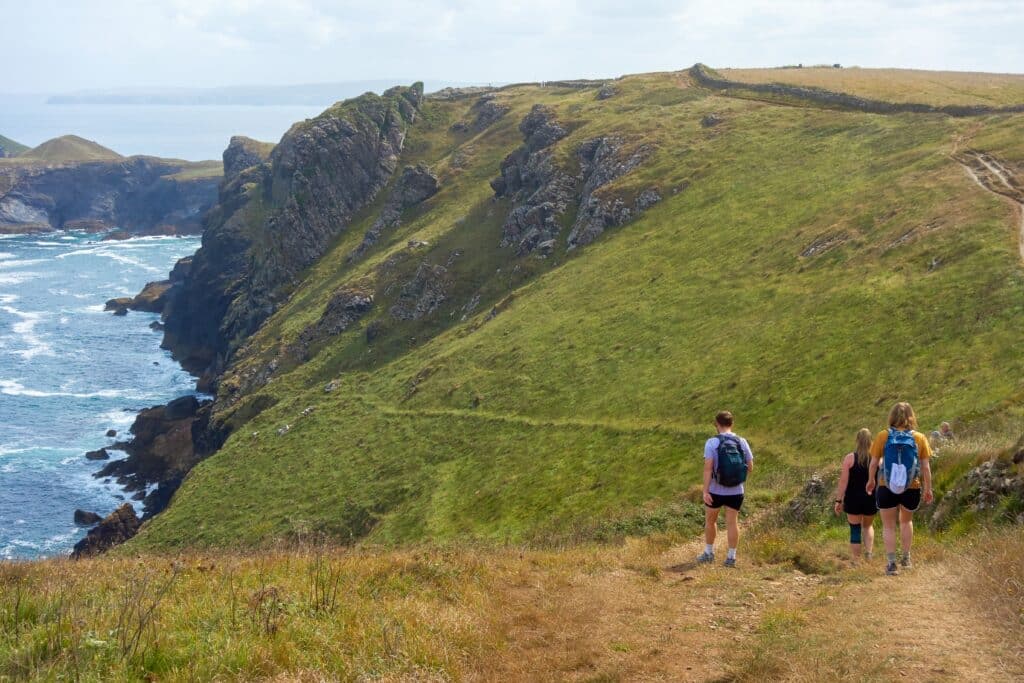
Once you’re in Cornwall, the best car-free strategy is usually not to rely on a single form of transport. Instead, combine trains for longer journeys, buses for places away from the railway, walking for local exploration, and occasional taxis when public transport becomes inconvenient.
This works particularly well if you stay in a well-connected base. What becomes much harder is travelling from one remote village to another or trying to fit several widely separated attractions into the same day.
Getting Around Cornwall by Train
The train should form the backbone of many car-free Cornwall itineraries. The main railway line crosses Cornwall and links important towns, while several branch lines reach popular coastal destinations.
The biggest advantage is reliability and simplicity compared with trying to make long cross-county journeys entirely by bus. The limitation is obvious: many of Cornwall’s small villages, beaches, and coastal attractions do not have railway stations.
Getting Around Cornwall by Bus
Buses fill many of the gaps left by the railway network and are essential if you want to visit smaller towns, villages, and attractions without driving.
They can make destinations such as Mousehole, Land’s End, and other coastal locations possible as day trips from a well-chosen base. However, journey times can be considerably longer than by car, and frequencies vary by route, day, and season.
Exploring Cornwall on Foot
Walking is not just something you do once you arrive at an attraction. In Cornwall, it can become part of your transport strategy.
Towns such as St Ives, Penzance, and Falmouth are easy to explore largely on foot, while sections of the South West Coast Path can allow you to combine sightseeing, coastal scenery, and transport in the same day.
One particularly useful approach is to take public transport in one direction and walk part of the return journey, or vice versa. This can turn an ordinary day trip into one of the highlights of your holiday.
Using Ferries in Cornwall
Ferries are not useful everywhere in Cornwall, but in the right area they can become both practical transport and part of the sightseeing experience.
This is particularly relevant around Falmouth and the Fal estuary, where boat connections can open up additional day-trip possibilities without requiring a car.
Services can be seasonal or affected by weather, so ferries work best as part of a flexible itinerary rather than something you assume will operate exactly the same way year-round.
Using Taxis Without Blowing the Budget
You do not need to choose between public transport for everything and renting a car for the entire holiday. An occasional taxi can solve some of the awkward gaps in a car-free itinerary.
A taxi can be particularly useful for reaching accommodation from a station with luggage, completing the final part of a journey to a rural attraction, or getting back after a walk when the bus schedule does not work.
Even a few taxi journeys may still be cheaper and less stressful than renting a car for an entire week.
Bike & E-Bike
Cycling can add flexibility to a car-free Cornwall trip, but Cornwall’s hills, narrow roads, and changing weather mean it is not necessarily the easiest option for everyone.
An e-bike can make hills considerably more manageable and may work particularly well if you want to explore a limited area rather than cover long distances across Cornwall.
For most first-time visitors, cycling is better treated as an optional activity or local transport solution rather than the foundation of the entire itinerary.
Combine Transport Instead of Depending on One Option
Use it for longer distances and moving between your main bases.
Use it to reach villages, attractions, and coastal destinations away from the railway.
Use it for towns, beaches, coastal sections, and nearby destinations.
Use it selectively when public transport creates an awkward gap.
Plan the Return Journey First
When planning a day trip without a car, don’t start by asking, “How do I get there?”
Start with “How do I get back?”
Reaching a small coastal village in the morning may be easy, but the return options can become much more limited later in the day. Check the final realistic bus, train, or ferry before deciding how long you can stay.
The train-and-bus combination will work for most car-free visitors. Add walking whenever destinations are close enough, and treat taxis as a useful backup rather than a failure of your public-transport plan.
The goal is not to avoid every taxi or maximize the number of places you can reach. It is to create an itinerary where transport supports the trip instead of becoming the trip.
The Best Train Journeys in Cornwall Without a Car
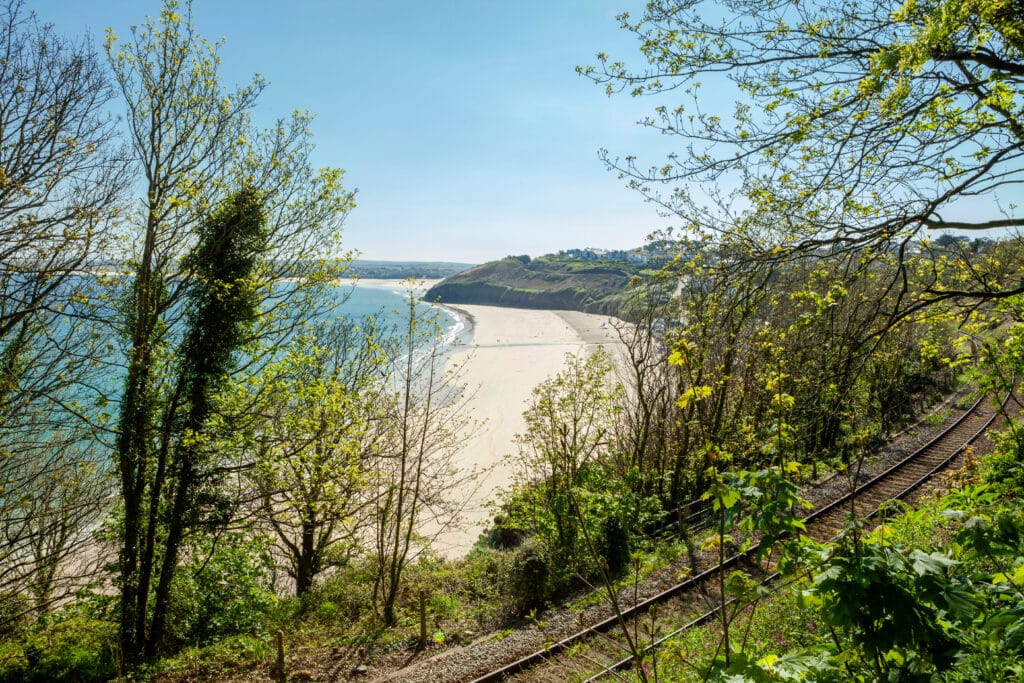
Cornwall’s railway network is more useful for visitors than it may first appear. In addition to the main line running through the county, several branch lines connect inland stations with popular coastal towns.
For a car-free trip, these routes are especially valuable because they don’t just get you from A to B — they can become part of the experience. Some offer beautiful scenery along the way, while others make destinations that might otherwise seem difficult to reach surprisingly straightforward.
St Erth → St Ives
If you take only one branch-line journey in Cornwall, this is the obvious candidate. The St Ives Bay Line connects St Erth on the main railway with St Ives, giving car-free visitors easy access to one of Cornwall’s most famous coastal towns.
The journey is short, but the coastal views make it far more than a simple transfer. Once you arrive, St Ives is ideal for exploring on foot, with the harbour, galleries, shops, restaurants, and several beaches all close together.
Truro → Falmouth
The Maritime Line connects Truro with Falmouth and is particularly useful if you’re arriving from elsewhere in Cornwall on the main railway line.
Falmouth makes a strong car-free destination because you don’t need to leave again immediately after arriving. The town offers harbour scenery, restaurants, museums, shops, and beaches, while local boat connections can extend your exploration beyond the railway.
Liskeard → Looe
The Looe Valley Line is a great example of how Cornwall’s branch lines can transform a car-free itinerary. It connects Liskeard on the main line with the coastal town of Looe.
Looe gives you a very different experience from St Ives or Falmouth, with its harbour, narrow streets, fishing-town character, and beach. For travellers exploring eastern Cornwall, the railway makes it possible to visit without worrying about parking or navigating narrow roads.
Par → Newquay
The Atlantic Coast Line connects Par with Newquay, providing a useful rail link to one of Cornwall’s best-known north-coast destinations.
For visitors without a car, Newquay is particularly attractive because several beaches, restaurants, shops, and accommodation options are available within the town itself. That means you can arrive by train and still have plenty to do without immediately needing another connection.
Which Cornwall Train Journey Should You Prioritize?
Choose this for the classic combination of coastal scenery, beaches, and one of Cornwall’s most popular towns.
Choose this for harbour atmosphere, attractions, restaurants, beaches, and ferry possibilities.
Choose this if you’re exploring eastern Cornwall and want a picturesque coastal-town day trip.
Choose this if surfing, beaches, and Cornwall’s north coast are central to your trip.
For most first-time car-free visitors, the St Ives Bay Line and Maritime Line are the most useful branch lines. They connect two of Cornwall’s strongest visitor destinations — St Ives and Falmouth — with the wider railway network.
But don’t try to collect all four railway journeys simply because they are available. Choose the lines that fit naturally into your itinerary. A scenic train ride is a bonus; spending half your holiday travelling across Cornwall to reach it is not.
Best Places to Visit in Cornwall Without a Car

Some of Cornwall’s best-known destinations are surprisingly easy to visit without driving, while others require considerably more planning. The difference often comes down to whether a place has a railway station, frequent bus connections, or enough to see within walking distance once you arrive.
The ratings below measure Car-Free Ease: five golden stars means a destination is particularly straightforward without a car, while one or two stars means you’ll need to plan transport much more carefully.
St Ives
St Ives is one of the easiest places in Cornwall to enjoy without a car. The branch railway from St Erth brings you close to the centre, and once you arrive, the town is highly walkable.
Beaches, the harbour, Tate St Ives, restaurants, shops, and coastal walks are all accessible without additional transport. In fact, having a car in St Ives can sometimes feel more like a burden than an advantage because parking can be challenging during busy periods.
Penzance
Penzance sits at the end of the main railway line through Cornwall, making it exceptionally easy to reach without driving.
The town itself is walkable, but its real strength is as a base. Bus and rail connections make it possible to reach several important West Cornwall destinations while returning to the same accommodation each evening.
Falmouth
Falmouth is another excellent car-free destination. The branch railway from Truro provides easy access, while the town itself offers enough attractions, restaurants, harbour scenery, and beaches to fill several days.
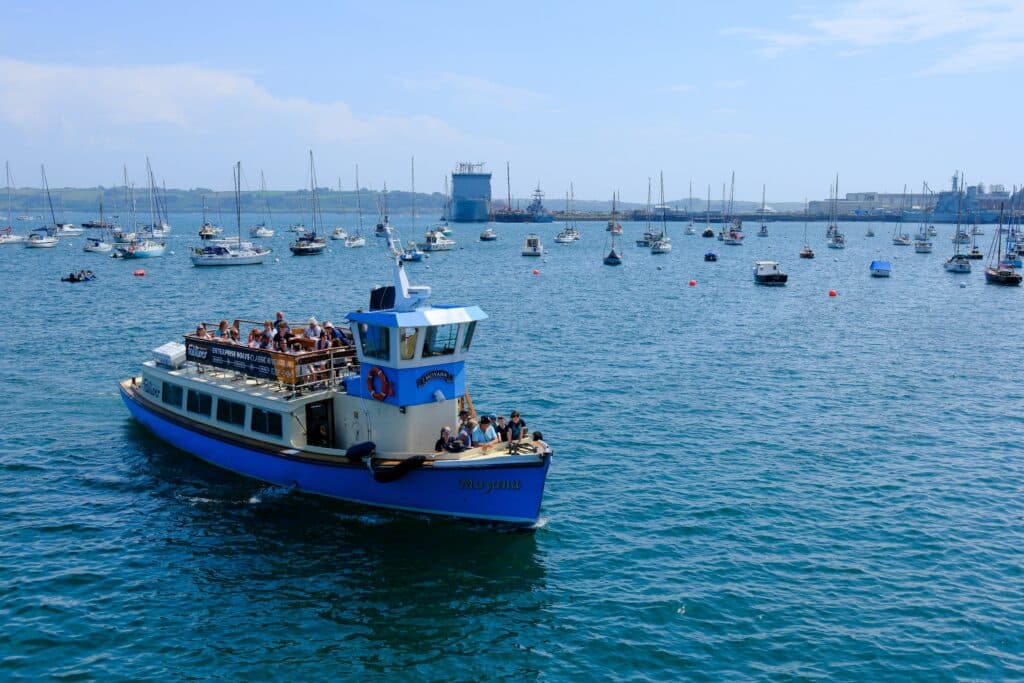
Boat connections around the Fal estuary add even more possibilities and make Falmouth particularly attractive if you enjoy combining transport with sightseeing.
St Michael’s Mount
St Michael’s Mount looks like the kind of attraction that might require a car, but it works well as a car-free excursion from Penzance.
The gateway village of Marazion can be reached by bus from Penzance, and walking can also form part of the journey for visitors who want a longer coastal day out. Access to the island itself depends on the tide, with the causeway available at lower tide and boats used when conditions allow.
Mousehole
Mousehole is a good example of a small Cornish village that you do not necessarily need a car to visit. Its proximity to Penzance makes it much easier than many other coastal villages.
Once there, the harbour and village are compact and easy to explore on foot. You don’t need a full day, which makes Mousehole easy to combine with Penzance or another nearby activity.
Newquay
Newquay works well without a car once you’re there. It has a railway station, bus connections, accommodation, restaurants, and several beaches within or close to town.
The main drawback is its position relative to other popular Cornwall destinations. If your itinerary focuses on West Cornwall, adding Newquay can create unnecessary travel time.
Padstow
Padstow is certainly possible without a car, but unlike St Ives or Falmouth, it does not have its own railway station. That makes buses more important.
Once you arrive, however, Padstow is easy to enjoy on foot. The harbour, restaurants, shops, and waterfront are concentrated around the town centre, and walking or cycling can extend your day beyond the harbour.
Land’s End
Land’s End may look remote on the map, but bus connections can make it possible to visit without driving, particularly when you’re based in Penzance.
The bigger issue is not whether you can get there, but whether the journey fits efficiently into your day. Seasonal schedules and return times matter, so this is one destination where checking transport before setting out is particularly important.
Tintagel
Tintagel is possible by public transport, but it requires more planning than the destinations above. There is no railway station in the village, so you’ll need to rely on buses and allow enough time for connections.
If Tintagel Castle and the dramatic North Cornwall coastline are major priorities, the extra effort may be worthwhile. If you’re simply trying to add another famous name to an already busy itinerary, the transport time can outweigh the benefit.
Port Isaac
Port Isaac is one of Cornwall’s most recognizable fishing villages, but it is not among the easiest destinations for visitors relying entirely on public transport.
Bus travel can make a visit possible, but connections and journey times need more attention than they do for places such as St Ives or Mousehole. Once you arrive, the compact village itself is best explored on foot.
Where Should You Focus Without a Car?
St Ives • Penzance • Falmouth
St Michael’s Mount • Mousehole • Newquay
Padstow • Land’s End
Tintagel • Port Isaac
Don’t Build Your Trip Around Famous Names
Without a car, it is tempting to spend hours on buses simply because a destination appears on every list of Cornwall’s “must-see” places. That is rarely the best use of your time.
A day combining St Ives, its beaches, and a coastal walk can be far more rewarding than spending much of the day travelling across Cornwall simply to photograph another famous village.
Car-free travel rewards geographical focus. Choose a region, explore it properly, and let the harder-to-reach destinations go unless they are genuinely important to you.
Places That Are Difficult to Visit Without a Car

Cornwall without a car works best when you focus on well-connected towns, selected villages, and attractions close to established bus or rail routes. The experience becomes much more difficult when your itinerary depends on remote beaches, isolated stretches of coastline, rural accommodation, or several small villages in a single day.
That doesn’t mean these places are impossible to reach. But there is an important difference between possible and practical — especially when you only have a few days in Cornwall.
Remote Beaches & Hidden Coves
Some of Cornwall’s most photogenic beaches are far from railway stations and may require a combination of bus travel, walking, or taxis.
If a particular beach is one of the main reasons for your trip, the effort may be worthwhile. But if you simply want a beautiful Cornish beach, it rarely makes sense to spend hours reaching a remote cove when excellent beaches are available in places such as St Ives, Falmouth, and Newquay.
Bodmin Moor
Bodmin Moor is very different from Cornwall’s better-connected coastal towns. Its appeal lies in open landscapes, walking routes, historic sites, and scattered rural locations — exactly the kind of geography where a car provides much more flexibility.
Public transport can get you to parts of the wider area, but exploring several locations independently becomes more complicated without your own transport.
The Lizard Peninsula
The Lizard Peninsula offers some of Cornwall’s most dramatic coastal scenery, but its geography makes spontaneous exploration more difficult without a car.
Bus connections can make selected destinations possible, particularly if you plan around one main objective. The problem begins when you try to combine several villages, coves, and coastal viewpoints in the same day.
Remote Rural Accommodation
A countryside cottage overlooking the Cornish landscape may look perfect when you’re booking online. Without a car, however, location can quickly become more important than the accommodation itself.
A property several kilometres from the nearest station, bus stop, supermarket, or restaurant can create transport problems every day — especially when you’re carrying luggage or returning after dinner.
Several Small Villages in One Day
A classic Cornwall road trip might include several fishing villages and coastal stops in a single day. Trying to copy that itinerary using buses is usually inefficient.
Even when every village has a bus connection, waiting times and transfers can turn what looks like a simple route on a map into a long day dominated by transport.
Remote Sunrise & Sunset Locations
Public transport is naturally less useful when you want to reach an isolated viewpoint very early in the morning or remain there late into the evening.
If sunrise photography, remote sunsets, or late-evening coastal walks are important to you, this is one situation where a taxi or short-term car rental can provide much more freedom.
The Harder a Place Is to Reach, the More It Needs to Be Worth It
On a road trip, adding another beach or village may cost you only a short drive. Without a car, the same detour can require a bus connection, a long walk, and careful planning around the return journey.
Before adding a difficult destination, ask yourself:
Is this place genuinely different from easier destinations already on my itinerary?
How much total travel time will the visit require?
What am I giving up in order to make this journey?
You don’t need access to every corner of Cornwall to have a great Cornwall trip. St Ives, Falmouth, Penzance, Mousehole, St Michael’s Mount, Newquay, and other accessible destinations already provide beaches, fishing villages, coastal scenery, history, and walking opportunities.
The biggest mistake is treating a car-free itinerary as an inferior version of a road trip. Instead, build the trip around what public transport does well — and skip the places where the transport effort is greater than the experience is worth to you.
Best Day Trips in Cornwall Without a Car
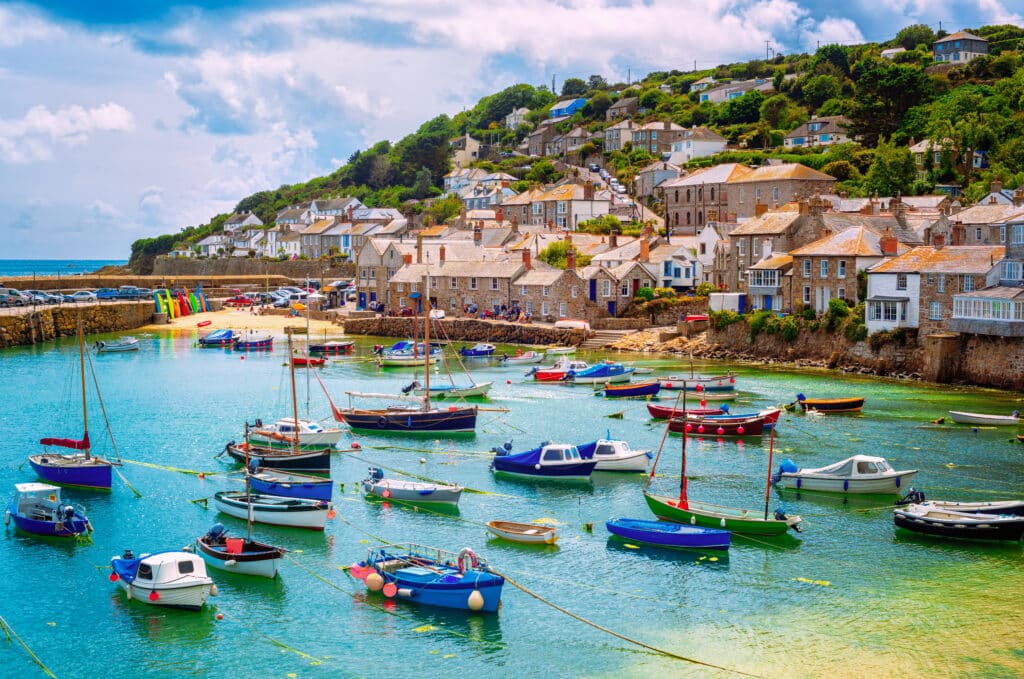
The easiest car-free day trips in Cornwall are not necessarily the places that look closest on a map. What matters more is whether there is a simple train or bus connection from your base and whether you can spend enough time at the destination to justify the journey.
For most visitors, the best strategy is to choose one main destination per day and add a second stop only when it fits naturally along the same route. These are some of the strongest combinations for a Cornwall trip without a car.
Penzance → St Michael’s Mount
If you’re staying in Penzance, St Michael’s Mount is one of the most obvious additions to your itinerary. Head to Marazion, then continue to the island according to the tide and available access.
The journey is short enough that you don’t need to dedicate the entire day to transport, leaving plenty of time to explore the mount and Marazion.
Penzance → Marazion → St Michael’s Mount → Penzance
Penzance → Mousehole
Mousehole is close enough to Penzance to work as a relaxed half-day excursion rather than a major transport project.
Explore the harbour, wander through the narrow streets, stop for something to eat, and return to Penzance without sacrificing an entire day. If the weather is good and you enjoy walking, you can also make the journey part of the experience.
Penzance → Mousehole → Penzance
Penzance → St Ives
Staying in Penzance does not mean giving up St Ives. The railway makes this one of the strongest car-free day trips in West Cornwall.
Travel toward St Erth and change for the St Ives Bay Line. Once you arrive, you can spend the day exploring the harbour, beaches, galleries, shops, and coastal scenery entirely on foot.
Penzance → St Erth → St Ives → Penzance
Truro → Falmouth
The Maritime Line makes Falmouth an easy excursion from Truro. Better still, Falmouth has enough to see that you won’t need additional transport once you arrive.
Spend your day around the harbour, explore the town, visit a museum, head to the beach, or add a ferry journey if conditions and schedules suit your plans.
Truro → Falmouth → Truro
Liskeard → Looe
If your itinerary includes eastern Cornwall, the Looe Valley Line gives you an easy way to reach the coast without driving.
Looe’s harbour, old streets, beach, and fishing-town atmosphere are all easy to enjoy on foot after you arrive. The railway journey itself also adds to the experience.
Liskeard → Looe → Liskeard
Falmouth → Fal Estuary
If you’re based in Falmouth, you don’t always need to look to trains or buses for your next excursion. Passenger ferries can turn the Fal estuary into part of your car-free transport network.
This is particularly appealing because the journey itself becomes part of the day rather than simply time spent getting somewhere.
Falmouth → Ferry excursion → Falmouth
Penzance → Land’s End
Land’s End is more ambitious than Mousehole or St Michael’s Mount, but it can still fit into a car-free itinerary from Penzance.
This is a trip where the timetable should determine the structure of your day. Check both outbound and return buses before leaving, and avoid adding too many extra stops simply because they appear nearby on the map.
Penzance → Land’s End → Penzance
Newquay → Padstow
If you’re staying in Newquay and want to explore more of North Cornwall, Padstow can make a logical day trip using bus connections.
Once you arrive, Padstow is compact and easy to explore without further transport. The harbour, shops, restaurants, and waterfront are concentrated within a small area.
Newquay → Padstow → Newquay
Which Base Gives You the Best Car-Free Day Trips?
Best for St Michael’s Mount, Mousehole, St Ives, and selected far-west destinations.
Best for a mix of town exploration, beaches, ferries, and the Fal estuary.
Best if you want fewer day trips and prefer beaches, walking, and enjoying your base itself.
Best if your priorities are North Cornwall, beaches, surfing, and places such as Padstow.
Think in Transport Corridors, Not Individual Attractions
Car-free itineraries become much easier when destinations fit naturally together. Instead of choosing attractions first and then trying to connect them, start with your base and look at which places sit along simple rail or bus routes.
From Penzance, for example, St Ives, Mousehole, and St Michael’s Mount all make sense. From Falmouth, local exploration and ferry-based excursions are more natural. From Newquay, concentrate more heavily on the north coast.
This approach may give you fewer destinations on paper — but considerably more time actually enjoying Cornwall.
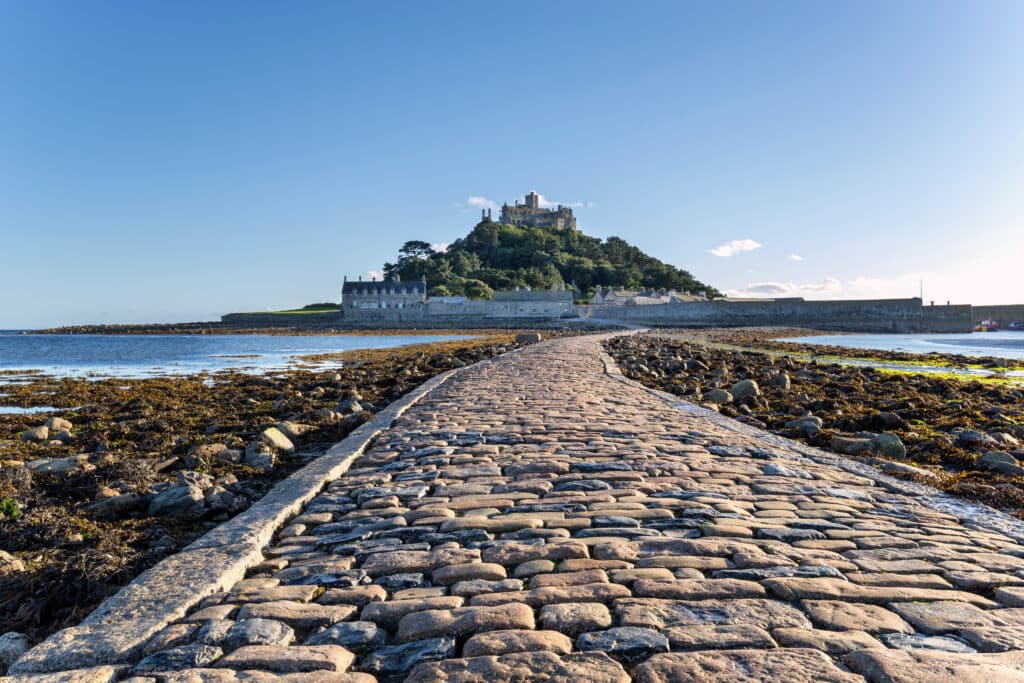
Cornwall Without a Car: 3-Day Itinerary
With only three days in Cornwall, do not change accommodation. Every hotel move costs time, and on a short car-free trip that time is better spent exploring.
For most first-time visitors, Penzance makes the most practical base because it gives you straightforward access to St Ives, St Michael’s Mount, and Mousehole while keeping all three nights in the same place.
Penzance
3 nights
Train + Bus + Walking
Moderate
St Ives: Beaches, Harbour & Coastal Atmosphere
Start with one of Cornwall’s easiest and most rewarding car-free destinations. Take the train from Penzance toward St Erth, then change for the scenic branch line to St Ives.
Once you arrive, forget about transport for the rest of the day. St Ives is compact enough to explore largely on foot.
Arrive in St Ives, explore the harbour and wander through the old streets.
Visit Tate St Ives if it interests you, spend time at the beach, or take a coastal walk.
Enjoy more time around the harbour or beach before taking the train back to Penzance.
St Michael’s Mount & Marazion
Day two stays closer to Penzance and focuses on one of Cornwall’s most distinctive landmarks: St Michael’s Mount.
Travel to Marazion and explore the village before visiting the mount. Because access to the island is affected by the tide, this is one day where you should check conditions and opening information before finalizing your schedule.
Travel to Marazion and spend some time exploring the village and waterfront.
Visit St Michael’s Mount, allowing enough time to explore rather than treating it as a quick photo stop.
Return toward Penzance and enjoy the waterfront or town at a relaxed pace.
Penzance & Mousehole
After two larger sightseeing days, keep your final day geographically compact. Spend part of the day exploring Penzance before heading to the fishing village of Mousehole.
This gives you a more relaxed final day and avoids the mistake of squeezing another long cross-Cornwall journey into a short itinerary.
Explore Penzance, its streets and waterfront, and enjoy a slower start to the day.
Head to Mousehole and explore the harbour, village streets, cafés, and waterfront.
Return to Penzance for your final evening without worrying about another long transport connection.
Beaches • Harbour • Galleries • Coastal scenery
Marazion • History • Island • Coastal views
Town • Harbour • Fishing village • Relaxed finish
Don’t Try to See All of Cornwall
With only three days and no car, we would not add Tintagel, Port Isaac, Padstow, Newquay, Falmouth, Bodmin Moor, and Land’s End simply because they are famous.
Most of those places are perfectly valid destinations. The problem is geography. Adding them would turn a compact West Cornwall itinerary into a series of long journeys and connections.
Three good days in one part of Cornwall are better than three days spent trying to cross the entire county.
Prefer Falmouth?
Penzance is not the only option. If harbour atmosphere, maritime attractions, beaches, and boat trips appeal to you more than St Michael’s Mount and Mousehole, base yourself in Falmouth for all three nights instead.
In that case, spend one day exploring Falmouth itself, one day using local ferry connections or exploring the surrounding area, and one day combining the coast with another easy regional excursion.
What we would not recommend is splitting three nights between Penzance and Falmouth. On such a short trip, the hotel change costs more time than it saves.
Three days is enough for a worthwhile Cornwall trip without a car — but only if you keep the geography tight.
Penzance works particularly well because it allows you to experience three different sides of Cornwall: St Ives for beaches and atmosphere, St Michael’s Mount for history and scenery, and Mousehole for the classic fishing-village experience.
You won’t see all of Cornwall. You shouldn’t try to.
Cornwall Without a Car: 5-Day Itinerary
Five days gives you much more flexibility than a long weekend, but it is still short enough that changing accommodation repeatedly would waste valuable time. For most car-free visitors, the sweet spot is one main base with the option of adding a second base only if you want to experience a different part of Cornwall.
For the itinerary below, we would spend three nights in Penzance and two nights in Falmouth. This gives you easy access to West Cornwall first, then shifts the focus east for harbour scenery, beaches, and the Fal estuary — without trying to cross the county every day.
Penzance + Falmouth
3 + 2 nights
Train + Bus + Walking
Moderate
St Ives: Beaches, Harbour & Coastal Scenery
Start your trip with one of Cornwall’s strongest car-free destinations. From Penzance, travel by train to St Erth and change for the branch line to St Ives.
Once you arrive, spend the day on foot. Explore the harbour, wander through the old streets, visit Tate St Ives if it interests you, and leave enough time for at least one of the town’s beaches.
Train to St Ives and explore the harbour and town centre.
Choose between galleries, beach time, or a coastal walk.
Enjoy the atmosphere before returning to Penzance.
St Michael’s Mount & Marazion
Keep your second day geographically compact and head toward Marazion and St Michael’s Mount.
Allow enough time to enjoy the island rather than treating it as a quick photo stop. Because access depends on the tide and operating conditions, check the current crossing arrangements before fixing the exact timing of your day.
Explore Marazion and enjoy views toward St Michael’s Mount.
Visit St Michael’s Mount and explore at a relaxed pace.
Return to Penzance and spend time along the waterfront.
Penzance & Mousehole
Day three deliberately slows the pace. Spend the morning exploring Penzance before heading to Mousehole for a classic Cornish fishing-village experience.
Because Mousehole is relatively close to Penzance, this day avoids long transport connections and gives you some breathing room after two full sightseeing days.
Explore Penzance, its streets, waterfront, and local atmosphere.
Head to Mousehole and explore the harbour and village.
Return to Penzance for your final evening in West Cornwall.
Travel to Falmouth & Explore the Town
Now make your only accommodation change of the trip. Travel from Penzance toward Truro and continue to Falmouth.
Because you’re travelling with luggage, don’t overload this day with another major attraction. Check into your accommodation and use the rest of the day to explore Falmouth itself.
Check out in Penzance and travel to Falmouth.
Explore Falmouth’s harbour, streets, shops, and maritime atmosphere.
Stay local and enjoy Falmouth’s restaurants and waterfront.
Falmouth, Coast & Fal Estuary
Your final day gives you something different from West Cornwall. Rather than making another long rail journey, use Falmouth as the centre of the day.
Depending on the season, weather, and your interests, combine the town with a beach, coastal walking, a maritime attraction, or a ferry excursion around the Fal estuary.
Explore more of Falmouth or spend time near the coast.
Add a ferry excursion if services and weather suit your plans.
Finish the trip around Falmouth’s harbour and town centre.
Beaches • Harbour • Galleries
Marazion • History • Coastal scenery
Town • Harbour • Fishing village
Transfer • Harbour • Town
Beach • Walking • Ferry option
You Don’t Have to Change Hotels
The itinerary above uses two bases because five days is just long enough for a change to make sense. But staying in Penzance for all five nights is an equally valid — and simpler — option.
- You dislike packing and changing hotels.
- West Cornwall is your main priority.
- You prefer slower travel.
- You want maximum flexibility.
- You want to experience two different parts of Cornwall.
- Falmouth is high on your priority list.
- You don’t mind one accommodation change.
- You prefer variety over maximum simplicity.
Five Days Is More Time — Not Unlimited Time
It can be tempting to use the extra two days to add Newquay, Padstow, Tintagel, Port Isaac, Land’s End, and the Lizard. We wouldn’t.
Without a car, every additional geographical jump has a cost. A destination may require only a few hours to explore but consume most of the day once connections and waiting time are included.
Use the extra time to expand the experience, not just the destination count.
Five days is an excellent length for a first Cornwall trip without a car. You have enough time to see several major highlights without needing to move at road-trip speed.
If convenience matters most, stay in Penzance for all five nights. If you want more variety, a Penzance + Falmouth split works well because each base gives you access to a different side of Cornwall.
Either way, resist the urge to turn five days into a checklist of famous places.
Cornwall Without a Car: 7-Day Itinerary
A full week is where a car-free Cornwall trip really starts to feel flexible. You have enough time to use two bases, explore different parts of the county, include slower days, and adapt your plans if the weather changes.
For most first-time visitors, we would divide the week between Penzance and Falmouth. Penzance gives you excellent access to West Cornwall, while Falmouth provides a different atmosphere with its harbour, beaches, rail connections, and ferry possibilities.
The key is still restraint. Seven days does not mean you need to reach every famous village in Cornwall. A good car-free week should feel like a holiday — not a public transport challenge.
Penzance + Falmouth
4 + 3 nights
Train + Bus + Walking + Ferry
Relaxed to Moderate
Arrive in Penzance & Explore Locally
Don’t turn your arrival day into a major sightseeing day. Check into your accommodation, get oriented, and spend the remaining time exploring Penzance.
Walk along the waterfront, explore the town centre, and use the evening to settle into Cornwall rather than immediately adding another train or bus journey.
Travel to Penzance and check into your accommodation.
Explore the town and waterfront on foot.
Have dinner locally and keep your first evening relaxed.
St Ives: Give It a Full Day
Take the train to St Erth and change for the scenic St Ives branch line. Because you have a full week, there is no reason to rush St Ives or combine it with several other destinations.
Explore the harbour, beaches, galleries, and old streets, or add part of a coastal walk if the weather is good.
Explore the harbour and central St Ives.
Choose between galleries, beaches, or coastal walking.
Slow down and enjoy St Ives before returning to Penzance.
St Michael’s Mount & Marazion
Dedicate day three to Marazion and St Michael’s Mount. Check the current tide and access arrangements before deciding exactly when to visit the island.
With seven days available, you don’t need to immediately rush somewhere else afterward. Spend time in Marazion and return to Penzance at a comfortable pace.
Explore Marazion and enjoy the coastal setting.
Visit St Michael’s Mount according to the day’s access arrangements.
Return to Penzance and keep the rest of the day flexible.
Mousehole & a Slower West Cornwall Day
After two major sightseeing days, make day four deliberately slower. Head to Mousehole and spend time around the harbour and village.
You can combine the visit with walking if conditions suit you, spend additional time in Penzance, or simply enjoy having a day that is not organized around a long list of attractions.
Enjoy a slower start in Penzance.
Explore Mousehole’s harbour and village streets.
Add some coastal walking if the weather and your energy level are right.
Move to Falmouth & Explore the Harbour
After four nights in West Cornwall, change base once and head to Falmouth. This gives the second half of your trip a noticeably different character without introducing constant hotel changes.
Once you’ve checked in, spend the rest of the day exploring Falmouth rather than heading immediately to another destination.
Check out and travel from Penzance to Falmouth.
Explore Falmouth’s harbour, town centre, and waterfront.
Stay local and enjoy your new base.
Falmouth, Coast & Fal Estuary
Day six is about using Falmouth’s location rather than making another long cross-county journey.
Depending on the season and weather, combine local sightseeing with a beach, coastal walking, or a ferry excursion around the Fal estuary. This is one of the days where travelling without a car can actually enhance the experience because the boat journey becomes part of the sightseeing.
Explore the coast or visit one of Falmouth’s attractions.
Take a ferry excursion if operating conditions suit your plans.
Return to Falmouth for another relaxed harbour evening.
Keep One Day Flexible
One of the smartest things you can do on a week-long Cornwall trip is not decide every day in advance.
Weather may change your plans. A ferry may not suit the conditions. You may discover that you want another beach day — or simply need a slower morning.
Arrival • Waterfront • Easy start
Beaches • Harbour • Galleries
Marazion • Island • History
Village • Harbour • Slow day
Transfer • Harbour • Town
Coast • Ferry • Falmouth
Weather • Beach • Walk • Rest
It Alternates Bigger Days With Easier Days
You experience two parts of Cornwall without repeatedly packing and moving luggage.
West Cornwall comes first, followed by Falmouth and its surrounding area.
Mousehole and the flexible day prevent the week from becoming seven consecutive sightseeing marathons.
Outdoor activities can be moved rather than lost if conditions change.
Easy Swaps for Different Priorities
Replace the slower Mousehole day with a far-west excursion from Penzance.
Consider using Newquay as a base instead of Falmouth rather than forcing it into a West Cornwall day trip.
Reduce the attraction count and add more sections of the South West Coast Path.
Give St Ives or Falmouth another day instead of adding a distant destination.
Don’t Turn Seven Days Into Seven Corners of Cornwall
A week may look long enough to combine St Ives, Land’s End, Falmouth, Newquay, Padstow, Port Isaac, Tintagel, and the Lizard. On paper, perhaps. Without a car, the result would involve far more transport than the map initially suggests.
If several remote North Cornwall destinations are among your absolute priorities, it may be smarter to change the itinerary completely — or consider renting a car for part of the trip — rather than stretching this route across the entire county.
Seven days is arguably the sweet spot for a first Cornwall trip without a car. It gives you enough time to use two bases without feeling that you’re constantly moving, while still allowing slower days and some flexibility.
The goal is not to prove how many Cornish destinations you can reach by public transport. The goal is to use public transport to build a trip that still feels relaxed, varied, and worth your time.
One Base or Multiple Bases in Cornwall Without a Car?
Without a car, choosing the right number of bases matters almost as much as choosing the right destinations. Stay in one place and you avoid packing, luggage, and check-in time. Move too often, however, and a large part of your trip can disappear into transfers.
For most visitors, the answer is simple: use fewer bases than you would on a Cornwall road trip.
Don’t change hotels.
One is easiest; two adds variety.
The best balance for most visitors.
Enough time to explore more regions.
Choose One Base If…
- Your Cornwall trip is 3–5 days.
- You dislike packing and changing accommodation.
- You want a slower, more relaxed trip.
- Your priority destinations are concentrated in one region.
- You want flexibility when the weather changes.
Penzance for West Cornwall; St Ives if enjoying the base itself matters more than maximizing day trips.
Choose Two Bases If…
- You have around 5–8 days.
- You want to experience more than one part of Cornwall.
- You don’t mind one accommodation change.
- A second base significantly reduces your day-trip travel.
- You want different experiences rather than more destinations from the same base.
Penzance + Falmouth gives you West Cornwall first and a different harbour-and-coast experience later.
Choose Three Bases If…
- You have roughly 10 days or more.
- You genuinely want to explore different parts of Cornwall.
- Your bases are well connected by public transport.
- You prefer moving accommodation over making repeated long day trips.
- You are travelling reasonably light.
Every move should solve a transport problem. If it doesn’t, stay where you are.
When Is Changing Hotels Actually Worth It?
Don’t ask only whether another town would make a nice place to stay. Ask whether moving there will save enough travel time later in the trip to justify the move itself.
Include packing, getting to the station, travel, waiting, finding the new accommodation, and check-in.
How much day-trip travel will the new base remove over the following days?
If the new base doesn’t meaningfully improve at least two days of your trip, the move may not be worth it.
Why Penzance + Falmouth Can Work
St Ives • Mousehole • St Michael’s Mount • Far West
Harbour • Beaches • Fal Estuary • Ferry trips
This is a useful base change because the second stay changes the geography of your trip. You are not moving simply to sleep somewhere different — you’re moving closer to a new group of experiences.
Don’t Change Hotels Every Two Nights
A route such as Penzance → St Ives → Newquay → Falmouth may look efficient because you’re constantly moving forward. In reality, repeated check-outs, luggage, transport connections, and check-ins can make the trip feel much faster and more tiring than necessary.
Remember that many Cornish destinations can be visited as day trips. You don’t need to sleep in every town you want to see.
Three days: one base. Five days: one or two. Seven days: usually two.
Only add another base when it solves a real geographical problem. The goal is not to minimize every minute spent on a train or bus — it is to find the balance between day-trip travel and the disruption of moving accommodation.
For most first-time visitors travelling without a car, fewer bases will produce the better trip.
How Much Longer Does Cornwall Take Without a Car?
Travelling around Cornwall without a car does not automatically mean every journey takes much longer. Between well-connected places, trains can be straightforward and efficient. The bigger difference appears when you want to reach small villages, remote beaches, rural attractions, or several places in the same day.
The real cost of car-free travel is therefore not just journey time. It is also waiting for connections, working around timetables, and having less flexibility to change plans during the day.
Expect Cornwall without a car to feel roughly the same speed on simple rail-based days, moderately slower on bus-based days, and considerably slower when trying to reach several remote places.
Usually little disadvantage
Usually manageable
Allow extra time
Often inefficient
Well-Connected Towns
Journeys between places served by Cornwall’s rail network can work extremely well without a car.
If you’re travelling from Penzance to St Ives, or between Truro and Falmouth, public transport fits naturally into the day rather than dominating it.
One Bus to a Walkable Destination
A bus journey to somewhere such as Mousehole can still make a very efficient day because you don’t need additional transport after arrival.
The key is choosing destinations where the bus gets you close to what you actually want to see.
Trips Requiring Connections
One connection is usually manageable. But every additional connection increases the chance that waiting time becomes a significant part of your day.
A destination that requires a train, another train, a bus, and then a walk may still be possible — but that does not necessarily make it a good use of limited holiday time.
Village-Hopping & Remote Road Trips
This is where travelling without a car changes the trip most dramatically. A driver can stop at several villages, viewpoints, beaches, and coves along the same route.
By public transport, each additional stop can introduce another timetable, wait, walk, or connection.
Journey Time Isn’t the Whole Story
When comparing driving with public transport, travellers often compare only the advertised journey times. That misses several important parts of a car-free journey.
Your journey begins before the train or bus leaves.
A 20-minute bus ride may require considerably more than 20 minutes of your day.
A short wait is fine. Several connections can quickly make a simple trip inefficient.
You may need to leave earlier than you would with a car to catch a practical return service.
Possible Doesn’t Always Mean Practical
One simple journey
Few or no connections
Walkable after arrival
Flexible return options
Several hours at destination
Multiple connections
Long waits
More transport after arrival
One critical return service
More time travelling than exploring
Use the 2:1 Experience Rule
As a simple planning rule, try to get at least twice as much meaningful destination time as total transport time.
Total outward + return travel
A worthwhile day-trip balance
This is not a strict mathematical rule. A spectacular destination may justify a longer journey. But if you’re repeatedly spending three or four hours travelling for two hours of sightseeing, your itinerary probably needs simplifying.
Choose one base and concentrate on easy nearby destinations. Avoid long cross-Cornwall journeys.
You can include a few longer journeys or one base change without transport taking over the trip.
Two bases allow you to expand the trip without repeatedly travelling across Cornwall and back.
Travelling Cornwall without a car becomes slow mainly when you try to travel like someone who has a car.
Base yourself near useful transport, choose destinations that are easy to explore after arrival, and avoid unnecessary multi-stop days. Do that, and the time penalty can be surprisingly small.
Try to recreate a road trip using buses and trains, and transport can quickly become the biggest part of your holiday.
Is Cornwall Without a Car Cheaper?

Travelling around Cornwall without a car can be cheaper, but it isn’t automatically the cheapest option for everyone. The calculation changes depending on whether you’re travelling alone, as a couple, or as a family or group.
A fair comparison also needs to include more than the rental price. With a car, you may pay for fuel, parking, insurance, and sometimes higher accommodation costs for convenient parking. Without a car, your main expenses are trains, buses, ferries, and occasional taxis.
Strong case for going car-free. You aren’t spreading car costs across several people.
Often still competitive. Especially if most journeys are by train or bus and taxis are occasional.
Compare carefully. Multiple individual fares can narrow or remove the cost advantage.
Rating: Potential cost advantage of travelling without a car. These are planning ratings, not fixed price comparisons.
What You Pay Without a Car
- Long-distance train or coach travel to Cornwall
- Local train fares
- Bus fares
- Passenger ferries
- Occasional taxis
- Potential luggage storage where useful
What You Pay With a Rental Car
- Daily rental charge
- Fuel
- Insurance or excess-reduction options
- Parking
- Possible one-way or additional-driver charges
- The car on days when you barely use it
How Many People Are Travelling?
Public transport is generally priced per passenger. A rental car, by contrast, costs roughly the same whether one person or several people are sitting inside it.
Paying for an entire rental car, fuel, and parking yourself can make car-free travel particularly attractive.
Public transport can still make financial sense, especially on an itinerary based around well-connected towns.
Compare the full cost. Several train and bus fares may eventually compete with the cost of one vehicle.
The Rental Price Isn’t the Final Price
When comparing the two options, don’t compare a train ticket only with the headline daily rental rate.
Especially relevant if your itinerary involves frequent cross-Cornwall driving.
Popular coastal towns can add another recurring expense to a driving itinerary.
The level of cover you choose can materially change the final rental cost.
Parking availability may influence which hotel or holiday rental you choose.
A Taxi Can Sometimes Save Money Overall
Car-free travellers sometimes avoid taxis completely because they seem expensive. But that can be a false economy.
If most of your week works perfectly by train and bus, paying for one strategic taxi journey may still cost far less than renting a car for the entire trip.
Use for the majority of your trip
Use where public transport becomes awkward
Convenience without a full-week rental
Compare advance fares, off-peak options, railcards, and relevant local or regional transport tickets where applicable.
A slightly more expensive hotel near useful transport can save money on taxis and unnecessary journeys.
Avoid repeatedly crossing Cornwall because your itinerary jumps between regions.
Choose destinations where the station or bus stop puts you within walking distance of what you came to see.
Don’t Optimize Only for the Lowest Price
Saving £20 is not necessarily a good deal if it adds several hours of waiting and awkward connections to your trip.
Likewise, paying more for a rental car is not automatically wasteful if it unlocks several remote places that are genuinely important to you.
The better question is:
For solo travellers and many couples, Cornwall without a car can make strong financial sense. For families and groups, the comparison becomes less clear because public transport costs multiply with each passenger while car costs can be shared.
But price alone should not decide it. If your itinerary focuses on St Ives, Penzance, Falmouth, and other well-connected destinations, paying for a rental car may add surprisingly little value.
If your priority is remote beaches, rural accommodation, the Lizard, Bodmin Moor, or several small villages in one day, paying more for a car may buy something more important than transport: time and flexibility.
Cornwall Without a Car With Luggage
Luggage is one of the easiest things to underestimate when planning Cornwall without a car. A hotel that looks conveniently located on a map can feel very different when you’re pulling a suitcase uphill, changing trains, or waiting for a bus in bad weather.
The solution is not complicated: pack reasonably light, stay close to useful transport, minimize hotel changes, and use a taxi strategically when carrying luggage becomes the least enjoyable part of the trip.
Location matters more when every hotel transfer involves carrying your own luggage.
A smaller suitcase or backpack makes trains, buses, stairs, and short walks much easier.
Every hotel move adds another luggage day to your itinerary.
A short taxi ride can be money well spent when arriving or changing accommodation.
Check the Station-to-Hotel Journey
Don’t stop planning once you’ve found accommodation in the right town. Check exactly how you will get from the station or bus stop to the property.
A beautiful guesthouse may be perfect for sightseeing but frustrating on arrival if reaching it involves a long walk with luggage.
A Smaller Bag Changes the Trip
You don’t need to travel with only a backpack, but there is a big difference between moving around Cornwall with one manageable suitcase and handling several large bags.
This becomes especially noticeable when boarding buses, changing trains, climbing stairs, or walking between accommodation and stations.
Don’t Sightsee With Your Suitcase
On a base-change day, the simplest plan is usually to travel directly to your next accommodation, leave your luggage, and then start exploring.
Trying to squeeze a village or attraction between two hotels can turn an otherwise easy transfer into a complicated sequence of luggage storage and transport connections.
Use a Taxi for the Final Mile
Travelling without a car does not mean every metre of your trip needs to be completed by train, bus, or foot.
If your accommodation is awkward to reach with luggage, a short taxi ride from the station can remove one of the least enjoyable parts of a car-free trip.
Without a Car, Convenience Can Beat the Perfect View
Walkable from useful transport
Restaurants nearby
Shops within easy reach
Simple arrival with luggage
Remote countryside location
No useful nearby bus stop
Long walk with luggage
Taxi required for almost everything
Useful — But Don’t Build Your Itinerary Around It
Luggage storage can be useful when check-in is later than your arrival or when you have several hours between checking out and leaving Cornwall.
But availability varies, so check your accommodation, station, or local storage options in advance rather than assuming somewhere will take your bags.
Your hotel or guesthouse may also be willing to hold luggage before check-in or after check-out, which can be the simplest solution.
Count Luggage Days, Not Just Hotel Nights
Every additional base creates another day when you need to pack, check out, move your bags, find the next accommodation, and check in.
Arrival + departure
Add one transfer day
Add two transfer days
This is another reason why fewer bases generally work better for a car-free Cornwall itinerary.
Luggage should influence where you stay, but it shouldn’t stop you visiting Cornwall without a car.
Choose accommodation close to useful transport, avoid unnecessary hotel changes, travel with manageable bags, and don’t hesitate to use an occasional taxi for the awkward final part of a journey.
The mistake is not travelling with a suitcase. The mistake is planning your accommodation as though you won’t have to carry it.
Cornwall Without a Car With Children
A family trip to Cornwall without a car is absolutely possible, but the itinerary needs to be simpler than one designed for adults travelling alone or as a couple. The biggest challenge is usually not the train or bus itself — it is connections, waiting, luggage, tired children, and having fewer easy ways to change plans.
The best approach is to choose a walkable base, keep most journeys simple, and plan fewer activities per day. With children, one easy destination that everyone enjoys is usually better than three places connected by buses and trains.
Stay somewhere with transport, shops, food, and things to do within walking distance.
Simple rail journeys are generally easier than days involving several bus connections.
One main destination plus flexible time usually works better than a packed sightseeing schedule.
An occasional taxi can be extremely useful when children are tired or the weather changes.
St Ives
St Ives works particularly well because much of the holiday can happen without another journey. Beaches, restaurants, shops, the harbour, and attractions are concentrated around a walkable town.
Penzance
Penzance is the more strategic option if you want several outings. St Ives, Marazion, St Michael’s Mount, and Mousehole can all fit naturally into a West Cornwall itinerary.
Falmouth
Falmouth combines a lively town, beaches, maritime attractions, rail access, and possible boat trips. That gives families several options without needing a major journey every day.
A direct 60-minute journey can be easier than a shorter trip involving two changes and waiting.
Build each day around one priority and treat anything else as a bonus.
Know how and when you’ll get back before travelling to a smaller coastal destination.
Food, toilets, tired legs, and unexpected stops take longer with children. Don’t plan connections too tightly.
Paying slightly more for accommodation near transport, restaurants, and shops can make the entire holiday easier.
Keep at least one local activity available for rainy days or when nobody wants another long journey.
Think About the Whole Journey
A pushchair can make a car-free Cornwall trip more demanding, particularly when combined with luggage. Don’t look only at whether a destination has a train or bus connection.
Check current accessibility information for the stations you plan to use.
Space and accessibility can vary, so check the relevant operator before travelling.
A pushchair plus several large suitcases can make hotel changes considerably harder.
Cobbles, hills, coastal paths, and uneven surfaces can matter more than distance alone.
A Good Family Day vs an Overpacked Family Day
- Breakfast near your accommodation
- One direct train or bus journey
- One main destination
- Beach, attraction, or harbour time
- Flexible lunch
- Return before everyone is exhausted
- Early start after a late arrival
- Train + bus + second bus
- Three villages before lunch
- No buffer for food or toilets
- Remote final stop
- One critical evening bus home
This Is Where a Rental Car Can Become More Competitive
For a solo traveller, public transport can have a clear financial advantage. For a family, several individual fares can change the calculation.
That doesn’t mean a car will automatically be cheaper. You still need to include rental charges, fuel, insurance, and parking. But with several travellers, it is worth comparing the total family transport cost rather than assuming trains and buses will always cost less.
You’re based in St Ives, Penzance, or Falmouth.
You mainly want beaches, towns, and easy day trips.
Your children cope well with public transport.
You prefer a slower itinerary.
You have several young children plus lots of luggage.
You want remote beaches and rural attractions.
You plan to change accommodation frequently.
You want maximum flexibility around naps, meals, and weather.
Don’t Design the Trip Around Transport Enthusiasm
A scenic train ride or boat journey can be part of the fun for children. Waiting at a bus stop for the third connection of the day usually isn’t.
Use public transport where it adds to the experience or gets you somewhere simply. Avoid complicated journeys just because they are technically possible.
Cornwall can work very well for families without a car — especially if you choose St Ives, Penzance, or Falmouth as your base and keep the itinerary geographically focused.
The younger the children and the more luggage you have, the more valuable simplicity becomes. Reduce connections, avoid unnecessary hotel changes, and leave room for plans to change.
For families wanting remote beaches, rural accommodation, and several small villages in the same trip, however, a car can offer substantially more flexibility.
Cornwall Without a Car in Winter
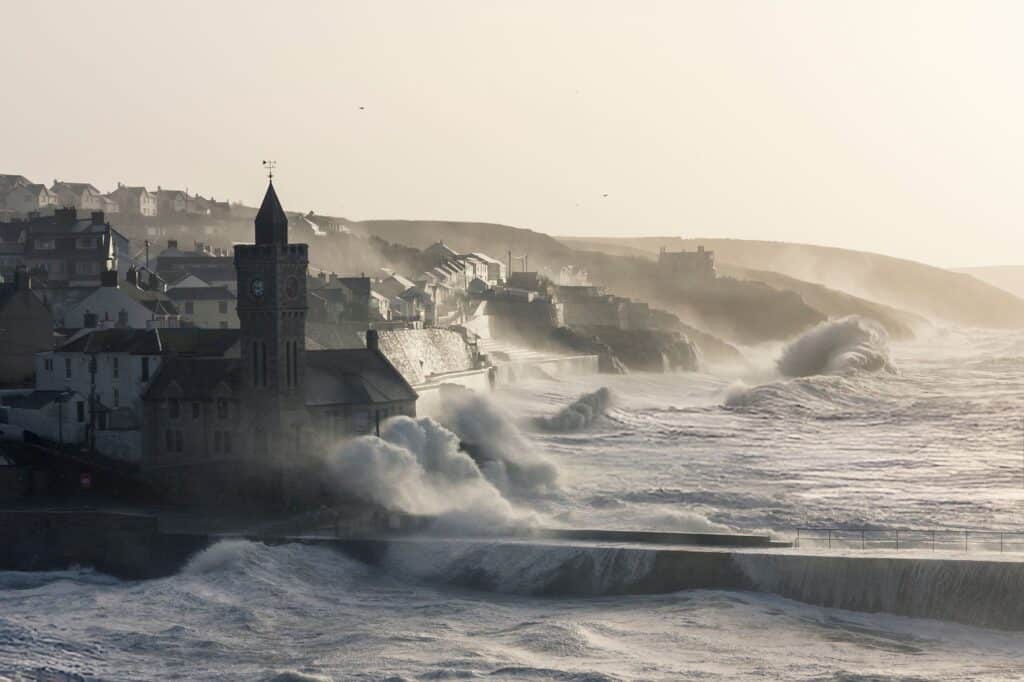
Cornwall can still be visited without a car in winter, but this is where good base selection becomes even more important. Shorter daylight hours, changeable weather, and reduced seasonal transport can make ambitious car-free itineraries much less practical than they are in summer.
Winter is therefore not the best time to build your trip around remote beaches, small villages, and complicated bus connections. Instead, choose a well-connected town and treat Cornwall as a slower coastal break rather than a sightseeing race.
Your most useful transport backbone for a winter car-free trip.
Still useful, but check current timetables carefully before planning each day.
More seasonal and weather-dependent. Never assume a summer-style boat itinerary will work.
Possible, but daylight and weather require more conservative planning.
Important: These are general planning ratings. Always check current transport schedules, weather conditions, and attraction opening times for your actual travel dates.
You have fewer useful sightseeing hours, making long outward and return journeys more expensive in terms of time.
Some services may operate differently outside the main visitor season, so check the current timetable rather than relying on summer information.
Wind and rain can change the appeal of coastal walks, exposed viewpoints, and boat trips very quickly.
Some attractions, cafés, restaurants, and visitor facilities may have reduced hours or seasonal closures.
Penzance
Penzance remains one of the most practical choices because of its mainline rail connection and useful position for West Cornwall.
Falmouth
Falmouth is particularly useful when the weather turns because the town itself offers restaurants, shops, harbour atmosphere, and indoor attractions alongside coastal options.
St Ives
St Ives remains attractive if you want to spend more time in one place. The town, harbour, galleries, and beaches reduce your need to travel every day.
Make the most of limited daylight rather than spending the brightest part of the day travelling.
Winter is a poor time for unnecessary cross-Cornwall day trips involving several connections.
Confirm the current timetable before leaving, particularly when visiting smaller destinations.
Every outdoor-heavy day should have a realistic Plan B if the weather deteriorates.
Don’t Lock Every Day Into Your Itinerary
Coastal walk
St Michael’s Mount
Beach and viewpoints
More exposed outdoor destinations
St Ives
Falmouth
Penzance
Town + short outdoor activities
Museums and galleries
Cafés and restaurants
Short local walks
Stay close to your base
Don’t Build a Winter Trip Around Fragile Logistics
Too much of the limited daylight can disappear into transport.
Leave more margin when the entire day depends on several separate services.
Treat winter boat trips as an option, not the foundation of your itinerary.
A beautiful isolated property becomes much less useful when daylight and transport options are limited.
You Don’t Need to Cover as Much
A winter Cornwall trip works best when you stop thinking about how many famous places you can fit into the itinerary.
Stay somewhere attractive, take a coastal walk when the weather cooperates, visit a gallery or museum when it doesn’t, spend longer over lunch, and enjoy Cornwall at a slower pace.
In that kind of trip, not having a car can matter surprisingly little.
Cornwall without a car is still realistic in winter, but we would simplify the itinerary considerably.
Base yourself in Penzance, Falmouth, or St Ives, prioritize trains over complicated bus journeys, keep outdoor days flexible, and check current transport and opening information before setting out.
Winter is not the season to prove how much of Cornwall you can reach. It is the season to choose a good base and let the weather decide how far you go.
Common Mistakes When Visiting Cornwall Without a Car
Most problems with a car-free Cornwall trip don’t come from not having a car. They come from planning the trip as though you have one.
Avoid these common mistakes and travelling around Cornwall by train, bus, and foot becomes much easier.
Choosing Accommodation for the View, Not the Location
A countryside cottage overlooking the coast may look perfect online. Without a car, however, an isolated property can quickly become inconvenient if shops, restaurants, and public transport are far away.
Prioritize accommodation within easy reach of useful transport, food, and everyday services.
Trying to See All of Cornwall
St Ives, Land’s End, Falmouth, Newquay, Padstow, Port Isaac, Tintagel, and the Lizard may all fit comfortably onto a list. They do not fit comfortably into one short car-free itinerary.
Choose one region for a short trip and no more than two main bases for most week-long trips.
Checking How to Get There — But Not How to Get Back
Finding a bus to a small coastal destination is only half the planning. The return journey may be less frequent, finish earlier than expected, or require a different connection.
Check the practical return options before committing to the outward journey.
Assuming “There Is a Bus” Means the Trip Is Easy
A destination can be technically accessible by public transport and still be a poor day trip if the journey involves long waits, several connections, or very limited flexibility.
Compare the complete door-to-door journey with the amount of useful time you’ll actually have at the destination.
Changing Hotels Too Often
Moving every two nights may look efficient on a map, but packing, checking out, carrying luggage, travelling, and checking in all consume valuable holiday time.
Change bases only when the move opens up a genuinely different part of Cornwall and saves future travel.
Trying to Visit Several Villages in One Day
Village-hopping works well by car because you can leave whenever you want. By bus, every additional stop creates another timetable and another potential wait.
Choose one main destination and explore it properly. Add a second stop only when the connection is genuinely simple.
Refusing to Use a Taxi
Some travellers decide that a car-free trip means taxis are forbidden. That can lead to awkward final connections, long walks with luggage, or hours spent waiting for public transport.
Use trains and buses for most journeys, but consider an occasional taxi when it saves significant time or solves a difficult connection.
Planning Every Day Before Seeing the Weather
Cornwall’s coastal weather can change what makes sense on any particular day. A rigid itinerary may leave you doing a long exposed walk in poor conditions while wasting better weather on an indoor activity.
Keep at least part of your itinerary flexible and move outdoor activities to the better-weather days where possible.
The 5-Minute Car-Free Stress Test
Before finalizing your Cornwall itinerary, run every major day trip through these five questions:
Ideally direct or with only one straightforward connection.
Don’t rely on one inconvenient return option unless necessary.
What happens after you arrive at the station or bus stop?
Compare total transport time with meaningful time at the destination.
Know what you’ll do if weather or transport changes the plan.
Plan Around Transport Strengths — Not Transport Limits
Build the backbone of your trip around well-connected towns.
Reach specific villages and attractions rather than trying to tour an entire region by bus.
Choose destinations where several hours of exploring can happen on foot.
Use an occasional taxi when it removes a disproportionate amount of inconvenience.
“How can I reach every place on my Cornwall list without a car?”
“Which Cornwall experiences give me the best trip without needing a car?”
The biggest mistake is treating a car-free Cornwall trip as a compromised road trip.
It should be a different type of itinerary: fewer bases, fewer remote stops, more walking, more time in each destination, and smarter use of trains and buses.
Once you stop trying to reproduce what you would do with a car, many of the disadvantages of not having one disappear.
Cornwall Car-Free Time Optimizer
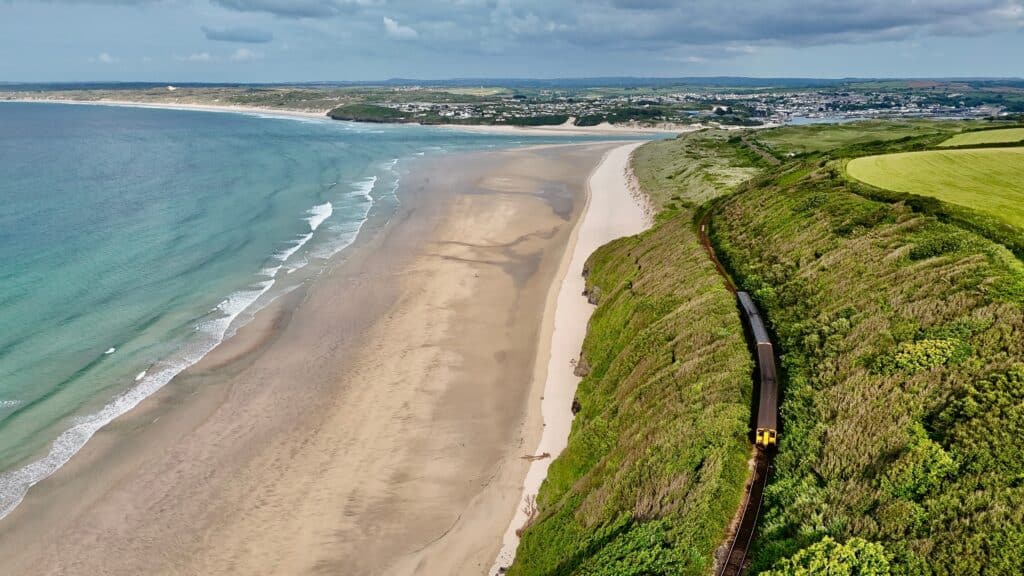
The biggest challenge when visiting Cornwall without a car is not finding places you can reach. It is deciding which journeys are worth your limited holiday time.
Use this optimizer to match your trip length and priorities with the most efficient base, the places worth prioritizing, and the destinations that are better saved for another trip.
How Much Time Do You Have?
Stay geographically focused and avoid long cross-Cornwall journeys.
Keep one base for simplicity or add one strategic move for more variety.
Enough time to experience two parts of Cornwall without rushing.
What Matters Most to You?
Choose St Ives
Best if you want the destination itself to provide most of the holiday rather than taking a day trip every morning.
Choose Penzance
The strongest choice if your priority is seeing several different places while keeping one practical base.
Choose Falmouth
Best if you want a lively base with enough variety that every day does not require a major journey.
Choose Newquay
Choose Newquay because the north coast is your priority — not because you’re trying to combine every part of Cornwall in one trip.
Match Your Itinerary to Your Available Time
Keep It Focused
Add Variety
Best Balance
Which Destinations Give You the Best Return on Your Time?
This score is not about which places are objectively “best.” It measures how easily a typical car-free visitor can combine access, time at the destination, and overall experience.
Easy access + plenty to do after arrival
Rail access + town + coast + attractions
Strong West Cornwall day trip
Easy addition from Penzance
Excellent when the north coast is your focus
Worthwhile if far-west scenery is a priority
Best when already based in North Cornwall
Higher transport effort for many car-free itineraries
Remove the Least Efficient Journey — Not Necessarily the Least Famous Place
More changes usually mean more waiting and less flexibility.
Include walking and waiting, not just the scheduled journey.
Does the destination offer something meaningfully different?
Keep it if the experience justifies the transport effort.
Before adding another destination, ask:
If adding the destination requires several connections, an early departure, a long return journey, and dropping something you already wanted to enjoy, skip it.
The most efficient car-free Cornwall itinerary is rarely the one with the most destinations.
For three days, concentrate on one area. With five days, expand carefully. With seven days, two well-chosen bases can give you considerably more variety without turning the trip into a transport exercise.
Optimize for quality time in Cornwall, not the number of pins on your map.
Should You Rent a Car for Part of Your Cornwall Trip?
Visiting Cornwall without a car does not have to be an all-or-nothing decision. For some trips, the smartest option is to use trains and buses for the easy journeys and rent a car only for the part of Cornwall where it adds real value.
This can give you the flexibility to reach remote beaches, rural landscapes, and smaller villages without paying for — or dealing with — a rental car for your entire stay.
Your itinerary focuses on St Ives, Penzance, Falmouth, and other well-connected places.
You want to add remote coast, countryside, or several difficult-to-connect places.
Remote Cornwall is the main purpose of your trip rather than an occasional addition.
Remote Beaches & Coves
Some of Cornwall’s more isolated coastal locations are much easier to reach by car, particularly when public transport would require a combination of buses and walking.
Bodmin Moor & Rural Cornwall
Rural landscapes are where having your own transport can make the biggest difference. A car lets you combine walks, viewpoints, and smaller sites without designing the entire day around transport connections.
The Lizard Peninsula
Selected places can be reached without a car, but having one makes it much easier to combine several coastal stops and adjust the day around weather and walking conditions.
Several Small Villages in One Day
Public transport works much better for visiting one main destination than for hopping between several small villages. A car changes that calculation considerably.
Don’t Add a Car Just Because You’re in Cornwall
If most of your time will be spent enjoying St Ives, its beaches, galleries, and nearby walks, a rental car may spend more time parked than moving.
Penzance, St Ives, Marazion, St Michael’s Mount, and Mousehole can already form a strong trip without requiring a car.
Falmouth offers enough town, coast, beaches, and transport options that a car is not automatically necessary.
5 Days Without a Car + 2 Days With One
For a one-week Cornwall trip, this can be a very effective compromise. Use public transport where it works well, then concentrate the difficult-to-reach places into one or two rental-car days.
St Ives
Penzance
St Michael’s Mount
Mousehole
Falmouth
Remote coastline
Bodmin Moor
The Lizard
Smaller villages
Rural attractions
The exact split should follow your priorities. The principle is simple: use the car only on the days when it materially improves what you can do.
How Many of These Apply to Your Trip?
I want to visit several remote beaches or coves.
I want to explore Bodmin Moor or rural Cornwall.
I want to visit several small villages in one day.
My accommodation is outside a well-connected town.
I am travelling with several people and lots of luggage.
I value spontaneous stops more than avoiding driving.
A rental car is unlikely to transform your trip.
A short rental could solve the difficult parts of your itinerary.
Your priorities may fit a road-based itinerary better.
This is a planning tool rather than a strict formula. Your comfort with driving, budget, group size, and exact destinations still matter.
A Rental Car Also Creates New Costs and Hassles
Compare the full price rather than only the advertised daily rate.
Add fuel to your comparison with public transport.
Check parking arrangements at both your accommodation and destinations.
Understand the insurance and excess conditions before booking.
Some rural roads can feel demanding if you’re not comfortable driving in narrow spaces.
Include the time required to collect and return the vehicle in your decision.
Rent a Car to Solve a Problem — Not Because You Think Cornwall Requires One
If public transport already gets you easily to the places you most want to see, adding a car may provide little extra value.
But if two carefully chosen rental days turn several awkward journeys into one excellent road trip, the hybrid approach can give you the best of both worlds.
For many visitors, the smartest Cornwall trip is not “car” versus “no car.” It is deciding exactly when a car becomes useful.
Use trains and buses for St Ives, Penzance, Falmouth, and other straightforward journeys. Consider renting a car for a day or two if remote coastline, Bodmin Moor, the Lizard, or village-hopping are high priorities.
That way, you get the flexibility of a road trip without turning your entire Cornwall holiday into one.
Cornwall Without a Car: Travel Owl Verdict
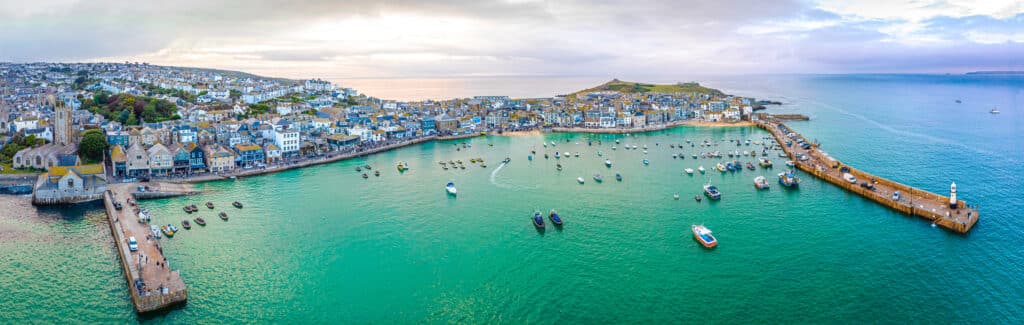
Yes — Cornwall Is Worth Visiting Without a Car
You do not need a car to have an excellent trip to Cornwall. But you do need to plan a different kind of trip.
Instead of trying to reach every famous beach, village, and viewpoint, choose one or two well-connected bases and concentrate on places that are easy to explore by train, bus, and foot.
One or two bases + train + bus + walking
St Ives, Penzance, and Falmouth
Coastal towns, beaches, walking, and slower travel
Remote Cornwall is one of your main priorities
If you want St Ives, Penzance, Falmouth, St Michael’s Mount, Mousehole, beaches, coastal walks, and a slower itinerary.
If remote beaches, Bodmin Moor, rural accommodation, the Lizard, or visiting several small villages are central to your trip.
The biggest mistake is asking: “How can I see Cornwall without a car?”
Ask instead: “What is the best Cornwall trip I can create without one?”
Once you make that change, Cornwall becomes much easier to plan — and you may discover that having fewer destinations actually gives you a better holiday.
Frequently Asked Questions About Visiting Cornwall Without a Car
Still wondering whether a car-free Cornwall trip will work for you? These quick answers cover the most common questions about getting around, choosing a base, and planning your itinerary without driving.
Can you visit Cornwall without a car?
Yes. Cornwall can be visited without a car, particularly if you stay in well-connected places such as St Ives, Penzance, or Falmouth. Trains, buses, walking, and occasional taxis can cover many of the region’s most popular destinations. The key is to plan a more geographically focused itinerary rather than trying to recreate a road trip using public transport.
Where is the best place to stay in Cornwall without a car?
St Ives is one of the best choices if you want beaches, atmosphere, and plenty to do within walking distance. Penzance is particularly useful for day trips around West Cornwall, while Falmouth combines good public transport with beaches, harbour life, restaurants, and attractions.
Can you get around Cornwall by train?
Trains are extremely useful for a car-free Cornwall trip, but they do not reach every destination. The main railway line and branch lines make places such as Penzance, St Ives, Falmouth, and Looe relatively easy to include. For smaller villages and more remote coastal destinations, you may need to combine trains with buses, walking, or taxis.
Are buses good in Cornwall for tourists?
Buses can be very useful for reaching places that are not served by rail, including a number of coastal towns, villages, and attractions. However, the practicality of individual routes varies, and some services may operate differently by season. Always check the current timetable and your return journey before setting out.
Can you visit St Ives without a car?
Yes. St Ives is one of the easiest places in Cornwall to visit without a car. It is connected by a branch railway from St Erth, and once you arrive, the harbour, town centre, galleries, restaurants, and several beaches can be explored on foot.
Can you visit St Michael’s Mount without a car?
Yes. St Michael’s Mount can be visited from Marazion, which can be reached from the Penzance area by public transport. Access to the island itself depends on the tide and current operating arrangements, so check the official visitor information for your travel date before planning the day.
How many days do you need in Cornwall without a car?
Five to seven days is an excellent amount of time for many first-time visitors. Three days can work well if you concentrate on one area, while a week gives you enough time to use two bases and experience different parts of Cornwall without rushing between destinations.
Is Cornwall without a car cheaper?
It can be, particularly for solo travellers and some couples, because you avoid rental, fuel, insurance, and parking costs. For families or larger groups, the comparison is less straightforward because several public transport fares can add up. Compare the total cost of the trip rather than the price of an individual train ticket or rental-car day.
What parts of Cornwall are difficult to visit without a car?
Remote beaches, isolated rural accommodation, parts of Bodmin Moor, and itineraries involving several small villages can be considerably more difficult without a car. Places such as Tintagel and Port Isaac are possible to visit by public transport, but they generally require more planning than destinations with direct rail access.
Should you rent a car for part of a Cornwall trip?
Sometimes. A useful compromise is to travel mainly by train and bus and rent a car for one or two days if you want to explore remote beaches, rural Cornwall, Bodmin Moor, the Lizard Peninsula, or several smaller villages. If your trip focuses on St Ives, Penzance, Falmouth, and other well-connected destinations, you may not need a car at all.