
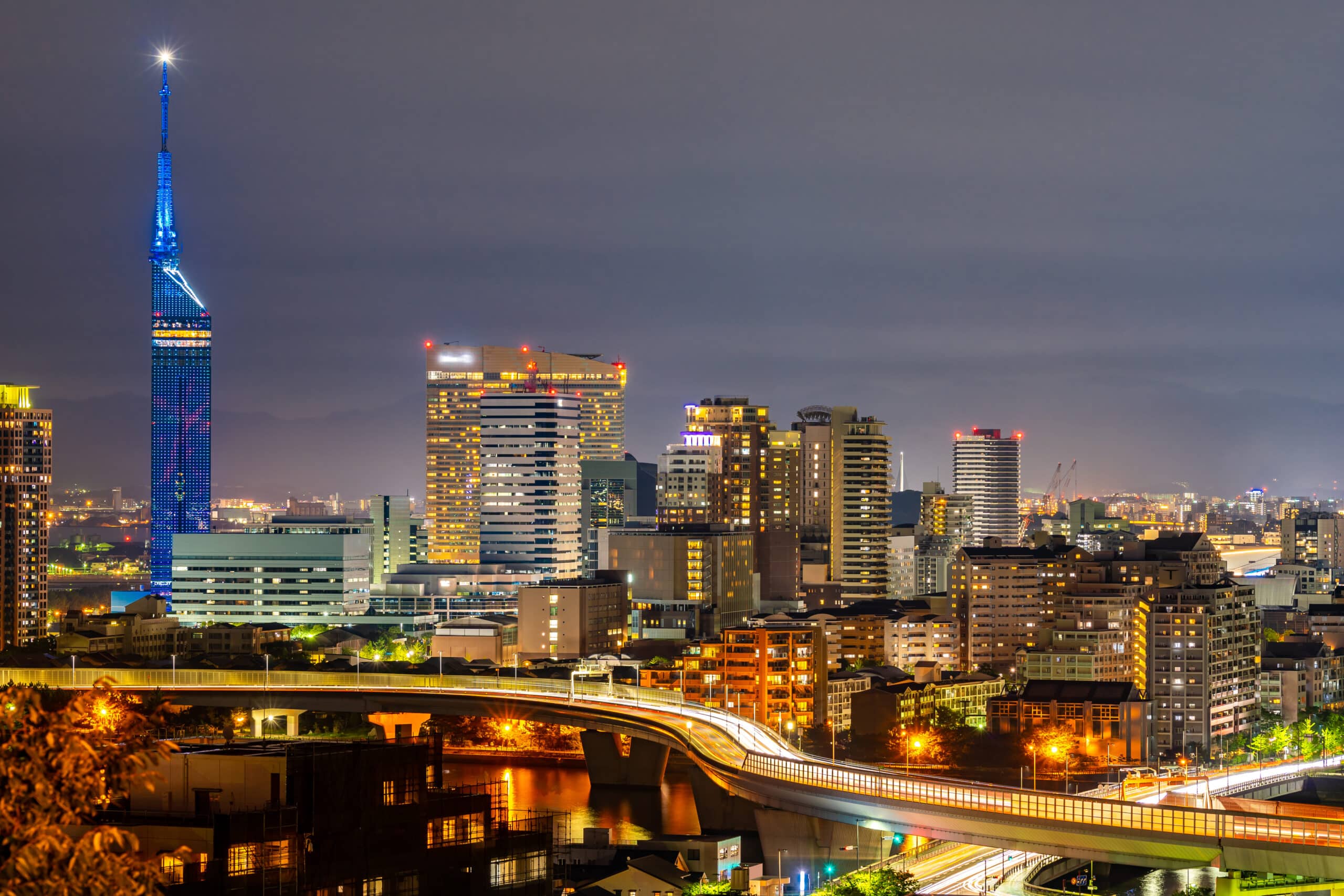
Fukuoka is one of Japan’s most underrated cities. Fukuoka is one of Japan’s most underrated cities and deserves a place on many Japan itineraries. Located on the northern coast of Kyushu, it combines excellent food, a relaxed atmosphere, waterfront scenery, and easy access to some of the region’s best destinations.
While many travelers focus on Tokyo, Kyoto, and Osaka, Fukuoka offers a different side of Japan. The city is known for its famous Hakata ramen, lively yatai food stalls, spacious parks, and compact layout that makes sightseeing easy.
It is also one of the best gateways to Kyushu, with convenient connections to destinations such as Dazaifu, Beppu, Yufuin, Nagasaki, and Kumamoto.
Whether you’re visiting Japan for the first time or looking to explore beyond the typical tourist route, Fukuoka offers a rewarding mix of culture, food, and local experiences.
Quick Answer: Is Fukuoka Worth Visiting?
Is Fukuoka Worth Visiting?
Yes — Fukuoka is one of Japan’s most enjoyable and underrated cities.
Known for its famous Hakata ramen, lively yatai food stalls, waterfront parks, and relaxed atmosphere, Fukuoka offers a more local and less crowded experience than Tokyo, Kyoto, or Osaka. It is also one of the best bases for exploring Kyushu.
If you enjoy food, culture, and easy city exploration without overwhelming crowds, Fukuoka is absolutely worth adding to your Japan itinerary.
Table of Contents
Fukuoka at a Glance
Fukuoka at a Glance
Quick facts to help plan your visit.
📍 Location
Northern Kyushu, Japan
⏳ Time Needed
2–4 Days
🍜 Famous For
Hakata Ramen, Yatai Food Stalls, Canal City
✈️ Nearest Airport
Fukuoka Airport (FUK)
🚅 Best Base For
Exploring Kyushu
🎯 Best For
Food Lovers, City Breaks, Day Trips
What Makes Fukuoka Special?
What Makes Fukuoka Special?
Fukuoka offers a different experience from Japan’s most famous cities. It combines outstanding food, a relaxed atmosphere, waterfront scenery, and easy access to Kyushu’s top destinations.
Japan’s Food Capital
From famous Hakata ramen and yatai food stalls to fresh seafood and local specialties, Fukuoka is widely considered one of Japan’s best food destinations.
Easy to Explore
The city is compact, walkable, and connected by an efficient subway system, making sightseeing surprisingly simple.
Relaxed Urban Atmosphere
Fukuoka feels less hectic than Tokyo and less crowded than Kyoto while still offering excellent shopping, dining, and entertainment.
Gateway to Kyushu
Destinations such as Dazaifu, Itoshima, Beppu, Yufuin, Nagasaki, and Kumamoto are all easily accessible from Fukuoka.
Unique Nightlife
The city’s iconic riverside yatai stalls create one of the most memorable evening experiences in Japan.
Waterfront City
Parks, beaches, seaside promenades, and sunset views give Fukuoka a distinctly coastal feel rarely found in major Japanese cities.
One of the best things about Fukuoka is that it appeals to many different travel styles. Whether you’re visiting for the food, local culture, shopping, or day trips around Kyushu, the city offers something for every type of traveler.
Why Visit Fukuoka?
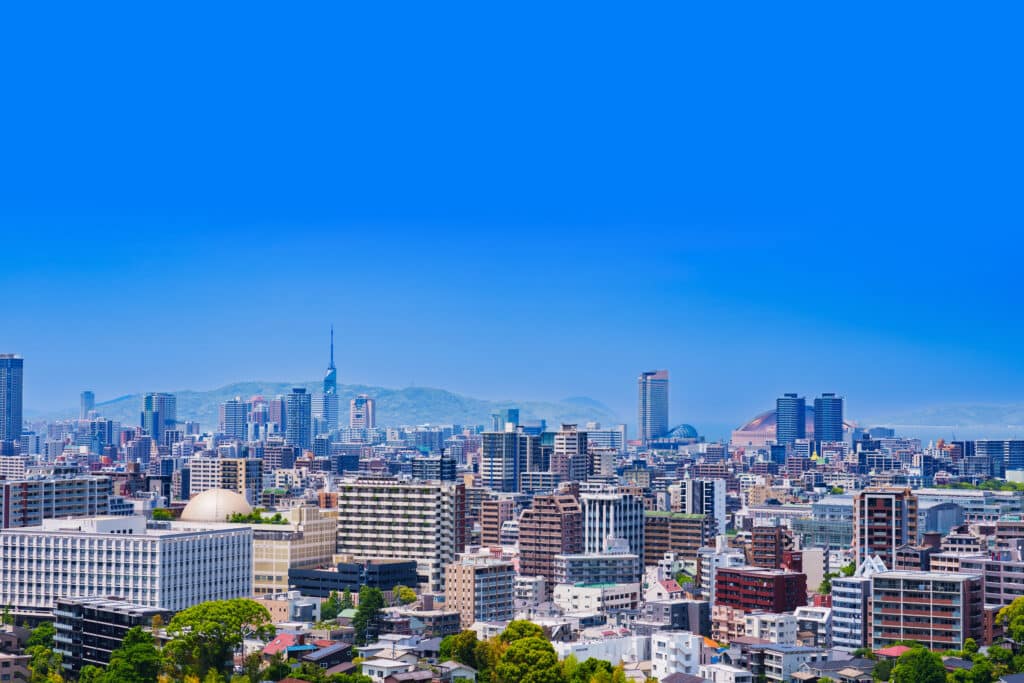
Fukuoka often surprises visitors. Unlike Tokyo’s fast pace or Kyoto’s heavy tourist crowds, the city feels relaxed, approachable, and easy to navigate while still offering plenty to see and do.
One of Fukuoka’s biggest strengths is its food culture. The city is the birthplace of Hakata ramen and remains one of Japan’s best destinations for local cuisine. From bustling yatai food stalls along the river to fresh seafood markets and regional specialties, food is a central part of the experience.
Fukuoka is also remarkably convenient. The airport is only a few minutes from the city center, major attractions are easy to reach, and many of the highlights can be explored on foot or by subway.
Beyond the city itself, Fukuoka serves as an ideal gateway to Kyushu. Popular destinations such as Dazaifu, Itoshima, Beppu, Yufuin, Nagasaki, and Kumamoto can all be visited as day trips or short extensions.
For travelers seeking a balance of culture, food, modern city life, and local atmosphere, Fukuoka is one of Japan’s most rewarding destinations.
How Should You Experience Fukuoka?
Fukuoka is compact and easy to explore, but different areas and experiences suit different travel styles — from food-focused nights to waterfront walks and easy day trips around Kyushu.
Hakata
Best for Hakata ramen, easy transport, shopping malls, hotels, and first-time visitors who want a convenient base.
Nakasu
Ideal for evening walks, riverside yatai food stalls, nightlife, and Fukuoka’s most atmospheric after-dark experience.
Tenjin
The best area for shopping, cafés, restaurants, nightlife, and travelers who want a lively city-center atmosphere.
Ohori Park
Perfect for relaxing walks, lakeside scenery, Fukuoka Castle Ruins, museums, and a calmer break from the city center.
Momochi
Best for seaside views, Fukuoka Tower, beach walks, sunsets, and a more spacious coastal side of the city.
Dazaifu
The best easy day trip from Fukuoka for shrines, traditional streets, museums, cafés, and a more historic atmosphere.
How to Get to Fukuoka
Fukuoka is the largest city in Kyushu and one of the easiest destinations in Japan to reach. Thanks to its international airport, major Shinkansen connections, and ferry routes, it serves as a gateway to the entire island of Kyushu.
By Plane
Fukuoka Airport (FUK) is one of Japan’s most convenient airports. Unlike many major cities, the airport is located only a few minutes from the city center and is directly connected to the subway network.
Domestic flights connect Fukuoka with Tokyo, Osaka, Sapporo, Okinawa, and many other Japanese cities. International flights also operate from destinations across Asia.
💡 Travel Owl Tip: Few airports in Japan are as close to the city center as Fukuoka Airport. You can often reach Hakata Station in less than 10 minutes.
By Shinkansen
Fukuoka is served by Hakata Station, one of Japan’s major rail hubs and an important stop for travelers using Japan’s rail network. Learn more in our How to Travel Around Japan guide.
Shinkansen Travel Times to Fukuoka
Hakata Station is one of Japan’s most important rail hubs, offering fast and convenient connections across western and central Japan.
Hiroshima
Reach Fukuoka in approximately 1 hour via the Sanyo Shinkansen.
Osaka
Travel between Osaka and Fukuoka in approximately 2.5 hours.
Kyoto
Direct Shinkansen services connect Kyoto and Fukuoka in about 2 hours 45 minutes.
Tokyo
The fastest Shinkansen services reach Fukuoka from Tokyo in approximately 5 hours.
For travelers coming from Hiroshima, Osaka, or Kyoto, the Shinkansen is usually the fastest and most comfortable way to reach Fukuoka.
By Ferry
Fukuoka also has international ferry connections, particularly to South Korea.
Regular services operate between Hakata Port and Busan, making Fukuoka a popular starting point for travelers combining Japan and South Korea in one trip.
Getting Around Fukuoka
Fukuoka is compact and easy to navigate.
The subway system provides easy access to:
- Fukuoka Airport
- Hakata Station
- Tenjin
- Ohori Park
- Momochi Area
Most major attractions can be reached by a combination of subway, bus, and walking.
Unlike many destinations in Kyushu, a rental car is generally unnecessary within the city.
Map of Fukuoka Attractions
Fukuoka’s attractions are spread across several distinct neighborhoods, while many of Kyushu’s best destinations can be reached as easy day trips. Use this map to plan your route and discover the highlights both inside and outside the city.
If you’re short on time, focus on Fukuoka Castle, Ohori Park, Tenjin, Nakasu, and one day trip such as Dazaifu or Itoshima. With more time, Fukuoka makes an excellent base for exploring the rest of Kyushu.
Best Things to Do in Fukuoka
Fukuoka combines historic landmarks, waterfront parks, vibrant food districts, and modern city attractions in a way few Japanese cities can match. From exploring ancient shrines and castle ruins to eating at famous yatai food stalls and enjoying panoramic city views, there is no shortage of memorable experiences. These are the best things to do in Fukuoka for first-time visitors and returning travelers alike.
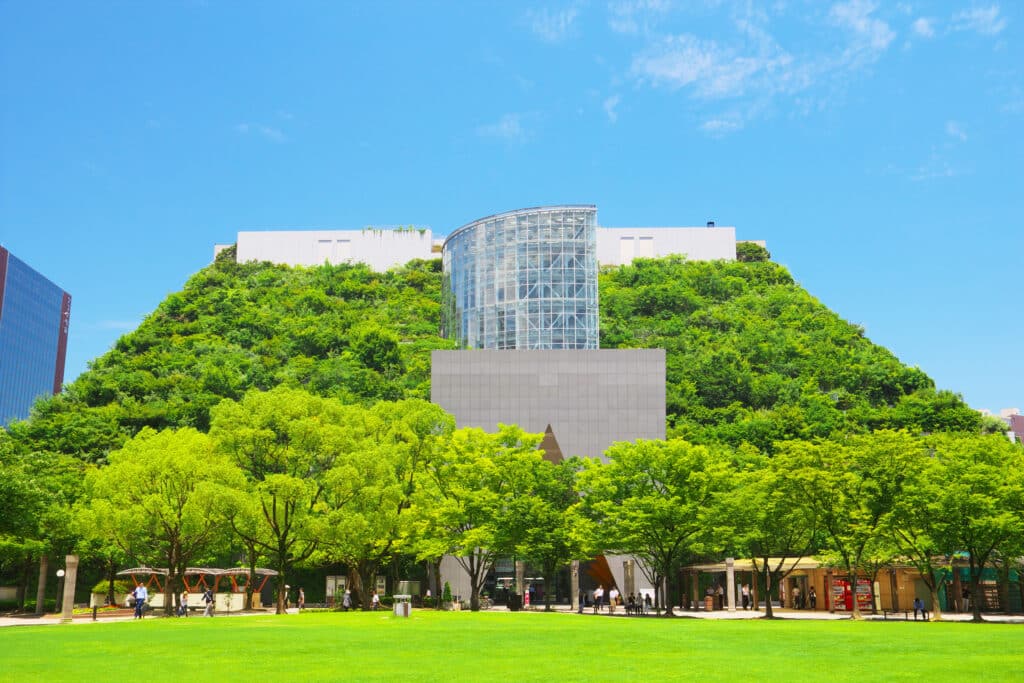
Explore Canal City Hakata
Explore Canal City Hakata
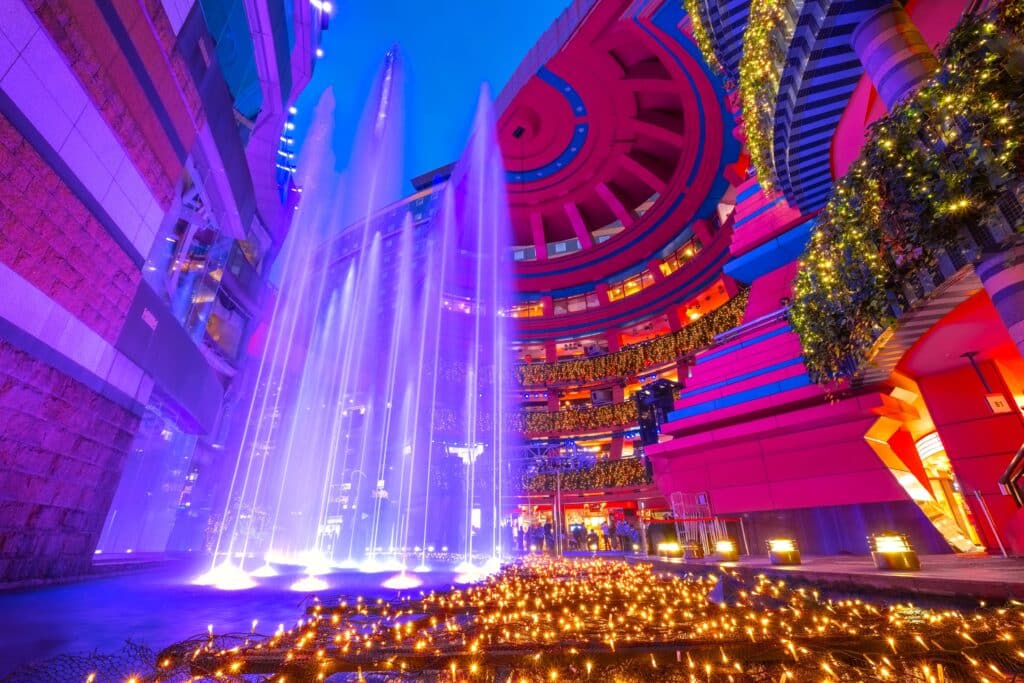
Canal City Hakata is one of Fukuoka’s most famous shopping and entertainment complexes.
The area is built around a central canal and features shops, restaurants, cafés, cinemas, seasonal events, and regular fountain shows.
Even if you are not interested in shopping, the architecture and lively atmosphere make it an easy and enjoyable stop in central Fukuoka.
Experience the Yatai Food Stalls

Experience the Yatai Food Stalls
Fukuoka is one of the best places in Japan to experience traditional yatai food stalls.
These small open-air stalls appear in the evening, especially around Nakasu and Tenjin, serving ramen, yakitori, oden, seafood, and local dishes.
The atmosphere is casual, social, and very different from a normal restaurant experience, making it one of Fukuoka’s most memorable highlights.
Visit Kushida Shrine
Visit Kushida Shrine
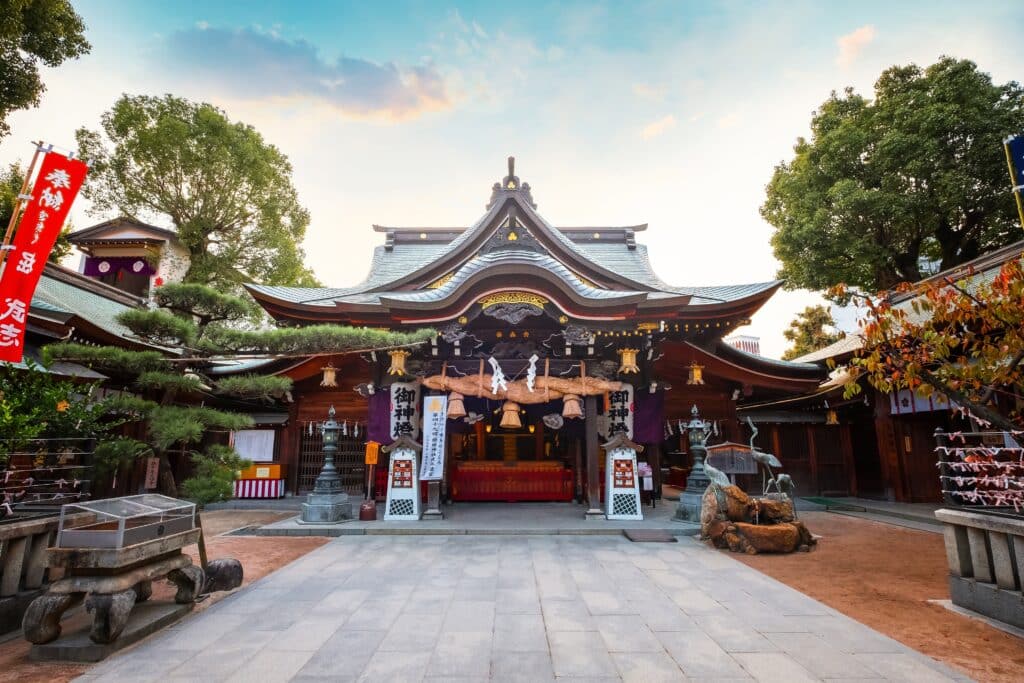
Kushida Shrine is one of Fukuoka’s most important historic shrines.
Located near Hakata Old Town, it is closely connected to the famous Hakata Gion Yamakasa Festival and offers a peaceful contrast to the busy streets around it.
The shrine is compact but atmospheric, making it an easy cultural stop while exploring central Fukuoka.
Relax at Ohori Park
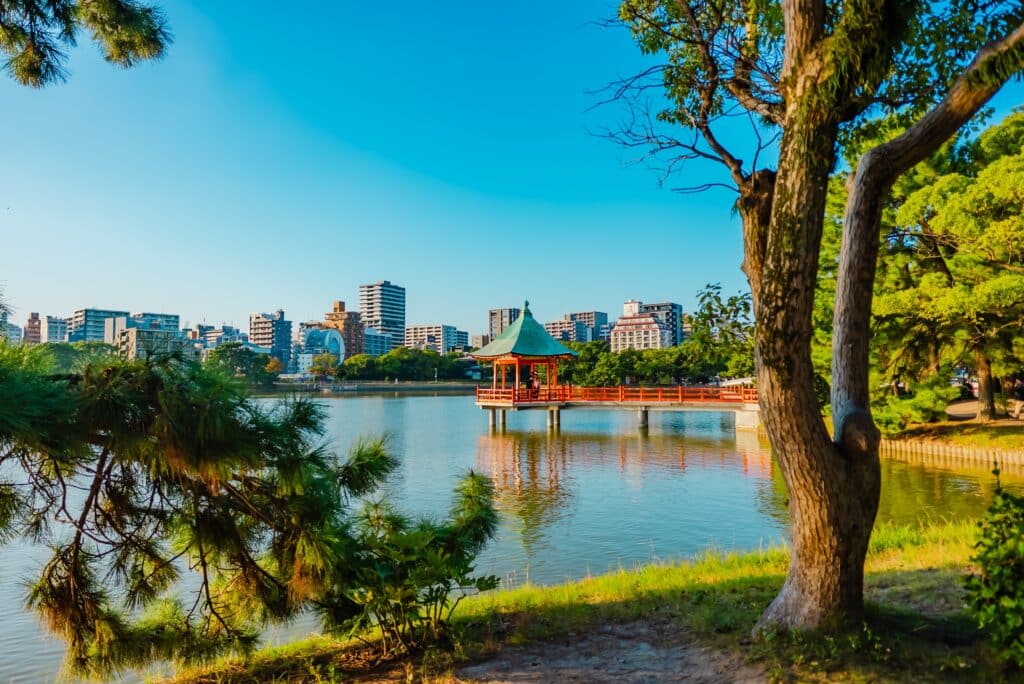
Relax at Ohori Park
Ohori Park is one of the most relaxing places in Fukuoka.
The park is centered around a large pond and features walking paths, bridges, cafés, and open spaces that are popular with locals.
It is a great place to slow down, take a scenic walk, or enjoy a calmer side of the city between sightseeing stops.
Explore Fukuoka Castle Ruins
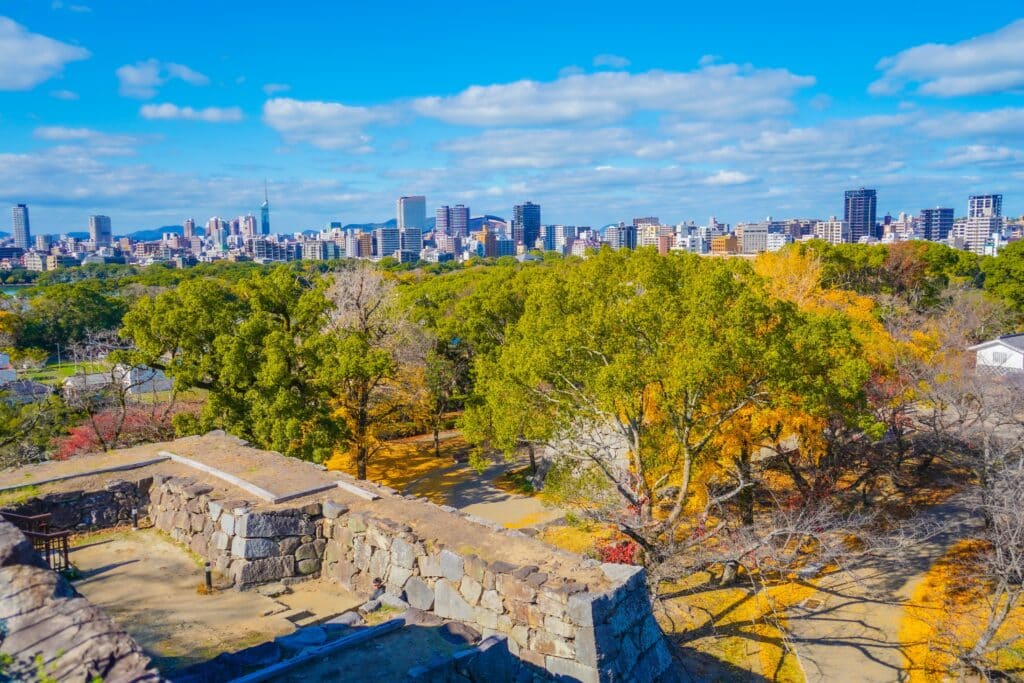
Explore Fukuoka Castle Ruins
Fukuoka Castle Ruins offer a glimpse into the city’s feudal past.
While the original castle no longer stands, the remaining stone walls, gates, and elevated viewpoints make the area worth exploring.
The castle ruins are especially beautiful during cherry blossom season, when the surrounding park becomes one of Fukuoka’s best hanami spots.
Visit Fukuoka Tower
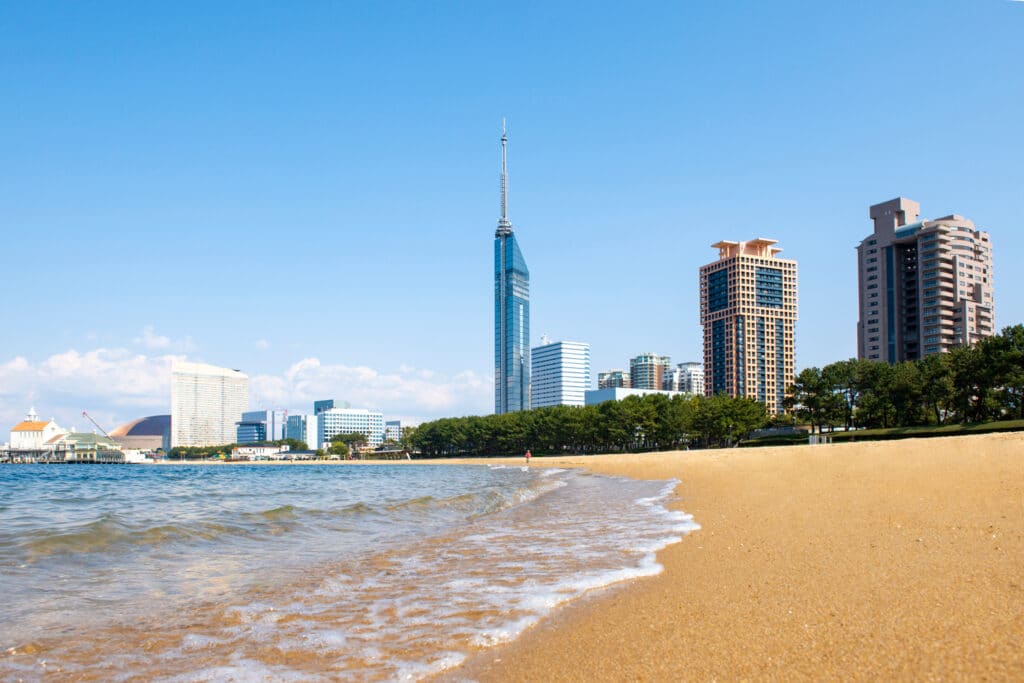
Visit Fukuoka Tower
Fukuoka Tower is the tallest seaside tower in Japan and one of the city’s most recognizable landmarks.
The observation deck offers wide views over the city, Hakata Bay, Momochi Seaside Park, and the surrounding coastline.
It is especially worth visiting around sunset, when the city lights and waterfront views create a beautiful atmosphere.
Walk Along Momochi Seaside Park
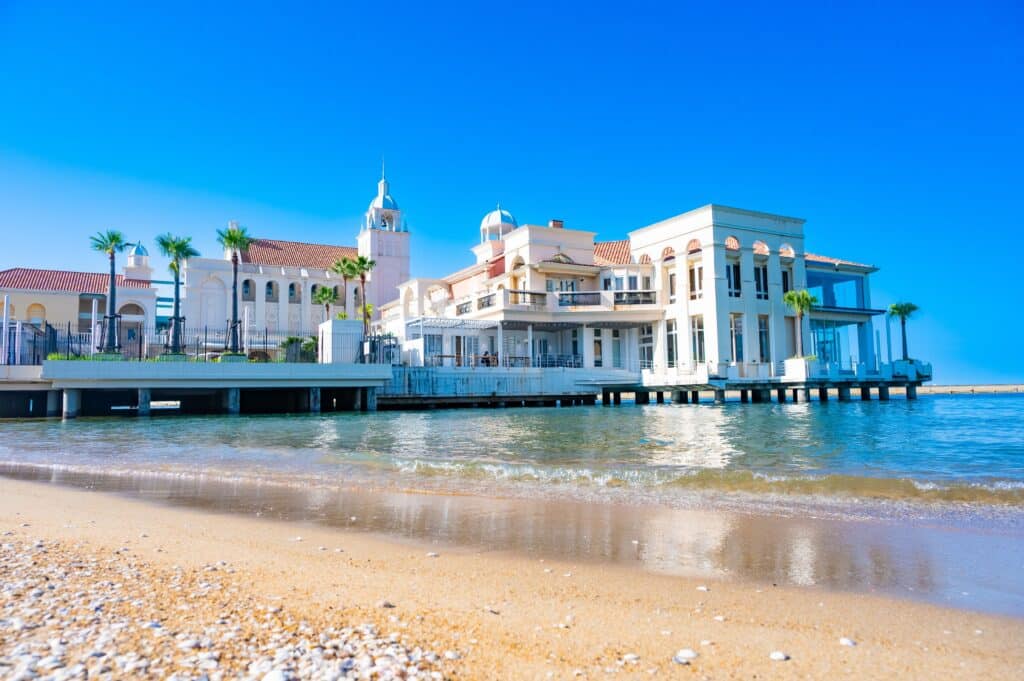
Walk Along Momochi Seaside Park
Momochi Seaside Park shows Fukuoka’s coastal side.
The area features a sandy beach, waterfront paths, cafés, open views of Hakata Bay, and easy access to Fukuoka Tower.
It is not the best beach destination in Japan, but it is a lovely place for a walk, sunset views, and a break from the busy city center.
Explore Tenjin
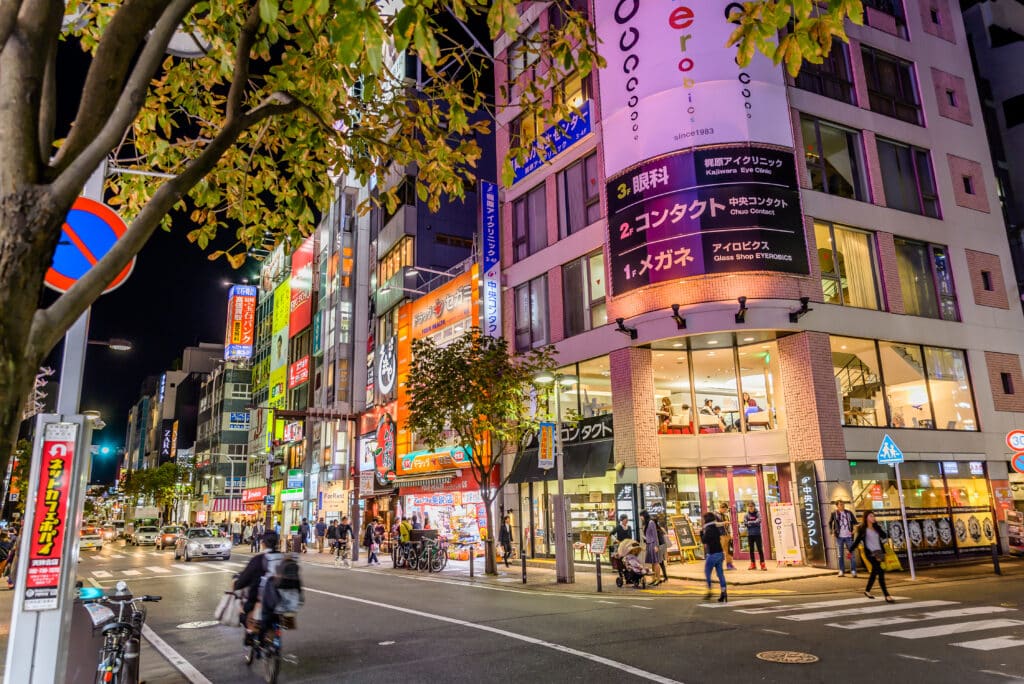
Explore Tenjin
Tenjin is Fukuoka’s main shopping, dining, and entertainment district.
The area is filled with department stores, boutiques, restaurants, cafés, bars, and underground shopping streets.
It is one of the best places to experience modern Fukuoka and works especially well in the afternoon or evening.
Visit TeamLab Forest Fukuoka

Visit TeamLab Forest Fukuoka
TeamLab Forest Fukuoka is an interactive digital art experience located near the PayPay Dome area.
The museum combines light, movement, sound, and immersive installations, making it especially popular with families, couples, and travelers looking for something modern and playful.
It adds a very different type of attraction to a Fukuoka itinerary and works well on a rainy day.
Visit Marine World Uminonakamichi

Visit Marine World Uminonakamichi
Marine World Uminonakamichi is one of the best family-friendly attractions near Fukuoka.
The aquarium focuses on marine life from Kyushu and nearby seas, with large tanks, dolphin shows, sea creatures, and educational exhibits.
It is located outside the city center, so it works best as a half-day trip rather than a quick stop.
Best Food Experiences in Fukuoka
Fukuoka is often considered one of Japan’s top food cities. From famous ramen shops and traditional food stalls to regional hot pots and fresh seafood, the city offers a culinary scene that many travelers rank among the highlights of their entire Japan trip.
Try Authentic Hakata Ramen
Hakata ramen is Fukuoka’s most famous dish and one of Japan’s best-known noodle styles.
It is characterized by rich tonkotsu pork broth and thin noodles that can be ordered at different firmness levels.
Many travelers consider trying authentic Hakata ramen an essential part of visiting Fukuoka.
Eat at a Traditional Yatai Stall
Yatai are small open-air food stalls that have become one of Fukuoka’s most iconic experiences.
Menus typically include ramen, yakitori, oden, seafood, and local specialties served in a lively social atmosphere.
Few cities in Japan still maintain such a strong yatai culture.
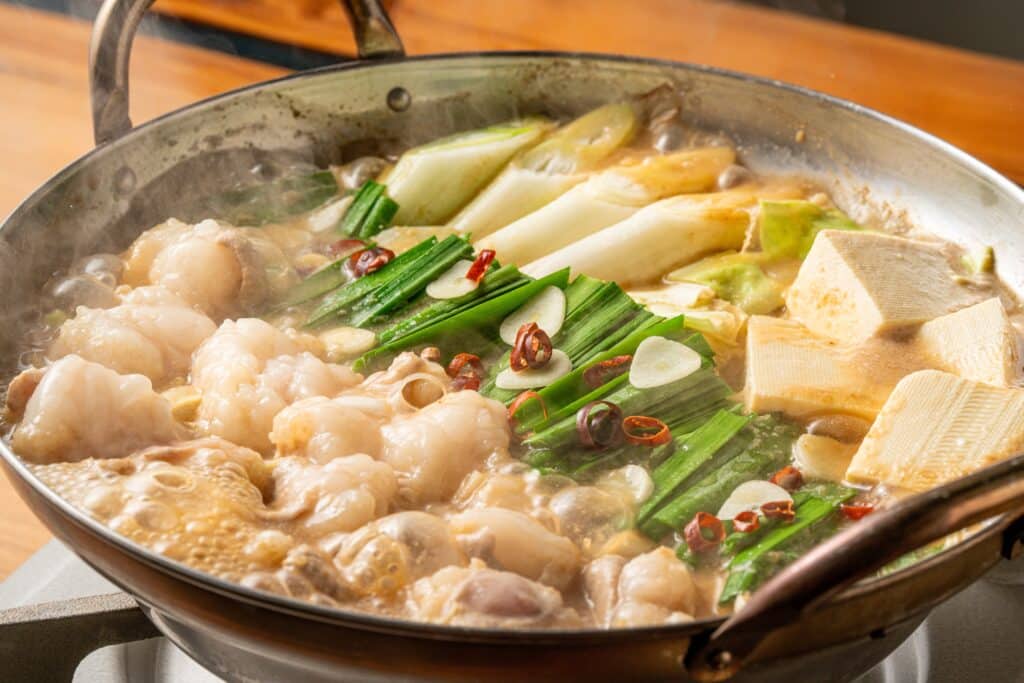
Taste Motsunabe
Motsunabe is one of Fukuoka’s most famous local specialties.
This hearty hot pot combines beef or pork offal with vegetables, garlic, and flavorful broth.
It may sound unusual to some visitors, but it remains one of the region’s most beloved comfort foods.
Try Mizutaki
Mizutaki is a traditional chicken hot pot that originated in Fukuoka.
The dish features chicken slowly cooked in a rich broth alongside vegetables and dipping sauces.
It is especially popular during the cooler months and offers a lighter alternative to motsunabe.
Sample Fresh Seafood
Thanks to its coastal location, Fukuoka is an excellent destination for fresh seafood.
Sushi, sashimi, grilled fish, and seasonal seafood specialties can be found throughout the city.
Many locals consider Fukuoka one of Japan’s best cities for seafood quality and value.
Try Mentaiko
Mentaiko, or spicy cod roe, is one of Fukuoka’s signature foods.
It appears in everything from rice dishes and pasta to sandwiches and snacks.
Many visitors end up bringing mentaiko products home as edible souvenirs.
While Fukuoka offers enough attractions and food experiences to fill several days, the city is also an excellent base for exploring northern Kyushu. Before planning day trips, it’s worth deciding how many days you want to spend in the city itself.
Suggested Fukuoka Itineraries
Whether you are visiting for a quick city break or using Fukuoka as a base for exploring Kyushu, the city can easily fill anywhere from one to several days. These sample itineraries help you prioritize the highlights based on the time available.
Which Fukuoka Itinerary Should You Choose?
Fukuoka is compact and easy to explore, but the best itinerary depends on whether you want city highlights, food experiences, or day trips around northern Kyushu.
Quick City Highlights
Perfect for travelers who only have a short time in Fukuoka and want to focus on the city’s most central sights, local food, and evening atmosphere.
Hakata → Kushida Shrine → Canal City Hakata → Ohori Park → Tenjin → Nakasu Yatai Food Stalls
Best First-Time Visit
The best choice for most visitors, combining Fukuoka’s food scene, historic areas, parks, shopping districts, waterfront views, and relaxed city atmosphere.
Day 1: Hakata → Kushida Shrine → Canal City Hakata → Ohori Park → Yatai Food Stalls
Day 2: Fukuoka Tower → Momochi Seaside Park → TeamLab Forest → Tenjin → Local Izakaya Dinner
City + Kyushu Day Trip
Best for travelers who want to enjoy Fukuoka at a slower pace and add one easy day trip to experience more of northern Kyushu.
Day 1: Historic Hakata, Canal City, Ohori Park, and yatai food stalls
Day 2: Momochi waterfront, Fukuoka Tower, TeamLab Forest, and Tenjin
Day 3: Dazaifu, Itoshima, Yanagawa, Yufuin, or Beppu
One of the biggest advantages of staying in Fukuoka is its location. The city offers easy access to some of Kyushu’s most rewarding destinations, many of which can be visited in a single day.
Best Day Trips from Fukuoka
Fukuoka is not only one of Kyushu’s most exciting cities but also the perfect base for exploring the region. From historic shrines and scenic coastlines to famous hot spring towns, many of Kyushu’s top destinations can be visited on an easy day trip from the city.
Visit Dazaifu
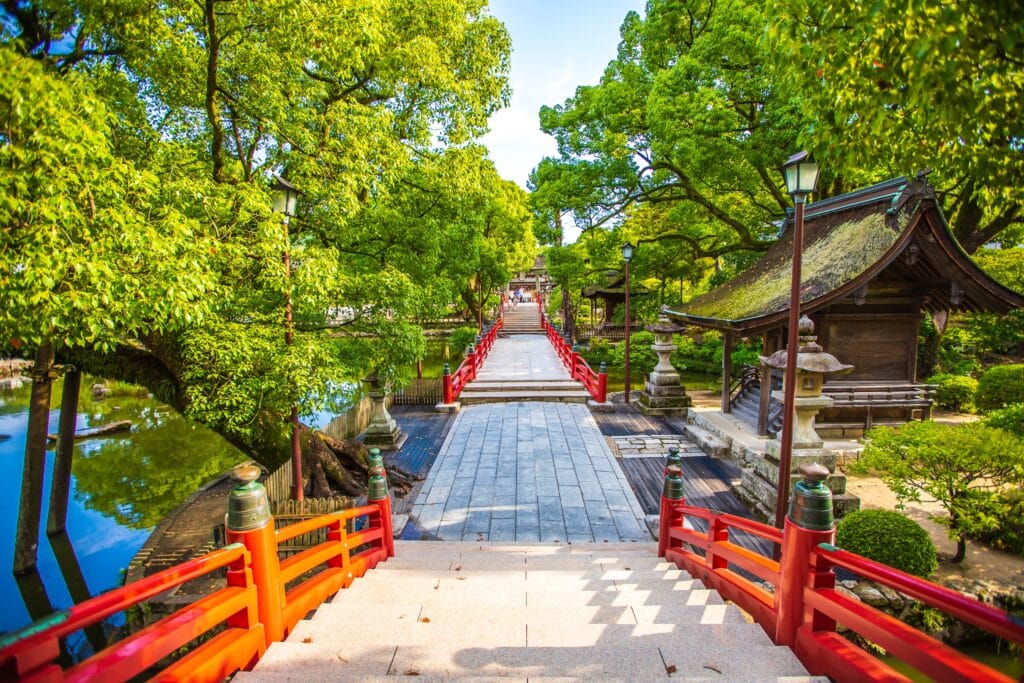
Visit Dazaifu
Dazaifu is the most popular day trip from Fukuoka and one of Kyushu’s most important cultural destinations.
The town is famous for Dazaifu Tenmangu Shrine, charming shopping streets, traditional sweets, and the impressive Kyushu National Museum.
Its historic atmosphere feels completely different from central Fukuoka while remaining easy to reach by train.
Explore Itoshima
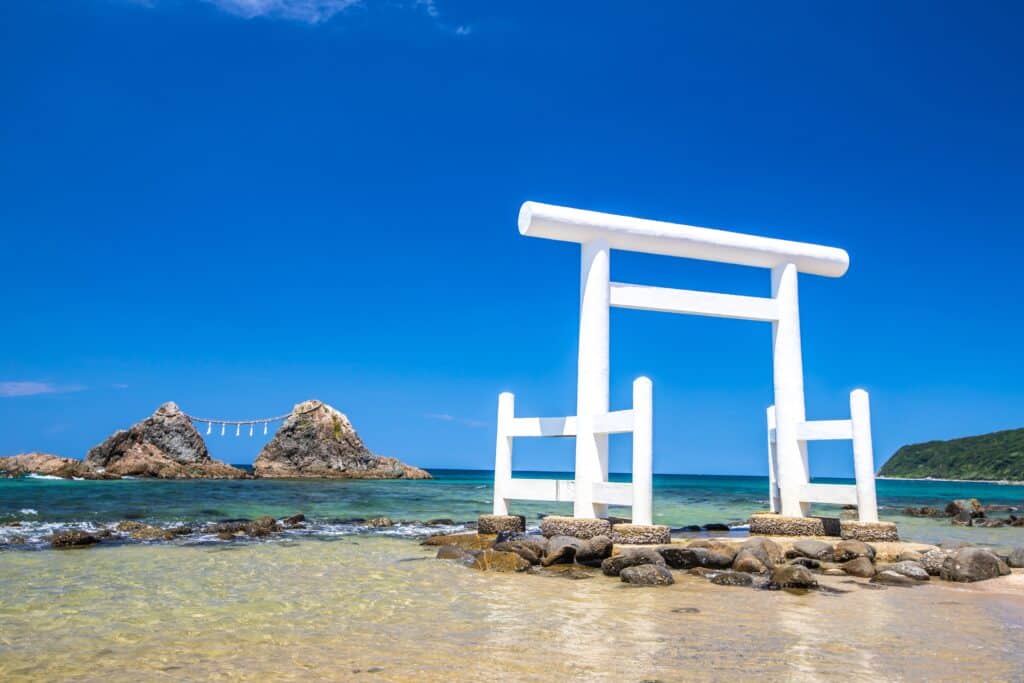
Explore Itoshima
Itoshima is one of the most beautiful coastal areas near Fukuoka.
Known for beaches, cafés, ocean viewpoints, and relaxed countryside scenery, it offers a completely different side of Kyushu.
It is especially popular among locals looking for a quick escape from the city.
Discover Yanagawa
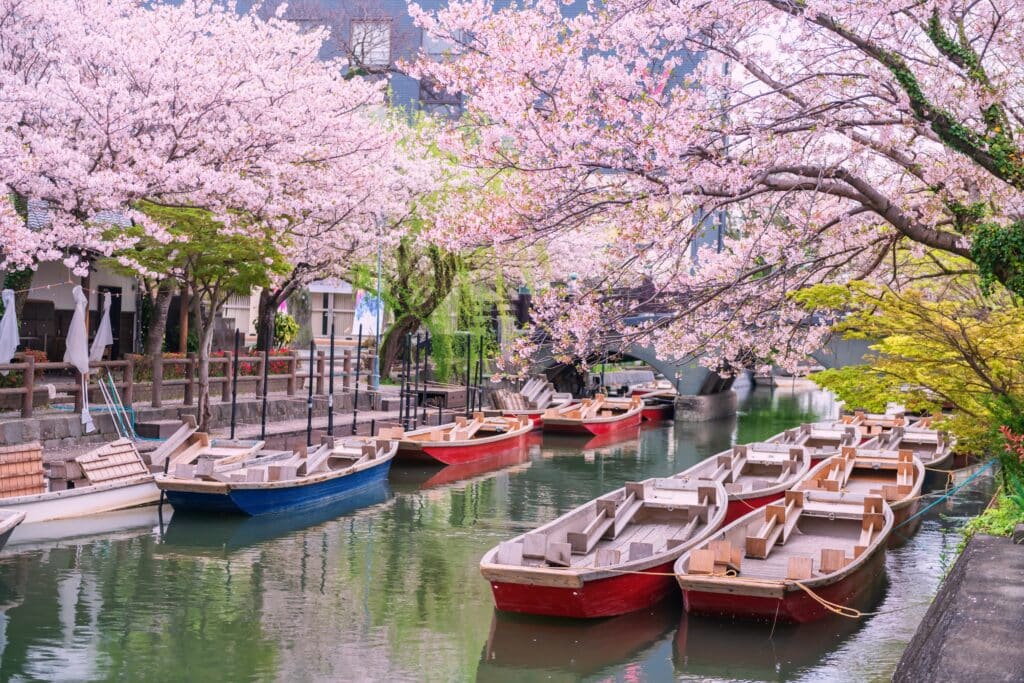
Discover Yanagawa
Often called the “Venice of Kyushu,” Yanagawa is famous for its network of canals and traditional boat rides.
The historic town offers a slower pace, beautiful scenery, and excellent local cuisine.
It remains one of Kyushu’s most underrated destinations.
Relax in Yufuin
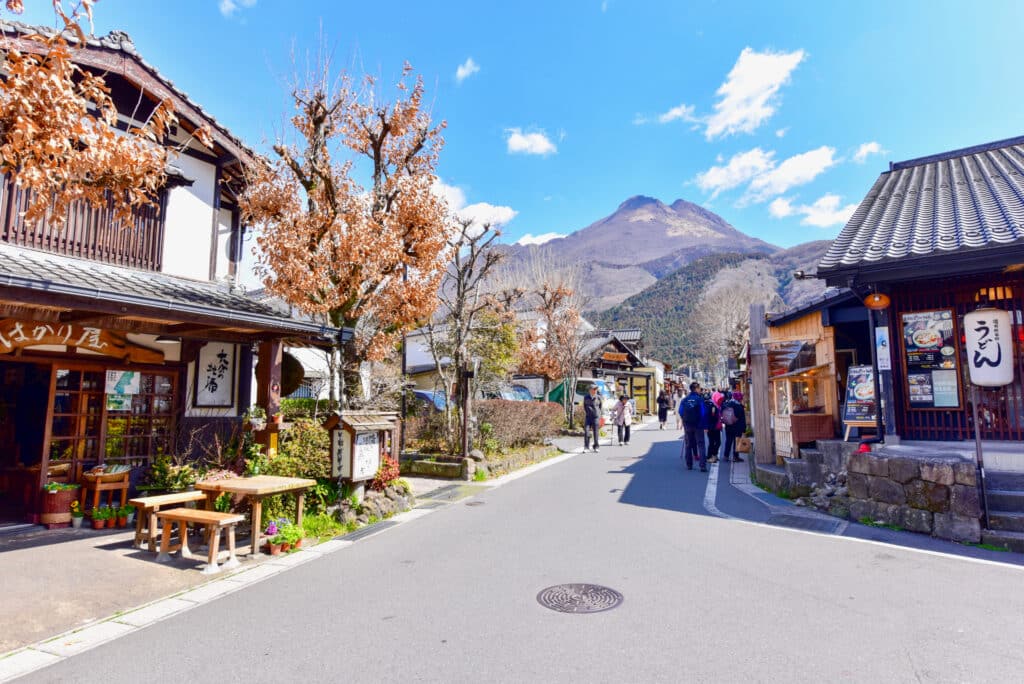
Relax in Yufuin
Yufuin is one of Japan’s most attractive hot spring towns.
Surrounded by mountains, it combines boutique shops, cafés, traditional ryokan, and beautiful countryside views.
The relaxed atmosphere makes it one of the most popular day trips from Fukuoka.
Experience Beppu
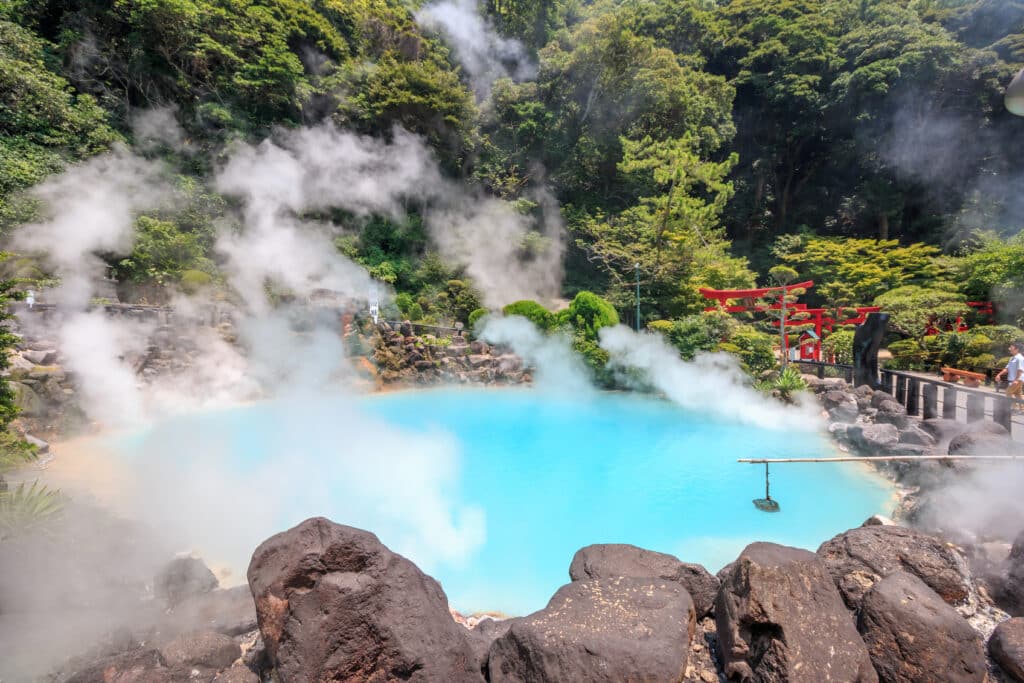
Experience Beppu
Beppu is Japan’s most famous hot spring city and one of Kyushu’s top destinations.
The city is known for its colorful geothermal attractions, countless onsen, and unique steam-filled atmosphere.
It offers a very different experience from urban Fukuoka.
While Fukuoka can be enjoyed year-round, the experience changes noticeably with the seasons. Cherry blossoms, summer festivals, autumn colors, and winter food specialties all offer different reasons to visit.
Best Time to Visit Fukuoka
Fukuoka can be visited throughout the year, but each season offers a different experience—from cherry blossoms and festivals to autumn colors and winter food specialties. For a broader overview of weather patterns and seasonal travel planning, see our Best Time to Visit Japan guide.
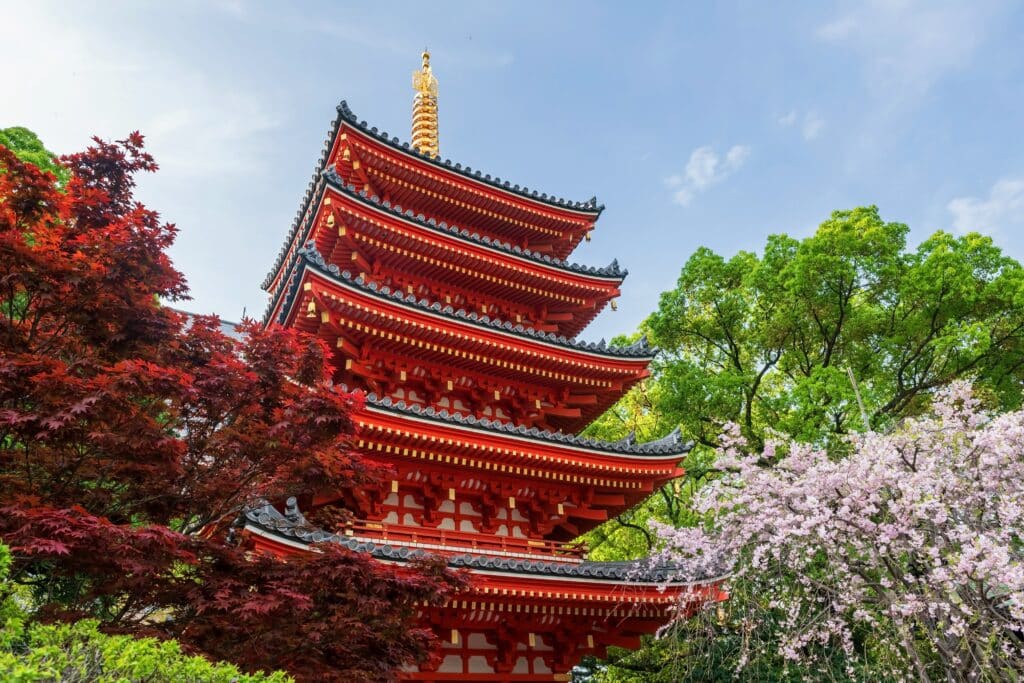
When Is the Best Time to Visit Fukuoka?
Fukuoka can be visited throughout the year, but each season offers a different experience—from cherry blossoms and festivals to autumn colors and winter food specialties.
March – May
Spring is one of the most popular times to visit Fukuoka. Cherry blossoms transform parks such as Ohori Park and Maizuru Park into beautiful pink landscapes.
June – August
Summer brings lively festivals, vibrant nightlife, and easy access to beaches and coastal destinations. Expect hot and humid conditions, especially in July and August.
September – November
Many travelers consider autumn the best overall season. Comfortable temperatures, colorful foliage, and lower humidity make sightseeing particularly enjoyable.
December – February
Winter is quieter and often overlooked. Seasonal illuminations, warming local dishes, and easy access to nearby onsen towns make it a surprisingly rewarding time to visit.
💡 Travel Owl Tip: For most travelers, spring and autumn offer the best balance of weather, sightseeing conditions, and seasonal scenery. If you’re visiting mainly for food and day trips, Fukuoka remains enjoyable throughout the year.
Travel Tips for Fukuoka
Helpful Tips for Visiting Fukuoka
Fukuoka is one of Japan’s easiest cities to explore, but a few simple tips can help you save time, avoid mistakes, and enjoy a smoother trip.
Stay Near Hakata or Tenjin
Both areas offer excellent transport connections, plenty of restaurants, and easy access to Fukuoka’s main attractions.
Try More Than Ramen
Hakata ramen is famous, but don’t miss local specialties such as motsunabe, mizutaki, seafood, and mentaiko.
Visit the Yatai Early
Popular yatai food stalls can fill up quickly. Arriving before 7 PM often means shorter waits and more choices.
Use the Airport Subway
Fukuoka Airport is only minutes from the city center and directly connected to the subway system.
Use Fukuoka as a Base
Dazaifu, Itoshima, Yanagawa, Yufuin, and Beppu are all easy additions to a Fukuoka itinerary.
Carry Some Cash
Most places accept cards, but some smaller restaurants, markets, and yatai stalls may still prefer cash.
Insider Tips for Fukuoka
Fukuoka is easy to visit, but a few local insights can make a big difference. Many travelers treat the city as a quick stop before heading elsewhere in Kyushu, yet slowing down and exploring beyond the obvious attractions often leads to the most rewarding experiences.
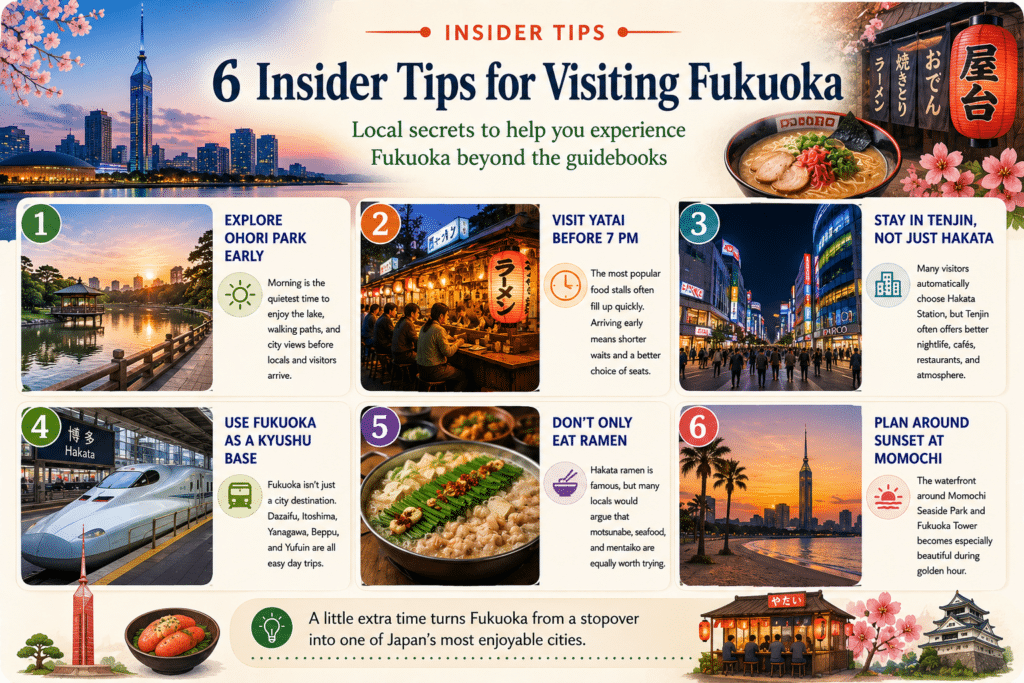
One of the biggest surprises about Fukuoka is how quickly it grows on you. Many travelers arrive expecting a convenient gateway to Kyushu and leave wondering why they didn’t plan a longer stay.
Common Mistakes to Avoid in Fukuoka
What to Skip in Fukuoka
Fukuoka is easy to enjoy, but many visitors rush through the city or focus only on the obvious highlights.
Don’t Treat Fukuoka as a Stopover
Many travelers use Fukuoka only as a gateway to Kyushu and leave before experiencing the city properly.
Don’t Only Eat Hakata Ramen
Hakata ramen is famous, but Fukuoka has much more to offer, including motsunabe, mizutaki, seafood, and mentaiko.
Don’t Stay Only Around Hakata Station
Hakata is convenient, but spending all your time there means missing Tenjin, Nakasu, Ohori Park, and the waterfront.
Don’t Arrive Too Late at Yatai
Popular yatai food stalls can fill up quickly, especially in the evening and on weekends.
Don’t Skip Easy Day Trips
Fukuoka is one of the best bases in Japan for short trips, but many visitors stay only in the city center.
Don’t Overpack the Itinerary
Fukuoka is best enjoyed at a relaxed pace, especially around parks, food stalls, cafés, and waterfront areas.
Final Thoughts
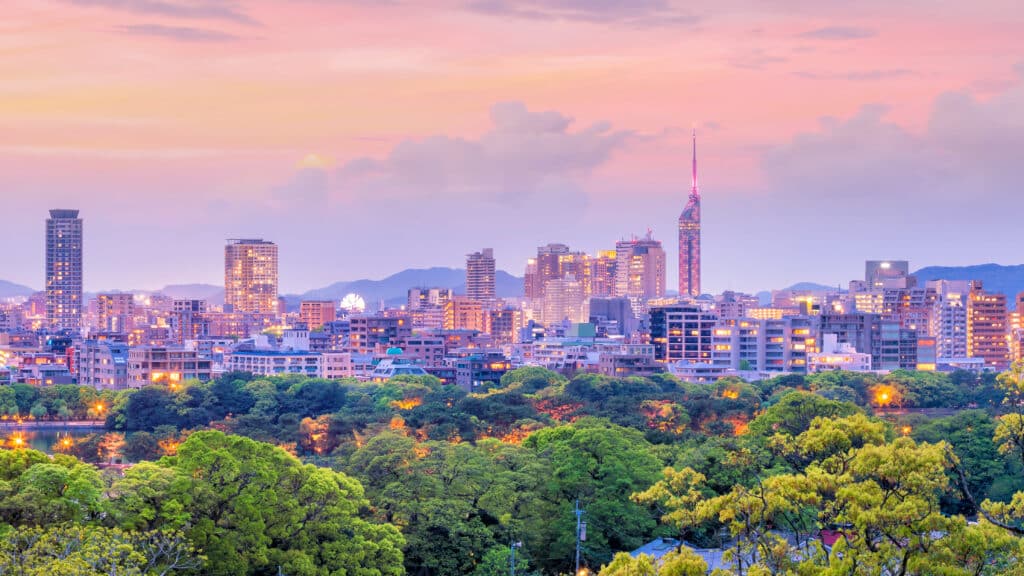
Is Fukuoka Worth Visiting?
Fukuoka may not have the world-famous landmarks of Tokyo or Kyoto, but it offers something many travelers end up appreciating even more: a relaxed atmosphere, incredible food, easy day trips, and a city that feels genuinely local.
Food Lovers
Hakata ramen, yatai food stalls, seafood, motsunabe, and mentaiko make Fukuoka one of Japan’s top culinary destinations.
First-Time Kyushu Visitors
Fukuoka offers excellent transport connections and serves as the ideal gateway for exploring the rest of Kyushu.
Relaxed City Travel
The city combines urban convenience with parks, waterfront areas, and a noticeably slower pace than Tokyo or Osaka.
Easy Day Trips
Dazaifu, Itoshima, Yanagawa, Yufuin, and Beppu are all within easy reach, adding variety to any itinerary.
For many travelers, Fukuoka becomes one of the biggest surprises in Japan. What starts as a convenient stop on a Kyushu itinerary often turns into one of the most memorable parts of the trip. If you enjoy great food, local atmosphere, and destinations that feel slightly off the main tourist trail, Fukuoka is absolutely worth adding to your Japan Itinerary.
FAQ
Is Fukuoka worth visiting?
Yes. Fukuoka is one of Japan’s most enjoyable cities, known for its excellent food, relaxed atmosphere, waterfront scenery, and easy access to the rest of Kyushu.
How many days do you need in Fukuoka?
Two to three days is ideal for most visitors. This allows enough time to explore the city highlights, enjoy the local food scene, and take a day trip to destinations such as Dazaifu or Itoshima.
What is Fukuoka famous for?
Fukuoka is famous for Hakata ramen, yatai food stalls, mentaiko, and its role as the gateway to Kyushu. The city is also known for Ohori Park, Fukuoka Tower, and its vibrant food culture.
Can Fukuoka be visited as a day trip?
Yes, but staying at least one or two nights provides a much better experience. Many of Fukuoka’s best experiences, including yatai food stalls and nightlife, are enjoyed in the evening.
When is the best time to visit Fukuoka?
Spring (March–May) and autumn (September–November) are generally considered the best seasons thanks to pleasant temperatures, cherry blossoms, and autumn foliage.
Do you need a car in Fukuoka?
No. Fukuoka has an excellent subway and bus network, and most attractions are easy to reach using public transportation. A rental car is only useful for exploring more remote parts of Kyushu.
Is Fukuoka expensive?
Fukuoka is generally more affordable than Tokyo and often slightly cheaper than Kyoto or Osaka. Accommodation, food, and transportation offer good value compared to many other major Japanese cities.
What are the best day trips from Fukuoka?
Some of the most popular day trips include Dazaifu, Itoshima, Yanagawa, Yufuin, and Beppu. All are easily accessible and offer a different side of Kyushu.
Is Fukuoka a good base for exploring Kyushu?
Absolutely. Fukuoka is one of the best bases in Japan for regional travel thanks to its airport, Shinkansen connections, and easy access to many of Kyushu’s top destinations.