
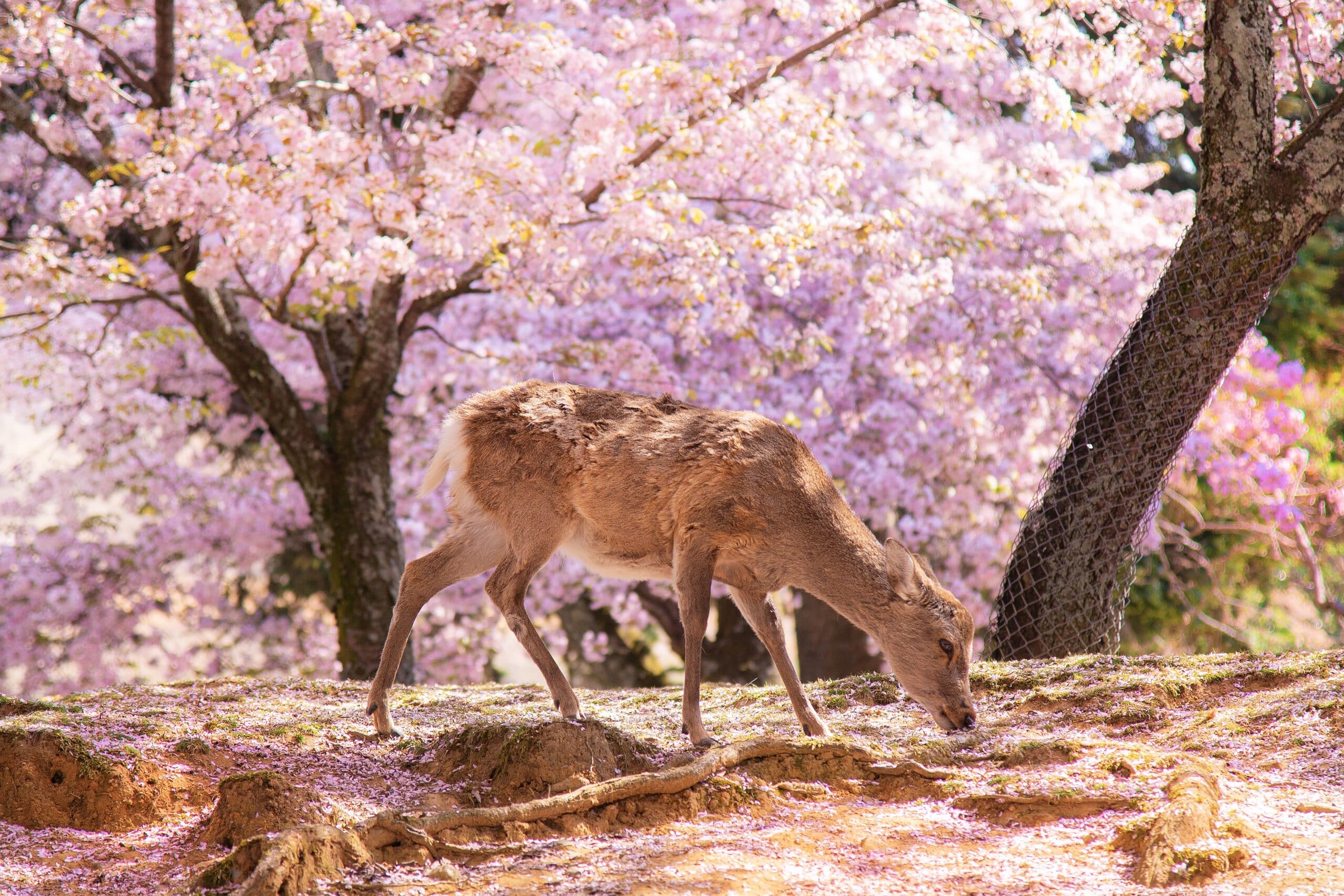
Planning a trip to Japan and wondering whether Nara deserves a place on your itinerary? Although it’s often visited as a day trip from Kyoto or Osaka, Nara offers far more than its famous bowing deer. As Japan’s first permanent capital, the city is home to some of the country’s oldest temples, peaceful gardens, and eight UNESCO World Heritage Sites.
Unlike the fast-paced energy of Tokyo or Osaka, Nara invites you to slow down. Here, you can walk through expansive parks, explore centuries-old temples, and discover quiet streets where traditional Japan still feels very much alive. Whether you’re visiting for a few hours or spending the night, Nara provides a refreshing contrast to Japan’s larger cities.
In this complete Nara Travel Guide, you’ll discover the best things to do, how many days you need, the ideal walking route, where to eat, when to visit, and practical insider tips to help you make the most of your time.
Is Nara Worth Visiting?
Yes—Nara is absolutely worth visiting, especially if it’s your first trip to Japan. Just 35–45 minutes from Kyoto or Osaka, Nara is one of the country’s easiest and most rewarding day trips. Most visitors only need one full day to experience its highlights, making it an excellent addition to almost any Japan itinerary.
Nara is famous for its friendly free-roaming deer, but the city offers much more than that. You’ll find magnificent temples like Todai-ji, peaceful shrines such as Kasuga Taisha, beautiful traditional gardens, and the charming historic district of Naramachi. Compared to Japan’s larger cities, Nara has a much slower pace, allowing you to enjoy centuries of history in a relaxed setting.
This guide covers everything you need to plan your visit, including the best things to do, the perfect walking route, how long to stay, where to eat, practical travel tips, and the best time to visit. Whether you’re planning a quick day trip or an overnight stay, you’ll find everything you need to make the most of your time in one of Japan’s most historic cities.
Table of Contents
Quick Decision Guide
Not sure how much time you need in Nara or which experiences deserve priority? This guide helps you decide at a glance.
🦌 Visiting Nara for the First Time?
Don’t Miss: Todai-ji, Nara Park, and Kasuga Taisha.
Travel Owl Tip: Arrive before 9 AM to enjoy a much quieter atmosphere.
⏳ Only Half a Day?
Prioritize: Nara Park, Todai-ji, and Nakatanidou.
Skip for Now: Gardens and Mount Wakakusa.
🌸 Love Peaceful Gardens?
Visit: Isuien Garden.
Also Consider: Yoshikien if you have extra time.
🌅 Looking for the Best View?
Go To: Mount Wakakusa.
Best Time: Late afternoon or sunset.
🏮 Prefer Local Experiences?
Don’t Miss: Naramachi and Nakatanidou.
Travel Owl Tip: Take your time exploring the side streets and cafés.
🚶 Staying a Full Day?
Add: Nigatsu-do, Isuien Garden, and Mount Wakakusa.
Reward: A quieter and more complete experience of Nara.
Interactive Nara Map
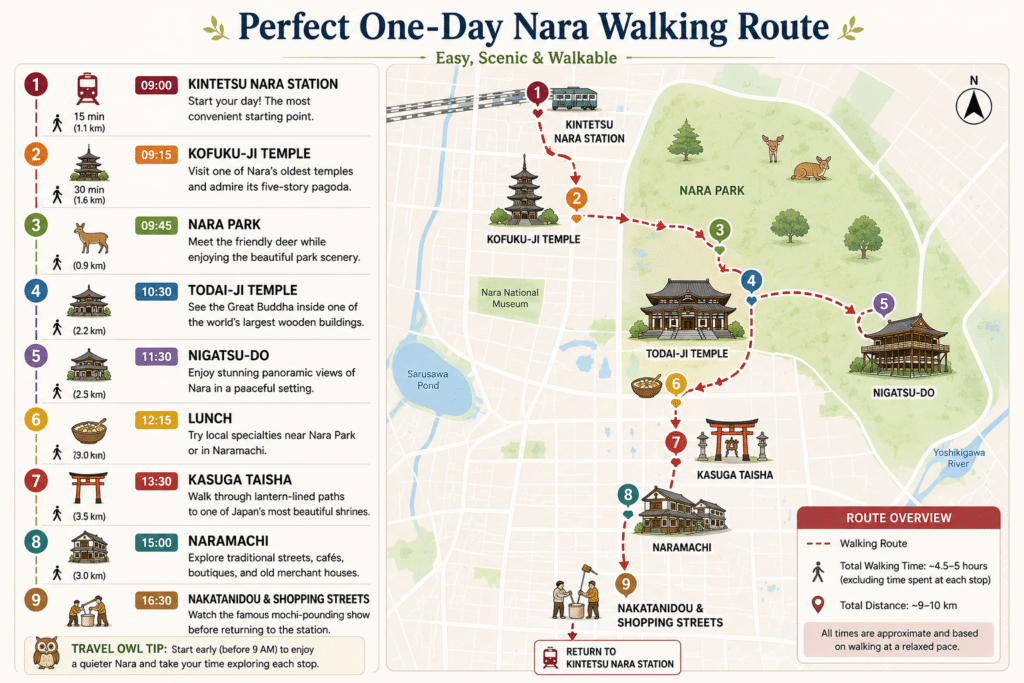
Perfect One-Day Nara Walking Route
Nara is one of Japan’s most walkable cities, making it easy to explore its top attractions on foot. This route follows a logical path from Kintetsu Nara Station through the city’s historic center, allowing you to see Nara’s famous temples, shrines, gardens, and traditional streets without unnecessary backtracking. If you start around 8:30–9:00 AM, you’ll enjoy many sights before the largest tour groups arrive.
🦉 Travel Owl Tip
Many visitors head straight to Todai-ji after arriving, but starting with Kofuku-ji first creates a smoother walking route and lets you enjoy Nara Park before it becomes crowded. If you have extra time, consider adding Yoshikien Garden or Isuien Garden, both of which are just a short walk from Todai-ji and offer a peaceful escape from the busiest tourist areas.
⏳ How Many Days Do You Need in Nara?
Half a day, one full day, or an overnight stay?
For most first-time visitors, one full day is the ideal amount of time in Nara. The historic center is compact and walkable, so you can visit the most important temples, meet the deer in Nara Park, enjoy a relaxed lunch, and explore Naramachi without constantly using public transportation.
A half-day visit is possible, but you will need to focus on only the essential sights. Two days are worthwhile for travelers who enjoy gardens, museums, photography, slower travel, or the peaceful atmosphere that returns after most day-trippers leave.
Half Day
Best for: Travelers with a very limited itinerary.
Concentrate on Nara Park, Todai-ji, and Kofuku-ji. You will see the city’s most famous highlights, but there will be little time for gardens, Naramachi, or quieter temple areas.
One Full Day
Best for: Almost every first-time visitor.
Visit Kofuku-ji, Nara Park, Todai-ji, Nigatsu-do, Kasuga Taisha, and Naramachi at a comfortable pace, with enough time for lunch and short breaks.
Two Days
Best for: Slow travelers, photographers, and repeat visitors.
Add peaceful gardens, museums, Mount Wakakusa, Horyu-ji, local cafés, and an evening in Nara after the large day-trip crowds have returned to Kyoto and Osaka.
🦉 Travel Owl Recommendation
Plan one complete day in Nara and arrive before 9:00 AM. This gives you enough time to experience the famous attractions without turning the visit into a race. Choose a half-day only when your Japan itinerary is extremely limited. Stay overnight when you value quiet mornings, atmospheric evenings, gardens, photography, or a noticeably slower pace.
🗓️ Perfect Nara Itinerary
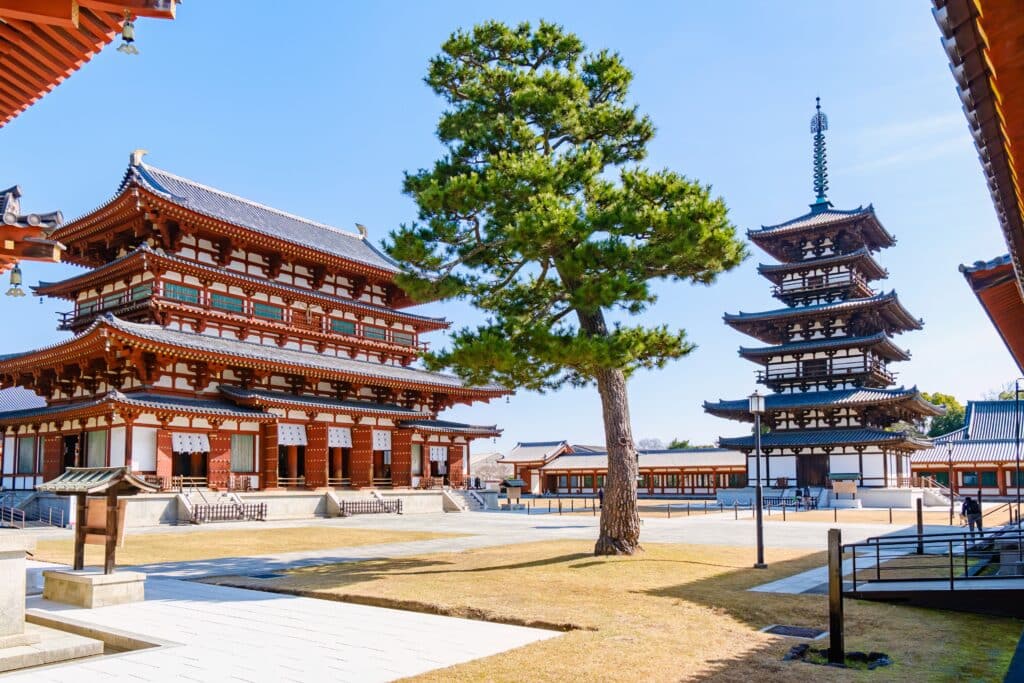
Whether you have just a few hours or a full weekend, these suggested itineraries help you experience Nara at a comfortable pace without feeling rushed.
⏳ Half-Day Itinerary
Perfect for: Day trips from Kyoto or Osaka.
- Kintetsu Nara Station
- Kofuku-ji Temple
- Nara Park
- Todai-ji & Great Buddha
- Feed the sacred deer
- Lunch before returning
Time needed: 4–5 hours
🌿 One-Day Itinerary Travel Owl Pick
Perfect for: Most first-time visitors.
- Kintetsu Nara Station
- Kofuku-ji Temple
- Nara Park
- Todai-ji Temple
- Nigatsu-do Temple
- Lunch
- Kasuga Taisha
- Naramachi
- Nakatanidou Mochi Shop
Time needed: 8–9 hours
🌸 Two-Day Itinerary
Perfect for: Slow travelers and photographers.
Day 1- Todai-ji
- Nara Park
- Nigatsu-do
- Kasuga Taisha
- Kofuku-ji
- Isuien Garden
- Yoshikien Garden
- Naramachi
- Nakatanidou
- Sunset on Mount Wakakusa
Travel Owl Tip: Spending one night in Nara lets you enjoy the city’s peaceful atmosphere after the day-trip crowds leave.
Best Things to Do in Nara
Although Nara is much smaller than Kyoto or Osaka, it is home to some of Japan’s most important cultural treasures. From the world’s largest wooden temple to peaceful Japanese gardens and charming historic streets, the city offers an impressive variety of experiences within a compact, walkable area. Whether you’re interested in history, nature, photography, or simply enjoying a slower pace of travel, Nara has something to offer every visitor.
The attractions below are arranged in the order we recommend visiting them during a typical one-day itinerary. Together, they showcase why Nara remains one of Japan’s most rewarding day trips.
⭐ Don’t Miss These Places
If you only have one day in Nara, make these attractions your priority.
Todai-ji Temple
Home to Japan’s famous Great Buddha and one of the world’s largest wooden buildings. An absolute must-see for first-time visitors.
Nara Park
Meet hundreds of free-roaming deer while enjoying one of Japan’s most beautiful public parks.
Kasuga Taisha
A beautiful shrine surrounded by forest and famous for thousands of traditional stone and bronze lanterns.
Naramachi
Discover preserved merchant houses, cafés, local boutiques, and a quieter side of historic Nara.
🦉 Travel Owl Tip
If you’re short on time, prioritize Todai-ji Temple, Nara Park, Kasuga Taisha, and Naramachi. These four attractions capture the essence of Nara and can comfortably be visited in a single day.
What Can You Skip in Nara? Attraction-by-Attraction Guide
Even though Nara is smaller than Kyoto or Osaka, you won’t have time to see everything in a single day. These Travel Owl recommendations help you focus on the attractions that offer the most rewarding experience while identifying those you can safely skip if your schedule is tight.
🏯 Todai-ji Temple
Best for: First-time visitors, history lovers, architecture enthusiasts, photographers, and anyone wanting to experience one of Japan’s most iconic landmarks.
⭐ Why Visit
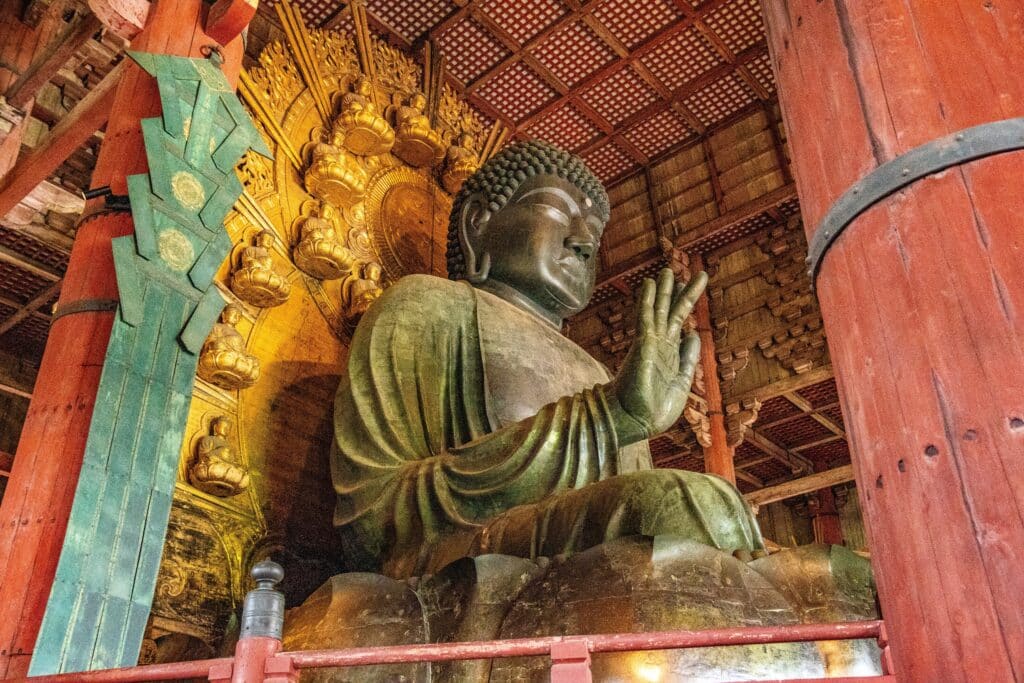
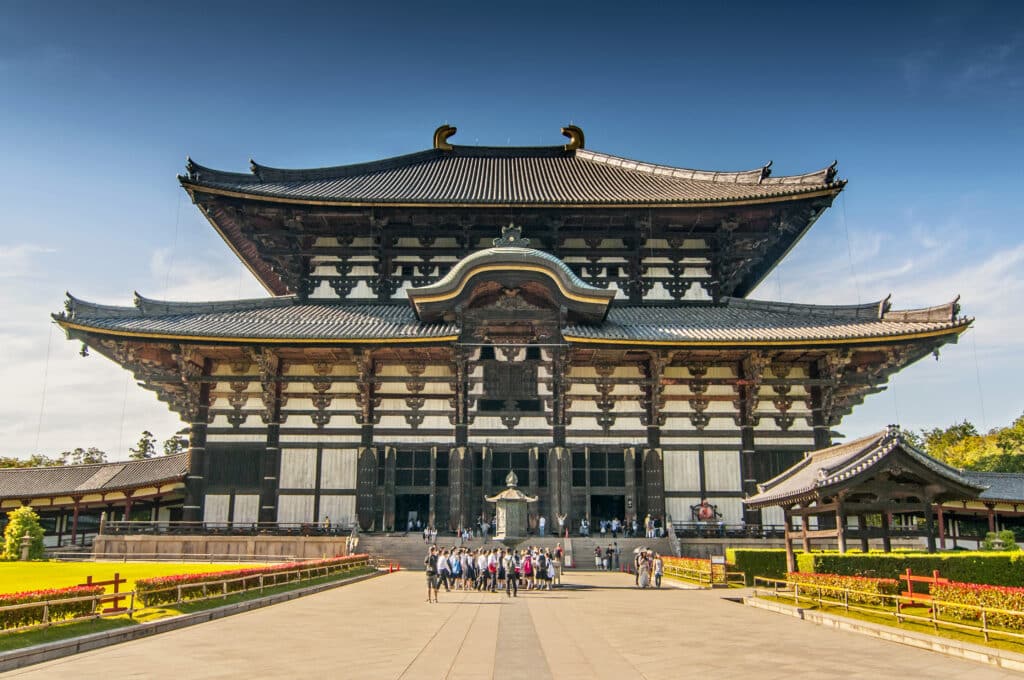
Todai-ji Temple is the undisputed highlight of Nara and one of the most important Buddhist temples in Japan. Built in the 8th century, it houses the enormous Great Buddha (Daibutsu), a breathtaking bronze statue standing approximately 15 metres (49 feet) tall. Even today, the scale of the temple leaves most visitors speechless.
The Great Buddha Hall is also one of the world’s largest wooden buildings, making Todai-ji not only a spiritual site but an architectural masterpiece. It’s one of those rare places that genuinely exceeds expectations.
🏛️ History & Highlights
Todai-ji was founded in 752 AD when Nara served as Japan’s first permanent capital. For centuries, it played a central role in Japanese Buddhism and political life. Today it forms part of the UNESCO World Heritage Sites of Historic Monuments of Ancient Nara.
Besides the Great Buddha itself, don’t miss the impressive temple gates, the giant wooden guardian statues, and the famous pillar with a small opening that visitors try to squeeze through for good luck.
💚 Don’t Miss
After leaving the Great Buddha Hall, continue uphill for another 10–15 minutes to Nigatsu-do Temple. Many visitors stop at Todai-ji and turn around, but Nigatsu-do offers one of the most beautiful panoramic views over Nara with far fewer crowds.
👍 Good to Know Before You Go
- Arrive before 9:00 AM for the quietest experience.
- Purchase deer crackers only from official vendors.
- Wear comfortable shoes—the surrounding area involves a fair amount of walking.
- Allow extra time to explore the temple grounds beyond the main hall.
🦉 Travel Owl Scorecard
Todai-ji Temple is the single attraction we recommend above all others in Nara. Its remarkable history, breathtaking architecture, and the iconic Great Buddha make it an unforgettable experience that almost every first-time visitor should include.

🦌 Nara Park
Best for: Families, animal lovers, photographers, nature enthusiasts, and first-time visitors who want to experience Nara’s most famous symbol.
⭐ Why Visit
Nara Park is one of Japan’s most iconic public parks and home to more than 1,000 free-roaming deer, considered sacred messengers of the gods in Shinto tradition. Walking among these friendly animals while surrounded by ancient temples and centuries-old trees is an experience found nowhere else in Japan.
The park covers a vast area connecting many of Nara’s top attractions, making it much more than simply a place to see deer. Beautiful walking paths, open lawns, historic monuments, and seasonal scenery make it enjoyable throughout the year.
🏞️ What Makes It Special
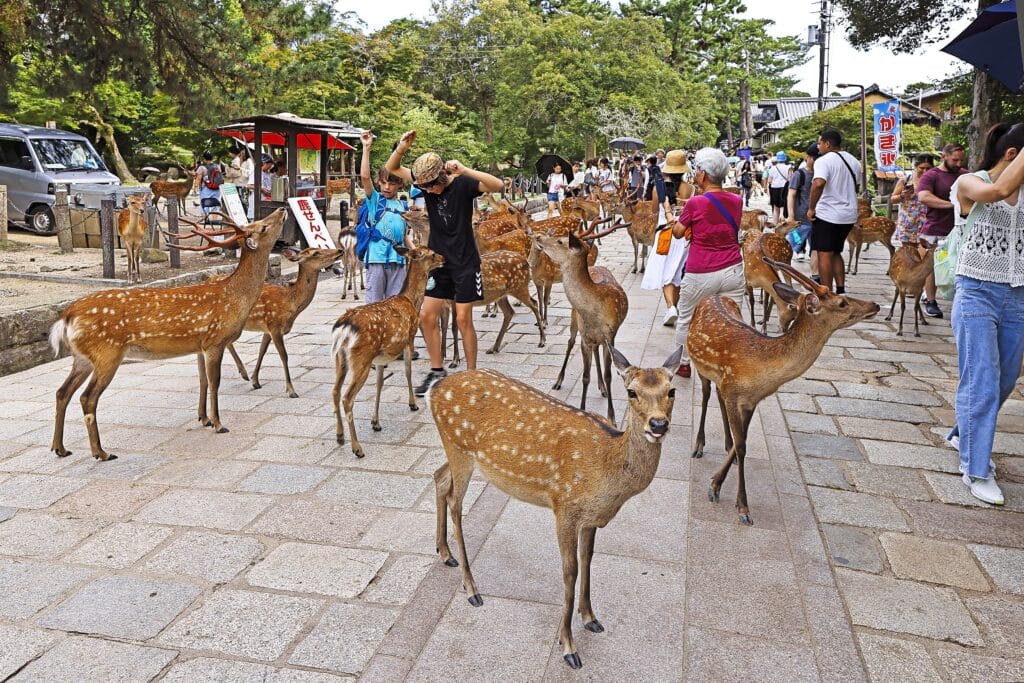
Unlike a zoo or wildlife park, the deer roam freely throughout the area and often interact with visitors. You can purchase official deer crackers (Shika Senbei) from licensed vendors, and many of the deer have even learned to bow politely before expecting a treat.
During spring, cherry blossoms transform the park into one of Nara’s most beautiful picnic spots, while autumn brings spectacular red and golden foliage throughout the grounds.
💚 Don’t Miss
Walk beyond the busiest areas near Todai-ji and explore the quieter southern parts of the park toward Kasuga Taisha. Here you’ll encounter fewer tour groups, peaceful forest paths, and plenty of deer in a much calmer setting.
👍 Good to Know Before You Go
- Only feed the deer official Shika Senbei sold inside the park.
- Keep maps, tickets, and paper bags out of sight—curious deer may try to eat them.
- Always treat the deer with respect and never tease or chase them.
- Early morning and late afternoon are usually the quietest times to visit.
🦉 Travel Owl Scorecard
Nara Park is much more than a place to feed deer—it’s the heart of the city and connects many of Nara’s most important attractions. Take your time, wander away from the busiest paths, and you’ll discover that some of the park’s most memorable moments happen in its quieter corners.
⛩️ Kasuga Taisha
Best for: Shrine lovers, photographers, nature enthusiasts, history buffs, and anyone looking for a peaceful escape from the busiest areas of Nara Park.
⭐ Why Visit
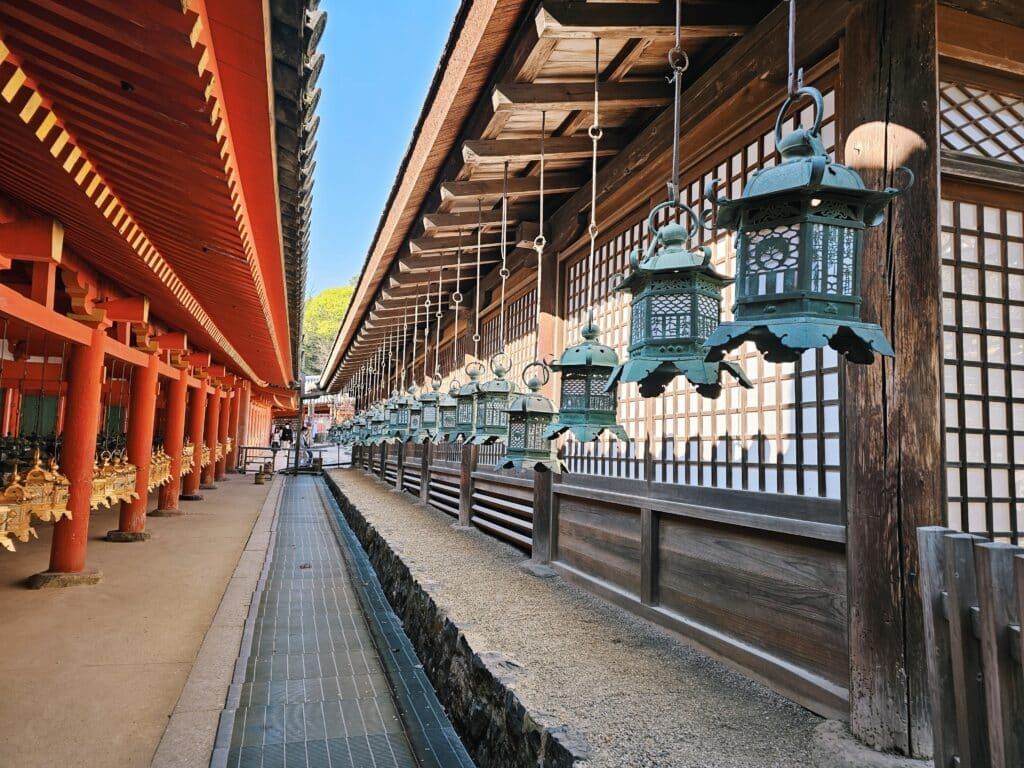
Founded in 768 AD, Kasuga Taisha is Nara’s most famous Shinto shrine and one of Japan’s most beautiful spiritual sites. Its striking vermilion buildings stand surrounded by ancient forest, while thousands of stone and bronze lanterns create an atmosphere unlike anywhere else in the country.
Although many visitors come because of the shrine itself, the peaceful walk through Kasugayama Primeval Forest is just as memorable. Compared with the busy areas around Todai-ji, Kasuga Taisha feels quieter and more reflective.
🏮 What Makes It Special
Kasuga Taisha is famous for its more than 3,000 lanterns, donated over centuries by worshippers. Twice each year, during the Lantern Festivals in February and August, all of these lanterns are illuminated, creating one of Japan’s most magical night-time scenes.
The shrine also sits within a beautiful forest where sacred deer roam freely, giving visitors the feeling of stepping into another era.
💚 Don’t Miss
Take time to walk the peaceful approach to the shrine rather than rushing directly to the main buildings. The moss-covered stone lanterns lining the pathway are among the most photographed spots in Nara and perfectly capture the city’s timeless atmosphere.
👍 Good to Know Before You Go
- Visit in the morning or late afternoon for softer light and fewer visitors.
- The walk from Todai-ji to Kasuga Taisha takes around 20–25 minutes through Nara Park.
- Wear comfortable shoes, as you’ll be walking on gravel paths and gentle slopes.
- If you’re visiting in spring or autumn, allow extra time for photography.
🦉 Travel Owl Scorecard
Kasuga Taisha offers the perfect balance to Todai-ji. While the Great Buddha impresses with its size, Kasuga Taisha captivates visitors with its peaceful atmosphere, forest setting, and beautiful lantern-lined paths. It’s one of the most rewarding places to slow down and enjoy Nara beyond the crowds.
🌿 Nigatsu-do Temple
Best for: View lovers, photographers, peaceful walks, and travelers looking to escape the busiest tourist areas.
⭐ Why Visit
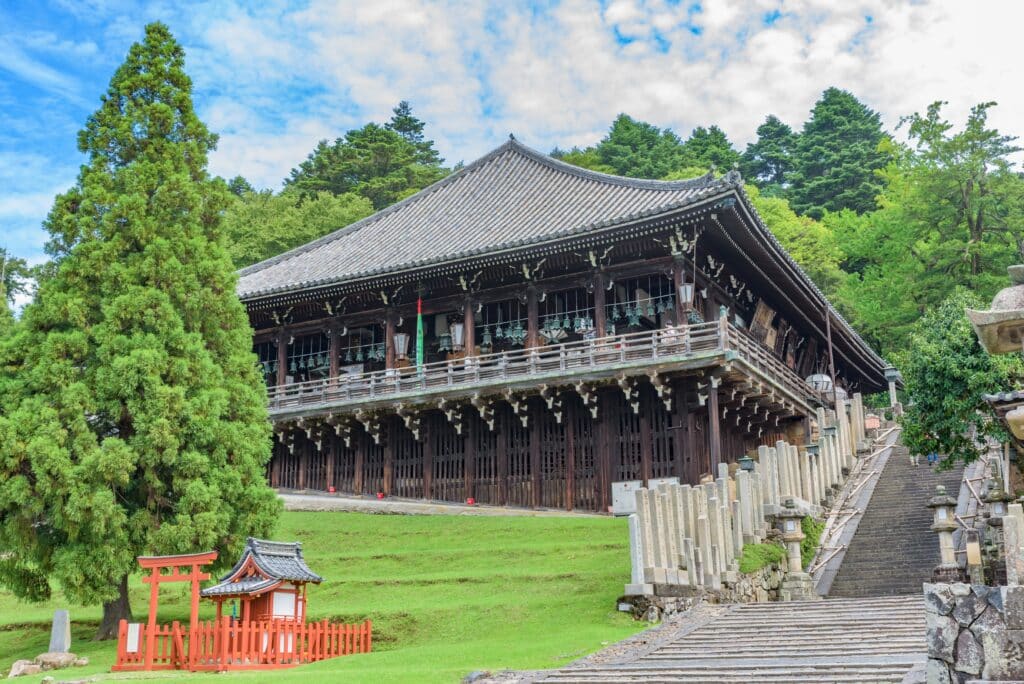
Perched on the hillside above Todai-ji, Nigatsu-do Temple is one of Nara’s most underrated attractions. While thousands of visitors stop after seeing the Great Buddha, relatively few continue the short uphill walk to this beautiful wooden temple.
Those who do are rewarded with sweeping views across Nara, a peaceful atmosphere, and one of the city’s most photogenic temple balconies. It’s the perfect place to slow down and appreciate Nara beyond its most famous landmarks.
🌄 What Makes It Special
Nigatsu-do has stood on this hillside for more than 1,200 years and is best known for hosting the spectacular Omizutori Ceremony every March. During this ancient Buddhist ritual, enormous flaming torches are carried along the temple balcony, creating one of Japan’s oldest and most impressive religious festivals.
Even outside festival season, the temple offers a peaceful atmosphere and some of the finest panoramic views in Nara.
💚 Don’t Miss
Step onto the large wooden terrace and spend a few quiet minutes enjoying the view over Nara. Many visitors take a quick photo and leave, but this is one of the best places in the city to simply sit, relax, and enjoy the surroundings.
👍 Good to Know Before You Go
- Admission to Nigatsu-do is free.
- Allow around 10–15 minutes to walk uphill from Todai-ji.
- The temple is especially beautiful in the early morning and around sunset.
- Bring a camera—the panoramic views are among the best in Nara.
🦉 Travel Owl Scorecard
Nigatsu-do perfectly represents what makes Nara so special. While many visitors focus only on the city’s biggest attractions, this peaceful temple rewards those willing to walk just a little farther. If you enjoy quieter viewpoints and authentic temple atmospheres, don’t skip it.
🏛️ Kofuku-ji Temple
Best for: History enthusiasts, architecture lovers, and visitors interested in Japan’s ancient temples.
⭐ Why Visit
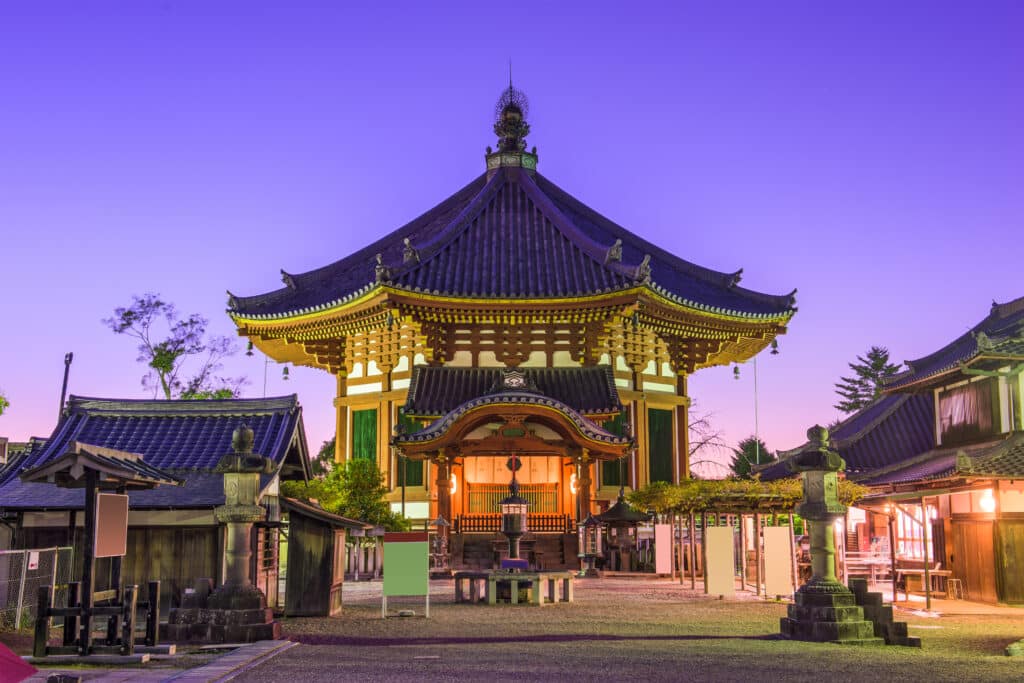
Kofuku-ji is one of Nara’s oldest and most historically important temples. Its elegant architecture and central location make it an excellent stop while walking between Kintetsu Nara Station and Nara Park.
✔ You enjoy Japanese history and temple architecture.
✔ You’d like to visit the National Treasure Museum.
✔ You have a full day in Nara.
🏯 What Makes It Special
Founded in 669 AD, Kofuku-ji was once the temple of the powerful Fujiwara family. The temple complex contains several National Treasures, while the famous five-story pagoda has long been one of Nara’s best-known landmarks.
Even with ongoing restoration work, the temple grounds remain an impressive place to explore.
💚 Don’t Miss
Walk over to nearby Sarusawa Pond after your visit. The view of Kofuku-ji reflected in the water has been one of Nara’s classic photo spots for centuries.
👍 Good to Know Before You Go
- The temple grounds are free to enter.
- Some buildings and museums require admission.
- If you’re short on time, exploring the exterior is often enough.
- Easy to combine with Naramachi and Nara Park.
🦉 Travel Owl Scorecard
Kofuku-ji is absolutely worth seeing, but not every traveler needs to explore every hall or museum. If you’re limited on time, enjoy the beautiful grounds and continue toward Nara Park. History lovers, however, will appreciate spending more time here.
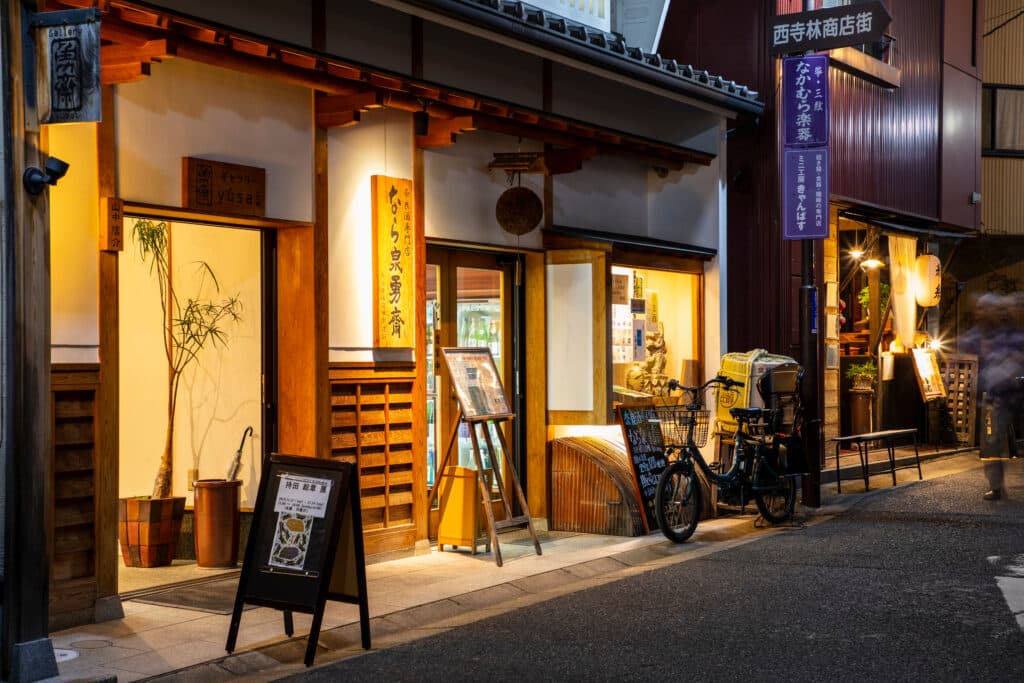
🏡 Naramachi
Best for: Slow travelers, café lovers, photographers, shoppers, and anyone wanting to experience traditional Japan beyond the major temples.
⭐ Why Visit
After exploring Nara’s famous temples, head to Naramachi, the city’s beautifully preserved merchant district. Narrow streets lined with traditional wooden townhouses, small boutiques, tea houses, and local cafés create a completely different atmosphere from nearby Nara Park.
Unlike Kyoto’s popular historic districts, Naramachi generally feels quieter and less commercial, making it one of the most enjoyable places to simply wander without a plan.
🏮 What Makes It Special
Many of the traditional machiya townhouses have been lovingly restored and transformed into cafés, craft shops, art galleries, museums, and restaurants. Every side street seems to reveal another hidden courtyard, local bakery, or unique souvenir shop.
Naramachi offers a glimpse into everyday life during Japan’s Edo period while still feeling like a living neighborhood rather than an open-air museum.
💚 Don’t Miss
Take your time exploring the smaller side streets instead of staying only on the main road. Some of Naramachi’s best cafés, artisan shops, and traditional houses are tucked away just a few steps from the busiest streets.
👍 Good to Know Before You Go
- Visit during the afternoon after exploring the temples.
- Many independent shops close between 5:00 and 6:00 PM.
- Perfect place to stop for matcha, traditional sweets, or lunch.
- Allow yourself time to wander—you’ll discover far more than by following a map.
🦉 Travel Owl Scorecard
Naramachi is where many visitors discover the quieter side of Nara. While the temples tell the city’s history, these charming streets reveal its character. If you enjoy exploring local neighborhoods, this will likely become one of your favourite parts of the day.
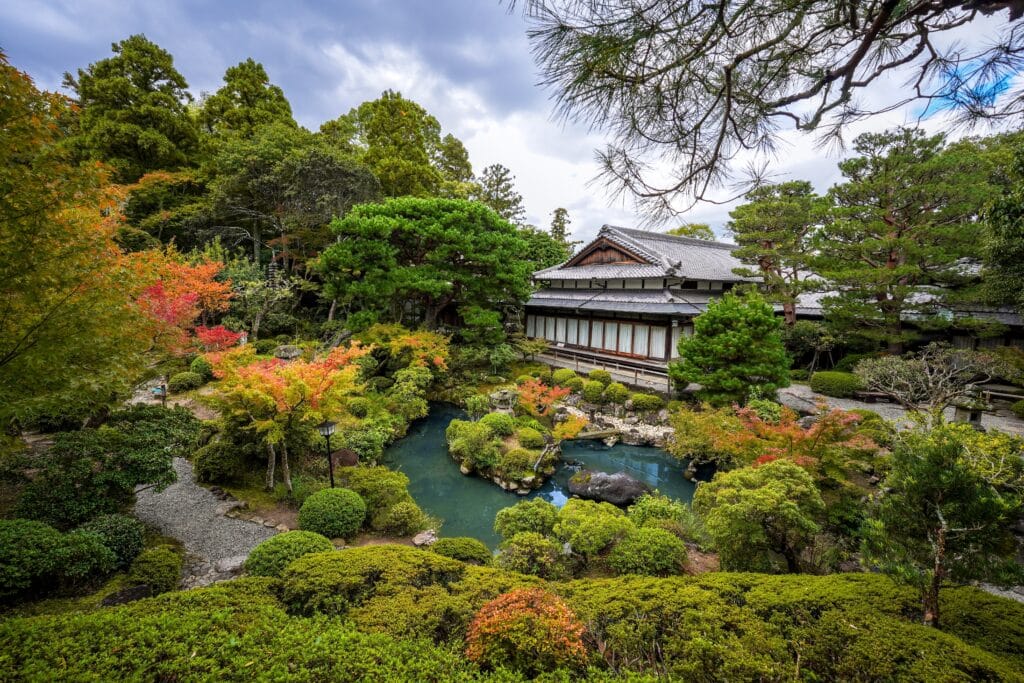
🌸 Isuien Garden
Best for: Garden lovers, photographers, couples, and travelers who appreciate traditional Japanese landscape design.
⭐ Why Visit
Isuien Garden is one of Japan’s most beautiful traditional landscape gardens. Carefully designed ponds, stone lanterns, elegant teahouses, and perfectly framed views create a peaceful retreat just minutes from Todai-ji.
✔ You enjoy Japanese gardens.
✔ This is your first visit to a traditional landscape garden.
✔ You have a full day to explore Nara.
🌿 What Makes It Special
The garden beautifully uses shakkei (borrowed scenery), incorporating Todai-ji’s South Gate and Mount Wakakusa into the overall landscape. Every turn offers a carefully composed view that changes with the seasons.
Cherry blossoms, fresh greenery, autumn leaves, and winter tranquillity each give Isuien a completely different character.
💚 Don’t Miss
Spend a few quiet minutes at the traditional teahouse overlooking the pond. It’s one of the most peaceful places in central Nara and a welcome break after the busy temple area.
👍 Good to Know Before You Go
- Allow about 45–60 minutes.
- Spring and autumn are especially beautiful.
- Admission is charged.
- Easy to combine with nearby Yoshikien Garden.
🦉 Travel Owl Scorecard
Isuien is a wonderful garden, but whether it’s worth visiting depends on your itinerary. If this is your first Japanese garden, it’s an easy recommendation. However, if you’ve already explored Kyoto’s famous gardens or Kenroku-en in Kanazawa, you may prefer spending the extra time elsewhere in Nara.
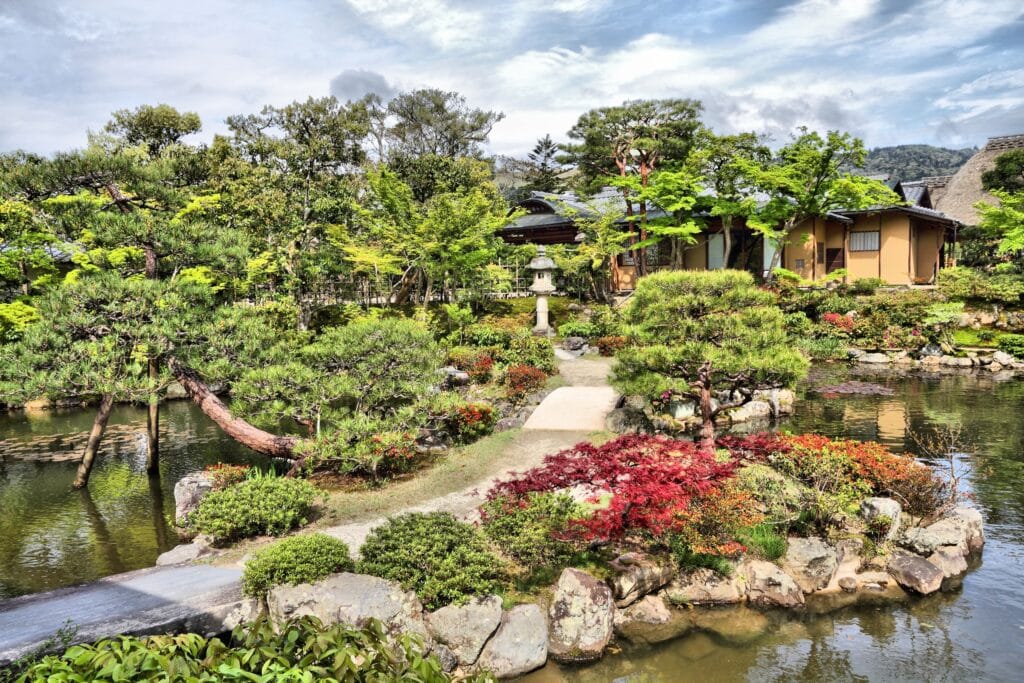
🍁 Yoshikien Garden
Best for: Quiet walks, photographers, Japanese garden enthusiasts, and travelers looking for a peaceful escape from the crowds.
⭐ Why Visit
Located right next to Isuien Garden, Yoshikien Garden offers a more intimate and tranquil experience. While it receives far fewer visitors, many travelers find its peaceful atmosphere even more enjoyable than its famous neighbor.
✔ You enjoy peaceful hidden gems.
✔ You prefer quiet gardens over famous attractions.
✔ You have already visited the main sights in Nara.
🌿 What Makes It Special
Yoshikien consists of three beautifully designed garden areas: a moss garden, a pond garden, and a traditional tea ceremony garden. Each offers a different atmosphere, making the visit surprisingly varied despite the garden’s compact size.
Because many tour groups overlook Yoshikien, it often feels wonderfully calm—even during Nara’s busiest travel seasons.
💚 Don’t Miss
The moss garden is the highlight, especially after rain when the vibrant shades of green become even more striking. It’s one of the quietest and most photogenic spots in central Nara.
👍 Good to Know Before You Go
- Allow about 30–45 minutes.
- Often much quieter than nearby Isuien Garden.
- International visitors may receive free admission—check current policies before visiting.
- Easy to combine with Todai-ji and Isuien Garden.
🦉 Travel Owl Scorecard
Yoshikien is a delightful hidden garden, but it isn’t essential for every visitor. If you’re short on time, choose either Yoshikien or nearby Isuien rather than trying to see both. Travelers who enjoy peaceful gardens, however, will likely appreciate visiting each for its distinct atmosphere.

🍡 Nakatanidou Mochi Shop
Best for: Food lovers, families, photographers, and anyone wanting to experience one of Nara’s most entertaining local traditions.
⭐ Why Visit
A visit to Nakatanidou is about much more than buying a sweet treat. The shop has become famous throughout Japan for its lightning-fast mochi pounding demonstrations, where skilled staff transform freshly steamed rice into soft, chewy mochi in just a few minutes.
Watching the performance is almost as enjoyable as tasting the finished product, making this one of the most memorable food experiences in Nara.
🥢 What Makes It Special
Nakatanidou specializes in Yomogi Mochi, a traditional rice cake flavored with Japanese mugwort and filled with smooth sweet red bean paste. The rapid mochi-pounding technique requires perfect timing and teamwork, attracting crowds throughout the day.
Even if you’re not normally a fan of Japanese sweets, the freshness and texture of the mochi here are quite different from packaged versions found elsewhere.
💚 Don’t Miss
Try to arrive shortly before a live mochi-pounding demonstration begins. While there isn’t a fixed schedule, the performances take place several times a day depending on customer demand. Freshly made mochi tastes best while it’s still warm and soft.
👍 Good to Know Before You Go
- The shop is only a few minutes’ walk from Kintetsu Nara Station.
- Demonstrations usually become more frequent during busy periods.
- Expect a short queue during weekends and holidays.
- Bring cash just in case, although payment options may vary.
🦉 Travel Owl Scorecard
Nakatanidou perfectly complements a day of temple sightseeing. It only takes around 15–20 minutes to visit, but the lively atmosphere and freshly made mochi create one of those small travel moments that many visitors remember long after their trip.
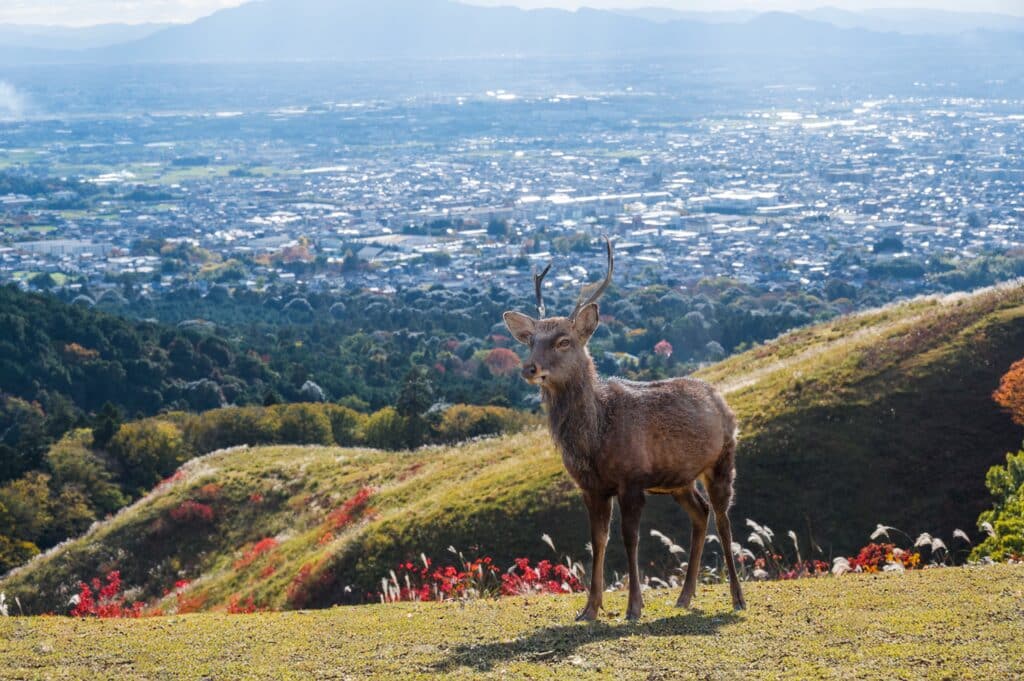
⛰️ Mount Wakakusa
Best for: Panoramic views, sunset lovers, photographers, and travelers who enjoy short hikes.
⭐ Why Visit
Mount Wakakusa offers the finest panoramic view of Nara, stretching across the historic temples, the city skyline, and the surrounding mountains. Although it’s only a short distance from Todai-ji, surprisingly few visitors make the climb.
✔ You want the best viewpoint in Nara.
✔ You’re staying until late afternoon or sunset.
✔ You don’t mind a short uphill walk.
🌄 What Makes It Special
Unlike many viewpoints that require long hikes or cable cars, Mount Wakakusa is relatively easy to reach. Wide grassy slopes provide plenty of space to relax while enjoying one of the most beautiful views in the Kansai region.
The mountain is also famous for the annual Wakakusa Yamayaki Festival, when the entire hillside is ceremonially set on fire, creating one of Japan’s most spectacular winter events.
💚 Don’t Miss
Visit about an hour before sunset. Watching the warm evening light spread across Todai-ji, Nara Park, and the city below is one of the most memorable experiences in Nara.
👍 Good to Know Before You Go
- Allow about 60–90 minutes.
- Wear comfortable walking shoes.
- Bring water during warmer months.
- Check seasonal opening hours for the access gate.
- The view is beautiful throughout the day but truly shines around sunset.
🦉 Travel Owl Scorecard
Mount Wakakusa isn’t essential for every itinerary, especially if you’re visiting Nara on a quick half-day trip. However, if you have extra time or plan to stay until sunset, the panoramic views easily become one of the highlights of the entire city. For photographers and nature lovers, it’s highly recommended.
Where to Stay best in Nara
🏨 Where to Stay in Nara
The best area depends on how you plan to explore the city. Fortunately, Nara is compact, making it easy to reach the main attractions from almost anywhere.
🚉 Near Kintetsu Nara Station ★ Best Overall
This is the most convenient location for first-time visitors. You’ll be within easy walking distance of Kofuku-ji, Nara Park, Todai-ji, Naramachi, restaurants, cafés, and shopping streets.
Perfect for: First-time visitors, couples, solo travelers, and anyone exploring Nara on foot.
Pros:
- Closest to the main attractions
- Excellent restaurant selection
- Direct trains to Kyoto and Osaka
- Great atmosphere in the evening
🦌 Around Nara Park
If you prefer peaceful surroundings and want to experience traditional Japan, staying near Nara Park is an excellent choice. Many higher-end hotels and ryokan are located here.
Perfect for: Couples, luxury travelers, photographers, and nature lovers.
Pros:
- Quiet surroundings
- Walk to Todai-ji and Kasuga Taisha
- Beautiful early mornings before the crowds arrive
- Traditional atmosphere
🏮 Naramachi
Naramachi offers one of the most authentic places to stay in Nara. Boutique guesthouses, renovated machiya townhouses, and charming cafés create a relaxed atmosphere after the day-trippers leave.
Perfect for: Slow travelers, culture lovers, and repeat visitors.
Pros:
- Historic neighborhood
- Excellent cafés and local restaurants
- Beautiful evening atmosphere
- Unique accommodation options
🛏️ JR Nara Station
Hotels around JR Nara Station are often slightly cheaper while still being only a 15–20 minute walk from the historic center. It’s also a convenient base if you’re continuing your trip across Japan.
Perfect for: Budget travelers, rail travelers, and families.
Pros:
- Good hotel prices
- Excellent transport connections
- Many supermarkets and convenience stores
- Easy access to Kyoto, Osaka, and Kansai Airport
🦉 Travel Owl Recommendation
If it’s your first visit to Nara, stay near Kintetsu Nara Station. You’ll be within walking distance of almost every major attraction, making it easy to explore the city without relying on buses or taxis. Travelers looking for a quieter and more traditional experience should consider Naramachi or the area around Nara Park.
Easiest Way to get to Nara
🚅 How to Get to Nara
Nara is one of Japan’s easiest destinations to reach and makes an excellent day trip from both Kyoto and Osaka. Thanks to frequent train connections, most visitors arrive without needing a car.
🏯 From Kyoto
Kyoto is the closest major city to Nara. Direct trains run throughout the day, making it one of Japan’s easiest and most popular day trips.
| Travel Time | 35–50 min |
| Best Option | JR Miyakoji Rapid |
| Alternative | Kintetsu Railway |
🌆 From Osaka
Osaka is another excellent base for visiting Nara. Kintetsu trains arrive closer to Nara Park than JR, making them the preferred option for most visitors.
| Travel Time | 35–45 min |
| Best Option | Kintetsu Railway |
| Alternative | JR Yamatoji Line |
✈️ From Kansai Airport (KIX)
If Nara is your first stop after arriving in Japan, you can easily reach the city by train. Depending on the route, one transfer is usually required.
| Travel Time | 75–100 min |
| Transfers | Usually 1 |
| Recommended | JR or Kintetsu |
🚶 Getting Around Nara
The historic center is surprisingly compact. Most visitors can comfortably explore Kofuku-ji, Nara Park, Todai-ji, Kasuga Taisha, and Naramachi entirely on foot.
- 🚶 Walking is the best option.
- 🚌 Local buses are available for longer distances.
- 🚲 Bicycle rentals are popular in good weather.
- 🚕 Taxis are readily available near both stations.
🦉 Travel Owl Recommendation
For most visitors, Kintetsu Nara Station is the best arrival point because it’s only a short walk from Nara Park and the city’s main attractions. Once you arrive, you’ll rarely need public transport—the best way to experience Nara is simply by walking.
Budget for Nara
💴 How Much Does a Day in Nara Cost?
Nara is one of Japan’s most affordable destinations. Here’s a realistic estimate of what you can expect to spend during a full day of sightseeing.
Many of Nara’s highlights—including Nara Park, Kasuga Taisha’s grounds, Nigatsu-do Temple, Kofuku-ji’s outdoor areas, and Naramachi—are free to visit. If you mainly explore these attractions, you can comfortably enjoy a full day in Nara for well under ¥5,000 (excluding transportation to and from the city).
Top Day Trips Around Nara
🌄 Best Day Trips from Nara
Nara is easy to combine with several of Japan’s most famous destinations. Whether you want to explore more historic temples, vibrant cities, or scenic countryside, these day trips fit perfectly into a Kansai itinerary.
🏯 Kyoto
Only around 45 minutes away, Kyoto is the perfect complement to Nara. Together they showcase Japan’s rich cultural heritage through magnificent temples, shrines, gardens, and traditional neighborhoods.
Travel Time: 35–50 minutes
🌆 Osaka
Swap peaceful temples for lively streets, world-class food, and neon-lit entertainment. Osaka offers a completely different atmosphere and is an excellent contrast to tranquil Nara.
Travel Time: 35–45 minutes
🏰 Himeji
Visit Japan’s most spectacular original castle, a UNESCO World Heritage Site often considered the country’s finest surviving feudal fortress.
Travel Time: About 2 hours
⛩️ Uji
Famous for premium matcha tea and the beautiful Byodo-in Temple, Uji makes a relaxing half-day trip between Kyoto and Nara.
Travel Time: About 30 minutes
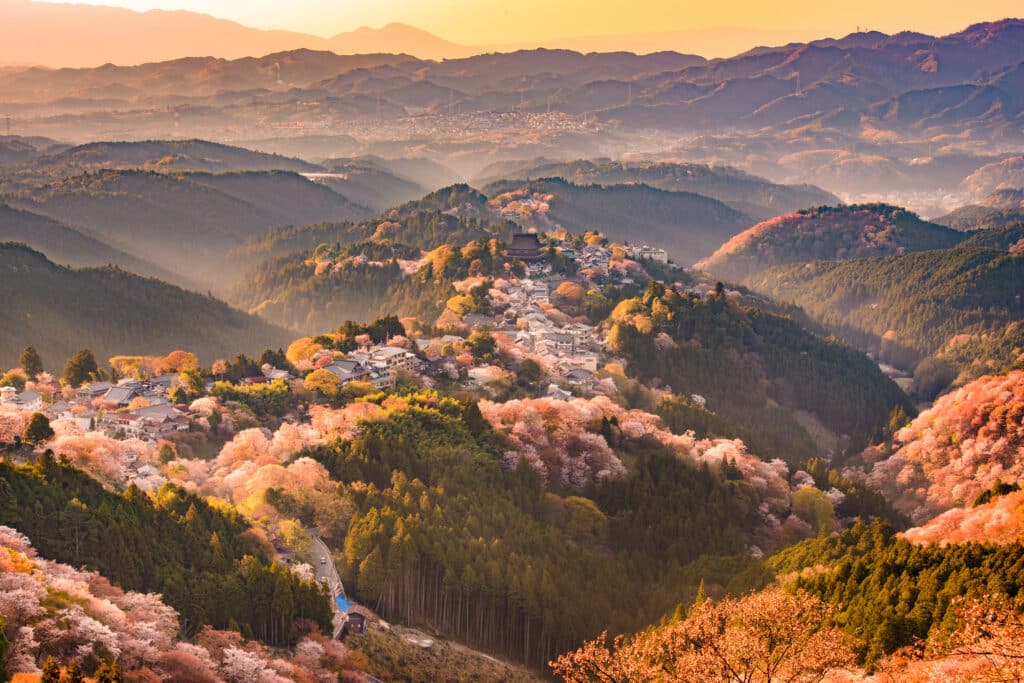
🏔️ Mount Yoshino
One of Japan’s most famous cherry blossom destinations. During spring, thousands of flowering trees transform the mountainside into a spectacular sea of pink.
Travel Time: About 90 minutes
🥷 Iga Ueno
Interested in ninja history? Iga Ueno is home to one of Japan’s best ninja museums, an impressive castle, and a charming historic center.
Travel Time: About 75 minutes
🦉 Travel Owl Recommendation
If you’re spending several days in Kansai, we recommend combining Kyoto, Nara, and Osaka into one itinerary. Together they offer the perfect mix of history, culture, nature, and modern city life. If you have additional time, add Uji or Mount Yoshino for an unforgettable side trip.
Insider Tips for Nara

Travel Owl Final Verdict
The best memories of Nara rarely come from checking attractions off a list. They come from feeding a curious deer at sunrise, finding a quiet forest path behind Kasuga Taisha, watching the city glow from Mount Wakakusa, or lingering over fresh mochi in Naramachi. Nara rewards travelers who slow down—and that’s exactly what makes it so memorable.
Nara Travel FAQ
Planning your first trip to Nara? Here are the answers to the questions travelers ask most often.
Is Nara worth visiting?
Yes. Nara is one of Japan’s most rewarding destinations thanks to its UNESCO World Heritage temples, friendly deer, beautiful gardens, and relaxed atmosphere. It’s well worth including in any Kansai itinerary.
How many days do you need in Nara?
One full day is ideal for most travelers. Two days give you time to explore quieter gardens, Mount Wakakusa, and nearby walking trails at a relaxed pace.
Can you visit Nara as a day trip?
Absolutely. Direct trains from Kyoto and Osaka take around 35–50 minutes, making Nara one of Japan’s easiest and most popular day trips.
Should I stay overnight in Nara or Kyoto?
Most first-time visitors stay in Kyoto and visit Nara as a day trip. However, staying overnight in Nara lets you experience peaceful mornings and evenings after most day-trippers have left.
Is Nara better than Kyoto?
Neither is better—they offer different experiences. Kyoto has more attractions and neighborhoods, while Nara is smaller, quieter, and easier to explore in a single day.
Are the deer in Nara friendly?
Generally yes, but they are still wild animals. Feed them only official deer crackers, avoid teasing them, and keep food, maps, and bags securely stored.
Is Nara free to visit?
Many of Nara’s highlights, including Nara Park and Kofuku-ji’s grounds, are free to visit. Some temples, museums, and gardens charge a small admission fee.
What is the best time to visit Nara?
Spring (March–April) and autumn (October–November) are the most popular seasons. Early mornings are the best time to enjoy quieter sightseeing year-round.
Can you walk around Nara?
Yes. Most major attractions, including Kofuku-ji, Nara Park, Todai-ji, Kasuga Taisha, and Naramachi, are within walking distance of each other, making Nara one of Japan’s easiest cities to explore on foot.