
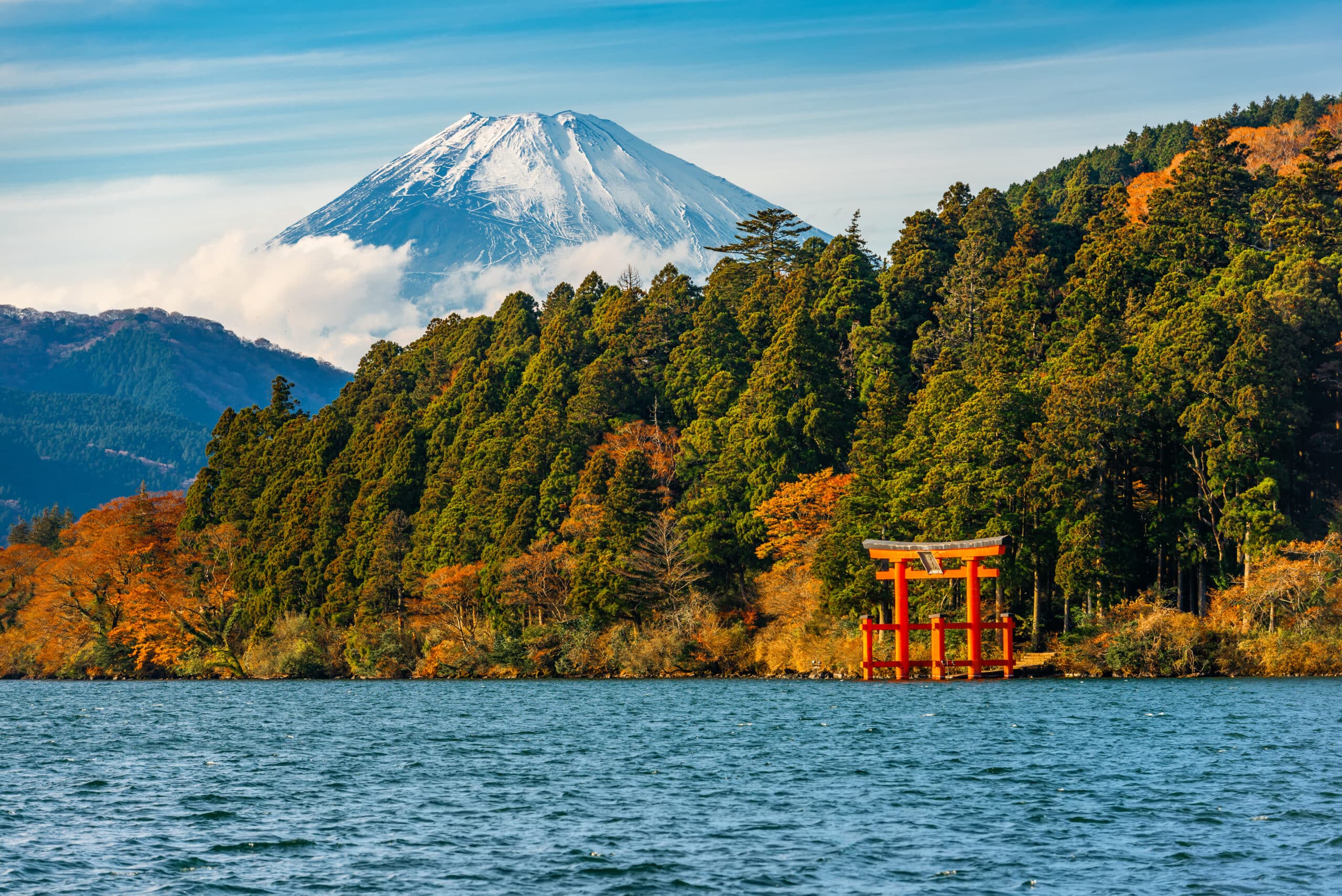
Hakone is one of the easiest—and most rewarding—escapes from Tokyo.
Located in the mountains of Kanagawa Prefecture, this scenic region offers a completely different atmosphere from the city: slower, greener, and built around hot springs, mountain views, and one of the most memorable transport routes in Japan.
It’s best known for onsen, Lake Ashi, Owakudani, and the chance to see Mount Fuji, but what makes Hakone special isn’t just individual sights—it’s how everything connects into one full experience.
The key question isn’t just what to do in Hakone—it’s whether it’s worth your limited time in Japan.
For most first-time visitors, the answer is yes. Hakone delivers one of the best short scenic getaways in the country, without requiring complicated planning.
This guide helps you decide exactly that—whether to go, how much time you need, and how to experience Hakone efficiently without turning it into another rushed day trip.
Table of Contents
Hakone at a Glance
Quick Overview
Hakone at a Glance
The key things to know before planning your visit
Hot springs, scenic transport, Mount Fuji views, and an easy escape from Tokyo.
One full day is enough for the highlights, but one night gives you a much better overall experience.
Usually around 85 to 100 minutes, depending on your train and starting point in Tokyo.
The Hakone Round Course, which combines mountain trains, ropeways, boats, and volcanic scenery.
Onsen culture, Lake Ashi, Owakudani Valley, and classic Mount Fuji viewpoints on clear days.
Gora for convenience, Hakone-Yumoto for easy access, or Lake Ashi for scenic overnight stays.
Easy to moderate. Transport is well organized, but the day can feel tiring if you start late or carry luggage.
Ideal as a day trip from Tokyo, but even better for travelers who want one relaxed night in a ryokan.
Hakone is one of the easiest places to add nature, hot springs, and classic Mount Fuji scenery to a Tokyo itinerary.
It works especially well for travelers who want more than just one attraction. Instead of focusing on a single temple, museum, or viewpoint, Hakone offers a full experience built around transport, scenery, and atmosphere.
For most people, the main appeal is simple: you can leave Tokyo in the morning and spend the day riding mountain trains, crossing a volcanic valley by ropeway, cruising across Lake Ashi, and ending the experience in an onsen.
A full day is enough for the main highlights, but one night gives you a much better overall experience.
Is Hakone Worth Visiting?
For most first-time travelers to Japan, Hakone is worth visiting.
What makes it special is not just one landmark, but the combination of experiences: hot springs, mountain transport, volcanic scenery, Lake Ashi, and the possibility of Mount Fuji views. Few destinations near Tokyo offer that much variety in a single trip.
Hakone makes the most sense for travelers who want nature, atmosphere, and a slower change of pace from the city. It is especially strong as a first overnight trip outside Tokyo, but it also works well as a day trip if you start early and focus on the main route.
It may be less worthwhile if your itinerary is already full of scenic transport experiences, if you strongly dislike tourist-heavy destinations, or if your main goal is guaranteed Mount Fuji views. Hakone can be beautiful, but Fuji visibility always depends on weather.
Overall, Hakone is not just a place to check off one attraction. It is one of the best all-around short escapes from Tokyo—and for many travelers, that makes it absolutely worth it.

Day Trip vs Overnight Stay
For most travelers, Hakone works well as a day trip—but it becomes a much better experience if you stay one night.
Day Trip (Best for most itineraries)
A day trip is enough to experience the Hakone Round Course, see Lake Ashi, visit Owakudani, and get a feel for the region. This is the best option if you are based in Tokyo and want an efficient, high-value escape from the city.
Overnight Stay (Best overall experience)
An overnight stay makes Hakone feel much more relaxed. You can slow down, enjoy an onsen properly, stay in a ryokan, and experience the area after most day-trippers have left.
Best for a Day Trip
Travelers with limited time, first-time visitors based in Tokyo, and those who want to focus on the main highlights.
Best for an Overnight Stay
Travelers who want relaxation, a ryokan experience, private or outdoor onsen, and a slower scenic pace.
Biggest Mistake
Trying to force both full sightseeing and full relaxation into a rushed single day.
Travel Owl Recommendation
If your schedule is tight, do Hakone as a day trip. If your budget allows it, one night is the better overall experience.
The Perfect Hakone Route
The easiest and most rewarding way to experience Hakone is to follow the Hakone Round Course.
Rather than treating each attraction separately, this route lets you experience the region as one connected journey through different landscapes and transport types.
A simple version of the route looks like this:
- Start at Hakone-Yumoto
- Take the Hakone Tozan Railway
- Continue by cable car
- Ride the ropeway across Owakudani
- Continue toward Lake Ashi
- Cross the lake by sightseeing boat
- Visit the torii gate and Hakone Shrine area
- Return by bus
What makes this route work so well is that the transport itself becomes part of the experience. Instead of backtracking between isolated sights, you move naturally through the best parts of Hakone in a logical order.
If you start early and keep your pace realistic, this is the best way to see Hakone without making the day feel rushed.
Use this map to follow the Hakone route step by step, including all major highlights and optional stops. It helps you navigate efficiently without backtracking.
Top Things to Do in Hakone
Travel Planning Guide
Best Things to Do in Hakone by Priority
Focus on the experiences that matter most for a first visit
Hakone Round Course — the best way to experience the region’s transport, scenery, and major highlights in one route.
Lake Ashi & Torii Gate — Hakone’s most iconic view, especially on a clear day with Mount Fuji in the background.
Owakudani Valley — dramatic volcanic scenery, sulfur vents, and the famous black eggs.
Onsen Experience — one of the best reasons to stay overnight and enjoy Hakone at a slower pace.
Open-Air Museum — a strong option if you want a mix of nature, art, and a break from transport-heavy sightseeing.
Hakone Shrine — atmospheric and scenic, but not essential if your time is limited.
1. Lake Ashi & Torii Gate

Lake Ashi is one of the most iconic parts of Hakone, especially on a clear day when Mount Fuji appears behind the water and surrounding hills.
The red torii gate near Hakone Shrine is the classic image most travelers associate with the area, and it’s one of the best photo spots in the region.
This stop works best early in the day, before the area gets crowded and photo lines build up.
2. Owakudani Volcanic Valley

Owakudani is one of the most distinctive landscapes near Tokyo.
The area is known for its steaming volcanic vents, dramatic terrain, and the ropeway ride that passes above it. It feels very different from the lake and forest scenery elsewhere in Hakone, which is exactly why it stands out.
It’s also famous for black eggs, or kurotamago, which are boiled in the sulfur-rich hot spring water.
3. Hakone Open-Air Museum

The Hakone Open-Air Museum is one of the best cultural stops in the region.
Instead of feeling like a typical museum visit, it combines sculpture, open space, and mountain scenery in a way that feels relaxed and easy to enjoy—even if art is not your main priority.
It is a particularly good addition if you want variety beyond transport and viewpoints.
4. Relax in an Onsen

For many travelers, the onsen experience is one of the biggest reasons to visit Hakone.
Whether you choose a public bath, a ryokan with shared facilities, or a room with a private bath, this is the part of the trip that makes Hakone feel slower and more memorable.
If you are staying overnight, this becomes one of the highlights of the entire visit.
5. Hakone Shrine
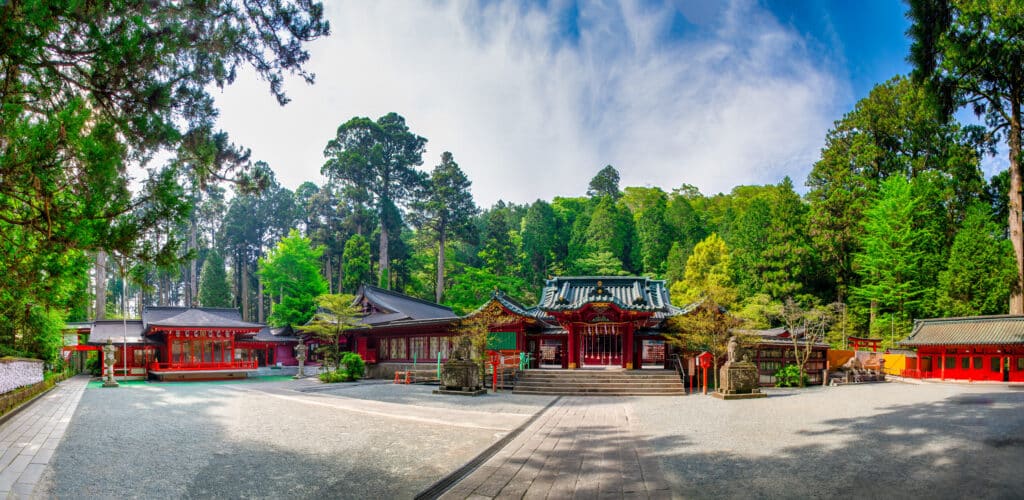
Hakone Shrine is often combined with the Lake Ashi area and adds a more atmospheric cultural stop to the route.
The shrine itself is peaceful and pleasant, but for most travelers the real draw is the setting: forested paths, lakeside atmosphere, and the famous torii gate nearby.
It is worth including if you have enough time, but it is not as essential as Lake Ashi, Owakudani, or the overall transport route.
What to Skip in Hakone
Hakone is easy to enjoy—but it is also easy to do badly.
The most common mistake is treating it like a checklist and trying to rush through everything in a few hours. Hakone works best when the route feels smooth and scenic, not over-optimized.
Starting late from Tokyo is another major mistake. By late morning, the ropeway, Lake Ashi area, and major transport connections can become much busier, which makes the whole trip feel more tiring.
It is also a mistake to build the entire day around Mount Fuji. Fuji views can be spectacular, but they are never guaranteed. If you visit only for that one reason, there is a real chance of disappointment.
Another thing to skip is carrying heavy luggage through multiple transport changes. Hakone becomes much easier and more enjoyable when you travel light.
Overall, Hakone is not at its best as a rushed stop for one attraction. It works best as a full experience, with realistic expectations and enough time to enjoy the journey itself.
How to Get to Hakone
Getting Around
How to Get Around Hakone
The transport system is part of the experience — not just a way to move
Scenic railway climbing through forested hills with switchbacks — your first step into Hakone’s landscape.
Short but steep connection linking the train to the ropeway — quick and efficient.
Aerial gondola over volcanic terrain with views of Owakudani and, on clear days, Mount Fuji.
Sightseeing boat crossing Lake Ashi — one of Hakone’s most iconic and memorable experiences.
Connects all major stops and fills the gaps in the Round Course — reliable but can get busy midday.
Covers almost all transport above and simplifies the entire trip — highly recommended for most visitors.
Hakone is one of the easiest destinations to reach from Tokyo, which is one reason it works so well as a short trip.
The simplest option for most travelers is the Odakyu Romancecar from Shinjuku. It is direct, comfortable, and usually takes around 85 minutes to Hakone-Yumoto.
Another option is to travel by JR to Odawara and continue from there. This can make sense if you are using a JR Pass, though it is slightly less convenient than the direct Odakyu route.
For most first-time visitors, Hakone-Yumoto is the main gateway into the region and the natural starting point for the route.
Once you arrive, the public transport system is well organized and designed around the main sightseeing loop, which makes Hakone much easier to manage than it first appears.
When to Visit Hakone

Hakone can be visited year-round, but the quality of the experience depends heavily on weather and timing.
The best time of day is early morning, especially if you want clearer views, fewer crowds, and a smoother experience on the ropeway and around Lake Ashi.
Autumn and winter usually offer the best chance of seeing Mount Fuji clearly. The colder air tends to improve visibility, which can make a big difference if Fuji is one of your priorities.
Spring is pleasant and green, with mild temperatures and an attractive overall atmosphere, though visibility is often less reliable than in colder months.
Summer can still be enjoyable, but it is usually cloudier and less ideal for Mount Fuji views.
In general, Hakone is less about one perfect season and more about clear weather, early starts, and realistic expectations.
Smart Travel Tips for Hakone
Smart Travel Tips
What to Skip in Hakone
Avoid the common mistakes that make Hakone feel rushed, crowded, or disappointing
Starting late from Tokyo — Hakone works much better with an early start, especially if you want to do the full Round Course without rushing.
Leave early or stay overnight so you can enjoy the transport loop, scenic stops, and onsen experience at a more relaxed pace.
Expecting guaranteed Mount Fuji views — visibility depends heavily on weather, season, and time of day.
Check the forecast, prioritize clear mornings, and treat Fuji as a bonus rather than the only reason for visiting.
Visiting only one attraction — Hakone is not at its best as a single-stop destination.
Follow the Round Course and experience the region as one connected journey rather than a checklist of isolated sights.
Carrying heavy luggage through multiple transport changes — it quickly becomes tiring and slows you down.
Travel light, use luggage forwarding, or leave large bags in lockers so the day stays flexible and easy.
A few simple decisions can make a big difference in Hakone.
The most important one is to start early. Even a one-hour difference in departure time can change how crowded and smooth the day feels.
Buying the Hakone Free Pass is usually worth it, especially if you plan to use the main transport network. It simplifies the day and makes the route easier to follow.
Traveling light also matters more here than in many other day trips. Because Hakone involves multiple transport changes, heavy bags quickly become frustrating.
It also helps to keep the day focused. Hakone feels much better when you prioritize the main route and a few key stops, instead of trying to add too many side attractions.
Most importantly, remember that the transport is part of the experience. The train, ropeway, boat, and mountain scenery are not just transfers between attractions—they are part of what makes Hakone memorable.
Insider Tips for Visiting Hakone
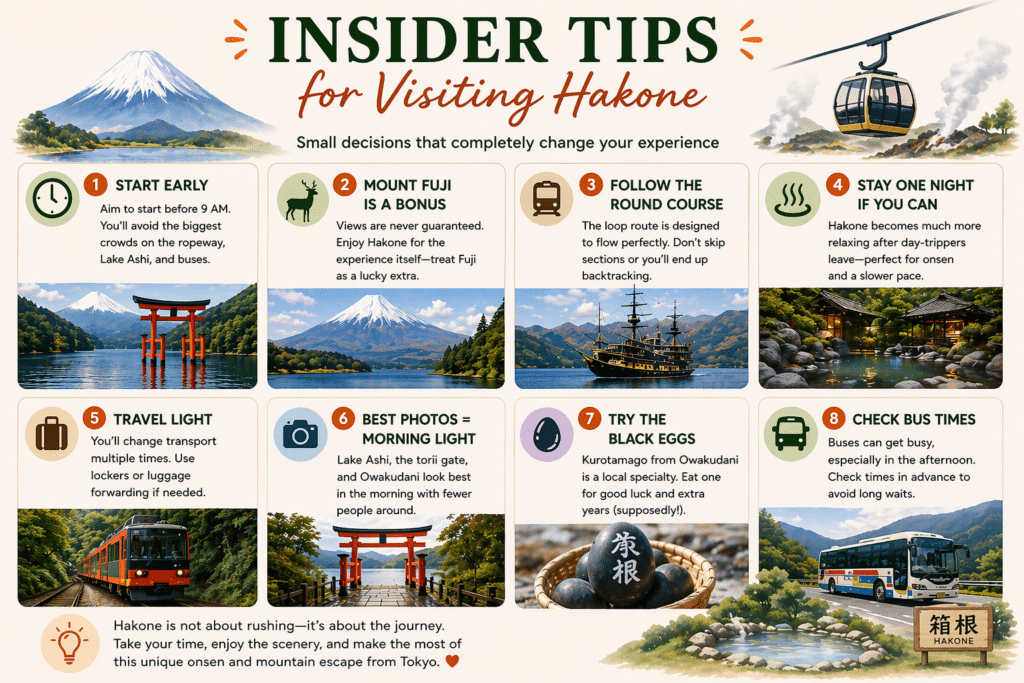
Hakone looks easy on paper, but it works much better when you plan for the rhythm of the day rather than just the attractions.
Start earlier than you think you need to
Hakone gets noticeably busier from late morning onward, especially around the ropeway, Lake Ashi, and the most photogenic viewpoints. If you leave Tokyo early, the whole area feels calmer and the route works much more smoothly.
Treat Mount Fuji as a bonus, not a guarantee
Many travelers build unrealistic expectations around Fuji views. On clear days, Hakone can deliver some of the most beautiful Fuji scenery near Tokyo—but clouds often hide it completely. You will enjoy Hakone much more if you see Fuji as a lucky extra rather than the only reason to go.
The transport is part of the experience
A common mistake is to treat trains, cable cars, boats, and ropeways as simple transfers between attractions. In Hakone, those transport changes are part of what makes the destination memorable. Don’t rush them.
Staying one night changes the experience completely
As a day trip, Hakone is scenic and fun. As an overnight stay, it becomes much more atmospheric. Once the day-trippers leave, the pace slows down, the onsen experience feels more rewarding, and the whole region becomes less hectic.
Travel light if possible
Hakone involves multiple changes in transport, and large luggage quickly becomes annoying. A lighter bag makes the full loop much easier and less stressful.
Don’t try to overfill the day
Hakone is better when it feels scenic and relaxed. If you try to add too many extra museums, cafés, detours, and photo stops, the day can become surprisingly tiring.
If your priority is onsen, don’t force the full sightseeing loop
Some travelers try to do everything in one day and end up enjoying none of it properly. If your real goal is relaxation, it can be smarter to stay in a ryokan, enjoy the hot springs, and keep sightseeing lighter.
Weather matters more here than in many other day trips
Hakone is still worth visiting in mixed conditions, but weather has a big effect on visibility, atmosphere, and transport views. A clear morning can make the entire trip feel completely different.
Where to Stay in Hakone
Stay Guide
Best Areas to Stay in Hakone
Choose the area that matches your pace, budget, and travel style
Gora — the most convenient base for first-time visitors, with strong transport connections and easy access to the Hakone Round Course.
Hakone-Yumoto — the main gateway into Hakone, with plenty of accommodation, restaurants, and the easiest arrival from Tokyo.
Lake Ashi — ideal if you want a more scenic and peaceful stay close to the lake, shrine area, and Fuji viewpoints.
Lake Ashi — quieter than the transport hubs and a better fit for travelers who want a slower, more atmospheric overnight stay.
Gora — centrally positioned for sightseeing, with easier access to cable car, ropeway, museum, and ryokan options.
Hakone-Yumoto — usually the easiest place to find simpler accommodation at lower prices than the more scenic ryokan-heavy areas.
Most travelers do not need to stay overnight in Hakone—but that does not mean staying is a bad idea.
If your priority is efficiency, Tokyo is the simpler base. Hakone is close enough to visit as a day trip, and that is what many travelers do.
If your priority is atmosphere, relaxation, and onsen, staying overnight makes much more sense. This is especially true if you want a ryokan experience or prefer a slower pace.
Gora is one of the best overall places to stay because it is convenient for transport and sightseeing.
Hakone-Yumoto is a strong choice for first-time visitors who want the easiest arrival and a practical base.
Lake Ashi is better for travelers who care more about scenery and a quieter overnight atmosphere than pure convenience.
For most travelers, the best approach is simple: stay in Tokyo if you want efficiency, or stay one night in Hakone if you want the full experience.
Next Steps for Your Japan Trip
Hakone works best as part of a broader Tokyo itinerary rather than as a standalone destination.
If you are planning your route through Japan, the most useful next step is deciding how Hakone fits into the bigger picture: as a day trip from Tokyo, as a ryokan overnight stay, or as part of a route that continues toward Kyoto or Osaka.
Helpful next articles to connect here:
- 3 Days in Tokyo Itinerary
- Best Areas to Stay in Tokyo
- Best Day Trips from Tokyo
- Travel Guide to Kyoto
- Japanese Food Guide
- Hidden Gems in Japan
Hakone is one of the easiest ways to add scenery, hot springs, and a different pace to a Tokyo-based itinerary. Done well, it creates a strong contrast that makes the rest of your Japan trip feel more balanced.
FAQ
Is Hakone worth visiting?
Yes, Hakone is worth visiting for most first-time travelers to Japan. It is one of the best scenic escapes from Tokyo and offers a strong mix of nature, hot springs, and memorable transport experiences.
Is Hakone better as a day trip or overnight stay?
Hakone works well as a day trip, but staying one night is a much better experience if your budget allows. An overnight stay gives you more time to enjoy an onsen, slow down, and avoid the busiest part of the day.
What is the Hakone Round Course?
The Hakone Round Course is a circular sightseeing route that uses different types of transport, including train, cable car, ropeway, boat, and bus. It is the most efficient and popular way to explore Hakone.
Can you see Mount Fuji from Hakone?
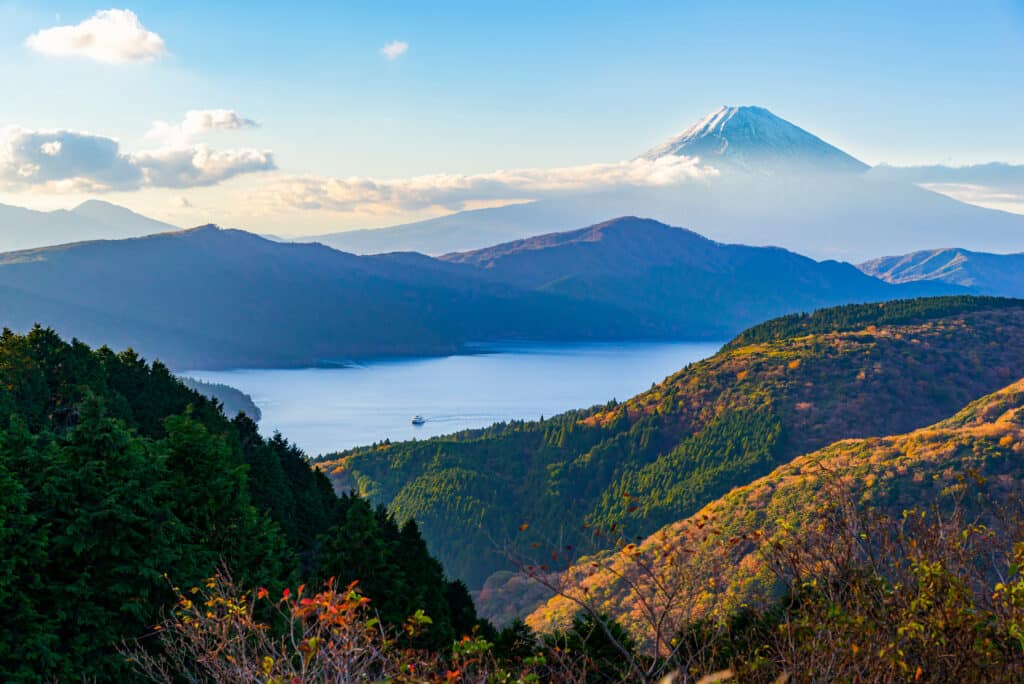
Yes, you can see Mount Fuji from several spots in Hakone, especially around Lake Ashi and the ropeway. However, visibility depends heavily on weather and is never guaranteed.
Is the Hakone Free Pass worth it?
In most cases, yes. The Hakone Free Pass covers nearly all transport used in the Round Course and simplifies the entire trip, often saving both time and money.
How long do you need in Hakone?
You need at least one full day to experience the main highlights. If possible, staying one night gives you a much more relaxed and complete visit.
What is Hakone known for?
Hakone is known for hot springs, Lake Ashi, the Owakudani volcanic valley, scenic transport experiences, and views of Mount Fuji.
When is the best time to visit Hakone?
Hakone can be visited year-round, but autumn and winter usually offer the best conditions for clear views. No matter the season, an early start makes a big difference.
Is Hakone crowded?
Yes, Hakone can get busy, especially on weekends and during peak travel seasons. Starting early or staying overnight helps avoid the worst crowds.
Can you do Hakone without a car?
Yes. Hakone is designed for public transport, and the entire region is easy to explore using trains, ropeways, boats, and buses.