

Himeji is home to one of Japan’s most spectacular castles, a UNESCO World Heritage Site that attracts visitors from around the world. But while Himeji Castle is undoubtedly impressive, many travelers arrive, explore the castle, and leave without seeing much of the surrounding city.
So, is Himeji worth visiting beyond the castle, or is a quick stop all you really need?
The answer depends on your interests and how much time you have. From the beautiful Kokoen Garden to the atmospheric temples of Mount Shosha, Himeji offers more than its famous white castle. But not every attraction deserves a place on a tightly planned Japan itinerary.
In this guide, we’ll help you decide whether Himeji deserves a few hours, a full day, or an overnight stay, which attractions are genuinely worth your time, and what you can confidently skip.
Is Himeji Worth Visiting Beyond the Castle?
Yes, Himeji is worth visiting, and there is more to discover than its famous castle. Himeji Castle alone justifies a stop for many travelers, but nearby Kokoen Garden and the atmospheric temples of Mount Shosha make the city even more rewarding.
For most visitors, 4–5 hours is enough to explore Himeji Castle and Kokoen Garden at a comfortable pace. If you also want to visit Mount Shosha and Engyoji Temple, plan a full day instead.
However, Himeji is not an essential overnight destination for most first-time visitors. If castles, traditional gardens, and temples are not your priorities, a shorter stop may be sufficient.
Table of Contents
Who Should Visit Himeji — and Who Should Skip It?
Himeji is one of Japan’s most rewarding historic destinations, but it is not necessarily a must-visit for everyone. Whether you should include it in your itinerary depends on your interests, available time, and the other places you plan to visit.
Himeji Is Worth Visiting If…
Himeji Castle is one of Japan’s finest surviving original castles, offering an exceptional look at traditional castle design and defensive architecture.
Kokoen Garden is just a short walk from the castle and makes an excellent addition without requiring much extra travel time.
Mount Shosha and Engyoji Temple offer peaceful forest surroundings and impressive historic buildings away from the busy castle area.
Himeji is conveniently located along the main rail corridor, making it a practical sightseeing stop without a major geographical detour.
Himeji offers a small number of genuinely impressive sights rather than dozens of attractions competing for your attention.
You Might Want to Skip Himeji If…
Himeji’s biggest attraction is its castle. Without an interest in historic architecture, the city may not justify a dedicated stop.
If you only have a few days in Japan, adding Himeji could mean sacrificing valuable time in Kyoto, Osaka, or Hiroshima.
Travelers prioritizing nightlife, major shopping districts, and contemporary attractions will generally find more variety in Osaka or Kobe.
If you have already visited numerous temples and gardens, Mount Shosha and Kokoen may feel less essential, even though both are worthwhile.
The castle and Kokoen are close together, but Mount Shosha requires additional transport. Himeji’s main sights are not all concentrated in one compact area.
Is Himeji Castle Alone Worth the Trip?
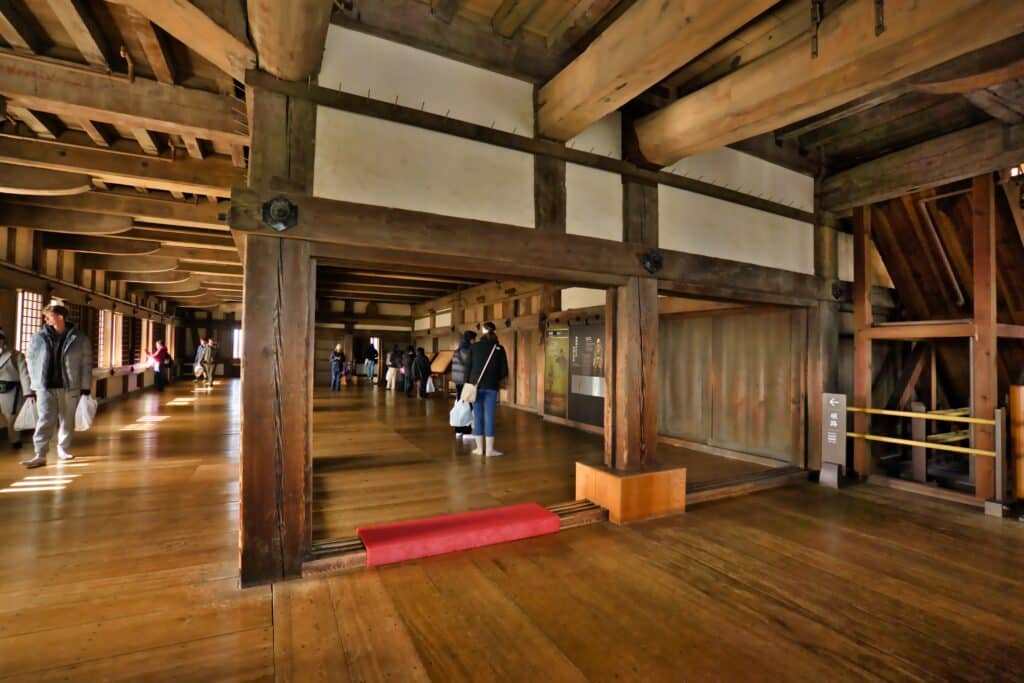
Yes, Himeji Castle is worth visiting even if you have no time to explore the rest of the city. Unlike many Japanese castles that were reconstructed using modern materials, Himeji Castle retains its original wooden main keep and much of its historic defensive complex.
Recognized as a UNESCO World Heritage Site, the castle is famous for its elegant white exterior, intricate defensive layout, and remarkably well-preserved architecture. Its nickname, the White Heron Castle, reflects the graceful appearance of its white walls and sweeping roofs.
But Himeji Castle is more than a beautiful landmark viewed from the outside. Exploring the grounds reveals massive stone walls, fortified gates, narrow passages, and carefully designed defensive features that make it one of Japan’s most fascinating historic sites.
Is It Worth Going Inside Himeji Castle?
For first-time visitors, entering Himeji Castle is generally worth the admission fee. The original wooden interior provides a much more authentic experience than the modern museum-style interiors found in some reconstructed Japanese castles.
However, visitors should know what to expect. The interior is relatively simple, with steep wooden staircases, exposed beams, and mostly unfurnished rooms. You will not find lavishly decorated chambers or extensive interactive exhibitions.
The main appeal is experiencing the castle’s original structure, understanding how it was designed, and enjoying views from the upper levels. If you have mobility difficulties or are uncomfortable climbing steep stairs, exploring the exterior and accessible grounds may be the better option.
How Much Time Should You Spend at Himeji Castle?
Allow approximately 1.5–2.5 hours to explore the castle grounds and main keep at a comfortable pace. During cherry blossom season, weekends, and Japanese public holidays, queues can significantly increase the time required.
If you only want to admire the castle from outside, take photographs, and explore the surrounding public areas, a shorter visit may be sufficient. However, skipping the interior means missing one of the castle’s most distinctive features.
Himeji Castle alone is worth a dedicated stop for most first-time visitors to Japan. Its original architecture, impressive scale, and historical significance make it one of the country’s standout landmarks. You do not need to visit additional attractions to justify coming here, although nearby Kokoen Garden is an easy and worthwhile addition.
Best Things to Do in Himeji Beyond the Castle
Himeji Castle may be the city’s biggest attraction, but it is not the only reason to visit. From traditional Japanese gardens to atmospheric mountain temples, several experiences can make your stop in Himeji even more rewarding. However, not every attraction deserves extra time on your itinerary. Here are the places we would prioritize beyond the castle.

1. Kokoen Garden – The Best Addition to Himeji Castle
Located just west of Himeji Castle, Kokoen Garden is the easiest and most rewarding attraction to add to your visit. This beautifully landscaped complex consists of nine distinct Japanese gardens, featuring ponds, waterfalls, stone paths, traditional architecture, and carefully maintained seasonal plants.
The gardens offer a peaceful contrast to the imposing castle, particularly during autumn foliage season and spring. Unlike some attractions that require additional transport, Kokoen is only a short walk from the castle entrance.
For travelers interested in traditional Japanese landscapes, the combination of Himeji Castle and Kokoen Garden is one of the most satisfying half-day experiences in the region.
2. Mount Shosha and Engyoji Temple – The Best Full-Day Extension
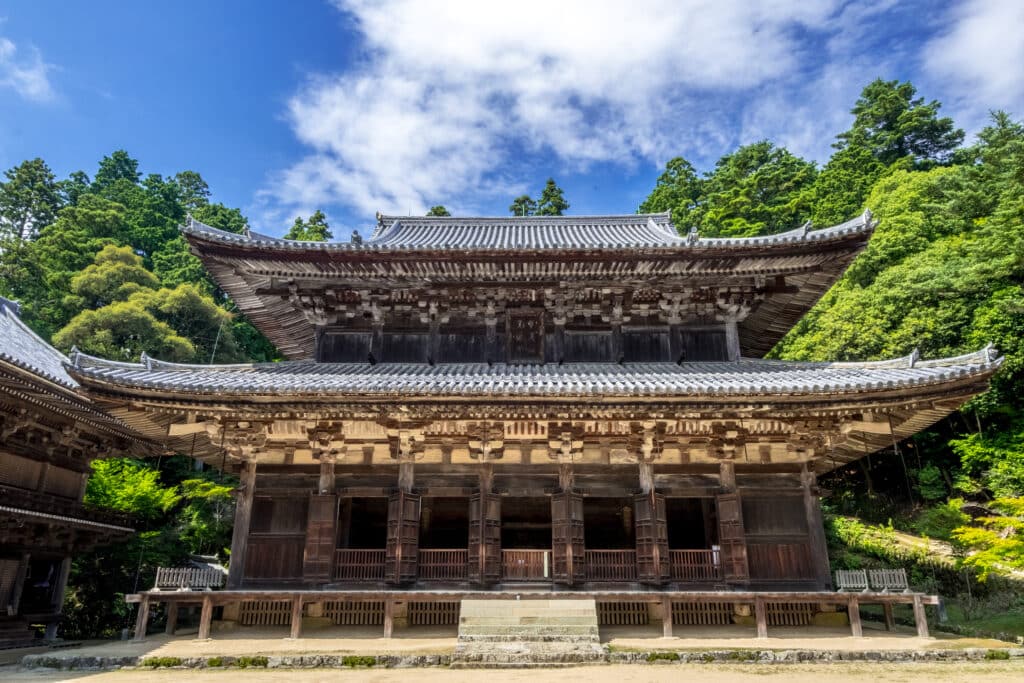
If you have a full day in Himeji, Mount Shosha is the strongest reason to stay longer. Located northwest of the city center, this forested mountain is home to Engyoji Temple, a historic Buddhist temple complex with impressive wooden buildings and a wonderfully atmospheric setting.
The temple grounds feel very different from the busy castle area. Forest paths connect centuries-old structures, and the surrounding trees create a peaceful environment that is particularly beautiful during autumn.
Engyoji Temple is also known internationally as a filming location for The Last Samurai. However, its historical architecture and natural surroundings are compelling reasons to visit even without the film connection.
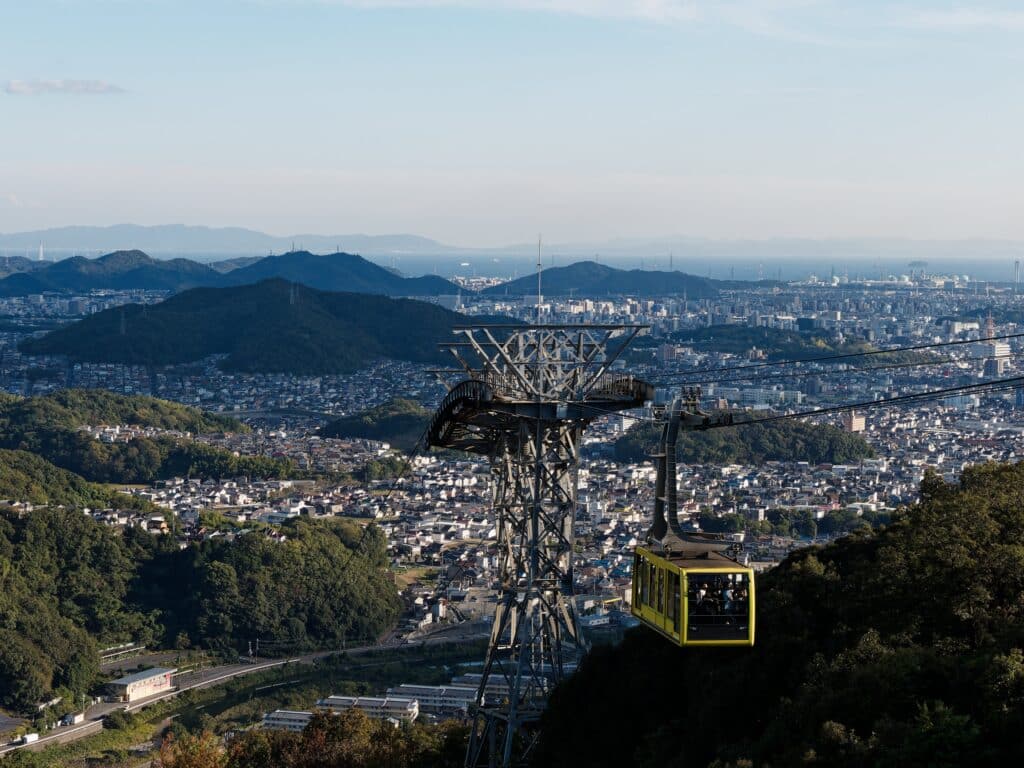
Reaching Mount Shosha requires a bus journey from central Himeji, followed by a ropeway ride and additional walking or a shuttle bus within the temple area. Allow enough time to explore rather than treating it as a quick stop.
3. Himeji City Museum of Art – A Worthwhile Cultural Stop
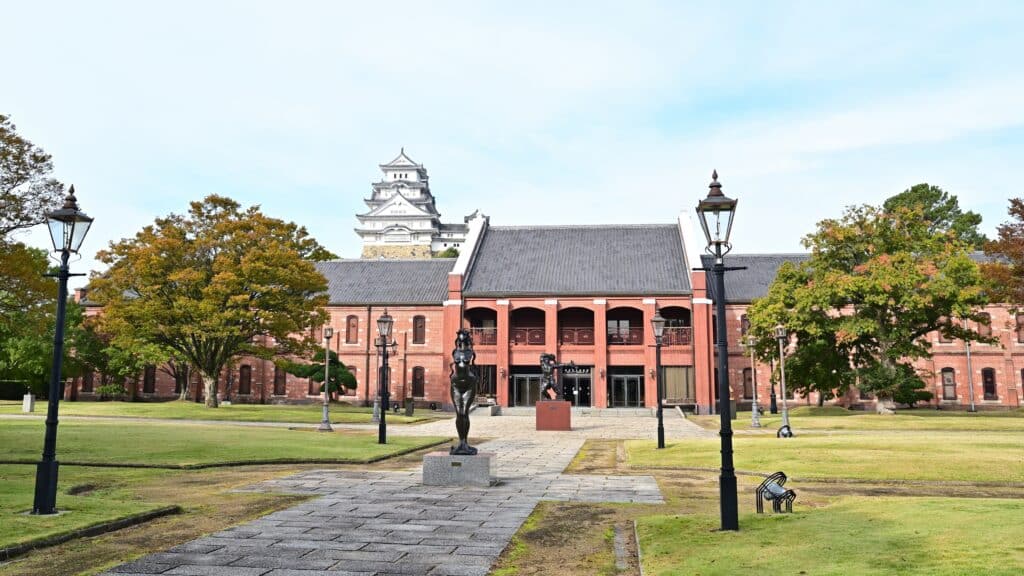
Housed in an attractive red-brick building near Himeji Castle, the Himeji City Museum of Art offers a quieter cultural experience away from the main tourist crowds.
The museum features exhibitions of Japanese and international art, although the exact works on display depend on the current exhibition program. The historic building itself is also worth admiring.
This is a particularly good addition for art enthusiasts or travelers visiting Himeji during rainy weather. However, it is less essential if your main interests are castles, gardens, and outdoor sightseeing.

4. Otemae-dori – Enjoy the Approach to Himeji Castle
Otemae-dori is the broad avenue connecting Himeji Station with the castle area. On a clear day, the castle rises impressively at the end of the street, creating one of the city’s most recognizable views.
Walking along this avenue is an enjoyable way to approach the castle, with shops, cafés, and places to stop along the way. It also gives you a sense of the castle’s position within the modern city.
However, Otemae-dori is not a major sightseeing attraction in its own right. Its main value is as a convenient and scenic route between the station and Himeji Castle.

5. Miyuki Shopping Street – A Convenient Place for Food and Shopping
Miyuki Shopping Street is a covered shopping arcade running roughly parallel to Otemae-dori. It offers a mixture of restaurants, cafés, local shops, and everyday retail businesses.
The arcade can be useful if you want to grab lunch, browse a few shops, or escape the rain or summer heat. It also provides a glimpse of everyday commercial life in Himeji beyond the main tourist attractions.
Nevertheless, travelers who have already explored the shopping streets of Osaka, Kyoto, or other Japanese cities are unlikely to find Miyuki Shopping Street particularly distinctive.
6. Himeji City Museum of Literature – An Optional Stop for Culture Enthusiasts
Located northwest of Himeji Castle, the Himeji City Museum of Literature is known for its distinctive architecture designed by Tadao Ando and exhibitions connected to Japanese literature and regional cultural history.
The building itself may appeal to architecture enthusiasts, while the exhibitions are particularly interesting for visitors with an interest in Japanese literary culture. However, the museum is not an essential stop for most international travelers, especially when exhibition information is primarily in Japanese.
If you have limited time, Kokoen Garden and the castle should take priority.
What Can You Skip in Himeji?
Himeji has several worthwhile attractions, but you do not need to see everything to enjoy the city. If you are visiting as a stopover between Osaka and Hiroshima or only have a few hours available, being selective will make your experience much more enjoyable. Here are the attractions and activities we would consider skipping.
1. Himeji City Museum of Literature
Although the museum has interesting architecture and cultural exhibitions, it is not essential for most international visitors. Unless you have a particular interest in Japanese literature or Tadao Ando’s architecture, your time is probably better spent elsewhere.
2. Extended Shopping at Miyuki Street
Miyuki Shopping Street is convenient for food and shopping, but it is not particularly distinctive compared with the shopping arcades found in larger Japanese cities. A short visit is sufficient for most travelers.
3. Himeji City Museum of Art
The museum can be worthwhile for art enthusiasts, but it is not a must-see attraction for everyone. If you only have half a day, visiting the castle and Kokoen Garden will usually provide a more memorable experience.
4. Mount Shosha on a Short Visit
Mount Shosha is one of Himeji’s best attractions, but it requires additional transport and several hours to explore properly. Trying to squeeze it into a short castle visit can make the day unnecessarily rushed.
5. Exploring Every Street Around the Station
The area around Himeji Station has shops, restaurants, and everyday city life, but it is not the main reason to visit. Unless you need a meal or want to shop, there is little reason to spend a large part of your sightseeing time here.
How Much Time Do You Need in Himeji?
For most first-time visitors, 4–5 hours is the ideal amount of time to spend in Himeji. This allows you to explore Himeji Castle, visit nearby Kokoen Garden, and enjoy the historic surroundings without rushing. However, the right amount of time depends on whether you want to see only the castle or explore attractions farther from the city center.
| Time Available | What You Can See | Our Verdict |
|---|---|---|
| 2–3 Hours | Himeji Castle and a short walk around the grounds | Good for a quick stopover, but limited time for anything else. |
| 4–5 Hours | Himeji Castle, Kokoen Garden, and a short break | Best choice for most visitors. A satisfying half-day experience. |
| 7–9 Hours | Himeji Castle, Kokoen Garden, and Mount Shosha with Engyoji Temple | Best for travelers who want to experience Himeji beyond the castle. |
| Overnight | All major highlights at a relaxed pace, with additional time for museums or evening dining | Comfortable, but usually unnecessary for first-time visitors. |
Planning tip: These are approximate sightseeing durations, not fixed schedules. Castle queues, walking speed, seasonal crowds, and transport connections can affect how much time you need. If you plan to visit Mount Shosha, check the ropeway timetable and temple admission hours before setting your itinerary.
Our Recommendation: Plan 4–5 Hours
If this is your first visit to Himeji, combine Himeji Castle with Kokoen Garden. These two attractions are close together and provide an excellent balance of history, architecture, and traditional Japanese scenery. A full day is worthwhile if Mount Shosha interests you, but staying overnight is rarely necessary unless you prefer slower travel or want to explore the surrounding region.
Himeji as a Stopover vs a Full-Day Trip
Himeji’s location on the main rail corridor between Osaka and Hiroshima makes it one of Japan’s most convenient sightseeing stops. But should you visit Himeji for a few hours on the way to another city, or dedicate an entire day to exploring it? Both options work well, depending on your interests and travel schedule.
Option 1: Himeji as a Stopover
Best for Most TravelersA stopover is the most efficient way to experience Himeji if you are already traveling between Osaka and Hiroshima. Rather than making a separate round trip, you can explore the castle area before continuing to your next destination.
What to do:
- Visit Himeji Castle and explore its historic grounds.
- Walk through nearby Kokoen Garden.
- Enjoy a short lunch or coffee break.
- Return to Himeji Station and continue your journey.
Allow approximately 4–5 hours for sightseeing, plus a little extra time for luggage collection and train connections. This provides a satisfying experience without sacrificing an entire travel day.
Option 2: Spend a Full Day in Himeji
Best for Deeper ExplorationA full day is worthwhile if you want to explore Himeji beyond its famous castle. The biggest advantage is having enough time to visit Mount Shosha and Engyoji Temple without rushing between attractions.
What to do:
- Explore Himeji Castle and its defensive architecture.
- Visit Kokoen Garden at a relaxed pace.
- Travel to Mount Shosha by bus and ropeway.
- Explore Engyoji Temple and its forested surroundings.
- Return to central Himeji for dinner or your onward train.
Plan approximately 7–9 hours for this itinerary, including local transport. An early start is particularly important because the ropeway and temple have limited operating hours.
Practical Tip: What About Your Luggage?
If you are visiting Himeji as a stopover between cities, avoid carrying large suitcases around the castle. Coin lockers and luggage storage services are available around Himeji Station, although availability and size limits vary. Store your luggage before sightseeing, then collect it before continuing your journey. During busy travel periods, allow extra time in case larger lockers are occupied.
The Perfect Himeji Itineraries
Whether you have just a few hours or an entire day, these three itineraries help you make the most of your visit to Himeji. For most first-time visitors, the 4–5-hour itinerary offers the best balance of sightseeing and travel efficiency.

Himeji in 2–3 Hours: The Castle Express
If you only have a few hours in Himeji, focus on its most famous attraction. This route is ideal for travelers stopping between Osaka and Hiroshima.
- Walk to Himeji Castle (15–20 min): Follow Otemae-dori from Himeji Station toward the castle.
- Explore Himeji Castle (90–120 min): Visit the original wooden keep, historic gates, and castle grounds.
- Return to Himeji Station (15–20 min): Walk back and continue your journey.
Himeji in 4–5 Hours: Castle and Kokoen Garden
This is the best itinerary for most first-time visitors. It combines Himeji’s spectacular castle with the beautiful Kokoen Garden without requiring additional transport.
- Walk to Himeji Castle (15–20 min): Follow Otemae-dori from the station.
- Explore Himeji Castle (90–120 min): Discover the original wooden keep, historic gates, and castle grounds.
- Visit Kokoen Garden (45–75 min): Explore landscaped ponds, traditional gardens, and peaceful walking paths.
- Lunch or coffee break (30–45 min): Relax near the castle before returning.
- Return to Himeji Station (15–20 min): Walk back through the city center.
Full Day in Himeji: Castle, Garden and Mount Shosha
If you want to explore Himeji beyond its famous castle, dedicate a full day to the city. This route combines historic architecture, traditional gardens, and the atmospheric temples of Mount Shosha.
- Himeji Castle (90–120 min): Start early and explore the original wooden keep and historic grounds.
- Kokoen Garden (45–60 min): Discover the peaceful traditional Japanese gardens beside the castle.
- Lunch in central Himeji (30–45 min): Enjoy a break before heading to Mount Shosha.
- Travel to Mount Shosha (45–60 min): Take the local bus and ropeway, then continue toward Engyoji Temple.
- Explore Engyoji Temple (90–120 min): Discover historic wooden temple buildings and peaceful forest paths.
- Return to central Himeji (45–60 min): Take the ropeway and bus back toward the city center.
Himeji Sightseeing Map: Plan Your Route
Himeji’s main attractions are relatively easy to organize into a sightseeing route. Himeji Castle and Kokoen Garden are close together, making them ideal for a short stopover, while Mount Shosha and Engyoji Temple require a separate bus and ropeway journey.
Use the interactive map below to find Himeji’s essential highlights, worthwhile additions, and optional stops. Whether you have 2–3 hours, half a day, or a full day, the map will help you choose the attractions that fit your itinerary.
Himeji vs Okayama: Which Stop Is More Worthwhile?
Both Himeji and Okayama make convenient stops when traveling through western Japan, but they offer different experiences. Himeji is the stronger choice for an unforgettable historic castle, while Okayama is better suited to travelers who enjoy Japanese gardens and relaxed sightseeing. If you only have time for one, the following comparison will help you decide.
| Category | Himeji | Okayama |
|---|---|---|
| Main Highlight | Himeji Castle, an original historic fortress and UNESCO World Heritage Site | Korakuen Garden, one of Japan’s most celebrated landscape gardens |
| Castle Experience | Original wooden keep, historic interiors, and impressive defensive architecture | Reconstructed castle keep with museum-style exhibits and panoramic views |
| Gardens | Kokoen Garden, a collection of traditional Japanese gardens | Korakuen, a spacious landscape garden with lawns, ponds, and seasonal scenery |
| Best Extra Attraction | Mount Shosha and Engyoji Temple | Kurashiki’s historic canal district, reached by a separate train journey |
| Ideal Visit | 4–5 hours for the castle and garden | 3–5 hours for Korakuen and Okayama Castle; longer with Kurashiki |
| Best For | History lovers, castle enthusiasts, and first-time visitors | Garden lovers, relaxed sightseeing, and travelers interested in Kurashiki |
| Short Stopover | Excellent if the castle is your priority | Good for a garden-and-castle visit, with some local transport |
Choose Himeji If…
You want to experience one of Japan’s most remarkable original castles, enjoy historic architecture, and make a memorable stop without spending an entire day sightseeing.
Choose Okayama If…
You prefer spacious Japanese gardens, a slower sightseeing pace, or want to combine Okayama with the historic streets and canals of Kurashiki.
Our Recommendation: Himeji for First-Time Visitors
If we could only choose one, we would visit Himeji. Its original castle offers a distinctive experience that is difficult to replace elsewhere in Japan, and nearby Kokoen Garden makes an excellent addition. Okayama is still worthwhile, particularly for garden enthusiasts or travelers planning to explore Kurashiki. But for a first trip to Japan with limited time, Himeji delivers the stronger standalone highlight.
Still considering the alternative? Read our Is Okayama Worth Visiting or Just a Stopover? guide for a closer look at Okayama’s attractions, ideal visit length, and whether Kurashiki deserves extra time.
Is Himeji Worth a Day Trip from Osaka, Kyoto, or Kobe?
Yes. Himeji is an excellent day trip from all three cities, thanks to its convenient railway connections and compact main sightseeing area. However, the journey time and the best way to organize your visit depend on where you are staying.
Himeji from Osaka: The Best Overall Choice
Osaka is one of the best bases for visiting Himeji. The direct JR Special Rapid takes approximately one hour from Osaka Station, making a day trip convenient without paying extra for the Shinkansen.
- Best train: JR Special Rapid from Osaka Station to Himeji Station, approximately 60 minutes.
- Fastest alternative: Shinkansen from Shin-Osaka Station, approximately 30 minutes.
- Recommended sightseeing: Himeji Castle and Kokoen Garden.
- Time needed: Approximately 6–7 hours including round-trip travel and sightseeing.
- Optional extension: Add Mount Shosha if you are prepared for a longer day.
Himeji from Kyoto: Worth It with an Early Start
Himeji is also a worthwhile day trip from Kyoto, particularly if you have already explored Kyoto’s major temples and historic districts. However, the longer journey makes careful planning more important.
- Regular train: JR Special Rapid from Kyoto Station, approximately 85 minutes.
- Faster alternative: Shinkansen from Kyoto Station to Himeji, approximately 45 minutes on suitable direct services.
- Recommended sightseeing: Himeji Castle and Kokoen Garden.
- Time needed: Approximately 7–8 hours including round-trip travel by regular JR trains.
- Best strategy: Leave Kyoto early and visit the castle before the busiest part of the day.
Himeji from Kobe: The Easiest Day Trip
Kobe is the closest and most convenient of these three bases. The short train journey makes Himeji particularly attractive for travelers who want to visit the castle without dedicating an entire day to the excursion.
- Best train: JR Special Rapid from Sannomiya Station to Himeji Station, approximately 40 minutes.
- Recommended sightseeing: Himeji Castle and Kokoen Garden.
- Time needed: Approximately 5–6 hours including round-trip travel and sightseeing.
- Best strategy: Visit Himeji in the morning and return to Kobe in the afternoon.
- Optional extension: Spend additional time at Mount Shosha if you prefer a full-day excursion.
Our Recommendation: Which Base Is Best?
Choose Osaka for the best overall day-trip experience, Kobe for the shortest journey, and Kyoto if Himeji Castle is a particular priority. All three cities offer convenient railway connections, and an overnight stay in Himeji is generally unnecessary. For most visitors, combining Himeji Castle with Kokoen Garden provides the ideal half-day sightseeing experience.
How to Get to Himeji and Get Around
Getting to Himeji is straightforward thanks to its excellent railway connections. Most visitors arrive by train, explore Himeji Castle and Kokoen Garden on foot, and only need local transport if they plan to visit Mount Shosha. A rental car is unnecessary for the itineraries covered in this guide.
Getting to Himeji by Train
Himeji Station is served by both conventional JR trains and the Sanyo Shinkansen. This makes Himeji an easy stop between major destinations such as Osaka, Okayama, and Hiroshima.
- From Osaka: Approximately 60 minutes by JR Special Rapid from Osaka Station, or around 30 minutes by Shinkansen from Shin-Osaka.
- From Kyoto: Approximately 85 minutes by JR Special Rapid, or around 45 minutes by Shinkansen.
- From Kobe: Approximately 40 minutes by JR Special Rapid from Sannomiya Station.
- From Okayama: Approximately 20 minutes by Shinkansen.
- From Hiroshima: Approximately 60 minutes by Shinkansen.
Getting from Himeji Station to Himeji Castle
Himeji Castle is located approximately 15–20 minutes on foot from the north exit of Himeji Station. The route follows Otemae-dori, a broad street with clear views of the castle ahead.
- Walking: Approximately 15–20 minutes from Himeji Station. This is our preferred option for most visitors.
- Local bus: Take a Shinki Bus from the station’s north exit to Himeji-jo Otemon-mae. From the bus stop, it is a short walk to the castle entrance.
- Castle Loop Bus: A sightseeing bus connects the station with the castle and several nearby attractions. Check operating days before relying on this service.
- Kokoen Garden: Located immediately west of the castle grounds and easily reached on foot.
Getting to Mount Shosha and Engyoji Temple
Unlike Himeji Castle and Kokoen Garden, Mount Shosha is outside the central sightseeing area. Reaching Engyoji Temple requires a bus journey, a ropeway ride, and additional travel within the mountain complex.
- Step 1 – Take the bus: From Himeji Station’s north-side bus terminal, take the Shinki Bus toward Mount Shosha Ropeway. The journey takes approximately 30 minutes.
- Step 2 – Ride the ropeway: Take the Mount Shosha Ropeway uphill. The ride itself takes approximately four minutes.
- Step 3 – Reach Engyoji Temple: Continue along the mountain paths or use the available shuttle service. The temple complex covers a large area, so comfortable shoes are recommended.
- Step 4 – Return to Himeji: Travel back by ropeway and bus, allowing sufficient time for the final departures.
Travel Owl Tip: If you are visiting Himeji as a stopover between two cities, consider leaving your luggage in station lockers or another available luggage-storage facility. This makes it much easier to explore the castle and Kokoen Garden on foot without carrying heavy bags.
Before visiting, check the official Himeji Castle website for the latest admission fees, opening hours, and visitor information.
Best Time to Visit Himeji
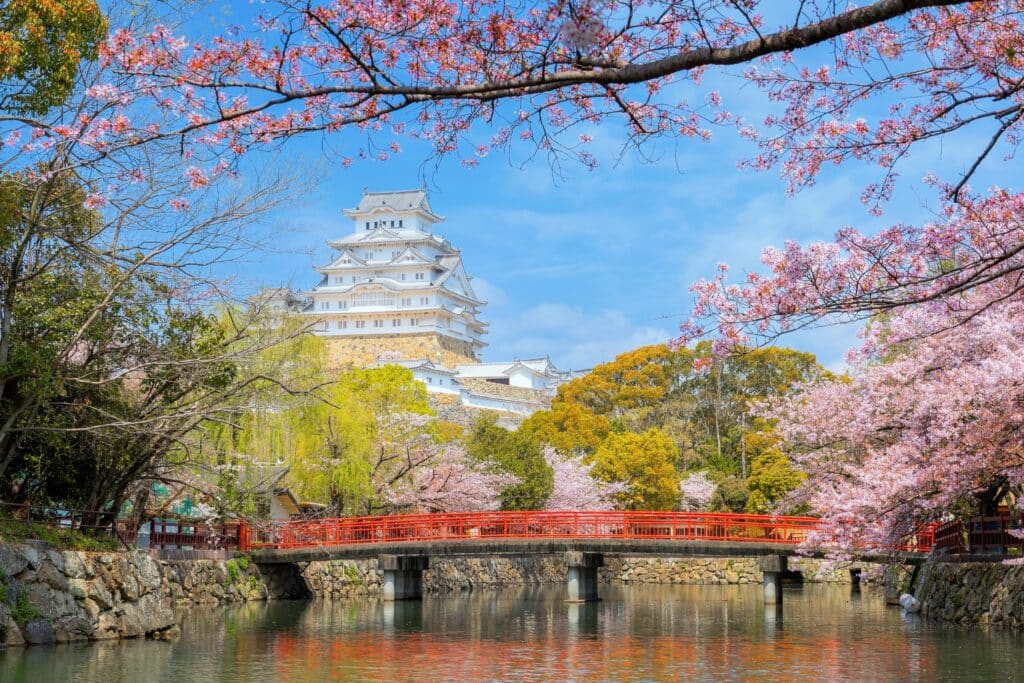
Himeji is worth visiting throughout the year, but the experience changes considerably with the seasons. Spring brings spectacular cherry blossoms, autumn offers comfortable sightseeing weather and colorful foliage, while summer and winter have their own advantages and drawbacks.
🌸 Spring (March–May)
Why visit: Himeji Castle looks particularly beautiful surrounded by blooming cherry trees. The contrast between the white castle and pink blossoms creates one of Japan’s most recognizable spring scenes.
Drawback: Cherry blossom season, especially around late March and early April, attracts large crowds. Castle entrance queues can be substantial.
Our advice: Arrive early and allow extra time. Bloom dates vary each year.
☀️ Summer (June–August)
Why visit: Kokoen Garden and Mount Shosha are especially green, and the longer daylight hours provide flexibility for sightseeing.
Drawback: June often brings rainy weather, while July and August can be very hot and humid. Climbing Himeji Castle’s steep wooden staircases can feel demanding.
Our advice: Visit the castle early, carry water, and plan regular breaks.
🍁 Autumn (September–November)
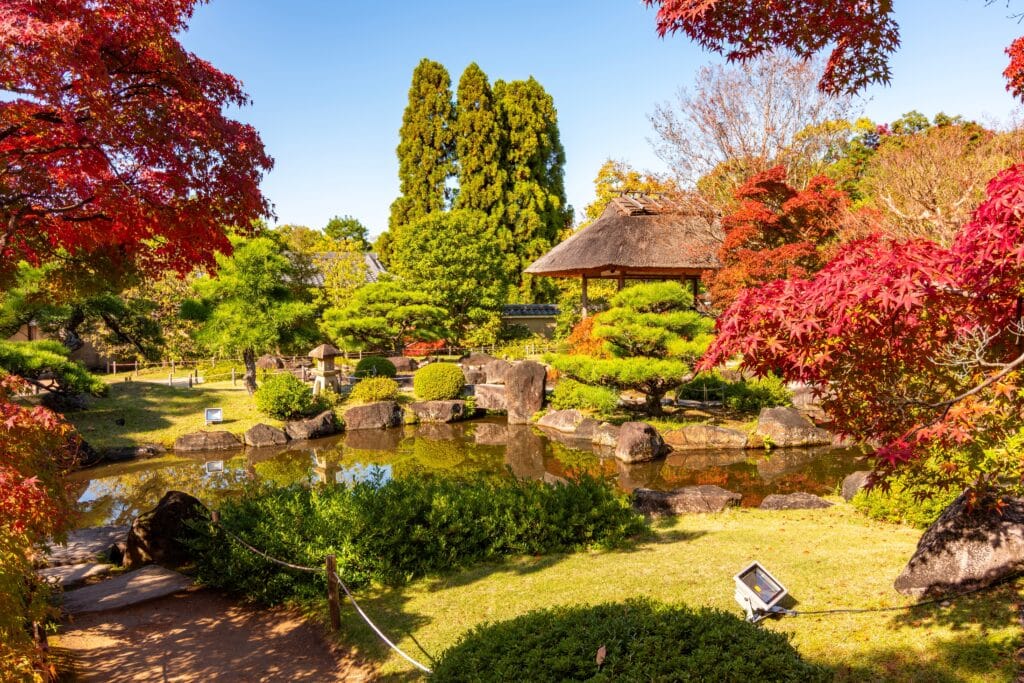
Why visit: October and November generally offer pleasant conditions for exploring Himeji Castle, Kokoen Garden, and Mount Shosha. Autumn foliage adds another dimension to the scenery.
Drawback: September can still be hot, and typhoons may affect travel. Popular autumn foliage weekends can also attract crowds.
Our advice: Choose late October or November for a good balance of weather and seasonal scenery.
❄️ Winter (December–February)
Why visit: Winter often brings fewer visitors than the peak spring season, making it easier to explore the castle at a relaxed pace.
Drawback: Cold temperatures and shorter daylight hours make outdoor sightseeing less comfortable. Some attractions have reduced hours or holiday closures.
Our advice: Dress warmly and check opening hours, particularly around the New Year holidays.
Our Recommendation: Spring or Autumn?
Choose spring for the most iconic views of Himeji Castle surrounded by cherry blossoms. However, if avoiding crowds and enjoying comfortable sightseeing conditions matter more, late October and November are often the better overall choice. For a visit that includes Mount Shosha, autumn is particularly appealing. Regardless of the season, arriving early is one of the easiest ways to improve your experience.
Common Mistakes When Visiting Himeji
Himeji is relatively easy to explore, but a few planning mistakes can make your visit less enjoyable than it should be. Avoid these six common mistakes to save time, reduce unnecessary travel, and make the most of your day.
Arriving Too Late at Himeji Castle
The mistake: Arriving around midday during busy periods and underestimating how long castle queues can take.
Do this instead: Visit near opening time, especially during cherry blossom season, weekends, and Japanese holidays. Allow at least 90–120 minutes for the castle itself.
Skipping Kokoen Garden
The mistake: Visiting Himeji Castle and immediately returning to the station, even when you still have time.
Do this instead: Add Kokoen Garden, located beside the castle grounds. It takes approximately 45–75 minutes and offers a peaceful contrast to the busy castle.
Trying to Squeeze Mount Shosha into a Short Stopover
The mistake: Assuming Engyoji Temple is another attraction within walking distance of Himeji Castle.
Do this instead: Reserve Mount Shosha for a full-day visit. Reaching the temple requires bus and ropeway travel, followed by additional walking.
Underestimating the Castle’s Steep Staircases
The mistake: Expecting Himeji Castle to be as easy to explore as a modern museum or reconstructed castle.
Do this instead: Wear comfortable footwear and prepare for steep wooden stairs and narrow passages inside the original keep. Visitors with mobility limitations should plan accordingly.
Carrying Heavy Luggage Around the Castle
The mistake: Arriving in Himeji as a rail stopover and bringing large suitcases along while sightseeing.
Do this instead: Check for available luggage lockers or storage facilities at Himeji Station before walking to the castle. Travel with only what you need.
Spending Too Much Time on Minor Attractions
The mistake: Trying to visit every museum, shopping street, and secondary attraction instead of focusing on Himeji’s main highlights.
Do this instead: Prioritize Himeji Castle and Kokoen Garden. Add Mount Shosha if you have a full day, and treat the remaining attractions as optional extras.
Travel Owl Tip: The easiest way to avoid most sightseeing mistakes in Himeji is to keep your itinerary simple. For first-time visitors, Himeji Castle + Kokoen Garden is usually the ideal combination. Start early, wear comfortable shoes, and only add Mount Shosha when you have enough time to enjoy it.
Final Verdict: Is Himeji Worth Visiting Beyond the Castle?
Yes — But You Don’t Need to See Everything
Himeji is absolutely worth visiting, even if you only come for its spectacular castle. Himeji Castle is one of Japan’s most impressive historic landmarks and easily justifies a stop between Osaka and Hiroshima.
However, Himeji has more to offer than its famous fortress. Kokoen Garden is the best addition for most visitors, while Mount Shosha and Engyoji Temple make a full-day visit particularly rewarding for travelers interested in history, temples, and nature.
That doesn’t mean you need to spend an entire day here. For most first-time visitors, 4–5 hours is the ideal amount of time to experience Himeji’s essential highlights without rushing or adding unnecessary stops.
Frequently Asked Questions About Visiting Himeji
Is Himeji worth visiting if you have already seen other Japanese castles?
Yes, especially if you have only visited reconstructed castles. Himeji Castle retains its original wooden main keep and offers a more authentic historic experience than many modern castle reconstructions. However, if you have already visited several original Japanese castles, Himeji may be less of a priority.
Is Himeji Castle worth visiting inside?
Yes, particularly for travelers interested in history and traditional Japanese architecture. The original wooden structure, steep staircases, and defensive design are fascinating. However, the interior is relatively sparse, so visitors expecting elaborate museum displays may prefer spending more time exploring the exterior grounds.
How many hours do you need in Himeji?
Most visitors need approximately 4–5 hours to explore Himeji Castle and Kokoen Garden at a comfortable pace. A quick castle-only visit takes around 2–3 hours, while a full-day itinerary including Mount Shosha requires approximately 7–9 hours.
Can you visit Himeji Castle and Kokoen Garden in one day?
Absolutely. The two attractions are located close together and are easy to combine. You can comfortably explore both in half a day, making them an excellent choice for a stopover or day trip.
Is Mount Shosha worth visiting?
Yes, if you enjoy historic temples, forest scenery, and quieter cultural experiences. Engyoji Temple is one of Himeji’s most rewarding attractions beyond the castle. However, the bus and ropeway journey makes it less suitable for a short stopover.
Is Himeji better than Okayama for a stopover?
For most first-time visitors, Himeji is the stronger choice because its original castle is one of Japan’s most distinctive historic attractions. Okayama is a better alternative if you prefer traditional gardens or want to combine your visit with nearby Kurashiki.
Is Himeji worth staying overnight?
Usually not. Himeji’s main attractions can be explored in a day, and the city has convenient train connections to Osaka, Kobe, Kyoto, and Okayama. An overnight stay may be worthwhile if you prefer a slower pace or want to explore additional attractions beyond the usual sightseeing route.
Can you visit Himeji without a car?
Yes. A car is unnecessary for most visitors. Himeji Castle is approximately 15–20 minutes on foot from Himeji Station, and Kokoen Garden is nearby. Mount Shosha can be reached using local buses and the ropeway.
Plan Your Next Stop in Japan
Himeji fits naturally into many western Japan itineraries, whether you are traveling between Osaka and Hiroshima or exploring the Kansai region. These guides will help you decide where to go next and how to organize your journey efficiently.