
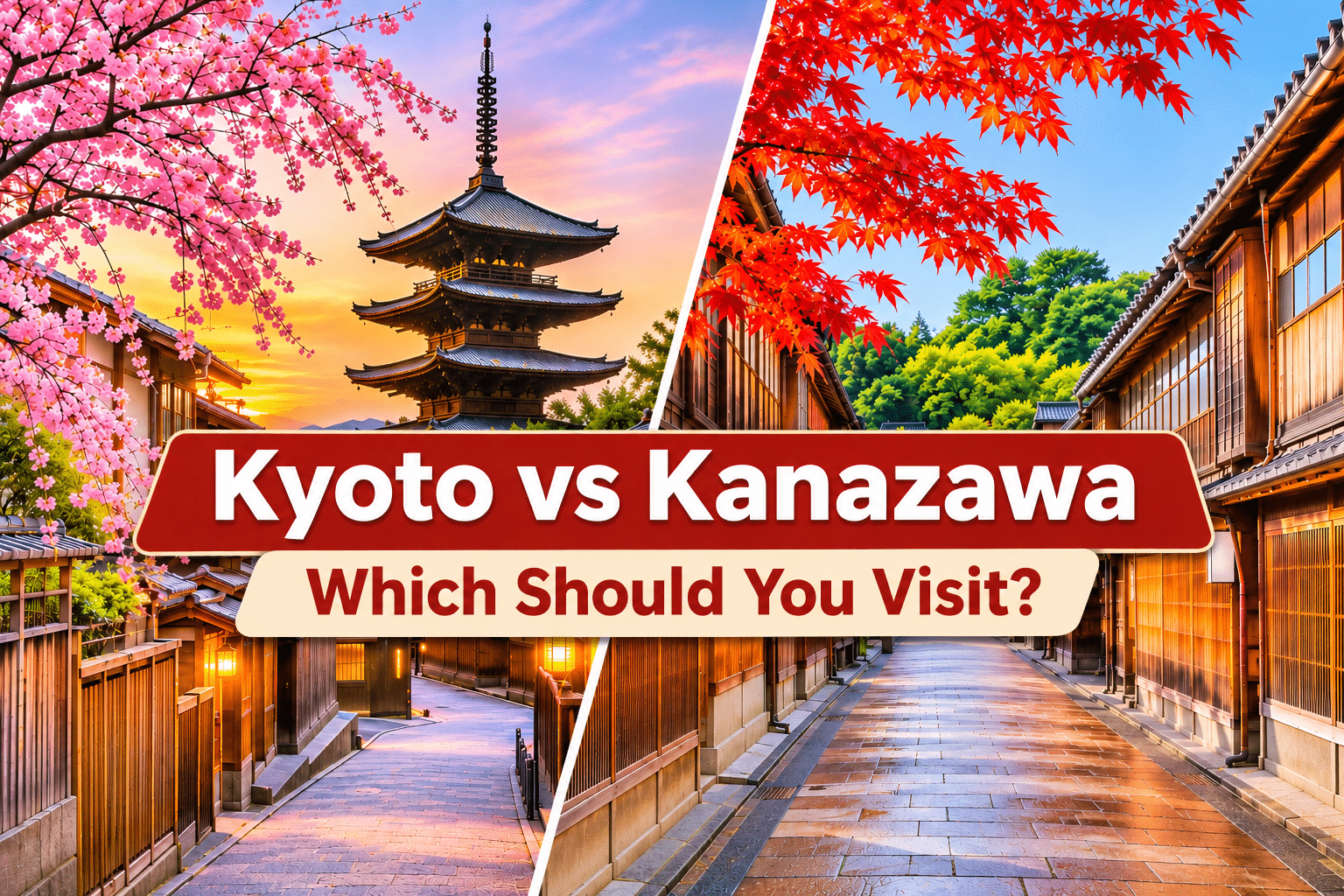
Japan has no shortage of beautiful historic cities, but few comparisons are as interesting as Kyoto vs Kanazawa. Both destinations offer traditional wooden streets, historic neighborhoods, beautiful gardens, and fascinating glimpses into Japan’s cultural heritage. Yet the experience of visiting them can feel surprisingly different.
Kyoto is Japan’s great cultural heavyweight. With its world-famous temples, atmospheric streets, traditional tea houses, and iconic sights such as Fushimi Inari and Kiyomizu-dera, it remains one of the country’s most rewarding destinations. But that popularity comes at a price: crowded attractions, busy transportation, and an experience that can sometimes feel less peaceful than travelers imagined.
Kanazawa offers a different kind of appeal. Its beautifully preserved samurai and geisha districts, celebrated Kenrokuen Garden, and compact historic center make it an attractive alternative for travelers seeking traditional Japan without quite the same intensity. It may lack Kyoto’s extraordinary concentration of famous landmarks, but it often makes up for that with a more relaxed atmosphere and easier sightseeing.
So, should you choose Kyoto or Kanazawa? And can Kanazawa really replace Kyoto on a Japan itinerary?
The answer depends on what you value most. If this is your first trip to Japan and you want to experience the country’s most iconic cultural sights, Kyoto is difficult to beat. But if you prefer quieter historic streets, fewer logistical challenges, and a destination that feels manageable in just one or two days, Kanazawa deserves serious consideration.
In this guide, we’ll compare Kyoto and Kanazawa across cultural attractions, atmosphere, crowds, food, costs, sightseeing time, and itinerary planning. We’ll also explain when it makes sense to skip one, prioritize the other, or include both.
The goal isn’t simply to decide which city is more beautiful. It’s to help you choose the destination that will make your Japan trip better.
⭐ Kyoto vs Kanazawa: Quick Answer
Kyoto is the better choice for most first-time visitors to Japan, while Kanazawa is ideal for travelers who prefer a quieter, more compact historic city. Kyoto offers an extraordinary concentration of famous temples, shrines, and cultural landmarks. Kanazawa delivers beautifully preserved traditional districts, outstanding gardens, and a more relaxed sightseeing experience.
You are visiting Japan for the first time, want to see iconic temples and shrines, and don’t mind busy tourist areas. Allow at least 3 days, preferably 4.
You prefer traditional streets, samurai history, beautiful gardens, and fewer crowds. Kanazawa is especially rewarding if you have already visited Kyoto. Allow 1–2 days.
You have enough time to explore beyond Japan’s classic Tokyo–Kyoto–Osaka route. The two cities complement each other and offer distinctly different cultural experiences.
Table of Contents
⭐ Kyoto vs Kanazawa at a Glance
Both cities are excellent destinations for experiencing traditional Japan, but they appeal to different types of travelers. Here’s how Kyoto and Kanazawa compare across the factors that matter most when planning your trip.
| Category | Kyoto | Kanazawa |
|---|---|---|
| Historic Attractions |
★★★★★ Exceptional temples, shrines, and landmarks Winner |
★★★★☆ Preserved districts and samurai heritage |
| Traditional Atmosphere |
★★★★★ Iconic historic neighborhoods |
★★★★★ Compact, atmospheric historic districts Tie |
| Gardens |
★★★★★ Extensive variety of temple gardens |
★★★★★ Kenrokuen, one of Japan’s celebrated gardens Tie |
| Fewer Crowds |
★★☆☆☆ Popular sights can be extremely busy |
★★★★☆ Generally less crowded Winner |
| Food Experiences |
★★★★★ Kaiseki, tofu, tea culture, and diverse dining |
★★★★★ Fresh seafood, sushi, and regional specialties Tie |
| Ease of Sightseeing |
★★★☆☆ Major attractions spread across the city |
★★★★★ Compact center and manageable distances Winner |
| Budget Friendliness |
★★★☆☆ Accommodation can be expensive in peak season |
★★★★☆ Often better accommodation value Winner |
| First-Time Japan Trip |
★★★★★ Essential cultural highlights Winner |
★★★★☆ Excellent alternative or addition |
| Ideal Stay |
3–4 days More time for temples and neighborhoods |
1–2 days Main highlights fit into a shorter visit |
★ Ratings reflect Travel Owl’s editorial assessment of the visitor experience, not official destination rankings. Costs, crowds, and experiences vary by season. On mobile, swipe horizontally to view the full table.
The Biggest Difference Between Kyoto and Kanazawa

At first glance, Kyoto and Kanazawa seem to offer remarkably similar experiences. Both have traditional wooden buildings, historic districts, beautiful gardens, and centuries of cultural heritage. But once you start exploring, the differences become much clearer.
Kyoto is about the extraordinary scale and variety of Japan’s cultural heritage. Kanazawa is about experiencing a smaller, more concentrated historic city at a gentler pace. This distinction affects almost every part of your visit, from how you plan your sightseeing to how much time you spend traveling between attractions.
⛩️ Kyoto: Japan’s Cultural Powerhouse
Kyoto served as Japan’s capital for more than a thousand years, and its cultural importance is reflected in an extraordinary collection of temples, shrines, gardens, and historic landmarks. From the vermilion gates of Fushimi Inari to the wooden streets of Higashiyama and the bamboo groves of Arashiyama, Kyoto offers experiences that have become symbols of Japan.
The challenge is that these attractions are spread across a large city. Visiting several major sights often requires careful planning, public transportation, and an early start. Popular locations can also become extremely crowded, particularly during cherry blossom season and autumn foliage.
Best for: Travelers who want iconic landmarks, exceptional cultural variety, and several days of sightseeing.
🏯 Kanazawa: Traditional Japan at a Slower Pace
Kanazawa developed as an important castle town under the powerful Maeda clan. Today, its historic character is particularly visible in the preserved streets of Higashi Chaya, the samurai residences of Nagamachi, and the landscaped grounds of Kenrokuen Garden.
Unlike Kyoto, Kanazawa’s principal attractions are concentrated within a relatively compact central area. You can explore traditional neighborhoods, visit a famous garden, and discover local food without spending as much time moving across the city. Its popular attractions still draw visitors, but the overall experience is often less hectic.
Best for: Travelers who appreciate historic atmosphere, manageable sightseeing, and a more relaxed itinerary.
Think of Kyoto as a destination where you could spend a week and still have important sights left to discover. Kanazawa is a city where one or two well-planned days can provide a satisfying introduction to its main highlights.
That doesn’t make Kanazawa a lesser destination. It simply offers a different balance between cultural discovery and the effort required to experience it.
For first-time visitors with enough time, Kyoto remains difficult to replace. But if your Japan itinerary is already crowded, or you have visited Kyoto before, Kanazawa can be a particularly rewarding choice.
Kyoto vs Kanazawa for Traditional Japanese Atmosphere

One of the main reasons travelers visit Kyoto or Kanazawa is to experience the Japan they have imagined: narrow streets lined with wooden buildings, traditional tea houses, historic neighborhoods, and a sense of stepping into another era.
Both cities deliver that atmosphere, but in different ways. Kyoto offers some of Japan’s most recognizable historic scenery, while Kanazawa often provides a more intimate experience of traditional urban life.
⛩️ Kyoto: Iconic Historic Japan
Kyoto’s traditional atmosphere is most visible in districts such as Gion and Higashiyama, where wooden townhouses, narrow lanes, temples, and shrines create some of Japan’s most memorable streetscapes.
- Higashiyama: Beautiful historic streets such as Sannenzaka and Ninenzaka, with traditional shops and views toward Yasaka Pagoda.
- Gion: Kyoto’s famous geisha district, known for its traditional architecture, tea houses, and cultural heritage.
- Pontocho: A narrow, atmospheric alley lined with restaurants and traditional buildings, especially appealing in the evening.
The scenery can be extraordinary, particularly early in the morning or after sunset. However, Kyoto’s most famous historic streets attract large numbers of visitors, and some areas can feel more like busy tourist attractions than peaceful neighborhoods.
Best for: Iconic Japanese streetscapes, famous cultural districts, and unforgettable photography.
🏯 Kanazawa: Intimate Historic Charm
Kanazawa’s traditional appeal comes from its beautifully preserved castle-town heritage. Instead of one large concentration of world-famous sights, the city offers several distinctive neighborhoods that reveal different aspects of Japanese history.
- Higashi Chaya: An elegant historic entertainment district with wooden tea houses, narrow streets, and traditional craft shops.
- Nagamachi: A former samurai district known for its earthen walls, narrow lanes, and historic residences.
- Kazuemachi: A smaller traditional tea-house district along the Asano River, particularly atmospheric in the evening.
Kanazawa’s historic districts are generally smaller and easier to explore than Kyoto’s major sightseeing areas. Although Higashi Chaya can become busy during popular visiting hours, the city often feels less overwhelming overall.
Best for: Traditional neighborhoods, samurai heritage, and a more relaxed historic-city experience.
Kyoto wins for iconic historic scenery and cultural depth. Its famous streets, temples, and traditional districts create an experience that few Japanese cities can match.
Kanazawa wins for a more manageable, often quieter historic atmosphere. Its compact districts make it easier to appreciate traditional architecture without spending as much time navigating large crowds or traveling between sights.
Our recommendation: Choose Kyoto if seeing Japan’s most recognizable historic neighborhoods is a priority. Choose Kanazawa if you prefer a slower-paced experience with beautifully preserved streets and fewer logistical challenges.
Whichever city you choose, remember that these historic districts are also living neighborhoods. Respect private property, follow local photography restrictions, and avoid blocking narrow streets. In Kyoto’s Gion district in particular, some private lanes restrict visitor access.
Temples, Shrines, and Cultural Landmarks: Which City Wins?

If historic temples, sacred shrines, and famous cultural landmarks are your main reason for visiting Japan, Kyoto is the stronger destination. Few cities in the country can compete with its remarkable concentration of religious and architectural treasures.
Kanazawa offers a different perspective on Japanese history. Its most memorable attractions are closely connected to samurai culture, the powerful Maeda clan, and the city’s development as an important castle town.
⛩️ Kyoto: Extraordinary Cultural Heritage
Kyoto was Japan’s imperial capital for more than a thousand years. Its long history has left an exceptional collection of Buddhist temples, Shinto shrines, and historic monuments.
Some of the most rewarding landmarks include:
- Fushimi Inari Taisha: Famous for thousands of vermilion torii gates winding through a forested mountainside.
- Kiyomizu-dera: A celebrated hillside temple with a wooden stage and panoramic views over Kyoto.
- Kinkaku-ji: The Golden Pavilion, one of Japan’s most recognizable architectural landmarks.
- Ginkaku-ji: Known for its refined gardens, moss-covered grounds, and connection to Japanese aesthetics.
- Nijo Castle: A historic shogunal residence featuring elaborate interiors, gardens, and impressive gates.
Kyoto’s greatest strength is not simply the fame of these attractions, but their diversity. You can spend several days exploring different periods of Japanese history, architectural styles, and religious traditions.
Best for: Iconic temples, major shrines, UNESCO-listed heritage, and extensive cultural sightseeing.
🏯 Kanazawa: Samurai and Castle-Town Heritage
Kanazawa cannot match Kyoto’s extraordinary collection of famous temples and shrines. However, its historic attractions reveal a different side of Japan’s cultural past.
Particularly worthwhile landmarks include:
- Kanazawa Castle Park: The historic seat of the Maeda clan, featuring reconstructed castle structures, gates, and extensive grounds.
- Myoryu-ji (Ninja Temple): A fascinating temple known for hidden staircases, concealed spaces, and defensive features. Advance reservations are required.
- Oyama Shrine: Dedicated to Maeda Toshiie and known for its unusual gate combining Japanese and Western architectural elements.
- Nomura Samurai House: A preserved samurai residence with traditional interiors and an elegant small garden.
- Teramachi Temple District: A historic area with numerous Buddhist temples and a quieter atmosphere than the city’s busiest tourist streets.
Kanazawa’s appeal lies in how these attractions fit together. Its castle, samurai district, temples, and traditional neighborhoods help visitors understand the history of an important feudal city.
Best for: Samurai history, castle-town culture, distinctive temples, and concentrated historic sightseeing.
Kyoto is the clear winner for temples, shrines, and major cultural landmarks. Its exceptional range of historic sites makes it one of Japan’s most important destinations for cultural tourism.
Kanazawa is still rewarding, particularly for travelers interested in samurai history and the architecture of Japan’s feudal period. Its historic attractions are easier to combine into a relatively short itinerary.
Our recommendation: If seeing Japan’s most famous temples and shrines is a priority, choose Kyoto. If you have already visited Kyoto or are especially interested in castle-town history, Kanazawa offers a worthwhile alternative perspective.
One important distinction: Kanazawa is not simply a smaller version of Kyoto. Its historic identity is rooted in the Maeda clan and samurai culture, while Kyoto’s heritage is closely tied to the imperial court, Buddhism, Shinto traditions, and centuries of artistic development.
Gardens and Natural Beauty: Kyoto vs Kanazawa
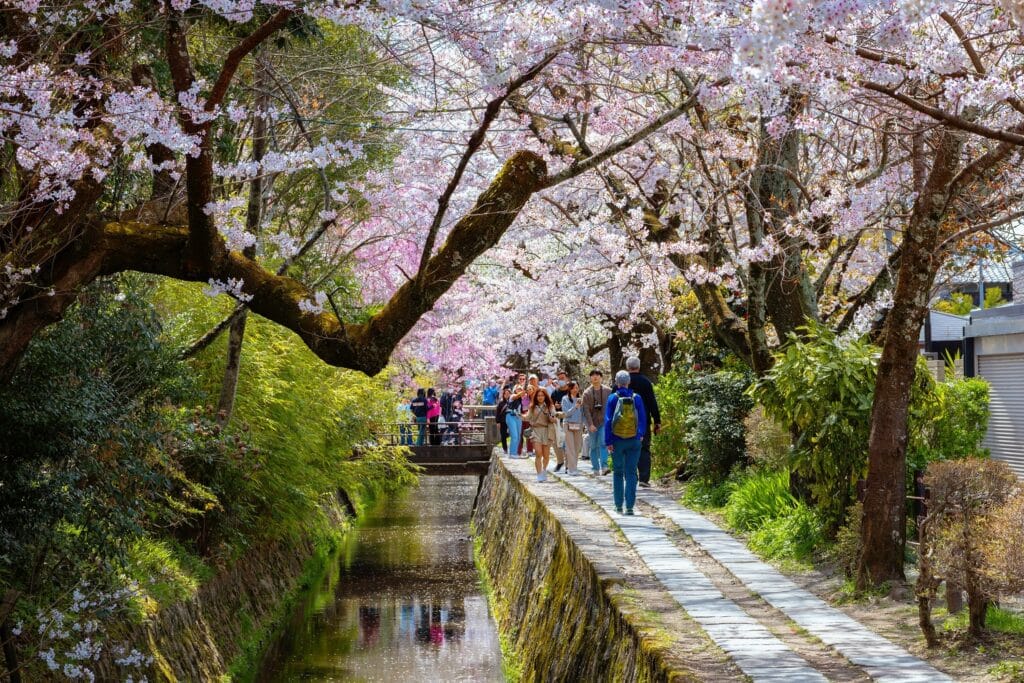
Japan’s traditional gardens are among the country’s most beautiful cultural experiences, combining carefully arranged landscapes, seasonal colors, and centuries of artistic tradition.
Both Kyoto and Kanazawa offer outstanding gardens, but their strengths are different. Kyoto provides exceptional variety, while Kanazawa is home to one of Japan’s most celebrated individual gardens.
🌸 Kyoto: Variety and Scenic Landscapes
Kyoto’s natural beauty extends far beyond its famous temples. The city is surrounded by wooded hills and offers everything from carefully designed Zen gardens to riverside scenery and forested walking paths.
Some of the most rewarding places include:
- Ryoan-ji: One of Japan’s most famous Zen rock gardens, celebrated for its minimalist design and contemplative atmosphere.
- Ginkaku-ji: Beautiful moss gardens, sculpted sand features, and wooded paths overlooking the temple grounds.
- Arashiyama: A scenic district featuring bamboo groves, forested mountains, the Katsura River, and beautiful seasonal landscapes.
- Tenryu-ji: A historic temple with an elegant landscape garden incorporating the surrounding mountains.
- Philosopher’s Path: A peaceful canal-side walking route, particularly attractive during cherry blossom season.
Kyoto is especially rewarding in spring and autumn, when cherry blossoms and colorful foliage transform its temples, gardens, and surrounding hills.
However, famous seasonal viewing spots can become extremely crowded, particularly during peak cherry blossom and autumn foliage periods.
Best for: Garden variety, scenic walks, seasonal landscapes, and combining nature with temple visits.
🏯 Kanazawa: The Beauty of Kenrokuen
Kanazawa’s greatest natural attraction is Kenrokuen Garden, traditionally regarded as one of Japan’s Three Great Gardens. Its carefully designed landscape features ponds, bridges, stone lanterns, streams, and beautifully maintained trees.
Particularly rewarding experiences include:
- Kenrokuen: A magnificent strolling garden known for its seasonal beauty and harmonious landscape design.
- Kasumigaike Pond: One of Kenrokuen’s most recognizable features, surrounded by elegant garden scenery.
- Gyokusen’inmaru Garden: A reconstructed historic garden within Kanazawa Castle Park, featuring a pond and distinctive stonework.
- Asano River: A pleasant riverside setting near the traditional Kazuemachi district, especially attractive during cherry blossom season.
- Seasonal Snow Scenery: Kanazawa’s winters can transform Kenrokuen into a striking snow-covered landscape.
One of Kanazawa’s advantages is that Kenrokuen and Kanazawa Castle Park sit close together, making it easy to combine two major attractions without lengthy travel.
Kanazawa is also famous for yukitsuri, the traditional ropes used to support tree branches against heavy winter snow. These structures have become a distinctive symbol of Kenrokuen’s winter scenery.
Best for: One outstanding landscape garden, seasonal scenery, and relaxed garden sightseeing.
Kyoto wins for overall variety. Its combination of Zen gardens, wooded hills, rivers, and seasonal walking routes offers more opportunities for travelers who enjoy nature.
Kanazawa is exceptional for traditional garden design. Kenrokuen is one of Japan’s most celebrated landscape gardens and can easily become a highlight of a visit to the city.
Our recommendation: Choose Kyoto if you want several different garden and nature experiences. Choose Kanazawa if you prefer exploring one outstanding landscape garden at a more leisurely pace.
Both destinations are beautiful throughout the year, but the experience changes significantly with the seasons. Kyoto is especially famous for spring blossoms and autumn foliage, while Kanazawa offers the additional appeal of Kenrokuen’s distinctive winter scenery.
Samurai Districts, Geisha Culture, and Historic Streets

Kyoto and Kanazawa both preserve important elements of Japan’s traditional culture, but their historical identities are noticeably different.
Kyoto is especially associated with imperial traditions, refined arts, and geisha culture, while Kanazawa offers a fascinating combination of samurai heritage and historic entertainment districts.
⛩️ Kyoto: Geisha Culture and Refined Traditions
Kyoto has been a major center of Japanese culture for centuries. Its traditional entertainment districts, historic townhouses, and artistic traditions reflect the city’s long association with the imperial court and the development of classical Japanese culture.
Particularly interesting cultural experiences include:
- Gion: Kyoto’s best-known geisha district, where traditional tea houses and performing arts remain part of the local culture.
- Miyagawacho: A traditional geisha district offering another perspective on Kyoto’s performing arts.
- Tea Ceremonies: Opportunities to experience Japanese tea traditions in historic settings.
- Traditional Crafts: Kyoto is known for textiles, ceramics, lacquerware, and other refined arts.
Kyoto’s greatest advantage is the depth of its cultural traditions. Travelers can explore not only historic buildings but also artistic practices that remain active today.
However, authentic cultural experiences often require advance reservations, and famous districts such as Gion can be crowded.
Best for: Geisha culture, traditional performing arts, tea ceremonies, and classical Japanese traditions.
🏯 Kanazawa: Samurai Heritage and Living Traditions
Kanazawa developed under the powerful Maeda clan, whose patronage helped establish the city as an important center of traditional arts and craftsmanship.
Its historic neighborhoods preserve different aspects of castle-town society, from samurai residences to traditional entertainment districts.
- Nagamachi Samurai District: Narrow streets, earthen walls, and historic residences associated with Kanazawa’s former samurai families.
- Nomura Samurai House: A preserved residence offering insight into the domestic environment of a samurai family.
- Higashi Chaya District: A beautifully preserved entertainment quarter with traditional wooden tea houses.
- Traditional Crafts: Kanazawa is particularly associated with gold leaf, lacquerware, and Kaga Yuzen silk dyeing.
Kanazawa’s appeal is the opportunity to experience several aspects of historic Japanese society within a relatively small area. Its samurai district is especially distinctive and provides a different cultural perspective from Kyoto.
Best for: Samurai history, preserved castle-town neighborhoods, and traditional craftsmanship.
Kyoto wins for the depth of its geisha traditions, classical arts, and cultural experiences. Its long history as Japan’s imperial capital has created an exceptional cultural legacy.
Kanazawa stands out for its samurai heritage. The Nagamachi district and preserved residences offer a particularly rewarding introduction to the everyday world of Japan’s former warrior class.
Our recommendation: Choose Kyoto if you are especially interested in geisha culture and refined Japanese traditions. Choose Kanazawa if samurai history and castle-town heritage are higher priorities.
For travelers who enjoy Japanese history, visiting both cities can be particularly rewarding. Rather than offering identical experiences, Kyoto and Kanazawa reveal different sides of the country’s cultural past.
Food Experiences: Kyoto vs Kanazawa
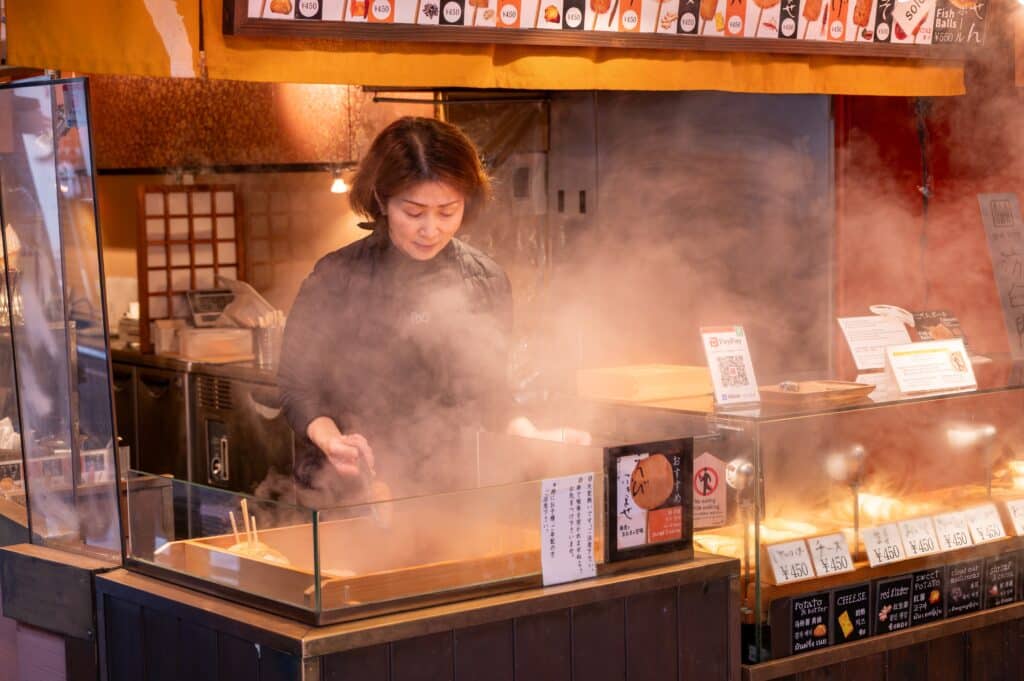
Japanese cuisine is one of the highlights of traveling through the country, and both Kyoto and Kanazawa offer memorable food experiences rooted in local traditions and regional ingredients.
Kyoto is particularly famous for its elegant, seasonal cuisine and tea culture, while Kanazawa is celebrated for seafood from the Sea of Japan and the culinary traditions of the Hokuriku region.
🍵 Kyoto: Refined Cuisine and Tea Culture
Kyoto’s culinary identity reflects its long history as Japan’s imperial capital and a center of Buddhist culture. Seasonal ingredients, careful presentation, and traditional cooking techniques play an important role.
Some of the city’s most distinctive food experiences include:
- Kaiseki Ryori: Traditional multi-course dining emphasizing seasonal ingredients, presentation, and balanced flavors.
- Yudofu: A simple, delicate tofu dish especially associated with Kyoto’s temple cuisine.
- Matcha and Wagashi: Kyoto is an excellent place to enjoy powdered green tea and traditional Japanese sweets.
- Nishiki Market: A lively food market offering local specialties, snacks, pickles, and traditional ingredients.
- Obanzai: Kyoto-style home cooking featuring a variety of seasonal vegetable dishes and small plates.
Kyoto also offers an enormous variety of restaurants, from inexpensive noodle shops to sophisticated fine dining. Travelers interested in Japanese culinary traditions will find plenty to explore.
However, popular restaurants and famous food experiences may require advance reservations, particularly during peak travel seasons.
Best for: Kaiseki dining, traditional sweets, tea ceremonies, tofu cuisine, and culinary variety.
🍣 Kanazawa: Seafood and Regional Specialties
Kanazawa’s location near the Sea of Japan gives the city access to excellent seafood, making it a particularly attractive destination for sushi and fresh fish lovers.
Some of the most rewarding food experiences include:
- Omicho Market: Kanazawa’s famous food market, known for seafood stalls, restaurants, and regional products.
- Fresh Sushi and Sashimi: An opportunity to enjoy seafood from the Sea of Japan, including seasonal local specialties.
- Kaisen-don: Rice bowls topped with assorted fresh seafood, particularly popular around Omicho Market.
- Jibuni: A traditional Kanazawa dish featuring simmered duck or chicken, vegetables, and a thickened broth.
- Gold Leaf Sweets: Kanazawa is famous for gold leaf production, and visitors will find decorative gold leaf used on desserts and ice cream.
Kanazawa also has a refined dining tradition of its own, often called Kaga cuisine, which emphasizes seasonal ingredients and elegant presentation.
The city’s relatively compact center makes it easy to combine sightseeing with visits to markets, cafes, and traditional restaurants.
Best for: Fresh seafood, sushi, regional specialties, food markets, and traditional Hokuriku cuisine.
Kyoto wins for culinary variety and traditional fine dining. Its kaiseki restaurants, tea culture, and extensive range of Japanese cuisine make it especially rewarding for travelers interested in food traditions.
Kanazawa stands out for seafood and regional specialties. Omicho Market and the city’s strong connection to Sea of Japan cuisine provide a distinctive culinary experience.
Our recommendation: Choose Kyoto if you want traditional Japanese fine dining, tea culture, and maximum restaurant variety. Choose Kanazawa if fresh seafood, sushi, and local culinary discoveries are higher priorities.
Food lovers visiting both cities will find that their culinary experiences complement each other particularly well. Kyoto introduces travelers to refined traditional cuisine, while Kanazawa offers a distinctive taste of Japan’s western coastal region.
Which City Is Better for Photography?
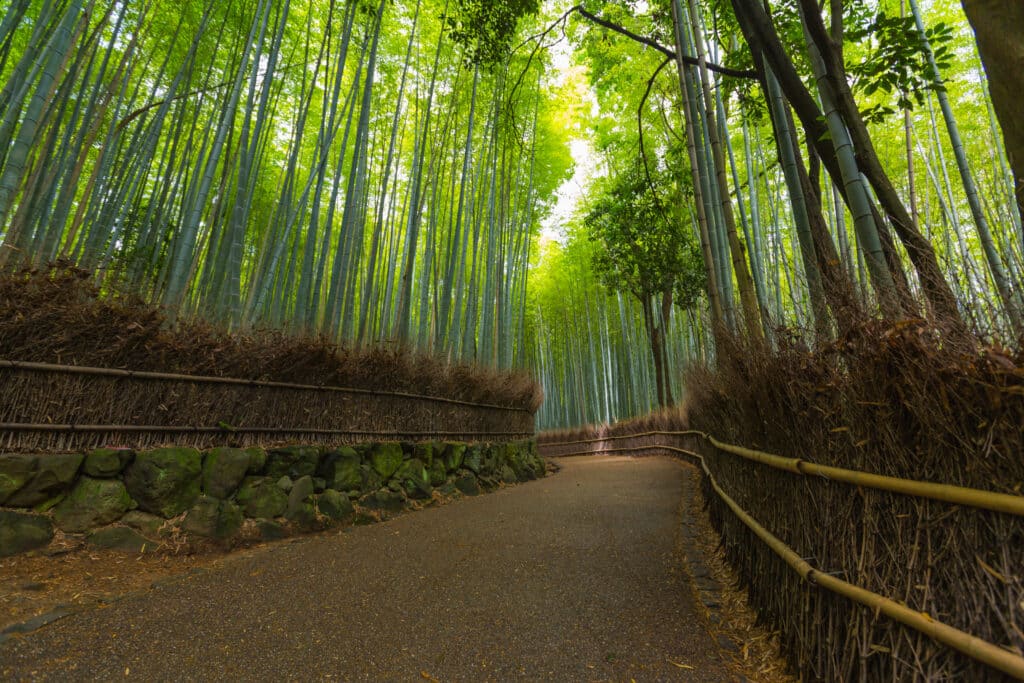
Both Kyoto and Kanazawa are excellent destinations for photography, offering historic streets, traditional architecture, beautiful gardens, and memorable seasonal landscapes.
The biggest difference is the type of images you can capture and how much effort it takes to get them. Kyoto offers some of Japan’s most recognizable photographic locations, while Kanazawa is particularly rewarding for atmospheric streetscapes and quieter historic scenes.
📸 Kyoto: Japan’s Iconic Photo Locations
Kyoto is one of Japan’s most photogenic cities, with an extraordinary variety of temples, shrines, historic neighborhoods, and scenic landscapes.
Some of the best photography locations include:
- Fushimi Inari: Endless rows of vermilion torii gates create striking compositions, particularly in softer morning light.
- Yasaka Pagoda: One of Kyoto’s most famous views, framed by the traditional streets of Higashiyama.
- Arashiyama: Bamboo groves, riverside scenery, and forested mountains offer excellent landscape opportunities.
- Kinkaku-ji: The Golden Pavilion reflected in its pond is one of Japan’s classic photographs.
- Gion: Traditional wooden buildings, lanterns, and atmospheric streets are particularly appealing in the evening.
Kyoto’s biggest challenge is its popularity. Famous locations can become extremely crowded, making it difficult to capture photographs without large numbers of visitors.
Early mornings are often the best opportunity for quieter scenes, although even sunrise does not guarantee an empty location.
Best for: Iconic Japan photographs, famous temples, dramatic architecture, and scenic variety.
🏯 Kanazawa: Atmospheric and Detailed Photography
Kanazawa offers a different photographic experience. Its preserved neighborhoods, samurai architecture, and beautifully designed gardens are especially rewarding for travelers who enjoy capturing historic details.
Some of the best photography locations include:
- Higashi Chaya: Traditional wooden tea houses and narrow streets create elegant historic compositions.
- Nagamachi: Earthen walls, stone lanes, and traditional gates provide distinctive samurai-era scenery.
- Kenrokuen: Ponds, bridges, stone lanterns, and seasonal landscapes offer excellent garden photography.
- Kanazawa Castle: Reconstructed castle structures and historic stone walls create attractive architectural photographs.
- Kazuemachi: Traditional riverside buildings and evening light make this smaller district particularly atmospheric.
Kanazawa’s historic areas are generally less crowded than Kyoto’s most famous photo locations, although popular spots such as Higashi Chaya and Kenrokuen can still become busy.
Winter can be especially rewarding, when snow transforms the gardens and traditional streets into distinctive scenes.
Best for: Traditional streetscapes, architectural details, garden photography, and seasonal atmosphere.
Kyoto is the stronger destination for photography overall. Its iconic temples, shrines, historic streets, and natural scenery offer an exceptional range of photographic opportunities.
Kanazawa has an advantage for travelers seeking a less hectic experience. Its compact historic districts and beautifully preserved architecture make it easier to concentrate on composition and atmosphere.
Our recommendation: Choose Kyoto if capturing Japan’s most famous views is a major priority. Choose Kanazawa if you prefer quieter streets, traditional architectural details, and a slower photographic experience.
Kyoto vs Kanazawa: Which Is Less Crowded?
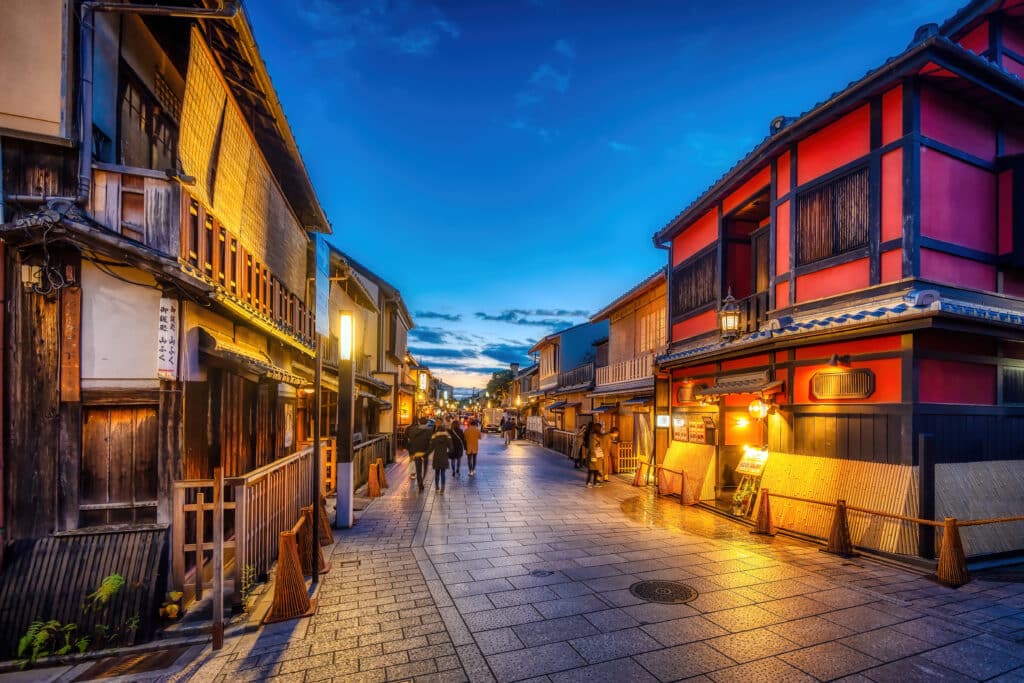
Crowds can have a major impact on how much you enjoy Japan’s historic cities. Beautiful streets and famous temples may look peaceful in photographs, but the experience can feel very different when hundreds of visitors are competing for the same space.
Kanazawa is generally less crowded than Kyoto, particularly when comparing their most famous sightseeing districts. However, that doesn’t mean Kanazawa is always quiet or that Kyoto cannot offer peaceful experiences.
⛩️ Kyoto: Spectacular but Often Busy
Kyoto is one of Japan’s most popular tourist destinations, attracting large numbers of domestic and international visitors. Crowding is particularly noticeable at its best-known attractions.
Areas where crowds can significantly affect the experience include:
- Higashiyama: Sannenzaka and Ninenzaka can become extremely busy during the day.
- Fushimi Inari: The lower torii-gate paths attract heavy visitor traffic, especially late in the morning.
- Arashiyama: The famous bamboo grove and surrounding streets are popular throughout the year.
- Kinkaku-ji: Visitors often gather around the main viewing areas.
Crowds can also affect transportation. Buses serving popular sightseeing areas may become congested, adding time and frustration to a busy itinerary.
Nevertheless, Kyoto is a large city with many lesser-visited temples and neighborhoods. Travelers willing to explore beyond the most famous locations can still find quieter experiences.
Biggest challenge: Managing popular attractions and transportation during peak visiting hours.
🏯 Kanazawa: A More Relaxed Experience
Kanazawa attracts substantial tourism, but its visitor experience is generally less intense than Kyoto’s busiest districts.
This can make a noticeable difference when exploring traditional streets and cultural attractions.
- Higashi Chaya: The main streets can become busy, but quieter moments are often easier to find outside peak hours.
- Nagamachi: The samurai district generally offers a calmer atmosphere than Kyoto’s famous historic lanes.
- Kenrokuen: The garden attracts many visitors, especially during cherry blossom and autumn foliage seasons, but its extensive grounds provide room to explore.
- Omicho Market: A lively and sometimes crowded destination, particularly around popular seafood restaurants at lunchtime.
Kanazawa’s compact sightseeing area also makes it easier to adjust your plans when a particular attraction is busy.
However, weekends, Japanese holidays, and popular seasonal events can still bring substantial visitor numbers.
Biggest advantage: Less intense crowding at many historic sights and a more manageable sightseeing experience.
⭐ How to Avoid the Worst Crowds
- In Kyoto: Visit Higashiyama or Fushimi Inari early in the morning, and explore lesser-known temples during the busiest midday hours.
- In Kanazawa: Explore Higashi Chaya before the busiest daytime visiting period, and consider Kenrokuen near opening time.
- In both cities: Expect heavier crowds during cherry blossom season, autumn foliage, weekends, and major Japanese holidays.
- Plan realistically: Avoid scheduling too many famous attractions in one day. A flexible itinerary is often more enjoyable than rushing between sights.
Kanazawa is the better choice for travelers who strongly dislike crowds. Its smaller historic districts and generally less intense tourism make it easier to enjoy traditional surroundings at a comfortable pace.
However, crowds alone are not necessarily a good reason to skip Kyoto entirely. Kyoto’s exceptional cultural attractions remain worthwhile, especially for first-time visitors.
Our recommendation: If you are visiting Japan for the first time, consider keeping Kyoto and adjusting your sightseeing schedule to avoid the busiest periods. If you have already experienced Kyoto or prefer a less hectic itinerary, Kanazawa may be the smarter choice.
Kyoto vs Kanazawa: Which Is Cheaper?
Travel costs can influence whether Kyoto or Kanazawa makes more sense for your Japan itinerary. Both cities offer affordable restaurants, reasonably priced attractions, and accommodation across different budgets. However, there are important differences.
Kanazawa often provides better value for accommodation, while Kyoto offers a wider range of dining and lodging options. The biggest factor in your final budget, however, may be how easily each city fits into your existing travel route.
| Expense | Kyoto | Kanazawa |
|---|---|---|
| Budget Accommodation | ¥5,000–9,000 | ¥4,000–8,000 |
| Mid-Range Hotel | ¥12,000–22,000 | ¥9,000–17,000 |
| Casual Restaurant Meal | ¥1,000–2,000 | ¥1,000–2,000 |
| Specialty Dining | ¥5,000–15,000+ | ¥4,000–12,000+ |
| Local Transportation | ¥600–1,200/day | ¥300–800/day |
| Typical Paid Attractions | ¥500–1,000 each | ¥300–1,000 each |
Approximate planning ranges in Japanese yen, not verified current prices. Accommodation is per room or hostel bed per night, depending on category; food and transport are per person. Actual prices vary by season, availability, location, and travel style. Intercity travel is not included.
⛩️ Kyoto: More Choice, Higher Peak Prices
Kyoto has an enormous selection of hotels, guesthouses, hostels, and traditional ryokan. Budget travelers can find affordable options, particularly outside the most popular sightseeing neighborhoods.
However, accommodation prices can rise significantly during cherry blossom season, autumn foliage, and major holidays. Hotels near Kyoto Station or popular historic districts may also command higher rates.
Kyoto’s advantage is its location. If you are already visiting Osaka, Kyoto can be reached easily by train, and staying in one city while exploring the other may reduce hotel changes.
🏯 Kanazawa: Often Better Hotel Value
Kanazawa frequently offers attractive accommodation options at lower prices than comparable hotels in Kyoto, particularly outside major holidays and popular travel periods.
Its compact central area can also reduce local transportation expenses. Several important attractions are within walking distance of one another, although buses remain useful for longer journeys.
The potential disadvantage is the cost of reaching Kanazawa. Adding the city to a Tokyo–Kyoto–Osaka itinerary may require additional train journeys that outweigh savings on accommodation.
Kanazawa generally has the edge for accommodation value and potentially lower local sightseeing expenses. Its compact layout and manageable attractions can make it an economical destination for a short stay.
Kyoto can still be the more economical itinerary choice if you are already traveling along Japan’s classic Tokyo–Kyoto–Osaka route and would otherwise need additional transportation to reach Kanazawa.
Our recommendation: Choose Kanazawa if hotel value and a compact sightseeing experience are priorities, especially when it fits your route. Choose Kyoto if avoiding extra travel costs makes more financial sense.
Which City Is Easier to Explore?
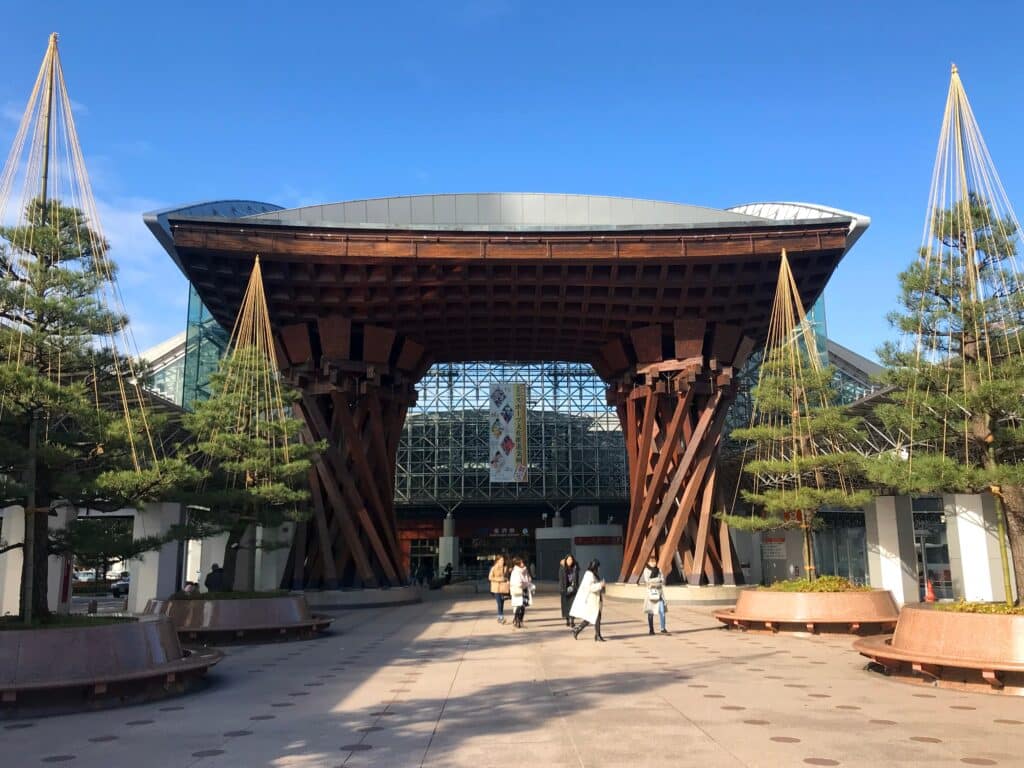
The distance between attractions can make a surprising difference to your Japan itinerary. A city with more famous sights is not necessarily the easiest place to explore, especially when you have limited time.
Kanazawa is generally easier to explore because many of its main attractions are concentrated in a relatively compact central area. Kyoto offers far more sightseeing opportunities, but visiting them efficiently requires more planning.
⛩️ Kyoto: More Attractions, More Travel
Kyoto is a large city with major attractions spread across several different districts. While some areas are excellent for walking, moving between distant sights often requires trains, buses, or taxis.
Important considerations include:
- Higashiyama: Many temples and historic streets can be explored together on foot.
- Arashiyama: Located in western Kyoto and best treated as a separate sightseeing area.
- Fushimi Inari: Easily reached by train, but requires additional travel when combined with attractions elsewhere.
- Northern Kyoto: Attractions such as Kinkaku-ji and Ryoan-ji require careful route planning.
Kyoto’s railway network is useful, but not every famous attraction is directly accessible by train. Buses remain important for certain sightseeing areas and can become busy.
The best strategy is to group attractions by neighborhood rather than crossing the city repeatedly.
Best approach: Plan each sightseeing day around one or two nearby districts.
🏯 Kanazawa: Compact and Manageable
Kanazawa’s principal attractions are concentrated around its historic center, making it relatively easy to explore several major sights in a single day.
Particularly convenient sightseeing combinations include:
- Kenrokuen and Kanazawa Castle: Located next to each other and easy to visit together.
- Higashi Chaya and Kazuemachi: Two historic districts within walking distance of one another.
- Nagamachi and the City Center: The samurai district can be combined with shopping and dining around Korinbo.
- Omicho Market: Conveniently located between Kanazawa Station and several central sightseeing areas.
Walking is often practical, although distances between some attractions can still be substantial. Local buses and taxis are useful, particularly when traveling from Kanazawa Station.
Kanazawa’s main advantage is that travelers can experience several different aspects of the city without complicated transportation planning.
Best approach: Combine walking with occasional local bus journeys.
| Sightseeing Factor | Kyoto | Kanazawa |
|---|---|---|
| Walkability | Excellent within individual districts | Good across much of the central sightseeing area |
| Public Transportation | Extensive train and bus network | Local buses and taxis; no urban subway |
| Distances Between Attractions | Often substantial | Generally shorter |
| Planning Required | Moderate to high | Low to moderate |
| Exploring in One Day | Only a small selection of highlights | Several major attractions are realistic |
Kanazawa is easier to explore efficiently, especially on a short visit. Its compact sightseeing area allows travelers to experience several important attractions without spending much of the day on transportation.
Kyoto requires more planning, but that is partly because it offers a much larger selection of worthwhile attractions. With a neighborhood-based itinerary, sightseeing can still be enjoyable and efficient.
Our recommendation: Choose Kanazawa if you have limited time or prefer straightforward sightseeing. Choose Kyoto if you are happy to spend several days exploring different districts and cultural landmarks.
How Many Days Do You Need in Kyoto vs Kanazawa?
One of the biggest practical differences between Kyoto and Kanazawa is the amount of time needed to experience their main attractions.
Most first-time visitors should allow 3–4 days for Kyoto, while 1–2 days are usually enough for Kanazawa’s main highlights. The ideal duration depends on your interests, travel pace, and how much time you want to spend exploring beyond the most famous sights.
| Time Available | Kyoto | Kanazawa |
|---|---|---|
| 1 Day | A limited selection of highlights | Several major sights are possible |
| 2 Days | A rewarding introduction, but selective | Ideal for most first-time visitors |
| 3 Days | A strong first-time itinerary | Relaxed sightseeing and extra experiences |
| 4 Days | Excellent balance of highlights and flexibility | Best for slow travel or nearby excursions |
What Can You Actually See?
⛩️ Kyoto: Choose One Main Area
With just one day, focus on a single sightseeing district rather than attempting to see everything.
- Visit Kiyomizu-dera.
- Explore Sannenzaka and Ninenzaka.
- Walk through parts of Gion.
- Enjoy an evening in central Kyoto.
Reality check: One day offers a memorable introduction but barely scratches the surface.
🏯 Kanazawa: Cover the Main Highlights
A full day in Kanazawa allows you to combine several important sights.
- Explore Kenrokuen Garden.
- Visit Kanazawa Castle Park.
- Have lunch around Omicho Market.
- Walk through Higashi Chaya.
Reality check: This is a satisfying day, although additional time allows a more relaxed visit.
⛩️ Kyoto: Explore Beyond the Icons
With two or three days, Kyoto becomes a much more rewarding destination.
- Day 1: Higashiyama and Gion.
- Day 2: Arashiyama and its surroundings.
- Day 3: Fushimi Inari and additional temples.
Reality check: Three days provide a good introduction, but you will still need to prioritize attractions.
🏯 Kanazawa: Slow Down and Explore
Two days are ideal for discovering Kanazawa without rushing.
- Day 1: Kenrokuen, the castle, and Omicho Market.
- Day 2: Nagamachi, Higashi Chaya, and local crafts.
- Optional Day 3: Museums, additional neighborhoods, or a nearby excursion.
Reality check: Two days provide an excellent balance of sightseeing and relaxation.
For a short, focused cultural stop, Kanazawa is easier to fit into an itinerary. One or two days can provide a rewarding experience without feeling overly rushed.
For a deeper exploration of Japan’s cultural heritage, Kyoto deserves more time. Three or four days allow travelers to experience several different districts and famous landmarks.
Our recommendation: Allow 3–4 days for Kyoto on a first Japan trip. Plan 1–2 days for Kanazawa, extending your stay if you enjoy slower travel, museums, or traditional craftsmanship.
Kyoto vs Kanazawa as a Day Trip or Overnight Stay
Both Kyoto and Kanazawa can be visited on a day trip, but whether that makes sense depends heavily on your starting point and how much you want to see.
Kyoto is particularly convenient as a day trip from Osaka, while Kanazawa is often more rewarding as an overnight stop. However, travelers with enough time should consider staying longer in either city.
| Starting Point | Kyoto | Kanazawa |
|---|---|---|
| Osaka | Excellent day trip; frequent train connections | Possible, but a long day; overnight stay recommended |
| Tokyo | Possible by Shinkansen, but expensive and rushed | Possible by Shinkansen, but overnight is preferable |
| Takayama | Not practical as a typical day trip | Possible by highway bus; overnight is often better |
| Best Overall Approach | Stay 2–4 nights, or visit from Osaka | Stay 1–2 nights on a wider itinerary |
⛩️ Kyoto: An Easy Day Trip from Osaka
Kyoto is one of the easiest major cultural destinations to visit from Osaka. Frequent trains connect the two cities, making it possible to explore Kyoto without changing hotels.
A day trip works particularly well if you:
- Are staying in Osaka and want to avoid moving accommodation.
- Have already visited Kyoto and want to revisit a few highlights.
- Prefer exploring one district rather than attempting to see the entire city.
However, Kyoto has far too many worthwhile attractions to experience properly in a single day. Staying overnight allows you to explore historic neighborhoods early in the morning and enjoy the city after many day visitors have left.
Best choice: Day trip from Osaka for a focused visit; overnight stay for a fuller experience.
🏯 Kanazawa: Better as an Overnight Stop
Kanazawa’s compact historic center makes it possible to visit several important attractions in one day. However, reaching the city from Tokyo or Osaka requires a longer journey than traveling between Osaka and Kyoto.
A day trip can work if you:
- Are traveling from Tokyo and are comfortable with a long rail journey.
- Have limited time and want to see Kenrokuen, the castle, and one historic district.
- Are staying nearby and can reach Kanazawa relatively early.
Nevertheless, staying overnight is usually more rewarding. It gives you time to explore Nagamachi, enjoy local cuisine, and experience Higashi Chaya or Kazuemachi outside the busiest daytime hours.
Best choice: One or two nights, particularly when traveling through the Hokuriku region or Japanese Alps.
Kyoto is the more convenient day-trip destination from Osaka. Frequent rail connections make it easy to visit without changing hotels, although several days are preferable for first-time visitors.
Kanazawa is generally better as an overnight stop. Its compact sightseeing area makes a one-day visit possible, but spending the night provides a more relaxed experience and better value from the journey.
Our recommendation: If you are based in Osaka and have only one spare day, choose Kyoto. If Kanazawa fits naturally into your travel route, plan at least one night rather than rushing through it.
Getting to Kyoto and Kanazawa

Both Kyoto and Kanazawa are well connected to Japan’s rail network, but they fit into different travel routes. Kyoto lies directly on the famous Tokyo–Osaka corridor, while Kanazawa is part of the Hokuriku region along Japan’s northern coast.
This difference matters when planning your itinerary. Choosing the city that fits naturally into your route can save several hours of transportation and avoid unnecessary hotel changes.
🚄 Getting to Kyoto
Kyoto is one of Japan’s easiest major destinations to reach, particularly when traveling between Tokyo and Osaka.
- From Tokyo: Approximately 2 hours 10 minutes to 2 hours 40 minutes by Tokaido Shinkansen, depending on the service.
- From Osaka: Approximately 15 minutes by Shinkansen from Shin-Osaka or around 30 minutes by JR Special Rapid train from Osaka Station.
- From Kansai International Airport: Approximately 75–85 minutes by direct Haruka limited express train.
Best advantage: Kyoto fits naturally into the classic Tokyo–Kyoto–Osaka Golden Route.
🚄 Getting to Kanazawa
Kanazawa is also accessible by rail, although traveling from Kyoto or Osaka requires a connection at Tsuruga.
- From Tokyo: Approximately 2.5–3 hours by direct Hokuriku Shinkansen.
- From Kyoto: Approximately 2–2.5 hours using the Thunderbird limited express to Tsuruga, then the Hokuriku Shinkansen.
- From Osaka: Approximately 2–2.5 hours via Tsuruga, depending on connections.
- From Takayama: Approximately 2–2.5 hours by bus via Shirakawa-go, depending on the service and connection.
Best advantage: Kanazawa works particularly well on a Tokyo–Kanazawa–Takayama or Tokyo–Kanazawa–Kyoto itinerary.
Travel Time Comparison
The following approximate journey times help illustrate how each city fits into a wider Japan itinerary.
| Starting Point | To Kyoto | To Kanazawa |
|---|---|---|
| Tokyo | 2h 10m–2h 40m | 2h 30m–3h |
| Osaka | 15–30 minutes | 2h–2h 30m |
| Kyoto | — | 2h–2h 30m |
| Takayama | Approximately 3.5–4.5h | Approximately 2–2.5h by bus |
Since March 2024, the Hokuriku Shinkansen has extended to Tsuruga. Travelers between Kyoto or Osaka and Kanazawa now change trains at Tsuruga rather than taking a direct Thunderbird service all the way to Kanazawa.
Which City Fits Better Into Your Japan Itinerary?
If you’re following the classic Tokyo–Kyoto–Osaka route, Kyoto is the more convenient choice. It requires very little additional travel and provides easy access to nearby destinations such as Nara and Osaka.
Kanazawa becomes particularly attractive when exploring central Japan, the Japanese Alps, or the Hokuriku region. It can be combined with Takayama and Shirakawa-go or used as a stop between Tokyo and Kyoto.
However, adding Kanazawa to a short trip solely to see another historic city may create more travel time than the experience justifies.
⭐ Travel Owl’s Verdict
Kyoto wins for transportation convenience on a classic first-time Japan itinerary. Its location between Tokyo and Osaka makes it exceptionally easy to include.
Kanazawa wins for travelers exploring the Japanese Alps or looking for a different route through Japan. It is well connected, but works best when incorporated thoughtfully into the overall itinerary.
Our advice: Don’t choose a destination based only on train times. Choose the route that lets you spend more time experiencing Japan and less time changing hotels or transferring between trains.
Kyoto vs Kanazawa for First-Time Visitors to Japan
If this is your first trip to Japan, choosing between Kyoto and Kanazawa is not simply a question of which city is prettier or less crowded. The more important question is which destination will give you the experiences you most want from your first visit.
For most first-time visitors, Kyoto is the better choice. Its extraordinary concentration of temples, shrines, historic neighborhoods, and cultural experiences makes it one of Japan’s essential destinations.
⛩️ Choose Kyoto If…
You want to experience Japan’s most famous traditional landmarks on your first trip.
- You have never visited Kyoto’s iconic temples and shrines.
- You want to see Fushimi Inari, Kiyomizu-dera, and the historic streets of Higashiyama.
- You are following the classic Tokyo– Kyoto–Osaka route.
- You have at least two or three days for cultural sightseeing.
Best for: A comprehensive introduction to traditional Japanese culture.
🏯 Choose Kanazawa If…
You prefer a smaller, more manageable historic city and are comfortable missing some of Japan’s most famous landmarks.
- You strongly dislike crowded sightseeing destinations.
- You are especially interested in samurai history, gardens, and traditional crafts.
- You prefer a slower travel pace with fewer transportation complications.
- Your itinerary already includes Takayama, Shirakawa-go, or the Hokuriku region.
Best for: Travelers who value a compact and less hectic cultural stay.
⭐ Visit Both If…
You have enough time to experience two different sides of historic Japan without rushing.
- Your trip lasts approximately two weeks or longer.
- Traditional culture is a major priority for your itinerary.
- You can allocate three or four days to Kyoto and one or two to Kanazawa.
- The route between the two cities fits naturally into your travel plans.
Best for: Travelers who want cultural variety without choosing between the cities.
Kyoto is our recommendation for most travelers visiting Japan for the first time. Its cultural depth, famous landmarks, and variety of experiences make it difficult to replace with another city.
Kanazawa is an excellent destination, but it offers a different experience rather than a complete substitute for Kyoto. Its greatest strengths are its manageable size, samurai heritage, gardens, and historic neighborhoods.
Our recommendation: If you can visit only one, choose Kyoto unless you have a strong preference for smaller, quieter destinations. If you have sufficient time, visiting both offers a richer perspective on Japan’s traditional culture.
Kyoto vs Kanazawa for Repeat Visitors to Japan

Once you have already experienced Japan’s most famous destinations, your travel priorities often change. Instead of focusing on iconic landmarks, you may become more interested in regional culture, traditional neighborhoods, local food, and destinations that feel different from your previous trips.
For travelers who have already explored Kyoto’s main attractions, Kanazawa can be the more rewarding next choice. However, Kyoto also offers countless opportunities for deeper exploration.
⛩️ Return to Kyoto for Greater Depth
Many first-time visitors experience only Kyoto’s most famous attractions. A second visit allows you to discover a completely different side of the city.
Consider returning to Kyoto if you want to:
- Explore quieter temples: Visit places such as Shoren-in, Honen-in, or the temples around northern Higashiyama.
- Discover different neighborhoods: Spend more time in Nishijin, Demachiyanagi, or areas beyond the main tourist routes.
- Experience seasonal Kyoto: Return during autumn, winter, or another season you have not yet experienced.
- Enjoy cultural activities: Explore traditional crafts, tea culture, gardens, and specialized museums.
Kyoto’s greatest advantage is its depth. Even after several visits, there are still historic sites, neighborhoods, and cultural experiences worth discovering.
Best for: Travelers who want to explore Kyoto beyond its famous sightseeing circuit.
🏯 Choose Kanazawa for Something Different
Kanazawa is particularly appealing if you have already visited Kyoto and want another destination with a strong connection to traditional Japan.
Reasons to prioritize Kanazawa include:
- Samurai heritage: Explore Nagamachi and learn about the city’s historic warrior-class culture.
- Regional craftsmanship: Discover gold-leaf production, lacquerware, and other traditional local arts.
- Distinctive cuisine: Enjoy seafood, Kaga-style dishes, and regional culinary traditions.
- New itinerary options: Combine Kanazawa with Takayama, Shirakawa-go, or other destinations in central Japan.
Kanazawa is not simply a smaller version of Kyoto. Its historical identity, local cuisine, and cultural traditions provide a different perspective on Japan.
Best for: Travelers seeking a new cultural destination beyond the classic Golden Route.
⭐ Quick Decision Guide for Returning Visitors
Consider Kanazawa for your next Japan trip.
Return to Kyoto. You have probably missed many worthwhile attractions.
Kanazawa is particularly rewarding.
Kyoto remains an excellent choice, even on a second or third visit.
Kanazawa fits naturally into many routes involving Takayama and Shirakawa-go.
For repeat visitors who have already explored Kyoto’s main highlights, Kanazawa is often the smarter next destination. It offers new cultural experiences without abandoning the traditional atmosphere that makes Kyoto so appealing.
However, travelers who particularly love temples, gardens, and historic neighborhoods should not underestimate the value of returning to Kyoto. Its cultural depth extends far beyond its most famous sights.
Our recommendation: Choose Kanazawa if you want to expand your experience of traditional Japan. Return to Kyoto if your first visit was rushed or you want to explore the city in greater depth.
Should You Skip Kyoto and Visit Kanazawa Instead?

Kyoto’s popularity has encouraged some travelers to search for quieter alternatives. Kanazawa is frequently mentioned because it offers traditional streets, historic architecture, gardens, and cultural experiences without the same intensity of tourism found at Kyoto’s busiest sights.
But replacing Kyoto with Kanazawa is not automatically a smarter travel decision. The right choice depends on whether you want Japan’s most famous cultural landmarks or a more compact historic destination.
🏯 Choose Kanazawa Instead If…
You are comfortable missing Kyoto’s famous landmarks in exchange for a different cultural experience.
- You have already visited Kyoto and explored its main attractions.
- You strongly prefer smaller cities and less intensive sightseeing.
- Samurai heritage, traditional crafts, and Japanese gardens are your main interests.
- Kanazawa fits naturally into your route through central Japan.
Smart choice when: Your priorities match Kanazawa’s strengths, not simply because Kyoto is crowded.
⛩️ Keep Kyoto If…
Visiting Japan’s iconic temples and historic districts is one of the main reasons for your trip.
- This is your first visit to Japan.
- You want to see Fushimi Inari, Kiyomizu-dera, and other famous Kyoto landmarks.
- You have three or four days available for cultural sightseeing.
- You are following the Tokyo–Kyoto–Osaka Golden Route.
Smart choice when: You would regret missing Kyoto’s most celebrated cultural experiences.
⭐ Combine Kyoto and Kanazawa If…
You have enough time to explore two distinct historic destinations without rushing.
- Your Japan trip lasts around two weeks or longer.
- Traditional Japanese culture is a major travel priority.
- You can allocate three or four days to Kyoto and one or two to Kanazawa.
- Your itinerary allows a logical route between the two cities.
Smart choice when: Both cities add meaningful variety without forcing you to sacrifice other priorities.
💡 The Question Most Travelers Should Ask
Instead of asking, “Is Kanazawa better than Kyoto?” ask: “What would I actually miss by choosing one over the other?”
If you skip Kyoto, you miss some of Japan’s most celebrated temples, shrines, and historic landmarks. Kanazawa offers beautiful cultural attractions, but it cannot directly replace those experiences.
If you skip Kanazawa, you miss a distinctive historic city known for its samurai heritage, traditional crafts, regional cuisine, and celebrated gardens. However, many first-time visitors may find Kyoto sufficient for their initial introduction to traditional Japan.
For most first-time visitors, skipping Kyoto in favor of Kanazawa would be a questionable trade-off. Kyoto’s cultural depth and iconic landmarks remain major reasons to include it in a Japan itinerary.
For repeat visitors or travelers who strongly prefer smaller cities, Kanazawa can be the better decision. Its historic districts, gardens, and cultural traditions provide a rewarding experience without requiring several days of intensive sightseeing.
Our recommendation: Keep Kyoto on your first Japan trip unless its attractions genuinely do not match your interests. Choose Kanazawa instead when its distinctive strengths fit your travel style and route.
Can You Visit Kyoto and Kanazawa on the Same Japan Trip?
You don’t necessarily have to choose between Kyoto and Kanazawa. Both cities can fit into the same Japan itinerary, particularly if you have around two weeks and want to experience different aspects of traditional Japanese culture.
Combining Kyoto and Kanazawa works best when the route is logical and you have enough time to enjoy both destinations. Adding Kanazawa to an already crowded itinerary can create more travel stress than value.
🚄 The Most Practical Route
One convenient way to combine both cities is to travel through Kanazawa between Tokyo and the Kansai region.
This route uses the direct Hokuriku Shinkansen from Tokyo to Kanazawa, followed by the train connection via Tsuruga to Kyoto.
You can also travel in the opposite direction. The best sequence depends on your arrival and departure airports and any additional destinations you plan to visit.
🗓️ Possible, but Selective
A 10-day itinerary can include both cities, but you will need to prioritize carefully and avoid adding too many additional destinations.
- Days 1–3: Tokyo
- Days 4–5: Kanazawa
- Days 6–8: Kyoto
- Days 9–10: Osaka and departure
Trade-off: This route allows you to experience both historic cities, but leaves limited time for Tokyo, Osaka, and additional excursions. Travel days also reduce available sightseeing time.
Best for: Travelers who strongly prioritize traditional culture and have an open-jaw flight itinerary.
⭐ The More Balanced Option
Two weeks provide a much better opportunity to combine Kyoto and Kanazawa without making the itinerary feel rushed.
- Days 1–4: Tokyo
- Days 5–6: Kanazawa
- Days 7–10: Kyoto
- Days 11–13: Osaka and optional nearby excursions
- Day 14: Departure
Advantage: This itinerary provides enough time for Kyoto’s main attractions, a rewarding stay in Kanazawa, and additional experiences around Osaka.
Best for: First-time visitors who want a varied Japan itinerary with a strong focus on cultural destinations.
Kyoto and Kanazawa complement each other well. Kyoto provides the iconic temples, shrines, and cultural landmarks that many travelers associate with Japan, while Kanazawa adds samurai heritage, regional craftsmanship, and a more compact historic experience.
However, visiting both is not essential for every itinerary. A shorter trip may be more rewarding when you focus on Kyoto rather than squeezing in another city.
Our recommendation: For a 7-day Japan trip, generally prioritize Kyoto. For 10 days, include Kanazawa only if traditional culture is a major interest. For 14 days or longer, combining both cities can be an excellent choice.
Kyoto vs Kanazawa: Quick Decision Guide
Still unsure which city deserves a place in your Japan itinerary? The best choice depends on what matters most to you.
Use this quick comparison to match your travel priorities with the destination that fits them best.
| Your Priority | Better Choice | Why? |
|---|---|---|
| First trip to Japan | Kyoto | More iconic cultural landmarks and experiences |
| Famous temples and shrines | Kyoto | Exceptional variety of historic religious sites |
| Less crowded sightseeing | Kanazawa | Generally less intense tourism at major sights |
| Samurai history | Kanazawa | Preserved samurai district and related heritage |
| Geisha culture | Kyoto | Stronger range of traditional performing arts experiences |
| Japanese gardens | Both | Kyoto offers variety; Kanazawa has Kenrokuen |
| Photography | Kyoto | Greater variety of iconic scenes |
| Seafood and regional cuisine | Kanazawa | Excellent seafood and distinctive local specialties |
| Easy sightseeing in 1–2 days | Kanazawa | More compact central sightseeing area |
| Traditional culture over 3–4 days | Kyoto | Greater depth and more attractions |
| Tokyo–Kyoto–Osaka itinerary | Kyoto | Convenient location on the Golden Route |
| Takayama and Shirakawa-go route | Kanazawa | Convenient regional transport connections |
| Repeat visit to Japan | Kanazawa | A rewarding alternative if you have already explored Kyoto |
⭐ The Simplest Way to Decide
Choose Kyoto if your main goal is to experience Japan’s most celebrated temples, shrines, and traditional cultural landmarks.
Choose Kanazawa if you prefer a smaller historic city with samurai heritage, traditional crafts, and a more relaxed sightseeing experience.
Visit both if you have enough time and want to experience two complementary sides of traditional Japan.
Kyoto is the stronger all-round choice for most first-time visitors. Kanazawa is particularly appealing for repeat visitors, travelers seeking a less hectic destination, or those exploring central Japan.
The smartest choice is not necessarily the city with the most attractions. It is the one that best matches your interests, available time, and travel route.
Common Mistakes When Choosing Between Kyoto and Kanazawa
Both Kyoto and Kanazawa can be excellent additions to a Japan itinerary. However, choosing between them for the wrong reasons can lead to unnecessary travel, rushed sightseeing, or missed experiences.
These are five common mistakes worth avoiding before you finalize your route.
1. Assuming Kanazawa Is Simply a Quieter Kyoto
Kanazawa has traditional neighborhoods, historic architecture, and cultural attractions, but it does not offer the same concentration of famous temples and shrines as Kyoto.
Choosing Kanazawa purely to avoid Kyoto’s crowds may leave you disappointed if iconic religious landmarks were your main reason for visiting Japan.
2. Giving Kyoto Only One Day
Kyoto’s major attractions are spread across different parts of the city. Trying to visit Fushimi Inari, Arashiyama, Kiyomizu-dera, and several additional landmarks in one day creates an exhausting itinerary.
You may spend more time traveling between sights than enjoying them.
3. Adding Kanazawa to an Already Crowded Itinerary
Kanazawa may look like an easy additional stop, but every new destination involves transportation, luggage arrangements, and potentially another hotel check-in.
On a short Japan trip, adding Kanazawa may reduce the time available for Tokyo, Kyoto, or other destinations you value more.
4. Assuming Kanazawa Is Always Crowd-Free
Kanazawa is generally less overwhelmed by tourism than Kyoto’s busiest sightseeing areas, but popular attractions can still become crowded.
Kenrokuen, Omicho Market, and the Higashi Chaya District can attract substantial numbers of visitors, particularly during weekends, holidays, and peak travel seasons.
5. Ignoring Your Overall Travel Route
A city can be an excellent destination and still be the wrong addition to your particular itinerary.
Kyoto fits naturally between Tokyo and Osaka on the classic Golden Route. Kanazawa is especially convenient when traveling through the Hokuriku region or combining destinations such as Takayama and Shirakawa-go.
Choosing a destination without considering onward connections can result in unnecessary backtracking and lost sightseeing time.
The biggest mistake is choosing Kyoto or Kanazawa based only on popularity, crowd levels, or the number of attractions.
A better decision considers three things: what you most want to experience, how much time you have, and whether the city fits efficiently into your overall Japan itinerary.
Final Verdict: Kyoto or Kanazawa?

Kyoto and Kanazawa are both exceptional destinations, but they offer different ways to experience traditional Japan. Kyoto impresses with its extraordinary collection of temples, shrines, historic neighborhoods, and cultural landmarks. Kanazawa offers beautifully preserved streets, samurai heritage, outstanding gardens, and a more relaxed pace.
For most first-time visitors, Kyoto is the better choice. Its iconic attractions and cultural depth make it difficult to replace, especially on a classic Tokyo–Kyoto–Osaka itinerary.
However, Kanazawa may be more rewarding if you have already explored Kyoto, prefer smaller cities, or want to discover a different side of Japanese history.
First trip to Japan? Choose Kyoto. Looking for a quieter cultural experience? Consider Kanazawa. Have two weeks or more? Visit both if they fit naturally into your itinerary.
Frequently Asked Questions About Kyoto vs Kanazawa
Still deciding between Kyoto and Kanazawa? Here are answers to some of the most common questions travelers ask when planning their Japan itinerary.
Is Kanazawa better than Kyoto?
Kanazawa is not necessarily better than Kyoto. Kyoto offers more famous temples, shrines, and cultural landmarks, making it the stronger choice for most first-time visitors. Kanazawa is better suited to travelers seeking a smaller historic city, samurai heritage, traditional crafts, and a more relaxed sightseeing experience.
Is Kanazawa worth visiting if you have already been to Kyoto?
Yes. Kanazawa offers a different perspective on traditional Japan. Its Nagamachi Samurai District, Kenrokuen Garden, historic teahouse districts, and regional craftsmanship make it especially rewarding for repeat visitors who have already explored Kyoto’s major attractions.
Is Kanazawa less crowded than Kyoto?
Generally, yes. Kanazawa usually has a less intense tourist atmosphere than Kyoto’s busiest sightseeing districts. However, popular attractions such as Kenrokuen and Higashi Chaya can still become crowded, particularly during weekends, holidays, and peak seasons.
How many days do you need in Kyoto vs Kanazawa?
Plan approximately three to four days for Kyoto to experience its major temples, shrines, and historic neighborhoods. Kanazawa is more compact, and one to two days are usually sufficient for its main attractions. Additional time allows for a slower pace or nearby excursions.
Can you visit Kyoto and Kanazawa on the same Japan trip?
Yes. Kyoto and Kanazawa can be combined efficiently, especially on a trip lasting around two weeks or longer. One practical route is Tokyo–Kanazawa–Kyoto–Osaka. Travelers with shorter itineraries should consider whether adding Kanazawa would make their schedule unnecessarily rushed.
Is Kanazawa cheaper than Kyoto?
Kanazawa can offer better accommodation value than Kyoto, particularly during busy travel periods. However, prices depend on the season, hotel category, and booking dates. Transportation costs should also be considered because adding Kanazawa may require additional train journeys.
Is Kanazawa a good alternative to Kyoto for first-time visitors?
Kanazawa can be a good alternative for first-time visitors who prefer smaller cities, traditional crafts, gardens, and samurai history. However, it cannot directly replace Kyoto’s extensive collection of famous temples and shrines. Most first-time travelers should prioritize Kyoto unless Kanazawa better matches their interests.
Should you visit Kyoto or Kanazawa for traditional Japanese culture?
Choose Kyoto for a wider range of temples, shrines, historic neighborhoods, and traditional cultural experiences. Choose Kanazawa for samurai heritage, preserved teahouse districts, regional crafts, and traditional gardens. Both are excellent cultural destinations, but they highlight different aspects of Japanese history.