

Osaka is often called Japan’s food capital—but that only scratches the surface of what the city offers.
Compared to Tokyo and Kyoto, Osaka feels more relaxed, more local, and far less concerned with appearances. It’s a city of neon-lit streets, casual dining, and a culture built around enjoying life—especially through food.
For many travelers, Osaka becomes the place where Japan feels the most approachable.
But planning a visit isn’t always as straightforward as it seems. The city has multiple key areas, fewer “must-see” landmarks than Kyoto, and a reputation that can be a bit misleading if you’re expecting traditional sightseeing.
This guide helps you understand exactly what Osaka is about—what to do, where to stay, how to get around, and whether it deserves a place in your Japan itinerary.
If you’re planning a full trip, check out this Japan itinerary guide
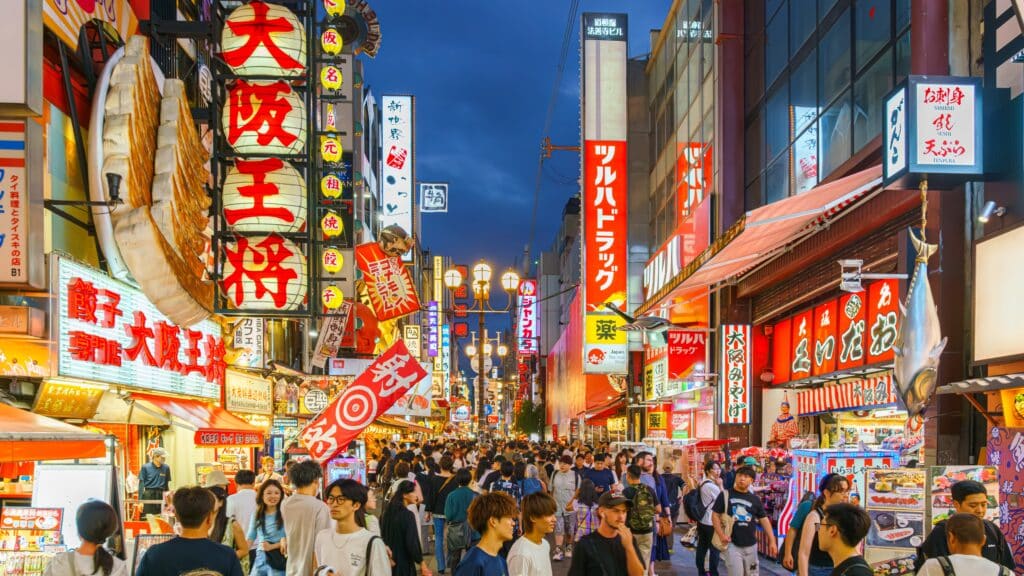
Table of Contents
Osaka at a Glance
Japan City Guide
Osaka at a Glance
A quick snapshot of what Osaka is best for, where to stay, and how to plan your time
Food lovers, nightlife, first-time visitors, and travelers exploring the Kansai region
Street food, neon districts, casual energy, and easy access to Kyoto, Nara, and Kobe
2 to 3 days for the highlights, or longer if you want to use Osaka as a Kansai base
Namba for atmosphere, Umeda for transport, and Shinsaibashi for shopping and central access
Lively, informal, food-focused, and more relaxed than Tokyo
Osaka is less about major landmarks and more about neighborhoods, local food, and city atmosphere
Where Is Osaka and Why Visit It?
Osaka is located in the Kansai region of Japan, in the western part of the country. It sits just 30 minutes from Kyoto and less than an hour from Nara, making it one of the most convenient bases for exploring central Japan.
From Tokyo, Osaka is easily reached in about 2.5 hours by Shinkansen, which makes it a natural stop on most first-time Japan itineraries.
But Osaka isn’t just a convenient location—it offers a completely different experience from Japan’s other major cities.
While Kyoto is known for temples and tradition, and Tokyo for its scale and variety, Osaka stands out for its energy, food culture, and relaxed atmosphere. It’s a city where the focus shifts from sightseeing to experiencing everyday life—eating, exploring neighborhoods, and enjoying the moment.
Another big advantage is how easy Osaka is to navigate. The city is more compact than Tokyo, with key areas like Namba, Dotonbori, and Shinsaibashi all within walking distance of each other.
So why visit Osaka?
- It’s the best place in Japan for street food and casual dining
- It offers a more local, less formal atmosphere
- It’s an ideal base for day trips to Kyoto, Nara, and Kobe
- It provides a refreshing contrast to more traditional destinations
If you want to experience a side of Japan that feels more spontaneous, social, and food-driven, Osaka is one of the most rewarding cities to include in your trip.
Osaka Map & Best Areas to Know
This map highlights the most important areas, attractions, and food spots in Osaka to help you plan your trip efficiently.
Tip: Save this map to your Google account so you can easily access it during your trip.
Best Things to Do in Osaka
Osaka isn’t a city packed with traditional landmarks like Kyoto—but that’s exactly what makes it special.
The best things to do here are a mix of iconic districts, food experiences, and city viewpoints rather than a long sightseeing checklist.
Dotonbori & Namba
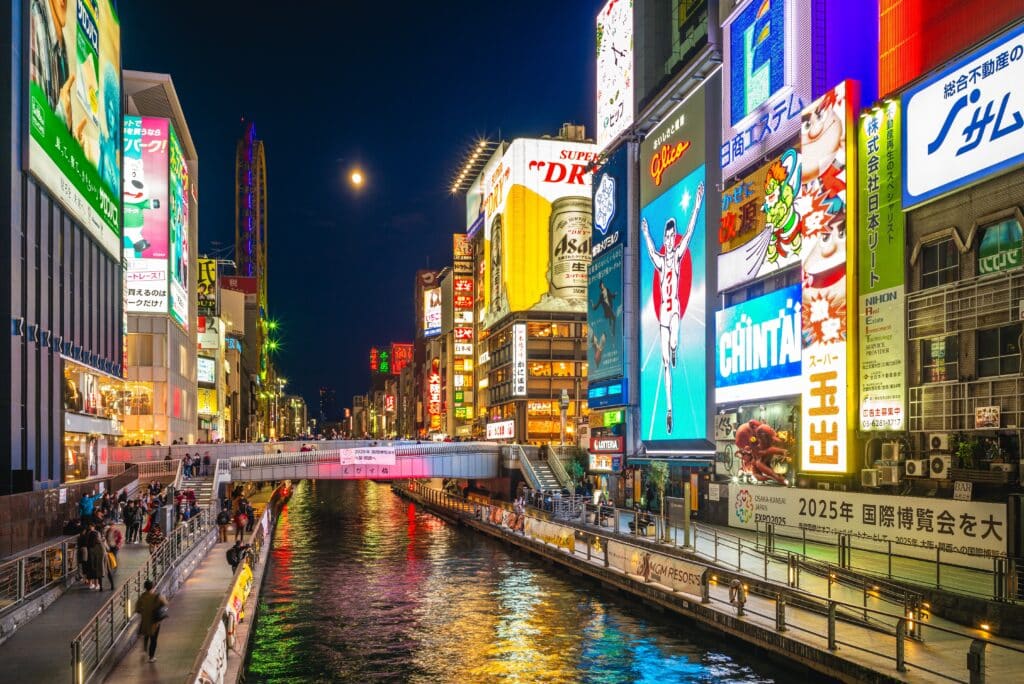
If there’s one place that defines Osaka, it’s Dotonbori.
This neon-lit canal district is famous for its giant billboards, including the iconic Glico Running Man sign. The area comes alive at night, with crowds, street food stalls, and a lively atmosphere that feels very different from anywhere else in Japan.
It’s touristy—but still absolutely worth experiencing.
Don’t miss:
- Trying takoyaki from a street stall
- Walking along the canal at night
- Exploring nearby Namba streets
Osaka Castle
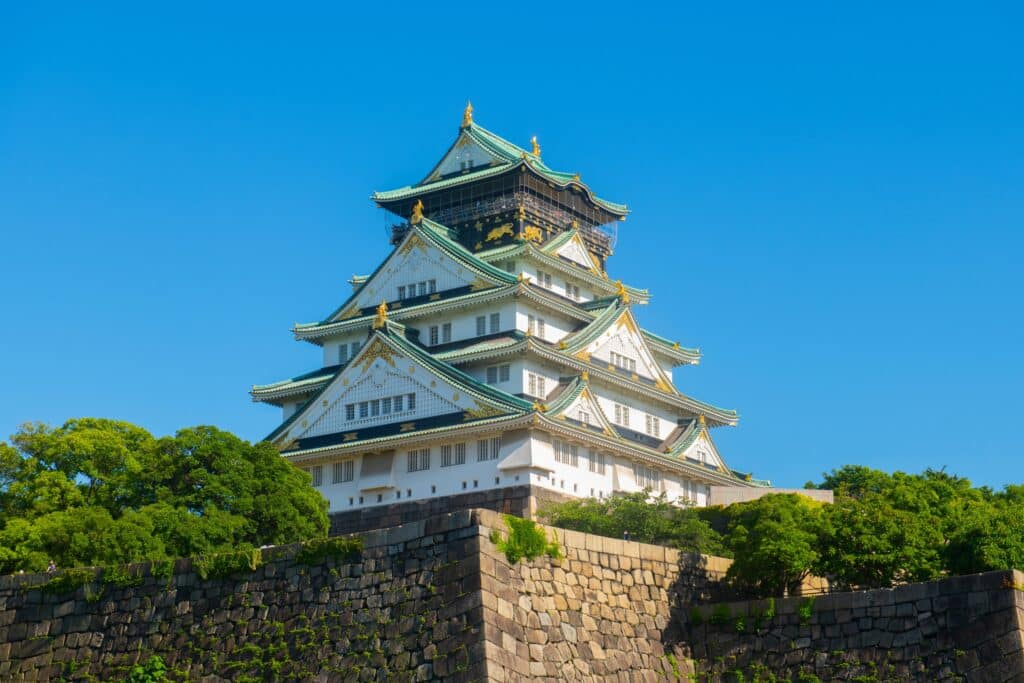
One of Japan’s most famous landmarks, Osaka Castle is more about the setting than the interior.
The castle itself is a reconstruction, but it’s surrounded by a large park that becomes especially beautiful during cherry blossom season.
It’s a good place to slow down and take a break from the busy city.
Shinsekai & Tsutenkaku
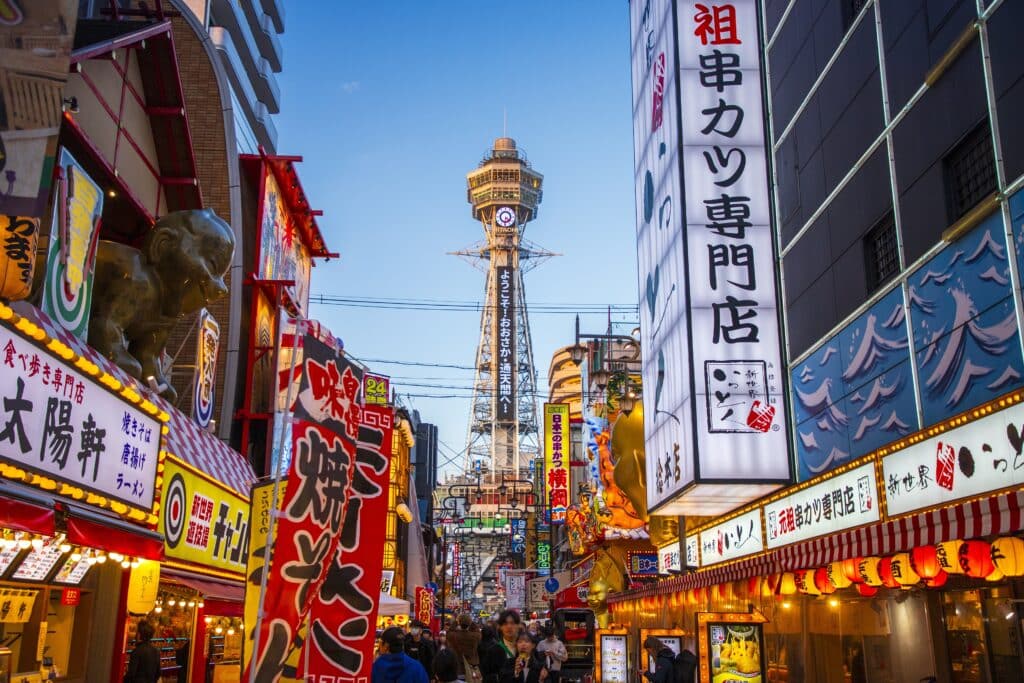
Shinsekai feels like stepping into a different era.
Centered around Tsutenkaku Tower, this district has a nostalgic, slightly gritty charm and is known for its local food scene—especially kushikatsu (deep-fried skewers).
It’s less polished than other parts of Osaka, which is exactly why it’s worth visiting.
Umeda Sky Building
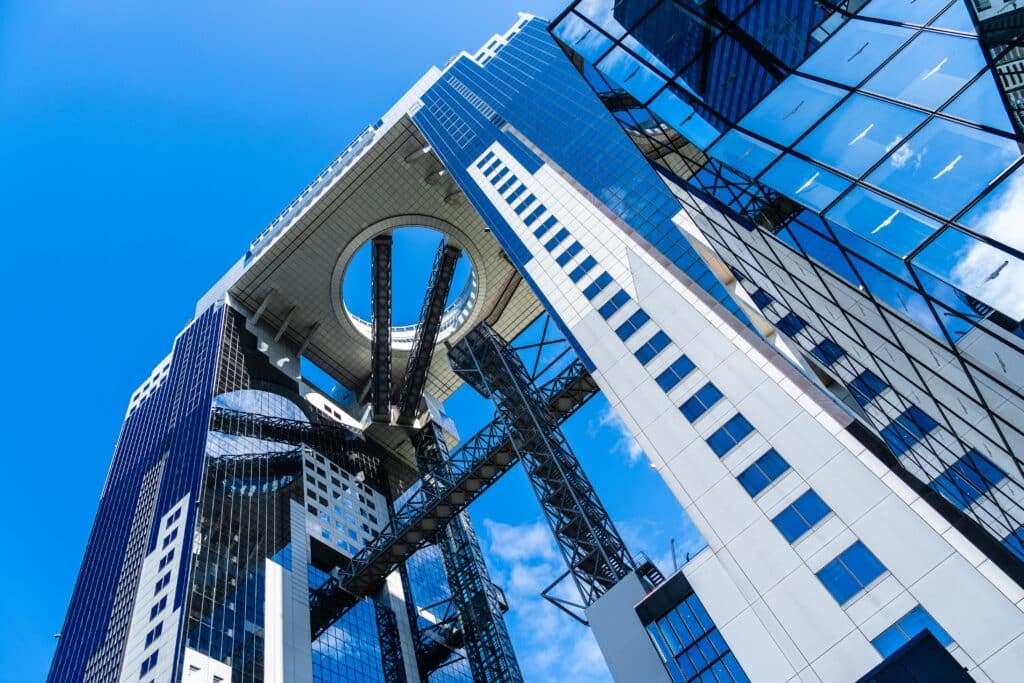
For the best view of Osaka, head to the Umeda Sky Building.
The Floating Garden Observatory offers panoramic views over the entire city—especially impressive at sunset and after dark.
If you enjoy city viewpoints, this is one of the highlights.
Kuromon Market

Kuromon Market is one of the best places to experience Osaka’s food culture in one spot.
You’ll find everything from fresh seafood and sushi to wagyu skewers and local snacks.
It’s become more tourist-focused in recent years, but it’s still a great place to try a variety of dishes in a short time.
Osaka Bay: Aquarium & Tempozan Harbor Village
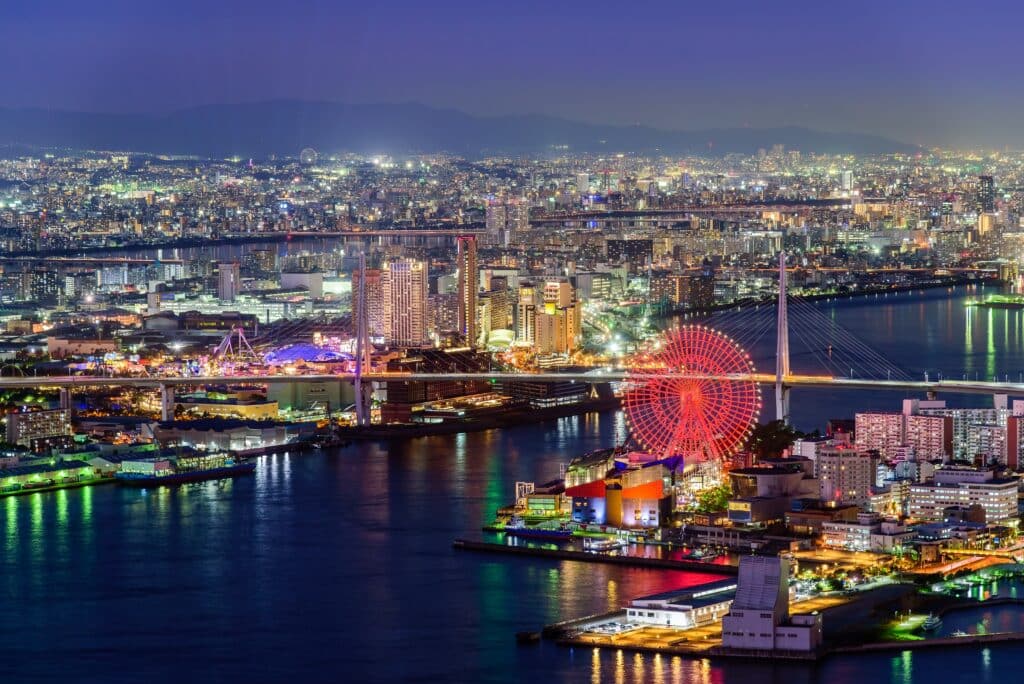
If you want a break from the busy city center, head to Osaka’s waterfront area around Tempozan Harbor Village.
The main highlight here is the Osaka Aquarium Kaiyukan, one of the largest and most impressive aquariums in the world. Its massive central tank—home to a whale shark—is the standout feature.
Right next to it, the Tempozan Ferris Wheel offers great views over Osaka Bay, especially in the evening when it lights up.
The area itself feels more relaxed and less crowded than central Osaka, making it a good option if you want something different from food streets and shopping districts.
Good to know:
- Best visited in the afternoon or early evening
- Easy to combine with a slower travel day
- Works well for families or repeat visitors
Optional: Day Trips from Osaka
One of Osaka’s biggest advantages is its location.
Easy day trips include:
- Kyoto → temples and traditional culture
- Nara → famous deer and historic sites
- Kobe → food scene and harbor views
If you’re staying longer, Osaka works perfectly as a base.
Is Osaka Worth Visiting?
Yes—but not for the reasons many first-time travelers expect.
Osaka isn’t a city filled with world-famous landmarks or traditional sights like Kyoto. And compared to Tokyo, it doesn’t offer the same scale or variety of attractions.
But that’s exactly what makes Osaka worth visiting.
This is a city built around atmosphere, food, and everyday experiences rather than a long checklist of must-see sights. It’s where you wander through neon-lit streets, eat more than planned, and enjoy a more spontaneous side of Japan.
For many travelers, Osaka ends up being one of the most memorable stops—not because of what they see, but because of how the city feels.
Osaka is especially worth it if you:
- Love food and street food culture
- Enjoy nightlife and lively city energy
- Want a more local, less formal atmosphere
- Are planning to explore the Kansai region
You might skip Osaka if you:
- Prefer quiet, traditional destinations
- Have very limited time and want to focus on highlights
- Are mainly interested in temples and historic sites
The honest takeaway
Osaka works best as part of a broader itinerary—especially when combined with Kyoto and Nara.
It’s not a destination you visit for one specific attraction. Instead, it’s a place that adds energy, contrast, and personality to your trip.
If your itinerary already includes Tokyo and Kyoto, Osaka is often the city that makes the overall experience feel more complete.
How Many Days in Osaka?
How long you should stay in Osaka depends less on the number of attractions—and more on how you want to experience the city.
Osaka is compact and easy to explore, so you don’t need a long stay to see the highlights. But if you enjoy food, neighborhoods, and a slower pace, it’s worth staying a bit longer.
Trip Planning Guide
How Many Days in Osaka?
Choose the right length of stay based on your travel style
Quick stop to see Dotonbori, try street food, and experience the city atmosphere
Ideal for most travelers — covers main districts, food spots, and one major attraction
Best balance — explore Osaka in depth and add a day trip to Kyoto or Nara
Relaxed pace with multiple day trips (Kyoto, Nara, Kobe) and deeper exploration
2 to 3 days is the sweet spot for most first-time visitors
Osaka is often combined with Kyoto rather than visited as a standalone destination
What most travelers should do
For a first trip to Japan, 2 to 3 days in Osaka is the best balance.
- 2 days gives you enough time to explore the main districts and food scene
- 3 days allows you to slow down and include a day trip
If your itinerary is tight, Osaka can also work as a 1-day stop, but you’ll only scratch the surface.
How Osaka fits into your itinerary
Most travelers don’t visit Osaka in isolation. Instead, it’s part of a Kansai route:
- Stay in Osaka → explore the city
- Take day trips to Kyoto and Nara
- Continue to or from Tokyo
This makes Osaka one of the most flexible stops in any Japan itinerary.
Where to Stay in Osaka
Choosing the right area in Osaka makes a big difference—more than in many other Japanese cities.
The good news: Osaka is compact, so you can’t go too wrong. But each area has a slightly different feel depending on your travel style.
Accommodation Guide
Best Areas to Stay in Osaka
Choose the right neighborhood based on your travel style and itinerary
Best overall area — nightlife, food, central location, and walking distance to Dotonbori
Great for shopping and a slightly calmer but still central base near Namba
Best for transport connections, modern hotels, and easy access to Kyoto
Most convenient for short stays and Shinkansen travel, but less atmosphere
Budget-friendly option with a more local feel and good transport access
Namba is the best area for most first-time visitors
How to choose the right area
For most first-time visitors, it comes down to this:
- Stay in Namba if you want to be in the middle of everything
- Stay in Umeda if transport and convenience matter most
- Stay in Shinsaibashi if you want a balance between both
If you’re only staying one or two nights, Shin-Osaka can be a practical choice—but it lacks the atmosphere of central districts.
Quick tips
- Osaka hotels are often more affordable than Tokyo
- Rooms can still be compact, especially in central areas
- Staying near a major station makes getting around much easier
How to Get Around Osaka
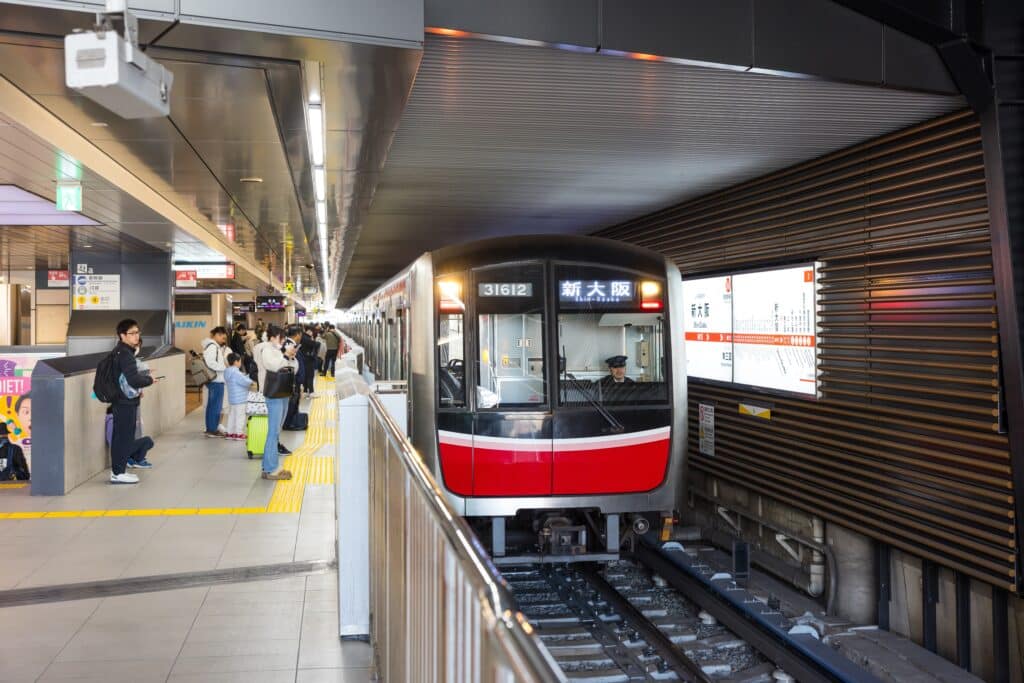
Getting around Osaka is surprisingly easy—even if it’s your first time in Japan.
The city has an efficient public transport system, and many of the main areas are closer together than they look on a map. Once you understand the basics, navigating Osaka becomes very straightforward.
The Subway System (Best for Most Trips)
Osaka’s subway is the easiest way to get around the city.
It connects all major areas like Namba, Shinsaibashi, and Umeda, and trains run frequently throughout the day.
For most travelers, the subway will be your main mode of transport.
JR Lines (Useful for Longer Distances)
In addition to the subway, JR (Japan Rail) lines run through Osaka and connect key stations.
They’re especially useful if you:
- Have a JR Pass
- Are traveling to nearby cities like Kyoto or Nara
- Stay near major hubs like Umeda
IC Cards (Highly Recommended)
Using an IC card like ICOCA or Suica makes everything easier.
You can:
- Tap in and out of trains and buses
- Avoid buying individual tickets
- Use it in convenience stores and vending machines
It’s one of the simplest ways to make your trip smoother.
Walking (Underrated but Important)
Some of Osaka’s best areas are very walkable.
In districts like Namba and Dotonbori, you’ll likely spend more time walking than using transport. Exploring on foot is often the best way to experience the city’s atmosphere.
Taxis (Convenient but Expensive)
Taxis are clean and reliable, but relatively expensive compared to public transport.
They can be useful:
- Late at night
- When carrying luggage
- For short distances in a group
Getting to and from Osaka
- From Tokyo → ~2.5 hours by Shinkansen
- From Kyoto → ~30 minutes
- From Nara → ~45 minutes
This makes Osaka one of the easiest cities to include in a Japan itinerary.
Osaka Food Guide: What to Eat in Osaka
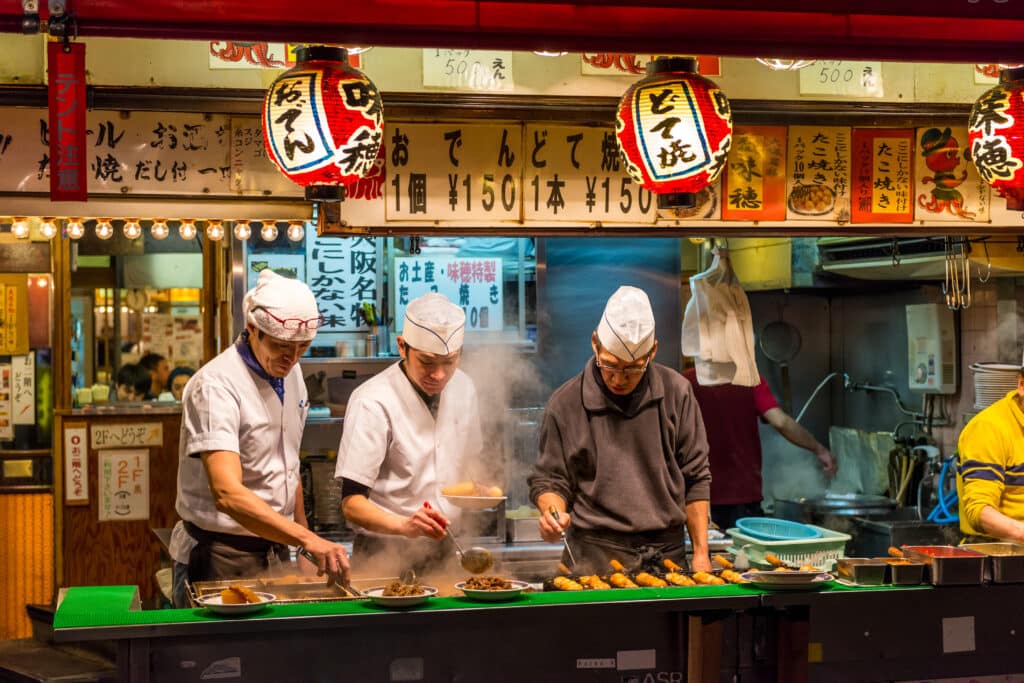
Osaka is often called “Japan’s kitchen”—and once you start eating your way through the city, it’s easy to see why.
Compared to places like Tokyo or Kyoto, Osaka’s food scene feels more casual, more affordable, and more focused on street food and local specialties.
This is a city where eating isn’t just part of the trip—it is the experience.
Must-Try Foods in Osaka
Here are the dishes you shouldn’t miss:
Takoyaki
Soft, savory octopus balls with a crispy outside—Osaka’s most famous street food.
Okonomiyaki
A thick, savory pancake made with cabbage, meat or seafood, and topped with sauce and mayo.
Kushikatsu
Deep-fried skewers of meat, seafood, and vegetables—best experienced in Shinsekai.
Street Food in General
Dotonbori is the best place to try multiple dishes in one evening.
Where to Eat
- Dotonbori → best for street food and atmosphere
- Namba → mix of casual restaurants and local spots
- Shinsekai → kushikatsu and retro food culture
- Kuromon Market → variety of foods in one place
How Osaka’s Food Culture Is Different
Food in Osaka is less formal than in other parts of Japan.
- More street food and casual dining
- Less focus on fine dining etiquette
- More about trying different things in one night
There’s even a local concept called “kuidaore”—which roughly means “eat until you drop.”
Want a deeper food guide?
For a full breakdown of Japanese dishes, where to find them, and what to prioritize: Check out this Japanese Food Guide.
Best Time to Visit Osaka
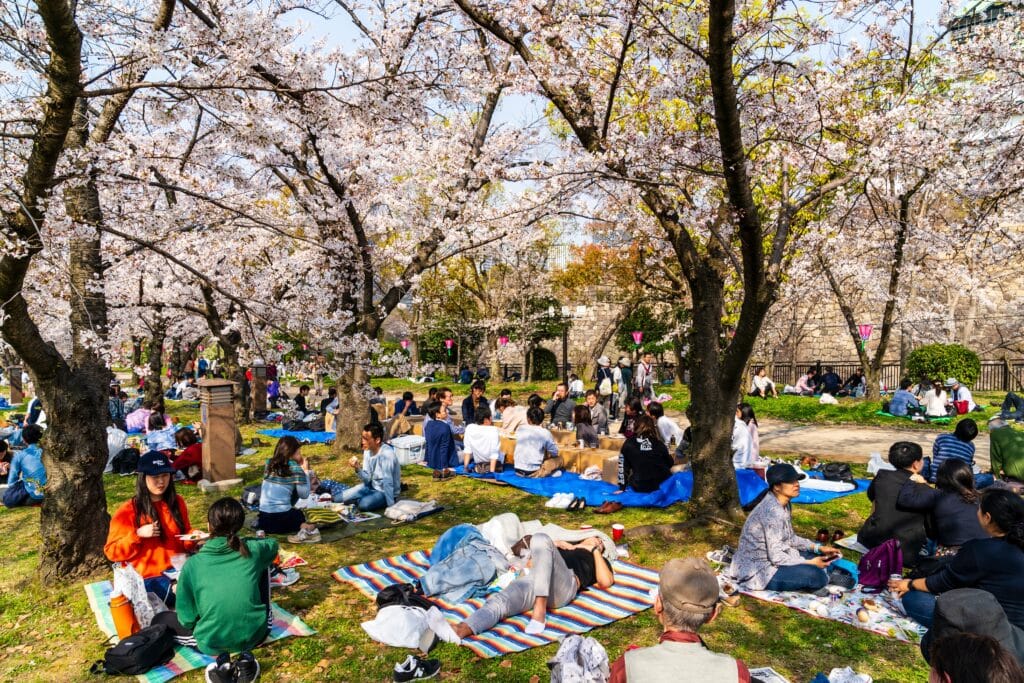
Osaka can be visited year-round, but your experience will vary quite a bit depending on the season.
The best time depends on what matters most to you—weather, crowds, prices, or specific experiences like cherry blossoms.
Seasonal Guide
Best Time to Visit Osaka
Choose the season that matches your travel priorities
Late March to early April — most popular but also most crowded
October to November — best balance of weather and scenery
April, May, October, and November — mild and comfortable
January, February, and early June — lower prices and fewer tourists
January, February, and early December — quieter overall
July to August — lively but hot and humid
April to May, October to November — best overall experience
Summers are very humid, and peak seasons book out early
What most travelers should choose
For the best overall experience, aim for:
- Spring (April–May) → great weather, cherry blossoms
- Autumn (October–November) → fewer crowds, beautiful colors
These months offer the best balance of weather, atmosphere, and overall comfort.
When to avoid (if possible)
- Mid-summer (July–August) → very hot and humid
- Golden Week (late April–early May) → extremely crowded
- New Year period → limited availability and higher prices
Want a full breakdown by month?
For a detailed seasonal breakdown, read the Best Time to Visit Japan guide.
Osaka Travel Tips
Osaka is one of the easiest cities to travel in Japan—but a few small tips can make your experience smoother and more enjoyable.
Carry Some Cash
While Japan is increasingly card-friendly, smaller restaurants, street food stalls, and local shops in Osaka still often prefer cash.
It’s best to always have some yen on hand—especially when exploring places like Dotonbori or Shinsekai.
Don’t Overplan Your Meals
Osaka is all about spontaneous eating.
Instead of making strict restaurant plans, leave room to:
- try street food
- follow busy local spots
- eat multiple small meals
Some of the best food experiences here are unplanned.
Stay Central to Save Time
Choosing the right area (like Namba or Shinsaibashi) will save you a lot of time.
Osaka is compact, but staying centrally means:
- more walking, less transport
- easy access to nightlife and food
- a better overall experience
Use an IC Card from Day One
Get an IC card like ICOCA or Suica as soon as you arrive.
It makes:
- trains
- buses
- convenience store purchases
much easier and faster.
Visit Dotonbori at Night
Dotonbori is completely different during the day and at night.
The neon lights, crowds, and atmosphere are what make it special—so plan at least one evening visit.
Pack Light (If Possible)
Hotel rooms in Osaka can be compact, especially in central areas.
Traveling with lighter luggage makes:
- moving between cities easier
- navigating stations less stressful
Learn a Few Basic Phrases
English is widely understood in major areas, but knowing a few simple Japanese phrases goes a long way.
Even basic greetings can make interactions smoother and more enjoyable.
Try Local Specialties
Osaka takes pride in its food culture.
Don’t leave without trying:
- takoyaki
- okonomiyaki
- kushikatsu
It’s one of the main reasons to visit the city in the first place.
Osaka vs Tokyo vs Kyoto: Which City Is Best?
If you’re planning your first trip to Japan, choosing between Tokyo, Kyoto, and Osaka can feel overwhelming.
The truth is—you don’t have to choose just one. Each city offers a completely different experience, and together they create a well-balanced trip.
Japan’s Top Cities at a Glance
City Comparison
Osaka vs Tokyo vs Kyoto
Each city offers a different experience — here’s how they compare
Best for variety, modern city life, shopping, and first-time visitors who want everything in one place
Best for temples, traditional culture, historic districts, and a slower, more atmospheric experience
Best for food, nightlife, and a more relaxed, local city vibe focused on enjoyment
Tokyo is fast-paced, Kyoto is calm and traditional, while Osaka is lively and informal
Tokyo is diverse, Kyoto is refined, Osaka is casual and street food-focused
Combine all three if possible — they complement each other perfectly
How to choose between them
- Go to Tokyo if you want the biggest variety of experiences
- Choose Kyoto if your focus is culture and traditional Japan
- Visit Osaka if you care most about food, atmosphere, and nightlife
For most travelers, the best decision isn’t choosing—it’s combining them into one itinerary.
How they work together
A classic first-time Japan route looks like this:
- Start in Tokyo
- Travel to Kyoto for culture
- Finish in Osaka for food and atmosphere
Each city adds something different, and skipping one usually means missing a key part of the experience.
Want detailed guides for each city?
Osaka Travel FAQ
Is Osaka worth visiting on a first trip to Japan?
Yes—especially if you enjoy food, nightlife, and a more relaxed city atmosphere.
While Kyoto is better for traditional culture and Tokyo offers more variety, Osaka adds a fun, local, and food-focused experience that balances a Japan itinerary.
How many days do you need in Osaka?
Most travelers need 2 to 3 days.
- 1 day → quick highlights
- 2 days → ideal for city experience
- 3 days → includes a day trip (e.g., Nara or Kyoto)
What is Osaka best known for?
Osaka is best known for:
- Street food (takoyaki, okonomiyaki)
- Dotonbori’s neon nightlife
- A more casual and outgoing local culture
It’s often called “Japan’s kitchen.”
Is Osaka better than Kyoto?
They offer completely different experiences.
- Kyoto → temples, tradition, quiet atmosphere
- Osaka → food, nightlife, city energy
Most travelers visit both rather than choosing one.
Is Osaka expensive?
Osaka is generally slightly cheaper than Tokyo, especially for food and accommodation.
- Street food and casual dining are affordable
- Hotels offer good value compared to Tokyo
- Transport costs are similar across Japan
What is the best area to stay in Osaka?
For most travelers, Namba is the best choice.
It offers:
- central location
- walking access to Dotonbori
- great food and nightlife
Umeda is a good alternative if you prioritize transport connections.
Is Osaka easy to get around?
Yes, Osaka is one of the easiest cities to navigate in Japan.
- Efficient subway system
- Clear signage (often in English)
- Walkable central districts
Using an IC card like ICOCA makes travel even easier.
When is the best time to visit Osaka?
The best times are:
- Spring (March–May) → cherry blossoms
- Autumn (October–November) → mild weather and fewer crowds
Summer is lively but very hot and humid.
Can you do Osaka as a day trip?
Yes, but it’s not ideal.
You can see Dotonbori and a few highlights in one day, but staying at least one night gives you a much better experience—especially to enjoy the city at night.
What food should you try in Osaka?
Must-try foods include:
- Takoyaki (octopus balls)
- Okonomiyaki (savory pancake)
- Kushikatsu (fried skewers)
Exploring street food in Dotonbori is one of the highlights of visiting Osaka.
Final Thoughts
Osaka isn’t a city that impresses through famous landmarks or carefully curated sights.
Instead, it’s a place you experience.
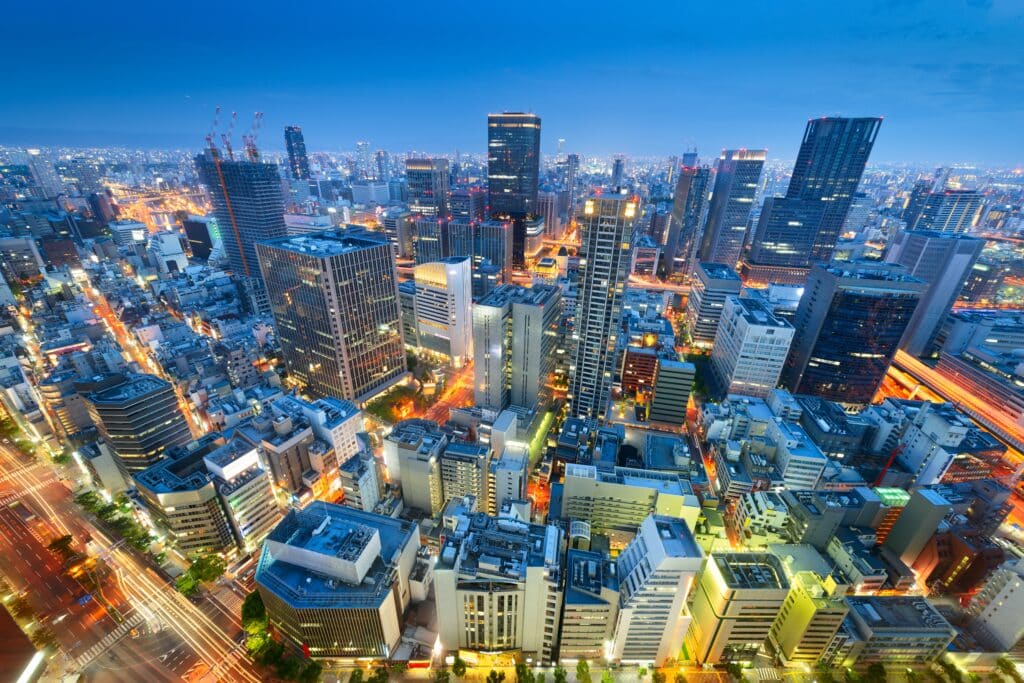
It’s the energy of neon-lit streets in Dotonbori, the spontaneity of trying street food you didn’t plan for, and the feeling of a city that doesn’t take itself too seriously. Compared to Kyoto and Tokyo, Osaka feels more relaxed, more social, and more focused on enjoying the moment.
That’s exactly why it stands out.
For most travelers, Osaka works best as part of a Kansai itinerary—combined with Kyoto and a day trip to Nara. But even a short stay here can easily become one of the highlights of a trip to Japan.
If you approach Osaka with the right expectations—not as a checklist of sights, but as a city to explore, eat, and enjoy—it often ends up being the place people remember most.