
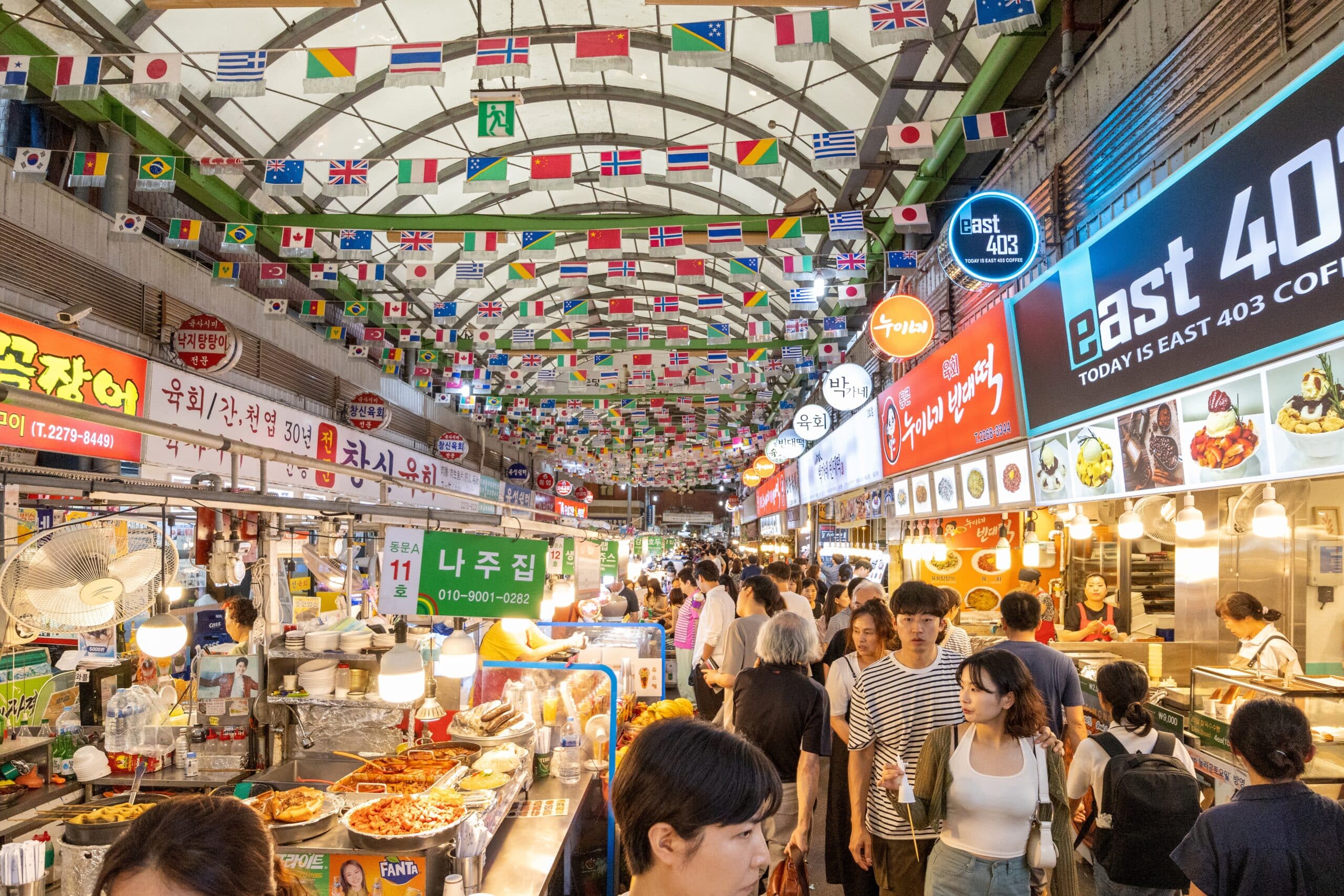
Street food is one of the most exciting parts of traveling through South Korea. From lively night markets to small roadside stalls, Korean street food offers an incredible variety of flavors that reflect the country’s culinary culture. Travelers walking through food districts in Seoul or along busy market streets in Busan quickly discover that these snacks are more than just quick meals—they are an essential part of everyday life.
Korean street food combines bold spices, comforting textures, and creative ingredients. Vendors prepare dishes right in front of customers, filling the air with the aromas of sizzling sauces, grilled meats, and freshly fried snacks. Many of these dishes have been enjoyed for generations and remain popular among both locals and visitors.
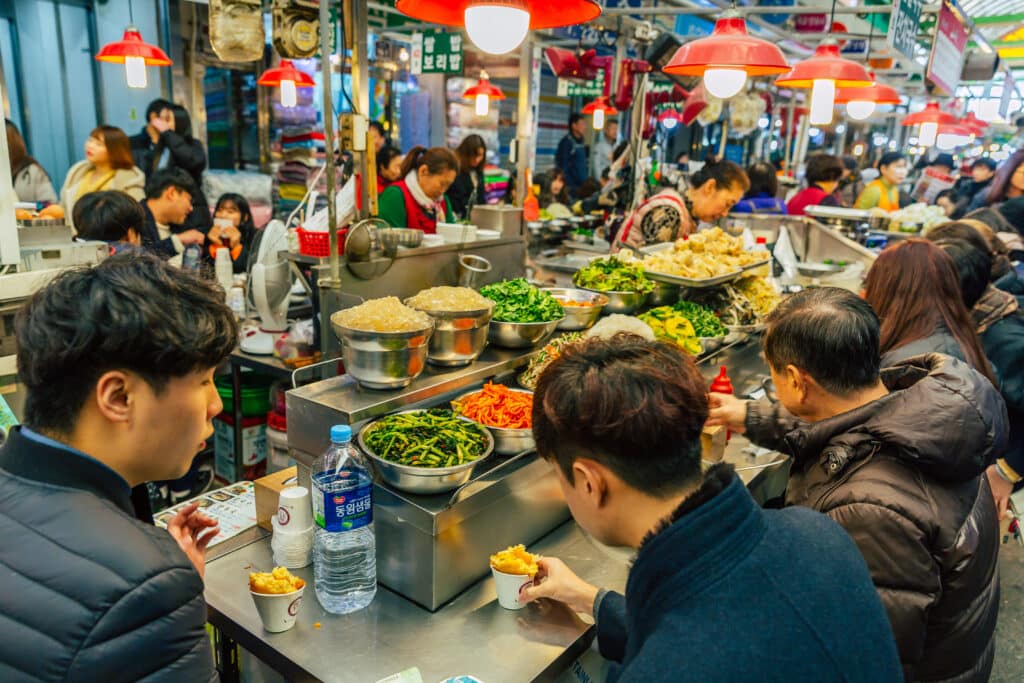
Markets such as Gwangjang Market in Seoul and Jagalchi Fish Market in Busan provide some of the best opportunities to try authentic Korean street food. Here, visitors can sample everything from spicy rice cakes to sweet pancakes and savory skewers.
Below are fifteen of the most popular Korean street foods that every traveler should try when visiting South Korea.
Korean Street Food at a Glance
Not sure what to try first? Here are the must-try Korean street foods based on taste and experience:
- Most popular: Tteokbokki (spicy rice cakes)
- Best sweet snack: Hotteok (sweet pancakes)
- Best savory snack: Korean fried chicken
- Most fun street food: Korean corn dog
- Best for cold weather: Odeng (fish cake skewers)
- Best grilled snack: Dakkochi (chicken skewers)
- Most unique snack: Tornado potato
- Best traditional dessert: Bungeoppang (fish-shaped pastry)
Perfect for travelers exploring Korean street food markets and night markets
Table of Contents
Best Korean Street Foods
Tteokbokki – Spicy Rice Cakes
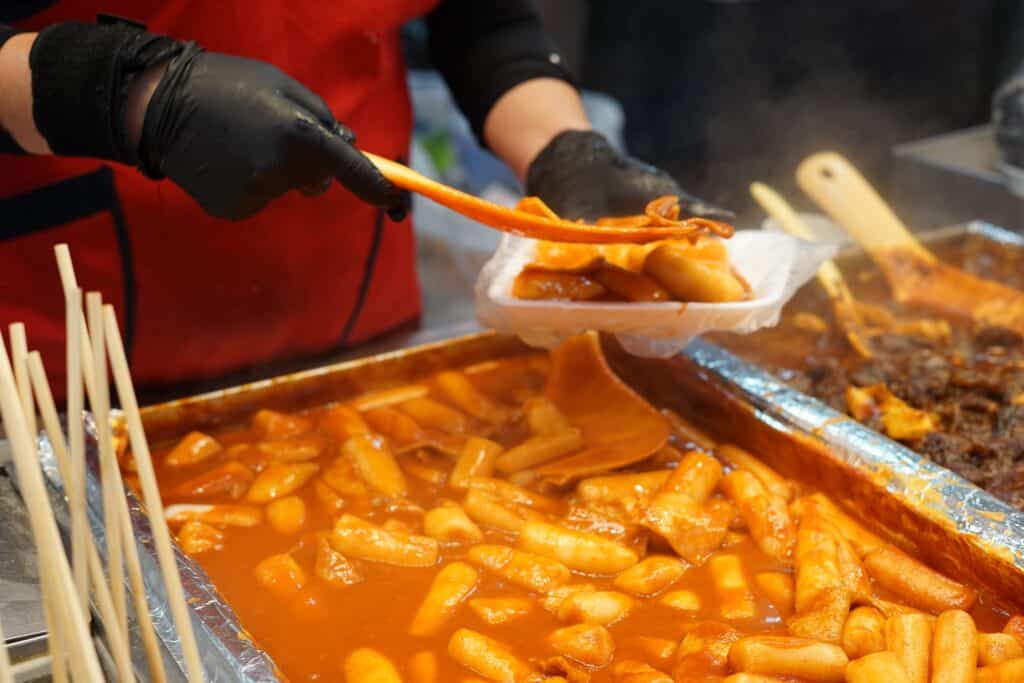
Tteokbokki is arguably the most famous Korean street food. The dish consists of chewy rice cakes cooked in a spicy sauce made from gochujang, a fermented chili paste that gives Korean cuisine its distinctive flavor.
Street vendors typically simmer the rice cakes in large pans with fish cakes, onions, and sometimes boiled eggs. The sauce becomes thick and rich, coating every bite with spicy and slightly sweet flavors.
In food markets across Seoul, vendors constantly stir bubbling pans of tteokbokki, attracting long lines of customers eager for a warm snack. The dish is especially popular during cooler evenings when its comforting heat is most enjoyable.
Hotteok – Sweet Korean Pancakes
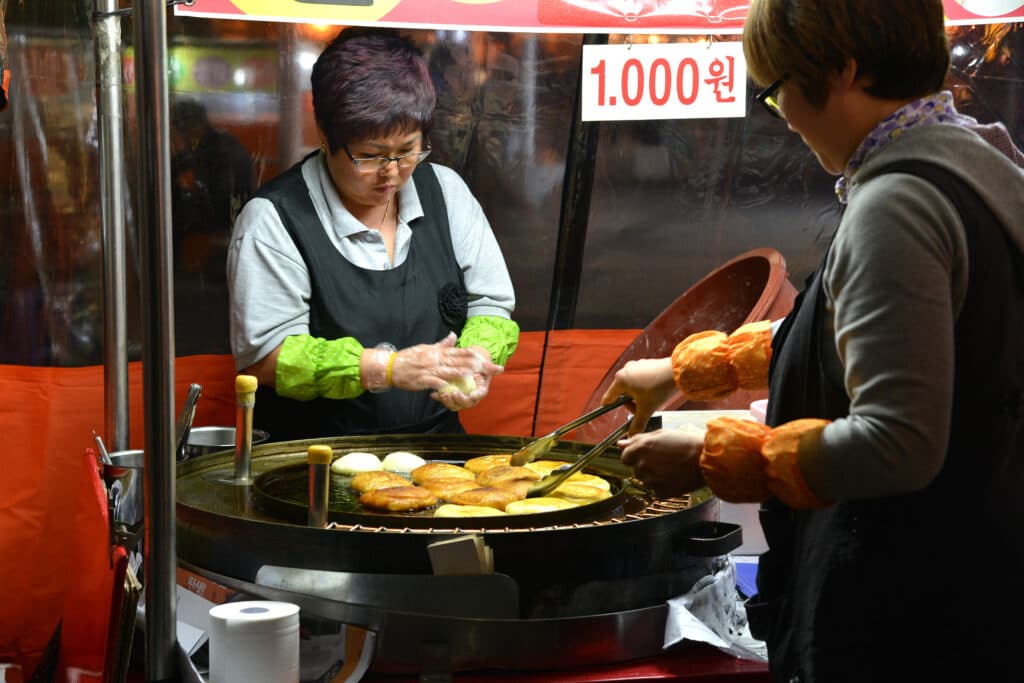
Hotteok is a beloved Korean street dessert that is especially popular during winter. These pancakes are made from soft dough filled with brown sugar, cinnamon, and crushed nuts.
When cooked on a hot griddle, the sugar melts into a syrupy filling that creates a sweet and warm treat. The outside becomes crisp while the inside remains soft and gooey.
Hotteok stalls are easy to spot in busy shopping streets of Busan and Seoul, where vendors flatten the dough on large pans and serve the pancakes fresh to customers.
Gimbap – Korean Rice Rolls
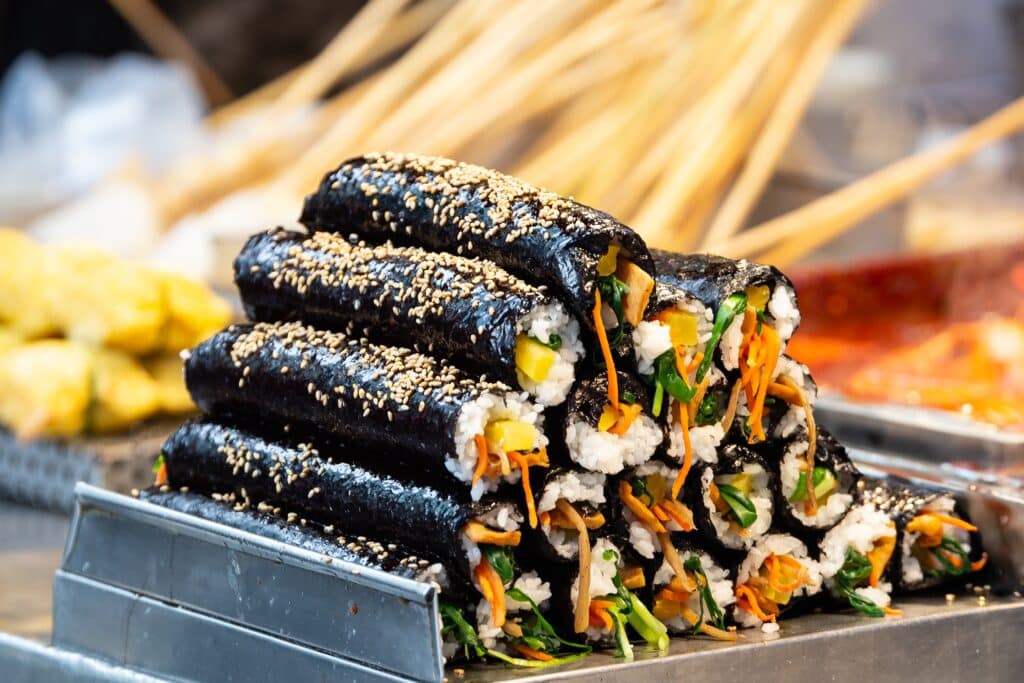
Gimbap is a simple but satisfying street snack made from rice and fillings wrapped in dried seaweed. Ingredients often include vegetables, egg, pickled radish, and sometimes meat or tuna.
Although gimbap resembles sushi, its flavor and preparation are distinctly Korean. Sesame oil and other seasonings give the rice a unique taste that makes the dish especially flavorful.
Because it is easy to carry and eat on the go, gimbap is often sold in street stalls and small snack shops throughout South Korea.
Korean Fried Chicken – Crispy Street Favorite
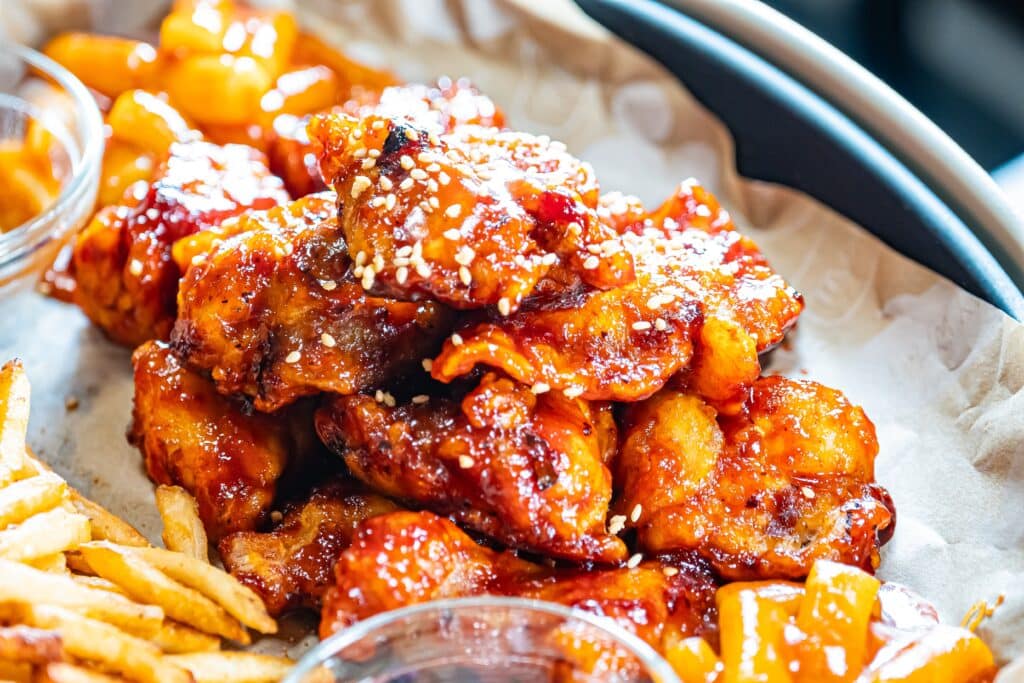
Korean fried chicken has become famous around the world, but it remains a popular street food in its home country. Vendors fry chicken twice to achieve an incredibly crispy texture.
The chicken is then coated in sauces such as sweet soy glaze, garlic butter, or spicy chili sauce. The result is a crunchy and flavorful snack that pairs perfectly with cold drinks.
In Busan, fried chicken stalls often stay open late into the night, serving hungry visitors after exploring the city’s nightlife.
Odeng – Fish Cake Skewers
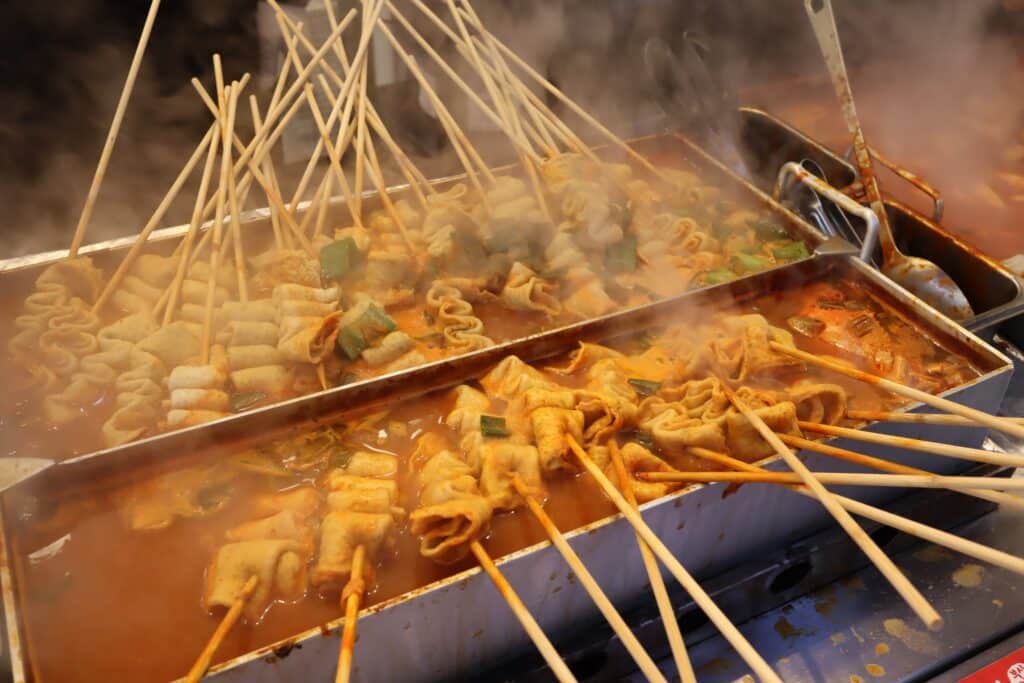
Odeng, also known as fish cake skewers, is a comforting street snack served in hot broth. Vendors place skewers of fish cake into steaming pots where they absorb the flavorful soup.
Customers often grab a skewer and sip the broth from small cups provided by the vendor. This warm snack is particularly popular during colder months.
The mild seafood flavor and soft texture make odeng an easy introduction to Korean street food.
Korean Corn Dog – Crispy and Cheesy
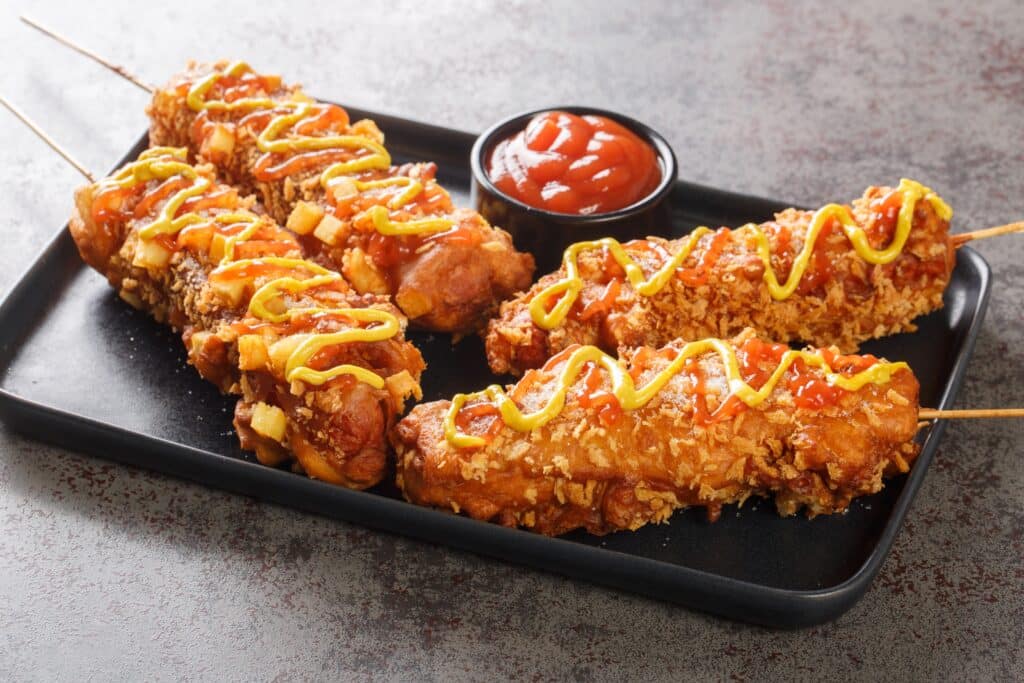
Korean corn dogs are a fun twist on the classic American snack. Vendors coat hot dogs or cheese sticks in thick batter before frying them until golden and crispy.
Some versions include diced potatoes on the outside for extra crunch. The finished corn dog is often dusted with sugar and topped with ketchup or mustard.
This snack has become extremely popular in street markets across South Korea.
Bungeoppang – Fish-Shaped Pastry
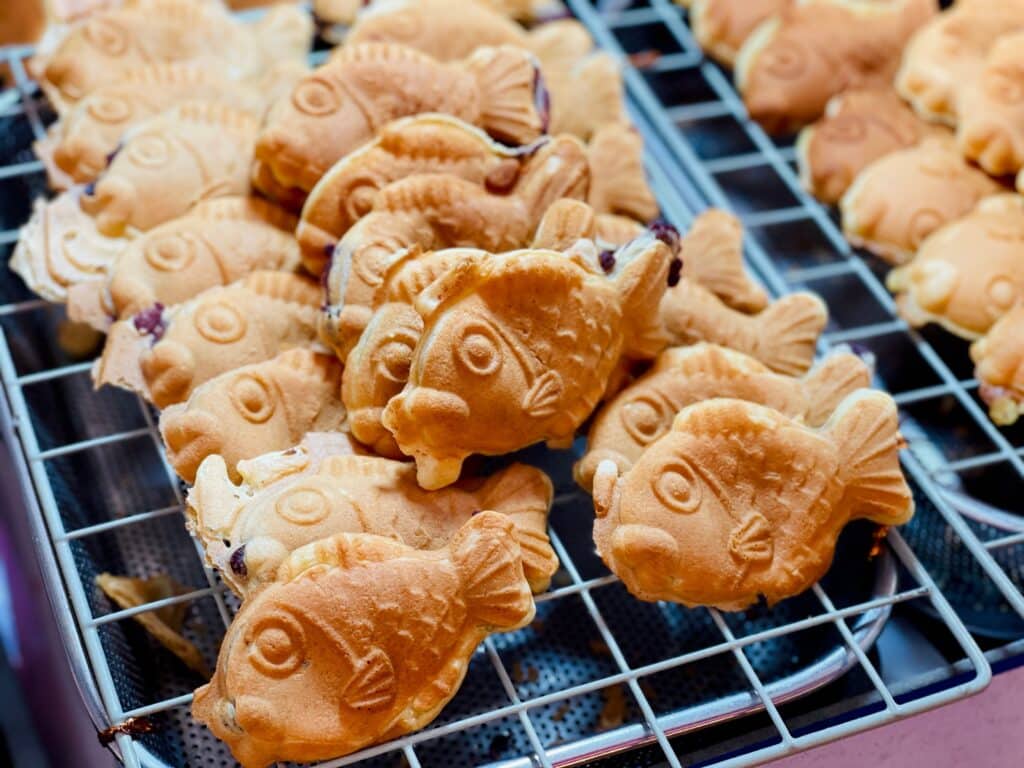
Bungeoppang is a sweet pastry shaped like a fish and filled with red bean paste or custard. Vendors cook the batter in special molds that give the pastry its distinctive shape.
The outside becomes crisp while the filling remains warm and soft. This dessert is especially popular during winter festivals and holiday markets.
Dakkochi – Grilled Chicken Skewers
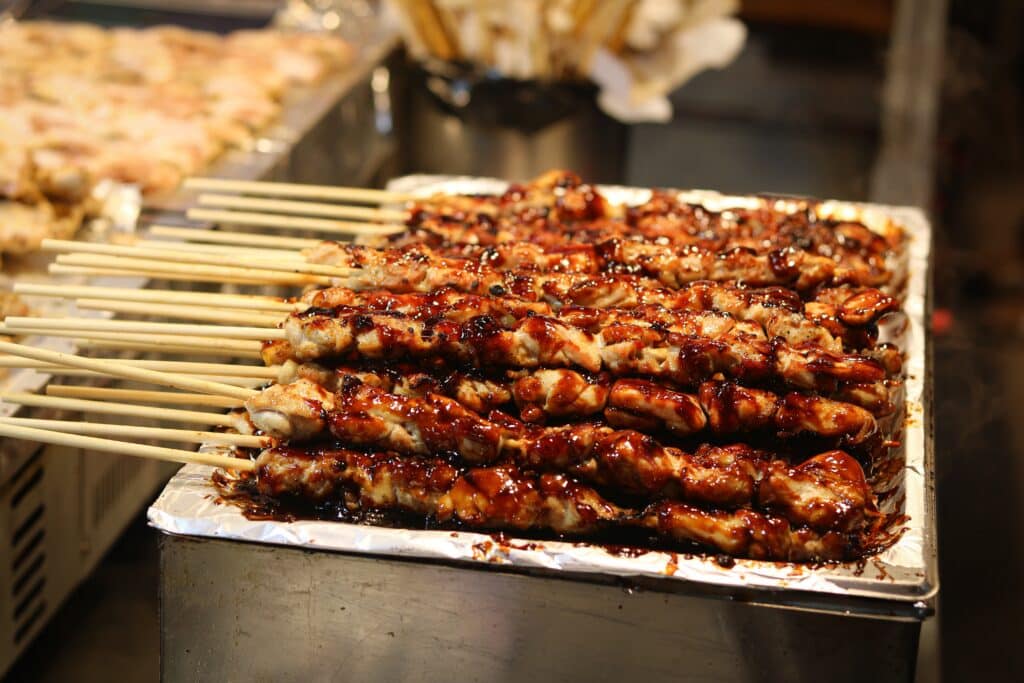
Dakkochi consists of grilled chicken pieces served on skewers and brushed with sweet or spicy sauces. The chicken is cooked over open flames, giving it a slightly smoky flavor.
Street vendors often prepare dakkochi in busy nightlife districts where visitors stop for quick grilled snacks.
Twigim – Korean Fried Snacks
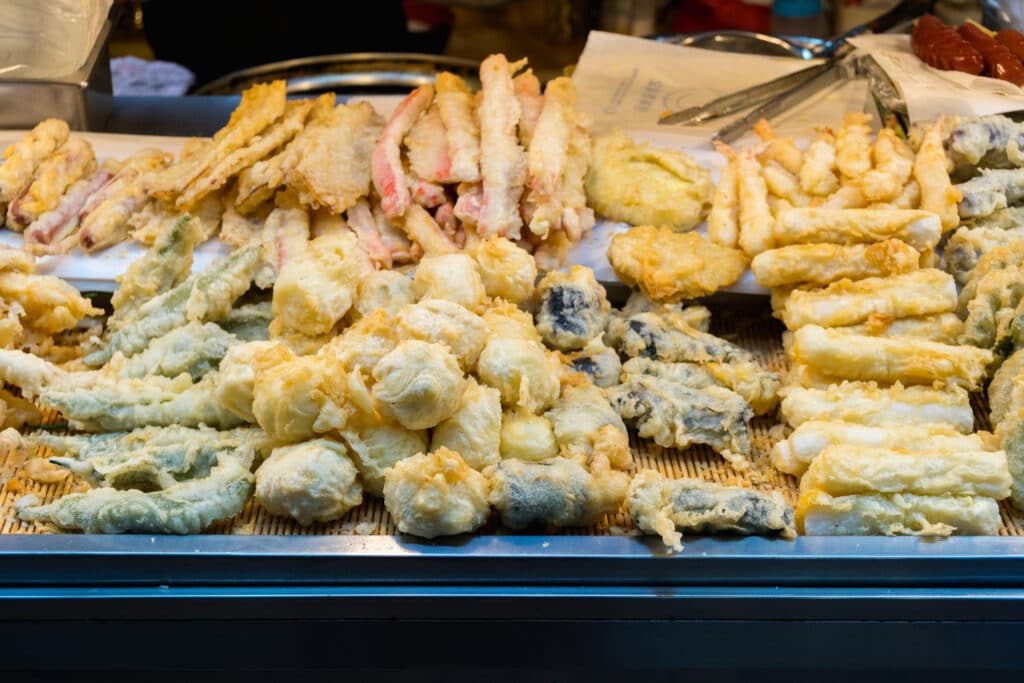
Twigim refers to a variety of deep-fried foods sold at street stalls. Popular options include fried shrimp, sweet potatoes, vegetables, and even boiled eggs wrapped in batter.
These crispy snacks are commonly served alongside tteokbokki, allowing customers to dip the fried pieces into the spicy sauce.
Eomuk – Fish Cake Soup
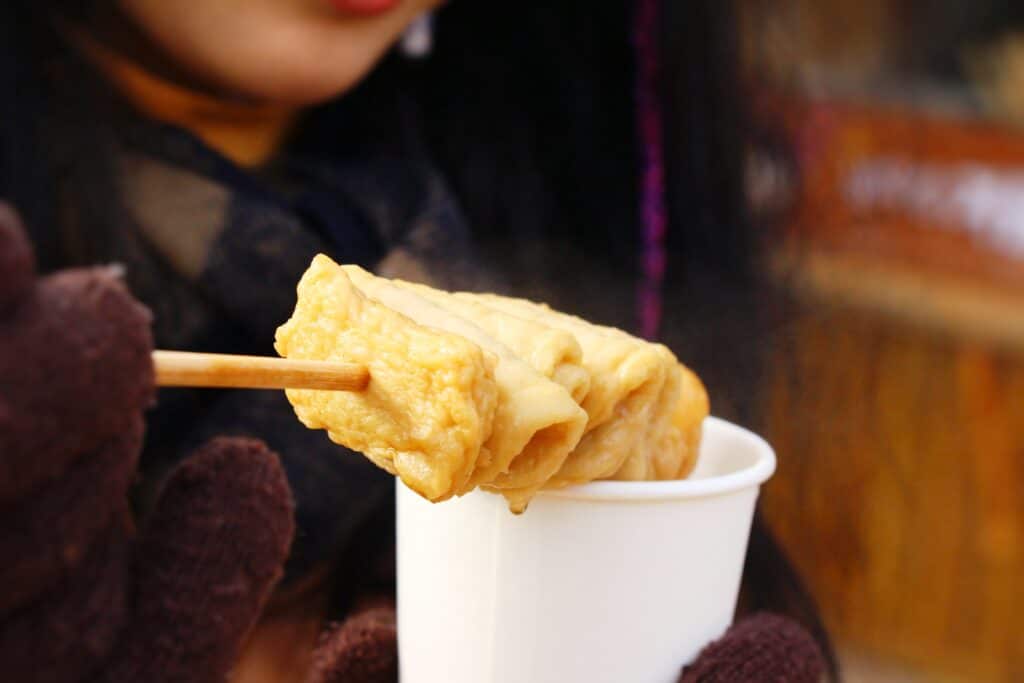
Eomuk is similar to odeng and is served as fish cakes simmered in broth. The warm soup is often served in paper cups, making it easy to enjoy while walking through markets.
This comforting snack is especially popular in colder weather.
Sundae – Korean Blood Sausage
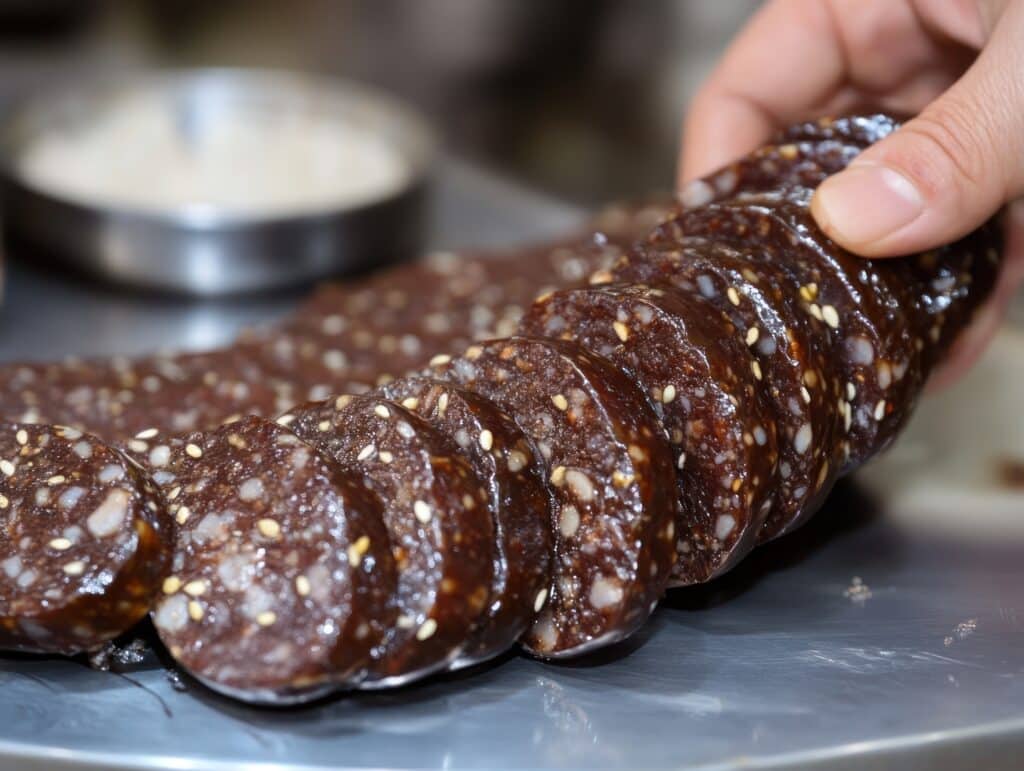
Sundae is a traditional Korean sausage made from pig intestine filled with glass noodles and rice. It is usually served sliced and accompanied by salt or dipping sauces.
Although it may seem unusual to some travelers, sundae is a beloved snack among locals.
Tornado Potato – Spiral Potato Snack
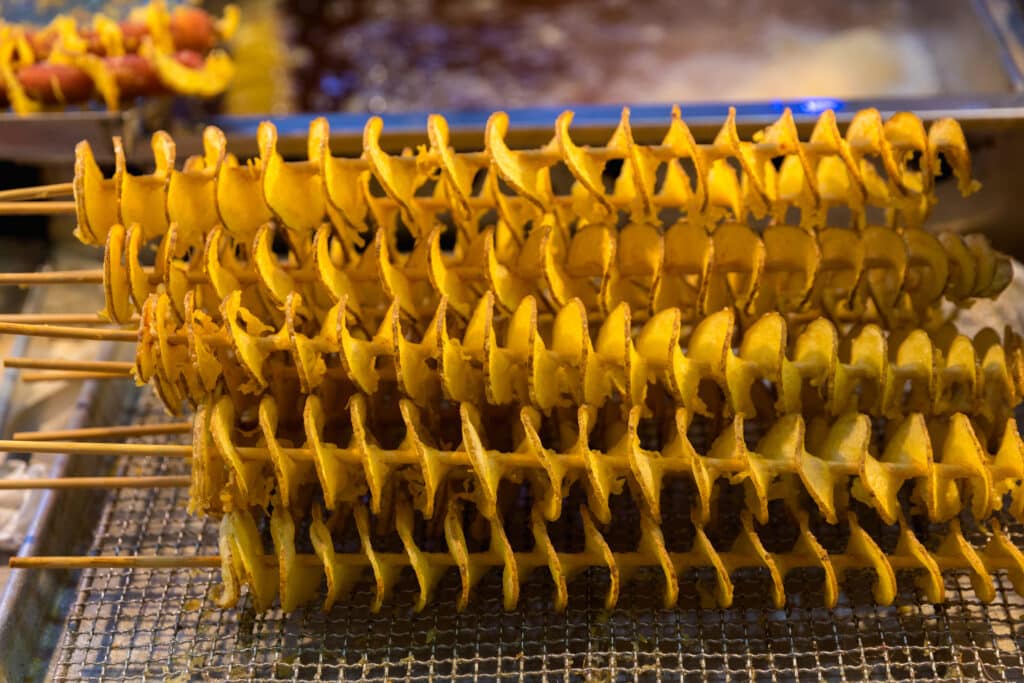
The tornado potato is a fun and visually striking street snack made by cutting a potato into a spiral shape before frying it on a skewer.
The crispy potato is then sprinkled with seasoning powders such as cheese or chili.
Hodugwaja – Walnut Pastry
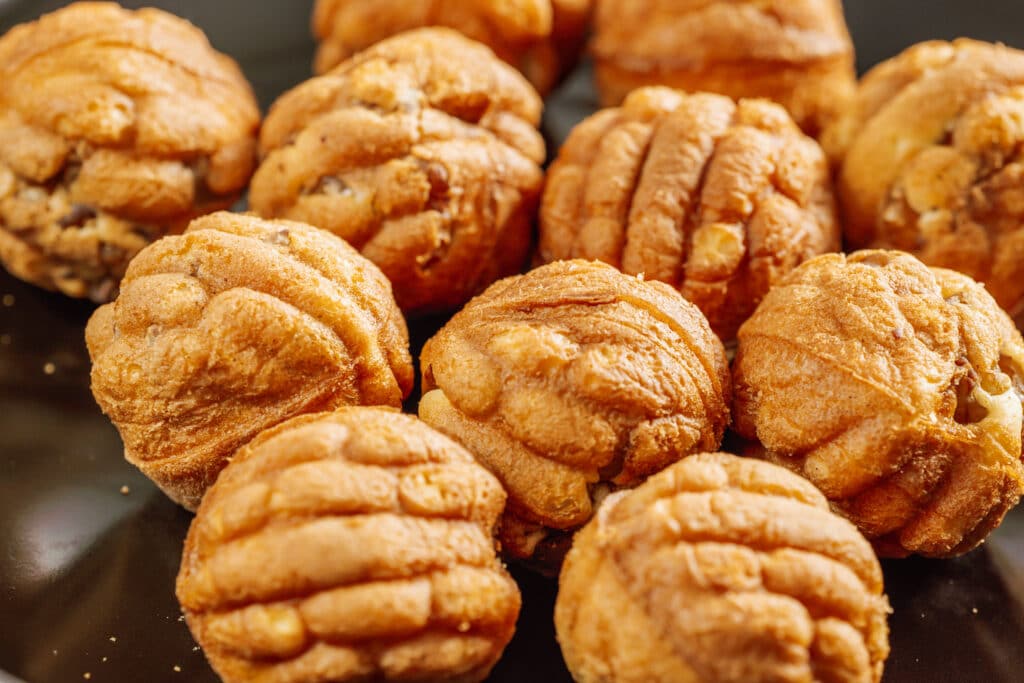
Hodugwaja are small walnut-shaped pastries filled with sweet red bean paste and walnuts. These bite-sized snacks are popular in markets and roadside stands.
Their soft texture and nutty flavor make them a favorite dessert among locals.
Korean Egg Bread – Sweet and Savory Snack

Egg bread is a fluffy pastry baked with a whole egg in the center. Vendors prepare the batter in small molds and cook it until golden brown.
The combination of sweet bread and savory egg creates a unique flavor that many travelers find surprisingly delicious.
Where to Try Korean Street Food
Travelers exploring South Korea will find street food almost everywhere, especially in major cities.
In Seoul, popular street food areas include night markets and traditional markets such as Gwangjang Market.
Meanwhile, Busan offers excellent seafood snacks and local specialties near its bustling coastal markets.
Walking through these lively food districts is one of the best ways to experience Korean street food culture.
Best Street Food Markets in South Korea
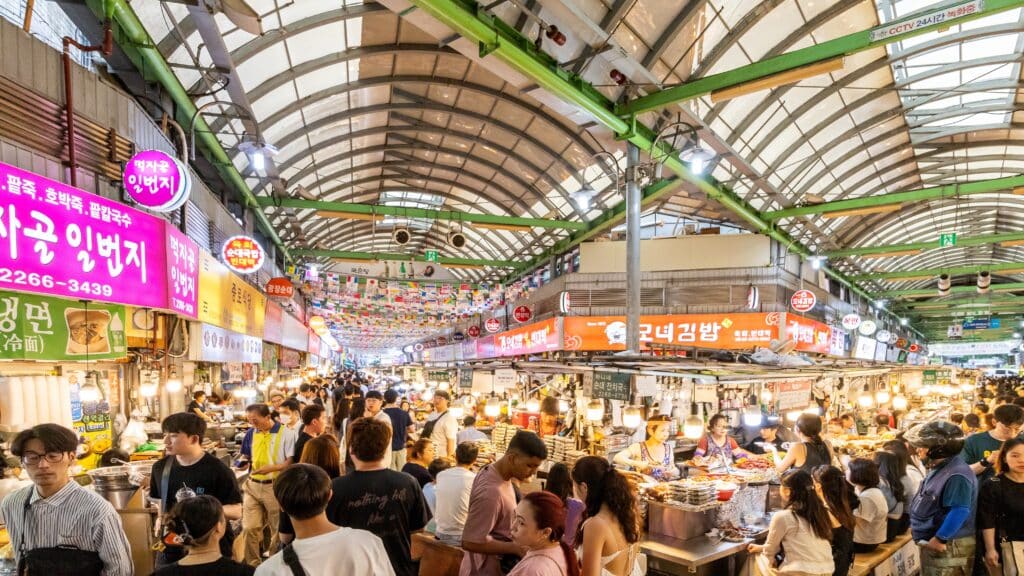
Street food culture is deeply connected to traditional markets across South Korea. Many of the most famous dishes are best experienced in lively market streets where vendors cook fresh snacks throughout the day.
One of the most famous food markets is Gwangjang Market in Seoul. This historic market has become a popular destination for both locals and visitors who want to try authentic Korean street food. Vendors serve dishes such as Tteokbokki, crispy fried snacks, and traditional pancakes.
Another excellent destination is Jagalchi Fish Market in Busan. Although the market is famous for seafood, visitors can also find grilled fish, fried snacks, and other street food favorites prepared by local vendors.
Walking through these markets allows travelers to experience the lively atmosphere that makes Korean street food culture so unique.
Street Food Etiquette in South Korea
Street food in South Korea is usually enjoyed casually while standing near the vendor or walking through busy market streets. Vendors often serve snacks on small trays, paper plates, or wooden skewers, making them easy to eat on the go.
Many visitors are surprised by how social the experience can be. Groups of friends often gather around food stalls to try several dishes together, sampling different flavors from multiple vendors.
Another common custom is returning trays or cups to the vendor after finishing a snack. In some markets, vendors also provide small tables where visitors can briefly sit while eating.
Although street food culture is relaxed, vendors take pride in their food and appreciate polite behavior from customers.
Why Korean Street Food Is So Popular
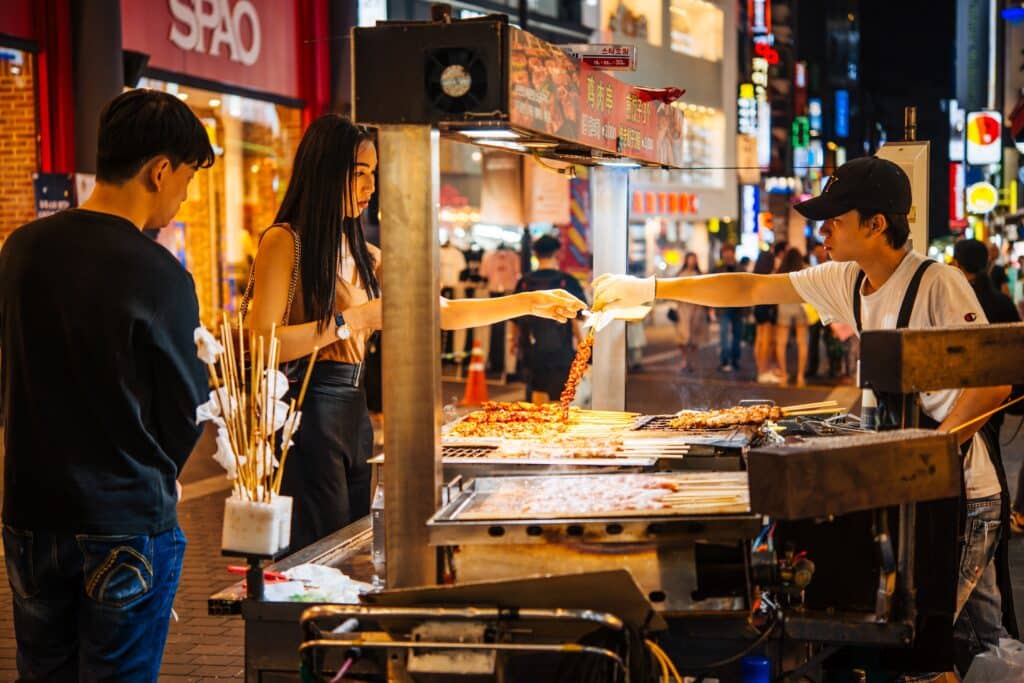
Street food has been part of Korean culture for generations. Historically, small food stalls provided quick meals for workers and travelers in busy cities.
Today, these stalls remain an essential part of daily life in South Korea. The popularity of street food comes from its convenience, affordability, and bold flavors. Vendors often specialize in a single dish, allowing them to perfect recipes that have been passed down for years.
For travelers, exploring street food markets offers an authentic way to experience Korean culture. The combination of sizzling grills, colorful ingredients, and lively crowds creates an unforgettable culinary adventure.
Explore More Travel Guides in South Korea
FAQ About Korean Street Food
What is the most popular street food in South Korea?
Tteokbokki, spicy rice cakes in chili sauce, is the most popular Korean street food. It can be found in almost every market and street food area across the country.
Where can you try Korean street food?
The best places to try Korean street food are traditional markets and night markets, especially in Seoul and Busan. Popular spots include Gwangjang Market and Jagalchi Fish Market.
Is Korean street food expensive?
No, Korean street food is generally affordable. Most snacks cost only a few dollars, making it a budget-friendly way to experience local cuisine.
Is Korean street food safe to eat?
Yes, street food in South Korea is generally safe. Vendors maintain good hygiene standards, and food is usually prepared fresh in front of customers.
What Korean street food should first-time visitors try?
First-time visitors should try tteokbokki, hotteok, gimbap, Korean fried chicken, and odeng to experience a mix of sweet, spicy, and savory flavors.
Can you eat Korean street food as a meal?
Yes, many street foods such as gimbap, fried chicken, and tteokbokki are filling enough to be enjoyed as a full meal.
Final Thoughts
Trying street food is one of the most enjoyable ways to experience the culture of South Korea. From spicy rice cakes and grilled skewers to sweet pancakes and crispy fried snacks, the country’s street food scene offers endless flavors to discover.
Whether exploring markets in Seoul or enjoying seaside food stalls in Busan, these dishes provide a delicious glimpse into everyday life in South Korea.