

South Korea is widely known for its vibrant cities, rich cultural heritage, and delicious cuisine. Yet beyond the urban landscapes lies another side of the country filled with rugged mountains, dense forests, and dramatic coastlines. With more than twenty protected parks across the peninsula, South Korea offers some of the most beautiful natural scenery in East Asia.
Many of the country’s most iconic landscapes are preserved within national parks, where visitors can hike through granite peaks, discover hidden temples, and enjoy spectacular seasonal scenery. In spring, forests bloom with flowers and fresh greenery. Autumn transforms the mountains into brilliant displays of red and gold foliage, while winter brings snow-covered landscapes that feel peaceful and remote.
Several national parks are easily accessible from major cities such as Seoul, making them ideal for both day trips and longer adventures. Others are located in more remote regions, where visitors can experience untouched wilderness and traditional mountain culture.
Whether you are an experienced hiker or simply looking for scenic viewpoints and quiet nature trails, the national parks of South Korea offer unforgettable outdoor experiences. Below are some of the most beautiful parks to include in your travel itinerary.
Quick Guide to National Parks in South Korea
Total National Parks: About 22–23 protected parks across the country
Landscape: Mostly mountainous terrain with forests, waterfalls, temples, and coastal scenery
Largest Mountain Park: Jirisan National Park – the biggest terrestrial national park in South Korea
Highest Peak: Hallasan National Park on Jeju Island (1,950 m)
Most Famous Park: Seoraksan National Park – known for granite peaks, temples, and autumn foliage
Closest to Seoul: Bukhansan National Park – popular hiking escape near the capital
Best Autumn Colors: Naejangsan National Park
Best Season for Hiking: Spring and autumn when temperatures are mild and foliage is beautiful.
Map of National Parks in South Korea
South Korea’s national parks are spread across the country, from the granite mountains of Seoraksan National Park in the northeast to the volcanic landscapes of Hallasan National Park on Jeju Island. The map below highlights the main parks travelers often visit when exploring South Korea’s natural landscapes.
Table of Contents
Top National Parks in South Korea
Seoraksan National Park – South Korea’s Most Famous Mountain Park

Located in the northeastern part of the country, Seoraksan National Park is often considered the most spectacular national park in South Korea. The park is famous for its dramatic granite peaks, forested valleys, and ancient temples hidden among the mountains.
Visitors can explore a network of hiking trails that range from gentle walks to challenging mountain climbs. One of the most rewarding hikes leads to Ulsanbawi Rock, where panoramic views reveal the rugged landscape of the surrounding peaks.
Another highlight of the park is Sinheungsa Temple, a historic Buddhist temple located at the entrance to the mountains. The temple’s peaceful atmosphere and traditional architecture provide a fascinating contrast to the dramatic natural scenery.
Autumn is the most popular time to visit Seoraksan National Park. During this season, the forests explode with vibrant fall colors, attracting travelers from across South Korea and beyond.
Hallasan National Park – Hiking South Korea’s Highest Mountain

Located on Jeju Island, Hallasan National Park protects the tallest mountain in South Korea. Rising more than 1,900 meters above sea level, Hallasan is a massive shield volcano that dominates the island’s landscape.
Several hiking trails lead toward the summit, offering travelers the opportunity to experience a wide range of ecosystems. As hikers climb higher, they pass through forests, alpine meadows, and volcanic landscapes before reaching the crater lake at the top of the mountain.
The summit views are spectacular, especially on clear days when the surrounding island and ocean become visible in the distance. Because of its volcanic origins, the terrain here is very different from mainland mountain parks.
Hallasan National Park is one of the most rewarding destinations for outdoor enthusiasts visiting Jeju Island. The combination of scenic hiking routes, unique geology, and breathtaking views makes it a highlight of any trip to the island.
Jirisan National Park – Korea’s Largest National Park

Jirisan National Park is the largest and one of the oldest national parks in South Korea. Located in the southern part of the peninsula, the park covers an enormous area of mountains, valleys, and forests.
The park is especially popular among hikers because of its extensive trail network. The most famous route leads to the summit of Cheonwangbong Peak, the highest point of Jirisan. Reaching the summit requires a long hike, but the views across the surrounding mountain ranges make the effort worthwhile.
Jirisan is also home to several historic temples, including Hwaeomsa Temple, which dates back more than a thousand years. These temples offer peaceful places to rest and reflect while exploring the mountains.
Because of its vast size and natural beauty, Jirisan National Park provides one of the most immersive wilderness experiences in South Korea.
Bukhansan National Park – Mountain Hiking Near Seoul

For travelers staying in Seoul, Bukhansan National Park offers one of the most accessible outdoor escapes in the country. Located just north of the capital, the park features granite peaks, forest trails, and scenic viewpoints overlooking the city.
Despite its proximity to Seoul, Bukhansan feels surprisingly wild. Hikers can climb rugged trails that lead to spectacular rock formations and panoramic mountain vistas. One of the most famous viewpoints is Baegundae Peak, the highest point in the park.
The park is particularly popular with locals on weekends, when residents of Seoul head into the mountains to enjoy fresh air and exercise. For visitors, it provides a convenient opportunity to experience Korea’s natural landscapes without traveling far from the city.
Naejangsan National Park – Famous for Autumn Foliage

Naejangsan National Park is widely regarded as one of the best places in South Korea to see autumn foliage. During the fall months, the park’s forests transform into vibrant shades of red, orange, and gold.
Visitors can walk along scenic trails surrounded by maple trees and mountain streams. One of the most photographed locations in the park is Naejangsa Temple, where traditional buildings stand beneath colorful autumn leaves.
Although autumn is the most popular season, Naejangsan National Park is beautiful throughout the year. Spring brings blooming flowers, while summer offers lush greenery and refreshing mountain air.
Because of its stunning seasonal scenery, Naejangsan is a favorite destination for nature lovers and photographers.
Odaesan National Park – Peaceful Forests and Ancient Temples
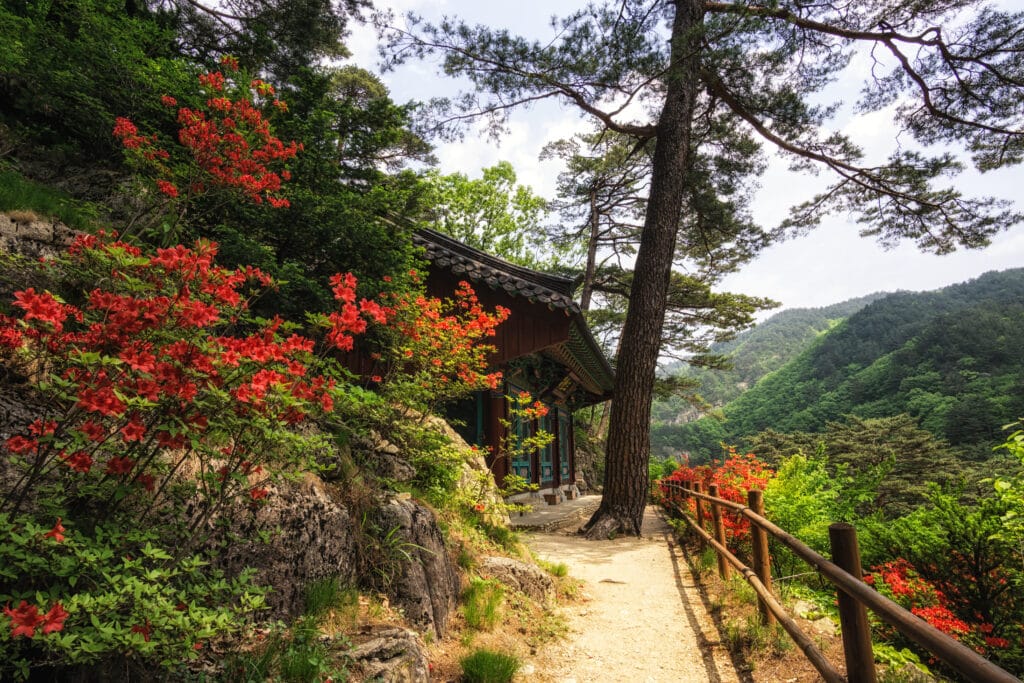
Located in Gangwon Province, Odaesan National Park is known for its peaceful forests, scenic mountain trails, and historic Buddhist temples. Compared with some of the country’s more famous parks, Odaesan offers a quieter atmosphere where visitors can enjoy nature without large crowds.
One of the most important cultural landmarks in the park is Woljeongsa Temple, a historic temple surrounded by tall fir trees. The path leading to the temple, lined with centuries-old trees, is one of the most beautiful walks in South Korea.
Odaesan is also home to Sangwonsa Temple, another historic monastery located higher in the mountains. Many visitors combine hiking with temple visits, creating a journey that blends nature with cultural heritage.
During winter, Odaesan becomes especially magical when snow covers the forest and temple roofs. This peaceful landscape offers a very different experience from the busy cities of South Korea.
Taeanhaean National Park – Coastal Landscapes and Hidden Beaches

Unlike many of South Korea’s mountain parks, Taeanhaean National Park protects a dramatic stretch of coastline along the Yellow Sea. Located on the western side of the peninsula, the park features sandy beaches, rocky cliffs, and scenic coastal trails.
Visitors can explore numerous beaches scattered along the coastline. Some of the most beautiful include Mallipo Beach and Kkotji Beach, both known for their wide sandy shores and stunning sunsets.
Taeanhaean National Park is also famous for its coastal hiking routes. Walking paths wind along the cliffs, offering spectacular views of the sea and nearby islands.
Because the park combines mountains, forests, and ocean scenery, it offers a very different experience from the inland national parks of South Korea.
Outdoor Activities in South Korea’s National Parks

South Korea’s national parks offer a wide range of outdoor activities for visitors. Hiking is the most popular way to explore the parks, with trails suitable for beginners and experienced mountaineers alike.
Many parks also provide scenic cable cars, observation decks, and peaceful temple grounds where visitors can enjoy nature at a slower pace. Photography, birdwatching, and seasonal foliage viewing are also common activities.
The parks are particularly popular during spring and autumn, when temperatures are comfortable and natural scenery is at its most beautiful.
Best Time to Visit National Parks in South Korea
Although the national parks can be visited year-round, certain seasons offer especially memorable experiences.
Spring brings fresh greenery and blooming flowers across many mountain landscapes. Summer provides lush forests and vibrant rivers, though temperatures can be warm.
Autumn is widely considered the most spectacular season, as forests across the country display brilliant fall colors. Parks such as Seoraksan National Park and Naejangsan National Park become particularly popular during this time.
Winter transforms many mountain parks into peaceful snowy landscapes, offering a completely different perspective on South Korea’s natural beauty.

FAQ – National Parks in South Korea
How many national parks are there in South Korea?
South Korea has around 22 to 23 national parks, including mountain, coastal, and marine parks spread across the country.
What is the most famous national park in South Korea?
The most famous national park is Seoraksan National Park, known for its dramatic granite peaks, hiking trails, and spectacular autumn foliage.
What is the best national park in South Korea?
The best national park depends on your interests:
- Seoraksan: iconic mountains and scenery
- Hallasan: highest peak and volcanic landscapes
- Jirisan: largest park and long-distance hiking
- Bukhansan: easy access from Seoul
When is the best time to visit national parks in South Korea?
The best time to visit is spring (March–May) and autumn (September–November) when temperatures are mild and landscapes are most beautiful.
Which national park is closest to Seoul?
Bukhansan National Park is the closest major national park to Seoul and can be reached easily by public transport.
What is the highest mountain in South Korea?
The highest mountain is Hallasan (1,950 meters), located in Hallasan National Park on Jeju Island.
Are South Korea’s national parks good for hiking?
Yes, South Korea’s national parks are excellent for hiking, with trails ranging from easy walks to challenging mountain climbs.
Can you visit national parks in South Korea without hiking?
Yes, many parks offer cable cars, scenic viewpoints, temples, and easy walking paths, making them accessible for all travelers.
Which national park is best for autumn foliage in Korea?
Naejangsan National Park is widely considered the best place to see autumn colors, with vibrant red and orange maple trees.
Are national parks in South Korea open year-round?
Yes, most national parks are open year-round, but some trails may be restricted in winter or during bad weather conditions.
Is Seoraksan National Park worth visiting?
Yes, Seoraksan is one of the most beautiful destinations in South Korea and a must-visit for nature lovers.

Final Thoughts on South Korea’s National Parks
Exploring the national parks of South Korea reveals a remarkable side of the country that many travelers overlook. Beyond the bustling cities and historic landmarks lie mountain landscapes, quiet temples, and scenic hiking trails that showcase the country’s natural beauty.
From the dramatic granite peaks of Seoraksan National Park to the volcanic summit of Hallasan National Park on Jeju Island, each park offers its own unique scenery and outdoor experiences.
For travelers who enjoy nature, hiking, and spectacular landscapes, South Korea’s national parks are an essential part of any journey through the country.