
Often overlooked on the European travel map, Belarus is a land of quiet beauty, layered history, and resilient culture. Positioned between Poland, Lithuania, Latvia, Ukraine, and Russia, the country has long stood at the crossroads of European civilizations. Kingdoms, empires, wars, and revolutions have all left their mark on this often misunderstood nation.
Yet beyond its complex history lies a destination filled with unexpected discoveries.
Belarus is sometimes called the “green heart of Eastern Europe.” Vast forests cover large portions of the land, rivers wind through tranquil valleys, and national parks protect some of the continent’s last primeval wilderness. The legendary Belovezhskaya Pushcha National Park, one of Europe’s oldest forests, still shelters wild bison and ancient oak trees that have stood for centuries.
Cities in Belarus tell equally compelling stories. The capital Minsk is a city of grand boulevards and Soviet monumental architecture, yet beneath its modern façade lies a lively cultural scene of theaters, galleries, and cafés. Historic towns such as Grodno and Brest reveal medieval churches, cobbled streets, and traces of the Polish–Lithuanian Commonwealth that once ruled this land.
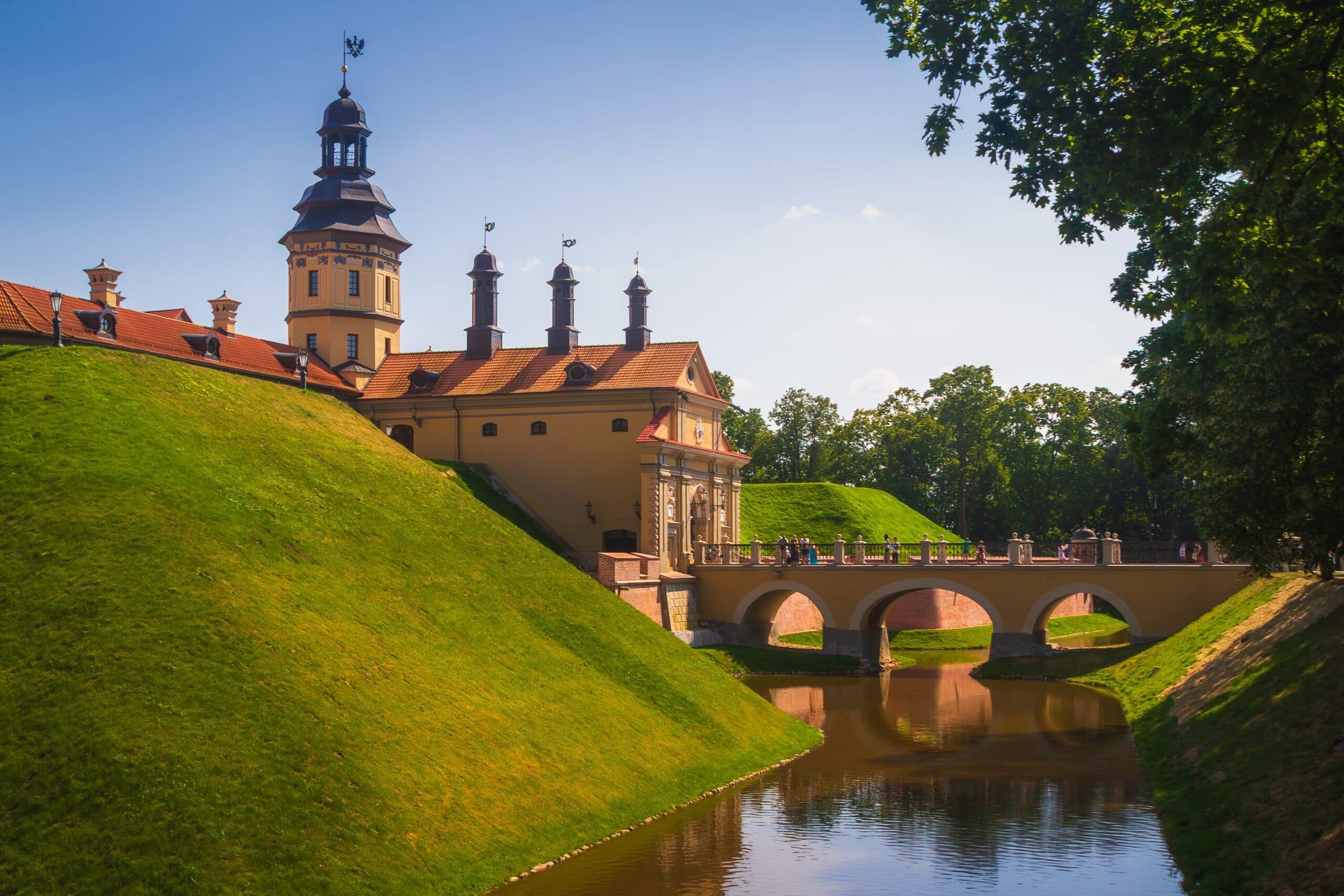
Magnificent castles rise from the countryside as reminders of Belarus’s aristocratic past. The fairy-tale towers of Mir Castle and the elegant palace complex of Nesvizh Castle rank among the country’s most impressive historical landmarks.
Belarusian culture is equally rich. Traditional cuisine celebrates hearty flavors—potato dishes, forest mushrooms, and comforting soups such as draniki, the beloved potato pancakes served across the country.
For travelers willing to explore beyond Europe’s most famous destinations, Belarus offers authenticity and calm rarely found elsewhere. Its forests whisper stories of the past, its cities carry echoes of history, and its countryside preserves traditions shaped over centuries.
This journey through Belarus will uncover its most remarkable places—from ancient castles and historic towns to untouched wilderness—revealing a country quietly waiting to be discovered.
24. Minsk
At the heart of Belarus lies Minsk, a capital city defined by resilience and reinvention. Nearly destroyed during World War II, the city was rebuilt with grand ambition, resulting in one of the most striking examples of Soviet urban planning in Europe.
Wide boulevards stretch across the city, lined with monumental buildings and elegant squares. The central artery, Independence Avenue, is a showcase of Stalinist architecture, with imposing facades and sweeping urban vistas.
Yet Minsk is far more than a relic of Soviet design. Beneath its monumental exterior lies a vibrant cultural life. The National Opera and Ballet Theatre of Belarus hosts world-class performances, while modern galleries and creative spaces reflect the city’s contemporary artistic spirit.
One of the most moving landmarks is the Island of Tears, a memorial dedicated to Belarusian soldiers who died during the Soviet–Afghan War. Its quiet setting along the Svislach River offers a place for reflection amid the bustle of the capital.
For a glimpse of Minsk’s older character, travelers wander the charming district of Trinity Suburb, where colorful houses and riverside cafés evoke the city’s pre-war past.
Evenings bring another side of Minsk to life. Restaurants and cafés serve traditional dishes like borsch and freshly baked rye bread, while lively bars and music venues fill with locals enjoying the city’s growing nightlife.
Minsk is a city shaped by history yet constantly evolving—a capital that tells the story of Belarus through architecture, culture, and everyday life.
23. Mir Castle
Rising from the countryside of western Belarus, the imposing Mir Castle appears almost like something from a storybook.
Constructed in the early 16th century, the castle combines Gothic, Renaissance, and Baroque architectural styles. Its towering red-brick walls, elegant turrets, and reflective moat create a striking silhouette against the surrounding landscape.
Originally built by the noble Ilyinich family, the castle later became the property of the powerful Radziwiłł family, one of the most influential aristocratic dynasties in Eastern Europe.
Over the centuries Mir Castle witnessed wars, sieges, and political transformations. Today it stands beautifully restored, recognized as a UNESCO World Heritage Site.
Visitors can explore its halls, towers, and underground chambers while learning about the noble families who once lived within these walls. Exhibitions reveal the lifestyle of the Belarusian aristocracy and the turbulent history of the region.
Outside the castle, a tranquil park and lake offer peaceful views of the fortress reflected in still waters. Walking along the castle grounds, travelers can easily imagine knights, nobles, and courtly ceremonies that once filled these courtyards.
Nearby villages provide an authentic taste of Belarusian countryside life, where traditional dishes such as kolduny—meat-filled dumplings—are served in cozy local restaurants.
Mir Castle remains one of Belarus’s most iconic landmarks, a place where history, legend, and architecture blend into an unforgettable experience.
22. Nesvizh Castle
Not far from Mir lies another masterpiece of Belarusian heritage: Nesvizh Castle, one of the most magnificent palaces in Eastern Europe.
Located in the historic town of Nesvizh, the castle served as the grand residence of the powerful Radziwiłł family for centuries. The complex blends Renaissance elegance with Baroque and Classical influences, reflecting the wealth and prestige of its former owners.
Surrounded by scenic lakes and landscaped gardens, the palace creates an atmosphere of aristocratic splendor. Ornate halls, gilded ceilings, and richly decorated chambers transport visitors back to the golden age of the Polish–Lithuanian Commonwealth.
One of the castle’s most intriguing features is its network of underground passages and legendary ghost stories. According to local lore, the spirit known as the “Black Lady of Nesvizh” still wanders the palace corridors.
The castle grounds are equally impressive. Expansive parks, graceful bridges, and tree-lined pathways invite visitors to stroll through landscapes carefully designed for noble leisure.
Nearby stands the historic Corpus Christi Church, one of the earliest Baroque churches in Eastern Europe and the burial place of members of the Radziwiłł dynasty.
Today, like Mir Castle, Nesvizh is protected as a UNESCO World Heritage Site and remains one of Belarus’s most treasured cultural landmarks.
Exploring its halls and gardens offers a fascinating glimpse into the grandeur and intrigue of Eastern Europe’s aristocratic past.
21. Brest
At the southwestern edge of Belarus, near the border with Poland, lies the historic city of Brest. Few places in Eastern Europe carry such powerful historical symbolism.
The city’s identity is deeply tied to the monumental Brest Fortress, one of the most important memorial sites in the region. When World War II began in 1941 with the German invasion of the Soviet Union, the fortress became the stage for one of the earliest and most heroic acts of resistance. Soviet soldiers held out against overwhelming forces, turning the site into a symbol of endurance and sacrifice.
Today the fortress is preserved as a vast memorial complex. Visitors enter through an enormous star-shaped gateway that opens into expansive grounds filled with monuments, sculptures, and museums. The towering statue known as “Courage” stands at the center, its solemn expression embodying the spirit of those who defended the fortress.
Beyond the memorial, Brest itself offers a welcoming atmosphere. The lively pedestrian street Sovetskaya Street is lined with cafés, small shops, and lanterns that are still lit each evening by a traditional lamplighter—a charming ritual that locals and visitors alike gather to watch.
Nearby rivers and parks create peaceful green spaces where residents stroll along quiet promenades. Restaurants serve hearty Belarusian dishes such as machanka, a rich pork stew often eaten with thick pancakes.
Brest blends solemn remembrance with everyday life. While the fortress reminds visitors of the city’s profound historical significance, the modern streets reveal a lively community proud of its resilience and heritage.
For travelers exploring Belarus, Brest offers both emotional depth and cultural charm.
20. Grodno
Near the western frontier of Belarus, the elegant city of Grodno stands apart with its distinctive architectural heritage and multicultural history.
Unlike many Belarusian cities that were heavily rebuilt after World War II, Grodno preserved much of its historic character. Walking through its old streets reveals a remarkable blend of Catholic, Orthodox, and Jewish heritage shaped by centuries of shifting borders and cultural influences. One of the city’s most striking landmarks is the Old Grodno Castle, originally built in the 11th century and later expanded by rulers of the Grand Duchy of Lithuania. Nearby stands the New Grodno Castle, an 18th-century royal residence that once hosted important political gatherings of the Polish–Lithuanian Commonwealth.
Another architectural gem is the St. Francis Xavier Cathedral, a magnificent Baroque church dominating the city’s central square. Its ornate interior, filled with frescoes and gilded decorations, reflects the deep Catholic traditions of the region.
Grodno’s riverside setting along the Neman River adds natural beauty to its historical atmosphere. Parks and scenic viewpoints overlook the river valley, creating perfect places for quiet reflection.
Local cafés offer traditional specialties such as draniki, the famous Belarusian potato pancakes often served with sour cream or mushroom sauce.
With its charming streets, diverse cultural influences, and elegant architecture, Grodno feels almost like a hidden Central European city waiting to be rediscovered.
For travelers seeking history beyond the usual tourist routes, Grodno offers one of Belarus’s most fascinating urban experiences.
19. Belovezhskaya Pushcha
Stretching across the border between Belarus and Poland, the legendary Belovezhskaya Pushcha National Park protects one of the last remaining primeval forests in Europe.
This immense woodland has survived largely untouched for thousands of years. Towering oak trees, dense spruce forests, and moss-covered clearings create an ecosystem that feels almost prehistoric.
The park is most famous as the home of the European bison, the continent’s largest land animal. Once nearly extinct, the species was successfully reintroduced here, and today the forest hosts the world’s largest population of these magnificent creatures.
Exploring Belovezhskaya Pushcha is a journey into nature at its most authentic. Visitors can hike or cycle through forest trails, passing ancient trees that are centuries old. Quiet observation towers and wildlife reserves allow travelers to witness the park’s remarkable biodiversity.
Within the Belarusian section of the forest lies the small town of Kamianiuki, which serves as the main gateway to the park. Here, museums and visitor centers explain the ecological importance of this unique environment.
The forest also carries cultural significance. According to Belarusian folklore, it was once a royal hunting ground for rulers of the Polish–Lithuanian Commonwealth, where kings pursued game beneath the towering trees.
After a day exploring the forest, travelers often enjoy rustic meals featuring forest ingredients such as mushrooms, berries, and traditional dishes like solyanka.
Belovezhskaya Pushcha is more than a national park—it is a living relic of Europe’s ancient natural world. Walking beneath its towering trees, visitors feel connected to a landscape that has endured for millennia.
18. Vitebsk
In the northeastern reaches of Belarus, the city of Vitebsk rises gracefully along the banks of the Western Dvina River. Known as one of the country’s most culturally vibrant cities, Vitebsk carries a deep artistic legacy that continues to shape its identity.
The city is famously the birthplace of the visionary painter Marc Chagall, whose dreamlike works blended memories of Jewish life in Eastern Europe with elements of surrealism and folklore. Today, visitors can explore the Marc Chagall Museum, located near the house where the artist spent his childhood. The museum preserves personal artifacts, paintings, and sketches that offer insight into the imagination of one of the 20th century’s most influential artists.
Vitebsk celebrates this artistic heritage each summer during the renowned Slavianski Bazaar in Vitebsk, an international arts festival that brings musicians, performers, and visitors from across Eastern Europe together for concerts and cultural events.
Architecturally, the city blends historic charm with modern energy. The elegant Assumption Cathedral, perched on a hill above the river, offers panoramic views and stands as one of Vitebsk’s most recognizable landmarks.
Strolling along the riverside promenades, travelers discover cafés and markets where traditional dishes such as pelmeni are served steaming hot alongside fresh bread and local beverages.
Vitebsk’s atmosphere is distinctly creative. Murals decorate buildings, galleries exhibit contemporary works, and street musicians add melody to the city’s squares.
For travelers interested in art, culture, and history, Vitebsk offers a fascinating window into Belarus’s creative spirit and a reminder that even in quiet corners of Europe, artistic inspiration can flourish.
17. Polotsk
Few places in Belarus carry as much historical significance as Polotsk, widely considered the oldest city in the country.
Founded more than a thousand years ago along the Western Dvina River, Polotsk once served as the capital of the powerful Principality of Polotsk, a medieval state that played a crucial role in the development of Eastern Europe.
At the center of the city stands the majestic Saint Sophia Cathedral (Polotsk), originally built in the 11th century. Inspired by the famous cathedral in Kyiv, this sacred structure symbolized the ambition and spiritual importance of the medieval principality.
Although the cathedral has undergone several reconstructions, its elegant Baroque appearance and historical significance continue to draw visitors from across the region.
Another important landmark is the Euphrosyne Monastery, dedicated to Euphrosyne of Polotsk, a revered saint and cultural figure who promoted education and religious life in medieval Belarus.
Walking through Polotsk’s quiet streets reveals layers of history—ancient churches, small museums, and peaceful riverbanks where centuries of trade and travel once shaped the city’s prosperity.
Local cafés serve comforting regional dishes such as borsch, often accompanied by fresh sour cream and rye bread.
Polotsk’s atmosphere is calm and contemplative. Unlike the bustle of modern capitals, the city invites visitors to slow down and appreciate the depth of its historical roots.
For anyone interested in the origins of Belarusian culture and identity, Polotsk is an essential destination.
16. Braslav Lakes National Park
In the far northwest of Belarus, near the borders with Lithuania and Latvia, lies the breathtaking Braslav Lakes National Park.
This vast natural landscape is often called the “blue necklace of Belarus” thanks to its remarkable network of more than 300 interconnected lakes scattered across rolling hills and forests.
The town of Braslav serves as the gateway to the park. From here, visitors can embark on boat trips, cycling routes, and hiking trails that wind through some of the most scenic countryside in the country.
One of the park’s most famous viewpoints is Castle Hill (Braslav), where travelers climb to admire sweeping views of Lake Drivyaty and the surrounding landscape.
The lakes themselves are crystal clear, making them perfect for swimming, fishing, and kayaking. During the summer months, wooden cottages and small guesthouses along the shores welcome travelers seeking peaceful retreats in nature.
Wildlife thrives here as well. Forests surrounding the lakes shelter deer, foxes, and numerous bird species, while quiet mornings often reveal mist rising above the water.
Traditional countryside meals are a highlight of visiting Braslav. Freshly caught fish, forest mushrooms, and dishes such as ukha—a hearty fish soup—reflect the region’s deep connection to its natural environment.
Braslav Lakes National Park offers a completely different side of Belarus—one defined by tranquility, pristine nature, and endless blue horizons.
For travelers seeking serenity far from crowded tourist destinations, this hidden corner of the country is a true gem.
15. Mogilev
On the eastern side of Belarus, the city of Mogilev spreads along the banks of the Dnieper River, a waterway that has shaped trade, culture, and life in the region for centuries.
Founded in the 13th century, Mogilev gradually grew into an important commercial center within the Polish–Lithuanian Commonwealth. Merchants from across Eastern Europe once gathered here, bringing goods, languages, and traditions that enriched the city’s cultural life.
The historic heart of Mogilev is Lenin Square (Mogilev), where elegant buildings and civic landmarks frame a lively urban space. Nearby stands the impressive Mogilev Town Hall, a symbol of the city’s historical autonomy and pride. From the tower, visitors can enjoy panoramic views over the old town and river valley.
Religious architecture adds another dimension to the city’s character. The beautifully decorated St. Stanislaus Cathedral (Mogilev) features remarkable frescoes that reflect the city’s Catholic heritage.
Mogilev also holds an important place in modern history. During World War I, the city briefly served as the headquarters of Nicholas II, the last emperor of the Russian Empire.
Today, Mogilev blends its historical legacy with a relaxed riverside atmosphere. Parks and promenades along the Dnieper invite leisurely walks, while cafés serve hearty Belarusian meals such as syrniki, soft cheese pancakes often enjoyed with honey or sour cream.
Although less visited than other Belarusian cities, Mogilev rewards travelers with authentic charm and a deep sense of history woven into its streets.
14. Gomel
In southeastern Belarus, the elegant city of Gomel sits gracefully along the banks of the Sozh River. Known for its leafy boulevards and grand architecture, Gomel is one of the country’s most picturesque urban destinations.
The city’s crown jewel is the magnificent Gomel Palace and Park Ensemble, an architectural complex that blends history, art, and natural beauty. Built in the late 18th century for the noble Rumyantsev family, the palace later became associated with the Paskevich family, whose wealth and influence shaped much of the city’s development.
The neoclassical palace rises above landscaped gardens filled with ancient trees, winding paths, and scenic viewpoints overlooking the river. Visitors can explore the palace interiors, which house museums displaying art collections, historical artifacts, and elegant period rooms.
The surrounding parkland is equally enchanting. Bridges cross quiet streams, swans glide across reflective ponds, and shaded alleys create peaceful spaces for relaxation.
One of the park’s most recognizable landmarks is the Paskevich Chapel, a striking memorial built as the family’s burial site.
Gomel’s city center complements this historic complex with lively streets, markets, and cafés serving regional specialties such as kletski, soft dumplings often paired with meat or mushroom sauces.
Despite its size, Gomel maintains a calm and welcoming atmosphere. The combination of aristocratic heritage, beautiful green spaces, and riverside scenery makes it one of Belarus’s most relaxing cities to explore.
For travelers interested in architecture and tranquil urban landscapes, Gomel offers a refined and memorable experience.
13. Pripyatsky National Park
Hidden within the southern wetlands of Belarus, Pripyatsky National Park protects one of Europe’s most unique and biodiverse ecosystems.
Often referred to as the “Amazon of Belarus,” the park stretches across vast floodplains formed by the winding Pripyat River. Each spring, the river overflows its banks, creating enormous wetlands filled with marshes, lakes, and dense forests.
This seasonal flooding transforms the landscape into a haven for wildlife. Thousands of migratory birds stop here during their journeys across Europe, making the park a paradise for birdwatchers. Eagles, cranes, and storks are common sights soaring above the wetlands.
Exploring the park often involves boat journeys through winding waterways where reeds sway gently in the breeze. Quiet observation towers allow visitors to watch animals in their natural habitats, from elk and wild boar to countless species of waterfowl.
The small town of Turov, located near the park’s boundaries, serves as a gateway for travelers seeking guided tours into this extraordinary wilderness.
Traditional rural culture remains strong in the surrounding villages. Locals harvest berries, fish from the river, and prepare simple but delicious meals such as ukha, a classic fish soup made from freshly caught river fish.
Pripyatsky National Park reveals a side of Belarus rarely seen by most visitors—vast, untouched landscapes where nature still dominates the horizon.
For those seeking adventure, wildlife, and quiet immersion in nature, the wetlands of the Pripyat River offer one of the most unforgettable experiences in the country.
12. Lida
In western Belarus, the quiet town of Lida holds one of the country’s most important medieval landmarks: the imposing Lida Castle.
Constructed in the early 14th century under the rule of Gediminas, Grand Duke of the Grand Duchy of Lithuania, the fortress was built as part of a defensive network protecting the western borders of the realm. Its thick red-brick walls and sturdy towers were designed to withstand attacks from rival powers and invading armies.
Despite centuries of conflict—including battles during wars with the Teutonic Order—the castle still stands as a powerful reminder of the region’s medieval history. Restoration work has revived much of the fortress, allowing visitors to explore its courtyards, towers, and reconstructed defensive walls.
Inside the castle grounds, exhibitions and historical reenactments bring the past to life. During summer festivals, knights in armor, archery competitions, and traditional music transform the fortress into a lively medieval celebration.
Beyond the castle, Lida itself is a friendly provincial town where visitors can enjoy local hospitality. Small cafés serve traditional dishes such as machanka, a hearty pork stew often eaten with thick pancakes.
Nearby countryside landscapes of fields, forests, and villages offer glimpses of everyday Belarusian rural life.
Lida may not be a large city, but its historic fortress gives it a sense of grandeur. For travelers interested in the medieval era of Eastern Europe, Lida Castle stands as one of Belarus’s most fascinating historical sites.
11. Pinsk
Deep in the southern region known as Polesia, the historic town of Pinsk rests beside the winding Pina River. Often called the “Pearl of Polesia,” the city is renowned for its elegant architecture and rich multicultural heritage.
Founded over a thousand years ago, Pinsk flourished as an important trading center connecting river routes across Eastern Europe. Merchants, nobles, and craftsmen left their mark on the city’s architecture, creating a blend of Baroque, Renaissance, and classical styles.
The most striking landmark is the magnificent Cathedral of the Assumption of the Blessed Virgin Mary (Pinsk), a stunning Baroque church with towering columns and richly decorated interiors. Nearby stands the historic Jesuit College (Pinsk), another impressive architectural reminder of the city’s educational and religious heritage.
Pinsk also played an important role in Jewish cultural life before World War II, when the city hosted a large and vibrant Jewish community that shaped its traditions and commerce.
Today, riverside promenades and quiet streets give Pinsk a relaxed atmosphere. Boats glide along the waterways, and shaded squares provide perfect places to pause and observe daily life.
Local restaurants serve comforting regional dishes such as kolduny, delicious dumplings filled with meat or mushrooms.
Surrounded by the wetlands and forests of Polesia, Pinsk offers both cultural history and natural beauty. Travelers exploring this lesser-known region of Belarus often discover one of the country’s most charming and authentic towns.
10. Narachansky National Park
In the northwest of Belarus, Narachansky National Park protects a peaceful landscape of forests, rivers, and sparkling lakes.
At the heart of the park lies Lake Narach, the largest lake in Belarus. Its wide blue waters stretch across the horizon, surrounded by sandy beaches, pine forests, and small holiday villages.
For generations, the lake has been a beloved summer retreat for Belarusians. Families gather here to swim, sail, and relax along the calm shoreline, enjoying the fresh air and quiet beauty of the countryside.
Beyond the lake itself, the national park includes dozens of smaller lakes and forest trails that wind through peaceful woodland. Hiking and cycling routes allow visitors to explore the landscape at a gentle pace while observing birds, deer, and other wildlife.
The nearby town of Narach serves as a convenient base for visitors, offering guesthouses, small resorts, and traditional restaurants.
Local cuisine reflects the region’s natural surroundings. Fresh fish from the lake is often served grilled or in soups such as ukha, accompanied by homemade bread and seasonal herbs.
Narachansky National Park offers a different rhythm of travel—slow, peaceful, and deeply connected to nature. Sunsets over the lake paint the sky in warm colors, while quiet forests provide a sense of calm rarely found in busy tourist destinations.
For travelers seeking relaxation and natural beauty, Lake Narach and its surrounding parklands offer one of the most tranquil escapes in Belarus.
9. Novogrudok
Perched on rolling hills in western Belarus, the historic town of Novogrudok carries a legacy that reaches deep into the medieval origins of Eastern Europe. Once one of the most important centers of the Grand Duchy of Lithuania, the town holds a special place in regional history.
The most striking landmark is the dramatic ruin of Novogrudok Castle, which stands proudly atop a hill overlooking the surrounding countryside. Built in the 13th century, the fortress once guarded important trade routes and served as a residence for early rulers of the duchy.
Today only fragments of its towers and walls remain, but the ruins carry an undeniable atmosphere. From the hilltop, sweeping views stretch across green valleys, quiet villages, and distant forests—landscapes that have changed little since medieval times.
Novogrudok is also closely associated with the renowned poet Adam Mickiewicz, one of the most celebrated literary figures of the region. The Adam Mickiewicz House-Museum preserves the memory of his early life and offers insight into the cultural heritage shared by Belarus, Poland, and Lithuania.
Nearby churches and quiet streets reflect the town’s multicultural past, where Catholic, Orthodox, and Jewish communities once lived side by side.
Visitors often pause in local cafés to sample traditional dishes such as draniki, the beloved potato pancakes served with sour cream.
Though small in size, Novogrudok carries a remarkable sense of history. Its castle ruins and literary heritage make it one of Belarus’s most atmospheric historical destinations.
8. Zaslavl
Just northwest of Minsk, the town of Zaslavl offers travelers a fascinating glimpse into the earliest chapters of Belarusian history.
Founded more than a thousand years ago, Zaslavl is considered one of the oldest settlements in Belarus. According to legend, the town was established by the ruler Vladimir the Great, who named it after his son Izyaslav.
Walking through Zaslavl feels like stepping into a living museum. The Zaslavl Historical and Cultural Reserve preserves ancient earthworks, churches, and wooden buildings that illustrate the evolution of Belarusian life across centuries.
One of the most notable landmarks is the Church of the Transfiguration (Zaslavl), a fortified church dating back to the 16th century. Its thick defensive walls reveal how religious buildings once doubled as protection during times of conflict.
Traditional wooden houses and small museums showcase crafts such as weaving, pottery, and blacksmithing—skills that were essential to village life for generations.
The nearby Zaslavl Reservoir, sometimes called the “Minsk Sea,” provides scenic waterfront views and recreational opportunities for locals and visitors alike.
In cozy cafés and rural guesthouses, travelers can enjoy comforting meals like kletski, soft dumplings served with butter or savory sauces.
Zaslavl’s charm lies in its quiet authenticity. While modern cities rush forward, this historic town preserves traditions and stories from the earliest days of Belarusian culture.
7. Berezinsky Biosphere Reserve
In the north of Belarus, vast forests and wetlands stretch across the protected landscape of the Berezinsky Biosphere Reserve, one of Europe’s most pristine natural environments.
Established in 1925 and later recognized by UNESCO, the reserve protects a remarkable diversity of ecosystems, including ancient forests, peat bogs, rivers, and lakes. This mosaic of habitats supports an extraordinary range of wildlife.
Among its most famous inhabitants are the European bison, along with brown bears, lynxes, wolves, and elk. The forests also shelter countless bird species, making the reserve a paradise for wildlife enthusiasts and birdwatchers.
The Berezina River, which winds through the reserve, has played an important role in history as well. During the dramatic retreat of Napoleon Bonaparte in the French invasion of Russia in 1812, the river became the site of a desperate and chaotic crossing that marked a turning point in the campaign.
Today, the reserve offers guided nature excursions where visitors travel by canoe, bicycle, or foot through tranquil landscapes. Wooden observation towers provide opportunities to watch wildlife without disturbing the natural environment.
Local lodges near the reserve welcome travelers with rustic hospitality and traditional meals such as borsch, prepared with locally grown vegetables.
Berezinsky Biosphere Reserve reveals Belarus at its wildest—an immense natural sanctuary where forests, rivers, and wildlife continue their ancient rhythms.
For nature lovers, it is one of the country’s most extraordinary destinations.
6. Orsha
Situated in eastern Belarus, along the banks of the Dnieper River, the city of Orsha has long served as an important crossroads of trade, culture, and military history.
Founded in the 11th century, Orsha grew into a strategic settlement along major routes connecting the lands of the Grand Duchy of Lithuania, the Polish–Lithuanian Commonwealth, and the expanding Russian Empire. Because of this location, the city witnessed numerous historical conflicts.
One of the most famous events associated with Orsha is the Battle of Orsha in 1514, when forces of the Grand Duchy of Lithuania and the Kingdom of Poland defeated a much larger Muscovite army. The battle became a symbol of military strategy and regional power struggles during the Renaissance period.
Among Orsha’s most significant landmarks is the beautiful Kutein Monastery, a historic Orthodox complex founded in the 17th century. The monastery once served as a center for early Belarusian printing and education.
Another notable religious site is the Holy Epiphany Monastery (Orsha), whose serene courtyards and elegant church architecture provide a peaceful contrast to the city’s dramatic past.
Modern Orsha combines these historical treasures with lively streets, markets, and cafés where travelers can sample comforting dishes such as solyanka, a hearty soup rich with meat and vegetables.
Though often overlooked by travelers, Orsha reveals a fascinating chapter of Belarusian history. Its riverside setting and historic monasteries create a destination that rewards curious explorers with stories from centuries past.
5. Bobruisk
Southwest of Mogilev, the city of Bobruisk offers a fascinating mix of military history, architectural heritage, and a famously playful local spirit.
The city’s most impressive landmark is the massive Bobruisk Fortress, constructed in the early 19th century by the Russian Empire. Designed as a powerful defensive structure, the fortress played an important role during the French invasion of Russia in 1812 when the army of Napoleon Bonaparte advanced deep into the region.
Although parts of the fortress now lie in ruins, its towering earthworks and stone structures still convey the scale of its original military purpose. Walking through the grounds today offers glimpses of old barracks, defensive ramparts, and overgrown fortifications slowly reclaimed by nature.
Bobruisk also holds an important place in Jewish cultural history. Before World War II, the city had one of the largest Jewish populations in Belarus, contributing greatly to its economic and cultural life.
Modern Bobruisk has embraced a more lighthearted identity as well. Statues of beavers—playing on the city’s name—decorate public squares, adding a humorous and welcoming atmosphere.
Local restaurants serve traditional Belarusian favorites such as kolduny, savory dumplings filled with meat and potatoes, often accompanied by fresh sour cream.
With its mix of history, resilience, and playful charm, Bobruisk offers travelers an unexpected and memorable stop in the Belarusian landscape.
4. Braslav Ridge
Rising gently above the shimmering waters of northwestern Belarus, the scenic Braslav Ridge forms one of the most beautiful natural landscapes in the country.
Created thousands of years ago by retreating glaciers, the ridge consists of rolling hills that weave through the lake district surrounding Braslav Lakes National Park. These elevated ridges provide sweeping views of forests, meadows, and the countless lakes scattered across the region.
Travelers exploring the ridge often stop at scenic viewpoints overlooking Lake Drivyaty, one of the largest lakes in the area. From these heights, the landscape appears like a patchwork of shimmering water and green forest stretching toward the horizon.
The nearby town of Braslav serves as a welcoming base for visitors. Small guesthouses and wooden cottages dot the lakeshores, offering peaceful retreats where mornings begin with mist rising from the water.
Outdoor activities are abundant in this region. Hiking trails wind across the hills, cycling routes pass through quiet villages, and kayaks glide across the calm lakes. In summer, the region becomes a favorite destination for swimming and fishing.
Local cuisine reflects the abundance of the lakes and forests. Fresh fish dishes and soups such as ukha remain staples of the regional table.
The Braslav Ridge captures the serene beauty of Belarusian nature—gentle landscapes shaped by ancient glaciers and preserved through generations.
For travelers seeking tranquility, scenic views, and connection with the outdoors, this peaceful region offers one of the country’s most enchanting escapes.
3. Slutsk
In the central region of Belarus, the quiet town of Slutsk carries an artistic legacy that once reached far beyond its modest size. During the 18th century, Slutsk became famous across Eastern Europe for producing luxurious woven sashes known as the Slutsk Belts.
These elaborate silk belts, richly decorated with gold and silver thread, were worn by noblemen of the Polish–Lithuanian Commonwealth as part of their ceremonial attire. Crafted with extraordinary skill, the belts symbolized prestige, wealth, and cultural sophistication.
The production of these masterpieces was supported by the influential Radziwiłł family, whose patronage helped transform Slutsk into an important center of textile craftsmanship. Artisans worked for months to create a single belt, weaving intricate patterns inspired by both European and Oriental designs.
Today, visitors can explore this remarkable heritage at the Slutsk Belts Museum, where exhibitions display original belts alongside demonstrations of traditional weaving techniques.
Beyond its artistic fame, Slutsk offers a calm provincial atmosphere with tree-lined streets, historic churches, and welcoming local markets. Travelers strolling through the town encounter everyday Belarusian life—quiet courtyards, friendly cafés, and a slower rhythm of living.
Local restaurants serve comforting dishes such as draniki, often accompanied by sour cream or mushroom sauce.
Although the era of aristocratic fashion has long passed, the Slutsk belts remain a symbol of Belarusian craftsmanship and cultural pride. Visiting the town provides a fascinating glimpse into a unique artistic tradition that once connected this small town to the grand courts of Europe.
2. Turov
On the gentle banks of the Pripyat River, in southern Belarus, the historic town of Turov stands as one of the oldest and most spiritually significant settlements in the country.
Founded more than a thousand years ago, Turov was once the capital of the medieval Principality of Turov, an influential state that played an important role in the early history of Eastern Slavic civilization.
Today, the town is best known for its religious heritage. The Turov Cathedral dominates the skyline with its elegant domes and serene presence. The site is closely associated with Kirill of Turov, a revered theologian and writer often called the “Belarusian Chrysostom” for his eloquent sermons.
Visitors exploring Turov often encounter a unique local phenomenon known as the Turov Stone Crosses. According to tradition, these mysterious stone crosses gradually emerge from the ground over time, attracting pilgrims who believe the site holds special spiritual power.
Surrounding the town are the vast wetlands and meadows of the Polesia region, creating a peaceful natural backdrop for reflection and exploration.
Birdwatchers flock to the nearby floodplains each spring, when thousands of migratory birds gather along the riverbanks.
Local households and small cafés welcome travelers with homemade meals featuring regional dishes such as kletski, warm dumplings often served with butter or savory sauces.
Turov’s quiet charm and ancient traditions create an atmosphere unlike anywhere else in Belarus. For travelers seeking history, spirituality, and connection with the past, this small town offers a deeply memorable experience.
1. The Belarusian Polesia
Stretching across the southern reaches of Belarus, the vast region known as Polesia forms one of Europe’s most mysterious and untouched landscapes.
Often described as a “green ocean” of wetlands and forests, Polesia is a land shaped by water. Rivers such as the Pripyat River and its tributaries flow slowly through enormous floodplains, creating a mosaic of marshes, lakes, and dense woodlands.
For centuries, this remote region remained difficult to access, allowing both wildlife and traditional rural culture to survive largely unchanged. Villages here are scattered along narrow roads and riverbanks, where wooden houses, vegetable gardens, and fishing boats form the backbone of everyday life.
Nature dominates the landscape. Elk, wolves, and wild boar roam the forests, while vast flocks of migratory birds fill the skies during seasonal migrations. Areas such as Pripyatsky National Park protect some of the most important ecosystems in Eastern Europe.
Exploring Polesia often means traveling by boat along quiet rivers or cycling through forest trails that pass remote villages and wetlands rich with wildlife.
Cultural traditions remain deeply rooted here as well. Local cuisine relies heavily on ingredients from the surrounding environment—river fish, forest mushrooms, berries, and rustic breads. One traditional dish frequently served in the region is ukha, a fragrant soup made from freshly caught fish.
Polesia represents a side of Belarus that few travelers experience: vast, peaceful, and deeply connected to nature. Its landscapes feel timeless, shaped by centuries of coexistence between people and the natural world.
As a final destination in this journey through Belarus, Polesia captures the essence of the country itself—quiet beauty, rich traditions, and landscapes that continue to tell stories long after the traveler has moved on.