
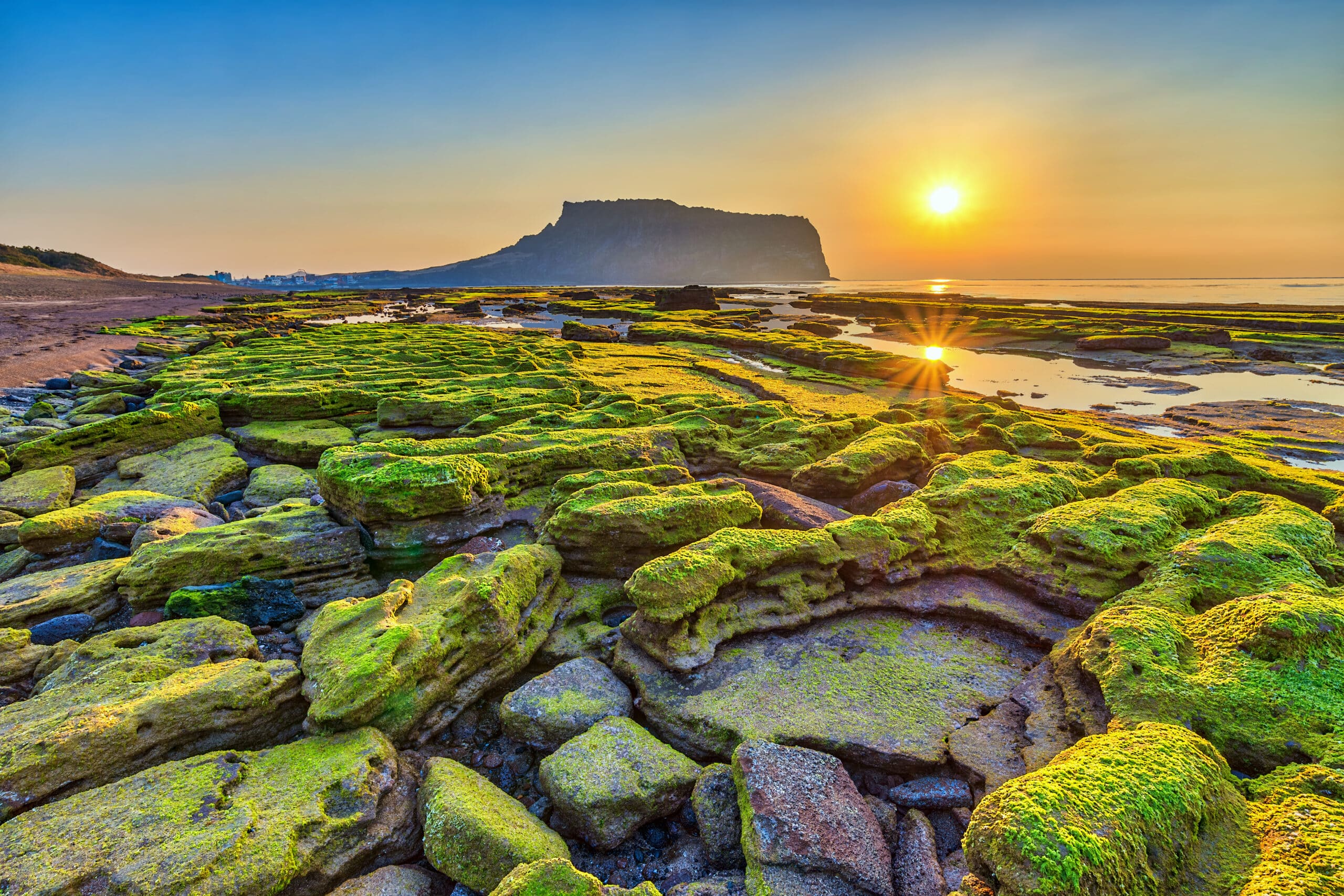
Located off the southern coast of South Korea, Jeju Island is one of the country’s most spectacular travel destinations. Known for its volcanic landscapes, scenic coastline, waterfalls, and lush countryside, the island offers a completely different atmosphere from the bustling cities of the Korean mainland. For many travelers exploring Korea, Jeju provides the perfect balance between adventure, nature, and relaxation.
Often referred to as the “Hawaii of Korea,” Jeju Island was formed by volcanic eruptions thousands of years ago. The island’s dramatic geography includes lava caves, rugged cliffs, and the towering slopes of Hallasan, the highest mountain in South Korea. These natural features have earned Jeju recognition as a **UNESCO World Heritage site.
Beyond its landscapes, Jeju Island is also rich in local culture. Traditional stone houses, peaceful fishing villages, and unique local cuisine reflect the island’s independent heritage. Visitors can explore scenic coastal roads, hike through national parks, or relax on sandy beaches overlooking the deep blue waters of the Korea Strait.
Among the island’s most famous landmarks is Seongsan Ilchulbong, a volcanic crater rising dramatically from the sea. Nearby, visitors can descend into the fascinating underground world of Manjanggul Lava Tube, one of the longest lava tunnels in the world.
Because of its breathtaking scenery and peaceful atmosphere, Jeju Island has become one of the most beloved travel destinations in South Korea. Whether you are hiking volcanic peaks, discovering waterfalls, or enjoying fresh seafood along the coast, Jeju offers unforgettable experiences for every traveler.
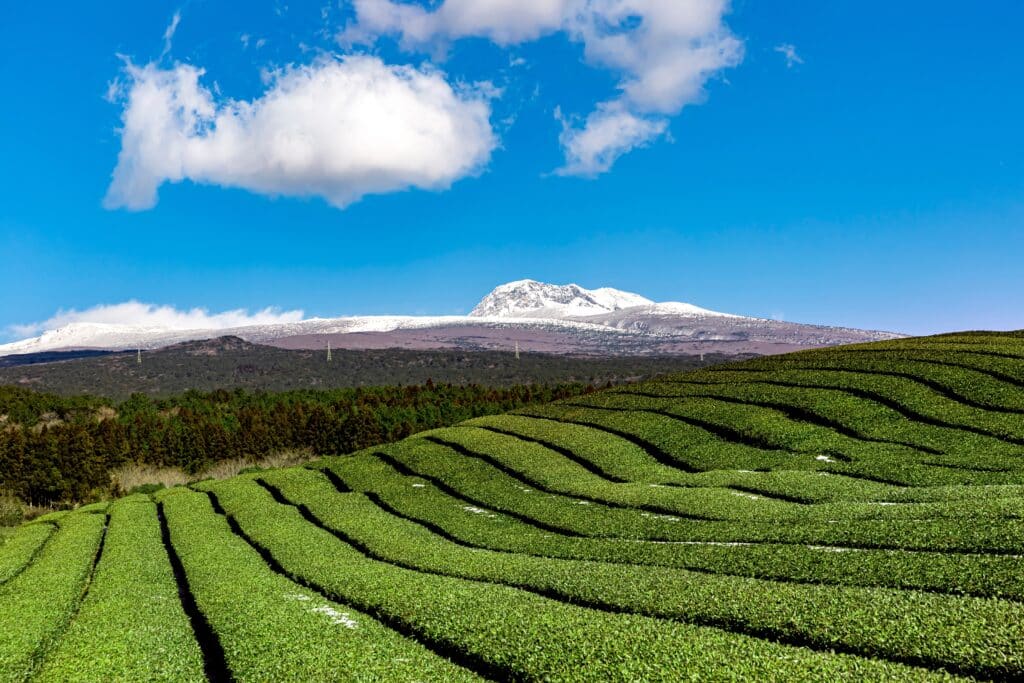
Many travelers exploring South Korea include Jeju Island in their itinerary. While cities such as Seoul offer vibrant urban culture, Jeju provides dramatic volcanic landscapes and coastal scenery.
Quick Travel Guide to Jeju Island
Country: South Korea
Best Time to Visit: Spring and autumn
Recommended Stay: 3–4 days
Nearest Airport: Jeju International Airport
Famous For: Volcanic landscapes, waterfalls, beaches, and hiking
Jeju Island enjoys a slightly warmer climate than mainland Korea, making it a pleasant destination throughout the year. Spring brings blooming flowers and mild temperatures, while autumn offers clear skies and beautiful scenery.
Map of Jeju Island Attractions
Map of the main attractions on Jeju Island, including volcanic landmarks, waterfalls, and scenic coastal viewpoints.
How to Get to Jeju Island
The fastest way to reach Jeju Island is by air. Flights from Seoul depart frequently and take about one hour, making it one of the busiest domestic flight routes in the world. Visitors can also fly directly from Busan and other major Korean cities.
All flights arrive at Jeju International Airport, located near the island’s main urban center, Jeju City.
Ferries are also available from several mainland ports, though flights remain the most convenient option for most travelers.
Best Things to Do on Jeju Island
Climb the Volcanic Crater of Seongsan Ilchulbong
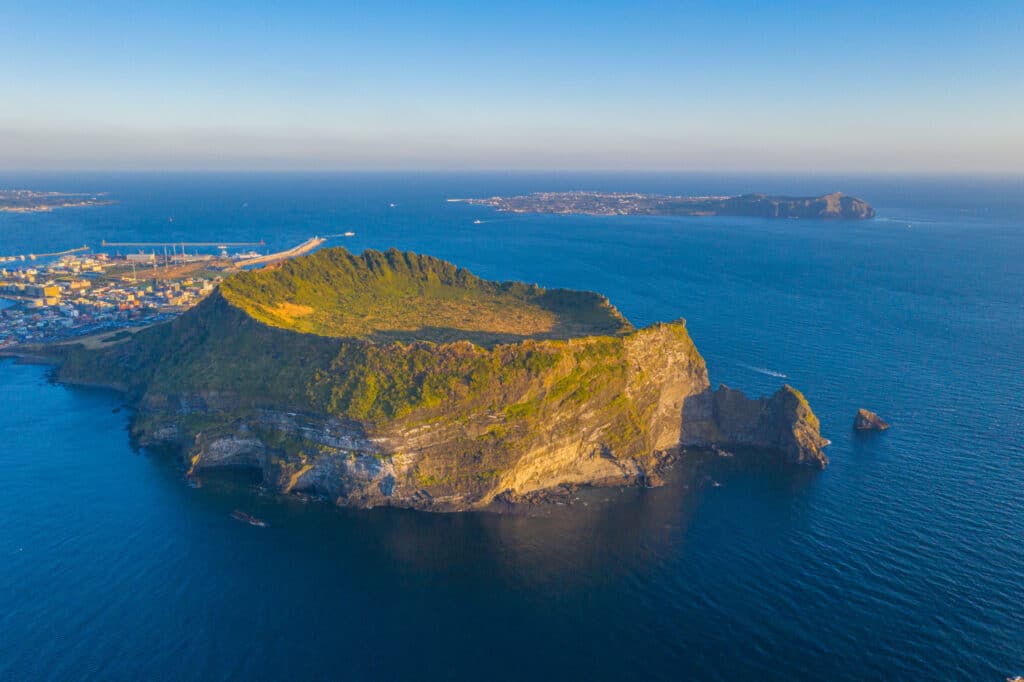
One of the most iconic landmarks on Jeju Island, Seongsan Ilchulbong—also known as Sunrise Peak—rises dramatically from the sea on the island’s eastern coast. Formed by a volcanic eruption thousands of years ago, the crater resembles a massive fortress of rock surrounded by grassy slopes.
Visitors can climb a well-maintained path to the top of the crater, where panoramic views reveal the surrounding coastline and countryside. The hike takes about 20–30 minutes and rewards travelers with one of the most spectacular viewpoints on the island.
Sunrise is especially popular here, when the first rays of light illuminate the volcanic crater and the ocean beyond.
The volcanic landscapes of Jeju are protected in several natural areas across the island. Travelers interested in hiking may also enjoy exploring the best national parks in South Korea.
Hike the Slopes of Hallasan
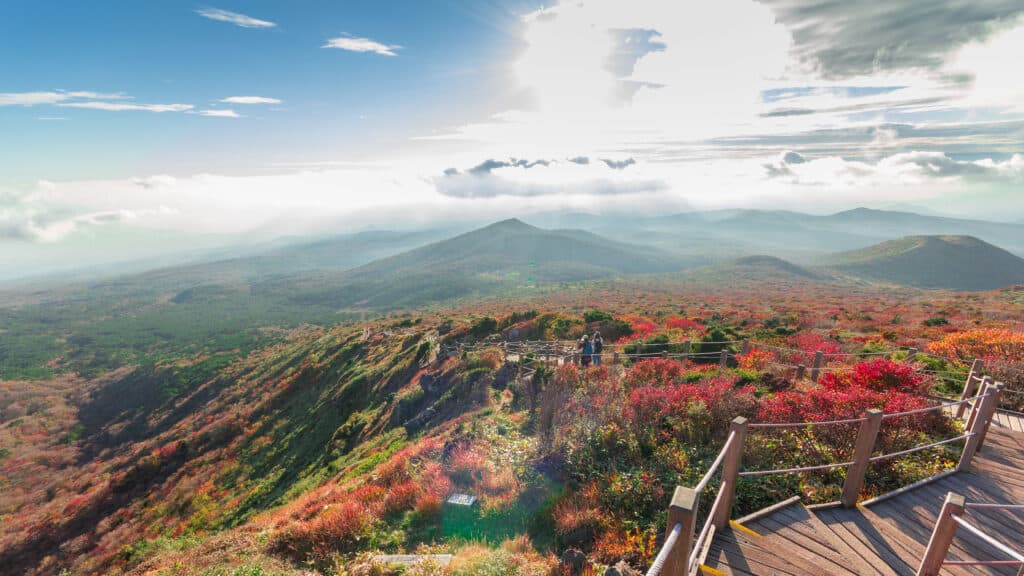
Dominating the center of Jeju Island, Hallasan is the tallest mountain in South Korea and the centerpiece of Hallasan National Park. The dormant volcano rises nearly 2,000 meters above sea level and offers some of the best hiking in the country.
Several trails lead through forests, alpine meadows, and volcanic landscapes toward the summit. At the top lies Baekrokdam, a crater lake surrounded by dramatic mountain scenery.
Hiking Hallasan provides a unique opportunity to experience Jeju’s diverse ecosystems and breathtaking natural beauty.
Hallasan is the highest mountain in South Korea and part of Hallasan National Park, one of the country’s most spectacular hiking destinations.
Explore the Underground World of Manjanggul Lava Tube
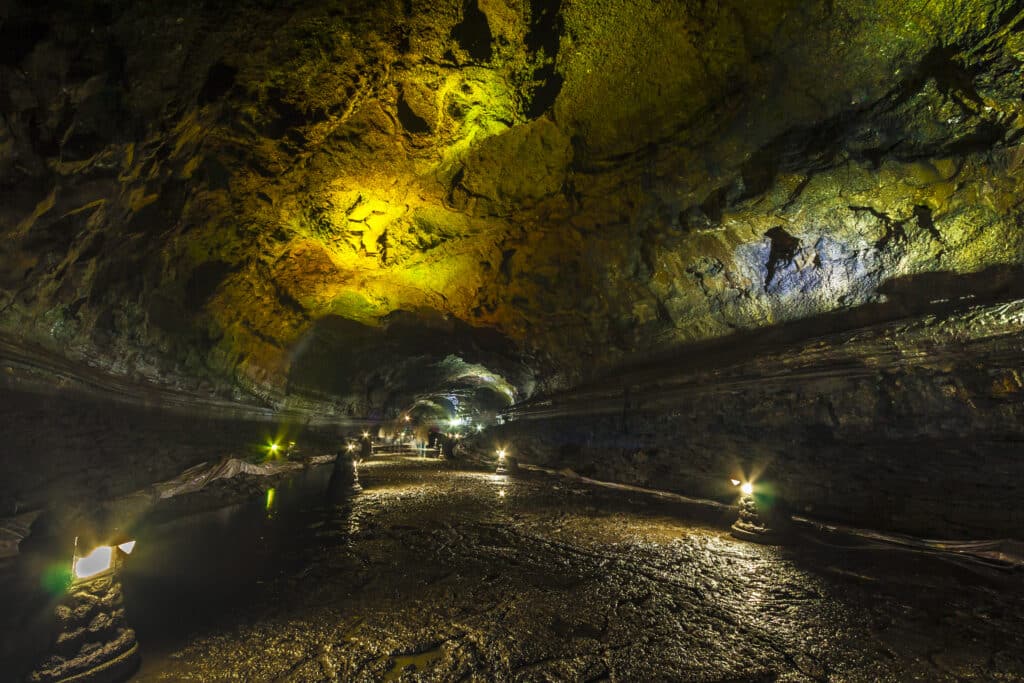
One of the most fascinating geological sites on Jeju Island is Manjanggul Lava Tube, a massive underground tunnel formed by flowing lava thousands of years ago.
Stretching more than 13 kilometers in total length, Manjanggul is one of the longest lava tunnels in the world. Visitors can explore a section of the cave featuring enormous lava formations, stalactites, and dramatic stone columns created by ancient volcanic activity.
Walking through the cool, dimly lit tunnel offers a glimpse into the island’s volcanic origins.
Visit the Oceanfront Jeongbang Waterfall
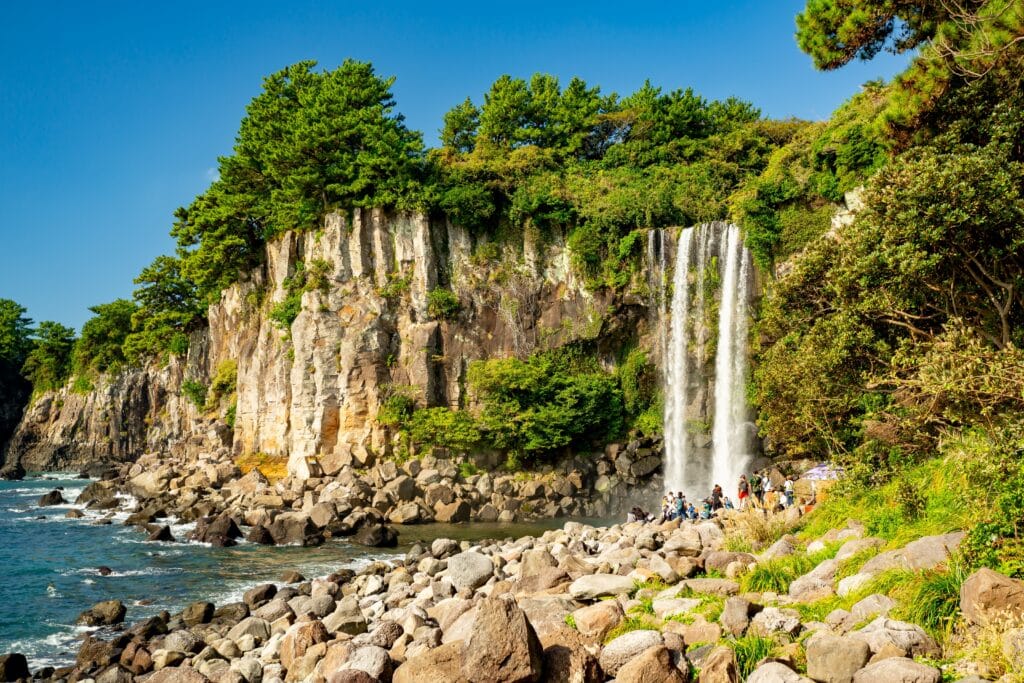
Unlike most waterfalls, Jeongbang Waterfall flows directly into the sea. Located near Seogwipo, the waterfall plunges from a cliff into the rocky shoreline below.
Visitors can walk down a path leading to the base of the falls, where the powerful cascade crashes into the ocean. The surrounding coastal scenery creates one of the most dramatic natural landscapes on Jeju Island.
Discover the Beauty of Cheonjiyeon Waterfall
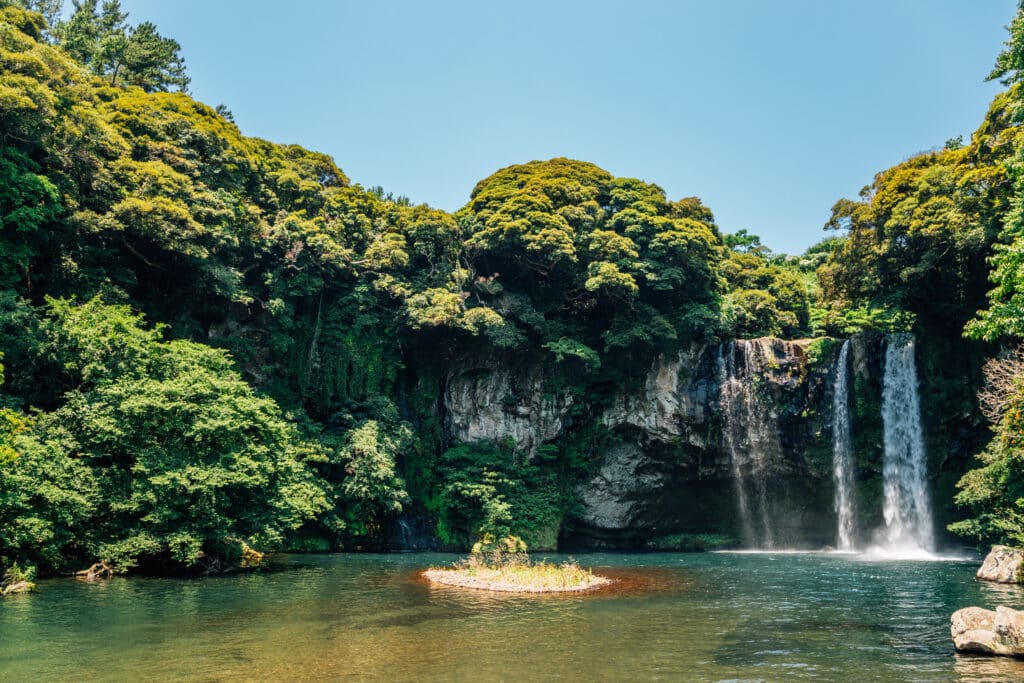
Another beautiful waterfall near Seogwipo is Cheonjiyeon Waterfall, surrounded by lush forest and scenic walking paths. The name translates to “sky connected with land,” reflecting the graceful appearance of the cascading water.
The peaceful surroundings make Cheonjiyeon a popular place for evening walks, especially when the path to the waterfall is illuminated at night.
Admire the Coastal Views at Seopjikoji
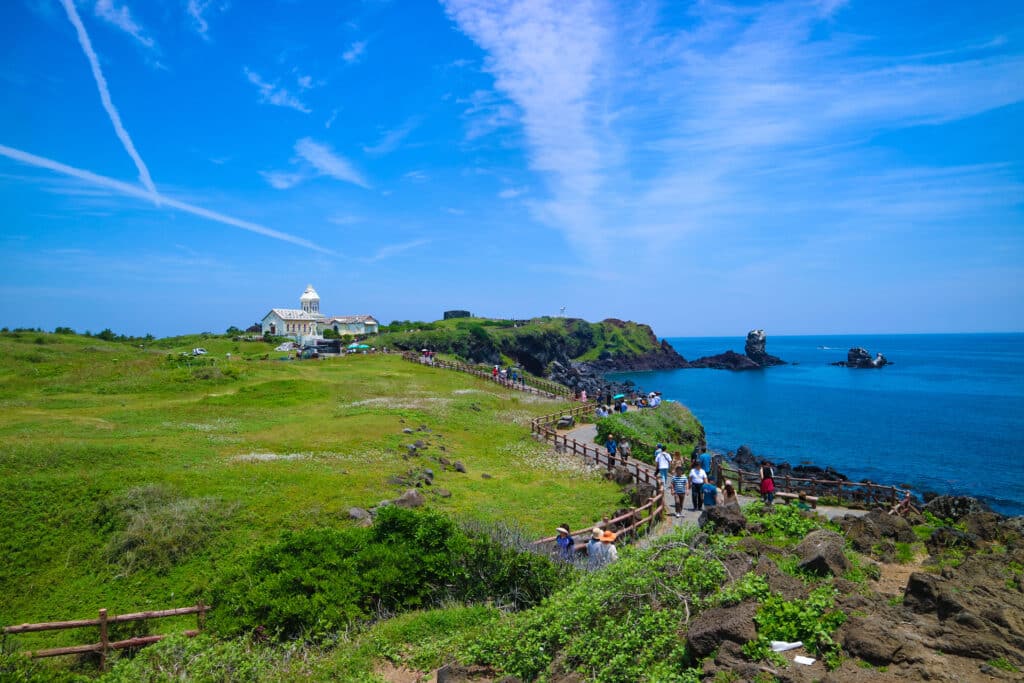
On the eastern side of the island, Seopjikoji offers sweeping coastal scenery with dramatic cliffs, grassy fields, and panoramic ocean views.
Walking trails lead across the headland toward a small lighthouse overlooking the sea. The area is especially beautiful during spring when yellow canola flowers bloom across the landscape.
Take a Ferry to Udo Island
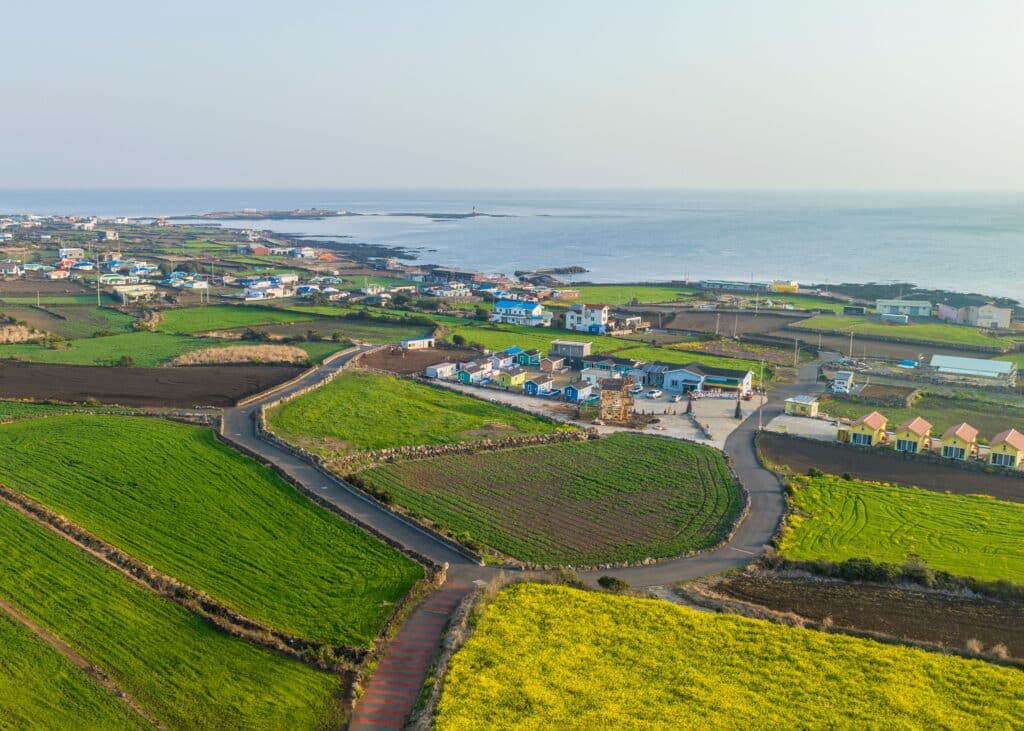
Just off the eastern coast of Jeju lies the small island of Udo, a peaceful destination known for its scenic beaches and rural atmosphere.
Visitors can reach Udo by ferry and spend the day cycling or driving around the island while enjoying coastal views and quiet fishing villages.
See the Volcanic Formations of Jusangjeolli Cliffs
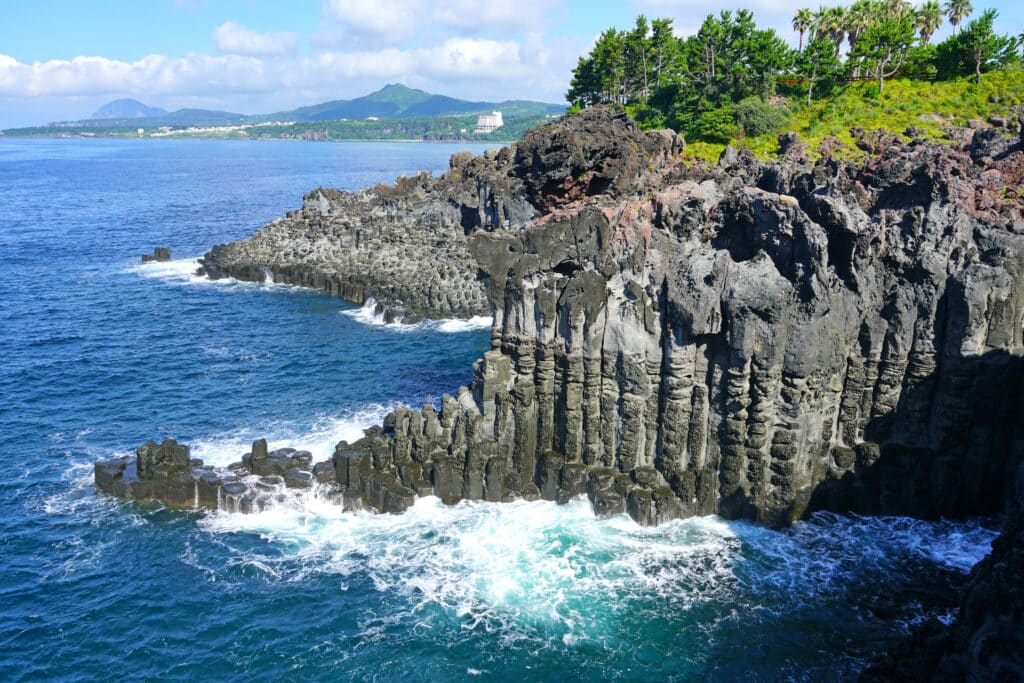
Along the southern coast of Jeju Island, the Jusangjeolli Cliffs display impressive hexagonal stone columns formed by cooling lava. The geometric rock formations rise dramatically above the ocean and create a fascinating natural landscape.
Waves crashing against the cliffs add to the dramatic scenery, making this one of the island’s most striking viewpoints.
Best Beaches on Jeju Island
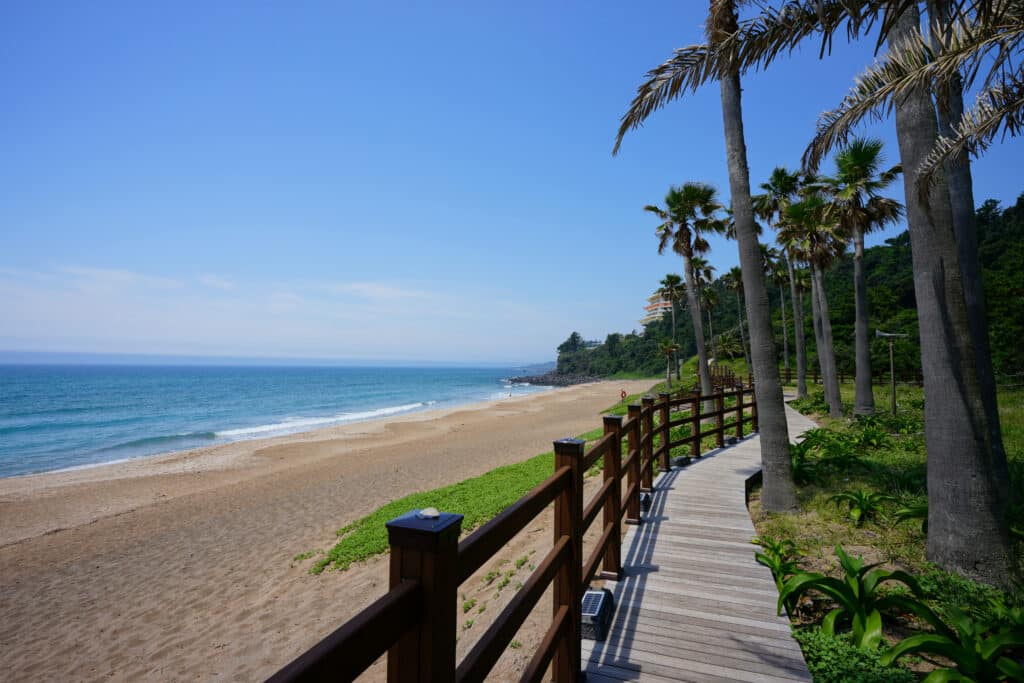
Jeju Island is also home to several beautiful beaches. Among the most popular are Hyeopjae Beach, known for its clear turquoise water, and Jungmun Beach, a scenic stretch of sand surrounded by dramatic cliffs.
These beaches offer opportunities for swimming, relaxing, and enjoying the island’s coastal scenery.
Jeju’s coastline features several beautiful beaches, many of which appear in our guide to the best beaches in South Korea.
Where to Stay on Jeju Island
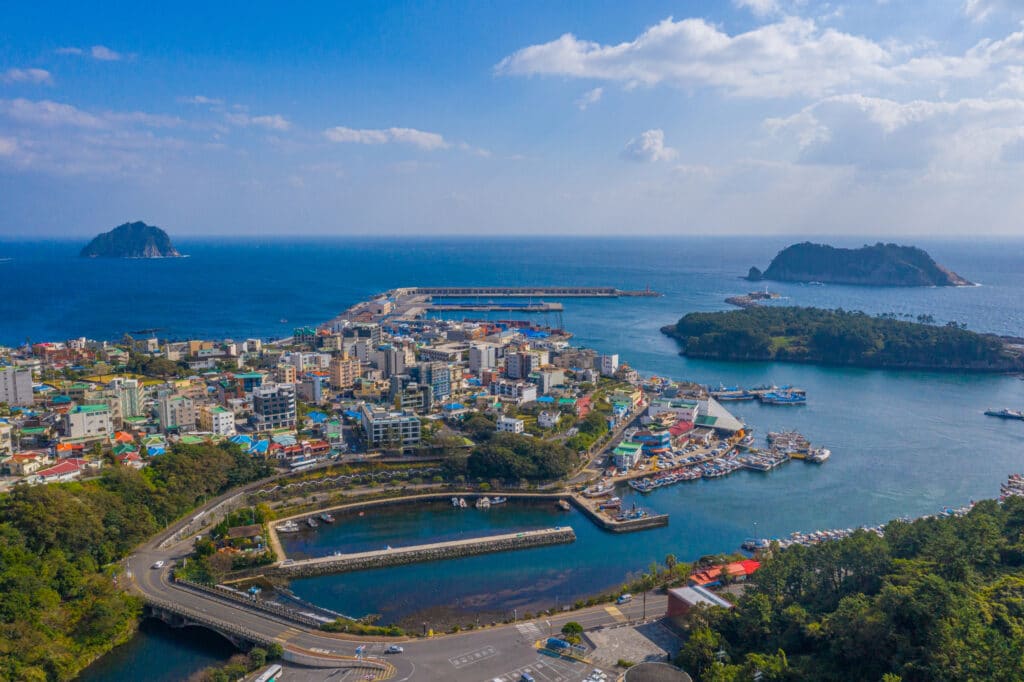
Most visitors choose to stay in either Jeju City or Seogwipo. Jeju City is located near the airport and offers many hotels, restaurants, and shopping areas. Seogwipo, located on the southern coast, provides easier access to waterfalls, hiking trails, and scenic coastal views.
Final Thoughts on Visiting Jeju Island
With its volcanic landscapes, dramatic coastlines, and peaceful countryside, Jeju Island offers one of the most memorable travel experiences in South Korea. Visitors can hike the slopes of Hallasan, watch sunrise at Seongsan Ilchulbong, or explore the island’s unique lava caves and waterfalls.
Whether you are seeking outdoor adventure or simply a relaxing escape by the sea, Jeju Island provides a perfect complement to the vibrant cities of Seoul and Busan, making it an essential stop on any South Korea itinerary.
Travelers exploring South Korea often combine Jeju with other destinations such as Busan, the historic city of Gyeongju, or mountain landscapes like Seoraksan National Park.