
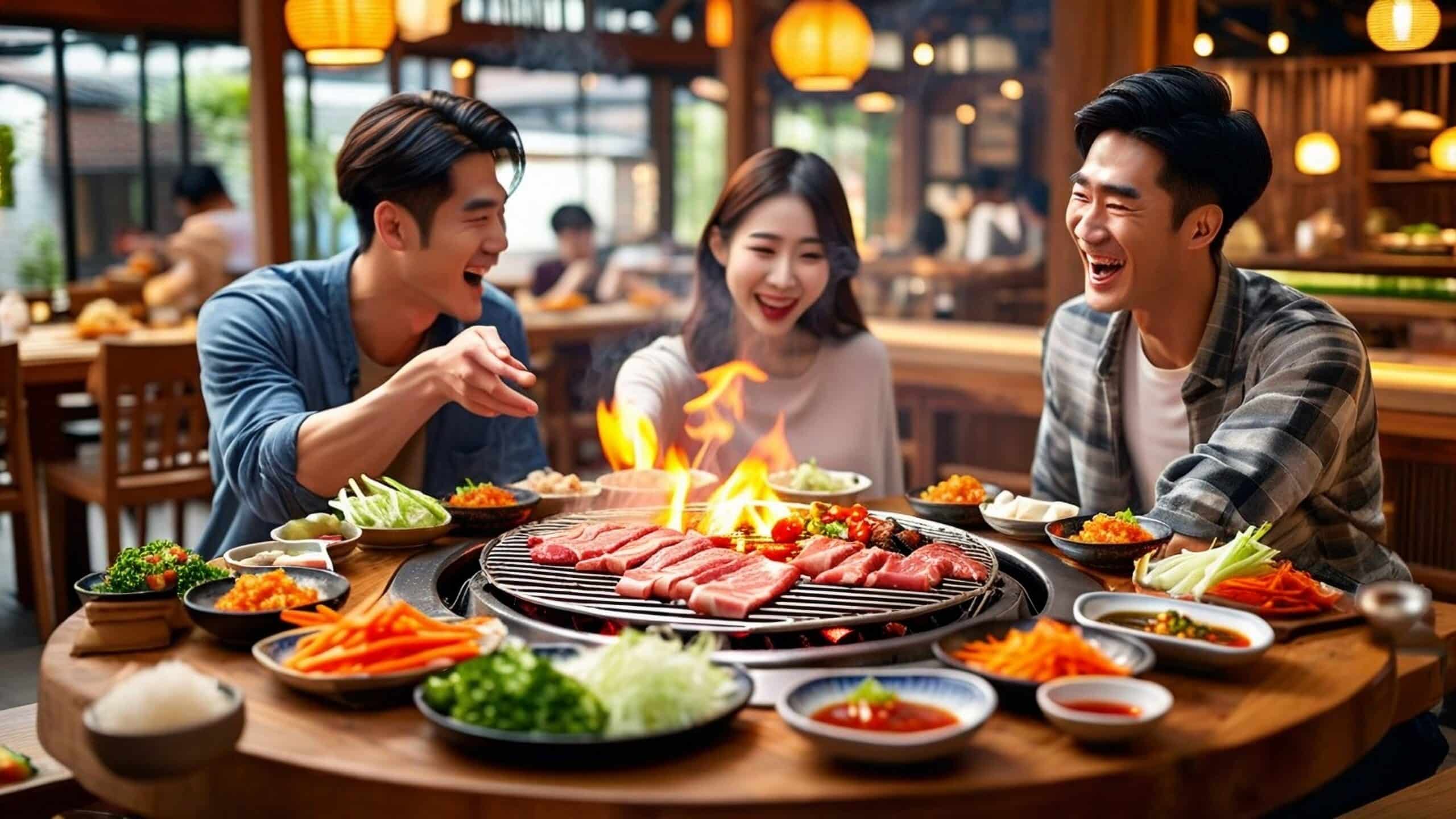
One of the most exciting parts of traveling through South Korea is discovering its extraordinary food culture. Korean cuisine is known for its bold flavors, colorful presentation, and balance of textures. Meals often combine spicy, savory, fermented, and fresh ingredients in ways that feel both comforting and vibrant. Whether you are eating at a traditional restaurant, a modern café, or a busy street market, food quickly becomes one of the highlights of any journey across the country.
Korean cuisine is deeply connected to history, geography, and daily life. Rice has long served as the foundation of many meals, while vegetables, seafood, meat, and fermented dishes all play important roles. One of the defining features of Korean dining is the variety of side dishes known as banchan, which accompany most meals and add extra layers of flavor to the table. The result is a style of eating that feels generous, social, and full of variety.
Each region of South Korea also offers something different. In Seoul, travelers can explore famous street food markets and modern dining districts. In Busan, coastal seafood dominates the menu, while Jeonju is celebrated as one of the culinary capitals of the country. Across the peninsula, meals reflect both local traditions and the broader identity of Korean food culture.
For travelers visiting South Korea for the first time, knowing which dishes to try can make the experience much richer. From sizzling Korean barbecue to spicy street snacks and comforting noodle soups, the country offers countless flavors worth exploring.
Below is a guide to some of the most famous and delicious dishes to try while traveling in South Korea.
Quick Food Guide to South Korea
Must-Try Dish: Bibimbap – rice with vegetables, egg, and chili paste
Famous Side Dish: Kimchi – fermented cabbage served with almost every meal
Street Food Favorite: Tteokbokki – spicy rice cakes sold at markets
Popular BBQ Dish: Bulgogi – marinated grilled beef
Best Food Cities: Seoul, Busan, Jeonju
Best Food Markets: Gwangjang Market and Jagalchi Fish Market
Dining Style: Shared dishes with small side plates called banchan
Korean Food Map: Best Markets & Food Spots in South Korea
Exploring these food markets is one of the best ways to experience authentic Korean cuisine and discover local flavors across South Korea.
Bibimbap – Korea’s Most Famous Rice Dish
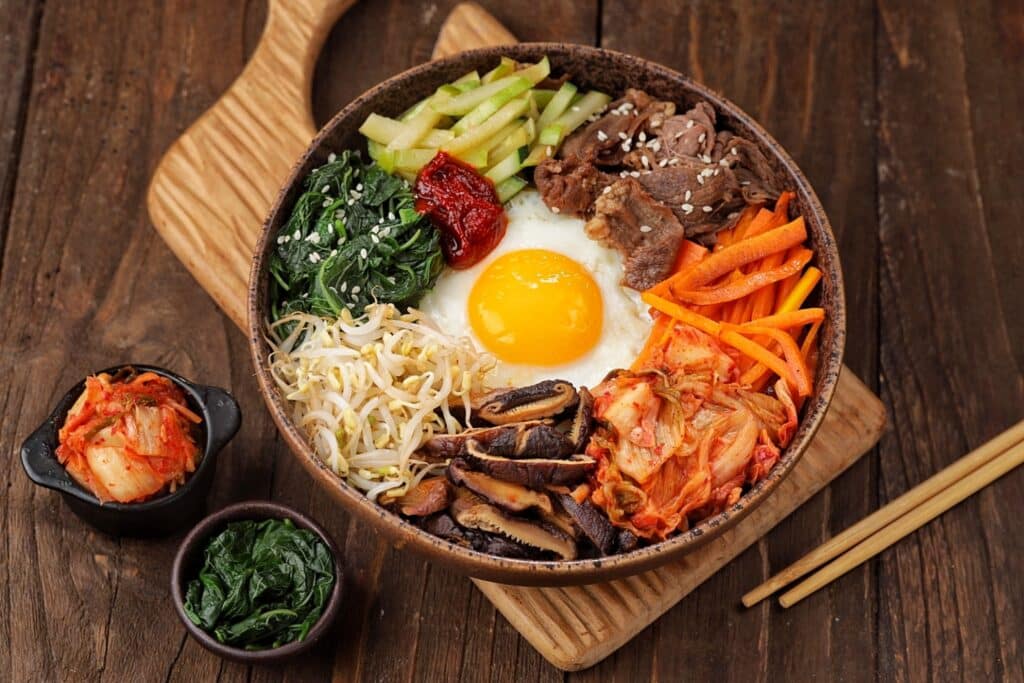
One of the best-known Korean dishes around the world is bibimbap, a colorful rice bowl topped with vegetables, meat, egg, and spicy chili paste. The name literally means “mixed rice,” and that simple description reflects the dish’s defining characteristic: all the ingredients are stirred together before eating.
Although bibimbap can be found throughout the country, many travelers consider Jeonju the best place to try it. The city is often associated with the origins of the dish and remains famous for especially refined versions made with fresh local ingredients. Traditional Jeonju bibimbap often includes bean sprouts, mushrooms, seasoned greens, beef, and a rich egg yolk served over warm rice.
What makes bibimbap so memorable is the balance of flavors and textures. Crunchy vegetables, tender meat, soft egg, and spicy gochujang chili paste create a meal that feels both healthy and satisfying. Some restaurants also serve dolsot bibimbap, a variation presented in a hot stone bowl that crisps the rice at the bottom.
For first-time visitors, bibimbap is often one of the easiest and most enjoyable introductions to Korean cuisine.
Kimchi – The Essential Korean Side Dish
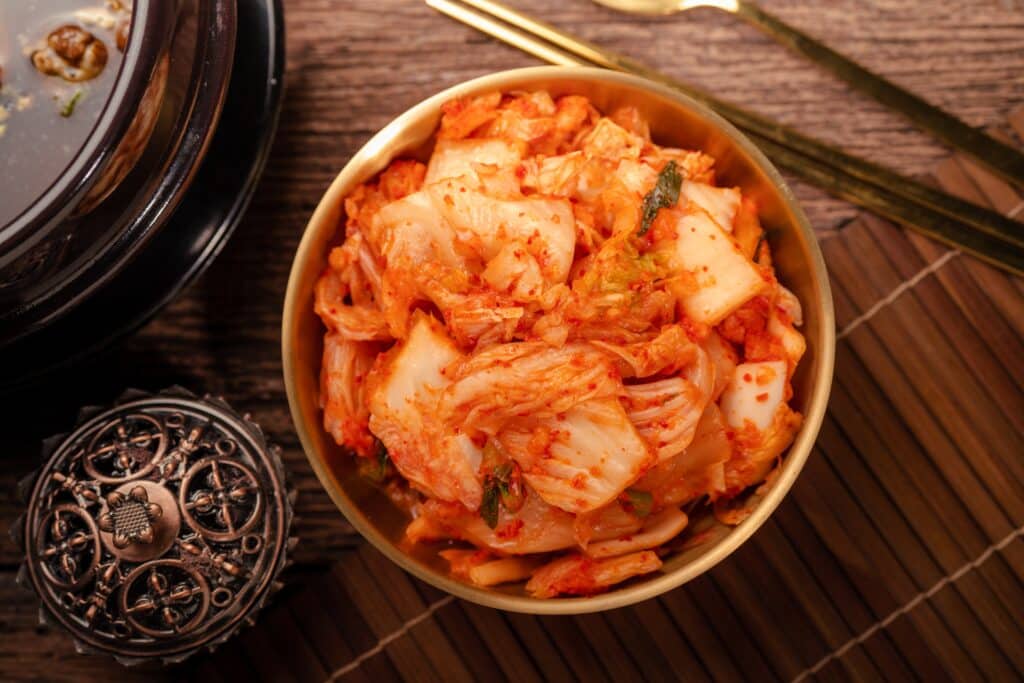
No food guide to South Korea would be complete without kimchi, the fermented vegetable dish served with nearly every meal. Most commonly made from napa cabbage or radish, kimchi is seasoned with chili flakes, garlic, ginger, and other spices before being fermented over time.
Kimchi is much more than just a side dish. It is a defining element of Korean cuisine and an everyday staple in households and restaurants across the country. Its flavor can range from fresh and mildly spicy to deeply sour and pungent depending on how long it has fermented.
Visitors quickly notice that kimchi appears everywhere. It may accompany Korean barbecue, rice dishes, soups, noodles, or street food meals. It is also used as an ingredient in cooked dishes such as kimchi stew and kimchi fried rice.
Trying kimchi in different parts of South Korea can be an interesting experience because recipes vary slightly by region and household tradition. Some versions are spicier, while others are milder or feature additional seafood flavors.
For many travelers, kimchi becomes one of the most memorable tastes of South Korea because it captures the country’s love of bold, fermented flavors.
Bulgogi – Sweet and Savory Marinated Beef
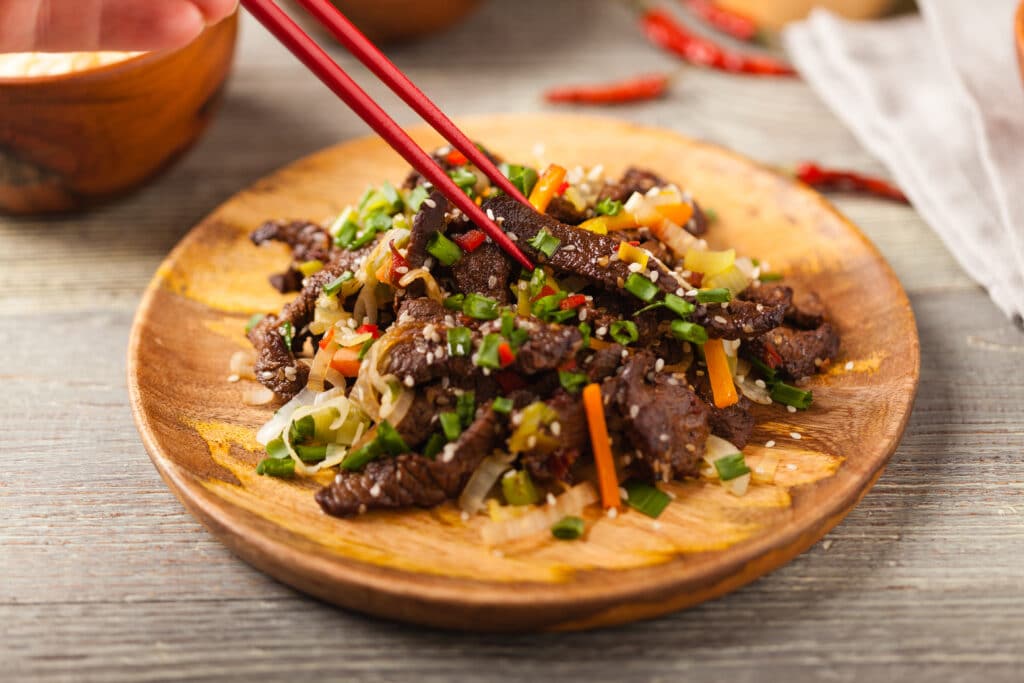
Among Korea’s most beloved meat dishes is bulgogi, thin slices of beef marinated in a mixture of soy sauce, sugar, garlic, sesame oil, and other seasonings before being grilled or stir-fried. The name translates roughly to “fire meat,” reflecting its traditional preparation over open flames.
Bulgogi is often one of the most approachable Korean dishes for travelers because its flavor is slightly sweet, savory, and less spicy than many other popular foods. The tender beef absorbs the marinade beautifully, creating a rich and comforting dish that pairs perfectly with rice and side dishes.
Many restaurants serve bulgogi at the table, allowing diners to cook the meat themselves over a grill. This social style of eating is an important part of Korean dining culture and makes the meal feel interactive and fun. It is often enjoyed with lettuce wraps, rice, kimchi, and dipping sauces.
In major cities such as Seoul, bulgogi can be found in both traditional restaurants and modern barbecue venues. It remains one of the most popular dishes for travelers who want to experience classic Korean flavors without diving immediately into very spicy cuisine.
Tteokbokki – The Iconic Street Food Snack
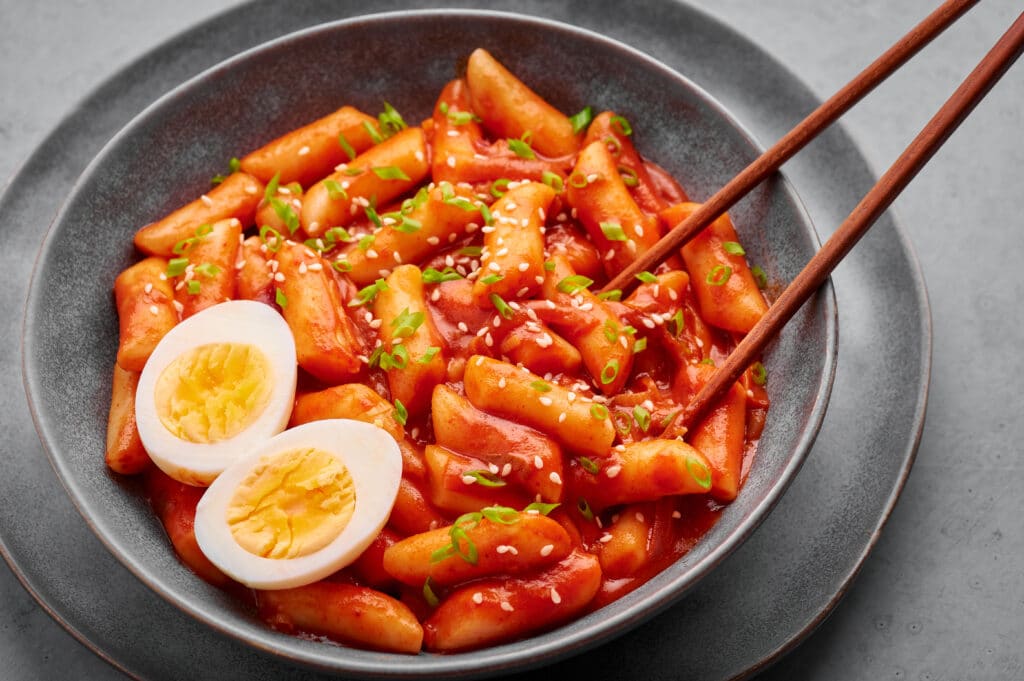
For travelers exploring Korean street markets, tteokbokki is impossible to miss. This beloved snack consists of chewy rice cakes simmered in a bright red sauce made from gochujang, sugar, and other seasonings. The result is a dish that is spicy, slightly sweet, and deeply satisfying.
Tteokbokki is one of the defining foods of Korean street culture. In places like Myeongdong and Gwangjang Market in Seoul, vendors prepare large pans of bubbling rice cakes that attract lines of hungry customers throughout the day.
The texture is one of the dish’s most distinctive features. The rice cakes are dense and chewy, making them unlike anything many travelers have tried before. Some variations include fish cakes, boiled eggs, cheese, or instant noodles, creating an even heartier snack.
Tteokbokki is perfect for those who want to experience Korean street food at its most iconic. It is inexpensive, easy to find, and full of the bold flavors that define much of the country’s casual cuisine.
Samgyeopsal – Korean Barbecue at Its Best
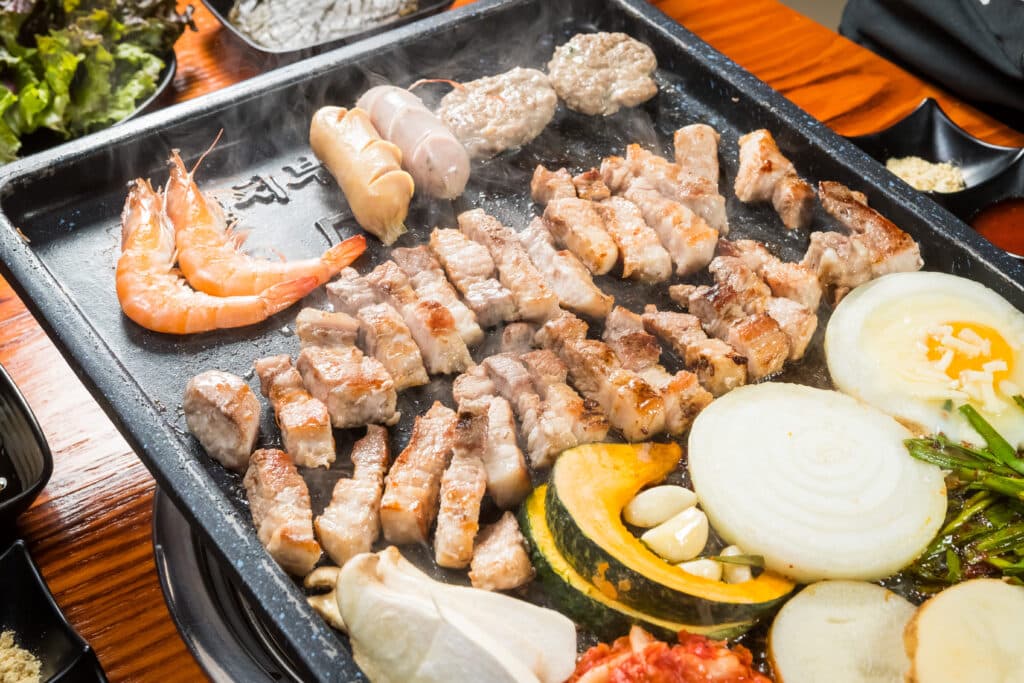
Few dining experiences feel as quintessentially Korean as eating samgyeopsal, thick slices of pork belly grilled at the table and wrapped in lettuce with garlic, chili paste, and side dishes. The name simply refers to pork belly, but the social ritual surrounding the meal makes it much more than a simple meat dish.
In many restaurants, diners cook the pork themselves over built-in tabletop grills. Once the meat is crisp and golden, it is cut into bite-sized pieces and wrapped in leafy greens with rice, kimchi, sliced garlic, or dipping sauce. This creates a meal that is rich, interactive, and very satisfying.
Samgyeopsal is especially popular in big cities such as Seoul, where barbecue restaurants fill neighborhoods late into the evening. The experience is often shared with friends or family, making it one of the most sociable ways to eat in South Korea.
For travelers, trying samgyeopsal offers not only delicious food but also insight into Korean dining culture, where meals are often built around shared dishes and conversation.
Japchae – Sweet Potato Glass Noodles
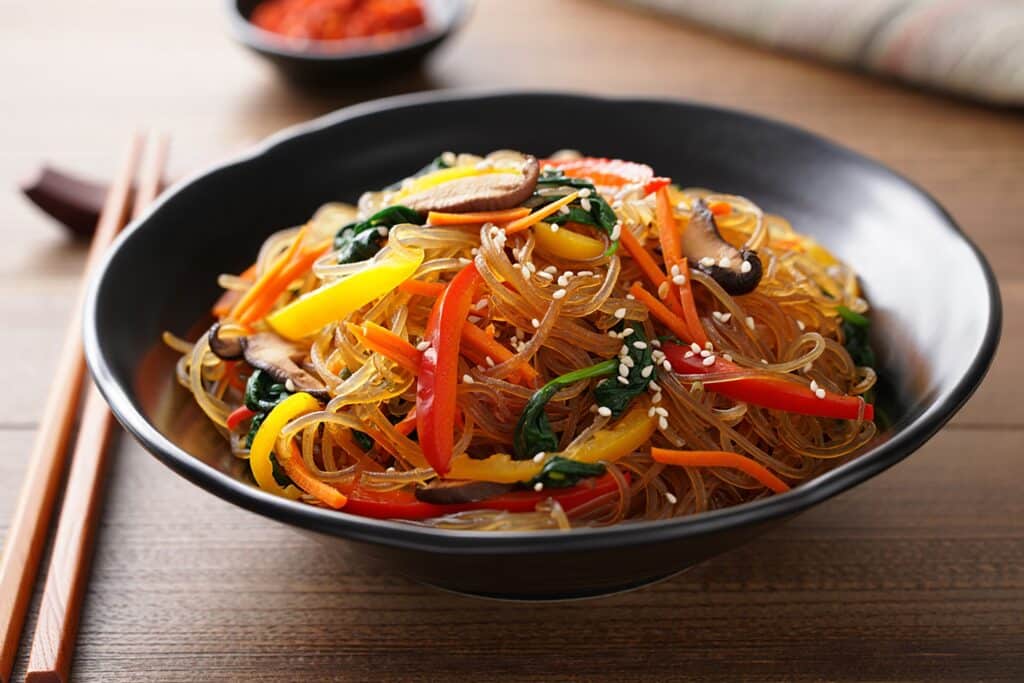
Japchae is a popular Korean noodle dish made from translucent sweet potato noodles stir-fried with vegetables, soy sauce, sesame oil, and often slices of beef. Unlike many noodle dishes elsewhere in Asia, japchae has a slightly chewy texture and a light, glossy appearance.
The flavor is savory with a hint of sweetness, making it one of the gentler Korean dishes for travelers unfamiliar with spicier foods. Common ingredients include carrots, spinach, onions, mushrooms, and sesame seeds, all mixed together with the springy noodles.
Japchae is often served at celebrations and family gatherings, but it can also be found in restaurants and markets across South Korea. Because it is flavorful without being heavy, many visitors find it an excellent dish to order alongside grilled meats or rice dishes.
Its elegant presentation and balanced taste make japchae one of the most accessible Korean specialties.
Sundubu-jjigae – Soft Tofu Stew
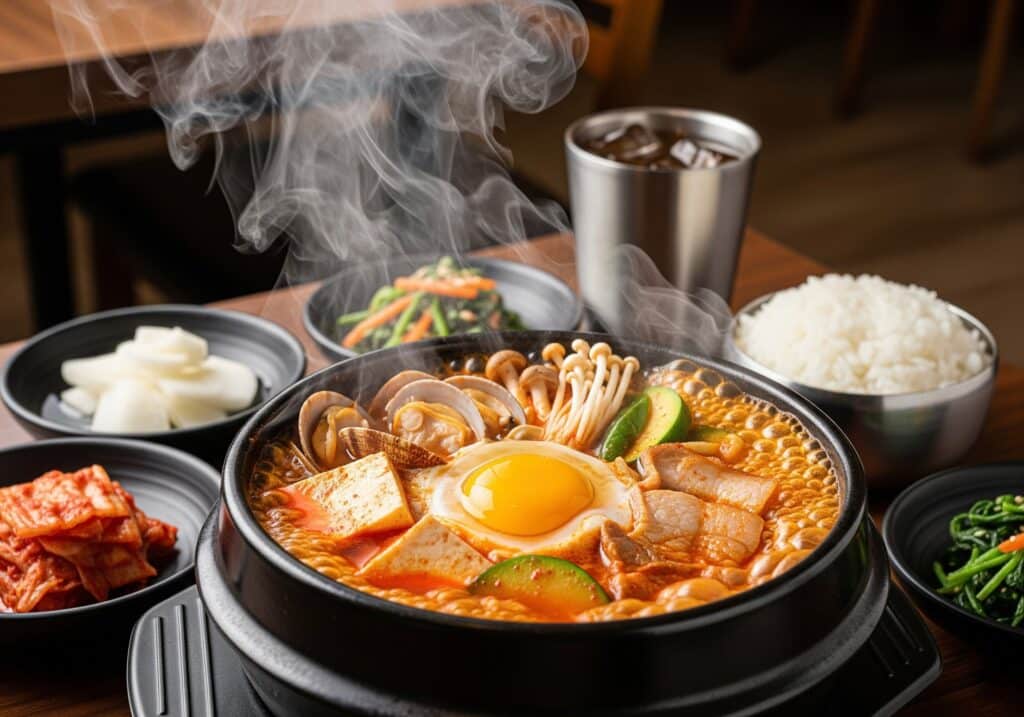
For travelers seeking something warm and comforting, sundubu-jjigae is one of the best dishes to try. This hearty stew is made with soft tofu, chili broth, vegetables, and often seafood or meat. It is usually served bubbling hot in a stone pot with a bowl of rice on the side.
The soft tofu gives the stew a delicate texture, while the spicy broth adds depth and warmth. Some versions include clams, shrimp, pork, or mushrooms, depending on the restaurant and region.
Sundubu-jjigae is especially satisfying during cooler weather or after a long day of sightseeing. It is common in traditional restaurants and neighborhood eateries throughout South Korea.
Because the dish is both filling and comforting, it remains a favorite among locals and a rewarding discovery for travelers looking beyond Korea’s more internationally famous dishes.
Seafood Specialties in Busan
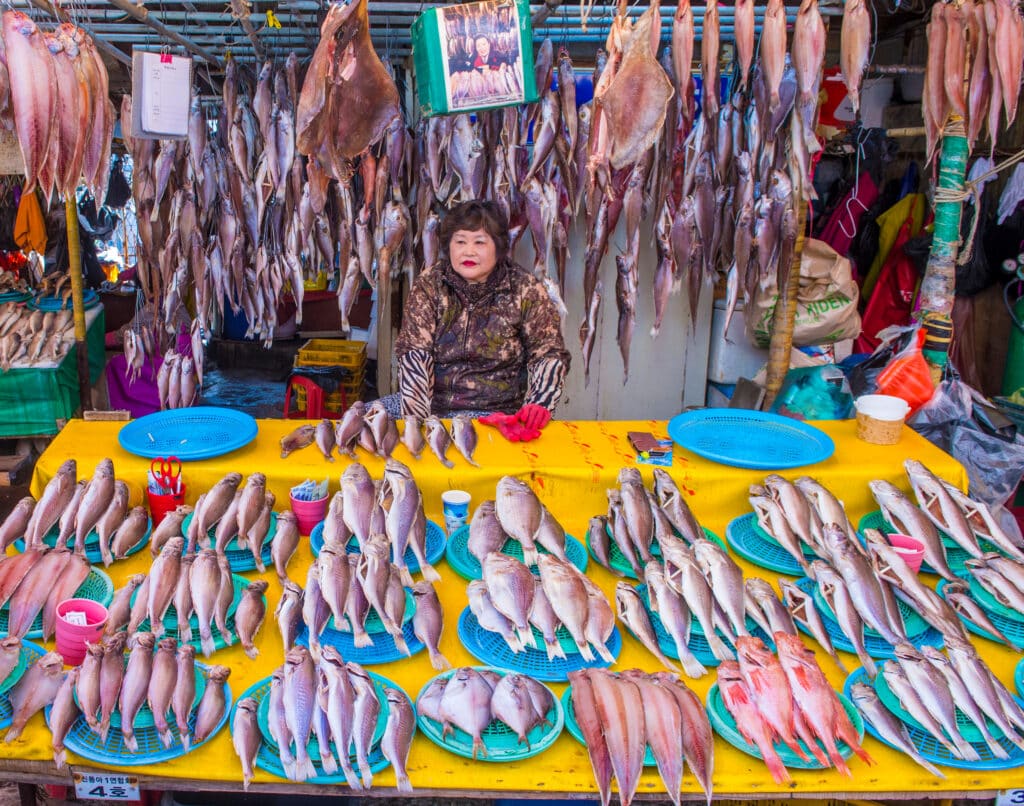
Travelers visiting Busan should make time for seafood. As South Korea’s largest port city, Busan is famous for fresh fish, shellfish, octopus, and other seafood dishes served in markets and waterfront restaurants.
The best place to experience this culinary tradition is Jagalchi Fish Market, the country’s largest seafood market. Here visitors can walk past tanks filled with live fish, crabs, and shellfish before choosing what they want to eat. Many stalls will prepare the seafood immediately in nearby restaurants.
Busan’s seafood culture gives travelers a completely different taste of Korean cuisine compared with inland cities. Freshness is the central appeal, and many meals are simple enough to let the natural flavors of the sea stand out.
For food lovers, Busan offers one of the most memorable dining experiences in South Korea.
Best Cities for Food in South Korea
While delicious food can be found everywhere in South Korea, a few destinations stand out especially for travelers.
Seoul offers the widest variety, from traditional markets and royal cuisine to modern fusion restaurants and famous street food districts. It is the best city for travelers who want to try many different dishes in one place.
Busan is ideal for seafood lovers, with markets and coastal restaurants serving some of the freshest catches in the country.
Jeonju is often considered the culinary soul of Korea. Its connection to bibimbap, traditional snacks, and deep-rooted food culture makes it a must-visit destination for serious food travelers.
Together, these cities reveal the variety and richness of Korean cuisine.
Street Food Markets to Visit
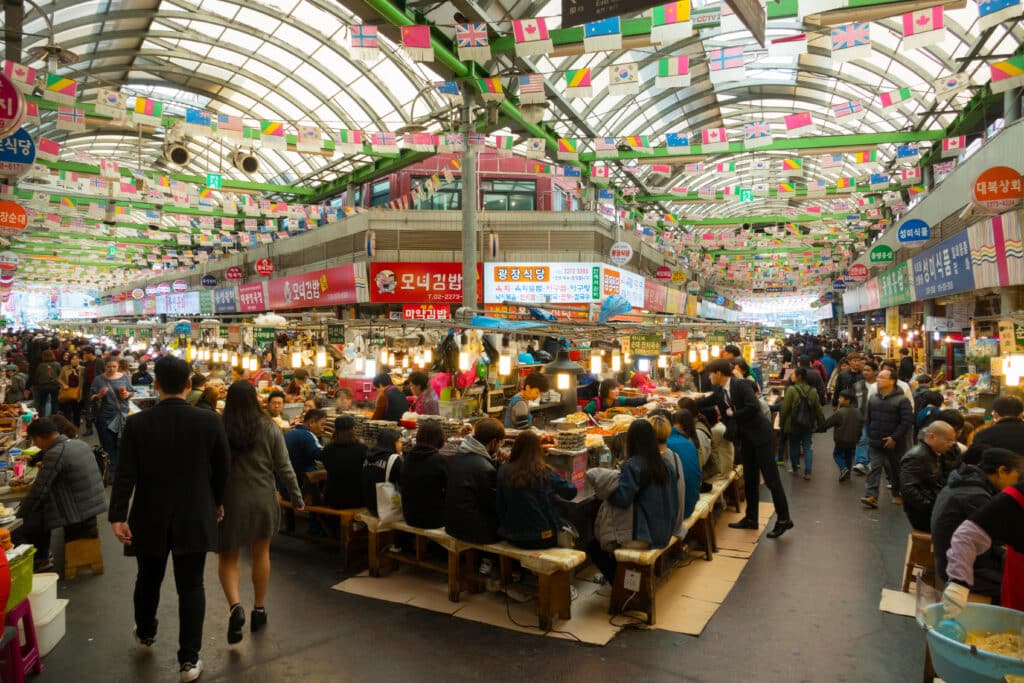
Street food is an essential part of any trip to South Korea, and some of the best places to experience it are the country’s traditional markets.
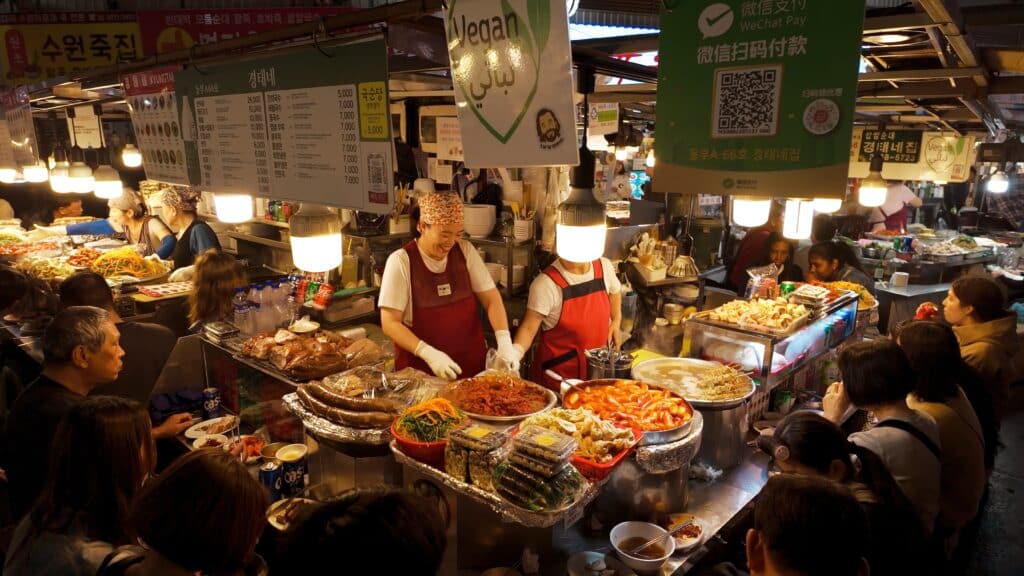
In Seoul, Gwangjang Market is one of the most famous places to try classic snacks such as tteokbokki, mung bean pancakes, and small rice rolls. Nearby Namdaemun Market also offers a lively atmosphere and a wide range of affordable dishes.
In Busan, BIFF Square and the area around Jagalchi Fish Market are excellent for seafood snacks and local specialties.
These markets are more than just places to eat. They are lively cultural spaces where visitors can observe daily life, meet vendors, and sample authentic Korean flavors in a casual setting.
Frequently Asked Questions About Korean Food
What is the most famous food in South Korea?
One of the most famous Korean dishes is bibimbap, a rice bowl topped with vegetables, meat, egg, and spicy gochujang sauce. It is widely available across the country and often recommended as a first dish for travelers.
Is Korean food very spicy?
Korean food can be spicy, but not all dishes are. Meals like bulgogi and japchae are mild and slightly sweet, while dishes such as tteokbokki or kimchi stew can be quite spicy. Travelers can easily find options suited to their taste.
What is kimchi and why is it so important?
Kimchi is a fermented vegetable dish, usually made with cabbage or radish, and seasoned with chili, garlic, and spices. It is a staple in Korean cuisine and served with almost every meal, reflecting the country’s strong tradition of fermentation.
What should I eat first in South Korea?
If it’s your first time, try:
- Bibimbap (balanced and easy to eat)
- Bulgogi (mild grilled beef)
- Tteokbokki (iconic street food)
- Kimchi (essential side dish)
These dishes give a great introduction to Korean flavors.
What is Korean barbecue?
Korean barbecue refers to meals where diners grill meat, such as samgyeopsal (pork belly) or beef, directly at the table. The meat is usually wrapped in lettuce with rice, sauces, and side dishes, making it a social and interactive dining experience.
Where can I try the best street food in South Korea?
Some of the best places for street food include:
- Gwangjang Market (Seoul)
- Namdaemun Market (Seoul)
- BIFF Square (Busan)
These locations offer a wide variety of snacks like tteokbokki, pancakes, and skewers.
Which city in South Korea has the best food?
- Seoul – best overall variety
- Busan – best for fresh seafood
- Jeonju – famous for traditional cuisine and bibimbap
Each city offers a different culinary experience.
Is Korean food vegetarian-friendly?
Korean cuisine includes many vegetable-based dishes, but it is not always strictly vegetarian. Ingredients like fish sauce or meat broth are commonly used. However, dishes like vegetable bibimbap or tofu-based meals can often be adapted.
What is banchan?
Banchan are small side dishes served with most Korean meals. They can include kimchi, pickled vegetables, tofu, and more. These dishes are usually shared and often refilled for free in restaurants.
Do I need to tip in South Korea?
No, tipping is not expected in South Korea. Good service is standard, and prices already include everything.
Final Thoughts on Korean Food
Exploring Korean food is one of the most rewarding parts of traveling through South Korea. From the refined balance of bibimbap to the fiery comfort of tteokbokki, the country’s cuisine offers an impressive range of flavors and experiences.
Whether you are grilling samgyeopsal in Seoul, tasting fresh seafood in Busan, or discovering culinary tradition in Jeonju, food adds depth and joy to every stage of the journey.
For travelers visiting South Korea, trying local dishes is not just about eating well. It is one of the best ways to understand the country’s culture, history, and everyday life.
Explore More Travel Guides in South Korea
Continue planning your trip with these helpful guides:
- Best Things to Do in Busan – Beaches, seafood markets, and scenic coastal views
- 10-Day Itinerary for South Korea – A complete route for first-time visitors
- Korean Street Food Guide – Must-try dishes and local food experiences
- Best Time to Visit South Korea – Seasonal tips for the perfect trip
- Hidden Gems in South Korea – Unique places beyond the usual highlights