
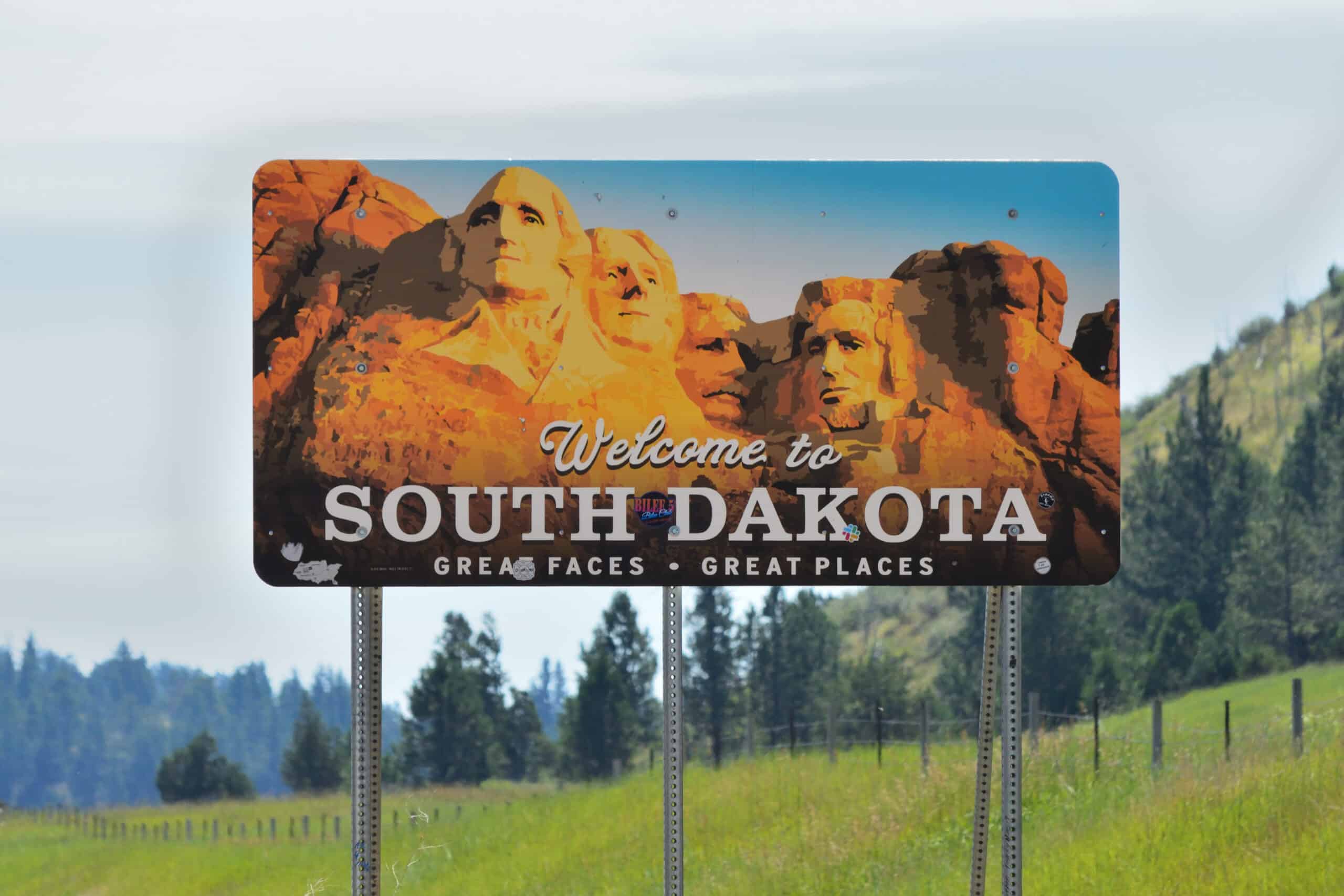
South Dakota is a state of vast horizons and quiet authority, where the land speaks first and people learn to listen. Often reduced to a handful of famous images, it is in truth one of the most complex and emotionally resonant landscapes in the American interior. Here, prairie and mountain, myth and memory, Indigenous presence and frontier ambition coexist in uneasy but compelling balance.
The state unfolds slowly. Endless grasslands roll beneath immense skies, broken by rivers that once guided Indigenous nations and later carried explorers, traders, and settlers westward. The Missouri River divides South Dakota not just geographically but culturally, separating East River farmland from West River ranching country, where distances grow longer and silence deeper.
At the heart of South Dakota lies the Black Hills, an ancient mountain range rising unexpectedly from the plains. Sacred to the Lakota people, contested through history, and mined for gold and meaning alike, the Hills remain the state’s emotional core. Here, granite spires, pine forests, and hidden valleys concentrate the drama of geology and human ambition.
South Dakota’s history is inseparable from the story of Native nations, particularly the Lakota, Dakota, and Nakota peoples, whose cultural presence endures despite displacement, broken treaties, and hardship. Their perspectives shape the land’s meaning as powerfully as any monument or battlefield.
Modern South Dakota resists easy categorization. It is rural yet globally connected, conservative yet quietly evolving, stoic but deeply spiritual. Life here is shaped by weather, land stewardship, and community ties that favor endurance over speed.
To travel South Dakota attentively is to encounter a place that does not perform. It reveals itself gradually, rewarding patience with perspective and humility.
Badlands National Park — Erosion as Revelation
Badlands National Park presents one of the most arresting landscapes in North America—a place where erosion has stripped the earth down to its bones. Jagged pinnacles, layered buttes, and vast canyons stretch beneath an unforgiving sky, forming a terrain that feels both alien and ancient.
This land was once submerged beneath an inland sea. Over millions of years, sediment hardened, lifted, and then was relentlessly carved by wind and water. The result is a stark geology where every layer tells a chapter of planetary history. Colors shift throughout the day—from pale gray to rose, ochre, and deep shadow—giving the Badlands a constantly changing presence.
Despite its severity, the park is alive. Prairie grasses cling to ridges, bison roam protected ranges, and bighorn sheep navigate impossible slopes. Fossils embedded in the rock reveal one of the world’s richest records of ancient mammals, offering insight into prehistoric ecosystems that once flourished here.
Human history is equally profound. Indigenous peoples lived and hunted in this region long before it was labeled “bad.” Later, settlers and homesteaders struggled against the land’s resistance, often learning too late that it could not be easily subdued.
Standing within the Badlands produces a humbling effect. Scale overwhelms, silence deepens, and time feels elastic. There is little comfort here, but immense clarity.
The Badlands do not invite escape. They demand reckoning—with nature’s power, with impermanence, and with humanity’s smallness against geological time.
The Black Hills — Sacred Mountains and Contested Ground
Rising unexpectedly from the plains, the Black Hills form South Dakota’s spiritual and geographic heart. Dense pine forests, granite peaks, and hidden valleys create a landscape that feels intimate despite its scale. For the Lakota people, these mountains are sacred—the place of origin and spiritual power.
The Black Hills are ancient, older than the Rocky Mountains, shaped by volcanic forces and erosion across billions of years. Their geology supports a diversity of ecosystems uncommon in the surrounding plains, fostering wildlife, springs, and forests that sustain both people and myth.
History here is layered and unresolved. The discovery of gold in the 1870s brought miners and settlers in violation of treaties, triggering conflict that culminated in displacement and enduring legal battles. This legacy still shapes the region’s cultural and political landscape.
Yet the Black Hills are not frozen in the past. Towns, trails, and protected lands coexist with sacred sites and ongoing Indigenous stewardship. Hiking here means moving through living history—past ceremonial grounds, mining scars, and untouched wilderness in uneasy proximity.
The Hills invite exploration beyond landmarks. Quiet backroads, remote lakes, and high meadows offer solitude and reflection. Weather changes swiftly, reminding visitors of the mountains’ authority.
The Black Hills do not belong neatly to any single narrative. They are a place of beauty and loss, reverence and conflict—where the land’s meaning remains contested, powerful, and alive.
Mount Rushmore — Monument, Myth, and Moral Tension
Mount Rushmore stands as South Dakota’s most recognizable image—and its most complex. Carved into granite in the Black Hills, the faces of four U.S. presidents loom above pine forests, representing a vision of American progress, leadership, and endurance.
From a technical perspective, the monument is extraordinary. Sculpted between 1927 and 1941, it required innovation, precision, and risk on an immense scale. The craftsmanship commands respect, and the site’s visual impact is undeniable.
Yet Mount Rushmore cannot be separated from its context. The mountain lies on land sacred to the Lakota people, taken in violation of treaty agreements. For many Indigenous communities, the monument represents not national pride but dispossession and erasure. This tension defines the site as much as the sculpture itself.
Modern interpretation has grown more nuanced. Visitor centers and nearby institutions increasingly acknowledge the broader history of the Black Hills, encouraging reflection rather than simple celebration. The monument becomes a starting point for dialogue rather than a conclusion.
Experiencing Mount Rushmore is therefore layered. Awe exists alongside discomfort. Grandeur meets unresolved history. The surrounding forest, quiet and enduring, often speaks more subtly than the stone faces above.
Mount Rushmore endures not because it offers easy answers, but because it embodies the contradictions at the heart of the American story—ambition and exclusion, achievement and cost—etched permanently into the mountain itself.
Custer State Park — Where Wildlife and Landscape Share Authority
Custer State Park is the living heart of the Black Hills, a vast and varied landscape where wildlife is not curated but sovereign. Spanning more than 70,000 acres, the park offers an immersive experience of South Dakota’s natural rhythms, where granite peaks, open meadows, and rolling plains intersect.
The park is best known for its free-roaming bison herd, one of the largest publicly owned herds in the world. These animals move across the land with calm dominance, shaping the landscape through their presence. Encounters with bison here are unscripted and humbling, reinforcing the reality that humans are guests rather than managers.
Scenic drives such as Needles Highway and Iron Mountain Road reveal the park’s geological drama. Narrow tunnels frame distant peaks, while granite spires rise abruptly from forested slopes. Hiking trails lead into quieter corners, where prairies open unexpectedly and wildlife sightings feel intimate and unforced.
Custer State Park also reflects a conservation ethic rooted in restraint. Development is minimal, allowing natural processes to guide the land’s evolution. Prairie dogs, pronghorn, elk, and burros coexist in a delicate ecological balance.
The park’s seasonal shifts are profound. Spring brings new grass and young animals; summer hums with movement; autumn settles into golden stillness; winter strips the landscape to essentials.
Custer State Park does not entertain. It reveals. It is a place where South Dakota’s spirit—resilient, unembellished, and enduring—becomes unmistakably clear.
Wind Cave National Park — The Earth’s Hidden Architecture
Wind Cave National Park protects one of the world’s most complex and scientifically significant cave systems, a hidden universe beneath the rolling prairie of southwestern South Dakota. While its surface landscape is serene and understated, the true wonder lies below.
Wind Cave is renowned for its rare boxwork formations—thin calcite fins forming intricate honeycomb patterns found in few places on Earth. These delicate structures suggest both fragility and endurance, shaped slowly by mineral-laden water over immense time.
Descending into the cave is an exercise in humility. Passages narrow, ceilings lower, and orientation dissolves. Unlike vast cavernous spaces, Wind Cave feels intimate and cerebral, encouraging attention to texture, pattern, and silence. The cave breathes, drawing air in and out through natural openings, creating the phenomenon that gave it its name.
Above ground, the park preserves a pristine mixed-grass prairie ecosystem. Bison and prairie dogs move across grasslands that mirror the subterranean complexity below. Few places so clearly demonstrate the interdependence of surface and subsurface worlds.
The park holds deep cultural significance for Indigenous peoples, particularly the Lakota, who view Wind Cave as a sacred emergence site—the place where life first entered the world. This spiritual dimension adds gravity to every visit.
Wind Cave is not about spectacle but revelation. It asks visitors to consider what lies beneath the visible, and how much of the natural world remains unseen yet essential.
Deadwood — Lawlessness, Legend, and Reinvention
Deadwood occupies a narrow gulch in the northern Black Hills, a town born of gold, chaos, and opportunity. Few places in South Dakota wear their mythology as openly, yet beneath the legends lies a more complex story of survival and reinvention.
Founded during the gold rush of the 1870s, Deadwood was illegal from the beginning—established on land promised to the Lakota. Prospectors, gamblers, and opportunists poured in, creating a volatile frontier society governed more by chance than law. Figures such as Wild Bill Hickok and Calamity Jane became part of national folklore, their stories blending truth and exaggeration.
The town’s geography shaped its character. Hemmed in by steep hills, Deadwood developed vertically, its buildings stacked along a winding main street. Fires, floods, and violence repeatedly reshaped the town, forcing constant adaptation.
Modern Deadwood balances heritage and tourism with surprising care. Historic buildings house museums, hotels, and small casinos, preserving architectural character while sustaining economic life. Interpretive sites contextualize the legends, offering a clearer view of the human cost behind the myths.
Mount Moriah Cemetery, perched above town, provides perspective. From this quiet hillside, the drama below seems small, its ambitions fleeting.
Deadwood endures not because of its legends alone, but because it embodies a core truth of the American frontier: survival required reinvention, and history was never tidy.
Jewel Cave National Monument — Infinity Beneath the Hills
Jewel Cave is a study in scale and patience. Beneath the western Black Hills lies one of the longest cave systems ever discovered, a subterranean labyrinth that continues to grow as exploration advances. More than 220 miles have been mapped so far, and the end is not yet in sight.
Unlike the sculptural delicacy of Wind Cave’s boxwork, Jewel Cave presents abundance. Walls are encrusted with calcite crystals that shimmer faintly under light, giving the cave its name. Flowstone cascades like frozen waterfalls, while chambers unfold gradually, revealing complexity rather than grandeur.
Entering Jewel Cave requires both physical descent and mental recalibration. Passageways are narrow, winding, and demanding, emphasizing the cave’s resistance to easy access. It is a place shaped over millions of years, indifferent to human timelines.
Above ground, the monument protects forested hills and open meadows that appear modest compared to what lies below. This contrast reinforces a central theme of South Dakota: the land’s most extraordinary stories are often hidden beneath a quiet surface.
Jewel Cave invites contemplation of geological time. Every formation is a record of slow accumulation, each crystal a testament to persistence. It reminds visitors that vastness does not always announce itself, and that depth can be measured in patience as much as distance.
Spearfish Canyon — Where Water Shapes Stone
Spearfish Canyon cuts a dramatic corridor through the northern Black Hills, a limestone gorge carved patiently by Spearfish Creek. Steep canyon walls rise abruptly from the roadway, their layered rock faces streaked with color and texture.
The canyon is defined by movement. Waterfalls such as Bridal Veil Falls, Roughlock Falls, and Spearfish Falls cascade through narrow channels, their sound echoing against stone. Seasonal change alters the canyon’s character—lush and green in summer, fiery with foliage in autumn, crystalline and silent in winter.
Unlike the open expanses of prairie, Spearfish Canyon feels intimate and enclosed. Trails follow the creek, winding beneath towering cliffs and through dense forest. Wildlife remains close but discreet, reinforcing the sense of quiet observation rather than spectacle.
Historically, the canyon served as a natural passageway for Indigenous peoples and later settlers. Its resources—water, shelter, and timber—made it valuable, but its beauty ensured preservation. Today, development is restrained, allowing the canyon’s natural rhythm to dominate.
Spearfish Canyon represents balance. It is accessible yet unspoiled, dramatic yet contemplative. The canyon’s power lies not in size alone but in the way it concentrates the elements—stone, water, forest—into a narrow, resonant space.
The Missouri River — South Dakota’s Lifeline
The Missouri River defines South Dakota more than any single feature, stretching north to south and dividing the state both geographically and culturally. Wide, deliberate, and enduring, the river shapes land, economy, and identity.
Historically, the Missouri was a corridor of movement and exchange. Indigenous nations relied on its waters for sustenance and travel, while later explorers and traders followed its currents westward. Towns emerged along its banks, anchored by commerce and agriculture.
Modern dams transformed the river’s flow, creating vast reservoirs such as Lake Oahe and Lake Francis Case. These engineered landscapes altered ecosystems and displaced communities, particularly Indigenous ones, leaving a legacy that remains complex and unresolved.
Yet the river retains its quiet authority. Its broad surface reflects endless sky, its pace unhurried. Recreation—boating, fishing, camping—draws people not for excitement, but for immersion in space and silence.
The Missouri River is both boundary and connector. It separates eastern farmland from western plains, while linking South Dakota to a continental watershed stretching to the Gulf of Mexico.
More than water, the Missouri is memory made visible—a reminder that the state’s present rests upon currents far older than its borders.
The Badlands Beyond the Park — A Wider Wilderness
Badlands National Park is only the beginning. Beyond its boundaries, the landscape continues uninterrupted—less curated, less visited, and arguably more revealing. This broader badlands region stretches into Buffalo Gap National Grassland and remote ranchlands where erosion and wind remain the dominant architects.
Here, the formations feel rawer. There are no guardrails or overlooks, only gravel roads and open horizons. The land fractures into spires, ridges, and gullies that shift color with the sun, from pale ash to rusted red. Silence is absolute, broken only by wind or the sudden movement of wildlife.
This is grazing country, where cattle move slowly across terrain that looks hostile but sustains life in subtle ways. Grasses anchor the soil, prairie dogs tunnel beneath it, and bison once roamed in immense numbers. The badlands are not barren—they are finely balanced.
To explore beyond the park is to understand the badlands not as a destination, but as a system. Rain reshapes the land with every storm, carving new lines and collapsing old ones. Nothing here is fixed.
This wider badlands region embodies South Dakota’s resistance to containment. It cannot be summarized by scenic overlooks alone. It must be driven, walked, and waited upon, revealing its complexity only to those willing to move slowly through it.
Prairie Towns — Life on the Open Grid
Across South Dakota, prairie towns rise from the grid with understated resilience. They are spaced far apart, connected by highways that stretch straight and long, emphasizing distance rather than convenience. Each town serves as a local anchor—small, self-contained, and deeply practical.
Main streets are functional rather than ornamental. Grain elevators dominate skylines, visible from miles away, marking centers of trade and harvest. Cafés open early, closing when business is done. Conversations are brief but sincere, shaped by familiarity rather than performance.
These towns exist in close relationship with land and weather. A good year is measured by rainfall and yield; a hard year leaves visible traces. Community events—fairs, high school sports, seasonal festivals—provide rhythm and continuity.
Change arrives slowly. Some towns shrink, others stabilize, a few grow modestly. What persists is a sense of rootedness. Families often span generations, their histories woven into the land itself.
Prairie towns are not nostalgic artifacts. They are working places, adapting quietly to modern pressures while maintaining an ethic of self-reliance. To pass through them is to glimpse a version of America shaped less by ambition than by endurance.
Native Nations — Living Sovereignty on the Plains
South Dakota is home to nine federally recognized tribes, primarily Lakota, Dakota, and Nakota nations whose presence predates the state by centuries. Reservations are not relics of the past—they are living territories shaped by resilience, culture, and ongoing struggle.
These lands hold deep spiritual significance. Hills, rivers, and plains are imbued with stories and responsibilities passed through generations. Ceremonies, language revitalization efforts, and artistic traditions continue despite historic displacement and systemic inequities.
The modern realities are complex. Reservations face challenges rooted in broken treaties, economic marginalization, and infrastructure gaps. Yet they also embody strength—through governance, education initiatives, and cultural preservation.
Places like Pine Ridge, Rosebud, and Standing Rock are often misunderstood by outsiders, framed only through hardship. This perspective misses the deeper narrative of survival and identity. Community bonds, kinship systems, and cultural continuity remain powerful forces.
Understanding South Dakota fully requires acknowledging Native sovereignty—not as a historical footnote, but as a present reality. The land’s meaning changes when viewed through this lens, revealing histories layered beneath the visible surface.
The story of South Dakota is inseparable from its Native nations. Their presence reshapes the map, reminding visitors that the plains are not empty, and never were.
Rapid City — Gateway Between Worlds
Rapid City occupies a unique position in South Dakota, both geographically and culturally. Situated at the eastern edge of the Black Hills, it functions as a threshold between prairie openness and mountain enclosure, between frontier history and modern mobility.
Unlike many Western cities shaped by sudden booms, Rapid City grew steadily, balancing military influence, tourism, and regional commerce. Ellsworth Air Force Base lends an international dimension, while downtown retains a walkable, human scale. Historic buildings stand beside cafés, galleries, and public art, including the City of Presidents sculptures that quietly narrate national history along the streets.
Rapid City’s significance lies in its role as a gathering point. Travelers pass through on their way to Mount Rushmore, Badlands National Park, or Custer State Park, yet the city rewards those who linger. Museums explore Plains history, Indigenous cultures, and regional geology, offering essential context to the surrounding landscape.
The city’s relationship with nearby tribal nations is complex and evolving. Cultural events, markets, and educational institutions increasingly foreground Indigenous voices, making Rapid City a place of dialogue rather than erasure.
As a gateway city, Rapid City does not dominate its surroundings—it interprets them. It provides comfort without dulling the wildness beyond its limits, making it one of South Dakota’s most important cultural crossroads.
Sioux Falls — The Eastern Heart of the State
Sioux Falls stands apart from the rest of South Dakota, both geographically and temperamentally. Located in the state’s southeast corner, it is shaped less by open prairie isolation and more by river, industry, and steady urban growth.
The city takes its name from the Big Sioux River, whose cascades tumble through Falls Park at the city’s center. These quartzite falls once powered mills and attracted settlement; today, they anchor the city’s identity, blending natural drama with civic pride.
Sioux Falls is South Dakota’s largest city, yet it maintains an approachable scale. Downtown has evolved into a cultural district of restored warehouses, restaurants, galleries, and performance spaces. Public art and riverwalks invite interaction rather than spectacle.
Economically, Sioux Falls is diverse—healthcare, finance, manufacturing, and education create stability uncommon in many rural states. This diversity attracts newcomers, giving the city a more cosmopolitan feel while retaining Midwestern sensibility.
Culturally, Sioux Falls serves as South Dakota’s eastern gateway, bridging Great Plains tradition with Upper Midwest influence. It is less rugged than the Black Hills, less symbolic than Mount Rushmore, but deeply livable.
Sioux Falls represents a different version of South Dakota: forward-looking, river-centered, and quietly confident.
Crazy Horse Memorial — An Unfinished Declaration
The Crazy Horse Memorial is not a monument in the conventional sense. It is unfinished by design, evolving slowly in defiance of timelines and expectations.
Carved into Thunderhead Mountain, the sculpture honors the Lakota leader Crazy Horse, whose legacy resists simplification. When completed, it will be the largest mountain carving in the world—but its significance lies in the process rather than the endpoint.
The memorial was initiated by Lakota elders and sculptor Korczak Ziolkowski as a response to Mount Rushmore, asserting Indigenous presence and sovereignty. Funded privately and carved deliberately, it embodies endurance rather than spectacle.
The surrounding campus houses museums, cultural centers, and educational programs that foreground Native voices. Artifacts, stories, and contemporary works emphasize continuity rather than nostalgia.
Standing before the mountain, visitors confront scale—not just physical, but moral. The carving asks questions about representation, memory, and who controls historical narrative.
Crazy Horse Memorial is not about completion. It is about persistence, dignity, and the refusal to be erased.
Palisades State Park — Stone, Water, and Precision
Palisades State Park reveals a dramatically different South Dakota landscape. Here, towering pink quartzite cliffs rise sharply above Split Rock Creek, forming one of the state’s most striking geological features.
The rock is ancient—over a billion years old—and its vertical formations create a sense of architectural precision rarely associated with the plains. The creek winds through the canyon, reflecting stone walls and softening their severity.
Hiking trails trace the cliff edges, offering sweeping views of the narrow gorge below. Rock climbers are drawn to the park’s challenging routes, while photographers find endless variation in light and texture.
Unlike vast national parks, Palisades feels intimate. Its scale invites close observation—fossils embedded in stone, wildflowers clinging to crevices, birds nesting along ledges.
The park stands as a reminder that South Dakota’s beauty is not solely expansive. It can also be concentrated, vertical, and exacting.
Palisades State Park is a place where geology asserts itself with clarity, carving meaning from stone and water.