
There are places in Europe where history is polished and presented behind velvet ropes. And then there is Serbia — a country where history still breathes in fortress walls, village kitchens, riverbanks, and lively city streets.
Traveling through Serbia feels less like visiting a destination and more like being welcomed into a story still unfolding. Positioned at the crossroads of Central and Southeast Europe, the country has spent centuries absorbing influences from empires, cultures, and faiths. Romans built roads here. Ottoman traders filled its markets. Austro-Hungarian architects left elegant squares in northern towns. Each era left a layer that today forms a fascinating cultural mosaic.
The journey often begins in Belgrade, a capital famous for its resilience and restless energy. Perched above the meeting point of the Danube and Sava, the city has been conquered and rebuilt countless times. Yet rather than feeling burdened by its past, Belgrade celebrates life with vibrant cafés, riverside nightlife, and a spirit that locals proudly describe as inat — a stubborn refusal to give up.
Beyond the capital lies a country full of contrasts. The elegant northern city of Novi Sad reflects centuries of Central European influence, while the ancient fortress city of Niš carries deep echoes of the Ottoman and Roman worlds. Hidden among forested valleys are medieval monasteries such as Studenica Monastery, where frescoes painted centuries ago still glow beneath candlelight.
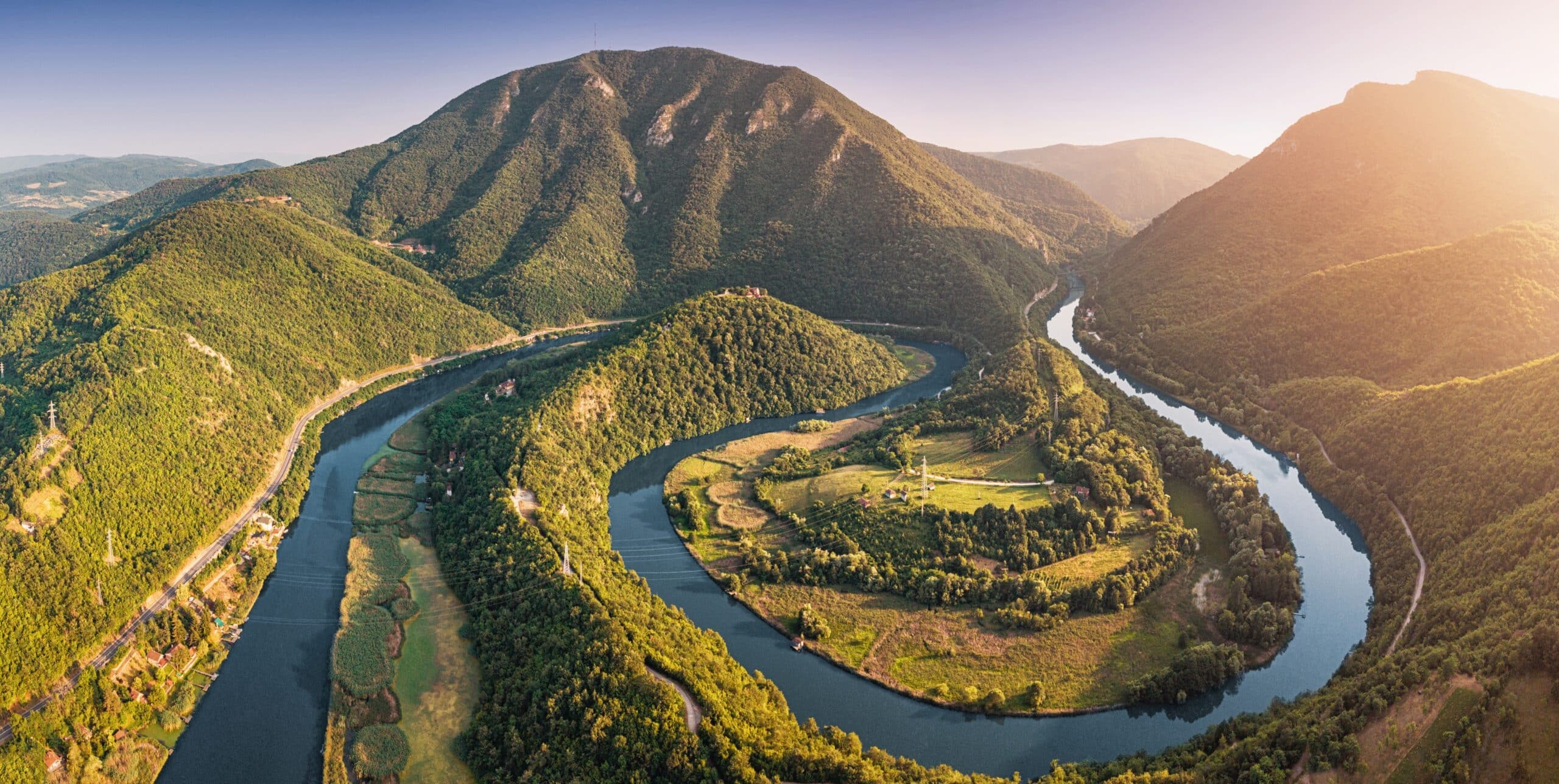
Nature, too, reveals another side of Serbia. The wild ridges of Tara National Park, the dramatic cliffs of Iron Gates, and the emerald bends of the Drina River offer landscapes that remain largely undiscovered by mass tourism.
But perhaps Serbia’s greatest attraction is its people. Travelers are often surprised by how quickly a short conversation turns into an invitation for coffee, a home-cooked meal, or a toast with strong plum rakija.
This guide explores some of the most unforgettable places across Serbia — cities, monasteries, mountains, and rivers — each offering its own window into a country that rewards curiosity and welcomes travelers like old friends.
24. Belgrade
The story of Belgrade begins with rivers.
Standing where the mighty Danube meets the Sava, Serbia’s capital has been a strategic prize for more than two thousand years. Celts founded an early settlement here, Romans fortified it, and later empires fought repeatedly for control of its commanding position. Today, those centuries of struggle have given Belgrade a character that is raw, energetic, and endlessly fascinating.
The city’s historic heart lies within Belgrade Fortress, a sprawling complex of walls, gates, and grassy promenades overlooking the rivers below. Walking through its stone gateways feels like stepping across centuries. Roman ruins lie beside Ottoman ramparts, while Austro-Hungarian defenses stand nearby — all layered together in one remarkable place.
At sunset, locals gather along the fortress walls to watch the rivers glow gold beneath the horizon. Street musicians play nearby, and the wide park surrounding the fortress fills with families, cyclists, and couples enjoying the evening air.
A short walk away, Knez Mihailova Street reveals another side of Belgrade. This elegant pedestrian boulevard is lined with 19th-century buildings, cafés, galleries, and bookshops. It leads toward Republic Square, where the statue of Prince Mihailo has long served as the city’s most famous meeting point.
Yet Belgrade’s reputation truly comes alive after dark.
Along the Sava riverbanks, floating nightclubs known as splavovi transform the water into a corridor of music and lights. From traditional Balkan melodies to modern electronic beats, the city’s nightlife pulses until sunrise.
Belgrade is not polished like many European capitals. Instead, it feels real — imperfect, lively, and full of stories.
And that authenticity is exactly what makes it unforgettable.
23. Novi Sad
Two hours north of Belgrade, the landscape begins to open into wide plains. Welcome to Vojvodina, a region shaped by centuries of Central European influence and cultural diversity.
At its center sits Novi Sad, Serbia’s second-largest city and one of its most charming destinations. Compared with Belgrade’s bustling energy, Novi Sad moves at a gentler pace. Tree-lined boulevards, pastel façades, and elegant Austro-Hungarian architecture create an atmosphere that feels almost Mediterranean in its calm.
The heart of the city is Liberty Square, surrounded by ornate buildings and lively cafés. Dominating the square is the neo-Gothic Name of Mary Church, whose tall spire rises dramatically above the rooftops.
But Novi Sad’s most impressive landmark stands across the Danube. Perched on a hill above the river is the massive Petrovaradin Fortress, often called the “Gibraltar of the Danube.” Built by the Habsburg Empire in the 17th century, the fortress once served as a powerful defensive stronghold against Ottoman expansion.
Today, its massive stone walls house art studios, cafés, and viewpoints overlooking the river and the city skyline. Underground tunnels stretch for kilometers beneath the fortress — a reminder of its strategic past.
Each summer the fortress transforms into something entirely different during the world-famous EXIT Festival. Thousands of music fans gather here as international performers take the stage within the ancient ramparts, turning the historic stronghold into one of Europe’s most spectacular festival venues.
Yet even outside festival season, Novi Sad has a special charm. Walk its quiet streets, linger in its cafés, and watch the Danube drift slowly past.
It’s a city that invites travelers to slow down — and enjoy every moment.
22. Niš
In southern Serbia, the city of Niš reveals a very different side of the country.
One of the oldest cities in the Balkans, Niš has stood at a strategic crossroads between East and West for more than two millennia. Romans, Byzantines, Ottomans, and Serbs all left their mark here, creating a city layered with dramatic history.
Niš proudly claims one of the most remarkable historical connections in Europe: it is the birthplace of Constantine the Great, the Roman emperor who legalized Christianity across the Roman Empire in the 4th century.
Just outside the city center lies Mediana, the remains of Constantine’s luxurious Roman residence. Archaeologists have uncovered mosaics, baths, and villas that hint at the wealth and importance this settlement once enjoyed.
But Niš also preserves darker chapters of history. Perhaps the most haunting landmark is Skull Tower, built by the Ottoman Empire in 1809 after a Serbian uprising. The tower was constructed using the skulls of fallen Serbian rebels — a chilling monument intended as a warning to future rebels.
Nearby stands Niš Fortress, an imposing Ottoman structure built along the banks of the Nišava River. Its thick stone walls and wide gates now surround a peaceful park where locals gather for concerts, festivals, and evening walks.
Yet despite its intense history, Niš is known today for something far more enjoyable: food. The city is widely considered one of Serbia’s best culinary destinations, especially for grilled specialties like ćevapi and pljeskavica.
In Niš, past and present coexist in powerful ways — reminding visitors that Serbia’s story is as complex as it is captivating.
21. Tara National Park
Western Serbia hides one of the Balkans’ most beautiful natural landscapes: Tara National Park.
Stretching across rugged mountains along the border with Bosnia and Herzegovina, Tara is a paradise of dense pine forests, dramatic cliffs, and deep river valleys. The park feels wonderfully remote, a place where the sounds of traffic disappear and the rhythms of nature take over.
Much of Tara’s magic comes from its forests. Ancient spruce and fir trees cover the slopes, creating a habitat for rare wildlife including wolves, lynx, and the elusive Eurasian brown bear. Although sightings are rare, knowing these powerful animals roam the mountains adds an exciting sense of wilderness to every hike.
The park’s most famous viewpoint is Banjska Stena, where a short forest trail opens onto a breathtaking panorama above the winding Drina River. From the rocky platform, the river appears far below, looping through the valley in brilliant emerald curves.
Not far downstream sits one of Serbia’s most unusual landmarks: the tiny Drina River House. Balanced improbably on a rock in the middle of the river, the wooden cabin was built by local swimmers in the 1960s as a place to rest between dives. Despite repeated floods, the little house continues to survive — a charming symbol of resilience.
Visitors exploring Tara can spend their days hiking quiet trails, kayaking along the Drina, or simply breathing the crisp mountain air.
In a country known for its vibrant cities and rich history, Tara reveals another side of Serbia — wild, peaceful, and deeply connected to nature.
20. Zlatibor
Not far from Tara National Park, the rolling highlands of Zlatibor offer one of Serbia’s most beloved mountain escapes.
For generations, travelers have come to Zlatibor for its fresh alpine air and wide, grassy hills. The region’s name translates loosely as “Golden Pine,” a reference to the distinctive trees that dot the landscape. In summer, the meadows glow green under clear skies; in winter, snow transforms the hills into a peaceful white retreat.
The town of Zlatibor has grown into a lively resort, yet much of the surrounding countryside still feels wonderfully traditional. Wooden cottages sit beside grazing sheep, and small roadside markets sell local cheeses, honey, and smoked meats.
Among the area’s most famous culinary specialties is pršuta, a dry-cured ham smoked slowly over mountain wood fires. Served with fresh bread and local cheese, it captures the simple, hearty flavors of rural Serbia.
A short drive away lies the fascinating open-air museum village of Sirogojno. Here, historic wooden homes and barns have been carefully preserved to show how mountain communities once lived. Inside the cottages, artisans demonstrate traditional crafts including weaving and pottery.
Zlatibor also serves as a gateway to the scenic railway journey of the Šargan Eight, a historic narrow-gauge train that winds dramatically through mountains and tunnels nearby.
Whether visitors come for hiking, food, or fresh air, Zlatibor offers something many travelers crave — a slower rhythm of life surrounded by beautiful landscapes.
It is a place where mountain traditions remain alive and the natural beauty of Serbia unfolds in every direction.
19. The Iron Gates
Along Serbia’s eastern border lies one of Europe’s most spectacular river landscapes: the Iron Gates.
Here, the mighty Danube slices through towering cliffs that form a dramatic natural border between Serbia and Romania. This narrow gorge stretches for more than 100 kilometers and is protected within Đerdap National Park, Serbia’s largest national park.
Driving along the river road reveals a landscape that feels almost cinematic. Limestone cliffs plunge steeply into the deep blue water, while small fishing villages cling to the shoreline. The Danube itself becomes so narrow in some places that the opposite bank feels close enough to touch.
Human history here stretches back thousands of years. One of the region’s most remarkable archaeological sites is Lepenski Vir, a prehistoric settlement dating back more than 8,000 years. The site contains mysterious trapezoid-shaped houses and striking stone sculptures that hint at one of Europe’s earliest known cultures.
Further along the river, travelers encounter the colossal rock carving known as the Decebalus Rex Statue, a towering portrait of a Dacian king carved into the cliffs on the Romanian side of the river.
The Iron Gates region offers endless opportunities for exploration. Visitors can hike forested hills above the Danube, take boat tours through the gorge, or simply pause at scenic viewpoints where the river stretches toward the horizon.
Standing above the Danube here, watching the water carve its ancient path between the mountains, it becomes clear why this place has captivated travelers for centuries.
It is one of Serbia’s most powerful and unforgettable landscapes.
18. Mokra Gora and the Magic of the Šargan Mountains
Tucked into the green hills of western Serbia, the small mountain valley of Mokra Gora feels like a place where time decided to slow down.
Surrounded by thick forests and rolling ridges, Mokra Gora is one of the most picturesque regions in the country. Wooden farmhouses scatter across the hillsides, smoke curling gently from chimneys while cows graze on grassy slopes. It is a quiet landscape, yet one filled with stories.
The valley became famous thanks to the historic Šargan Eight railway. Built in the early 20th century, this narrow-gauge train line once connected Serbia with the Adriatic coast. Engineers designed it with a series of loops and tunnels shaped like the number eight to allow trains to climb the steep mountain terrain.
Today the restored steam train travels slowly through forests, tunnels, and spectacular viewpoints. Passengers lean from wooden windows as the train whistles across stone bridges and climbs the hills of the Zlatibor region. The ride is less about speed and more about atmosphere — a nostalgic journey through mountain scenery that feels unchanged for decades.
Nearby stands one of Serbia’s most unusual villages: Drvengrad, also known as Küstendorf. Created by filmmaker Emir Kusturica for the filming of Life Is a Miracle, the village is built entirely from timber and cobblestone.
Despite its cinematic origins, Drvengrad captures the charm of traditional Balkan mountain settlements. Small wooden streets host cafés, galleries, and quiet squares where visitors can pause for coffee while gazing across the surrounding hills.
Together, Mokra Gora and the Šargan mountains offer one of Serbia’s most enchanting travel experiences — part nature, part history, and part dreamlike nostalgia.
17. Fruška Gora
Rising gently above the plains of Vojvodina, the green hills of Fruška Gora form a peaceful escape not far from Novi Sad.
Often called the “Holy Mountain of Serbia,” Fruška Gora is home to more than a dozen Orthodox monasteries scattered through forests and vineyards. Many of them were founded between the 15th and 18th centuries, when Serbian monks fled southward invasions and sought refuge in these quiet hills.
Among the most beautiful is Krušedol Monastery, known for its elegant pink walls and richly decorated interior. Another spiritual landmark is Grgeteg Monastery, surrounded by peaceful woodland paths and orchards.
Walking through these monasteries offers travelers a glimpse into centuries of Serbian religious life. The sound of bells echoes through the forest, and the scent of incense drifts quietly from open chapel doors.
But Fruška Gora is not only about spirituality — it is also one of Serbia’s most celebrated wine regions. The sunny slopes surrounding the mountain produce excellent white wines, especially the aromatic Graševina and the distinctive dessert wine known as Bermet.
Wine cellars and small family vineyards dot the countryside, inviting travelers to taste local vintages alongside homemade cheeses and cured meats.
Between the monasteries, vineyards, and gentle hiking trails, Fruška Gora offers a different rhythm of travel — peaceful, flavorful, and deeply rooted in tradition.
It is the perfect place to spend a slow afternoon wandering through Serbia’s northern countryside.
16. Subotica
Near the northern border with Hungary, the colorful city of Subotica feels unlike anywhere else in Serbia.
While many Serbian cities bear strong Ottoman or Byzantine influences, Subotica developed under the Austro-Hungarian Empire, and its architecture reflects that heritage beautifully. The city is widely considered one of the finest examples of Art Nouveau design in Southeast Europe.
The most striking landmark is the vibrant Subotica City Hall, a masterpiece of Hungarian Art Nouveau completed in 1912. Its towers, colorful ceramic tiles, and intricate floral decorations create a building that feels almost whimsical.
Inside, visitors can climb the tower for panoramic views across the red rooftops of the city and the surrounding plains.
Another architectural jewel is the nearby Subotica Synagogue, one of the largest and most beautiful synagogues in Europe. Recently restored, the building’s vivid colors and ornate interior reflect the multicultural communities that once flourished here.
Just outside the city lies Palić Lake, a peaceful resort area known for its tree-lined promenades and elegant lakeside villas. Visitors can walk along the shore, rent bicycles, or relax in cafés overlooking the water.
Subotica also has a distinctive culinary identity shaped by Hungarian and Central European traditions. Rich stews, paprika-spiced dishes, and pastries appear frequently on local menus.
With its colorful architecture, multicultural history, and relaxed atmosphere, Subotica offers a surprising contrast to the rest of Serbia.
It is a place where Central Europe meets the Balkans — and where travelers often discover one of the country’s most unexpected gems.
15. Uvac Canyon
In the remote southwest of Serbia, nature has carved one of the most breathtaking landscapes in the Balkans. The sweeping curves of Uvac Canyon wind through limestone mountains like a giant ribbon, creating a scene so dramatic that it often appears on postcards and travel posters across the country.
At the center of this landscape flows the Uvac River, famous for its spectacular meanders. From high viewpoints along the canyon rim, the river coils through the valley in perfect loops, reflecting the sky in shimmering turquoise.
But Uvac’s beauty is not limited to its scenery. The canyon is also home to one of Europe’s most important bird habitats. High above the cliffs soars the rare Griffon vulture, a majestic bird with a wingspan that can reach nearly three meters. After nearly disappearing from the region in the 20th century, conservation efforts have helped restore a thriving colony.
Travelers exploring Uvac often begin with a boat ride along the calm waters of the river. The journey passes beneath towering white cliffs and into hidden caves carved into the rock. One of the most impressive is Ledena Pećina, known as the Ice Cave, filled with dramatic stalactites and stalagmites.
Hiking trails lead to panoramic viewpoints where the full beauty of the canyon reveals itself. Standing at one of these overlooks, with the wind rising from the valley and vultures circling overhead, visitors often feel as though they have discovered a secret corner of Europe.
Uvac Canyon remains one of Serbia’s most unforgettable natural wonders — wild, remote, and astonishingly beautiful.
14. Kraljevo and the Royal Monasteries
In central Serbia, the town of Kraljevo sits quietly among fertile valleys and forested hills. At first glance it appears to be an ordinary provincial city, but the surrounding countryside holds some of the most important monuments in Serbian history.
Just outside town stands the remarkable Žiča Monastery, instantly recognizable by its striking red walls. Founded in the early 13th century, the monastery played a central role in the formation of the medieval Serbian state.
For centuries, Serbian kings were crowned here, making Žiča one of the most symbolic sites in the nation’s history. According to tradition, the monastery once had seven gates — one opened for each newly crowned ruler.
Inside the church, faded yet beautiful frescoes depict saints, rulers, and biblical scenes painted by medieval artists. The peaceful courtyard, shaded by old trees, still hosts a small community of monks who maintain the monastery’s spiritual traditions.
Not far away lies another masterpiece of medieval architecture: Studenica Monastery. Founded by Stefan Nemanja in the 12th century, this UNESCO-protected site is built from brilliant white marble that gleams against the surrounding green hills.
Studenica’s interior holds some of the finest Byzantine-style frescoes in Europe, including the famous Crucifixion scene painted in the 13th century.
Visiting these monasteries offers a powerful glimpse into Serbia’s medieval past — a time of kings, faith, and artistic achievement that continues to shape the country’s cultural identity today.
13. Vrnjačka Banja
Nestled among gentle hills in central Serbia, the charming spa town of Vrnjačka Banja has been a place of relaxation for centuries.
The town grew around a group of natural mineral springs that were already known during Roman times. Over the years, Vrnjačka Banja developed into Serbia’s most famous spa resort, attracting visitors seeking both health and leisure.
Walking through the town today feels like entering a peaceful park. Wide promenades shaded by tall trees wind past elegant villas, flower gardens, and small cafés. The gentle sound of fountains and the laughter of families fill the air during warm summer evenings.
One of the most beloved landmarks here is the Bridge of Love, a picturesque pedestrian bridge covered in colorful padlocks left by couples. Inspired by a local love story from the early 20th century, the bridge has become a romantic symbol for visitors and locals alike.
Nearby stands the graceful Japanese Garden, a carefully designed landscape of ponds, wooden bridges, and stone lanterns that offers a tranquil place for reflection.
Of course, the town’s main attraction remains its mineral springs. Visitors can taste the naturally warm, slightly salty water or enjoy modern spa treatments that combine traditional therapies with contemporary wellness facilities.
In the evenings, the town comes alive with music, festivals, and outdoor markets selling sweets, crafts, and local delicacies.
Vrnjačka Banja offers a gentle contrast to Serbia’s more dramatic destinations — a place to slow down, breathe deeply, and enjoy the quiet pleasures of travel.
12. Sremski Karlovci
Just a short drive from Novi Sad, the small town of Sremski Karlovci feels like a step back into an elegant chapter of Central European history.
Nestled against the slopes of Fruška Gora, this charming town is known for its graceful Baroque architecture, quiet streets, and long tradition of winemaking. Despite its modest size, Sremski Karlovci once played a major role in the political and cultural life of the region.
The town gained international importance after the Treaty of Karlowitz was signed here in 1699, ending a long war between the Ottoman Empire and the Habsburg Monarchy. The treaty reshaped the political map of Southeast Europe and marked the beginning of Ottoman retreat from Central Europe.
Today visitors strolling through the town center encounter beautiful historic landmarks. The ornate Patriarchal Court stands proudly beside the elegant St. Nicholas Cathedral, whose golden icons shimmer softly inside its richly decorated interior.
Yet perhaps the town’s greatest treasure lies in its wine cellars. The sunny slopes surrounding Sremski Karlovci produce distinctive regional wines, including the famous Bermet. This aromatic dessert wine was once so prized that it reportedly appeared on the wine list of the RMS Titanic.
Visitors can sample Bermet and other local vintages in cozy underground cellars while learning about the region’s centuries-old winemaking traditions.
With its graceful buildings, historic importance, and relaxed atmosphere, Sremski Karlovci offers a delightful blend of culture and flavor — a perfect destination for travelers seeking a quieter side of Serbia.
11. Golubac Fortress
Along the banks of the mighty Danube, where the river begins its dramatic passage into the Iron Gates, stands one of the most spectacular fortresses in the Balkans: Golubac Fortress.
Rising directly from the river’s edge, the fortress looks like something from a medieval legend. Its tall stone towers climb the steep hillside behind it, forming a powerful defensive complex that once guarded this strategic section of the Danube.
Golubac’s origins date back to the 14th century, though earlier Roman fortifications likely existed nearby. Over the centuries, control of the fortress shifted repeatedly between the Kingdom of Hungary, the Ottoman Empire, and Serbian rulers.
Because the Danube narrows dramatically at this point, armies that held Golubac could effectively control river traffic. Medieval chains were even stretched across the water to block enemy ships.
Today the fortress has been beautifully restored, allowing visitors to explore its towers, staircases, and defensive walls. Climbing through the complex reveals breathtaking views across the Danube toward Romania on the opposite bank.
Walking along the fortress walls, it is easy to imagine medieval soldiers scanning the river for approaching fleets. The wind rushing through the towers adds to the dramatic atmosphere.
Surrounded by steep cliffs and wide river views, Golubac Fortress is one of Serbia’s most photogenic landmarks — a perfect meeting point of history and landscape.
10. Rtanj Mountain
In eastern Serbia, rising sharply above the surrounding countryside, stands one of the most unusual mountains in the Balkans: Rtanj Mountain.
From a distance, Rtanj appears almost perfectly pyramidal, its symmetrical slopes giving it an appearance that has inspired countless legends. Some locals claim the mountain hides ancient energy fields or secret civilizations beneath its rocky surface. Others simply admire its striking natural beauty.
The mountain’s highest peak, Šiljak, reaches 1,565 meters above sea level and offers sweeping views across eastern Serbia. Hiking to the summit is a challenging but rewarding adventure, leading travelers across grassy ridges and rocky paths.
Rtanj is also famous for its herbal plants, especially Rtanj tea, a wild mountain herb known for its strong aroma and traditional medicinal uses. Local villagers have harvested the plant for generations, brewing it as a fragrant tea believed to help with respiratory ailments.
During certain times of year, hikers may encounter shepherds guiding flocks across the mountain slopes, continuing pastoral traditions that have existed here for centuries.
The mountain gained international curiosity during the approach to the 2012 phenomenon, when rumors spread online claiming Rtanj would protect people from a supposed global catastrophe. While the prediction proved unfounded, the story brought unexpected attention to the mountain.
Today visitors come not for apocalyptic shelter, but for hiking, fresh air, and the mystery that still surrounds this remarkable peak.
Whether admired for its legends or its landscapes, Rtanj remains one of Serbia’s most intriguing destinations.
9. Devil’s Town
Deep in the mountains of southern Serbia, nature has created one of the most unusual landscapes in Europe. Known as Đavolja Varoš, this strange valley is filled with more than 200 towering stone pillars that rise from the earth like an army of silent figures.
Each column is capped with a dark rock, giving them the appearance of natural sculptures shaped by some ancient hand. In reality, the formations were created over thousands of years by erosion, as wind and rain slowly carved the soft volcanic soil into narrow towers.
Yet science has never fully replaced the power of local legends.
According to Serbian folklore, the pillars are the remains of a cursed wedding party. The story tells of two siblings who were unknowingly about to marry. As the ceremony began, divine forces intervened, turning the entire gathering into stone to prevent the forbidden union. The petrified figures, locals say, still stand in the valley today.
Adding to the mysterious atmosphere are two nearby mineral springs known as Đavolja Voda and Crveno Vrelo. Their extremely acidic waters create bright reddish deposits along the ground, giving parts of the landscape an almost otherworldly appearance.
Walking along the wooden paths that wind through Devil’s Town feels like exploring a natural monument shaped by both geology and imagination. The pillars glow orange in the evening light, while the surrounding forest adds a quiet sense of mystery.
Few places in Serbia combine myth and landscape so dramatically.
And for travelers who enjoy places that feel slightly surreal, Devil’s Town offers one of the most unforgettable sights in the country.
8. Resava Cave
Beneath the rolling hills of eastern Serbia lies one of the country’s most spectacular natural wonders: Resava Cave.
Discovered in the 1960s near the town of Despotovac, the cave quickly became famous for its extraordinary formations. Scientists estimate that many of its stalactites and stalagmites are more than 45 million years old.
Stepping inside Resava Cave feels like entering a hidden cathedral carved by time. Massive columns of stone rise from the cave floor while delicate mineral “curtains” hang from the ceiling. In some chambers, the formations resemble frozen waterfalls, glowing softly under carefully placed lights.
The cave extends for several kilometers, though about 800 meters are open to visitors. Wooden walkways guide travelers through winding corridors and large underground halls with names such as the Crystal Hall and the Concert Hall.
Temperatures inside the cave remain a constant cool level throughout the year, making it a refreshing escape during Serbia’s hot summers.
Nearby stands another historic treasure: Manasija Monastery, one of the most impressive fortified monasteries in the country. Built in the early 15th century by Stefan Lazarević, the monastery is surrounded by massive defensive walls and towers.
Combining a visit to Resava Cave with the nearby monastery creates a perfect journey through both natural and medieval history.
Above ground and below it, this region reveals yet another fascinating side of Serbia.
7. Ovčar–Kablar Gorge
West of the city of Čačak, the winding West Morava cuts through steep mountains to form one of Serbia’s most beautiful landscapes: the Ovčar-Kablar Gorge.
Often called the “Serbian Mount Athos,” this peaceful valley is home to a remarkable concentration of medieval monasteries. Hidden among forests and cliffs, these sacred buildings were established between the 14th and 16th centuries by monks seeking solitude and spiritual refuge.
Today more than ten monasteries remain in the gorge, each with its own unique history and atmosphere.
Among the most visited are Blagoveštenje Monastery, known for its vibrant frescoes, and Nikolje Monastery, one of the oldest spiritual centers in the valley.
Between the monasteries, the landscape offers beautiful hiking routes that climb toward panoramic viewpoints above the gorge. One of the most popular leads to the summit of Mount Kablar, where visitors can look down at the river twisting through the valley far below.
The area is also popular with kayakers and cyclists who come to enjoy the calm waters and scenic roads that follow the river.
Despite its beauty, the gorge remains relatively quiet compared with many European destinations. Travelers often find themselves alone on forest trails or sharing monastery courtyards with only a few pilgrims.
Ovčar–Kablar Gorge is a place where nature and spirituality intertwine — a hidden valley where the pace of life slows and centuries-old traditions continue quietly among the mountains.
6. Gamzigrad–Romuliana
In eastern Serbia, hidden among fields and low hills near the town of Zaječar, lie the remarkable ruins of Gamzigrad-Romuliana — one of the most important Roman archaeological sites in Southeast Europe.
At first glance, the site appears like a vast stone fortress emerging quietly from the countryside. Yet these walls once surrounded a lavish imperial palace built by Galerius, a Roman emperor who ruled in the early 4th century. Born in this region, Galerius chose to construct an elaborate residence here and named it Romuliana in honor of his mother, Romula.
Walking through the ruins today reveals the scale of the ancient complex. Massive defensive walls with tall towers encircle the site, while the remains of temples, baths, and ceremonial halls lie scattered inside.
Archaeologists have uncovered extraordinary mosaics that once decorated palace floors. Intricate patterns of stone and glass depict mythological scenes and geometric designs, offering a glimpse into the artistic sophistication of the late Roman Empire.
Not far from the palace stands Magura Hill, where Galerius and his mother were buried in elaborate mausoleums overlooking the complex below. The hilltop views stretch across the quiet countryside, making it easy to imagine why the emperor chose this location for his final resting place.
Today UNESCO recognizes Gamzigrad–Romuliana as a World Heritage Site, acknowledging its importance as one of the best-preserved examples of Roman imperial architecture in the region.
For travelers interested in ancient history, the site offers something rare: a chance to wander freely through the remains of a palace once built for an emperor — far from the crowds that fill more famous Roman ruins elsewhere in Europe.
5. Negotin and the Timok Wine Villages
Near Serbia’s eastern border with Romania and Bulgaria, the quiet town of Negotin sits at the heart of one of the country’s most fascinating wine regions.
This area, known as the Timok Valley, has produced wine for centuries. But what makes it truly unique are the historic wine villages scattered across the surrounding countryside.
Among the most famous is Rajačke Pimnice, a remarkable settlement composed almost entirely of stone wine cellars. Built during the 18th and 19th centuries, these small buildings once stored barrels of wine produced by nearby vineyards.
Walking through Rajačke Pimnice feels like wandering through a village dedicated entirely to winemaking. Narrow stone streets wind between hundreds of cellar houses, many of which still produce traditional wines today.
Another nearby settlement, Rogljevačke Pimnice, offers a similar glimpse into this historic wine culture. In both villages, families continue to craft wines using methods passed down through generations.
The region is particularly known for indigenous grape varieties such as Prokupac, which produces rich red wines with deep Balkan character.
Visitors who explore the Timok Valley often find themselves welcomed into small family cellars for tastings accompanied by local cheeses, cured meats, and homemade bread.
Far from major tourist routes, this corner of Serbia offers a deeply authentic experience — where wine, tradition, and hospitality blend into something unforgettable.
4. Prolom Banja
In the lush hills of southern Serbia, near the dramatic formations of Đavolja Varoš, lies the peaceful spa village of Prolom Banja.
Surrounded by forested slopes and mountain streams, Prolom Banja is famous for its unique mineral water known as Prolom Water. Naturally filtered through volcanic rock, the water contains a rare mineral composition believed to offer various health benefits.
The springs here have been used for therapeutic purposes for generations. Today visitors come to the spa resort to enjoy wellness treatments, mineral baths, and quiet walks through the surrounding forests.
The area also serves as an excellent base for exploring southern Serbia’s unusual landscapes. Just a short distance away stands the mysterious stone valley of Đavolja Varoš, where hundreds of natural rock towers rise from the earth.
Nearby hiking trails lead through peaceful woods and along mountain ridges with sweeping views across the countryside.
Unlike some of Europe’s grand spa resorts, Prolom Banja retains a relaxed and intimate atmosphere. Small guesthouses and family-run restaurants create a welcoming environment where travelers can truly unwind.
Evenings often end quietly here — perhaps with a simple meal of grilled meat, fresh bread, and local cheese, followed by a cup of herbal mountain tea.
For those seeking calm landscapes and restorative traditions, Prolom Banja offers a soothing conclusion to any journey through Serbia.
3. Kragujevac
In the very center of Serbia lies Kragujevac, a city whose history reflects some of the most important turning points in the nation’s story.
During the early 19th century, as Serbia fought to free itself from the Ottoman Empire, Kragujevac became the capital of the emerging Serbian state under the leadership of Miloš Obrenović. From here, the foundations of modern Serbia were established — including its first constitution, parliament, and national institutions.
Today visitors can still see traces of this historic era in the city’s cultural landmarks. The elegant Amidža Konak, one of the few preserved buildings from the early 1800s, once served as a residence for high-ranking officials. Nearby stands the Old Church, built during the reign of Miloš Obrenović and considered one of the earliest symbols of Serbian independence.
Yet Kragujevac’s history also includes a deeply tragic chapter. During World War II, German occupation forces carried out a mass execution of civilians in 1941. Today the vast memorial complex of Šumarice Memorial Park honors the victims.
Walking through the peaceful park, visitors encounter striking monuments and quiet forest paths that invite reflection. One of the most moving is the Monument to the Executed Pupils and Teachers, dedicated to the schoolchildren and educators among those killed.
Despite its heavy history, Kragujevac today is also a lively university city filled with cafés, cultural festivals, and youthful energy.
It remains a place where Serbia’s past and present meet — a city that tells the story of a nation’s struggles, resilience, and renewal.
2. Ada Ciganlija
On the southwestern edge of Belgrade, the river Sava widens around a long green island known as Ada Ciganlija.
Often called “Belgrade’s Sea,” this lively recreational area is one of the city’s favorite escapes from urban life. During warm months, thousands of locals head here to swim, cycle, relax, and enjoy the outdoors.
The island is surrounded by a large artificial lake created by damming part of the Sava River. Its clean beaches stretch for several kilometers, lined with cafés, restaurants, and shaded picnic spots.
Early in the morning, runners and cyclists circle the lake along scenic forest paths. By afternoon, the beaches fill with sunbathers and families splashing in the water. In the evening, the atmosphere becomes festive as restaurants play music and friends gather for long dinners by the shore.
Ada Ciganlija is also a center for sports and adventure. Visitors can try kayaking, sailing, rock climbing, and even bungee jumping from a tall crane overlooking the water.
Despite being only minutes from the busy streets of Belgrade, the island offers a surprisingly peaceful natural setting. Tall trees surround the lake, and birds glide across the water at sunset.
For travelers exploring Serbia’s energetic capital, Ada Ciganlija reveals an important part of local life — the love of outdoor gatherings, relaxation, and socializing by the river.
It is a place where Belgraders come to breathe, laugh, and celebrate summer.
1. Deliblato Sands
In the flat plains of northern Serbia, an unexpected landscape rises from the fields of Vojvodina: the vast sandy wilderness known as Deliblato Sands.
Often called the “European Sahara,” this remarkable natural reserve forms the largest sand steppe on the continent. Stretching across more than 300 square kilometers, the area consists of rolling dunes, grassy plains, and scattered forests shaped by ancient winds.
Long ago, powerful air currents carried sand from the banks of the Danube, gradually building the dunes that define the landscape today. In the past, these shifting sands threatened nearby farmland and villages until large reforestation efforts stabilized the terrain.
Today Deliblato Sands is a protected nature reserve rich in biodiversity. Rare plants grow among the dunes, while birds of prey circle above the open plains. The reserve also provides habitat for animals such as deer, wild boar, and foxes.
For travelers, exploring the sands offers a completely different view of Serbia. Hiking and cycling routes wind through forests and across the sandy hills, revealing a landscape that feels more like Central Asia than the Balkans.
In spring and early summer, wildflowers color the steppe, while autumn brings golden grasslands stretching toward the horizon.
Standing atop one of the dunes as the wind moves gently across the plains, it is easy to forget you are still in Europe.
Deliblato Sands reminds visitors that Serbia’s landscapes are far more diverse than many imagine — and full of surprises waiting beyond the familiar paths.