
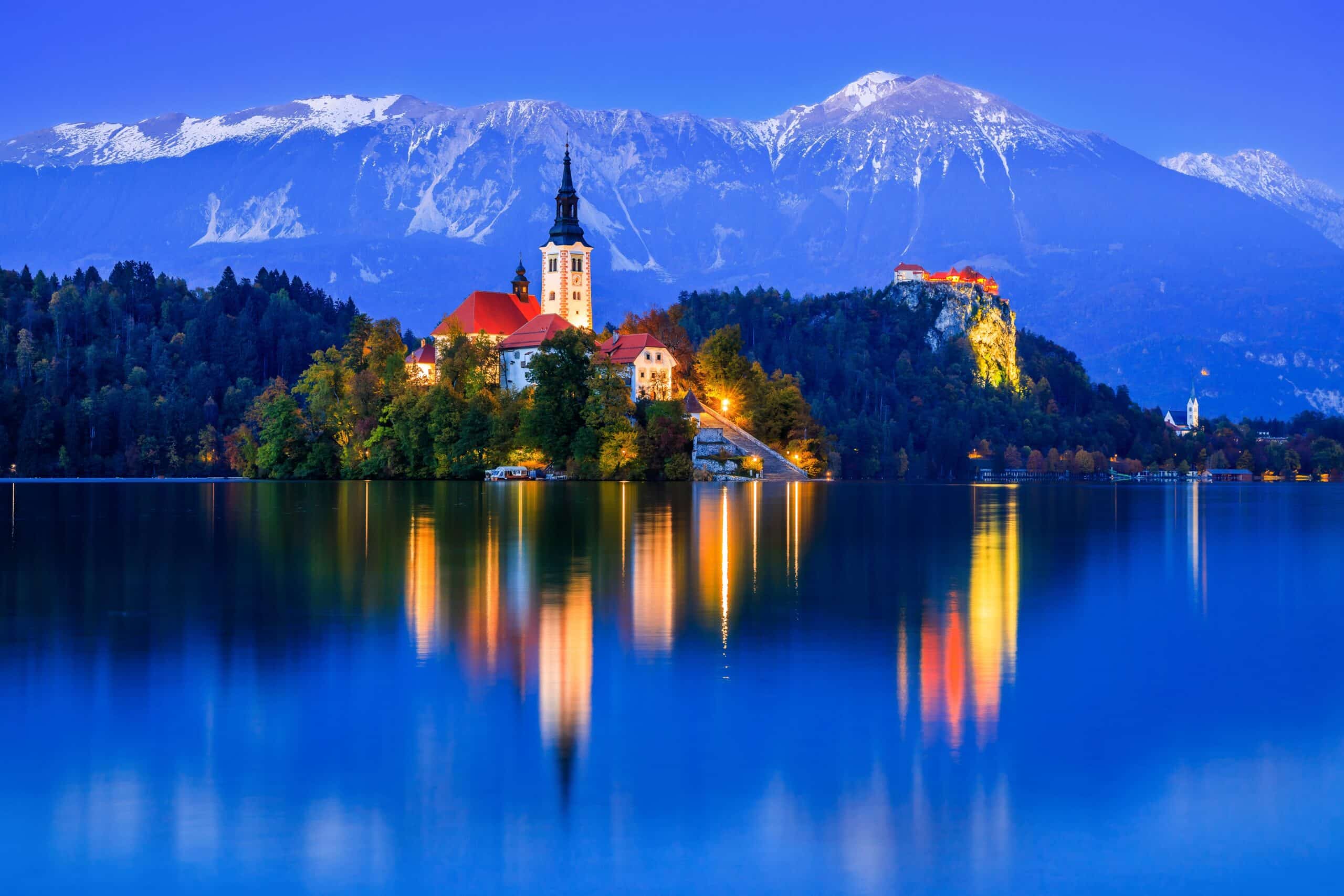
Small in size but immense in beauty, Slovenia sits where the Alps meet the Mediterranean and the Balkans. In just a few hours of travel, landscapes shift from emerald rivers and snow-capped mountains to vineyards, karst caves, and Adriatic coastline.
For travellers, Slovenia feels like a hidden European treasure. Its capital, Ljubljana, charms visitors with leafy riverbanks and elegant bridges, while the iconic Lake Bled seems to step straight out of a fairytale, with its tiny island church rising from turquoise water beneath Alpine peaks.
Nature defines the country’s spirit. The dramatic valleys of Triglav National Park, home to the towering Julian Alps, offer crystal-clear rivers, alpine meadows, and endless hiking trails. Beneath the surface, Slovenia hides one of Europe’s most remarkable cave systems, including the vast underground chambers of Postojna Cave and the awe-inspiring Škocjan Caves, a UNESCO World Heritage Site.
Food and wine are also central to the Slovenian experience. In cozy countryside inns, travellers can taste hearty mountain dishes, fresh Adriatic seafood, and world-class wines from the rolling hills of Goriška Brda and Vipava Valley.
Yet Slovenia’s greatest charm lies in its relaxed pace. Town squares fill with café chatter, forest paths lead to hidden waterfalls, and locals proudly share traditions that blend Alpine, Mediterranean, and Central European cultures.
For travellers seeking natural beauty, welcoming towns, and authentic experiences, Slovenia offers a journey that feels both intimate and unforgettable.
30. Ljubljana
The charming capital of Slovenia, Ljubljana is one of Europe’s most delightful small capitals. Elegant, green, and wonderfully relaxed, the city unfolds along the gentle curves of the Ljubljanica River, where willow trees shade outdoor cafés and pastel-colored buildings reflect softly in the water.
At the heart of the city rises Ljubljana Castle, perched high on a wooded hill above the old town. A walk or funicular ride to the summit rewards visitors with sweeping views of red rooftops and distant Alpine peaks.
The old town itself is filled with architectural treasures shaped by the visionary Slovenian architect Jože Plečnik. His elegant Triple Bridge connects the lively main square to the medieval quarter, while the playful dragon statues guarding Dragon Bridge have become the city’s beloved symbol.
Ljubljana’s markets and cafés bring the city to life. At the Central Market, stalls overflow with local cheeses, honey, and fresh produce from nearby farms.
As evening falls, lanterns glow along the riverbanks and the old town fills with music and conversation. The relaxed rhythm of Ljubljana invites travellers to slow down and savor the simple pleasure of wandering beautiful streets.
29. Bled
Few places in Europe capture the imagination quite like Bled. Set against the dramatic backdrop of the Julian Alps, the emerald waters of Lake Bled shimmer beneath a medieval castle perched high on a cliff.
At the center of the lake lies the enchanting Bled Island, home to the picturesque Church of the Assumption. Visitors reach the island aboard traditional wooden pletna boats, gliding quietly across the water.
Above the lake stands Bled Castle, one of Slovenia’s oldest fortresses. From its stone terraces, travellers enjoy breathtaking views of the lake, forests, and distant mountains.
Bled is also famous for its beloved dessert, the Bled cream cake. Layers of crisp pastry, custard, and whipped cream create a sweet treat best enjoyed at a lakeside café.
Whether rowing across the lake, hiking nearby hills, or simply watching the changing light over the water, Bled feels like a storybook destination brought to life.
28. Maribor
Set beside the flowing Drava River, the vibrant city of Maribor blends historic charm with a lively cultural spirit.
Maribor’s old town reveals centuries of history in its cobbled streets and colorful facades. The elegant Main Square forms the heart of the city, surrounded by Renaissance buildings and lively cafés.
One of Maribor’s most remarkable treasures grows quietly along the riverbank: the Old Vine House, home to the world’s oldest producing grapevine. More than 400 years old, the vine still bears fruit and symbolizes Slovenia’s deep wine tradition.
Just outside the city rise the forested slopes of Pohorje Mountains, a beloved playground for hikers, cyclists, and skiers. Scenic trails wind through pine forests and mountain meadows overlooking the city below.
Maribor is also known for its lively festivals and welcoming wine culture. In autumn, the city celebrates its famous grape harvest with music, food, and local wines.
Relaxed yet full of character, Maribor offers travellers a warm introduction to Slovenia’s rich cultural landscape.
27. Koper
On Slovenia’s short but beautiful Adriatic coastline lies Koper, a historic seaside town where Venetian elegance meets Mediterranean charm. Its narrow streets, sunlit squares, and pastel façades reflect centuries of maritime history and cultural exchange.
At the heart of Koper stands Tito Square, one of the most beautiful squares on the Slovenian coast. Surrounded by Gothic and Renaissance architecture, the square feels like a fragment of Venice transported across the Adriatic. The graceful Praetorian Palace, with its ornate stone arches and elegant windows, once served as the seat of Venetian administration.
Nearby rises the impressive Cathedral of the Assumption, whose tall bell tower offers sweeping views of red rooftops, the harbor, and the glittering Adriatic Sea. Climbing the tower rewards visitors with a panoramic glimpse of the surrounding coastline and distant hills.
Koper’s old town invites slow exploration. Tiny lanes reveal hidden courtyards, stone archways, and lively cafés where locals gather over coffee or a glass of local wine. The Mediterranean influence is unmistakable in the town’s cuisine—fresh seafood, olive oil, and sun-ripened vegetables feature prominently in seaside restaurants.
Just beyond the historic center, the waterfront promenade stretches along the sea, lined with palm trees and modern cafés. Locals swim in the warm Adriatic waters during summer while travelers relax along the shore, enjoying the calm coastal atmosphere.
Koper is also an ideal gateway to the rolling vineyards and hilltop villages of the Istria region, where olive groves and vineyards produce some of Slovenia’s finest wines and olive oils.
With its blend of Mediterranean warmth, rich history, and relaxed seaside life, Koper offers travellers a delightful introduction to Slovenia’s Adriatic coast.
26. Kranj
Nestled between Alpine peaks and river valleys, Kranj is one of Slovenia’s most atmospheric historic towns. Built on a rocky terrace above the meeting point of the Sava River and the Kokra River, the city enjoys dramatic natural surroundings that enhance its medieval character.
The old town forms a charming network of cobbled streets lined with colorful houses and elegant churches. At its heart stands Glavni Square, where cafés spill onto the pavement and visitors pause to admire the town’s historic architecture.
Kranj also carries deep literary significance as the hometown of France Prešeren, Slovenia’s greatest national poet. His legacy is celebrated at the Prešeren Memorial Museum, located in the house where he once lived.
One of Kranj’s most fascinating attractions lies beneath the streets. The Kranj Tunnels form an underground network originally built during the Second World War as air-raid shelters. Today visitors can explore these mysterious passageways and learn about the city’s wartime history.
Nature is never far away in Kranj. Walking paths descend from the old town to the riverbanks below, where forests and cliffs create peaceful green landscapes perfect for quiet strolls.
Thanks to its location near the Julian Alps, Kranj is also a convenient base for travelers eager to explore Slovenia’s mountains and national parks.
Blending literary heritage, dramatic scenery, and a welcoming small-town atmosphere, Kranj offers visitors an authentic glimpse into Slovenian culture and history.
25. Celje
In the green valley of the Savinja River, the historic town of Celje reveals one of Slovenia’s most fascinating medieval stories.
The town’s identity is closely tied to the powerful Counts of Celje, once among the most influential noble families in Central Europe. Their legacy still dominates the skyline in the form of the magnificent Celje Castle, the largest medieval fortress in Slovenia.
Perched high above the town, the castle commands sweeping views of the valley below. Walking through its stone gates, visitors can explore towers, courtyards, and ancient walls that whisper stories of knights, intrigue, and medieval power struggles.
Below the castle, Celje’s old town reveals a pleasant mix of historic buildings and relaxed squares. The elegant Celje Old Town invites visitors to wander its pedestrian streets, where cafés and bakeries create a welcoming atmosphere.
History lovers will also enjoy the Celje Regional Museum, which showcases Roman artifacts, medieval treasures, and exhibits exploring the city’s long past.
Celje’s riverside parks and walking paths offer tranquil places to relax, particularly during warm summer evenings when locals gather along the riverbanks.
The surrounding countryside adds to the town’s charm. Rolling hills, vineyards, and forested valleys create beautiful scenery just beyond the city, ideal for leisurely excursions.
With its dramatic castle, rich medieval heritage, and peaceful landscapes, Celje offers travellers a captivating journey into Slovenia’s historical heart.
24. Postojna
In the heart of Slovenia’s mysterious karst landscape lies Postojna, a small town known worldwide for one of the most extraordinary cave systems on Earth.
The town’s greatest wonder is the vast underground world of Postojna Cave, a breathtaking labyrinth of tunnels, chambers, and towering stalactites stretching more than twenty kilometers beneath the surface. Visitors begin their journey aboard a small electric train that glides silently into the mountain, carrying travellers deep into the glowing caverns.
Inside, nature reveals an astonishing underground landscape. Enormous halls shimmer with mineral formations sculpted by water over millions of years. Some resemble delicate curtains of stone, while others rise like frozen waterfalls from the cavern floor.
Among the cave’s most fascinating residents is the mysterious olm, often called the “human fish.” This rare blind amphibian lives entirely in darkness and has adapted perfectly to life beneath the earth.
Just a short distance away stands the dramatic Predjama Castle, one of the most unusual castles in Europe. Built directly into a towering cliff face, the medieval fortress appears almost to grow from the rock itself. Legends tell of knights who once used hidden cave passages to escape sieges and surprise their enemies.
The surrounding countryside offers peaceful forests and scenic walking paths, where travellers can enjoy the quiet beauty of Slovenia’s karst region.
With its spectacular caves, legendary castle, and intriguing natural wonders, Postojna offers visitors an unforgettable journey into a hidden world beneath Slovenia’s hills.
23. Ptuj
Set gracefully along the banks of the Drava River, Ptuj proudly holds the title of Slovenia’s oldest town. Walking through its streets feels like stepping into centuries of European history.
The town’s skyline is dominated by Ptuj Castle, a grand hilltop fortress overlooking red rooftops and winding streets below. From the castle’s terraces, visitors enjoy sweeping views across vineyards, river valleys, and distant hills.
Ptuj’s history stretches back to Roman times when the settlement of Poetovio served as an important military and trading center. Today, archaeological discoveries and museum exhibits reveal fragments of this ancient past.
The town’s old center is wonderfully atmospheric. Narrow lanes lead past colorful medieval houses, quiet courtyards, and inviting wine cellars. Along Slovenski Square, cafés and restaurants welcome visitors to pause and enjoy the relaxed rhythm of the town.
Ptuj is also famous for one of Slovenia’s most vibrant traditions: Kurentovanje. Each winter, costumed figures known as Kurents parade through the streets wearing sheepskin costumes, bells, and elaborate masks. According to folklore, their dancing drives away winter and welcomes the arrival of spring.
Surrounded by rolling vineyards and gentle countryside, Ptuj also offers excellent opportunities to taste local wines and traditional Slovenian cuisine.
With its ancient history, colorful festivals, and charming atmosphere, Ptuj provides travellers with a rich and unforgettable glimpse into Slovenia’s cultural heritage.
22. Nova Gorica
On Slovenia’s western frontier stands Nova Gorica, a unique city shaped by history, culture, and international connection.
Unlike most Slovenian towns, Nova Gorica is relatively modern. It was developed after the Second World War when new borders divided the historic town of Gorizia between Italy and the former Yugoslavia. Today the two cities sit side by side, connected by open streets and shared culture.
In the central square, visitors can literally stand with one foot in each country. The symbolic Europe Square marks the meeting point between Slovenia and Italy, representing a powerful story of unity after decades of division.
Nova Gorica itself is lively and welcoming, with wide boulevards, green parks, and modern cafés. The nearby Solkan Bridge is a remarkable engineering landmark—the world’s longest stone railway arch bridge. From its graceful curve above the emerald waters of the Soča River, visitors enjoy spectacular views of the valley.
The surrounding region is also famous for its vineyards. The nearby hills of Goriška Brda produce some of Slovenia’s finest wines, and travellers often explore the area’s charming wine villages and scenic countryside.
With its fascinating border history, beautiful landscapes, and thriving wine culture, Nova Gorica offers travellers a unique blend of cultures and experiences rarely found in one place.
21. Velenje
Surrounded by gentle hills and green forests, Velenje offers travellers a refreshing blend of modern design, cultural life, and peaceful nature. Unlike many Slovenian towns shaped by medieval history, Velenje presents a more contemporary atmosphere, with spacious boulevards, parks, and a lively community spirit.
The heart of the city is Tito Square, one of the largest squares in Slovenia. Framed by modernist architecture and open green spaces, the square often hosts festivals, outdoor concerts, and local gatherings that give visitors a sense of the town’s vibrant cultural scene.
Just a short walk away lies the tranquil Velenje Lake, a beautiful recreational area where locals come to swim, paddle, and relax along sandy shores. Walking and cycling paths circle the water, offering peaceful views of forests and rolling hills reflected in the lake’s calm surface.
Above the town rises the elegant Velenje Castle, a beautifully preserved Renaissance fortress. Inside, the castle houses exhibitions exploring regional culture and history, while its terraces provide scenic views across the valley.
Nature lovers will also appreciate the nearby Šalek Valley, where forests, meadows, and quiet villages create inviting landscapes for gentle exploration.
Although Velenje may not have the ancient streets of older Slovenian towns, its welcoming atmosphere, lakeside beauty, and cultural vitality make it a pleasant and surprising destination for travellers seeking something different within Slovenia’s diverse landscapes.
20. Izola
On Slovenia’s sun-drenched Adriatic coast lies the charming fishing town of Izola, a place where Mediterranean warmth, colorful harbors, and centuries of maritime tradition come together.
Once an island—its name literally means “island”—Izola was connected to the mainland centuries ago, but it has retained the relaxed atmosphere of a seaside village. The old town forms a maze of narrow stone streets lined with pastel houses, tiny squares, and hidden courtyards where the scent of the sea drifts through open windows.
At the center of town stands the elegant Church of St. Maurus, whose bell tower rises above the red rooftops and offers views across the harbor and sparkling Adriatic Sea.
Izola’s marina and waterfront promenade are filled with fishing boats, cafés, and seafood restaurants. Fresh catches from the sea appear daily on local menus—grilled fish, calamari, and shellfish prepared simply with olive oil, herbs, and lemon.
Along the coast, small beaches and rocky coves invite travellers to swim in the clear blue waters. In the evenings, locals and visitors gather along the waterfront as the sun sets over the Adriatic, casting golden reflections across the harbor.
Beyond the town, the rolling vineyards and olive groves of the Slovenian Istria countryside provide wonderful opportunities for scenic drives and wine tasting.
Peaceful, authentic, and wonderfully Mediterranean, Izola offers travellers a relaxing escape on Slovenia’s beautiful Adriatic coast.
19. Kranjska Gora
High in the Alpine northwest of Slovenia, the mountain resort of Kranjska Gora sits among some of the most spectacular landscapes in the Julian Alps.
Surrounded by dramatic peaks and deep forests, Kranjska Gora is one of Slovenia’s most beloved outdoor destinations. In winter, the town transforms into a lively ski resort where snow-covered slopes attract skiers and snowboarders from across Europe.
During warmer months, the region reveals an entirely different beauty. Alpine meadows bloom with wildflowers, mountain streams rush through valleys, and hikers follow scenic trails into the heart of Triglav National Park.
One of the most breathtaking excursions leads to Lake Jasna, a pair of crystal-clear alpine lakes reflecting the towering peaks above. Wooden walkways and quiet paths circle the water, making it one of the most photogenic locations in the region.
Nearby stands the famous Planica Nordic Centre, home to some of the world’s largest ski-jumping hills. Watching athletes soar through the air here is a thrilling spectacle.
Just a short drive away, travellers can also visit the scenic Vršič Pass, Slovenia’s highest mountain road, winding through dramatic alpine landscapes.
With its fresh mountain air, breathtaking scenery, and year-round outdoor adventures, Kranjska Gora offers travellers an unforgettable gateway to Slovenia’s Alpine wilderness.
18. Murska Sobota
In the tranquil northeastern region of Prekmurje, the relaxed town of Murska Sobota offers visitors a glimpse into one of Slovenia’s most distinctive cultural landscapes. Here, wide plains stretch toward the horizon, dotted with farms, orchards, and quiet villages.
At the center of town lies the elegant Murska Sobota Castle, a white Baroque residence surrounded by a peaceful park filled with tall trees and winding paths. Today the castle houses a regional museum that explores the traditions, crafts, and history of the Prekmurje region.
Nearby, the lively Victory Square forms the heart of the town. Cafés line the square, where locals gather for coffee and conversation, creating a friendly and welcoming atmosphere.
Prekmurje is also famous for its unique culinary traditions. Visitors should not miss the region’s most celebrated dish, Prekmurska gibanica, a rich dessert made with layers of poppy seeds, walnuts, apples, and sweet cheese. Paired with a glass of local wine, it offers a true taste of the region.
The surrounding countryside invites exploration. Gentle cycling routes lead through fields of sunflowers and vineyards, while small rural churches and farmhouses reveal the area’s long agricultural heritage.
With its peaceful landscapes, regional traditions, and warm hospitality, Murska Sobota offers travellers a relaxing journey into Slovenia’s quieter eastern corner.
17. Škofja Loka
Just north of Ljubljana, the beautifully preserved medieval town of Škofja Loka feels like a living fairytale. Cobbled streets, colorful houses, and ancient towers create one of Slovenia’s most enchanting historic centers.
The town spreads along the meeting of the Sora River branches, where the iconic Capuchin Bridge crosses the water. This elegant stone bridge, crowned by a small chapel, is one of the most photographed landmarks in the country.
Above the old town rises Škofja Loka Castle, a hilltop fortress that has watched over the town for centuries. From its gardens, visitors enjoy sweeping views of red rooftops, church towers, and the surrounding hills.
Walking through the old streets reveals hidden courtyards, artisan shops, and traditional houses that have stood for generations. The town’s atmosphere is particularly magical in the evening when soft lights illuminate the medieval architecture.
Škofja Loka is also famous for hosting the historic Škofja Loka Passion Play, one of the oldest theatrical traditions in Europe. Performed every few years, the dramatic procession fills the streets with hundreds of performers in historical costumes.
The surrounding hills and forests provide beautiful hiking paths and scenic viewpoints overlooking the valley.
With its storybook setting and rich traditions, Škofja Loka offers travellers one of Slovenia’s most charming and atmospheric destinations.
16. Bovec
Deep within the dramatic landscapes of the Soča Valley, the alpine town of Bovec stands as Slovenia’s capital of outdoor adventure.
Surrounded by towering peaks of the Julian Alps, Bovec is the perfect gateway to the wild beauty of Triglav National Park. The region’s landscapes are dramatic and unforgettable—emerald rivers, alpine meadows, waterfalls, and deep forested valleys.
The star attraction is the stunning Soča River, famous for its extraordinary turquoise color. The river winds through the valley in a series of sparkling rapids and peaceful pools, making it one of Europe’s most beautiful waterways.
Adventure seekers flock to Bovec for rafting, kayaking, canyoning, and zip-lining across the valley. Even beginners can experience the thrill of navigating the river’s clear waters under the guidance of expert instructors.
Yet Bovec also offers quieter pleasures. Scenic trails lead to waterfalls hidden in forested gorges, while high mountain paths reveal breathtaking views of the surrounding peaks.
The region also carries deep historical significance. During the First World War, fierce battles of the Battles of the Isonzo were fought in these mountains, and memorial trails now trace the history of soldiers who once struggled across this rugged terrain.
Today Bovec is a place of vitality and natural beauty, where travellers can breathe fresh alpine air and experience Slovenia’s wildest landscapes.
15. Domžale
Just northeast of Ljubljana, the welcoming town of Domžale sits along the gentle banks of the Kamnik Bistrica River, surrounded by green fields and wooded hills. Though often overlooked by visitors, Domžale offers a pleasant blend of local culture, nature, and small-town charm.
The town center is lively yet relaxed, with cafés, bakeries, and markets where residents gather throughout the day. Walking along the river promenade reveals peaceful views of flowing water, shaded paths, and quiet corners perfect for a slow afternoon stroll.
Domžale is particularly known for its traditional straw-hat craftsmanship. In the 19th century the town became a center for hat-making, exporting handmade straw hats across Europe. This heritage is celebrated at the Straw Hat Museum, where visitors can discover how local artisans once transformed simple straw into fashionable headwear worn in cities from Vienna to Paris.
Nature lies close at hand. Cycling and walking trails stretch through nearby meadows and forests, offering peaceful escapes from city life. On clear days the distant peaks of the Kamnik–Savinja Alps appear on the horizon, hinting at the mountain landscapes beyond.
Local restaurants showcase comforting Slovenian cuisine, from homemade soups and dumplings to regional desserts served with strong coffee.
While Domžale may not appear in every travel guide, its authentic atmosphere and quiet beauty allow visitors to experience the everyday rhythm of life in Slovenia—something that often becomes one of the most memorable parts of a journey.
14. Radovljica
Perched on a sunny terrace above the Sava River, the medieval town of Radovljica is one of Slovenia’s most charming historic destinations.
Its beautifully preserved old town forms a single long street lined with colorful Renaissance and Baroque houses. Flower-filled balconies, carved doorways, and quiet courtyards create a warm and welcoming atmosphere.
At the heart of the town stands Linhart Square, a picturesque plaza surrounded by historic buildings and lively cafés. From the edge of the square, travellers enjoy sweeping views across the valley toward the distant peaks of the Julian Alps.
Radovljica is also known as Slovenia’s “sweetest town.” The delightful Museum of Apiculture celebrates the country’s long tradition of beekeeping. Slovenia has one of the world’s richest beekeeping cultures, and visitors can learn about the famous Carniolan honey bee, a species prized for its gentle nature and productivity.
The surrounding countryside invites leisurely exploration. Walking paths wind through forests and meadows, while nearby villages produce excellent honey, cheeses, and wines.
Radovljica is also perfectly positioned near several of Slovenia’s most famous attractions, including Lake Bled, only a short distance away.
With its romantic streets, culinary traditions, and magnificent Alpine views, Radovljica offers travellers a peaceful and delightful step back into Slovenia’s historic past.
13. Brežice
Near the border with Croatia, the charming town of Brežice lies where the Sava River meets the Krka River. Surrounded by vineyards, orchards, and rolling countryside, Brežice offers travellers a quiet destination rich in history and natural beauty.
The town’s greatest treasure is the magnificent Brežice Castle, an impressive Renaissance fortress overlooking the river plain. Inside, visitors discover one of Slovenia’s most remarkable artistic interiors: the Knight’s Hall.
The hall’s ceiling and walls are covered in vibrant Baroque frescoes depicting mythological scenes, heroic figures, and allegorical stories. The paintings seem almost alive, surrounding visitors in a dazzling display of color and imagination.
Brežice’s old streets invite relaxed exploration. Small squares, historic houses, and family-run cafés create a welcoming atmosphere where travellers can slow down and enjoy the rhythm of the town.
The surrounding Posavje region is also famous for its vineyards. Gentle hills produce excellent wines, and many local cellars welcome visitors for tastings accompanied by regional specialties.
Nearby, the warm thermal waters of Terme Čatež provide a relaxing retreat with pools, spas, and wellness experiences.
With its artistic treasures, peaceful landscapes, and inviting wine culture, Brežice offers travellers a charming and restorative corner of southeastern Slovenia.
12. Idrija
Tucked deep within forested hills of western Slovenia, the historic town of Idrija reveals a fascinating story of ingenuity, craftsmanship, and hidden underground worlds.
For centuries, Idrija was known for one extraordinary resource: mercury. The Idrija Mercury Mine, discovered in the late 15th century, became one of the largest mercury mines in the world and played a vital role in European industry for hundreds of years. Today the mine is preserved as part of the UNESCO World Heritage listing that celebrates historic mercury mining sites.
Visitors can descend into the old mine tunnels, where guides share stories of miners who once worked deep beneath the mountains. The cool, echoing corridors reveal how generations of workers carved an entire hidden city underground.
Above ground, Idrija’s old streets wind along the banks of the Idrijca River, passing colorful houses, bridges, and small squares. One of the town’s most charming traditions is its famous lace-making. At the Idrija Lace School, artisans continue a centuries-old craft of delicate handmade lace that has become a proud cultural symbol of the region.
Food lovers will also find a local specialty here: Idrijski žlikrofi, small dumplings filled with potato and herbs, traditionally served with rich sauces.
Surrounded by forests and hills, Idrija also offers beautiful walking trails and quiet countryside views.
With its blend of industrial heritage, artisan traditions, and natural beauty, Idrija invites travellers to explore a lesser-known yet deeply fascinating chapter of Slovenia’s past.
11. Trbovlje
Hidden among the rugged valleys of central Slovenia, the town of Trbovlje carries a powerful story of resilience and transformation.
For much of its history, Trbovlje was known as a mining town in the Zasavje Region, where coal mines fueled industry and shaped the lives of generations of workers. The legacy of this industrial past can still be seen in the dramatic landscape of hills, chimneys, and former mining sites that surround the town.
Dominating the skyline is the striking Trbovlje Chimney, the tallest industrial chimney in Europe. Rising more than 360 meters into the sky, the structure stands as a powerful reminder of the town’s industrial heritage.
Yet Trbovlje today is far more than its past. In recent years the town has embraced creativity and modern culture. Local artists, musicians, and innovators have transformed former industrial spaces into cultural venues and creative hubs.
The nearby hills provide beautiful hiking trails with sweeping views across the valleys of central Slovenia. From these vantage points, travellers can appreciate the striking contrast between nature’s calm beauty and the bold industrial landmarks below.
Visitors interested in modern Slovenian culture may also encounter the influence of Laibach, the internationally known experimental music group that originated in Trbovlje.
Though less visited than Slovenia’s alpine or coastal destinations, Trbovlje offers a unique perspective on the country’s social and cultural evolution.
For travellers seeking authenticity and unexpected stories, this resilient town reveals a fascinating side of Slovenia rarely seen on the usual tourist routes.
10. Portorož
On the sunlit Adriatic coast of Slovenia, the elegant seaside resort of Portorož welcomes visitors with palm trees, sea breezes, and a relaxed Mediterranean atmosphere.
The name Portorož means “Port of Roses,” and the town’s coastal promenade lives up to that romantic image. Lined with hotels, cafés, and gardens, the waterfront stretches along a golden beach where travellers gather to swim, sunbathe, and watch the gentle rhythm of the sea.
For centuries, the area has been known for its therapeutic sea salt and mineral-rich mud. These natural resources gave rise to the famous Portorož Spa, where wellness traditions dating back hundreds of years continue to attract visitors seeking relaxation and rejuvenation.
Just a short walk away lies the beautiful medieval town of Piran, whose narrow Venetian-style streets and seaside squares create one of the most picturesque scenes on the Adriatic. Many travellers combine a stay in Portorož with evening strolls through Piran’s historic center.
Portorož’s marina adds to the town’s vibrant coastal atmosphere. Sailing boats sway gently in the harbor while restaurants serve fresh seafood, olive oil, and wines from nearby Slovenian Istria vineyards.
Sunsets here are unforgettable. As the sky glows in shades of gold and crimson, the Adriatic reflects the fading light, and the promenade fills with music, laughter, and the clinking of glasses.
With its beaches, wellness traditions, and Mediterranean charm, Portorož offers travellers one of Slovenia’s most relaxing seaside escapes.
9. Kamnik
Nestled at the foot of the majestic Kamnik–Savinja Alps, the charming medieval town of Kamnik offers travellers a delightful combination of Alpine scenery, history, and local tradition.
The town’s picturesque old center stretches along the elegant Šutna Street, a beautifully preserved medieval street lined with colorful houses, artisan shops, and inviting cafés. Decorative signs above the doorways recall the guild traditions that once flourished here.
Overlooking the town stands the atmospheric ruin of Mali Grad, a small medieval castle perched on a rocky hill. From the chapel beside the tower, visitors enjoy sweeping views of Kamnik’s rooftops and the dramatic Alpine peaks beyond.
The nearby Kamnik Castle houses a regional museum where exhibitions reveal the town’s rich history, from medieval trade routes to local crafts and customs.
Kamnik also serves as a gateway to some of Slovenia’s most beautiful mountain landscapes. Just a short drive away lies the breathtaking Velika Planina, a high alpine plateau famous for its traditional wooden shepherd huts scattered across rolling green pastures. In summer, herds of cattle graze peacefully while hikers wander through meadows filled with wildflowers.
Local restaurants in Kamnik proudly serve hearty Slovenian dishes made from regional ingredients, perfect after a day exploring the mountains.
With its historic charm, Alpine views, and authentic traditions, Kamnik offers travellers a wonderful introduction to the natural and cultural beauty of northern Slovenia.
8. Slovenj Gradec
In the green hills of northern Slovenia, the town of Slovenj Gradec combines medieval heritage with a vibrant artistic spirit.
The town’s historic center is filled with colorful houses, quiet squares, and Gothic churches that reflect centuries of Central European influence. One of its most important landmarks is the elegant St. Elizabeth Church, whose tall tower rises above the surrounding rooftops.
Slovenj Gradec has earned a reputation as a town of culture and creativity. It is closely connected with the international UNESCO network of peace and art initiatives, and exhibitions, concerts, and cultural events regularly bring the town’s streets to life.
Art galleries and museums display works by Slovenian and international artists, creating a welcoming atmosphere for visitors interested in creativity and contemporary culture.
Beyond the town center, gentle hills and forests form part of the scenic Carinthia Region, an area known for its peaceful landscapes and traditional rural life. Walking and cycling routes wind through valleys and villages where travellers can experience the slower rhythm of northern Slovenia.
Local cuisine highlights regional flavors such as homemade breads, smoked meats, and seasonal dishes prepared with ingredients from nearby farms.
With its artistic heritage, historic charm, and tranquil countryside, Slovenj Gradec offers travellers a relaxing and culturally rich destination away from the country’s busiest tourist routes.
7. Ajdovščina
At the entrance to the dramatic Vipava Valley, the town of Ajdovščina welcomes visitors with sunshine, vineyards, and traces of ancient history.
This fertile valley is one of Slovenia’s most important wine regions, where rolling hills produce exceptional varieties shaped by the valley’s unique climate. Vineyards stretch across the landscape, and many family-run wineries invite travellers to taste local wines and learn about centuries-old traditions.
Ajdovščina itself stands on the site of the Roman settlement Castra, once an important defensive stronghold along ancient trade routes. Portions of the old Roman walls and towers still stand today, offering a fascinating glimpse into the town’s distant past.
The surrounding countryside is known for the powerful Bora Wind, a dramatic natural force that sweeps down from the mountains during winter. Though fierce at times, it has shaped the architecture and lifestyle of the valley’s communities for centuries.
Travellers exploring the Vipava Valley discover charming villages, stone wine cellars, and quiet country roads perfect for cycling and scenic drives.
Local cuisine pairs beautifully with the region’s wines, featuring fresh produce, aromatic herbs, and hearty dishes inspired by both Mediterranean and Alpine traditions.
With its sunny climate, historic roots, and flourishing vineyards, Ajdovščina offers travellers a delightful gateway into one of Slovenia’s most scenic and flavorful landscapes.
6. Piran
Few towns on the Adriatic coast are as enchanting as Piran, a jewel of Venetian architecture perched on a narrow peninsula along the sea.
Approaching the town, travellers see a cluster of terracotta rooftops rising above winding medieval streets, crowned by the elegant bell tower of St. George’s Parish Church. The tower closely resembles that of St. Mark’s Campanile, reflecting the centuries when Piran was part of the Venetian Republic.
At the heart of the town lies the magnificent Tartini Square, a graceful seaside plaza named after the famous violinist Giuseppe Tartini, who was born here. Elegant pastel buildings frame the square, while cafés and restaurants create a lively Mediterranean atmosphere.
Piran’s narrow streets form a maze of hidden stairways, small chapels, and stone houses that lead gradually upward toward the hilltop church. From the city walls, visitors enjoy spectacular views across the shimmering Adriatic Sea.
The town is also famous for its historic salt production at the nearby Sečovlje Salt Pans, where traditional methods of harvesting sea salt have been preserved for centuries.
As evening falls, the harbor glows with golden light and the scent of seafood drifts from waterfront restaurants.
With its Venetian elegance, seaside beauty, and timeless charm, Piran is one of the most captivating destinations on the Adriatic coast.
5. Žalec
Set amid the fertile hop fields of eastern Slovenia, the cheerful town of Žalec offers travellers one of the country’s most unusual and memorable attractions: a fountain that pours beer instead of water.
Žalec lies in the heart of the Lower Savinja Valley, a region famous for hop cultivation. For centuries, these fragrant green cones have been harvested here and exported to breweries across Europe. The valley’s agricultural heritage shapes the landscape, where tall hop poles and fields stretch across the countryside.
The town celebrates this tradition with the remarkable Green Gold Beer Fountain. In a small park at the town center, visitors can sample different locally brewed beers from decorative taps while learning about the valley’s long brewing history.
Beyond the fountain, Žalec offers a pleasant old center with cafés, small squares, and welcoming restaurants where travellers can enjoy regional dishes paired with craft beer. The relaxed atmosphere encourages visitors to linger and soak in the friendly rhythm of daily life.
The surrounding countryside invites exploration by bicycle or on foot. Scenic routes wind past hop farms, orchards, and quiet villages, revealing the peaceful charm of rural Slovenia.
Nearby attractions include historic castles and churches scattered across the valley, adding a touch of history to the region’s agricultural landscape.
With its playful spirit, rural beauty, and distinctive beer culture, Žalec provides travellers with a unique and cheerful experience that perfectly reflects the creativity and traditions of Slovenia.
4. Litija
Situated along the winding Sava River, the historic town of Litija offers visitors a peaceful escape into the green hills of central Slovenia.
The town has long served as a meeting point between river routes and mountain paths, giving it a quiet yet enduring importance throughout history. Today Litija welcomes travellers with calm streets, friendly cafés, and scenic river views.
One of the most notable landmarks nearby is Bogenšperk Castle, a beautifully restored Renaissance castle perched above the countryside. The castle was once home to the famous polymath Johann Weikhard von Valvasor, whose extensive writings documented the natural and cultural wonders of the region.
Visitors exploring the castle discover exhibitions on history, printing, and Valvasor’s remarkable scientific curiosity. The surrounding gardens and hills offer magnificent views across forests and valleys.
Back in Litija, quiet riverside paths invite leisurely walks, while the surrounding countryside provides numerous hiking and cycling routes through traditional Slovenian landscapes.
Local inns and restaurants serve comforting regional cuisine—hearty stews, fresh bread, and homemade desserts that reflect the area’s rural heritage.
Though small and often overlooked, Litija offers travellers an authentic glimpse into everyday Slovenian life. Its combination of scenic nature, cultural history, and peaceful atmosphere makes it a rewarding destination for those seeking slower and more meaningful travel experiences.
3. Sežana
Near the border with Italy, the town of Sežana sits at the gateway to the mysterious landscapes of the Karst Plateau, a region famous for its rocky terrain, underground caves, and unique natural formations.
The Karst landscape has shaped both the environment and culture of this area for centuries. Stone villages, vineyards, and red-roofed farmhouses blend harmoniously with the rugged terrain.
One of the most beautiful attractions near Sežana is the elegant Sežana Botanical Garden, originally designed as a private garden for a 19th-century villa. Today visitors wander among exotic trees, flowering plants, and shaded pathways that create a peaceful oasis.
The surrounding countryside is dotted with traditional Karst villages known for their distinctive stone architecture and culinary traditions. Local restaurants proudly serve regional specialties such as Prosciutto and hearty dishes paired with robust Karst wines.
Sežana also provides easy access to one of Slovenia’s most spectacular natural wonders, the nearby Škocjan Caves, a dramatic underground canyon carved by a rushing river and protected as a UNESCO World Heritage Site.
Exploring this region reveals a fascinating world where geology, tradition, and rural life are deeply intertwined.
For travellers interested in nature, gastronomy, and unique landscapes, Sežana offers an unforgettable introduction to the wonders of Slovenia’s Karst region.
2. Tolmin
In the breathtaking Soča Valley, the alpine town of Tolmin serves as a gateway to some of the most dramatic natural scenery in the country.
Surrounded by towering peaks and emerald rivers, Tolmin sits where the Soča River meets the Tolminka River. The meeting of these crystal-clear waters creates a striking natural landscape that attracts nature lovers and photographers alike.
One of the region’s highlights is the spectacular Tolmin Gorges, a series of deep limestone canyons carved by rushing alpine rivers. Wooden walkways lead visitors through narrow passages, past turquoise pools, and beneath towering rock walls that glow in shades of white and green.
The surrounding mountains form part of Triglav National Park, offering countless hiking opportunities through forests, valleys, and alpine meadows.
Tolmin also hosts lively cultural events, including the well-known MetalDays, which draws music fans from across Europe each summer to the scenic riverside setting.
Beyond the festivals, the town itself remains peaceful and welcoming. Small cafés and guesthouses provide relaxing places to enjoy the valley’s fresh air and stunning scenery.
With its combination of dramatic nature, outdoor adventure, and vibrant summer events, Tolmin offers travellers an unforgettable experience in one of Slovenia’s most beautiful regions.
1. Logatec
Completing the journey through Slovenia, the town of Logatec lies in a quiet landscape of forests, meadows, and karst formations in the country’s southwestern interior.
Though modest in size, Logatec is surrounded by remarkable natural attractions that reveal the geological wonders of the Slovenian Karst region.
One of the most fascinating nearby sites is Predjama Castle, a spectacular medieval fortress dramatically built into the mouth of a towering cliff. The castle appears almost suspended between rock and sky, creating one of the most striking architectural sights in Europe.
Equally impressive are the famous Postojna Cave, an immense underground world of stalactites, caverns, and subterranean rivers. Guided tours lead visitors deep into the cave system, revealing vast chambers formed over millions of years.
The countryside around Logatec is ideal for quiet exploration. Forest trails, hidden valleys, and rural villages offer travellers a chance to experience the peaceful rhythm of Slovenia’s interior landscapes.
Local inns serve hearty Slovenian dishes, often prepared with ingredients from nearby farms and forests.
Though it may not be as famous as the country’s major cities, Logatec provides a fitting final stop on a journey through Slovenia: a place where nature, history, and quiet beauty come together.