
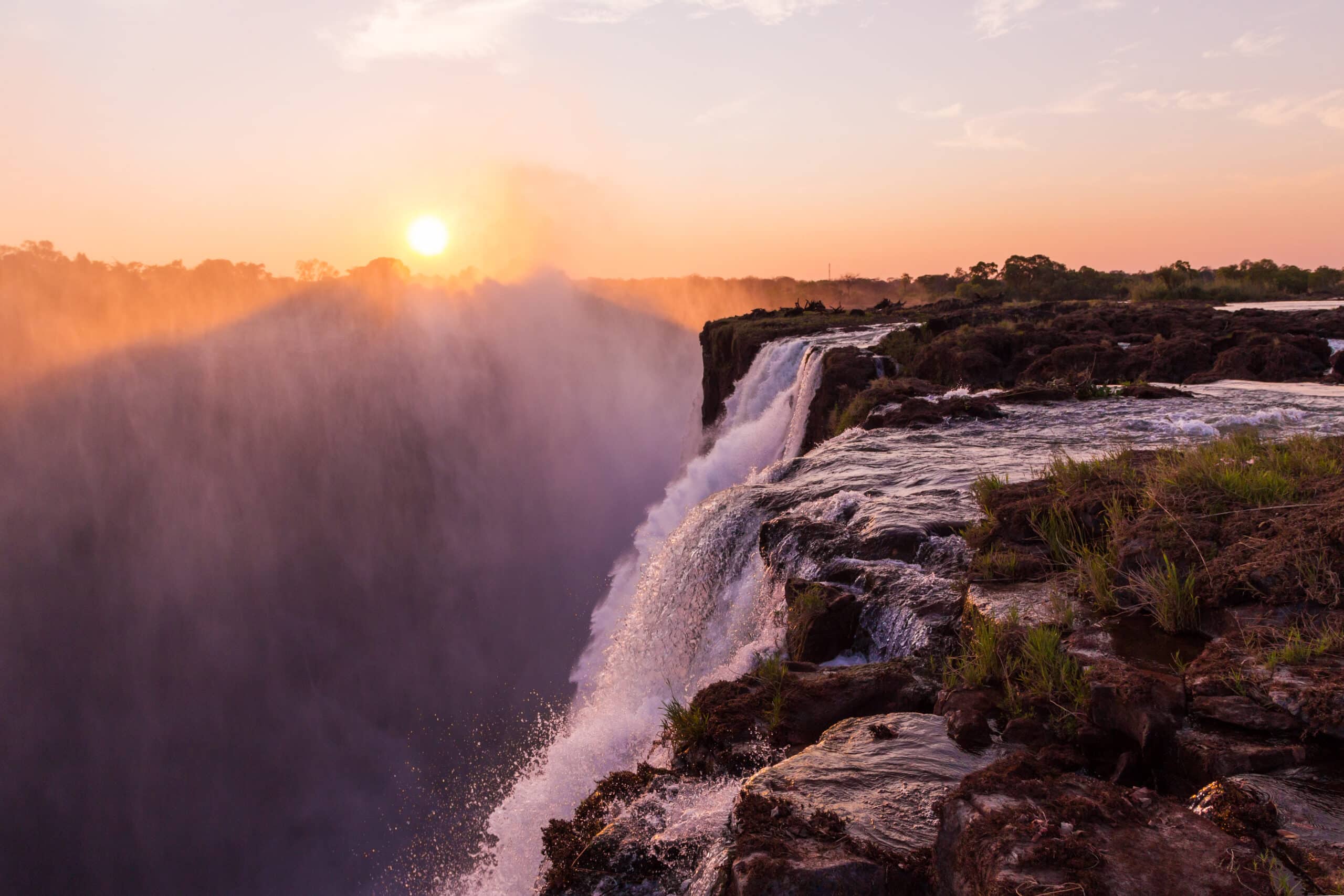
Zambia is a country defined by water, space, and quiet strength. Sitting on a high central plateau, it holds some of southern Africa’s most important rivers, wetlands, and floodplains, shaping both the land and the lives that depend on it. Zambia does not overwhelm with spectacle; it invites discovery through depth, scale, and rhythm.
The Zambezi River forms the country’s southern spine, carving valleys, feeding ecosystems, and anchoring one of the world’s great natural wonders. From this artery branch countless tributaries, lakes, and seasonal wetlands that sustain wildlife migrations and agricultural cycles. Water in Zambia is not background—it is structure, movement, and memory.
Zambia’s landscapes unfold gradually. Miombo woodlands stretch across vast distances, broken by rivers, escarpments, and open plains. National parks remain large and relatively uncrowded, allowing wildlife to exist with minimal interruption. This space fosters authenticity, preserving ecological processes rather than performances.
Culturally, Zambia reflects stability and cohesion. More than seventy ethnic groups contribute language, tradition, and ceremony to a national identity rooted in cooperation. Community life emphasizes hospitality, storytelling, and shared responsibility. History here is carried quietly, shaped by precolonial societies, colonial transition, and a peaceful post-independence path.
Zambia is often described as understated, yet this understatement is its power. It offers Africa in balance—wild but welcoming, expansive but personal. To travel through Zambia is to experience a country confident enough to remain unhurried, where nature sets the tempo and people move in conversation with the land.
11. Victoria Falls: Thunder at the Edge of the Plateau
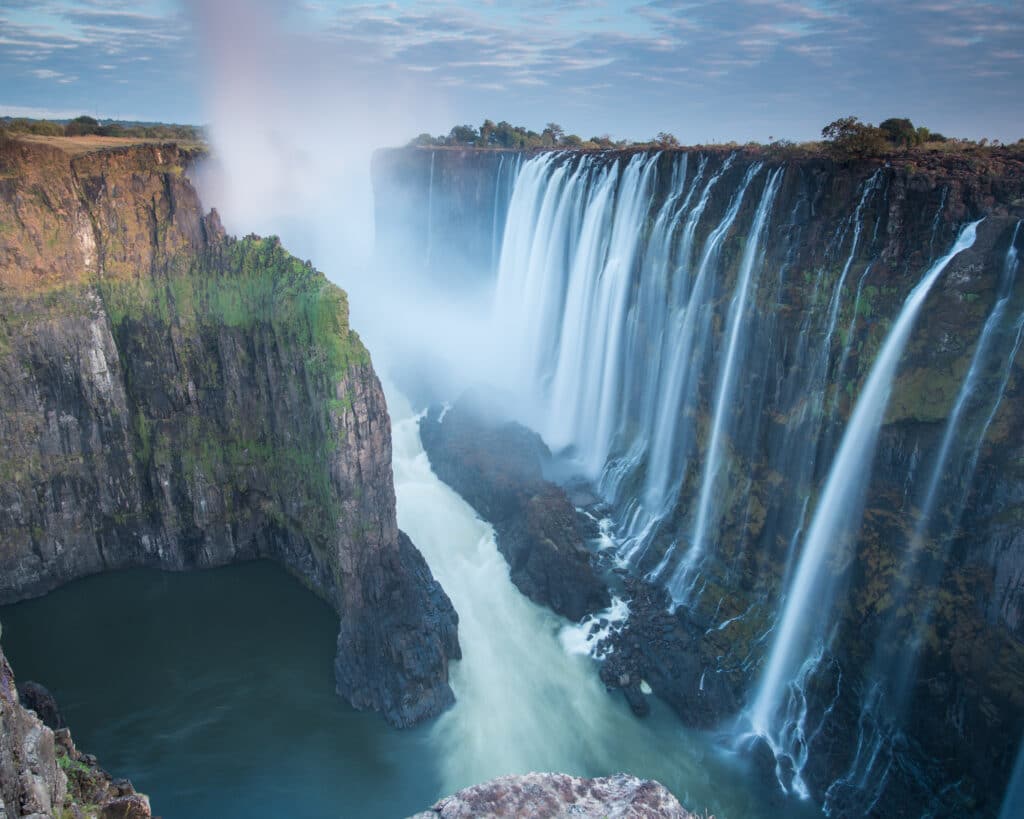
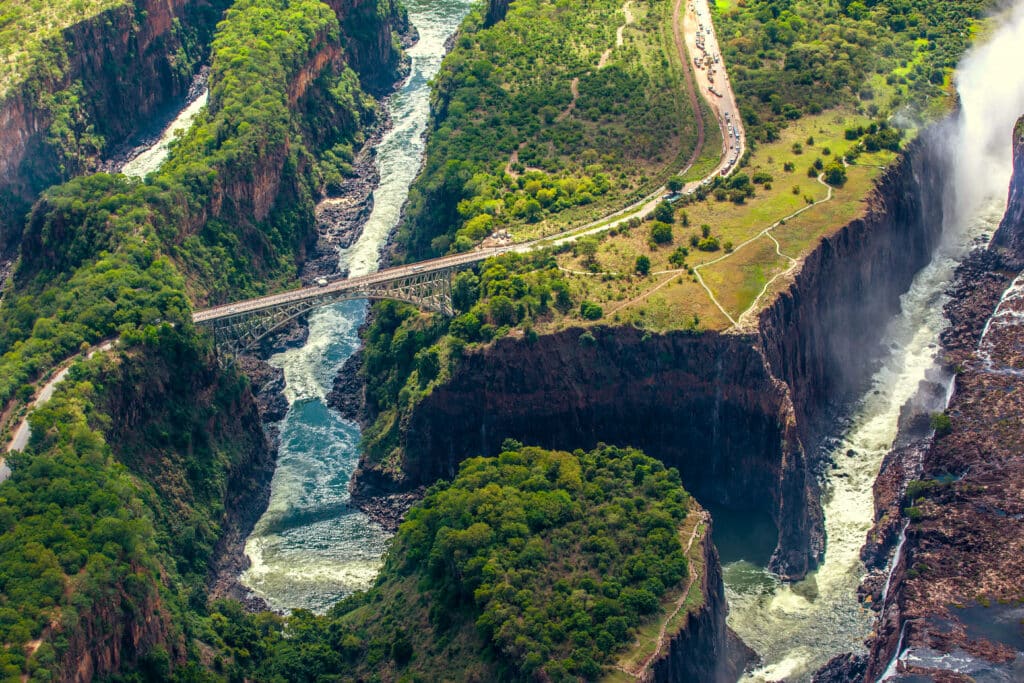
Victoria Falls marks Zambia’s most iconic natural landmark, where the Zambezi River plunges over a basalt edge into a deep, narrow gorge. Known locally as Mosi-oa-Tunya, “The Smoke That Thunders,” the falls embody power shaped by precision rather than chaos.
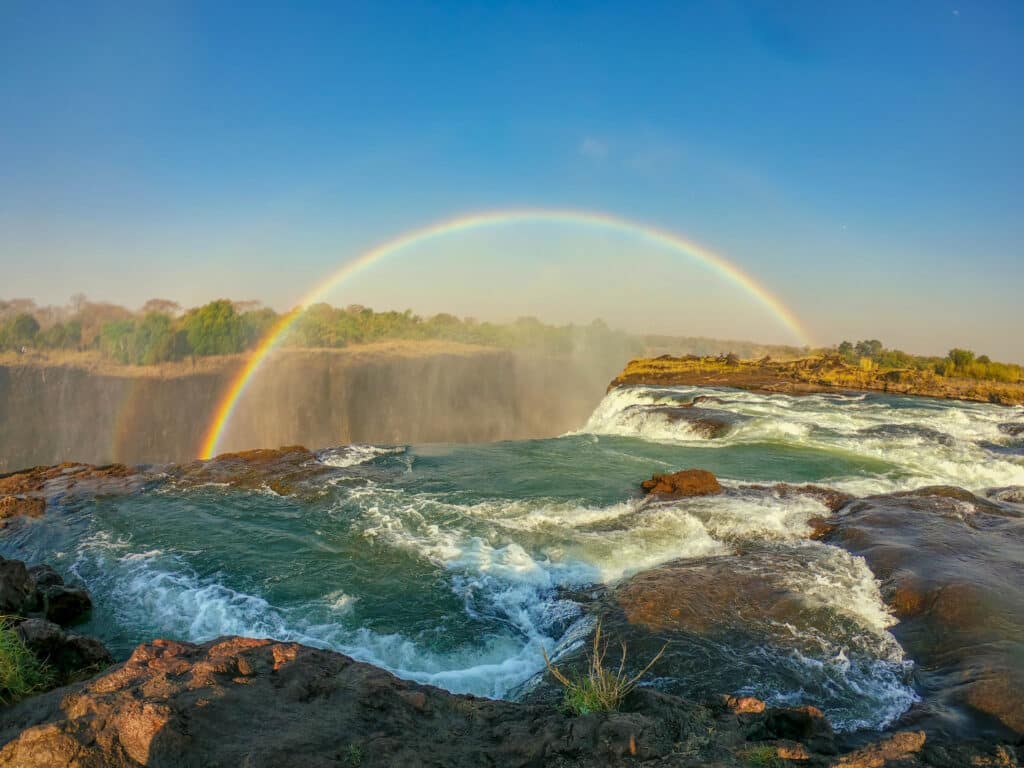
The river approaches the precipice calmly, spreading wide across the plateau before collapsing suddenly into vertical force. This contrast heightens the experience. Mist rises constantly, feeding rainforest vegetation that thrives on moisture and spray, creating an ecosystem suspended between water and air.
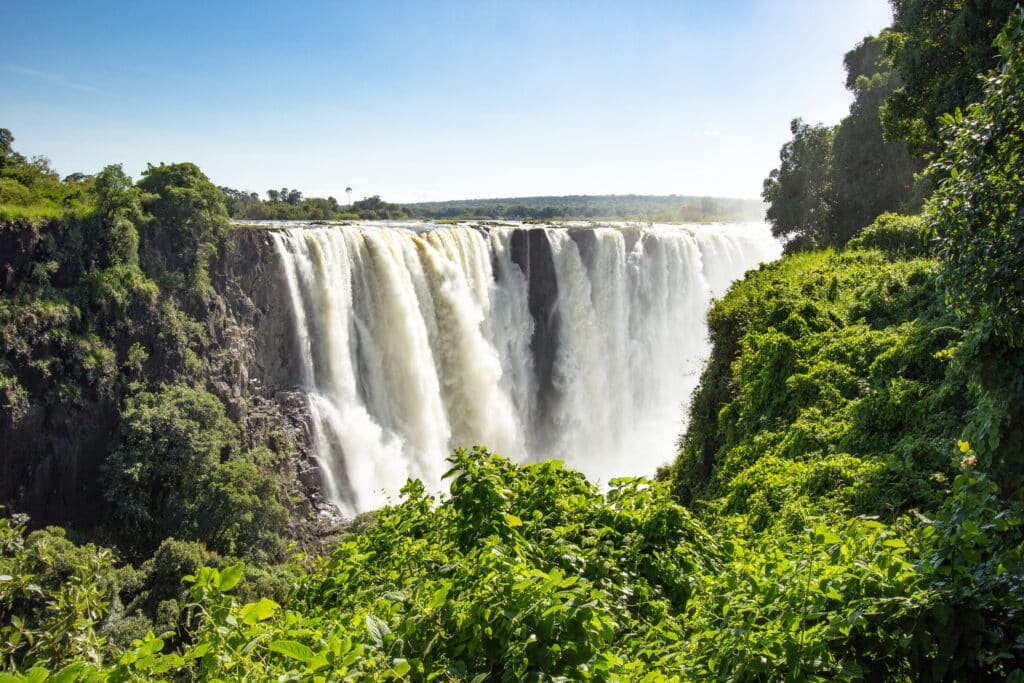
From the Zambian side, the falls feel intimate. Paths trace the edge of the gorge, allowing proximity to the river’s energy. During high water, visibility gives way to immersion as mist envelops everything, reinforcing nature’s dominance. In low season, geological detail emerges, revealing the structure beneath the spectacle.
Victoria Falls is not defined by appearance alone. It shapes regional climate, supports biodiversity, and anchors cultural identity. For generations, the site has held spiritual significance, representing power, transition, and continuity.
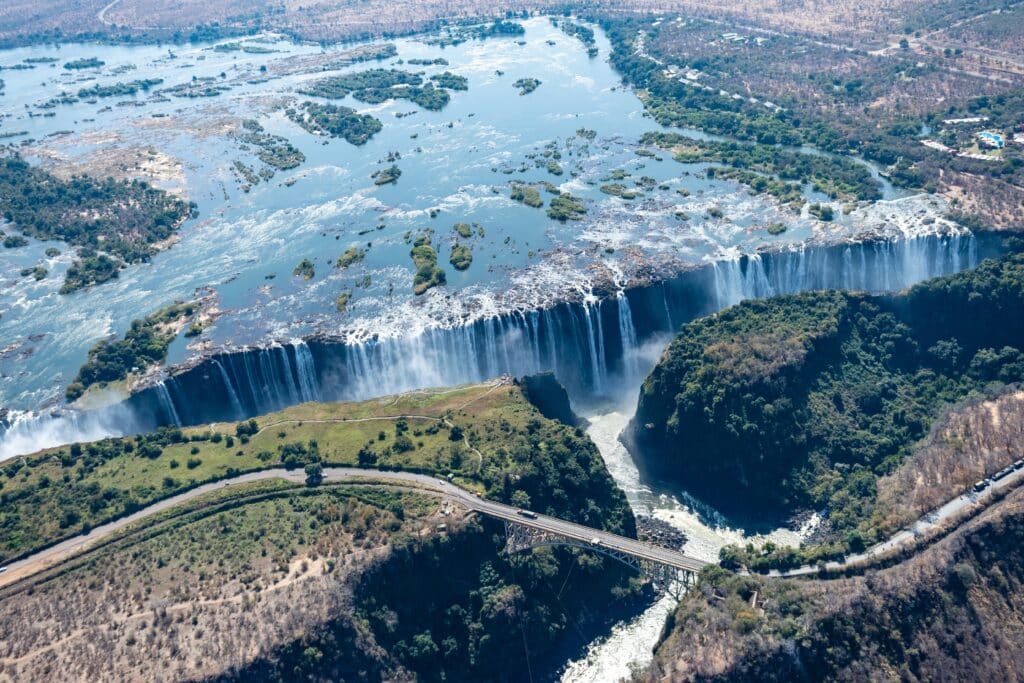
The surrounding national park protects wildlife corridors along the river, ensuring the falls remain part of a living system rather than an isolated attraction.
Victoria Falls reveals Zambia’s philosophy of scale. It demonstrates that grandeur gains meaning when framed by restraint and respect. Here, nature commands attention without needing embellishment, standing as both landmark and living force.
10. South Luangwa National Park: Birthplace of the Walking Safari
South Luangwa National Park lies in eastern Zambia as one of Africa’s most ecologically intact wilderness areas. Defined by the Luangwa River and its oxbow lagoons, the park represents conservation shaped by patience rather than density.
The river governs everything. Seasonal flooding renews soil, feeds vegetation, and determines wildlife movement. As water recedes, animals concentrate along remaining channels, creating natural patterns of interaction without artificial intervention.
South Luangwa is renowned as the birthplace of the walking safari, an approach emphasizing observation, awareness, and respect. Moving on foot redefines scale, placing humans within the environment rather than above it. Tracks, sounds, and subtle changes become the language of exploration.
Wildlife diversity is exceptional. Large predators, elephants, hippos, and endemic species thrive within a landscape that remains largely unchanged by mass tourism. The park’s remoteness preserves authenticity and ecological balance.
Local communities engage with conservation through long-standing partnerships, reinforcing stewardship grounded in livelihood and pride.
South Luangwa reflects Zambia’s conservation ethic. It shows how wilderness flourishes when protected through humility and continuity. The park stands as a model of how space, time, and restraint can preserve nature in its most honest form.
9. Lower Zambezi National Park: Life Along the River
Lower Zambezi National Park stretches along the northern bank of the Zambezi River, directly opposite Zimbabwe’s Mana Pools. Here, the river defines identity, shaping landscape, wildlife, and human experience.
Floodplains, islands, and forested banks create a mosaic of habitats sustained by seasonal cycles. Elephants, buffalo, antelope, and predators move freely along the water’s edge, guided by access rather than boundary.
Unlike many parks, Lower Zambezi is experienced as much from water as from land. Canoe and boat safaris emphasize flow and silence, allowing wildlife encounters shaped by proximity without pursuit.
The escarpment rising behind the river adds dramatic contrast, reinforcing the sense of enclosure and intimacy. Despite this richness, the park remains lightly visited, preserving calm and ecological integrity.
Lower Zambezi embodies Zambia’s quiet abundance. It demonstrates how life thrives where water flows freely and human presence remains measured. The park offers immersion rather than spectacle, completing a portrait of Zambia as a country that protects its most valuable spaces through balance.
8. Kafue National Park: Space Without End
Kafue National Park stretches across central Zambia as one of Africa’s largest and least disturbed protected areas. Its sheer scale defines the experience, offering wilderness measured not in sightings, but in distance, silence, and continuity.
The park’s landscape is diverse and understated. Miombo woodland dominates much of the terrain, broken by rivers, floodplains, and open grasslands that shift dramatically with the seasons. The Kafue River and its tributaries sustain life across vast distances, creating habitats that support antelope, predators, and large elephant populations.
What distinguishes Kafue is absence—of crowds, noise, and artificial concentration. Wildlife movement here follows ancient patterns rather than tourist routes. Observation demands patience, rewarding those willing to attune themselves to subtle change rather than immediate spectacle.
Floodplains such as Busanga come alive during the dry season, when water recedes and animals gather in natural abundance. Predators take advantage of visibility, while birdlife flourishes in extraordinary numbers.
Kafue represents Zambia’s philosophy of preservation through space. It shows how ecosystems remain resilient when allowed to function at scale. The park offers a vision of Africa uncompressed, where wilderness retains authority and time moves according to nature alone.
7. Lake Kariba: The Man-Made Sea
Lake Kariba stretches along Zambia’s southern border as one of the world’s largest artificial lakes, formed by the damming of the Zambezi River. Despite its human origin, the lake has become a vital ecological and cultural landscape.
Its vast surface feels oceanic, dotted with drowned trees that rise like sculptures from the water. These remnants of the original valley create haunting beauty while providing shelter for fish and birdlife.
Fishing communities line the lake’s shores, relying on kapenta and other species for livelihood. Life here revolves around water levels, wind, and seasonal cycles, reinforcing dependence on the lake’s rhythms.
Wildlife thrives along the lake’s edges, with elephants, antelope, and predators frequenting the shoreline. Sunsets reflect endlessly across the water, emphasizing scale and stillness.
Lake Kariba illustrates adaptation. It shows how nature reclaims and reshapes human intervention, transforming infrastructure into ecosystem. The lake stands as a reminder that landscapes evolve continuously, absorbing history into new forms of life and meaning.
6. Liuwa Plain National Park: The Return of the Wild
Liuwa Plain National Park lies in western Zambia near the Angolan border, defined by vast open grasslands and seasonal flooding. Once depleted by conflict and overuse, it now stands as a powerful example of ecological recovery.
During the wet season, the plains transform into a shimmering wetland, supporting fish, birds, and grazing species. As waters recede, life concentrates across the grasslands, setting the stage for one of Africa’s lesser-known wildlife spectacles.
Liuwa is home to Zambia’s second-largest wildebeest migration, a quieter counterpart to more famous movements elsewhere on the continent. This migration unfolds without crowds, guided solely by rainfall and instinct.
Predators have returned gradually, restoring balance through patience rather than intervention. Conservation here is deliberate, long-term, and community-driven.
Liuwa represents Zambia’s resilience. It shows that recovery is possible when land is given time and respect. The park embodies hope grounded in action, proving that wilderness can return when protection is sustained.
5. Bangweulu Wetlands: Where Water Gives Birth
The Bangweulu Wetlands spread across northern Zambia as a vast mosaic of swamps, floodplains, and open water. This region is one of the most important wetland ecosystems in Africa, shaped entirely by seasonal inundation.
Here, water defines existence. During floods, the land disappears beneath shallow lakes. As waters retreat, grasslands emerge, supporting antelope, birds, and unique species such as the black lechwe.
Bangweulu is also famous for the shoebill stork, a rare and ancient bird that thrives within its papyrus channels. Observation here requires silence and respect, reinforcing the wetland’s fragility.
Local communities live in close relationship with the wetlands, fishing, farming, and moving with the seasons. Conservation efforts integrate livelihood with protection, ensuring long-term balance.
Bangweulu reveals Zambia’s origin story. It shows how water gives birth to land, life, and culture, completing the country’s identity as one shaped fundamentally by flow.
4. Lusaka: Rhythm, Growth, and Everyday Zambia
Lusaka stands at the center of Zambia’s plateau as a city shaped by movement, negotiation, and daily resilience. Often overlooked by travelers, it is here that contemporary Zambia is most clearly lived and expressed.
The city unfolds through neighborhoods rather than monuments. Markets pulse with activity, minibuses dictate tempo, and informal trade sustains thousands of livelihoods. This constant motion reflects adaptation rather than disorder, a system built through necessity and cooperation.
Lusaka’s population is young and ambitious. Universities, creative hubs, and small enterprises signal a city defining its future from within. Music, fashion, and digital culture thrive alongside tradition, reinforcing identity through innovation.
Despite rapid growth, community remains central. Social bonds are visible in shared meals, humor, and collective problem-solving. The city’s energy comes not from architecture, but from interaction.
Lusaka represents Zambia’s present tense. It shows a nation negotiating change without abandoning social cohesion. To understand Zambia fully, one must witness its capital—not as a destination of spectacle, but as a living expression of continuity and momentum.
3. The Copperbelt: Industry and Identity
The Copperbelt region stretches across northern Zambia as the country’s industrial backbone. Rich in mineral resources, it has shaped Zambia’s economy, labor movements, and urban culture for more than a century.
Mining towns such as Ndola and Kitwe grew rapidly around extraction, drawing workers from across the country. These migrations forged diverse communities united by shared labor and purpose. Identity here is shaped as much by solidarity as by geography.
Beyond industry, the Copperbelt supports agriculture, education, and commerce, diversifying its role within the national economy. Cultural life thrives through sport, music, and local storytelling rooted in working-class pride.
Environmental challenges remain part of the region’s reality, prompting dialogue around sustainability and transition. These conversations reflect Zambia’s broader effort to balance development with responsibility.
The Copperbelt reveals Zambia’s industrial soul. It shows how labor, resilience, and shared experience can shape identity just as powerfully as landscape. The region stands as testimony to the human dimension of national growth.
2. Barotse Floodplain: Tradition Shaped by Water
The Barotse Floodplain spreads across western Zambia as a vast seasonal wetland defined by the Zambezi’s annual rise and retreat. This flood cycle governs land use, movement, and culture for the Lozi people.
Each year, as waters advance, communities relocate to higher ground in a ritualized migration known as the Kuomboka ceremony. This event symbolizes leadership, unity, and adaptation, reinforcing identity through collective action.
Life on the floodplain requires deep environmental knowledge. Fishing, farming, and settlement patterns adjust precisely to water levels, reflecting coexistence rather than control.
The floodplain supports rich biodiversity, sustaining birds, fish, and grazing species across wide distances. Its openness reinforces horizon and scale, creating a landscape defined by transition.
Barotse reveals Zambia’s cultural intelligence. It shows how tradition evolves through engagement with nature, preserving meaning through movement and rhythm rather than permanence.
1. Nsumbu National Park: Zambia’s Northern Shores
Nsumbu National Park lies along the southern shores of Lake Tanganyika, offering Zambia one of its most remote and underexplored landscapes. Here, forested hills descend toward clear freshwater, creating rare contrast.
The lake supports vibrant aquatic life, while surrounding woodlands shelter wildlife adapted to quieter conditions. Fishing villages line the coast, maintaining livelihoods tied directly to the lake’s cycles.
Nsumbu’s isolation preserves tranquility. Encounters feel personal, shaped by silence and distance rather than concentration.
The park reflects Zambia’s northern identity—cooler, greener, and outward-looking toward regional connection. It completes the country’s portrait by extending Zambia’s relationship with water beyond the Zambezi alone.