
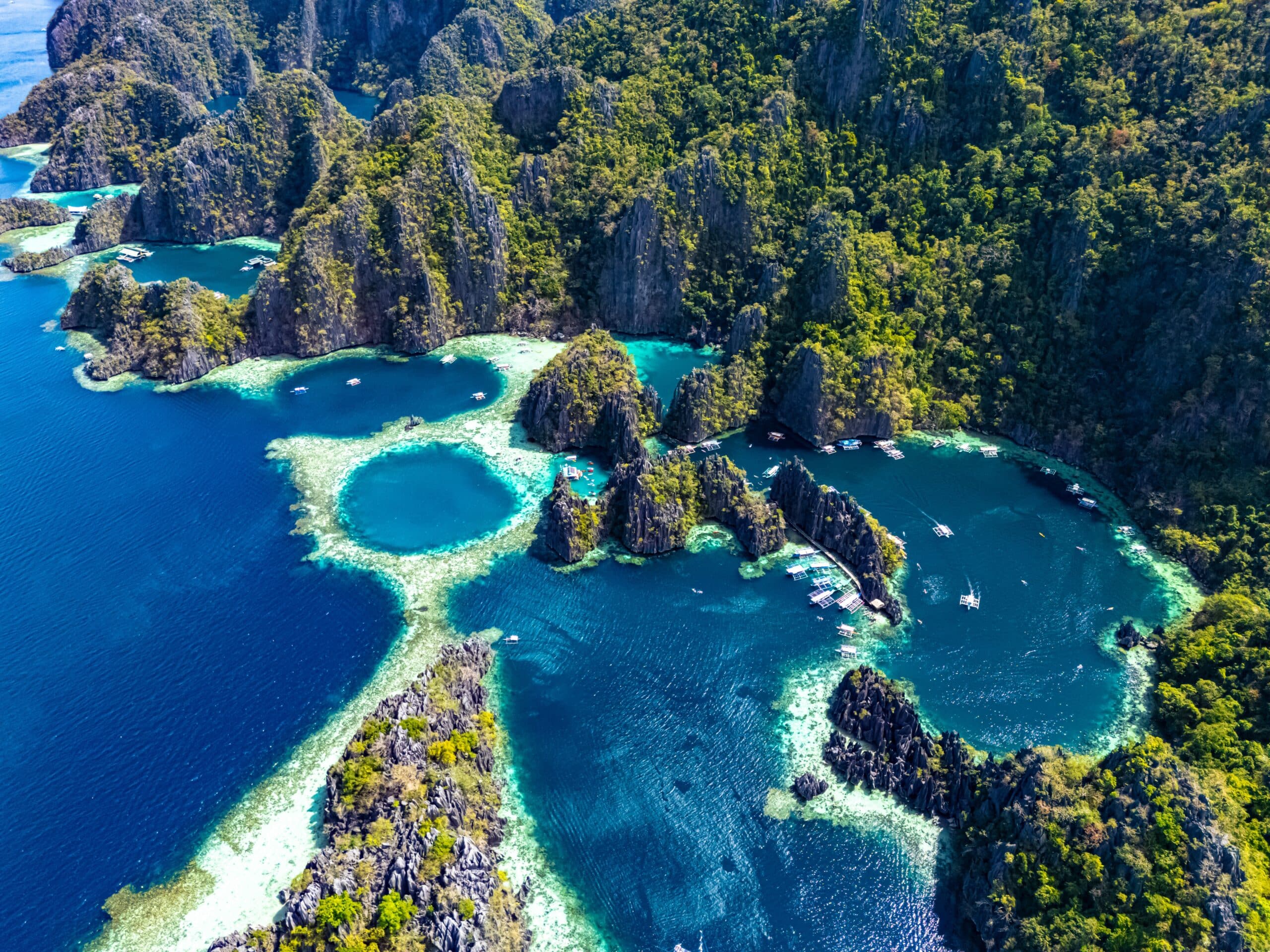
Scattered across the western Pacific, the Philippines is an archipelago of more than 7,000 islands shaped by volcanic fire, tropical seas, and centuries of layered history. Positioned between Southeast Asia and the Pacific, the country blends Asian roots with Hispanic and American influences, creating a culture that is both uniquely Filipino and globally connected.
Geographically diverse, the Philippines offers towering mountain ranges, emerald rice terraces, dense rainforests, and some of the world’s most biodiverse coral reefs. White-sand beaches meet limestone cliffs, while inland rivers carve through jungle-covered valleys. Its tropical climate brings warmth year-round, punctuated by monsoon rains that nourish lush landscapes.
Culturally, the nation reflects a fusion of traditions. Spanish colonial churches stand beside modern skylines, and indigenous communities preserve ancient rituals in remote highlands. Festivals—known locally as fiestas—fill towns with music, dance, and vivid color. Hospitality is central to Filipino identity, expressed in warm welcomes and communal celebrations.
The country’s history is equally compelling. From precolonial maritime trade networks to Spanish colonization, American governance, and eventual independence, each era has left its imprint on architecture, language, and daily life. English and Filipino are widely spoken, making travel accessible while preserving strong local identity.
Cuisine mirrors this blend of influences. Dishes combine Malay foundations with Spanish flavors and Chinese techniques, resulting in savory stews, grilled specialties, and tropical desserts.
Whether exploring historic cities, diving among coral reefs, trekking through mountain provinces, or relaxing on secluded shores, the Philippines presents extraordinary variety within one nation. It is a destination defined by natural beauty, resilient culture, and vibrant spirit.
25. Manila
Manila, the capital of the Philippines, stands as the political, cultural, and historical heart of the nation. Located on the eastern shore of Manila Bay, it is a city shaped by centuries of colonial rule, global trade, and modern transformation.
At its core lies Intramuros, the Spanish-era walled district founded in the 16th century. Cobblestone streets lead to Fort Santiago, a citadel that once guarded the city and later became a symbol of resistance during colonial times. The nearby San Agustin Church, a UNESCO World Heritage Site, reflects Baroque architecture and centuries of religious influence.
Beyond Intramuros, Manila reveals layers of American-era planning, bustling markets, and contemporary urban energy. Rizal Park honors national hero José Rizal, whose legacy helped shape Philippine independence. Museums such as the National Museum complex preserve art, anthropology, and natural history.
Manila’s vibrancy is evident in its crowded avenues, jeepneys painted in bright colors, and waterfront sunsets along Manila Bay. Street food vendors and traditional eateries offer local dishes that blend indigenous and Spanish influences.
Though often fast-paced and densely populated, Manila provides an essential introduction to the Philippines’ complex story. It is a city where colonial fortifications stand beside modern skyscrapers, and where history, resilience, and ambition converge.
24. Cebu City
Cebu City is one of the Philippines’ oldest settlements and a vital gateway to the Visayas region. Often called the “Queen City of the South,” it balances historical landmarks with growing urban development.
The city is closely associated with Ferdinand Magellan’s arrival in 1521. The Magellan’s Cross pavilion commemorates this event, symbolizing the introduction of Christianity to the archipelago. Nearby stands the Basilica Minore del Santo Niño, home to a revered religious icon and a focal point for annual Sinulog Festival celebrations.
Fort San Pedro, a triangular Spanish fort, reflects Cebu’s colonial past and strategic maritime importance. Within its walls, visitors encounter exhibits detailing the island’s role in trade and defense.
Beyond history, Cebu City serves as a commercial hub. Modern shopping centers, business districts, and universities shape its contemporary identity. Yet just outside the urban center, mountains provide scenic overlooks, waterfalls cascade through tropical forests, and coastal resorts line nearby islands.
Cebu is also known for its cuisine, particularly lechon, a roasted pig considered among the best in the country. Local markets and seaside restaurants offer fresh seafood and regional delicacies.
Cebu City bridges past and present, offering visitors historical depth, cultural vitality, and easy access to natural wonders throughout the central Philippines.
23. Davao City
Davao City, located on the southern island of Mindanao, is known for its disciplined urban environment and proximity to dramatic natural landscapes. It is one of the largest cities in the Philippines by land area, yet it maintains a calm and orderly atmosphere.
Dominating the region is Mount Apo, the country’s tallest peak. Adventurous travelers trek through forests and volcanic terrain to reach its summit, encountering diverse wildlife along the way. The surrounding highlands support agriculture, including cacao and tropical fruits.
Within the city, parks and cultural centers celebrate indigenous heritage. The Philippine Eagle Center plays a vital conservation role, protecting one of the world’s largest and rarest eagles. Museums highlight Mindanao’s tribal traditions and artistic expressions.
Davao is famous for its abundance of durian, a pungent tropical fruit sold widely in local markets. Seafood, grilled meats, and fruit-based desserts reflect the region’s agricultural richness.
Coastal areas near Davao offer island-hopping opportunities, with clear waters and coral reefs attracting divers and snorkelers. Samal Island, just offshore, provides beaches and resort escapes.
Davao City presents a harmonious blend of environmental stewardship, cultural pride, and southern hospitality, offering a distinctive perspective on the Philippines beyond its northern islands.
22. Vigan
Vigan is one of the best-preserved examples of a Spanish colonial town in Asia. Located in the northern province of Ilocos Sur, it reflects a rare fusion of European architecture and Filipino craftsmanship.
The heart of the city is Calle Crisologo, a cobblestone street lined with ancestral houses built during the Spanish period. Wooden windows, capiz shell panels, and wrought-iron balconies showcase the distinctive “Bahay na Bato” style. Horse-drawn carriages, known locally as kalesas, still move along the street, reinforcing the atmosphere of a bygone era.
The nearby Vigan Cathedral stands prominently in Plaza Salcedo, representing centuries of Catholic influence. Museums housed in former merchant homes display furniture, textiles, and artifacts that reveal the town’s prosperous trading past.
Vigan flourished as a commercial hub due to maritime trade linking the Philippines with China and Mexico. This multicultural exchange shaped its architecture, cuisine, and craftsmanship.
Local specialties such as empanada and longganisa highlight Ilocano culinary traditions. Pottery workshops in nearby villages continue centuries-old techniques.
Recognized as a UNESCO World Heritage Site, Vigan offers visitors a living historical landscape. Its quiet streets and preserved façades provide one of the clearest windows into the Philippines’ colonial heritage.
21. Baguio
Baguio, often called the “Summer Capital of the Philippines,” sits high in the Cordillera Central mountains. Its elevated location provides cooler temperatures, making it a favored retreat from the tropical heat of the lowlands.
Established as a hill station during the American colonial period, Baguio features wide roads, pine trees, and colonial-era buildings. Burnham Park forms the city’s recreational center, where visitors enjoy boating, biking, and open green spaces.
The city is also a cultural gateway to the indigenous communities of the Cordillera region. Markets sell woven textiles, woodcarvings, and silver crafts created by local artisans. The nearby BenCab Museum highlights contemporary Filipino art alongside indigenous heritage.
Strawberries, fresh vegetables, and mountain coffee reflect the region’s agricultural strengths. The public market is known for its vibrant produce and traditional snacks.
Baguio hosts the annual Panagbenga Festival, a flower festival that fills the streets with elaborate floats and performances. This celebration reflects both creativity and community pride.
Surrounded by mountain views and cool breezes, Baguio combines artistic expression, highland culture, and colonial history. It remains a refreshing and culturally rich destination within northern Luzon.
20. Puerto Princesa
Puerto Princesa serves as the gateway to the natural wonders of Palawan, often regarded as one of the Philippines’ most beautiful provinces. The city balances environmental protection with tourism development.
Its most celebrated attraction is the Puerto Princesa Subterranean River National Park, a UNESCO World Heritage Site. Visitors travel by boat into a limestone cave system where an underground river flows directly into the sea. Stalactites and cathedral-like chambers create a striking geological spectacle.
Beyond the subterranean river, Puerto Princesa offers island-hopping opportunities, mangrove tours, and coastal exploration. Clear waters and coral reefs attract divers and snorkelers seeking marine biodiversity.
The city itself maintains a relatively relaxed atmosphere. A waterfront promenade provides views of the bay, especially at sunset. Restaurants serve fresh seafood and regional dishes influenced by indigenous and Spanish traditions.
Environmental sustainability is central to Puerto Princesa’s identity. Conservation efforts protect forests and wildlife, reinforcing Palawan’s reputation as an ecological treasure.
Puerto Princesa introduces visitors to the Philippines’ extraordinary natural landscapes, offering a harmonious blend of adventure, biodiversity, and responsible tourism.
19. Boracay
Boracay is one of the Philippines’ most internationally recognized beach destinations. Located in the province of Aklan, this small island gained global acclaim for its powdery white sand and clear turquoise waters.
The centerpiece of Boracay is White Beach, a four-kilometer stretch of fine sand lined with palm trees, resorts, and open-air restaurants. The beach is divided into stations, each offering a slightly different atmosphere, from lively nightlife areas to quieter stretches ideal for relaxation.
Beyond sunbathing, Boracay offers numerous water activities. Visitors can enjoy snorkeling, scuba diving, paddleboarding, and sailing aboard traditional paraw boats at sunset. The island’s steady winds also make it a popular location for kiteboarding, particularly along Bulabog Beach.
In recent years, environmental rehabilitation efforts have reshaped Boracay’s tourism model. Regulations were introduced to protect marine ecosystems and ensure sustainable development. These initiatives have improved water quality and reinforced the island’s long-term preservation.
Evenings in Boracay are defined by vibrant beachfront dining and entertainment. Fire dancers perform along the shore, and seafood restaurants serve freshly grilled specialties.
Boracay combines tropical beauty with modern amenities, offering a balance of leisure, adventure, and nightlife. Its natural setting and revitalized environmental focus continue to attract visitors seeking a quintessential island experience in the Philippines.
18. Bohol
Bohol is a province celebrated for its unusual geological formations and rich marine life. Located in the Central Visayas region, it offers a blend of natural wonders and cultural heritage.
The island’s most iconic attraction is the Chocolate Hills, a series of more than one thousand symmetrical mounds that turn brown during the dry season, resembling rows of chocolate drops. Their origin remains the subject of scientific study and local legend.
Bohol is also home to the Philippine tarsier, one of the world’s smallest primates. Conservation centers allow visitors to observe these nocturnal animals while promoting responsible wildlife protection.
Along the Loboc River, boat cruises glide through lush scenery accompanied by local music. Historic churches, some dating back to the Spanish period, reflect centuries of religious influence.
Panglao Island, connected by bridge to the main island, features white-sand beaches and vibrant coral reefs. Diving sites showcase colorful marine ecosystems and occasional dolphin sightings.
Agriculture plays a vital role in Bohol’s economy, with rice fields and coconut plantations dotting the landscape. Traditional crafts and festivals highlight community pride.
Bohol’s combination of distinctive landforms, wildlife conservation, and coastal beauty makes it one of the Philippines’ most diverse and memorable destinations.
17. Iloilo City
Iloilo City, often referred to as the “City of Love,” is known for its graceful heritage houses and thriving culinary scene. Situated on Panay Island, it served as an important trading port during the Spanish colonial period.
The city’s historic district showcases grand mansions built by wealthy sugar barons. The nearby town of Jaro features a cathedral that reflects Iloilo’s religious significance. These structures illustrate the prosperity that characterized the region in the 19th century.
Iloilo River Esplanade offers a modern recreational space, blending urban development with environmental awareness. The waterfront promenade provides scenic walking paths and public gathering areas.
The city is renowned for its cuisine. La Paz batchoy, a noodle soup rich with pork and broth, originated here and remains a beloved local specialty. Fresh seafood and traditional pastries further enhance its gastronomic reputation.
Iloilo hosts the annual Dinagyang Festival, a vibrant celebration honoring the Santo Niño. The festival features rhythmic drum performances and colorful street dancing, drawing visitors from across the country.
Combining historical elegance, culinary distinction, and community-centered festivals, Iloilo City presents a refined yet welcoming atmosphere. It offers insight into the cultural depth and regional diversity that define the Philippines.
16. Sagada
Sagada is a quiet mountain town in the Cordillera region, known for its dramatic limestone landscapes and distinctive burial traditions. Surrounded by pine forests and cool highland air, it offers a tranquil escape from the country’s tropical lowlands.
One of Sagada’s most remarkable cultural features is its hanging coffins, suspended along limestone cliffs. This ancient burial practice reflects indigenous beliefs about honoring ancestors and elevating the deceased closer to the spiritual realm. Visitors can view these coffins respectfully while learning about local customs.
The town is also a haven for outdoor enthusiasts. Caves such as Sumaguing Cave invite adventurous exploration through rock formations and underground chambers. Nearby waterfalls and mountain viewpoints provide scenic trekking opportunities.
Sagada’s small center features modest cafés, guesthouses, and craft shops selling woven goods and locally produced coffee. Agriculture remains central to the community, with rice terraces carved into surrounding slopes.
Evenings in Sagada are calm and cool, often accompanied by mist drifting through the valleys. The absence of large commercial developments preserves the town’s peaceful character.
Sagada combines indigenous heritage, striking geology, and serene mountain scenery. It offers travelers a reflective and culturally immersive experience within the northern highlands of the Philippines.
15. Coron
Coron, located in northern Palawan, is renowned for its crystal-clear lakes and dramatic limestone cliffs. It serves as a gateway to the Calamian Islands, an area celebrated for pristine marine environments.
Among its highlights is Kayangan Lake, often described as one of the cleanest lakes in Asia. Surrounded by towering karst formations, its turquoise waters create a striking contrast against rugged rock walls. Twin Lagoon offers another remarkable setting where warm and cool waters meet within a partially enclosed limestone cove.
Coron is also a world-class diving destination. Beneath its waters lie Japanese shipwrecks from World War II, now transformed into thriving coral ecosystems. These underwater relics attract divers from around the globe.
Island-hopping tours reveal hidden beaches, shallow coral gardens, and quiet coves. Despite increasing tourism, conservation efforts aim to protect fragile marine habitats.
The town itself remains modest, with small hotels, seafood restaurants, and relaxed waterfront views. Fresh catches, grilled simply, define the local cuisine.
Coron stands out for its dramatic natural beauty and underwater heritage. It offers a harmonious blend of adventure, serenity, and ecological wonder in the Philippines’ western frontier.
14. Tagaytay
Tagaytay is a popular highland retreat located south of Manila. Its elevated position provides cooler temperatures and sweeping views of Taal Lake, making it a favored weekend destination.
At the center of the landscape lies Taal Volcano, one of the world’s smallest active volcanoes. Rising from an island within a lake, it forms a rare geological formation that has fascinated scientists and visitors alike. Viewing decks and restaurants along Tagaytay Ridge offer panoramic perspectives of this natural landmark.
The city’s relaxed atmosphere contrasts with the intensity of the capital. Cafés, gardens, and small parks provide spaces for leisure and reflection. Horseback riding and short hikes allow visitors to explore surrounding terrain.
Tagaytay is also known for its culinary offerings. Bulalo, a rich beef marrow soup, is especially popular in the cool mountain air. Roadside stalls sell fresh fruits and local delicacies.
Frequent mist and gentle breezes enhance Tagaytay’s appeal as a refreshing escape. Its accessibility from Manila further contributes to its popularity.
Tagaytay combines scenic beauty, volcanic geology, and comfortable hospitality, offering a peaceful yet dramatic highland experience within easy reach of the capital.
13. Banaue
Banaue is internationally recognized for its extraordinary rice terraces, carved into the mountains of Ifugao more than two thousand years ago. Often referred to as the “Eighth Wonder of the World,” these terraces demonstrate remarkable engineering achieved without modern tools.
The most famous are the Banaue Rice Terraces, part of a larger UNESCO-listed cultural landscape. Built by hand and maintained through generations, the terraces rely on an intricate irrigation system fed by mountain springs. They remain active agricultural fields, reflecting the enduring relationship between the Ifugao people and their land.
Viewpoints around Banaue offer sweeping panoramas of emerald steps cascading down steep slopes. At sunrise and sunset, shifting light enhances the contours of the landscape. Trekking routes connect nearby villages such as Batad and Bangaan, where traditional wooden houses stand against mountain backdrops.
The Ifugao culture remains deeply rooted in ancestral traditions, rituals, and craftsmanship. Handwoven textiles and wood carvings reflect spiritual beliefs and daily life.
Though tourism has grown, Banaue retains a rural atmosphere. Modest guesthouses and local eateries provide simple accommodations, allowing visitors to focus on the natural and cultural environment.
Banaue presents not only a breathtaking landscape but also a testament to human resilience and sustainable living. It remains one of the Philippines’ most profound cultural treasures.
12. Siargao
Siargao has earned a reputation as the surfing capital of the Philippines. Located in the northeastern part of Mindanao, the island combines laid-back charm with world-class waves.
The most famous surf break is Cloud 9, known for its powerful right-hand barrels. Surfers from around the world gather here, especially during the peak season from August to November. Wooden boardwalks provide vantage points for spectators to watch riders navigate the swells.
Beyond surfing, Siargao offers tranquil lagoons, mangrove forests, and island-hopping adventures. Sugba Lagoon’s calm waters contrast with the open ocean, inviting kayaking and paddleboarding. Nearby islets feature white sandbars surrounded by clear turquoise seas.
The island’s interior reveals coconut palm landscapes stretching to the horizon. Motorbike rides along coastal roads highlight the simplicity of rural island life.
Despite rising popularity, Siargao retains a relaxed community atmosphere. Small cafés, yoga studios, and eco-friendly resorts reflect a focus on sustainability and mindful tourism.
Evenings often conclude with sunsets over the Pacific and informal gatherings along the beach. Siargao blends adventure with serenity, offering a destination that appeals equally to thrill-seekers and travelers seeking tropical calm.
11. Camiguin
Camiguin, known as the “Island Born of Fire,” is a small volcanic island in northern Mindanao. Despite its size, it contains more volcanoes per square kilometer than any other island in the Philippines.
Mount Hibok-Hibok remains the most prominent peak, attracting hikers who seek panoramic views of surrounding seas. The island’s volcanic origins have also created hot and cold springs, providing natural bathing spots within lush settings.
One of Camiguin’s most striking landmarks is the Sunken Cemetery, marked by a large cross rising from the sea. This unusual memorial commemorates a community buried after volcanic eruptions reshaped the coastline.
White Island, an uninhabited sandbar just offshore, offers sweeping views of Camiguin’s mountainous silhouette. Its shifting sands and clear waters create a peaceful setting for swimming and relaxation.
Waterfalls cascade through tropical forests, including Katibawasan Falls, which plunges dramatically into a pool below. These natural attractions highlight the island’s rich biodiversity.
Local festivals celebrate Camiguin’s history and resilience, particularly the Lanzones Festival honoring the island’s sweet tropical fruit harvest.
Camiguin combines volcanic landscapes, historical memory, and tranquil beaches. Its compact geography allows visitors to explore diverse environments within a short distance, making it one of the Philippines’ most distinctive island destinations.
10. El Nido
El Nido is widely regarded as one of the most breathtaking destinations in the Philippines. Situated at the northern tip of Palawan, it is famed for towering limestone cliffs, hidden lagoons, and crystalline waters.
The Bacuit Archipelago forms the heart of El Nido’s appeal. Island-hopping tours lead visitors through narrow rock formations into secret beaches and tranquil coves. Big Lagoon and Small Lagoon are particularly striking, where emerald waters shimmer beneath dramatic karst walls.
Snorkeling and diving reveal vibrant coral reefs and diverse marine life. Kayaking allows close exploration of shallow lagoons, while cliff viewpoints provide panoramic perspectives over the archipelago.
Despite its global popularity, El Nido retains a rustic charm. The town itself is compact, with sandy streets lined by small hotels, dive shops, and open-air restaurants. Fresh seafood and grilled dishes dominate local menus, reflecting the coastal environment.
Sunsets over Bacuit Bay create unforgettable scenes, as limestone silhouettes darken against vivid skies. Environmental regulations aim to preserve the fragile ecosystems that define the region’s beauty.
El Nido offers an extraordinary fusion of adventure and tranquility. Its dramatic geological formations and turquoise waters make it one of Southeast Asia’s most visually stunning coastal landscapes.
9. Bacolod
Bacolod, often called the “City of Smiles,” is known for its welcoming atmosphere and vibrant cultural celebrations. Located on Negros Island, it developed historically through the sugar industry, which shaped its architecture and economy.
The nearby ancestral mansions of Talisay, including grand estates built by sugar barons, reflect the prosperity of the 19th century. Within Bacolod itself, the San Sebastian Cathedral stands as a reminder of Spanish colonial influence.
Bacolod is best known for the MassKara Festival, held each October. During this lively celebration, residents wear brightly colored masks adorned with smiling faces. Street dancing, music, and elaborate costumes transform the city into a spectacle of joy and creativity.
The city has also earned a strong culinary reputation. Chicken inasal, grilled and marinated with local spices, originated here and remains a beloved specialty. Restaurants and roadside eateries serve generous portions accompanied by rice and dipping sauces.
Modern shopping centers and public plazas complement historical landmarks, creating a balanced urban environment. Bacolod’s relaxed pace contrasts with larger metropolitan areas, allowing visitors to experience authentic regional hospitality.
With its festive spirit, historical roots, and flavorful cuisine, Bacolod presents a cheerful and culturally rich destination in the central Philippines.
8. Batanes
Batanes, the northernmost province of the Philippines, offers landscapes unlike any other in the country. Composed of rolling hills, rugged cliffs, and windswept coastlines, it lies closer to Taiwan than to mainland Luzon.
The islands are home to the Ivatan people, whose stone houses with thick walls were designed to withstand strong typhoons. These traditional dwellings reflect adaptation to the region’s challenging climate.
Basco, the provincial capital, provides access to scenic viewpoints overlooking the Pacific Ocean and the Luzon Strait. Marlboro Hills and dramatic lighthouses stand against sweeping green pastures.
Batanes’ isolation has preserved both its environment and culture. Fishing and farming remain primary livelihoods, and community life is guided by close-knit traditions.
The coastline features rocky shores and powerful waves rather than sandy beaches, giving the province a distinct character. Cattle graze freely across open fields, adding to the pastoral atmosphere.
Travel to Batanes requires planning due to limited flights and weather conditions, yet the journey rewards visitors with extraordinary tranquility. Its serene landscapes and resilient culture create an experience that feels far removed from the bustle of modern cities.
Batanes stands as a testament to harmony between people and nature, offering one of the Philippines’ most peaceful and visually striking destinations.
7. Dumaguete
Dumaguete, often called the “City of Gentle People,” is a coastal university town known for its relaxed atmosphere and intellectual spirit. Located on Negros Island, it blends seaside charm with academic influence.
The city’s waterfront promenade, Rizal Boulevard, serves as a gathering place where locals and visitors enjoy ocean views and cool evening breezes. Cafés and small restaurants line the boulevard, offering fresh seafood and local delicacies.
Dumaguete is home to Silliman University, one of the oldest American-established universities in Asia. Its tree-lined campus and anthropology museum contribute to the city’s cultural depth. Students from across the Philippines give Dumaguete a youthful and diverse character.
Just offshore lies Apo Island, a renowned marine sanctuary famous for coral reefs and sea turtles. Snorkelers and divers explore protected waters that demonstrate successful community-led conservation efforts.
Nearby waterfalls, hot springs, and mountain trails provide outdoor adventures within short distances of the city. Valencia, a neighboring town, offers scenic highland escapes.
Dumaguete’s manageable size encourages slow exploration. Markets sell fresh produce and traditional snacks, while tricycle rides connect neighborhoods.
Dumaguete combines education, environmental awareness, and coastal tranquility. Its welcoming personality and access to marine biodiversity make it a rewarding stop in the central Philippines.
6. Legazpi
Legazpi is defined by the majestic presence of Mayon Volcano, renowned for its near-perfect cone shape. Located in the Bicol region of southern Luzon, the city offers one of the most dramatic volcanic landscapes in Southeast Asia.
Mayon Volcano dominates the skyline, rising symmetrically above rice fields and coconut plantations. Though active, it remains a powerful symbol of natural beauty. Viewing platforms and parks allow visitors to admire its form safely.
The Cagsawa Ruins, remnants of a church destroyed by an eruption in 1814, stand as a reminder of Mayon’s force. The bell tower framed against the volcano creates one of the Philippines’ most iconic images.
Legazpi also offers adventure activities such as ATV rides along lava trails, hiking excursions, and zipline experiences with panoramic views. The nearby coastline provides black-sand beaches shaped by volcanic minerals.
Bicolano cuisine adds a distinctive flavor to the visit. Dishes often incorporate coconut milk and chili peppers, producing rich and spicy combinations unique to the region.
Despite its dramatic natural setting, Legazpi maintains an orderly and welcoming atmosphere. It presents a striking example of how communities adapt and thrive alongside powerful geological forces.
5. Zamboanga City
Zamboanga City stands apart for its strong Hispanic cultural influence and vibrant coastal identity. Located on the southwestern tip of Mindanao, it is often called “Asia’s Latin City.”
Spanish heritage remains visible in language and architecture. Chavacano, a Spanish-based creole, is widely spoken by residents. The city’s historic Fort Pilar shrine reflects centuries of colonial and religious history.
Colorful vinta boats, with their bright triangular sails, glide across coastal waters and serve as cultural symbols of the region. These traditional vessels highlight the maritime traditions of local communities.
Zamboanga is also known for its diverse population, including Muslim, Christian, and indigenous groups. Markets display woven textiles and brass crafts that reflect this cultural blend.
The nearby Great Santa Cruz Island features pink-hued sand caused by crushed coral mixed with white sand. Mangrove forests and marine sanctuaries emphasize environmental preservation.
Seafood plays a central role in local cuisine, alongside dishes influenced by both Spanish and Mindanaoan flavors.
Zamboanga City offers a distinctive cultural experience within the Philippines. Its linguistic uniqueness, coastal beauty, and multicultural identity make it one of the country’s most intriguing southern destinations.
4. Siquijor
Siquijor is an island province long associated with mysticism and natural beauty. Located in the Central Visayas, it combines tranquil beaches with lush inland landscapes and centuries-old folklore.
Often called the “Island of Fire,” a name inspired by the glow of fireflies seen by early Spanish explorers, Siquijor has developed a reputation for traditional healing practices. Local healers continue to practice herbal medicine and spiritual rituals, which form part of the island’s cultural identity.
Beyond its legends, Siquijor offers clear waters and peaceful shorelines. Salagdoong Beach is known for its turquoise sea and cliff-diving spots, while Cambugahay Falls features tiered cascades surrounded by tropical vegetation. Inland roads pass through forests and quiet villages, revealing a slow-paced rural lifestyle.
Historic churches such as San Isidro Labrador Church stand as reminders of Spanish-era influence. Adjacent convent structures are among the oldest in the country.
Tourism remains relatively low-key compared to larger island destinations. Small guesthouses and seaside resorts emphasize relaxation rather than nightlife. Fresh seafood and simple Filipino dishes dominate local menus.
Siquijor appeals to travelers seeking serenity, cultural curiosity, and natural charm. Its blend of folklore, waterfalls, and unspoiled beaches creates an atmosphere both peaceful and intriguing within the Philippine archipelago.
3. Malapascua
Malapascua is a small island north of Cebu renowned for exceptional diving opportunities. Despite its modest size, it attracts marine enthusiasts from around the world.
The island is particularly famous for thresher shark encounters. At Monad Shoal, divers descend before sunrise to witness these rare sharks rising from deep waters to cleaning stations. This unique experience has established Malapascua as one of the few places globally where such sightings are reliable.
White sandy beaches encircle the island, offering calm swimming areas and quiet relaxation spots. Palm trees line the shore, and the absence of large-scale development preserves a laid-back atmosphere.
Snorkeling reveals coral gardens and diverse fish species, while nearby dive sites include shipwrecks and underwater caves. Local dive centers emphasize safety and marine conservation practices.
Life on Malapascua moves at a gentle rhythm. Small beachfront lodges, open-air restaurants, and modest village homes define the landscape. Evenings are peaceful, often spent watching sunsets over the Visayan Sea.
Malapascua combines world-class marine encounters with island simplicity. It offers an intimate destination where underwater adventure and tranquil coastal living coexist harmoniously.
2. Baler
Baler, located along the eastern coast of Luzon, is a growing destination for surfers and history enthusiasts alike. Facing the Pacific Ocean, it experiences consistent waves shaped by seasonal swells.
Sabang Beach serves as the town’s surfing hub, welcoming both beginners and experienced riders. Surf schools and board rentals line the shore, while coconut palms frame the coastline.
Baler also holds historical significance as the site of the Siege of Baler, when Spanish soldiers remained inside a church for nearly a year after Spain had ceded the Philippines. The preserved Baler Church stands as a reminder of this unusual chapter in colonial history.
Inland attractions include Ditumabo Falls, also known as Mother Falls, where a forest trek leads to a powerful cascade. Rolling hills and scenic viewpoints surround the town, offering expansive ocean panoramas.
Local eateries serve fresh seafood and regional dishes, contributing to Baler’s relaxed coastal vibe. Tourism infrastructure remains modest, maintaining the town’s approachable character.
Baler blends Pacific surf culture with historical depth and natural scenery. It provides a balanced escape for travelers seeking both adventure and reflection on the country’s layered past.
1. Tarlac City
Tarlac City serves as a crossroads in Central Luzon, connecting northern and southern provinces through major highways. While often passed through by travelers, it holds historical and cultural importance.
The city is closely associated with Aquino heritage, as the Aquino Center and Museum commemorates the political legacy of former national leaders. Exhibits highlight pivotal moments in Philippine democracy.
Religious landmarks such as San Sebastian Cathedral anchor the city’s central district. Surrounding plazas and parks provide spaces for community gatherings and local markets.
Tarlac’s landscape transitions between agricultural plains and gentle mountain ranges. Sugarcane, rice, and corn fields dominate rural areas, reflecting the province’s farming economy. Nearby Mount Pinatubo, though outside the city itself, influences regional identity and tourism.
Local cuisine features traditional Kapampangan and Ilocano influences, offering savory dishes and native desserts. Small eateries and roadside stalls serve home-style cooking.
Tarlac City may not possess dramatic coastlines or towering peaks, yet it offers insight into provincial life and national history. Its strategic location and cultural landmarks make it a meaningful stop within the broader narrative of the Philippines.