
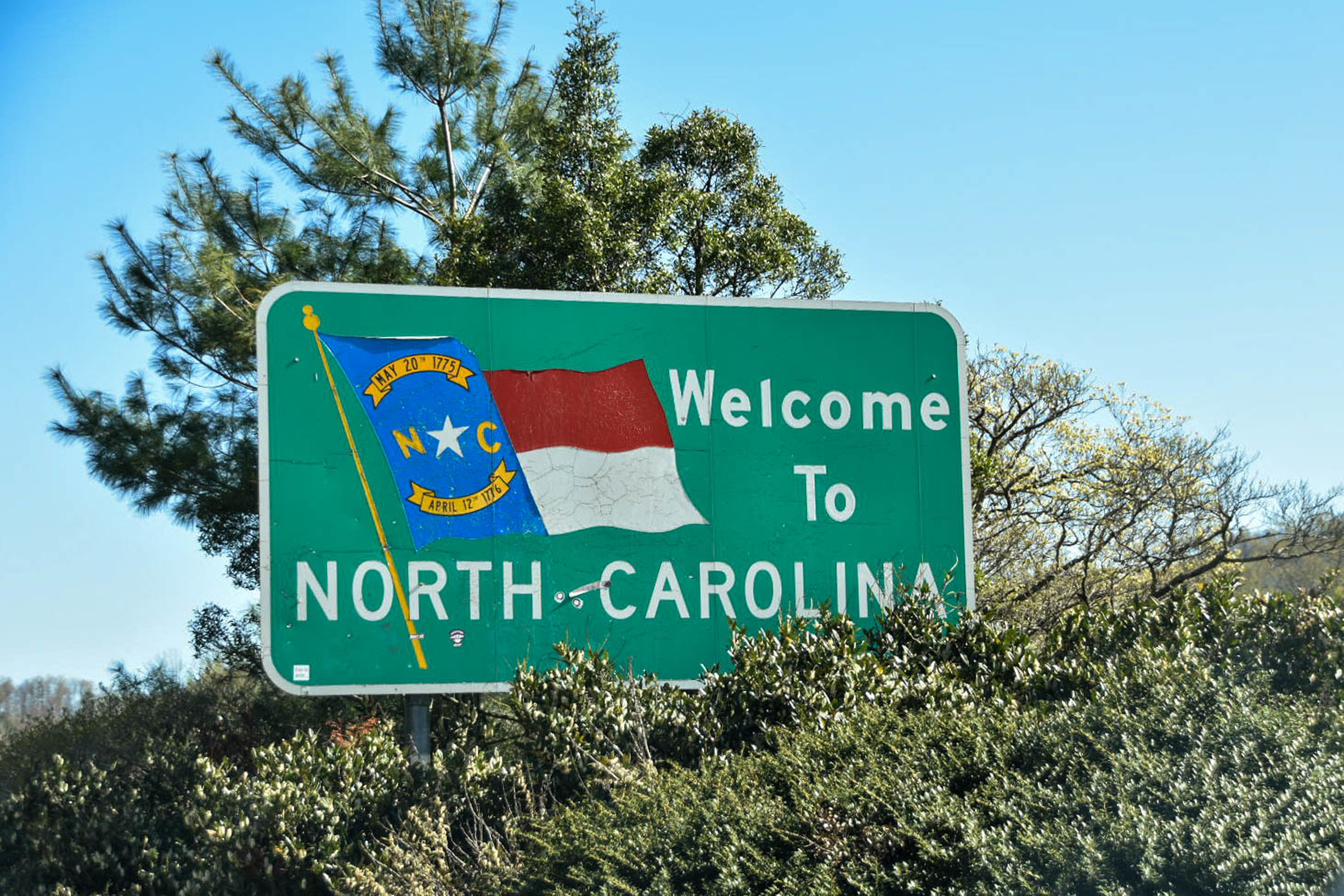
North Carolina unfolds with a rare and graceful breadth. From the rolling Appalachian highlands to the shifting sands of the Outer Banks, the state contains an entire geography of moods within its borders. It is a place shaped not by spectacle alone, but by continuity—by work, land, memory, and a deep attachment to home.
The mountains in the west rise softly rather than dramatically, layered in blue distance and dense forest. In the center, the Piedmont stretches outward in farmland, mill towns, and growing cities shaped by industry and innovation. To the east, rivers widen into estuaries before meeting the Atlantic, where barrier islands exist in constant negotiation with wind and tide.
North Carolina’s identity is rooted in balance. Tradition and progress exist side by side, often in quiet conversation rather than conflict. Tobacco barns stand near research campuses; historic courthouses anchor towns that are steadily reinventing themselves. The state carries the weight of history—Indigenous presence, colonial settlement, the legacy of slavery and the Civil War—but it is equally defined by its forward-looking resilience.
Music, craft, and storytelling run deep here. From mountain ballads to coastal folk traditions, cultural expression remains closely tied to place. Food reflects the same connection: barbecue styles debated with near-religious devotion, seafood pulled from nearby waters, produce shaped by local soil.
North Carolina does not demand attention. It rewards patience. Those who move slowly through it discover a state of subtle beauty, strong communities, and landscapes that reveal themselves gradually, leaving a lasting impression built on depth rather than drama.
22. The Blue Ridge Mountains — Forests, Ridges, and Endurance
The Blue Ridge Mountains form North Carolina’s western spine, a region of layered ridgelines, dense hardwood forests, and long, inward-looking valleys. Unlike sharper mountain ranges, the Blue Ridge offers a gentler grandeur—its power revealed through scale, age, and atmosphere rather than height.
Morning fog drifts through the trees, softening contours and deepening color. The Blue Ridge Parkway traces the ridges with deliberate grace, offering overlooks that feel less like destinations and more like pauses. Hiking trails disappear into rhododendron tunnels and reemerge at waterfalls or open balds where sky feels suddenly close.
Small towns—Boone, Blowing Rock, Waynesville—anchor the mountains with warmth and self-reliance. Craft traditions endure here: woodworking, weaving, music passed down through generations. Life follows seasonal logic, shaped by weather and terrain.
The Blue Ridge region invites humility. It is not conquered, but entered—slowly, attentively. In its forests and hollows, North Carolina reveals its oldest rhythms.
21. Asheville — Creativity at the Edge of the Mountains
Asheville sits in a broad mountain basin where rivers converge and creativity flourishes. Long known as a retreat for artists and thinkers, the city has evolved into one of the South’s most distinctive cultural centers.
Historic architecture defines its downtown, from the ornate Art Deco City Hall to brick warehouses repurposed as galleries and studios. Music spills into the streets, breweries line the riverfront, and local food culture reflects both innovation and Appalachian roots.
Beyond the city center, nature asserts itself immediately. Trails climb into surrounding forests, while the French Broad River carries kayaks and quiet reflection. The nearby Biltmore Estate stands as a reminder of another era, yet Asheville’s energy remains grounded in independence rather than grandeur.
Asheville thrives on openness—of ideas, identities, and expression. It balances reinvention with reverence for place, offering a model of how tradition and experimentation can coexist.
20. Charlotte — Power, Expansion, and a New Southern Identity
Charlotte rises from the Piedmont as a city defined by momentum. Once a regional trading town, it has transformed into one of the nation’s most influential financial centers, its skyline a declaration of ambition and scale. Yet beneath the glass towers lies a city still negotiating its Southern roots.
Neighborhoods such as Dilworth, NoDa, and Plaza Midwood reveal Charlotte’s layered character. Historic bungalows stand beside modern apartments, while old rail lines have become greenways threading through the city. This blending of preservation and progress defines Charlotte’s cultural rhythm.
The city’s growth has brought diversity, innovation, and a renewed focus on livability. Museums, sports arenas, and performance spaces anchor civic life, while food and arts scenes evolve rapidly, drawing influence from across the country and beyond.
Charlotte’s identity is not fixed—it is forming. It represents a New South that embraces global relevance without fully abandoning its regional memory, a city still deciding what it will become.
19. The Research Triangle — Intellect, Innovation, and Balance
The Research Triangle—anchored by Raleigh, Durham, and Chapel Hill—forms North Carolina’s intellectual heart. Built around three major universities, the region thrives on ideas, inquiry, and collaboration.
Raleigh offers governmental order and expanding urban life, while Durham carries a sharper edge shaped by industry, activism, and cultural reinvention. Chapel Hill, with its historic campus and leafy streets, provides academic tradition and measured pace.
Research parks, laboratories, and startups coexist with farmers’ markets, music venues, and historic neighborhoods. The region’s prosperity is grounded in education, yet it resists becoming abstract or disconnected. Life here remains closely tied to community, landscape, and public space.
The Triangle demonstrates a rare equilibrium: ambition tempered by accessibility, progress grounded in place. It is a model of growth that values intellect alongside livability.
18. The Outer Banks — Edge of Land, Edge of Time
The Outer Banks stretch like a fragile thread along North Carolina’s coast, a chain of barrier islands shaped entirely by wind, water, and impermanence. Here, the Atlantic asserts its authority daily, reshaping dunes and shorelines without regard for human intention.
Lighthouses rise as symbols of vigilance and endurance—Hatteras, Bodie Island, Currituck—marking a coast once notorious for shipwrecks. The sea defines everything: economy, architecture, and daily rhythm. Fishing villages and seasonal towns exist in constant awareness of weather and tide.
Wild horses roam the northern beaches, descendants of colonial-era stock, reinforcing the islands’ sense of untamed continuity. Sunrises arrive with sudden brilliance; storms transform the landscape overnight.
The Outer Banks are not built for permanence. Their beauty lies in transience, in the understanding that land here is borrowed rather than owned. They represent North Carolina at its most elemental—a meeting of patience, resilience, and awe.
17. Wilmington & the Cape Fear Coast — History at the Water’s Edge
Wilmington sits where the Cape Fear River meets the Atlantic, a port city shaped by tide and trade. Its historic downtown, lined with brick streets and 19th-century facades, tells stories of maritime commerce, colonial ambition, and layered cultural inheritance.
Riverwalks trace the city’s edge, where cargo ships and pleasure boats glide past reminders of Wilmington’s global connections. The city’s past includes prosperity and conflict—its architecture preserves beauty, while its history demands reflection, particularly on the legacies of slavery and racial violence that shaped its development.
Beyond the historic core, Wilmington unfolds into beach communities like Wrightsville Beach and Carolina Beach, where surf culture and seasonal rhythms dominate. Film studios have added a modern creative dimension, earning Wilmington the nickname “Hollywood East.”
Here, history and leisure coexist. The city balances remembrance with reinvention, maintaining its coastal charm while evolving as a cultural and economic center of southeastern North Carolina.
16. The Sandhills & Pinehurst — Where Land Teaches Patience
The Sandhills rise gently from the Piedmont, their rolling terrain formed from ancient seabeds. Pine forests stretch endlessly, and the land seems quieter here—slower, more contemplative.
Pinehurst, known internationally as a golfing destination, grew from this landscape’s natural contours. Courses designed to follow the land rather than conquer it reflect the region’s philosophy of adaptation. Yet beyond the fairways, the Sandhills reveal a deeper identity rooted in ecology and conservation.
Longleaf pines and wiregrass ecosystems support rare species and represent one of the South’s most endangered natural habitats. Preserves and forests invite walking, reflection, and an awareness of time measured in seasons rather than schedules.
The Sandhills are not dramatic, but they are profound. Their beauty emerges through attention, offering a lesson in restraint and balance.
15. The Great Smoky Mountains & Cherokee Lands — Ancestral Peaks
In western North Carolina, the Great Smoky Mountains rise in blue-veiled layers, their ridges holding some of the oldest mountains on Earth. Mist drifts through valleys, softening outlines and creating a landscape that feels both ancient and alive.
This region is inseparable from the Eastern Band of Cherokee Indians, whose ancestral homeland endures despite centuries of displacement. Cherokee traditions, language, and stories remain deeply woven into the mountains, shaping both spiritual and cultural life.
Forests here teem with biodiversity—wildflowers blanket slopes in spring, and autumn ignites the hills in flame-like color. Trails wind through coves and past waterfalls, offering moments of quiet reverence.
The Smokies demand humility. They remind visitors that land remembers, that history lingers in stone and soil, and that North Carolina’s deepest roots lie in these enduring peaks.
14. Boone & Blowing Rock — The High Country Heart
In North Carolina’s High Country, Boone and Blowing Rock anchor a region defined by altitude and endurance. Winters are sharp, summers mild, and the seasons arrive with clarity. Life here follows the mountain calendar.
Boone, shaped by Appalachian State University, balances youthful energy with deep-rooted mountain traditions. Music, storytelling, and craftsmanship persist alongside innovation, creating a town that feels both grounded and forward-looking.
Blowing Rock, perched along the Blue Ridge escarpment, offers dramatic views and a quieter pace. Its namesake cliff captures the imagination, while surrounding forests and streams invite exploration and solitude.
The High Country embodies resilience. Farming terraces, old barns, and weathered homesteads tell stories of persistence against difficult terrain. Yet the region also offers generosity—open skies, shared music, and a deep sense of belonging.
Here, North Carolina rises to its highest elevations and perhaps its clearest sense of self.
13. The Piedmont Triad — Industry, Innovation, and Reinvention
The Piedmont Triad—Greensboro, Winston-Salem, and High Point—forms a broad plateau where North Carolina’s industrial past meets its evolving future. Once defined by tobacco, textiles, and furniture, this region has learned the art of reinvention, reshaping itself without abandoning its roots.
Greensboro carries a quiet dignity, its tree-lined neighborhoods and universities giving the city a thoughtful pace. Parks and lakes soften the urban landscape, while cultural institutions reflect a long commitment to education and civic life. Winston-Salem blends Moravian heritage with modern design, its historic districts standing alongside innovation hubs and art centers. High Point, long known as the “Furniture Capital of the World,” continues to shape global design while reimagining itself as a creative and entrepreneurial city.
The Triad’s strength lies in balance—between tradition and transformation, industry and intellect. Old brick mills now house startups, galleries, and community spaces, proving that history can be adaptive rather than static.
Here, North Carolina reveals its working soul: pragmatic, resilient, and quietly ambitious. The Piedmont Triad does not shout its achievements; it builds them steadily, grounded in craftsmanship and collective effort.
12. Greensboro and the Moral Landscape of America
Greensboro occupies a singular place in American history, not for spectacle, but for courage. On a quiet February day in 1960, four college students sat down at a segregated lunch counter and refused to leave. Their simple act reshaped the moral geography of the nation.
Today, the International Civil Rights Center & Museum stands at that very counter, preserving not only artifacts but the emotional weight of the moment. The museum does not merely recount history—it invites reflection, reminding visitors that progress often begins with ordinary people choosing extraordinary resolve.
Beyond the museum, Greensboro’s neighborhoods and campuses reflect the city’s ongoing commitment to dialogue and justice. The legacy of the sit-ins permeates the city’s identity, influencing education, activism, and civic engagement.
Greensboro teaches that landscapes hold memory. Streets, buildings, and public spaces can become witnesses to change. The city’s role in the Civil Rights Movement gives North Carolina a profound place in the American conscience, anchoring its story in dignity and determination.
11. Raleigh — A Capital Shaped by Green and Gold
Raleigh, North Carolina’s capital, rises gently from oak-shaded hills, a city shaped as much by planning as by passion. Unlike older Southern capitals, Raleigh feels deliberately open—wide boulevards, generous parks, and a skyline that never overwhelms its trees.
The city sits at the heart of the Research Triangle, where universities, research institutions, and technology firms intersect. This intellectual energy gives Raleigh a youthful confidence, balanced by a respect for governance and history. Museums, legislative buildings, and cultural venues coexist with bike trails and community gardens.
Raleigh’s character is understated yet assured. It thrives on ideas rather than spectacle, favoring thoughtful growth over rapid sprawl. The city’s green spaces—Umstead State Park, Dorothea Dix Park, and countless neighborhood trails—reinforce a commitment to livability and balance.
As a capital, Raleigh embodies North Carolina’s aspirations: educated, forward-thinking, and rooted in stewardship. It is a city that governs not only through policy, but through example—showing how progress and preservation can move together.
10. Durham — Tobacco, Transformation, and Cultural Fire
Durham is a city forged in smoke and reinvention. Once dominated by tobacco warehouses and factory whistles, it has transformed itself into one of the most dynamic cultural and intellectual centers in the South—without erasing the grit that shaped it.
The red-brick warehouses of the American Tobacco Historic District now pulse with restaurants, startups, and performance spaces. Where cured leaves once piled high, ideas now circulate freely. This physical transformation mirrors Durham’s deeper identity: a city unafraid of change, unafraid of complexity.
Durham is anchored by Duke University, whose Gothic spires rise like a medieval vision amid Southern light. The campus brings global scholarship, medicine, and research, yet the city’s spirit extends far beyond academia. Durham’s music scene, literary culture, and foodways reflect a fierce commitment to authenticity and diversity.
There is an edge to Durham—an honesty that resists polish for its own sake. Conversations here are passionate, often political, and rooted in lived experience. The city embraces its role as a place where difficult histories are confronted rather than softened.
Durham represents modern North Carolina at its most expressive: bold, intellectually restless, and deeply connected to its past. It is a city that burns not with nostalgia, but with creative fire.
9. Chapel Hill — Idealism, Academia, and Southern Grace
Chapel Hill feels like a conversation that never ends—between generations, disciplines, and ideals. Anchored by the University of North Carolina, the nation’s oldest public university, the town radiates intellectual curiosity and civic engagement.
Franklin Street hums with bookstores, cafés, and music venues, where debates spill from lecture halls into everyday life. The university’s historic campus, shaded by ancient oaks and brick pathways, invites reflection as much as scholarship.
Chapel Hill has long been a center of progressive thought in the South, its voice often leading conversations on education, civil rights, and public responsibility. Yet its activism is tempered by courtesy and tradition, creating a rare blend of conviction and grace.
The town’s scale fosters intimacy. Professors, students, artists, and longtime residents share sidewalks and stories. Ideas feel accessible here—not abstract, but lived and debated daily.
Chapel Hill represents the moral and intellectual conscience of North Carolina. It reminds the state—and the nation—that learning is not only about knowledge, but about values. In its quiet streets and vibrant classrooms, the future is shaped not through force, but through thoughtful persuasion.
8. The Uwharrie Mountains — Ancient Peaks and Quiet Wilderness
The Uwharrie Mountains are among the oldest mountain ranges in North America, their rounded forms worn smooth by hundreds of millions of years. They do not dominate the horizon like the Blue Ridge, yet their quiet presence carries a deep sense of time.
Stretching across central North Carolina, the Uwharries offer a landscape of rolling hills, hardwood forests, and hidden streams. This is a place for solitude rather than spectacle—where hiking trails wind through oak and pine, and silence is broken only by wind or birdsong.
Uwharrie National Forest preserves this understated wilderness. Trails, campsites, and scenic overlooks invite slow exploration. Here, nature feels intimate and accessible, encouraging reflection rather than conquest.
The mountains also carry stories—of early Indigenous peoples, colonial settlers, and rural communities shaped by the land. Gold was once discovered here, and remnants of mining history remain scattered through the forest.
The Uwharries remind visitors that North Carolina’s beauty is not only found in grand vistas, but in subtle, enduring landscapes. They are a counterpoint to the state’s busier regions—a place where the past lingers gently and nature invites patience.
7. The Yadkin Valley — Vineyards, Rivers, and Rural Revival
The Yadkin Valley flows with quiet renaissance. Centered around the Yadkin River, this region has emerged as North Carolina’s premier wine country, blending agriculture, artistry, and Appalachian foothills into a landscape of renewal.
Rolling hills dotted with vineyards stretch beneath wide skies, where wineries produce award-winning varietals shaped by unique soil and climate. Tasting rooms often occupy restored farmhouses or hilltop estates, offering views that feel both pastoral and refined.
Yet the Yadkin Valley is more than wine. It remains deeply agricultural, with family farms, orchards, and small towns preserving a rural way of life. Communities here balance innovation with stewardship, embracing tourism while protecting the land that sustains them.
The Yadkin River itself serves as a unifying force—supporting recreation, wildlife, and generations of local livelihoods. Canoeing, fishing, and riverside trails connect people to the water in ways that feel timeless.
The valley’s revival reflects a broader North Carolina story: rural regions finding new purpose without losing identity. The Yadkin Valley is proof that progress can be rooted, graceful, and deeply connected to place.
6. The Lumber River & Robeson County — Water, Identity, and Survival
In southeastern North Carolina, the Lumber River winds slowly through cypress swamps and lowland forests, shaping both landscape and identity. This is Lumbee country, home to the largest Native American tribe east of the Mississippi River, whose presence gives the region its cultural gravity.
The river itself moves with patience rather than power. Tea-colored waters reflect Spanish moss and tupelo trees, creating a world that feels removed from modern urgency. Canoeing the Lumber River is an exercise in stillness—where the sounds of wind, insects, and water replace the noise of roads and cities.
Robeson County’s story is one of endurance. The Lumbee people maintained their identity through centuries of marginalization, forging community through faith, education, and shared land. Their influence shapes local traditions, foodways, and storytelling, grounding the region in a living heritage.
This is not a landscape of spectacle, but of meaning. Beauty here lies in continuity—the survival of culture, the persistence of river and forest, and the quiet dignity of a place often overlooked yet deeply rooted.
5. Hickory & the Catawba Valley — Craft, Industry, and Reinvention
The Catawba Valley reflects North Carolina’s long relationship with making things. Hickory, once known primarily for furniture manufacturing, embodies the state’s ability to adapt while honoring its industrial past.
Factory buildings now house studios, breweries, and technology startups, blending craftsmanship with innovation. The city’s identity remains tied to skilled labor—woodworking, textiles, and design—but increasingly embraces creativity and education as engines of renewal.
Nearby Lake Hickory and Lake Norman provide natural counterbalance, offering water, recreation, and scenic relief. Trails and greenways reconnect residents with the land, reinforcing the idea that progress need not come at nature’s expense.
Hickory’s appeal lies in its authenticity. It does not seek reinvention through spectacle, but through purpose—preserving what worked, reimagining what did not. The result is a city quietly redefining what small-scale prosperity can look like in modern North Carolina.
4. The Roanoke River Basin — Wilderness, Wildlife, and the Flow of Time
The Roanoke River Basin is one of the most ecologically significant regions in the eastern United States. Broad floodplains, ancient hardwood forests, and blackwater channels create a landscape that feels primordial.
Here, the river dictates rhythm. Seasonal flooding replenishes soil and sustains habitats that support black bears, migratory birds, and rare plant species. Boardwalks and wildlife refuges allow visitors to witness nature’s abundance without disrupting its balance.
The basin also carries historical weight. Early colonial settlements rose and fell along the Roanoke’s banks, leaving behind stories of ambition, mystery, and survival. The land remembers—even as it reclaims.
In this region, North Carolina reveals its wild heart. The Roanoke River Basin is not curated or controlled; it exists on its own terms, reminding visitors that some places are meant not to be shaped, but respected.
3. The Neuse River & New Bern — Birthplace of a Colony
Where the Neuse and Trent Rivers meet, New Bern stands as one of North Carolina’s oldest and most graceful towns. Founded in 1710, it was the first permanent capital of the colony, and its layout still reflects an early vision of order, ambition, and transatlantic influence.
Tree-lined streets lead to historic homes, churches, and gardens that seem gently suspended between centuries. Tryon Palace, meticulously reconstructed, anchors the town’s identity, offering insight into colonial governance and the refinement that once defined this river port.
Water shapes life in New Bern. Broad riverbanks open toward coastal light, and the pace here follows tidal rhythms rather than urban urgency. Boats drift past historic wharves, and evenings settle slowly, carried on humid air and the scent of magnolia.
New Bern’s charm lies in continuity. It has resisted overdevelopment, preserving its historic core while remaining a living town rather than a museum. Cafés, galleries, and small inns occupy restored buildings, giving new purpose to old spaces.
In New Bern, North Carolina’s colonial story feels tangible—not frozen, but gently ongoing.
2. Lake Norman & the Southern Piedmont — Water, Growth, and Balance
Lake Norman, the largest man-made lake in North Carolina, stretches across the southern Piedmont like an inland sea. Created in the 1960s, it reshaped the region, introducing recreation, development, and a new relationship between land and water.
Surrounding towns—Cornelius, Davidson, Mooresville—have grown rapidly, attracting families and professionals seeking proximity to Charlotte without surrendering access to nature. Waterfront homes, marinas, and parks define daily life, while trails and greenways maintain connection to the land.
Davidson College lends intellectual gravity to the region, reinforcing a sense of civic engagement and cultural depth. Community planning here often emphasizes balance: growth tempered by preservation, convenience paired with livability.
Lake Norman reflects a modern North Carolina story—intentional expansion guided by foresight. It is neither rural nor urban, but something transitional, embodying the state’s evolving identity.
1. Johnston County & the Eastern Farmlands — The Enduring Agrarian Soul
Johnston County sits east of Raleigh, where farmland stretches beneath wide skies and the rhythms of agriculture still define daily life. Tobacco barns, fields of corn and soybeans, and roadside produce stands form a landscape that feels deeply rooted.
This region has changed—subdivisions now rise along highways—but the agrarian spirit remains strong. Family farms persist, adapting through diversification and direct-to-consumer markets. Seasonal festivals celebrate harvests, heritage, and the resilience of rural communities.
Small towns like Smithfield and Benson preserve courthouse squares and main streets that anchor civic life. These are places where memory matters, where generations remain connected to land and lineage.
Johnston County represents continuity. It reminds visitors that North Carolina’s foundation lies not only in cities and coasts, but in soil worked patiently over centuries.