

Ohio sits at the meeting point of America’s old stories and new ambitions — a state shaped by rivers and industry, by farmland and immigrant neighborhoods, by great cities that rose from canals and rail lines, and by small towns that still glow at dusk with porch lights and the smell of cut grass.
This is a place where the Midwest softens into rolling hills, where the great arc of Appalachia brushes the eastern counties, where the winds off Lake Erie carry winter storms and summer breezes with equal conviction. Ohio holds contrasts: the muscular architecture of Cleveland’s steel era; the stately symmetry of Columbus’ neighborhoods; the poetic melancholy of Toledo’s waterfront; the pastoral curves of Amish Country; the deep ravines and mossed hemlocks of the Hocking Hills.
It is a state of quiet power — birthplace of presidents, astronauts, inventors, and musicians. A place where craftsmanship is prized, where community identity still matters, and where the seasons are dramatic enough to shape memory: blazing autumns, tender springs, snowbound winters, and warm evenings lit by fireflies.
Ohio is not loud about its beauty, but it is unmistakably there. In small details — the clapboard farmhouses standing against a green horizon, the silhouette of a grain elevator at sunset, the neon glow of a diner off Route 40, the gentle curve of a river in late summer.
This guide follows the state from its northern lakefront to its southern river valleys. Through cities reborn, forests preserved, cultural enclaves protected, and landscapes both humble and arresting.
Ohio, as it turns out, is not the “flyover” many imagine — but a place to land, wander, and stay awhile.
Cleveland: Iron, Water, Renaissance
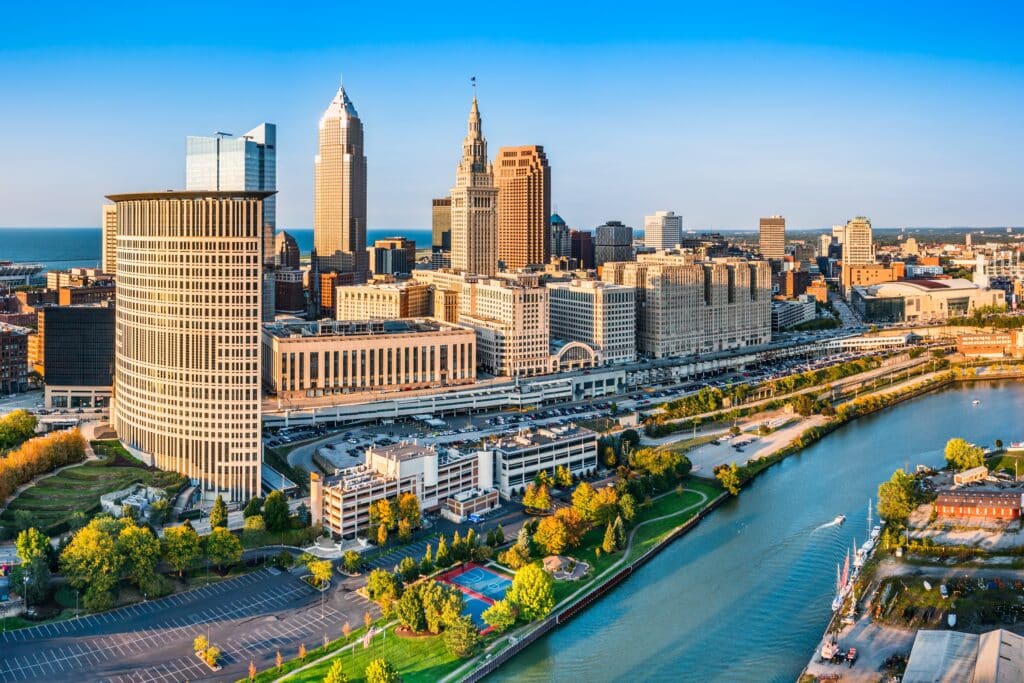
Cleveland lives at the meeting point of grit and grace — a city that once forged the nation’s steel and now forges its own renewed identity. The spirit of the place lies in its resilience: neighborhoods reclaimed, warehouses reborn, lakefront promenades reopened to wind and light. Cleveland is a city that has risen more than once and knows how to carry its history without letting it weigh it down.
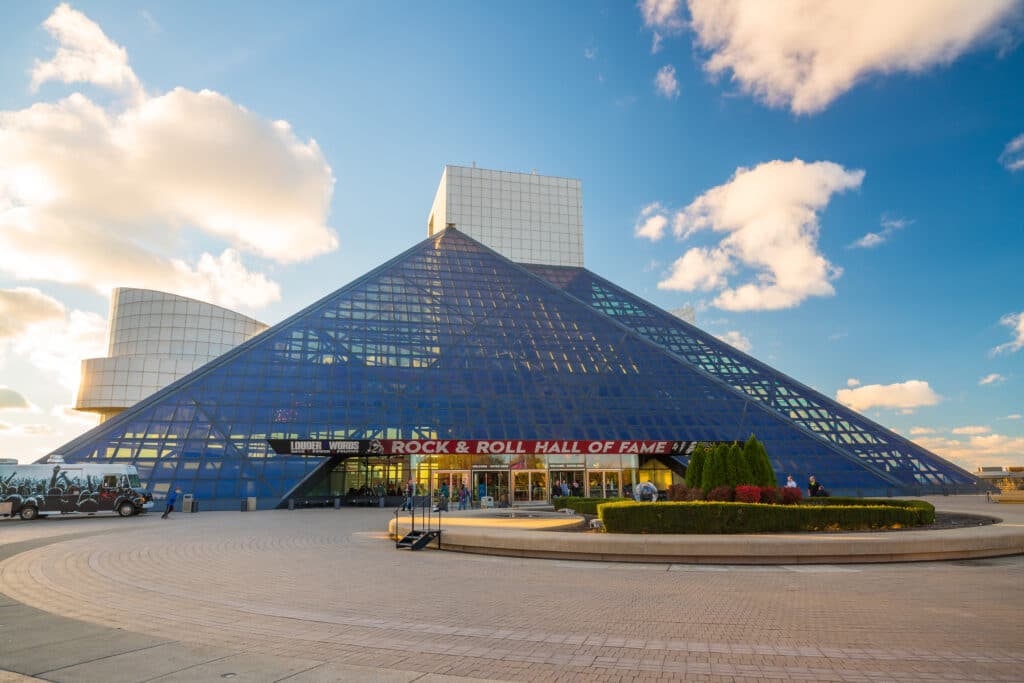
The Rock & Roll Hall of Fame, with its crystalline geometry, stands like a beacon on Lake Erie’s edge — a place where sound becomes architecture. Inside, guitars, costumes, handwritten lyrics, and flickering footage trace the story of American rebellion and rhythm. Outside, the lake stretches wide and metallic, choppy in winter, serene in summer.

Downtown, the Playhouse Square Historic District glows with restored marquees, one of the nation’s largest performing arts centers, humming with Broadway tours and symphonies. Meanwhile, Ohio City, with its brick streets and renovated Victorian homes, gathers people around the stalls of the West Side Market, where butchers, bakers, and farmers have been offering their craft since 1912. The market smells of smoked meats, ripe fruit, spices, and warm bread — a sensory atlas of the city’s immigrant past.

But Cleveland’s natural beauty often surprises visitors most. The Cleveland Metroparks, nicknamed the “Emerald Necklace,” encircle the city with more than 23,000 acres of forested gorges, meandering rivers, and quiet meadows. On a fall day, the trees burn amber and gold; in spring, the trails are soft with new leaves and rushing creeks.
Cleveland is a city with a heartbeat — steady, proud, and deeply human.
Columbus: The Balanced Heart of the State
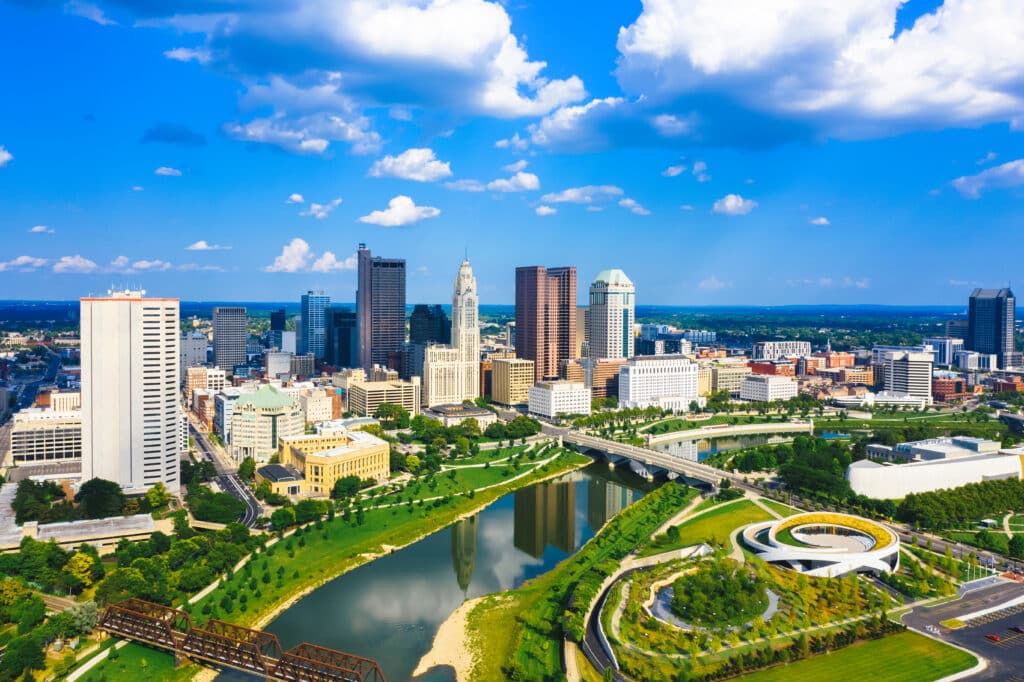
Columbus is Ohio’s thoughtful center — a city of symmetry, intellect, and forward momentum. It is the youngest-feeling of the state’s major cities, shaped by students, artists, engineers, and state leaders. The result is a metropolitan calmness and creativity that feels distinctly its own.
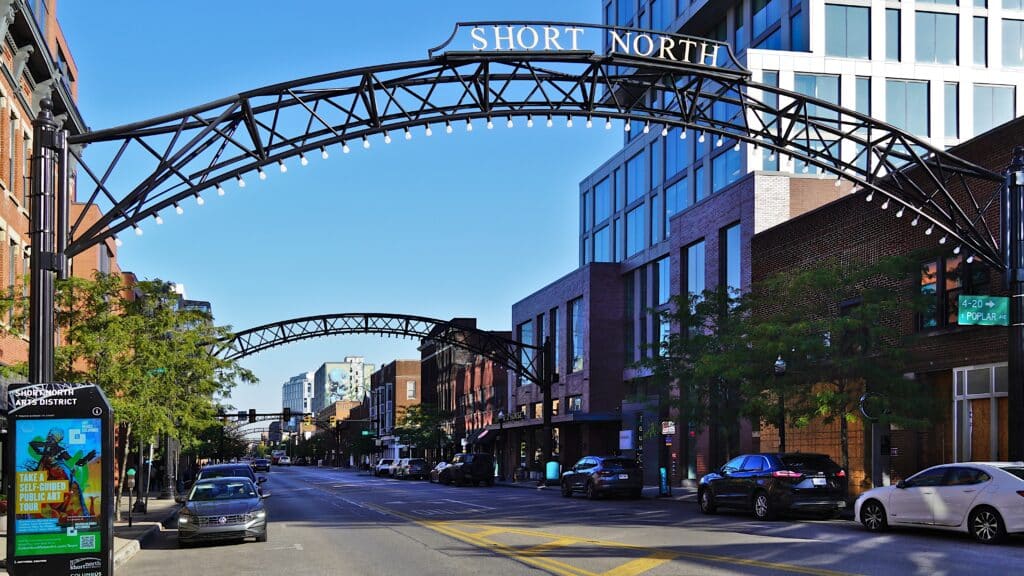
The Short North Arts District sets the tone: murals blooming across brick surfaces, galleries spilling their light onto High Street, cafés buzzing late into the evening. On the first Saturday of each month, the Gallery Hop fills the neighborhood with street music, crowds drifting from one exhibit to another under strings of warm lights.
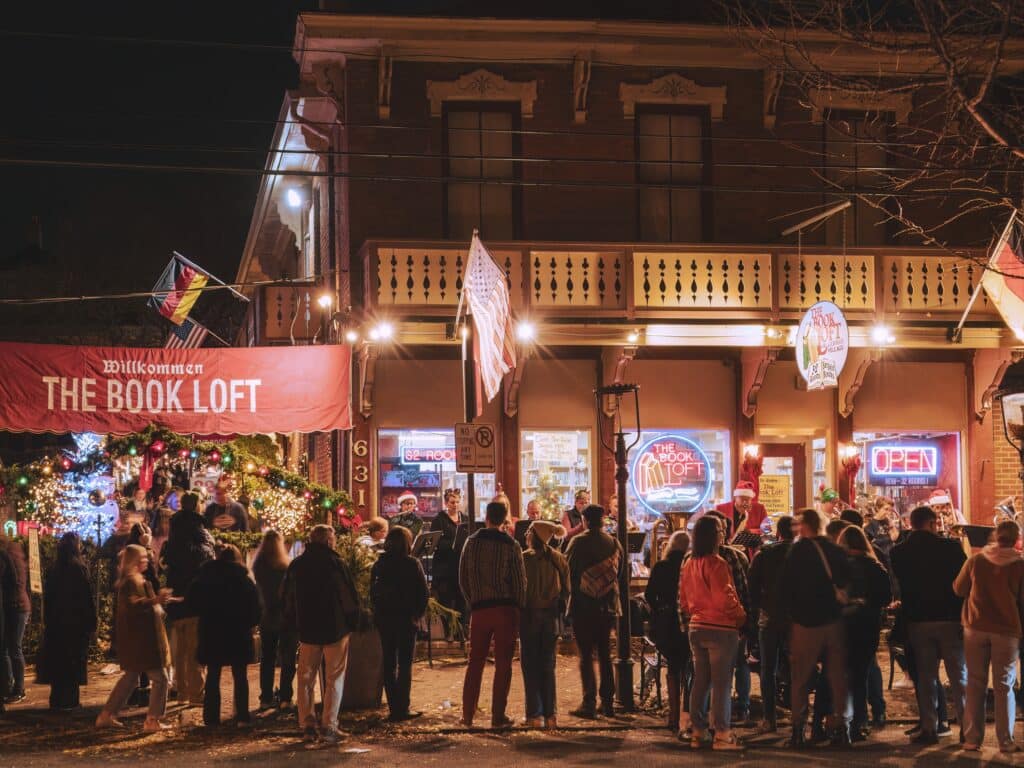
To the south, German Village feels like an entirely different century — handsome brick homes, wrought-iron fences, flower boxes, and narrow, tree-lined streets echoing with history. At its heart stands The Book Loft, a labyrinthine treasure of thirty-two rooms, each overflowing with books and the smell of paper and coffee.
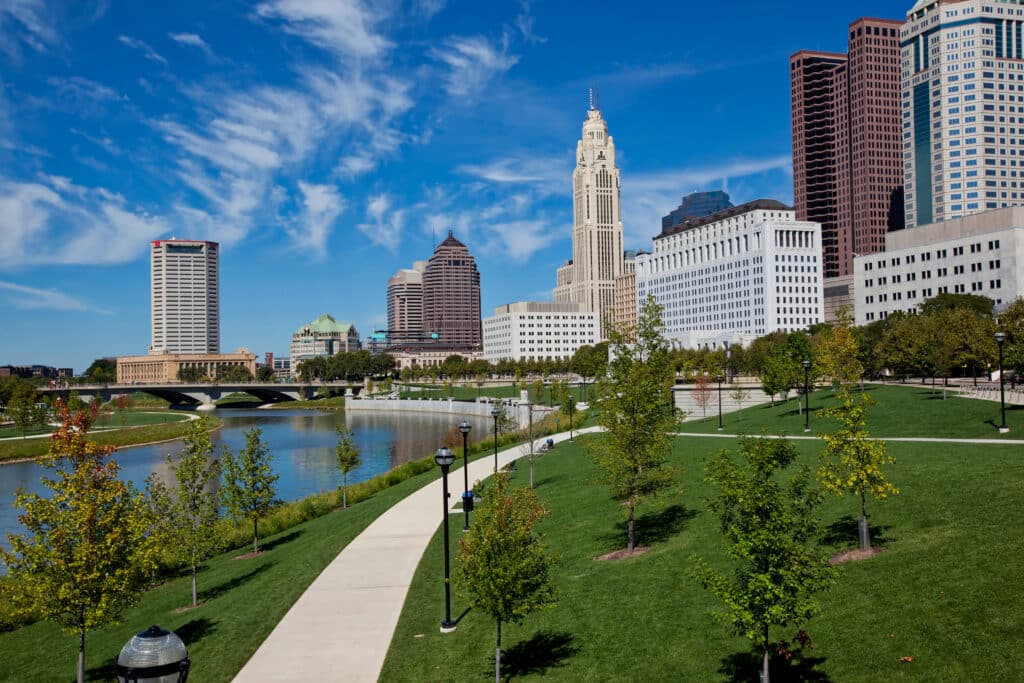
Green space anchors the city as well. Scioto Mile unfurls along the river, turning old industrial banks into a sweeping park embroidered with fountains and bike paths. Locals jog here at dawn, while sunset paints the skyscrapers in copper reflections. Just beyond, the grand campus of The Ohio State University defines much of Columbus’ energy — youthful, ambitious, always in motion.
There is a subtle artistry to Columbus: in its meticulous gardens, diverse food scene, thoughtful architecture, and neighborhoods that feel both lived-in and carefully tended.
This is the city where Ohio feels most balanced — simultaneously historic and modern, measured and imaginative.
Cincinnati: A River City With a European Soul

Cincinnati rises from the banks of the Ohio River like a Midwestern mirage — part American, part German, part Italian, part something altogether unique. Hills roll upward from the waterfront, dotted with 19th-century homes, church spires, stair-stepped streets, and old inclines carved into the steep ridges. The mood here is decidedly Old World, softened by the warmth of a river town.
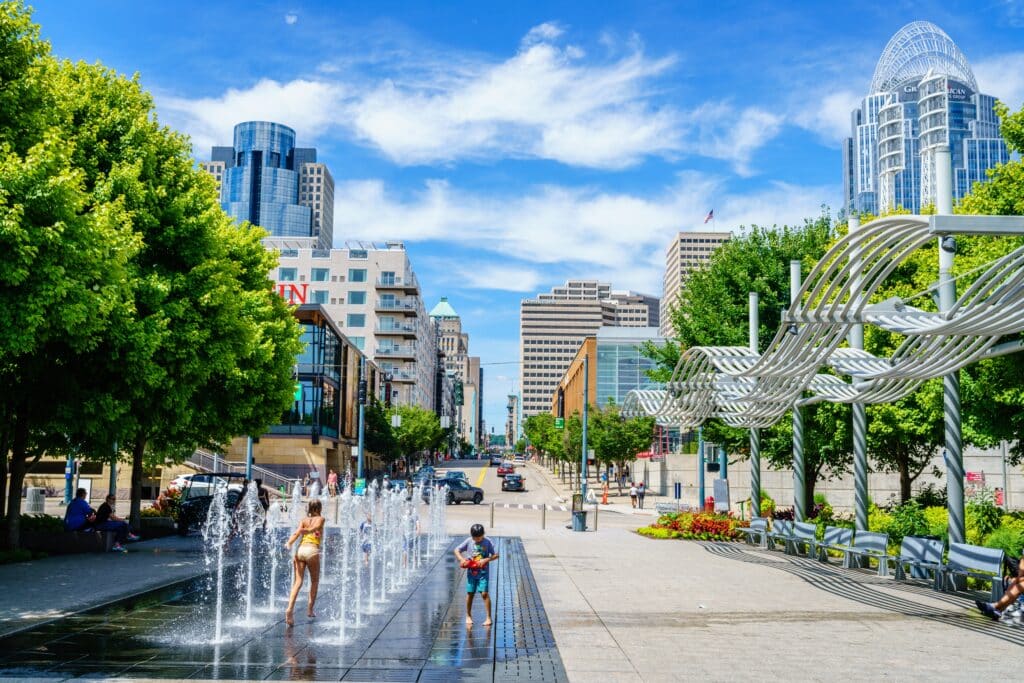
The Over-the-Rhine district is the city’s architectural jewel, one of the largest intact collections of 19th-century Italianate buildings in the country. Once crumbling, it hums today with breweries, theaters, bakeries, and cafés spilling onto sidewalks. Brick facades glow in the late afternoon light like warm terra cotta.
Down by the river, the Smale Riverfront Park stretches from stadium to stadium — a blend of roses, fountains, swings, and sculptural walkways. From here, the skyline reflects off the Ohio River, shimmering at dusk.
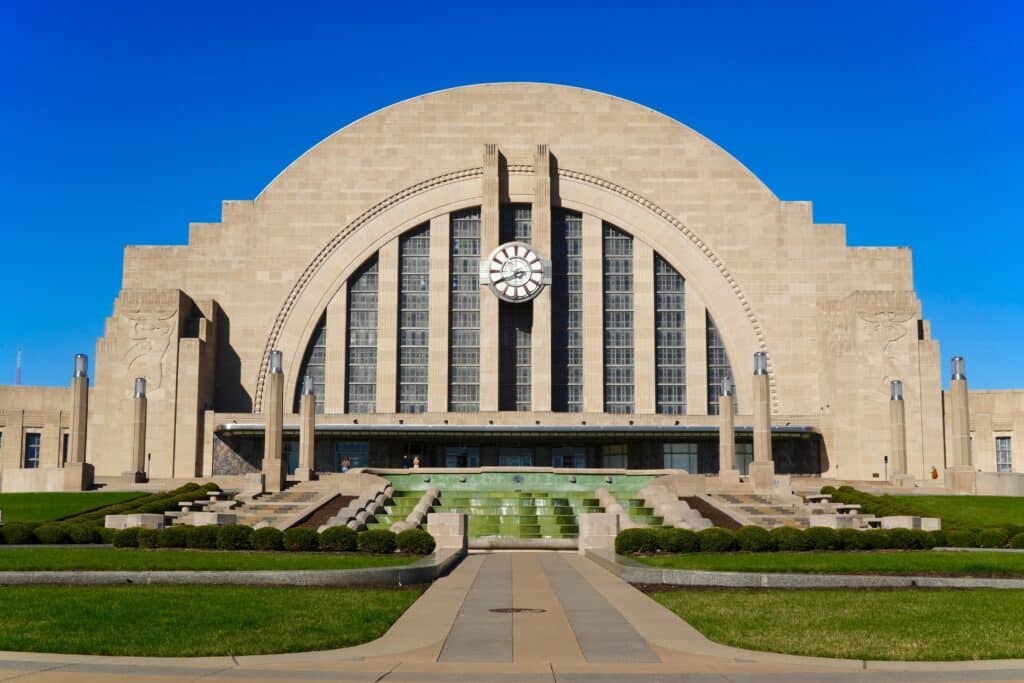
Cincinnati’s cultural life runs deep. The Cincinnati Art Museum sits atop Eden Park like a hilltop palace, holding everything from ancient artifacts to European masters. Nearby, the Krohn Conservatory envelopes visitors in glass and greenery — orchids, palms, butterflies, and rare blooms thriving in elegant greenhouse wings.
And then there’s the food: chili layered with spices and stories; bakeries descended from 19th-century immigrants; and a brewery scene that honors the traditions of the city’s forebears.
Cincinnati is a city of bridges — physical and emotional. It connects north and south, past and present, river and hillside, heritage and reinvention.
Toledo: A Waterfront City of Glass and Grit
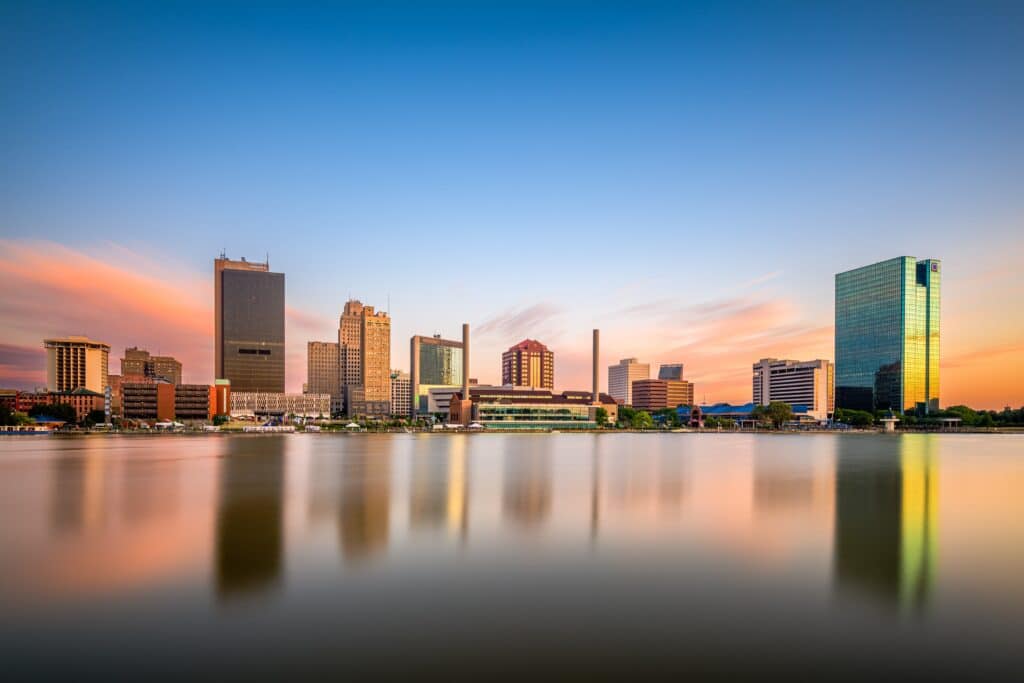
Toledo sits at the western edge of Lake Erie where the Maumee River widens into a broad, glinting mouth. For many travelers, Toledo is a surprise — a city that has lived many lives, from industrial hub to artistic enclave, from working-class river port to a passionate center for culture, craft, and community. It is a city shaped by blue-collar pride and softened by creativity.
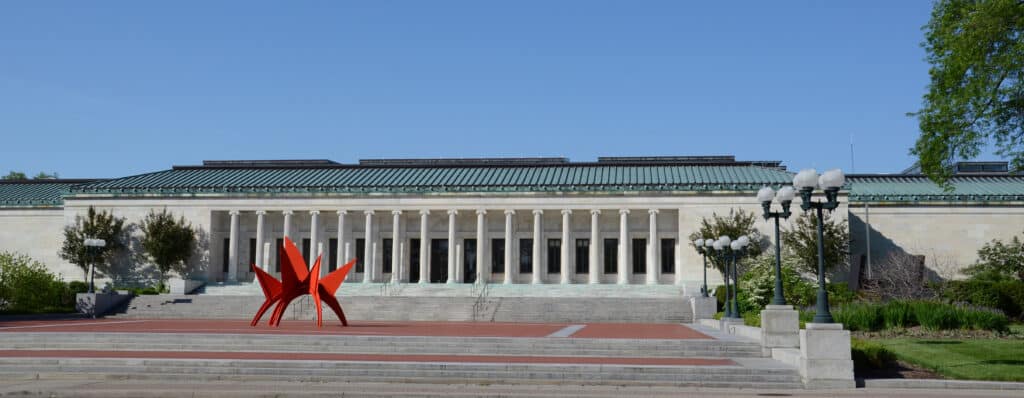
The Toledo Museum of Art is one of the Midwest’s true treasures — world-class yet deeply approachable, wrapped in the quiet dignity of neoclassical stone. Behind it stands the Glass Pavilion, a modernist marvel where transparency and light create a sanctuary for the region’s centuries-old glassmaking tradition. Inside, furnaces roar and artisans shape molten glass into shimmering vessels, vases, sculptures — a living reminder of the city’s nickname, The Glass City.
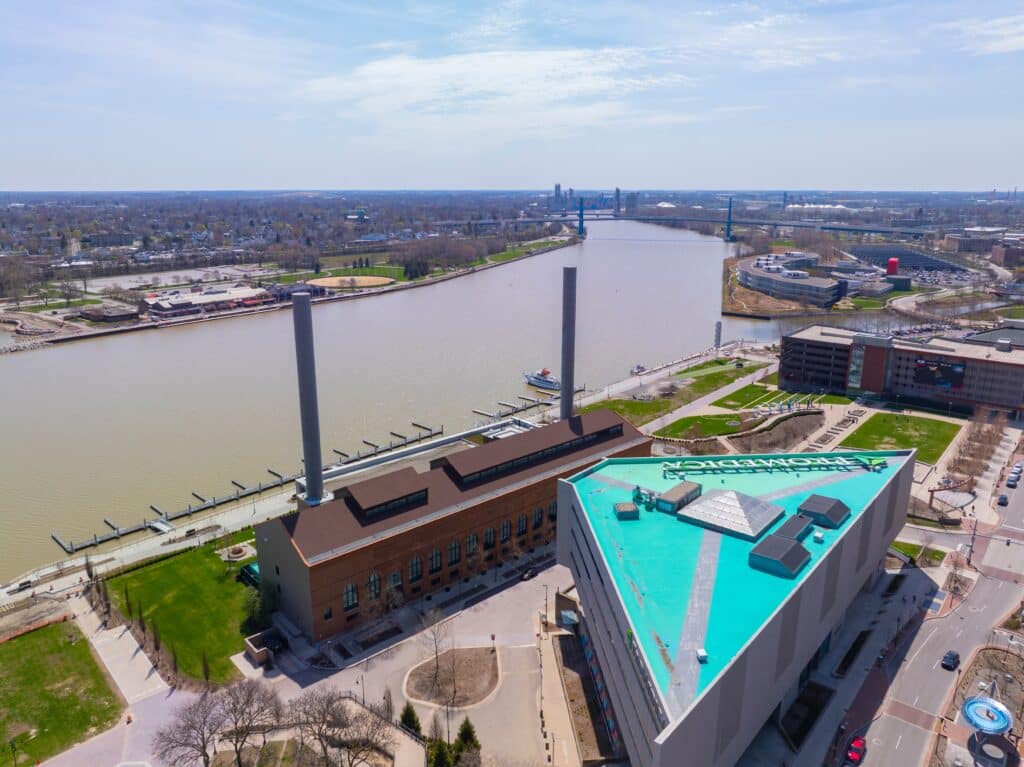
Along the river, Promenade Park opens wide like a front lawn facing the water, its fountains and path lights glowing at twilight. Concerts ripple across the waterfront in summer, drawing locals with picnic blankets and a sense of easy camaraderie. Across the river, boats sway in their slips, gulls circle above, and the sky turns soft lavender as evening settles.
Toledo’s neighborhoods each carry their own personality. The Old West End, one of America’s largest collections of Victorian, Edwardian, and Arts & Crafts homes, feels like a living museum of architectural ambition. Meanwhile, Downtown is being steadily reborn with coffeehouses, loft conversions, and murals that brighten the old brick walls with color and optimism.
Nature, too, has a quiet claim here. The Toledo Metroparks are among the finest in the nation — oak savannas, wetlands, lakes, and boardwalks where migrating birds gather in extraordinary numbers during spring. The landscape is humble but rich, a reminder that beauty often grows in the spaces between big narratives.
Toledo is a city you come to understand slowly — in its generous people, in its unexpected art, and in the calm expanse of its waterfront, where the past and the present meet in a shimmering horizon of glass.
Dayton: Where Invention Took Flight
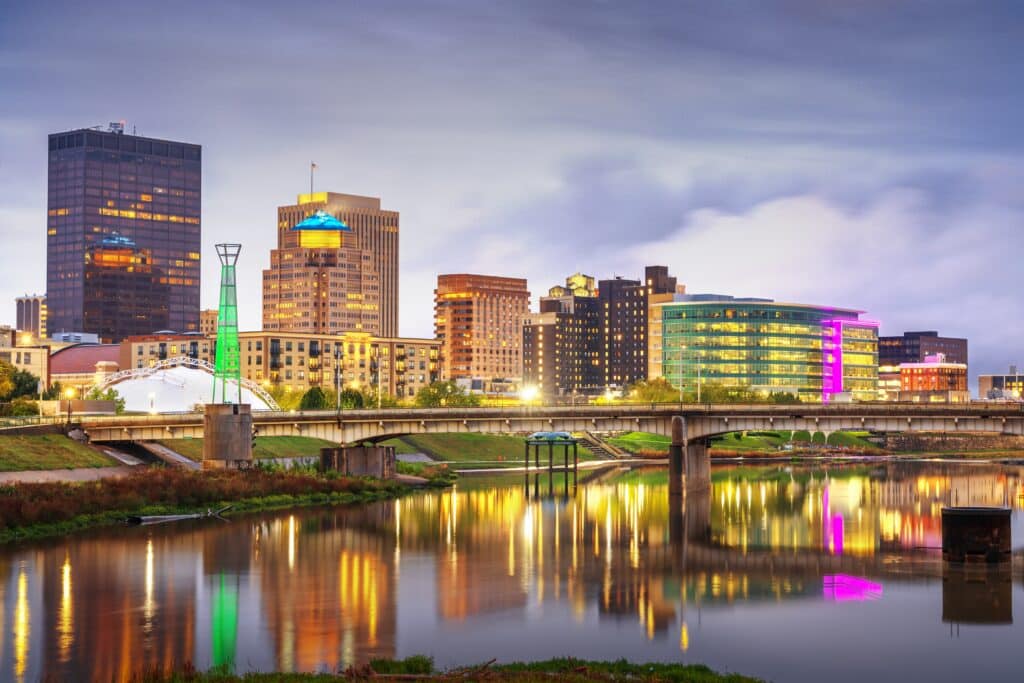
If Cleveland symbolizes rebirth and Cincinnati radiates heritage, then Dayton stands for ingenuity. This is the city where two bicycle-makers — Wilbur and Orville Wright — altered the course of human history. The spirit of invention still coils through Dayton’s streets, museums, and industries, giving the city a quiet but unmistakable confidence.
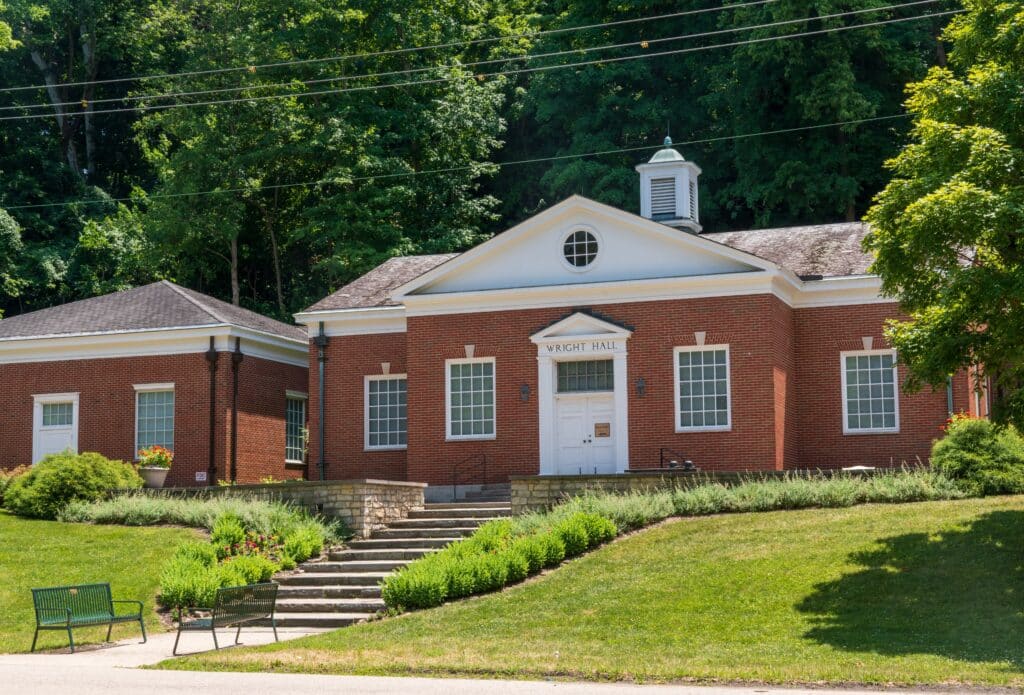
The National Museum of the United States Air Force, the world’s largest aviation museum, is Dayton’s cathedral of innovation. Massive hangars stretch into the distance, filled with aircraft that tell the story of flight: early wooden biplanes, presidential jets, Cold War bombers, Apollo-era spacecraft. Walking through it feels like stepping into a physical chronicle of human ambition — the awe of standing beneath wings that once crossed oceans and war zones.

Downtown Dayton has embraced creativity as part of its identity. The Oregon District, with its colorful storefronts, 19th-century architecture, bohemian cafés, and independent shops, gives the city a cosmopolitan spark. In the evenings, the area glows with the lights of theaters, breweries, and cocktail bars — a lively pocket of warmth even in the coldest months.

Just beyond the city, nature asserts itself with surprising beauty. The Five Rivers MetroParks system preserves vast green spaces where rivers meet, widen, and break into rapids. Trails weave through forests, prairies, and riverfront bluffs. Kayakers paddle where herons stalk the shoreline; cyclists follow long routes that shadow the Great Miami River.
Dayton’s charm lies in its authenticity — humble yet visionary, practical yet imaginative. It is a city proud of its sons and daughters, from the Wright brothers to the poets, engineers, musicians, and educators who keep shaping its soul. In Dayton, invention is not a museum relic but a living inheritance.
Akron: Rubber, Renewal, and Rolling Hills
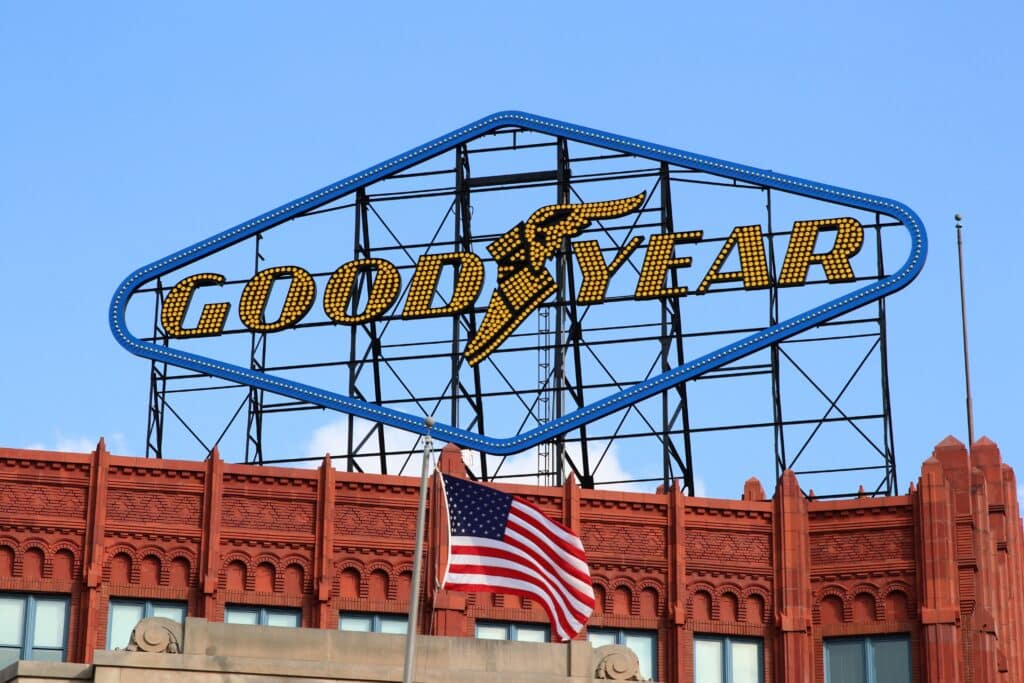
Akron, once known as the Rubber Capital of the World, still carries the imprint of its industrial golden age — brick factories, smokestacks, and grand company-era homes lining tree-shaded avenues. But time has reshaped Akron into something more nuanced: a city of universities, green spaces, global research centers, and creative reinvention.
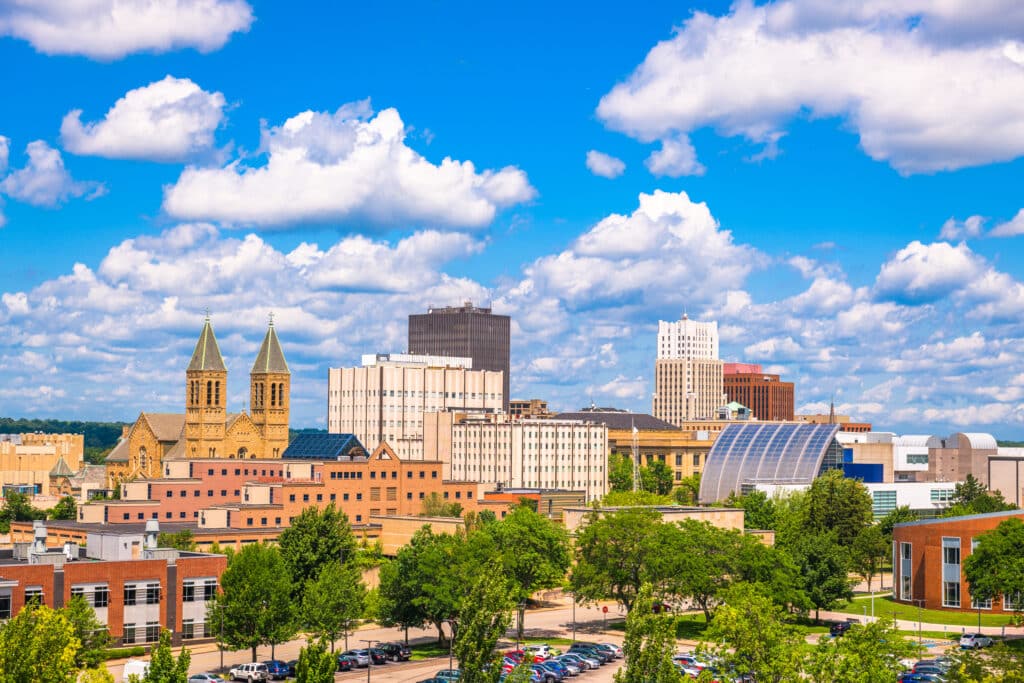
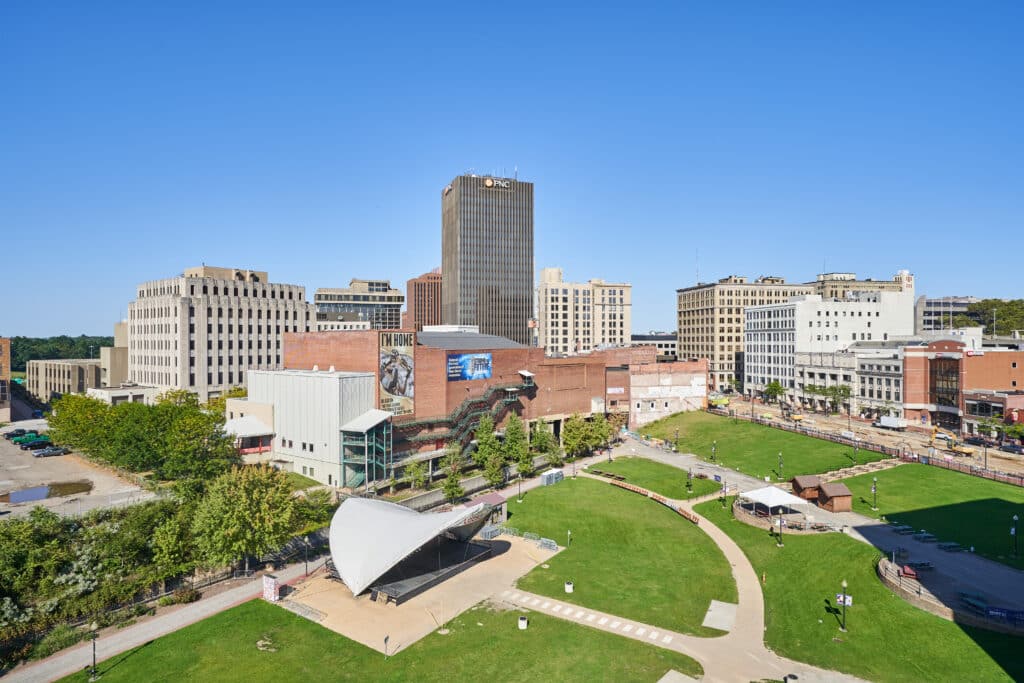
Downtown’s revival begins around the Akron Civic Theatre, a 1920s atmospheric treasure where the ceiling mimics a twilit sky dotted with stars. Just steps away, the Lock 3 Park district fills with concerts, winter ice skating, and community festivals that gather residents across generations. There is an intimacy to Akron’s urban core — compact, walkable, pleasantly self-contained.
To the north, Stan Hywet Hall & Gardens stands as one of the finest estates in America. Built by the founder of Goodyear, the Tudor Revival mansion’s oak beams, carved stone, sprawling gardens, and glass conservatory unfold like a chapter from England’s architectural past. Walking its grounds in spring, when tulips flare in neat rows and the air smells faintly of flowering trees, is like stepping into another world.

But Akron’s greatest treasure may be Cuyahoga Valley National Park, which unfolds just minutes from downtown. Waterfalls tumble through forested ravines; towpaths follow the old Ohio & Erie Canal; farm fields stretch toward rolling hills. The Ledges Overlook, with its moss-coated cliffs, offers one of the most dramatic sunsets in the Midwest — sandstone glowing orange as the forest falls into shadow.
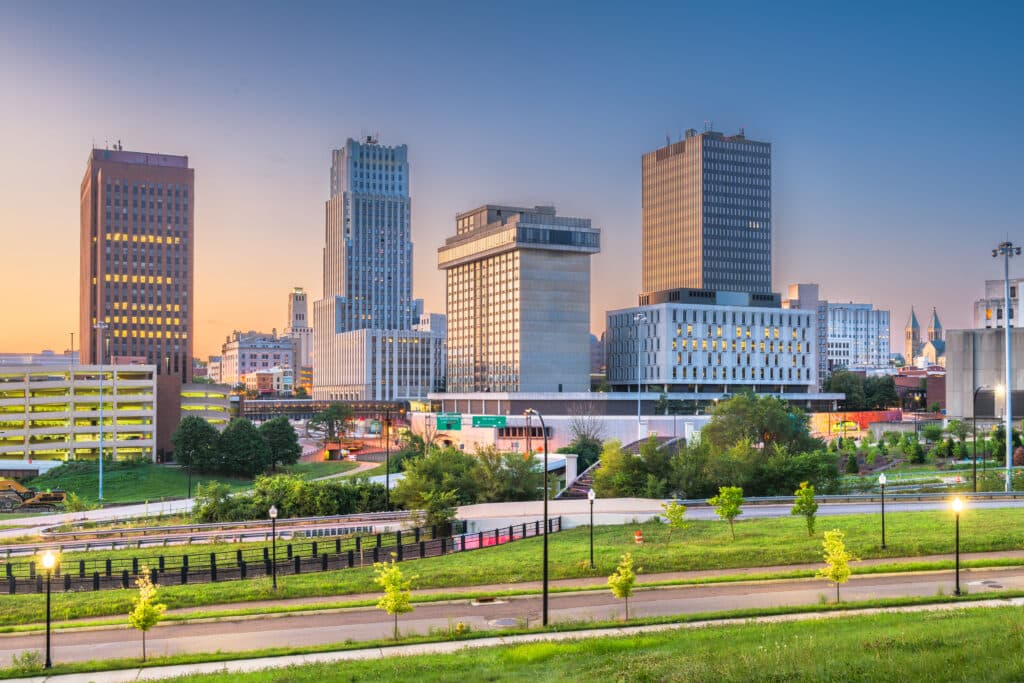
Akron is a study in contrasts: industrial yet green, nostalgic yet forward-looking, compact yet connected to vast natural landscapes. Its story is not one of decline but of evolution — a city that continues to find new purpose while honoring the legacy of those who built it.
Hocking Hills: Ohio’s Wild Heart of Stone and Forest
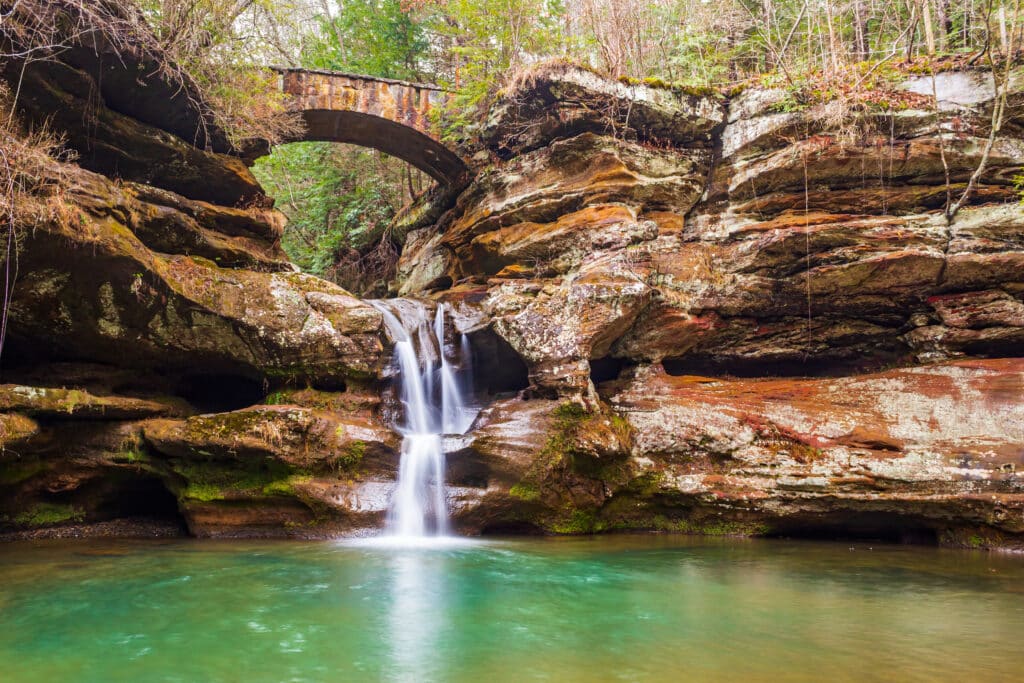
Hocking Hills is where Ohio sheds its Midwestern composure and reveals something older, deeper, almost primeval. Here, the landscape seems carved by myth rather than water: sandstone cliffs wrapped in moss, shadowy gorges where ferns drip from stone ledges, and narrow passages where footsteps echo as if the forest were listening.

The crown jewel is Old Man’s Cave, a sweeping gorge of arches, hollowed caverns, and waterfalls that ribbon down in thin curtains. Morning light enters delicately, slipping through hemlock branches and illuminating the rock in soft gold. Nearby, Ash Cave opens like a natural amphitheater — a massive, horseshoe-shaped recess sheltering a seasonal waterfall that falls in a single translucent thread. The sound is hypnotic, a whisper amplified by stone.
Cedar Falls, with its broad cascades and surrounding forest giants, feels like something out of the Pacific Northwest. Trails weave between boulders, over footbridges, and through quiet forests where deer move silently across the understory. In autumn, the hills blaze in shades of copper and crimson; in winter, waterfalls freeze into shimmering columns of blue ice.
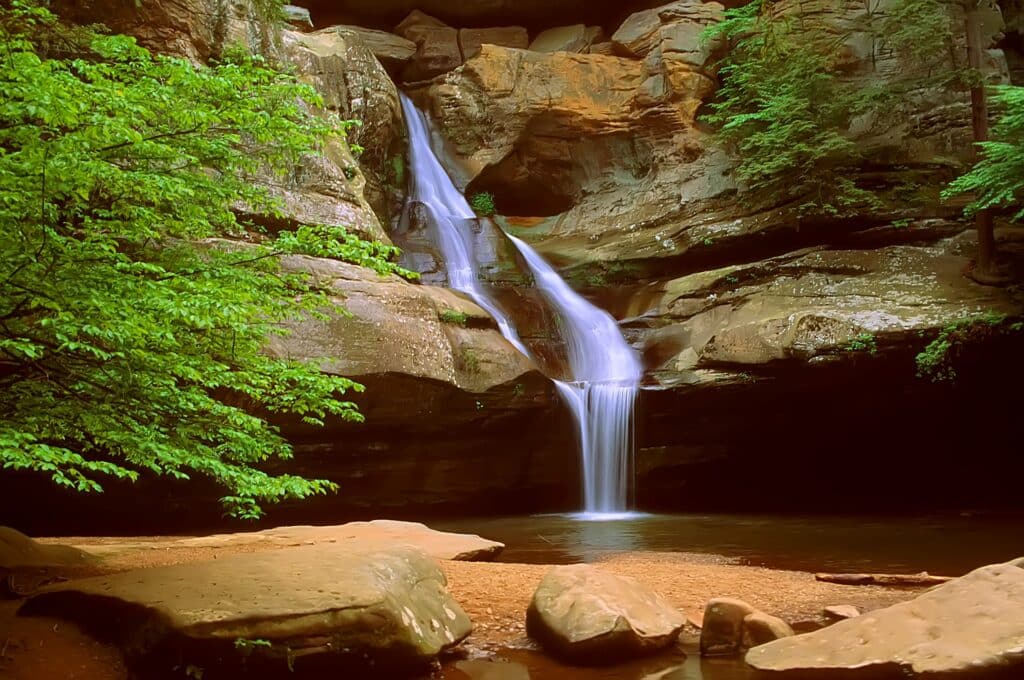
What makes Hocking Hills so extraordinary is not only its beauty but its variety. The region is a patchwork of caves, ravines, forests, and high overlooks, each revealing a different mood of the landscape. Small towns like Logan offer rustic cabins, local crafts, and slow evenings around fire pits under star-filled skies.
Visitors come for hiking, but they leave with the sense of having traveled into a deeper version of Ohio — one sculpted by time and softened by the breath of the forest. Hocking Hills is not simply a place to see; it is a place to disappear into, where the modern world feels distant and nature asserts itself with quiet, undeniable power.
Amish Country: A Landscape of Quiet Rhythms
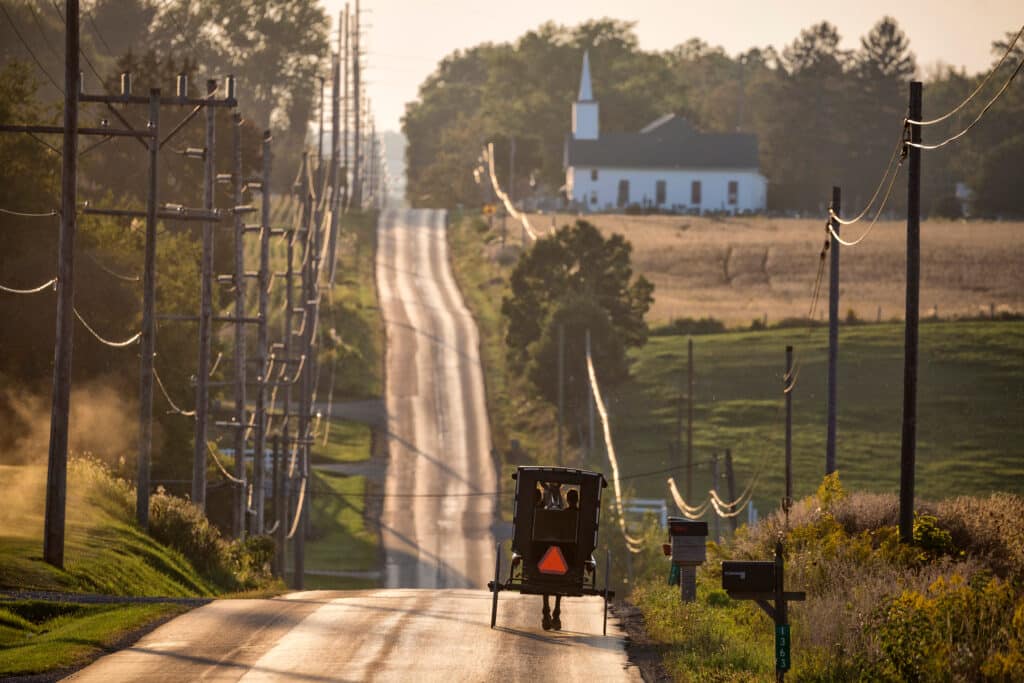
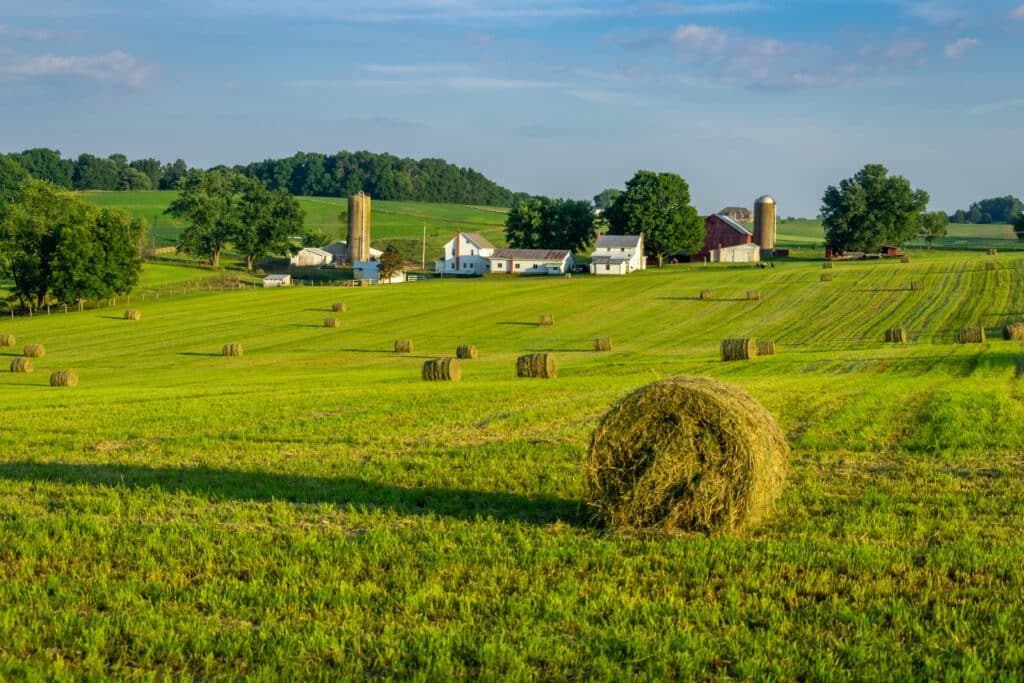
In the rolling hills of Holmes County — the heart of Ohio Amish Country — life moves according to rhythms almost forgotten elsewhere. The air smells of cut hay and warm earth; fields stretch in long green folds; and horse-drawn buggies trace slow, steady lines along country roads. Time here feels deliberate, grounded, deeply rooted.

Towns like Berlin, Sugarcreek, and Millersburg blend simplicity with warmth. Whitewashed farmhouses sit atop hills that ripple toward the horizon. Laundry dries in perfect lines; barn doors creak open to reveal cows chewing contentedly; and roadside stands offer fresh pies, cheeses, seasonal produce, and quilts stitched by hand.
The landscape itself seems painted for serenity: sunlit pastures, weathered fences, and the soft clop of hooves carrying through the air. In autumn, the hills ignite with color; in winter, snow drapes the farms in quiet elegance.
Visitors often begin with the Amish & Mennonite Heritage Center, where a 265-foot cyclorama chronicles the history of these communities — their migrations, hardships, faith, and enduring commitment to simplicity. But the real essence of Amish Country is found not in exhibits but in the everyday: the sound of a sawmill, the smell of fresh bread, the steady pace of a buggy cresting a hill.
Markets and shops offer handcrafted furniture, woven baskets, leather goods, and bakery items that define the region’s craftsmanship. At mealtimes, family-style restaurants serve dishes rooted in farm tradition — roast chicken, noodles, mashed potatoes, and pies still warm from the oven.
Amish Country invites visitors not to observe but to slow down. To breathe. To rediscover gentleness. It is a place where the land sets the tempo and sincerity guides each action — a refuge of stillness in a speeding world.
Cuyahoga Valley National Park: Waterfalls, Woodlands, and Quiet Paths
Between Cleveland and Akron lies Cuyahoga Valley National Park, a green sanctuary that threads through the Rust Belt like a ribbon of reprieve. This is not a wilderness untouched by history — rather, it is a wild landscape reclaimed, restored, and celebrated. The result is one of the most accessible and soulful national parks in America.

The Cuyahoga River, once infamous for pollution and the fire that helped ignite the environmental movement, now curls cleanly through forests and marshes, reflecting sycamore limbs and drifting clouds. Trails follow its banks, revealing herons gliding low over the water and turtles basking on fallen logs.
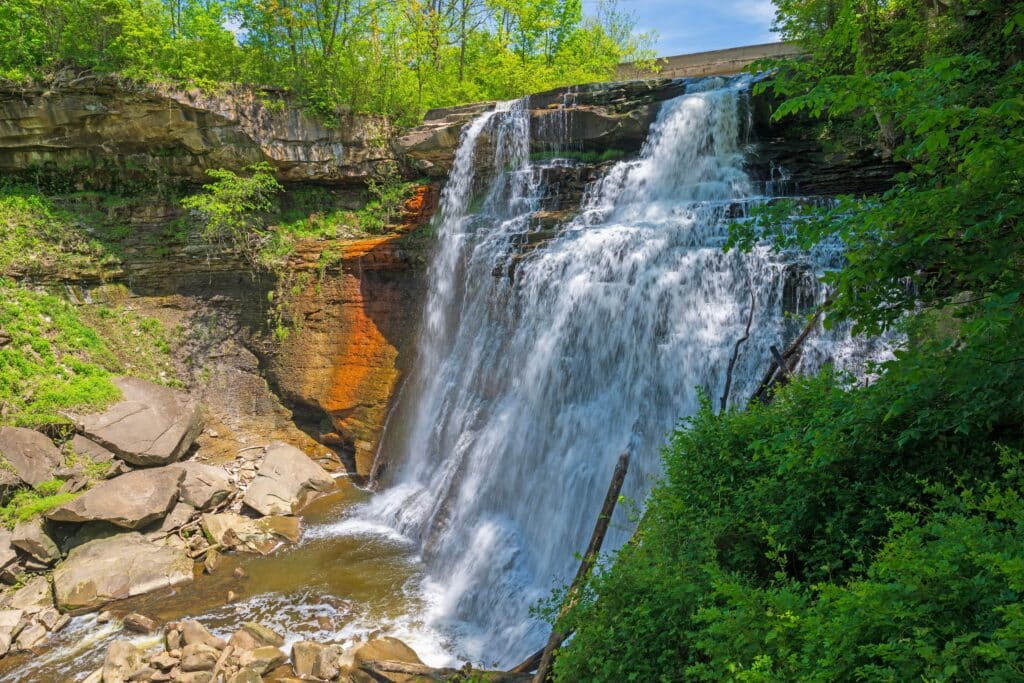
The park’s most beloved landmark is Brandywine Falls, a 65-foot cascade spilling over shale ledges in a fan of white water. The boardwalk wraps around the falls, offering close views of the plunging spray and the layered rock beneath — a geological history written in stone.
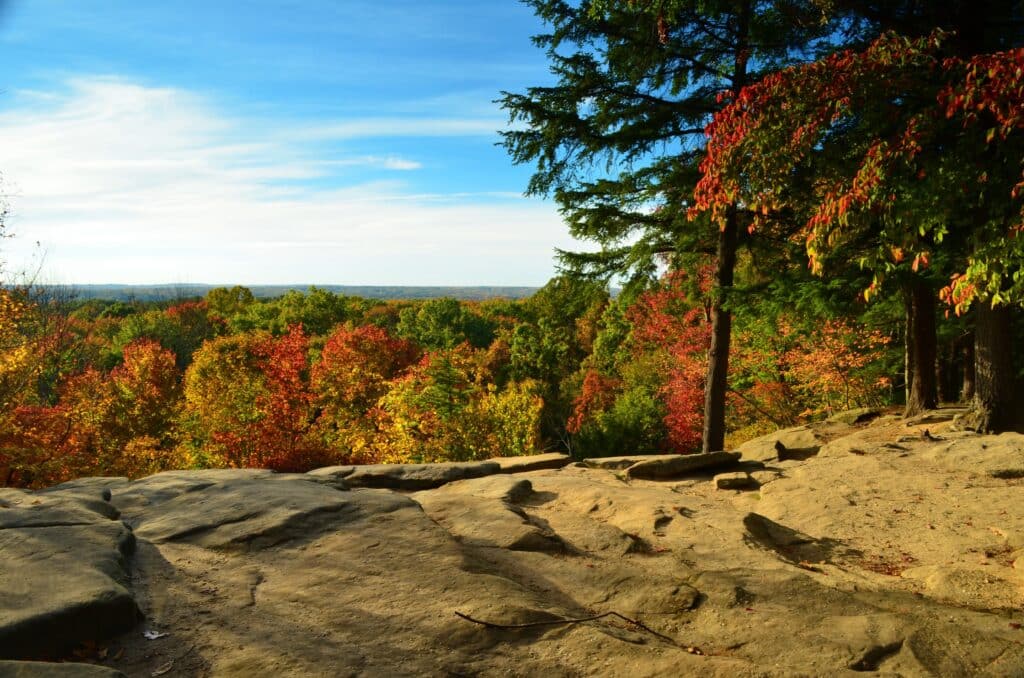
The Ledges area offers a different kind of drama: towering sandstone cliffs veined with moss, creating narrow corridors of shadow and filtered light. Standing at Ledges Overlook at sunset, as the forest stretches in waves of green and gold, is among the most unforgettable experiences in the Midwest.
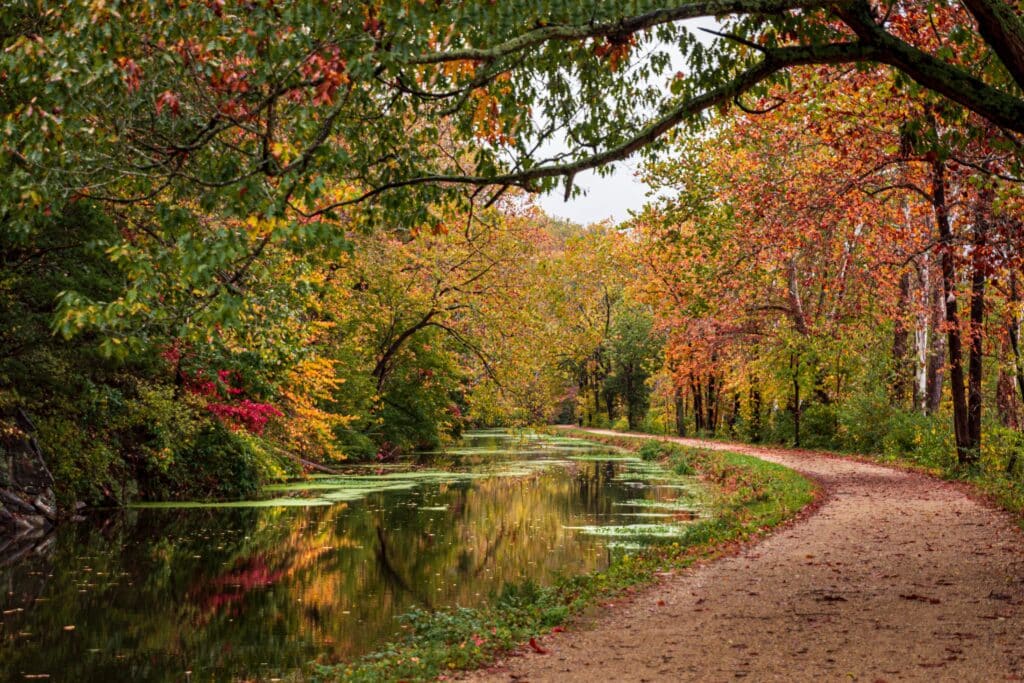
Cyclists glide along the historic Ohio & Erie Canal Towpath Trail, passing old lock ruins, beaver ponds, and quiet meadows. The Cuyahoga Valley Scenic Railroad winds through the park, offering a nostalgic view of its landscapes from vintage railcars.
Cuyahoga Valley is a park where nature and human history intertwine — a landscape shaped, damaged, and ultimately healed. Its beauty lies not only in waterfalls and forests but in resilience. It demonstrates how a place can reinvent itself, how renewal is possible, and how the bond between people and land can be restored with patience and care.
The Shores of Lake Erie: Ohio’s Inland Sea
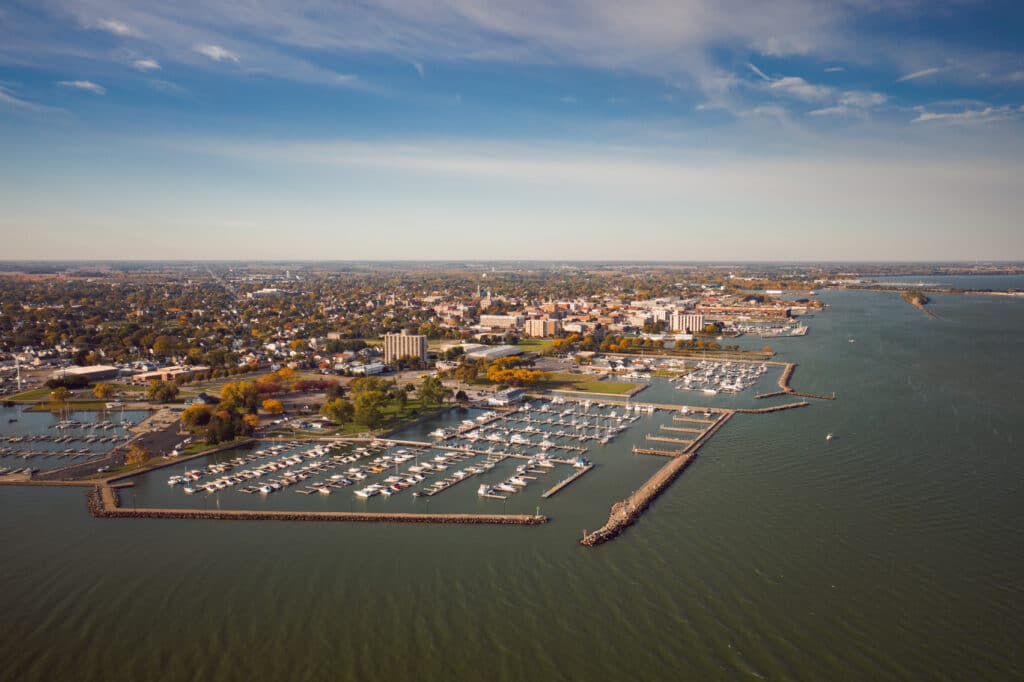
Lake Erie does not behave like a lake. It breathes, broods, and transforms with the same mercurial drama as an ocean — rolling in with steel-gray waves, retreating into glassy calm, shifting from bright cobalt to storm-dark ink. Along Ohio’s northern edge, this inland sea shapes entire towns and seasons, dictating the rhythm of life as surely as tides.
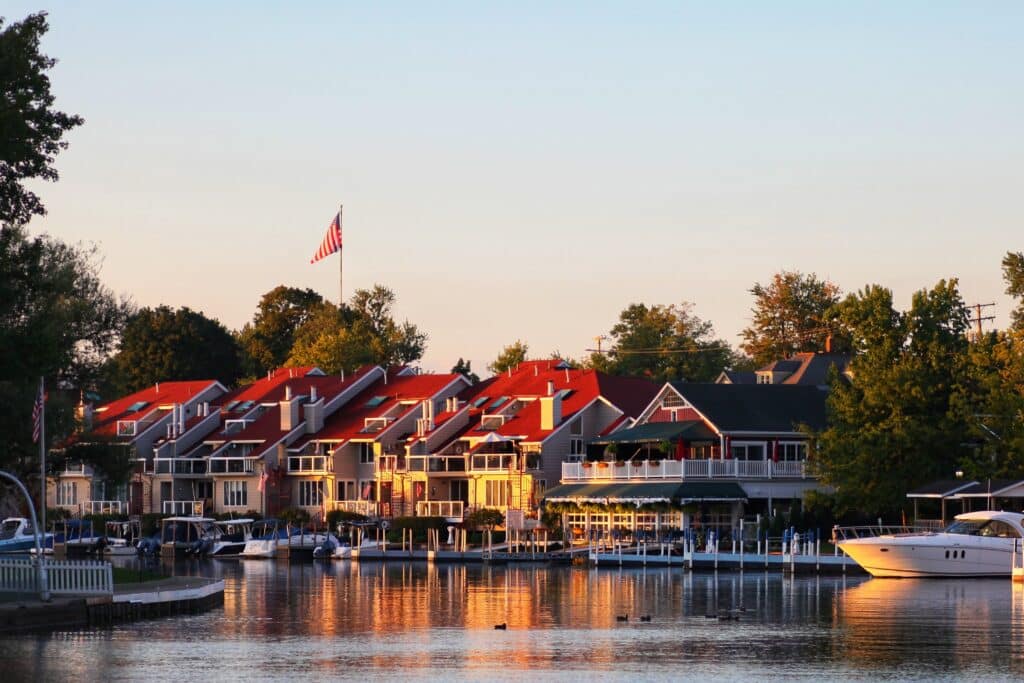
In Sandusky, the waterfront mixes nostalgia with adventure. Victorian architecture frames the shoreline, ferries hum toward the islands, and the air carries a faint scent of sun-warmed docks and distant spray. Summers here buzz with families, drawn by amusement parks, beaches, and the timeless pleasure of lingering on a patio as boats drift through the sunset.

Further east, Lorain, Vermilion, and Huron hold quieter charms — lighthouses silhouetted against evening skies, marinas filled with masts clicking softly in the wind, and waterfront parks where locals gather for picnics or quiet contemplation. Edgewater Park in Cleveland offers one of the city’s most iconic scenes: a beach with skyline views, where joggers, sunbathers, and fishermen share the long curve of sand.
The lake’s storms are legendary, dramatic enough to reshape shorelines. Winter brings ice formations sculpted by wind and spray — frozen lighthouses encased in pale blue layers like fantastical sculptures. In spring, migrating birds sweep through the marshlands, turning the western basin into a paradise for ornithologists.
Lake Erie animates everything it touches. It softens the climate of the Lake Erie Wine Country, nurtures wetlands that brim with life, and offers a sense of scale rarely found in the Midwest. To stand on its shore is to feel the world widen — a horizon that stretches farther than a simple lake should allow.
The Lake Erie Islands: A World Apart
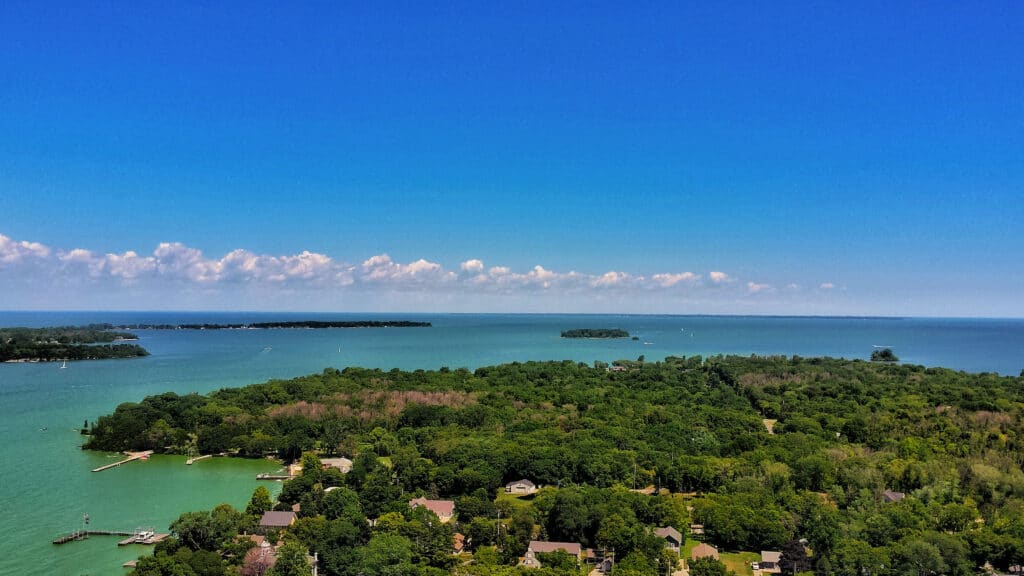
Scattered across the lake’s western basin are islands that feel like entire worlds of their own — each shaped by water, wind, and a distinct personality that lingers long after the ferry ride back to the mainland.

Put-in-Bay, lively and spirited, hums with summer energy. Golf carts buzz along tree-lined streets, wineries offer tastings beneath leafy pergolas, and the harbor fills with sailboats that sway gently against their moorings. The towering Perry’s Victory and International Peace Memorial stands guard above it all — a marble sentinel honoring peace between nations and affording panoramic views of the lake’s endless blue.
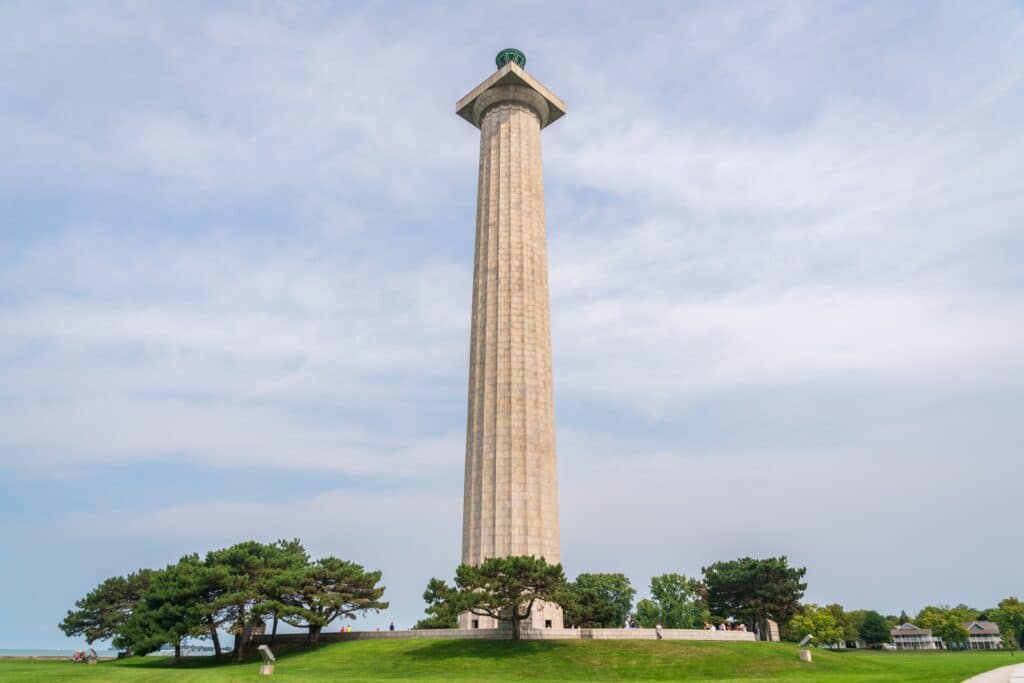
Kelleys Island is Put-in-Bay’s contemplative sibling — quieter, more spacious, wrapped in nature. Its rocky northern shore holds the Glacial Grooves, immense limestone channels etched by ancient ice, a reminder that these islands are survivors of deep time. Forested trails lead to beaches of pale stone and water so clear it resembles Caribbean shallows in summer light.
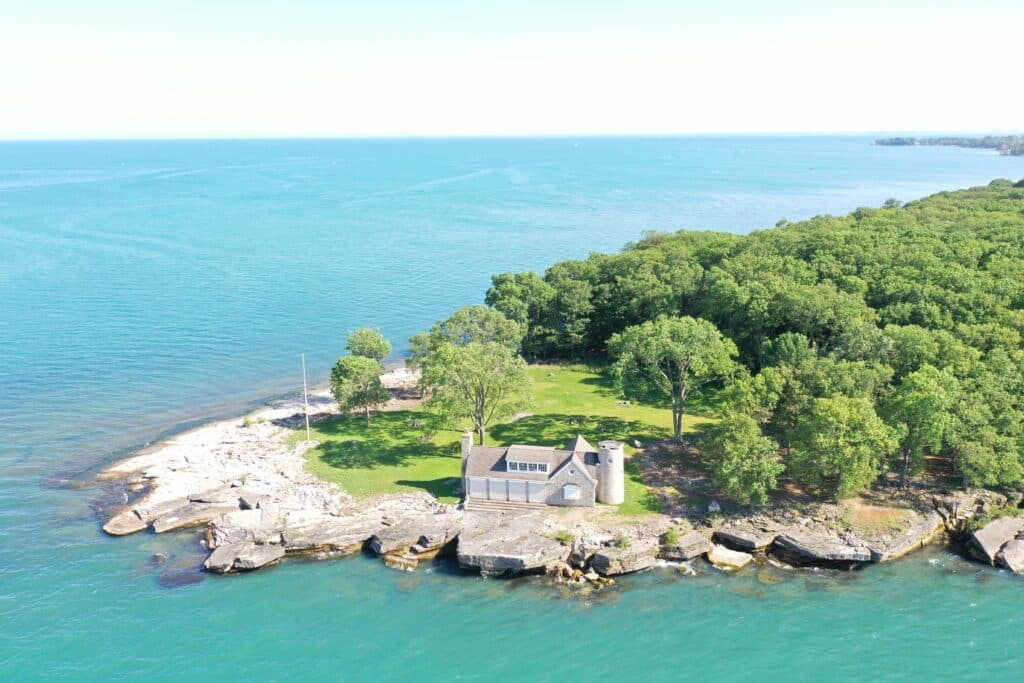
Smaller islands — Middle Bass, South Bass, and clusters of uninhabited sanctuaries — create a mosaic of landscapes: wetlands alive with herons, vineyards ripening under lake-softened sunlight, and sandy spits where waves meet in rhythmic conversation.

The rhythm of life on the islands is slower, salt-washed even without the salt. People come to escape the mainland’s tempo, to bike quiet roads, sip lake-cooled wine, and walk into sunsets that turn the sky molten.
The Lake Erie Islands remind travelers that Ohio contains multitudes — that just offshore lies a kingdom shaped by ancient ice, sunny afternoons, and the timeless companionship of waves.
Canton: Birthplace of the NFL and Keeper of American Stories
Canton is a place where history takes center stage — not in dusty displays, but in the way the city proudly carries its past into the present. Known worldwide as the birthplace of the National Football League, Canton blends sports heritage with cultural richness, architectural beauty, and the serenity of Ohio’s farmland surrounding it.
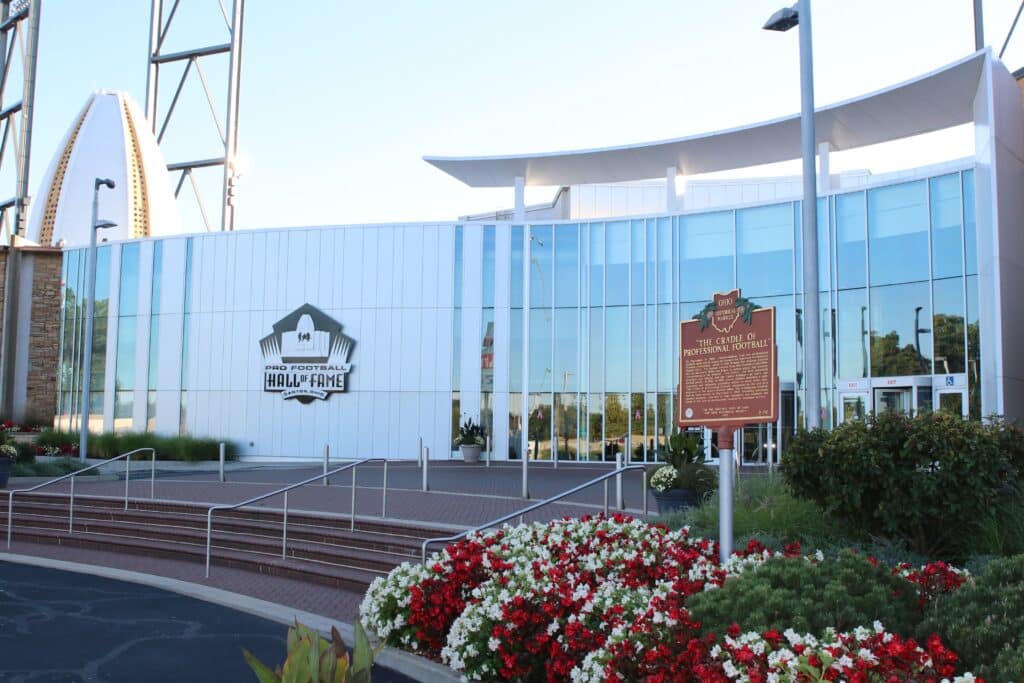
The Pro Football Hall of Fame is the city’s shimmering landmark — a modern pantheon where bronze busts honor athletes who shaped the sport. Visitors wander through immersive exhibits that celebrate grit, strategy, heartbreak, triumph, and the uniquely American drama of football. Outside, the Hall of Fame Village continues to grow — part theme park, part entertainment district, fully devoted to the mythology of the game.

Yet Canton is more than its sporting fame. The city gives unusual weight to American history through the McKinley Presidential Library & Museum and the towering McKinley Monument, whose broad steps rise to a domed mausoleum perched on a hill above the city. Inside, exhibits weave the story of a nation emerging into the modern world.

Downtown Canton has embraced its artistic spirit. Murals splash across brick walls, studios open their doors during First Fridays, and the Canton Museum of Art showcases works that balance regional pride with international perspective. Cafés, theaters, and historic buildings create a pedestrian-friendly enclave filled with character.
The countryside around Canton unfolds into wide fields, farm markets, and Amish communities where horse-drawn buggies move along quiet roads. It adds a pastoral calm that balances the city’s vibrant heart.
Canton is a place of legacies: of athletes, presidents, artisans, and everyday Ohioans whose stories reflect the broader arc of America. To visit is to walk through chapters of history still being written.
Maumee Bay State Park: Where Wetlands, Woodlands, and Lake Erie Meet
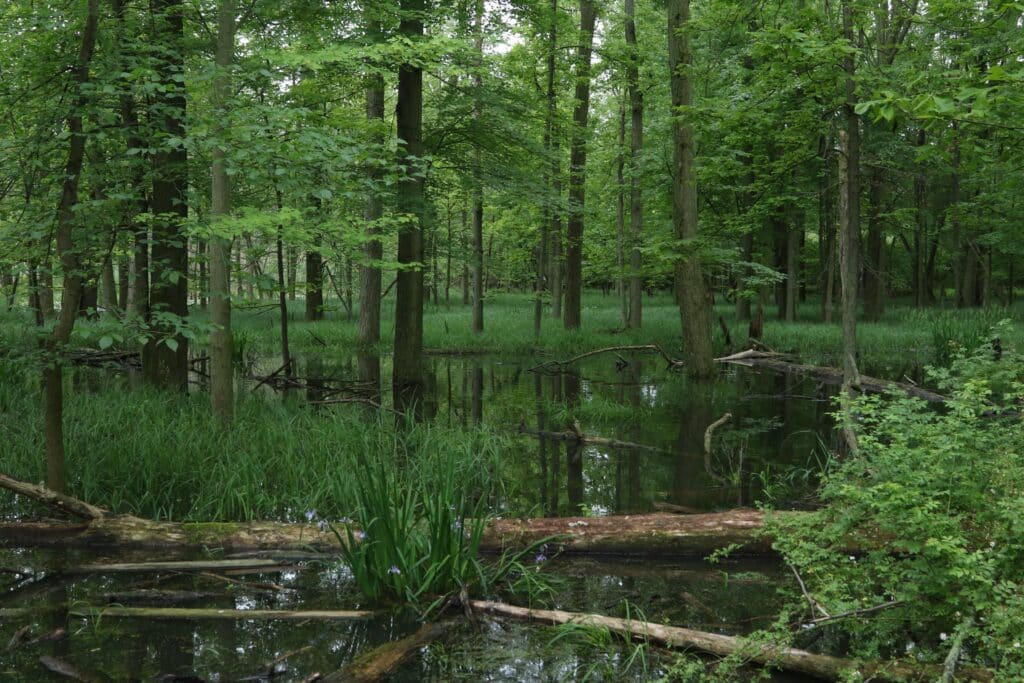
On the edge of Lake Erie’s western basin, just east of Toledo, Maumee Bay State Park stretches across a landscape where water shapes everything — the light, the wind, the wildlife, and the sense of quiet expansiveness. This park is one of Ohio’s most ecologically diverse corners, a place where marshes glimmer beneath reeds, where boardwalks trace the edge of still ponds, and where the lake unfurls into a vast, beckoning horizon.
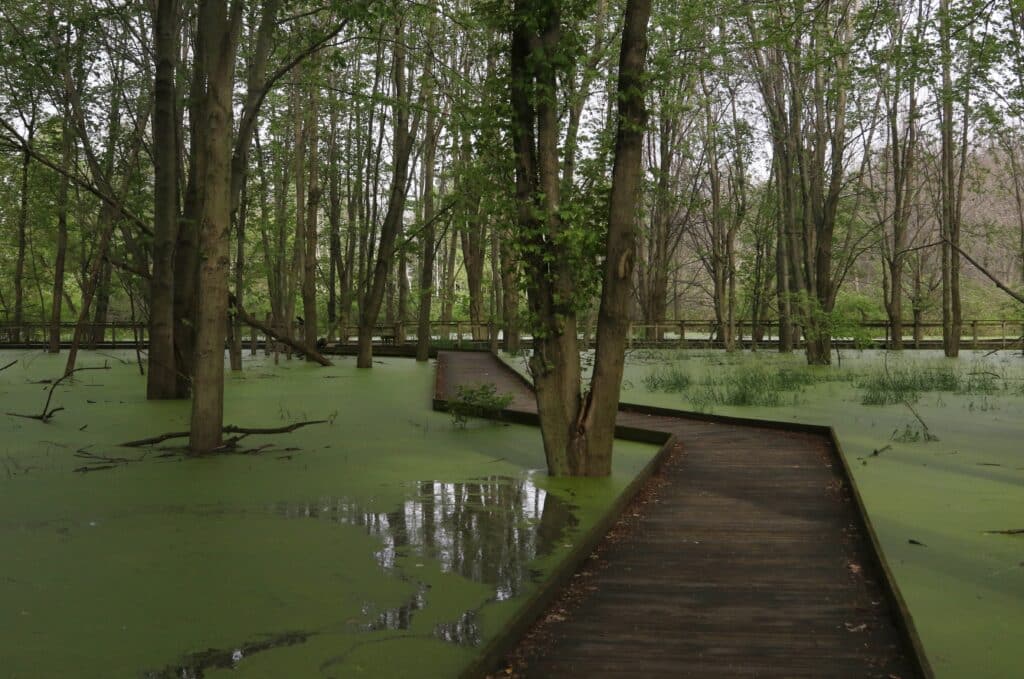
Maumee Bay is a sanctuary for nature lovers. Its wetlands, nourished by the ebb and flow of the lake, attract migratory birds in astonishing numbers. In spring, warblers flash through the trees like living jewels. Herons stalk quietly along the water’s edge. Eagles circle in the distance, their shadows drifting silently across the marsh. Birdwatchers from around the world come here to witness this spectacle, and the park’s elevated platforms and looping trails make it easy to wander without disturbing the fragile habitats.
The boardwalk trail is the park’s soul — a wooden path suspended above marsh grasses, weaving through quiet ponds and shaded groves. Each turn reveals a new scene: cattails rustling in the breeze, turtles sunning on logs, reflections shimmering beneath a canopy of green. The air is fresh, tinged with lake water and warm earth.
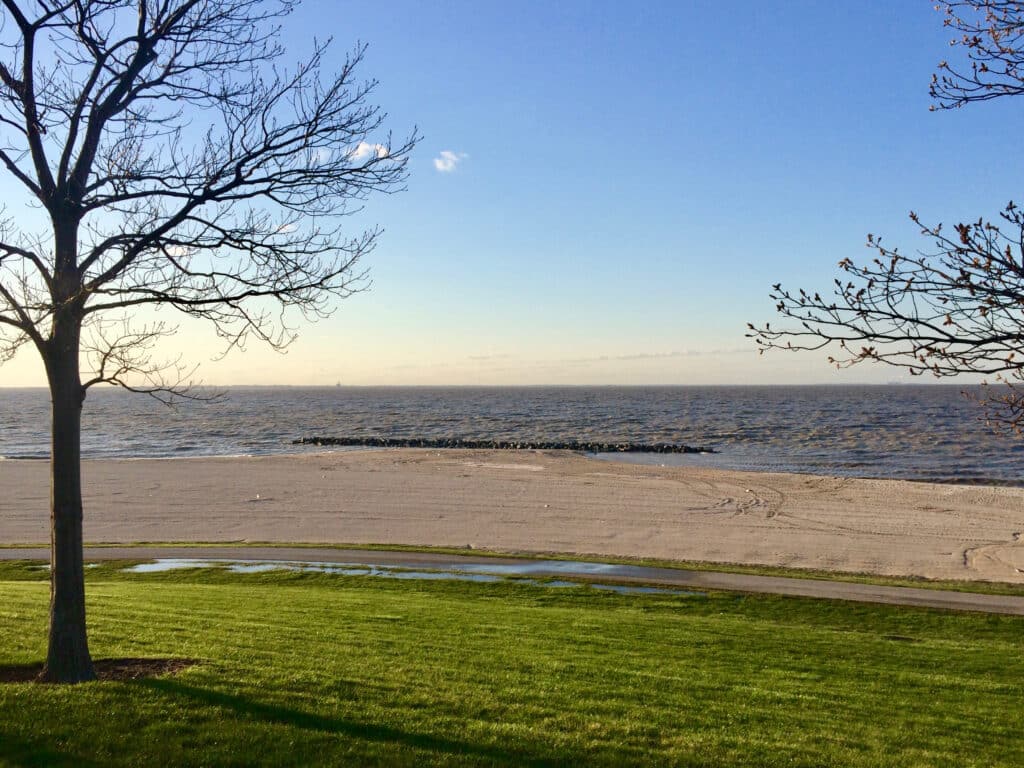
Along the shoreline, Maumee Bay Beach curves in a gentle arc, its sand pale beneath the sun. The lake here is calm, its waves rolling in soft, rhythmic whispers. Sunsets flood the water with color — apricot, rose, and violet blending into a tranquil glow.
The park also offers a golf course, cabins tucked among the trees, and a nature center that explains the region’s ecological richness. Yet despite these amenities, Maumee Bay remains profoundly peaceful. It is a place to slow down, to breathe, to listen — a sanctuary shaped by water and the life that depends on it.
The Great Serpent Mound: A Prehistoric Wonder Winding Through Time
In the rolling hills of southern Ohio, surrounded by quiet forests and open meadows, lies one of North America’s most extraordinary—and enigmatic—prehistoric earthworks. The Great Serpent Mound is not merely a site to visit; it is a place to experience, to stand before with reverence, to feel the past breathe across the land.
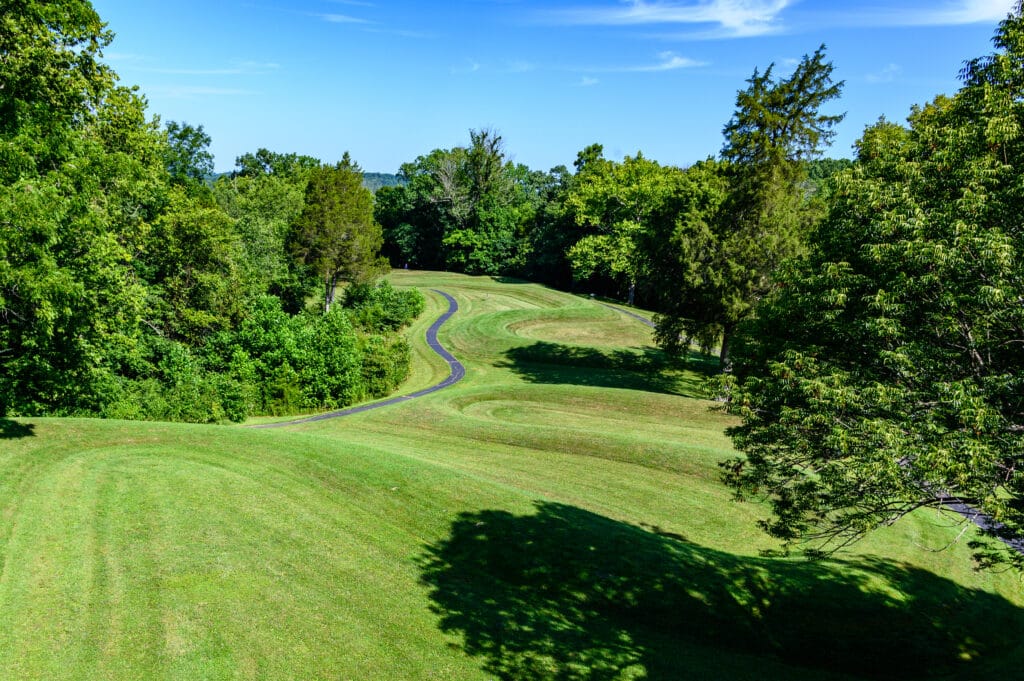
Stretching more than a quarter mile, the serpent curves with elegant precision, its sinuous body following the contours of a natural plateau above a wooded valley. Its coils rise subtly from the earth, shaped by ancient hands with a sophistication that defies its age. Archaeologists debate its exact origins—whether constructed by the Adena or Fort Ancient culture—but all agree on its significance: a ceremonial monument aligned with astronomical events, a symbol crafted with intent, ritual, and meaning.
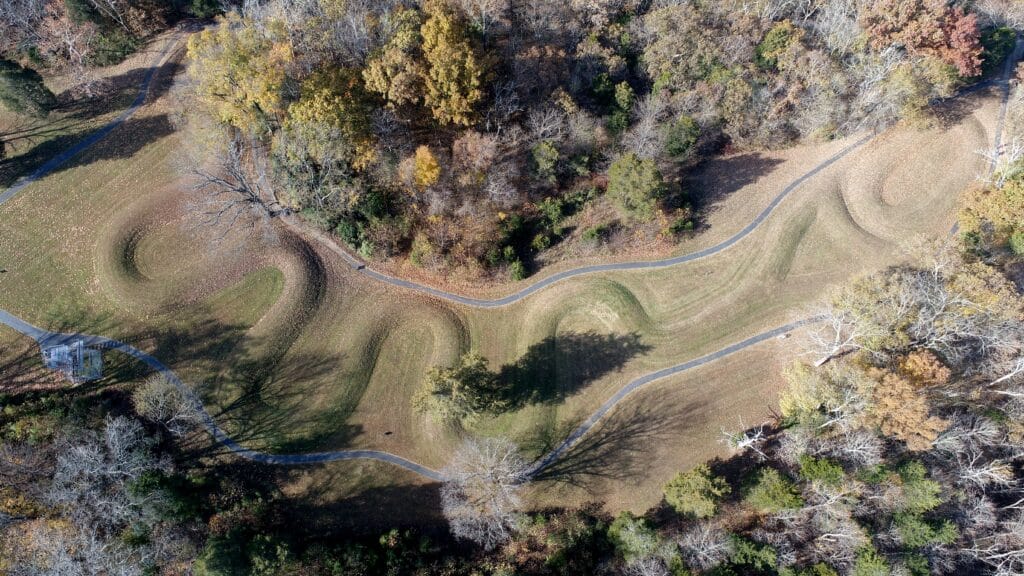
Walking along the perimeter path, you gain a sense of its immense scale. The serpent’s head, shaped with a distinct open mouth, appears to swallow—or offer—a large oval enclosure. Some see this as an egg, others as a celestial body or sacred offering. From above, the geometry becomes breathtaking: the coils symmetrical, the form precise, the placement purposeful. It is an artwork meant for the sky.
Surrounding forests add to the mystique. Leaves rustle softly across the ridges, birds call from the canopy, and the landscape feels unchanged for centuries. The earthwork blends seamlessly into nature, as though it grew from the land itself.
At sunset, amber light moves across the serpent’s back, revealing shadows that emphasize its form. At night, stars wheel overhead—the same constellations ancient builders once observed—and the mound becomes part of a cosmic dialogue stretching through millennia.
The Great Serpent Mound is a place where history turns quiet and profound, where you feel the weight of time settle around you. It is a reminder that Ohio’s story did not begin with cities or settlers, but with ancient cultures whose vision still ripples across the land.
The Ohio River Scenic Byway: A Journey Through Towns, Bluffs, and America’s Heartbeat
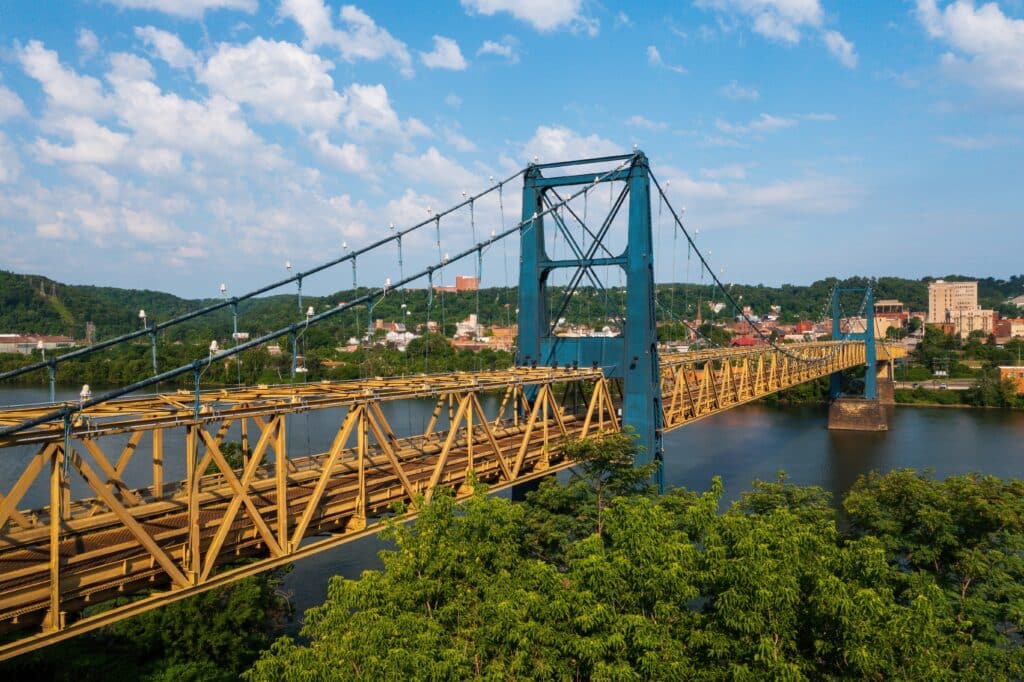
The Ohio River Scenic Byway is a road that unfolds like a storybook—mile after mile of river towns, forested bluffs, agricultural valleys, and quiet moments where the river’s broad, reflective surface becomes the thread tying everything together. Running along the state’s southern edge, this route is less a highway and more a pilgrimage into America’s heartland.

The river itself is immense, slow-moving, and dignified. Morning fog drifts across its surface, creating the illusion of a world emerging from mist. Barges glide past with patient momentum, and slender fishing boats cut gentle V-shaped trails across the water. Along the banks, sycamores rise with pale, mottled trunks, their branches reaching over sandy stretches and grassy pull-offs perfect for lingering.
The byway leads you into towns that feel deeply rooted, each with its own flavor. Marietta greets travelers with brick streets and elegant, ship-inspired architecture, a nod to its role as one of the earliest settlements in the Northwest Territory. Gallipolis brings French heritage to life in riverfront parks and historic squares. Portsmouth, with its soaring floodwall murals, feels like an open-air museum of community memory.
Between towns, the road winds beneath forested hills that blaze with color in autumn. In places, the cliffs rise dramatically, offering views of the river’s sweeping bends. Farmland spreads out in broad, sunlit fields—corn, soy, and hay rolling gently toward the horizon.
There is a slower rhythm here. Antique shops occupy old storefronts. Diners serve pies that taste like family recipes handed down for generations. Historical markers stand where pioneers crossed the water, where steamboats once churned, where the Underground Railroad forged pathways to freedom.
Drive the byway at dusk and the river glimmers like liquid gold, reflecting the glow of small towns waking up for the evening. Porch lights flicker on. The smell of woodsmoke hangs in the cool air. The Ohio River Scenic Byway is a reminder that beauty often lives in the quiet edges of the map—steady, soulful, enduring.