
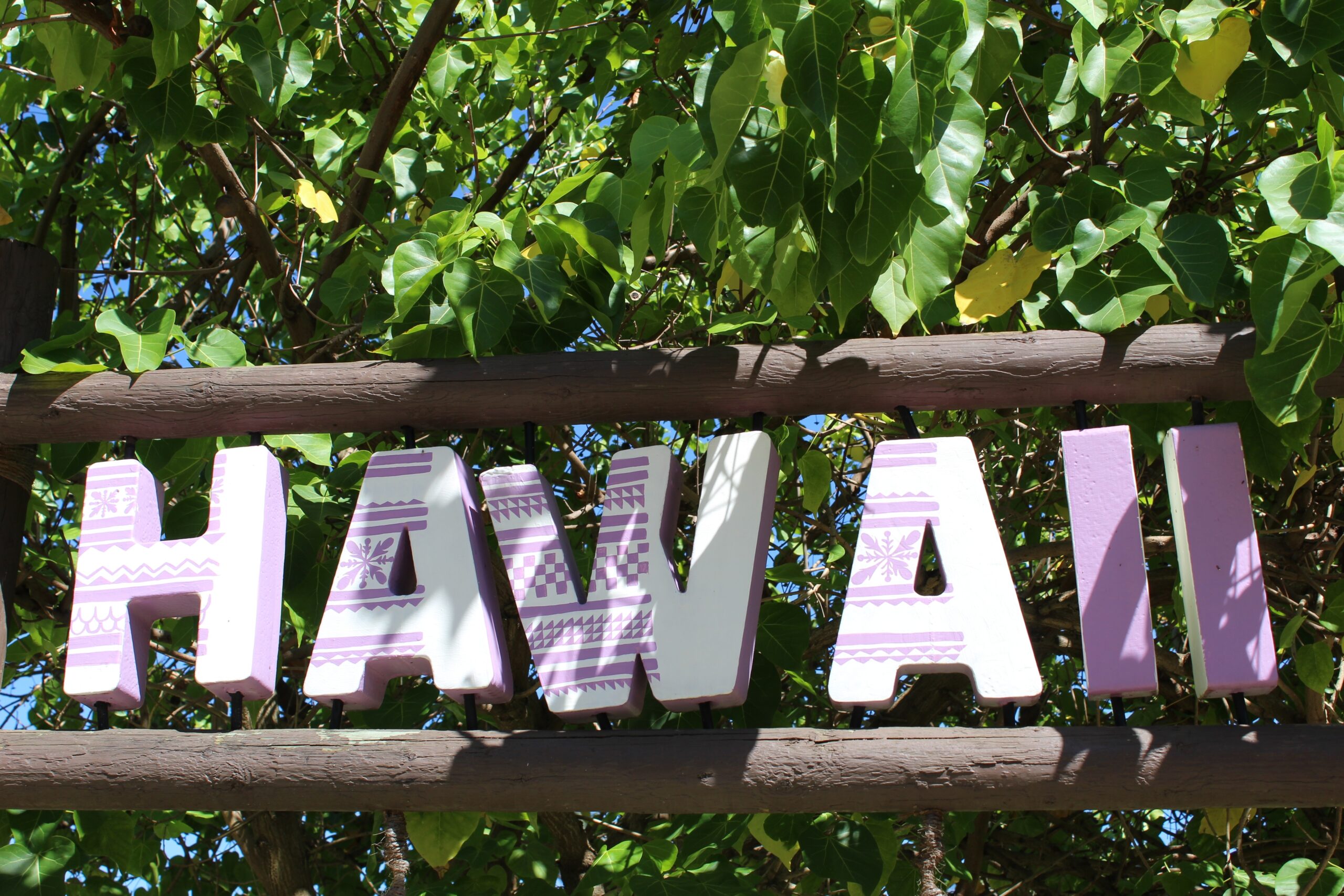
Hawaii is not a place you simply visit; it is a world that envelops you, reshapes you, and lingers long after you’ve crossed its ocean threshold. Born of fire and sculpted by time, the archipelago rises from the Pacific like a revelation—eight main islands surrounded by miles of cobalt water, encircled by coral gardens, and wrapped in a climate so gentle it feels like a blessing. Yet Hawaii is more than beauty; it is a realm of stories, lineage, and breath, where land and people share a relationship rooted in reverence.
Here, the earth is alive. You sense it in the warm breeze that carries the scent of plumeria and sea salt, in the slow, steady rhythm of waves folding onto black, white, or golden sand, in the deep rumble beneath the feet near Kīlauea where lava inches forward to become new land. Rainforests gather clouds along volcanic slopes, feeding waterfalls that leap from cliffs draped in ferns. Winds sift through forests of koa and ‘ōhi‘a, and the songs of birds found nowhere else on Earth echo through valleys older than memory.
Yet Hawaii is equally defined by humanity—by the culture that has nurtured these islands for more than a thousand years. The traditions of hula, voyaging, chant, and craftsmanship remain living expressions of a history both ancient and ongoing. Place names tell stories of gods, chiefs, storms, migrations, and transformations. Food—kalo, fresh fish, mango, laulau—connects the present to ancestral practices. Community gathers around the values of aloha and mālama, a commitment not only to kindness but to care, reciprocity, and shared responsibility.
Each island has its own personality. O‘ahu, with its vibrant energy and storied shores. Maui, shaped by valleys and volcanoes, full of quiet and splendor. Kaua‘i, the old soul, where time moves differently and the cliffs of Nāpali rise like a cathedral. Hawaii Island, immense and elemental, where snow and lava coexist. Lāna‘i and Moloka‘i preserve old Hawaii in ways that feel intimate and profound.
To travel through Hawaii is to move through worlds—urban and rural, wet and dry, ancient and newly formed. It is to listen rather than rush, to observe rather than impose, and to understand that these islands are not simply scenery, but living relatives.
This guide is a journey across Hawaii’s senses, stories, landscapes, and spirit—a chance to meet each island as it is, with humility, awe, and deep appreciation.
Honolulu & Waikīkī (O‘ahu)

Honolulu is a paradox—an urban heartbeat pulsing on the edge of an ancient world. It is Hawaii’s capital, its cultural crossroads, its diplomatic threshold to the Pacific, and a city that carries the weight of centuries beneath its modern skyline. Walk through downtown in the early morning and you’ll hear echoes of layered histories: the conch shells that once summoned royal gatherings at ‘Iolani Palace; the rhythmic sway of hula chants carried through generations; the soft murmur of outrigger paddlers in the harbor. Honolulu is a place where skyscrapers reflect the shapes of volcanic ridges and the calls of white terns drift above traffic like blessings.

Waikīkī, once a royal playground of fishponds and wetlands, has transformed into one of the world’s most iconic beachfronts—and yet, beneath the glamour, the old spirit remains traceable. The ocean here is warm and patient. Long, rolling waves carry surfers from keiki (children) to kūpuna (elders), gliding along the same waters Duke Kahanamoku once cut through with effortless grace. Morning sunlight paints the sand in a peach-pink glow, while evenings dissolve into portraits of torchlight and horizon fire.
But Waikīkī is not only surf and spectacle. Wander the quieter corners—the banyan tunnel of Kapi‘olani Park, the rustle of coconut palms near the aquarium, or the gentle curve of Queen’s Beach—and you’ll find a calmer rhythm beneath the glamour. Locals fish from sea walls, families gather for picnic dinners, and the soundscape becomes one of laughter, ocean hiss, and ukulele threads floating into twilight. Honolulu and Waikīkī together form a place where Hawaii’s past leans into its present, offering visitors not only a city to explore, but a living shoreline of culture, connection, and timeless Pacific light.
Pearl Harbor National Memorial (O‘ahu)
Pearl Harbor is not a scenic moment; it is a solemn encounter with history. This inlet—calm, glassy, deceptively peaceful—holds the weight of one of the most pivotal days in modern time, and the experience of visiting is both grounding and humbling. As you stand at the water’s edge, watching the gentle ripples, it becomes almost impossible to reconcile the serenity before you with the chaos and fire that tore through the harbor on December 7, 1941. Yet the quietness itself feels like a kind of reverence, an acknowledgment of sacrifice and transformation.
The USS Arizona Memorial is unlike any other place in Hawaii. Suspended over the sunken battleship, the white structure seems almost to float between worlds. Through openings in the flooring, you can see the dark silhouette of the ship beneath the water—still resting where it fell, still seeping tiny droplets of oil that rise to the surface like “black tears.” The names etched onto the memorial’s marble wall hit you with their sheer volume: a generation frozen in time, a collective story that echoes across the water.
Beyond the Arizona, the USS Missouri, USS Bowfin, and the Pacific Aviation Museum deepen the narrative, creating a full-circle understanding of conflict, resilience, and reconciliation. The Missouri, where the war in the Pacific formally ended, stands as a counterpoint to the Arizona—beginning and end of a global chapter anchored in the same harbor.
Yet what stays with you most is not the machinery of war, but the stillness. Birds gliding low across the water. The soft clang of halyards on metal poles. Visitors speaking in hushed voices as though in a cathedral. Pearl Harbor is a reminder that even in paradise, history is woven into the landscape—and that remembering is a form of respect that shapes the future.
The North Shore (O‘ahu)
O‘ahu’s North Shore feels like a different island entirely—slower, wilder, more elemental. It is a coastline where winter swells rise like mountains and summer days slip by in a mellow rhythm of roadside fruit stands, shrimp trucks, and sand-dusted flip-flops. The North Shore is the living heart of surf culture, a place where the ocean dictates the tempo of life and where communities are deeply attuned to the power of the sea.
In the winter months, the shoreline becomes a global amphitheater. At Waimea Bay, the water gathers itself into immense blue walls, the kind that rumble like thunder before folding into themselves with astonishing grace. Ehukai Beach, home to the Banzai Pipeline, is pure theater—perfect tubes curling with ferocity and beauty, drawing surfers from every corner of the world. Sunset Beach earns its name not only from the sky but from the way light spills across the sand like molten honey.
Yet the North Shore is far more than its legendary waves. In summer, the sea calms to a clear turquoise, inviting snorkelers to swim with sea turtles near Laniakea or explore the quiet shallows of Shark’s Cove. The air carries scents of plumeria, ocean spray, and garlic butter drifting from the shrimp farms of Kahuku. Small towns like Hale‘iwa offer a blend of surf shops, historic plantation-era buildings, and shave ice stands that feel frozen in time.
Drive the coastline slowly and you’ll see horses grazing near old stone walls, ironwood trees leaning in the wind, and fishermen casting lines from shorelines worn smooth by generations. Life here moves with a gentle humility. The North Shore is not just a destination—it’s a mood, a memory, a reminder that nature sets the rhythm and humans follow.
Hanauma Bay Nature Preserve (O‘ahu)
Hanauma Bay is one of Hawaii’s most beloved natural wonders—a volcanic crater transformed by time, tide, and tropical light into a sanctuary of marine life. The first sight from the overlook is breathtaking: a vast turquoise bowl shimmering beneath the sun, ringed by a crescent of golden sand and cradled by steep, rugged cliffs. Waves roll in gently over coral formations, and beneath that surface lies a world that feels almost enchanted—schools of surgeonfish flashing silver, parrotfish nibbling at coral, and green sea turtles drifting with serene ease.
What makes Hanauma Bay special is its intimacy. You do not merely look at nature here—you step into it. Enter the water and you’re immediately surrounded by color and movement: neon-bright wrasses, camouflaged flounders stirring from the sand, trumpet fish hovering like elongated shadows. The bay’s shallow, warm waters make it welcoming for beginners, yet its diverse marine ecosystems fascinate even seasoned snorkelers. It is a place where ocean life feels close, accessible, and deeply alive.
But Hanauma is also a reminder that paradise comes with responsibility. Decades of overuse prompted the creation of today’s strict preservation rules: controlled entry, reef-safe sunscreen, and educational orientation are all mandatory. The moment you descend toward the beach, you notice a difference—fewer crowds, a quieter atmosphere, a more respectful connection between visitors and the natural world.
As the sun climbs higher, the cliffs cast shifting shadows over the water, creating gradients of blue and green. Palm trees sway gently, and the breeze carries the sound of laughter mixed with the distant calls of seabirds. By afternoon, the bay feels almost like a secluded enclave despite its popularity. Hanauma Bay is not simply a snorkel spot—it’s a lesson in balance: how fragile ecosystems can flourish when given space to heal, and how humans can be participants rather than intruders in a vibrant marine sanctuary.
Diamond Head (Lē‘ahi) (O‘ahu)
Diamond Head rises above Waikīkī like a sentinel—a rugged volcanic tuff cone sculpted by ancient eruptions and crowned with panoramic views that have come to define Honolulu. Known in Hawaiian as Lē‘ahi, the summit has long watched over the island’s people, from early navigators to modern-day hikers. The iconic silhouette is recognizable from nearly every angle of southern O‘ahu, but only those who climb its slopes truly understand its power.
The hike begins calmly, weaving through dry vegetation that rustles in the trade winds. But soon the trail steepens, winding through old military tunnels and staircases carved into the crater walls. The climb is a reminder of Diamond Head’s strategic role—its summit once hosted lookout posts, bunkers, and artillery stations designed to protect Honolulu Harbor. Today, those relics stand silent, absorbed by the landscape, offering windows into both history and horizon.
At the top, the world opens dramatically. Waikīkī spreads out below in a mosaic of turquoise water, white sand, and high-rise shimmer. The Ko‘olau Mountains stretch in the distance like a serrated green spine, while the Pacific glitters endlessly to the south. On clear days, the horizon blends sky and sea into a single, radiant expanse.
Yet the magic of Diamond Head isn’t only the view—it’s the sense of connection to time. Stand at the edge of the crater and you feel the wind that has swept across these ridges for centuries. You see the curve of the coastline much as ancient Hawaiians once saw it. You sense the layers of geology beneath your feet, each marking eruptions millions of years past.
Descending from the summit, you carry with you a feeling of renewal—the clarity that comes from high places, from standing on ancient ground, from seeing an island in its full, breathtaking context. Diamond Head isn’t just a hike; it’s a rite of passage for anyone seeking to understand O‘ahu.
Haleakalā National Park (Maui)
Haleakalā is not merely a mountain—it is a realm of sky, silence, and volcanic wonder that feels closer to myth than to geography. Rising over 10,000 feet above sea level, this immense shield volcano shapes much of Maui’s identity, offering landscapes unlike anything else in Hawaii: a summit above the clouds, a crater that looks like another planet, and forests where rare species cling to existence in pockets of ancient wilderness.
The summit experience is transformative. Arrive before dawn and you’ll witness one of the most celebrated sunrises on Earth. The sky begins with a faint lavender glow, gradually igniting into ribbons of gold and rose as the sun lifts over the crater rim. Clouds swirl below you like oceans of mist, and the world feels suspended in a moment of creation. Native Hawaiians regard Haleakalā as a sacred place, tied to the demi-god Maui, who is said to have lassoed the sun from these very heights to slow its passage across the sky.
The crater is vast—more than seven miles across—painted in volcanic reds, ochres, and deep purples. Cinder cones rise like sculpted pyramids, and shifting shadows give the landscape an otherworldly depth. Hiking here is a journey into profound solitude. The silence is thick, almost physical, broken only by the crunch of volcanic gravel underfoot or the distant cry of the endangered nēnē goose.
The park extends far beyond the summit. On the eastern flank lies the Kipahulu District, a lush world of bamboo forests, cascading waterfalls, and pools carved into lava rock. The contrast between the barren summit and the tropical lowlands is astonishing—two ecosystems shaped by the same volcano yet worlds apart in mood.
Haleakalā is a place of extremes and reverence, where the island’s spiritual and geological heartbeats converge. Whether watching sunrise above the clouds or tracing footsteps across lunar terrain, visitors leave with a sense of awe that lingers long after they descend to sea level.
Lahaina (Maui)
Lahaina has long been one of Hawaii’s most storied towns—once the capital of the Hawaiian Kingdom, a bustling whaling port, a crossroads of cultures, and more recently a beloved seaside community. While the devastating 2023 wildfire reshaped its physical landscape, the spirit of Lahaina remains resilient, rooted in deep cultural memories and carried forward by the people who call it home. To speak of Lahaina is to honor both what was lost and what continues: a place woven with history, art, connection, and profound significance.
Before the fire, Front Street was a vibrant mosaic of galleries, wooden storefronts, cafés, and ocean breezes. The giant banyan tree—over 150 years old—spread its canopy across a full block like an outdoor cathedral. Lahaina Harbor bustled with boats heading toward the Au‘au Channel in search of humpback whales. While the town now faces a long, careful rebuilding process, its identity remains anchored in heritage rather than architecture.
Lahaina’s history is vast. Here, Hawaiian royalty once governed, holding ceremonies along the shoreline and shaping the political life of the islands. Lahaina was also a center of missionary activity in the 1800s, a place where cultures converged in dramatic and sometimes turbulent ways. Later, whaling ships from around the world filled the harbor, making Lahaina one of the Pacific’s busiest ports.
Today, as the community heals, visitors are encouraged to learn rather than intrude—to support local businesses across Maui, respect restricted areas, and approach Lahaina’s story with empathy. The remaining cultural sites, the voices of residents, and the extraordinary sunsets over the West Maui Mountains remind travelers that this place is more than scenery; it is an enduring symbol of Hawaiian resilience.
Lahaina’s beauty—past, present, and future—lives in its people, its ocean, and its cultural heart. To understand Maui, one must understand Lahaina, for its story is one of courage, remembrance, and the unwavering strength of community.
Road to Hana (Maui)
The Road to Hana is one of the world’s most celebrated drives—not because of speed or ease, but because it encourages travelers to slow down and witness Hawaii as a living tapestry. Stretching along Maui’s northeast coast, this serpentine highway winds through rainforest canopies, crosses more than 50 bridges, and skirts cliffs where waterfalls plunge into valleys wrapped in mist. It is a journey not measured in miles but in immersion.
Every bend reveals something new: bamboo forests whispering in the breeze, vines twisting through the treetops, streams bursting from volcanic ledges. The smell of rain on warm asphalt mixes with the scent of guava and ginger. Waterfalls are everywhere—Wailua Falls, Waikani Falls, Hanawi Falls—each spilling with unique personality. Pools beneath them shimmer jade green, inviting a pause, a breath, a moment of awe.
Roadside stands bring human warmth to the wilderness. Locals sell fresh banana bread still warm from the oven, coconut candy, and tropical fruit picked that very morning. These stops aren’t just snacks; they’re connections to families who have lived along the Hana Highway for generations.
As the road nears Hana, the atmosphere shifts from dramatic rainforest to quiet rural beauty. Hana is not a resort town but a community that has intentionally preserved its pace and traditions. Nearby treasures—such as Wai‘anapanapa State Park with its black-sand beach and sea caves—offer landscapes shaped by lava and legends.
Driving the Road to Hana is humbling. It is a reminder that travel can be an act of patience and reverence rather than efficiency. Its beauty lies not in the destination but in the rhythm of discovery, the interplay of light and rain, the sense that you are moving through a story older than the pavement beneath your wheels.
Haleakalā Crater Wilderness (Maui)
While the summit of Haleakalā draws sunrise seekers from around the world, the vast wilderness inside the crater is one of Hawaii’s most profound, otherworldly landscapes—a cathedral of silence, color, and ancient volcanic power. Descending into the crater feels like stepping into a dreamscape sculpted by time itself.
The trail begins at the crater rim, where clouds drift like pale oceans below. As you hike downward, the temperature cools and the terrain shifts from jagged lava rock to deep cinder fields painted in shades of crimson, gold, charcoal, and violet. The ground crunches beneath your boots; wind carries the faint mineral scent of basalt. Cinder cones rise like frozen waves, each holding secrets about eruptions thousands of years old.
This is a place where the concept of “isolation” takes on a sublime beauty. The vastness quiets the mind. Hours can pass without another hiker in sight. The silence is so complete it feels sacred, broken only by the soft wingbeats of nēnē or the rustle of a swift-moving cloud. Rare plants like the ʻāhinahina—the silversword—sparkle in the sun, growing only here and nowhere else in the world.
The longer trails, such as the trek to Palikū, plunge into a hidden oasis where fog drapes the cliffs and lush vegetation flourishes. Hōlua Cabin sits in a desert-like expanse where ancient lava flows stretch to the horizon. Backpackers sleep under some of the darkest skies in the Pacific, the Milky Way arching overhead like a luminous bridge.
To explore Haleakalā Crater Wilderness is to witness the raw architecture of Earth in motion. It is a landscape that asks for humility and offers perspective. Here, you understand the islands not as tropical postcards but as living volcanic beings—constantly forming, aging, and transforming. Few places on Earth feel as elemental.
Waimea Canyon (Kaua‘i)
Waimea Canyon is often called the “Grand Canyon of the Pacific,” but this nickname—though affectionate—barely captures its singular majesty. This is not merely a canyon; it is a living, breathing theater of erosion, rainfall, volcanic uplift, and color. Stretching for miles across western Kaua‘i, Waimea Canyon dazzles with striations of red, ochre, rust, green, and violet, each band telling a story of ancient lava flows and the patient hand of time.
Approaching the canyon by road, the island gradually reveals its interior power. What begins as a sun-baked coast transforms into dramatic cliffs, eucalyptus groves, and deepening ravines. Then, suddenly, the earth opens. The canyon yawns wide, immense and radiant, the morning sun striking its walls like a painter’s first bold strokes. Mist often drifts across the slopes, softening the sharp ridges and adding a sense of mystery—as if the landscape is deciding how much of itself to show.
Hiking trails lead into a world that oscillates between quiet stillness and exuberant life. The Canyon Trail to Waipo‘o Falls takes you across rust-red dirt, past silvery streams and stands of native plants clinging to the cliffs. At overlooks, you may hear distant waterfalls echoing like soft percussion. Red-footed boobies carve circles through the sky. Shadows shift slowly as clouds brush the rim.
Waimea Canyon is simultaneously rugged and delicate, fierce and contemplative. It anchors Kaua‘i’s identity as the Garden Isle—not just for its lushness but for its untamed beauty. Standing on a lookout, gazing into its depths, you feel the duality of Hawaii: islands shaped by violence, yet softened by centuries of rain and life. The canyon is not merely a place to see; it is a place to understand the artistry of nature.
Na Pali Coast (Kaua‘i)
The Na Pali Coast is the kind of landscape that feels mythic, even when you’re standing before it. Perhaps it’s the sheer improbability of it all—the knife-edged ridges rising like emerald cathedrals, the cliffs plunging straight into the Pacific, waterfalls streaming like silver threads down the folds of green. Na Pali is not just a coastline; it is a revelation.
Accessible only by boat, helicopter, or the arduous Kalalau Trail, the coast preserves a sense of isolation rare in the modern world. Approaching by sea, you watch the mountains rise as though pushed up from some ancient dream. Sunlight slides across the ridges, revealing terraces where Hawaiian communities once cultivated taro and lived in harmony with the land. Spinner dolphins leap ahead of boats, while sea caves breathe with the rhythm of the ocean.
For hikers, Na Pali offers both challenge and reward. The Kalalau Trail clings to cliffs high above the waves, leading through tropical valleys, bamboo tunnels, and narrow ledges where the wind carries the scent of ginger. The final destination, Kalalau Beach, is a sweeping arc of sand bordered by towering cliffs—a place that feels both protected and infinite.
Na Pali embodies the Hawaiian concept of mana—a spiritual energy that permeates landscapes, people, and history. The mountains seem to hum with it. At sunset, when the cliffs glow gold and purple, you sense that this coast is not simply beautiful; it is sacred. And to experience it, in any form, is to enter into a quiet pact of reverence.
Hawaii Volcanoes National Park (Big Island)
If Hawaii is a chain of islands born from fire, then Hawaii Volcanoes National Park is the beating heart of that creation story. Here, the Earth is not a distant concept—it is an active, restless presence. Steam rises from fissures. Lava fields stretch like black oceans frozen mid-wave. Craters glow at dusk. The ground beneath your feet feels alive.
Dominated by two volcanoes—Kīlauea and Mauna Loa—the park is a sanctuary of constant transformation. Some days are quiet, with plumes of steam rising lazily from Halema‘uma‘u Crater. Other days, the air hums with energy, and glowing lava surfaces in the night like molten poetry. What changes is not just the landscape, but your understanding of permanence: nothing here stays the same for long.
The Chain of Craters Road descends through high rainforest into a realm that becomes increasingly stark and lunar. Tree ferns give way to jagged lava formations, then to expansive fields where new plants struggle upward through cracks. At the end of the road, the ocean meets ancient lava in a violent, beautiful clash.
Hiking across the crater floor at Kīlauea Iki, you walk through a landscape created mere decades ago—still warm beneath the surface. The air smells faintly of sulfur. The silence is immense.
Volcanoes National Park is not simply a place to visit; it is a lesson in the raw mechanics of Earth. Few places on the planet allow you to witness creation in real time. Few landscapes challenge your sense of scale and mortality with such elegance.
To stand here is to understand Hawaii differently: not as a destination, but as a living organism, forever becoming.
Mauna Kea Summit (Big Island)
Mauna Kea rises above the clouds like a world unto itself. At 13,796 feet, it is Hawaii’s highest point—not just a mountain, but a colossal presence that merges science, spirituality, and sky. To ascend Mauna Kea is to travel through climates and epochs, each elevation layer shedding a bit more of earthly noise until only silence remains.
The mountain begins in warmth: rolling grasslands, ranch territory, sunlight glinting off the shoulders of the landscape. As the road climbs, the air grows thinner, the vegetation sparser. Eventually, the world narrows to cinder cones, desert browns, and a wide horizon that feels almost Martian.
Then you reach the summit, where observatories sit like gleaming sentinels against a cobalt sky. Here the air is exceptionally clear—among the purest on Earth—and the stars reveal themselves with a ferocity that feels ancient. The Milky Way arches overhead like a luminous river. Constellations blaze in crisp detail. The sky becomes a cathedral of light.
But Mauna Kea is not only an astronomical hub; it is sacred ground. Native Hawaiians regard it as a wao akua—a realm of the gods—and the summit holds profound ancestral and cultural significance. To stand here is to feel that weight: a spiritual altitude equal to the physical one.
Sunset is the summit’s most haunting hour. The clouds gather below you, glowing orange and rose, while shadows stretch across the cones. The wind whispers with a quiet, powerful presence. You feel small, but connected—part of the mountain’s story, however briefly.
Mauna Kea is more than a place to visit. It is a lesson in humility, awe, and the fragile, radiant miracle of Earth suspended in space.
Hilo (Big Island)
Hilo is not a city that dazzles with spectacle; it seduces with soul. Located on the rainier, greener side of the Big Island, Hilo is a place where waterfalls tumble straight into the sea, where banyan trees stretch into the mist, and where the scent of rain seems woven into the very fabric of the town.
Life here moves at a gentler tempo. The waves lap against black-sand shores. The palm trees sway with a kind of languid grace. And the weather—soft, persistent, nurturing—keeps everything lush and shimmering, like a watercolor painting brought to life.
Hilo’s downtown is a collage of old storefronts, local cafés, and open-air markets. The Hilo Farmers Market is a riot of color and fragrance: papayas stacked like golden lanterns, orchids bright as jewels, and vendors offering homemade jams and traditional Hawaiian dishes. There’s a sense of warmth—not just tropical, but human. People greet one another by name. Time stretches.
Just outside town, nature flexes her muscles at Rainbow Falls, where water cascades over a lava cave draped in vines, creating arcs of color in the morning light. A short drive away, Akaka Falls plummets dramatically through rainforest, a silver ribbon framed by ferns and ginger. Each waterfall feels like a secret doorway into Hawaii’s primordial past.
Hilo’s heart also beats with culture: the Lyman Museum, Imiloa Astronomy Center, and the expansive Lili‘uokalani Gardens, where Japanese-inspired bridges cross koi-filled ponds. These places reveal a community shaped by waves of immigration, natural forces, and a deep connection to the land.
Hilo doesn’t try to impress. It simply is—verdant, poetic, quietly profound. A place where rain becomes a kind of companion, and where the world feels softer, slower, and deeply alive.
Moloka‘i: The Island of Unshaken Spirit
Moloka‘i is the least visited of Hawaii’s major islands—and by design. It is not curated for tourism. It does not soften itself for outsiders. Instead, it stands as one of the purest expressions of Hawaiian land and identity, where tradition is not a reenactment but a lived, everyday reality.
Here, the pace of life is unadorned and deeply connected to the land. The island’s landscapes feel raw and unfiltered: towering sea cliffs that rise in dramatic folds, windswept plains where grasses ripple like ocean waves, and coastlines left wild and solitary.
On the north shore, the Kalaupapa Peninsula stretches out beneath cliffs that rank among the tallest on Earth. This isolated community—once a place of exile for people with Hansen’s disease—now stands as a testament to resilience and compassion. The story of Father Damien, Mother Marianne Cope, and the residents who built a dignified life under heartbreaking circumstances, gives the land a profound emotional gravity.
Elsewhere on Moloka‘i, Native Hawaiian culture is not preserved in a museum; it continues in fishpond restoration projects, taro farming, community gatherings, and a quiet insistence that the land’s health and spirit come first. The beaches are serene and rarely crowded—Papohaku Beach, with its broad stretch of golden sand, often feels like a private sanctuary.
Moloka‘i doesn’t entertain; it teaches. It teaches patience. Respect. Presence. It invites you to step back from the frantic world and listen—to the wind through ironwood trees, to the surf pounding distant cliffs, to your own thoughts unmuffled by noise.
To experience Moloka‘i is to understand Hawaii at its most rooted and authentic: an island whose spirit remains unshaken.
Iao Valley (Maui)
Iao Valley is where Maui breathes in green. A cathedral of mist-wrapped mountains and deep, quiet reverence, it feels less like a valley and more like a sanctuary carved by time itself. The moment you enter, the world softens: the air grows cooler, the light becomes filtered and dappled, and the sound of rushing water echoes between walls of jade.
At the valley’s heart stands the Iao Needle, a towering basalt pinnacle rising like a sentinel from the forest floor. Draped in moss and ferns, it pierces the sky with a serene kind of authority, a natural monument shaped by erosion and myth. For centuries, this valley was a sacred space and a site of significant Hawaiian history. It was here, in 1790, that Kamehameha I fought the fierce Battle of Kepaniwai in his quest to unite the islands—a turning point in the shaping of the Hawaiian kingdom.
Yet despite its dramatic past, Iao Valley today radiates peace rather than conflict. The river winds gently past smooth, water-worn stones. Footpaths lead to overlooks bathed in the scent of ginger and rainforest earth. Sunlight pours in sudden shafts between the cliffs, turning the valley gold for a few fleeting seconds before the clouds drift in again.
The beauty of Iao Valley isn’t loud; it’s lush, intimate, and deeply grounding. It invites you not just to see, but to feel—to breathe slowly, to listen, to let the green wrap around your senses. In a state celebrated for its beaches and volcanoes, Iao Valley offers something quieter but just as profound: a place where nature whispers its stories instead of roaring them.
Lana‘i: The Quiet Island
Lana‘i is the most elusive of Hawaii’s islands—small, remote, and wrapped in a kind of understated luxury that feels more contemplative than extravagant. With only a few main roads, a modest town center in Lana‘i City, and landscapes that range from desert plains to lush forests, Lana‘i feels like a world paused in time.
The island’s dual personality is part of its charm. On one side, you find Mānele Bay, where calm, impossibly clear waters cradle coral reefs, spinner dolphins twirl at sunrise, and golden beaches curve gently into cerulean sea. It’s serene, peaceful, and refined—an ode to island elegance without the bustle found elsewhere.
But drive inland, and Lana‘i reveals a completely different soul. The Keahiakawelo region—known as the Garden of the Gods—is a surreal dreamscape of red rock towers, boulders smoothed by wind, and open terrain that feels more Martian than Hawaiian. The coppery earth glows at sunset, turning the landscape into a glowing ember beneath the sky.
Hiking through the Munro Trail—a ridge-top path shaded by towering Cook pines—you feel the entire island unfurl below you. From the high point, on a rare clear day, you can see five Hawaiian islands at once, like sentinels in a broad Pacific circle.
And then there is the culture of Lana‘i: close-knit, humble, quietly proud. Life here runs on relationships and respect—of people, of land, of history. You sense it in the preserved plantation architecture, in the small-town warmth, in the rhythm of daily life that favors connection over convenience.
Lana‘i is Hawaii at its gentlest. An island that doesn’t perform, but simply exists in its own delicate balance of mystery and beauty.
Waimea Canyon (Kaua‘i)
Waimea Canyon is often called the “Grand Canyon of the Pacific,” but such comparisons barely capture its emotional impact. This is not just a canyon—it is a breathtaking eruption of color and scale, a place where Kaua‘i displays its wild heart in red cliffs, emerald valleys, and distant waterfalls that ribbon down sheer walls.
Stretching ten miles long and more than 3,600 feet deep, Waimea Canyon is the result of ancient volcanic collapse and relentless erosion. But its drama feels fresh, immediate, alive. When you stand at one of its overlooks—Waimea Canyon Lookout, Puu Hinahina, or Kalalau—you don’t just see the landscape. You feel its vastness.
The canyon glows in layers of rust, crimson, ochre, and deep green. Sunlight slides across its ridges, creating shadows that shift hour by hour. Far below, the Waimea River curls around the canyon floor, carving new stories into the rock. White mist often drifts in, curling like breath along the walls, giving the whole place a dreamlike blur.
A drive up to Koke‘e State Park, which borders the canyon, leads you through forests of cedar, eucalyptus, and native ʻōhiʻa lehua. Trails branch out toward overlooks and ridge walks, some leading all the way toward the distant, legendary vistas above the Kalalau Valley. Here, the world opens into a mosaic of mountain spires and ocean horizon—raw, ancient, cinematic.
Waimea Canyon is not just a viewpoint. It is a moment of awe that settles into your bones. A reminder of how time shapes the Earth, how water and wind can carve symphonies into stone, and how beauty often reveals itself in layers—deep, surprising, unforgettable.
Po‘ipū (Kaua‘i)
Po‘ipū lies on Kaua‘i’s sun-drenched south shore, where the island opens itself generously to light, warmth, and sea. This is a place shaped by gentler rhythms—golden afternoons, calm waters, and sunsets that seem to linger as if reluctant to leave. While much of Kaua‘i is defined by drama and rain, Po‘ipū offers balance: beauty softened by ease.
The beaches here are among the island’s most welcoming. Po‘ipū Beach Park, with its crescent-shaped shoreline and protective lava rock barriers, feels almost lagoon-like. Sea turtles haul themselves onto the sand in the late afternoon, resting unbothered by quiet onlookers. Monk seals appear occasionally, ancient and serene, reminding visitors that this coast belongs to creatures older than memory.
Beyond the beach, Po‘ipū reveals layers of history and landscape. Nearby Allerton and McBryde Gardens unfold as botanical masterpieces, where towering bamboo groves, flowering trees, and sculpted water features create a living gallery of tropical flora. These gardens speak to Hawaii’s role as a crossroads of global plant life, shaped by exploration and cultivation.
Po‘ipū’s charm lies not in spectacle but in harmony. Mornings are for snorkeling in crystal-clear shallows, afternoons for coastal walks where the scent of salt mingles with plumeria. Evenings bring a soft hush as the sun dips into the Pacific, painting the sky in coral and amber.
Po‘ipū is where Kaua‘i exhales. A place of gentle pleasures, natural grace, and a quiet sense of welcome that makes it easy to stay longer than planned.
Pololū Valley (Big Island)
Pololū Valley feels like the edge of the world. Tucked into the northern tip of the Big Island, this deep, dramatic valley opens suddenly and without warning, revealing cliffs that plunge toward a dark-sand beach far below. It is raw, untamed, and profoundly humbling.
The journey begins at a small overlook, where the land seems to fall away. From there, a steep trail descends through ironwood trees and native vegetation, the air thick with salt and wind. Each step downward feels like crossing into an older Hawaii—one untouched by polish or performance.
At the valley floor, the beach stretches wide and wild. The sand is black and coarse, shaped by ancient lava. The waves arrive with power and purpose, unsuitable for swimming but mesmerizing to watch. Driftwood lies scattered like sculpture. The cliffs rise on either side, green and imposing, their slopes streaked with waterfalls after rain.
Pololū Valley was once home to thriving Hawaiian communities who cultivated taro in the valley’s fertile soil. Though the settlements are gone, their presence lingers in the silence, in the wind, in the careful way visitors tread. This is a place that demands respect.
Standing at Pololū, you feel small in the best possible way. The valley doesn’t entertain—it confronts, invites reflection, and reminds you that Hawaii’s beauty is inseparable from its power. It is a place to listen, to breathe deeply, and to let the land speak first.
Honoka‘a & Waipi‘o Valley (Big Island)
Honoka‘a sits quietly on the slopes above Waipi‘o Valley, a town that feels both suspended in time and firmly rooted in community. Once a bustling center of sugar plantation life, Honoka‘a retains its historic storefronts, wooden facades, and unhurried pace. Life here unfolds slowly, with conversation and connection at its core.
The town itself is charming and understated. Cafés, small galleries, and the beautifully restored Honoka‘a People’s Theatre give the main street a lived-in warmth. Locals greet one another by name. There is a sense that the town exists not for visitors, but for those who belong to it—and visitors are simply welcomed in.
Just beyond Honoka‘a lies Waipi‘o Valley, one of the most sacred and breathtaking landscapes in all of Hawaii. The road into the valley descends steeply, revealing a vast, fertile plain flanked by towering cliffs that seem to guard it fiercely. Waterfalls cascade from the heights, their streams threading through taro fields and winding rivers below.
Waipi‘o was once the seat of Hawaiian kings, a place of abundance and spiritual power. Even today, the valley feels alive with mana. Horses roam freely. The black-sand beach meets a restless sea. The valley floor hums with quiet resilience.
Together, Honoka‘a and Waipi‘o form a powerful pairing: town and valley, community and wilderness, daily life and deep history. They offer a glimpse into Hawaii that is grounded, reverent, and unforgettable.
Haleakalā Summit (Maui)
Haleakalā rises like a sleeping giant above Maui, its vast volcanic crater occupying the island’s spiritual and physical high ground. To stand at its summit is to stand at the threshold of worlds—above the clouds, above the noise of daily life, and closer to something elemental and ancient.
The ascent begins in warmth and greenery, winding through forests of eucalyptus and ʻōhiʻa lehua before climbing into stark alpine terrain. As elevation increases, color drains from the landscape until the summit reveals itself as a surreal expanse of cinder cones, lava fields, and wide, silent space. The crater stretches impossibly far, a vast bowl sculpted by fire and erosion, glowing in tones of rust, ash, and mauve.
Sunrise at Haleakalā is legendary, and with good reason. As dawn breaks, the horizon ignites in layers of crimson, gold, and violet. The sun emerges slowly, illuminating the crater floor and casting long shadows across the cones. Silence reigns. The moment feels ceremonial, almost sacred, as if the mountain itself is awakening.
For Native Hawaiians, Haleakalā is a place of deep spiritual significance, tied to legends of the demigod Māui, who is said to have lassoed the sun here to slow its passage across the sky. That mythic quality lingers. Even during daylight, the summit retains a sense of otherworldliness—vast, austere, humbling.
Hiking trails descend into the crater, offering encounters with rare silversword plants and a profound sense of isolation. Haleakalā is not merely scenic; it is transformative—a reminder of Hawaii’s volcanic origins and the quiet power of elevation and stillness.
Kapalua (Maui)
Kapalua occupies a stretch of Maui’s northwest coast where refinement and nature coexist in delicate balance. Framed by dramatic headlands and soft, crescent-shaped bays, Kapalua feels polished without losing its connection to the land. It is a place where beauty is carefully preserved rather than reshaped.
The beaches here—Kapalua Bay and Napili Bay—are among the island’s most serene. Sheltered by lava rock points, the waters remain calm and clear, ideal for swimming and snorkeling. Coral gardens shimmer beneath the surface, and green sea turtles drift past like ancient guardians of the reef. The sand is fine and pale, the kind that invites lingering rather than haste.
Beyond the shoreline, Kapalua reveals a quieter luxury. Coastal trails trace the rugged edges of the land, offering views of waves crashing against volcanic rock and, in winter months, migrating humpback whales breaching offshore. Golf courses roll gently across former pineapple fields, their fairways blending seamlessly into the natural contours of the terrain.
Kapalua also carries echoes of Hawaii’s agricultural past. Pineapple once dominated this region, and remnants of plantation history remain woven into the landscape and local culture. Today, conservation efforts protect native plants and wildlife, ensuring that development does not eclipse identity.
There is an ease to Kapalua—a feeling of calm that settles in quickly. Days unfold slowly, marked by ocean swims, coastal walks, and golden-hour light that softens everything it touches. Kapalua doesn’t demand attention; it rewards presence.
Hanalei (Kaua‘i)
Hanalei is Kaua‘i at its most lyrical. Nestled between emerald mountains and a wide, sweeping bay, the town and valley feel like a landscape shaped by imagination as much as geology. Rain drapes the peaks in mist, waterfalls streak the cliffs, and the land glows with a richness that seems almost unreal.
The drive into Hanalei is an unveiling. As the road curves past taro fields and river crossings, the valley opens suddenly, revealing a panorama of green so deep it feels endless. The town itself is small and understated—a collection of wooden storefronts, open-air cafés, and surf shops that resist pretense.
Hanalei Bay arcs gracefully along the shoreline, backed by the jagged ridgeline of the Nā Pali Coast’s foothills. The water shifts with the seasons: calm and inviting in summer, powerful and dramatic in winter when waves attract surfers from around the world. Sunsets here are slow and cinematic, washing the sky in pastel layers as the mountains darken into silhouette.
Beyond the beach, Hanalei Valley tells an older story. Taro fields stretch across the floodplain, cultivated much as they have been for centuries. This is living history, sustained by families who continue traditional farming practices rooted in respect for land and water.
Hanalei is not simply picturesque—it is deeply felt. A place where time loosens its grip, where rain and sun alternate without apology, and where Hawaii’s spirit feels close enough to touch.
The Road to Hāna (Maui)
The Road to Hāna is not a journey to a destination—it is the destination. This legendary drive along Maui’s northeastern coast unfolds as a slow revelation, a ribbon of pavement threading through rainforest, waterfalls, and sheer coastal cliffs.
Beginning just outside Pa‘ia, the road narrows and twists, crossing dozens of bridges and hugging the land with intimate closeness. Each bend brings something new: cascades spilling into fern-lined pools, bamboo forests whispering in the wind, sudden ocean vistas framed by lava rock. The air grows cooler, heavier with moisture and scent.
Pullouts invite exploration—short hikes to hidden falls, roadside stands selling banana bread and coconut candy, quiet beaches of black or red sand where waves crash with untamed force. The journey encourages surrender. Speed dissolves. Time loosens.
Hāna itself is small, humble, and deeply rooted in tradition. Life here moves at a different tempo, shaped by rain, land, and community. Nearby, Wai‘ānapanapa State Park reveals lava arches and black-sand shores, while trails lead through forests where the modern world feels distant.
The Road to Hāna teaches a lesson central to Hawaii: that beauty reveals itself gradually, to those willing to slow down. It is a pilgrimage through water and green, an experience that lingers long after the road ends.
Lanikai & Kailua (O‘ahu)
Lanikai and Kailua occupy a stretch of O‘ahu’s windward coast that feels almost impossibly idyllic. Here, the island opens toward the rising sun, and mornings arrive wrapped in pastel light, trade winds, and the hush of gentle surf. The name Lanikai—“heavenly sea”—is no exaggeration; the view alone feels like a benediction.
Lanikai Beach is small and residential, a narrow ribbon of powder-soft sand framed by calm, turquoise water. Offshore, the twin Mokulua Islands float like emerald punctuation marks against the horizon. Kayakers glide toward them at dawn, while seabirds trace lazy arcs above the reef. The water here is sheltered, clear, and inviting—ideal for swimming, paddling, and quiet reflection.
Next door, Kailua brings energy without sacrificing ease. Its beach is broader and breezier, a favorite for windsurfers and long walks beneath ironwood trees. The town itself feels lived-in and warm: local cafés, bookstores, farmers’ markets, and bike paths create a community atmosphere that balances visitor appeal with everyday island life.
Above it all rises the Lanikai Pillbox Trail, a short but rewarding climb that offers sweeping views of the coast. At sunrise, the ocean glows in shades of pearl and aquamarine, and the islands offshore seem suspended in light.
Lanikai and Kailua represent Hawaii at its most tender—a place where beauty does not overwhelm, but gently invites you to stay, breathe, and belong, if only for a while.
Kona & the Coffee Lands (Big Island)
Along the western flank of the Big Island, Kona unfolds beneath perpetual sun, where lava slopes descend toward a cobalt sea and life follows a rhythm shaped by warmth and harvest. This is a coast defined not by rainforests and waterfalls, but by openness, light, and tradition rooted in the land.
Kailua-Kona serves as the region’s lively heart, a seaside town where history and modern island life mingle easily. Along Ali‘i Drive, wooden buildings recall the era of Hawaiian royalty, including Hulihe‘e Palace, once a favored retreat for kings. Today, cafés and galleries spill toward the water, and evenings bring the scent of grilled fish and salt air.
Inland, the Kona coffee belt stretches across fertile volcanic slopes. Here, small farms cultivate one of the world’s most prized coffees, nurtured by a rare combination of sunlit mornings, afternoon clouds, and mineral-rich soil. Visiting these farms offers a slower, more intimate experience of Hawaii—tasting, walking among coffee trees, listening to growers speak of harvests and heritage.
The sea remains ever-present. Snorkeling at Kealakekua Bay reveals coral gardens and vibrant marine life beneath steep green cliffs, while spinner dolphins arc through the water offshore. At night, manta rays glide through illuminated waters, their movements graceful and mesmerizing.
Kona feels expansive and grounded all at once. A place where fire-built land meets the generosity of sun, and where Hawaii’s agricultural soul remains deeply, proudly alive.