
Poland stands at the geographic and historical crossroads of Central Europe, a nation shaped by resilience, cultural richness, and dramatic transformation. Bordered by the Baltic Sea to the north and framed by mountains in the south, Poland’s landscape encompasses coastal dunes, vast plains, forested highlands, and medieval cities that reflect more than a thousand years of history.
The Polish state emerged in the 10th century and grew into one of Europe’s largest kingdoms during the Polish-Lithuanian Commonwealth. Subsequent partitions in the late 18th century erased Poland from the political map for over a century, yet national identity endured through language, faith, and cultural expression. Independence was restored in 1918, followed by the immense trials of the Second World War and decades of communist rule. The peaceful transformation of 1989 marked the beginning of modern democratic Poland.
Today, Poland balances preservation and progress. Gothic cathedrals, Renaissance market squares, and baroque palaces coexist with revitalized urban districts and dynamic cultural scenes. Cities such as Warsaw and Kraków reveal both historic grandeur and contemporary innovation, while smaller towns maintain centuries-old traditions.
Polish culture is deeply rooted in literature, music, and faith. Figures such as composer Frédéric Chopin and scientist Nicolaus Copernicus shaped global intellectual heritage. Catholicism has played a central role in national life, influencing architecture and public ritual.
Natural environments further define Poland’s character. Primeval forests, glacial lakes, and mountain ranges offer diverse landscapes protected through national parks and conservation initiatives. The Baltic coastline provides maritime identity and economic vitality.
Poland’s enduring spirit lies in its ability to rebuild and renew while honoring memory. The following chapters explore thirty of Poland’s most remarkable destinations, each revealing a distinct facet of this historically layered and culturally vibrant European nation.
30. Warsaw
Warsaw, the capital of Poland, stands on the banks of the Vistula River and represents the nation’s resilience and renewal. Though nearly destroyed during the Second World War, the city was meticulously reconstructed, restoring much of its historic character.
The Old Town, a UNESCO World Heritage site, showcases colorful townhouses surrounding Market Square. Rebuilt using historical paintings and architectural plans, it symbolizes national determination. Nearby, the Royal Castle once served as the residence of Polish monarchs and remains central to Warsaw’s historical narrative.
Modern Warsaw contrasts with its reconstructed heritage. The Palace of Culture and Science, a towering example of socialist realist architecture, dominates the skyline and reflects the communist era. Glass office buildings and contemporary cultural centers illustrate the city’s economic transformation since 1989.
Łazienki Park offers landscaped gardens, neoclassical pavilions, and the Palace on the Isle. Concerts honoring composer Frédéric Chopin are held here during summer months, reinforcing Warsaw’s artistic identity.
Museums such as the Warsaw Uprising Museum explore pivotal chapters of the city’s past. Public memorials throughout the city underscore the weight of historical memory.
Warsaw harmonizes tragedy and triumph, preservation and progress. Its rebuilt streets and modern skyline together narrate the story of a capital that continually reinvents itself while honoring its past.
29. Kraków
Kraków, located in southern Poland near the Vistula River, served as the royal capital for centuries and remains one of Europe’s finest preserved medieval cities. Unlike Warsaw, Kraków escaped large-scale destruction during the Second World War, allowing its architectural heritage to endure intact.
The Main Market Square, one of the largest in Europe, forms the heart of the Old Town. St. Mary’s Basilica rises prominently above the square, while the Cloth Hall reflects Kraków’s medieval trading importance. Street performers and cafés animate the surrounding arcades.
Wawel Castle stands atop a limestone hill overlooking the river. The castle complex includes a cathedral where Polish kings were crowned and buried, reinforcing Kraków’s royal legacy.
The Kazimierz district preserves Jewish heritage through synagogues and cultural institutions, reflecting centuries of coexistence and subsequent tragedy during the Holocaust.
Kraków’s university tradition dates to the 14th century. The Jagiellonian University fostered scholars including Nicolaus Copernicus, underscoring the city’s intellectual influence.
Today, Kraków balances tourism with vibrant local life. Cultural festivals, art galleries, and music events sustain a dynamic atmosphere.
Kraków harmonizes medieval splendor, royal memory, and academic vitality. Its cobbled streets and preserved monuments secure its reputation as Poland’s cultural and historical jewel.
28. Gdańsk
Gdańsk lies on Poland’s Baltic coast and has long been shaped by maritime trade and political transformation. As a member of the Hanseatic League, the city developed into a prosperous port linking Central Europe with northern markets.
The Long Market and Neptune Fountain define the historic center, characterized by tall, narrow merchant houses adorned with ornate façades. St. Mary’s Church, one of the largest brick churches in the world, dominates the skyline.
Gdańsk holds modern historical significance as the birthplace of the Solidarity movement. In 1980, shipyard strikes led by labor activists initiated political change that contributed to the collapse of communist rule in Eastern Europe.
The waterfront along the Motława River features cranes and restored warehouses that recall centuries of maritime commerce. Museums explore naval heritage and the broader history of the Baltic region.
Nearby beaches and seaside promenades offer natural contrast to the urban core. Ferry routes and coastal winds reinforce Gdańsk’s maritime character.
Gdańsk harmonizes Hanseatic architecture, political transformation, and Baltic identity. Its merchant past and role in modern European history make it one of Poland’s most compelling coastal cities.
27. Wrocław
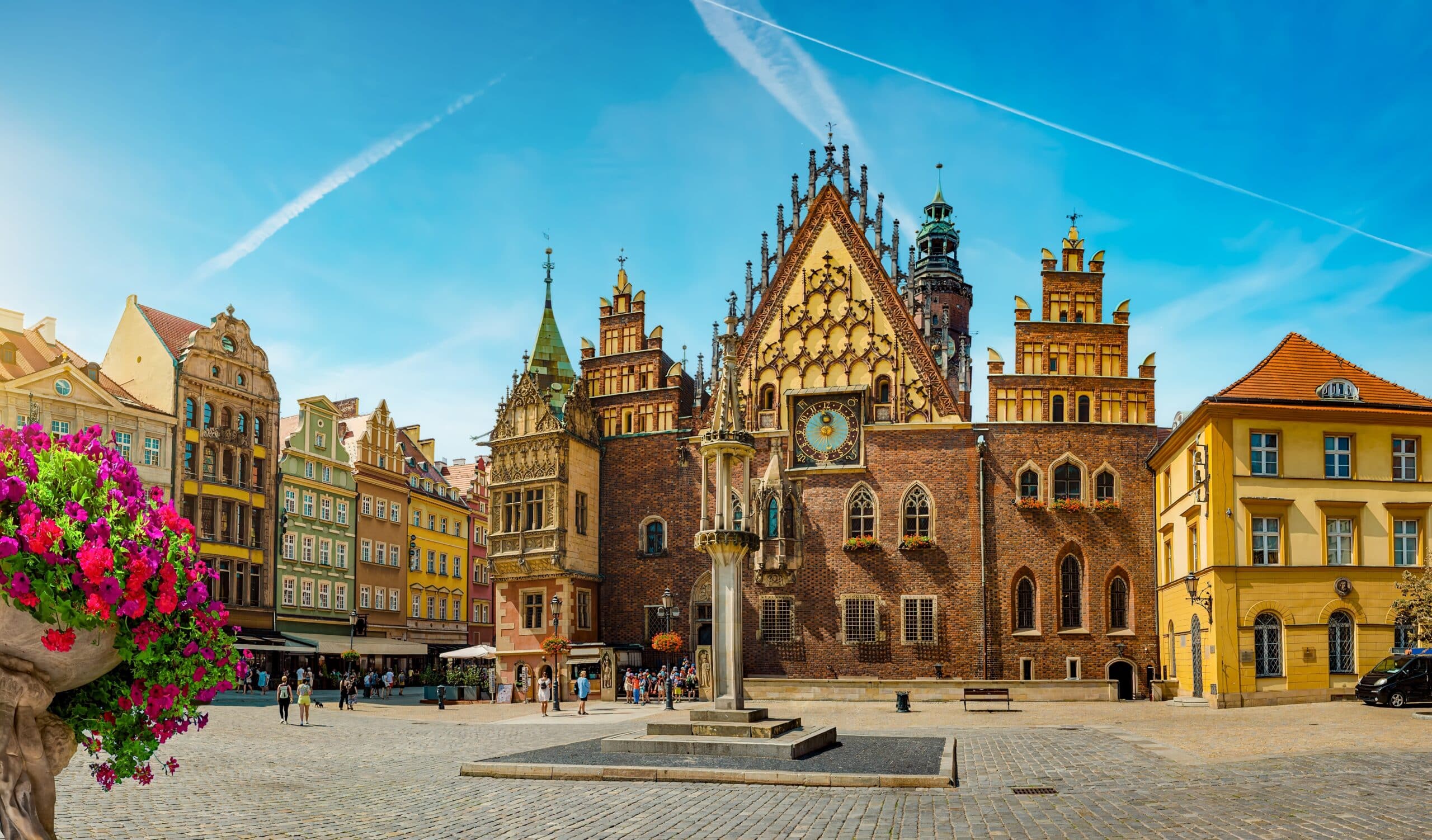
Wrocław, located in western Poland along the Oder River, is a city shaped by shifting borders and diverse cultural influences. Over centuries it has been governed by Polish, Bohemian, Austrian, Prussian, and German authorities, leaving a layered architectural legacy.
The Market Square forms the vibrant center, surrounded by colorful townhouses and the Gothic Old Town Hall. The square reflects medieval prosperity, while cafés and cultural events sustain contemporary energy.
Wrocław is built upon a network of islands and bridges, earning it comparisons to Venice. Cathedral Island, the city’s oldest district, features towering churches and cobbled lanes illuminated by traditional gas lamps.
The Centennial Hall, a UNESCO-listed modernist structure, represents early 20th-century engineering innovation. Nearby parks and exhibition grounds expand the cultural landscape beyond the medieval core.
The city is also known for its small bronze dwarf statues scattered throughout streets and squares, symbolizing civic humor and resistance movements of the communist era.
Universities and theaters reinforce Wrocław’s intellectual character. Festivals celebrating film, music, and literature highlight its role as a creative center.
Wrocław harmonizes architectural diversity, riverine geography, and cultural vitality. Its bridges and historic squares reflect centuries of transformation within western Poland.
26. Poznań
Poznań lies in western Poland and is regarded as one of the country’s oldest cities. It played a foundational role in the early Polish state, serving as an important political and religious center during the 10th century.
The Old Market Square anchors the historic district, where Renaissance-style townhouses frame a lively public space. At noon, mechanical goats emerge from the Town Hall tower, a local tradition that attracts visitors daily.
Ostrów Tumski, the Cathedral Island, contains one of Poland’s oldest cathedrals. The burial site of early rulers reinforces Poznań’s historical importance in the formation of Polish identity.
Today, Poznań is also a dynamic economic hub known for international trade fairs and modern industry. Contemporary business districts complement its preserved heritage.
Green parks and lakes surround the city, offering recreational opportunities. Cultural institutions and festivals contribute to an active civic life.
Poznań harmonizes foundational history, commercial vitality, and regional pride. Its blend of medieval roots and modern enterprise reflects Poland’s broader evolution.
25. Zakopane
Zakopane is situated at the foot of the Tatra Mountains in southern Poland and is widely regarded as the country’s winter capital. Its alpine setting distinguishes it from Poland’s lowland cities.
The town developed in the 19th century as an artistic retreat and mountain resort. Wooden villas built in the distinctive Zakopane Style reflect regional highland architecture influenced by local craftsmanship.
Krupówki Street serves as the central promenade, lined with shops and restaurants featuring highlander traditions. Folk music, wool garments, and smoked cheeses emphasize the area’s cultural identity.
Zakopane provides access to Tatra National Park, where hiking trails lead to mountain lakes and rugged peaks. In winter, ski slopes and snow-covered forests attract seasonal visitors.
The Gubałówka funicular offers panoramic views over the valley and surrounding mountains. Seasonal festivals celebrate highland folklore and craftsmanship.
Zakopane harmonizes mountain landscape, folk heritage, and recreational tourism. Its wooden architecture and dramatic alpine backdrop create a distinct identity within Poland’s southern frontier.
24. Lublin
Lublin, located in eastern Poland near the borders of Ukraine and Belarus, has long served as a crossroads between Western and Eastern Europe. Its multicultural past shaped a city influenced by Polish, Jewish, and Lithuanian traditions.
The Old Town rises on a hill, accessed through the Kraków Gate. Cobblestone streets lead to Market Square, where Renaissance townhouses display decorative façades. Lublin Castle stands prominently nearby, combining medieval fortifications with later architectural additions.
The Chapel of the Holy Trinity inside the castle contains rare Byzantine-Ruthenian frescoes, reflecting the region’s historical diversity. This blending of Eastern and Western artistic styles distinguishes Lublin’s heritage.
Lublin played a crucial political role in 1569 with the Union of Lublin, which established the Polish-Lithuanian Commonwealth. The city thus became central to one of Europe’s largest early modern states.
Today, universities contribute youthful energy, while festivals celebrate literature, music, and theater. Cultural institutions preserve Jewish heritage, commemorating a community that once flourished here before the devastation of the Holocaust.
Green spaces and public squares soften the urban fabric, encouraging social life and outdoor events.
Lublin harmonizes multicultural legacy, Renaissance architecture, and intellectual vitality. Its eastern location and layered past make it one of Poland’s most historically nuanced cities.
23. Toruń
Toruń, situated along the Vistula River in northern Poland, is renowned for its exceptionally preserved medieval architecture. A member of the Hanseatic League, it prospered through trade and commerce during the Middle Ages.
The Old Town features Gothic brick buildings arranged around a spacious market square. The Town Hall and Cathedral of St. John the Baptist reflect the city’s civic and religious importance. Toruń’s defensive walls and leaning tower preserve its fortified character.
Toruń is famously the birthplace of astronomer Nicolaus Copernicus. His childhood home now serves as a museum, commemorating his contribution to scientific thought.
The city is also known for traditional gingerbread production, a craft dating back centuries. Bakeries continue to prepare ornate spiced biscuits using historic molds and recipes.
The riverside promenade offers views across the Vistula, reinforcing Toruń’s connection to trade routes. Cultural festivals and academic institutions sustain a lively atmosphere.
Toruń harmonizes Gothic architecture, scientific legacy, and culinary tradition. Its intact medieval streetscape secures its status as one of Poland’s most picturesque historic cities.
22. Białystok
Białystok lies in northeastern Poland near the borders of Belarus and Lithuania. Historically influenced by diverse communities, the city reflects a blend of cultural and religious traditions.
The Branicki Palace stands as Białystok’s architectural centerpiece. Often called the “Versailles of Podlasie,” the baroque residence is surrounded by formal gardens and terraces.
The city developed as a textile and industrial center during the 19th century. Today, universities and research institutions contribute to its educational prominence.
Białystok serves as a gateway to the Białowieża Forest, one of Europe’s last primeval woodlands. This protected environment is home to the European bison and extensive biodiversity.
Religious architecture in Białystok includes Catholic churches and Orthodox cathedrals, reflecting historical coexistence. Cultural festivals highlight regional traditions and cross-border connections.
Green parks and pedestrian spaces enhance the urban environment, encouraging recreation and community engagement.
Białystok harmonizes aristocratic architecture, natural proximity, and multicultural heritage. Its eastern setting and access to pristine forests distinguish it within Poland’s diverse regional landscape.
21. Szczecin
Szczecin lies in northwestern Poland near the German border, close to the Baltic Sea. Positioned along the Oder River and connected to maritime routes, the city developed as a significant port and shipbuilding center.
The Pomeranian Dukes’ Castle stands prominently in the historic center, reflecting Renaissance architecture and regional ducal authority. The castle complex today hosts cultural exhibitions and performances, reinforcing Szczecin’s artistic vitality.
Wide boulevards and star-shaped urban planning distinguish Szczecin from many other Polish cities. Influenced by 19th-century redevelopment under Prussian administration, the city features spacious avenues and green parks.
The Wały Chrobrego promenade overlooks the river, offering panoramic views of port facilities and waterways. Maritime museums and shipyards emphasize Szczecin’s nautical identity.
Following the Second World War, the city became part of Poland, leading to demographic and cultural transformation. Contemporary Szczecin balances industrial infrastructure with expanding cultural institutions and revitalized districts.
Festivals, music events, and waterfront gatherings animate public life throughout the year. Proximity to coastal landscapes and lakes enhances recreational opportunities.
Szczecin harmonizes ducal heritage, maritime industry, and urban greenery. Its distinctive layout and port character make it one of Poland’s most strategically positioned northern cities.
20. Olsztyn
Olsztyn, located in the Warmia region of northeastern Poland, is surrounded by forests and lakes that define its natural appeal. The city developed within the historic lands once governed by the Teutonic Order.
Olsztyn Castle, a Gothic brick fortress, stands as a testament to medieval defense architecture. Nicolaus Copernicus once administered the castle, linking the city to scientific history.
The Old Town features colorful façades, narrow streets, and a central square framed by historic buildings. St. James Cathedral adds vertical emphasis to the skyline.
Olsztyn is often described as the gateway to the Masurian Lake District. Numerous lakes within and around the city offer sailing, kayaking, and fishing opportunities. The surrounding woodlands provide hiking and cycling routes.
Modern Olsztyn maintains a balance between university life and regional tradition. Cultural events celebrate local heritage while supporting contemporary artistic expression.
Green spaces integrate seamlessly into the urban landscape, enhancing quality of life and reinforcing the city’s connection to nature.
Olsztyn harmonizes medieval architecture, scientific legacy, and lakeside tranquility. Its natural surroundings and preserved heritage distinguish it as a serene northern destination.
19. Katowice
Katowice lies in southern Poland within the Silesian region, historically associated with coal mining and heavy industry. Over recent decades, the city has undergone substantial transformation.
Industrial complexes once defined the skyline, but redevelopment projects have converted former mines into cultural venues. The Silesian Museum, built on the grounds of a former coal mine, symbolizes this transition.
Spodek Arena, a distinctive domed structure, hosts concerts and sporting events, reinforcing Katowice’s modern identity. The city has also gained recognition for its music festivals and contemporary arts scene.
Wide avenues and postwar architecture characterize much of the urban layout. Green parks provide relief from industrial heritage sites, offering recreational space.
Katowice serves as a central hub within the Upper Silesian metropolitan area. Universities and technology sectors contribute to economic diversification beyond mining.
The city’s transformation reflects broader regional change from industrial dependency to cultural and technological innovation. Public spaces now emphasize creativity and sustainability.
Katowice harmonizes industrial history, architectural reinvention, and cultural resurgence. Its evolution from mining center to modern metropolis marks it as one of Poland’s most dynamic urban stories.
18. Gdynia
Gdynia, located on the Baltic coast north of Gdańsk, is one of Poland’s youngest major cities. Developed primarily in the interwar period, it was constructed to provide Poland with a modern seaport following the restoration of independence in 1918.
Unlike medieval coastal towns, Gdynia reflects early 20th-century modernist architecture. White façades, geometric forms, and streamlined designs characterize much of the city center. This cohesive urban style distinguishes it architecturally from neighboring Gdańsk.
The port remains central to Gdynia’s identity. Shipyards, maritime academies, and docked museum vessels emphasize its nautical heritage. The waterfront promenade and marina offer scenic views of the Baltic Sea.
Cultural institutions, including museums dedicated to emigration and naval history, explore themes of migration and maritime development. Beaches along the coast provide recreational opportunities, especially during summer.
Gdynia forms part of the Tricity metropolitan area alongside Gdańsk and Sopot, yet it retains a distinct character shaped by modern planning and maritime ambition.
The city hosts film festivals and open-air events that animate public spaces. Green hills surrounding the urban core provide hiking trails and panoramic viewpoints.
Gdynia harmonizes interwar modernism, maritime industry, and coastal recreation. Its purposeful design and youthful energy make it a unique addition to Poland’s Baltic landscape.
17. Sopot
Sopot lies between Gdańsk and Gdynia along the Baltic shoreline and is widely regarded as Poland’s premier seaside resort. Its development began in the 19th century, when it became a fashionable spa destination.
The wooden pier extends far into the sea and remains one of the longest in Europe. The pier and adjacent promenade define the city’s leisure culture, drawing visitors seeking relaxation by the water.
Elegant villas and historic hotels reflect Sopot’s resort heritage. The Forest Opera, an open-air amphitheater set among wooded hills, hosts international music festivals and performances.
Sopot’s beaches stretch along a sheltered bay, offering swimming and sunbathing during warmer months. The town’s compact center encourages pedestrian exploration.
While tourism is central to its economy, Sopot maintains residential districts shaded by trees and quiet streets. Its blend of spa history and modern nightlife creates a lively seasonal atmosphere.
Cultural events, including music competitions and art exhibitions, reinforce Sopot’s creative identity within the Tricity area.
Sopot harmonizes seaside elegance, spa tradition, and cultural festivity. Its long pier and resort architecture secure its reputation as one of Poland’s most recognizable coastal destinations.
16. Zamość
Zamość, located in southeastern Poland, is celebrated as a Renaissance “ideal city.” Founded in the late 16th century by Chancellor Jan Zamoyski, it was designed according to Italian urban planning principles.
The Great Market Square forms the heart of Zamość, framed by arcaded townhouses painted in soft pastel hues. The Town Hall, with its grand staircase and tower, anchors the composition and reflects Renaissance symmetry.
Fortifications once encircled the city, underscoring its strategic importance. Portions of these defenses remain visible, preserving the original layout.
Zamość Cathedral adds ecclesiastical grandeur, while the former Zamoyski Palace complex reflects aristocratic patronage. The city’s design integrates residential, administrative, and commercial functions within a cohesive plan.
Recognized as a UNESCO World Heritage site, Zamość exemplifies Renaissance urban theory translated into a functioning city. Cultural festivals and open-air events animate its arcaded squares.
Despite its architectural precision, Zamość maintains a relaxed provincial atmosphere. Cafés and markets foster local community life.
Zamość harmonizes Renaissance planning, aristocratic vision, and preserved fortifications. Its carefully ordered layout makes it one of Poland’s most architecturally distinctive historic towns.
15. Bydgoszcz
Bydgoszcz, situated along the Brda and Vistula rivers in northern Poland, developed historically as a trading and industrial center. Its network of waterways shaped both its economy and architectural character.
The Old Town centers around Market Square, where restored townhouses reflect Gothic and baroque influences. The Bydgoszcz Canal, constructed in the 18th century, connected major river systems and facilitated commerce between regions.
Mill Island forms one of the city’s most distinctive districts. Surrounded by water, it features historic granaries converted into museums and cultural venues. This riverside setting provides scenic walkways and gathering spaces.
Bydgoszcz is also known for its musical heritage. The Pomeranian Philharmonic and opera institutions contribute to a vibrant cultural scene. Public sculptures, including the iconic “Man Crossing the River,” add contemporary artistic expression.
Modern redevelopment has revitalized former industrial areas, integrating residential spaces with leisure facilities. Parks and riverbanks offer recreational opportunities throughout the year.
Bydgoszcz harmonizes riverine commerce, industrial history, and artistic vitality. Its waterways and cultural institutions position it as one of northern Poland’s evolving urban centers.
14. Rzeszów
Rzeszów lies in southeastern Poland near the Carpathian foothills and serves as the capital of the Subcarpathian region. Though smaller than many major Polish cities, it has grown into an important administrative and economic hub.
The Market Square anchors the Old Town, surrounded by colorful façades and arcaded buildings. Beneath the square, an underground tourist route reveals medieval cellars once used for storage and trade.
Rzeszów Castle reflects aristocratic influence, while churches throughout the city illustrate centuries of religious life. The Lubomirski family played a key role in shaping the city’s architectural heritage.
In recent decades, Rzeszów has developed as a center for aviation and technology industries. Universities and research institutions contribute to innovation and education.
The city maintains green boulevards and riverside paths that enhance urban livability. Cultural festivals and open-air events animate public spaces during warmer months.
Rzeszów harmonizes historic foundations, technological advancement, and regional pride. Its growth within southeastern Poland reflects both tradition and forward-looking ambition.
13. Częstochowa
Częstochowa, located in southern Poland, is one of the country’s most significant pilgrimage destinations. The city is internationally known for the Jasna Góra Monastery, home to the revered icon of the Black Madonna.
The monastery complex rises on a hill overlooking the city, surrounded by fortified walls. Pilgrims from across Poland and beyond visit annually, especially during major religious celebrations.
The basilica within Jasna Góra houses the sacred icon, believed by many to possess protective and spiritual significance. Religious processions and ceremonies reinforce Częstochowa’s identity as a spiritual center.
Beyond the monastery, the city features parks and avenues that accommodate large gatherings of visitors. Museums document both religious devotion and regional history.
Częstochowa’s development has been closely tied to its pilgrimage economy, yet it also supports educational institutions and cultural initiatives. Local crafts and religious souvenirs remain integral to the urban landscape.
The surrounding Jura Krakowsko-Częstochowska region offers limestone cliffs and medieval castle ruins, adding natural and historical diversity.
Częstochowa harmonizes faith, fortification, and landscape. Its enduring role as a pilgrimage site secures its place among Poland’s most spiritually significant destinations.
12. Łódź
Łódź, located in central Poland, emerged in the 19th century as a major textile manufacturing center. Rapid industrialization transformed it from a small settlement into one of the largest cities in the region.
Piotrkowska Street forms the city’s main artery, stretching for several kilometers and lined with ornate tenement houses, factories, and palaces once owned by industrial magnates. These buildings reflect eclectic architectural styles, including Art Nouveau and neo-Renaissance influences.
The Manufaktura complex, developed within a former textile factory, symbolizes Łódź’s post-industrial revitalization. Today it houses museums, shops, and cultural venues while preserving red-brick industrial structures.
Łódź has also become known for its film school, one of Europe’s most respected institutions. Directors and cinematographers trained here have shaped Polish and international cinema.
Street art and murals decorate numerous façades, reinforcing the city’s creative reinvention. Parks and green courtyards provide contrast to industrial heritage sites.
Though marked by economic transitions, Łódź demonstrates resilience through adaptive reuse and cultural innovation. Its urban landscape tells the story of rapid growth, decline, and renewal.
Łódź harmonizes industrial legacy, architectural diversity, and artistic revival. Its transformation from textile powerhouse to cultural center defines one of Poland’s most compelling urban narratives.
11. Malbork
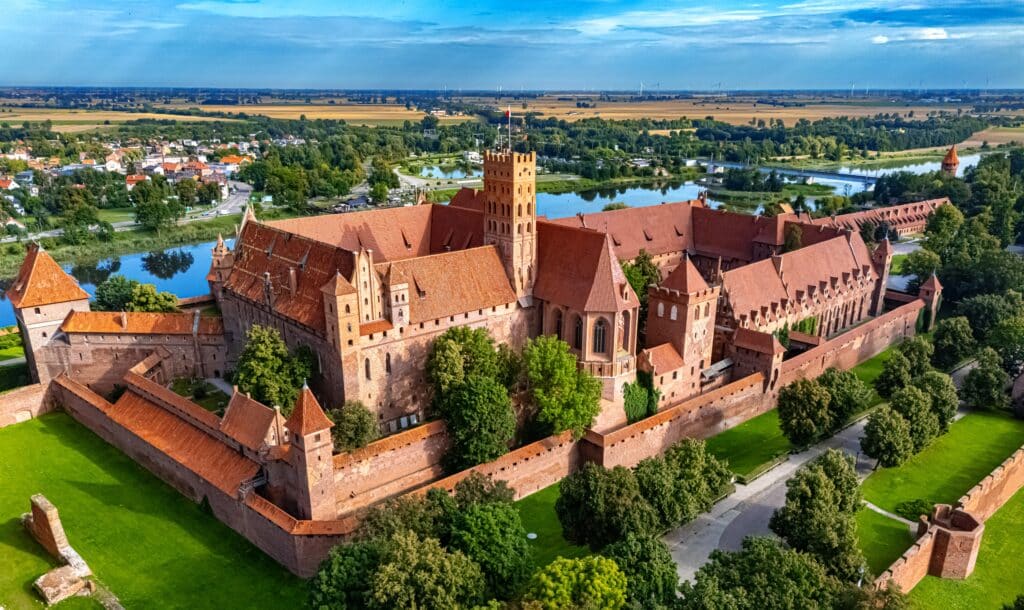
Malbork, situated in northern Poland along the Nogat River, is internationally recognized for its monumental medieval castle. Constructed by the Teutonic Knights in the 13th century, Malbork Castle is one of the largest brick fortresses in the world.
The castle complex comprises multiple courtyards, towers, and defensive walls arranged in a hierarchical design. Its Gothic architecture reflects both military precision and administrative authority.
Designated a UNESCO World Heritage site, the fortress preserves chapels, refectories, and grand halls that illustrate medieval monastic life. Restoration efforts have maintained the castle’s imposing character.
The town of Malbork developed around the fortress, serving as a strategic center for regional governance and trade. Today, museums within the castle explore medieval warfare, craftsmanship, and political history.
The surrounding river landscape enhances the dramatic setting. Seasonal events and historical reenactments bring aspects of the medieval era to life.
Despite its small size, Malbork attracts visitors from around the world drawn by its architectural scale and historical significance.
Malbork harmonizes monastic power, Gothic fortification, and riverside scenery. Its vast brick citadel stands as one of Poland’s most impressive surviving medieval landmarks.
10. Hel
Hel occupies the tip of the Hel Peninsula, a narrow strip of land extending into the Baltic Sea in northern Poland. Surrounded by water on both sides, the town is uniquely positioned between the open sea and the Bay of Puck.
Historically, Hel functioned as a fishing settlement and later as a strategic naval base. Coastal fortifications and military museums recall its defensive importance during the 20th century.
Today, Hel is primarily associated with maritime recreation and natural beauty. Sandy beaches line the peninsula, while winds attract sailing and windsurfing enthusiasts. The surrounding waters support marine research and conservation efforts.
The town maintains a modest harbor with fishing boats and pleasure craft. Lighthouses and wooden cottages contribute to its coastal atmosphere.
The peninsula’s protected areas preserve dunes and bird habitats, making it significant for ecological tourism. Cycling paths run along its length, offering scenic views of the Baltic.
Though geographically remote, Hel remains accessible by rail and ferry, connecting it to larger urban centers. Its small scale encourages relaxed exploration.
Hel harmonizes maritime heritage, military history, and coastal ecology. Its narrow peninsula setting creates one of Poland’s most distinctive seaside landscapes.
9. Sandomierz
Sandomierz, located on the Vistula River in southeastern Poland, is one of the country’s oldest towns. Its elevated position above the river provided natural defense and strategic control of trade routes.
The Market Square forms the heart of Sandomierz, surrounded by Renaissance townhouses and anchored by the Gothic Town Hall. Beneath the square lies an underground network of cellars and corridors once used by merchants.
Sandomierz Cathedral, with its brick façade and ornate interior, reflects centuries of religious patronage. The nearby castle, though rebuilt over time, continues to symbolize regional authority.
The town’s narrow streets preserve a medieval atmosphere, while panoramic views from surrounding hills reveal the Vistula valley. Loess ravines cut through the landscape, creating unusual geological formations.
Sandomierz gained modern recognition through film and television, which highlighted its picturesque setting. Cultural festivals and historical reenactments animate its public spaces.
Despite its modest size, Sandomierz maintains strong historical identity. Local crafts and vineyards contribute to the regional economy.
Sandomierz harmonizes medieval layout, riverine trade heritage, and scenic topography. Its preserved architecture and elevated views make it one of Poland’s most atmospheric historic towns.
8. Olsztyn
Olsztyn lies in northeastern Poland within the lake-rich region of Warmia and Masuria. Surrounded by forests and waterways, it combines urban life with natural landscapes.
The Old Town centers on Market Square, where Gothic structures reflect Teutonic and Polish influences. Olsztyn Castle, once administered by Nicolaus Copernicus, houses a museum dedicated to regional history and astronomy.
Lakes within the city boundaries, including Lake Ukiel, provide opportunities for sailing, swimming, and winter recreation. Parks and wooded trails extend from residential districts into surrounding countryside.
Olsztyn’s development was shaped by shifting borders and political changes. Its architecture reflects Prussian, German, and Polish periods of governance.
Universities and cultural institutions support a lively student population. Concerts and festivals enliven public spaces during warmer months.
The city’s modest scale encourages exploration by foot or bicycle, while scenic viewpoints overlook interconnected lakes.
Olsztyn harmonizes Gothic heritage, astronomical legacy, and lake-district scenery. Its integration of nature and history distinguishes it within northeastern Poland.
7. Toruń
Toruń, situated along the Vistula River in north-central Poland, is renowned for its well-preserved medieval architecture. Founded by the Teutonic Knights in the 13th century, it became a major member of the Hanseatic League.
The Old Town features brick Gothic churches, defensive walls, and merchant houses that reflect its commercial prosperity. The Town Hall dominates the central square, serving historically as administrative and civic center.
Toruń is the birthplace of Nicolaus Copernicus, whose legacy is commemorated through museums and monuments. His association reinforces the city’s scientific significance.
The Leaning Tower, part of former fortifications, illustrates medieval engineering and local legend. Riverside promenades provide views of Gothic silhouettes against the Vistula skyline.
Toruń is also known for traditional gingerbread, produced according to recipes dating back centuries. Cultural events celebrate both historical heritage and culinary identity.
Designated a UNESCO World Heritage site, Toruń preserves its medieval urban layout with remarkable integrity.
Toruń harmonizes Hanseatic commerce, Gothic architecture, and scientific heritage. Its red-brick skyline remains one of Poland’s most iconic historic panoramas.
6. Kazimierz Dolny
Kazimierz Dolny lies along the Vistula River in eastern Poland and is known for its artistic atmosphere and Renaissance architecture. Historically a trading port, it flourished during the 16th and 17th centuries.
The Market Square is framed by ornate townhouses decorated with intricate stone carvings. The Parish Church and castle ruins on nearby hills provide elevated viewpoints over the river valley.
Wooden granaries along the riverbank recall the town’s former role in grain trade. Today, galleries and studios occupy historic buildings, attracting artists and visitors alike.
Surrounding hills are cut by deep loess ravines, creating distinctive walking routes. Seasonal festivals celebrate film, music, and visual arts.
Kazimierz Dolny retains a relaxed pace, especially outside peak summer months. Its compact size allows exploration on foot, from riverside paths to scenic hilltops.
The town’s preservation and creative spirit make it a cultural retreat within eastern Poland.
Kazimierz Dolny harmonizes Renaissance elegance, river trade history, and artistic vitality. Its picturesque setting secures its place among Poland’s most charming small towns.
5. Kielce
Kielce, located in south-central Poland, lies amid the Świętokrzyskie Mountains, one of the country’s oldest geological regions. Though smaller than many provincial capitals, it plays an important administrative and cultural role.
The Market Square forms the historical core, surrounded by townhouses and anchored by the former Bishops’ Palace. This 17th-century baroque residence reflects ecclesiastical influence and now houses a national museum.
Kielce’s proximity to nature defines much of its appeal. Forested hills and limestone formations surround the city, offering hiking trails and scenic viewpoints. The Kadzielnia Nature Reserve, located near the center, features exposed rock faces and an amphitheater used for concerts.
Religious architecture, including the Cathedral Basilica, highlights the city’s historical ties to the Church. Museums explore regional folklore and geology, emphasizing local identity.
Modern Kielce supports trade fairs and exhibitions that attract business visitors from across Poland. Educational institutions contribute to a steady student presence.
Though less internationally known, Kielce offers a balance of cultural landmarks and natural surroundings. Its manageable scale allows visitors to explore both urban and outdoor environments within short distances.
Kielce harmonizes baroque heritage, geological uniqueness, and regional tradition. Its setting among ancient hills distinguishes it within Poland’s interior landscape.
4. Bielsko-Biała
Bielsko-Biała, situated at the foothills of the Beskid Mountains in southern Poland, combines urban industry with alpine scenery. Historically formed from two neighboring towns, it developed as a textile and manufacturing center.
The Old Town features arcaded buildings and a market square reflecting Austrian and Central European influences. Bielsko Castle, overlooking the center, houses a museum documenting regional history.
The surrounding mountains shape the city’s identity. Cable cars and hiking routes lead into the Beskids, making Bielsko-Biała a gateway for outdoor recreation. Winter sports attract visitors during colder months.
Cultural institutions, including theaters and galleries, enrich urban life. The city also has strong ties to animation and film production, contributing to Poland’s artistic output.
Architecturally, Bielsko-Biała displays eclectic styles, from Art Nouveau façades to modern residential districts. Parks and green spaces integrate seamlessly with hillside landscapes.
Its proximity to both Kraków and the Czech border enhances cross-regional connections. Industrial transformation in recent decades has diversified its economy.
Bielsko-Biała harmonizes mountain proximity, industrial legacy, and cultural vitality. Its dual-town origins and scenic backdrop make it a distinctive southern Polish destination.
3. Tatra National Park
Tatra National Park, located in southern Poland along the border with Slovakia, protects the highest range of the Carpathian Mountains. Established in 1954, it encompasses alpine peaks, glacial lakes, deep valleys, and extensive forest ecosystems. The park forms the Polish portion of the broader Tatra mountain system, sharing ecological continuity with its Slovak counterpart.
The highest summit on the Polish side is Rysy, rising to 2,499 meters above sea level. Jagged granite ridges and dramatic rock formations characterize the High Tatras, while the Western Tatras feature gentler slopes and limestone formations. Evidence of past glaciation is visible in cirque lakes such as Morskie Oko, one of the most visited natural sites in the region.
Biodiversity remains central to the park’s protection efforts. Forested lower elevations consist primarily of spruce, beech, and fir, while alpine meadows dominate higher altitudes. Wildlife includes chamois, marmots, lynx, and brown bears. Strict conservation measures regulate tourism to preserve fragile habitats.
The town of Zakopane serves as the main gateway to the park. Known for its distinctive wooden architecture and highland culture, Zakopane supports tourism while maintaining strong regional traditions.
Marked hiking trails lead visitors through valleys such as Kościeliska and Chochołowska, offering access to caves, waterfalls, and panoramic viewpoints. Winter months attract mountaineers and ski enthusiasts, though safety regulations remain essential due to rapidly changing alpine weather.
Tatra National Park represents Poland’s most mountainous landscape, combining ecological significance with cultural identity. Its protected status ensures that alpine ecosystems, geological formations, and traditional highland heritage remain preserved for future generations.
2. Gniezno
Gniezno, located in west-central Poland, is recognized as one of the earliest centers of the Polish state. It served as the first capital in the 10th century and holds deep symbolic importance.
Gniezno Cathedral dominates the city skyline and houses the relics of Saint Adalbert. The cathedral’s bronze doors depict scenes from his life and represent significant examples of Romanesque art.
The city’s hilltop location reflects its early defensive function. Archaeological findings reveal evidence of early medieval settlements and royal ceremonies.
Museums and interpretive centers present the beginnings of Polish monarchy and Christianity. Pilgrimages and religious celebrations continue to reinforce its spiritual role.
The Market Square and surrounding streets maintain a traditional layout, blending modern life with historical memory. Parks and lakes nearby provide recreational space.
Gniezno’s significance extends beyond architecture; it embodies the formative narrative of Polish identity.
Gniezno harmonizes early statehood, Romanesque artistry, and religious heritage. Its foundational role in national history distinguishes it among Poland’s historic cities.
1. Suwałki
Suwałki lies in northeastern Poland near the borders with Lithuania and Belarus. Known for its cool climate and glacial landscapes, it forms part of the Suwałki region characterized by rolling hills and clear lakes.
The city developed as a trade and administrative center influenced by Polish and Lithuanian cultures. The Market Square anchors the urban layout, surrounded by modest historic buildings.
Nearby Suwałki Landscape Park preserves post-glacial terrain, including moraines and forested valleys. Lakes and cycling routes attract nature enthusiasts seeking quieter destinations.
Cultural life reflects borderland diversity. Museums and festivals highlight regional traditions shaped by centuries of coexistence among different communities.
Though remote compared to major Polish cities, Suwałki maintains educational institutions and local industries. Its slower pace contrasts with urban centers farther west.
The surrounding countryside offers opportunities for kayaking, hiking, and wildlife observation. Seasonal changes dramatically transform the landscape.
Suwałki harmonizes glacial scenery, borderland heritage, and rural tranquility. Its northeastern location provides a distinctive perspective within Poland’s varied geographic tapestry.