
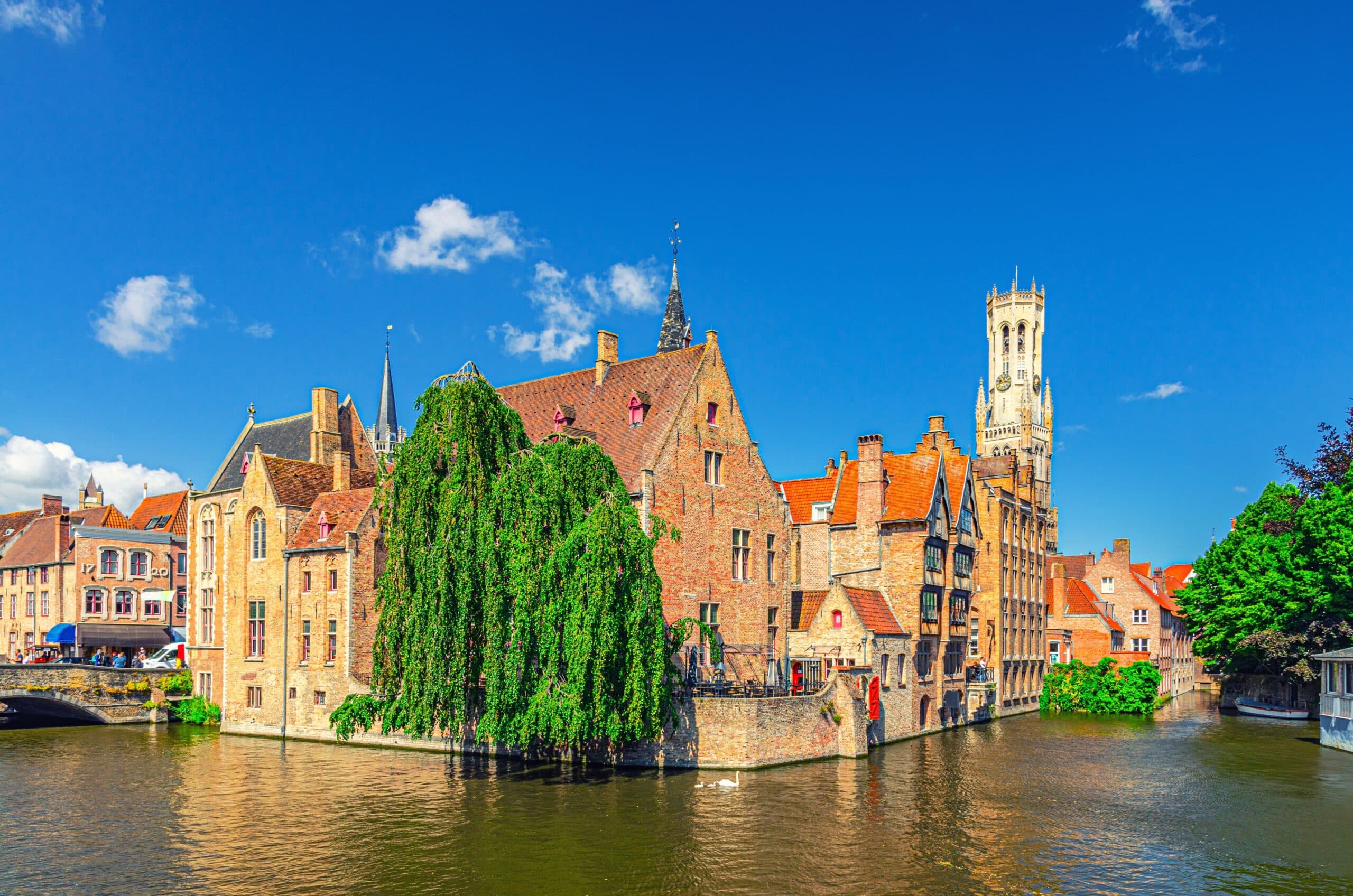
Belgium is a compact yet culturally rich country in Western Europe, bordered by France, the Netherlands, Germany, and Luxembourg. Despite its relatively small size, it presents a remarkable diversity of landscapes, languages, and architectural traditions. Positioned at the crossroads of European history, Belgium has long served as a meeting point for Latin and Germanic cultures, shaping its distinctive identity.
The country is divided into three regions: Flanders in the north, Wallonia in the south, and the bilingual Brussels-Capital Region at its center. Dutch, French, and German are officially recognized languages, reflecting the nation’s complex historical development. This multilingual character influences everything from cuisine to architecture and civic life.
Belgium is globally recognized for its medieval cities, Renaissance town halls, and grand market squares. Gothic cathedrals, ornate guild houses, and cobblestone streets evoke centuries of trade and craftsmanship. Many cities flourished during the Middle Ages as part of powerful commercial networks, leaving behind a legacy of prosperity visible in their historic cores.
Modern Belgium also plays a central political role in Europe. Brussels serves as headquarters for major international institutions, reinforcing the country’s diplomatic significance. At the same time, regional traditions remain strong, expressed through festivals, gastronomy, and local customs.
Belgian cuisine enjoys international admiration, particularly for chocolate, waffles, and an extensive brewing tradition. Culinary culture reflects both refinement and regional diversity.
Natural landscapes range from North Sea coastlines to the forested hills of the Ardennes. Scenic river valleys and rural villages provide contrast to urban sophistication.
Belgium’s appeal lies in its balance: medieval heritage alongside contemporary influence, local tradition alongside global importance. The following chapters explore thirty of its most remarkable destinations, each illustrating a different facet of this culturally layered European nation.
30. Brussels
Brussels, the capital of Belgium and the administrative heart of the European Union, combines medieval grandeur with modern political significance. Located in the center of the country, it serves as both a historic city and an international diplomatic hub.
The Grand Place forms the architectural centerpiece of Brussels. Surrounded by ornate guild houses and the Gothic Town Hall, the square reflects the prosperity of the city during the late Middle Ages. Recognized as a UNESCO World Heritage site, it remains one of Europe’s most impressive civic spaces.
Nearby, the Manneken Pis statue has become an enduring symbol of local humor and identity. The Galeries Royales Saint-Hubert, dating to the 19th century, showcase elegant arcades filled with cafés and chocolate boutiques.
Brussels also houses major European institutions, reinforcing its global relevance. Contemporary office complexes stand alongside historic neighborhoods, creating a cityscape that bridges centuries.
The Atomium, originally constructed for the 1958 World Expo, represents Belgium’s modern ambitions. Its futuristic structure contrasts with the medieval skyline yet has become an iconic landmark.
Culinary culture flourishes through waffle stands, artisanal chocolate shops, and a strong brewing tradition. Multilingualism shapes daily life, reflecting the city’s role as a cultural crossroads.
Brussels blends Gothic architecture, international governance, and vibrant urban life, establishing itself as both Belgium’s political center and a living testament to its layered history.
29. Bruges
Bruges, located in the Flemish region of northwestern Belgium, is one of Europe’s best-preserved medieval cities. Often referred to as the “Venice of the North,” it is defined by canals, cobbled streets, and stepped-gable houses.
The Markt square forms the historic heart of the city, dominated by the Belfry of Bruges. Visitors can climb the tower for panoramic views across red rooftops and church spires. Nearby, the Basilica of the Holy Blood preserves a revered religious relic.
Bruges prospered during the Middle Ages as a major trading port linked to the North Sea. Though its commercial importance declined in later centuries, this economic shift helped preserve its architectural heritage.
Canal boat tours reveal hidden courtyards and brick façades reflected in calm waters. Museums highlight Flemish painting traditions, including works associated with early Netherlandish masters.
Chocolate shops and lace boutiques reinforce traditional craftsmanship. Horse-drawn carriages add to the city’s romantic atmosphere.
Despite its popularity with visitors, Bruges retains a tranquil character, especially along quieter canal paths and residential quarters.
Bruges harmonizes mercantile history, religious architecture, and picturesque waterways. Its remarkable preservation offers an immersive experience of medieval Flanders.
28. Ghent
Ghent, situated at the confluence of the Scheldt and Lys rivers, is a dynamic Flemish city combining medieval power with contemporary creativity. During the Middle Ages, it rivaled Bruges as one of northern Europe’s wealthiest urban centers.
Gravensteen Castle rises prominently within the city center, recalling Ghent’s medieval authority. The Graslei and Korenlei quays display guild houses that once symbolized commercial prosperity along the riverbanks.
St. Bavo’s Cathedral houses the Ghent Altarpiece, a masterpiece of early Netherlandish painting. This artistic treasure underscores the city’s cultural significance.
Unlike many historic cities, Ghent integrates modern life seamlessly within its medieval framework. University institutions contribute to a youthful population and vibrant cultural scene.
Pedestrian-friendly streets encourage exploration of markets, cafés, and artisan shops. Festivals and light installations animate the city after sunset.
Sustainable urban policies and restored industrial districts reflect Ghent’s forward-looking approach while honoring its past.
Ghent balances architectural heritage, artistic achievement, and modern vitality, offering a multifaceted portrait of Flemish identity within contemporary Belgium.
27. Antwerp
Antwerp, located along the Scheldt River in Flanders, has long been one of Europe’s principal trading cities. During the 16th century, it emerged as a major commercial and artistic center, shaping its enduring reputation for wealth and creativity.
The Cathedral of Our Lady dominates the skyline with its soaring Gothic spire. Inside hang several masterpieces by Peter Paul Rubens, whose artistic legacy remains deeply connected to the city. Rubens’ former residence now functions as a museum, illustrating Antwerp’s importance in Baroque art.
The Grote Markt forms the historic core, surrounded by ornate guild houses and the Renaissance City Hall. The Brabo Fountain at its center commemorates a local legend tied to the city’s name.
Antwerp is also internationally recognized as a diamond trading capital. The Diamond District near the central station reflects centuries of expertise in cutting and commerce.
Modern Antwerp embraces fashion and design, supported by its Royal Academy of Fine Arts. Contemporary architecture and revitalized docklands demonstrate ongoing urban evolution.
The port of Antwerp remains one of Europe’s largest, reinforcing the city’s maritime heritage. River views and cultural festivals animate public spaces throughout the year.
Antwerp blends artistic brilliance, mercantile strength, and modern creativity, presenting a city shaped by global trade and enduring cultural influence.
26. Leuven
Leuven, situated east of Brussels in Flemish Brabant, is widely known for its historic university and youthful atmosphere. Founded in 1425, the Catholic University of Leuven is one of Europe’s oldest institutions of higher learning.
The Town Hall, located on the Grote Markt, exemplifies elaborate Brabantine Gothic architecture. Its façade is adorned with numerous sculpted figures representing historical and biblical personalities. Opposite stands St. Peter’s Church, home to significant Flemish artworks.
University colleges and libraries shape Leuven’s architectural landscape. The Grand Beguinage, a UNESCO-listed complex, preserves a peaceful enclave of historic houses and gardens.
Leuven is also associated with Belgium’s brewing tradition. Major breweries have operated here for centuries, contributing to local economic life and international recognition.
Cafés and terraces fill the Oude Markt, often referred to as the longest bar in Europe due to its concentration of establishments. Students contribute to a lively cultural calendar of events and festivals.
Despite its vibrant energy, Leuven maintains a compact and walkable center rich in history. Its blend of academic prestige, Gothic artistry, and brewing heritage defines its unique character.
Leuven harmonizes scholarship, architectural refinement, and youthful vitality within the heart of Belgium.
25. Dinant
Dinant, located in the Walloon region along the Meuse River, is distinguished by its dramatic natural setting. Steep limestone cliffs rise behind the town, creating a striking backdrop to its riverside architecture.
The Collegiate Church of Notre Dame, with its distinctive bulb-shaped tower, stands prominently along the riverbank. Above it, the Citadel of Dinant crowns a rocky outcrop, accessible by cable car or steep stairway.
Dinant is closely associated with Adolphe Sax, inventor of the saxophone, who was born here in the 19th century. Sculptures and installations throughout the town celebrate this musical heritage.
Boat cruises along the Meuse reveal scenic rock formations and tranquil countryside. The surrounding Ardennes region offers hiking and outdoor exploration opportunities.
The town’s compact center features colorful houses and small squares overlooking the river. Local cuisine highlights regional Walloon specialties.
Dinant’s history includes periods of conflict, yet careful restoration has preserved its picturesque character. The interplay of cliff, river, and church spire creates one of Belgium’s most recognizable landscapes.
Dinant blends natural drama, musical legacy, and riverside charm, offering a distinctive perspective on Wallonia’s cultural and geographic identity.
24. Namur
Namur, the capital of Wallonia, lies at the confluence of the Meuse and Sambre rivers. Its strategic position has defined its history for centuries, making it one of Belgium’s most important fortified cities.
The Citadel of Namur dominates the skyline from a rocky ridge above the rivers. Expanded over successive centuries, it represents one of Europe’s most extensive fortress complexes. Visitors can explore underground passages and panoramic viewpoints overlooking the river valleys.
The city center features a blend of baroque and classical architecture. The Cathedral of Saint Aubain, constructed in the 18th century, contrasts with medieval streets that wind toward lively squares and cafés.
Namur’s rivers shape its atmosphere, offering boat excursions and waterfront promenades. Bridges connect historic quarters with newer districts, reinforcing its role as a regional administrative hub.
Cultural life thrives through festivals, theaters, and local markets. The city’s slower pace compared to Brussels provides a more intimate experience of Walloon heritage.
Namur harmonizes military history, riverside scenery, and civic vitality, representing a central pillar of southern Belgium’s identity.
23. Mechelen
Mechelen, located between Brussels and Antwerp, flourished during the Burgundian Netherlands as a political and religious center. Its historic core reflects this period of prominence.
St. Rumbold’s Cathedral anchors the skyline with its unfinished yet imposing tower. Visitors who climb the tower are rewarded with expansive views across Flanders. The cathedral’s carillon tradition remains an important cultural feature.
The Grote Markt forms the heart of the city, surrounded by elegant civic buildings and cafés. The Palace of Margaret of Austria recalls Mechelen’s role as a seat of governance in the 16th century.
Mechelen’s canals and quiet streets create a tranquil urban environment. Restoration efforts have preserved façades while integrating contemporary design.
Museums explore themes of religious art and civic history, underscoring the city’s former influence. Despite its modest size, Mechelen offers a refined architectural coherence.
Mechelen blends Burgundian heritage, religious artistry, and peaceful canals, presenting a compact yet historically significant Flemish destination.
22. Ypres
Ypres, located in West Flanders near the French border, holds profound historical significance due to its role in the First World War. The city was largely destroyed during the conflict and later meticulously reconstructed.
The Cloth Hall dominates the central square, symbolizing Ypres’ medieval prosperity as a textile center. Adjacent stands St. Martin’s Cathedral, rebuilt to reflect its original Gothic design.
The Menin Gate Memorial commemorates soldiers who died in the surrounding battlefields. A daily ceremony honors their memory, reinforcing Ypres’ solemn character.
Beyond its wartime associations, Ypres retains a peaceful town center with cafés and markets. The surrounding countryside includes preserved trenches and cemeteries that serve as places of reflection.
Museums document the impact of global conflict on local communities. Despite the devastation it endured, Ypres demonstrates resilience through careful restoration.
Ypres combines medieval mercantile history with profound remembrance, offering one of Belgium’s most historically significant and emotionally resonant destinations.
21. Ostend
Ostend, located on Belgium’s North Sea coast, has long been regarded as the country’s principal seaside resort. Its maritime identity developed in the 19th century when improved rail connections made coastal leisure accessible to urban residents.
The wide sandy beach stretches along a lively promenade lined with cafés and Belle Époque buildings. The Royal Galleries, commissioned during the reign of King Leopold II, reflect Ostend’s transformation into an elegant resort destination.
The Mercator, a restored training ship anchored in the harbor, symbolizes the city’s seafaring heritage. Nearby museums explore coastal art and maritime history, reinforcing Ostend’s cultural dimension beyond tourism.
Fishing boats and pleasure craft share the harbor, maintaining links to traditional industries. The North Sea shapes the city’s rhythm, with changing tides and brisk winds defining daily life.
Seasonal festivals, open-air markets, and seafood restaurants animate the waterfront throughout the year. Fresh mussels and shrimp remain culinary highlights of the region.
Ostend blends coastal recreation, royal ambition, and maritime tradition. Its expansive beach and cultural institutions present a dynamic contrast to Belgium’s inland medieval cities.
20. Liège
Liège, situated along the Meuse River in eastern Wallonia, is one of Belgium’s largest cities and a historic industrial powerhouse. Its development was closely tied to coal mining and steel production, shaping a strong regional identity.
The Prince-Bishops’ Palace stands prominently on Place Saint-Lambert, recalling Liège’s ecclesiastical authority during the Middle Ages. St. Paul’s Cathedral adds Gothic elegance to the urban landscape.
The Montagne de Bueren staircase, consisting of hundreds of steps, offers panoramic views over rooftops and river valleys. The Meuse River continues to structure the city’s layout, linking historic districts with modern redevelopment projects.
Liège is known for its vibrant markets and lively cultural scene. The Sunday market along the riverbank attracts visitors with local produce and crafts.
Industrial heritage sites have been adapted for contemporary use, demonstrating urban renewal efforts. Liège’s railway station, designed with sweeping modern lines, symbolizes its forward-looking transformation.
Liège combines industrial resilience, ecclesiastical heritage, and cultural vitality, offering a distinctly Walloon urban experience shaped by both history and reinvention.
19. Mons
Mons, located in the province of Hainaut, has evolved from a medieval fortified town into a vibrant cultural center. Its historic core reflects centuries of civic development.
The Grand-Place forms the heart of the city, surrounded by ornate façades and the Town Hall. The collegiate church of Sainte-Waudru rises nearby, showcasing Brabantine Gothic architecture.
Mons is famous for the annual Doudou festival, recognized by UNESCO for its intangible cultural heritage. This lively procession reflects deep-rooted local traditions.
The Belfry of Mons, the only baroque belfry in Belgium, stands on a hill overlooking the town. Visitors can climb the tower for expansive views across the region.
In recent years, Mons has invested in cultural infrastructure, including museums dedicated to art and history. Its designation as a European Capital of Culture strengthened its international profile.
Mons blends medieval foundations, festive tradition, and modern cultural ambition, representing an evolving Walloon city with enduring historic charm.
18. Spa
Spa, located in the Ardennes region of eastern Belgium, is internationally known as the origin of the word “spa.” Its mineral springs have attracted visitors seeking therapeutic treatments since Roman times, establishing the town as one of Europe’s earliest wellness destinations.
During the 18th and 19th centuries, Spa became a fashionable retreat for aristocrats and intellectuals. Elegant villas and neoclassical buildings reflect this era of prestige. The thermal baths remain central to the town’s identity, offering modern facilities while maintaining historic continuity.
The Parc de Sept Heures provides a landscaped setting for promenades, concerts, and cultural events. Surrounding forests and rolling hills enhance Spa’s tranquil atmosphere and support hiking and cycling opportunities.
The town is also associated with motorsport. The nearby Circuit de Spa-Francorchamps is one of the world’s most renowned racing tracks, hosting major international competitions. This contrast between relaxation and high-speed sport adds a unique dimension to Spa’s character.
Local cafés and restaurants emphasize Ardennes cuisine, featuring hearty regional dishes. Seasonal festivals animate the town throughout the year.
Spa harmonizes natural springs, architectural refinement, and sporting prestige. Its long-standing reputation as a place of restoration continues to define its appeal within Belgium’s diverse landscape.
17. Durbuy
Durbuy, situated along the Ourthe River in the Ardennes, is often described as one of the smallest cities in the world. Despite its modest size, it offers a richly preserved medieval atmosphere.
Stone houses cluster along narrow lanes leading to a central square framed by terraces and small boutiques. The Castle of Durbuy overlooks the settlement, reinforcing its historic character.
The surrounding Ardennes countryside provides opportunities for outdoor recreation, including kayaking, hiking, and cycling. Limestone cliffs and forested hills shape the town’s scenic backdrop.
Durbuy’s topiary park, featuring meticulously sculpted hedges, adds a whimsical element to its traditional setting. Artisan shops and regional markets emphasize local craftsmanship.
Gastronomy plays a prominent role in the town’s appeal. Restaurants highlight Ardennes specialties, attracting visitors seeking both culinary and scenic experiences.
Though compact, Durbuy balances medieval heritage with natural beauty. Its intimate scale encourages exploration on foot, allowing visitors to appreciate architectural details and riverside views.
Durbuy blends historical charm, outdoor adventure, and refined gastronomy, representing one of Wallonia’s most picturesque destinations.
16. Tournai
Tournai, located near the French border in western Wallonia, is one of Belgium’s oldest cities. Its history extends back to Roman times, and its architectural heritage reflects centuries of political and religious influence.
The Cathedral of Notre-Dame stands as Tournai’s most significant monument. This UNESCO World Heritage site combines Romanesque and Gothic elements, distinguished by its five massive towers.
The Belfry of Tournai, the oldest in Belgium, symbolizes civic independence and medieval authority. From its summit, visitors enjoy views across the city’s rooftops and the Scheldt River.
The Grand-Place forms the civic heart, surrounded by historic buildings and lively cafés. Stone bridges connect neighborhoods along the river, reinforcing the city’s cohesive layout.
Tournai also played a role in artistic history, particularly through the painter Rogier van der Weyden, who was born here during the 15th century.
Despite periods of conflict and reconstruction, Tournai has preserved its architectural identity. Restoration efforts maintain harmony between medieval structures and contemporary life.
Tournai harmonizes Roman origins, ecclesiastical grandeur, and civic tradition. Its cathedral and belfry together define one of Belgium’s most historically significant urban landscapes.
15. Kortrijk
Kortrijk, located in West Flanders near the French border, is a city shaped by medieval trade and textile production. Positioned along the Lys River, it developed into an important commercial center during the Middle Ages.
The Broel Towers, two medieval defensive structures flanking a bridge over the river, are among Kortrijk’s most recognizable landmarks. They reflect the city’s former fortifications and strategic importance. Nearby, the Grote Markt forms the civic heart, bordered by the Belfry and St. Martin’s Church.
Kortrijk is historically associated with the Battle of the Golden Spurs in 1302, a significant conflict between Flemish forces and the French crown. This event remains an important symbol of regional identity.
In recent decades, Kortrijk has reinvented itself as a hub for design and innovation. Modern architecture and cultural centers complement preserved historic buildings, demonstrating urban renewal.
River promenades and pedestrian zones encourage exploration, while museums document the city’s textile heritage. Festivals and markets maintain strong community traditions.
Kortrijk blends medieval resilience, industrial heritage, and contemporary creativity. Its balanced integration of history and modernization positions it as a dynamic Flemish city with deep historical roots.
14. Hasselt
Hasselt, capital of the province of Limburg in northeastern Belgium, is known for its welcoming atmosphere and compact urban center. Historically modest in size, it has grown into a vibrant regional hub.
The city is closely associated with jenever, a traditional juniper-flavored spirit. The National Jenever Museum highlights this distilling heritage, which remains a source of local pride.
Hasselt’s Japanese Garden is one of the largest in Europe, symbolizing a cultural partnership with Japan. Carefully landscaped ponds, bridges, and pavilions create a tranquil retreat within the city.
The central market square features St. Quentin’s Cathedral and lively terraces. Pedestrian-friendly streets and boutiques reinforce Hasselt’s relaxed character.
Cycling infrastructure connects Hasselt with the wider Limburg countryside, renowned for scenic routes. Parks and green spaces contribute to a high quality of life.
Despite its modern development, Hasselt maintains historical continuity through preserved façades and community festivals. Its manageable scale encourages visitors to explore at a leisurely pace.
Hasselt harmonizes cultural exchange, culinary tradition, and green urban planning, offering a distinctive northeastern Belgian experience.
13. Aalst
Aalst, situated between Brussels and Ghent in East Flanders, is a city recognized for both its historical architecture and vibrant folklore traditions. Its strategic location contributed to its growth as a regional trading center.
The Belfry of Aalst and the adjacent Town Hall reflect late medieval civic prosperity. St. Martin’s Church contains notable artworks and adds Gothic prominence to the skyline.
Aalst is internationally known for its annual Carnival, one of Belgium’s most lively cultural celebrations. Parades, costumes, and satirical performances highlight a tradition of social commentary and communal expression.
The Dender River flows through the city, shaping its urban layout and providing scenic walking paths. Revitalized districts integrate contemporary design alongside historic structures.
Museums and cultural institutions explore Aalst’s industrial and artistic past, including connections to painter James Ensor.
Though smaller than neighboring cities, Aalst maintains a strong local identity expressed through festivals and civic engagement. Its compact center allows visitors to experience architectural and cultural highlights within a short distance.
Aalst blends medieval heritage, festive tradition, and regional character, illustrating another facet of Belgium’s rich cultural landscape.
12. Charleroi
Charleroi, located in Wallonia along the Sambre River, developed as one of Belgium’s principal industrial centers during the 19th and 20th centuries. Coal mining, glass production, and steel manufacturing shaped both its economy and urban landscape.
Although long associated with heavy industry, Charleroi has undergone significant transformation. Former industrial sites have been repurposed into cultural and creative spaces, reflecting efforts to redefine the city’s identity. Street art initiatives and photography museums highlight a growing artistic presence.
The Belfry of Charleroi stands as a UNESCO-listed monument symbolizing civic authority. Nearby, the Place Charles II forms the historic core, surrounded by administrative buildings and cafés.
The Bois du Cazier, a former coal mine site, now serves as a memorial and museum commemorating the 1956 mining disaster. This preserved complex provides insight into the region’s industrial heritage and labor history.
Urban redevelopment projects have enhanced public spaces and transportation infrastructure, strengthening regional connectivity. Green parks and riverside pathways soften the industrial character.
Charleroi blends industrial memory with cultural reinvention. Its evolving landscape illustrates resilience and adaptation within southern Belgium’s post-industrial transformation.
11. Knokke-Heist
Knokke-Heist, situated along the North Sea near the Dutch border, is one of Belgium’s most upscale coastal destinations. Known for its wide beaches and art galleries, it combines seaside leisure with refined cultural appeal.
The sandy shoreline stretches for several kilometers, attracting visitors during summer months. The promenade is lined with modern apartment buildings, cafés, and boutiques, reflecting contemporary coastal development.
The Zwin Nature Park, located nearby, is a protected reserve of tidal marshes and bird habitats. This landscape highlights the ecological importance of the coastal region and provides walking and observation opportunities.
Knokke-Heist has cultivated a strong artistic identity. Numerous galleries exhibit modern and contemporary works, while annual festivals celebrate visual arts and cinema.
Cycling paths connect the town with neighboring coastal communities, encouraging active exploration. Fine dining establishments emphasize seafood and international cuisine.
Although primarily associated with leisure, Knokke-Heist balances tourism with environmental awareness. Its blend of beach culture, natural reserve, and artistic ambition distinguishes it within Belgium’s coastal landscape.
10. Lier
Lier, located in the province of Antwerp along the Nete River, is a charming Flemish town known for its historic center and tranquil canals. Despite its modest size, it preserves significant architectural and cultural landmarks.
The Zimmer Tower stands as one of Lier’s most distinctive features. This clock tower incorporates intricate astronomical displays, reflecting scientific craftsmanship. Nearby, the Grote Markt is framed by colorful guild houses and the Town Hall.
The Beguinage of Lier, recognized as a UNESCO World Heritage site, consists of narrow lanes and modest houses arranged around peaceful courtyards. It exemplifies the unique semi-monastic communities that once flourished in the Low Countries.
St. Gummarus Church dominates the skyline with its Brabantine Gothic design. Riverbanks and walking paths provide scenic routes through the town’s quiet quarters.
Local traditions, including seasonal fairs and markets, maintain strong communal identity. Artisan shops and small cafés enhance the intimate atmosphere.
Lier harmonizes scientific curiosity, religious heritage, and riverside charm. Its preserved architecture and relaxed pace offer a refined yet understated Flemish experience.
9. Genk
Genk, located in the province of Limburg, developed rapidly during the 20th century as a coal mining center. Though its industrial roots remain visible, the city has transformed into a multicultural and creative hub.
The C-Mine complex, a former coal mining site, now functions as a cultural and design center. Visitors can explore exhibitions, studios, and even descend into underground galleries that interpret the region’s industrial history. This adaptive reuse symbolizes Genk’s reinvention.
Genk is also known for its access to natural landscapes. Hoge Kempen National Park, Belgium’s only national park, lies nearby and offers heathlands, pine forests, and walking trails. Cycling routes weave through scenic terrain, connecting Genk with neighboring towns.
The city’s population reflects diverse migration patterns linked to mining history. Italian, Turkish, and other communities have shaped local culture, cuisine, and festivals, creating a vibrant social fabric.
Modern shopping districts and public squares complement green parks and residential neighborhoods. Cultural institutions host music, art, and community events throughout the year.
Genk harmonizes industrial memory, environmental renewal, and multicultural identity. Its evolution from mining town to creative city illustrates Belgium’s broader economic transformation.
8. Bouillon
Bouillon, situated in the Ardennes near the French border, is dominated by one of Belgium’s most impressive medieval castles. Perched above a bend in the Semois River, Bouillon Castle defines the town’s dramatic silhouette.
The fortress is closely associated with Godfrey of Bouillon, a leader of the First Crusade. Its thick stone walls, towers, and underground passages provide insight into medieval defensive architecture.
Below the castle, narrow streets wind through a compact center featuring stone houses and small squares. The surrounding Ardennes forests enhance the town’s secluded and historic atmosphere.
Hiking trails and river activities draw visitors seeking outdoor adventure. Kayaking along the Semois River offers views of wooded hills and castle ramparts from the water.
Local museums and exhibitions explore the region’s feudal history and crusader connections. Seasonal festivals and medieval reenactments animate the town.
Bouillon blends fortress grandeur, river scenery, and Ardennes wilderness. Its elevated castle and tranquil valley setting create one of Belgium’s most striking historic landscapes.
7. Waterloo
Waterloo, located south of Brussels, is internationally recognized for the decisive 1815 battle that reshaped European politics. The battlefield remains one of Belgium’s most significant historic sites.
The Lion’s Mound marks the location where Prince William of Orange was wounded. Visitors can climb the artificial hill for panoramic views across the preserved battlefield landscape.
The visitor center and museums provide detailed accounts of the confrontation between Napoleon Bonaparte and allied forces led by the Duke of Wellington. Exhibitions interpret military strategy and the broader historical consequences.
Although best known for its battlefield, Waterloo also functions as a residential and commercial suburb. Tree-lined avenues and modern amenities reflect contemporary development.
Annual commemorations and reenactments attract history enthusiasts from around the world. The surrounding countryside remains largely open, preserving the terrain’s historical integrity.
Waterloo harmonizes remembrance, education, and landscape preservation. Its historical resonance extends far beyond Belgium’s borders, symbolizing a turning point in European history.
6. Oudenaarde
Oudenaarde, located in East Flanders along the Scheldt River, is known for its Gothic Town Hall and cycling heritage. The city prospered during the Middle Ages as a center for tapestry production.
The Town Hall, considered a masterpiece of Brabantine Gothic architecture, dominates the Market Square. Its intricate façade reflects the wealth accumulated through textile trade.
Oudenaarde also played a role in the War of the Spanish Succession, with the 1708 Battle of Oudenaarde marking a significant military engagement. Museums document both artistic and military history.
The surrounding Flemish Ardennes region is renowned among cycling enthusiasts. Challenging hills form part of major international races, reinforcing the town’s sporting identity.
Riverbanks and parks provide scenic walking routes, while cafés offer regional dishes and Belgian beers. Seasonal events celebrate both craftsmanship and cycling culture.
Oudenaarde blends artistic heritage, military history, and athletic tradition. Its architectural refinement and rural surroundings create a distinctive Flemish experience.
5. Arlon
Arlon, located in the province of Luxembourg near the borders of France and Luxembourg, is Belgium’s oldest city. Its origins trace back to Roman times, when it functioned as an important settlement along trade routes.
The Archaeological Museum of Arlon houses an extensive collection of Roman artifacts, including sculptures and funerary monuments that attest to the city’s ancient significance. Remnants of Roman walls and foundations remain visible throughout the town.
St. Martin’s Church stands atop a hill overlooking the compact center, offering views across surrounding countryside. Narrow streets descend toward lively squares lined with cafés and local shops.
Arlon’s position near international borders gives it a distinctly cross-cultural character. French is predominantly spoken, reflecting Wallonia’s linguistic landscape.
Though modest in scale, Arlon serves as an administrative center for the province. Seasonal markets and festivals reinforce its communal identity.
Surrounded by rolling hills and farmland, Arlon provides access to rural walking trails and scenic viewpoints. Its blend of Roman heritage and modern regional life distinguishes it within southern Belgium.
Arlon harmonizes antiquity, cross-border identity, and provincial charm, marking the southeastern edge of Belgium’s historical map.
4. La Roche-en-Ardenne
La Roche-en-Ardenne lies in the heart of the Ardennes along the Ourthe River. The town is crowned by the ruins of a medieval castle perched on a rocky spur.
The castle, illuminated at night, overlooks stone houses clustered along riverbanks. Its strategic location once controlled important regional routes through the Ardennes.
The surrounding forests and hills make La Roche a center for outdoor recreation. Hiking, kayaking, and mountain biking attract visitors seeking adventure amid natural scenery.
Museums recount both medieval history and the town’s experience during the Second World War. Restoration efforts preserve its historic streetscape.
Cafés and small inns offer regional Ardennes cuisine, emphasizing hearty dishes suited to the climate. Seasonal festivals celebrate folklore and local traditions.
La Roche-en-Ardenne blends fortress ruins, river landscapes, and woodland exploration, embodying the rugged beauty of southern Belgium.
3. Sint-Niklaas
Sint-Niklaas, located in East Flanders between Antwerp and Ghent, is known for possessing one of Belgium’s largest market squares. The expansive Grote Markt serves as a gathering place for events and festivals.
The Town Hall and Church of Our Lady frame the square, reflecting Gothic and neoclassical influences. Balloon festivals held here have become a distinctive tradition.
Historically associated with textile production, Sint-Niklaas developed into a regional commercial hub. Industrial heritage is preserved alongside modern retail districts.
Parks and cultural centers enhance the city’s appeal, offering recreational and artistic opportunities. Pedestrian zones encourage exploration of boutiques and cafés.
Its central location provides convenient access to neighboring Flemish cities while maintaining its own identity. Community events reinforce local pride.
Sint-Niklaas harmonizes civic openness, textile heritage, and festive tradition within a spacious urban setting.
2. Blankenberge
Blankenberge, situated along the North Sea coast, developed in the 19th century as a seaside resort. Its broad sandy beach and pier remain defining features.
The Belgium Pier extends into the sea, offering panoramic coastal views. The promenade hosts cafés, amusement attractions, and seasonal markets.
Blankenberge combines leisure with maritime heritage. The harbor continues to support fishing activity alongside tourism.
Family-oriented entertainment, aquariums, and festivals attract visitors during summer months. Despite modern development, the town retains elements of Belle Époque architecture.
Cycling paths connect Blankenberge with neighboring coastal communities. Sea breezes and open horizons define the atmosphere.
Blankenberge blends coastal recreation, maritime tradition, and holiday culture, representing another dimension of Belgium’s North Sea identity.
1. Huy
Huy, located along the Meuse River in Wallonia, is a historic town framed by hills and fortified landmarks. The Citadel of Huy rises above the river, symbolizing centuries of strategic importance.
The Collegiate Church of Notre-Dame reflects Gothic design and anchors the compact center. Stone bridges connect both sides of the Meuse, enhancing scenic appeal.
Huy is well known in cycling culture for the Mur de Huy, a steep climb featured in major international races. This sporting association has brought global attention to the town.
Markets and riverfront promenades create a welcoming atmosphere. Surrounding countryside offers hiking routes and vineyard landscapes.
Though modest in size, Huy preserves its architectural coherence and strong regional character. Seasonal festivals reinforce community traditions.
Huy harmonizes riverside scenery, fortified heritage, and sporting recognition, concluding this 30-destination exploration of Belgium.