
Kazakhstan unfolds across Central Asia as a country defined by scale. Geography here is expansive and horizontal, shaped less by enclosure than by distance, wind, and open sky. This is a land where horizons stretch uninterrupted, where movement is measured not by obstacles but by endurance across vast space. The terrain invites passage, yet demands preparation. Geography does not confine; it exposes.
Steppes dominate much of the country, forming a continuous surface of grassland that once supported nomadic movement across immense distances. These plains are not empty. They are structured by climate, seasonal rhythm, and subtle variations in elevation and soil. Geography teaches endurance through repetition and awareness rather than confrontation. Survival here has long depended on mobility, timing, and reading the land’s signals.
Mountains rise at the margins. In the east and southeast, ranges interrupt the steppe with vertical presence, creating sharp contrasts between openness and enclosure. Rivers descend from these heights, carving corridors of life through otherwise arid terrain. Geography gathers settlement along water, reinforcing patterns of continuity within vastness.
Kazakhstan’s deserts further emphasize scale. Arid regions stretch across the south and west, shaping endurance through restraint and planning. Life clusters where water and shelter permit persistence. Geography enforces discipline, turning distance into a defining experience rather than a challenge to overcome.
The country’s inspirational quality lies in this relationship with space. Kazakhstan teaches that resilience can be expansive rather than compressed. Endurance here is sustained across long horizons, shaped by wind, weather, and the patience required to live where land offers little resistance but few guarantees. Geography invites reflection on how strength develops not by overcoming barriers, but by continuing steadily across open ground, guided by knowledge, memory, and alignment with land that extends far beyond immediate view.
18. Astana
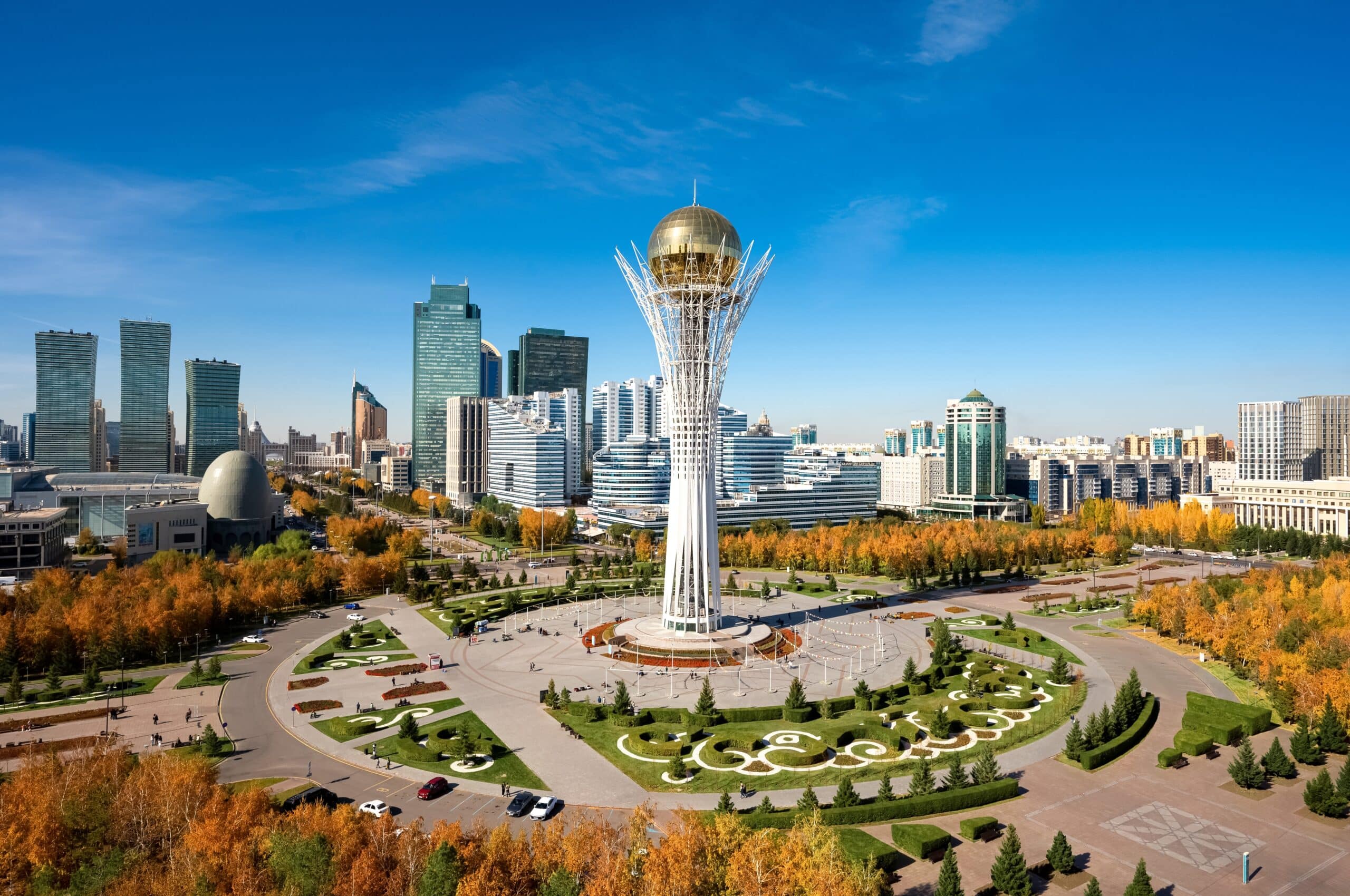
Astana rises from the northern Kazakh steppe where openness dominates perception and climate defines endurance. Geography here is exposed and horizontal. The land offers little shelter, placing the city in direct relationship with wind, cold, and distance.
The steppe surrounding Astana shapes its character. Geography emphasizes scale rather than relief, making weather the primary force acting on life. Winter cold and wide skies reinforce awareness of exposure. Settlement here is an act of intention rather than convenience.
Movement through Astana reflects this openness. Broad avenues extend across flat terrain, reinforcing visibility and orientation. Geography allows expansion without resistance, shaping a city that spreads outward rather than compressing inward.
Astana inspires through resolve. The land teaches endurance through persistence in an environment that offers no natural protection. Resilience here is built through adaptation to climate and openness, not shelter from it.
The city reflects a Kazakhstan where geography demands preparation rather than defense. Life continues by aligning with seasonal rhythm and spatial scale. Endurance emerges from understanding exposure and building systems that respond to it.
Astana reminds visitors that resilience can grow in places where land does not soften experience. Geography here sharpens awareness, reinforcing strength through coexistence with wind, cold, and vastness rather than retreat from them.
17. Almaty and the Tian Shan Foothills
Almaty sits at the southern edge of Kazakhstan where plains meet the rising Tian Shan Mountains. Geography here is transitional and dynamic. The land shifts quickly from flat urban ground to steep slopes and alpine terrain.
Mountains define the city’s orientation. Geography provides water, climate moderation, and visual boundary. Rivers descend from high ground, sustaining life while reinforcing dependence on elevation. The land supports density without enclosure.
Movement through Almaty reflects this gradient. Streets rise toward foothills, while routes into the mountains emphasize ascent and change. Geography introduces vertical rhythm absent from the steppe.
Almaty inspires through contrast. The land teaches endurance through balance between openness and elevation. Resilience grows where geography allows both rooted settlement and access to challenge.
Here, endurance is adaptive. Geography encourages flexibility, allowing life to shift between lowland stability and highland exposure. The city persists by remaining aligned with its mountainous context rather than expanding away from it.
Almaty reflects a Kazakhstan where geography offers variation rather than uniformity. Visitors encounter a landscape that reinforces resilience through diversity of terrain, reminding that endurance can grow strongest where land provides both support and challenge within close reach.
16. Saryarka Steppe (Kazakh Uplands)
The Saryarka Steppe stretches across central Kazakhstan as rolling uplands shaped by grassland, low ridges, and open sky. Geography here is expansive but textured. Subtle elevation replaces dramatic relief, shaping movement through distance rather than obstacle.
This landscape has long supported pastoral life. Geography rewards mobility, timing, and knowledge of seasonal change. Water appears intermittently, reinforcing attentiveness rather than abundance. The land teaches endurance through rhythm.
Movement across Saryarka is continuous. Routes follow gentle contours, reinforcing awareness of horizon and weather. Geography emphasizes persistence across space, making travel an exercise in patience and preparation.
Saryarka inspires through continuity. The land teaches resilience through repetition and memory, showing how endurance develops where geography offers few landmarks but consistent patterns.
Here, endurance is cultural and spatial. Geography has shaped ways of living that depend on reading land rather than controlling it. Life persists by aligning with wind, grass, and seasonal flow.
The Saryarka Steppe reflects a Kazakhstan where geography encourages resilience through openness. Visitors encounter a landscape that strips experience to essentials, reminding that endurance can emerge not from confinement or shelter, but from steady movement across land that extends beyond immediate sight.
15. Lake Balkhash
Lake Balkhash stretches across southeastern Kazakhstan as a vast inland water body defined by contrast and scale. Geography here is unusual and instructive. The lake is divided naturally, with fresher water in the west and increasingly saline conditions toward the east, shaped by inflow and evaporation.
The surrounding land is arid. Geography emphasizes the lake’s importance as an anchor of life within dry steppe and desert margins. Rivers feed it unevenly, reinforcing dependence on distant mountain systems and seasonal variation.
Movement along Balkhash follows long, open shorelines. The land offers little vertical relief, directing attention outward across water and sky. Geography shapes experience through horizon and reflection rather than enclosure.
Lake Balkhash inspires through contradiction. The land teaches endurance through balance, showing how resilience emerges where geography maintains equilibrium between opposing conditions. Life persists by adapting to gradual change rather than dramatic disruption.
Here, endurance is ecological and spatial. Geography reinforces patience, reminding that stability can exist within variation. Communities and ecosystems align carefully with water that is neither fully abundant nor fully scarce.
Lake Balkhash reflects a Kazakhstan where geography sustains life through subtle complexity. Visitors encounter a landscape that emphasizes resilience through coexistence with difference, reinforcing that endurance often grows where land requires attentiveness to gradual shifts rather than immediate challenge.
14. Mangystau Plateau
The Mangystau Plateau lies in western Kazakhstan near the Caspian Sea, shaped by erosion, exposure, and geological depth. Geography here is stark and sculptural. Chalk cliffs, canyons, and depressions define a land carved more by wind and time than by water.
Elevation varies subtly but meaningfully. Geography creates a landscape of descent and exposure, where low points sit below sea level and plateaus rise abruptly from surrounding plains. Vegetation is sparse, reinforcing awareness of aridity.
Movement across Mangystau is deliberate. Routes follow natural corridors between formations, emphasizing navigation and orientation. Geography resists casual travel, shaping endurance through planning rather than effort alone.
Mangystau inspires through austerity. The land teaches endurance through restraint, showing how resilience emerges where geography strips life to essentials. Survival depends on knowledge, timing, and respect for terrain.
Here, endurance is geological and human. Geography reveals layers of time openly, reminding visitors that persistence can be measured across millennia rather than seasons. The land’s quiet severity shapes perception of scale and patience.
The Mangystau Plateau reflects a Kazakhstan where geography asserts endurance through exposure. Visitors encounter a landscape that reinforces resilience as a long view, shaped by land that endures without abundance, shelter, or immediacy.
13. Altai Mountains
The Altai Mountains rise in eastern Kazakhstan where steppe gives way to forested slopes and alpine ridges. Geography here is vertical and diverse. Elevation brings cooler climate, denser vegetation, and increased water availability.
Rivers originate in these mountains, feeding valleys and lowlands far beyond their source. Geography supports life downstream, reinforcing the Altai’s role as a sustaining highland system rather than an isolated range.
Movement through the Altai follows valleys and passes. Trails and roads align with natural corridors, emphasizing ascent and descent. Geography shapes rhythm through gradient and seasonal change.
The Altai inspire through vitality. The land teaches endurance through diversity, showing how resilience grows where geography supports multiple forms of life. Forest, meadow, and rock coexist within close proximity.
Here, endurance is adaptive. Geography allows communities and ecosystems to shift with altitude and season, reinforcing long-term coexistence rather than rigid dependence. Life responds to variation rather than resisting it.
The Altai Mountains reflect a Kazakhstan where geography nurtures resilience through richness. Visitors encounter a landscape that balances challenge with sustenance, reminding that endurance often develops where land provides both protection and effort, shaping strength through continual adjustment.
12. Caspian Shoreline
Kazakhstan’s western edge meets the Caspian Sea, where steppe dissolves into water and desert touches salt air. Geography here is fluid and transitional. The coastline shifts with climate and tide, creating shallow bays, lagoons, and long reaches of sand and clay.
The sea moderates temperature in an otherwise harsh region, yet its vastness mirrors the openness of the land. Geography emphasizes contrast—water beside dryness, horizon beside horizon. Life clings to this boundary, shaped by both abundance and uncertainty.
Movement along the Caspian Shoreline follows natural arcs. Roads and tracks trace curves of inlets and cliffs. Geography determines route and rhythm, guiding travel between land and water rather than across it.
The shoreline inspires through expanse. The land teaches endurance through coexistence with movement and change. Geography shows that resilience can arise where boundaries blur, and permanence must accept transformation.
Here, endurance is coastal and contemplative. Geography balances isolation with possibility, offering sustenance through fish, wind, and orientation by sea. The horizon becomes a measure of distance and persistence.
The Caspian Shoreline reflects a Kazakhstan where geography connects rather than confines. Visitors encounter a landscape that expands awareness of space and teaches that endurance sometimes means remaining steady at the edge of shifting water and unending land.
11. Karkaraly Mountains
The Karkaraly Mountains rise from central Kazakhstan’s plains as an island of elevation amid steppe. Geography here is abrupt but moderate—granite ridges and forested slopes rising gently from endless grasslands.
The surrounding plains emphasize the mountains’ presence. Geography gathers moisture and vegetation here, creating contrast between open expanse and enclosed woodland. Springs and streams collect within sheltered valleys, sustaining both wildlife and human settlement.
Movement through Karkaraly alternates between ascent and relief. Trails climb through pine forests, then open to vistas across the steppe. Geography orchestrates balance between effort and rest, height and horizon.
Karkaraly inspires through isolation. The land teaches endurance through coexistence with contrast, showing how resilience can develop where geography interrupts uniformity. Here, height offers not escape but perspective.
Endurance is perceptual. Geography reminds visitors that persistence can grow through awareness of transition—how small elevations reshape climate, light, and orientation across vast surroundings.
The Karkaraly Mountains reflect a Kazakhstan where geography inserts variation into immensity. Visitors encounter a landscape that reinforces equilibrium, reminding that endurance may depend as much on contrast and renewal as on steadiness and repetition.
10. Baikonur Region
The Baikonur Region spreads across southern Kazakhstan, where desert plains meet the Syr Darya River. Geography here is flat and expansive, chosen precisely for its openness and stability. The land stretches outward without obstruction, shaping a horizon suitable for flight and reflection alike.
The desert defines scale. Geography allows visibility for hundreds of kilometers, emphasizing exposure to sun, wind, and sky. Life aligns closely with water from the river and infrastructure that sustains habitation.
Movement across Baikonur is linear and planned. Roads and railways cut straight paths through level terrain, reinforcing human intention imposed upon natural vastness. Geography supports precision through predictability.
Baikonur inspires through purpose. The land teaches endurance through alignment between human design and geographic simplicity. Here, resilience depends on adaptation to openness rather than opposition to it.
Endurance is technological and environmental. Geography enables ambition by providing a platform where distance and stillness coexist. Persistence arises from cooperation between terrain and vision.
The Baikonur Region reflects a Kazakhstan where geography accommodates transformation without losing its identity. Visitors encounter a landscape that connects earth and sky, reminding that endurance can extend beyond survival into the quiet confidence of continued exploration.
9. Turkestan
Turkestan lies in southern Kazakhstan near the Syr Darya corridor, where steppe and semi-desert converge around one of the region’s oldest settled zones. Geography here is grounding rather than dramatic. The land is flat, dry, and exposed, shaping endurance through continuity rather than elevation.
Water defines survival. Geography allows settlement only where irrigation channels and river proximity sustain life. Beyond these margins, aridity reasserts itself quickly. The land teaches discipline through limitation, reinforcing careful alignment with scarce resources.
Movement through Turkestan is open and direct. Roads stretch across level terrain, reinforcing long sightlines and spatial clarity. Geography emphasizes approach rather than enclosure, shaping experience through distance and anticipation.
Turkestan inspires through persistence. The land teaches endurance through rootedness, showing how resilience can grow where geography allows continuity despite environmental restraint. Life here persists by remaining fixed rather than mobile.
Here, endurance is historical and spatial. Geography supports memory by remaining consistent across centuries, allowing settlement to accumulate meaning through repeated use of the same land. Stability becomes a form of strength.
Turkestan reflects a Kazakhstan where geography sustains endurance through repetition. Visitors encounter a landscape that reinforces resilience as the ability to remain present and continuous, shaped by land that offers little excess but supports long-term habitation through careful balance.
8. Charyn Canyon
Charyn Canyon cuts deeply into southeastern Kazakhstan, where river erosion has carved dramatic walls into otherwise open terrain. Geography here is sudden and vertical. The canyon interrupts flat plains with depth, shadow, and exposed stone.
The Charyn River shapes this landscape through persistence rather than force. Geography reveals time visibly, with layered rock formations marking gradual erosion. Vegetation gathers near water, reinforcing dependence on narrow corridors of life.
Movement through the canyon follows descent and ascent. Trails lead downward from open plateau into enclosed space, reshaping perception of scale. Geography compresses experience, turning distance into vertical effort.
Charyn inspires through contrast. The land teaches endurance through transformation, showing how resilience can emerge where geography reshapes space dramatically but gradually. The canyon stands as evidence of persistence across time.
Here, endurance is geological. Geography demonstrates that change does not require speed, only continuity. Human presence feels temporary within stone shaped over millennia.
Charyn Canyon reflects a Kazakhstan where geography reveals endurance through form. Visitors encounter a landscape that reframes resilience as patience, reminding that strength often lies in slow, sustained shaping rather than immediate resistance.
7. Ustyurt Plateau
The Ustyurt Plateau stretches across western Kazakhstan between the Caspian and Aral regions, forming a vast elevated plain defined by cliffs, escarpments, and extreme exposure. Geography here is stark and expansive. The land offers little shelter and few landmarks, emphasizing horizon and wind.
Elevation is subtle but decisive. Geography creates abrupt edges where the plateau drops sharply into surrounding lowlands. Vegetation is sparse, reinforcing awareness of aridity and scale.
Movement across Ustyurt is deliberate and planned. Routes follow known paths between water sources and natural corridors. Geography demands preparation, shaping endurance through foresight rather than improvisation.
The plateau inspires through austerity. The land teaches endurance through restraint, showing how resilience can exist where geography allows movement but discourages settlement. Survival depends on knowledge of land rather than its generosity.
Here, endurance is spatial and mental. Geography reinforces patience and orientation, stripping experience to essentials of direction, timing, and exposure.
The Ustyurt Plateau reflects a Kazakhstan where geography asserts clarity. Visitors encounter a landscape that emphasizes endurance as awareness, reminding that resilience often grows where land offers no comfort, only space, wind, and the necessity of thoughtful movement.
6. Kolsai Lakes
The Kolsai Lakes lie in southeastern Kazakhstan near the Kyrgyz border, stepped one above another along a forested mountain valley. Geography here is layered and ascending. Each lake occupies a natural basin carved by glacial and tectonic movement, held in quiet suspension between steep slopes.
Water gathers from alpine streams and snowmelt, reinforcing the mountains’ role as reservoirs. Geography shapes clarity here. The lakes reflect spruce forest and ridgeline with such precision that sky and earth appear briefly interchangeable.
Movement through Kolsai follows gradual ascent. Trails trace the valley floor before climbing toward higher water. Geography dictates rhythm through incline and altitude, encouraging steady progress rather than haste.
The lakes inspire through stillness. The land teaches endurance through calm accumulation, showing how resilience can develop where geography gathers rather than disperses. Water rests yet remains sustained by constant inflow from above.
Here, endurance is cyclical. Geography binds lake, forest, and mountain into a quiet system of renewal. Seasons transform color and surface, yet the structure remains constant.
The Kolsai Lakes reflect a Kazakhstan where geography offers renewal within elevation. Visitors encounter a landscape that reinforces resilience as quiet continuity, shaped by water held carefully between slopes that neither rush nor retreat.
5. Aktau Mountains
The Aktau Mountains rise in southeastern Kazakhstan as pale ridges shaped by erosion and mineral variation. Geography here is textured rather than towering. Layers of sediment create bands of white, red, and ochre, exposing time openly across the slopes.
The land is dry and sparsely vegetated. Geography emphasizes exposure, revealing fragile formations shaped by wind and rare rain. Light transforms the terrain throughout the day, deepening shadow and contrast.
Movement through Aktau is careful. Paths wind between ridges and narrow gullies, reinforcing awareness of terrain underfoot. Geography shapes pace through uneven ground rather than steep ascent.
Aktau inspires through revelation. The land teaches endurance through transparency, showing how resilience can be expressed through survival despite fragility. These formations persist not through hardness alone but through balance with climate.
Here, endurance is visible. Geography leaves nothing concealed, allowing visitors to witness layers formed across epochs. The mountains remind that strength can exist within delicacy.
The Aktau Mountains reflect a Kazakhstan where geography expresses endurance through exposure. Visitors encounter a landscape that reshapes perception of resilience, emphasizing persistence not as dominance, but as quiet survival across shifting conditions.
4. Bayanaul National Park
Bayanaul National Park rises from northeastern Kazakhstan’s plains as a cluster of granite hills, pine forests, and freshwater lakes. Geography here interrupts steppe with concentrated elevation and greenery. Rounded rock formations emerge abruptly, creating sculptural silhouettes above surrounding grasslands.
Lakes gather within basins between hills, sustaining biodiversity in an otherwise dry region. Geography shapes contrast between open plain and enclosed woodland, reinforcing the park’s identity as refuge.
Movement through Bayanaul alternates between shoreline and summit. Trails climb toward exposed granite outcrops, then descend into shaded forest paths. Geography orchestrates variation in texture and light.
Bayanaul inspires through harmony. The land teaches endurance through integration, showing how resilience can flourish where geology and water coexist within limited space. Here, ecosystems adapt tightly to terrain.
Endurance is ecological and spatial. Geography creates boundaries that concentrate life without isolating it. The park demonstrates that resilience can develop through balance between openness and enclosure.
Bayanaul National Park reflects a Kazakhstan where geography cultivates renewal within vastness. Visitors encounter a landscape that reinforces resilience as coexistence—between rock and tree, elevation and plain, exposure and shelter—shaped by land that gathers life carefully within its granite embrace.
3. Tarbagatai Mountains
The Tarbagatai Mountains stretch along eastern Kazakhstan near the Chinese border, forming a long, undulating ridge between steppe and higher alpine systems. Geography here is transitional. The range does not dominate through height alone but through length and quiet continuity.
Slopes descend gradually into valleys where pasture and settlement align with seasonal rhythms. Geography moderates climate slightly, creating pockets of vegetation more generous than surrounding plains. Streams originate along the ridges, feeding lowlands that depend on their flow.
Movement across Tarbagatai follows passes shaped by erosion and tectonic uplift. Roads and trails trace these natural corridors, reinforcing geography’s authority over direction. Travel here is steady rather than dramatic, guided by contour rather than spectacle.
The Tarbagatai inspire through steadiness. The land teaches endurance through extension, showing how resilience can be expressed across distance instead of altitude. These mountains persist not as singular peaks but as continuous presence.
Endurance here is pastoral and spatial. Geography supports cycles of grazing and return, reinforcing rhythms shaped by elevation and season. Life adapts through repetition, aligning with terrain that neither overwhelms nor withdraws.
The Tarbagatai Mountains reflect a Kazakhstan where geography defines resilience through quiet persistence. Visitors encounter a landscape that reinforces strength as continuity—an enduring line across the horizon, shaping movement and livelihood without demanding attention.
2. Aral Sea North Basin
The northern basin of the Aral Sea lies in southwestern Kazakhstan, where water once extended vast and uninterrupted across desert margins. Geography here speaks of contraction and recovery. Shoreline shifts have reshaped climate, soil, and settlement.
The remaining waters gather in contained form, supported by restoration efforts and river management. Geography reveals vulnerability openly. The surrounding plains show traces of former depth—salted earth and altered vegetation marking where water once stood.
Movement through the region follows new alignments. Settlements adjust to revised shoreline, reinforcing the relationship between human adaptation and environmental change. Geography shapes humility here, reminding that endurance requires correction as well as persistence.
The Aral North Basin inspires through resilience after loss. The land teaches endurance through repair, showing how geography, though altered, can support renewal when guided carefully. Recovery is gradual but visible.
Endurance here is ecological and moral. Geography demands responsibility, revealing consequences without concealment. Life returns where balance is restored, reinforcing that resilience depends on attentiveness.
The Aral Sea North Basin reflects a Kazakhstan where geography records history directly upon land and water. Visitors encounter a landscape that reframes endurance not as resistance to change, but as the capacity to rebuild within altered boundaries.
1. Ile-Alatau National Park
Ile-Alatau National Park rises south of Almaty along the northern slopes of the Tian Shan. Geography here is vertical and protective. Snow-fed rivers descend through conifer forests and alpine meadows, forming a mountain barrier between steppe and higher summits.
Elevation shapes climate distinctly. Lower slopes support orchards and woodland, while upper ridges hold glaciers and exposed rock. Geography binds water supply, biodiversity, and settlement into one interconnected system.
Movement through Ile-Alatau is defined by ascent. Trails follow river valleys upward, shifting from forest shade to alpine openness. Geography governs pace and perception, requiring adaptation to gradient and altitude.
The park inspires through guardianship. The land teaches endurance through stewardship, showing how resilience can flourish where geography safeguards resources essential to surrounding plains. Mountains here protect as much as they challenge.
Endurance is hydrological and communal. Geography gathers snow in winter and releases it through spring melt, sustaining life far beyond park boundaries. Strength lies in this quiet provision.
Ile-Alatau National Park reflects a Kazakhstan where geography sustains resilience through elevation and supply. Visitors encounter a landscape that reinforces endurance as interdependence—between summit and valley, glacier and orchard, effort and renewal.