
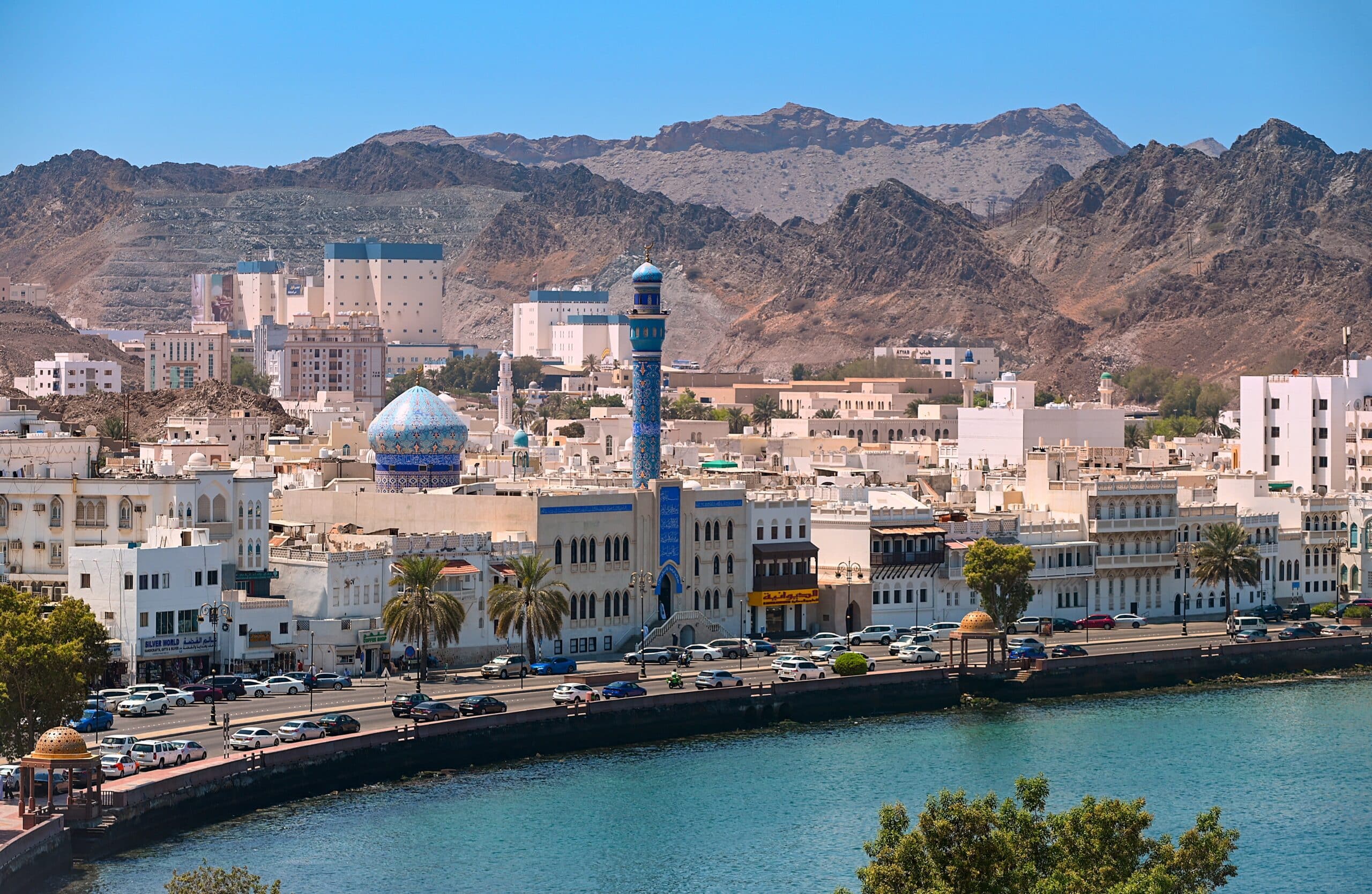
Oman occupies the southeastern edge of the Arabian Peninsula, where mountains, desert, and sea meet in sharp, defining contrast. Geography here is not subtle. It announces itself through elevation, exposure, and distance, shaping movement and settlement with quiet authority.
The country stretches from the rugged Hajar Mountains in the north to the vast Empty Quarter in the west and the open Indian Ocean to the east. Each zone imposes its own logic. Mountains trap moisture and form natural corridors, deserts restrict movement and concentrate life around water, and the sea opens Oman outward toward trade and navigation.
Settlement patterns reflect this diversity. Communities cluster where geography permits continuity: along coastlines, within wadis, and at mountain foothills. Roads follow natural contours, respecting elevation and climate rather than overriding them. Geography governs rhythm, encouraging patience and awareness.
Oman inspires through restraint. The land does not overwhelm with excess but teaches endurance through balance. Harshness and generosity exist side by side, reminding visitors that survival here has always depended on understanding terrain rather than conquering it.
This is a country where space matters. Distance is felt, elevation is respected, and water determines possibility. Oman’s geography fosters reflection by limiting excess and sharpening attention. The land shapes identity not through spectacle alone, but through consistency and adaptation.
To travel through Oman is to move through a geography that rewards attentiveness. Mountains, deserts, and coastlines do not compete; they coexist. Together, they form a landscape that anchors culture, movement, and memory in enduring physical reality.
19. Muscat
Muscat stretches along Oman’s northeastern coast, pressed tightly between the Gulf of Oman and the Hajar Mountains. Geography here is compressed and linear. Mountains rise abruptly behind the city, while the sea opens outward, shaping settlement into narrow corridors.
The mountains restrict inland expansion, forcing development along the coast. Natural harbors and rocky inlets guide orientation and trade. Geography dictates movement, emphasizing connection by sea and controlled access by land.
Movement through Muscat follows terrain. Roads curve along hillsides and coastlines, reinforcing awareness of elevation and shoreline. Geography slows travel, encouraging observation rather than speed.
Muscat inspires through balance. The city exists within clear limits, shaped by land and water in equal measure. Geography teaches restraint, showing how settlement can thrive without sprawl.
The city demonstrates how coastal geography shapes continuity. Muscat reflects an Oman where land defines rhythm and scale, reminding visitors that identity can emerge from respecting natural boundaries rather than expanding beyond them.
18. Jebel Akhdar
Jebel Akhdar rises within the Hajar Mountains as a high plateau marked by cliffs, terraces, and cooler climate. Geography here is elevated and decisive. Steep drops and narrow access routes define settlement and movement.
The plateau captures rainfall, supporting agriculture uncommon elsewhere in Oman. Terraced fields follow contours, binding cultivation to slope and gravity. Geography demands precision and patience, shaping life through careful adaptation.
Movement into Jebel Akhdar is deliberate. Roads climb steeply, emphasizing ascent and transition. Geography enforces awareness of elevation, making arrival feel earned rather than incidental.
Jebel Akhdar inspires through resilience. The land demonstrates how elevation can create opportunity within harsh surroundings. Geography rewards understanding and long-term stewardship.
The region teaches that adaptation sustains continuity. Jebel Akhdar reflects an Oman where survival depends on working closely with terrain, reminding visitors that endurance often grows from elevation rather than abundance.
17. Wahiba Sands (Sharqiya Sands)
The Wahiba Sands stretch across eastern Oman as rolling dunes shaped by wind and time. Geography here is expansive and shifting. The land offers few fixed reference points, emphasizing orientation through sun, wind, and memory.
Movement across the sands is controlled and intentional. Tracks appear and vanish, reinforcing the impermanence of paths. Geography limits speed and demands respect, shaping travel into an act of attentiveness.
Life concentrates at the edges and within oases. Water determines settlement, while dunes enforce mobility rather than permanence. Geography teaches adaptability through constant change.
The Wahiba Sands inspire through simplicity. The landscape strips experience to essentials: movement, direction, and survival. Geography removes excess, sharpening awareness.
The desert teaches that openness can be demanding rather than freeing. The Wahiba Sands reflect an Oman where endurance emerges from reading subtle signs, reminding visitors that vast landscapes require humility and discipline.
16. Nizwa
Nizwa lies at the base of the Hajar Mountains, where wadis channel water into fertile plains. Geography here is connective. Mountains, water, and settlement intersect, shaping Nizwa as a historic center of trade and learning.
The surrounding terrain provides protection and resources. Water from mountain runoff sustains agriculture, while elevation offers oversight. Geography supports continuity through balance.
Movement through Nizwa follows watercourses and gentle slopes. Roads and paths align with terrain, reinforcing the city’s relationship with its surroundings.
Nizwa inspires through grounding. The land supports life steadily, without spectacle, teaching that geography can foster stability over time.
The city demonstrates how foothill geography sustains culture. Nizwa reflects an Oman where land anchors identity through reliability, reminding visitors that endurance often begins where terrain offers both protection and provision.
15. Sur
Sur stands on Oman’s eastern coast, facing the open Arabian Sea without the shelter of deep natural harbors. Geography here is exposed and directional. The land meets the water directly, shaping settlement around navigation rather than defense.
The coastline is low and gently curved, offering little resistance to wind or waves. Geography encourages outward orientation. The sea dominates climate, movement, and livelihood, while inland terrain remains secondary and sparse.
Settlement follows the shore. Streets align toward the water, reinforcing the town’s relationship with distance rather than enclosure. Geography restricts expansion, keeping Sur compact and attentive to the horizon.
Movement within Sur is steady and unhurried. Roads trace the coastline, while the town’s scale encourages walking and observation. Geography slows pace, emphasizing continuity over urgency.
Sur inspires through openness. The landscape offers few protections, yet supports life through adaptability and skill. Geography teaches resilience rooted in engagement rather than isolation.
The town demonstrates how exposure can define identity. Sur reflects an Oman shaped by maritime geography, reminding visitors that endurance sometimes emerges from facing open space directly, trusting rhythm, experience, and orientation more than shelter or elevation.
14. Wadi Shab
Wadi Shab cuts through northeastern Oman’s coastal mountains, forming a narrow passage of rock, water, and shade. Geography here is linear and enclosed. Steep canyon walls limit movement, directing travel along a single natural corridor.
Freshwater flows intermittently through the wadi, collecting in pools where stone narrows. Vegetation gathers tightly around water, creating sharp contrast with the surrounding arid slopes. Geography concentrates life precisely where conditions allow.
Movement through Wadi Shab is physical and deliberate. Paths follow watercourses, requiring climbing, wading, and careful footing. Geography demands participation rather than observation, shaping experience through effort.
The wadi inspires through intensity. The land compresses effort and reward into close proximity, showing how scarcity sharpens awareness. Geography teaches patience and attentiveness.
Wadi Shab demonstrates how narrow landscapes sustain richness. It reflects an Oman where survival depends on precise alignment with terrain, reminding visitors that endurance often grows not from abundance or scale, but from careful negotiation with land and water.
13. Ras Al Jinz
Ras Al Jinz lies at Oman’s easternmost edge, where land meets open ocean without natural shelter. Geography here is terminal and exposed. The coastline curves gently, offering no protection from wind or waves.
The sea defines rhythm and perception. Tides, currents, and horizon dominate attention, while land remains sparse and secondary. Geography limits settlement, keeping human presence light and temporary.
Movement is minimal. Paths trace the shore, but the landscape encourages stillness rather than travel. Geography slows time, emphasizing cycles instead of destinations.
Ras Al Jinz inspires through vulnerability. The land offers no concealment, only openness and repetition. Geography teaches humility, showing how exposure sharpens attention and respect.
The site demonstrates how edges carry meaning. Ras Al Jinz reflects an Oman where geography clearly marks limits, reminding visitors that endings in the landscape can hold quiet strength and continuity.
12. Bahla
Bahla lies inland at the foot of the Hajar Mountains, where rocky terrain gives way to cultivated plains. Geography here is stabilizing and connective. Mountain runoff sustains agriculture, while elevation offers protection without isolation.
The land supports long-term settlement through reliable water and fertile soil. Geography favors permanence rather than mobility, anchoring life through predictability and balance.
Movement through Bahla is measured. Roads follow gentle gradients between fields, town, and foothills. Geography supports continuity rather than speed, shaping daily rhythm.
Bahla inspires through endurance. The landscape encourages sustained occupation, demonstrating how geography can preserve culture across generations.
The town teaches that foothill environments foster resilience. Bahla reflects an Oman where land supports continuity through moderation, reminding visitors that endurance often arises where terrain offers both provision and restraint.
11. Masirah Island
Masirah Island lies off Oman’s southeastern coast, separated from the mainland by rough channels and persistent winds. Geography here is insular and exposed. Flat terrain meets open sea, creating vulnerability without elevation.
Isolation shapes settlement. Resources are limited, movement constrained, and daily life oriented toward weather and tides. Geography enforces self-reliance and attentiveness to subtle change.
Movement across Masirah is horizontal and expansive. Roads stretch across sparse land, emphasizing distance and repetition. Geography reduces distraction, sharpening awareness of wind, light, and rhythm.
Masirah inspires through austerity. The land offers little shelter but demands adaptability. Geography teaches endurance through acceptance rather than resistance.
The island demonstrates how isolation refines identity. Masirah reflects an Oman where geography strips life to essentials, reminding visitors that resilience often emerges where land allows no excess.
10. Jebel Shams
Jebel Shams rises in northern Oman as the highest peak of the Hajar range, overlooking deep gorges and exposed plateaus. Geography here is vertical and uncompromising. Sheer cliffs drop abruptly into Wadi Ghul, often called the Grand Canyon of Arabia, defining scale through height and depth rather than distance.
Elevation shapes every aspect of experience. Temperatures cool noticeably as roads climb, and vegetation thins with height. Geography controls access, narrowing routes and limiting movement, making ascent deliberate rather than casual. Arrival feels earned through effort and patience.
Movement across Jebel Shams follows ridgelines and cliff edges. Trails trace contours carefully, demanding attention to footing, wind, and exposure. Geography enforces discipline, slowing pace and heightening awareness of balance and scale.
Jebel Shams inspires through altitude rather than abundance. The land offers perspective instead of comfort, teaching endurance through restraint. Height becomes a teacher, reminding visitors that understanding often follows effort rather than ease.
The mountain demonstrates how elevation structures identity. Settlement remains sparse, activity measured, and silence prominent. Jebel Shams reflects an Oman where geography asserts authority through height, reminding travelers that some landscapes are not meant to be consumed quickly, but approached slowly, with respect for both scale and stillness.
9. Wadi Bani Khalid
Wadi Bani Khalid cuts through eastern Oman’s interior, forming a broad valley where water gathers reliably in pools and channels. Geography here is generous yet controlled. Rocky slopes funnel rainfall into clear basins, sustaining vegetation and human presence.
Unlike narrower wadis, the valley opens gradually, allowing movement without confinement. Geography balances access and protection, creating space for settlement without exposure. Water defines orientation, guiding paths and cultivation.
Movement through Wadi Bani Khalid is steady and immersive. Paths follow watercourses, encouraging walking, swimming, and pause. Geography invites engagement rather than endurance, shaping experience through proximity to water.
The wadi inspires through consistency. In a dry region, reliable water fosters continuity and calm. Geography demonstrates how stability can emerge from careful alignment with terrain.
Wadi Bani Khalid teaches that generosity in landscape requires stewardship. It reflects an Oman where land supports life through predictability, reminding visitors that endurance often depends on sustained balance between use and preservation.
8. Al Hamra
Al Hamra sits on the edge of Oman’s interior plains, backed by the Hajar Mountains and sustained by groundwater and shade. Geography here is transitional. Mountain slopes soften into cultivated land, creating a zone of continuity rather than contrast.
The land supports agriculture through irrigation and elevation. Geography encourages permanence, anchoring settlement through reliable terrain rather than movement. Houses cluster tightly, responding to heat and slope.
Movement through Al Hamra is unhurried. Paths follow gentle gradients, reinforcing daily rhythm tied to land rather than distance. Geography supports routine and repetition.
Al Hamra inspires through groundedness. The landscape favors persistence over change, teaching that continuity often arises from modest terrain rather than dramatic form.
The town demonstrates how transitional geography preserves culture. Al Hamra reflects an Oman where foothills sustain life quietly, reminding visitors that endurance frequently grows from steady land rather than spectacle.
7. Duqm
Duqm lies along Oman’s central coast, facing the Arabian Sea across a wide, exposed shoreline. Geography here is open and expansive. Flat terrain meets water without shelter, emphasizing distance and horizon.
The coast offers limited natural protection, shaping development toward resilience rather than density. Geography prioritizes orientation and adaptation, making wind and sea constant influences.
Movement through Duqm is linear and spacious. Roads stretch across open land, reinforcing scale and repetition. Geography sharpens awareness of distance rather than destination.
Duqm inspires through openness. The land offers possibility without comfort, teaching endurance through adaptation. Geography demands foresight rather than immediacy.
The town reflects an Oman shaped by exposure and planning. Duqm reminds visitors that geography can define future potential as much as past survival.
6. Salalah (Dhofar)
Salalah lies in southern Oman within the Dhofar region, where monsoon winds transform landscape and climate seasonally. Geography here is rare and cyclical. Mountains capture moisture, feeding plains that turn green during khareef.
The land supports agriculture through seasonal abundance. Geography creates rhythm, alternating between dry restraint and lush renewal. Settlement aligns with these cycles.
Movement through Salalah follows plains and foothills. Roads trace gradual slopes, reinforcing openness and accessibility. Geography encourages flow rather than enclosure.
Salalah inspires through transformation. The land demonstrates how change sustains continuity, teaching that endurance may depend on rhythm rather than permanence.
Dhofar reflects an Oman where geography reshapes expectation. Salalah reminds visitors that landscapes can renew identity through seasonal return rather than constant stability.
5. Wadi Ghul
Wadi Ghul cuts deeply into northern Oman’s Hajar Mountains, forming a dramatic gorge beneath the cliffs of Jebel Shams. Geography here is severe and vertical. Sheer rock walls drop abruptly into a narrow valley floor, defining scale through depth rather than width.
The wadi channels seasonal water from high elevations, carving stone slowly and persistently. Geography asserts time as a shaping force, reminding visitors that the landscape is formed through accumulation rather than sudden change.
Movement through Wadi Ghul is constrained. Paths follow the valley floor, with cliffs dictating direction and pace. Geography limits choice, forcing attentiveness to footing, shade, and distance. Travel becomes a dialogue with terrain.
Wadi Ghul inspires through gravity. The land communicates weight and endurance, showing how constraint can intensify awareness. Geography strips experience to essentials: slope, stone, and silence.
The gorge teaches that depth can hold meaning as powerfully as height. Wadi Ghul reflects an Oman where land shapes perception through vertical force, reminding visitors that endurance is often learned where geography allows no shortcuts.
4. Ibra
Ibra lies on the eastern edge of Oman’s interior, where desert plains meet cultivated pockets fed by ancient water systems. Geography here is transitional and adaptive. Arid surroundings contrast sharply with settled land shaped by irrigation.
The terrain encourages compact settlement. Fields cluster where water reaches soil, while open desert remains dominant beyond the town’s edge. Geography defines clear boundaries between habitation and emptiness.
Movement through Ibra is steady and measured. Roads connect farms and neighborhoods without urgency, reflecting a rhythm shaped by climate and distance. Geography encourages routine rather than expansion.
Ibra inspires through persistence. The land does not offer abundance easily, yet supports life through careful management. Geography teaches that endurance depends on discipline and foresight.
The town demonstrates how marginal landscapes sustain continuity. Ibra reflects an Oman where survival grows from working within limits, reminding visitors that resilience often comes from adaptation rather than transformation.
3. Khasab (Musandam)
Khasab sits on the Musandam Peninsula, where jagged mountains plunge directly into narrow fjord-like inlets. Geography here is fractured and dramatic. Land and sea interlock tightly, creating sharp contrasts and confined passages.
Mountains restrict movement inland, while water provides the primary routes of travel. Geography favors maritime orientation, making boats as essential as roads. Settlement remains compact, shaped by steep slopes and limited flat land.
Movement around Khasab alternates between sea and land. Roads cling to cliffs, while boats navigate calm channels between rock walls. Geography heightens awareness of enclosure and exposure simultaneously.
Khasab inspires through intensity. The landscape compresses experience, showing how geography can concentrate beauty and challenge into close quarters.
The region teaches that rugged land fosters distinct identity. Khasab reflects an Oman where geography dictates rhythm and connection, reminding visitors that endurance can arise from negotiating complexity rather than seeking ease.
2. Al Rustaq
Al Rustaq lies at the western edge of the Hajar Mountains, where hot springs and fertile land support long-standing settlement. Geography here is restorative and protective. Mountains shield the area, while water sustains agriculture and life.
The terrain encourages stability. Fields spread where water emerges, and settlement clusters around reliable sources. Geography favors continuity over movement.
Movement through Al Rustaq is calm. Roads follow gentle slopes, reinforcing a rhythm shaped by land rather than urgency. Geography supports repetition and routine.
Al Rustaq inspires through balance. The land offers relief without excess, showing how geography can nurture resilience quietly.
The town demonstrates how protected terrain sustains culture. Al Rustaq reflects an Oman where geography provides both shelter and sustenance, reminding visitors that endurance often grows from dependable landscapes.
1. Barr Al Hikman
Barr Al Hikman stretches along Oman’s central coast as a vast, flat expanse where land meets sea with little interruption. Geography here is open and austere. Salt flats, shallow lagoons, and exposed shoreline define a landscape shaped by wind and tide.
The area offers minimal shelter and few resources. Geography restricts settlement, emphasizing transience and ecological cycles over permanence. Water dominates perception, even as land remains sparse.
Movement across Barr Al Hikman is expansive. Roads and tracks cut long lines through flat terrain, reinforcing distance and repetition. Geography sharpens awareness of horizon and weather.
Barr Al Hikman inspires through emptiness. The land offers space rather than comfort, teaching endurance through acceptance of exposure. Geography demands humility and patience.
The coast demonstrates how openness shapes perspective. Barr Al Hikman reflects an Oman where geography strips experience to fundamentals, reminding visitors that resilience often emerges where land allows little but asks much.