
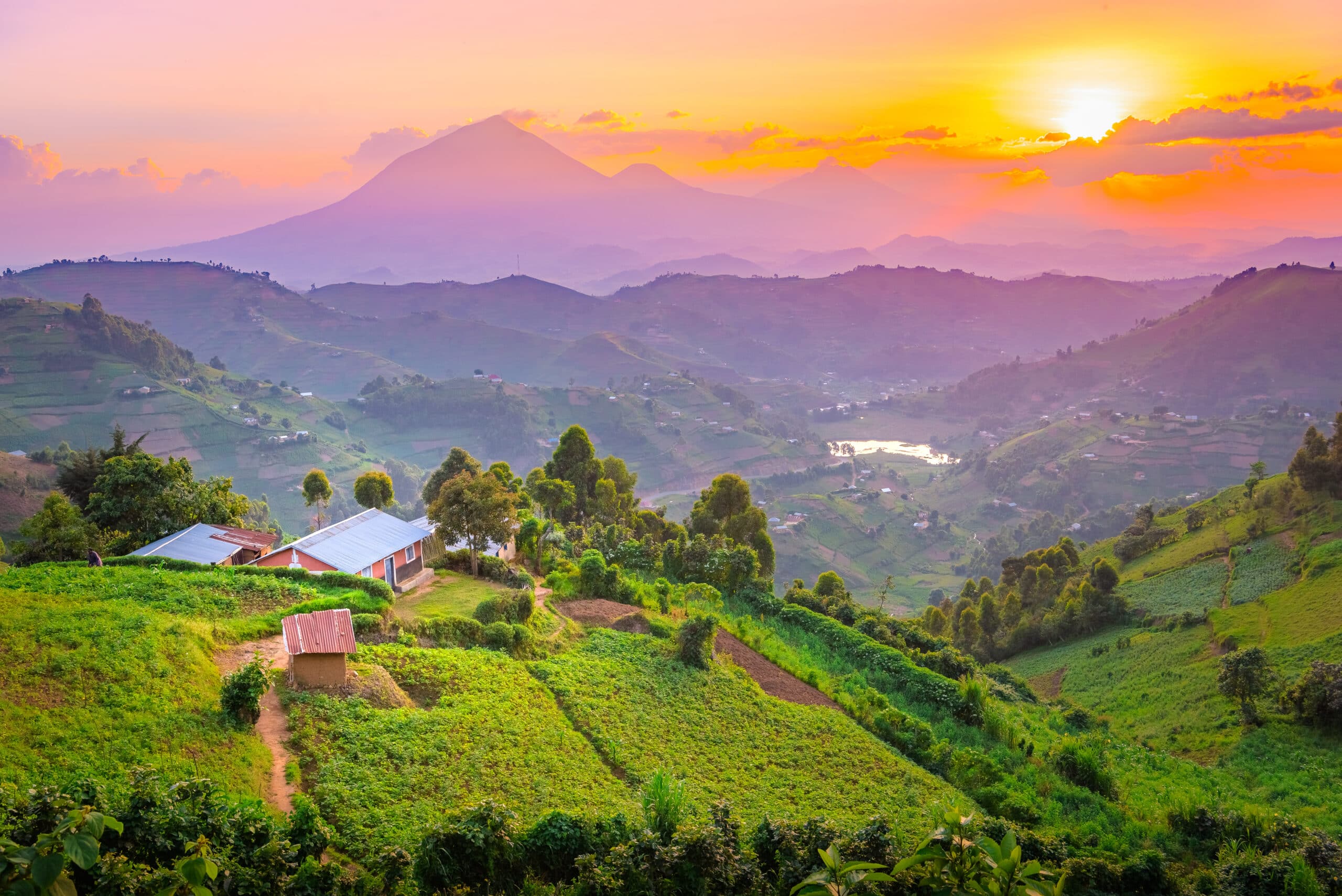
Uganda is often described as the heart of Africa, not for its geography alone, but for the way its landscapes, cultures, and ecosystems converge with remarkable balance. It is a country where rain feeds abundance, where lakes and rivers shape movement and memory, and where green defines both land and life. Uganda does not announce itself loudly; it reveals itself through richness and continuity.
The physical diversity of Uganda is striking. Rolling savannahs transition into dense rainforests, volcanic mountains rise along western borders, and vast freshwater systems dominate the horizon. Lake Victoria anchors the south, while the Nile begins its long journey northward, threading Uganda into the wider story of the continent. This concentration of water gives the country its vitality, supporting agriculture, wildlife, and human settlement.
Uganda’s cultural landscape is equally layered. Dozens of ethnic groups maintain languages, traditions, and social structures shaped by land and lineage. Kingdoms and clans coexist with modern governance, preserving identity through ceremony, storytelling, and daily practice. Colonial history and post-independence transformation have added further layers, reinforcing resilience and adaptability.
Life in Uganda moves with rhythm rather than speed. Markets are communal, conversations unhurried, and daily routines guided by weather and season. Music, dance, and humor play essential roles in social life, reinforcing connection and collective strength.
14. Bwindi Impenetrable Forest: Sanctuary of Silence and Kinship
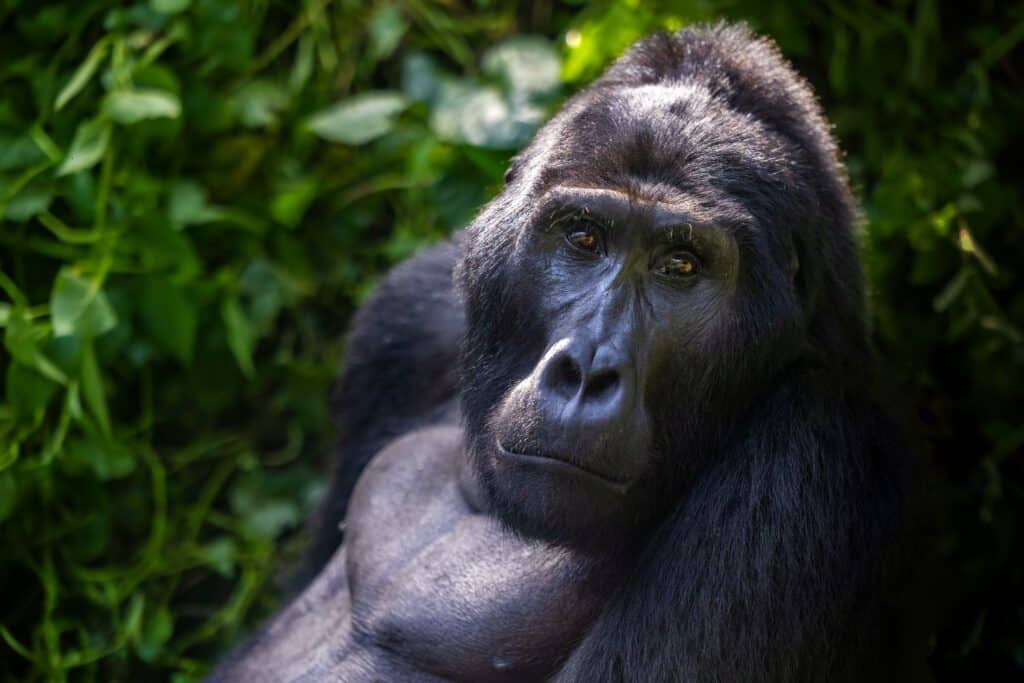
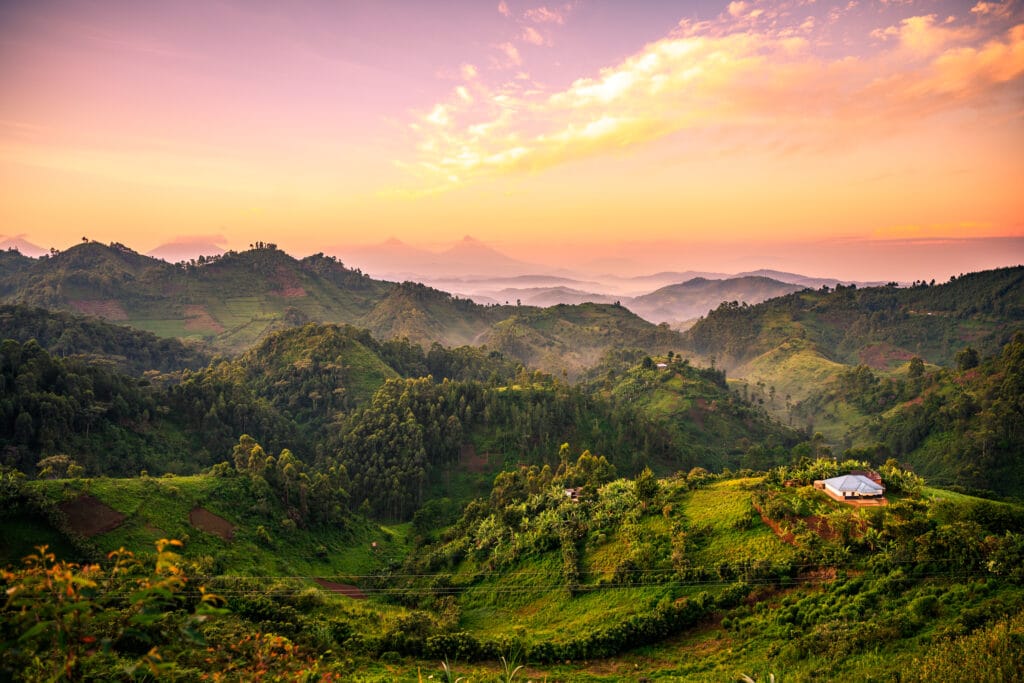
Bwindi Impenetrable Forest lies in southwestern Uganda as one of the most biologically significant landscapes on Earth. Dense, ancient, and mist-covered, it protects a fragile ecosystem shaped by altitude, rainfall, and time.
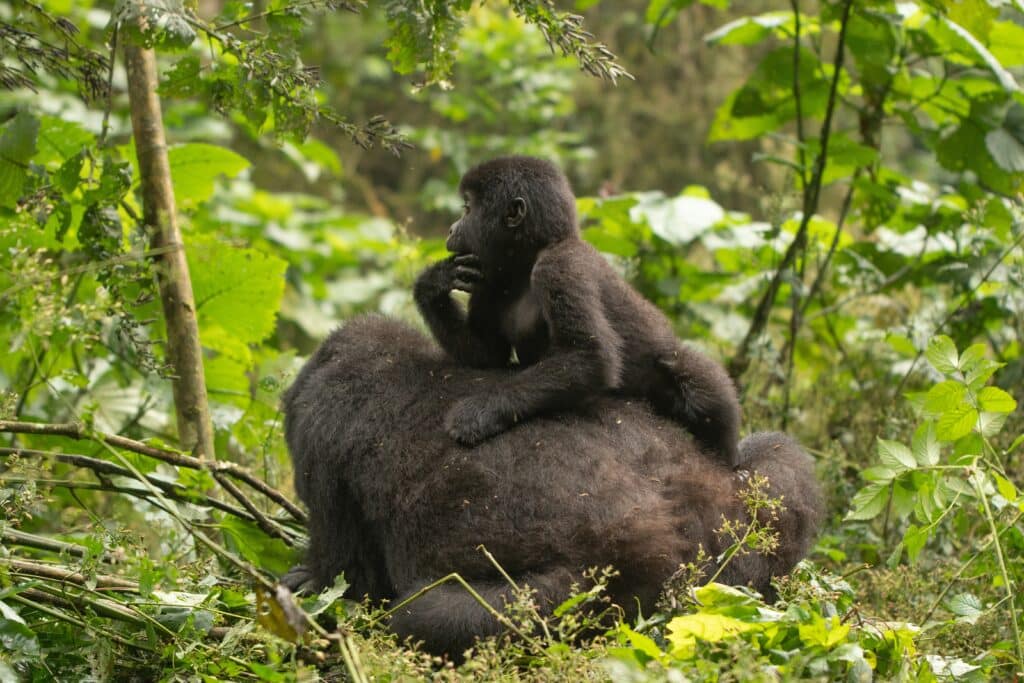
The forest is best known as home to nearly half of the world’s remaining mountain gorillas. These animals live within tightly bonded family groups, navigating steep terrain and thick vegetation with quiet confidence. Observing them requires patience, humility, and respect, reinforcing connection rather than dominance.
Bwindi’s terrain is demanding. Steep slopes, tangled undergrowth, and shifting weather create an environment where movement is slow and deliberate. This difficulty has preserved the forest’s integrity, limiting intrusion and sustaining biodiversity.
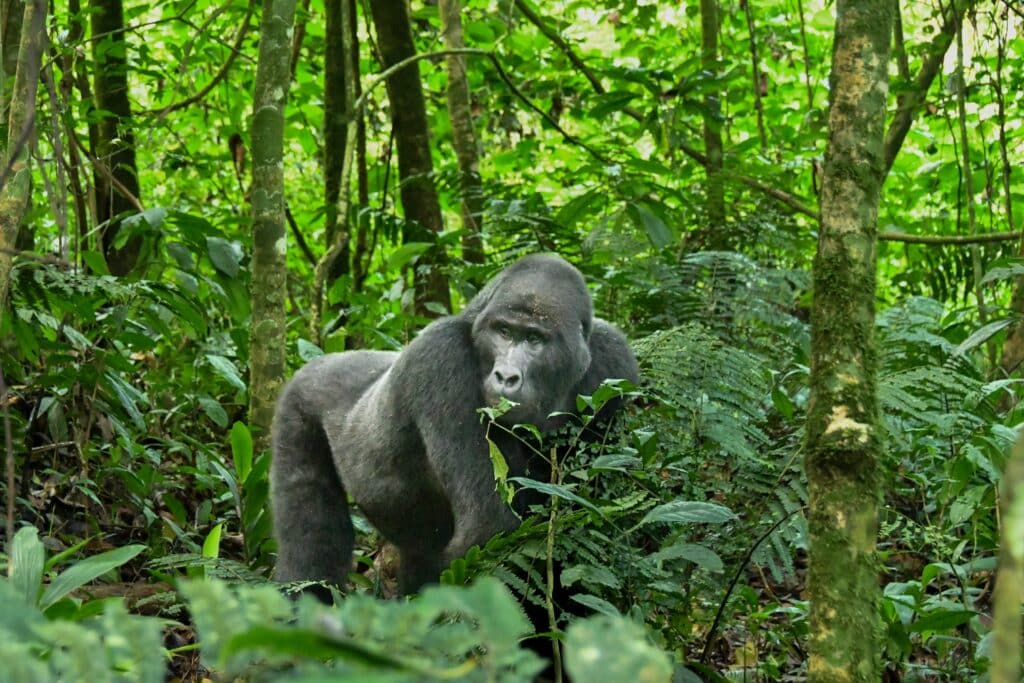
Beyond gorillas, Bwindi shelters hundreds of bird species, butterflies, and plant varieties, many found nowhere else. The forest functions as a living archive of evolutionary resilience.
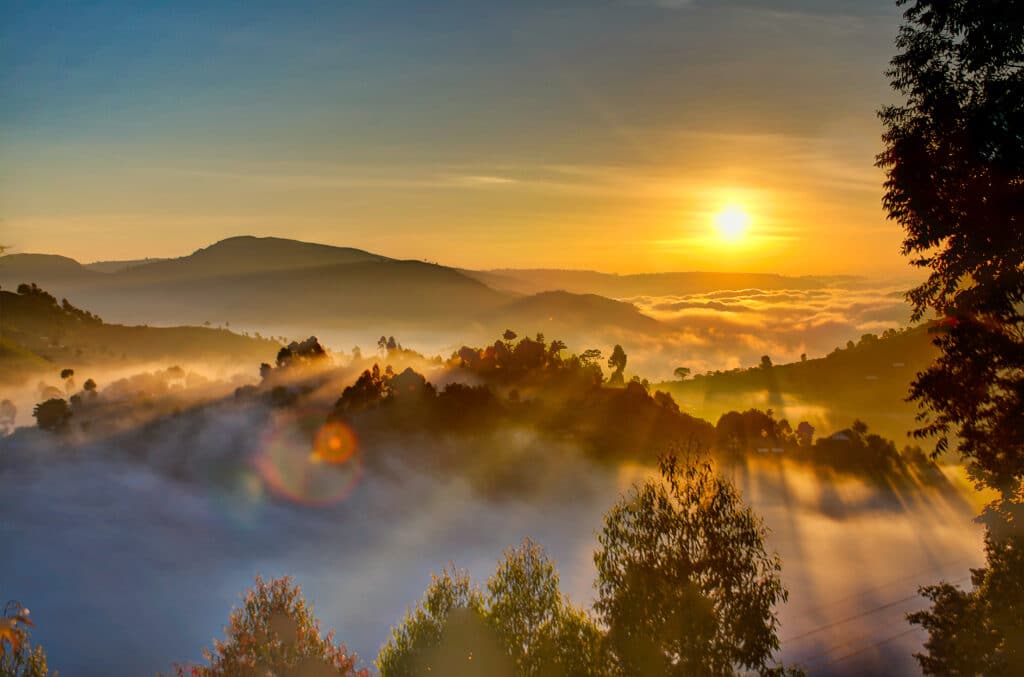
Local communities coexist with Bwindi through conservation partnerships that balance protection with livelihood. Tourism supports education, healthcare, and sustainable development, reinforcing shared responsibility.
Bwindi is not a place of spectacle. It is a place of encounter—where proximity to another species invites reflection on kinship, vulnerability, and stewardship. The forest reveals Uganda’s capacity to protect what is rare by valuing patience over access and reverence over reward.
13. Murchison Falls National Park: Power Along the Nile
Murchison Falls National Park stretches across northwestern Uganda as a landscape defined by water and force. Here, the Nile River is compressed through a narrow rock gorge before plunging violently downstream, creating one of Africa’s most dramatic natural displays.
The falls divide ecosystems. Upstream, the river flows wide and calm, supporting hippos, crocodiles, and birdlife along lush banks. Downstream, the savannah opens into classic game-viewing territory where elephants, giraffes, lions, and antelope roam freely.
This contrast defines the park’s identity. Movement follows water, and life gathers where resources concentrate. Boat journeys along the Nile reveal wildlife at close range, offering a perspective shaped by flow rather than pursuit.
The surrounding landscape balances openness and density. Grasslands, woodlands, and riverine forest create varied habitats that sustain ecological diversity. Despite its scale, the park retains a sense of cohesion anchored by the river’s presence.
Murchison Falls represents Uganda’s elemental strength. It shows how power and nourishment can coexist within the same system, shaped by gravity and time. The park stands as a reminder that nature’s most compelling expressions often emerge where restraint meets force.
12. Queen Elizabeth National Park: Life Between Lakes and Craters
Queen Elizabeth National Park lies in western Uganda between Lake Edward and Lake George, occupying a dramatic corridor shaped by water, volcanic history, and ecological variety. It is one of the country’s most diverse protected areas.
The park’s defining feature is contrast. Open savannah supports classic wildlife species, while crater lakes, wetlands, and forested gorges introduce intimacy and variation. The Kazinga Channel, linking the two lakes, concentrates animals along its banks, creating scenes of daily interaction.
Elephants, buffalo, lions, and countless bird species thrive here, while tree-climbing lions in the Ishasha sector demonstrate adaptation shaped by environment rather than anomaly.
Human communities live along the park’s borders, engaging in fishing, farming, and trade. Conservation efforts emphasize coexistence, recognizing that long-term protection depends on shared benefit.
Queen Elizabeth National Park reflects Uganda’s balance. It reveals a country where diversity is not fragmented, but integrated—where land, water, wildlife, and people exist within a dynamic, negotiated relationship. The park offers a complete portrait of Uganda’s ecological and social harmony.
11. Kibale Forest National Park: Realm of the Primates
Kibale Forest National Park lies in western Uganda as one of Africa’s most important strongholds for primate diversity. Dense, humid, and alive with sound, the forest is shaped by layered canopies, seasonal rainfall, and constant movement within the trees.
The park is best known for its population of wild chimpanzees, whose complex social structures and intelligence are revealed through careful observation rather than pursuit. Tracking them through Kibale requires attentiveness and restraint, reinforcing the idea that understanding comes through patience.
Beyond chimpanzees, Kibale shelters numerous other primate species, including colobus monkeys, red-tailed monkeys, and mangabeys. This concentration of life creates a dynamic forest rhythm where calls, motion, and silence coexist.
The forest floor supports rich plant life, insects, and birds, contributing to an ecosystem defined by interdependence. Trails wind through thick vegetation, occasionally opening to crater lakes and small clearings that reveal the forest’s depth rather than its scale.
Surrounding communities engage with Kibale through conservation partnerships, eco-tourism, and sustainable agriculture. These relationships emphasize shared responsibility for preservation.
Kibale reflects Uganda’s intelligence as a landscape—complex, communicative, and deeply social. It shows how forests function not as static backdrops, but as living networks where survival depends on cooperation, memory, and adaptability.
10. Lake Bunyonyi: Stillness Among the Hills
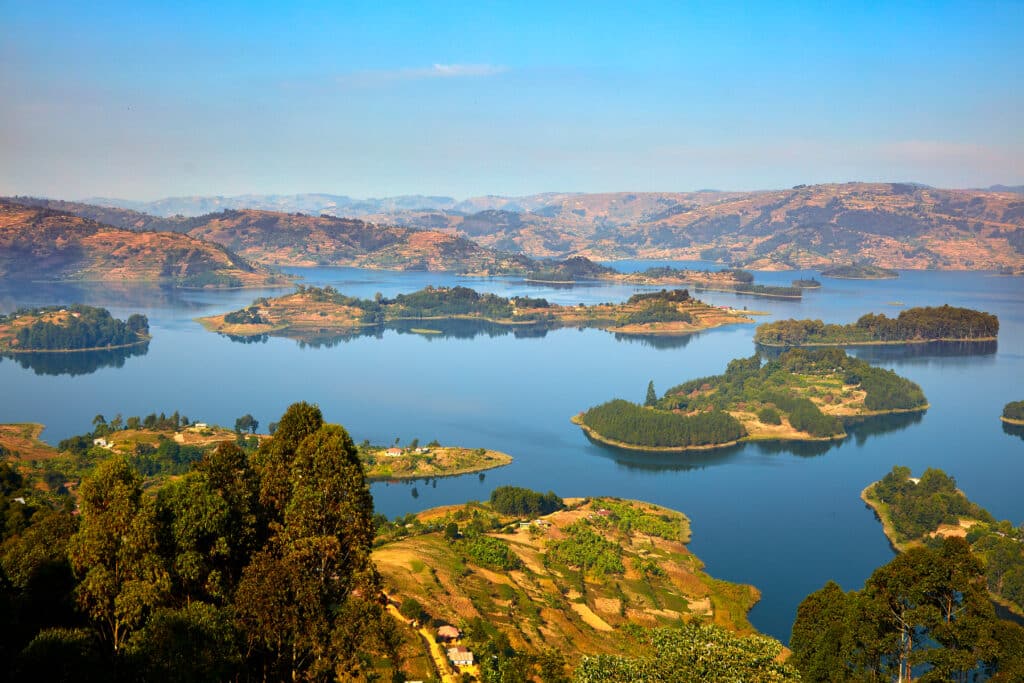
Lake Bunyonyi rests in southwestern Uganda, surrounded by steep terraced hills and dotted with small islands that appear suspended in quiet water. Its name, meaning “place of many little birds,” reflects both biodiversity and tranquility.
The lake’s calm surface contrasts sharply with the rugged terrain around it. This balance creates an atmosphere of stillness that invites reflection rather than activity. Canoes glide silently, villages cling to hillsides, and daily life unfolds without urgency.
Lake Bunyonyi has long supported farming communities who shaped the land through terracing, transforming steep slopes into fertile ground. This agricultural ingenuity reflects adaptation built over generations.
Culturally, the lake holds deep significance. Stories, traditions, and social customs are tied to its islands and shores, preserving identity through oral history and ritual.
Unlike Uganda’s larger lakes, Bunyonyi feels intimate. Its power lies not in scale, but in cohesion—where land, water, and people remain visibly connected.
Lake Bunyonyi reveals Uganda’s capacity for gentleness. It offers a pause between forests and mountains, reminding visitors that some landscapes restore not through spectacle, but through calm continuity.
9. Rwenzori Mountains: The Mountains of the Moon
The Rwenzori Mountains rise along Uganda’s western border as one of Africa’s most mysterious and demanding ranges. Often shrouded in cloud, these peaks are defined by altitude, moisture, and dramatic ecological transition.
As elevation increases, vegetation shifts rapidly—from montane forest to bamboo zones, giant heather, and surreal afro-alpine landscapes. This vertical diversity creates ecosystems unlike anywhere else on the continent.
The Rwenzori are not defined by height alone, but by endurance. Trails are steep, wet, and physically demanding, reinforcing a relationship with the mountains based on effort rather than conquest.
Glaciers crown the highest peaks, feeding rivers that sustain communities far below. These water sources link the mountains directly to Uganda’s agricultural heartlands.
Local cultures regard the Rwenzori with reverence, integrating the mountains into spiritual belief and oral tradition. This respect reinforces the idea that the range is not merely physical, but symbolic.
The Rwenzori reveal Uganda’s extremes—where beauty emerges through difficulty, and landscape demands humility. They stand as a reminder that exploration is as much internal as it is geographic.
8. Jinja: Where the Nile Begins
Jinja lies along the northern shores of Lake Victoria, marking the point where the Nile begins its long journey north. This location grants the town both geographic and symbolic significance.
Historically, Jinja grew as an industrial and colonial center, shaped by railways, dams, and trade. Today, it balances this legacy with renewal, embracing recreation, culture, and river-based life.
The Nile defines the town’s rhythm. Its steady flow supports fishing, farming, and energy production, while also attracting visitors seeking connection to Africa’s most storied river.
Beyond activity, the river inspires contemplation. Standing at its source reinforces a sense of continuity, linking Uganda to regions far beyond its borders.
Jinja reflects Uganda’s outward reach. It is a place where local life intersects with continental history, reminding visitors that Uganda’s influence flows far beyond its boundaries.
7. Kidepo Valley National Park: Uganda’s Remote Frontier
Kidepo Valley National Park lies in the far northeastern corner of Uganda, isolated by distance and terrain. Its remoteness defines its character, preserving a landscape that feels expansive, raw, and deeply independent.
The park opens into wide savannah plains framed by distant mountain ranges, creating a sense of space rarely experienced elsewhere in the country. Seasonal rivers carve through the land, shaping wildlife movement and survival in cycles governed by rainfall.
Kidepo supports a remarkable concentration of wildlife, including large herds of buffalo, elephants, giraffes, and predators such as lions and cheetahs. Encounters here feel unmediated, shaped by patience rather than proximity.
Cultural presence is integral to Kidepo’s identity. Indigenous communities, particularly the Karamojong, maintain pastoral traditions rooted in resilience and adaptation to harsh conditions. Their relationship with the land reflects survival through mobility, memory, and collective knowledge.
Kidepo reveals Uganda’s frontier spirit. It shows wilderness without polish, where silence carries weight and distance preserves integrity. The park offers perspective—reminding visitors that some of Africa’s most profound landscapes exist far from familiarity.
6. Lake Mburo National Park: Intimacy and Balance
Lake Mburo National Park sits in central Uganda as a compact yet ecologically rich landscape defined by lakes, rolling hills, and open savannah. Its scale encourages closeness rather than grandeur.
The park is home to zebras, impalas, elands, and a wide range of bird species, many found nowhere else in the country. Wildlife moves freely across gentle terrain, often visible without effort or intrusion.
Lakes and wetlands anchor the ecosystem, sustaining life through dry seasons and attracting birds in extraordinary numbers. Boat journeys reveal hippos and crocodiles within a setting that feels calm rather than dramatic.
Human activity surrounds the park, with cattle grazing and farming shaping the wider landscape. Conservation here emphasizes coexistence, reflecting Uganda’s broader commitment to balance rather than exclusion.
Lake Mburo represents Uganda’s subtlety. It demonstrates how richness can exist within restraint, and how conservation succeeds when land remains shared, respected, and understood.
5. Mount Elgon: The Ancient Giant
Mount Elgon rises along Uganda’s eastern border as one of Africa’s oldest volcanic formations. Its broad, eroded slopes and vast caldera reflect age rather than height, offering a landscape shaped by time.
Dense forests cloak the lower elevations, giving way to bamboo zones, waterfalls, and alpine vegetation. This ecological gradient supports diverse species and sustains rivers feeding surrounding farmland.
Trails across Mount Elgon emphasize gradual ascent rather than dramatic peaks. Exploration here is reflective, encouraging awareness of terrain, weather, and physical rhythm.
Local communities depend on the mountain’s fertile soils and water systems, integrating agriculture and tradition into its slopes. Cultural practices reinforce respect for the mountain as both provider and protector.
Mount Elgon reveals Uganda’s geological depth. It stands as a reminder that not all power is vertical—some is measured in endurance, generosity, and quiet persistence.
4. Eastern Uganda: Culture, Craft, and Continuity
Eastern Uganda unfolds as a cultural mosaic shaped by fertile land, trade routes, and strong communal identity. Towns and villages here maintain traditions rooted in agriculture, craftsmanship, and ceremony.
Markets serve as social centers, where food, textiles, and handmade goods reflect generational knowledge. Music and dance remain integral to expression, reinforcing community bonds.
The landscape supports this continuity. Rivers, hills, and farmland create stability that allows culture to persist without displacement.
Eastern Uganda offers insight into daily life beyond parks and peaks. It completes the country’s narrative by grounding natural beauty in lived experience.
3. Kampala: Energy, Resilience, and Reinvention
Kampala rises across a series of hills at the northern edge of Lake Victoria, functioning as Uganda’s political, cultural, and economic heart. The city is dynamic and unapologetically alive, shaped by movement, improvisation, and human connection.
Daily life in Kampala unfolds at full volume. Markets overflow with color and conversation, boda-boda motorcycles weave through traffic, and music spills from shops, taxis, and homes. This intensity reflects resilience rather than chaos—a city continuously adapting to growth and change.
Kampala’s history is layered. Traditional kingdoms, colonial administration, post-independence ambition, and modern entrepreneurship coexist within its neighborhoods. Sacred sites, government buildings, universities, and informal settlements sit side by side, reinforcing contrast as identity.
Despite its pace, Kampala remains deeply social. Community defines survival and success, expressed through humor, hospitality, and shared struggle. The city’s creativity thrives in fashion, music, and digital enterprise, signaling a future shaped from within.
Kampala represents modern Uganda: complex, energetic, and forward-looking. It shows how tradition and ambition coexist, proving that identity can evolve without erasing its roots.
2. Buganda Kingdom: Tradition Within the Modern State
The Buganda Kingdom remains one of Uganda’s most influential cultural institutions, rooted in centuries of governance, ceremony, and social organization. Centered around Kampala and the surrounding region, it continues to shape identity and values.
Royal traditions, clan systems, and cultural ceremonies reinforce continuity across generations. The Kabaka’s role symbolizes unity rather than political authority, anchoring heritage within contemporary Uganda.
Land, language, and ritual form the foundation of Buganda identity. Luganda is widely spoken, music and dance preserve history, and storytelling remains a tool for moral instruction.
The kingdom’s endurance reflects adaptability. Rather than resisting modernity, Buganda integrates education, development, and cultural preservation into its institutions.
Buganda demonstrates Uganda’s ability to honor the past without becoming confined by it. The kingdom embodies cultural confidence—showing how tradition can remain relevant within a modern nation.
1. Mabamba Swamp: Quiet Wetlands and Rare Life
Mabamba Swamp stretches along Lake Victoria’s margins as a fragile wetland ecosystem defined by papyrus channels and still water. It is internationally recognized as one of the best places to observe the elusive shoebill stork.
Accessing Mabamba requires patience and silence. Canoes glide slowly through narrow waterways, reinforcing respect for the environment and its inhabitants. Observation replaces movement as the dominant activity.
The swamp supports diverse birdlife, fish, and plant species, functioning as both habitat and natural water filter. Its health directly affects surrounding communities and the lake itself.
Local conservation initiatives balance livelihood with protection, demonstrating how wetlands sustain life beyond tourism.
Mabamba reveals Uganda’s quieter strength. It shows how significance can exist without scale, and how preservation depends on attentiveness rather than control.