
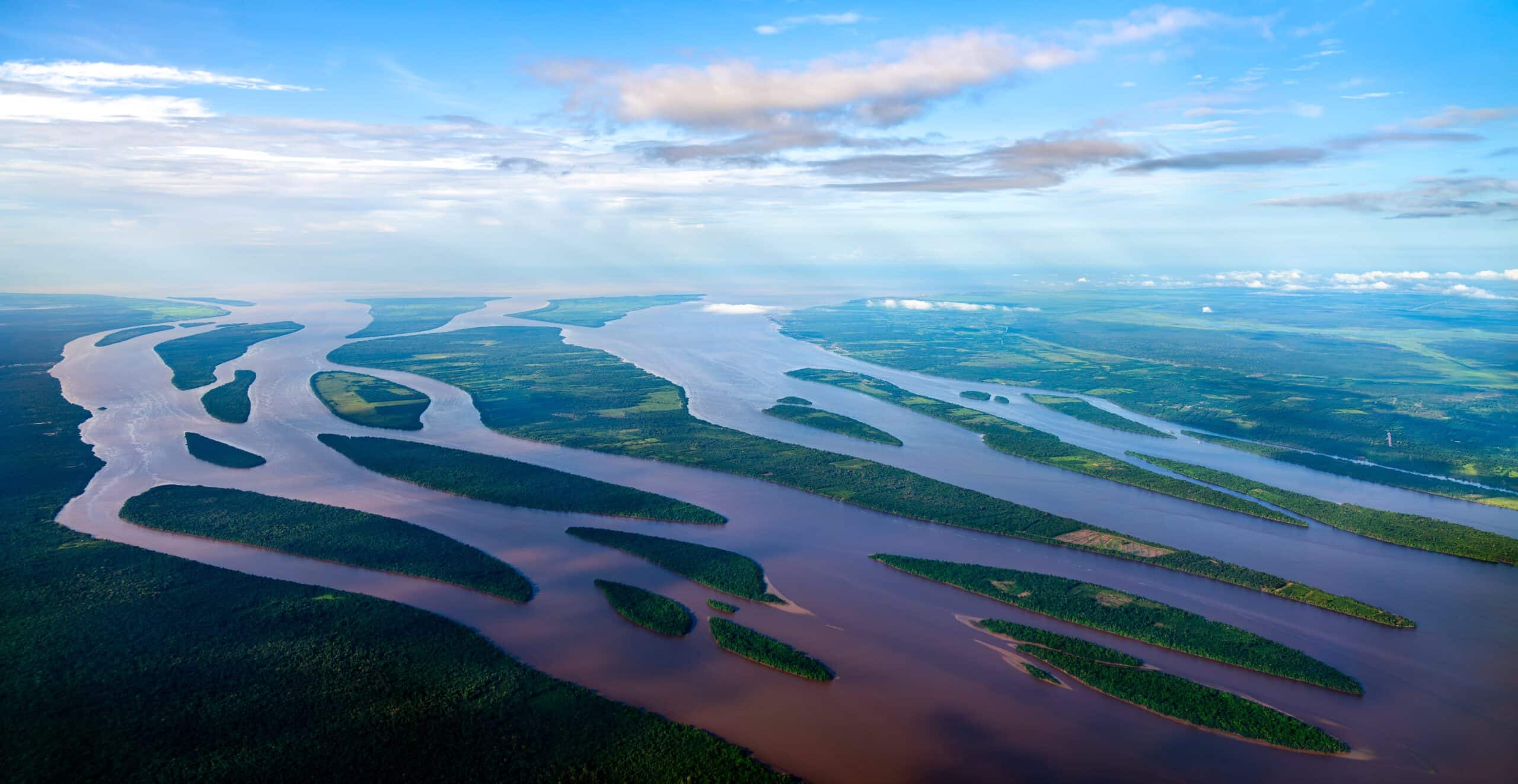
Guyana occupies a unique position in South America, both geographically and culturally. English-speaking and historically shaped by British colonial influence, the country feels markedly different from its neighbors while remaining deeply rooted in the continent’s rhythms. For travelers, Guyana offers a sense of discovery defined by openness, space, and authenticity rather than crowds or conventional tourism circuits.
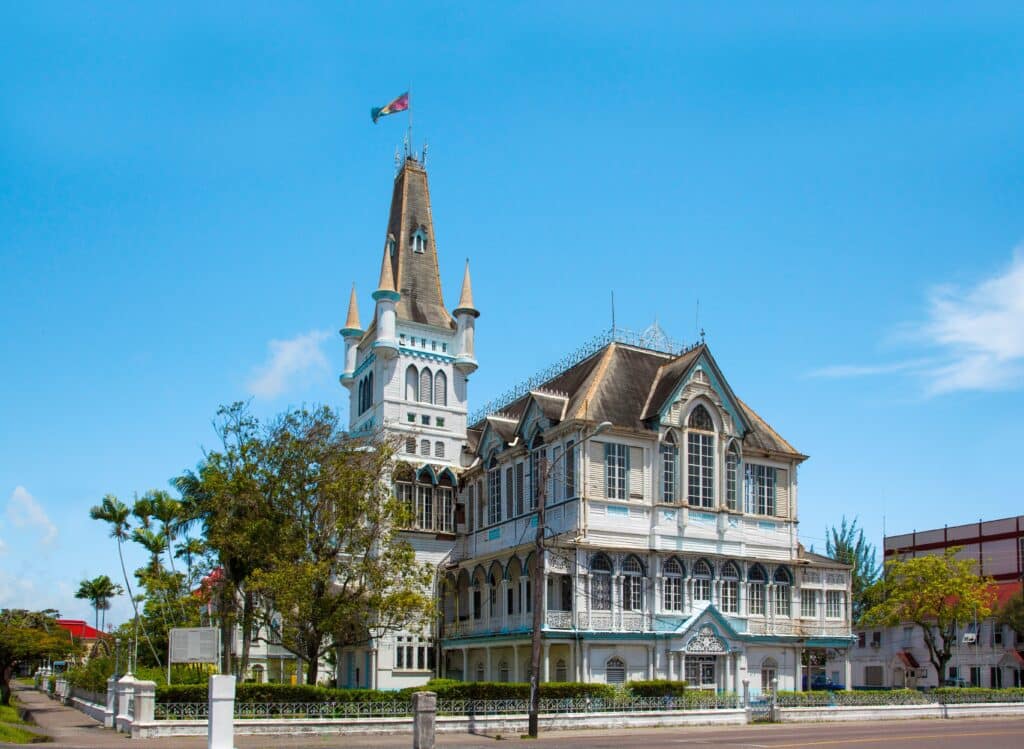
The capital, Georgetown, serves as the country’s cultural and administrative heart. Its wide streets, wooden colonial architecture, and riverside setting give it a character unlike any other city in the region. Landmarks such as St. George’s Cathedral, one of the tallest wooden churches in the world, and lively markets provide insight into Guyana’s layered past and diverse population. The city’s social life unfolds in cafés, rum shops, and along the seawall, where locals gather in the evenings.
Beyond the capital, Guyana reveals itself through a series of distinct regions and towns that feel both remote and welcoming. New Amsterdam, located on the Berbice River, offers a quieter, more traditional atmosphere, reflecting provincial life shaped by river trade and colonial planning. Inland towns and river settlements function as gateways to the country’s interior, where travel often follows waterways rather than roads, adding a sense of adventure to even short journeys.
Cultural diversity is central to the Guyanese experience. Afro-Guyanese, Indo-Guyanese, Indigenous peoples, and communities of Chinese and Portuguese descent contribute to a rich social fabric expressed through food, festivals, and everyday interactions. Cuisine is especially notable, blending Caribbean, South Asian, and local influences into a distinctive culinary identity. Guyana appeals to travelers seeking places that feel genuine and unhurried. Its destinations reward patience, curiosity, and engagement with local life. Rather than offering spectacle at every turn, Guyana invites visitors to slow down, observe, and connect — making it one of South America’s most quietly compelling countries to explore.
19. Georgetown – Colonial Grandeur and Modern Guyanese Life
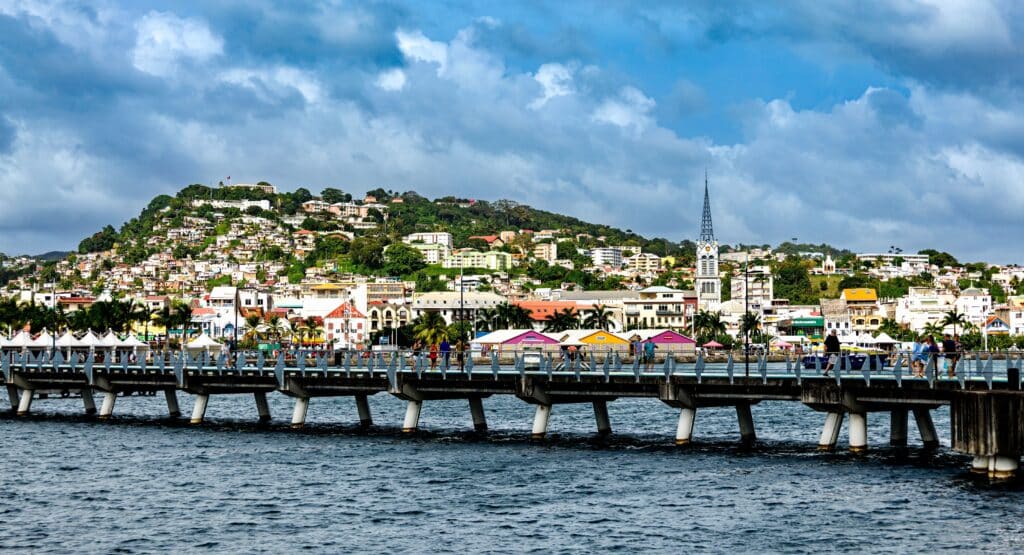
Georgetown is the cultural, political, and social heart of Guyana, offering visitors their first and most comprehensive introduction to the country. Situated on the Atlantic coast at the mouth of the Demerara River, the city blends colonial-era architecture with the everyday energy of a working capital.
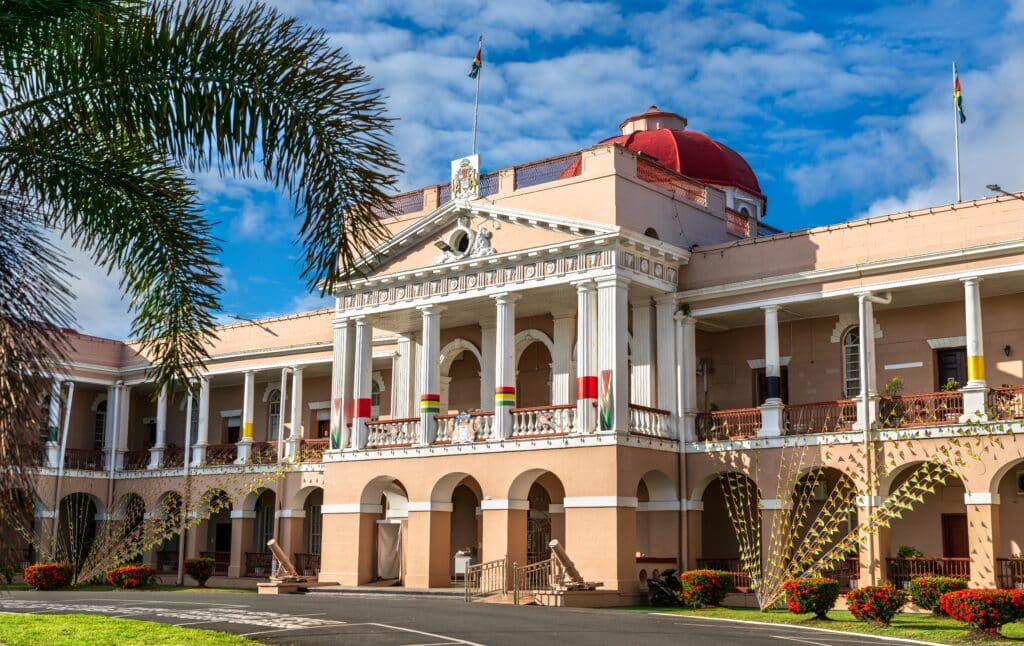
The city’s historic center is defined by wide streets, canals, and striking wooden buildings. St. George’s Cathedral stands as one of Georgetown’s most recognizable landmarks, while nearby government buildings and historic homes reflect British colonial planning adapted to tropical conditions. Walking through these neighborhoods reveals a city shaped by history yet firmly rooted in contemporary life.
Georgetown’s markets are central to its identity. Stabroek Market, with its iconic clock tower, functions as both a commercial hub and a social meeting point. Here, vendors sell fresh produce, clothing, household goods, and prepared foods, creating a vivid snapshot of daily Guyanese life.
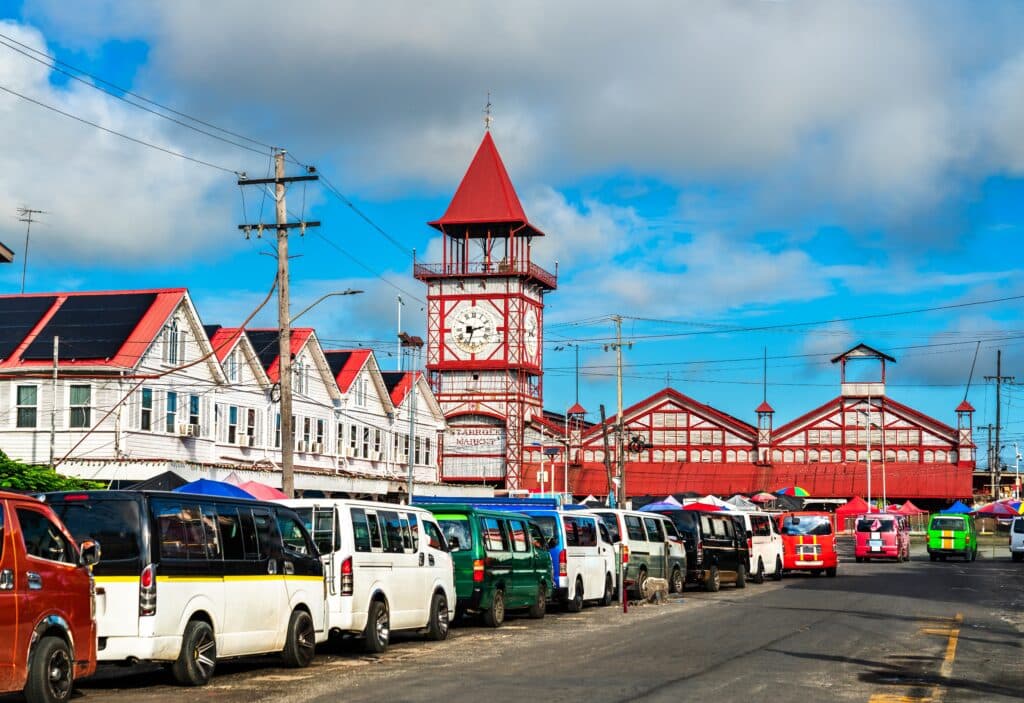
Cultural institutions such as the National Museum and local art galleries provide context for the country’s diverse heritage. Music, storytelling, and informal gatherings are common in public spaces, especially in the evenings when the city cools and social life becomes more visible.
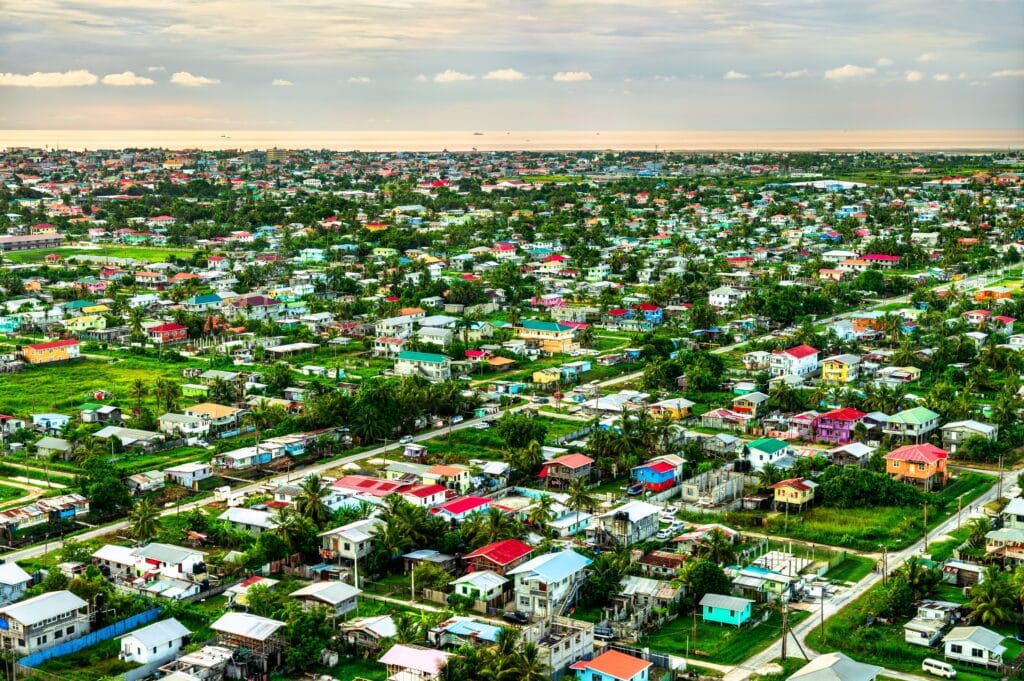
Dining in Georgetown is one of the city’s highlights. Restaurants and street vendors offer a wide range of dishes reflecting Afro-Guyanese, Indo-Guyanese, and Creole traditions. Meals are flavorful, generous, and often enjoyed at a relaxed pace.
Georgetown rewards travelers who explore beyond first impressions. Its charm lies in interaction, observation, and the layered coexistence of past and present.
18. New Amsterdam – Riverside Town and Colonial Legacy
New Amsterdam, located along the Berbice River, is one of Guyana’s most historically significant towns. Smaller and quieter than Georgetown, it offers a slower pace and a more intimate look at traditional town life.
The town’s layout reflects its colonial origins, with orderly streets and older buildings that hint at its former importance as an administrative center. While many structures show signs of age, they contribute to New Amsterdam’s character rather than detract from it.
Daily life revolves around the river, local markets, and small businesses. Fishing boats, ferries, and riverside activity shape the rhythm of the town, reinforcing its connection to water-based transport and trade.
Cultural life in New Amsterdam is understated but sincere. Community events, religious gatherings, and family celebrations form the backbone of social interaction. Visitors who take time to engage often find the town welcoming and conversational.
Food options are modest but satisfying, focusing on traditional Guyanese dishes prepared simply and well. Meals are typically home-style, reflecting long-standing culinary habits.
New Amsterdam appeals to travelers interested in history experienced through lived spaces rather than curated attractions. It provides perspective on Guyana’s regional life beyond the capital.
17. Linden – Industrial Roots and Community Spirit
Linden is Guyana’s second-largest urban area and is closely associated with the country’s mining and industrial history. Located south of Georgetown along the Demerara River, it functions as both a working town and a regional hub.
The town is spread out, with neighborhoods shaped by its industrial past. While Linden lacks a traditional city center, its identity is built around community institutions, sports facilities, and social gathering places.
Life in Linden feels practical and grounded. Residents place strong emphasis on education, sports, and civic involvement. Football matches, school events, and local celebrations bring people together and give visitors insight into everyday social life.
Dining and entertainment options are casual and community-oriented. Restaurants and food stalls serve familiar Guyanese fare in relaxed settings, often doubling as social meeting points.
Linden suits travelers interested in understanding Guyana beyond tourism-oriented destinations. It reflects working-class resilience and local pride, offering an authentic urban experience shaped by shared history.
16. Bartica – Gateway Town and Riverfront Life
Bartica sits at the meeting point of major rivers and serves as an important transit and trading town. Its location gives it a lively, constantly shifting atmosphere as travelers, workers, and residents pass through.
The town’s compact center includes shops, markets, and transport hubs, making it easy to navigate. Movement defines Bartica, with boats arriving and departing throughout the day.
Social life is visible and informal. Conversations happen in public spaces, cafés, and along the riverfront. Evenings are particularly social, with residents gathering to eat, talk, and unwind.
Bartica’s appeal lies in its energy and openness. Visitors experience a place shaped by connection rather than isolation, where movement and interaction are part of daily life.
15. Essequibo Coast – Villages, Markets, and Everyday Traditions
The Essequibo Coast is a stretch of settlements and villages that together form one of Guyana’s most culturally rich regions. Rather than a single destination, it offers a series of interconnected communities defined by agriculture, family life, and tradition.
Villages are orderly and closely knit, with schools, religious buildings, and markets at their center. Life follows predictable rhythms shaped by work, meals, and social gatherings.
Food culture is particularly strong here, reflecting Indo-Guyanese heritage. Small eateries and home kitchens produce some of the country’s most beloved dishes, often shared generously with visitors.
The Essequibo Coast rewards slow travel. Its appeal lies in observation, conversation, and participation in everyday life rather than formal sightseeing.
14. Mahaica–Berbice – Agricultural Heartland and Town Life
The Mahaica–Berbice region represents Guyana’s agricultural backbone and offers visitors a clear view into rural and semi-rural life shaped by long-standing traditions. The landscape is organized into villages that follow the coastal plain, each functioning as a self-contained community with schools, places of worship, markets, and social halls.
Daily life here revolves around work, family, and shared routines. Early mornings are active, with residents commuting locally or tending to farms and small businesses. Afternoons are quieter, while evenings bring renewed social interaction as neighbors gather and children play outdoors.
Towns such as Mahaicony and Rosignol serve as regional centers, providing services, transportation links, and marketplaces. These hubs feel practical rather than polished, offering a genuine sense of how most Guyanese live outside major cities.
Food is central to social life. Small restaurants, roadside vendors, and home kitchens serve filling, flavorful meals rooted in Indo-Guyanese and Creole traditions. Eating is rarely rushed and often becomes a social event.
Visitors to Mahaica–Berbice gain insight into Guyana’s everyday rhythms. The region may lack headline attractions, but it rewards curiosity and conversation, making it ideal for travelers seeking authenticity.
13. Lethem – Frontier Town and Cultural Crossroads
Lethem lies near Guyana’s southern border and functions as a frontier town shaped by trade, movement, and cultural exchange. Its role as a gateway between regions gives it a distinctly open and transitional character.
The town center is modest but active, with shops, markets, and administrative buildings serving both locals and travelers passing through. Movement defines Lethem, with vehicles and people constantly arriving and departing.
Cultural diversity is one of Lethem’s defining features. Indigenous communities, coastal Guyanese, and cross-border influences coexist, contributing to a unique social atmosphere. This diversity is most visible in daily interactions and food offerings.
Dining options are informal and varied, ranging from local Guyanese dishes to influences brought by travelers and traders. Meals are functional, generous, and social.
Lethem appeals to travelers interested in border towns and cultural blending. It offers a sense of transition rather than finality, making it one of Guyana’s most distinctive settlements.
12. Mahdia – Interior Town and Working Community
Mahdia is a small but important interior town that reflects Guyana’s inland settlement patterns. It functions as a service and supply center for surrounding communities and workers, giving it a purposeful and grounded atmosphere.
The town’s layout is simple, with essential services clustered around main roads. Daily life is shaped by work routines, transportation schedules, and communal interaction.
Social life is practical and direct. Conversations are open, and visitors often find locals willing to share stories and advice. Mahdia’s pace encourages observation rather than distraction.
Food options are limited but satisfying, focusing on hearty meals designed for working days. Eating here feels communal and unpretentious.
Mahdia is best suited to travelers who appreciate towns defined by function and resilience. It offers insight into interior life without spectacle.
11. Mabaruma – Regional Center of the Northwest
Mabaruma serves as the administrative and social center of Guyana’s northwest. Its elevated position and regional importance give it a sense of prominence despite its modest size.
The town’s institutions—schools, offices, and markets—anchor daily life. Community interaction is constant, with public spaces serving as meeting points.
Cultural expression is visible through language, dress, and food. Local eateries provide familiar dishes adapted to regional tastes.
Mabaruma appeals to travelers interested in regional capitals and community organization. It reflects how towns function as anchors in less densely populated areas.
10. Parika – River Port and Commercial Gateway
Parika is a busy port town that plays a crucial role in transportation and trade. Its energy is immediate, shaped by boat traffic, commerce, and constant movement.
The waterfront is the town’s focal point, where ferries, vendors, and travelers converge. Markets and shops nearby create a lively commercial environment.
Food stalls and small restaurants cater to both locals and travelers, offering quick, satisfying meals. Social interaction is constant and informal.
Parika is not a place for lingering quietly; it is a place to observe movement and exchange. It captures the dynamic side of Guyana’s daily life.
9. Charity and the Pomeroon River Towns
Charity serves as the main commercial center for the Pomeroon River region and acts as a hub connecting numerous river communities. The town itself is compact and lively, with shops, transport services, and markets concentrated along its main roads and waterfront. Movement defines Charity, as boats arrive from upriver villages while minibuses link the town to the coast.
The Pomeroon River towns surrounding Charity function as interconnected communities rather than isolated settlements. Travel between them is frequent and social, reinforcing a strong sense of regional identity. Daily life revolves around trade, family obligations, and communal events.
Markets in Charity are central gathering points. Vendors sell produce, household goods, and prepared foods, creating an atmosphere that feels practical and social at once. Conversations flow easily, and visitors are often welcomed into casual exchanges.
Food culture reflects Indo-Guyanese traditions, with meals prepared generously and shared openly. Eating is rarely rushed and often becomes part of extended social interaction.
Charity appeals to travelers interested in river-based communities and everyday commerce. It offers a grounded look at how towns function as connectors rather than destinations in isolation.
8. Vreed-en-Hoop – Suburban Life Across the River
Vreed-en-Hoop lies just across the Demerara River from Georgetown and functions as an extension of the capital rather than a separate destination. Its role as a transport and residential center gives it a practical, lived-in feel.
The town is shaped by ferry schedules, commuting patterns, and commercial services. Shops, schools, and offices cater to residents who move daily between Vreed-en-Hoop and Georgetown.
Life here feels routine and structured. Neighborhoods are orderly, and social life revolves around family, work, and local institutions. Cafés and small restaurants provide casual meeting points.
Food options reflect everyday Guyanese dining, with simple, filling meals served efficiently. The emphasis is on familiarity rather than variety.
Vreed-en-Hoop suits travelers interested in observing suburban Guyanese life. It offers perspective on how the capital’s influence extends beyond its immediate borders.
7. Timehri and the Airport Corridor
Timehri is best known as the location of Guyana’s main international airport, but the surrounding area has developed into a functional corridor of services, housing, and infrastructure.
The settlement lacks a traditional town center, instead spreading along roadways that connect the coast to interior routes. Daily life is shaped by transport schedules, logistics, and employment linked to travel and trade.
Residents experience Timehri as a place of movement rather than permanence. Shops, eateries, and accommodations cater to travelers and workers alike.
Food offerings are straightforward and practical, designed for people on the move. Meals are quick but satisfying.
Timehri reflects modern Guyana’s logistical realities. It may not attract sightseeing, but it plays a critical role in connecting regions and people.
6. Moruca Region – Regional Identity and Community Life
The Moruca region in northwestern Guyana is defined by strong local identity and close-knit communities. Settlements here function as social units where relationships and shared responsibilities shape daily life.
Villages are modest and organized around schools, churches, and communal spaces. Interaction is constant, and visitors quickly become visible participants in local rhythms.
Markets and small shops provide essential goods while also serving as social centers. Conversations are personal and direct.
Food reflects regional preferences and traditions, often prepared communally. Meals emphasize familiarity and sharing.
Moruca appeals to travelers seeking meaningful engagement rather than passive observation. It offers insight into community-driven life.
5. Wakenaam Island – Island Life on the Essequibo
Wakenaam Island sits within the Essequibo River and offers a distinct island experience shaped by agriculture and close community ties. Access by ferry reinforces a sense of separation and self-reliance.
Villages are tidy and well organized, with farming forming the backbone of daily life. Movement across the island is slow and deliberate.
Social life centers on family, religious gatherings, and shared meals. Visitors are often greeted warmly and included in conversations.
Food is fresh, traditional, and home-focused, reflecting long-standing habits.
Wakenaam appeals to travelers seeking calm, routine, and connection. It offers a peaceful counterpoint to busier mainland towns.
4. Anna Regina – Administrative Hub of the Essequibo Coast
Anna Regina functions as the administrative and commercial center of the Essequibo Coast, giving it an importance that outweighs its modest size. The town feels purposeful, shaped by government offices, schools, markets, and transport links that serve surrounding villages.
Its layout is practical rather than scenic, but this contributes to its everyday authenticity. Streets are busy during working hours, with residents moving between offices, shops, and services. The town’s market area acts as a focal point, drawing people from neighboring communities.
Social life unfolds in small but consistent ways. Cafés, food stalls, and shops double as meeting points where news is exchanged and relationships maintained. Visitors who linger quickly notice the familiarity among residents.
Food options reflect the Essequibo Coast’s strong Indo-Guyanese influence. Meals are hearty and home-style, often prepared in family-run establishments where conversation is part of the experience.
Anna Regina appeals to travelers interested in how regional centers function beyond tourism. It offers insight into local administration, commerce, and routine life.
3. Port Kaituma – Remote Town and Frontier Character
Port Kaituma is one of Guyana’s more remote settlements, known for its frontier atmosphere and practical role as a regional service point. Its isolation gives it a distinctive character shaped by self-reliance and adaptability.
The town’s infrastructure is functional, focused on transport, supply, and communication. Movement is less frequent than in coastal towns, making arrivals noticeable events.
Community interaction is direct and informal. Residents rely on cooperation and familiarity, and visitors are often met with curiosity and openness.
Food options are limited but filling, emphasizing practicality over variety. Meals reflect long-standing habits shaped by availability and routine.
Port Kaituma suits travelers seeking places defined by resilience and remoteness rather than comfort or entertainment.
2. Skeldon – Border Town and Commercial Activity
Skeldon lies near Guyana’s eastern border and serves as an important commercial and transit point. Its position gives it a busy, outward-facing character shaped by trade and movement.
The town center includes markets, shops, and transport services that support constant flow. Activity peaks during business hours, when commerce dominates daily life.
Social interaction is brisk but friendly. People are accustomed to newcomers and passing travelers, creating an atmosphere of efficiency mixed with openness.
Food stalls and small restaurants cater to workers and travelers alike, offering quick, satisfying meals.
Skeldon appeals to travelers interested in border dynamics and regional trade rather than sightseeing.
1. Kwakwani – Interior Settlement and Community Focus
Kwakwani is an interior settlement known for its close-knit community and working-town atmosphere. Life here is shaped by routine, shared responsibility, and strong social ties.
The town is compact, with schools, shops, and community spaces forming its core. Daily interactions feel personal and consistent.
Social events, sports, and gatherings play an important role in maintaining community bonds. Visitors often feel noticed and included.
Food culture is simple and communal, emphasizing familiarity and shared meals.
Kwakwani offers insight into interior town life built on cooperation rather than scale.