
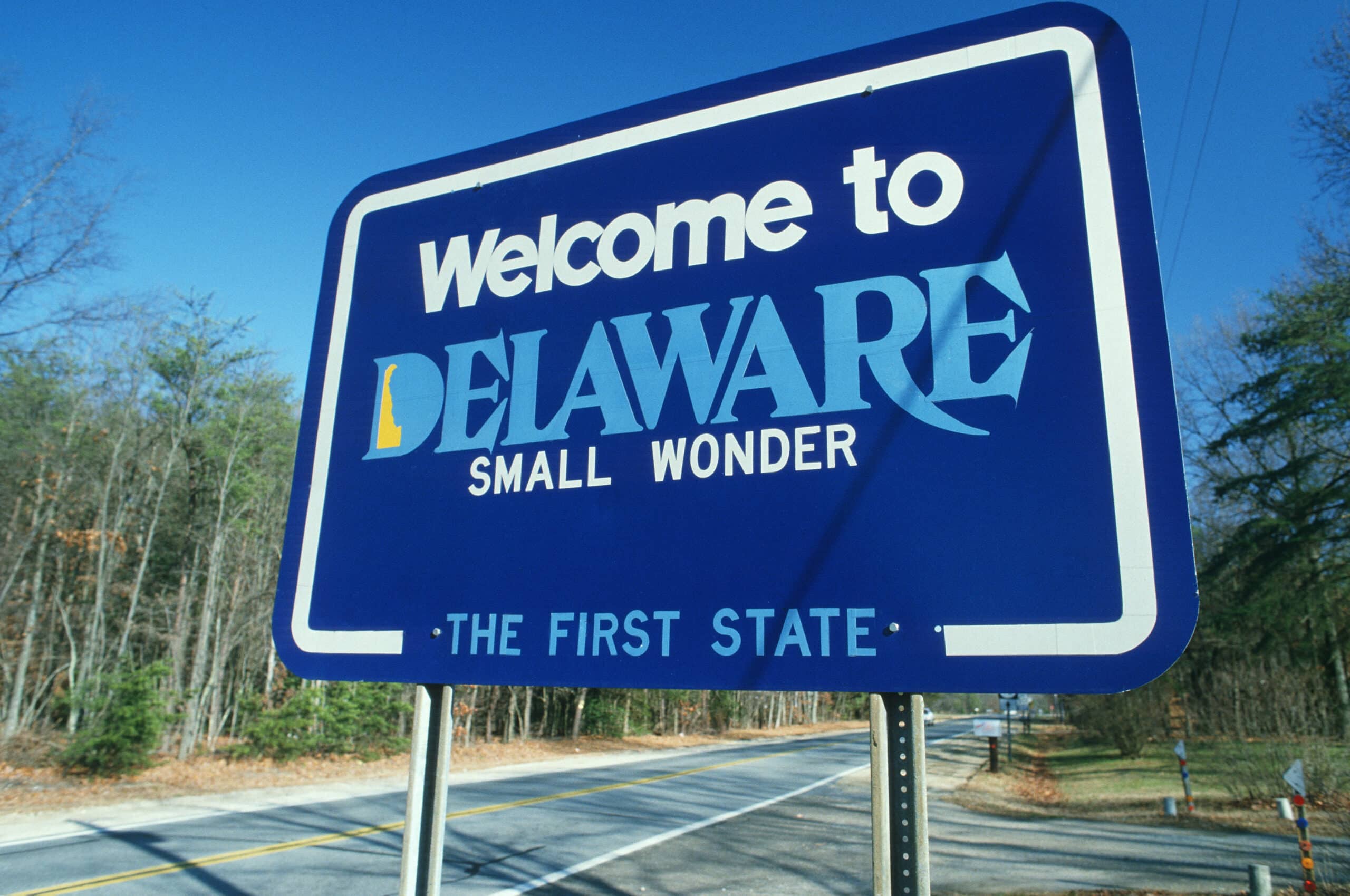
Delaware is defined by subtlety rather than scale. As the second-smallest state in the United States, its landscapes unfold quietly, shaped by water, low elevation, and long continuity of settlement. Rivers, bays, coastal plains, and agricultural interiors form a geography where change is gradual and closely tied to natural systems.
Positioned between major metropolitan regions, Delaware often functions as a corridor rather than a destination. Yet this in-between status has preserved distinct local rhythms. Towns developed along waterways, roads followed ridgelines and tidal limits, and land use evolved through adaptation rather than disruption.
Water is Delaware’s defining element. The Delaware River, Chesapeake Bay tributaries, and Atlantic coastline structure both ecology and economy. Tidal influence reaches far inland, shaping wetlands, soil conditions, and settlement patterns.
Culturally, Delaware reflects layered histories of agriculture, trade, industry, and governance. Communities remain closely tied to place, with scale encouraging continuity over reinvention.
20. Delaware Bay
Delaware Bay forms the state’s eastern boundary and serves as one of its most influential geographic features. Wide, shallow, and tidal, the bay shapes ecology, settlement, and economy across much of Delaware’s low-lying landscape.
The bay’s tidal reach extends far inland through tributaries, influencing wetlands, soil salinity, and agricultural practices. Marshes dominate the shoreline, creating a productive but fragile environment that supports migratory birds, fisheries, and shellfish populations. Seasonal rhythms—particularly spring migrations—underscore the bay’s ecological importance.
Historically, the bay functioned as a transportation corridor linking inland farms to Atlantic trade routes. Small ports and landings emerged where rivers met tidal waters, allowing goods to move outward while maintaining local scale.
The shoreline remains sparsely developed compared to oceanfront areas. Dikes, wildlife refuges, and conservation lands reflect long-standing efforts to balance human use with ecological preservation.
Visually, the bay feels expansive and restrained. Open water meets wide sky, reinforcing a sense of horizontality and calm rather than drama.
Delaware Bay represents the state’s foundational water landscape, where tidal systems quietly structure land use, ecology, and continuity.
19. Wilmington
Wilmington developed along the Christina River as Delaware’s largest city and primary industrial center. Its location near the confluence of river systems allowed access to inland resources and regional trade.
Unlike many coastal cities, Wilmington’s growth was shaped by manufacturing and commerce rather than port spectacle. Mills, railroads, and factories clustered along waterways, using water power and transportation networks to support industry.
Neighborhoods reflect layered development. Historic districts, working-class housing, and modern redevelopment exist in close proximity, revealing adaptation rather than wholesale replacement.
The city’s relationship to water is functional. Rivers are present but controlled, shaping infrastructure and movement without dominating daily life.
Wilmington’s scale encourages continuity. It remains compact enough for local identity to persist despite economic change.
Wilmington represents Delaware’s industrial continuity, where geography supported steady growth rooted in work and connection.
18. Brandywine Valley
The Brandywine Valley introduces rare elevation and wooded terrain to northern Delaware. Rolling hills, rocky streambeds, and narrow valleys distinguish this region from the surrounding coastal plain.
The Brandywine Creek powered early mills, shaping settlement patterns tied closely to water and slope. Stone structures, bridges, and mill remnants remain integrated into the landscape.
Forests and open fields create enclosure, limiting long views and emphasizing texture and movement. Trails and roads follow natural contours rather than imposed grids.
The valley has long balanced preservation and use. Estates, parks, and protected lands maintain ecological continuity alongside residential development.
Seasonal change is pronounced, with foliage and stream flow altering perception throughout the year.
The Brandywine Valley represents Delaware’s upland character, where terrain introduces variation and historical depth.
17. Rehoboth Beach
Rehoboth Beach reflects Delaware’s Atlantic-facing identity, combining resort development with long-standing community presence. Situated along the open ocean, it contrasts with the state’s quieter bay and river landscapes.
The town developed as a planned seaside destination, with a compact grid oriented toward the shoreline. Boardwalks, streets, and public spaces emphasize accessibility and communal experience.
Seasonality defines rhythm. Summer brings population surges and economic intensity, while off-season months return the town to a smaller, more local scale.
Despite tourism, the town maintains continuity through consistent layout and civic engagement. Development remains contained rather than sprawling.
The ocean shapes perception through sound, wind, and horizon, reinforcing openness absent inland.
Rehoboth Beach represents Delaware’s coastal interface, where recreation, community, and environment intersect.
16. Sussex County Farmland
Sussex County farmland defines southern Delaware’s interior, characterized by flat terrain, fertile soil, and long agricultural continuity. Fields, drainage ditches, and tree lines structure a working landscape shaped by generations of cultivation.
Farming here adapts to low elevation and water management. Drainage systems protect crops while maintaining soil productivity. Poultry operations and diversified crops anchor the local economy.
Settlement remains dispersed. Farmhouses, small towns, and crossroads reflect practical organization rather than density.
The landscape emphasizes horizontality and repetition, reinforcing a sense of scale and persistence.
Despite modernization, agricultural rhythms continue to shape daily life and community identity.
Sussex County farmland represents Delaware’s agrarian foundation, where continuity, restraint, and land stewardship remain central.
15. Cape Henlopen
Cape Henlopen marks the meeting point of Delaware Bay and the Atlantic Ocean, forming one of the state’s most dynamic and environmentally significant landscapes. Shifting dunes, maritime forests, and open shoreline define a place shaped continuously by wind, tide, and sediment.
Historically, the cape served as a navigational landmark for vessels entering the bay. Its strategic position made it important for coastal defense, shipping, and later conservation. Military remnants and observation points reflect layers of use shaped by geography.
Natural systems dominate perception. Dunes migrate, beaches expand and contract, and vegetation adapts to salt, wind, and sand. These processes create a landscape of constant adjustment rather than stability.
Human presence is carefully managed. Trails, roads, and facilities are designed to minimize disruption while allowing access. Recreation exists within limits set by environmental sensitivity.
The meeting of bay and ocean produces contrasting conditions—calm tidal waters on one side, open surf on the other—reinforcing the cape’s transitional character.
Cape Henlopen represents Delaware’s point of convergence, where inland systems meet the Atlantic and natural forces remain visibly in control.
14. Dover
Dover functions as Delaware’s political and administrative center, positioned within the state’s agricultural interior. Its location reflects practicality rather than dominance, reinforcing a civic identity grounded in accessibility.
The city developed around governance, military presence, and service industries. Unlike commercial hubs, Dover’s growth followed institutional needs rather than market expansion.
Urban form remains compact. Government buildings, neighborhoods, and commercial areas coexist within short distances, maintaining human scale.
Surrounding farmland remains influential, preventing complete separation between city and countryside.
Dover’s rhythm is steady and predictable, shaped by administrative cycles rather than tourism or industry.
Dover represents Delaware’s civic continuity, where governance integrates quietly into the landscape.
13. Blackbird State Forest
Blackbird State Forest preserves a large expanse of woodland within Delaware’s coastal plain, offering insight into landscapes that once covered much of the region. Pine and mixed hardwood forests dominate flat, sandy terrain.
The forest exists within an agricultural matrix, emphasizing contrast between cultivated fields and unmanaged growth. Drainage patterns, soil conditions, and vegetation reflect low elevation and proximity to tidal influence.
Recreation is low-impact. Trails wind through quiet stands of trees, encouraging observation rather than spectacle.
Wildlife corridors extend through the forest, supporting species that rely on continuous habitat.
Blackbird State Forest represents Delaware’s preserved interior, where restraint maintains ecological continuity.
12. Lewes
Lewes stands at the entrance to Delaware Bay as the state’s oldest European settlement. Its maritime orientation has shaped both its physical form and enduring identity.
The town developed around fishing, shipbuilding, and navigation. Streets, docks, and buildings reflect long-term engagement with water rather than resort transformation.
Despite coastal pressure, Lewes maintains a restrained scale. Historic preservation and planning reinforce continuity.
The bay influences daily life through tides, weather, and working waterfronts.
Lewes represents Delaware’s maritime origin, where persistence outweighs reinvention.
11. Nanticoke River
The Nanticoke River flows through western Delaware as a defining waterway connecting inland farmland to the Chesapeake Bay system. Slow-moving and tidal, it shapes settlement patterns and ecological conditions along its course.
Historically, the river supported timber, agriculture, and transportation. Small towns and landings emerged where access to water enabled exchange.
Wetlands and wooded banks dominate much of the river’s edge, creating habitats shaped by fluctuating water levels.
Modern use remains limited, reinforcing continuity.
The river emphasizes patience and scale.
The Nanticoke River represents Delaware’s western corridor, where water quietly structures land and life.
10. Bombay Hook National Wildlife Refuge
Bombay Hook National Wildlife Refuge protects one of Delaware’s most significant tidal marsh systems. Situated along the western shore of Delaware Bay, the refuge preserves expansive wetlands shaped by daily tides, seasonal flooding, and sediment movement.
The marshes function as critical habitat for migratory birds, particularly during spring and fall. Shorebirds, waterfowl, and wading species rely on exposed mudflats and shallow pools created by tidal cycles. These rhythms define the refuge’s ecological importance.
Human intervention has focused on management rather than transformation. Dikes, impoundments, and observation routes are designed to balance habitat protection with limited public access. Roads and viewing areas remain secondary to ecological function.
The surrounding landscape emphasizes openness. Low vegetation and wide skies dominate perception, reinforcing the sense of horizontal scale that defines Delaware’s coastal plain.
Bombay Hook illustrates how conservation, restraint, and long-term stewardship preserve ecological processes rather than freeze them.
The refuge represents Delaware’s commitment to maintaining tidal systems that support both wildlife and landscape continuity.
9. Milford
Milford occupies a transitional position between Delaware’s agricultural interior and its coastal systems. Located along the Mispillion River, the town developed as a milling and manufacturing center tied directly to water power.
Industrial structures once dominated the riverbanks, shaping both economy and settlement form. Though industry declined, physical remnants remain integrated into the town’s layout.
Milford’s scale supports adaptability. Residential neighborhoods, commercial streets, and green spaces coexist without sharp division. Revitalization efforts build on existing form rather than replacement.
The river continues to influence daily life through flood management, restoration projects, and public space.
Milford reflects Delaware’s capacity for reinvention grounded in continuity.
The town represents a bridge between working landscapes and evolving community identity.
8. Delaware Seashore State Park
Delaware Seashore State Park protects a long stretch of barrier island between the Atlantic Ocean and inland bays. This narrow landform illustrates constant interaction between water, wind, and sand.
The barrier island buffers inland communities from storms while absorbing wave energy. Dunes, beaches, and tidal inlets shift over time, reinforcing impermanence.
Infrastructure is minimal and flexible. Roads and facilities accommodate erosion and flooding rather than resist them.
Recreation exists within ecological limits, emphasizing fishing, walking, and observation.
The park highlights the necessity of adaptation along dynamic coastlines.
It represents Delaware’s acceptance of change as a defining coastal condition.
7. Red Clay Creek
Red Clay Creek flows through northern Delaware’s Piedmont region, shaping early settlement and industrial development. Its faster-moving waters contrast with the tidal rivers of the coastal plain.
The creek powered mills, supporting communities that relied on localized production. Stone structures and historic crossings remain embedded in the landscape.
Surrounding terrain introduces slopes, wooded corridors, and narrower valleys. Roads and neighborhoods follow the creek’s course, reinforcing natural structure.
Today, conservation efforts focus on water quality and habitat restoration as development pressures increase.
Red Clay Creek illustrates Delaware’s upland water systems, where terrain and flow shaped early industry.
6. Greenwood
Greenwood reflects the scale and rhythm of Delaware’s small agricultural towns. Positioned within Sussex County farmland, it developed as a service center for surrounding rural communities.
Railroads once connected Greenwood to regional markets, influencing town layout and economic focus. Though rail use declined, the spatial organization remains legible.
The town’s grid is modest, with civic buildings, residences, and businesses arranged for walkability.
Agriculture continues to shape local identity, reinforcing continuity rather than growth pressure.
Greenwood represents Delaware’s rural persistence, where small towns remain anchored to land and tradition.
5. Broadkill River
The Broadkill River flows quietly from Delaware’s agricultural interior toward Delaware Bay, forming a subtle but important link between farmland, wetlands, and coastal systems. Unlike larger rivers, its influence is intimate, shaping land use through proximity rather than scale.
The river’s slow movement and tidal reach affect surrounding soils and vegetation. Marsh grasses, riparian woods, and drainage channels define its banks, reinforcing the low elevation and flatness of the coastal plain.
Historically, the Broadkill supported small-scale navigation, milling, and agriculture. Landings and crossings developed where access to water eased movement of goods, though few grew into major settlements.
Today, the river’s value lies primarily in ecological function. It provides habitat continuity between inland fields and bay marshes, supporting fish, birds, and seasonal migration patterns.
Human interaction remains restrained. Roads and bridges cross the river without dominating it, and development stays largely set back from its banks.
The Broadkill River represents Delaware’s understated waterways, where modest scale sustains ecological and agricultural balance.
4. Smyrna
Smyrna developed as a transportation and trade node along Duck Creek, benefiting from both inland access and proximity to tidal waters. Its position between northern and southern Delaware shaped its role as a regional connector.
The town’s early economy relied on shipping agricultural products and goods through the creek system. Warehouses, docks, and commercial streets grew around this function.
As transportation modes shifted, Smyrna adapted by integrating highway access and expanding residential areas. Despite growth, its historic core remains legible.
Surrounding wetlands and lowlands continue to influence planning and flood management.
Smyrna balances expansion with geographic constraint, maintaining connection to water systems.
The town represents Delaware’s adaptive crossroads, shaped by movement and continuity.
3. Assawoman Bay
Assawoman Bay lies behind Delaware’s barrier islands, forming a sheltered coastal water body shaped by tides, inlets, and human modification. The bay’s calm waters contrast sharply with the Atlantic surf beyond the dunes.
Historically, the bay supported fishing, crabbing, and small-scale navigation. Its protected nature encouraged early settlement along its shores.
In recent decades, development pressure has intensified. Canals, bulkheads, and residential construction altered natural shorelines, prompting restoration and management efforts.
Ecologically, the bay remains productive, supporting fish nurseries and bird habitat despite alteration.
The landscape reflects tension between use and preservation.
Assawoman Bay represents Delaware’s managed coast, where intervention and stewardship coexist.
2. White Clay Creek
White Clay Creek flows through northern Delaware’s Piedmont, carving wooded valleys and supporting one of the state’s most intact stream corridors. Its protected status preserves both water quality and surrounding landscapes.
The creek’s faster current and rocky substrate differ from coastal plain rivers. Forested banks provide shade, stabilize soil, and support biodiversity.
Settlement historically followed ridge lines above the floodplain, leaving the creek corridor relatively undisturbed.
Today, the watershed serves as a recreational and educational resource while maintaining ecological integrity.
White Clay Creek illustrates the value of early protection and landscape-scale planning.
It represents Delaware’s upland conservation success.
1. Fenwick Island
Fenwick Island marks Delaware’s southernmost coastal edge, defined by a narrow strip of land between the Atlantic Ocean and Assawoman Bay. Its geography emphasizes vulnerability, exposure, and adaptation.
Development followed the island’s length, constrained by limited width and dynamic shoreline conditions. Buildings, roads, and infrastructure respond directly to erosion, storms, and flooding.
The ocean dominates experience through sound, wind, and shifting horizons. Storm events periodically reshape beaches and dunes, reinforcing impermanence.
Community planning reflects awareness of risk, balancing access with resilience.
Fenwick Island represents Delaware’s coastal limit, where human presence exists within natural constraint.
It concludes the state’s narrative at the edge of land and sea.