
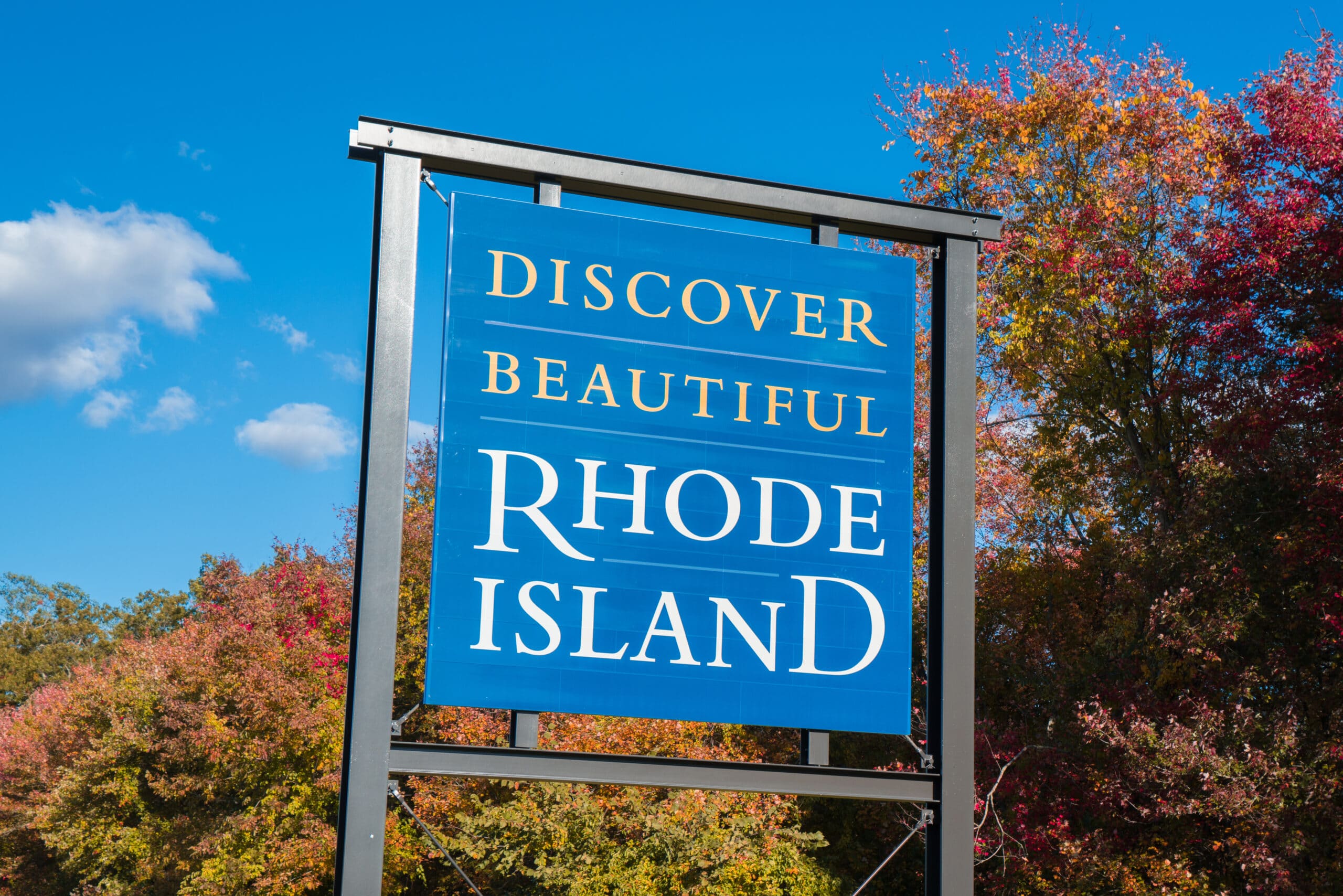
Rhode Island may be the smallest state in the United States, but it contains multitudes. Within its compact borders lies a remarkable density of history, coastline, culture, and character. It is a place where colonial streets meet open Atlantic horizons, where working harbors coexist with grand seaside estates, and where tradition and reinvention live side by side.
Founded on principles of religious freedom and independence, Rhode Island has always possessed a quietly defiant spirit. Its towns grew outward from the sea, shaped by trade, shipbuilding, and a long relationship with the water. Even today, salt air seems woven into daily life, influencing architecture, cuisine, and temperament.
The Ocean State’s coastline is its defining feature. Bays, coves, islands, and long beaches create a maritime world that feels both intimate and expansive. Sailing is not a pastime here but a language; lighthouses are not symbols but sentinels. Inland, wooded hills, stone walls, and historic villages reveal a softer, pastoral Rhode Island, often overlooked but deeply rooted.
Culturally, Rhode Island balances refinement with grit. Newport’s gilded mansions speak of wealth and ambition, while Providence’s creative energy pulses through universities, restaurants, and revitalized neighborhoods. Fishing towns, mill villages, and immigrant communities add layers of texture and authenticity.
Rhode Island rewards attention. It is not a place to rush through, but one to absorb slowly—by walking historic streets, lingering at harbors at dusk, and listening to stories carried by the wind off the sea. In its smallness lies its strength: a state where every mile holds memory, and every corner offers discovery.
26. Providence — A City Reclaimed by Creativity
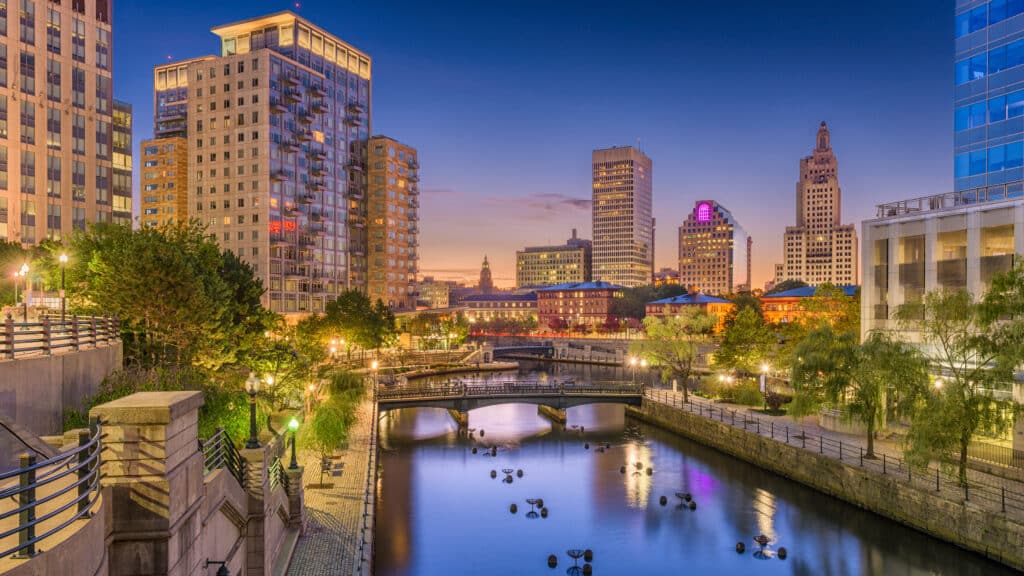
Providence is a city of reinvention. Once defined by industry and decline, it has emerged as one of New England’s most quietly compelling urban centers—a place where history is not erased but reimagined.
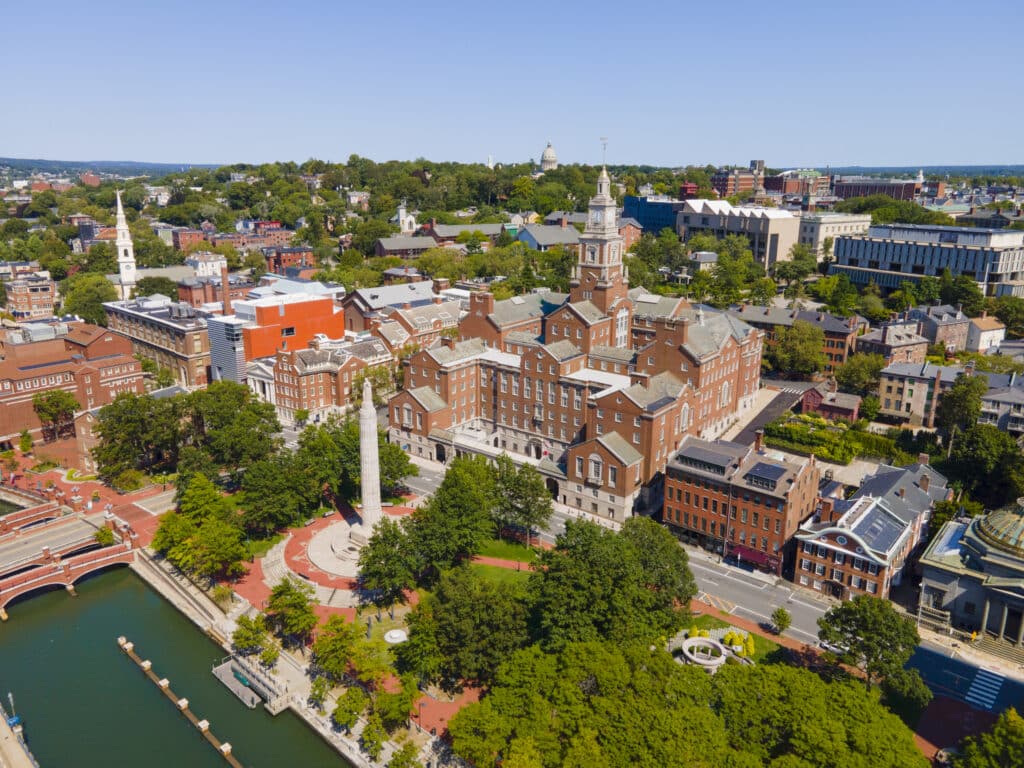
The city’s heart beats along the Providence River, where restored waterways curve past old brick warehouses and elegant bridges. At night, WaterFire transforms the river into a living artwork, flames flickering atop the water as music drifts through the air. It is both communal ritual and poetic gesture, emblematic of Providence’s creative soul.
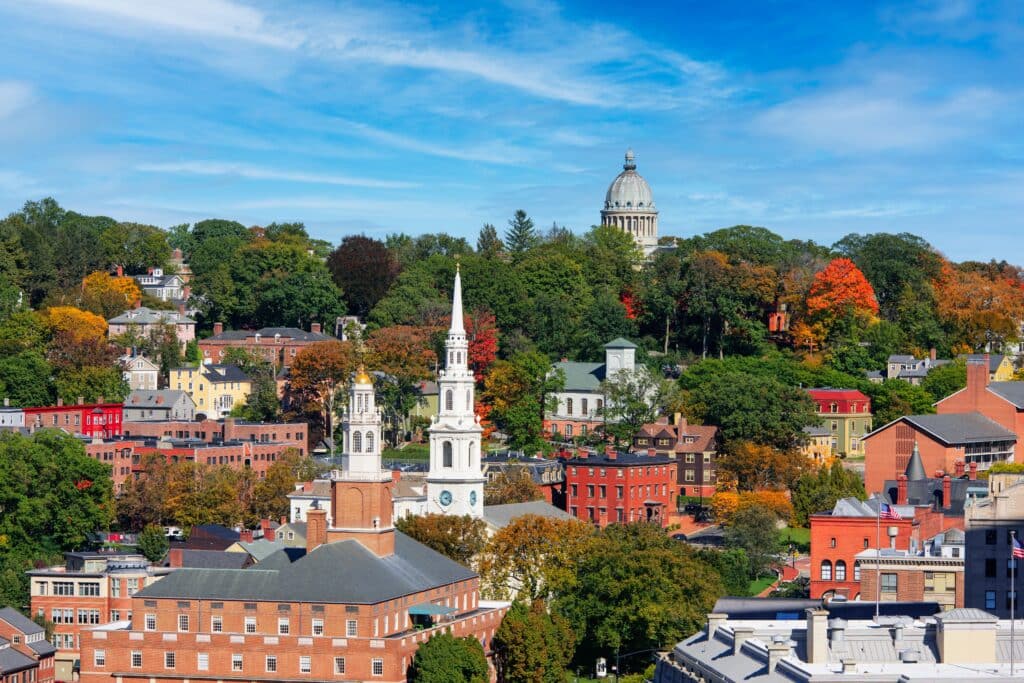
Higher ground reveals layers of the past. College Hill’s cobblestone streets and colonial homes recall the city’s early days, anchored by Brown University and the Rhode Island School of Design. These institutions infuse Providence with youthful energy, innovation, and global perspective.
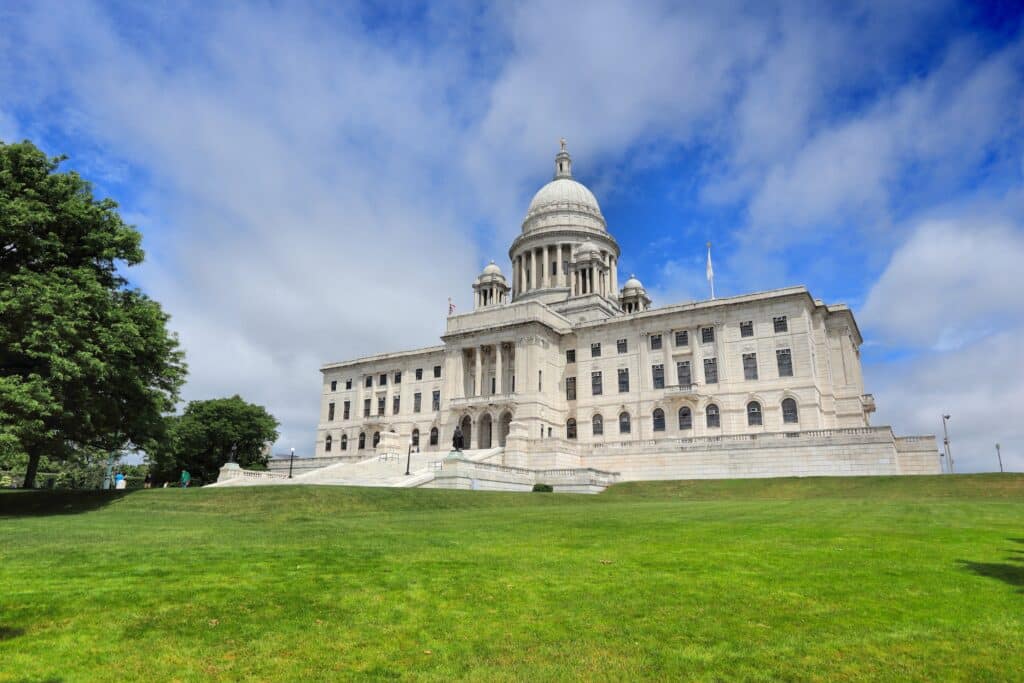
Culturally, the city thrives on contrasts. Renowned restaurants share streets with hole-in-the-wall bakeries and historic Italian eateries. Art studios occupy former factories. Murals bloom on once-forgotten walls. Providence feels lived-in, experimental, and unapologetically local.
There is an intimacy to Providence that larger cities lack. Neighborhoods retain distinct identities, and conversations spill easily from cafés onto sidewalks. The city invites exploration on foot, rewarding curiosity with unexpected beauty.
Providence does not seek to impress loudly. Instead, it reveals itself gradually—as a city that has learned how to honor its past while daring to imagine something new.
25. Newport — Gilded Grandeur and Ocean Light
Newport exists at the intersection of spectacle and serenity. Long celebrated for its opulent mansions and sailing heritage, the city reveals a more nuanced character to those who linger beyond its grand façades.
The famed Cliff Walk traces the edge of the Atlantic, where waves crash against rugged rock while palatial estates rise just inland. These mansions—The Breakers, Marble House, Rosecliff—stand as monuments to the Gilded Age, built by industrial titans who sought to translate wealth into permanence. Yet it is the ocean, relentless and timeless, that ultimately commands attention, reminding visitors that grandeur here is borrowed, not owned.
Newport’s harbor tells a different story. Once a center of colonial trade and privateering, it is now a global capital of sailing. Sleek yachts and working boats share the water, and maritime tradition remains woven into everyday life. The sea defines the city’s rhythm, shaping both livelihood and leisure.
Downtown Newport offers intimacy alongside history. Narrow streets lead to colonial homes, small shops, and taverns that have served travelers for centuries. Music spills from doorways during summer festivals, while winter brings a quieter, contemplative beauty.
Newport is not merely a museum of wealth; it is a living coastal town shaped by wind, water, and memory. Its true magic lies in contrast—the elegance of marble halls against the raw force of the Atlantic, the echo of past excess balanced by the humility of the sea.
24. Block Island — The Wild Edge of Rhode Island
Block Island feels like the end of something—and the beginning of another. Rising from the Atlantic thirteen miles south of the mainland, it is Rhode Island’s most untamed landscape, where nature dictates pace and perspective.
Dramatic bluffs define the island’s southern shore, particularly at Mohegan Bluffs, where steep clay cliffs plunge toward restless water. From above, the ocean stretches unbroken to the horizon, offering a sense of isolation rare in the Northeast. Two historic lighthouses stand guard, silent witnesses to centuries of maritime passage.
The island’s interior is pastoral and gently rolling, crisscrossed by stone walls and dirt roads. Freshwater ponds host migratory birds, making Block Island an important ecological refuge. Conservation has preserved much of its land, ensuring that development never overwhelms the island’s fragile beauty.
Old Harbor provides a modest center of activity. Small inns, seafood shacks, and bicycle rentals support a lifestyle rooted in simplicity. There is no rush here—days unfold according to tides and sunlight.
Block Island’s power lies in its restraint. It offers no spectacle beyond its landscapes, no excess beyond the abundance of wind and sky. To visit is to experience Rhode Island at its most elemental—a place shaped by exposure, endurance, and quiet grace.
23. Bristol — Where American Traditions Endure
Bristol occupies a special place in the American imagination. As the home of the nation’s oldest continuously celebrated Fourth of July parade, the town embodies a deep and enduring connection to national history and civic pride.
Set along Narragansett Bay, Bristol’s harbor once fueled a prosperous maritime economy. Today, its waterfront parks and marinas offer calm beauty, with sailboats gliding past historic homes that line the shore. The town’s scale invites walking, encouraging a slower engagement with its streets and stories.
Hope Street forms Bristol’s historic spine, flanked by colonial and Federal-style architecture. Linden Place, once home to a prominent merchant family, offers a glimpse into the town’s complex past—one tied to global trade and changing moral landscapes.
Despite its history, Bristol is not frozen in time. Brown University’s maritime campus brings academic life and youthful energy, while cafés and galleries reflect a quietly evolving cultural scene.
Bristol’s charm lies in continuity. Traditions are honored not as performance but as lived experience. It is a town that remembers where it came from and finds comfort in carrying that knowledge forward.
22. Narragansett — The Ocean State in Its Purest Form
Narragansett feels like Rhode Island distilled to its essence. This is the Ocean State as many imagine it: long beaches, salt air, classic seaside architecture, and a deep, everyday relationship with the Atlantic.
Narragansett Town Beach stretches wide and open, framed by dunes and historic buildings. It is a place of rhythm—waves rolling in steady cadence, surfers tracing lines along the water, families gathering as generations have done before. The ocean here is not ornamental; it is central, shaping both leisure and livelihood.
The town’s history is inseparable from fishing and coastal trade. Galilee, Narragansett’s working fishing port, remains one of the most active in New England. Trawlers return daily with their catch, supplying seafood markets and restaurants that anchor the town’s culinary identity. There is honesty in this landscape, an authenticity born of labor and tide.
Architecture reflects a long-standing seaside tradition. Shingle-style homes and weathered cottages line the shore, designed to endure wind and time. Inland, quiet neighborhoods and wooded paths provide contrast to the openness of the coast.
Narragansett’s appeal lies in balance. It welcomes visitors while remaining grounded in local life. It offers beauty without pretense, recreation without excess. Standing at the seawall as the sun lowers into the Atlantic, one understands why Rhode Island defines itself by the water—and why Narragansett feels like its most faithful expression.
21. Wickford Village — New England Preserved
Wickford Village offers one of the most complete visions of early New England to be found anywhere in the United States. Tucked into a sheltered harbor, it has resisted the pressures of modernization, preserving a sense of proportion and grace that feels increasingly rare.
The village’s historic core is remarkably intact. Colonial homes, some dating to the 17th century, line narrow streets that curve gently toward the water. Clapboard facades and carefully maintained gardens reflect generations of stewardship rather than display.
Wickford Harbor remains central to village life. Sailboats and small craft rest at anchor, and the harbor’s calm waters speak to its long history as a safe port. The relationship between village and sea is quiet but constant.
Shops and galleries occupy modest buildings, offering books, art, and handmade goods rather than spectacle. Cafés invite lingering, and conversations unfold slowly, shaped by familiarity and routine.
Wickford’s power lies in continuity. It does not seek to recreate the past, but to live within it respectfully. To walk its streets is to experience scale and intimacy as guiding principles—an architecture of human measure.
20. Jamestown — Between Two Bridges
Jamestown sits at the heart of Narragansett Bay, connected to the mainland and Newport by bridges that frame rather than dominate it. The town feels suspended between worlds—quiet yet central, rural yet maritime.
Much of Jamestown remains undeveloped, defined by rolling farmland, stone walls, and open water views. Beavertail State Park anchors the southern end of the island, where rocky shores meet powerful currents. The historic lighthouse there commands one of the most dramatic vantage points in Rhode Island.
The village center is modest and self-contained. Local shops, restaurants, and docks serve residents first, visitors second. There is a sense of belonging here, shaped by shared geography and limited scale.
Jamestown’s appeal is subtle. It offers space, light, and calm, inviting contemplation rather than consumption. Life unfolds at a measured pace, guided by tides and seasons.
In Jamestown, Rhode Island reveals one of its quiet truths: that beauty often lies in what is left untouched.
19. Watch Hill — Elegance at the Edge of the Sea
Watch Hill occupies a narrow peninsula at Rhode Island’s southwestern edge, where land gives way decisively to the Atlantic. It is a place of refinement shaped not by excess, but by restraint—an old-fashioned seaside village where elegance is inseparable from understatement.
The village center feels almost suspended in time. Clapboard buildings house small shops, cafés, and a historic carousel overlooking the water. There are no towering hotels, no neon signs—only a careful preservation of scale that allows sea and sky to remain dominant.
Watch Hill’s beaches are among the state’s most dramatic. East Beach stretches long and exposed, shaped by wind and surf, while Napatree Point forms a narrow ribbon of sand between ocean and bay. These landscapes feel elemental, sculpted continuously by storms and tides.
Grand summer cottages line the bluffs, many dating back generations. Their presence speaks to tradition rather than spectacle; these are houses designed for return, not display. Even celebrity remains discreet here, folded quietly into the community.
At dusk, the horizon opens fully. The sun sinks into the Atlantic without obstruction, casting long shadows across dunes and water. Watch Hill’s power lies in this openness—a reminder that true luxury is space, silence, and continuity.
18. Westerly — Industry, Shore, and Renewal
Westerly stands at the confluence of Rhode Island’s inland traditions and its coastal identity. Historically a manufacturing center, the town has evolved into a place where industry, community, and shoreline coexist.
The downtown core reflects its working past, with brick buildings and historic storefronts now repurposed for restaurants, galleries, and small businesses. This adaptive reuse gives Westerly a grounded authenticity rather than polished artifice.
Just beyond town, the coastline unfolds in dramatic contrast. Misquamicut Beach draws visitors with its wide sands and rolling surf, while quieter stretches offer moments of solitude. The ocean is never far, shaping both economy and atmosphere.
The Pawcatuck River traces the town’s edge, providing natural continuity between Rhode Island and Connecticut. River walks and parks soften the industrial legacy, creating space for reflection and connection.
Westerly feels transitional in the best sense—a town redefining itself without abandoning its roots. It is Rhode Island revealing its ability to adapt while remaining honest about where it came from.
17. Little Compton — Rural Grace by the Sea
Little Compton feels deliberately removed from modern urgency. Set against the Massachusetts border, it offers one of Rhode Island’s most pastoral landscapes, where farmland meets ocean with quiet confidence.
Stone walls crisscross open fields, framing barns and historic homes that have remained in families for generations. Agriculture is not nostalgic here—it is lived. Seasonal rhythms still matter, and land is treated with reverence rather than utility alone.
The coast arrives suddenly at Sachuest Point and South Shore Beach, where windswept dunes and open water create a raw, expansive beauty. The sea here feels less domesticated, more commanding.
Little Compton’s village center is understated, centered around a commons and historic church. Shops and cafés exist, but never dominate. The town’s appeal lies in what it refuses to become.
There is a sense of continuity here that is increasingly rare—a place where landscape, history, and daily life remain aligned. Little Compton does not ask to be discovered; it simply endures.
16. Tiverton — Where River and History Converge
Tiverton sits quietly along the Sakonnet River, its identity shaped by water, mills, and maritime trade. Long overshadowed by neighboring towns, it reveals itself slowly to those willing to look.
Historic mill buildings speak to Tiverton’s industrial past, when textile production powered the local economy. Today, these structures stand as reminders of transformation, many repurposed or softened by time.
The river defines the town’s character. Calm and reflective, it offers sweeping views across to Portsmouth and beyond. Tiverton Four Corners preserves a cluster of 18th-century buildings now housing artisan shops and galleries, blending history with contemporary creativity.
Beaches like Fogland and Grinnell’s provide open access to the water, favored by locals for their simplicity and wind-swept beauty.
Tiverton embodies Rhode Island’s quieter virtues: patience, persistence, and an ability to hold multiple histories at once.
15. East Greenwich — Colonial Roots and Modern Rhythm
East Greenwich occupies a graceful middle ground between past and present. Founded in the 17th century, it retains the structure of a colonial town while embracing a contemporary coastal lifestyle shaped by proximity to Narragansett Bay.
Main Street forms the town’s spine, lined with historic homes, churches, and storefronts that have adapted over centuries. Georgian and Federal architecture stands alongside cafés and boutiques, creating a streetscape that feels lived-in rather than curated.
The harbor remains central to East Greenwich’s identity. Boats gather along the waterfront, and marinas buzz quietly during summer months. From here, the bay opens wide, connecting the town to a larger maritime network that has shaped its economy and worldview.
Despite its elegance, East Greenwich is approachable. Parks and waterfront paths invite everyday use, while community events reinforce a sense of shared belonging. The town balances refinement with warmth, offering sophistication without distance.
East Greenwich demonstrates how history can coexist with modern life—not as artifact, but as foundation.
14. Pawtuxet Village — A Shared Past
Straddling the line between Cranston and Warwick, Pawtuxet Village is one of Rhode Island’s oldest settlements. Its identity is defined not by municipal boundaries but by shared history and geography.
The village grew around the Pawtuxet River, once a hub of trade and industry. Today, the river flows gently past colonial homes, marinas, and small parks, offering continuity between centuries.
Narrow streets curve organically, resisting modern grids. White clapboard houses and historic churches speak to early New England life, preserved not as museum pieces but as lived spaces.
Pawtuxet’s charm lies in intimacy. Shops, galleries, and cafés operate at human scale, encouraging lingering rather than movement. The village’s waterfront setting reinforces this sense of pause.
It is a place where community remains visible—where history is shared across generations and geography is a unifying force.
13. Warwick — Aviation, Industry, and Bay Life
Warwick is often experienced as a gateway—home to Rhode Island’s primary airport—but its character extends far beyond transit. It is one of the state’s most diverse municipalities, blending industry, shoreline, and residential life.
The city’s long coastline along Narragansett Bay includes coves, marinas, and beaches that feel distinctly local. Oakland Beach and Goddard Memorial State Park offer open access to the water, reinforcing Warwick’s maritime roots.
Industrial history remains visible in former mills and manufacturing sites, many of which have been repurposed or softened by time. These structures speak to Warwick’s role in Rhode Island’s economic evolution.
Neighborhoods are varied, reflecting different eras and identities. From historic villages to mid-century suburbs, Warwick offers a layered portrait of the state’s growth.
Warwick’s strength lies in adaptability. It is a place that accommodates movement while remaining grounded in place.
12. Smithfield — Quiet Strength Inland
Smithfield represents Rhode Island’s inland character—wooded, measured, and quietly resilient. Removed from the immediate pull of the coast, it offers a different relationship to landscape.
Rolling hills, forests, and reservoirs define the terrain. Stone walls and historic farms hint at agricultural roots, while small villages anchor community life.
Historic mills along rivers recall the town’s industrial past, now integrated into residential and recreational spaces. Trails and greenways trace these waterways, creating continuity between use and memory.
Smithfield’s appeal is subtle. It offers calm without isolation, history without spectacle. It is a reminder that Rhode Island’s identity extends beyond its shoreline.
11. Lincoln — From Mills to Meadows
Lincoln traces Rhode Island’s transformation from industrial powerhouse to post-industrial landscape with quiet clarity. Once dominated by textile mills, the town now blends historic infrastructure with preserved natural spaces.
The Blackstone River runs through Lincoln as both artery and archive. Along its banks stand mill complexes that once fueled the American Industrial Revolution. Today, many have been repurposed or stand as monuments to a formative era in national history.
The Blackstone River Bikeway follows this corridor, inviting slow exploration through wooded areas and historic sites. It is here that Lincoln reveals its balance—between memory and movement, industry and restoration.
Residential neighborhoods remain modest and grounded, reflecting a town shaped by labor rather than spectacle. Lincoln Woods State Park provides expansive forest, lakes, and trails, offering contrast to the town’s industrial past.
Lincoln is a place where history is not erased but softened by time and trees—a reminder that progress can include preservation.
10. Cumberland — A Northern Threshold
Cumberland sits at Rhode Island’s northern edge, bridging state lines and histories. Like Lincoln, it played a crucial role in early American industry, anchored by the Blackstone River.
Slater Mill, widely regarded as the birthplace of the American Industrial Revolution, stands as Cumberland’s defining landmark. Its presence shapes the town’s identity, grounding it in national significance.
Beyond its industrial heritage, Cumberland offers residential calm and open space. Neighborhoods are quiet and cohesive, and conservation areas preserve wooded landscapes that soften the town’s historical intensity.
Cumberland reflects a transitional Rhode Island—where small-town life intersects with broader historical narratives. It is a place that understands its importance without insisting upon it.
9. Foster — Rhode Island’s Rural Heart
Foster represents the state at its most rural and least altered. Located in western Rhode Island, it is defined by forests, farms, and open sky.
There is little development here, by design. Dirt roads wind past old homesteads and stone walls, and land remains largely undeveloped. Foster’s relationship with time is slower, anchored in continuity rather than growth.
Agriculture persists not as novelty but as practice. Small farms, seasonal markets, and family-owned land define daily life. Nature is not a backdrop but a participant.
Foster’s quietness is its strength. It offers space for reflection, a reminder of Rhode Island’s agrarian foundations.
8. Scituate — Reservoir and Resilience
Scituate’s landscape is shaped by water. The Scituate Reservoir, Rhode Island’s primary drinking water source, defines much of the town’s geography and sense of responsibility.
Villages like Hope and Clayville preserve historic cores, while wooded land dominates the surrounding area. Development is limited, reinforcing Scituate’s role as steward rather than consumer of land.
The reservoir’s presence demands protection, and the town’s identity reflects that obligation. Trails and scenic routes reveal beauty without intrusion.
Scituate embodies restraint as civic virtue—an understanding that preservation can be an act of service.
7. Newport County Countryside — Beyond the Mansions
Beyond Newport’s grandeur lies a quieter countryside, defined by farmland, coastal roads, and understated villages. This landscape reveals another side of Aquidneck Island and its surroundings.
Fields roll toward the sea, interrupted by historic barns and stone walls. Roads curve organically, offering views of water and sky framed by open land.
Small farms and vineyards maintain agricultural continuity, grounding the region in something older than tourism. This countryside supports, rather than competes with, Newport’s fame.
Here, Rhode Island feels expansive despite its size—a reminder that restraint and openness can coexist.
6. Exeter — Woodlands and Watersheds
Exeter is shaped by forest and water, a town defined less by buildings than by landscape. Located in southern Rhode Island, it forms part of the state’s vital watershed system, giving it a quiet but essential role in regional life.
Large tracts of woodland dominate Exeter’s terrain. Oak, pine, and maple forests stretch across gently rolling land, broken only by streams, ponds, and dirt roads. Development is sparse, reinforcing a sense of seclusion and continuity with the natural world.
Exeter’s villages are modest and dispersed, reflecting an identity rooted in self-sufficiency rather than centralization. The town’s history is agricultural and industrial in equal measure, once home to small mills powered by the same waters now carefully protected.
What distinguishes Exeter is intention. Land use here is guided by stewardship, not expansion. Conservation areas and protected land ensure that growth does not compromise ecological responsibility.
Exeter reminds visitors that Rhode Island’s value lies not only in its shoreline, but in the unseen systems that sustain it. The town embodies a quiet guardianship, offering stability through restraint.
5. Richmond — Fields, Rivers, and Continuity
Richmond lies along the Pawcatuck River, its identity shaped by fertile land and flowing water. This southwestern town feels deeply connected to Rhode Island’s agrarian past, where working landscapes still define daily life.
Fields stretch wide between wooded areas, supporting farms that remain economically and culturally relevant. Seasonal rhythms matter here—planting, harvest, and weather continue to influence the pace of life.
Historic villages such as Carolina preserve remnants of early settlement, including mills and modest civic buildings. These structures offer texture rather than spectacle, grounding the town in continuity.
The Pawcatuck River provides both boundary and lifeline, supporting ecosystems and recreation while recalling centuries of use. Canoeing, fishing, and quiet observation replace industry now, signaling adaptation rather than loss.
Richmond’s strength lies in persistence. It neither resists change nor seeks it aggressively, choosing instead to move forward with measured purpose.
4. Charlestown — Where Conservation Leads
Charlestown is defined by protection. More than half of the town’s land is preserved through conservation, creating one of Rhode Island’s most environmentally intentional communities.
Barrier beaches, salt ponds, and forested tracts dominate the landscape. Places like Ninigret National Wildlife Refuge offer expansive views and critical habitats for migratory birds. Here, the natural world feels prioritized rather than accommodated.
The town’s coastal areas—such as East Beach—are strikingly undeveloped. Dunes stretch uninterrupted, and the Atlantic feels immediate and commanding. These spaces emphasize vulnerability as well as beauty.
Charlestown’s villages remain small and understated, reflecting an ethic of restraint. Development is carefully controlled, preserving scale and ecological balance.
This commitment to conservation shapes Charlestown’s identity. It is a town that understands landscape as inheritance rather than commodity, demonstrating how foresight can define place.
3. North Kingstown — Military, Maritime, and Memory
North Kingstown blends Rhode Island’s military, maritime, and colonial histories into a complex and enduring identity. Its long shoreline and strategic location have shaped centuries of use.
Historic Wickford Village anchors the town’s early past, while Quonset Point reflects its role in 20th-century naval and industrial expansion. Former military infrastructure has been repurposed, transforming once-restricted land into economic and cultural assets.
The town’s coastline remains varied—working waterfronts, marinas, and quiet coves coexist. Parks and historic sites provide access without erasure.
North Kingstown’s neighborhoods reflect evolution rather than uniformity. Growth has occurred, but not at the expense of character.
This is a town defined by adaptation—honoring its layered history while embracing reinvention.
2. Burrillville — The Northern Highlands
Burrillville occupies Rhode Island’s highest elevations, its landscape markedly different from the coastal imagery often associated with the state. Forests, hills, and reservoirs dominate the view.
Once home to villages now submerged beneath reservoirs, Burrillville carries a quieter, more somber history. These lost communities add depth to the town’s sense of place.
Outdoor recreation defines Burrillville today. Trails, lakes, and conservation land invite exploration, particularly in autumn when forests ignite with color.
The town’s isolation fosters resilience. Burrillville feels self-contained, shaped by geography and memory rather than proximity.
1. Central Falls — Density and Determination
Central Falls is Rhode Island’s smallest city by area, yet among its most densely populated. Its identity is shaped by immigration, labor, and resilience.
Historic mills line the Blackstone River, reminders of the city’s industrial origins. Though many industries have faded, community remains strong, driven by cultural continuity and adaptation.
Latin American influence defines much of Central Falls’ contemporary character. Food, language, and celebration bring vibrancy to compact streets.
Despite economic challenges, the city demonstrates perseverance. Renewal here is incremental but meaningful, grounded in people rather than projects.
Central Falls embodies the human scale of Rhode Island—intense, layered, and alive.