
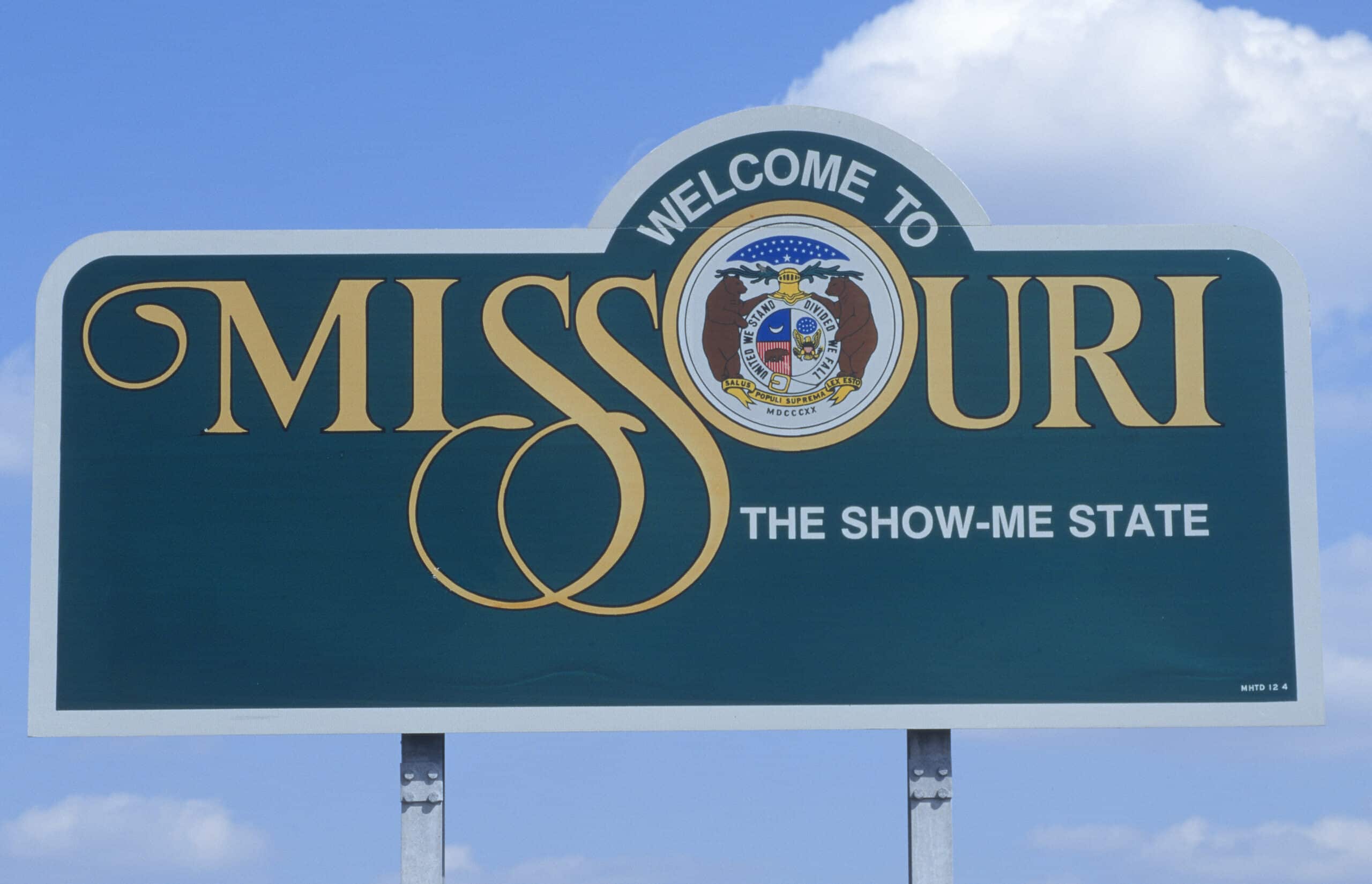
Missouri occupies a rare position in the American imagination. It is neither fully Southern nor fully Midwestern, neither frontier nor finished land, but something more layered and complex. This is a state shaped by convergence — of rivers, cultures, ambitions, and contradictions.
At its heart flow the Mississippi and Missouri Rivers, two of North America’s great arteries. They brought Indigenous nations, explorers, traders, enslaved people, immigrants, and settlers, shaping Missouri as a gateway between east and west. Along their banks, towns rose, commerce flourished, and history gathered weight.
Missouri’s landscapes are surprisingly varied. Rolling Ozark hills and clear rivers define the south. Fertile plains stretch across the north. Limestone bluffs rise along waterways, while forests cloak hidden valleys. The state rewards attention, revealing beauty that is intimate rather than grandiose.
Its cities reflect this duality. St. Louis carries European elegance and industrial memory. Kansas City pulses with jazz, barbecue, and architectural confidence. Smaller towns preserve slower rhythms shaped by land, church, and courthouse squares.
Missouri’s history is not simple. It holds stories of expansion and exclusion, progress and pain, creativity and conflict. Yet it is precisely this complexity that gives the state its depth. Missouri does not offer a single narrative — it offers many, overlapping and unresolved.
To travel Missouri is to move through America’s middle not as abstraction, but as lived place. It is a state that invites reflection, where past and present flow together like the rivers that define it.
23. St. Louis: River City of Memory and Reinvention
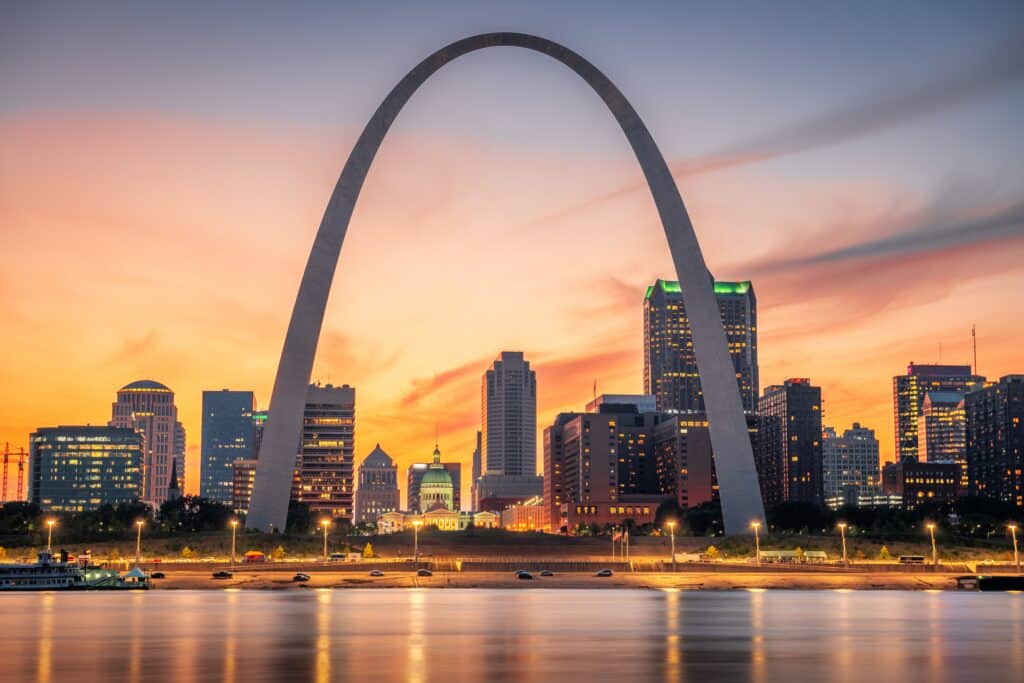
St. Louis rises from the western bank of the Mississippi with a sense of quiet grandeur. Once one of America’s great cities, it still carries echoes of ambition, migration, and cultural influence.
The Gateway Arch defines the skyline — sleek, symbolic, and reflective. It marks St. Louis’s role as the launching point for westward expansion, a place where journeys began rather than ended. Beneath it, the river continues its slow, powerful movement, indifferent to eras and empires.
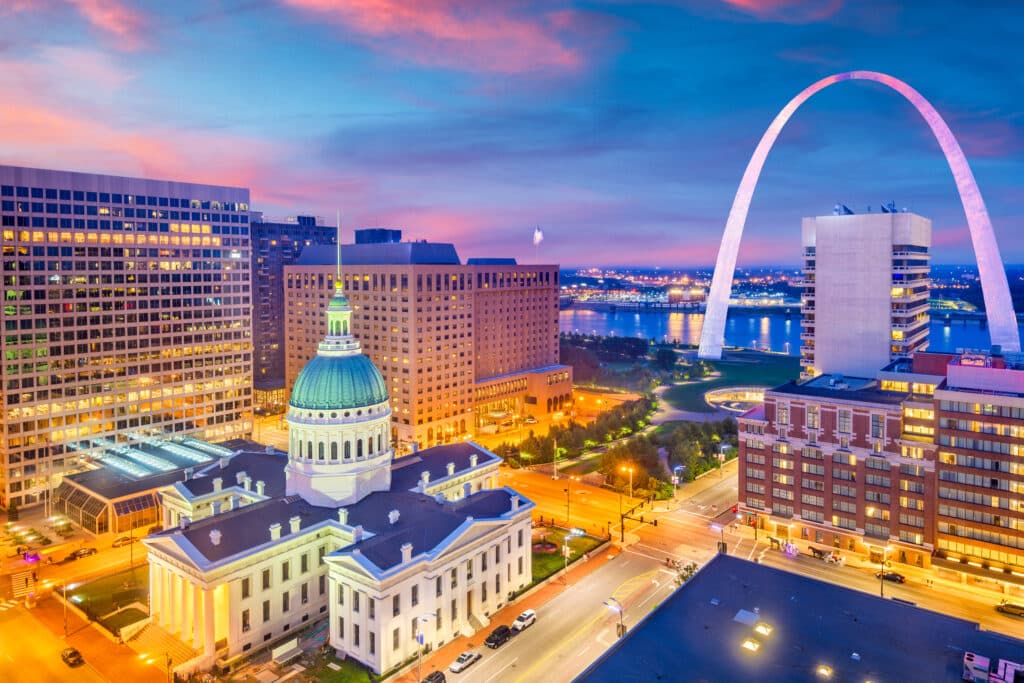
Neighborhoods reveal the city’s layered identity. Brick row houses, tree-lined streets, and historic districts speak of 19th-century prosperity. Cultural institutions like the St. Louis Art Museum and Forest Park reflect civic pride rooted in accessibility and education.
Yet St. Louis is also a city shaped by change and challenge. Population shifts and economic transitions have left visible marks. What remains is resilience — a creative energy expressed through food, music, and community revival.
St. Louis is not frozen in its past. It is a city still negotiating its story, grounded by the river that has always defined it.
22. The Mississippi River: Missouri’s Eastern Spine
The Mississippi River is Missouri’s defining presence. Wide, restless, and powerful, it shapes not only geography but imagination.
Along its banks, towns grew from river commerce — ports, mills, warehouses, and steamboat landings. The river carried cotton, timber, grain, and people, binding Missouri to the nation’s economic pulse.
Its beauty is subtle rather than theatrical. Morning fog drifts across water. Bluffs rise quietly above floodplains. Eagles circle overhead, reminding visitors that the river remains a living ecosystem.
The Mississippi also carries memory — of Indigenous displacement, slavery, trade, and migration. Writers like Mark Twain immortalized its moods, capturing both romance and danger.
To stand beside the Mississippi in Missouri is to feel time moving on a grand scale. The river does not explain itself. It simply continues.
21. Kansas City: Jazz, Barbecue, and Bold Design
Kansas City feels expansive and confident, shaped by hills, boulevards, and fountains. Straddling the Missouri–Kansas border, it carries a cultural independence that sets it apart.
The city’s jazz heritage runs deep. In historic districts like 18th & Vine, music once flowed late into the night, shaping a sound that traveled far beyond city limits. That legacy still informs Kansas City’s creative identity.
Barbecue here is not cuisine — it is ritual. Smokehouses serve as gathering places, where flavor, tradition, and debate intersect.
Architecturally, Kansas City surprises. Art Deco skyscrapers, grand civic buildings, and planned parkways reveal a city built with intention. Museums and performance halls reinforce its cultural ambition.
Kansas City balances sophistication with warmth, creativity with accessibility. It represents Missouri’s outward-looking spirit.
20. The Ozarks: Stone, Water, and Endurance
Southern Missouri’s Ozarks form a landscape of quiet strength. Unlike towering mountain ranges, these ancient hills rise gently, shaped by time rather than force. Limestone bluffs frame clear rivers, forests cloak ridgelines, and valleys hold a sense of privacy rare in the modern world.
The Ozarks are defined by water. Rivers like the Current, Eleven Point, and Jacks Fork run cold and clear, spring-fed and protected, winding through some of the most pristine waterways in the central United States. Canoes drift slowly, respecting the pace set by nature rather than itinerary.
Human settlement here followed necessity. Small towns developed around mills, fords, and crossroads. Life remained practical, shaped by land and weather. The culture that emerged values self-reliance, craftsmanship, and restraint.
There is a humility to the Ozarks. Beauty reveals itself gradually—in moss on stone, in fog rising from riverbanks, in the sound of wind through oak and pine. It is a place that resists spectacle, rewarding those who pay attention.
The Ozarks represent Missouri at its most elemental: land, water, and continuity bound together.
19. Hannibal: Mark Twain’s River Town
Hannibal stands along the Mississippi with literary weight. This is the boyhood home of Samuel Clemens—Mark Twain—whose writings shaped America’s understanding of the river and itself.
The town preserves its 19th-century character with care. Brick buildings, narrow streets, and river views feel intact rather than reconstructed. Twain’s presence lingers not as monument, but as atmosphere.
Caves, bluffs, and riverbanks inspired stories of adventure and moral questioning. The Mississippi here feels intimate, its moods visible and personal. Hannibal invites slow exploration, encouraging visitors to walk rather than rush.
More than a literary shrine, Hannibal remains a working town. Its authenticity lies in continuity—life continuing alongside legacy.
18. Columbia: Ideas at the Center
Columbia sits near the geographic center of Missouri and serves as its intellectual heart. Anchored by the University of Missouri, the city balances academic energy with Midwestern ease.
Tree-lined streets, historic neighborhoods, and a vibrant downtown foster walkability and conversation. Coffee shops, bookstores, and music venues reflect curiosity rather than trend-chasing.
Surrounding conservation areas and trails keep nature close. Columbia feels neither urban nor rural, but comfortably in between—a place where ideas circulate freely.
It represents Missouri’s thoughtful side, where education and community reinforce one another.
17. Missouri Wine Country: Hills of Heritage
Along the Missouri River west of St. Louis lies a lesser-known wine region shaped by German immigrants. Rolling hills, vineyards, and river views define towns like Hermann and Augusta.
These landscapes resemble the Rhine more than the Midwest, with stone buildings and terraced slopes. Wine here is not luxury—it is tradition, tied to family and place.
The region reflects Missouri’s multicultural roots, where Old World practices adapted to New World land.
16. Jefferson City: Power with Restraint
Jefferson City sits quietly along the Missouri River, its authority expressed through balance rather than grandeur. As the state capital, it avoids the excess often associated with seats of power, reflecting Missouri’s preference for practicality and proportion.
The Capitol building rises with dignified confidence, crowned by a dome that anchors the skyline without dominating it. Inside, murals and mosaics depict Missouri’s history—agriculture, exploration, labor, and law—rendered with narrative clarity rather than abstraction.
Beyond government, Jefferson City functions as a lived-in town. Residential neighborhoods slope toward the river, schools and churches anchor daily routines, and local businesses maintain a sense of continuity. The riverfront provides both beauty and grounding, reminding residents of the state’s geographic foundations.
Jefferson City represents governance as stewardship. Power here is meant to serve rather than impress, a reflection of Missouri’s civic character.
15. Lake of the Ozarks: Leisure and Legacy
Lake of the Ozarks is Missouri’s most expansive recreational landscape, a vast reservoir whose branching coves stretch across hills and valleys. Created during the Great Depression, the lake reshaped the region economically and culturally.
Today, it serves as a gathering place. Families return year after year, drawn by familiarity as much as by water. Marinas, docks, and lakeside cabins create a rhythm of summer life that feels deeply ingrained.
Yet beneath the leisure lies history. The lake’s creation displaced towns and altered ecosystems, reminding visitors that even recreation carries consequence. Over time, the region adapted, developing a layered identity that blends relaxation with respect for place.
At dawn and dusk, when boats recede and water calms, the lake reveals its quieter nature. Hills reflect softly on the surface, and the Ozarks reclaim their presence.
14. Rural Courthouse Towns: The Measure of Community
Across Missouri’s countryside, county-seat towns remain centers of gravity. Courthouses rise from public squares, surrounded by streets that host cafés, banks, hardware stores, and generational businesses.
These towns function through familiarity. Names repeat across generations, and shared history carries weight. Community events—fairs, parades, high school games—anchor social life.
Architecture varies, but purpose does not. Courthouses symbolize order and continuity, while town squares encourage encounter. Decisions are discussed openly, memory preserved collectively.
Rural Missouri finds its strength not in growth but in endurance.
13. The Northern Plains: Quiet Abundance
Northern Missouri stretches outward in rolling farmland and wide sky. Less forested than the Ozarks, this region reflects agricultural continuity shaped by fertile soil and steady labor.
Corn and soybeans dominate the landscape, punctuated by grain elevators that serve as landmarks. Towns here are spaced evenly, connected by roads that seem to dissolve into horizon.
The plains cultivate patience. Seasons matter. Weather is respected. Life unfolds predictably but not easily.
This is Missouri at its most understated—productive, dependable, and quietly essential.
12. Missouri’s Small Rivers & Backroads
Beyond the great rivers lie countless smaller waterways—the Gasconade, Meramec, Black, and Big Piney. These rivers define local geographies, offering swimming holes, fishing bends, and shaded banks.
Backroads follow their curves, connecting towns rarely seen from highways. Travel here is slower, observational. Barns lean into history, bridges carry memory, and roadside cafés serve as informal landmarks.
These routes reveal Missouri’s intimacy. Away from destinations, the state feels most itself—unhurried, textured, and deeply lived.
11. Route 66 — The Road Through the Heartland
Route 66 enters Missouri not as a novelty but as a promise. It threads through the state like a memory, carrying with it the dust of migration, the optimism of departure, and the endurance of return. In Missouri, the Mother Road feels especially intimate—less spectacle, more substance—passing through small towns that once fed travelers with gasoline, coffee, and reassurance.
The road cuts through places like Lebanon, Rolla, and St. Robert, where neon signs still hum faintly against Midwestern skies. Motor courts, stone bridges, and weathered diners speak to a time when travel unfolded at human speed. Missouri preserves more original Route 66 miles than almost any other state, including the Chain of Rocks Bridge near St. Louis, a marvel of early engineering that arches over the Mississippi like a handshake between eras.
What makes Missouri’s Route 66 singular is its blend of landscapes. Forested Ozark hills replace plains, limestone outcroppings line the road, and rivers appear unexpectedly, cool and grounding. Travelers are reminded that the journey west began not with desert or mountain, but with rolling farmland and wooded horizons.
Today, Route 66 in Missouri is not merely commemorated—it is lived. Antique stores occupy former service stations. Families still stop for pie where their grandparents once did. The road has become a cultural corridor, honoring the courage of those who left and the resilience of those who stayed.
10. Springfield — Crossroads of the Ozarks
Springfield sits quietly at the hinge of Missouri, where northern plains give way to Ozark stone. Long a crossroads, the city has served as a place of passage rather than display—railroads, highways, and people converging before moving on. Yet Springfield has steadily become a destination in its own right.
The city’s history is layered with movement: frontier settlement, Civil War tension, railroad expansion, and Route 66 traffic all passed through its streets. This constant flow shaped a place pragmatic in spirit but rich in culture. Springfield is home to institutions that ground the region—universities, medical centers, and museums—bringing intellectual gravity to an otherwise understated city.
Nature presses close here. Ozark streams run just beyond city limits, and caves, trails, and forests lie minutes away. The landscape has shaped Springfield’s temperament: modest, resilient, quietly proud. Rather than imposing itself on its surroundings, the city settles into them.
Downtown Springfield has found renewed energy in recent years, restoring historic buildings and fostering local music, food, and art. It remains a city where ambition feels balanced by belonging, where people come to build lives rather than chase illusions.
9. Sedalia — The Sound of Ragtime
Sedalia holds a rhythm unlike any other Missouri town. In the late 19th century, its streets echoed with syncopation as ragtime music—America’s first truly national sound—took shape. Scott Joplin lived and worked here, composing music that would ripple across generations.
Ragtime emerged from Sedalia’s mix of cultures: African American musicians, railroad workers, traveling performers, and rural audiences. It was celebratory yet disciplined, joyful yet structured—a mirror of the country itself at the turn of the century. Sedalia embraced this music not as novelty but as expression.
Today, the town honors its musical legacy through festivals, preserved buildings, and a deep sense of pride. Yet Sedalia is more than its past. The Missouri State Fairgrounds anchor the town, drawing visitors each year to celebrate agriculture, craftsmanship, and community. During fair season, Sedalia becomes Missouri in miniature.
In quieter months, the town returns to its steady pace. Brick storefronts, shaded streets, and a strong sense of continuity define daily life. Sedalia reminds Missouri—and the nation—that innovation often begins in small places, carried forward by talent, perseverance, and an audience willing to listen.
8. Civil War Missouri — Divided Ground
Missouri’s Civil War was not fought only on battlefields—it was fought in neighborhoods, families, and hearts. A border state with divided loyalties, Missouri embodied the conflict’s moral complexity more than almost any other place in America.
Brother fought brother. Guerrilla warfare scarred the countryside. Towns were burned, farms abandoned, and trust shattered. Figures like William Quantrill and Jesse James emerged from this chaos, blurring the line between ideology and outlaw myth.
The war left Missouri deeply marked. Unlike states that emerged with a unified narrative, Missouri carried unresolved tensions into Reconstruction and beyond. Yet from this division came a hard-earned understanding of coexistence. The state learned, painfully, how to live with contradiction.
Today, Civil War sites across Missouri are quiet and contemplative. They offer no easy conclusions, only reminders that history is rarely simple. Missouri’s divided ground became, over time, a foundation for empathy and resilience.
7. Cape Girardeau — River City of Memory and Momentum
Cape Girardeau rises from the Mississippi River with quiet confidence, its bluffs offering wide views of the water that has shaped it for centuries. Long before Missouri was a state, this bend in the river was a place of trade and encounter—Native American paths, French settlers, and riverboat captains all passed through here, leaving traces that still linger.
The Mississippi is not merely scenery in Cape Girardeau; it is identity. The river dictates the city’s rhythms, its weather, its stories. Murals along the floodwall depict centuries of river life, turning history into public art and collective memory. Unlike grand river cities that dominate their banks, Cape Girardeau maintains a respectful relationship with the water, aware of its power and generosity alike.
Southeast Missouri State University lends youthful energy and cultural depth, bringing theater, music, and scholarship to a town otherwise rooted in tradition. The historic downtown, with its brick streets and preserved facades, reflects a commitment to continuity rather than reinvention.
Cape Girardeau feels transitional—between North and South, river and land, past and future. It is a place where people pause before crossing, where journeys are marked and remembered. The city embodies Missouri’s eastern edge not as boundary, but as threshold.
6. The Meramec River & Cave Country — Missouri Underground
Beneath Missouri’s forests and hills lies another Missouri entirely—cool, dark, and ancient. The Meramec River basin and its surrounding cave country reveal a geological world carved by water over millions of years. Here, the state’s hidden landscapes come into view.
The Meramec flows gently yet persistently, shaping limestone bluffs and fertile valleys. Above ground, the river is beloved for floating, fishing, and quiet communion with nature. Below ground, it has hollowed vast caverns—Meramec Caverns, Onondaga Cave, and countless lesser-known chambers that stretch beneath farms and forests.
These caves are more than curiosities. They have served as shelter, storage, hideouts, and even dance halls. During the Civil War, they protected supplies and soldiers alike. Later, they became symbols of Missouri’s subterranean wonder, drawing travelers underground to experience silence, scale, and time compressed into stone.
Cave country reflects Missouri’s dual nature: open and inward-looking, practical and mysterious. The land offers itself freely, yet keeps its deepest secrets below the surface. Exploring this region is to understand Missouri not only as place, but as process—shaped slowly, patiently, by unseen forces.
5. African American Missouri — Resilience, Culture, and Creation
African American history in Missouri is foundational, not peripheral. From the earliest days of settlement through slavery, emancipation, migration, and civil rights, Black Missourians shaped the state’s labor, culture, and moral conscience.
St. Louis and Kansas City became destinations during the Great Migration, drawing families seeking opportunity and dignity. Jazz flourished along 18th & Vine. Churches became centers of resistance and care. Neighborhoods grew vibrant despite segregation’s constraints.
Missouri was also a crucible of legal and social change. The Dred Scott case, originating in St. Louis, reverberated across the nation. Later, civil rights activism continued in classrooms, courtrooms, and streets. The struggle was never abstract—it unfolded block by block, family by family.
Today, African American influence remains deeply embedded in Missouri’s food, music, language, and political life. From barbecue traditions to gospel harmonies, from literary voices to community leadership, Black Missourians continue to shape the state’s identity.
This story is not only one of struggle, but of creation—of building beauty and meaning under pressure. Missouri’s cultural richness cannot be understood without honoring this enduring legacy.
4. German Missouri — Vineyards, Towns, and Tradition
Along the Missouri River, especially west of St. Louis, lie towns that feel unexpectedly European. This is German Missouri, where 19th-century immigrants brought winemaking, craftsmanship, and communal traditions that still define the landscape.
Settlements like Hermann, Augusta, and Washington were shaped by German ideals of order, education, and land stewardship. Vineyards climbed river hills, stone houses lined streets, and festivals celebrated seasonal rhythms. Missouri wine once rivaled Europe’s finest, earning international acclaim before Prohibition disrupted the industry.
What endures is a cultural sensibility—precision, hospitality, and pride in place. Oktoberfests, music halls, and preserved architecture keep heritage alive not as reenactment, but as lived experience. German Missouri is neither nostalgic nor frozen in time; it is quietly sustained.
This region reveals Missouri’s ability to absorb cultures without erasing them. German Missouri did not disappear into the American whole—it enriched it, adding flavor, discipline, and joy.
3. Branson — Performance, Faith, and Ozark Spectacle
Branson is often described in shorthand: a family-friendly entertainment town nestled in the Ozarks. But to understand Branson fully is to see it as a uniquely American expression of performance, belief, and regional pride. This is a place where storytelling takes center stage—sometimes literally—and where identity is expressed through music, humor, and shared values.
The Ozark setting matters. Rolling hills, deep forests, and misty valleys form a natural amphitheater around the town, grounding Branson’s bright lights in pastoral calm. Country music, gospel harmonies, and patriotic revues dominate the stage, reflecting a vision of America rooted in tradition rather than trend.
Branson thrives on nostalgia, but it is not stagnant. New theaters and attractions continuously reinterpret old forms, blending digital spectacle with live performance. The result is not irony, but sincerity. Branson believes in what it presents, and that belief creates its magnetic pull.
Beyond the theaters, Table Rock Lake and surrounding wilderness remind visitors that entertainment here is balanced by retreat. Branson’s deeper story is about gathering—families, communities, generations—coming together to share experiences that affirm continuity in a fast-changing world.
2. Mark Twain’s Missouri — Literature as Landscape
Missouri gave the world Mark Twain, but more importantly, it gave him a river, a childhood, and a moral compass shaped by contradiction. Hannibal, perched above the Mississippi, is not merely a literary site—it is a living archive of American imagination.
The river dominates everything. It taught Twain rhythm, danger, humor, and humanity. In Missouri, innocence and cruelty coexist, and Twain captured both with unmatched clarity. His Missouri was never sentimental; it was honest.
Walking Hannibal’s streets is to step into literature that still speaks urgently. Twain’s voice endures because Missouri’s tensions endure—freedom and constraint, justice and hypocrisy, hope and doubt.
1. Missouri’s Farmland — The Quiet Majority
Away from cities and attractions lies the heart of Missouri: its farmland. Corn, soybeans, cattle, and wheat define vast stretches of the state, forming an economic and cultural backbone that remains deeply influential.
These landscapes teach patience. Seasons matter. Community matters. Towns gather around grain elevators, schools, and churches. Change comes slowly, but when it does, it is deliberate.
Missouri’s agricultural regions ground the state’s identity in stewardship and endurance. This is where Missouri listens more than it speaks.