
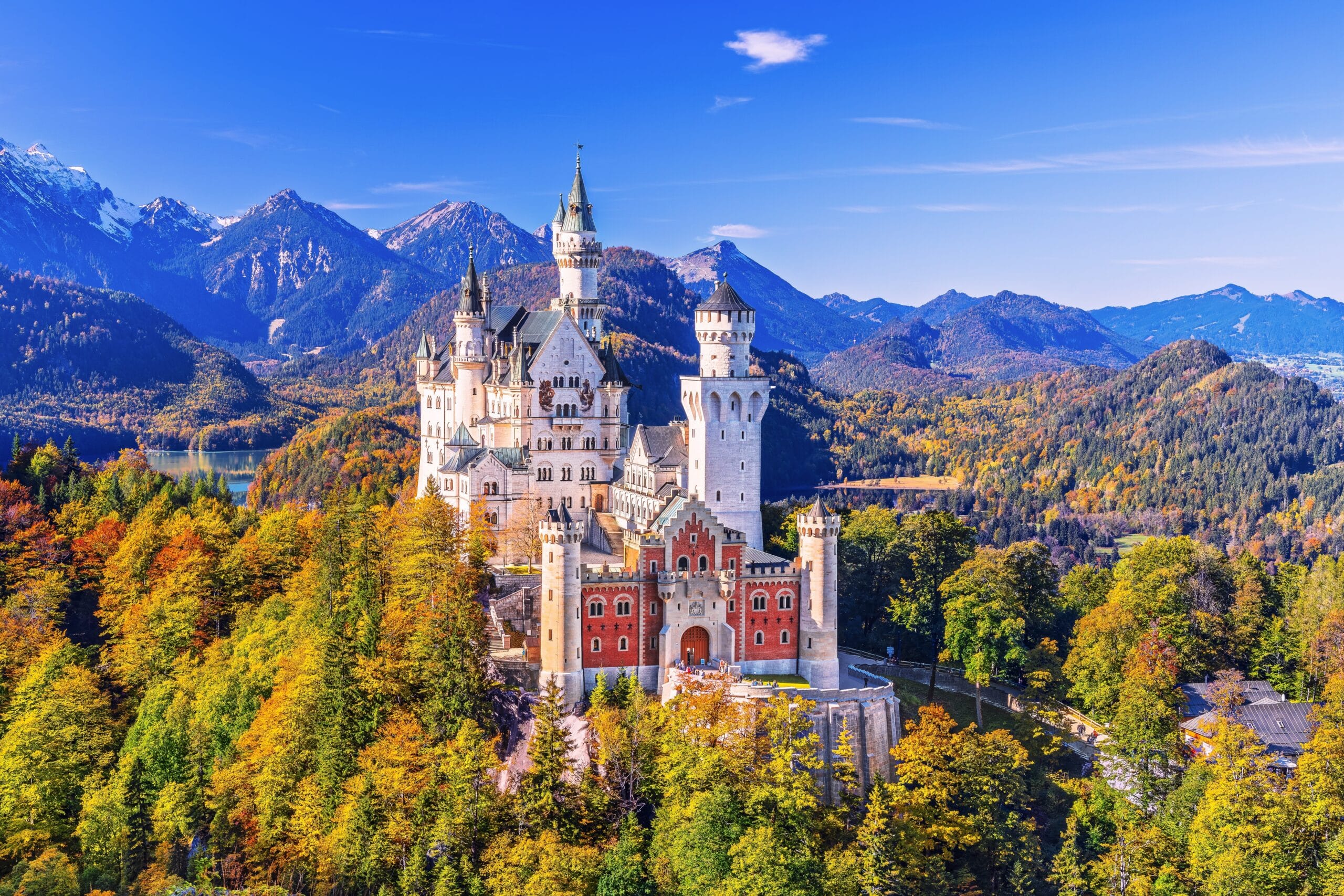
Germany occupies a central position in Europe both geographically and historically. Bordered by nine countries and stretching from the North Sea and Baltic Sea in the north to the Bavarian Alps in the south, it offers exceptional regional diversity within a unified national framework. This geographic variation has shaped distinct cultural landscapes, architectural styles, and culinary traditions across its sixteen federal states.
Throughout history, Germany has played a defining role in European development. From the medieval Holy Roman Empire and the Protestant Reformation to industrialization and scientific advancement, its intellectual and political influence has been substantial. The turbulence of the twentieth century—including two world wars, division during the Cold War, and reunification in 1990—deeply shaped the modern republic. Today, Germany stands as Europe’s largest economy and a key member of the European Union.
The country’s natural environments range from the windswept Frisian Islands and river valleys of the Rhine and Elbe to dense forests, rolling vineyards, and alpine peaks. This landscape diversity supports vibrant metropolitan centers, preserved medieval towns, and tranquil rural regions.
Germany is also renowned for its cultural achievements. It is the homeland of influential composers, philosophers, writers, and scientists whose work shaped Western thought. Architectural heritage spans Romanesque churches, Gothic cathedrals, baroque palaces, industrial-era landmarks, and cutting-edge contemporary design.
Efficient infrastructure allows seamless travel between major cities and countryside retreats. Festivals, regional markets, and long-standing traditions reflect local identities while reinforcing national cohesion.
Germany presents a country where historical reflection coexists with innovation. Its cities memorialize the past while embracing forward-thinking creativity, offering visitors a multidimensional European experience defined by resilience, depth, and cultural richness.
32. Berlin
Berlin stands as Germany’s capital and most historically layered city. Few European capitals have experienced such dramatic transformation. Once divided by ideology and concrete barriers during the Cold War, Berlin today symbolizes unity, creativity, and reinvention.
The Brandenburg Gate remains the city’s defining landmark. Once isolated between East and West Berlin, it now represents reunified Germany. Nearby, the Reichstag building houses the federal parliament. Its modern glass dome allows visitors to look down into the parliamentary chamber, symbolizing political transparency.
Fragments of the Berlin Wall survive at the East Side Gallery, where artists transformed former barriers into open-air murals. The Memorial to the Murdered Jews of Europe stands as a solemn reminder of the Holocaust, demonstrating Germany’s commitment to remembrance and responsibility.
Museum Island, located on the River Spree, contains internationally significant collections spanning ancient civilizations and European art. Beyond historic institutions, neighborhoods such as Kreuzberg and Friedrichshain showcase contemporary culture through galleries, street art, and independent cafés.
Berlin’s cultural life extends into music, film, design, and technology. Green spaces like Tiergarten and the lakes surrounding the city offer respite from urban energy.
Architecturally, Berlin blends imperial grandeur, modernist experimentation, wartime scars, and bold contemporary structures. This constant evolution defines its identity.
Berlin is not simply a capital; it is a living chronicle of European history and a laboratory of modern creativity.
31. Munich
Munich, the capital of Bavaria, combines regional tradition with cosmopolitan refinement. Situated near the northern edge of the Alps, it balances historic architecture, economic strength, and cultural heritage.
Marienplatz forms the city’s central square, dominated by the Neo-Gothic Neues Rathaus. The Glockenspiel performance attracts daily audiences as mechanical figures reenact historical scenes. Nearby, Frauenkirche’s twin towers define Munich’s skyline.
Munich’s royal legacy is visible in the Residenz palace complex, once home to Bavarian rulers. Nymphenburg Palace, surrounded by landscaped gardens, reflects baroque grandeur. The city’s art museums, including the Alte Pinakothek, house masterpieces spanning medieval to modern eras.
The English Garden ranks among Europe’s largest urban parks. Visitors stroll, cycle, or gather in traditional beer gardens beneath chestnut trees. Bavarian cuisine thrives in historic establishments such as the Hofbräuhaus, where regional dishes accompany locally brewed beer.
Each autumn, Oktoberfest transforms Munich into an international celebration of Bavarian culture. Yet beyond festivals, the city maintains a strong industrial and technological base, hosting global corporations and research institutions.
Proximity to alpine lakes and mountains enhances Munich’s appeal. Day trips to scenic landscapes are easily accessible via efficient transport links.
Munich harmonizes prosperity, tradition, and accessibility. It reflects Bavaria’s strong regional identity while functioning as a dynamic modern European city.
30. Hamburg
Hamburg, Germany’s second-largest city, is defined by its maritime heritage. Located along the Elbe River with access to the North Sea, it has long served as one of Europe’s major trading ports.
The Speicherstadt district, built on timber-pile foundations, consists of red-brick warehouses now housing museums and cultural spaces. Adjacent HafenCity represents urban renewal, where contemporary architecture rises beside historic structures. The Elbphilharmonie concert hall crowns this development, its glass façade reflecting harbor waters.
Harbor cruises reveal container terminals, shipyards, and historic vessels, underscoring Hamburg’s global connections. St. Michael’s Church offers panoramic views across the city’s skyline of cranes and spires.
Unlike many port cities, Hamburg also features significant green and water spaces. The Inner and Outer Alster lakes form a central recreational area where residents sail, jog, and gather along waterfront promenades.
The Reeperbahn district provides nightlife and entertainment, contrasting with the elegant arcades and shopping streets of the city center. Culinary traditions emphasize seafood, reflecting maritime roots.
Historically, Hamburg operated as a free imperial city, fostering independence and international trade. This legacy continues in its outward-looking character.
Hamburg merges commercial vitality with architectural distinction and cultural depth, representing northern Germany’s openness and enduring maritime identity.
29. Cologne
Cologne stands along the Rhine River in western Germany and is one of the country’s oldest cities. Founded by the Romans, it developed into a major religious and commercial center whose skyline is dominated by the monumental Cologne Cathedral.
The Cologne Cathedral, a UNESCO World Heritage Site, is among the finest examples of Gothic architecture in Europe. Its twin spires rise dramatically above the city and remain visible from across the Rhine. Construction began in the 13th century and continued for over six centuries, reflecting enduring religious devotion and architectural ambition.
The Rhine River shapes Cologne’s character. Promenades along the waterfront provide views of bridges linking historic districts with modern developments. River cruises and pedestrian pathways enhance the city’s accessible layout.
Cologne is also known for its vibrant cultural life. The annual Cologne Carnival transforms the city into one of Europe’s largest street festivals, celebrating regional traditions with music and elaborate costumes. Numerous museums, including the Museum Ludwig, showcase art spanning medieval to contemporary periods.
The Old Town features colorful houses and traditional breweries serving Kölsch, a locally produced beer unique to the region. Romanesque churches scattered throughout the city testify to Cologne’s medieval importance.
Blending sacred architecture, festive spirit, and riverside vitality, Cologne presents a dynamic urban center shaped by history yet animated by contemporary cultural energy.
28. Frankfurt am Main
Frankfurt am Main is Germany’s financial capital and one of Europe’s most significant economic hubs. Located along the River Main in the state of Hesse, it presents a striking skyline of modern skyscrapers rarely seen elsewhere in Germany.
The Römerberg square anchors the historic center, where reconstructed timber-framed buildings surround the medieval Römer town hall. This contrast between restored Old Town architecture and towering financial institutions defines Frankfurt’s identity.
The European Central Bank headquarters underscores the city’s global importance. Frankfurt Airport, one of Europe’s busiest, reinforces its status as an international gateway.
Cultural institutions enrich the city beyond finance. The Museumsufer district lines the River Main with institutions dedicated to art, film, architecture, and communication. The Städel Museum houses extensive European art collections.
Palmengarten botanical gardens provide green space within the urban core, while the Main Tower observation deck offers panoramic views across the skyline.
Frankfurt Book Fair, the world’s largest publishing event, highlights the city’s intellectual significance. Culinary offerings range from traditional Hessian dishes such as green sauce to international cuisine reflecting its diverse population.
Frankfurt am Main embodies modern Germany: economically powerful, internationally connected, yet anchored in preserved historical roots.
27. Dresden
Dresden, the capital of Saxony, lies along the Elbe River in eastern Germany. Often called the “Florence on the Elbe,” it is celebrated for its baroque architecture and artistic heritage.
The Frauenkirche, reconstructed after destruction in World War II, symbolizes reconciliation and restoration. Nearby, the Zwinger Palace complex showcases ornate courtyards and galleries housing world-class art collections.
The Semper Opera House stands as a masterpiece of 19th-century architecture, continuing Dresden’s strong musical tradition. Along the Brühl Terrace, visitors overlook the Elbe River and the city’s historic skyline.
Dresden suffered extensive wartime devastation, yet careful reconstruction restored much of its architectural grandeur. This balance between remembrance and renewal defines the city’s modern character.
Beyond its historic center, contemporary districts reflect growing creative industries and academic institutions. The Elbe meadows provide expansive green spaces that frame the urban landscape.
Dresden harmonizes artistic splendor, historical reflection, and riverside elegance. Its restored monuments and cultural institutions position it as one of Germany’s most architecturally distinguished cities.
26. Heidelberg
Heidelberg is one of Germany’s most romantic cities, located along the Neckar River in the state of Baden-Württemberg. Known for its prestigious university and scenic setting, it blends academic tradition with baroque charm.
Heidelberg Castle rises dramatically above the Old Town, partially in ruins yet commanding sweeping views of the river valley. The castle complex reflects Renaissance and Gothic architectural elements, symbolizing both grandeur and historical turbulence.
Below, the Altstadt features narrow streets, pastel façades, and lively squares centered around the Church of the Holy Spirit. The Old Bridge spans the Neckar River, linking the historic center with hillside walking paths.
Founded in 1386, Heidelberg University is Germany’s oldest institution of higher education. Its long academic legacy has shaped the city’s intellectual atmosphere for centuries.
Philosophers’ Walk, a scenic hillside trail, offers panoramic views of the Old Town and castle, particularly striking during autumn foliage. The Neckar River further enhances the city’s tranquil character through boat tours and riverside promenades.
Heidelberg escaped large-scale destruction during World War II, preserving much of its architectural heritage. Today, it maintains a harmonious blend of history, scholarship, and natural beauty.
The city’s intimate scale and romantic setting have inspired writers and artists for generations, making Heidelberg a symbol of German cultural refinement.
25. Stuttgart
Stuttgart, capital of Baden-Württemberg, lies in a valley surrounded by vineyards and wooded hills. Known as a center of automotive engineering, it balances industrial innovation with cultural sophistication.
The city is home to major automobile manufacturers, and museums dedicated to automotive history reflect this technological heritage. These institutions present engineering achievements alongside design evolution.
Schlossplatz forms Stuttgart’s central square, bordered by the New Palace and landscaped gardens. The nearby Königstrasse is one of Germany’s longest pedestrian shopping streets.
Cultural institutions include the Stuttgart State Gallery, which houses collections spanning classical to modern art. The Stuttgart Opera enjoys international recognition for its performances.
Despite its industrial reputation, Stuttgart integrates extensive green spaces. The surrounding vineyards produce regional wines, and public parks connect urban districts with hillside viewpoints.
Television Tower Stuttgart, one of the world’s first concrete television towers, offers panoramic views across the city and surrounding countryside.
Stuttgart exemplifies Germany’s industrial strength while preserving cultural vitality and environmental integration, creating a city where engineering excellence coexists with artistic tradition.
24. Nuremberg
Nuremberg, located in Bavaria, carries profound historical significance while preserving a striking medieval core. Once an important imperial city within the Holy Roman Empire, it later became associated with pivotal events of the twentieth century.
The Imperial Castle dominates the skyline, reflecting Nuremberg’s medieval prominence. Below, timber-framed houses and cobbled streets surround the Hauptmarkt, where the Frauenkirche stands prominently.
Nuremberg’s history includes darker chapters. The Documentation Center provides insight into the city’s role during the Nazi era, while the Palace of Justice hosted the post–World War II Nuremberg Trials. These sites underscore Germany’s commitment to confronting its past.
The city is also celebrated for craftsmanship and tradition. Nuremberg is known for its Christmas market, one of the oldest and most famous in Europe, as well as its distinctive gingerbread and sausages.
The Pegnitz River flows through the Old Town, adding scenic character to historic bridges and squares. Museums dedicated to art, toys, and cultural history highlight Nuremberg’s diverse heritage.
Balancing medieval charm with historical reflection, Nuremberg stands as a city of memory, tradition, and resilience within modern Germany.
23. Rothenburg ob der Tauber
Rothenburg ob der Tauber is one of Germany’s best-preserved medieval towns, located along the Romantic Road in Bavaria. Encircled by intact defensive walls, it offers a remarkably complete glimpse into late medieval urban design.
The town’s elevated position above the Tauber River provides scenic views across Franconian countryside. Visitors can walk the fully preserved city walls, gaining panoramic perspectives of red-roofed houses and church towers.
The Market Square forms the historic center, dominated by the Gothic and Renaissance Town Hall. The Church of St. James houses an ornate wooden altar crafted by Tilman Riemenschneider, reflecting artistic mastery of the period.
Rothenburg is closely associated with traditional Christmas culture. The German Christmas Museum and seasonal markets reinforce its reputation as a year-round festive destination.
Cobblestone lanes lead to half-timbered houses, artisan workshops, and small cafés serving regional Franconian dishes. Despite its popularity, Rothenburg retains an intimate atmosphere, especially in early morning or evening hours.
Unlike many German cities, Rothenburg survived World War II with minimal destruction, preserving its architectural authenticity. The blend of fortified gates, towers, and preserved façades creates a cohesive medieval landscape.
Rothenburg ob der Tauber embodies romanticized medieval Germany, offering visitors an immersive experience shaped by preservation, craftsmanship, and historic continuity.
22. Leipzig
Leipzig, located in the state of Saxony, has long been a center of music, trade, and intellectual life. Its historical role as a major trade fair city shaped its economic development, while its artistic heritage continues to define its identity.
The St. Thomas Church is closely associated with composer Johann Sebastian Bach, who served as cantor there. The church remains an important site for sacred music performances. Nearby, the Gewandhaus concert hall reinforces Leipzig’s musical prominence.
Leipzig also played a significant role in peaceful demonstrations leading to German reunification in 1989. The Nikolaikirche became a focal point for civic protest, underscoring the city’s political significance.
The Old Town features arcades and passageways connecting historic buildings, while Augustusplatz hosts the Opera House and modern university structures. The Monument to the Battle of the Nations commemorates the 1813 defeat of Napoleon, marking a major European turning point.
Contemporary Leipzig has developed a reputation for creative industries, galleries, and revitalized industrial spaces. Parks and canals add recreational appeal to the urban environment.
Leipzig blends cultural heritage, civic courage, and artistic vitality, positioning itself as one of eastern Germany’s most dynamic cities.
21. Bremen
Bremen, located in northern Germany along the Weser River, is one of the country’s historic Hanseatic cities. Its maritime trade heritage continues to influence its identity and architecture.
The Market Square forms the heart of Bremen’s Old Town and is recognized as a UNESCO World Heritage site. The Town Hall, with its ornate façade, reflects the wealth accumulated through medieval trade networks.
The Roland Statue stands as a symbol of civic independence and freedom. Nearby, the Bremen Cathedral adds Gothic character to the skyline. The narrow Schnoor quarter preserves winding lanes and small artisan houses.
Bremen is famously associated with the Brothers Grimm tale “The Town Musicians of Bremen,” commemorated by a bronze statue near the Town Hall. This literary connection adds cultural distinction.
The Weser River shapes modern Bremen through waterfront redevelopment and maritime museums. Shipbuilding and aerospace industries highlight the city’s continued innovation.
Despite its industrial elements, Bremen maintains a compact and walkable center. Seasonal markets and festivals animate the historic square throughout the year.
Bremen harmonizes Hanseatic tradition, civic pride, and contemporary enterprise, offering a northern German experience shaped by trade, legend, and architectural heritage.
20. Freiburg im Breisgau
Freiburg im Breisgau lies at the edge of the Black Forest in southwestern Germany, near the borders of France and Switzerland. Known for its sunny climate and environmental consciousness, it combines medieval character with progressive urban planning.
The Freiburg Minster dominates the Old Town with its Gothic spire rising above red-roofed buildings. The cathedral’s intricate stonework and historic market square reflect centuries of civic pride. Narrow streets are lined with small water channels known as Bächle, a distinctive feature dating back to the Middle Ages.
Schlossberg hill overlooks the city, offering panoramic views across vineyards and toward the Black Forest. Cable cars and hiking paths connect visitors to scenic viewpoints and forested trails.
Freiburg is often recognized as one of Germany’s greenest cities. Sustainable housing districts and extensive cycling infrastructure illustrate its commitment to environmental innovation. The university, founded in 1457, contributes to a youthful and intellectual atmosphere.
Local cuisine highlights Baden specialties, influenced by proximity to France. Wine from surrounding vineyards plays a significant cultural role.
Freiburg balances medieval preservation, academic tradition, and ecological leadership. Its location at the gateway to the Black Forest enhances its appeal as both an urban and natural destination.
19. Lübeck
Lübeck, situated near the Baltic Sea in northern Germany, was once the leading city of the Hanseatic League. Its maritime wealth shaped an architectural landscape that remains remarkably intact.
The Holstentor gate stands as Lübeck’s most iconic landmark, symbolizing medieval strength and trade prosperity. Red-brick Gothic churches, including St. Mary’s Church, define the skyline of the Old Town, which is recognized as a UNESCO World Heritage site.
The city’s historic center occupies an island surrounded by the Trave River. Narrow lanes, courtyards, and merchant houses reflect Lübeck’s commercial prominence during the Middle Ages.
Lübeck is famous for marzipan, a confection that has become synonymous with the city. Local shops continue centuries-old culinary traditions.
Thomas Mann, the Nobel Prize-winning author, was born in Lübeck, and his family home now functions as a museum. This literary heritage adds intellectual depth to the city’s maritime identity.
Proximity to the Baltic coast enhances Lübeck’s appeal, linking cultural exploration with seaside excursions. Lübeck harmonizes Gothic architecture, trading history, and cultural legacy within a compact and walkable urban setting.
18. Garmisch-Partenkirchen
Garmisch-Partenkirchen lies at the foot of Germany’s highest mountain, the Zugspitze, in Bavaria near the Austrian border. Formed by the merger of two historic towns, it is renowned for alpine scenery and winter sports.
Traditional Bavarian houses decorated with Lüftlmalerei frescoes line the streets, preserving regional artistic heritage. The Partnach Gorge nearby offers dramatic views of rushing water cutting through narrow rock formations.
Cable cars ascend the Zugspitze, providing panoramic views across the Alps and into neighboring countries. The town has hosted Winter Olympic events and remains a major destination for skiing and mountaineering.
During summer, hiking trails traverse alpine meadows and high-altitude lakes. The surrounding Bavarian Alps National Park region provides opportunities for wildlife observation and outdoor exploration.
Despite its reputation as a resort, Garmisch-Partenkirchen maintains strong local traditions expressed through festivals, music, and cuisine. Hearty Bavarian dishes are served in mountain huts and village inns.
The combination of dramatic alpine landscapes, sporting heritage, and preserved cultural identity makes Garmisch-Partenkirchen one of Germany’s most iconic mountain destinations.
17. Cochem
Cochem is a picturesque town located along the Moselle River in the state of Rhineland-Palatinate. Surrounded by steep vineyard-covered hills, it is one of the most scenic destinations in western Germany.
Reichsburg Castle rises dramatically above the town, its towers and battlements overlooking the winding river below. Though reconstructed in the 19th century in Neo-Gothic style, the castle reflects medieval origins and offers sweeping views across the Moselle Valley.
The Old Town features half-timbered houses, narrow lanes, and a central market square animated by cafés and wine taverns. Viticulture defines the region, particularly the production of Riesling wines cultivated on terraced slopes.
River cruises along the Moselle connect Cochem with neighboring villages and castles, highlighting the valley’s romantic landscape. Hiking trails weave through vineyards and forested hills, offering elevated viewpoints over the river’s curves.
Cochem’s compact size enhances its charm, allowing visitors to explore architectural details and scenic overlooks within a short distance. Seasonal wine festivals celebrate regional heritage and agricultural tradition.
Blending castle architecture, river scenery, and wine culture, Cochem embodies the romantic character of the Moselle region.
16. Regensburg
Regensburg, situated on the Danube River in Bavaria, is one of Germany’s best-preserved medieval cities. Its historic center, recognized as a UNESCO World Heritage site, reflects centuries of trade and political significance.
The Stone Bridge, completed in the 12th century, once served as a vital crossing for merchants traveling across Europe. It remains an iconic symbol of the city’s medieval prosperity.
Regensburg Cathedral dominates the skyline with its Gothic twin spires, while narrow streets reveal patrician towers and Roman remains. The Old Town’s layout reflects its origins as a Roman military settlement.
The Danube River continues to shape the city’s atmosphere through river cruises and scenic embankments. Regensburg’s university and vibrant student population add contemporary vitality to historic surroundings.
Traditional Bavarian cuisine is served in centuries-old taverns, linking culinary culture with architectural heritage. The city’s preservation through wartime periods contributes to its authentic medieval ambiance.
Regensburg harmonizes Roman foundations, Gothic architecture, and riverside charm, offering one of Germany’s most cohesive historic urban experiences.
15. Würzburg
Würzburg lies along the Main River in the Franconia region of Bavaria. Renowned for baroque architecture and wine production, it presents a refined cultural landscape shaped by ecclesiastical history.
The Würzburg Residence stands as the city’s architectural masterpiece. This UNESCO-listed palace features grand staircases and elaborate frescoes, exemplifying German baroque design.
Marienberg Fortress overlooks the city from a hilltop across the river, offering panoramic views of vineyards and rooftops. The Old Main Bridge, lined with statues, connects the fortress with the historic center.
Würzburg is a key center of Franconian wine culture. Vineyards stretch across surrounding hills, and local taverns offer tastings of regional varieties.
Though heavily damaged during World War II, Würzburg’s careful reconstruction restored its architectural coherence. Today, it balances historical elegance with a lively university atmosphere.
Würzburg blends artistic grandeur, viticultural heritage, and river scenery, securing its place among Germany’s most distinguished cultural cities.
14. Bamberg
Bamberg, located in Bavaria’s Franconia region, is renowned for its remarkably preserved medieval center. Built across seven hills, the city has often been compared to Rome due to its historic churches and elevated setting. Its Old Town is recognized as a UNESCO World Heritage site, reflecting architectural continuity from the Middle Ages through the baroque period.
The Bamberg Cathedral crowns one of the hills, its four towers defining the skyline. Nearby stands the Alte Hofhaltung, a former episcopal residence showcasing timber-framed courtyards. The New Residence offers panoramic views over terraced gardens and red rooftops.
One of Bamberg’s most iconic structures is the Old Town Hall, uniquely positioned on an island in the Regnitz River. According to legend, it was built in the river because the bishop refused to grant the townspeople land for a civic building.
Bamberg is also famous for its distinctive smoked beer, known as Rauchbier, brewed according to centuries-old methods. Traditional taverns maintain this regional specialty as part of local identity.
Canals, stone bridges, and hillside vineyards enhance Bamberg’s scenic character. The city escaped major destruction during World War II, preserving its architectural integrity.
Bamberg harmonizes ecclesiastical heritage, civic independence, and culinary tradition, presenting one of Germany’s most authentic medieval environments.
13. Rüdesheim am Rhein
Rüdesheim am Rhein lies in the Upper Middle Rhine Valley, a UNESCO-listed cultural landscape renowned for castles and vineyards. Positioned along the Rhine River in Hesse, the town serves as a gateway to one of Germany’s most romantic river regions.
The Drosselgasse, a narrow cobbled lane lined with wine taverns, forms the lively heart of the town. Visitors gather here to experience regional Riesling wines cultivated on steep vineyard slopes surrounding the settlement.
Cable cars ascend to the Niederwald Monument, which commemorates German unification in the 19th century. From the monument, expansive views stretch across the Rhine Valley and neighboring vineyards.
River cruises depart from Rüdesheim, passing medieval castles perched on rocky outcrops. The Rhine River’s strategic importance in European trade and defense is evident in these fortifications.
The town’s half-timbered houses and church towers preserve historic charm, while wine festivals celebrate regional viticulture. Proximity to scenic hiking trails enhances its appeal beyond river tourism.
Rüdesheim combines wine culture, historical symbolism, and dramatic river scenery, exemplifying the enduring romance of the Rhine.
12. Koblenz
Koblenz is situated at the confluence of the Rhine and Moselle rivers in Rhineland-Palatinate. Its strategic location has shaped its history for over two thousand years, beginning as a Roman settlement.
The Deutsches Eck, where the two rivers meet, features a monumental equestrian statue of Emperor Wilhelm I. This symbolic site underscores Koblenz’s national significance and scenic prominence.
Ehrenbreitstein Fortress overlooks the Rhine from an elevated position, accessible by cable car. The fortress offers panoramic views across river valleys and historic districts below.
Koblenz’s Old Town contains narrow streets, churches, and public squares reflecting medieval and baroque influences. The riverside promenades provide spaces for leisure and festivals throughout the year.
As part of the Upper Middle Rhine Valley UNESCO landscape, Koblenz serves as a central hub for exploring nearby castles and vineyard-covered hills. River cruises connect it with towns along both waterways.
Koblenz blends Roman origins, imperial symbolism, and riverine beauty. Its unique position at the meeting of two major rivers makes it one of Germany’s most geographically distinctive cities.
11. Heidelberg
Heidelberg, located along the Neckar River in Baden-Württemberg, is one of Germany’s most romantic and historically significant cities. Renowned for its university heritage and scenic beauty, it has inspired poets and philosophers for centuries.
Heidelberg Castle dominates the hillside above the Old Town. Though partially in ruins, the Renaissance structure remains one of the most iconic landmarks in Germany. The castle terrace offers sweeping views of the Neckar Valley and red-roofed cityscape below.
The Old Bridge connects the historic center to surrounding hills, creating one of the city’s most photographed perspectives. Narrow streets lead to the Church of the Holy Spirit and to Germany’s oldest university, founded in 1386.
Heidelberg’s academic legacy contributes to a youthful atmosphere, blending intellectual tradition with lively cafés and cultural festivals. Philosophers’ Walk on the opposite hillside provides panoramic views once admired by Romantic thinkers.
Despite suffering wartime damage, Heidelberg retains much of its historical character. Its combination of riverside charm, castle ruins, and scholarly prestige defines its enduring appeal.
Heidelberg harmonizes romantic scenery, academic distinction, and architectural elegance, making it one of Germany’s most celebrated cultural destinations.
10. Quedlinburg
Quedlinburg, situated in Saxony-Anhalt near the Harz Mountains, is a remarkable example of medieval urban preservation. Its Old Town, recognized as a UNESCO World Heritage site, contains over a thousand half-timbered houses spanning several centuries.
The town’s layout reflects its origins as a royal and ecclesiastical center during the early Middle Ages. Quedlinburg Abbey, founded in the 10th century, stands atop a sandstone hill overlooking the settlement.
Cobblestone streets weave through tightly clustered timber-framed buildings, each displaying distinctive craftsmanship. Architectural styles range from medieval to Renaissance, illustrating gradual urban development.
The Market Square serves as the town’s civic heart, anchored by a historic Town Hall and lively seasonal markets. The intimate scale of Quedlinburg enhances its authenticity and walkability.
Surrounding landscapes provide access to hiking trails in the Harz region, linking cultural exploration with natural scenery. Despite modern influences, Quedlinburg maintains strong local traditions.
Quedlinburg offers an immersive experience of medieval craftsmanship and continuity, representing one of Germany’s most intact historic environments.
9. Trier
Trier, located near the Luxembourg border in Rhineland-Palatinate, is Germany’s oldest city. Founded by the Romans over two thousand years ago, it preserves some of the most significant Roman monuments north of the Alps.
The Porta Nigra, an imposing Roman city gate, stands as Trier’s most recognizable landmark. Its massive stone construction reflects the city’s former importance within the Roman Empire.
The Cathedral of Trier and the Church of Our Lady showcase Romanesque and Gothic architectural traditions layered upon Roman foundations. The Imperial Baths and amphitheater further illustrate Trier’s ancient urban significance.
Trier also holds modern historical importance as the birthplace of philosopher Karl Marx. His former residence now functions as a museum.
The Moselle River flows near the city, connecting it to a renowned wine-producing region. Vineyards surrounding Trier enhance its scenic setting.
Trier harmonizes Roman antiquity, ecclesiastical heritage, and river landscape, offering one of Germany’s most historically layered destinations.
8. Meissen
Meissen, located along the Elbe River in Saxony, is internationally known for its porcelain craftsmanship. The town’s elevated position above the river enhances its picturesque character.
Albrechtsburg Castle crowns a hill overlooking the Old Town. Regarded as one of Germany’s earliest Renaissance palaces, it symbolizes Saxon political power. Nearby, Meissen Cathedral contributes Gothic elegance to the skyline.
Meissen’s porcelain manufactory, established in the early 18th century, pioneered European hard-paste porcelain production. The factory remains a center of artisanal tradition and artistic excellence.
The Old Town’s narrow streets reveal pastel-colored houses and artisan workshops. Wine cultivation on surrounding hillsides reflects the region’s long-standing viticultural heritage.
River views and scenic terraces provide tranquil spaces for exploration. Seasonal festivals celebrate both porcelain artistry and local wine culture.
Meissen blends artistic innovation, architectural prominence, and riverside charm, securing its place among Germany’s distinctive cultural cities.
7. Görlitz
Görlitz, located in Saxony on the border with Poland, is one of Germany’s most architecturally diverse cities. Situated along the Neisse River, it escaped major wartime destruction, preserving an extraordinary range of buildings from Gothic to Art Nouveau styles.
The Old Town features meticulously restored façades, arcaded houses, and Renaissance courtyards. St. Peter and Paul Church rises above the riverbank, anchoring the historic skyline. Cobblestone streets connect lively squares with quiet residential lanes.
Görlitz has gained international recognition as a filming location for numerous historical movies due to its intact urban scenery. This cinematic quality enhances its cultural reputation.
A pedestrian bridge links Görlitz with the Polish town of Zgorzelec, reflecting shared European heritage. Markets and festivals celebrate cross-border cooperation and regional traditions.
The city’s blend of architectural richness, historical continuity, and multicultural identity distinguishes Görlitz as one of eastern Germany’s hidden treasures.
6. Passau
Passau lies at the confluence of three rivers—the Danube, Inn, and Ilz—in Bavaria near the Austrian border. This unique geographical setting has earned it the title “City of Three Rivers.”
The Old Town stretches along a narrow peninsula between waterways. St. Stephen’s Cathedral dominates the skyline with its baroque interior and one of the world’s largest cathedral organs.
Colorful houses line the riverbanks, reflecting Austrian architectural influence. River cruises depart from Passau, connecting it to destinations along the Danube.
The Veste Oberhaus fortress overlooks the city, offering panoramic views of the river junction below. Flood markers on historic buildings reveal the power of nature that has shaped local resilience.
Passau combines riverine beauty, baroque grandeur, and cross-cultural influences, creating a distinctive southeastern Bavarian atmosphere.
5. Schwerin
Schwerin, capital of Mecklenburg-Western Pomerania, is renowned for its fairytale-like castle set on an island in Lake Schwerin. The palace, reconstructed in the 19th century, reflects Romantic historicism and serves as the state parliament.
Bridges connect the castle island to the compact Old Town. Gothic and baroque buildings surround the Market Square, while the Schwerin Cathedral adds vertical elegance to the skyline.
Lakes and gardens define the city’s tranquil character. Boat excursions offer views of the castle mirrored in calm waters.
Despite its political role as a state capital, Schwerin maintains a relaxed pace. Cultural festivals and open-air performances animate its waterfront during summer months.
Schwerin harmonizes royal architecture, lakeside scenery, and civic tradition within a compact northern German setting.
4. Wernigerode
Wernigerode, located at the edge of the Harz Mountains in Saxony-Anhalt, is known for its colorful half-timbered houses and hilltop castle. The town’s Market Square showcases elaborate timber-framed architecture surrounding a Gothic Town Hall.
Wernigerode Castle rises above the settlement, accessible by foot or tourist train. From its terraces, visitors enjoy expansive views of the Harz landscape.
The Harz narrow-gauge railway departs from Wernigerode, climbing toward the Brocken peak through forests and mountain scenery. This historic steam railway enhances the town’s nostalgic atmosphere.
Seasonal festivals celebrate regional folklore and craftsmanship. The compact center encourages exploration of winding alleys and artisan shops.
Wernigerode blends mountain access, medieval character, and romantic charm, making it one of central Germany’s most picturesque towns.
3. Lindau
Lindau is situated on an island in Lake Constance, near the borders of Austria and Switzerland. Its harbor entrance, marked by a Bavarian lion statue and lighthouse, forms one of Germany’s most iconic waterfront scenes.
The Old Town occupies the island’s compact space, featuring pastel façades, arcaded streets, and historic churches. The harbor promenade offers panoramic views across the Alps on clear days.
Boat connections link Lindau with lakeside towns in neighboring countries, emphasizing its international setting. The mild climate supports gardens and outdoor cafés along the waterfront.
Lindau’s location on Lake Constance enhances opportunities for cycling, sailing, and swimming. Cultural events and markets animate the harbor throughout the year.
Blending alpine vistas, island charm, and cross-border connectivity, Lindau concludes this 30-destination journey through Germany with a setting defined by water, mountains, and historic elegance.
2. Aachen
Aachen, located in western Germany near the borders of Belgium and the Netherlands, is one of Europe’s most historically significant cities. Its prominence dates back to the reign of Charlemagne, who chose Aachen as the center of his empire in the late 8th century. Under his rule, the city became the political and spiritual heart of the Carolingian world.
The architectural centerpiece of Aachen is the Cathedral, originally constructed as Charlemagne’s Palatine Chapel around 800 AD. Today, Aachen Cathedral stands as a UNESCO World Heritage Site and one of Europe’s oldest cathedrals. Its octagonal dome reflects Byzantine influence, while later Gothic additions expanded the structure. For centuries, German kings were crowned here, reinforcing Aachen’s imperial stature.
Beyond its medieval heritage, Aachen is known for its thermal springs. The Romans first recognized the healing properties of these waters, establishing baths that later attracted European nobility. Modern spa facilities continue this tradition, linking ancient wellness culture with contemporary tourism.
The city’s compact historic center is filled with cobbled streets, fountains, and cafés. The Rathaus (Town Hall), built on the foundations of Charlemagne’s palace, features frescoes depicting scenes of imperial history. Seasonal events such as the Christmas Market transform the squares into festive gathering spaces.
Aachen is also home to RWTH Aachen University, one of Germany’s leading technical institutions. This academic presence contributes youthful energy and innovation to the historic setting.
Blending imperial legacy, religious architecture, and spa culture, Aachen embodies the intersection of history and modern European identity. Its role as Charlemagne’s capital continues to define its character as a symbolic heart of Europe.
1. Neuschwanstein Castle
Perched dramatically above the Bavarian village of Hohenschwangau, Neuschwanstein Castle is one of the most recognizable landmarks in the world. Commissioned in the 19th century by Ludwig II of Bavaria, the castle was conceived as a romantic retreat inspired by medieval legends and operatic themes.
Unlike authentic medieval fortresses, Neuschwanstein was built during an era of modern engineering. Concealed steel frameworks and contemporary construction techniques supported its elaborate towers and decorative interiors. The castle’s design reflects Ludwig II’s admiration for the composer Richard Wagner, whose operas influenced the murals and symbolism found within.
Inside, richly adorned halls depict scenes from Germanic myths. The Throne Room, though never completed with an actual throne, features a grand dome and intricate mosaics. The Singer’s Hall celebrates chivalric tradition and artistic expression.
The castle’s setting enhances its dramatic appeal. Surrounded by the Bavarian Alps and overlooking alpine lakes, it appears almost theatrical against the mountainous landscape. Marienbrücke, a nearby bridge, offers panoramic views frequently captured in photographs.
Though Ludwig II died before the castle’s completion, Neuschwanstein soon opened to the public. Today, it draws millions of visitors annually and has influenced popular culture, reportedly inspiring fairytale castle imagery worldwide.
Neuschwanstein embodies romantic idealism, architectural imagination, and royal eccentricity. Its combination of mythic vision and alpine scenery secures its status as one of Germany’s most iconic and enchanting destinations.