
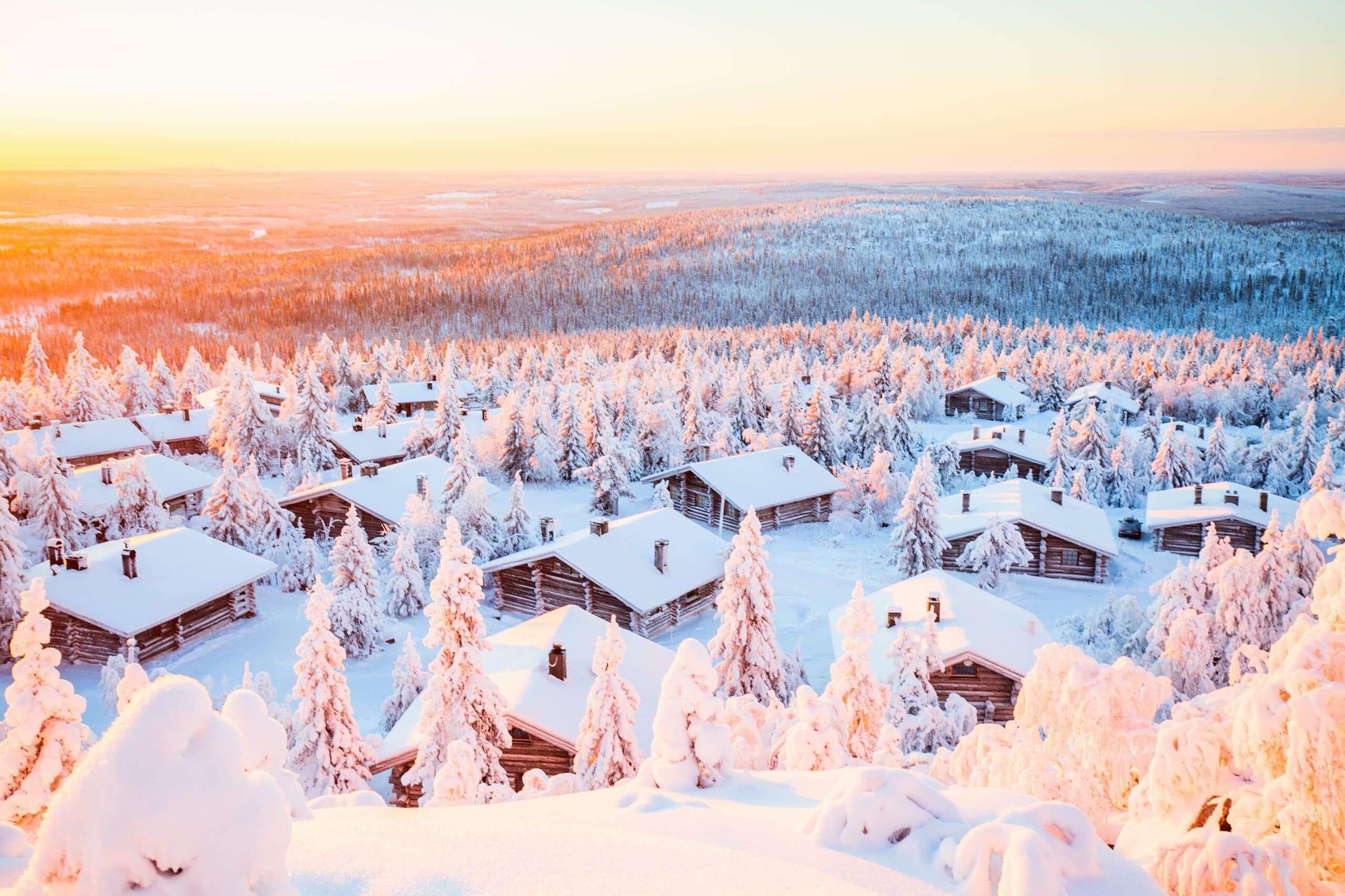
Finland is a Northern European country situated between Sweden, Norway, and Russia, with extensive coastlines along the Baltic Sea. Known as the “Land of a Thousand Lakes,” it actually contains over 180,000 lakes, shaping both settlement patterns and cultural identity. Forests cover the majority of the territory, making nature a defining element of Finnish life.
Historically, Finland was part of the Kingdom of Sweden for centuries before becoming an autonomous Grand Duchy within the Russian Empire in 1809. It declared independence in 1917 and subsequently developed into a stable parliamentary republic. Despite geopolitical challenges during the 20th century, Finland established strong democratic institutions and a resilient economy.
Modern Finland is internationally recognized for its education system, technological innovation, and social welfare model. Companies in telecommunications, clean technology, forestry, and design contribute to a competitive export-driven economy. The country consistently ranks high in measures of quality of life, transparency, and environmental sustainability.
Geographically, Finland ranges from the archipelagos of the southwest to the Arctic landscapes of Lapland. Seasonal contrasts are dramatic: long, bright summer nights and dark, snowy winters define daily rhythms.
Urban centers such as Helsinki blend Nordic design with coastal scenery, while northern destinations offer wilderness experiences and northern lights tourism. Finland’s identity harmonizes innovation, environmental consciousness, and deep-rooted traditions shaped by climate and landscape.
30. Helsinki
Helsinki, the capital of Finland, is located on the southern coast along the Gulf of Finland. Founded in 1550 under Swedish rule, the city gained prominence after Finland became part of the Russian Empire, when Helsinki replaced Turku as the capital in 1812. Neoclassical architecture from the 19th century still defines the historic center.
The city functions as Finland’s political, financial, and cultural hub. Government institutions, corporate headquarters, and universities are concentrated here. The Port of Helsinki supports trade and passenger traffic across the Baltic Sea, connecting Finland with Estonia and Sweden.
Helsinki is internationally recognized for design and architecture. Public buildings, modern districts, and waterfront development reflect an emphasis on functionality and aesthetics. Green spaces and coastal islands are integrated into urban planning, enhancing quality of life.
The economy is diversified, with strengths in technology, education, and public administration. Cultural institutions, museums, and festivals contribute to a vibrant civic environment.
Helsinki harmonizes maritime geography, historical transformation, and contemporary innovation. Its compact layout and access to nature exemplify Finland’s balance between urban life and environmental integration.
29. Turku
Turku is Finland’s oldest city and was the country’s first capital. Located on the southwest coast along the Aura River, Turku developed as a religious and administrative center during the medieval period.
Turku Castle and the cathedral remain key historical landmarks, reflecting Swedish influence and early urban development. For centuries, Turku was Finland’s most important cultural and economic center.
Although Helsinki later assumed national leadership, Turku continues to serve as a regional hub for education, shipping, and biotechnology. The Port of Turku supports ferry connections with Sweden, reinforcing cross-Baltic trade.
The presence of multiple universities sustains academic research and student life. Cultural events and maritime heritage contribute to tourism and regional identity.
Turku harmonizes medieval legacy, coastal trade, and academic vitality. Its historic foundations continue to shape southwestern Finland’s economic and cultural landscape.
28. Tampere
Tampere is located inland between two large lakes in southern Finland. Founded in the late 18th century, it became one of the country’s earliest industrial centers due to water-powered textile factories along the Tammerkoski rapids.
During the 19th and early 20th centuries, Tampere earned the nickname “Manchester of Finland” because of its strong manufacturing base. Industrial expansion attracted a growing workforce and shaped the city’s political history.
Today, former factory buildings have been repurposed into museums, offices, and cultural venues. Tampere’s economy now focuses on technology, higher education, and services.
Universities and research institutions drive innovation in engineering and digital industries. The lakeside setting provides recreational opportunities year-round.
Tampere harmonizes industrial heritage, technological advancement, and urban redevelopment. Its transformation reflects Finland’s broader shift from manufacturing to knowledge-based industries.
27. Rovaniemi
Rovaniemi is located in northern Finland at the confluence of the Kemijoki and Ounasjoki rivers, just south of the Arctic Circle. It serves as the administrative capital of Lapland and is internationally known as a gateway to Arctic experiences.
The city was largely destroyed during World War II and rebuilt according to a modern urban plan influenced by architect Alvar Aalto. Reconstruction shaped Rovaniemi’s contemporary layout and architectural character.
Rovaniemi’s economy is strongly tied to tourism, particularly winter tourism. Visitors are drawn by northern lights viewing, Arctic landscapes, and seasonal attractions associated with Santa Claus Village, situated directly on the Arctic Circle. Outdoor activities such as snowmobiling, reindeer safaris, and cross-country skiing contribute significantly to local employment.
The University of Lapland and research institutions specializing in Arctic studies support education and international collaboration. Public administration also plays an important role, as Rovaniemi functions as Lapland’s regional center.
Seasonal contrasts define life in Rovaniemi. Winters are long and snowy, while summers feature extended daylight and access to hiking and river activities.
Rovaniemi harmonizes Arctic geography, tourism development, and educational research. Its position near the Arctic Circle makes it one of Finland’s most distinctive destinations.
26. Oulu
Oulu is located on Finland’s west coast along the Gulf of Bothnia. Historically a center for tar trade and maritime commerce, the city expanded significantly during the 19th century as industrialization progressed.
In the late 20th century, Oulu emerged as a major technology hub, particularly in telecommunications and information technology. Collaboration between the University of Oulu and private industry supported innovation and research in electronics and digital systems.
Today, Oulu is one of northern Europe’s leading technology centers. Startups and research institutions contribute to advancements in wireless communication, health technology, and clean energy solutions.
The coastal environment and nearby islands provide recreational opportunities, including cycling, boating, and winter sports. Oulu is known for its extensive cycling infrastructure, supporting sustainable urban mobility.
Cultural events and music festivals enhance civic life, while education remains central to the local economy.
Oulu harmonizes maritime history, technological innovation, and northern coastal living. Its transformation from trading town to digital center reflects Finland’s adaptability in a globalized economy.
25. Porvoo
Porvoo is one of Finland’s oldest towns, located east of Helsinki along the southern coast. Founded in the Middle Ages, it developed as a trading settlement along the Porvoonjoki River.
The Old Town is characterized by narrow cobblestone streets and red-painted riverside warehouses that once stored goods for export. These preserved wooden buildings contribute significantly to Porvoo’s cultural identity.
Porvoo played an important political role in 1809 when the Diet of Porvoo affirmed Finland’s autonomous status under Russian rule. This event marked a pivotal moment in Finnish constitutional development.
Today, Porvoo’s economy relies on tourism, small businesses, and regional services. Its proximity to Helsinki allows it to function partly as a commuter town while maintaining its historic charm.
Art galleries, boutique shops, and cafés attract visitors throughout the year. The surrounding countryside supports agriculture and outdoor recreation.
Porvoo harmonizes medieval heritage, national political history, and modern small-town vitality. Its preserved architecture and riverside setting make it one of Finland’s most picturesque destinations.
24. Savonlinna
Savonlinna is located in eastern Finland within the Lake Saimaa region, an area defined by interconnected waterways and forested islands. Founded in the 17th century, the town developed around Olavinlinna Castle, a medieval fortress built to defend the region during conflicts between Sweden and Russia.
The castle remains one of Finland’s most important historical monuments and serves as the venue for the annual Savonlinna Opera Festival. This internationally recognized cultural event attracts performers and audiences from across Europe, reinforcing the town’s artistic profile.
Historically, Savonlinna relied on fishing, forestry, and inland water transport. The Saimaa Canal system improved access to Baltic trade routes, strengthening commercial activity. Although large-scale industry never dominated the area, small-scale manufacturing and regional services supported local employment.
Today, tourism plays a central economic role. Lake cruises, nature excursions, and cultural events generate seasonal activity. The surrounding Saimaa lake system offers boating, kayaking, and wildlife observation, including the rare Saimaa ringed seal.
Savonlinna harmonizes medieval military architecture, lake-based geography, and contemporary cultural tourism. Its identity is shaped by water, history, and seasonal festivals, making it one of eastern Finland’s most distinctive destinations.
23. Jyväskylä
Jyväskylä is situated in central Finland, surrounded by lakes and forested hills. Established in the 19th century, it gained prominence as an educational center and is often referred to as a cradle of Finnish-language education.
The city is closely associated with architect Alvar Aalto, whose early works and later designs significantly influenced its architectural character. Several public buildings reflect modernist principles integrated into natural surroundings.
Jyväskylä’s economy centers on education, research, and technology. The University of Jyväskylä supports studies in education, sports science, and information technology. Collaboration between academic institutions and private firms fosters innovation.
The region hosts international sporting events, including the Rally Finland competition, which enhances global visibility. Outdoor recreation is easily accessible, with skiing, hiking, and lake activities available year-round.
Urban planning emphasizes green spaces and waterfront accessibility. Residential districts integrate with forest landscapes, reflecting Finland’s commitment to environmental balance.
Jyväskylä harmonizes educational leadership, architectural heritage, and natural integration. Its central location and academic strength position it as a key inland hub within Finland.
22. Kuopio
Kuopio lies in eastern Finland amid the extensive Lake Saimaa system. Founded in the 18th century, it developed as a trading and administrative center for the surrounding agricultural region.
The Puijo Hill observation tower overlooks the lake landscape and symbolizes Kuopio’s connection to nature. Historically, inland waterways supported commerce and timber transport.
Today, Kuopio’s economy includes healthcare research, food production, and regional services. The University of Eastern Finland maintains a campus in the city, contributing to medical and environmental research.
Kuopio is known for its market square culture and traditional cuisine, particularly fish-based dishes reflecting lake resources. Seasonal festivals and cultural events strengthen civic life.
Winter sports and summer lake tourism both contribute to the local economy. Infrastructure links Kuopio with Helsinki and other regional centers.
Kuopio harmonizes lake-based geography, academic research, and regional trade traditions. Its landscape and cultural identity reflect eastern Finland’s strong relationship with water and forest environments.
21. Lahti
Lahti is located in southern Finland approximately 100 kilometers north of Helsinki, positioned between major transport routes and surrounded by lakes and forested ridges. Established as a market town in the 19th century, Lahti developed rapidly after the arrival of railway connections, becoming an important industrial and logistics center.
Historically, the city’s economy relied on woodworking, furniture production, and light manufacturing. Over time, Lahti diversified into environmental technology and sustainable urban development. The city has positioned itself as a leader in circular economy initiatives and green innovation.
Lahti is internationally recognized for winter sports. The Salpausselkä ski jumps dominate the skyline and host annual international competitions, reinforcing the city’s identity as a winter sports center. Sporting infrastructure contributes to tourism and local pride.
Cultural institutions, including concert halls and museums, support civic life. Urban development emphasizes waterfront access along Lake Vesijärvi, integrating recreation with residential areas.
Lahti harmonizes industrial transformation, environmental leadership, and sports tradition. Its strategic location and sustainability focus illustrate Finland’s commitment to modern economic adaptation.
20. Kemi
Kemi is situated in northern Finland along the Gulf of Bothnia, near the Swedish border. Founded in the 19th century, the city developed as a port and industrial center serving Lapland’s forestry and mining sectors.
Forestry has long been central to Kemi’s economy, with pulp and paper production providing employment and export revenue. The port facilitates international shipping, supporting regional trade.
Kemi is widely known for winter tourism attractions, including the seasonal SnowCastle and icebreaker cruises that operate in the frozen Gulf of Bothnia. These initiatives have diversified the economy beyond traditional industry.
The Arctic climate shapes daily life, with long winters and significant snowfall. Despite harsh conditions, infrastructure and public services maintain connectivity with southern Finland.
Urban planning balances industrial zones with residential districts and waterfront access. Cultural institutions reflect Lapland’s heritage and maritime identity.
Kemi harmonizes industrial production, Arctic tourism, and coastal trade. Its northern location positions it as both an industrial gateway and a seasonal tourism destination.
19. Hämeenlinna
Hämeenlinna is located in southern Finland between Helsinki and Tampere. Founded in the 17th century, it developed around Häme Castle, a medieval fortress constructed to secure inland territories during Swedish rule.
The city played a strategic administrative role for centuries. Its central position supported agriculture, trade, and governance within the surrounding region.
Today, Hämeenlinna functions as a regional service center with strengths in education, public administration, and small-scale manufacturing. The city’s rail connections enhance accessibility to larger metropolitan areas.
Natural surroundings include lakes, parks, and protected areas that provide recreational opportunities. Cultural heritage sites, museums, and historic districts preserve architectural continuity.
Hämeenlinna is also recognized as the birthplace of composer Jean Sibelius, reinforcing its cultural significance within Finland’s artistic history.
Hämeenlinna harmonizes medieval defense heritage, administrative development, and residential quality of life. Its balance of history and accessibility supports its role as a stable southern Finnish hub.
18. Vaasa
Vaasa is located on Finland’s western coast along the Gulf of Bothnia, directly facing Sweden across the Kvarken Strait. Founded in 1606 during Swedish rule and named after the Vasa royal dynasty, the city has long reflected strong cross-Baltic cultural ties. A substantial Swedish-speaking population remains, reinforcing the region’s bilingual identity and historic connections.
In the 19th century, a devastating fire destroyed much of the original settlement. The city was subsequently rebuilt closer to the shoreline, giving Vaasa its present coastal layout with wide streets and functional urban planning. Maritime trade, tar exports, and shipping historically supported economic growth, while agriculture from surrounding regions supplied export goods.
Today, Vaasa is widely recognized as Finland’s leading energy technology cluster. Companies specializing in power generation systems, renewable energy solutions, and smart grid technologies operate in the region. Close collaboration between industry and higher education institutions fosters innovation and research in sustainable energy systems. The port of Vaasa continues to facilitate international trade, particularly with Sweden.
The nearby Kvarken Archipelago, a UNESCO World Heritage Site, attracts visitors interested in geological formations created by post-glacial land uplift. Tourism complements the industrial economy, while coastal landscapes provide recreational opportunities year-round.
Vaasa harmonizes bilingual heritage, maritime history, and contemporary energy innovation. Its strategic location and technological focus position it as a significant contributor to Finland’s sustainable industrial development.
17. Lappeenranta
Lappeenranta is situated in southeastern Finland near the Russian border along the shores of Lake Saimaa. Established in 1649, the city developed around a fortress built to defend the frontier between Swedish and Russian territories. Its strategic position influenced centuries of military, administrative, and commercial activity.
The historic fortress district remains a central feature, containing museums, churches, and preserved ramparts overlooking the lake. Throughout the 18th and 19th centuries, Lappeenranta functioned as a garrison town and regional trade center. The construction of the Saimaa Canal strengthened connections between inland waterways and the Baltic Sea, expanding commercial opportunities.
Forestry, pulp production, and cross-border trade shaped the modern economy. In recent decades, Lappeenranta has repositioned itself as a center for renewable energy and environmental technology. The local university is known for research in sustainability, energy efficiency, and green innovation, contributing to Finland’s clean technology sector.
Lake Saimaa provides recreational opportunities including boating, swimming, and seasonal tourism. Waterfront development integrates residential areas with parks and public spaces, reinforcing environmental awareness in urban planning.
Lappeenranta harmonizes borderland history, lake geography, and sustainable technology development. Its evolution from fortress town to innovation hub reflects Finland’s broader transition toward environmentally focused economic growth.
16. Raahe
Raahe lies on Finland’s western coast along the Gulf of Bothnia and was founded in 1649 as a port town during Sweden’s period of expansion. Its location enabled maritime trade with northern Europe, and by the 18th and 19th centuries Raahe had become one of Finland’s most important shipbuilding and export centers.
Sailing vessels built in Raahe transported tar, timber, and agricultural goods to international markets. The prosperity of this era is still visible in the preserved wooden houses of the Old Town district, one of Finland’s best-maintained historical wooden urban areas. Maritime heritage remains central to local identity.
In the 20th century, industrialization introduced large-scale steel production. The establishment of a major steel plant significantly reshaped employment patterns and infrastructure. Heavy industry became the backbone of the local economy, integrating Raahe into global supply chains.
Today, the port continues to support exports of steel and industrial products. At the same time, cultural institutions and maritime museums promote tourism and preserve seafaring traditions. Coastal recreation, boating, and seasonal events diversify economic activity.
Raahe harmonizes shipbuilding legacy, steel industry strength, and preserved wooden architecture. Its development illustrates Finland’s combination of maritime trade traditions and modern industrial capacity along the Gulf of Bothnia.
15. Joensuu
Joensuu is located in eastern Finland near the Russian border, positioned along the Pielisjoki River and close to Lake Pyhäselkä, part of the wider Saimaa water system. Founded in 1848 by decree of Tsar Nicholas I, the city developed as a regional trading center serving agricultural and forested hinterlands.
Forestry has historically played a defining role in Joensuu’s economy. Timber processing, sawmills, and later pulp production supported employment and regional export activity. River transport facilitated the movement of logs and goods toward larger waterways, integrating Joensuu into national trade networks.
In the modern era, Joensuu has diversified its economy beyond traditional forestry. The University of Eastern Finland maintains a major campus in the city, specializing in environmental science, forestry research, and education. This academic presence has strengthened innovation and attracted students from across Finland and abroad.
Cultural institutions, theaters, and music festivals contribute to civic life. The city also emphasizes outdoor recreation, with extensive cycling paths and access to lakes and forests encouraging year-round activity. Winter sports and summer boating remain integral to local leisure patterns.
Urban development balances industrial zones with residential districts and green corridors. Proximity to Russia continues to influence commerce and cultural exchange, although economic activity fluctuates depending on broader geopolitical conditions.
Joensuu harmonizes forest-based heritage, academic research, and cross-border geography. Its evolution from timber town to knowledge-oriented regional center reflects Finland’s broader economic transformation.
14. Kouvola
Kouvola is situated in southeastern Finland at a major railway junction connecting Helsinki with eastern Finland and Russia. Established in the late 19th century as a rail hub, the city’s growth was closely tied to transportation infrastructure and industrial logistics.
The railway network facilitated timber transport and supported the development of sawmills and paper production. Industrial expansion accelerated during the 20th century, making Kouvola an important logistics and manufacturing center. Its strategic position continues to strengthen freight transport and warehousing activities.
Repovesi National Park, located nearby, enhances the region’s recreational appeal. The park’s forests, cliffs, and lakes attract hikers and nature enthusiasts, contributing to tourism alongside industrial employment. Urban planning integrates residential areas with green spaces, reflecting Finland’s environmental priorities.
Kouvola has faced economic restructuring following shifts in global paper demand. In response, local authorities have promoted diversification into logistics services, renewable energy initiatives, and small business development.
Cultural facilities, museums, and community events support civic identity. While industrial heritage remains visible, the city continues adapting to new economic realities shaped by transport connectivity and cross-border trade.
Kouvola harmonizes railway history, industrial production, and natural proximity. Its position as a transport crossroads remains central to its regional importance within southeastern Finland.
13. Pori
Pori lies on Finland’s western coast along the Kokemäki River delta, opening into the Gulf of Bothnia. Founded in 1558 during Swedish rule, the city developed as a port for trade in timber, tar, and agricultural goods.
Maritime commerce supported steady growth, although repeated fires reshaped urban structure over centuries. Industrialization introduced metalworking and engineering industries, strengthening Pori’s manufacturing base. The port continues to handle bulk cargo and industrial exports.
Pori is internationally recognized for the annual Pori Jazz Festival, one of Europe’s prominent music events. Cultural tourism complements traditional industry, attracting domestic and international visitors each summer.
The Yyteri beach area, located nearby, provides one of Finland’s longest sandy shorelines. Coastal dunes and recreational infrastructure diversify the local economy through seasonal tourism.
Education and research institutions support technical training and regional services. Environmental considerations guide waterfront redevelopment and flood management along the river delta.
Pori harmonizes maritime trade, industrial resilience, and cultural vibrancy. Its coastal geography and music festival identity distinguish it within western Finland’s economic landscape.
12. Kotka
Kotka is located in southeastern Finland at the mouth of the Kymi River along the Gulf of Finland. Founded in 1879, the city developed rapidly as a port and industrial center serving the forestry industry. Timber floated downriver from inland forests was processed in sawmills and pulp factories before export to European markets.
Maritime trade shaped Kotka’s urban structure, with docks, warehouses, and shipyards forming the economic core. During the 20th century, paper and pulp production strengthened the city’s position within Finland’s export-driven economy. The Port of Kotka remains one of the country’s busiest cargo ports, handling containers, bulk goods, and transit freight.
Economic restructuring in recent decades has encouraged diversification into logistics, environmental technology, and service industries. Redevelopment of former industrial waterfronts has improved public access and urban aesthetics. Parks and maritime museums highlight the city’s seafaring identity.
Kotka is also known for its landscaped gardens and coastal scenery. Islands and archipelago areas provide recreational opportunities, including boating and fishing. Cultural events and music festivals contribute to civic life.
The city’s proximity to the Russian border historically influenced trade flows and logistics networks. Transport corridors linking Helsinki and eastern Finland continue to reinforce Kotka’s strategic importance.
Kotka harmonizes river transport heritage, maritime industry, and modern logistics development. Its economic resilience reflects Finland’s broader adaptation to global market shifts while maintaining a strong port-based identity.
11. Seinäjoki
Seinäjoki is located in western Finland within the South Ostrobothnia region. Originally a rural parish, the city expanded significantly in the late 19th century when railway lines intersected there, transforming it into a transportation and commercial hub.
Agriculture has long been central to the surrounding region, particularly grain cultivation and livestock farming. Seinäjoki evolved into a marketplace and service center for farmers, supporting trade, storage, and processing activities. Food production and agribusiness remain important components of the local economy.
Architect Alvar Aalto designed several prominent buildings in Seinäjoki, including the civic center complex. These modernist structures contribute to the city’s architectural significance within Finland.
Today, Seinäjoki hosts major cultural events such as the Tangomarkkinat festival, which celebrates Finnish tango music and attracts national attention. Retail, education, and public administration also sustain employment.
Urban development emphasizes accessibility and infrastructure, with strong rail and road connections linking the city to other parts of western Finland. The surrounding flat plains contrast with the lake-dominated landscapes typical elsewhere in the country.
Seinäjoki harmonizes agricultural heritage, architectural distinction, and transportation connectivity. Its growth from rural settlement to regional center illustrates the influence of rail infrastructure and agrarian commerce in shaping Finnish urban development.
10. Kajaani
Kajaani is situated in central Finland within the Kainuu region, surrounded by forests, lakes, and rivers. Established in the 17th century, it developed near Kajaani Castle, which was originally constructed to secure eastern territories during Swedish rule.
Forestry and tar production historically supported Kajaani’s economy. Timber floated along waterways supplied domestic and international markets. During the 20th century, paper mills and related industries strengthened industrial activity.
In recent decades, economic restructuring has led to diversification into education, information technology, and public services. Kajaani University of Applied Sciences supports regional workforce development and research initiatives.
Natural surroundings play a significant role in the city’s identity. Hiking trails, fishing waters, and winter sports facilities attract both residents and visitors. The nearby Vuokatti area enhances tourism through skiing and outdoor recreation.
Cultural institutions, theaters, and local festivals contribute to community life. Infrastructure improvements have strengthened connections to Oulu and other northern cities.
Kajaani harmonizes fortress history, forest industry heritage, and regional education development. Its location within Kainuu highlights the importance of natural resources and adaptive economic strategies in inland Finland.
9. Salo
Salo is located in southwestern Finland between Helsinki and Turku. Historically a small market town, Salo expanded significantly during the late 20th century due to the rapid growth of the electronics and telecommunications industries. Its development was closely linked to Nokia’s mobile phone production, which made the city an international technology manufacturing center.
The electronics sector provided thousands of jobs and positioned Salo within global supply chains. However, restructuring in the telecommunications industry during the 2010s led to substantial job losses and economic transition. In response, Salo has pursued diversification strategies focused on small technology firms, clean energy solutions, and entrepreneurial initiatives.
Beyond industry, Salo is characterized by forests, lakes, and coastal access to the Baltic Sea. Outdoor recreation, including hiking and boating, complements the urban environment. Residential districts are integrated with green areas, reflecting Finland’s environmental planning principles.
Local education institutions support workforce retraining and technical skills development. Improved transport links to Helsinki and Turku enhance commuting opportunities and economic integration.
Salo harmonizes high-technology legacy, economic adaptation, and natural surroundings. Its transformation illustrates the challenges and resilience of single-industry towns adjusting to global technological change.
8. Kokkola
Kokkola lies on Finland’s west coast along the Gulf of Bothnia. Founded in 1620, the city became an important port for tar exports, shipbuilding, and maritime trade. Its coastal position fostered economic connections across the Baltic region.
The Old Town district, known as Neristan, preserves wooden houses from the 18th and 19th centuries. These buildings reflect historical prosperity and maritime culture. Shipowners and merchants played central roles in local governance and commerce.
In the modern era, Kokkola developed a strong industrial base centered on chemical production and metal processing. A large industrial park located near the port supports exports and contributes significantly to regional employment.
Bilingual heritage, with both Finnish and Swedish speakers, shapes local culture. Educational institutions and vocational training programs sustain industrial expertise and technical skills.
The surrounding coastline and archipelago provide recreational opportunities, while port facilities continue handling bulk cargo and industrial materials. Environmental management remains important due to heavy industry presence.
Kokkola harmonizes maritime heritage, chemical industry strength, and preserved wooden architecture. Its continued port activity underscores the importance of coastal trade in western Finland’s economy.
7. Hyvinkää
Hyvinkää is situated in southern Finland north of Helsinki and developed primarily as a railway town during the 19th century. The expansion of rail infrastructure transformed the settlement into a transport and industrial center serving southern Finland.
Rail connections facilitated manufacturing growth, including metalwork and machinery production. Over time, Hyvinkää evolved into a diversified economy combining industry, services, and residential development. Proximity to Helsinki has strengthened its role as a commuter city.
The Finnish Railway Museum highlights Hyvinkää’s historical connection to transportation. Urban planning integrates residential neighborhoods with green spaces and recreational facilities, emphasizing quality of life.
Education, healthcare services, and retail contribute to local employment. The surrounding forests and nature areas provide opportunities for outdoor activity, reinforcing Finland’s balance between urbanization and environment.
Hyvinkää harmonizes railway heritage, industrial development, and suburban growth. Its accessibility to the capital region supports continued economic stability.
6. Mariehamn
Mariehamn is the capital of the Åland Islands, an autonomous region of Finland located in the Baltic Sea between Finland and Sweden. Founded in 1861 during Russian rule, the town developed as a maritime center serving regional shipping routes.
The population is predominantly Swedish-speaking, reflecting Åland’s distinct linguistic and cultural identity. Autonomy grants the region self-governance in many domestic matters, including education and local legislation.
Shipping and ferry traffic remain central to Mariehamn’s economy. Passenger vessels traveling between Stockholm, Turku, and Helsinki frequently stop at the port, supporting tourism and trade. Maritime museums and preserved sailing ships highlight nautical heritage.
Tourism, small-scale services, and public administration provide additional employment. The surrounding archipelago landscape, characterized by rocky islands and sheltered harbors, attracts visitors seeking coastal scenery and cycling routes.
Mariehamn harmonizes maritime autonomy, bilingual culture, and Baltic connectivity. Its strategic island location and self-governing status distinguish it within Finland’s national framework.
5. Imatra
Imatra is located in southeastern Finland near the Russian border, along the Vuoksi River, which flows from Lake Saimaa toward Lake Ladoga. The city developed in the late 19th and early 20th centuries around hydroelectric power generation and forest-based industry. The Imatrankoski rapids became one of Finland’s earliest tourist attractions, drawing visitors even before large-scale industrialization.
Hydropower has been central to Imatra’s economic foundation. Dams constructed along the Vuoksi River enabled energy production that supported pulp and paper manufacturing. Forestry resources from eastern Finland were processed locally, integrating Imatra into national export networks.
Although traditional heavy industry remains significant, economic restructuring has encouraged diversification into services, tourism, and cross-border commerce. The city’s proximity to Russia historically supported trade and travel, though geopolitical conditions have influenced economic flows.
Natural surroundings, including forests and waterways, provide recreational opportunities. Controlled releases of water at Imatrankoski are staged as public events, reinforcing the rapids’ symbolic importance. Cultural facilities and local festivals contribute to civic identity.
Urban planning integrates residential areas with green corridors and riverfront spaces. Infrastructure connections link Imatra with Lappeenranta and other southeastern cities.
Imatra harmonizes hydropower development, forest industry heritage, and river-based tourism. Its evolution reflects Finland’s integration of natural energy resources into industrial and regional growth strategies.
4. Naantali
Naantali is situated on Finland’s southwestern coast near Turku, within an archipelago landscape characterized by sheltered bays and rocky islands. Founded in the 15th century around a medieval convent, the town originally developed as a religious and trading settlement.
In later centuries, Naantali gained prominence as a spa destination, attracting visitors seeking therapeutic seaside environments. Its wooden Old Town district preserves narrow streets and historic houses, contributing to cultural tourism.
The port and nearby oil refinery have played important roles in the regional economy, integrating Naantali into Finland’s energy infrastructure. At the same time, tourism remains central, particularly during summer months when visitors explore the archipelago and waterfront.
Naantali is also known for the Moomin World theme park, which draws families from across Finland and abroad. Recreational boating, sailing, and coastal cycling enhance seasonal activity.
Urban development balances residential neighborhoods with marina facilities and heritage preservation. Proximity to Turku strengthens economic integration while allowing Naantali to maintain a distinct small-town character.
Naantali harmonizes medieval origins, coastal tourism, and energy infrastructure. Its blend of historic charm and maritime economy makes it one of southwestern Finland’s most recognizable destinations.
3. Hanko
Hanko lies at Finland’s southernmost tip, extending into the Baltic Sea. Its strategic maritime position has historically made it an important naval and trading location. During the 19th century, Hanko developed as a port and spa resort, attracting visitors seeking coastal climate and sea air.
The town’s harbor facilitated passenger and cargo traffic, particularly during periods of emigration when Finns departed for North America. Military significance also shaped Hanko’s history, especially during the 20th century when foreign troops were stationed in the region.
Today, Hanko’s economy relies on port operations, tourism, and services. Sandy beaches, seaside villas, and marina facilities define the urban landscape. Sailing and recreational boating are central to summer activity.
Bilingual culture, with both Finnish and Swedish speakers, influences local identity. Architectural styles reflect both maritime and resort heritage.
Hanko harmonizes naval history, emigration heritage, and coastal recreation. Its geographic extremity and maritime atmosphere distinguish it within Finland’s southern coastline.
2. Iisalmi
Iisalmi is located in northern Savonia, surrounded by lakes and agricultural land. Established in the 17th century, it developed as a rural market town serving farming communities and forest industries.
Agriculture and dairy production have historically supported the local economy. Brewing and food processing industries later expanded economic activity. The surrounding lake district provides opportunities for fishing, boating, and seasonal tourism.
Industrial development remained moderate compared to larger Finnish cities, allowing Iisalmi to maintain a small-town character. Local enterprises emphasize manufacturing, food production, and services tailored to regional needs.
Transport links connect Iisalmi to Kuopio and Oulu, strengthening regional integration. Education and vocational training institutions support workforce development.
Iisalmi harmonizes agrarian tradition, small-scale industry, and lake-region identity. Its steady growth reflects the stability of Finland’s inland rural economies.
1. Kemiönsaari
Kemiönsaari is a municipality located in the southwestern archipelago of Finland between Turku and Hanko. Comprising numerous islands, it is characterized by rocky coastlines, forests, and maritime villages. Historically, fishing, small-scale farming, and shipping supported local livelihoods.
Bilingual heritage remains strong, with a significant Swedish-speaking population shaping cultural traditions. Maritime trade connected the islands with mainland markets, while shipbuilding and coastal navigation contributed to economic resilience.
Today, tourism plays an increasing role in the local economy. Summer residents and visitors are drawn to sailing routes, cycling paths, and nature reserves. Cultural events and craft traditions reinforce community identity.
Agriculture and small enterprises continue to operate, though seasonal fluctuations influence economic activity. Improved ferry and bridge connections have strengthened accessibility while preserving island character.
Kemiönsaari harmonizes archipelago geography, bilingual culture, and sustainable tourism development. Its dispersed settlement pattern and maritime orientation illustrate Finland’s diverse coastal landscapes.