
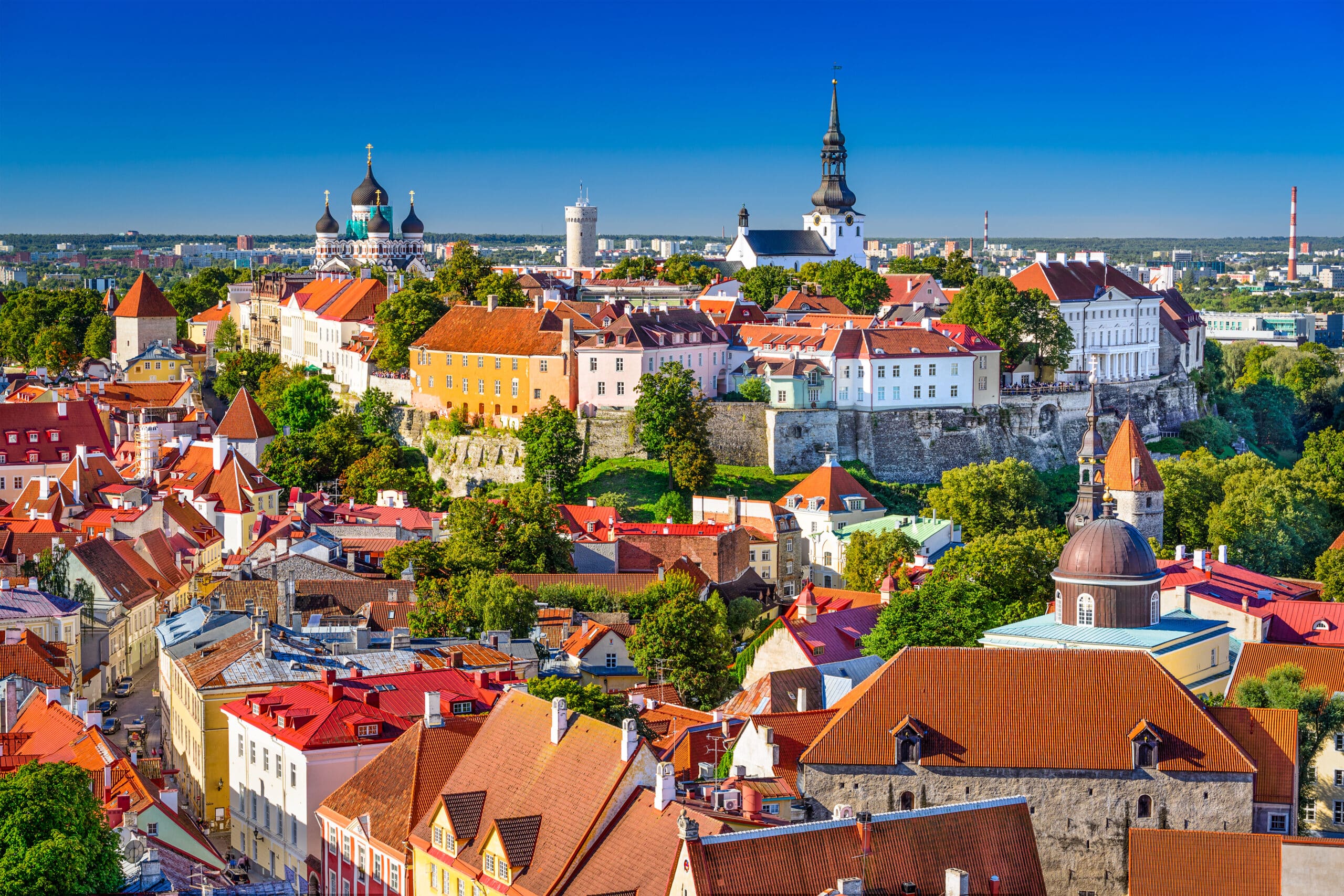
Estonia is a Northern European country located along the eastern coast of the Baltic Sea. Bordered by Latvia to the south and Russia to the east, and separated from Finland by the Gulf of Finland, Estonia occupies a strategic position between Scandinavia and Eastern Europe. Its geography is defined by flat terrain, dense forests, thousands of lakes, and more than 2,000 islands scattered along its coastline.
Historically, Estonia has experienced periods of Danish, German, Swedish, and Russian rule before declaring independence in 1918. After Soviet occupation during the 20th century, Estonia regained independence in 1991. Since then, it has rapidly transformed into a democratic republic and member of the European Union and NATO.
The country is widely recognized for its digital innovation. Estonia pioneered e-governance systems, online voting, and digital identity infrastructure, earning a reputation as one of the most technologically advanced societies in Europe. Despite modernization, medieval architecture, Hanseatic trade heritage, and rural traditions remain strongly preserved.
Economically, Estonia combines information technology, manufacturing, forestry, and logistics. Ports along the Baltic Sea facilitate trade with Scandinavia and continental Europe. Tourism continues to grow, particularly in the capital and historic coastal towns.
Culturally, Estonia reflects both Nordic and Baltic influences. Its language belongs to the Finno-Ugric family, linking it linguistically to Finland rather than its Baltic neighbors.
Estonia harmonizes medieval heritage, digital transformation, and coastal geography. Its compact size and efficient infrastructure allow visitors to experience diverse landscapes and historic centers within short travel distances.
30. Tallinn
Tallinn, the capital of Estonia, is located on the northern coast along the Gulf of Finland. Founded in the medieval period and later a key member of the Hanseatic League, Tallinn developed as a significant trading port between Scandinavia, Russia, and Central Europe.
The Old Town, a UNESCO World Heritage Site, preserves medieval city walls, cobbled streets, and Gothic architecture. Toompea Hill and the Town Hall Square remain central landmarks reflecting centuries of political and commercial activity.
During Soviet rule, Tallinn expanded with industrial districts and residential housing blocks. Since independence in 1991, the city has undergone modernization, integrating digital infrastructure and start-up industries into its economy.
Tallinn is internationally recognized for its e-governance systems and technology sector. It hosts numerous technology companies and innovation hubs, earning the nickname “Europe’s Silicon Valley of the North.”
The port remains economically important, connecting Estonia with Helsinki and Stockholm through regular ferry routes. Tourism, IT services, and finance form key economic pillars.
Tallinn harmonizes medieval preservation, maritime trade, and digital innovation. Its blend of historic architecture and technological leadership defines Estonia’s modern identity.
29. Tartu
Tartu is located in southeastern Estonia along the Emajõgi River. Established in ancient times and later developed under Swedish rule, Tartu became a prominent academic and cultural center.
The University of Tartu, founded in 1632, is one of Northern Europe’s oldest universities. Academic life shapes the city’s identity, attracting students, researchers, and cultural institutions.
Tartu played a key role in Estonia’s national awakening during the 19th century. Intellectual movements and literary societies emerged here, strengthening national identity.
Today, Tartu supports research in biotechnology, medicine, and information technology. The city promotes innovation while preserving classical architecture and riverfront parks.
Cultural festivals, museums, and theaters contribute to vibrant civic life. The compact urban layout encourages walking and cycling.
Tartu harmonizes academic tradition, national heritage, and research development. Its educational legacy continues to influence Estonia’s intellectual landscape.
28. Pärnu
Pärnu is situated on Estonia’s southwestern coast along the Gulf of Riga. Historically a Hanseatic port, it later gained prominence as a seaside spa resort during the 19th century.
Long sandy beaches and shallow coastal waters define Pärnu’s tourism appeal. Wooden villas and spa complexes reflect its development as a health resort destination.
During the Soviet period, Pärnu remained a recreational center. Since independence, tourism infrastructure has expanded with hotels, wellness centers, and summer festivals.
The port supports small-scale maritime activity, while hospitality and services dominate the local economy. Seasonal tourism significantly influences employment patterns.
Pärnu harmonizes spa tradition, coastal leisure, and preserved wooden architecture. Its reputation as Estonia’s “summer capital” continues to attract domestic and international visitors.
27. Narva
Narva is located in northeastern Estonia on the Narva River, directly bordering Russia. The river forms a natural boundary between Estonia and the Russian city of Ivangorod, making Narva one of the European Union’s easternmost urban centers. Its strategic position has shaped its military, political, and economic history for centuries.
During the medieval period, Narva developed as a trading settlement under Danish and later Livonian control. In the 17th century, Swedish rule strengthened the city’s fortifications, including Narva Castle, which still dominates the skyline. The Great Northern War brought destruction, and subsequent Russian rule integrated Narva into the Russian Empire.
Industrialization in the 19th century transformed Narva into a major textile production center. Large factories attracted workers from across the region, shaping the city’s demographic composition. During the Soviet period, heavy industry and energy production expanded further.
Today, Narva remains a culturally distinct city with a predominantly Russian-speaking population. Cross-border trade and logistics influence the local economy, though geopolitical developments affect economic stability. The nearby Narva hydroelectric facilities contribute to regional energy supply.
Narva harmonizes fortress heritage, industrial legacy, and borderland identity. Its position at the frontier of the European Union gives it continued strategic and symbolic importance within Estonia.
26. Kuressaare
Kuressaare is located on Saaremaa, Estonia’s largest island in the Baltic Sea. Historically known as Arensburg, the town developed as an episcopal center during the medieval period. The Kuressaare Castle, one of the best-preserved medieval fortresses in the Baltic region, remains the city’s defining landmark.
Maritime trade and fishing supported early economic activity. The island’s relative isolation preserved traditional architecture and rural customs. In the 19th century, Kuressaare gained recognition as a spa destination due to its therapeutic mud treatments and coastal climate.
Tourism continues to shape the local economy. Visitors are drawn to the castle complex, harbor area, and surrounding natural landscapes. Sailing and cycling are popular activities, particularly during summer months.
Agriculture and small-scale food production complement tourism. The island’s windmills and limestone features contribute to regional identity. Infrastructure improvements, including ferry and air connections, have strengthened accessibility from mainland Estonia.
Kuressaare harmonizes medieval fortification, island culture, and spa heritage. Its coastal setting and preserved historical core distinguish it within Estonia’s archipelago landscape.
25. Viljandi
Viljandi is situated in southern Estonia near Lake Viljandi, surrounded by rolling hills and forests. Established in the medieval period, it became an important trading town within the Hanseatic network. The ruins of Viljandi Castle still overlook the town, reflecting its historical significance.
Throughout the 19th century, Viljandi developed as a regional administrative and cultural center. It played a role in Estonia’s national awakening, supporting literary and folk traditions that strengthened national identity.
Today, Viljandi is widely recognized for its annual folk music festival, which attracts performers and visitors from across the Baltic region. Cultural education institutions reinforce its reputation as a center for traditional arts.
The local economy combines small-scale manufacturing, services, and tourism. Lake Viljandi provides recreational opportunities, including rowing and hiking along shoreline trails.
Viljandi harmonizes medieval heritage, cultural revival, and scenic landscapes. Its emphasis on folk tradition and community events reflects Estonia’s broader commitment to preserving national cultural identity.
24. Haapsalu
Haapsalu is located on Estonia’s western coast along a sheltered bay of the Baltic Sea. Founded in the 13th century as a bishopric center, the town developed around Haapsalu Castle, whose preserved walls and cathedral ruins remain prominent landmarks. Its coastal position made it both a defensive outpost and a modest trading settlement during the medieval period.
In the 19th century, Haapsalu transformed into a renowned spa resort within the Russian Empire. Visitors, including members of the imperial elite, traveled to the town for therapeutic mud treatments and its calm seaside climate. Wooden villas and the historic railway station reflect this era of prosperity and architectural refinement.
During the Soviet period, Haapsalu continued functioning as a health resort, though infrastructure modernization altered parts of the urban landscape. Since Estonia regained independence, restoration projects have revitalized the Old Town and castle grounds, strengthening tourism.
Today, Haapsalu’s economy centers on tourism, wellness services, and small businesses. Cultural festivals, including classical music and film events, enhance the town’s seasonal appeal. The surrounding wetlands and birdwatching areas contribute to ecological tourism.
Haapsalu harmonizes episcopal heritage, spa tradition, and coastal tranquility. Its preserved wooden architecture and castle ruins distinguish it as one of western Estonia’s most historically atmospheric towns.
23. Rakvere
Rakvere lies in northern Estonia between Tallinn and Narva. Established during the medieval period, it developed around Rakvere Castle, a fortress originally built by Danish rulers and later expanded by the Livonian Order. The castle ruins continue to dominate the town’s skyline and serve as a cultural attraction.
Rakvere historically functioned as a regional administrative and trading center. Agriculture and livestock farming shaped the surrounding countryside, while small-scale manufacturing supported local employment. In the 20th century, food processing industries became particularly significant.
Today, Rakvere balances industrial activity with tourism and cultural initiatives. The castle complex hosts historical reenactments and educational programs that highlight medieval life. The town is also known for its modern sculpture of a bull, symbolizing agricultural heritage.
Infrastructure links Rakvere efficiently with Tallinn, supporting commuter flows and regional trade. Educational institutions and healthcare services sustain civic stability.
Rakvere harmonizes medieval fortification, agricultural tradition, and regional service functions. Its compact scale and preserved heritage contribute to its continued relevance within northern Estonia.
22. Võru
Võru is situated in southeastern Estonia near Lake Tamula, surrounded by rolling hills and forested landscapes. Founded in 1784 under Russian imperial administration, Võru developed with a planned grid layout, distinguishing it from older medieval towns.
The region is known for its distinct Võro dialect and cultural identity, reflecting deep-rooted local traditions. Folk customs, handicrafts, and regional cuisine contribute to cultural preservation efforts.
Agriculture, forestry, and small-scale industry historically supported the economy. In recent decades, Võru has emphasized tourism linked to natural scenery and outdoor recreation. Hiking, cycling, and winter sports attract visitors seeking rural experiences.
Lake Tamula provides a focal point for leisure activities, including swimming and rowing. Urban development integrates parks and pedestrian zones that reinforce community cohesion.
Educational institutions and local enterprises maintain employment stability, though population trends reflect broader rural challenges within Estonia. Cultural festivals celebrating regional identity continue to strengthen social ties.
Võru harmonizes planned urban design, linguistic heritage, and lake-region tourism. Its emphasis on regional culture highlights Estonia’s internal diversity beyond major urban centers.
21. Jõhvi
Jõhvi is located in northeastern Estonia within Ida-Viru County, a region historically associated with oil shale extraction and heavy industry. Although smaller than nearby Narva, Jõhvi developed as an administrative and service center supporting the surrounding industrial landscape.
During the 20th century, oil shale mining and energy production shaped the broader regional economy. Workers settled in towns across Ida-Viru County, creating a distinct demographic composition with a significant Russian-speaking population. Jõhvi became an important hub for public administration, education, and commerce within this industrial corridor.
Following Estonia’s independence in 1991, economic restructuring reduced reliance on heavy industry. Jõhvi has since diversified into services, retail, and regional governance functions. Modern shopping centers and cultural facilities reflect gradual urban renewal.
The city is also home to concert venues and educational institutions that serve the county. Infrastructure links connect Jõhvi to Tallinn and Narva via rail and highway networks, reinforcing its logistical relevance.
Environmental rehabilitation remains an important priority in the region due to the legacy of mining activity. Investment in cleaner technologies and sustainable planning continues to reshape the local economy.
Jõhvi harmonizes industrial heritage, administrative function, and regional adaptation. Its development reflects Estonia’s broader efforts to transition historically industrial regions toward diversified economic structures.
20. Paide
Paide is situated in central Estonia and has long served as a geographic and administrative midpoint of the country. Established in the 13th century by the Livonian Order, Paide grew around a stone fortress, parts of which remain preserved today.
Historically, Paide functioned as a local market and governance center serving agricultural communities. Its central location strengthened its role in regional administration. Throughout various periods of foreign rule, Paide maintained importance as a provincial town rather than a major commercial hub.
In modern Estonia, Paide continues to operate as a county administrative center. Public services, education, and small businesses form the backbone of the local economy. Agriculture and food production remain significant in the surrounding countryside.
Cultural initiatives and civic events contribute to community engagement. Restoration of historical sites has enhanced tourism potential, though Paide remains quieter compared to coastal destinations.
Transport connections link Paide efficiently with Tallinn and Tartu, reinforcing accessibility. Urban planning emphasizes small-town livability and green public spaces.
Paide harmonizes medieval origins, administrative continuity, and rural integration. Its central geographic position symbolizes stability and governance within Estonia’s regional structure.
19. Valga
Valga lies in southern Estonia directly on the border with Latvia, forming a twin town with the Latvian city of Valka. Historically part of the same settlement, the town was divided between the two countries after independence in the early 20th century.
Valga developed as a railway junction linking Estonia and Latvia, which strengthened trade and cross-border interaction. The rail network remains significant for passenger and freight transport, reinforcing Valga’s logistical function.
Agriculture and small-scale manufacturing supported the local economy throughout the 19th and 20th centuries. Today, services, retail, and public administration contribute to employment. Cross-border cooperation initiatives encourage economic and cultural collaboration between Valga and Valka.
The town’s architectural landscape reflects both Estonian and Latvian influences. Parks and pedestrian zones promote urban cohesion despite the international boundary running through the settlement.
Valga harmonizes borderland identity, railway connectivity, and binational cooperation. Its unique position as a divided yet interconnected town highlights Estonia’s integration within the Baltic region.
18. Kärdla
Kärdla is located on Hiiumaa, Estonia’s second-largest island in the Baltic Sea. Established in the 19th century, the town developed around a cloth manufacturing factory that became a central employer for the island’s population. Its coastal setting and modest scale have preserved a quiet maritime character.
The surrounding island landscape is defined by forests, rocky shorelines, and lighthouses that once guided Baltic shipping routes. Fishing and small-scale agriculture historically supported livelihoods alongside textile production. Although industrial activity has declined, elements of this heritage remain visible in preserved buildings and local museums.
Tourism now plays an increasing role in Kärdla’s economy. Visitors are drawn to Hiiumaa’s natural scenery, cycling routes, and historic windmills. The town’s wooden houses and low-density layout contribute to its relaxed atmosphere.
Ferry connections and regional flights link Hiiumaa with mainland Estonia, strengthening accessibility while maintaining island identity. Community life centers around cultural festivals, handicrafts, and maritime traditions.
Environmental conservation is important due to the island’s ecological sensitivity. Coastal habitats and bird migration routes attract nature enthusiasts and researchers.
Kärdla harmonizes textile heritage, island ecology, and maritime tradition. Its development reflects Estonia’s broader pattern of adapting former industrial settlements into sustainable tourism and community-centered economies.
17. Elva
Elva lies in southern Estonia near Tartu, surrounded by pine forests and lakes. Originally a small railway settlement in the late 19th century, Elva gained popularity as a summer resort due to its clean air and natural surroundings.
The railway connection facilitated access from Tartu and other urban centers, encouraging seasonal tourism. Wooden villas and modest guesthouses characterized early development. During the Soviet era, Elva continued to function as a recreational retreat, hosting sanatoriums and holiday camps.
Today, Elva emphasizes outdoor sports and wellness tourism. Forest trails, swimming areas, and cycling paths attract visitors seeking active leisure. The town also promotes winter activities, including skiing and ice skating.
Local economic activity combines tourism, small businesses, and residential commuting to nearby Tartu. Education and community institutions contribute to stable civic life.
Urban planning prioritizes green spaces and environmental preservation. The lakes Arbi and Verevi serve as central recreational zones and reinforce Elva’s image as a nature-oriented town.
Elva harmonizes railway origins, forest recreation, and residential tranquility. Its development illustrates Estonia’s integration of natural landscapes into local tourism and lifestyle planning.
16. Sillamäe
Sillamäe is located on Estonia’s northeastern coast along the Gulf of Finland. Unlike medieval towns, Sillamäe developed primarily during the 20th century, particularly under Soviet administration. It became a significant center for uranium processing and chemical industry, operating as a closed city due to its strategic importance.
The urban layout reflects Soviet-era planning, with wide boulevards and neoclassical architecture forming a distinctive cityscape. Industrial complexes dominated the local economy for decades, attracting workers from across the Soviet Union.
Following Estonia’s independence, Sillamäe underwent economic restructuring. Heavy industry declined, though port facilities and logistics operations remain important. Environmental remediation has addressed contamination linked to past uranium processing.
Today, Sillamäe’s port supports cargo transit and maritime trade. The waterfront promenade and restored civic buildings have improved urban aesthetics. The city maintains a predominantly Russian-speaking population, reflecting historical migration patterns.
Infrastructure connects Sillamäe with Narva and Tallinn, reinforcing regional integration. Cultural institutions and educational facilities sustain community life.
Sillamäe harmonizes industrial legacy, Soviet architectural identity, and maritime logistics. Its transformation illustrates Estonia’s broader efforts to modernize former closed industrial centers while preserving elements of historical significance.
15. Rapla
Rapla is located in central Estonia south of Tallinn and functions as the administrative center of Rapla County. Although small in size, Rapla developed as a rural service town supporting surrounding agricultural communities. Its growth accelerated in the late 19th century with the expansion of railway connections linking inland settlements to the capital.
Agriculture and dairy production historically formed the backbone of the regional economy. Rapla emerged as a marketplace and distribution point for farm goods, reinforcing its role as a local commercial hub. Small-scale manufacturing and construction industries later supplemented employment.
The town is notable for the modernist Church of Mary Magdalene, one of Estonia’s few examples of 20th-century sacred architecture in reinforced concrete. Cultural events and music festivals contribute to civic life, reflecting strong community engagement.
Today, Rapla benefits from its proximity to Tallinn, allowing commuting while maintaining a quieter residential environment. Schools, healthcare facilities, and municipal services provide regional stability.
Urban planning emphasizes accessibility and green public spaces. Parks and sports facilities support recreational activities for residents.
Rapla harmonizes agricultural heritage, railway development, and small-town governance. Its steady growth demonstrates the importance of regional centers in maintaining Estonia’s balanced territorial development.
14. Põlva
Põlva is situated in southeastern Estonia, surrounded by forests, lakes, and gently rolling terrain. Historically a rural parish center, Põlva developed more significantly during the 20th century as administrative functions expanded and regional infrastructure improved.
Agriculture, forestry, and food processing have traditionally supported the local economy. Dairy production remains particularly important in the surrounding region. Over time, small enterprises and service industries diversified employment opportunities.
Põlva is known for its cultural initiatives and emphasis on community life. Educational institutions and youth programs reinforce local identity. The town’s layout incorporates green spaces and pedestrian-friendly areas, contributing to quality of life.
Tourism linked to nearby natural attractions, including lakes and hiking trails, complements economic activity. The scenic countryside supports outdoor recreation and seasonal events.
Transport connections link Põlva with Tartu and Võru, strengthening regional integration. Although population growth remains modest, efforts to attract residents emphasize sustainability and livability.
Põlva harmonizes rural tradition, community-focused planning, and natural landscapes. Its evolution reflects Estonia’s commitment to maintaining vitality in smaller southeastern towns.
13. Tõrva
Tõrva lies in southern Estonia within a region characterized by lakes and forested hills. Established as a small settlement in the late 19th century, Tõrva expanded during the interwar period as local commerce and administration increased.
Agriculture and forestry historically sustained the surrounding communities. Tõrva functioned as a local service center providing trade, education, and public services. Industrial activity remained limited, preserving the town’s rural character.
Natural features strongly influence Tõrva’s identity. Several lakes within and near the town create opportunities for swimming, boating, and fishing. Parks and walking trails integrate water landscapes into urban planning.
Cultural institutions and community festivals reinforce civic engagement. Small businesses, retail, and municipal services support employment. Population levels remain modest, consistent with broader rural demographic patterns in Estonia.
Improved road networks have enhanced accessibility to larger cities such as Valga and Viljandi. Nevertheless, Tõrva retains a tranquil atmosphere distinct from Estonia’s major urban centers.
Tõrva harmonizes lake-region scenery, agricultural roots, and community cohesion. Its modest scale and integration with natural surroundings exemplify the character of Estonia’s southern small towns.
12. Keila
Keila is located in northwestern Estonia, approximately 25 kilometers southwest of Tallinn. Its origins date to medieval times, though modern growth began with the arrival of the railway in the 19th century. The town’s proximity to the capital has long influenced its development as both a residential and service center.
The surrounding landscape is defined by forests, rivers, and farmland. Keila-Joa Waterfall, one of Estonia’s most scenic natural sites, lies nearby along the Keila River. The adjacent manor and parkland add cultural and historical value to the area, reflecting Estonia’s 19th-century aristocratic estates.
During the 20th century, Keila expanded with suburban housing, small industries, and public institutions. Today, the local economy includes manufacturing, retail, and education. Many residents commute to Tallinn, benefiting from strong transportation links while enjoying quieter living conditions.
The town prioritizes sustainable development, with green spaces and pedestrian zones integrated into its layout. Recreational facilities and community events contribute to an active civic life.
Keila harmonizes natural beauty, suburban stability, and historical heritage. Its balanced mix of environment, accessibility, and livability exemplifies the regional integration between Tallinn and northwestern Estonia.
11. Saue
Saue lies in northern Estonia near Tallinn and functions as part of the broader metropolitan area surrounding the capital. Originally a rural settlement, Saue developed as a residential community with the expansion of rail and road infrastructure in the 20th century.
The town’s modern growth accelerated after World War II, as industrial and housing projects emerged under Soviet administration. Post-independence, Saue evolved into a commuter town characterized by detached housing, parks, and family-oriented amenities.
Economic activity focuses on small enterprises, logistics, and services supporting the surrounding region. Industrial areas provide employment, while proximity to Tallinn allows access to metropolitan jobs and education.
Saue is notable for its well-preserved manor complex, originally dating to the 18th century, which serves as a cultural venue and historical landmark. Community events, markets, and festivals enhance social engagement.
Urban planning emphasizes sustainability, including cycling routes, green corridors, and waste management initiatives. Educational and recreational facilities strengthen the town’s family-friendly reputation.
Saue harmonizes suburban expansion, historical preservation, and environmental planning. Its integration into the capital region demonstrates Estonia’s approach to balanced urban-rural development.
10. Jõgeva
Jõgeva is located in central Estonia between Tartu and Tallinn, serving as the administrative center of Jõgeva County. Founded in the late 19th century as a railway settlement, the town grew steadily due to its position on the key Tallinn–Tartu line.
Agriculture and food processing formed the economic foundation of Jõgeva’s early development. The surrounding plains supported crop cultivation and seed research, activities that remain important today. The Estonian Crop Research Institute, based nearby, contributes to agricultural innovation and sustainability.
Modern Jõgeva maintains a small-town character with administrative services, education, and retail forming core employment sectors. The town is also known for its winter temperatures, often recording some of Estonia’s coldest weather, which has become part of its local identity.
Cultural initiatives and community events, including music festivals and winter fairs, promote regional participation. Transportation infrastructure ensures efficient access to major urban centers.
Jõgeva harmonizes agricultural expertise, rail connectivity, and community stability. Its evolution from rural outpost to administrative hub reflects Estonia’s broader rural modernization and emphasis on scientific advancement.
9. Kiviõli
Kiviõli is located in northeastern Estonia within Ida-Viru County, a region historically defined by oil shale extraction and energy production. Established in the early 20th century, Kiviõli developed primarily as a mining settlement supporting Estonia’s industrial expansion. Oil shale processing plants and power generation facilities shaped both the local economy and physical landscape.
During the Soviet period, industrial activity intensified, attracting workers from various parts of the Soviet Union. Large spoil heaps and industrial infrastructure became characteristic features of the town. Environmental consequences of mining, including waste deposits, later required rehabilitation and landscape restructuring.
In recent decades, Kiviõli has pursued economic diversification. One notable transformation has been the conversion of former industrial waste hills into recreational facilities, including ski slopes and adventure sports centers. This adaptive reuse symbolizes efforts to rebrand the town beyond its mining legacy.
Small businesses, services, and logistics now complement residual industrial activity. Infrastructure links connect Kiviõli to larger regional centers such as Jõhvi and Narva.
Kiviõli harmonizes industrial heritage, environmental adaptation, and recreational redevelopment. Its evolution demonstrates Estonia’s capacity to transform former extraction-based communities into diversified regional towns.
8. Otepää
Otepää is situated in southern Estonia amid rolling hills and lakes, making it one of the country’s most recognized winter sports destinations. Often referred to as Estonia’s “winter capital,” Otepää developed as a resort town during the late 19th and early 20th centuries.
The region’s varied terrain supports skiing, biathlon, and hiking. International winter sporting events have strengthened Otepää’s national reputation. In summer, lakes and forest trails attract visitors seeking outdoor recreation.
Tourism forms the foundation of the local economy. Hotels, guesthouses, and sports facilities provide employment and infrastructure development. Educational and training centers linked to athletics contribute to regional specialization.
Beyond sports, Otepää holds cultural significance in Estonia’s national awakening, as the Estonian flag was first consecrated in a nearby church in the 19th century. This symbolic heritage reinforces the town’s identity within national history.
Urban development remains modest, preserving scenic landscapes and rural character. Seasonal fluctuations influence economic patterns, with peak activity during winter and summer tourism periods.
Otepää harmonizes athletic prominence, national symbolism, and natural beauty. Its integration of sport and heritage distinguishes it within southern Estonia.
7. Mustvee
Mustvee lies on the western shore of Lake Peipus in eastern Estonia. Historically influenced by Russian Old Believer communities who settled along the lakeshore in the 17th century, Mustvee reflects a distinctive religious and cultural heritage.
Fishing has long formed the economic backbone of the town. Lake Peipus remains one of Europe’s largest freshwater lakes, supporting both commercial and recreational fishing. Onion cultivation in nearby villages has also become regionally significant.
Mustvee’s wooden houses and Orthodox churches reflect the influence of Old Believer traditions. Cultural preservation efforts maintain traditional crafts, cuisine, and religious practices that differentiate the region from much of Estonia.
Tourism linked to Lake Peipus has expanded gradually, with visitors drawn to lakeside scenery and cultural diversity. Small-scale services and local markets support economic activity.
Transport connections remain limited compared to larger urban centers, reinforcing Mustvee’s remote character. However, improved road infrastructure has enhanced accessibility.
Mustvee harmonizes lakeside economy, religious heritage, and cross-cultural identity. Its distinct traditions highlight the diversity within Estonia’s eastern regions.
6. Paldiski
Paldiski is located on Estonia’s northwestern coast along the Baltic Sea. Originally established as a naval base during Russian imperial rule in the 18th century, Paldiski later became a strategically significant Soviet military port and submarine training center.
For decades, the town operated as a closed military zone, limiting civilian development. Following Estonia’s independence and the withdrawal of Russian forces in the 1990s, Paldiski underwent major transformation.
Today, Paldiski functions as an important commercial port specializing in cargo transit, including bulk goods and renewable energy components. Wind farms and logistics infrastructure contribute to economic revitalization.
The surrounding limestone cliffs and coastal landscapes attract visitors seeking scenic viewpoints. Although urban architecture reflects Soviet-era planning, restoration efforts continue to reshape public spaces.
Paldiski harmonizes military legacy, maritime logistics, and coastal geography. Its strategic position along Baltic shipping routes ensures continued relevance within Estonia’s economic framework.
5. Kunda
Kunda is situated on Estonia’s northern coast along the Gulf of Finland. Historically recognized for its cement production, Kunda developed in the 19th century as one of the earliest industrial centers in Estonia. The establishment of a cement factory significantly influenced the town’s economic trajectory and urban growth.
Limestone deposits in the surrounding region provided essential raw materials for cement manufacturing. Industrial infrastructure, including port facilities, supported export activity and regional trade. During the Soviet period, production expanded further, reinforcing Kunda’s industrial identity.
Today, cement manufacturing remains important, though modernization has reduced environmental impact compared to earlier decades. The port continues to facilitate cargo handling, contributing to local employment.
Beyond industry, Kunda features coastal cliffs, beaches, and natural landscapes that contrast with its industrial zones. Environmental rehabilitation efforts have improved water quality and public spaces.
Infrastructure links connect Kunda with Rakvere and Tallinn, supporting regional integration. Although population levels remain modest, the town maintains stable municipal services.
Kunda harmonizes industrial heritage, maritime trade, and environmental renewal. Its evolution reflects Estonia’s broader transition from heavy industry toward more sustainable economic practices.
4. Antsla
Antsla lies in southeastern Estonia within a forested and agricultural landscape. Established in the late 19th century as a railway settlement, Antsla developed gradually as a small market town serving nearby rural communities.
Agriculture, forestry, and dairy farming historically shaped the local economy. The railway connection enabled transport of goods to larger urban centers, supporting economic stability. Although industrial development remained limited, small workshops and service enterprises emerged.
Antsla is known for its strong community engagement and local cultural traditions. Educational institutions, libraries, and civic associations play active roles in maintaining social cohesion.
Natural surroundings contribute to recreational opportunities. Forest trails and countryside routes attract hikers and cyclists. The rural environment reinforces a slower pace of life compared to Estonia’s urban centers.
Transport infrastructure continues to connect Antsla with Võru and Valga, maintaining accessibility despite its peripheral location. Demographic challenges typical of rural areas are addressed through community-driven initiatives.
Antsla harmonizes railway heritage, agricultural tradition, and rural resilience. Its modest scale reflects the enduring importance of small towns within Estonia’s southeastern landscape.
3. Lihula
Lihula is located in western Estonia near the Matsalu Bay area. Historically referenced as early as the 13th century, Lihula developed around a hilltop stronghold that once served as a strategic defensive site during medieval conflicts.
Agriculture and fishing in nearby wetlands sustained the region for centuries. Today, Lihula benefits from its proximity to Matsalu National Park, one of Europe’s most significant bird migration areas. Seasonal tourism focused on nature observation contributes to local economic activity.
The town remains small, with public administration, education, and retail services supporting residents. Preservation of historical sites and landscapes forms an important aspect of local planning.
Community events and cultural heritage initiatives reinforce regional identity. Improved road connections link Lihula with larger centers such as Pärnu and Haapsalu.
Lihula harmonizes medieval history, wetland ecology, and rural continuity. Its location near protected natural reserves emphasizes Estonia’s commitment to environmental conservation.
2. Kallaste
Kallaste is situated on the western shore of Lake Peipus in eastern Estonia. Like Mustvee, it is closely associated with Russian Old Believer communities who settled in the region centuries ago. This cultural heritage remains visible in wooden architecture and religious traditions.
Fishing has long been central to Kallaste’s economy. The lake supports commercial fisheries, while agriculture—particularly onion cultivation—adds regional distinction. Seasonal markets showcase traditional produce and crafts.
The town’s red sandstone cliffs along the lakeshore create distinctive natural scenery. These formations attract visitors interested in geology and landscape photography.
Although small in population, Kallaste maintains schools, local government offices, and small businesses. Infrastructure development has improved road access, though the town retains a quiet atmosphere.
Kallaste harmonizes lakeside livelihood, religious heritage, and geological features. Its enduring traditions reflect the multicultural character of eastern Estonia.
1. Abja-Paluoja
Abja-Paluoja lies in southern Estonia near the Latvian border. Originally a manor-centered settlement, it evolved into a small industrial and agricultural town during the 20th century.
Flax cultivation and textile production historically influenced economic development. Later, food processing and small manufacturing enterprises diversified employment opportunities. Although industrial activity has decreased, agriculture remains important in the surrounding countryside.
Abja-Paluoja functions as a local service center with schools, cultural institutions, and municipal administration. Community initiatives and festivals reinforce civic identity.
The surrounding rolling landscapes and farmland offer opportunities for rural tourism and outdoor recreation. Cross-border proximity encourages cooperation with Latvian communities.
Transport links connect the town with larger regional centers, maintaining accessibility while preserving rural character.
Abja-Paluoja harmonizes manor heritage, agricultural continuity, and small-town administration. Its development illustrates the persistence of local identity within Estonia’s broader national framework.