
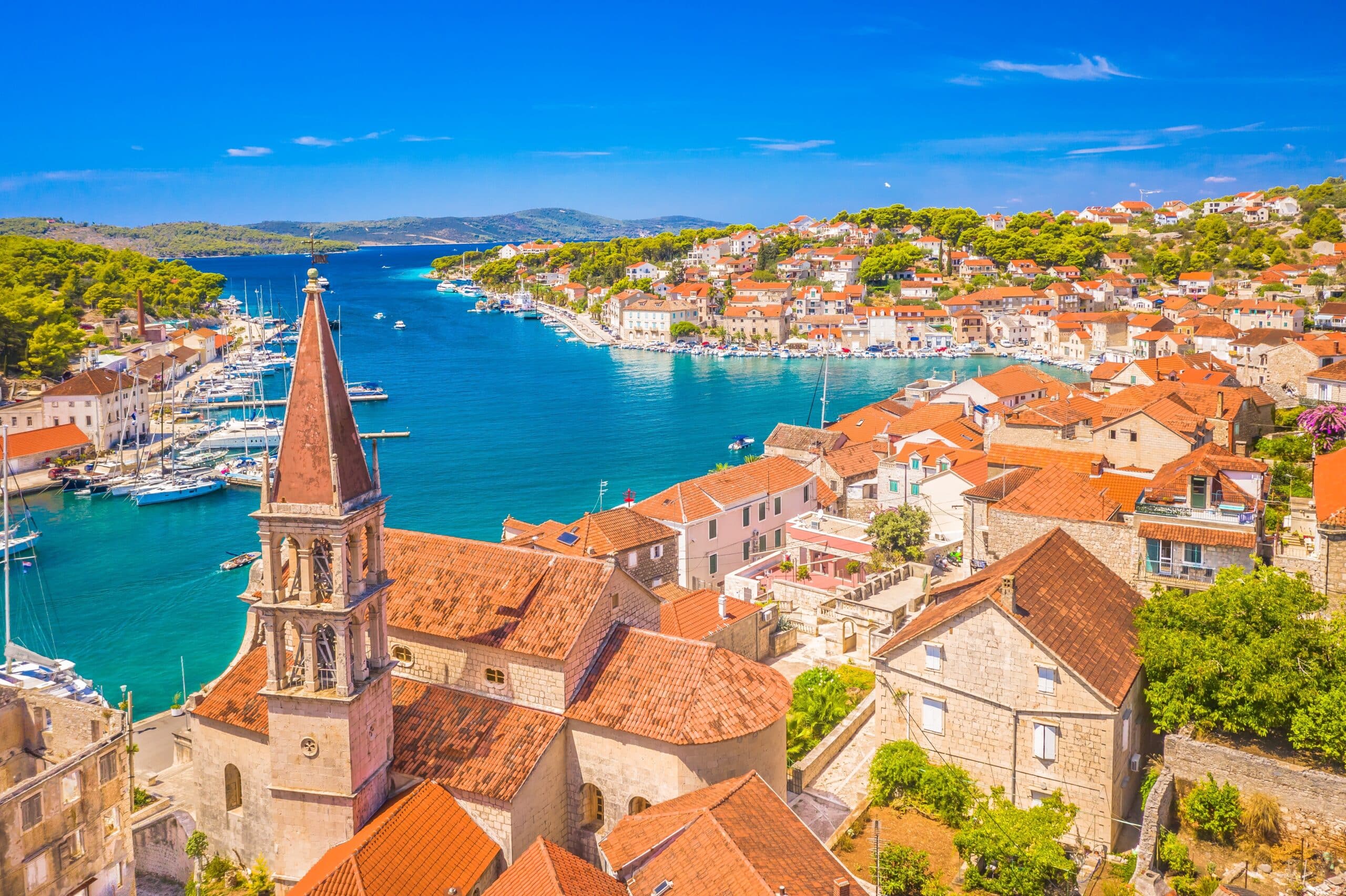
Croatia stretches along the eastern coast of the Adriatic Sea, where rugged mountains meet sparkling turquoise water and more than a thousand islands scatter across the horizon. For travelers, the country offers an extraordinary blend of medieval cities, dramatic landscapes, and a relaxed Mediterranean lifestyle.
The Croatian coastline is one of Europe’s most striking natural settings. Limestone cliffs plunge into clear blue bays, pine forests reach down to quiet beaches, and historic stone towns rise above ancient harbors. Inland, the scenery shifts to waterfalls, lakes, vineyards, and rolling countryside.
Croatia’s long history has left its mark in every corner. Roman emperors built palaces here, Venetian merchants shaped coastal towns, and medieval kingdoms left behind castles, churches, and walled cities that still define the landscape today.
The Adriatic islands add another layer of charm. Each island has its own rhythm — from lively harbors filled with sailing boats to peaceful villages surrounded by olive groves and lavender fields.
Food is another highlight for visitors. Along the coast, seafood dominates menus: grilled fish, octopus salad, and fresh shellfish served with local olive oil and crisp white wine. Inland regions offer hearty dishes influenced by Central European traditions.
Perhaps Croatia’s greatest appeal lies in its balance. Historic cities bustle with life, yet quiet coves and national parks remain wonderfully unspoiled.
Whether wandering through ancient streets, sailing between islands, or watching the sunset over the Adriatic, Croatia invites travelers to slow down and enjoy one of Europe’s most beautiful and welcoming destinations.
30. Dubrovnik — The Pearl of the Adriatic
Few cities in Europe leave as strong a first impression as Dubrovnik. Rising above the Adriatic Sea with massive stone walls and terracotta rooftops, the city looks almost like a perfectly preserved medieval dream. For centuries Dubrovnik stood as a proud maritime republic, and its historic beauty remains remarkably intact.
Entering through the ancient gates, visitors step onto Stradun, the polished limestone main street that runs through the heart of the Old Town. The street gleams under the Mediterranean sun, lined with elegant stone buildings, small cafés, and historic churches.
Dubrovnik’s greatest treasure is its city walls. Walking the full circuit reveals breathtaking views of the Adriatic on one side and the maze of old rooftops on the other. Towers, fortresses, and hidden stairways remind visitors that these walls once protected a powerful trading city.
Within the Old Town, history appears at every turn. Gothic and baroque buildings surround lively squares where musicians perform and locals gather for conversation. The Rector’s Palace and the Franciscan Monastery reveal stories of diplomacy, learning, and faith.
Beyond the walls, the Adriatic invites exploration. Small beaches lie beneath the cliffs, and boats glide toward nearby islands scattered across the horizon.
As evening falls, the golden stone of Dubrovnik glows softly under lantern light. The streets fill with laughter and conversation while the sea quietly laps against the ancient harbor.
Dubrovnik feels timeless — a place where history, beauty, and the Adriatic Sea come together in unforgettable harmony.
29. Split — Life Inside a Roman Palace
Split is unlike any other city in Europe. At its heart stands a vast Roman palace built nearly two thousand years ago by Emperor Diocletian. Yet this ancient structure is not a silent ruin — it forms the living center of a vibrant modern city.
The palace walls enclose a maze of stone streets, courtyards, and narrow alleys where cafés, homes, and shops now occupy the spaces once used by Roman soldiers and servants. Wandering through these passageways feels like stepping through layers of history.
The central square of the palace, known as the Peristyle, remains one of Split’s most impressive sights. Towering columns frame the open space while the cathedral’s bell tower rises above the ancient walls.
Just beyond the palace gates, Split opens toward the Adriatic Sea. The Riva promenade stretches along the waterfront, shaded by palm trees and filled with lively cafés. Locals gather here for coffee and conversation while watching boats glide across the harbor.
A short climb up nearby Marjan Hill rewards visitors with sweeping views of the city, the sea, and distant islands scattered along the horizon.
Split also serves as a gateway to Croatia’s island world. Ferries depart regularly toward destinations such as Hvar and Brač, where quiet beaches and historic villages await.
Despite its popularity, Split remains deeply authentic. The rhythms of daily life unfold within the same ancient walls that have sheltered the city for centuries.
28. Zagreb — Croatia’s Cultural Heart
Zagreb offers a different side of Croatia — elegant, artistic, and full of quiet charm. Set inland among green hills, the country’s capital combines Austro-Hungarian architecture with a lively café culture and creative spirit.
The historic Upper Town forms the city’s oldest district. Cobblestone streets wind past colorful rooftops and centuries-old buildings, leading to St. Mark’s Square where the church’s distinctive tiled roof displays the coats of arms of Croatia and Zagreb.
From here, narrow lanes reveal hidden courtyards, small museums, and charming viewpoints overlooking the city below.
The Lower Town contrasts with wide boulevards, graceful parks, and grand buildings dating from the 19th century. A series of green squares known as the “Green Horseshoe” creates a peaceful ring of gardens where locals stroll beneath tall trees.
Zagreb’s café culture defines everyday life. Outdoor terraces fill with conversation from morning until late evening, as residents gather over espresso, pastries, and glasses of wine.
Markets also play an important role in the city’s rhythm. The lively Dolac Market bursts with fresh fruit, vegetables, cheeses, and traditional Croatian delicacies.
Zagreb may not sit on the coast, but it reveals another important dimension of Croatia — a creative and welcoming capital where history, culture, and relaxed urban life blend effortlessly.
27. Rijeka — A Port of Culture and Character
Rijeka sits at the northern edge of the Adriatic where the sea curves into Kvarner Bay. Long known as a port city, Rijeka today welcomes travelers with an intriguing blend of grand architecture, creative energy, and sweeping coastal views.
The city’s main street, Korzo, forms the lively heart of Rijeka. Elegant Austro-Hungarian buildings line the pedestrian boulevard, where cafés spill onto the pavement and locals gather throughout the day. Walking here offers an immediate sense of the city’s vibrant everyday life.
Above the center rises Trsat Hill, crowned by the historic Trsat Castle. Climbing the stone steps that lead to the fortress rewards visitors with magnificent views across the harbor, the rooftops of Rijeka, and the islands scattered across the horizon. The castle itself feels peaceful and romantic, surrounded by gardens and quiet courtyards.
Rijeka’s cultural scene is equally engaging. Historic theaters, galleries, and small museums reveal the city’s creative spirit, while street art and music festivals add modern color to its historic streets.
The harbor remains central to the city’s identity. Fishing boats and ferries glide across the bay while sea breezes carry the scent of salt through the streets.
Nearby beaches and coastal villages provide easy escapes into nature, where clear water and rocky coves invite refreshing swims during the warm summer months.
Rijeka may not be Croatia’s most famous destination, but its authenticity, cultural vitality, and dramatic setting make it an appealing place to explore.
26. Zadar — Where History Meets the Sea
Zadar is a city where history unfolds beside the Adriatic in surprising and beautiful ways. With Roman ruins, medieval churches, and innovative modern attractions, it offers travelers a unique blend of past and present.
The historic peninsula forms the heart of Zadar. Ancient stone streets lead past Roman columns and quiet squares before opening onto lively cafés and small shops. The Roman Forum still stands as a reminder of the city’s importance in antiquity.
Among the many churches, the circular Church of St. Donatus stands out as one of Croatia’s most recognizable landmarks. Its simple stone form reflects early medieval architecture and centuries of religious tradition.
Yet Zadar is also known for two remarkable modern installations along the waterfront. The Sea Organ uses the movement of waves to create haunting musical tones through pipes hidden beneath marble steps. Nearby, the Sun Salutation captures solar energy during the day and glows with colorful light after sunset.
The seaside promenade is one of the most magical places in the city. As the sun dips below the Adriatic horizon, the sky fills with shades of orange, purple, and gold.
Alfred Hitchcock once famously described Zadar’s sunset as the most beautiful in the world. Sitting by the water as the waves echo through the Sea Organ, it is easy to understand why.
25. Pula — Rome on the Adriatic
Pula offers travelers one of the most remarkable reminders of the Roman Empire outside Italy. Located on the southern tip of the Istrian Peninsula, the city is famous for its magnificent Roman amphitheater, one of the best-preserved arenas in the world.
The massive stone structure rises dramatically above the city, its arches glowing warmly in the Adriatic sunlight. Walking through the arena’s ancient corridors brings history vividly to life, recalling the days when gladiators and spectators filled the amphitheater.
Beyond this iconic monument, Pula’s streets reveal layers of history. Roman gates, temples, and arches appear throughout the old town, blending naturally with later Venetian and Austro-Hungarian architecture.
One of the most elegant squares in the city holds the Temple of Augustus, a graceful Roman building dedicated to the emperor. Nearby cafés offer perfect places to sit and admire the ancient stonework.
Pula’s coastal setting adds another dimension to the experience. Rocky coves, pine forests, and turquoise waters surround the city, providing countless opportunities to relax by the sea.
Restaurants highlight the culinary traditions of Istria, serving fresh seafood, truffles, olive oil, and local wines that reflect the rich agricultural landscape of the region.
In the evening, the amphitheater often becomes a dramatic venue for concerts and festivals, its illuminated arches creating an unforgettable setting.
Pula combines Roman grandeur with the relaxed atmosphere of the Adriatic coast — a destination where history and seaside beauty meet effortlessly.
24. Šibenik — Stone Streets and Seaside Fortresses
Šibenik rises from the Adriatic coast in a cascade of pale stone buildings and steep medieval streets. Less crowded than some of Croatia’s famous coastal cities, it offers visitors an authentic atmosphere where history and everyday life unfold side by side.
The city’s greatest treasure is the Cathedral of St. James, a UNESCO-listed masterpiece built entirely from stone. Its sculpted façade and elegant dome reflect the artistry of Renaissance builders who spent more than a century completing the structure. Along the outer walls, a series of carved faces gaze silently toward the sea, each one believed to represent a citizen of medieval Šibenik.
Climbing through the narrow streets reveals spectacular views over the harbor and nearby islands. The old town feels like a maze of hidden stairways, quiet squares, and shaded courtyards where cafés invite travelers to pause and enjoy the surroundings.
Above the town stand several impressive fortresses that once protected Šibenik from maritime attacks. St. Michael’s Fortress now serves as an open-air concert venue, while St. Nicholas Fortress guards the sea entrance to the harbor.
The nearby Krka River brings another natural wonder to the region. Just a short distance inland lies Krka National Park, where waterfalls cascade through lush greenery and wooden walkways lead visitors along sparkling streams.
Šibenik blends historic beauty with a relaxed coastal spirit. Its winding streets, ancient stone buildings, and Adriatic views create a destination that feels both peaceful and deeply rooted in history.
23. Trogir — A Medieval Island Town
Trogir feels like a perfectly preserved piece of history floating between land and sea. The town occupies a small island connected to the mainland and nearby Čiovo Island by bridges, creating a compact historic center filled with centuries of architectural beauty.
Walking through Trogir’s narrow stone streets reveals an extraordinary concentration of historic buildings. Romanesque churches, Venetian palaces, and medieval houses stand side by side, their worn stones reflecting the town’s long and fascinating past.
At the heart of Trogir stands the Cathedral of St. Lawrence, whose richly carved portal is considered one of the finest examples of Romanesque sculpture in the Adriatic region. Inside, the cathedral’s peaceful atmosphere contrasts with the lively streets outside.
The waterfront promenade offers one of Trogir’s most enjoyable experiences. Palm trees line the harbor where sailboats and yachts gently sway in the marina. Restaurants and cafés overlook the water, creating a perfect setting for relaxed meals and sunset views.
A short walk leads to Kamerlengo Fortress, a sturdy medieval tower that once guarded the harbor. Climbing its walls reveals sweeping views across the rooftops of the old town and the shimmering Adriatic beyond.
Despite its small size, Trogir offers a wonderfully rich atmosphere. Its maze of streets, seaside charm, and historic architecture create a destination that feels timeless and intimate.
22. Hvar — Sunshine and Island Beauty
The island town of Hvar is one of Croatia’s most famous destinations, celebrated for its sunny climate, lavender fields, and lively Mediterranean atmosphere. Located among the central Dalmatian islands, Hvar combines natural beauty with historic charm.
The town itself unfolds around a picturesque harbor filled with sailing boats and elegant yachts. White stone buildings climb gently up the hillside, creating a bright and welcoming waterfront.
Dominating the skyline above the town is the Spanish Fortress, which offers one of the most spectacular views in Croatia. From its walls, visitors can see the terracotta rooftops of Hvar Town, the deep blue Adriatic, and the scattered Pakleni Islands just offshore.
The central square, one of the largest in Dalmatia, forms the lively heart of the town. Here stands the Cathedral of St. Stephen, surrounded by historic buildings and outdoor cafés where travelers and locals gather throughout the day.
Beyond the town, the island reveals peaceful landscapes of vineyards, olive groves, and fragrant lavender fields. Hidden coves and crystal-clear beaches invite swimming and relaxation.
As evening arrives, Hvar transforms once again. The harbor glows under soft lights while restaurants and terraces fill with music, conversation, and the scent of Mediterranean cuisine.
Hvar offers travelers the perfect blend of island scenery, historic beauty, and vibrant Adriatic life.
21. Korčula — The Little Dubrovnik
Korčula is often called “Little Dubrovnik,” and it is easy to understand why. Surrounded by medieval walls and crowned with red rooftops, this island town rises beautifully from the Adriatic Sea. Yet Korčula has a personality entirely its own — quieter, more intimate, and filled with island charm.
The old town sits on a small peninsula, its narrow streets arranged in a clever pattern that resembles a fishbone. This design, developed centuries ago, allowed sea breezes to cool the town while protecting it from strong winds.
Walking through Korčula feels like entering a living medieval village. Stone houses, tiny squares, and graceful palaces reveal the influence of Venetian rule that shaped the town for centuries.
At the highest point stands the Cathedral of St. Mark, an elegant Gothic-Renaissance building carved from pale local stone. From its steps, the view stretches across the rooftops and out toward the sparkling sea.
Korčula is also closely associated with the legendary explorer Marco Polo, who is believed by some historians to have been born here. His supposed birthplace now attracts curious visitors wandering the narrow lanes.
Beyond the town walls, the island reveals a peaceful landscape of vineyards, olive groves, and quiet coves. Local wines and fresh seafood are central to the island’s cuisine, often enjoyed in small family-run restaurants overlooking the water.
As evening falls, Korčula’s stone streets glow under warm lantern light. The calm harbor reflects the town’s walls, creating a magical atmosphere that captures the spirit of island life on the Adriatic.
20. Rovinj — A Romantic Adriatic Gem
Rovinj is one of the most picturesque towns on Croatia’s coast. Rising from a small peninsula in the Istrian region, the town forms a colorful cluster of buildings that appear to tumble gently toward the sea.
From a distance, Rovinj’s skyline is unmistakable. The tall bell tower of St. Euphemia’s Church dominates the hilltop, guiding travelers toward the historic center.
The old town is a maze of steep cobbled streets and narrow passageways where brightly painted houses stand close together. Many of the buildings date back centuries, reflecting the long influence of Venetian culture in the region.
Climbing toward the church at the top of the hill rewards visitors with sweeping views of the Adriatic and the many small islands scattered along the coast.
Rovinj’s harbor is lively and charming. Fishing boats return with their daily catch while waterfront cafés and restaurants offer perfect places to sit and watch the rhythm of the town.
Just beyond the center, forest parks and rocky beaches provide peaceful places to swim and relax. The nearby Golden Cape Forest Park offers shaded trails and quiet coves surrounded by pine trees.
Rovinj is also known for its artistic spirit. Small galleries and studios line the streets, reflecting a creative energy that adds color to the historic surroundings.
With its romantic atmosphere, vibrant colors, and seaside beauty, Rovinj captures the essence of the Adriatic coast.
19. Makarska — Where Mountains Meet the Sea
Makarska lies along one of Croatia’s most dramatic coastlines, where the towering peaks of the Biokovo Mountains rise sharply behind a ribbon of beaches and turquoise water.
The town’s setting is breathtaking. From the harbor promenade, visitors can see rugged limestone cliffs climbing steeply into the sky while the Adriatic stretches endlessly toward the horizon.
Makarska’s old town centers around Kačić Square, a pleasant gathering place lined with cafés and historic buildings. The nearby church and narrow streets reveal traces of the town’s long coastal history.
The waterfront promenade forms the heart of daily life. Palm trees sway gently along the harbor while restaurants and cafés serve fresh seafood and local specialties.
Makarska is especially known for its beaches. Long stretches of smooth pebbles and clear water attract visitors seeking sunshine and swimming. Pine trees along the shore provide natural shade during warm summer days.
For travelers seeking adventure, the Biokovo Mountains offer spectacular hiking opportunities. A scenic road climbs high above the coast, revealing breathtaking views of the Adriatic and the nearby islands.
As evening arrives, Makarska becomes lively and festive. Music drifts from seaside bars while the sunset colors the sky above the mountains and sea.
Few places in Croatia combine natural drama and relaxed seaside charm as beautifully as Makarska.
18. Osijek — Baroque Charm on the Drava River
Osijek offers travelers a different perspective on Croatia, far from the Adriatic coast. Located in the fertile plains of eastern Slavonia along the Drava River, the city blends elegant architecture, peaceful riverside landscapes, and a welcoming atmosphere.
The historic heart of Osijek is the Tvrđa, a beautifully preserved baroque fortress district dating back to the 18th century. Walking through its cobbled streets feels like stepping into another era. Grand buildings with ornate façades surround quiet squares where cafés and galleries now fill spaces once used by soldiers and merchants.
The main square of the Tvrđa is especially atmospheric. Churches, historic university buildings, and old military structures create a sense of timeless elegance.
The Drava River shapes much of Osijek’s character. A long riverside promenade stretches along the water, inviting visitors to stroll or cycle while enjoying views of bridges, boats, and the surrounding countryside. In the evening, locals gather here to relax as the sun sets over the wide river.
Osijek also offers a lively café culture and a strong connection to local traditions. Markets overflow with regional produce, and restaurants serve hearty Slavonian cuisine influenced by Central European flavors.
Nearby natural areas add another dimension to the experience. Wetlands and nature parks along the Danube and Drava rivers provide excellent opportunities for birdwatching and exploring peaceful landscapes.
Osijek may be quieter than Croatia’s coastal cities, but its historic beauty and relaxed charm make it a rewarding destination.
17. Šolta — An Island of Quiet Traditions
Šolta lies just across the water from Split, yet it feels wonderfully removed from the busy pace of the mainland. This small Adriatic island offers travelers a peaceful retreat shaped by centuries of agriculture, fishing, and simple Mediterranean life.
The island’s villages are scattered among olive groves, vineyards, and fields of aromatic herbs. Stone houses with red-tiled roofs cluster around small squares where locals still gather to share conversation and coffee.
One of the most charming villages is Maslinica, located on the island’s western coast. Its harbor is framed by a picturesque 18th-century castle and a group of tiny islands just offshore. The calm water and surrounding scenery create a tranquil setting that feels far from crowded tourist routes.
Šolta is known for its traditional products, especially olive oil, honey, and local wines. Small family farms and taverns invite visitors to taste these flavors while enjoying views of the surrounding countryside.
The island’s coastline reveals hidden coves and clear turquoise water ideal for swimming. Many beaches are quiet and unspoiled, accessible by small paths that wind through pine forests.
Life on Šolta moves at a gentle pace. Fishing boats drift in the harbors, cicadas sing in the warm afternoon air, and evenings bring peaceful sunsets over the Adriatic.
For travelers seeking authenticity and calm island beauty, Šolta offers a refreshing escape.
16. Krk — The Golden Island
Krk is one of the largest islands in the Adriatic and one of Croatia’s most diverse destinations. Connected to the mainland by a bridge, the island combines historic towns, scenic coastlines, and rich cultural traditions.
The town of Krk, located on the island’s southwestern coast, forms a charming historic center surrounded by medieval walls. Walking through its narrow streets reveals stone houses, hidden courtyards, and lively squares where cafés invite visitors to relax.
At the heart of the town stands Krk Cathedral, an impressive complex that reflects centuries of religious and architectural history. Nearby, a medieval castle overlooks the harbor where fishing boats and sailing yachts gently sway in the water.
Beyond the town, the island reveals an impressive variety of landscapes. Vineyards stretch across sunlit hills, rocky cliffs rise above the sea, and quiet beaches appear in hidden coves along the coastline.
One of Krk’s most celebrated traditions is its local white wine, Žlahtina, produced in the fertile Vrbnik valley. The village of Vrbnik itself sits dramatically atop a cliff overlooking the Adriatic, offering spectacular views and winding medieval streets.
Outdoor enthusiasts can explore hiking trails, cycling routes, and crystal-clear swimming spots scattered across the island.
Krk’s blend of natural beauty, historic villages, and island hospitality makes it one of the Adriatic’s most inviting destinations.
15. Karlovac — The City of Four Rivers
Karlovac sits in the heart of Croatia where four rivers meet — the Kupa, Korana, Mrežnica, and Dobra. Surrounded by water and greenery, the city offers a refreshing blend of natural beauty and quiet historical charm.
Founded in the 16th century as a defensive fortress against Ottoman expansion, Karlovac was carefully designed in the shape of a six-pointed star. Although the original walls have mostly disappeared, the city’s unique layout still shapes its streets and parks today.
At the center lies a peaceful network of tree-lined squares and gardens where locals stroll, cycle, and gather in cafés. The relaxed pace of life makes Karlovac feel welcoming and unhurried.
The nearby rivers are the city’s true treasures. Their clear waters wind through forests and meadows, creating perfect places for swimming, kayaking, or simply enjoying the cool shade of riverside trees during warm summer days.
Karlovac also offers small museums and historic buildings that reflect its military past and its development as a cultural crossroads between inland Croatia and the Adriatic coast.
Just outside the city, nature becomes even more dramatic. Waterfalls, caves, and lush landscapes provide opportunities for outdoor exploration.
For travelers seeking calm scenery and authentic Croatian life away from the busiest tourist routes, Karlovac offers a peaceful and refreshing stop.
14. Plitvice Lakes National Park — Croatia’s Natural Wonder
Few landscapes in Europe are as breathtaking as Plitvice Lakes National Park. Located in Croatia’s mountainous interior, this UNESCO World Heritage Site is famous for its series of turquoise lakes connected by cascading waterfalls.
The park contains sixteen main lakes arranged in terraces, each flowing into the next through countless streams and waterfalls. Wooden walkways wind across the water, allowing visitors to walk directly above the shimmering surface while listening to the gentle sound of flowing water.
The colors of the lakes are remarkable. Depending on sunlight and minerals in the water, the shades shift between emerald green, deep blue, and brilliant turquoise.
Dense forests surround the lakes, creating a peaceful natural setting where wildlife thrives. Deer, birds, and even rare species such as bears and wolves inhabit the surrounding mountains, though they are rarely seen by visitors.
Walking trails lead through the park’s changing landscapes, revealing waterfalls of every size — from delicate cascades to dramatic plunges that echo through the forest.
Each season brings a different atmosphere. Spring fills the waterfalls with powerful rushing water, summer brings vibrant greenery, autumn paints the forests in gold and red, and winter sometimes transforms the park into a frozen wonderland of ice and snow.
Plitvice Lakes is not simply a destination but an experience — a place where nature reveals its beauty in unforgettable ways.
13. Vis — A Hidden Adriatic Treasure
For many years the island of Vis remained closed to foreign visitors due to its use as a military base. Today, that long isolation has preserved a landscape and culture that feel wonderfully authentic.
Located farther from the mainland than many Croatian islands, Vis offers a peaceful atmosphere and a slower rhythm of life. The island’s two main towns, Vis Town and Komiža, both sit along beautiful bays framed by mountains and vineyards.
Vis Town welcomes travelers with a relaxed harbor lined with palm trees, cafés, and old stone houses. Fishing boats gently rock in the water while the scent of grilled seafood drifts from waterfront restaurants.
Across the island, the village of Komiža feels even more traditional. Nestled beneath steep cliffs, its narrow streets and small harbor reflect centuries of fishing heritage.
One of the island’s most spectacular natural attractions lies just offshore — the famous Blue Cave on the nearby island of Biševo. When sunlight enters the cave through an underwater opening, the entire interior glows with an otherworldly blue light.
Vis itself offers quiet beaches, vineyards producing excellent local wine, and scenic roads winding through olive groves and lavender fields.
The island’s peaceful landscapes, clear waters, and authentic character create a destination that feels refreshingly untouched.
12. Opatija — The Adriatic’s Elegant Riviera
Opatija sits gracefully along the northern Adriatic coast, where green hills meet the sea in a landscape of refined beauty. Known as one of Croatia’s earliest seaside resorts, the town developed during the 19th century when aristocrats from across Europe arrived to enjoy its mild climate and elegant surroundings.
Grand villas and historic hotels still line the waterfront, reflecting the town’s glamorous past. Their pastel façades and decorative balconies overlook gardens filled with palms, camellias, and fragrant flowers.
One of Opatija’s most beloved features is the Lungomare, a scenic seaside promenade stretching for kilometers along the coastline. Walking this path reveals stunning views of the Adriatic, small coves, and quiet beaches hidden between rocky cliffs.
The town itself invites relaxed exploration. Charming cafés, small boutiques, and leafy parks create a refined yet welcoming atmosphere.
Near the center stands the famous statue of the Maiden with the Seagull, an elegant sculpture gazing out toward the open sea. It has become one of the town’s most recognizable symbols.
Opatija’s culinary scene highlights fresh seafood and Mediterranean flavors, often enjoyed on terraces overlooking the water.
The surrounding region also offers beautiful hiking trails leading into the nearby Učka Mountains, where sweeping panoramas reveal the coastline and islands beyond.
With its graceful architecture, romantic promenade, and timeless seaside charm, Opatija remains one of Croatia’s most elegant coastal destinations.
11. Varaždin — A Baroque Jewel
Varaždin is one of Croatia’s most beautiful historic towns, celebrated for its elegant baroque architecture, colorful squares, and relaxed cultural atmosphere. Located in northern Croatia near the Slovenian border, the town offers visitors a refined blend of history, art, and tradition.
The historic center feels wonderfully preserved. Pastel-colored palaces, ornate churches, and quiet courtyards create a setting that reflects the town’s role as Croatia’s capital in the 18th century.
At the heart of Varaždin lies King Tomislav Square, surrounded by grand baroque buildings and lively cafés. Nearby stands the impressive Varaždin Cathedral, whose tall tower rises above the town’s rooftops.
One of the most striking landmarks is Varaždin Castle, a white fortress surrounded by peaceful parkland. Once the residence of Croatian nobility, it now houses a museum exploring the region’s history.
Varaždin is also known for its gardens and flower displays, which add vibrant color to the historic streets during warmer months.
Cultural life thrives here as well. Music festivals, art exhibitions, and traditional celebrations bring energy to the town throughout the year.
Walking through Varaždin feels both elegant and intimate. Its charming streets, architectural beauty, and artistic spirit create a destination that rewards travelers who venture beyond Croatia’s famous coast.
10. Brač — The Island of Golden Stone and Sea
Brač is one of the largest and most beloved islands in the Adriatic. Known for its brilliant white limestone, beautiful beaches, and traditional villages, the island offers a perfect balance of nature and culture.
Its most famous landmark is Zlatni Rat, often called the Golden Horn. This remarkable beach stretches into the sea like a narrow triangle of pale pebbles, constantly reshaped by winds and currents. Surrounded by clear turquoise water, it is one of Croatia’s most photographed coastal landscapes.
Beyond the beaches, Brač reveals a rich island interior. Olive groves, vineyards, and stone villages dot the hillsides, while narrow roads wind through landscapes scented with pine and Mediterranean herbs.
The village of Pučišća is particularly memorable, with elegant white houses built from the same limestone used in famous buildings around the world. The island’s long tradition of stone carving remains an important local craft.
Brač also offers countless opportunities for outdoor adventure. Hiking trails lead into the island’s hills, while cycling routes and scenic viewpoints reveal breathtaking Adriatic panoramas.
Local cuisine highlights fresh seafood, olive oil, and island wines, often enjoyed in small family-run taverns overlooking the sea.
With its natural beauty, historic villages, and crystal-clear waters, Brač captures the essence of the Croatian island experience.
9. Pag — Moonlike Landscapes and Island Traditions
The island of Pag is one of Croatia’s most unusual landscapes. Winds sweeping across the Adriatic have shaped the island into a stark yet striking terrain of pale rock, low vegetation, and wide open horizons. In places, the scenery looks almost lunar, with rugged hills and stone fields stretching toward the sea.
Yet Pag’s dramatic appearance hides a rich cultural heritage. For centuries, islanders have adapted to this challenging environment, developing traditions that remain central to local life today.
The town of Pag itself sits beside a peaceful bay, its streets laid out in an orderly pattern designed during the Renaissance. Walking through the old town reveals elegant stone houses, quiet squares, and small churches reflecting the island’s long history.
One of Pag’s most celebrated traditions is lace-making. Delicate handmade Pag lace has been crafted by generations of women and is now recognized as part of Croatia’s cultural heritage.
The island is also famous for Pag cheese, produced from sheep that graze on aromatic herbs growing among the island’s rocky terrain. The result is a distinctive flavor cherished throughout the region.
Along the coast, hidden beaches appear between rocky cliffs where the water is exceptionally clear. Some areas offer lively beach scenes, while others remain wonderfully quiet.
Pag’s landscapes may appear harsh at first glance, but the island reveals a beauty that feels raw, authentic, and unforgettable.
8. Samobor — A Charming Town of Hills and Cafés
Just west of the capital lies the picturesque town of Samobor, one of Croatia’s most beloved weekend destinations. Surrounded by green hills and forests, the town offers a relaxed atmosphere filled with historic charm and culinary traditions.
Samobor’s main square forms the heart of the town. Colorful houses line the square, their façades reflecting centuries of Central European architectural influence. Cafés spill onto terraces where visitors gather to enjoy the town’s famously relaxed pace.
A short walk from the center leads to the ruins of Samobor Castle, perched on a wooded hillside above the town. Though partially in ruins, the medieval fortress offers beautiful views across the surrounding countryside.
Samobor is particularly famous for its desserts. The town’s signature treat, the creamy Samoborska kremšnita, is a delicate custard cake topped with crisp pastry and powdered sugar. Enjoying a slice in one of the town’s traditional cafés is almost a required ritual for visitors.
The surrounding hills provide wonderful opportunities for hiking and nature walks. Forest paths lead through peaceful landscapes where streams and small waterfalls appear among the trees.
Festivals and cultural events also play an important role in Samobor’s identity. Music, food, and colorful celebrations bring life to the streets throughout the year.
With its welcoming cafés, historic streets, and scenic surroundings, Samobor offers a delightful escape into Croatia’s quieter countryside.
7. Koprivnica — Traditions of Northern Croatia
Koprivnica lies in northern Croatia near the Hungarian border, a town shaped by regional traditions, agricultural heritage, and a friendly local spirit.
The historic center feels calm and inviting. A central square lined with trees and colorful buildings forms the heart of daily life, where markets and festivals bring the community together.
Many of Koprivnica’s buildings reflect the town’s past as a fortified settlement within the historic Military Frontier. Though most defensive structures have disappeared, traces of this history remain in the layout of streets and squares.
Koprivnica is known for preserving traditional crafts and regional culture. Museums and local events celebrate folk music, embroidery, and culinary customs that reflect the heritage of northern Croatia.
Surrounding countryside adds to the town’s charm. Gentle farmland, vineyards, and small villages stretch across the region, creating peaceful landscapes perfect for cycling and rural exploration.
Visitors can also enjoy local cuisine influenced by Central European flavors, with hearty dishes prepared from fresh regional ingredients.
Koprivnica may be less known to international travelers, but its authenticity and connection to Croatian traditions make it an interesting and rewarding destination.
6. Sinj — A Town of Tradition and Pride
Sinj sits inland from the Dalmatian coast, surrounded by wide valleys and rugged mountains. The town is deeply connected to Croatian history and tradition, making it a fascinating destination for travelers interested in local culture.
Sinj is most famous for the Sinjska Alka, a centuries-old equestrian tournament held each summer. During this event, riders dressed in traditional costumes gallop through the town’s main street attempting to strike a small metal ring with a lance. The competition commemorates a historic victory over Ottoman forces in the 18th century and remains one of Croatia’s most cherished cultural celebrations.
Beyond the famous tournament, Sinj offers a peaceful historic center with stone houses, churches, and welcoming cafés. The Sanctuary of Our Lady of Sinj stands as the town’s most important religious site, attracting pilgrims from across the country.
The surrounding landscape is equally appealing. Wide green plains stretch beneath rugged mountains, creating scenic views and opportunities for hiking or cycling.
Traditional Dalmatian cuisine plays an important role in local life, often featuring slow-cooked meats, fresh vegetables, and regional wines enjoyed in family-run taverns.
Sinj combines cultural pride, historic tradition, and beautiful countryside in a way that reveals a deeper side of Croatia beyond the coast.
5. Krapina — Hills, Castles, and Ancient Discoveries
Krapina lies among the gentle green hills of northern Croatia, a region known for vineyards, medieval castles, and peaceful countryside landscapes. The town is small but historically significant, offering visitors a quiet and fascinating glimpse into both ancient and modern Croatian heritage.
Krapina is best known as one of the world’s most important prehistoric archaeological sites. In the late 19th century, scientists discovered numerous Neanderthal fossils in nearby caves, revealing that early humans lived in this area tens of thousands of years ago. Today, the modern Krapina Neanderthal Museum brings this distant past to life with immersive exhibits and interactive displays.
Beyond its prehistoric fame, Krapina itself is a charming town with colorful houses and a relaxed atmosphere. Walking through the center reveals historic churches, quiet squares, and welcoming cafés where locals gather throughout the day.
The surrounding Zagorje region is especially beautiful. Rolling hills dotted with vineyards and castles stretch across the landscape, creating scenery that feels peaceful and timeless. Many travelers explore the area by car or bicycle, stopping at small villages and countryside restaurants.
Traditional cuisine here reflects hearty rural cooking, often paired with local wines produced in nearby vineyards.
Krapina offers something unique — a place where ancient human history meets the tranquil beauty of Croatia’s northern countryside.
4. Mljet — Croatia’s Green Island
Mljet is often described as one of the most beautiful islands in the Adriatic. Covered largely by dense forests and protected landscapes, the island feels wonderfully untouched and peaceful.
Much of Mljet is part of Mljet National Park, a stunning natural area famous for its two saltwater lakes. These lakes shimmer in shades of deep blue and green, surrounded by pine forests that reach down to the water’s edge.
At the center of the larger lake lies a tiny island crowned by a Benedictine monastery. Reaching the monastery by small boat is one of Mljet’s most memorable experiences, offering views of quiet forests reflected in the calm water.
Cycling and walking paths circle the lakes, allowing visitors to explore the island at a relaxed pace while enjoying fresh sea air and peaceful scenery.
Beyond the national park, Mljet reveals small fishing villages, olive groves, and hidden beaches along its rugged coastline. The island’s slower rhythm invites travelers to disconnect from busy routines and enjoy nature.
Legends also surround Mljet. According to ancient stories, the Greek hero Odysseus was shipwrecked here and stayed for years under the spell of a sea nymph.
Whether myth or reality, Mljet certainly feels magical — a place of forests, quiet waters, and timeless island beauty.
3. Cavtat — A Peaceful Harbor Town
Just south of Dubrovnik lies Cavtat, a charming coastal town that offers much of the region’s beauty but with a quieter and more relaxed atmosphere.
Cavtat curves around a sheltered harbor where fishing boats and sailboats gently rock in the clear Adriatic water. Palm trees line the waterfront promenade, and cafés provide perfect places to sit and watch the slow rhythm of life by the sea.
The old town stretches along a small peninsula filled with stone houses, narrow streets, and hidden gardens. Walking paths circle the coastline, revealing peaceful coves and spectacular sea views.
One of Cavtat’s most notable landmarks is the Račić Mausoleum, located on a hill above the town. Designed by the famous Croatian sculptor Ivan Meštrović, the structure combines elegant architecture with symbolic carvings and offers beautiful views across the Adriatic.
Art and culture play an important role in Cavtat’s identity. Small museums and galleries reflect the town’s creative heritage.
Despite its calm atmosphere, Cavtat offers excellent restaurants serving fresh seafood, local wines, and Mediterranean dishes enjoyed beside the water.
For travelers seeking coastal beauty with a more tranquil pace, Cavtat provides a perfect Adriatic escape.
2. Vukovar — A City of Memory and Renewal
Vukovar stands along the banks of the Danube River in eastern Croatia, a city deeply connected to the country’s modern history. While it endured great hardship during the conflicts of the 1990s, Vukovar today represents resilience, remembrance, and renewal.
The Danube shapes much of the city’s character. Its wide waters flow past peaceful promenades where visitors can walk along the riverbanks and watch boats pass between Croatia and neighboring Serbia.
Historic buildings and churches reflect Vukovar’s long multicultural past, when Croats, Hungarians, Germans, and other communities lived together in this important river port.
One of the city’s most recognizable landmarks is the elegant Vukovar Water Tower, which survived the war and now stands as a symbol of endurance.
Today, museums and memorials help visitors understand the city’s history while honoring those who lived through difficult times.
Yet Vukovar is not only a place of remembrance. Markets, cafés, and festivals show a city looking forward while preserving its heritage.
The surrounding Slavonian countryside offers vineyards, farmland, and traditional villages that reflect the region’s deep agricultural roots.
Visiting Vukovar provides insight into Croatia’s recent past and the strength of a community rebuilding its future.
1. Cres — Wild Nature and Island Serenity
Cres is one of the Adriatic’s most rugged and unspoiled islands. Large and sparsely populated, it offers dramatic landscapes, quiet villages, and a powerful sense of nature.
The island’s main town, also called Cres, sits beside a small harbor lined with pastel-colored houses and narrow medieval streets. Life here feels calm and traditional, with fishermen preparing boats and locals chatting in shaded squares.
Much of Cres remains wild. Rocky hills, forests, and hidden bays dominate the landscape, while sheep graze across the island’s open pastures.
One of Cres’s most unusual natural features is Lake Vrana, a large freshwater lake hidden among the island’s hills. The lake provides drinking water for much of the island and is surrounded by protected natural areas.
Cres is also known for its wildlife, particularly the rare griffon vultures that nest along the island’s high cliffs. These magnificent birds can sometimes be seen soaring above the coastline.
Beaches on Cres are often secluded and pristine, reached by winding paths or small coastal roads.
For travelers seeking quiet beauty, wild landscapes, and authentic island life, Cres offers one of Croatia’s most rewarding escapes.