
Austria is a landlocked country in Central Europe defined by imperial heritage, alpine landscapes, and a deep-rooted cultural legacy. Bordered by Germany, Czech Republic, Slovakia, Hungary, Slovenia, Italy, Switzerland, and Liechtenstein, Austria occupies a strategic position at the crossroads of European history.
The Alps dominate much of the country, shaping both its geography and identity. Snow-covered peaks, alpine meadows, and pristine lakes create dramatic scenery that attracts visitors year-round. Yet Austria is equally celebrated for its refined urban centers, where baroque architecture, classical music, and café culture reflect centuries of imperial influence.
As the former heart of the Habsburg Empire, Austria’s cities preserve grand palaces, opera houses, and historic squares that speak to a powerful dynastic past. Vienna, Salzburg, and Innsbruck are not merely destinations but cultural symbols associated with composers, artists, and intellectual movements that shaped European thought.
The country’s cultural achievements extend beyond architecture and music. Austrian cuisine blends Central European flavors, featuring hearty dishes, pastries, and coffee traditions that remain central to daily life. Festivals, winter sports, and scenic rail journeys further enrich the travel experience.
Efficient transport links make it easy to move between cosmopolitan capitals and remote alpine villages within hours. This balance between natural grandeur and cultural sophistication defines Austria’s enduring appeal.
From imperial elegance to mountain adventure, Austria offers a multifaceted journey through history, landscape, and artistic excellence.
30. Vienna
Vienna, Austria’s capital, is synonymous with imperial grandeur and musical heritage. Once the center of the Habsburg Empire, the city remains a showcase of baroque palaces, grand boulevards, and world-renowned cultural institutions.
The Ringstrasse encircles the historic core, lined with monumental buildings such as the Vienna State Opera, Parliament, and City Hall. St. Stephen’s Cathedral rises prominently in the Old Town, its patterned tile roof a recognizable symbol of the city.
Schönbrunn Palace reflects the opulence of imperial life, with expansive gardens and ornate interiors that illustrate dynastic power. The Hofburg complex further reveals Austria’s political and cultural evolution, now housing museums and official residences.
Vienna is inseparable from music. Composers such as Mozart, Beethoven, and Strauss lived and worked here, shaping the city’s artistic legacy. Concert halls and opera performances remain integral to its identity.
Café culture defines daily life. Historic coffeehouses serve pastries such as Sachertorte while offering spaces for conversation and reflection. Museums, including the Belvedere and MuseumsQuartier, showcase art spanning centuries.
Despite its historic splendor, Vienna functions as a modern European capital with efficient infrastructure and green spaces along the Danube River.
Vienna harmoniously blends imperial architecture, artistic excellence, and contemporary vibrancy, establishing itself as one of Europe’s most culturally significant capitals.
29. Salzburg
Salzburg lies near Austria’s border with Germany, framed by alpine peaks and divided by the Salzach River. Best known as the birthplace of Wolfgang Amadeus Mozart, the city radiates baroque elegance and musical heritage.
The Old Town, recognized as a UNESCO World Heritage site, features narrow streets, decorative façades, and church domes that define its skyline. Hohensalzburg Fortress towers above the city, offering panoramic views over rooftops and surrounding mountains.
Mozart’s birthplace on Getreidegasse attracts visitors eager to explore the composer’s early life. Music remains central to Salzburg’s identity, particularly during the annual Salzburg Festival, which celebrates opera and classical performance.
The Mirabell Gardens provide a carefully designed landscape of fountains and sculptures, while Salzburg Cathedral anchors the spiritual center of the city. The riverbanks and nearby hills offer scenic walking routes.
Beyond its artistic reputation, Salzburg serves as a gateway to alpine lakes and mountain excursions. Its compact layout allows exploration on foot, enhancing its intimate atmosphere.
Salzburg combines musical brilliance, architectural harmony, and alpine scenery, offering a refined yet accessible cultural experience.
28. Innsbruck
Innsbruck sits in the heart of the Tyrol region, surrounded by towering Alpine peaks. Its name, meaning “bridge over the Inn,” reflects its position along an important historic trade route.
The Old Town features colorful medieval houses and the Golden Roof, a landmark balcony adorned with gilded copper tiles. The Imperial Palace and Court Church illustrate Innsbruck’s historical importance within the Habsburg realm.
Innsbruck has twice hosted the Winter Olympic Games, reinforcing its global reputation as a center for winter sports. Cable cars connect the city center directly to high mountain terrain, allowing rapid transitions from urban streets to alpine summits.
Despite its athletic focus, Innsbruck maintains strong cultural traditions. Tyrolean music, regional cuisine, and seasonal festivals highlight local identity. Traditional dishes such as Tiroler Gröstl reflect hearty mountain influences.
The Nordkette mountain range provides dramatic backdrops visible from nearly every street. Hiking and skiing opportunities are accessible year-round.
Innsbruck uniquely blends medieval heritage with alpine adventure. Its integration of city life and mountain landscape creates a dynamic destination that captures Austria’s natural and historical richness.
27. Graz
Graz, Austria’s second-largest city, lies in the southeastern region of Styria. Known for its well-preserved Old Town and vibrant student population, it blends Renaissance courtyards with contemporary design. Its historic center is recognized as a UNESCO World Heritage site, reflecting centuries of architectural evolution.
The Schlossberg hill rises at the heart of Graz, crowned by the iconic Clock Tower. From this elevated vantage point, red-tiled rooftops stretch across the city toward rolling Styrian hills. Visitors can reach the summit by staircase, funicular, or glass elevator built into the rock.
Graz Cathedral and the Landhaus courtyard exemplify Renaissance elegance, while narrow alleys reveal hidden arcades and artisan shops. The Mur River divides the city, and the futuristic Kunsthaus Graz—often called the “Friendly Alien”—contrasts boldly with traditional façades.
Styria is known as Austria’s culinary capital, and Graz reflects this reputation through farmers’ markets and regional cuisine. Pumpkin seed oil, local wines, and hearty dishes highlight agricultural richness.
The presence of several universities contributes youthful energy and innovation. Cultural festivals and design events animate public squares throughout the year.
Graz successfully unites historic preservation with modern creativity. Its combination of architectural harmony, culinary distinction, and intellectual vibrancy makes it one of Austria’s most dynamic urban destinations.
26. Linz
Linz stands along the Danube River in northern Austria and has transformed from an industrial center into a city known for digital arts and cultural innovation. Though historically associated with manufacturing, Linz now presents a progressive identity rooted in technology and creativity.
The Hauptplatz, one of Austria’s largest town squares, anchors the city center with baroque buildings and Trinity Column monument. Nearby, the Old Cathedral and New Cathedral illustrate contrasting architectural styles that define Linz’s skyline.
The Ars Electronica Center has become a symbol of the city’s modern outlook. Dedicated to digital art, science, and media technology, it explores the relationship between innovation and society. Across the river, the Lentos Art Museum further reinforces Linz’s contemporary cultural profile.
The Danube shapes daily life through river cruises, cycling paths, and waterfront promenades. The Pöstlingberg hill provides scenic views and hosts a pilgrimage basilica accessible by historic tram.
Linz also maintains musical traditions through festivals and performances at the Brucknerhaus, named after composer Anton Bruckner.
By combining industrial heritage with technological ambition and riverside charm, Linz represents Austria’s forward-looking spirit while preserving its architectural and cultural foundations.
25. Hallstatt
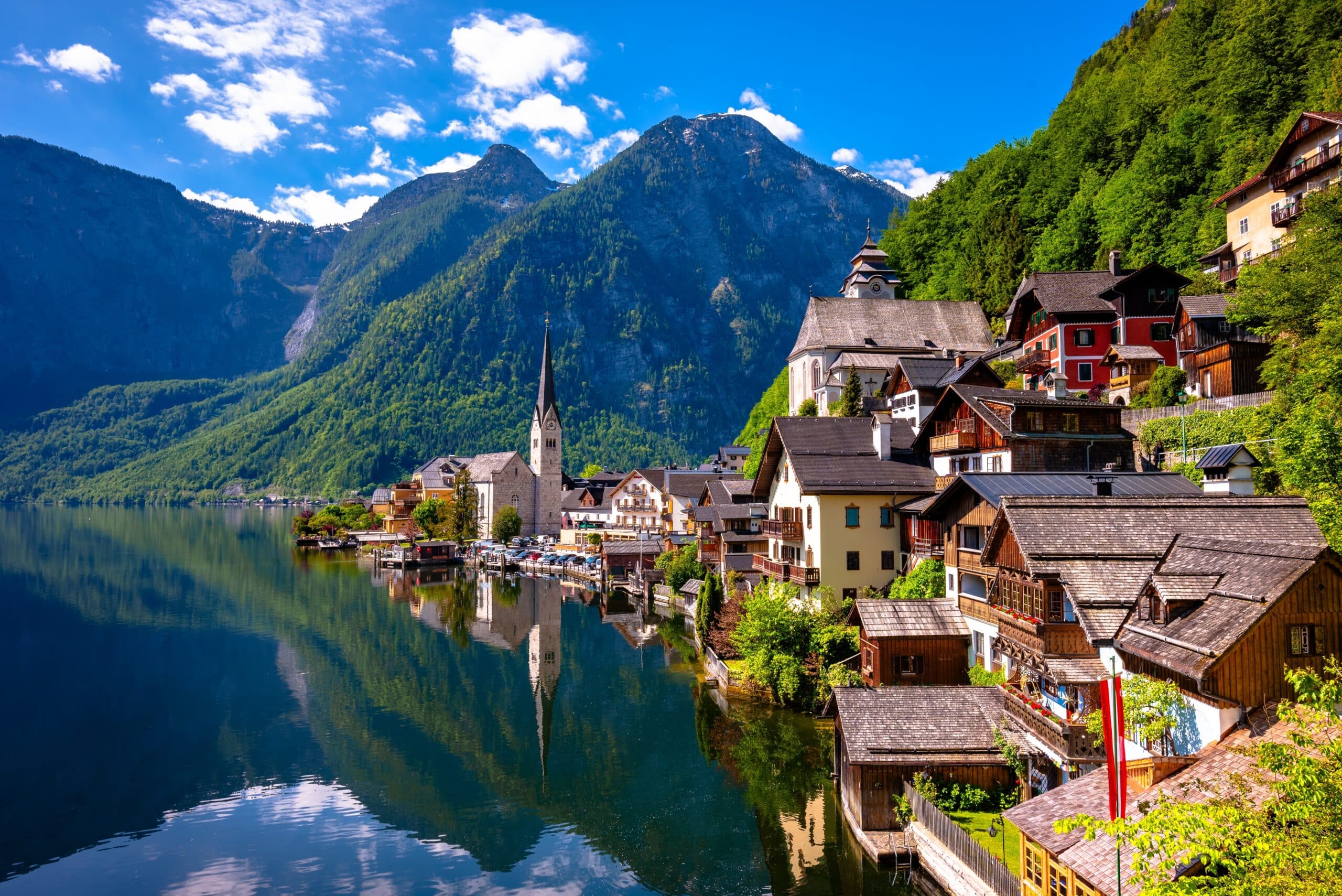
Hallstatt is one of Austria’s most picturesque villages, situated on the shores of Lake Hallstatt and framed by steep Alpine slopes. Its dramatic setting and historic salt mining heritage have made it internationally renowned.
Colorful houses cling to the mountainside above the lake, reflected perfectly in calm waters. The village’s compact layout invites exploration along narrow lanes and waterfront paths. The parish church and its ossuary, containing intricately decorated skulls, reflect centuries-old burial traditions shaped by limited space.
Hallstatt’s history is closely tied to salt extraction, which brought prosperity to the region as early as prehistoric times. The Hallstatt Salt Mine, accessible by funicular railway, offers insight into one of the world’s oldest known mining operations.
A viewing platform known as the Skywalk extends high above the village, providing panoramic views across the lake and surrounding peaks. Boat rides and hiking trails enhance the natural experience.
Despite growing tourism, Hallstatt maintains a serene atmosphere, especially during early mornings and off-season months. Local cuisine features freshwater fish and traditional Austrian specialties.
Hallstatt combines natural beauty, archaeological significance, and cultural tradition, making it a remarkable destination that embodies Austria’s alpine heritage.
24. Zell am See
Zell am See is a lakeside resort town in the Austrian Alps, located in the state of Salzburg. Framed by the clear waters of Lake Zell and backed by the snow-capped Hohe Tauern mountains, it offers a harmonious blend of alpine scenery and year-round recreation.
The town center preserves a traditional atmosphere, with a Romanesque church tower rising above pedestrian streets lined with cafés and boutiques. The lakeside promenade provides uninterrupted views across turquoise water toward surrounding peaks, creating a tranquil yet dramatic setting.
Zell am See is closely connected to the nearby Kitzsteinhorn glacier in Kaprun, allowing skiing even during warmer months. In winter, extensive ski slopes and cross-country trails attract visitors seeking reliable snow conditions. Summer transforms the area into a haven for swimming, sailing, hiking, and cycling.
Boat cruises operate regularly on Lake Zell, offering scenic perspectives of the town and mountains. Cable cars transport visitors to elevated viewpoints that reveal sweeping alpine panoramas.
Despite its popularity, Zell am See maintains a relaxed charm, particularly during quieter seasons. Local cuisine emphasizes hearty mountain dishes and regional dairy products.
Combining sparkling lake scenery with alpine adventure, Zell am See represents one of Austria’s most balanced destinations, where water and mountains meet in striking harmony.
23. Bregenz
Bregenz lies on the eastern shore of Lake Constance near the borders of Germany and Switzerland. As the capital of Vorarlberg, it blends lakeside elegance with a strong cultural identity rooted in music and performance.
The city is internationally recognized for the Bregenz Festival, whose floating stage extends dramatically over Lake Constance. Each summer, large-scale operatic productions transform the waterfront into a theatrical spectacle against a natural backdrop of water and sky.
The Upper Town preserves medieval streets and half-timbered houses, while the modern lakeside district reflects contemporary architecture. The Kunsthaus Bregenz, designed with minimalist glass façades, highlights the city’s engagement with modern art.
A cable car ascends Pfänder Mountain, offering panoramic views across Lake Constance and into neighboring countries. This tri-border perspective underscores Bregenz’s geographic significance.
Boat excursions connect the city to lakeside towns in Germany and Switzerland, enhancing its cross-border appeal. Vineyards and gentle hills surround the region, contributing to local wine production.
Bregenz harmonizes artistic ambition, scenic beauty, and international connectivity. Its lakeside setting and innovative festival culture make it one of Austria’s most distinctive cultural destinations.
22. Klagenfurt
Klagenfurt is the capital of Carinthia in southern Austria, located near the shores of Lake Wörthersee. Influenced by proximity to Italy and Slovenia, the city reflects a blend of Alpine and Mediterranean characteristics.
The Old Town features Renaissance courtyards, arcaded streets, and the distinctive Lindwurm fountain, a dragon statue that symbolizes local legend. The Neuer Platz serves as a central gathering space, surrounded by pastel façades and cafés.
Lake Wörthersee defines Klagenfurt’s recreational appeal. Known for its warm, clear waters, the lake attracts swimmers, sailors, and cyclists during summer months. Waterfront parks and promenades provide relaxed leisure spaces.
The city also hosts Minimundus, a park featuring detailed miniature models of world landmarks, offering a unique cultural attraction. Nearby mountains provide hiking opportunities and scenic viewpoints.
Klagenfurt’s climate is among Austria’s mildest, contributing to its reputation as a sunny destination. Regional cuisine reflects Carinthian traditions, with influences from neighboring cultures.
Combining Renaissance architecture, lakeside recreation, and cross-border influences, Klagenfurt offers a southern Austrian experience marked by warmth and scenic charm.
21. Melk
Melk is a small town in Lower Austria best known for its magnificent Benedictine abbey overlooking the Danube River. Positioned at the entrance to the Wachau Valley, Melk serves as both a spiritual landmark and a scenic gateway to one of Austria’s most picturesque regions.
Melk Abbey dominates the skyline from a rocky promontory above the river. Its baroque architecture, golden façades, and expansive courtyards reflect centuries of religious and scholarly influence. The abbey library, adorned with frescoed ceilings and historic manuscripts, stands among the most impressive monastic libraries in Europe.
Below the abbey, the Old Town features cobbled streets, pastel houses, and inviting cafés. The Danube promenade connects Melk to river cruises that pass through vineyards and medieval villages along the Wachau Valley.
Cyclists frequently follow the Danube Cycle Path, which runs directly through Melk and offers scenic views of rolling hills and terraced vineyards. Local wines and apricot products define the regional culinary identity.
Despite its modest size, Melk leaves a lasting impression through architectural grandeur and riverside beauty. The harmonious relationship between abbey, town, and river landscape creates a destination that embodies Austria’s cultural and natural richness.
20. Bad Gastein
Bad Gastein is a historic spa town in the Hohe Tauern mountains, known for its thermal springs and dramatic alpine setting. Unlike traditional alpine villages, Bad Gastein rises vertically along a steep valley, with grand hotels perched above a central waterfall.
The town gained prominence in the 19th century as European aristocracy visited to experience its therapeutic waters. Belle Époque architecture remains visible in elegant façades that overlook forested slopes and rushing cascades.
The Gastein Waterfall divides the town, creating a powerful natural focal point that can be viewed from multiple terraces and bridges. Thermal spa complexes continue to draw visitors seeking relaxation and wellness.
Winter transforms Bad Gastein into a ski destination, while summer opens hiking trails and panoramic viewpoints within Hohe Tauern National Park. Cable cars transport visitors to high-altitude landscapes marked by alpine meadows and glacial peaks.
The combination of wellness culture, mountain adventure, and historic elegance distinguishes Bad Gastein from other resorts. Its unique vertical layout and spa heritage create a destination where nature and refinement intersect.
19. St. Anton am Arlberg
St. Anton am Arlberg is internationally recognized as one of Austria’s premier ski destinations. Located in the Tyrol region, it forms part of the extensive Arlberg ski area, known for challenging slopes and reliable snow conditions.
Originally a small alpine farming village, St. Anton became central to the development of modern skiing techniques. Today, advanced lift systems connect wide-ranging pistes, attracting experienced skiers from around the world.
Beyond winter sports, the village maintains traditional Tyrolean character through wooden chalets and mountain restaurants. Après-ski culture is vibrant, yet balanced by scenic tranquility in surrounding alpine terrain.
Summer reveals a different side of St. Anton. Hiking trails cross meadows and ridges, while mountain biking routes traverse rugged landscapes. Clear mountain air and panoramic views define the warm-season experience.
The Arlberg WellCom center provides indoor swimming and wellness facilities, reinforcing the town’s commitment to recreation year-round. Culinary offerings emphasize hearty mountain cuisine and regional specialties.
St. Anton am Arlberg exemplifies Austria’s alpine excellence, combining sporting heritage with dramatic mountain scenery. Its international reputation rests on both natural conditions and a long-standing culture of winter adventure.
18. Wachau Valley
The Wachau Valley stretches along the Danube River between Melk and Krems, forming one of Austria’s most celebrated cultural landscapes. Recognized as a UNESCO World Heritage site, the region combines terraced vineyards, medieval towns, and dramatic river scenery.
Steep hillsides rise above the Danube, planted with vineyards that produce some of Austria’s finest white wines, particularly Grüner Veltliner and Riesling. Stone terraces built over centuries reflect the region’s deep agricultural heritage.
Picturesque villages such as Dürnstein and Weißenkirchen feature narrow lanes, fortified towers, and pastel-colored houses. Dürnstein Castle ruins overlook the river, recalling the medieval imprisonment of England’s King Richard the Lionheart.
River cruises provide a leisurely way to experience the valley, passing orchards, monasteries, and castle remnants. Cycling paths along the Danube offer closer engagement with the landscape, especially during spring blossom and autumn harvest seasons.
Apricots are a regional specialty, appearing in pastries, jams, and liqueurs. Local taverns, known as Heurigen, serve seasonal wines accompanied by traditional Austrian dishes.
The Wachau Valley harmonizes history, viticulture, and river scenery. Its blend of cultural depth and natural beauty makes it one of Austria’s most refined and tranquil destinations.
17. Eisenstadt
Eisenstadt, the capital of Burgenland, lies near Austria’s eastern border with Hungary. Though modest in size, it holds significant cultural importance as the longtime residence of the Esterházy princely family.
Schloss Esterházy dominates the town center, a baroque palace renowned for its Haydn Hall, where composer Joseph Haydn served as court musician. The palace’s elegant rooms and landscaped gardens illustrate aristocratic life during the 18th century.
Eisenstadt’s Old Town features quiet streets, pastel façades, and traditional wine taverns. The Bergkirche, also known as the Haydn Church, houses the composer’s mausoleum, reinforcing the town’s musical legacy.
Burgenland’s gentle hills and vineyards surround Eisenstadt, reflecting a landscape shaped by agriculture and cross-border influences. Lake Neusiedl, a shallow steppe lake nearby, attracts birdwatchers and cyclists.
Local cuisine combines Austrian and Hungarian elements, offering hearty stews and regional wines. The slower pace of life contrasts with Austria’s larger cities, creating a relaxed atmosphere.
Eisenstadt presents a destination centered on music, noble heritage, and viticulture. Its cultural refinement and rural charm offer insight into Austria’s eastern traditions.
16. Seefeld in Tirol
Seefeld in Tirol is an alpine plateau village west of Innsbruck, renowned for cross-country skiing and panoramic mountain scenery. Situated at over 1,100 meters above sea level, it enjoys open views framed by rugged peaks.
The pedestrian-friendly village center features chalet-style buildings, boutique shops, and traditional cafés. St. Oswald Church anchors the square, reflecting centuries of Tyrolean religious heritage.
Seefeld gained international recognition after hosting Nordic skiing events during the Winter Olympic Games. Extensive cross-country trails extend across snowy meadows, while downhill slopes cater to recreational skiers.
Summer transforms the plateau into a hiking and golf destination. Clear alpine air and wide landscapes create an atmosphere of tranquility, enhanced by mountain lakes and forest paths.
Wellness tourism plays an important role, with spa hotels offering relaxation facilities. Regional cuisine highlights Tyrolean specialties such as dumplings and alpine cheeses.
Seefeld combines sporting excellence with refined alpine comfort. Its broad plateau setting distinguishes it from steeper mountain resorts, offering both accessibility and scenic openness within Austria’s alpine heartland.
15. Kitzbühel
Kitzbühel is one of Austria’s most prestigious alpine resorts, located in the Tyrol region. Known internationally for winter sports, it combines medieval charm with luxury tourism and competitive skiing heritage.
The town center features pastel-colored buildings, cobbled streets, and a church tower rising above boutique-lined lanes. Despite its reputation for exclusivity, Kitzbühel maintains a historic core dating back to the 12th century.
The Hahnenkamm mountain hosts one of the most famous downhill ski races in the world, attracting elite athletes and spectators each winter. Advanced lift systems connect extensive ski areas, while summer reveals hiking trails, alpine pastures, and panoramic viewpoints.
Golf courses and wellness resorts enhance Kitzbühel’s year-round appeal. Traditional Tyrolean cuisine coexists with fine dining establishments, reflecting its blend of heritage and modern sophistication.
Surrounding valleys and peaks create varied terrain suitable for both leisure travelers and experienced adventurers. Seasonal festivals add cultural depth beyond sporting events.
Kitzbühel exemplifies Austria’s ability to merge historic atmosphere with contemporary alpine luxury, making it a destination of enduring international acclaim.
14. Krems an der Donau
Krems an der Donau lies at the eastern entrance to the Wachau Valley, positioned along the Danube River in Lower Austria. With origins tracing back to Roman times, Krems blends medieval architecture with a thriving wine culture.
The Old Town features narrow lanes, fortified gates, and historic squares lined with colorful façades. Steiner Tor, a preserved city gate, stands as a symbol of Krems’ medieval past. Churches and merchant houses reveal layers of architectural history.
Krems is renowned for viticulture, particularly white wine varieties cultivated on surrounding terraced hillsides. Wine taverns offer seasonal tastings, connecting visitors with local traditions.
Cultural institutions such as the Kunstmeile Krems highlight contemporary art and exhibitions, demonstrating the city’s modern engagement alongside historic preservation. The Danube riverbank encourages cycling and leisurely walks.
Its compact scale allows exploration on foot, enhancing appreciation of architectural detail and urban character. The nearby Göttweig Abbey further enriches the cultural landscape.
Krems balances tradition and innovation, presenting a riverside town where history, art, and wine converge in harmonious proportion.
13. Alpbach
Alpbach is often described as one of Austria’s most beautiful villages, located in the Tyrol region within a valley framed by forested slopes. Its architectural consistency, marked by wooden balconies and chalet-style houses, creates a distinctive alpine identity.
Strict building regulations preserve traditional design, ensuring that modern development aligns with historic aesthetics. Flower-filled balconies in summer and snow-covered rooftops in winter reinforce postcard-like scenery.
Alpbach is also known for hosting the European Forum Alpbach, an annual conference attracting scholars and policymakers for discussions on science, politics, and culture. This intellectual dimension distinguishes it from purely recreational alpine villages.
Hiking trails weave through surrounding meadows and forests, while winter offers family-friendly ski slopes connected to the Ski Juwel area. Panoramic viewpoints reveal rolling Tyrolean landscapes rather than dramatic vertical peaks.
Local farms and inns provide regional cuisine rooted in agricultural tradition. The village atmosphere remains tranquil, with limited traffic and emphasis on community life.
Alpbach harmonizes natural beauty, architectural preservation, and intellectual engagement. Its blend of alpine scenery and cultural depth makes it one of Austria’s most distinctive mountain destinations.
12. Villach
Villach is located in southern Austria near the borders of Italy and Slovenia, giving it a distinctly multicultural character. Positioned along the Drava River and close to several alpine lakes, the city combines Carinthian warmth with scenic diversity.
The Old Town centers around Hauptplatz, where pastel façades, arcaded buildings, and relaxed cafés create a welcoming atmosphere. The Parish Church of St. Jakob rises prominently, offering panoramic views from its tower across rooftops and distant mountains.
Villach is known for its thermal spas, drawing visitors seeking relaxation in mineral-rich waters. The Warmbad district has long served as a wellness destination, integrating modern spa facilities with natural surroundings.
Nearby lakes such as Faaker See and Ossiacher See provide opportunities for swimming, sailing, and cycling during summer months. The Villach Alpine Road ascends the Dobratsch mountain, revealing expansive vistas across valleys and borders.
Cultural events, including the Villach Carnival, highlight local traditions and community spirit. Regional cuisine reflects Carinthian specialties, influenced by neighboring cultures.
Villach’s combination of alpine landscape, lakeside recreation, and cross-border heritage creates a destination that feels both Austrian and internationally connected.
11. Gmunden
Gmunden is a picturesque lakeside town on the shores of Lake Traunsee in Upper Austria. Framed by the Traunstein mountain, it offers a striking blend of water, peaks, and historic architecture.
The town is particularly known for Schloss Ort, a castle situated on a small island connected to the shore by a wooden bridge. This landmark forms one of the most photographed scenes in the region.
Gmunden has a long tradition of ceramic craftsmanship, especially the distinctive green-and-white Gmunden pottery. Artisan shops and workshops reflect this enduring local industry.
The Esplanade along Lake Traunsee provides scenic walking paths with mountain views. Boat excursions traverse the deep lake waters, while hiking trails climb surrounding slopes for panoramic perspectives.
The town center features elegant villas and a historic town hall adorned with ceramic bells. Seasonal festivals and markets contribute to its cultural life.
Gmunden balances artistic tradition with natural beauty. Its lakeside charm and mountainous backdrop create a refined yet tranquil destination within Austria’s Salzkammergut region.
10. Rattenberg
Rattenberg is Austria’s smallest city, located in the Tyrol region along the Inn River. Despite its compact size, it offers rich medieval character and a strong tradition of glass craftsmanship.
Narrow streets lined with colorful Gothic and baroque houses lead to artisan workshops specializing in glassblowing and crystal engraving. Visitors can observe craftsmen shaping intricate decorative pieces using traditional techniques.
The town is overlooked by the ruins of Rattenberg Castle, perched on a rocky hillside. From this elevated position, views extend across the Inn Valley and surrounding mountains.
Rattenberg’s pedestrianized center enhances its historic atmosphere. Seasonal events, including Advent markets illuminated by candlelight, reinforce its intimate charm.
Cafés and small restaurants serve regional Tyrolean dishes, maintaining a cozy village ambiance. Though small in scale, Rattenberg’s preserved architecture reflects centuries of regional trade and craftsmanship.
The city demonstrates how heritage and artisanal tradition can define identity. Rattenberg’s medieval streets and glassmaking legacy make it a distinctive stop within Austria’s alpine landscape.
9. Mariazell
Mariazell is Austria’s most important pilgrimage destination, located in the mountainous region of Styria. Surrounded by forested hills and alpine ridges, the town centers on its revered basilica, which has drawn pilgrims for centuries.
The Basilica of Mariazell dominates the main square with its twin towers and baroque façade. Inside, the chapel houses a wooden statue of the Virgin Mary, an object of devotion since the medieval period. Religious festivals and processions continue to shape the town’s annual calendar.
Beyond its spiritual significance, Mariazell offers scenic hiking trails and winter sports opportunities in the surrounding mountains. A historic narrow-gauge railway connects the town to larger cities, providing a scenic journey through valleys and forests.
Local shops sell gingerbread and herbal liqueurs, traditional products linked to pilgrimage customs. The pedestrian-friendly square maintains a peaceful atmosphere, especially outside major religious gatherings.
Mariazell combines faith, heritage, and alpine scenery. Its enduring role as a pilgrimage site makes it culturally significant while its mountain setting ensures natural appeal throughout the year.
8. Schladming
Schladming lies in the Enns Valley of Styria and is widely known as a major alpine sports destination. Once a mining town, it has evolved into a year-round resort centered on outdoor recreation.
The Planai mountain forms the heart of the ski region, hosting international competitions and offering extensive slopes suited to varying skill levels. Modern lift systems connect Schladming to a broader ski network within the Dachstein area.
During summer, hiking and mountain biking replace skiing as primary activities. Trails wind through alpine meadows and along ridgelines with panoramic views. The Dachstein Glacier nearby adds dramatic glacial scenery to the landscape.
The town center preserves traditional Austrian architecture, with a lively main square lined by cafés and shops. Festivals and sporting events animate the community throughout the year.
Schladming balances athletic energy with alpine charm. Its transformation from mining settlement to international sports hub reflects adaptability while maintaining regional identity.
7. Lienz
Lienz is located in East Tyrol, framed by the Lienz Dolomites and the High Tauern mountain range. Known for its abundant sunshine, it presents a southern alpine atmosphere distinct from northern Austria.
The Old Town features colorful houses, arcades, and flower-filled balconies. Schloss Bruck overlooks the city, housing a museum dedicated to regional history and art.
Outdoor activities define much of Lienz’s appeal. The nearby Zettersfeld and Hochstein mountains offer skiing in winter and hiking in summer. Cycling paths follow the Drava River, connecting scenic valleys.
Agricultural traditions remain strong in East Tyrol, influencing local cuisine and markets. Seasonal festivals reflect community life shaped by mountain farming.
Lienz offers a quieter alpine experience compared to larger resorts. Its combination of Dolomite scenery, historic architecture, and sunny climate creates a distinctive regional character.
6. Steyr
Steyr lies at the confluence of the Steyr and Enns rivers in Upper Austria. With roots dating back over a thousand years, it presents one of Austria’s most picturesque medieval town centers.
The Stadtplatz is surrounded by colorful Gothic and Renaissance buildings, while the Bummerlhaus stands as a notable example of medieval architecture. The Lamberg Castle overlooks the rivers, adding aristocratic grandeur to the skyline.
Steyr developed historically as a center for ironworking and trade, benefiting from its river connections. Today, museums highlight industrial heritage alongside artistic traditions.
Riverbanks provide scenic walking paths, particularly striking during seasonal changes when water levels shift and reflections animate the façades. Nearby national parks offer hiking opportunities in forested landscapes.
Steyr’s compact layout allows visitors to explore architectural details and hidden courtyards with ease. Cultural events and local markets maintain vibrant community life.
Steyr harmonizes medieval charm with industrial history, creating a destination that reflects both craftsmanship and architectural preservation within Austria’s diverse landscape.
5. Dürnstein
Dürnstein is a small yet historically significant town in the Wachau Valley along the Danube River. Recognizable by its blue-and-white baroque church tower, it is one of the most photographed locations in Lower Austria.
The town’s medieval roots are visible in its narrow lanes and fortified walls. Above the settlement rise the ruins of Dürnstein Castle, where England’s King Richard the Lionheart was famously imprisoned in the 12th century. A hiking path leads to the ruins, rewarding visitors with sweeping views of vineyards and the Danube below.
Dürnstein’s terraced vineyards produce acclaimed white wines, particularly Riesling and Grüner Veltliner. Wine taverns offer tastings that connect visitors with local viticultural traditions shaped by the river’s microclimate.
The waterfront promenade allows leisurely walks alongside passing river cruises. Despite its popularity, Dürnstein retains a tranquil atmosphere, especially in the early morning and evening hours.
Combining medieval legend, wine culture, and river scenery, Dürnstein exemplifies the romantic charm of Austria’s Wachau region.
4. Obertauern
Obertauern is a high-altitude alpine resort in the Salzburg region, renowned for reliable snowfall and extensive ski terrain. Situated along the Radstädter Tauern Pass, it is one of Austria’s snowiest destinations.
The village is purpose-built around winter sports, with ski lifts accessible directly from accommodations. Circular ski routes allow continuous exploration without retracing slopes, appealing to experienced skiers.
While winter dominates its reputation, summer reveals hiking trails across alpine meadows dotted with mountain huts. Clear lakes reflect surrounding peaks, and panoramic roads attract cyclists and motorists seeking scenic routes.
Obertauern gained international attention in the 1960s when scenes from a Beatles film were shot in the area, adding cultural trivia to its sporting identity.
Modern hotels and wellness facilities complement its recreational focus. Après-ski venues contribute lively energy during peak season.
Obertauern represents Austria’s dedication to alpine sport, offering high-elevation adventure in a compact mountain setting.
3. Heiligenblut am Großglockner
Heiligenblut am Großglockner sits at the foot of Austria’s highest mountain, Großglockner. Its iconic church tower framed by snow-capped peaks creates one of the country’s most dramatic alpine vistas.
The village name, meaning “Holy Blood,” originates from a medieval relic housed within the Gothic parish church. Religious legend and mountain landscape intertwine, enhancing its symbolic atmosphere.
Heiligenblut serves as a gateway to the Grossglockner High Alpine Road, a scenic route climbing through hairpin turns to panoramic viewpoints overlooking glaciers and rugged summits.
Winter brings skiing opportunities, while summer invites mountaineering and wildlife observation within Hohe Tauern National Park. Alpine flora and fauna thrive in this protected environment.
Traditional wooden houses and quiet streets preserve a timeless character. The combination of sacred heritage and towering alpine scenery makes Heiligenblut a uniquely evocative destination.
2. Mittersill
Mittersill is located in the Salzburg region between the Kitzbühel Alps and the Hohe Tauern range. Historically a market town, it now functions as a gateway to expansive alpine recreation areas.
The Hohe Tauern National Park Center in Mittersill provides insight into Austria’s largest protected landscape, offering interactive exhibits on geology, wildlife, and conservation.
Cable cars connect the town to the KitzSki area, linking it with broader ski networks. During warmer months, hiking trails cross valleys and ridges rich in biodiversity.
Mittersill Castle overlooks the town, its historic walls contrasting with modern infrastructure below. The Salzach River flows nearby, enhancing scenic appeal.
Agricultural traditions remain present in surrounding villages, reflected in local cuisine and seasonal festivals. Mittersill’s balanced development preserves regional character while embracing tourism.
Its position between major alpine ranges makes Mittersill a strategic and scenic base for exploring central Austria.
1. Semmering
Semmering is a historic mountain pass and resort area located between Lower Austria and Styria. It gained prominence in the 19th century with the construction of the Semmering Railway, one of Europe’s earliest mountain railways and now a UNESCO World Heritage site.
The railway’s viaducts and tunnels represent a milestone in engineering history, harmonizing infrastructure with dramatic alpine terrain. Scenic train journeys remain a highlight of the region.
Semmering developed as a health and leisure retreat during the Austro-Hungarian era. Grand hotels and villas reflect its status as a fashionable escape for Vienna’s elite.
Winter sports facilities attract skiers, while summer offers hiking trails with sweeping valley views. The Hirschenkogel mountain provides accessible slopes and lookout points.
Forested landscapes and fresh mountain air contribute to Semmering’s longstanding reputation as a restorative destination.
Semmering combines engineering achievement, imperial-era elegance, and alpine recreation, concluding Austria’s 30-destination edition with a site of historical and scenic significance.