
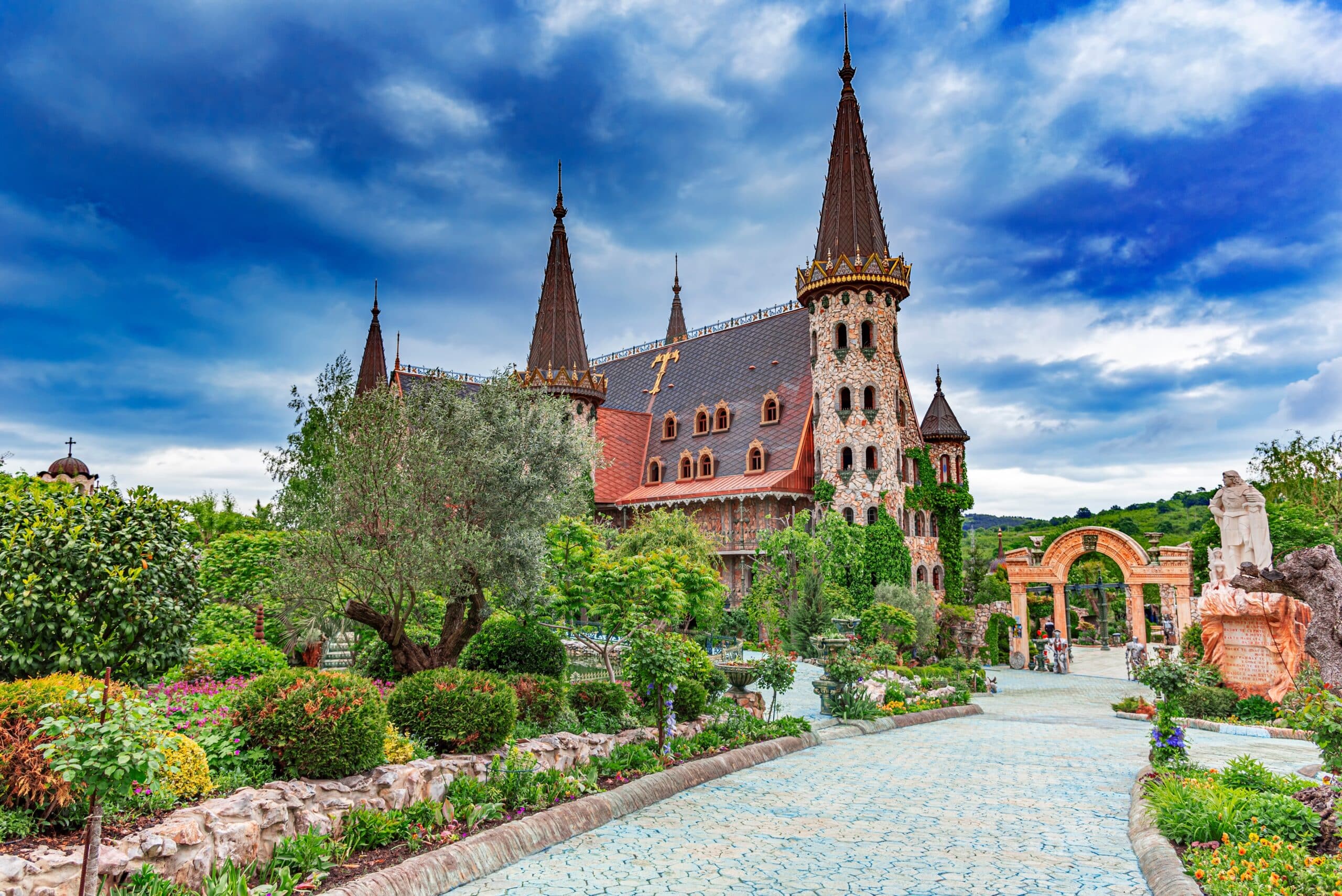
Bulgaria unfolds like a quiet storybook in the heart of the Balkans—layered with mountains, monasteries, ancient cities, and a coastline where the Black Sea glimmers beneath wide summer skies. Travelers often begin in Sofia, a capital where centuries stand side by side. Beneath the golden domes of Alexander Nevsky Cathedral, street musicians play softly while cafés spill onto shaded boulevards. Roman ruins appear unexpectedly between Soviet-era buildings and modern galleries, revealing how deeply history lives within the city’s streets.
South of the capital rise the forested slopes of the Rila Mountains. Here, hidden among pine trees and misty valleys, stands the breathtaking Rila Monastery. Painted arches glow with vivid frescoes, and the quiet courtyard carries the scent of wood smoke and mountain air. It’s a place where time feels slower, and the echoes of monks’ footsteps seem to linger in the stone corridors.
Further east lies Plovdiv, one of Europe’s oldest continuously inhabited cities. Its Old Town climbs gentle hills lined with colorful 19th-century houses, hidden courtyards, and cobbled streets that wind toward an ancient Roman amphitheater still used for performances today. Sunset here bathes the city in warm gold, and the rhythm of life feels timeless.
Beyond the hills, the land opens toward the shimmering shores of the Black Sea. Along the coast, the historic town of Nessebar sits on a rocky peninsula where medieval churches rise above quiet seaside lanes. Nearby, Varna blends beach life with culture, offering lively promenades and sunlit parks.
Threaded through it all are the sweeping ridges of the Balkan Mountains, which give the region its very name. Villages tucked into these valleys preserve traditions of folk music, rose oil production, and warm hospitality.
To travel through Bulgaria is to move between worlds—ancient and modern, mountain and sea, silence and celebration—each chapter revealing another quiet wonder waiting to be discovered.
27. Sofia
Sofia rests at the foot of the forested slopes of Vitosha Mountain, giving Bulgaria’s capital a dramatic natural backdrop. Few European cities combine such deep history with easy access to nature, and the result is a place where ancient civilizations and modern life intertwine effortlessly.
Walking through the city center feels like moving through layers of time. Roman ruins lie beneath busy boulevards, while Ottoman mosques stand near Orthodox churches crowned with golden domes. At the heart of the city rises the magnificent Alexander Nevsky Cathedral, its shining domes visible from many streets. The cathedral’s interior glows softly with icons and candlelight, creating a peaceful atmosphere despite the lively city around it.
Nearby, visitors often pause beside the ancient remains of Serdica Roman Ruins, reminders that Sofia has been inhabited for more than two thousand years.
Sofia’s streets invite wandering. Elegant boulevards lined with trees lead to quiet squares, small galleries, and cafés where locals enjoy slow afternoons over coffee and conversation. The city’s parks—especially the large Borisova Garden—offer green escapes filled with walking paths and fountains.
Just beyond the city rises Vitosha Mountain, a favorite weekend retreat for residents. Trails wind through forests and alpine meadows, and on clear days the summit reveals sweeping views across the entire Sofia Valley.
Evenings in Sofia bring a relaxed energy. Restaurants serve traditional Bulgarian dishes alongside local wines, while live music drifts from bars and cultural venues.
Sofia may not always receive the same attention as Europe’s larger capitals, but its mixture of history, culture, and mountain scenery makes it a fascinating place to begin a journey through Bulgaria.
26. Plovdiv
Plovdiv is one of Europe’s oldest continuously inhabited cities, and its history is written across the hills that shape its skyline. Built upon several rocky ridges beside the Maritsa River, the city reveals centuries of culture with every step.
The heart of Plovdiv lies in its beautifully preserved Old Town. Narrow cobbled streets climb the hills between colorful 19th-century houses, their carved wooden balconies leaning gently above quiet courtyards. These elegant mansions reflect the prosperity of Bulgaria’s National Revival period and now house small museums, galleries, and cultural centers.
Among the city’s most remarkable sights is the ancient Plovdiv Roman Theatre. Built during the Roman Empire and rediscovered in the 20th century, the theater remains astonishingly intact. Today it still hosts concerts and performances beneath open skies, just as it did nearly two thousand years ago.
Plovdiv also possesses a lively creative energy. The Kapana district—whose name means “The Trap”—is filled with narrow streets lined with art studios, craft shops, cafés, and colorful murals. Musicians and artists give the area a vibrant atmosphere day and night.
From the hilltops, panoramic views stretch across red rooftops, church towers, and distant mountains. Sunset brings warm light that transforms the city into a golden landscape of stone and tile.
Dining in Plovdiv is another pleasure. Traditional Bulgarian dishes appear beside modern interpretations of regional cuisine, often served in courtyard restaurants hidden behind old wooden gates.
Plovdiv’s charm lies in this seamless blend of ancient heritage and creative modern life. It feels both timeless and refreshingly alive.
25. Varna
Varna spreads along the shores of the Black Sea, where sandy beaches meet leafy parks and elegant seaside boulevards. Often called Bulgaria’s “sea capital,” the city combines coastal relaxation with a rich cultural atmosphere.
At the center of Varna’s waterfront lies the beautiful Sea Garden, an expansive park overlooking the sea. Shaded paths wind through flower gardens, fountains, and small terraces where visitors can watch ships crossing the horizon.
Just beyond the park stretch long sandy beaches that have drawn travelers here for generations. During summer, the shoreline fills with swimmers, sunbathers, and beach cafés where the sound of waves mixes with music and laughter.
Varna’s history reaches far deeper than its modern resort atmosphere suggests. The city houses the remarkable Varna Archaeological Museum, home to the world’s oldest known gold treasure—artifacts crafted more than 6,000 years ago.
The historic center reveals elegant architecture, Orthodox churches, and lively pedestrian streets filled with cafés and restaurants. Fresh seafood, grilled vegetables, and regional wines highlight the coastal cuisine.
As evening arrives, Varna’s promenade comes alive. Families stroll beneath the warm glow of streetlights while the sea reflects the colors of sunset.
With its combination of beach life, history, and relaxed seaside energy, Varna offers one of Bulgaria’s most inviting coastal experiences.
24. Belogradchik
Hidden in Bulgaria’s northwest lies one of Europe’s most extraordinary natural landscapes: the surreal stone towers of the Belogradchik Rocks.
These towering red sandstone formations rise dramatically from forested hills, some reaching over 200 meters high. Wind and rain sculpted them over millions of years into shapes that locals say resemble animals, castles, monks, and mythological creatures. Guides enthusiastically point out formations with names like “The Madonna,” “The Horseman,” and “The Bear.”
Nestled among these rocks sits the historic Belogradchik Fortress. Unlike most fortresses built entirely by human hands, this one cleverly incorporates the natural rock formations into its defenses. Massive stone walls connect towering cliffs, creating a fortress that blends seamlessly into the landscape.
Climbing to the top reveals sweeping views across northwestern Bulgaria and toward the distant Danube plains. The scene feels almost otherworldly — red cliffs rising from green forests beneath endless sky.
Belogradchik is also a paradise for hikers and photographers. Trails weave through pine forests and rocky plateaus, offering constantly changing perspectives of the formations. At sunrise and sunset the rocks glow deep crimson, making it one of the most photogenic places in the country.
Despite its spectacular scenery, the town itself remains peaceful and unhurried. Small family guesthouses welcome travelers with homemade meals, local cheeses, and warm hospitality.
For those seeking Bulgaria beyond its cities — something wild, ancient, and quietly magical — Belogradchik offers an unforgettable encounter with nature’s imagination.
23. Melnik
Tiny yet unforgettable, Melnik is Bulgaria’s smallest town — but it carries a character far larger than its size. Surrounded by strange sandstone pyramids and rolling vineyards, this southern settlement feels almost Mediterranean in atmosphere.
The most striking natural feature is the landscape of the Melnik Earth Pyramids. These pale sandstone cliffs and spires rise like natural sculptures above the town, glowing golden in the afternoon sun. Walking trails wind through the formations, offering views across vineyards and distant mountains.
Melnik has long been famous for its wine. The region’s signature grape produces a robust red wine once favored by European aristocracy and even reportedly enjoyed by Winston Churchill. Many local houses include underground wine cellars carved directly into the sandstone hills, where barrels age slowly in cool darkness.
A highlight of the town is the elegant Kordopulov House, a grand 18th-century merchant home overlooking the valley. Inside, visitors can explore ornate rooms, colorful stained glass windows, and vast wine tunnels stretching deep beneath the hill.
Melnik’s narrow streets wind between traditional white houses with wooden balconies draped in flowers. Taverns serve regional specialties like grilled meats, fresh salads, and rich red wines produced just steps away in nearby vineyards.
The atmosphere here invites slow travel. Sit outside a small café, sip a glass of Melnik wine, and watch the light change across the sandstone cliffs.
In Melnik, time seems to move gently — guided by sun, soil, and the ancient rhythm of winemaking.
22. Veliko Tarnovo
Few cities in Bulgaria capture the imagination quite like Veliko Tarnovo. Draped across steep hills above the winding Yantra River, the city feels like a living medieval painting.
Stone houses cling to cliffs, their wooden balconies leaning over narrow streets that twist dramatically through the old town. Walking here is less about following a route and more about wandering wherever the slopes take you.
At the center of the city’s story stands the magnificent Tsarevets Fortress, once the seat of the powerful medieval Bulgarian царs. Crossing the stone bridge into the fortress feels like stepping into another century. Thick defensive walls rise above the cliffs, and from the top of the hill the views stretch across the Yantra valley and the tiled rooftops of the town below.
Inside the fortress, the restored Patriarchal Cathedral crowns the summit. Its modern frescoes depict dramatic scenes from Bulgaria’s history, adding an unexpected contemporary element to the medieval setting.
Back in the old town, Samovodska Charshiya offers a glimpse of traditional crafts. Small workshops sell pottery, wood carvings, textiles, and sweets like honey pastries and sesame candies.
Evenings in Veliko Tarnovo are magical. Restaurants along the hillside terraces serve hearty Bulgarian dishes while the fortress glows across the river. Try grilled meats, fresh salads, and a glass of robust Bulgarian red wine.
If you stay after dark, the city reveals one of its most memorable spectacles: the Sound and Light show, when Tsarevets Fortress is illuminated with dramatic music and colored lights that retell Bulgaria’s medieval history.
With its dramatic setting, deep history, and romantic atmosphere, Veliko Tarnovo remains one of Bulgaria’s most unforgettable destinations.
21. Burgas
Facing the Black Sea with an easygoing coastal charm, Burgas offers travellers a refreshing mix of seaside relaxation, parks, and vibrant local life.
Unlike the bustling resort towns further north, Burgas feels comfortably lived-in. Locals stroll through leafy boulevards, cyclists glide along the seaside promenade, and cafés spill onto sunny squares.
The city’s heart is the beautiful Sea Garden, a vast park stretching along the coast. Flower beds, sculptures, fountains, and shaded walking paths lead visitors toward sweeping views of the Black Sea. Musicians sometimes perform near the open-air theatre, while families gather to watch the sunset over the water.
Just beyond the park lies Burgas Central Beach, where golden sand meets calm waters. The beach is lively in summer yet relaxed enough for quiet afternoon swims.
Nature lovers should explore the wetlands surrounding the city. Lake Atanasovsko is famous for its pink salt pools and birdlife, attracting flamingos, pelicans, and hundreds of migratory species.
Food in Burgas naturally celebrates the sea. Restaurants along the waterfront serve grilled fish, mussels, and Black Sea specialties accompanied by crisp local white wines. A simple meal of fresh fish, salad, and bread eaten beside the sea often becomes one of the trip’s highlights.
The city also hosts the lively Spirit of Burgas, bringing international music acts to the shoreline each summer.
Relaxed yet full of character, Burgas offers travellers a gentle rhythm of beaches, parks, and seaside evenings.
20. Ruse
On the banks of the mighty Danube River, the elegant city of Ruse surprises many visitors with its distinctly Central European character.
Often called “Little Vienna,” Ruse developed during the late nineteenth century as a flourishing Danube port, and its architecture still reflects that golden age. Walking through the city center reveals grand façades, decorative balconies, and wide boulevards that feel more like Austria or Hungary than the Balkans.
The city’s main promenade, Freedom Square, is lined with stately buildings and lively cafés. At its center rises the striking Monument of Liberty, a symbol of Bulgaria’s independence.
Nearby, the beautiful Ruse Regional Historical Museum displays treasures from ancient Roman settlements along the Danube, offering insight into the region’s long and layered history.
A short walk leads to the riverfront promenade where ships drift slowly along the wide Danube. Watching the river at sunset is one of the quiet pleasures of visiting Ruse.
Beyond the city, nature unfolds in spectacular fashion at the Rusenski Lom Nature Park. Dramatic limestone cliffs, forests, and medieval rock monasteries carved into the cliffs create one of Bulgaria’s most impressive landscapes.
Ruse also has a strong cultural life. The Ruse State Opera hosts concerts and performances that draw audiences from across the region.
Elegant, relaxed, and full of unexpected charm, Ruse reveals a refined side of Bulgaria shaped by centuries of river trade and cultural exchange.
19. Dobrich
In the broad agricultural landscapes of northeastern Bulgaria lies Dobrich, a city shaped by fertile land, rural traditions, and cultural heritage.
Often called the heart of Bulgaria’s “granary,” Dobrich sits in the rich fields of the Dobrudzha region, one of the country’s most productive farming areas. Wheat fields stretch toward the horizon, giving the region a peaceful, open atmosphere.
The city’s most charming attraction is the Old Dobrich Ethnographic Complex. This carefully restored quarter recreates a traditional Bulgarian marketplace, where cobbled lanes lead past workshops, craft studios, and small museums. Artisans demonstrate pottery, weaving, and metalwork, allowing visitors to see traditional skills passed down through generations.
Nearby, the quiet Saint George City Park provides green space filled with lakes, sculptures, and shaded walking paths.
Dobrich also holds historical importance from the early twentieth century. The Military Cemetery Museum commemorates soldiers who fought in the regional conflicts that shaped the modern borders of the Balkans.
Although Dobrich itself is inland, the Black Sea coast lies only a short drive away. Popular seaside destinations such as Balchik and Kavarna make easy day trips for travellers seeking beaches and dramatic coastal cliffs.
With its traditional crafts, agricultural heritage, and proximity to the sea, Dobrich offers a quiet but authentic glimpse into everyday life in northeastern Bulgaria.
18. Vidin
On the quiet banks of the Danube River, the historic town of Vidin feels like a forgotten frontier of medieval Europe. Far from Bulgaria’s busy tourist centers, Vidin offers travellers a peaceful atmosphere rich with layers of history.
The city’s most impressive landmark is the mighty Baba Vida Fortress, one of the best-preserved medieval fortresses in the country. Rising directly from the riverbank, its thick stone walls, watchtowers, and narrow courtyards transport visitors back to the time when this fortress defended the Bulgarian kingdom from invading armies. Walking along its ramparts, the wide waters of the Danube stretch endlessly toward the horizon.
Just beyond the fortress stands one of the city’s most unusual buildings — the elegant Vidin Synagogue. Once among the largest synagogues in the Balkans, the structure reflects Vidin’s diverse cultural past when Jewish, Bulgarian, and Ottoman communities lived side by side.
Nearby, the graceful St. Panteleimon Church and the Ottoman-era Osman Pazvantoglu Mosque further reveal the city’s multicultural heritage.
One of the most pleasant experiences in Vidin is simply strolling along the Danube Promenade. Tree-lined paths, quiet cafés, and river views make it a relaxing place to watch boats drift along one of Europe’s great waterways.
Vidin’s charm lies in its calm pace, historic architecture, and riverside scenery — a place where the Danube carries stories from centuries past.
17. Shumen
At the foot of forested hills in northeastern Bulgaria lies Shumen, a city where ancient fortresses, Ottoman heritage, and dramatic monuments create one of the country’s most historically rich landscapes.
Towering above the city on a nearby plateau is the massive Monument to 1300 Years of Bulgaria. Built to celebrate Bulgaria’s long national history, the striking concrete structure rises dramatically from the hilltop. Climbing the steps to the monument rewards visitors with sweeping views over the city and surrounding countryside.
Nearby are the atmospheric ruins of Shumen Fortress, once an important medieval stronghold that guarded routes across northeastern Bulgaria. The stone walls and towers overlook forests and rolling hills, making it a beautiful place for a quiet walk through history.
Shumen also holds great cultural importance for Bulgarians. Just outside the city stands the impressive Tombul Mosque, the largest mosque in Bulgaria and one of the finest examples of Ottoman architecture in the Balkans.
A short drive away lies Madara Rider, one of Bulgaria’s most mysterious archaeological sites. Carved high into a cliff face, the ancient relief depicts a mounted horseman triumphing over a lion, symbolizing the power of the early Bulgarian state.
With its dramatic monuments and ancient ruins, Shumen offers travellers a powerful glimpse into the many civilizations that shaped Bulgaria’s past.
16. Blagoevgrad
Nestled beside the green foothills of the Rila Mountains, the lively town of Blagoevgrad blends youthful energy with traditional Bulgarian charm.
The heart of the city’s historical character can be found in Varosha District, a beautifully preserved quarter filled with narrow cobbled streets and traditional houses from the Bulgarian National Revival period. Small art galleries, cozy cafés, and craft shops create a warm, welcoming atmosphere.
Blagoevgrad is also known for its vibrant student population, thanks to the presence of American University in Bulgaria and South-West University “Neofit Rilski”. Their international communities give the city a youthful and cosmopolitan energy rarely found in smaller towns.
A favorite place for both locals and visitors is Bachinovo Park, a green riverside park where walking paths wind through forests and lakes. It’s the perfect spot for a relaxed afternoon stroll or a quiet break surrounded by nature.
Blagoevgrad also serves as an ideal gateway to one of Bulgaria’s most famous landmarks — the magnificent Rila Monastery. Hidden deep within the mountains, the monastery’s colorful frescoes and dramatic setting make it one of the country’s most breathtaking destinations.
With its charming old quarter, lively cafés, and easy access to mountain landscapes, Blagoevgrad offers travellers a perfect blend of culture and nature.
15. Pleven
The northern Bulgarian city of Pleven is a destination where peaceful parks and powerful history meet. Surrounded by gentle hills and fertile plains, Pleven is best known for the dramatic events of the Siege of Plevna, a turning point in Bulgaria’s struggle for liberation.
Today, the city honors this history through one of the country’s most impressive memorials — the Pleven Panorama. Inside this circular museum, enormous paintings and lifelike sculptures recreate scenes from the siege, surrounding visitors in a powerful visual narrative of the battle.
Just nearby lies the tranquil Skobelev Park, where grassy hills hide monuments, memorials, and quiet pathways. The park stands on former battlefields, yet today it offers a reflective and peaceful atmosphere filled with trees and open views.
Pleven is also famous for its gardens. The beautifully landscaped Kailaka Park stretches along a rocky valley carved by the river. Walking trails lead through forests, past cliffs and small lakes, creating a perfect setting for hiking or cycling.
Nearby caves and ancient ruins add an extra layer of discovery for travellers exploring the surrounding countryside.
With its thoughtful memorials and natural scenery, Pleven offers visitors both reflection and relaxation.
14. Stara Zagora
Set in the fertile Thracian Plain, the city of Stara Zagora blends ancient history with modern boulevards and leafy parks.
Beneath the city streets lies a remarkable archaeological treasure — the Augusta Traiana. Once a thriving Roman settlement, its preserved amphitheater, stone streets, and ancient walls reveal the city’s long history stretching back nearly two thousand years.
Just steps away, the fascinating Neolithic Dwellings Museum protects two prehistoric homes dating from around 6000 BCE. These remarkably preserved structures offer a rare glimpse into life during Europe’s earliest farming communities.
Stara Zagora is also a city of greenery. Wide boulevards lined with lime trees lead to the expansive Ayazmoto Park, a peaceful hilltop park filled with walking trails, gardens, and panoramic views.
Throughout the year, cultural events, concerts, and festivals bring energy to the city’s squares and theatres. Visitors often linger in cafés along pedestrian streets, enjoying the relaxed rhythm of local life.
With layers of history hidden beneath its modern streets, Stara Zagora invites travellers to walk through thousands of years of civilization.
13. Kardzhali
Nestled among the rolling landscapes of the Eastern Rhodope Mountains, the town of Kardzhali offers one of Bulgaria’s most dramatic natural settings.
The centerpiece of the region is the shimmering Kardzhali Reservoir, where calm blue waters wind between forested hills and rocky cliffs. Boat trips across the reservoir reveal secluded coves, birdlife, and stunning mountain views.
High above the water rises the mysterious Perperikon, one of the Balkans’ most fascinating archaeological sites. Carved into a rocky hilltop, this ancient Thracian sanctuary once served as a sacred religious center long before the arrival of the Romans.
Another nearby marvel is the striking Stone Wedding, a natural landscape of towering stone pillars shaped by wind and erosion. Local legends say the formations represent a petrified wedding party turned to stone by divine forces.
In Kardzhali itself, visitors can explore the elegant Regional History Museum Kardzhali, housed in a former Ottoman madrasa that displays artifacts from the Thracian, Roman, and medieval periods.
Surrounded by mountains, myths, and ancient ruins, Kardzhali feels like a gateway into the mysterious landscapes of southern Bulgaria.
12. Lovech
Perched on the banks of the winding Osam River, the charming town of Lovech feels like a hidden jewel tucked into the foothills of the Balkan Mountains.
Lovech is famous for its remarkable Covered Bridge, one of the most distinctive bridges in Europe. Designed in the nineteenth century by the celebrated Bulgarian architect Kolyu Ficheto, the wooden structure stretches across the river like a small street. Inside, traditional craft shops and souvenir stalls create a lively marketplace atmosphere, while the gentle sound of water flows beneath the floorboards.
Climbing the cobbled streets above the river leads visitors to Lovech Fortress, an ancient stronghold standing proudly on a hill overlooking the town. From the fortress walls, sweeping views reveal the red rooftops of Lovech and the surrounding green hills.
The nearby Varosha Architectural Reserve preserves beautifully restored houses from the Bulgarian National Revival period. Narrow streets, wooden balconies, and quiet courtyards evoke the atmosphere of centuries past.
Just outside town lies the spectacular Devetashka Cave, an enormous cavern where sunlight pours through natural openings in the ceiling, illuminating vast chambers and lush greenery growing inside.
Lovech’s peaceful setting, historic streets, and natural wonders make it a rewarding stop for travellers exploring northern Bulgaria.
11. Montana
In northwestern Bulgaria, the quiet city of Montana offers travellers a relaxed gateway to beautiful landscapes and ancient history.
The city traces its origins to the Roman settlement of Montanesium, whose archaeological remains still hint at its early importance along Roman trade routes. Visitors exploring the local museum can see artifacts that tell the story of centuries of settlement in the region.
Montana itself is a calm and welcoming town, centered around leafy squares and pedestrian boulevards. The attractive Ogosta Reservoir lies just outside the city, where broad waters reflect the surrounding mountains. The reservoir is popular for fishing, kayaking, and sunset walks along its scenic shores.
Nature lovers often venture deeper into the nearby Balkan Mountains, whose forested slopes rise dramatically south of the city. These mountains hide quiet hiking trails, remote villages, and sweeping views across northern Bulgaria.
A short drive away stands the historic Chiprovtsi Monastery, one of the country’s most important spiritual centers. Surrounded by peaceful gardens and mountain scenery, the monastery offers a glimpse into Bulgaria’s religious and cultural traditions.
Montana may not appear on every tourist map, but its peaceful atmosphere and access to nature reward those who take the time to explore.
10. Haskovo
In southern Bulgaria, the city of Haskovo welcomes visitors with warm sunshine, open squares, and impressive landmarks.
The city is famous for hosting the towering Monument of the Holy Mother of God, one of the tallest statues of the Virgin Mary in the world. Rising above the city on a hilltop, the monument watches over Haskovo and offers spectacular panoramic views of the surrounding countryside.
In the center of town, the lively Freedom Square forms the heart of local life. Cafés spill onto wide pedestrian streets where residents gather for evening walks and relaxed conversations.
History lovers often visit the nearby Uzundzhovo Church, a remarkable building that once served as an Ottoman mosque before being transformed into an Orthodox church. Its unusual architecture reflects the region’s layered cultural history.
Just outside the city, travellers can explore the mysterious ruins of Perperikon, a dramatic rock complex believed to have been an ancient Thracian sanctuary and oracle. Carved temples, stone stairways, and fortress walls cling to the hilltop, creating one of Bulgaria’s most fascinating archaeological sites.
With its sunny climate, cultural landmarks, and nearby ancient wonders, Haskovo offers visitors a memorable glimpse of southern Bulgaria.
9. Gabrovo
Nestled along the winding Yantra River, the mountain town of Gabrovo sits at the northern foothills of the Balkan Mountains. Known as the humorous heart of Bulgaria, Gabrovo charms visitors with its playful spirit and rich traditions.
The town’s most famous attraction is the remarkable Etar Architectural-Ethnographic Complex, an open-air museum that recreates a nineteenth-century Bulgarian village. Wooden houses line cobbled streets where traditional craftsmen demonstrate weaving, pottery, metalworking, and woodcarving. Water-powered workshops along the river illustrate how local artisans once used nature’s energy to power their tools.
Gabrovo is also home to the unique House of Humour and Satire, a museum dedicated to laughter and satire from around the world. Exhibits feature cartoons, humorous sculptures, and playful art that reflect the city’s reputation for witty storytelling.
Walking through Gabrovo’s quiet streets reveals charming bridges crossing the river and colorful houses climbing the hillsides. Small cafés and bakeries offer a warm place to pause and sample local pastries while enjoying the relaxed pace of life.
Just beyond town, forested mountain trails lead to scenic viewpoints and peaceful monasteries hidden among the trees. The nearby Sokolski Monastery provides a particularly tranquil setting, with stone arches, gardens, and a beautiful courtyard fountain.
Gabrovo’s mix of culture, humor, and mountain scenery makes it a wonderfully distinctive destination in central Bulgaria.
8. Kardzhali
In southern Bulgaria, surrounded by the rolling hills of the Rhodope Mountains, the city of Kardzhali lies beside the calm waters of the Arda River.
Kardzhali serves as a gateway to one of the most mysterious and scenic regions in the country. Ancient Thracian sanctuaries, dramatic rock formations, and hidden archaeological sites dot the surrounding landscape.
One of the most fascinating places nearby is the legendary Perperikon, a vast hilltop complex carved into the rock. Believed to have been a sacred sanctuary thousands of years ago, the ruins include temples, royal chambers, and fortress walls that overlook sweeping views of the Rhodope Mountains.
Another remarkable site is The Stone Wedding, a natural formation of pale volcanic rock pillars resembling figures gathered for a wedding ceremony. Local legends tell romantic stories about how these unusual shapes were created.
Within Kardzhali itself, visitors can stroll through leafy parks and along the riverbanks while admiring the elegant Kardzhali Reservoir, whose quiet waters reflect the surrounding hills.
The city’s blend of nature, legend, and ancient history makes it a fascinating stop for travellers exploring southern Bulgaria.
7. Vratsa
At the dramatic gateway to the Vratsa Mountains, the city of Vratsa sits beneath towering limestone cliffs that rise sharply above the town.
Vratsa’s natural setting is among the most spectacular in Bulgaria. Just outside the city lies the breathtaking Vratsata Gorge, where steep rock walls frame a narrow valley carved by the Leva River. The cliffs attract climbers from around the world, while hiking trails lead visitors through forests and scenic viewpoints.
One of the region’s most remarkable natural wonders is Ledenika Cave, located deep within the mountains. Inside, vast chambers glitter with stalactites and stalagmites illuminated by colorful lighting. Some halls are so large that concerts and events are occasionally held within the cave.
Vratsa also has deep historical roots. Nearby archaeological sites reveal traces of Thracian and Roman settlements, while the city museum displays artifacts that illustrate the area’s ancient past.
In the evenings, Vratsa’s central squares fill with locals enjoying outdoor cafés beneath the shadow of the surrounding cliffs.
For travellers who love dramatic landscapes and outdoor adventure, Vratsa offers a striking introduction to Bulgaria’s wild mountain scenery.
6. Targovishte
The town of Targovishte sits quietly in northeastern Bulgaria, surrounded by gentle hills and fertile plains. Though less visited than larger cities, Targovishte holds a rich historical heritage waiting to be discovered.
The town’s name reflects its long history as a trading center. During the medieval period, markets and caravans once gathered here along important regional routes. Traces of this past can still be seen in local architecture and historic landmarks.
Overlooking the city are the remains of the ancient fortress Misionis Fortress, which dates back to Byzantine times. Archaeological excavations have revealed stone walls, churches, and residential buildings that once formed a thriving medieval settlement.
Nearby stands the elegant Sveti Ivan Rilski Church, known for its beautiful interior icons and peaceful atmosphere.
Visitors exploring the surrounding countryside will find rolling vineyards, quiet villages, and scenic landscapes typical of northeastern Bulgaria. The slower pace of life here offers a relaxing contrast to the country’s busier tourist centers.
For travellers seeking authentic local culture and hidden historical sites, Targovishte provides a rewarding and peaceful stop.
5. Kyustendil
Set in a fertile valley near the borders of Serbia and North Macedonia, Kyustendil is known as Bulgaria’s “town of springs.” Surrounded by orchards and gentle hills, it offers travellers a peaceful landscape where nature and history intertwine.
The town has been famous for its mineral waters since Roman times. Today, visitors can still see remains of the ancient Roman Thermae of Kyustendil, reminders of the spa culture that once flourished here.
One of the most charming spots in the city is Hisarlaka Fortress, perched on a wooded hill above the town. Walking paths wind through the forest to reach the impressive stone walls of this medieval stronghold. From the top, sweeping views stretch across the valley and surrounding mountains.
Kyustendil is also closely associated with the celebrated Bulgarian painter Vladimir Dimitrov, whose vibrant works captured the beauty of rural life and the Bulgarian countryside. His former home is now the Vladimir Dimitrov Art Gallery, where visitors can admire his colorful paintings inspired by local landscapes and traditions.
In spring and summer, fruit orchards surrounding the town blossom with pink and white petals, creating a beautiful natural setting.
For travellers seeking tranquility, art, and gentle countryside scenery, Kyustendil offers a charming and restful escape.
4. Silistra
At the northeastern edge of Bulgaria, overlooking the broad waters of the Danube River, lies the historic city of Silistra.
Silistra’s story stretches back more than two thousand years. During Roman times it was known as Durostorum, an important military stronghold guarding the Danube frontier. Today, archaeological remains scattered around the city reveal glimpses of its ancient past.
One of the most fascinating sites is the Roman Tomb of Silistra, famous for its remarkably preserved frescoes depicting vibrant hunting scenes. These colorful paintings offer a rare window into Roman artistry and life in the region.
Silistra’s riverside park is one of the city’s most pleasant places to stroll. Tree-lined pathways run along the Danube, where travelers can watch boats drifting along the calm waters and enjoy the gentle breeze from the river.
Nearby wetlands host a variety of birdlife, making the region popular among nature lovers and birdwatchers.
With its peaceful river setting and deep layers of history, Silistra invites visitors to experience one of Bulgaria’s lesser-known yet fascinating destinations.
3. Yambol
The southern city of Yambol sits along the banks of the Tundzha River, surrounded by wide plains and gentle hills.
Yambol’s history reaches back to ancient Thracian settlements and later Roman influence. Just outside the city stands one of the region’s most intriguing archaeological sites, the ruins of Kabile. Once an important Thracian religious and political center, the site contains temple remains, fortress walls, and stone streets stretching across a low hill overlooking the countryside.
Within Yambol itself, visitors can explore leafy parks and relaxed pedestrian streets filled with cafés and bakeries. The central square often hosts cultural events and seasonal festivals that bring music and traditional dance to the city.
Along the Tundzha River, walking paths follow the quiet waterway beneath shady trees, offering peaceful places to relax and enjoy the scenery.
Yambol’s warm atmosphere and archaeological treasures make it a rewarding stop for travellers exploring southern Bulgaria.
2. Pazardzhik
Located in the fertile Upper Thracian Plain, the city of Pazardzhik lies along the gentle curves of the Maritsa River.
Founded as a market town during the Ottoman era, Pazardzhik grew into an important regional center where traders and travellers once gathered. Its historic center still reflects this multicultural past.
One of the city’s most remarkable landmarks is the Church of the Dormition of the Mother of God, known for its beautiful carved wooden iconostasis—one of the largest and most elaborate in Bulgaria.
Nearby parks and pedestrian streets provide pleasant spaces to explore, while local cafés serve traditional pastries and strong Bulgarian coffee.
Just a short distance from the city rises the scenic foothills of the Rhodope Mountains, offering opportunities for countryside excursions and quiet village visits.
Pazardzhik’s relaxed charm and rich cultural heritage make it an inviting stop for travellers discovering central Bulgaria.
1. Dimitrovgrad
The city of Dimitrovgrad stands in southern Bulgaria along the banks of the Maritsa River, known for its wide boulevards, spacious parks, and distinctive mid-twentieth-century architecture.
Founded in the late 1940s, Dimitrovgrad was designed as a planned city with grand squares, tree-lined avenues, and monumental buildings reflecting the architectural style of its era. Today, visitors can explore this unusual urban landscape while learning about an important chapter of Bulgaria’s modern history.
One of the city’s liveliest places is its vast open-air market, where vendors gather each weekend selling everything from fresh produce and local foods to antiques and handmade crafts. The colorful stalls create a bustling atmosphere that draws visitors from across the region.
Parks and gardens throughout Dimitrovgrad provide peaceful green spaces perfect for a leisurely stroll. Along the riverbanks, walking paths allow travelers to enjoy the quiet flow of the Maritsa River and the surrounding countryside.
Though younger than many Bulgarian cities, Dimitrovgrad offers a unique perspective on the country’s cultural and architectural evolution.
For travellers curious about Bulgaria’s diverse history—from ancient ruins to modern city planning—Dimitrovgrad provides a fascinating final chapter.