
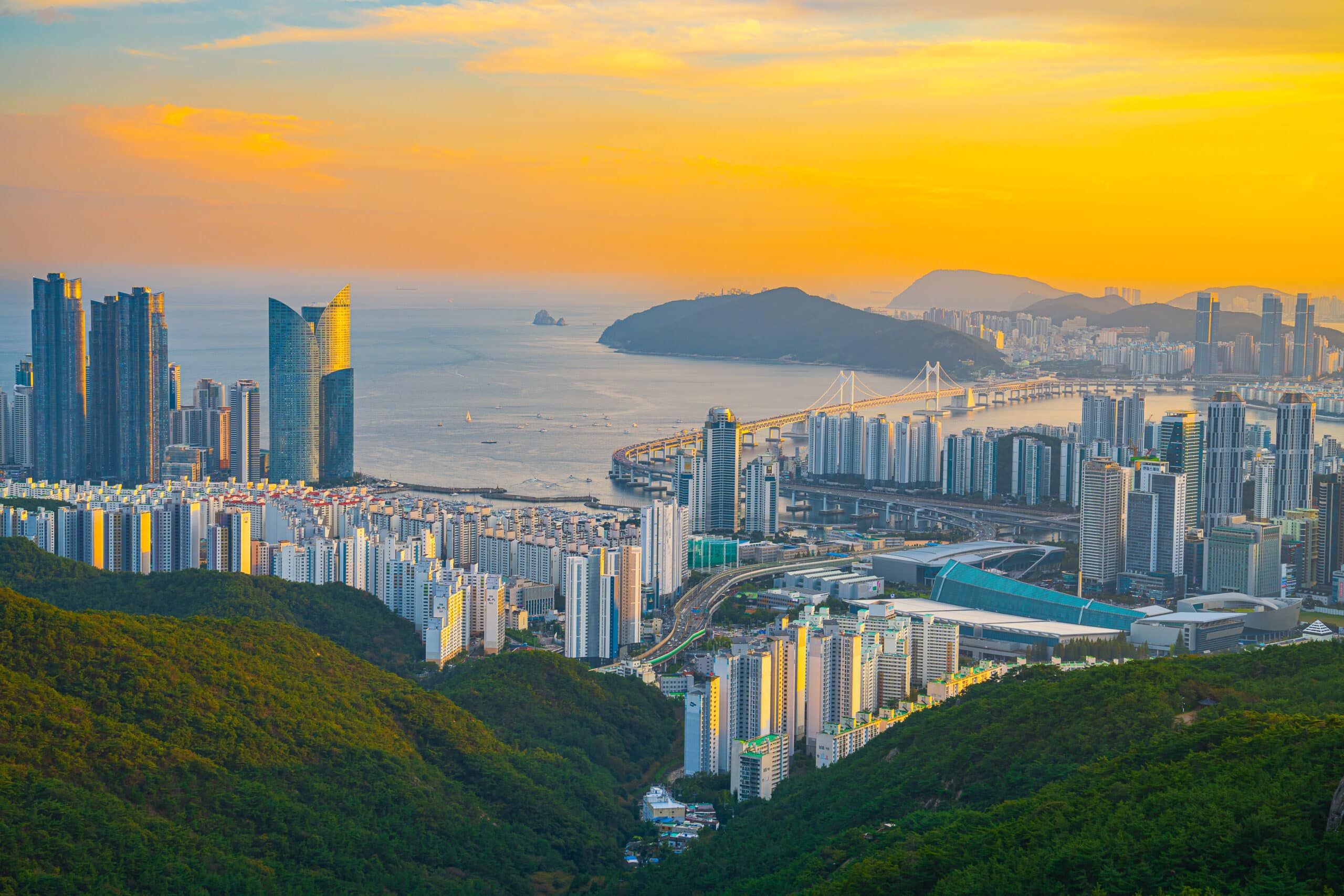
Located on the southeastern coast of South Korea, Busan is the country’s second-largest city and one of its most exciting travel destinations. While many visitors begin their journey in Seoul, Busan offers a completely different atmosphere with scenic beaches, coastal temples, vibrant seafood markets, and colorful cultural neighborhoods.
The city is surrounded by mountains and the sea, creating a unique landscape where modern skyscrapers rise beside sandy beaches and historic temples overlook dramatic coastal cliffs. Busan is also famous for its relaxed lifestyle, lively festivals, and incredible cuisine, especially fresh seafood caught in nearby waters.
Travelers can spend their days relaxing on beautiful beaches such as Haeundae Beach, exploring artistic neighborhoods like Gamcheon Culture Village, or visiting historic landmarks including Haedong Yonggungsa Temple, one of the most scenic temples in Korea.
In the evening, the city transforms into a lively destination filled with illuminated bridges, night markets, and bustling food streets. Whether you are interested in culture, nature, food, or nightlife, Busan offers something for every traveler.
Busan is one of South Korea’s most exciting coastal cities, and if you’re also visiting Seoul, check out our Seoul guide.
Quick Guide to Busan
- Location: Southeastern coast of South Korea
- Known for: Beaches, seafood, coastal temples, and vibrant culture
- Best time to visit: Spring (cherry blossoms) and autumn (mild weather)
- Recommended stay: 2–3 days
- Top attractions: Haeundae Beach, Gamcheon Culture Village, Haedong Yonggungsa Temple, Jagalchi Market
- Best area to stay: Haeundae or Seomyeon
- Getting around: Subway, buses, and taxis
Busan offers a unique mix of seaside relaxation, cultural experiences, and modern city life.
Map of Top Attractions in Busan
This map highlights the most important attractions in Busan, including beaches, cultural landmarks, vibrant neighborhoods, and local markets to help you plan your trip.
Table of Contents
How to Plan Your Busan Itinerary
Planning your time in Busan can greatly enhance your experience, especially since the city offers a mix of beaches, cultural sites, and scenic viewpoints spread across different areas.
1 Day in Busan (Quick Visit)
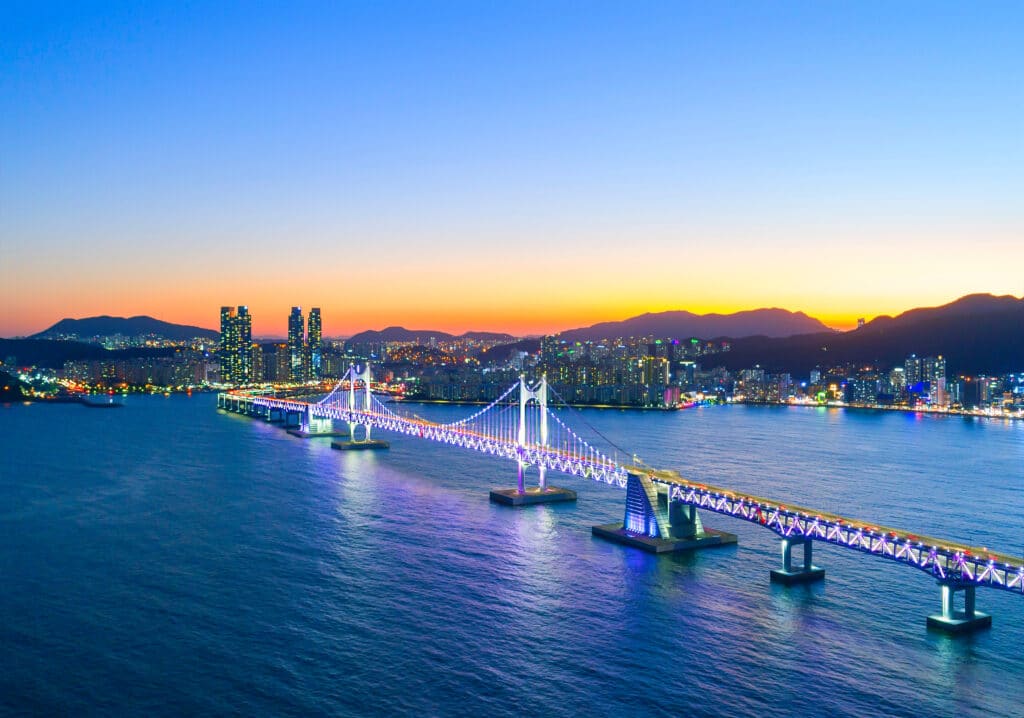
If you only have one day, focus on Busan’s coastal highlights. Start your morning at Haeundae Beach and take a walk to Dongbaekseom Island for scenic views. In the afternoon, visit Haedong Yonggungsa Temple, one of the most beautiful coastal temples in Korea. End your day at Gwangalli Beach, where you can enjoy dinner with views of the illuminated Gwangan Bridge.
2 Days in Busan (Best Balance)
With two days, you can explore both the coast and the cultural side of the city. Spend your first day visiting beaches and coastal attractions such as Haeundae, the Blue Line Park, and Gwangalli. On the second day, explore Gamcheon Culture Village, Jagalchi Fish Market, and BIFF Square to experience Busan’s art, history, and food culture.
3 Days in Busan (Full Experience)
Three days allow you to experience Busan at a relaxed pace. In addition to the main highlights, you can visit Taejongdae Resort Park or hike the Igidae Coastal Walk for stunning nature views. You can also include temples such as Beomeosa or Samgwangsa and enjoy panoramic views from Busan Tower or Busan X the Sky.
Where to Stay in Busan
Choosing the right area to stay in Busan can make your trip more convenient and enjoyable, as the city is quite spread out.
Haeundae (Best for First-Time Visitors)
Haeundae is the most popular area for travelers. It offers easy access to the beach, restaurants, nightlife, and many major attractions. This area is ideal if you want to stay near the sea and enjoy a lively atmosphere.
Seomyeon (Best for Nightlife and Transport)
Seomyeon is located in the center of Busan and serves as a major transportation hub. It is a great choice for travelers who want easy access to different parts of the city, as well as shopping, dining, and nightlife.
Nampo / Jung-gu (Best for Culture and Markets)
This historic area is close to Jagalchi Fish Market, BIFF Square, and Busan Tower. Staying here is perfect for travelers who want to explore traditional markets and cultural attractions.
Gwangalli (Best for Views and Relaxed Atmosphere)
Gwangalli offers beautiful views of the Gwangan Bridge and a more relaxed vibe compared to Haeundae. It is a great option for travelers who enjoy cafés, seaside walks, and scenic night views.
Here are 25 of the best things to do in Busan when exploring this vibrant coastal city.
Best things to do in Busan
Haeundae Beach
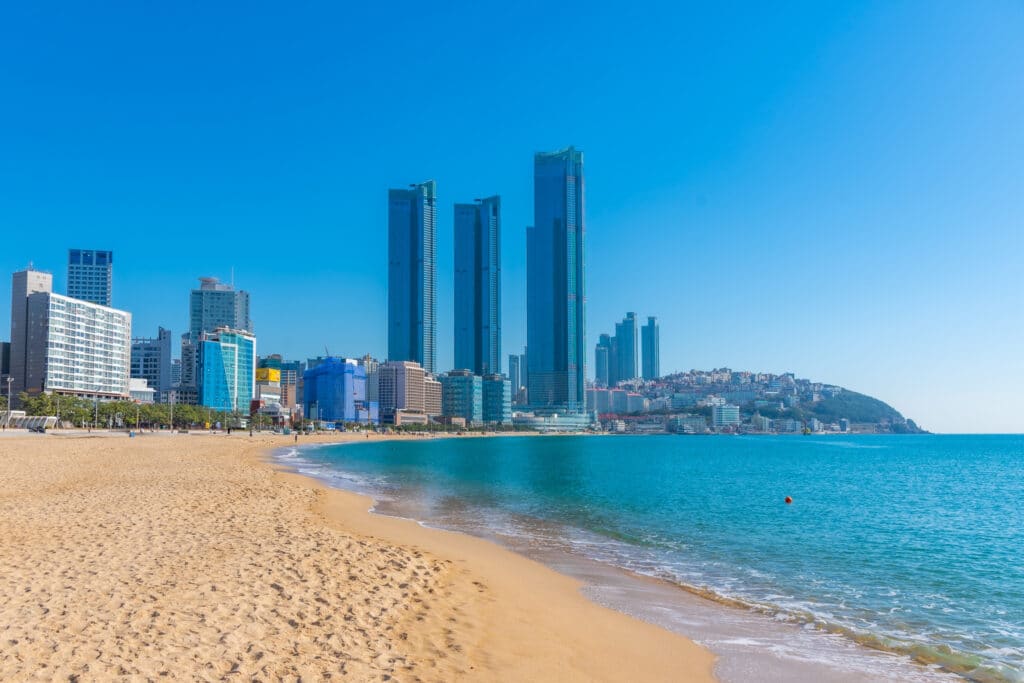
Haeundae Beach is the most famous beach in Busan and one of the most popular seaside destinations in South Korea. Stretching for more than a kilometer along the coast, the beach is known for its wide sandy shoreline and beautiful views of the surrounding skyline.
During the summer months, thousands of visitors come here to swim, relax, and enjoy the lively atmosphere. Beach umbrellas line the sand while nearby cafés and restaurants provide places to rest after a day in the sun.
The area around Haeundae Beach is also filled with attractions including hotels, shopping streets, and nightlife districts. Visitors can walk along the scenic promenade, enjoy ocean views, or watch the sunset over the water.
For travelers visiting Busan, Haeundae Beach is often the first place to experience the city’s coastal charm.
Gamcheon Culture Village
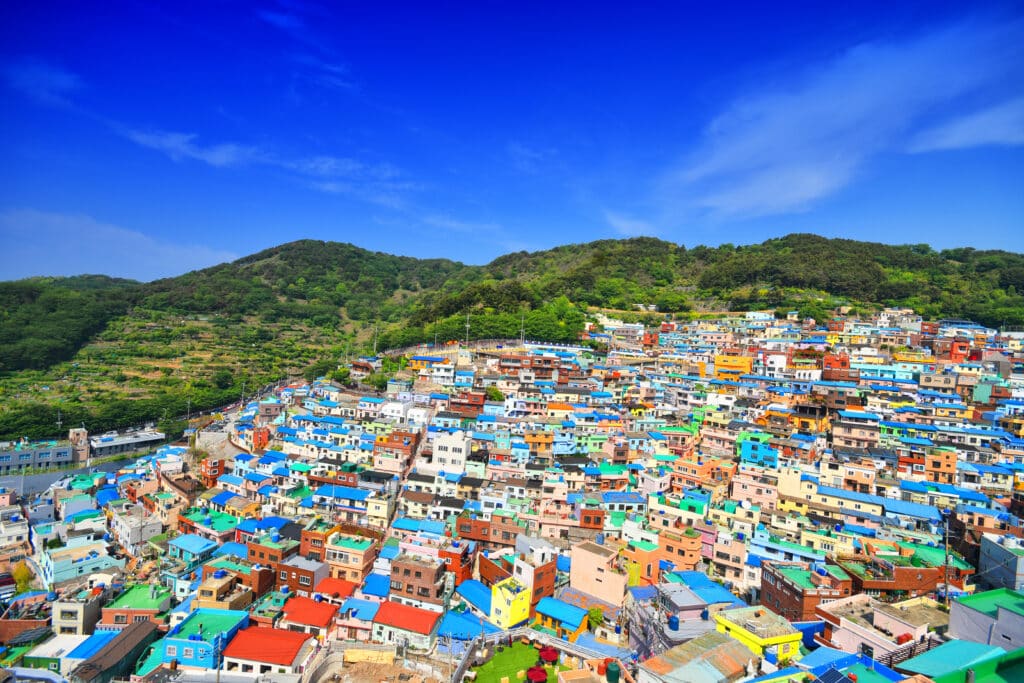
Gamcheon Culture Village is one of the most colorful and unique neighborhoods in Busan. Built on a hillside overlooking the city, the village features hundreds of brightly painted houses stacked along narrow streets.
Originally a simple residential area, Gamcheon was transformed into an artistic district through community art projects. Today the neighborhood is filled with murals, sculptures, galleries, and cafés that attract visitors from around the world.
Walking through the maze of alleys reveals hidden viewpoints and small art installations at every corner. One of the most famous photo spots features a statue of the Little Prince overlooking the colorful houses and the sea beyond.
Gamcheon Culture Village offers a fascinating blend of local culture, creative art, and beautiful views of Busan.
Haedong Yonggungsa Temple
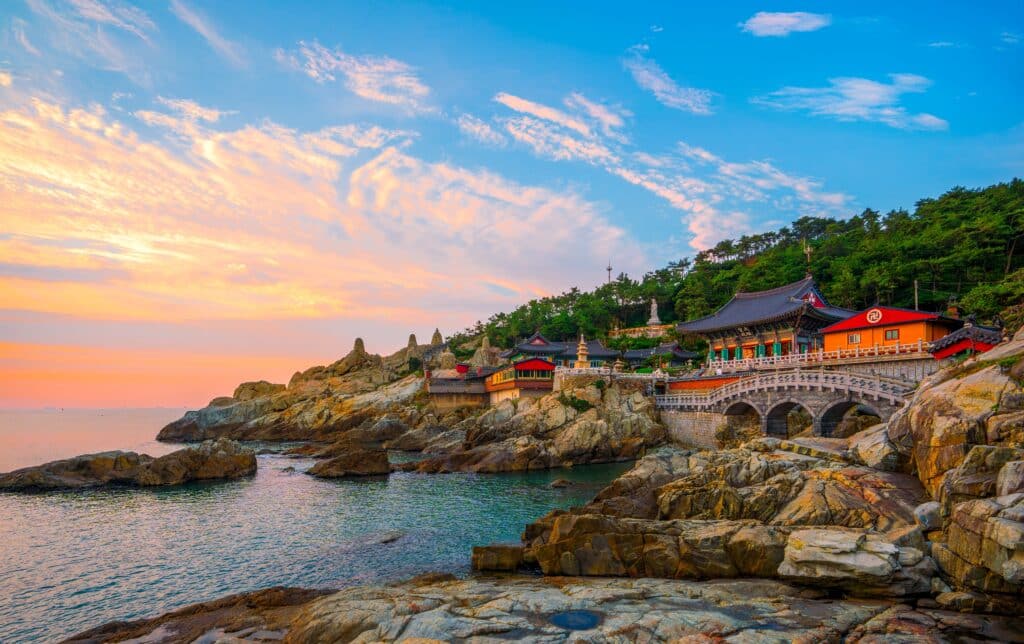
Haedong Yonggungsa Temple is one of the most spectacular temples in South Korea because of its dramatic location along the rocky coastline of Busan.
Unlike many Korean temples hidden in mountain forests, this temple sits directly above the ocean, offering breathtaking views of waves crashing against the cliffs below. The temple complex includes ornate buildings, stone lanterns, and statues connected by pathways and staircases.
Visitors often arrive early in the morning to watch the sunrise over the sea, creating a magical atmosphere around the temple.
The peaceful surroundings and scenic coastal setting make Haedong Yonggungsa one of the most memorable places to visit in Busan.
Gwangalli Beach
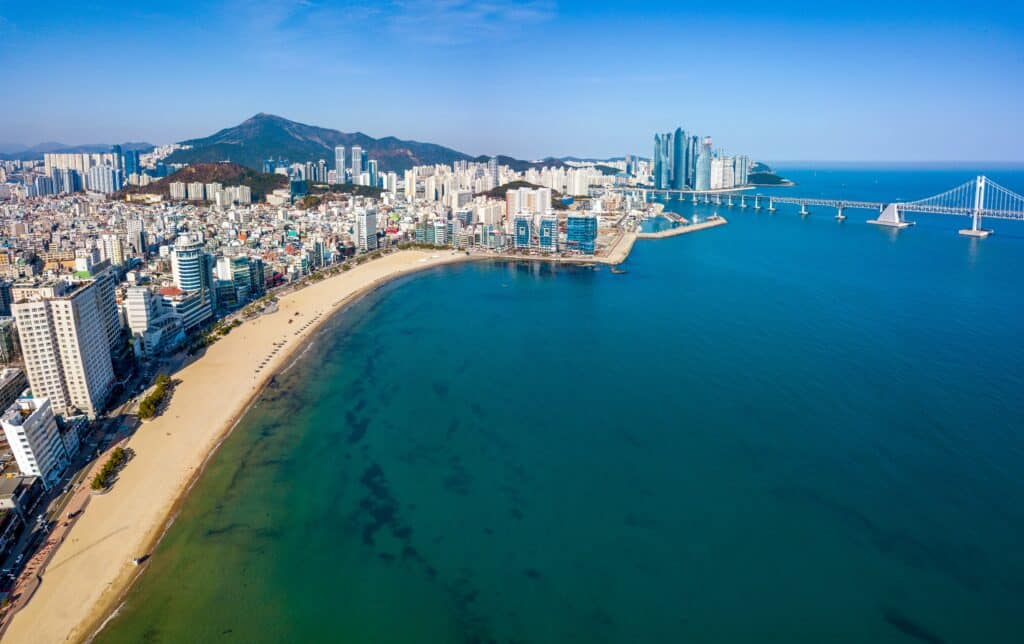
Gwangalli Beach is another beautiful seaside destination in Busan, famous for its incredible views of the illuminated Gwangan Bridge.
During the day, visitors can relax on the sandy beach or enjoy water activities. In the evening, the beach becomes one of the most popular nightlife areas in the city.
Restaurants, cafés, and rooftop bars line the waterfront, creating a lively atmosphere where visitors can enjoy food and drinks while watching the colorful lights of the bridge reflect across the water.
Because of its vibrant evening scene and scenic views, Gwangalli Beach is especially popular among photographers and travelers looking for memorable night views.
Jagalchi Fish Market
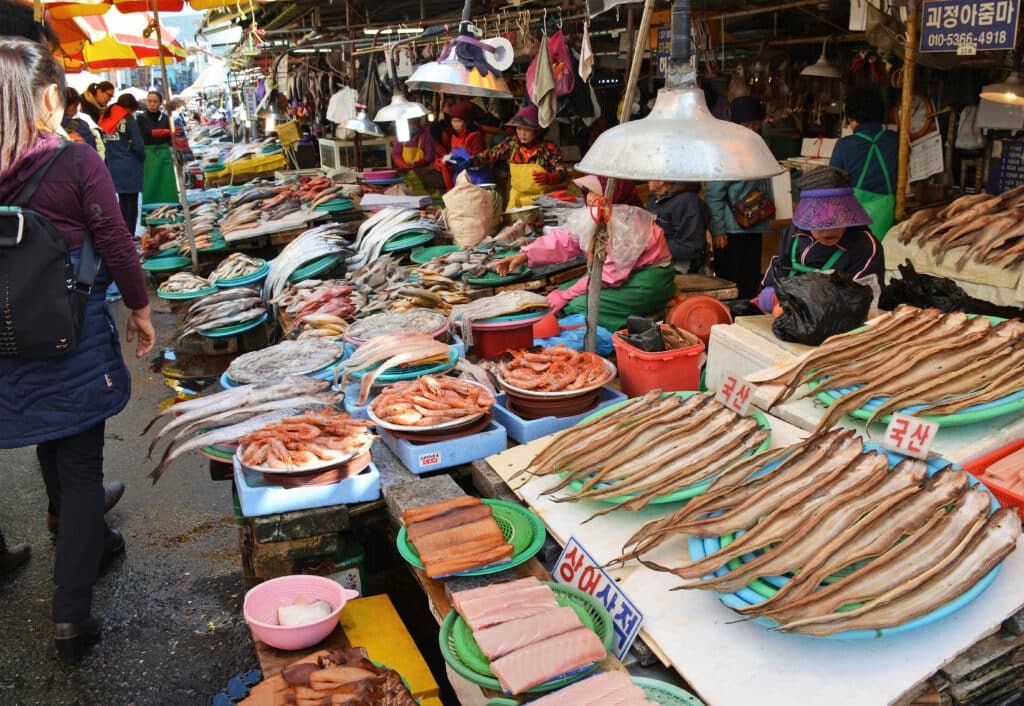
Jagalchi Fish Market is the largest seafood market in South Korea and one of the most fascinating places to explore in Busan.
The market is famous for its lively atmosphere where vendors sell a wide variety of fresh seafood including fish, octopus, crab, and shellfish. Visitors can walk through rows of stalls filled with seafood caught by local fishermen.
Many restaurants inside the market allow visitors to choose seafood directly from the stalls before having it prepared and served fresh.
For travelers interested in experiencing authentic Korean food culture, Jagalchi Fish Market offers a unique culinary adventure in the heart of Busan.
Taejongdae Resort Park
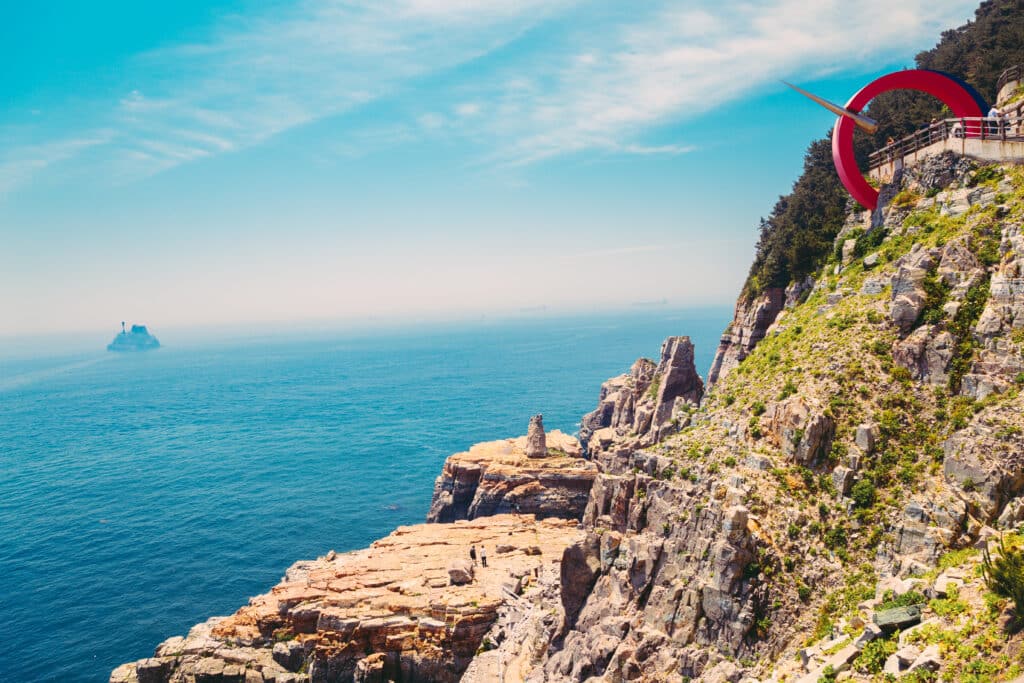
Taejongdae Resort Park is one of Busan’s most scenic natural attractions. Located on the southern tip of Yeongdo Island, the park is famous for its dramatic coastal cliffs, dense forests, and breathtaking ocean views.
Visitors can explore the park by walking along scenic trails or by riding the Danubi Train, a small tourist train that stops at several viewpoints throughout the park. One of the most popular stops is the Yeongdo Lighthouse, where visitors can enjoy spectacular views across the sea.
The rocky cliffs and crashing waves create a powerful coastal landscape that feels far removed from the busy city center. On clear days, it is even possible to see distant islands along the horizon.
Taejongdae is a perfect destination for travelers who want to experience Busan’s natural beauty while enjoying peaceful seaside scenery.
Beomeosa Temple
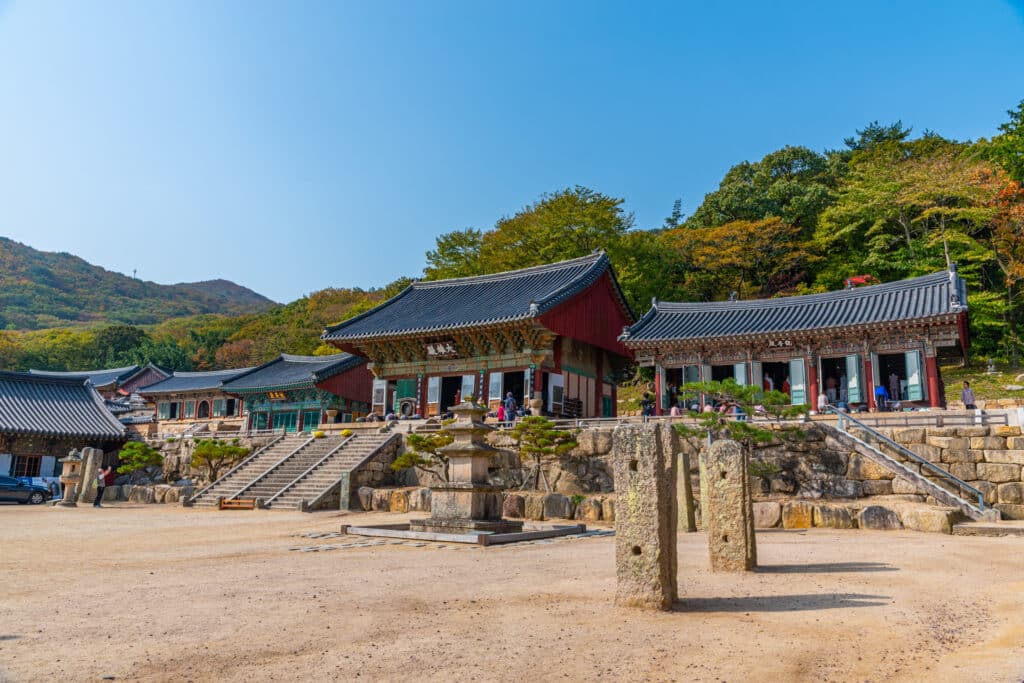
Located on the slopes of Geumjeongsan Mountain, Beomeosa Temple is one of the most important Buddhist temples in Busan. The temple was originally founded more than 1,300 years ago during the Silla Dynasty.
The temple complex includes beautiful wooden buildings, ornate gates, and quiet courtyards surrounded by forested mountains. Walking through the temple grounds offers a peaceful escape from the city’s busy atmosphere.
Visitors often combine their trip to Beomeosa with a hike in the surrounding mountains, which provide scenic trails and panoramic viewpoints.
During the spring and autumn seasons, the temple becomes especially beautiful as flowers and colorful foliage transform the landscape.
Beomeosa Temple is a wonderful place to experience Korean spiritual traditions and mountain scenery.
BIFF Square
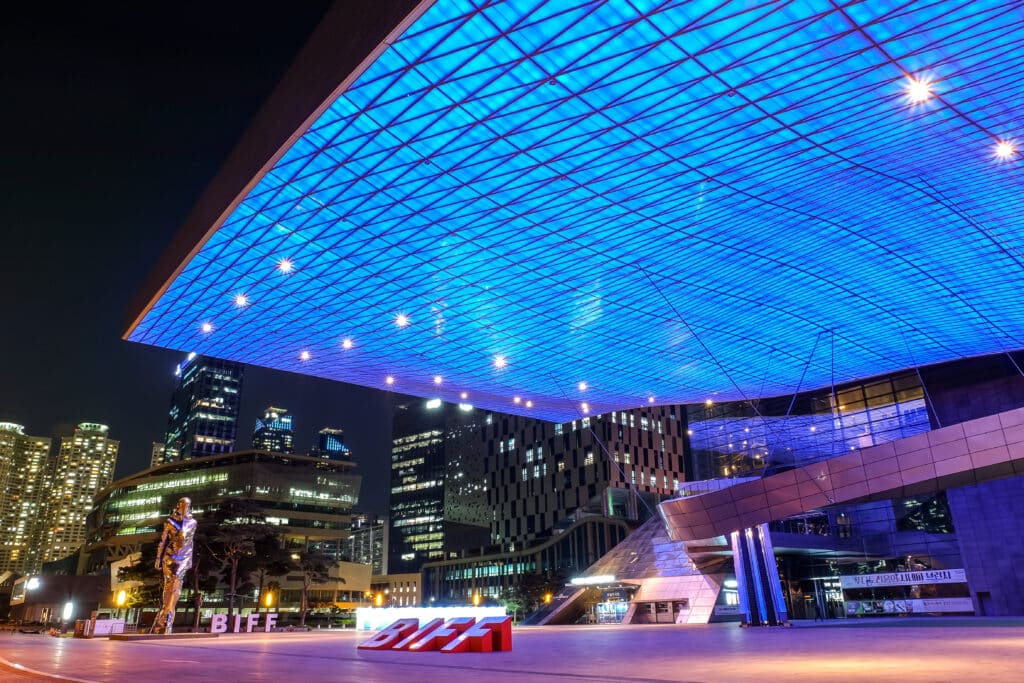
BIFF Square is one of Busan’s most vibrant entertainment districts. The area is named after the Busan International Film Festival, one of Asia’s most important film events.
The square is filled with theaters, shops, restaurants, and lively street food vendors. Visitors can walk along the streets and see handprints of famous actors and filmmakers embedded in the pavement.
BIFF Square is also one of the best places in Busan to try Korean street food. Popular snacks include spicy rice cakes, sweet pancakes, and fried seafood.
The district comes alive in the evening when bright lights illuminate the streets and crowds gather to enjoy the lively atmosphere.
For travelers interested in food, culture, and nightlife, BIFF Square is a must-visit destination in Busan.
Busan Tower
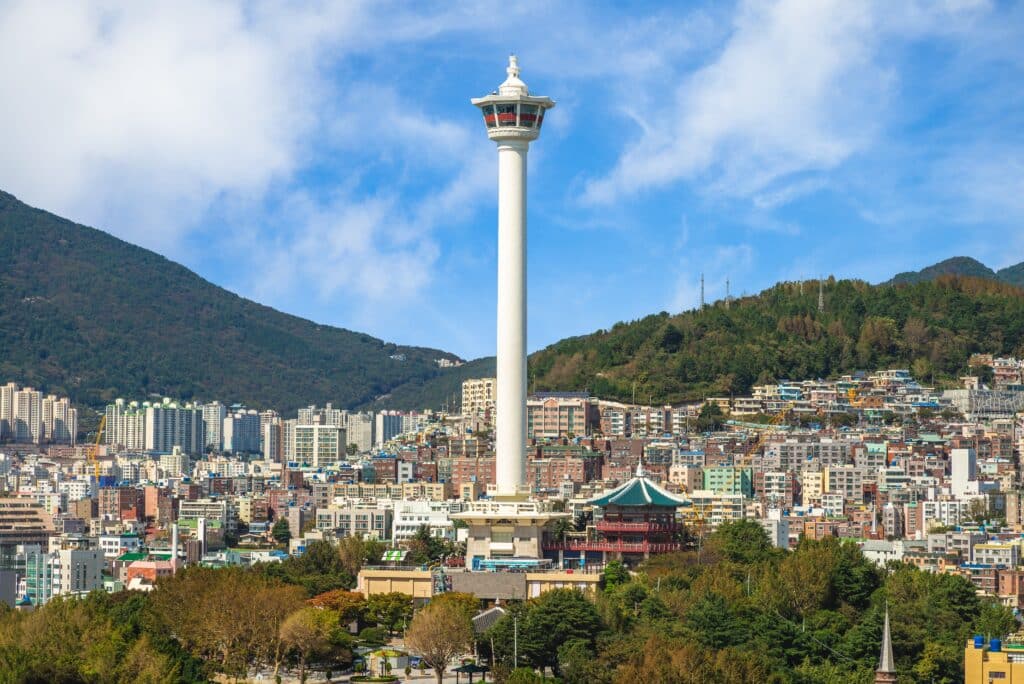
Standing in the center of Yongdusan Park, Busan Tower offers one of the best panoramic views of the city.
The observation deck at the top of the tower allows visitors to see the harbor, surrounding mountains, and busy neighborhoods that make up Busan’s skyline. From this viewpoint, the contrast between the city’s modern buildings and the nearby coastline becomes especially impressive.
Yongdusan Park itself is also a pleasant place to explore. The park features walking paths, monuments, and open spaces where visitors can relax while enjoying views of the harbor.
For travelers wanting to see Busan from above, Busan Tower provides one of the most memorable viewpoints in the city.
Songdo Cable Car
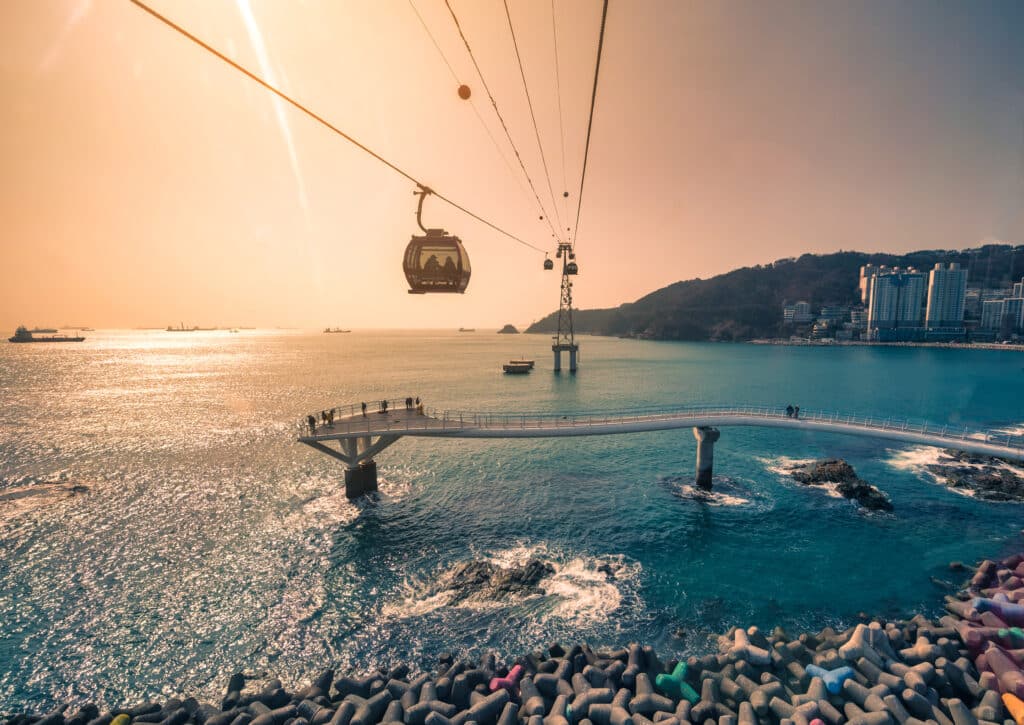
The Songdo Cable Car is one of the most exciting attractions in Busan. The cable car travels across the sea between Songdo Beach and Amnam Park, offering spectacular views over the coastline.
Glass-bottom cabins allow visitors to look directly down at the ocean below, creating a thrilling experience while crossing the water.
Once visitors reach Amnam Park, they can explore scenic walking trails and coastal viewpoints. The park’s cliffs and forest paths provide excellent opportunities for photography and relaxation.
Songdo Beach itself is one of Busan’s oldest beaches and features a pleasant seaside promenade.
The combination of cable car rides, ocean scenery, and coastal walks makes Songdo one of the most enjoyable attractions in the city.
How to Get Around Busan
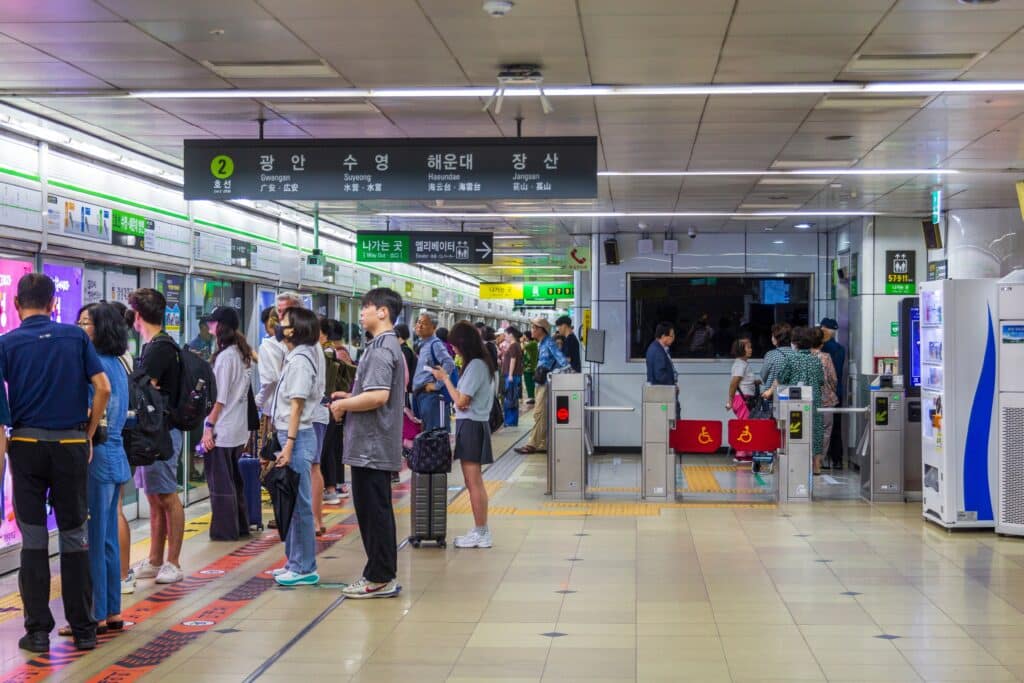
Getting around Busan is relatively easy thanks to its efficient public transportation system.
The subway is the most convenient way to travel between major attractions. It is clean, affordable, and easy to navigate, even for first-time visitors.
The bus network covers areas not directly connected by the subway, including coastal and mountain destinations such as Taejongdae and Beomeosa Temple.
Taxis are widely available and reasonably priced compared to many other major cities, making them a good option for short distances or late-night travel.
For convenience, it is recommended to use a T-money card, which can be used on subways, buses, and even in some shops.
Continue exploring Busan
Haeundae Blue Line Park
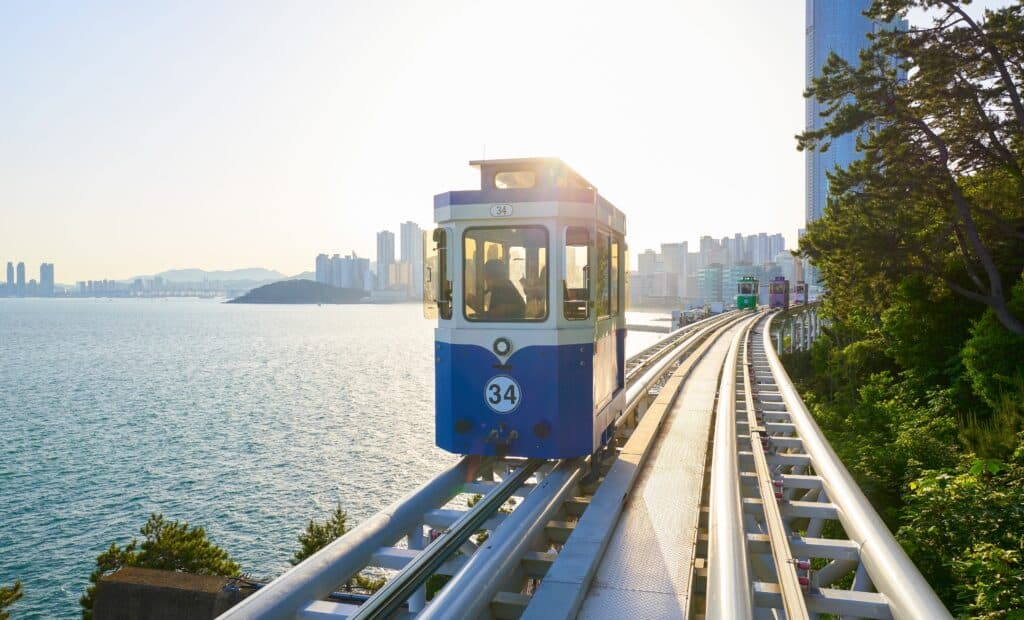
Haeundae Blue Line Park is one of the most scenic coastal attractions in Busan. The park follows a former railway line that runs along the coast between Haeundae Beach and Songjeong Beach, offering spectacular ocean views along the way.
Visitors can ride the colorful Sky Capsule, a small elevated train that moves slowly above the coastline. The ride provides panoramic views of the sea, rocky cliffs, and surrounding beaches. Another option is the Beach Train, which runs closer to the shoreline and stops at several scenic stations.
Along the route, travelers can explore observation decks, cafés, and walking paths that overlook the water. The area is especially beautiful during sunset when the sky turns shades of orange and pink over the ocean.
Haeundae Blue Line Park is a wonderful place to experience Busan’s coastal landscapes.
Dongbaekseom Island
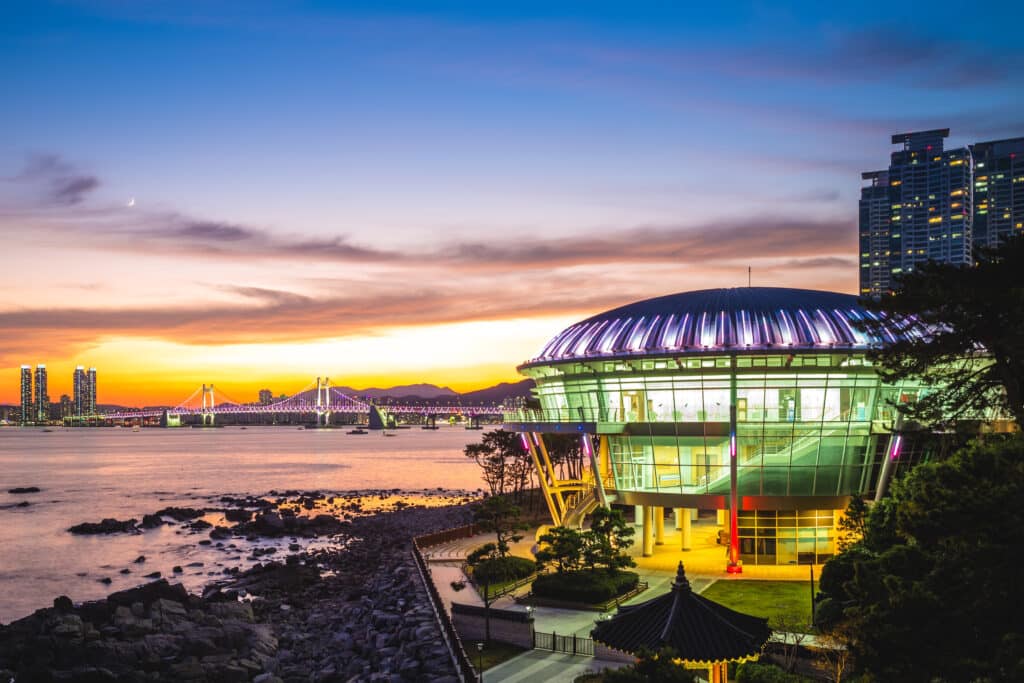
Dongbaekseom Island is a small peninsula located at the western end of Haeundae Beach. Despite being called an island, it is connected to the mainland and can easily be reached on foot.
The area features scenic walking trails that pass through forests and along rocky coastal paths. As visitors walk along the shoreline, they can enjoy impressive views of Busan’s skyline and the surrounding sea.
One of the highlights of Dongbaekseom is Nurimaru APEC House, a modern conference center built for the APEC summit in 2005. The building sits on a cliff overlooking the ocean and offers excellent viewpoints.
The peaceful nature trails and ocean views make Dongbaekseom a relaxing escape near the city’s busiest beach district.
Busan Cinema Center
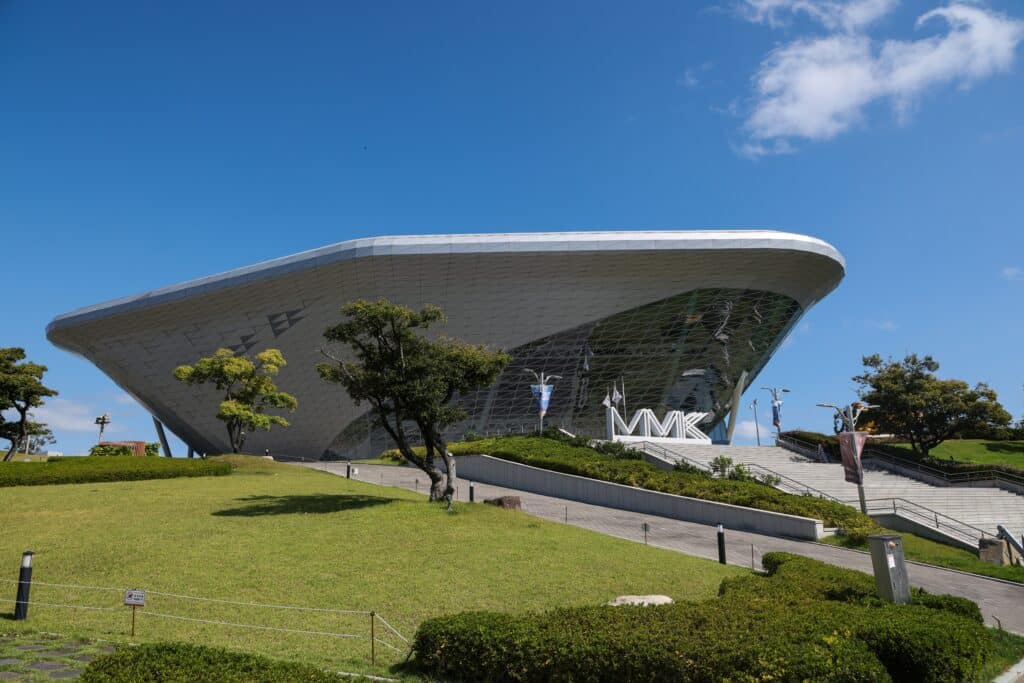
The Busan Cinema Center is one of the most striking modern buildings in the city. Designed with a massive cantilevered roof illuminated by thousands of LED lights, the structure has become an architectural icon.
The center serves as the main venue for the Busan International Film Festival, which attracts filmmakers and movie enthusiasts from around the world every year.
Visitors can walk through the open plaza beneath the enormous roof, attend film screenings, or explore exhibitions related to cinema and media.
Even when no events are taking place, the building remains an impressive sight, especially at night when the colorful lights illuminate the structure.
For travelers interested in modern architecture and film culture, the Busan Cinema Center is a fascinating destination.
Igidae Coastal Walk
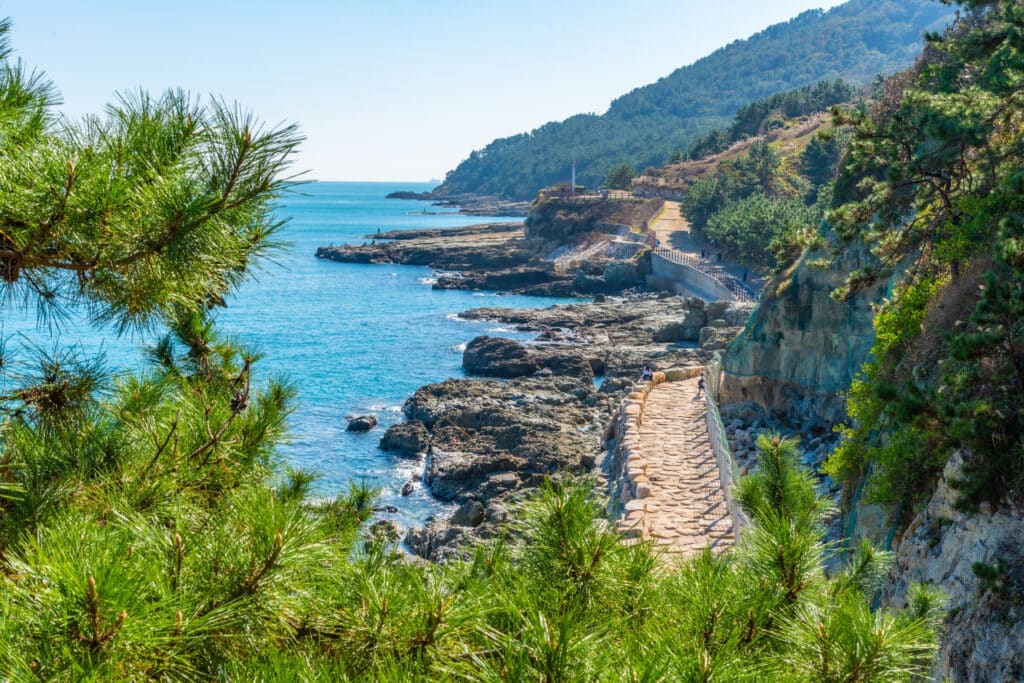
The Igidae Coastal Walk offers one of the most scenic hiking routes in Busan. The trail stretches along dramatic cliffs between forests and the sea, providing breathtaking views throughout the journey.
The walking path connects several viewpoints where visitors can admire the coastline and distant islands. On clear days, hikers can also see the impressive Gwangan Bridge in the distance.
The trail is relatively easy to follow and suitable for most visitors, making it a popular destination for both locals and travelers. Along the route, benches and rest areas provide places to relax while enjoying the ocean scenery.
For those who enjoy nature walks and coastal landscapes, the Igidae Coastal Walk offers one of the most memorable outdoor experiences in Busan.
Samgwangsa Temple
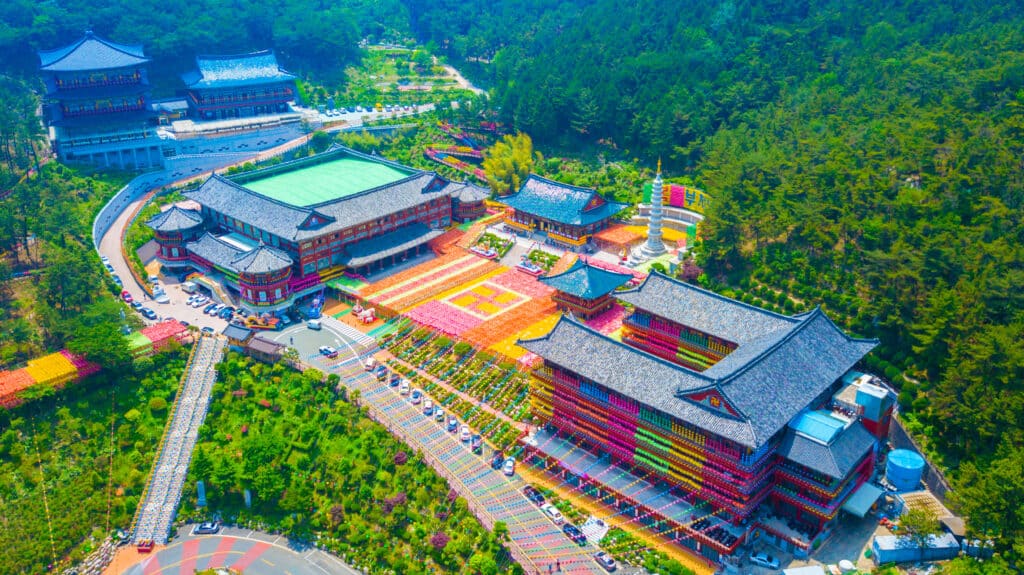
Samgwangsa Temple is one of the most visually spectacular temples in Busan, especially during the annual lantern festival.
Located on a hillside overlooking the city, the temple becomes famous each spring when thousands of colorful lanterns are hung across the temple grounds. The glowing lanterns create an extraordinary atmosphere during evening celebrations.
Visitors can explore the temple complex, which includes several halls, statues, and prayer areas. From the upper terraces, the view across the city skyline is particularly impressive.
Even outside the festival season, Samgwangsa Temple remains a peaceful place to experience Korean Buddhist culture and enjoy panoramic views of Busan.
Gukje Market
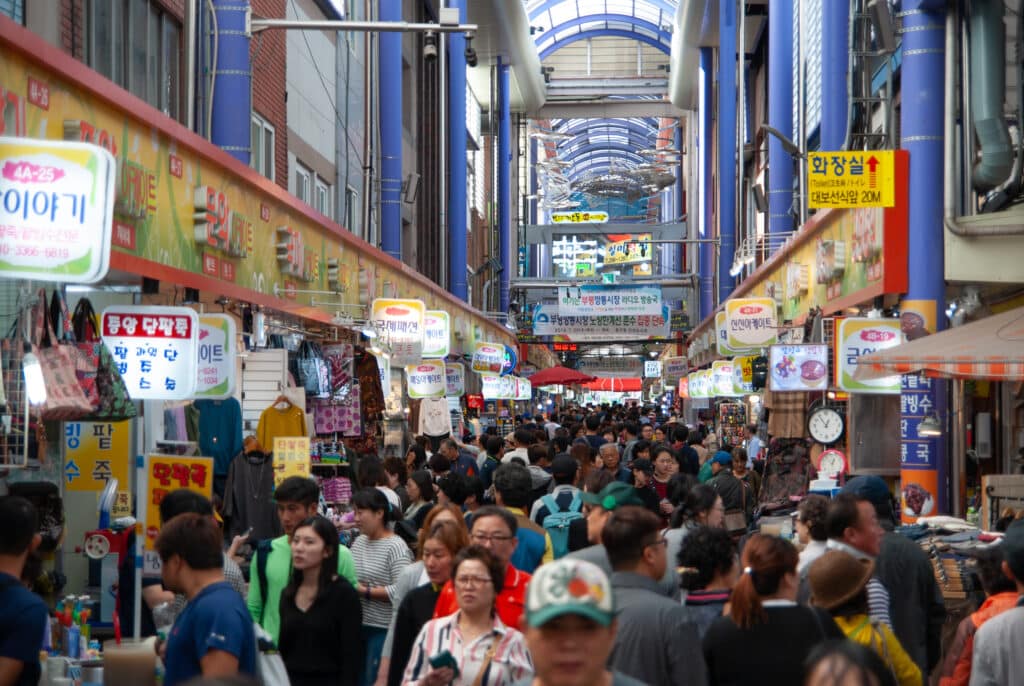
Gukje Market is one of the largest traditional markets in Busan and a fascinating place to experience the city’s lively atmosphere. The market dates back to the Korean War when refugees created small stalls to sell everyday goods. Over time, it grew into a massive shopping district filled with hundreds of shops and food vendors.
Today visitors can explore narrow alleys lined with stalls selling clothing, electronics, souvenirs, and local products. Street food vendors are also everywhere, offering classic Korean snacks such as spicy rice cakes, fried seafood, and sweet pancakes.
The market’s energetic environment provides an authentic glimpse into daily life in Busan. Walking through the busy corridors, listening to vendors calling out to customers, and tasting local street food makes visiting Gukje Market a memorable cultural experience.
Songjeong Beach
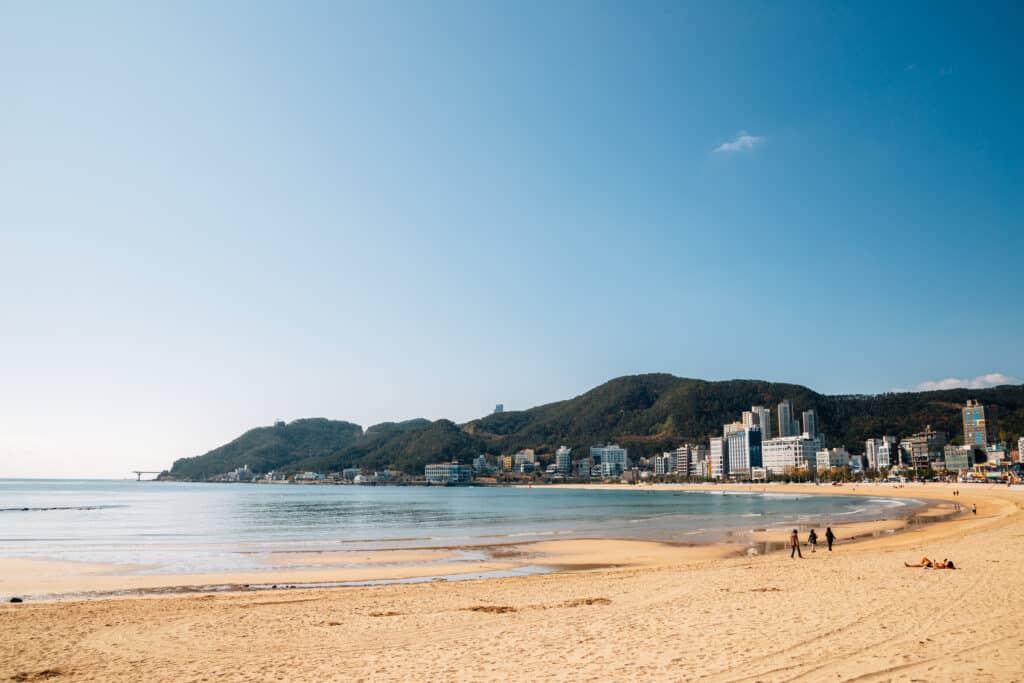
Songjeong Beach offers a quieter alternative to the more famous Haeundae Beach. Located along the northeastern coast of Busan, the beach is known for its relaxed atmosphere and beautiful shoreline.
The gentle waves make Songjeong one of the best places in Busan for surfing. Several surf schools along the beach offer lessons and equipment rentals for beginners who want to try the sport.
Visitors can also enjoy cafés and seafood restaurants located near the beachfront promenade. Watching surfers ride the waves while enjoying ocean views creates a peaceful seaside experience.
Because the beach is less crowded than other popular spots in Busan, Songjeong is perfect for travelers seeking a calm coastal escape.
Huinnyeoul Culture Village
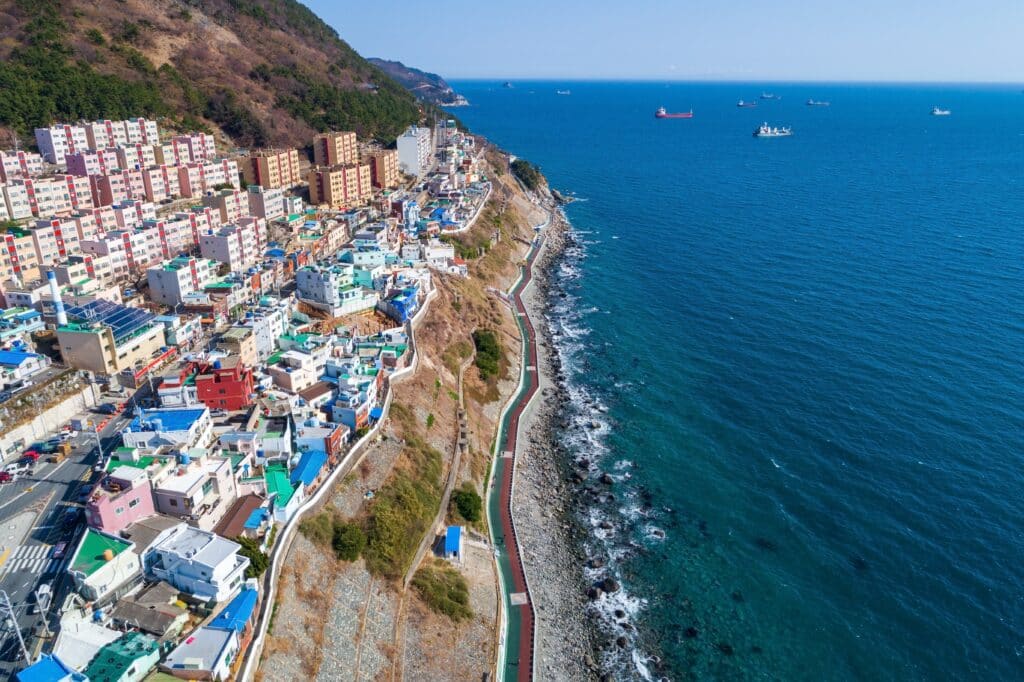
Huinnyeoul Culture Village is a charming seaside neighborhood built along cliffs overlooking the ocean. Often compared to Gamcheon Culture Village, this district features colorful houses, artistic murals, and scenic viewpoints.
The narrow alleys wind through the hillside, revealing cafés, galleries, and small cultural spaces created by local artists. Many of the viewpoints offer breathtaking panoramas of the sea and nearby islands.
Because of its dramatic coastal setting, the village has also been used as a filming location for Korean movies and television dramas.
Visitors who enjoy photography, art, and quiet ocean views will find Huinnyeoul Culture Village to be one of the most charming neighborhoods in Busan.
UN Memorial Cemetery
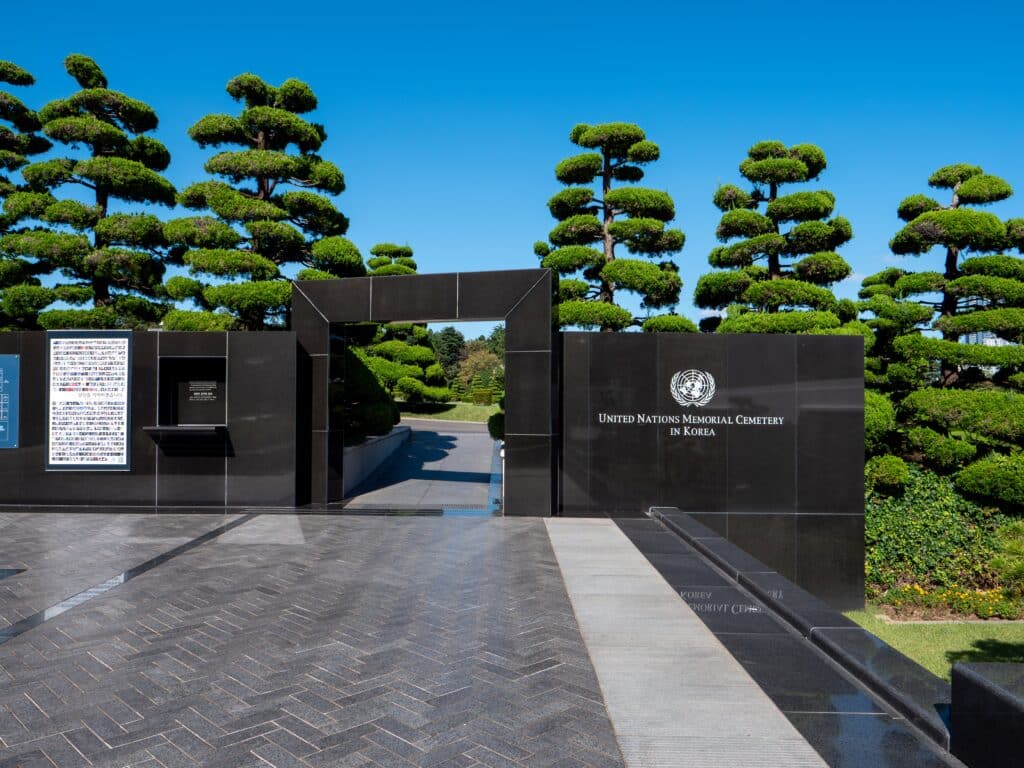
The UN Memorial Cemetery is one of the most meaningful historical sites in Busan. It serves as a memorial for soldiers from the United Nations who lost their lives during the Korean War.
The cemetery is carefully maintained and features rows of white headstones surrounded by gardens and quiet pathways. Flags from the participating countries are displayed throughout the memorial park.
Visitors can walk through the peaceful grounds while learning about the international efforts that helped defend South Korea during the war.
Although visiting the cemetery is a more reflective experience than other attractions in Busan, it offers important historical insight and honors the sacrifices made during a pivotal moment in Korean history.
Busan Museum
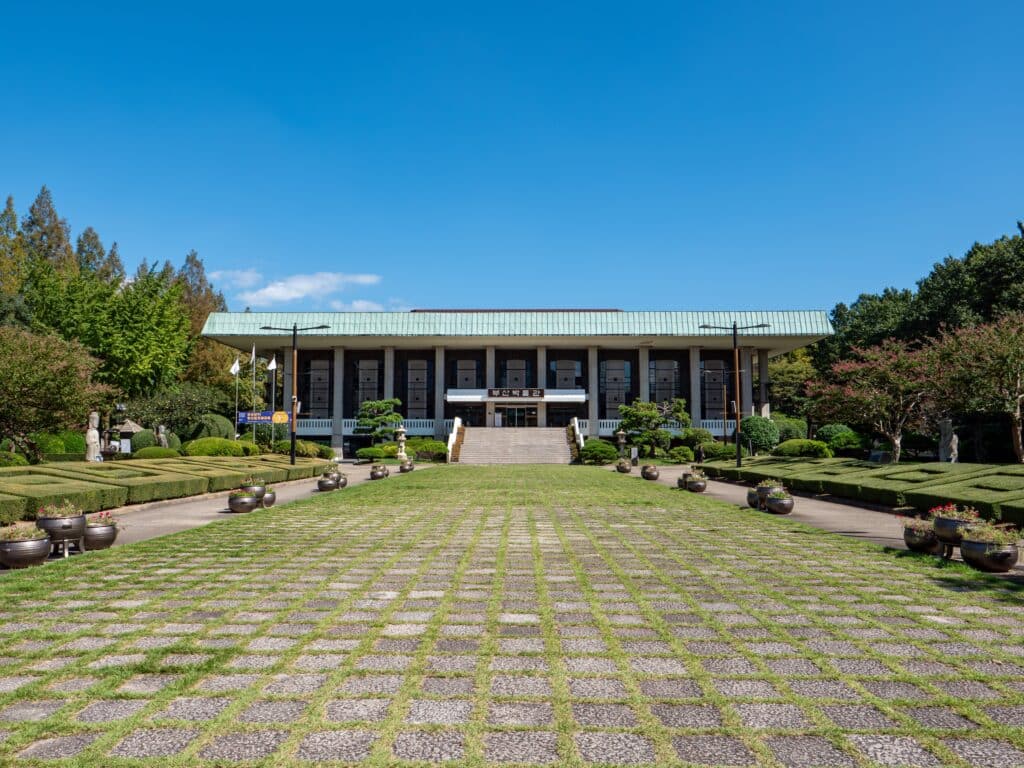
Busan Museum provides a comprehensive overview of the region’s history and cultural heritage. The museum’s exhibits cover various periods, from ancient Korean kingdoms to modern history.
Visitors can explore displays featuring traditional clothing, ceramics, weapons, and artifacts that illustrate the development of Busan as an important port city. Interactive exhibitions help explain the region’s cultural traditions and historical events.
One particularly interesting section focuses on the Korean War and Busan’s role as a temporary capital during that time.
Located near the UN Memorial Cemetery, the museum makes an excellent stop for travelers interested in learning more about Busan’s historical background
Millak Waterfront Park
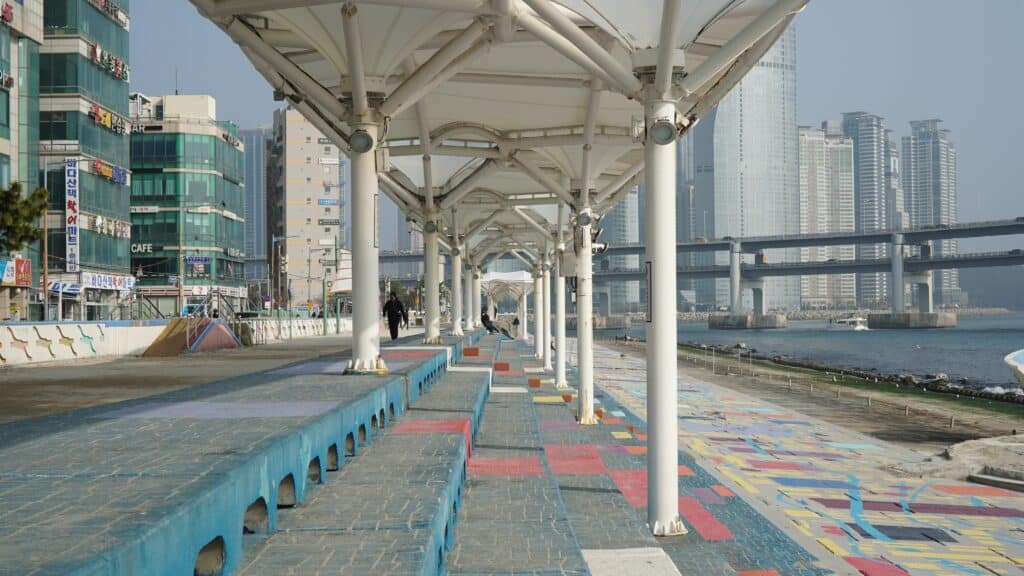
Millak Waterfront Park is one of the most enjoyable places in Busan to relax by the sea. Located near Gwangalli Beach, the park features wide wooden terraces where visitors can sit and enjoy views of the ocean.
Unlike many parks, Millak Waterfront Park encourages visitors to bring food and drinks and enjoy picnics by the water. In the evening, locals often gather here to eat fresh seafood or takeout meals while watching the lights of the Gwangan Bridge illuminate the night sky.
The relaxed atmosphere and open ocean views make the park especially popular with young locals and travelers looking for a quiet place to unwind.
Millak Waterfront Park is a wonderful location to experience Busan’s laid-back seaside lifestyle.
Shinsegae Centum City
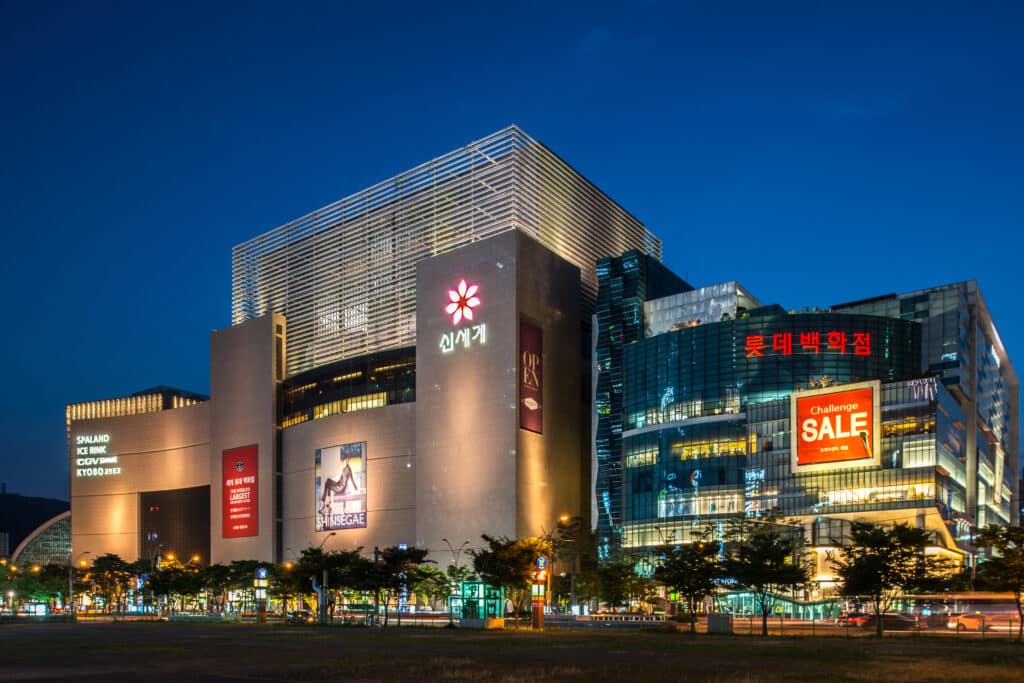
Shinsegae Centum City is one of the most impressive shopping destinations in Busan. The massive complex is recognized as one of the largest department stores in the world and offers far more than just retail shopping.
Inside the building visitors will find luxury boutiques, international brands, restaurants, cinemas, and entertainment facilities. One of the highlights is Spa Land, a famous Korean-style spa where guests can relax in hot baths and saunas.
The building also includes an ice-skating rink and rooftop garden areas where visitors can take a break from shopping.
Even travelers who are not interested in shopping often visit Shinsegae Centum City simply to experience the enormous scale and variety of attractions inside this unique complex.
Oryukdo Skywalk
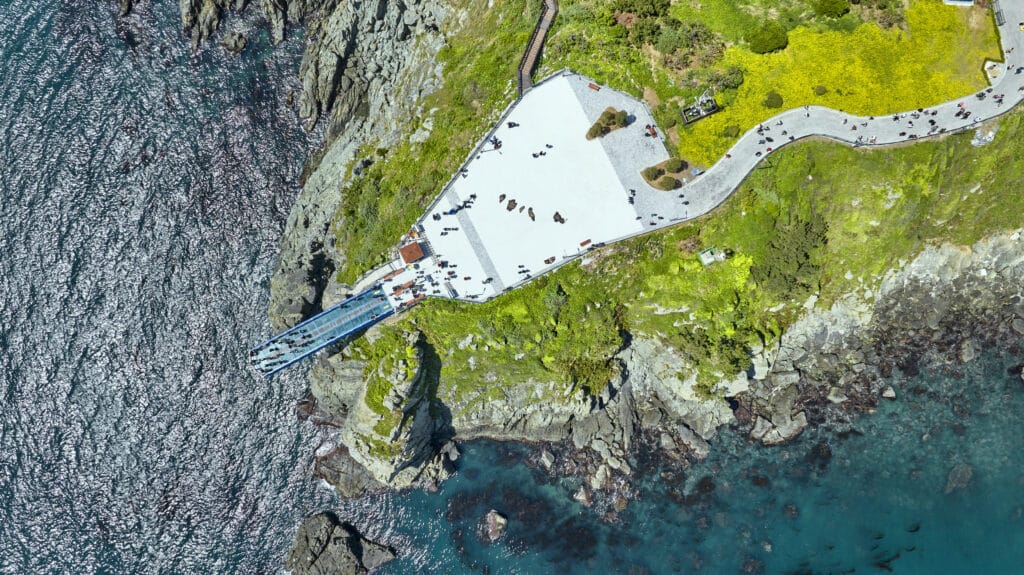
Oryukdo Skywalk offers one of the most thrilling viewpoints in Busan. The skywalk extends out from the cliffs above the ocean and features a glass floor that allows visitors to look directly down at the waves crashing below.
Standing on the transparent platform creates an exciting experience while offering spectacular views of the coastline and nearby islands known as the Oryukdo Islets.
The surrounding area also features scenic walking paths that connect to coastal hiking trails along the cliffs. These trails provide additional viewpoints overlooking the sea.
Because of its dramatic location and stunning ocean scenery, Oryukdo Skywalk has become a popular attraction for photographers and travelers exploring Busan’s natural landscapes.
Dalmaji Hill
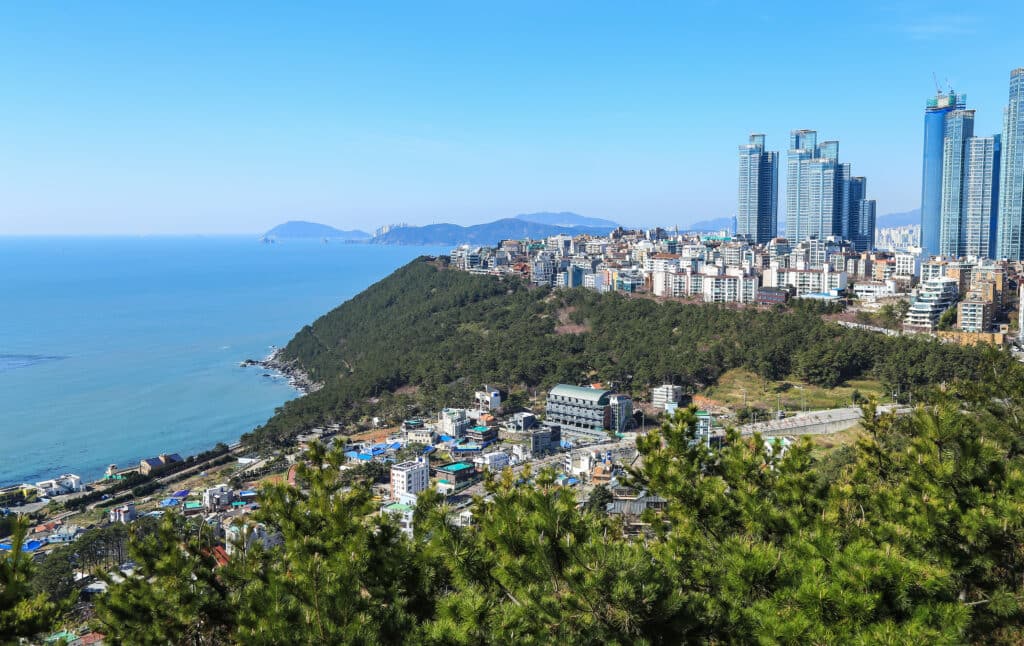
Dalmaji Hill is one of the most scenic viewpoints in Busan, particularly famous for its beautiful coastal road and cherry blossom trees.
Located near Haeundae Beach, the hill offers panoramic views of the ocean and surrounding coastline. During spring, cherry blossom trees bloom along the road, creating one of the most picturesque landscapes in the city.
The area is also home to art galleries, cafés, and small cultural spaces that attract visitors interested in Busan’s creative scene.
Many travelers visit Dalmaji Hill at sunset when the sky glows above the sea and the city lights begin to appear below.
The combination of scenic views, art, and peaceful surroundings makes Dalmaji Hill a charming destination.
Busan X the Sky
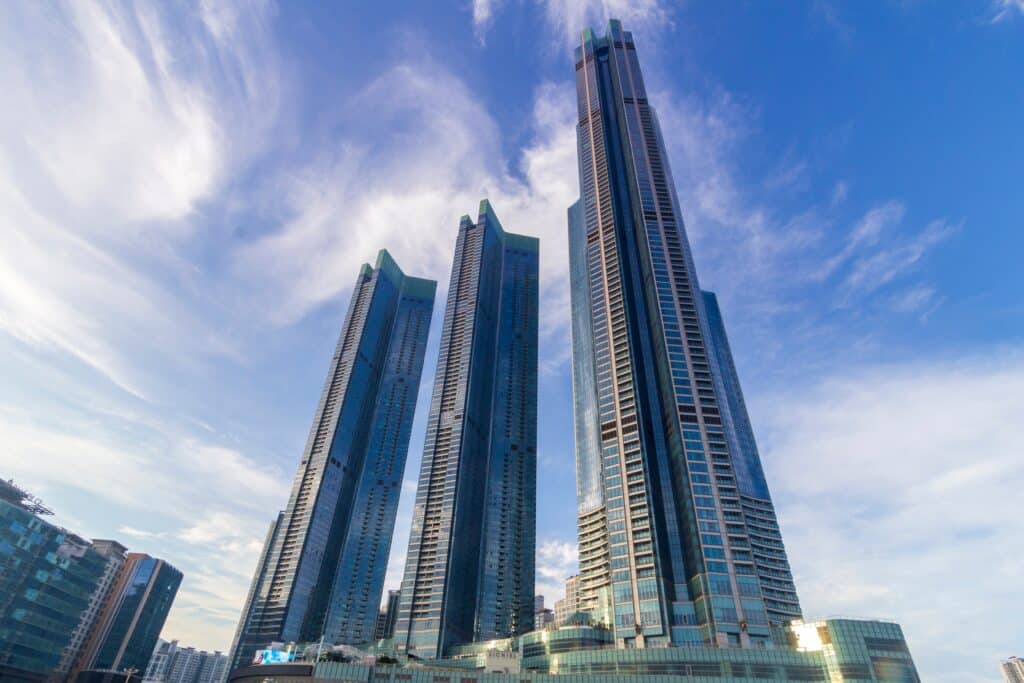
Busan X the Sky is the tallest observation deck in South Korea and one of the most impressive viewpoints in the city. Located in the LCT Landmark Tower near Haeundae Beach, the observation platform offers spectacular panoramic views of Busan.
From the top floors visitors can see the coastline, beaches, mountains, and skyline stretching across the city. The observation deck also features glass floors and interactive displays that enhance the viewing experience.
At night the city lights create a stunning scene that highlights Busan’s vibrant urban landscape.
For travelers wanting to see the full scale of Busan from above, Busan X the Sky provides an unforgettable perspective.
Songdo Yonggung Suspension Bridge – Scenic Coastal Walk
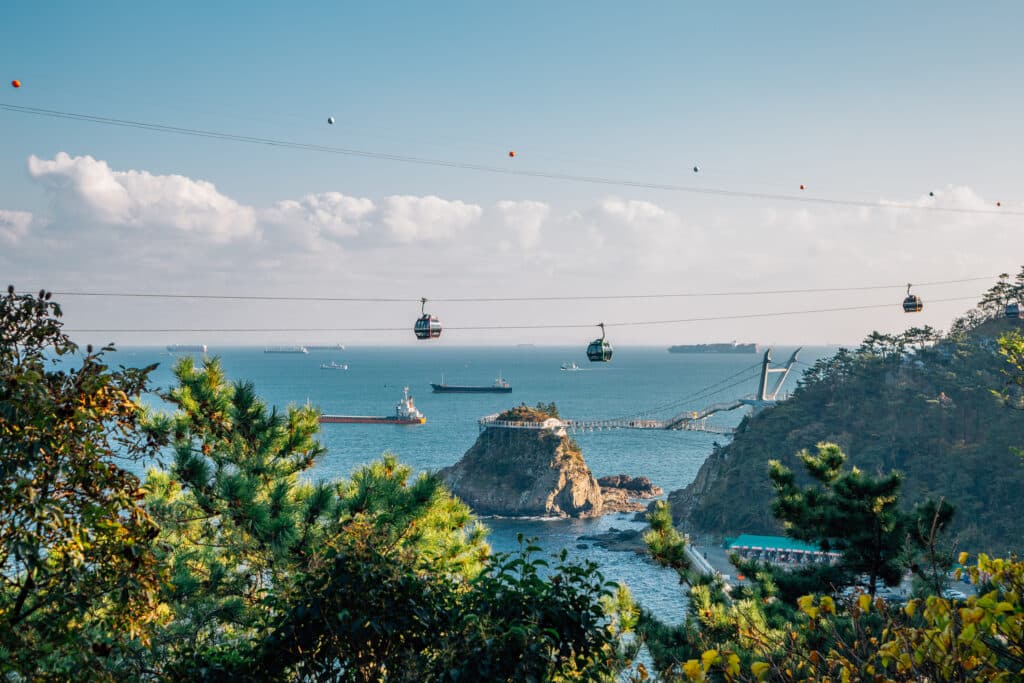
The Songdo Yonggung Suspension Bridge is one of the most scenic coastal attractions in Busan, offering breathtaking views of the ocean and surrounding cliffs. Stretching across a rocky section of the coastline near Songdo Beach, the bridge connects the mainland to a small offshore islet, creating a unique walking experience above the sea.
As visitors cross the bridge, they can enjoy panoramic views of the coastline, turquoise waters, and rugged rock formations below. The gentle movement of the suspension bridge adds a slight thrill, making the walk both exciting and memorable without being too challenging.
The area around the bridge is part of the Songdo coastal walking trail, which features scenic paths, viewpoints, and nearby attractions such as the Songdo Cable Car and Songdo Skywalk. Many visitors combine these spots into a relaxing half-day itinerary along Busan’s western coastline.
The bridge is especially beautiful during sunset, when the warm light reflects off the ocean and creates a peaceful atmosphere along the coast. Early morning visits also offer quieter surroundings and soft light for photography.
Because of its stunning views and easy accessibility, the Songdo Yonggung Suspension Bridge has become a popular spot for both locals and travelers looking to experience Busan’s natural coastal beauty.
What to Eat in Busan

Busan is famous for its incredible food scene, especially fresh seafood and local specialties.
One of the best places to experience this is Jagalchi Fish Market, where visitors can choose fresh seafood and have it prepared on the spot. This offers a unique and authentic culinary experience.
Another popular street food is Ssiat Hotteok, a sweet pancake filled with seeds, nuts, and brown sugar syrup. It is especially famous in BIFF Square.
Busan is also known for Milmyeon, a local noodle dish similar to cold noodles, often served with a refreshing broth that is perfect during warmer months.
You will also find plenty of Eomuk (fish cake) stalls throughout the city, particularly near markets and transport hubs. These skewered fish cakes are a popular and affordable snack.
Best Time to Visit Busan
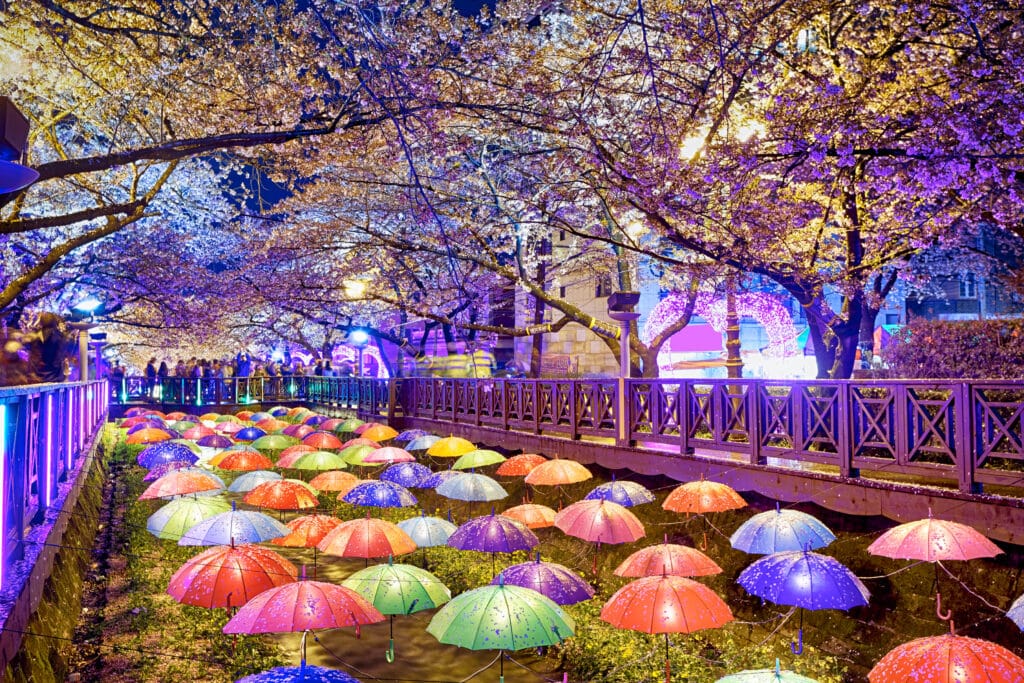
Busan can be visited throughout the year, but each season offers a different experience.
Spring (March to May) is one of the best times to visit, with mild temperatures and cherry blossoms blooming across the city, especially around Dalmaji Hill.
Summer (June to August) is the peak travel season, when visitors flock to Busan’s beaches. Haeundae Beach becomes especially lively, though it can also be crowded.
Autumn (September to November) offers clear skies, comfortable temperatures, and beautiful foliage, making it ideal for sightseeing and hiking.
Winter (December to February) is quieter and less crowded. While temperatures are cooler, the air is often clear, providing excellent visibility for coastal views.
FAQ – Visiting Busan
Is Busan worth visiting?
Yes, Busan is one of the most diverse destinations in South Korea, offering beaches, temples, markets, and scenic coastal views.
How many days should I spend in Busan?
Most travelers spend 2 to 3 days in Busan to explore the main attractions and enjoy the coastal atmosphere.
What is the best area to stay in Busan?
Haeundae is ideal for first-time visitors, while Seomyeon offers central access and nightlife.
When is the best time to visit Busan?
Spring and autumn provide the most comfortable weather, while summer is best for beach activities.
Is Busan better than Seoul?
Busan offers a more relaxed, coastal experience, while Seoul is larger and more focused on culture, history, and urban life.
Final Thoughts
Busan offers an incredible mix of natural beauty, cultural attractions, and modern city life. From relaxing on the sandy shores of Haeundae Beach to exploring colorful neighborhoods like Gamcheon Culture Village, the city provides countless experiences for travelers.
One of the unique aspects of Busan is the way the city blends mountains, beaches, and urban landscapes. Visitors can hike scenic coastal trails, visit historic temples such as Haedong Yonggungsa Temple, and enjoy fresh seafood at famous markets like Jagalchi Fish Market—all within the same day.
The city also offers a lively cultural scene, especially during events such as the Busan International Film Festival, which attracts visitors from around the world.
Whether you are interested in beaches, culture, food, or scenic landscapes, Busan offers a diverse range of attractions that make it one of the most exciting destinations in South Korea.
Exploring these 25 best things to do in Busan will help travelers experience the unique charm and vibrant energy of this remarkable coastal city.