
Morocco is not simply a destination; it is a sensation that lingers long after the journey ends. Perched between the Atlantic Ocean, the Mediterranean Sea, and the vast Sahara Desert, this North African kingdom unfolds like a living mosaic of color, sound, and story. Every city, mountain, and shoreline carries echoes of ancient civilizations, nomadic traditions, and artistic expression shaped by centuries of cultural exchange. From Amazigh roots and Arab heritage to Andalusian refinement and African rhythms, Morocco’s identity is layered, complex, and endlessly captivating.
Traveling through Morocco feels like stepping into a world where time moves differently. In bustling medinas, artisans still shape brass, leather, and clay by hand, just as their ancestors did generations ago. The call to prayer drifts over tiled rooftops, guiding both locals and travelers through daily rituals grounded in faith and community. Outside the cities, landscapes shift dramatically—snow-dusted peaks give way to palm-filled oases, rugged coastlines soften into golden beaches, and endless dunes ripple beneath a vast desert sky.
What makes Morocco extraordinary is its ability to surprise at every turn. A single day can begin with mint tea in a centuries-old riad, continue through labyrinthine souks alive with spice and color, and end beneath stars so bright they feel almost within reach. Hospitality here is not a courtesy; it is a way of life. Visitors are welcomed not as strangers, but as honored guests invited to share meals, stories, and moments of quiet connection.
25. Marrakech: The Beating Heart of Morocco
Marrakech is a city that awakens the senses and stirs the soul. Known as the Red City for its rose-hued walls and buildings, it stands as one of Morocco’s most iconic destinations, blending ancient tradition with vibrant modern life. From the moment you enter its historic medina, Marrakech envelops you in movement, sound, and color, creating an experience that is both exhilarating and deeply rooted in history.
At the heart of the city lies Jemaa el-Fnaa, a legendary square that transforms throughout the day. By morning, it hums gently with juice vendors and wandering performers. By night, it becomes a living theater of storytellers, musicians, and food stalls sizzling with the aromas of grilled meats and fragrant spices. Surrounding the square, labyrinthine souks invite exploration, offering everything from handwoven rugs and lanterns to spices that glow like jewels.
Beyond the energy of the streets, Marrakech reveals a quieter, more reflective side. Hidden behind unassuming doors are riads—traditional homes built around tranquil courtyards filled with fountains, orange trees, and intricate tilework. The city’s historic landmarks, including the Koutoubia Mosque and the Saadian Tombs, speak of powerful dynasties and artistic excellence that shaped Morocco’s imperial past.
Marrakech is also a gateway to renewal. Hammams offer restorative rituals rooted in centuries-old practices, while nearby gardens such as Majorelle provide moments of calm amid vivid blues and exotic plants. Bold, beautiful, and endlessly alive, Marrakech captures the essence of Morocco in motion.
24. Fes: The Soul of Moroccan Tradition
Fes is often described as Morocco’s spiritual and cultural heart, a city where tradition is preserved with remarkable devotion. Founded in the ninth century, Fes is home to one of the world’s oldest continuously inhabited medieval cities, and walking through its medina feels like stepping into a living museum shaped by centuries of scholarship, craftsmanship, and faith.
The Fes el-Bali medina is a UNESCO World Heritage site and one of the largest car-free urban zones in the world. Its narrow alleys twist past mosques, madrasas, and workshops where artisans practice ancient trades. The rhythmic tapping of metalworkers, the scent of cedarwood, and the sight of hand-dyed leather at the famous tanneries create a multisensory journey unlike any other.
Fes is renowned for its intellectual legacy. Al-Qarawiyyin University, founded in 859, stands as a symbol of the city’s role as a center of learning in the Islamic world. Religious architecture here is both intricate and profound, with zellige tilework and carved stucco reflecting extraordinary artistic mastery.
Despite its deep roots, Fes is not frozen in time. Elegant riads, thoughtful restorations, and a growing cultural scene allow visitors to experience history with comfort and intimacy. Fes rewards patience and curiosity, offering profound insight into Morocco’s enduring traditions and the quiet beauty of a city devoted to preserving its soul.
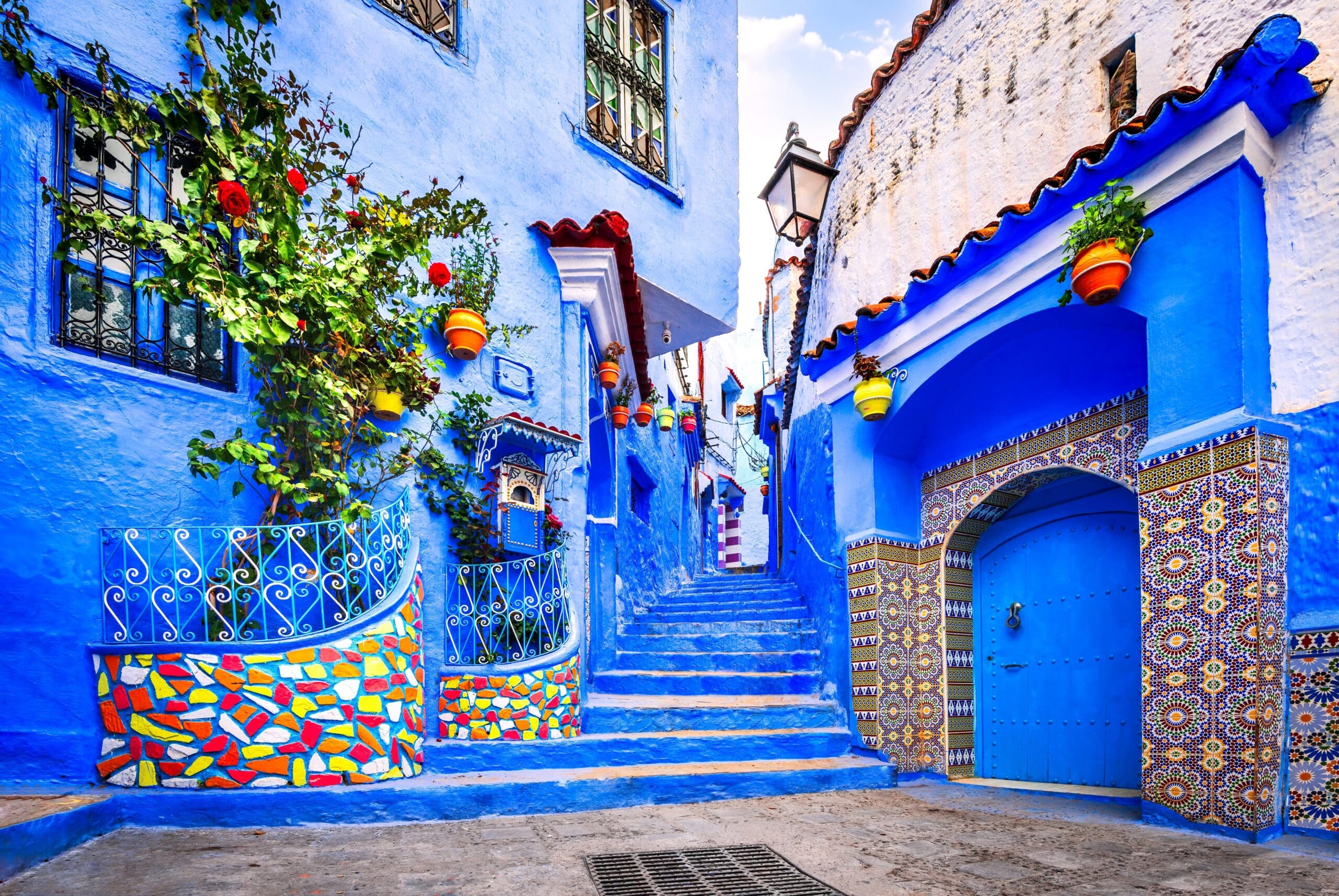
23. Chefchaouen: Morocco’s Blue Dream
Tucked into the Rif Mountains, Chefchaouen feels like a dream painted in shades of blue. Known affectionately as the Blue Pearl, this small mountain town captivates travelers with its calming atmosphere and striking visual harmony. Every wall, stairway, and alley seems washed in soft blues that shift gently with the light of day.
Chefchaouen’s charm lies in its simplicity. Life moves slowly here, inviting visitors to wander without direction and discover beauty in small details—a painted doorway, a cascading flower pot, or a quiet café overlooking the hills. The medina is compact and welcoming, offering handmade textiles, woven blankets, and artisanal goods that reflect the region’s Amazigh heritage.
The surrounding landscape adds to Chefchaouen’s appeal. Trails leading into the Rif Mountains provide breathtaking views, fresh air, and moments of solitude among olive groves and rocky peaks. Nearby waterfalls and natural springs offer peaceful escapes for those seeking connection with nature.
Chefchaouen is also a place of reflection. Its gentle pace, friendly locals, and soothing color palette create an atmosphere that encourages mindfulness and presence. Whether you come for photography, relaxation, or simple curiosity, Chefchaouen leaves a lasting impression as one of Morocco’s most serene and visually enchanting destinations.
22. Merzouga and the Sahara: Into the Infinite
The Sahara Desert represents Morocco at its most elemental and awe-inspiring. Near the village of Merzouga, towering dunes of Erg Chebbi rise dramatically from the landscape, forming a sea of golden sand that stretches toward the horizon. This is a place where silence speaks and vastness humbles every visitor.
A journey into the desert often begins on camelback, following ancient paths once used by caravans. As the sun sets, the dunes glow with shifting shades of amber and rose, creating a spectacle that feels almost unreal. Nights in the Sahara are unforgettable, marked by clear skies filled with countless stars and the rhythmic beat of traditional desert music around the campfire.
The desert is not empty; it is deeply alive with culture. Local Amazigh and nomadic communities share stories, hospitality, and wisdom shaped by generations of life in harmony with harsh surroundings. Their music, food, and traditions add warmth and meaning to the stark beauty of the landscape.
Merzouga and the Sahara offer more than adventure—they offer perspective. In the vast stillness, time slows, distractions fade, and travelers reconnect with something essential. It is an experience that remains etched in memory long after the sand is brushed away.
21. Essaouira: Where the Ocean Breathes Art
Essaouira is a city shaped by wind, waves, and creativity. Set along Morocco’s Atlantic coast, it offers a refreshing contrast to the intensity of inland cities. Whitewashed walls, blue shutters, and sweeping ocean views give Essaouira a relaxed, almost timeless character that draws artists, surfers, and free spirits from around the world.
The historic medina, a UNESCO World Heritage site, is both elegant and approachable. Its orderly layout makes wandering easy, while galleries, workshops, and music drifting through the streets reflect the city’s strong artistic soul. The bustling harbor, filled with blue fishing boats, provides a daily spectacle as fishermen unload their catch and seabirds circle above.
Essaouira’s beaches stretch wide and open, shaped by steady Atlantic winds that make the city a global hub for windsurfing and kitesurfing. Even for those who stay on shore, long walks along the sand and ramparts offer a sense of freedom and calm.
Food in Essaouira is fresh and flavorful, with seafood taking center stage. Grilled fish enjoyed beside the harbor captures the essence of the city—simple, honest, and deeply connected to the sea. Essaouira invites you to slow down, breathe deeply, and let Morocco’s coastal rhythm guide you.
20. Atlas Mountains: Morocco’s Majestic Backbone
The Atlas Mountains rise like a powerful spine through the heart of Morocco, shaping both its landscapes and its way of life. Snow-capped peaks, deep valleys, and terraced hillsides create a dramatic setting that feels worlds apart from the country’s bustling cities. This vast mountain range is home to Amazigh communities whose traditions, architecture, and hospitality remain deeply rooted in the land.
Traveling through the Atlas reveals a slower, more grounded rhythm. Small villages cling to hillsides, built from earth and stone that blend seamlessly with the surroundings. Life here follows the seasons, and visitors are often welcomed with warm bread, olive oil, and mint tea, shared generously in family homes. These simple gestures offer meaningful insight into Morocco’s rural soul.
The mountains are also a paradise for outdoor lovers. Trails wind through cedar forests, past walnut groves and rivers, offering unforgettable hiking experiences. In winter, higher elevations transform into snowy landscapes, while spring brings wildflowers and flowing streams. Each season paints the Atlas in a different light, making it a year-round destination.
Beyond physical beauty, the Atlas Mountains offer emotional depth. Standing among towering peaks fosters reflection and humility, reminding travelers of nature’s enduring power. Whether trekking remote paths or resting in a mountain lodge, the Atlas Mountains invite you to reconnect—with the earth, with tradition, and with yourself.
19. Ouarzazate: Gateway to the Desert Kingdoms
Ouarzazate stands at the crossroads of desert and mountain, a city defined by light, history, and cinematic imagination. Often called the “Hollywood of Africa,” it has served as the backdrop for countless films, yet its true allure lies in its timeless kasbahs and dramatic landscapes.
The city’s most famous landmark, Aït Ben Haddou, rises like a sand-colored mirage along an ancient caravan route. This UNESCO-listed ksar, built of mudbrick and stone, tells stories of trade, power, and survival in harsh desert conditions. Walking through its narrow passages feels like traveling back centuries.
Ouarzazate itself is calm and spacious, offering a welcome pause between long desert journeys. Palm groves surround the city, while the nearby Atlas Mountains frame the horizon. Local markets reveal everyday Moroccan life, far from tourist crowds, where simplicity and tradition prevail.
Sunsets in Ouarzazate are unforgettable. As the light fades, kasbah walls glow in warm shades of gold and copper, blending seamlessly into the desert. This city is not just a passageway—it is a place where Morocco’s cinematic beauty and historic resilience meet.
18. Tangier: Where Continents Converse
Tangier holds a unique place in Morocco, standing at the meeting point of Africa and Europe. Overlooking the Strait of Gibraltar, this port city has long been a crossroads of cultures, ideas, and artistic expression. Its atmosphere feels both Moroccan and international, shaped by centuries of global influence.
The old medina rises above the sea, filled with whitewashed buildings, lively cafés, and hidden viewpoints offering sweeping ocean vistas. Writers, musicians, and painters have long found inspiration in Tangier’s light and layered identity, leaving behind a legacy of creativity and intellectual freedom.
Modern Tangier complements its historic charm with wide boulevards, beaches, and a growing cultural scene. Museums and galleries celebrate both local heritage and contemporary expression, while the city’s cafés remain spaces for reflection and conversation.
Tangier’s magic lies in its contrasts—the ancient and the modern, the African and the European, the grounded and the dreamlike. It is a city that invites curiosity and rewards those who embrace its complexity.
17. Rabat: The Graceful Capital
Rabat, Morocco’s capital, exudes elegance and balance. Less frenetic than other major cities, it offers a refined blend of history, governance, and coastal beauty. Here, tradition coexists peacefully with modern life, creating a city that feels both dignified and welcoming.
Historic landmarks such as the Hassan Tower and the Mausoleum of Mohammed V speak to Morocco’s royal legacy. Nearby, the Kasbah of the Udayas stands as a serene enclave of blue and white overlooking the Atlantic, offering quiet streets and stunning views.
Rabat’s contemporary side reveals itself in leafy neighborhoods, art institutions, and well-kept public spaces. The city’s rhythm is calm, making it ideal for travelers seeking cultural depth without crowds.
Rabat represents Morocco’s thoughtful side—a capital that honors its past while moving confidently into the future, offering a sense of harmony rarely found in large cities.
16. Casablanca: Modern Morocco in Motion
Casablanca is Morocco’s economic powerhouse, a city driven by ambition, innovation, and forward momentum. Often misunderstood, it reveals its beauty gradually, through architecture, energy, and the pulse of everyday life.
The Hassan II Mosque stands as Casablanca’s crown jewel, rising dramatically above the Atlantic. Its intricate craftsmanship and towering minaret symbolize the city’s blend of faith and modern engineering. Along the Corniche, oceanfront cafés and promenades reflect a cosmopolitan lifestyle.
Art Deco buildings line central districts, recalling a period when European influence shaped the city’s design. Markets, restaurants, and creative spaces reveal a dynamic cultural scene fueled by young entrepreneurs and artists.
Casablanca is not about nostalgia—it is about movement. It captures the spirit of a Morocco that looks ahead while remaining deeply connected to its roots.
15. Meknes: The Imperial City of Quiet Grandeur
Meknes is an imperial city that speaks softly yet carries immense historical weight. Often overshadowed by its more famous counterparts, Meknes rewards travelers who linger with a sense of calm dignity and architectural splendor. Founded in the seventeenth century by Sultan Moulay Ismail, the city was envisioned as a monumental capital, and its grandeur still echoes through massive gates, royal stables, and fortified walls.
Bab Mansour, one of the most impressive gates in North Africa, stands as Meknes’ iconic symbol. Decorated with intricate zellige tilework and Quranic inscriptions, it reflects the ambition and artistry of the Alaouite dynasty. Beyond the walls, wide avenues and open spaces give Meknes a more spacious, relaxed feel than other imperial cities.
The medina is lively yet approachable, filled with markets offering olives, spices, and traditional sweets unique to the region. Nearby, the Royal Granaries and stables reveal the scale of Moulay Ismail’s vision, designed to house thousands of horses and store years’ worth of supplies.
Surrounded by fertile plains and vineyards, Meknes is deeply connected to the land. It offers an authentic glimpse into Morocco’s imperial past without the rush of crowds, making it an ideal destination for thoughtful exploration and quiet admiration.
14. Volubilis: Echoes of Ancient Empires
Just outside Meknes lie the remarkable ruins of Volubilis, one of Morocco’s most significant archaeological sites. Once a thriving Roman city, Volubilis stands today as a testament to the country’s layered history, where empires rose, blended, and left enduring marks on the land.
Set against rolling green hills, the ruins feel both majestic and serene. Stone columns, triumphal arches, and remnants of grand villas hint at a sophisticated urban life that flourished nearly two thousand years ago. Intricate mosaics still decorate the floors, depicting mythological scenes and daily Roman life with astonishing detail.
Walking through Volubilis is a journey through time. Olive presses, bathhouses, and administrative buildings reveal how the city functioned as an important outpost of the Roman Empire. The surrounding countryside, unchanged in spirit, enhances the sense of historical continuity.
Volubilis invites reflection. Standing among its ruins, visitors gain perspective on Morocco’s deep past and its role as a crossroads of civilizations. It is a place where silence tells stories and history feels profoundly present.
13. Agadir: Sunlit Shores and Renewal
Agadir represents Morocco’s modern resilience and love for the sea. Rebuilt after a devastating earthquake in 1960, the city emerged with a fresh vision focused on openness, light, and coastal living. Today, Agadir is one of Morocco’s premier beach destinations, known for its long stretches of golden sand and year-round sunshine.
The city’s wide boulevards and seaside promenades offer a relaxed atmosphere ideal for leisurely walks and ocean views. Palm trees sway gently in the Atlantic breeze, while cafés and restaurants invite visitors to linger and enjoy fresh seafood and local flavors.
Above the city, the old kasbah ruins provide panoramic views of the coastline and harbor, offering a quiet reminder of Agadir’s past. Below, modern markets and souks maintain a connection to tradition, showcasing regional crafts and Amazigh culture.
Agadir is a place of balance—where comfort meets culture and relaxation meets exploration. It appeals to travelers seeking warmth, simplicity, and the restorative power of the ocean.
12. Dades Valley: Morocco’s Path of Wonders
The Dades Valley unfolds like a natural gallery carved by time and water. Known for its dramatic rock formations, lush oases, and winding roads, this region offers one of Morocco’s most visually striking journeys. Red cliffs rise sharply above green riverbanks, creating contrasts that feel almost surreal.
Traditional villages dot the valley, built from earth-toned materials that mirror the surrounding landscape. Life here is shaped by agriculture, with fig trees, almond groves, and rose fields flourishing along the river. The pace is slow, grounded in rhythm and routine.
The famous Dades Gorge features serpentine roads that twist dramatically through narrow canyon walls, offering breathtaking views at every turn. Hikers and photographers are drawn to its raw beauty and sense of isolation.
The Dades Valley is a celebration of nature’s artistry. It invites travelers to pause, observe, and appreciate the quiet harmony between people and the land they inhabit.
11. Todra Gorge: Nature’s Monument
Todra Gorge stands as one of Morocco’s most impressive natural wonders. Towering limestone cliffs rise hundreds of meters on either side of a narrow riverbed, creating a dramatic passage sculpted by centuries of flowing water. The sheer scale of the gorge inspires awe and reverence.
Located near the town of Tinghir, the gorge is easily accessible yet feels profoundly wild. Sunlight filters down between the cliffs, shifting shadows and colors throughout the day. The contrast between towering stone and flowing water creates a powerful sense of balance.
Local communities live along the palm-filled oasis nearby, relying on ancient irrigation systems that sustain life in an arid environment. Their presence adds warmth and humanity to the monumental landscape.
Todra Gorge is a place where nature dominates the senses. Whether walking its narrow path or simply standing in stillness, visitors feel the enduring strength and beauty of Morocco’s natural heritage.
10. Ifrane: Morocco’s Alpine Surprise
Ifrane feels like an unexpected dream set high in the Middle Atlas Mountains. Often called the “Switzerland of Morocco,” this town stands apart with its clean streets, alpine architecture, and crisp mountain air. Rather than ancient medinas or bustling souks, Ifrane offers tranquility, order, and a refreshing change of scenery.
Built during the French protectorate, the town features sloped roofs, flower-lined avenues, and wide parks that create a distinctly European atmosphere. In winter, snowfall transforms Ifrane into a quiet mountain retreat, while summer brings cool temperatures that attract visitors escaping the heat of the lowlands.
Beyond the town, cedar forests stretch across the surrounding hills, home to ancient trees and Barbary macaques. These forests provide scenic hiking opportunities and moments of peaceful immersion in nature. Nearby lakes and open meadows further enhance the region’s appeal.
Ifrane represents Morocco’s diversity. It shows how the country can surprise even seasoned travelers, offering serenity, natural beauty, and a different rhythm of life shaped by elevation and seasons.
9. Asilah: Art by the Sea
Asilah is a small coastal town where creativity meets calm. Located along Morocco’s northern Atlantic shore, it is known for its whitewashed medina, ocean-facing ramparts, and a strong artistic identity that permeates everyday life.
The medina’s walls serve as an open-air gallery, adorned with colorful murals that change each year during the town’s international arts festival. Walking through Asilah feels intimate and uplifting, with art woven naturally into streets and homes.
The town’s Portuguese-era fortifications offer stunning views of the ocean, especially at sunset, when waves crash gently below and the sky glows with soft light. Nearby beaches provide quiet spaces for relaxation, far from crowded resorts.
Asilah’s charm lies in its simplicity. It invites visitors to slow down, reflect, and enjoy the harmony between art, history, and the sea. This gentle balance makes Asilah one of Morocco’s most peaceful coastal escapes.
8. Ouzoud Waterfalls: Cascading Wonder
The Ouzoud Waterfalls are among Morocco’s most breathtaking natural attractions. Located in the Middle Atlas region, these powerful cascades plunge dramatically into a lush gorge, creating a refreshing contrast to the surrounding dry landscapes.
The sound of rushing water fills the air as mist rises from the falls, nourishing olive groves and fig trees along the valley. Well-marked paths allow visitors to descend gradually, offering multiple viewpoints of the waterfalls from different angles.
Barbary macaques often appear near the trails, adding a playful presence to the scene. At the base of the falls, small boats glide across the river, offering a unique perspective from below.
Ouzoud is a celebration of movement and life. It reminds visitors of Morocco’s hidden green heart and the power of water to shape beauty and abundance in unexpected places.
7. Tafilalt Oasis: Cradle of Dynasties
The Tafilalt Oasis stretches across southeastern Morocco as a vast, life-giving ribbon of palm groves and fertile land. Historically significant and agriculturally rich, this region is considered the birthplace of Morocco’s ruling Alaouite dynasty.
Ancient ksour and kasbahs rise from the oasis, built to protect trade routes and communities along trans-Saharan caravan paths. Dates remain a central symbol of the region, cultivated carefully and celebrated as both sustenance and heritage.
The oasis offers a glimpse into sustainable living, where water management systems and communal cooperation have supported life for centuries. Villages remain closely tied to tradition, with customs passed down through generations.
Tafilalt is a place of continuity. It reflects Morocco’s deep connection to the desert and the resilience required to thrive within it, offering travelers historical depth and quiet authenticity.
6. Al Hoceima: The Mediterranean Escape
Al Hoceima lies along Morocco’s Mediterranean coast, offering crystal-clear waters, dramatic cliffs, and a refreshing coastal atmosphere. Less visited than Atlantic destinations, it feels intimate and untouched, perfect for travelers seeking natural beauty and tranquility.
The surrounding national park protects pristine beaches and marine life, making the region ideal for swimming, snorkeling, and quiet exploration. Hills rise sharply from the coast, providing breathtaking views of the sea’s deep blues.
Local culture here reflects strong Amazigh roots, expressed through language, music, and cuisine. Fresh seafood and simple dishes highlight the Mediterranean influence on daily life.
Al Hoceima offers a different coastal experience—one of calm, clarity, and connection to nature. It reveals Morocco’s Mediterranean soul, serene and deeply beautiful.
5. Tafraoute: Painted Mountains and Amazigh Spirit
Tucked within the Anti-Atlas Mountains, Tafraoute is a destination defined by color, resilience, and Amazigh identity. Surrounded by striking granite rock formations that glow pink and orange in the sunlight, this small town feels deeply connected to its dramatic landscape. The mountains rise and curve like natural sculptures, creating a setting unlike anywhere else in Morocco.
Tafraoute is best known for its strong Amazigh heritage. Traditional dress, language, and customs remain an integral part of daily life, giving visitors an authentic cultural experience. Local markets offer handwoven carpets, silver jewelry, and leather goods that reflect regional artistry passed down through generations.
Nature lovers are drawn to Tafraoute for its hiking trails, almond groves, and hidden valleys. In early spring, almond trees burst into bloom, covering the hillsides in soft white and pink blossoms. The Painted Rocks, a land art installation blending boulders with vibrant colors, add a surreal artistic touch to the already striking terrain.
Tafraoute invites travelers to slow down and observe. Its beauty lies not in grandeur, but in harmony—between people, tradition, and the land that shapes their lives.
4. Sidi Ifni: Nostalgia by the Atlantic
Sidi Ifni rests quietly along Morocco’s southern Atlantic coast, carrying an air of nostalgia shaped by history and sea breezes. Once a Spanish enclave, the town retains a distinctive architectural style marked by curved lines, pastel tones, and Art Deco influences.
Cliffs rise dramatically above the ocean, offering sweeping views of rolling waves and wide beaches below. The coastline feels wild and expansive, perfect for long walks and moments of contemplation. Fishermen’s boats dot the shore, maintaining a timeless connection between town and sea.
Sidi Ifni’s calm pace makes it ideal for travelers seeking solitude and reflection. Cafés overlooking the water invite unhurried afternoons, while sunsets paint the sky in rich shades of gold and crimson.
This coastal town is not about spectacle; it is about atmosphere. Sidi Ifni offers a quiet beauty rooted in memory, landscape, and the enduring presence of the Atlantic.
3. Legzira Beach: Arches of Stone and Sea
Legzira Beach is one of Morocco’s most visually striking coastal landscapes. Famous for its monumental red stone arches sculpted by wind and waves, the beach feels both powerful and poetic. Rising directly from the sand, the remaining arch stands as a natural monument shaped by time.
The contrast between rust-colored cliffs, golden sand, and deep blue water creates a dramatic palette that changes with the light. At low tide, the beach opens wide, revealing tidal pools and reflective surfaces that enhance its otherworldly beauty.
Legzira is best experienced slowly. Walking along the shoreline, listening to the rhythm of the ocean, visitors feel a sense of freedom and perspective. The area remains relatively undeveloped, preserving its raw and untamed character.
This beach is a reminder of nature’s artistry and impermanence. Legzira leaves a lasting impression not through abundance, but through singular, unforgettable beauty.
2. Zagora: Gateway of the Ancient Caravans
Zagora marks the threshold between settled land and the vast desert beyond. Historically a major stop along trans-Saharan trade routes, the town carries echoes of caravans that once traveled for weeks toward Timbuktu.
Palm groves surround Zagora, forming a green contrast against arid plains and distant mountains. Life here revolves around water, shade, and community, with traditions shaped by desert survival.
Visitors often use Zagora as a starting point for desert excursions, yet the town itself holds quiet charm. Markets, kasbah ruins, and simple cafés reflect everyday life grounded in resilience.
Zagora symbolizes departure and possibility. It represents the moment when the known world fades and adventure begins, capturing the spirit of Morocco’s desert frontier.
1. Skoura Oasis: Palms and Kasbahs
Skoura Oasis stretches like a green jewel along the road between mountains and desert. Dense palm groves shelter ancient kasbahs, creating a landscape rich in history and agricultural life.
Kasbah Amridil stands as the most famous landmark, offering insight into traditional architecture and oasis living. Irrigation channels sustain fields of dates, figs, and olives, supporting generations of families.
Walking through Skoura reveals a delicate balance between nature and human ingenuity. The shade of palm trees, the sound of water, and the earthen walls create a sense of timeless calm.
Skoura embodies continuity. It reflects Morocco’s ability to nurture life in challenging environments, preserving heritage through harmony with the land.