
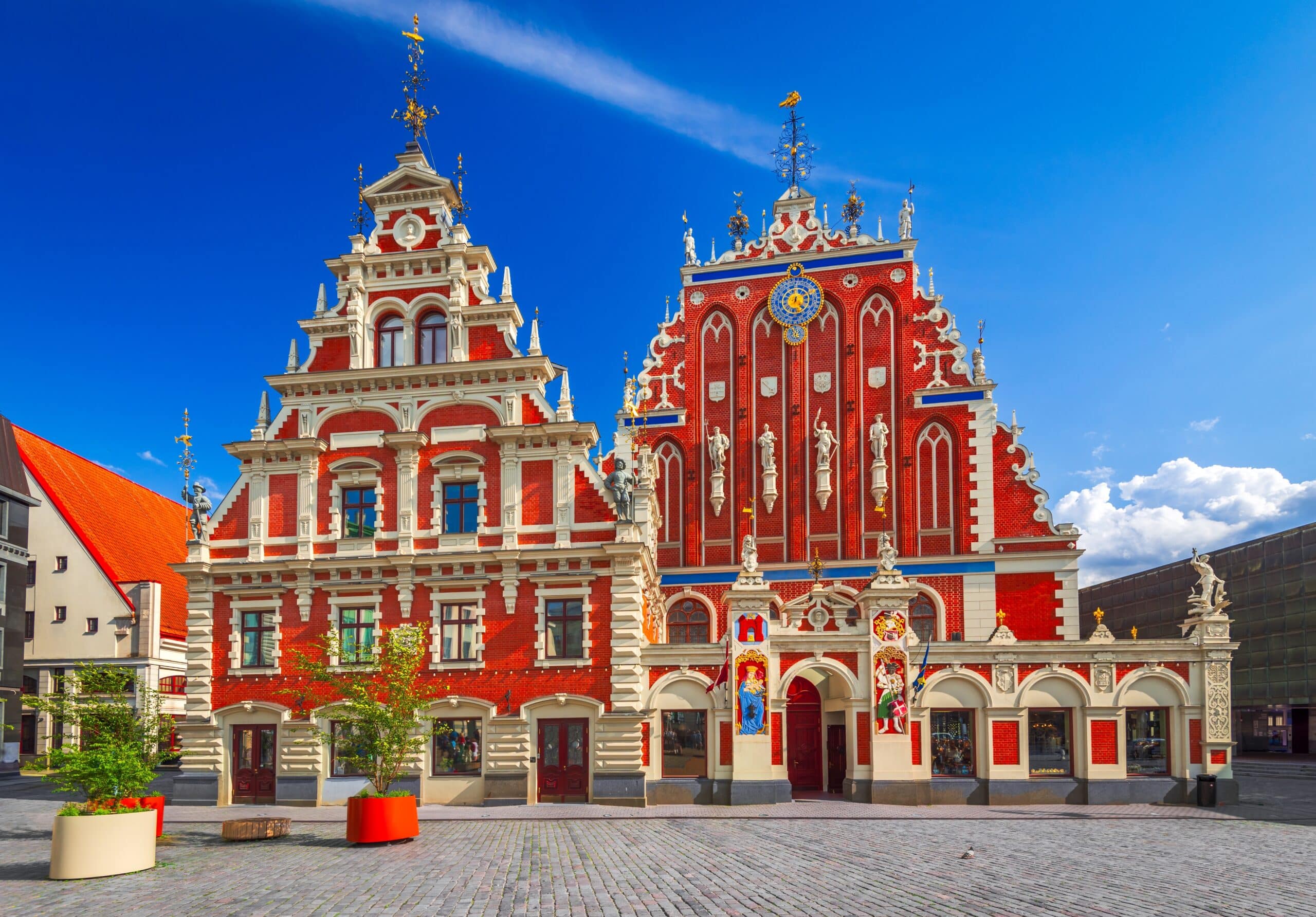
Latvia lies along the eastern coast of the Baltic Sea, positioned between Estonia to the north and Lithuania to the south. Though moderate in size, the country occupies a historically significant crossroads between Northern and Eastern Europe. Over centuries, Latvian territory has been influenced by Baltic tribes, German merchants, Swedish rule, Polish-Lithuanian governance, and the Russian Empire before achieving independence in the 20th century.
The capital, Riga, reflects this layered heritage. Founded in 1201 as a Hanseatic trading center, Riga grew into one of the most important cities of the Baltic region. Its Old Town preserves medieval churches and guild houses, while its early 20th-century districts display one of Europe’s richest collections of Art Nouveau architecture.
Geographically, Latvia is characterized by lowland plains, extensive forests, wetlands, and over 500 kilometers of Baltic coastline. Rivers such as the Daugava historically supported trade and settlement. National parks protect diverse ecosystems, including bogs, sandstone cliffs, and coastal dunes.
Culturally, Latvia maintains strong folk traditions rooted in pre-Christian Baltic heritage. Folk songs known as dainas, midsummer celebrations, and traditional crafts form central elements of national identity. The Latvian language, part of the Baltic branch of Indo-European languages, preserves archaic linguistic features.
Latvia regained independence in 1991 following decades of Soviet occupation. Since then, it has integrated into European and transatlantic institutions while fostering economic modernization and cultural revitalization.
This 25-destination edition will explore Latvia’s historic towns, natural landscapes, coastal resorts, and regional centers, revealing a nation defined by resilience, cultural continuity, and Baltic character.
25. Riga
Riga, the capital and largest city of Latvia, lies at the mouth of the Daugava River along the Baltic Sea. Founded in 1201 by German bishop Albert, Riga quickly developed into a major trading hub within the Hanseatic League. Its strategic location enabled commerce between Western Europe and the Russian hinterland.
The city’s Old Town preserves medieval churches, merchant houses, and defensive walls. Landmarks such as Riga Cathedral and St. Peter’s Church illustrate Gothic and Baroque architectural evolution. Narrow cobbled streets and historic guild buildings reflect centuries of mercantile prosperity.
Riga is internationally recognized for its Art Nouveau architecture. Early 20th-century expansion produced ornate façades characterized by decorative motifs, sculpted figures, and elaborate balconies. This architectural heritage distinguishes Riga as one of Europe’s most significant Art Nouveau centers.
Throughout history, Riga experienced Swedish, Polish-Lithuanian, Russian, and Soviet governance. Each period left political and cultural influences visible in urban planning and institutions. Following Latvia’s independence in 1991, restoration initiatives revitalized historic districts and modernized infrastructure.
Today, Riga functions as Latvia’s political, economic, and cultural core. Universities, museums, and technology firms contribute to its dynamic atmosphere. The Central Market, housed in former airship hangars, remains a vibrant commercial space.
Riga harmonizes medieval heritage, early modern trade, and contemporary innovation. Its skyline of church spires and historic façades embodies Latvia’s resilience and European identity.
24. Daugavpils
Daugavpils, located in southeastern Latvia near the borders with Lithuania and Belarus, is the country’s second-largest city. Positioned along the Daugava River, it has long served as a strategic military and trade center.
The city’s most prominent landmark is the Daugavpils Fortress, a 19th-century military complex constructed under Russian imperial rule. Built in Empire style, the fortress remains one of the best-preserved examples of this type in Eastern Europe.
Daugavpils has historically been multicultural, with Latvian, Russian, Polish, Jewish, and Belarusian communities contributing to its identity. This diversity is reflected in religious architecture, including Orthodox, Catholic, and Lutheran churches.
Industrial development during the 19th and 20th centuries strengthened Daugavpils as a railway and manufacturing hub. Soviet-era expansion shaped its urban structure, introducing wide avenues and residential districts.
Today, the city promotes cultural revitalization through museums, art centers, and educational institutions. The Mark Rothko Art Centre, located within the fortress complex, highlights the connection to the internationally renowned abstract expressionist born in the city.
Daugavpils harmonizes imperial military heritage, industrial legacy, and multicultural identity. Its southeastern location underscores Latvia’s historical role as a bridge between Baltic and Slavic regions.
23. Liepāja
Liepāja is situated on Latvia’s western coast along the Baltic Sea. Known historically as a significant port and naval base, the city developed as a center of maritime trade and shipbuilding.
During the 19th century, Liepāja expanded rapidly with the construction of rail connections and harbor infrastructure. The Karosta district, originally built as a Russian naval base, reflects military architecture and coastal fortifications.
The city is also recognized for its cultural life. Liepāja has a strong musical tradition and hosts festivals that contribute to its reputation as a creative hub. The concert hall “Great Amber,” with its distinctive amber-colored façade, symbolizes modern cultural investment.
Sandy beaches and coastal parks provide recreational spaces, attracting visitors during summer months. The Baltic Sea shapes both the economy and daily life of the city.
Industrial restructuring after independence shifted focus toward services, tourism, and renewable energy projects. Restoration of historical neighborhoods has strengthened heritage preservation.
Liepāja harmonizes maritime history, cultural vitality, and coastal landscapes. Its position on the Baltic Sea reinforces Latvia’s enduring connection to trade, defense, and artistic expression.
22. Jelgava
Jelgava is located in central Latvia about 40 kilometers southwest of Riga. Historically known as Mitau, it served as the capital of the Duchy of Courland and Semigallia from the 16th to the 18th century. Its political prominence shaped its architectural and cultural development.
The city’s most significant landmark is Jelgava Palace, constructed in the 18th century in Baroque style by architect Bartolomeo Rastrelli. The palace once functioned as the residence of the dukes and now houses part of the Latvia University of Life Sciences and Technologies.
Jelgava developed as an administrative and trade center due to its position along river routes and fertile plains. Agriculture remains central to the surrounding Zemgale region, often called Latvia’s breadbasket.
World War II caused extensive destruction in Jelgava, leading to substantial postwar reconstruction. As a result, much of its urban layout reflects 20th-century planning rather than medieval origins.
The city hosts cultural events, including ice sculpture festivals and historical reenactments that highlight its ducal heritage. Parks and river promenades contribute to a balanced urban environment.
Today, Jelgava harmonizes aristocratic legacy, agricultural importance, and academic presence. Its historical role as a ducal capital distinguishes it within Latvia’s regional landscape.
21. Jūrmala
Jūrmala is Latvia’s principal seaside resort, located west of Riga along the Gulf of Riga. Stretching for over 20 kilometers, it is characterized by sandy beaches, pine forests, and wooden villas.
The town developed in the 19th century as a spa destination within the Russian Empire. Mineral waters, sea air, and mud treatments attracted visitors seeking health and relaxation. Elegant wooden houses built in Art Nouveau and National Romantic styles remain visible throughout the resort.
Jūrmala’s long pedestrian streets, such as Jomas Street, serve as social and commercial centers. Cafés, cultural venues, and seasonal markets animate the area during summer.
The Dzintari Concert Hall has become a focal point for music festivals and performances, reinforcing Jūrmala’s cultural significance. International events attract audiences from across the Baltic region.
Tourism remains the backbone of the local economy. However, environmental protection plays a critical role in preserving dunes, forests, and coastal ecosystems.
Jūrmala harmonizes seaside recreation, architectural charm, and cultural vitality. Its proximity to Riga makes it both a retreat and an extension of the capital’s metropolitan sphere.
20. Ventspils
Ventspils lies on Latvia’s northwestern coast at the mouth of the Venta River. As one of the country’s major ice-free ports, it has long been central to maritime trade and industrial activity.
The city’s harbor infrastructure expanded significantly during the 19th and 20th centuries, supporting exports of timber, grain, and later oil products. Port operations remain a key component of the local economy.
Ventspils Castle, dating to the 13th century, reflects the influence of the Livonian Order. The fortress now houses a museum detailing regional history and maritime heritage.
Urban development in Ventspils has emphasized cleanliness, public art, and family-friendly spaces. Parks, promenades, and blue-flag beaches contribute to its reputation as one of Latvia’s most orderly cities.
Industrial facilities coexist with recreational areas, illustrating the city’s dual identity as both port and tourist destination. Educational institutions support technical and maritime training.
Ventspils harmonizes medieval heritage, modern port operations, and coastal leisure. Its economic strength and civic planning distinguish it within Latvia’s western region.
19. Cēsis
Cēsis is one of Latvia’s oldest towns, located in the Vidzeme region northeast of Riga. Its origins date to the 13th century, when the Livonian Order constructed a stone castle that became a major administrative and military center.
The ruins of Cēsis Castle remain the town’s defining landmark. Visitors can explore medieval towers and walls that once formed part of a powerful fortress complex. Nearby stands the 18th-century Cēsis New Castle, now housing a history and art museum.
Cēsis played a role in Latvia’s national awakening during the 19th century. Cultural societies and educational initiatives flourished here, contributing to the development of Latvian identity. The town later became associated with independence struggles in the early 20th century.
The surrounding Gauja River valley adds natural beauty to Cēsis. Forests, sandstone cliffs, and hiking trails attract outdoor enthusiasts. The town serves as a gateway to Gauja National Park.
Today, Cēsis balances heritage preservation with contemporary cultural life. Festivals, art exhibitions, and music events animate its historic streets. Carefully restored wooden houses complement medieval stone architecture.
Cēsis harmonizes medieval fortifications, national heritage, and scenic landscapes. Its blend of history and nature makes it one of Latvia’s most culturally significant towns.
18. Sigulda
Sigulda lies in central Latvia within the picturesque Gauja River valley. Often referred to as the “Switzerland of Latvia,” the town is renowned for its dramatic landscapes and outdoor recreation.
The ruins of Sigulda Castle and the nearby Turaida Castle complex reflect medieval Livonian history. These fortifications once guarded trade routes along the Gauja River and remain major tourist attractions.
Sigulda developed as a resort destination in the late 19th century, when rail connections made the valley accessible from Riga. Scenic viewpoints overlooking sandstone cliffs and forested slopes draw visitors year-round.
In winter, Sigulda becomes a center for bobsleigh, luge, and skeleton sports. Its track is one of the few such facilities in the Baltic region, reinforcing the town’s athletic profile.
Cultural life includes festivals celebrating folklore and seasonal traditions. The integration of parks, cable cars, and hiking trails enhances accessibility to the valley’s natural features.
Sigulda harmonizes medieval ruins, sports infrastructure, and dramatic river landscapes. Its combination of recreation and history positions it as one of Latvia’s most dynamic regional destinations.
17. Valmiera
Valmiera is located in northern Latvia near the Estonian border, along the Gauja River. First mentioned in medieval chronicles, it developed as a fortified settlement within the Livonian Confederation.
Although much of its medieval castle is now in ruins, Valmiera retains traces of its early history through archaeological remains and preserved church architecture. St. Simon’s Church stands as a prominent Gothic landmark.
Industrial growth in the 19th and 20th centuries transformed Valmiera into a regional economic center. Manufacturing, glass fiber production, and education institutions contribute to its modern profile.
Valmiera also plays an important role in Latvian sports and culture. The city hosts athletic training facilities and cultural festivals that reinforce community engagement.
The surrounding countryside features forests and river landscapes that support recreation and tourism. Cycling routes and river walks connect urban and natural environments.
Valmiera harmonizes medieval foundations, industrial development, and educational vitality. Its northern location strengthens Latvia’s cross-border connections within the Baltic region.
16. Kuldīga
Kuldīga is located in western Latvia in the Courland region along the Venta River. Founded in the 13th century by the Livonian Order, it later became part of the Duchy of Courland and Semigallia. The town retains a remarkably preserved historical center characterized by red-tiled roofs and wooden architecture.
The most famous natural landmark is Venta Rapid (Ventas Rumba), considered the widest waterfall in Europe. Although modest in height, the broad cascade creates a distinctive landscape feature and has historically supported fishing traditions.
Kuldīga’s old brick bridge across the Venta River, constructed in the 19th century, remains one of the longest of its kind in the Baltic region. Together with surrounding cobbled streets and churches, it contributes to the town’s architectural cohesion.
Unlike many Latvian towns heavily damaged during wartime, Kuldīga preserved much of its historical character. Restoration initiatives have strengthened its reputation as one of Latvia’s most picturesque destinations.
Cultural festivals and artisan workshops animate the old town, while small cafés and guesthouses support tourism. Agriculture and regional services complement visitor-based income.
Kuldīga harmonizes natural landmarks, ducal-era heritage, and preserved urban fabric. Its architectural integrity distinguishes it as a cultural gem of western Latvia.
15. Rezekne
Rēzekne lies in eastern Latvia within the Latgale region, an area known for its strong Catholic traditions and distinct cultural identity. First mentioned in medieval sources, it developed around a castle built by the Livonian Order.
Today, the ruins of Rēzekne Castle Hill overlook the city, symbolizing its medieval past. The city later came under Polish-Lithuanian and Russian control, each leaving administrative and religious influences.
Rēzekne is often called the cultural heart of Latgale. The Latgale Embassy “Gors,” a modern concert hall and cultural center, reflects contemporary investment in regional arts and music.
The city’s population historically included Latvians, Poles, Russians, and Jews, contributing to its multicultural character. Religious diversity remains visible in Catholic and Orthodox churches.
Industrial development during the Soviet era expanded housing and manufacturing, though economic restructuring followed independence. Education and public services now play a larger role.
Rēzekne harmonizes medieval remnants, Latgalian identity, and modern cultural infrastructure. Its eastern location underscores Latvia’s diversity and historical complexity.
14. Madona
Madona is situated in eastern Latvia within a hilly landscape shaped by glacial formations. Established as a railway settlement in the early 20th century, it developed into a regional administrative center.
The surrounding Vidzeme Highlands provide Latvia’s highest elevations, making the area popular for winter sports. Ski resorts and cross-country trails attract visitors during colder months.
Madona’s economy traditionally relied on forestry and agriculture. Timber processing and dairy production remain important sectors. Small businesses and services support the local population.
Cultural life centers on community events, music festivals, and seasonal celebrations. The town’s relatively modern urban layout reflects its 20th-century origins rather than medieval planning.
Nearby lakes and forests create opportunities for hiking, cycling, and nature tourism. Environmental conservation efforts protect regional biodiversity.
Madona harmonizes highland landscapes, rural industry, and recreational development. Its natural surroundings distinguish it within Latvia’s interior regions.
13. Ogre
Ogre is located in central Latvia at the confluence of the Daugava and Ogre rivers, approximately 35 kilometers southeast of Riga. Its development accelerated in the late 19th century when railway connections made it accessible from the capital. The town soon became a popular summer resort known for fresh air and riverside scenery.
Wooden villas built during the resort era remain visible in certain neighborhoods, reflecting early leisure architecture. During the Soviet period, Ogre expanded with residential districts and light industry, shifting from seasonal retreat to permanent urban center.
The town benefits from its riverfront setting. Promenades, parks, and cycling paths encourage outdoor activity, while surrounding forests provide recreational space. Cultural institutions, including museums and music schools, contribute to community engagement.
Ogre’s economy combines services, small manufacturing, and commuter links to Riga. Infrastructure improvements have strengthened its position within the metropolitan region while maintaining local identity.
Annual festivals and public events foster civic participation. Restoration efforts have aimed to preserve historical wooden architecture alongside modern developments.
Ogre harmonizes resort heritage, suburban growth, and riverside landscapes. Its proximity to Riga allows it to function both as an independent town and as part of Latvia’s broader urban network.
12. Tukums
Tukums lies in western Latvia between Riga and the Baltic coast. Established in medieval times, it developed as a trade and craft center within the Courland region. Its compact historic center features churches and market squares reflecting centuries of regional commerce.
Agriculture has long shaped Tukums and its surrounding countryside. The fertile lands of Zemgale and Kurzeme support grain cultivation and livestock farming. Food processing and small enterprises contribute to the local economy.
The town is known for its rose gardens and horticultural traditions, earning recognition for floral displays and community beautification initiatives. Cultural events celebrate both regional history and contemporary creativity.
Rail connections strengthened Tukums’ accessibility in the 19th century, promoting trade and mobility. During the 20th century, industrial facilities expanded employment opportunities, though economic restructuring followed independence.
Nearby attractions include manor estates and nature parks, enhancing tourism potential. The town balances historical preservation with modern infrastructure improvements.
Tukums harmonizes agricultural productivity, horticultural identity, and regional connectivity. Its blend of rural surroundings and historical townscape reflects Latvia’s western character.
11. Bauska
Bauska is located in southern Latvia near the Lithuanian border at the confluence of the Mūsa and Mēmele rivers. Founded in the 15th century around a Livonian Order castle, it historically guarded trade routes linking Riga with inland territories.
Bauska Castle remains the city’s principal landmark. Partially restored, it reflects Renaissance influences added during the Duchy of Courland period. The fortress complex attracts visitors interested in medieval and early modern history.
The surrounding Zemgale region is among Latvia’s most agriculturally productive areas. Grain cultivation and food processing continue to play central roles in the local economy.
Bauska experienced political transitions under Polish-Lithuanian, Swedish, Russian, and Soviet rule. Each era contributed to administrative and architectural development.
Modern Bauska combines historical tourism with regional services and cross-border trade. Cultural festivals and historical reenactments reinforce awareness of its heritage.
Bauska harmonizes river landscapes, fortified architecture, and agricultural vitality. Its borderland location underscores Latvia’s interconnected Baltic history.
10. Ludza
Ludza is one of Latvia’s oldest towns, located in the eastern Latgale region near the Russian border. First mentioned in 1173, it developed as a fortified settlement due to its strategic position along trade routes connecting the Baltic region with inland territories.
The ruins of Ludza Castle, built by the Livonian Order in the 14th century, dominate a hill overlooking the town’s lakes. These remnants symbolize centuries of regional conflict and shifting governance under Polish-Lithuanian and Russian rule.
Ludza has historically been multicultural, with Latvian, Polish, Russian, and Jewish communities shaping its cultural landscape. Religious architecture, including Catholic and Orthodox churches, reflects this diversity.
The town is surrounded by scenic lakes and rolling countryside, contributing to a tranquil atmosphere. Agriculture and small enterprises form the basis of the local economy, supplemented by regional tourism.
Cultural festivals celebrate Latgalian traditions, language, and crafts. Museums and community centers preserve historical memory and local folklore.
Ludza harmonizes medieval heritage, multicultural identity, and lake-dotted landscapes. Its eastern borderland character highlights Latvia’s historical intersections of faiths and empires.
9. Saldus
Saldus lies in western Latvia within the Kurzeme region. First documented in the 13th century, it evolved from a small settlement into a regional trade center serving agricultural communities.
Often referred to as “the sweetest city in Latvia,” Saldus is associated with food production and confectionery traditions. Agriculture, dairy processing, and light industry continue to support the local economy.
The town’s layout reflects 19th- and early 20th-century development, with churches, schools, and administrative buildings clustered around central streets. Wartime destruction altered parts of the urban fabric, followed by postwar reconstruction.
Saldus maintains cultural vitality through music festivals and artistic initiatives. It is the birthplace of several notable Latvian artists, reinforcing its creative reputation.
Surrounding forests, fields, and small rivers provide recreational opportunities and contribute to regional biodiversity. Infrastructure improvements connect Saldus to larger urban centers such as Liepāja and Riga.
Saldus harmonizes agricultural foundations, modest industrial growth, and artistic identity. Its blend of rural landscape and community culture typifies western Latvia’s character.
8. Alūksne
Alūksne is situated in northeastern Latvia near the Estonian border, surrounded by forests and Lake Alūksne. Historically, it developed around a Livonian Order castle constructed on an island in the lake during the 14th century.
The castle ruins and later manor complexes reflect centuries of Baltic German influence. Parks and landscaped grounds remain important elements of the town’s cultural heritage.
Alūksne’s location in the Vidzeme highlands gives it a distinct natural setting. Forest industries and agriculture have traditionally supported the economy, while tourism increasingly emphasizes nature and heritage.
The town preserves wooden architecture and small-scale urban planning characteristic of northern Latvia. Educational institutions and cultural centers serve local residents and surrounding villages.
Outdoor activities such as boating, hiking, and winter sports are popular due to the region’s varied terrain. Environmental conservation initiatives protect forests and lake ecosystems.
Alūksne harmonizes medieval fortifications, manor heritage, and highland landscapes. Its northern setting underscores Latvia’s environmental diversity and historical depth.
7. Gulbene
Gulbene is located in northeastern Latvia within the Vidzeme region. The town developed significantly in the late 19th and early 20th centuries as an important railway junction, linking rural northeastern territories with larger urban centers.
Rail transport shaped Gulbene’s identity. The Gulbene–Alūksne narrow-gauge railway, still operating today as a heritage line, preserves early 20th-century railway traditions and attracts visitors interested in industrial history. The railway complex contributed to economic growth and urban expansion.
Gulbene is also known for its manor estate, originally owned by Baltic German nobility. Although parts of the manor were damaged during wars, restoration efforts have preserved architectural elements and landscaped grounds.
Agriculture and forestry remain central to the regional economy. Grain cultivation, livestock farming, and timber processing support local employment, complemented by small enterprises.
The town’s urban layout reflects planned development from the railway era, with residential districts and public buildings constructed in the early 20th century. Cultural institutions and annual festivals strengthen community life.
Gulbene harmonizes railway heritage, manor history, and agricultural surroundings. Its role as a transport hub shaped its development and continues to define its regional significance.
6. Aizkraukle
Aizkraukle lies along the Daugava River in central Latvia. Although the modern town expanded during the Soviet period, the area has deep historical roots connected to medieval fortifications and river trade.
The ruins of Aizkraukle Castle, built by the Livonian Order in the 13th century, overlook the Daugava valley. These remains testify to the strategic importance of river routes in controlling commerce and territory.
During the 20th century, industrial development and the construction of the Pļaviņas Hydroelectric Power Plant transformed the region. Residential districts and infrastructure were built to accommodate workers, shaping the town’s contemporary appearance.
Aizkraukle’s riverside setting provides scenic viewpoints and recreational opportunities. Parks and walking trails follow the Daugava, connecting natural and urban environments.
The local economy combines energy production, services, and regional administration. Educational institutions and cultural centers support community development.
Aizkraukle harmonizes medieval remnants, hydroelectric modernization, and river landscapes. Its evolution reflects Latvia’s transition from historic trade corridors to industrial and energy infrastructure.
5. Balvi
Balvi is situated in northeastern Latvia near the Russian border within the Latgale region. Historically a small market settlement, it developed as an administrative center serving surrounding rural communities.
The town’s growth accelerated in the late 19th century with the expansion of regional trade. Agriculture has remained the backbone of the local economy, particularly dairy farming and crop cultivation.
Balvi reflects Latgale’s strong cultural identity, characterized by Catholic traditions and distinct dialects. Churches and cultural institutions preserve regional customs and language.
Wartime destruction in the 20th century led to reconstruction and modern urban planning. Public buildings, schools, and community spaces form the town’s core infrastructure.
The surrounding landscape consists of forests, lakes, and gently rolling terrain, offering opportunities for outdoor recreation and ecological tourism. Small businesses and cross-border cooperation initiatives contribute to economic stability.
Balvi harmonizes rural agriculture, Latgalian heritage, and borderland geography. Its modest scale underscores the importance of small regional centers within Latvia’s national framework.
4. Preiļi
Preiļi is located in eastern Latvia within the Latgale region, an area known for its strong Catholic traditions and lake-dotted landscapes. Historically a modest manor settlement, the town developed into a regional administrative center during the 19th and 20th centuries.
The Preiļi Manor complex and surrounding park reflect the influence of Baltic German nobility. Though altered over time, the estate remains an architectural reminder of aristocratic landownership that shaped rural Latvia for centuries.
Agriculture continues to define the surrounding countryside, particularly dairy farming and crop cultivation. Small-scale food production and local enterprises contribute to the town’s economy. In recent decades, Preiļi has also promoted craft traditions and small manufacturing.
Cultural identity in Preiļi is closely tied to Latgalian language and heritage. Churches, community centers, and regional festivals preserve local customs and folk music. The town has invested in cultural tourism initiatives to highlight its traditions.
The landscape surrounding Preiļi features lakes, forests, and gently rolling terrain. These natural features support recreation, including fishing and hiking.
Preiļi harmonizes manor heritage, Latgalian culture, and agricultural foundations. Its quiet resilience reflects the enduring character of eastern Latvia.
3. Smiltene
Smiltene lies in northeastern Latvia within the Vidzeme highlands. The town developed around a medieval castle site that once guarded regional trade routes. Though little remains of the original fortress, its historical presence shaped early settlement patterns.
In the late 19th and early 20th centuries, Smiltene gained recognition for progressive agricultural education initiatives. Manor estates in the region introduced modern farming techniques, strengthening local productivity.
Today, agriculture and forestry remain central to the economy. Timber processing and dairy production provide employment, while small businesses serve the local population.
Smiltene is also known for its sports culture, particularly cycling and motorsports. Annual competitions draw participants from across Latvia and neighboring countries.
The surrounding landscape consists of hills, rivers, and forests, offering scenic routes and outdoor recreation opportunities. Parks and public spaces enhance community life within the town center.
Smiltene harmonizes agricultural innovation, sporting traditions, and highland scenery. Its combination of rural economy and active lifestyle distinguishes it within northeastern Latvia.
2. Krāslava
Krāslava is situated in southeastern Latvia along the Daugava River near the Belarusian border. Historically influenced by Polish-Lithuanian governance, it developed as a cultural and administrative center in the Latgale region.
The Krāslava Palace complex, constructed in the 18th century by the Plater family, represents Baroque architectural influence. The estate and surrounding park remain prominent landmarks.
Krāslava’s riverside location has shaped both trade and cultural exchange. The Daugava River historically connected inland territories with Baltic ports.
Religious diversity characterizes the town, with Catholic and Orthodox churches reflecting its multicultural past. Regional traditions remain strong, reinforced by festivals and folk events.
Tourism focuses on natural landscapes, including river valleys and nearby nature reserves. Small enterprises, agriculture, and cross-border cooperation contribute to the local economy.
Krāslava harmonizes aristocratic heritage, river landscapes, and Latgalian cultural identity. Its southeastern setting underscores Latvia’s historical ties with neighboring regions.
1. Limbaži
Limbaži is located in northern Latvia near the Gulf of Riga. Established in the medieval period, it became a member of the Hanseatic League, participating in Baltic trade networks.
The town’s historic center preserves church architecture and remnants of defensive fortifications. Though many structures were rebuilt over centuries, Limbaži retains traces of its mercantile past.
Fishing and agriculture historically sustained the local economy. Today, services, small manufacturing, and tourism play increasing roles. The nearby coastline and lakes enhance recreational appeal.
Limbaži has earned recognition for silver craftsmanship, supporting artisanal traditions that connect past and present.
The surrounding countryside features forests, wetlands, and coastal plains typical of northern Latvia. Environmental preservation efforts protect biodiversity and natural habitats.
Limbaži harmonizes Hanseatic heritage, craft traditions, and coastal proximity. Its history as a trading town reinforces Latvia’s longstanding engagement with Baltic commerce.