
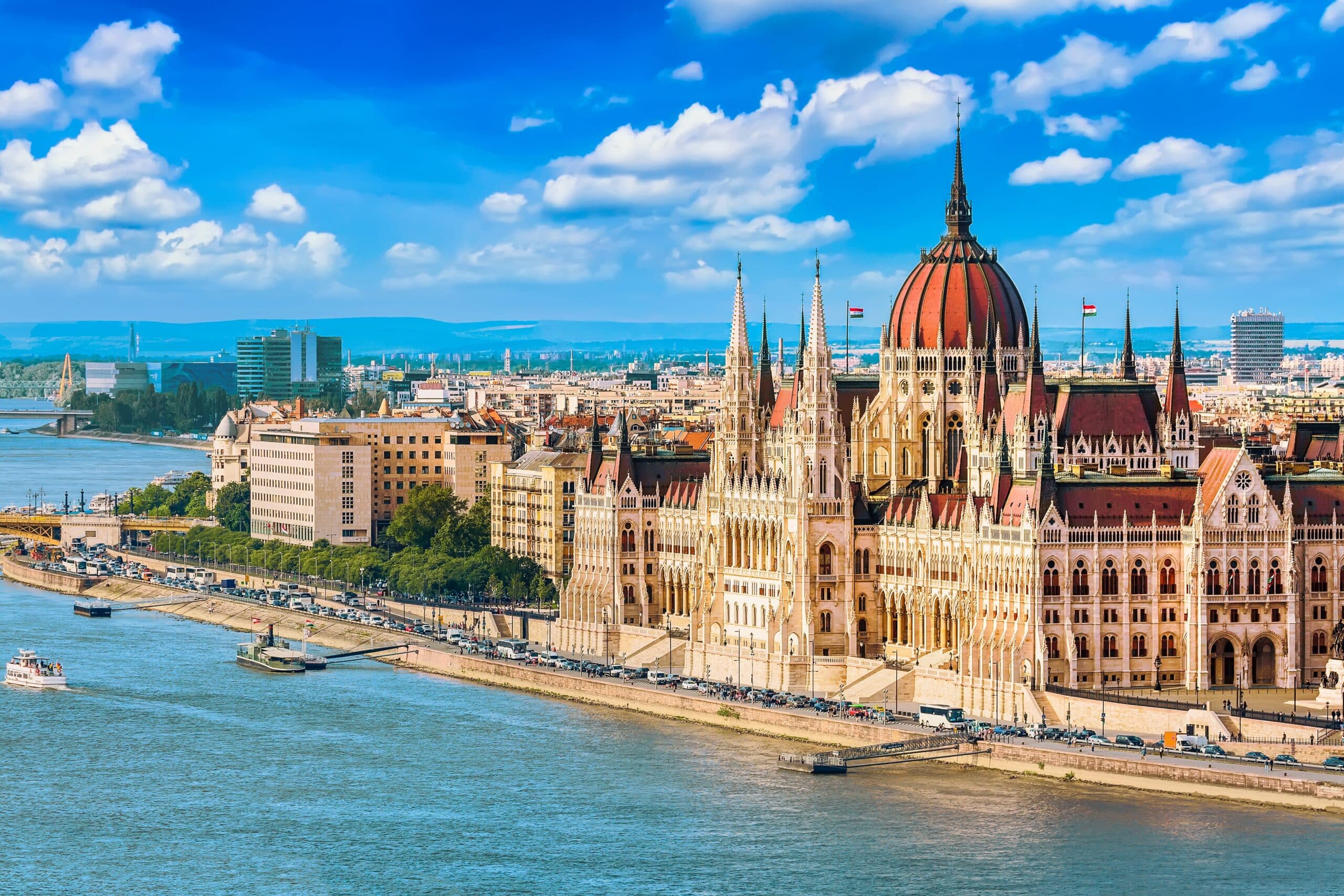
Hungary is a landlocked country in Central Europe, shaped by a millennium of statehood, shifting borders, and cultural crossroads. Situated in the Carpathian Basin and bisected by the Danube River, Hungary blends Eastern and Western influences into a distinctive national identity. Though modest in size, it possesses a rich historical legacy that extends from medieval kingdoms to imperial grandeur and modern transformation.
The capital, Budapest, often called the “Pearl of the Danube,” embodies the nation’s architectural and political heart. Yet Hungary’s appeal stretches far beyond its capital. Roman ruins, Ottoman baths, baroque towns, and Austro-Hungarian palaces reveal layers of cultural influence left by successive eras.
Hungarian culture is deeply rooted in language, music, and culinary tradition. The Hungarian language, unique within Europe, reinforces a strong sense of national identity. Folk music and dance traditions continue to influence contemporary artistic expression. Cuisine, characterized by paprika, hearty stews, and regional wines, reflects both rural heritage and refined urban gastronomy.
Natural landscapes range from the Great Hungarian Plain to rolling vineyards and forested hills. Lake Balaton, Central Europe’s largest lake, provides a popular summer retreat, while thermal springs across the country sustain a centuries-old bathing culture.
Hungary’s history includes periods of Ottoman occupation, Habsburg rule, and 20th-century political upheaval. These experiences have shaped a resilient cultural consciousness that remains visible in architecture, memorials, and public life.
Today, Hungary stands as a nation balancing preservation and modernization. Medieval castles, synagogue domes, and grand boulevards coexist with contemporary development. The following chapters explore thirty of Hungary’s most remarkable destinations, each revealing a unique dimension of this historically layered and culturally distinctive European country.
25. Budapest
Budapest, the capital of Hungary, is divided by the Danube River into the historic hills of Buda and the expansive plains of Pest. United in 1873, the city developed into one of Europe’s most elegant imperial capitals during the Austro-Hungarian era.
The Parliament Building dominates the Pest riverbank with its neo-Gothic façade and symmetrical dome. Across the river, Buda Castle crowns Castle Hill, overlooking the Chain Bridge and connecting both sides of the city. Matthias Church and Fisherman’s Bastion contribute to the medieval character of the district.
Budapest is internationally known for its thermal baths, a legacy of both Roman and Ottoman influence. Széchenyi and Gellért Baths remain central to the city’s social life, blending wellness with architectural grandeur.
Andrássy Avenue leads to Heroes’ Square, where monuments commemorate key figures in Hungarian history. The State Opera House reflects 19th-century cultural ambition, while ruin bars in former Jewish Quarter buildings highlight contemporary creativity.
The Danube itself defines Budapest’s identity. River cruises reveal illuminated bridges and landmarks, particularly striking at night.
Budapest harmonizes imperial architecture, thermal culture, and modern vibrancy. Its layered history and riverine beauty establish it as Hungary’s cultural and political centerpiece.
24. Eger
Eger, located in northern Hungary near the Bükk Mountains, is renowned for its baroque architecture and winemaking tradition. The town gained historic prominence during the 1552 Siege of Eger, when Hungarian defenders resisted Ottoman forces.
Eger Castle stands atop a hill overlooking the compact center. Though partially in ruins, it remains a symbol of national resilience. The castle museum recounts the dramatic events of the siege.
The town’s skyline is marked by the Eger Cathedral, one of Hungary’s largest churches, and the Ottoman-era minaret, a rare remnant of Turkish occupation. Visitors can climb the minaret for panoramic views.
Eger is closely associated with the red wine known as Egri Bikavér, or “Bull’s Blood.” Vineyards surrounding the town support a vibrant wine culture, celebrated in cellars carved into volcanic rock.
Thermal baths and landscaped squares contribute to a relaxed atmosphere. The baroque streetscape reflects 18th-century reconstruction following Ottoman rule.
Eger blends military history, Ottoman legacy, and viticultural excellence. Its combination of fortress, cathedral, and vineyard scenery makes it one of Hungary’s most distinctive regional destinations.
23. Pécs
Pécs, situated near the Croatian border in southern Hungary, is a city of Roman foundations and Mediterranean atmosphere. Founded as Sopianae in Roman times, it retains early Christian burial chambers recognized as a UNESCO World Heritage site.
The Cathedral of Pécs dominates the skyline with its four towers, reflecting Romanesque revival architecture. The city’s mosque-turned-church on Széchenyi Square symbolizes the layered influence of Ottoman rule.
Pécs has long been a center of arts and education. Its university, one of Hungary’s oldest, fosters a vibrant student population. Cultural institutions and galleries contribute to a lively creative scene.
The Zsolnay Cultural Quarter, located in a former ceramics factory, showcases distinctive decorative art and contemporary exhibitions. This revitalized complex illustrates Pécs’ integration of heritage and innovation.
Surrounding hills and vineyards enhance the city’s southern character. Outdoor cafés and shaded squares encourage leisurely exploration.
Pécs harmonizes Roman antiquity, Ottoman legacy, and modern artistic vitality. Its cultural richness and relaxed ambiance distinguish it within Hungary’s diverse regional landscape.
22. Debrecen
Debrecen, Hungary’s second-largest city, lies in the eastern part of the country near the Great Hungarian Plain. Often referred to as the “Calvinist Rome,” it has long been a center of Protestant religious life and intellectual development.
The Great Reformed Church dominates Kossuth Square, symbolizing Debrecen’s spiritual heritage. Within its walls, significant national events took place, including the declaration of independence during the 1848–49 revolution. The adjacent Reformed College reflects the city’s academic traditions.
Debrecen’s broad avenues and spacious parks distinguish it from Hungary’s more compact historic towns. The Déri Museum houses artistic and historical collections, including works that interpret Hungarian national identity.
The nearby Hortobágy National Park, part of the Great Plain, offers insight into traditional pastoral culture. Expansive grasslands, known as puszta, preserve centuries-old herding traditions and distinctive rural architecture.
Debrecen also hosts cultural festivals, including flower carnivals that transform city streets with elaborate floral displays. Thermal baths and wellness facilities contribute to its regional appeal.
Balancing religious heritage, open landscapes, and civic pride, Debrecen represents eastern Hungary’s cultural and historical resilience within the vast plains.
21. Szeged
Szeged is located in southern Hungary near the Serbian border, at the confluence of the Tisza and Maros rivers. Known as the “City of Sunshine,” it enjoys one of the country’s warmest climates.
The city was largely rebuilt in the late 19th century after a devastating flood, resulting in wide boulevards and unified architectural styles. Szeged Cathedral, with its twin towers, anchors Dóm Square and reflects neo-Romanesque design.
Szeged is closely associated with paprika production, an essential ingredient in Hungarian cuisine. Culinary traditions here emphasize bold flavors and regional specialties.
The University of Szeged contributes to a lively academic environment. Cultural institutions, theaters, and open-air summer performances animate public spaces.
The riverside promenade along the Tisza provides recreational opportunities and scenic views. Parks and squares encourage outdoor gatherings, reinforcing community life.
Szeged harmonizes architectural cohesion, culinary identity, and academic vitality. Its sunlit squares and riverfront setting distinguish it as one of Hungary’s most welcoming southern cities.
20. Győr
Győr lies in northwestern Hungary between Budapest and Vienna, near the confluence of several rivers including the Danube. Its strategic location fostered prosperity during medieval and baroque periods.
The Old Town showcases colorful baroque buildings surrounding Széchenyi Square. The Cathedral Basilica and Bishop’s Castle reflect Győr’s ecclesiastical importance.
Fortifications once protected the city from Ottoman expansion, and remnants of these defenses remain visible. Győr’s role as a frontier stronghold shaped its architectural character.
Today, Győr blends historic preservation with industrial development, serving as an economic center within western Hungary. Revitalized riverbanks and pedestrian streets encourage tourism and local activity.
Cultural festivals and music events contribute to a vibrant urban atmosphere. Museums explore regional history and artistic traditions.
Győr harmonizes baroque elegance, defensive heritage, and modern enterprise. Its riverside location and architectural refinement position it as a key cultural crossroads in northwestern Hungary.
19. Sopron
Sopron lies in northwestern Hungary near the Austrian border and is often described as one of the country’s most beautiful historic towns. Its position along medieval trade routes contributed to early prosperity, much of which remains visible in its preserved Old Town.
The Firewatch Tower rises above the main square, offering panoramic views across red-tiled rooftops and surrounding vineyards. Originally part of the medieval fortifications, the tower symbolizes Sopron’s civic identity. Nearby, the Goat Church reflects Gothic architectural traditions, while baroque façades line the cobbled streets.
Sopron is closely associated with Hungary’s wine culture. Vineyards surrounding the town produce notable red and white varieties, benefiting from a mild climate influenced by nearby Lake Neusiedl. Wine cellars and tasting events play a significant role in local life.
The city also holds modern historical importance. In 1989, Sopron became symbolic of the Iron Curtain’s collapse when border restrictions eased between Hungary and Austria, marking a pivotal moment in European history.
Museums housed in former aristocratic residences explore regional heritage and artistic expression. Seasonal festivals animate the squares with music and cultural celebration.
Sopron harmonizes medieval architecture, viticultural tradition, and modern European significance. Its compact streets and cross-border identity distinguish it as a refined western gateway to Hungary.
18. Visegrád
Visegrád is a small but historically significant town located along the Danube Bend north of Budapest. Surrounded by forested hills, it once served as a royal seat during the medieval Kingdom of Hungary.
The Citadel of Visegrád stands high above the river, offering sweeping views of the Danube’s dramatic curve. The fortress played a strategic defensive role and later became a symbol of royal authority. Below it lies the reconstructed Royal Palace, associated with King Matthias Corvinus and Renaissance influence.
The Danube Bend itself forms one of Hungary’s most scenic landscapes. Riverbanks, wooded trails, and lookout points attract hikers and nature enthusiasts seeking panoramic perspectives.
Visegrád’s historical associations extend beyond Hungary. The Visegrád Congress of 1335 fostered regional cooperation among Central European rulers, a legacy reflected in the modern Visegrád Group.
The town maintains a quiet atmosphere, with small guesthouses and traditional restaurants welcoming visitors. Medieval festivals recreate aspects of courtly life and knightly tournaments.
Visegrád harmonizes royal heritage, fortified architecture, and natural beauty. Its commanding hilltop position above the Danube secures its place as one of Hungary’s most picturesque historic destinations.
17. Szentendre
Szentendre, situated along the Danube north of Budapest, is known for its artistic heritage and Mediterranean-influenced streetscape. The town developed significant Serbian cultural influence during the 17th century, reflected in its churches and architecture.
Colorful baroque buildings line narrow cobbled lanes leading to the riverfront. Orthodox church towers punctuate the skyline, while small squares host galleries and craft shops. The town’s compact scale makes it ideal for leisurely exploration.
Szentendre has long attracted painters and sculptors, earning its reputation as an artists’ colony. Numerous museums showcase Hungarian modern art, folk traditions, and decorative crafts.
The riverside promenade offers views across the Danube, while nearby hills provide hiking opportunities. Seasonal festivals and open-air events reinforce its creative identity.
Despite its proximity to Budapest, Szentendre maintains a relaxed and intimate atmosphere. Cafés spill onto shaded terraces, and artisan markets display handmade goods.
Szentendre harmonizes Balkan heritage, artistic vitality, and riverside charm. Its blend of cultural diversity and creative spirit distinguishes it as one of Hungary’s most enchanting small towns.
16. Keszthely
Keszthely lies on the western shore of Lake Balaton and is one of the region’s most historically refined towns. Its elegant streets and lakeside setting have made it a favored destination since the 18th century.
The Festetics Palace dominates Keszthely’s architectural landscape. Built in baroque style and later expanded, the palace reflects aristocratic life during the Austro-Hungarian period. Its grand halls, library, and landscaped gardens preserve the cultural ambitions of Hungary’s noble families.
Lake Balaton shapes daily life in Keszthely. Marinas, promenades, and beaches provide recreational opportunities, particularly during summer months. The calm waters of Central Europe’s largest lake attract sailors and families alike.
Museums in Keszthely explore themes ranging from regional history to carriages and hunting culture. The town maintains a measured pace outside peak season, emphasizing heritage rather than mass tourism.
Nearby hills and vineyards contribute to the scenic appeal of the western Balaton region. Cycling paths and walking routes connect Keszthely to neighboring settlements.
Keszthely harmonizes aristocratic grandeur, lakeside leisure, and cultural preservation. Its combination of palace architecture and natural waterfront scenery positions it as one of Hungary’s most graceful provincial towns.
15. Esztergom
Esztergom, located along the Danube near the Slovak border, is one of Hungary’s oldest cities and an enduring spiritual center. It served as the medieval capital and remains the seat of the Hungarian Catholic Church.
The Esztergom Basilica dominates the skyline with its massive dome rising above the river. As Hungary’s largest church, it houses sacred relics and panoramic viewpoints accessible from its cupola. The basilica stands on Castle Hill, where earlier royal and ecclesiastical buildings once stood.
Across the Danube lies Slovakia, connected by the Maria Valeria Bridge. This cross-border link highlights Esztergom’s historical role as a gateway between regions.
Archaeological remains and museum collections trace the city’s Roman origins and medieval significance. The surrounding Danube Bend enhances the dramatic setting with forested slopes and sweeping river views.
Pilgrims and visitors alike gather in Esztergom to experience its spiritual atmosphere. Religious festivals and ceremonies continue to reinforce its national importance.
Esztergom harmonizes ecclesiastical authority, medieval legacy, and scenic grandeur. Its commanding basilica and riverside position secure its status as one of Hungary’s most historically profound cities.
14. Hévíz
Hévíz, located near Lake Balaton, is internationally recognized for its thermal lake, one of the largest biologically active natural thermal lakes in the world. The warm, mineral-rich waters have attracted visitors for centuries.
Lake Hévíz maintains a constant temperature that allows year-round bathing. Floating on its surface among water lilies has become a signature experience. The therapeutic qualities of the water are believed to support musculoskeletal and circulatory health.
Spa facilities surrounding the lake combine traditional bathing culture with modern wellness treatments. Hévíz’s architecture reflects early 20th-century resort design, emphasizing relaxation and leisure.
The town itself is compact and oriented toward health tourism. Tree-lined paths and landscaped parks contribute to a tranquil atmosphere. Markets and cafés provide local culinary specialties.
Nearby vineyards and the broader Balaton region offer opportunities for excursions beyond the spa environment. Cycling and hiking routes connect Hévíz with neighboring towns.
Hévíz harmonizes natural thermal phenomena, therapeutic tradition, and resort elegance. Its unique lake distinguishes it as one of Hungary’s most specialized and restorative destinations.
13. Hollókő
Hollókő is a small village in northern Hungary recognized as a UNESCO World Heritage site for its exceptionally preserved traditional architecture. Nestled among the Cserhát Hills, the village reflects rural life as it developed in the 17th and 18th centuries.
Whitewashed houses with wooden porches line the single main street, built according to Palóc ethnic traditions. These structures maintain original layouts, including barns and courtyards, offering insight into historic agricultural lifestyles. The village’s preservation is not merely architectural but cultural, as residents continue traditional crafts and seasonal celebrations.
Above the settlement rise the ruins of Hollókő Castle. Perched on a rocky hill, the fortress provides panoramic views of the surrounding countryside. The castle’s medieval origins contrast with the modest domestic architecture below.
Festivals held in Hollókő showcase folk costumes, music, and dance. Easter celebrations in particular attract visitors seeking authentic cultural experiences rooted in centuries-old customs.
The surrounding hills offer hiking opportunities and scenic tranquility. Agricultural fields and orchards reinforce the rural character that defines the village.
Hollókő harmonizes living tradition, architectural preservation, and pastoral landscape. Its careful conservation allows visitors to encounter a rare example of Hungary’s rural heritage preserved in its original form.
12. Tokaj
Tokaj, located in northeastern Hungary, is internationally celebrated for its wine region and historic vineyards. The town gives its name to Tokaji wine, particularly the renowned sweet variety Tokaji Aszú.
The region’s volcanic soil and favorable microclimate create ideal conditions for grape cultivation. Vineyards stretch across rolling hills, and wine cellars carved into stone hillsides store barrels in cool, humid conditions. Winemaking traditions in Tokaj date back centuries and have influenced European viticulture.
The compact town center features baroque buildings and quiet squares. Churches and merchant houses reflect prosperity derived from the wine trade. The Tisza and Bodrog rivers meet nearby, adding scenic appeal to the landscape.
Tokaj’s wine heritage earned UNESCO recognition as a cultural landscape. Tastings and cellar tours introduce visitors to complex flavors shaped by botrytized grapes and patient aging.
Seasonal harvest festivals celebrate viticultural traditions, drawing enthusiasts from around the world. Despite international recognition, Tokaj maintains a calm provincial character.
Tokaj harmonizes agricultural excellence, cultural prestige, and scenic hills. Its enduring winemaking heritage secures its position as one of Hungary’s most distinguished regional destinations.
11. Tihany
Tihany occupies a peninsula extending into Lake Balaton, forming one of Hungary’s most picturesque landscapes. The village stands on elevated terrain, offering sweeping views across the lake’s turquoise waters.
The Benedictine Abbey of Tihany, founded in 1055, anchors the settlement. Its baroque reconstruction and twin towers dominate the skyline, while the abbey’s founding charter represents one of the earliest written records of the Hungarian language.
Lavender fields have become symbolic of Tihany, blooming in vibrant purple during early summer. The fragrance and cultivated slopes enhance the peninsula’s distinctive atmosphere.
Geological formations, including volcanic cones and internal lakes, shape the surrounding terrain. Nature trails allow visitors to explore the peninsula’s diverse ecosystems.
The village center features whitewashed houses and artisan shops, maintaining a cohesive architectural style. Small cafés overlook the lake, reinforcing Tihany’s tranquil ambiance.
Tihany harmonizes monastic heritage, natural beauty, and agricultural tradition. Its elevated position above Lake Balaton and its lavender-scented hillsides establish it as one of Hungary’s most iconic lakeside destinations.
10. Székesfehérvár
Székesfehérvár, located southwest of Budapest, was once the coronation and burial site of Hungarian kings. During the Middle Ages, it served as one of the most important political and religious centers of the Kingdom of Hungary.
The ruins of the medieval basilica, where numerous monarchs were crowned, remain a powerful historical symbol. Though the original structure was destroyed during Ottoman occupation, archaeological remains preserve its significance. Nearby, the Cathedral of St. Stephen reflects later baroque reconstruction.
The city’s historic center features pastel-colored façades, quiet squares, and pedestrian streets. Bory Castle, an early 20th-century architectural creation built by sculptor Jenő Bory, adds a romantic and artistic dimension to the city’s identity.
Székesfehérvár also hosts museums that chronicle Hungarian statehood and medieval history. Public sculptures and monuments emphasize its royal legacy.
Modern commercial districts complement the historic core, making the city both a regional economic hub and a cultural destination. Parks and green spaces provide balance within the urban environment.
Székesfehérvár harmonizes royal heritage, architectural variety, and civic vitality. Its association with Hungary’s early monarchy secures its place as one of the country’s most historically consequential cities.
9. Miskolc
Miskolc lies in northeastern Hungary at the edge of the Bükk Mountains. Once an industrial center, the city has evolved into a destination known for natural surroundings and cultural attractions.
One of Miskolc’s most distinctive sites is the Cave Bath in Miskolctapolca. This thermal spa is located within natural limestone caves, where warm mineral waters flow through illuminated chambers. The fusion of geology and wellness creates a unique bathing experience.
Nearby stands Diósgyőr Castle, a medieval fortress reconstructed to reflect its 14th-century appearance. The castle’s towers and courtyards host festivals and historical reenactments, emphasizing the region’s royal associations.
The Bükk National Park surrounds the city with forests, hiking trails, and limestone formations. Scenic railway lines and mountain routes encourage outdoor exploration.
Miskolc’s cultural institutions include theaters and galleries that reflect its ongoing transformation. Revitalized districts illustrate efforts to balance industrial heritage with tourism and environmental preservation.
Miskolc harmonizes natural cave landscapes, medieval fortification, and regional resilience. Its combination of spa culture and mountainous scenery distinguishes it within northeastern Hungary.
8. Kőszeg
Kőszeg, situated near the Austrian border in western Hungary, is a small town celebrated for its remarkably preserved medieval character. Encircled by gentle hills, it maintains a compact and harmonious urban layout.
Jurisics Castle stands at the heart of Kőszeg, commemorating the 1532 defense against Ottoman forces. The fortress and its central square reflect Renaissance and baroque architectural influences layered upon medieval foundations.
Narrow streets radiate from the main square, where colorful houses and civic buildings create a cohesive historic environment. The town’s churches and towers enhance its picturesque skyline.
Kőszeg’s proximity to the Alps influences its climate and landscape. Vineyards and walking trails surround the settlement, contributing to a tranquil atmosphere.
Cultural events celebrate local history and folk traditions. Despite its modest size, Kőszeg holds symbolic importance due to its historical resistance and preservation efforts.
Kőszeg harmonizes fortified resilience, architectural charm, and borderland identity. Its carefully maintained streets and surrounding hills make it one of Hungary’s most atmospheric small towns.
7. Veszprém
Veszprém, perched on a series of hills north of Lake Balaton, is one of Hungary’s oldest urban settlements. Often referred to as the “City of Queens,” it held special importance in medieval times, as Hungarian queens were traditionally crowned here.
The Castle District forms the historical core, rising above the surrounding landscape. Within its walls stand St. Michael’s Cathedral and the Archbishop’s Palace, reflecting Veszprém’s long-standing ecclesiastical significance. Narrow streets connect baroque residences and cultural institutions.
The city’s elevated position provides sweeping views toward Lake Balaton and the Bakony Hills. Bridges link various hills across deep ravines, creating a distinctive topography unusual among Hungarian towns.
Museums and galleries explore religious history, fine arts, and regional heritage. Public spaces host concerts and festivals that reinforce Veszprém’s cultural vitality. In recent years, the city has gained renewed recognition for its role in European cultural initiatives.
Green parks and walking paths soften the urban landscape, blending history with natural surroundings. The nearby Balaton Uplands National Park offers additional opportunities for outdoor exploration.
Veszprém harmonizes royal tradition, ecclesiastical architecture, and hilltop panoramas. Its layered history and elevated setting distinguish it as one of Hungary’s most atmospheric historic cities.
6. Baja
Baja lies along the Danube in southern Hungary near the Serbian border. Defined by waterways and wetlands, the town is deeply connected to river culture and fishing traditions.
The Gemenc Forest, part of the Danube-Drava National Park, surrounds Baja with floodplain woodlands and wildlife habitats. This protected area offers boat excursions and birdwatching opportunities within a unique riverine ecosystem.
Baja is especially renowned for its fish soup, known locally as halászlé. Culinary festivals celebrate this regional specialty, reflecting the town’s strong gastronomic identity. Outdoor markets and riverside restaurants reinforce its maritime character.
The main square features baroque architecture and civic buildings that reflect 18th-century reconstruction. Churches and cultural centers contribute to a modest yet cohesive urban landscape.
Seasonal events emphasize Baja’s multicultural heritage, shaped by Hungarian, German, and South Slavic influences. Traditional music and dance performances highlight this diversity.
Baja harmonizes river landscapes, culinary heritage, and natural conservation. Its location along the Danube and proximity to protected wetlands define it as one of Hungary’s most distinctive southern towns.
5. Eger (Eger Region – Szilvásvárad and Bükk Highlands)
Beyond the historic center of Eger, the surrounding Bükk Highlands reveal a contrasting landscape of forests, caves, and alpine meadows. The village of Szilvásvárad serves as a gateway to this mountainous environment.
The Szalajka Valley is particularly known for its cascading Fátyol Waterfall and scenic forest railway. Limestone formations and karst caves define the geology of the region, shaped over millions of years.
Traditional Lipizzaner horse breeding has become an important cultural feature of Szilvásvárad. Equestrian performances and training facilities preserve centuries-old practices.
Hiking and cycling trails traverse the Bükk National Park, offering panoramic viewpoints and encounters with diverse flora and fauna. Seasonal changes dramatically transform the forested landscape.
Small guesthouses and rural inns provide accommodations that emphasize tranquility and proximity to nature. Local cuisine reflects mountain traditions and agricultural heritage.
The Bükk Highlands near Eger harmonize natural beauty, equestrian culture, and geological significance. Together with Eger’s historic town, the region presents a balanced combination of heritage and wilderness within northern Hungary.
4. Sárvár
Sárvár, located in western Hungary near the Austrian border, is best known for its historic castle and renowned thermal spa culture. The town developed along important trade routes, contributing to its medieval and early modern significance.
Nádasdy Castle dominates the center, surrounded by landscaped gardens and a moat. Originally a medieval fortress, it was transformed into a Renaissance residence. The castle museum exhibits historical collections that highlight Sárvár’s noble heritage and regional importance.
Thermal waters discovered beneath the town shaped its modern identity. The Sárvár Spa complex offers mineral-rich pools and wellness facilities, attracting visitors seeking therapeutic treatments and relaxation.
Tree-lined streets and parks create a calm urban environment. The Rába River flows nearby, enhancing the town’s natural appeal. Cultural events and festivals reinforce Sárvár’s community spirit.
Architecturally, Sárvár blends historic stone structures with contemporary spa infrastructure. Cafés and small shops contribute to a welcoming atmosphere.
Sárvár harmonizes Renaissance heritage, therapeutic tradition, and provincial charm. Its combination of fortified history and wellness tourism makes it one of Hungary’s most established spa towns.
3. Nyíregyháza
Nyíregyháza lies in northeastern Hungary near the Ukrainian border and serves as an economic and cultural center of the region. Its broad avenues and green spaces reflect 19th-century urban planning.
The city is particularly known for the Sóstó spa and leisure complex. Thermal baths, lakeside recreation, and a well-regarded zoological park attract families and visitors year-round. The zoo is recognized for its spacious enclosures and international conservation programs.
Nyíregyháza’s central square features civic buildings and churches that represent the architectural development of eastern Hungary. Cultural institutions host exhibitions and performances that showcase regional traditions.
The surrounding countryside consists largely of plains and agricultural land, reflecting the character of the Great Hungarian Plain. Folk customs and rural festivals remain integral to local identity.
Museums explore ethnography and history, preserving narratives of settlement and migration that shaped the area. The city maintains strong educational institutions that support community development.
Nyíregyháza harmonizes spa culture, green urban design, and regional tradition. Its balance of recreation and civic life establishes it as a significant northeastern Hungarian destination.
2. Balatonfüred
Balatonfüred sits along the northern shore of Lake Balaton and has long been regarded as one of Hungary’s most elegant lakeside resorts. During the 19th century, it became a favored retreat for aristocrats and intellectuals.
The Tagore Promenade stretches along the waterfront, lined with trees, statues, and historic villas. Named after the Indian poet Rabindranath Tagore, who visited the town for medical treatment, the promenade reflects Balatonfüred’s international connections.
Thermal springs contributed to the town’s early development as a spa destination. Elegant bathhouses and hotels emerged, shaping its refined architectural character.
Sailing is central to Balatonfüred’s identity. The town hosts prestigious regattas and maintains a vibrant marina culture. The annual Anna Ball remains a celebrated social tradition.
Nearby vineyards produce wines characteristic of the Balaton region, particularly crisp white varieties. Hills rising behind the town offer panoramic views over the lake.
Balatonfüred harmonizes spa heritage, nautical culture, and lakeside elegance. Its historic villas and waterfront scenery secure its reputation as one of Hungary’s most distinguished resort towns.
1. Kecskemét
Kecskemét lies between Budapest and Szeged in the heart of the Great Hungarian Plain. The city is notable for its Art Nouveau architecture and cultural institutions.
The main square features ornate buildings such as the City Hall, adorned with colorful ceramic tiles and decorative motifs. The Cifrapalota, or “Ornate Palace,” exemplifies Hungarian Secessionist style and now houses an art gallery.
Kecskemét has long been associated with fruit cultivation, particularly apricots used in the production of pálinka, Hungary’s traditional fruit brandy. Agricultural traditions remain central to the local economy.
Music plays an important role in the city’s cultural identity. Composer Zoltán Kodály was born here, and institutions dedicated to music education continue his legacy.
Tree-lined avenues and open squares create a spacious urban environment reflective of its plains setting. Festivals and markets animate the central district throughout the year.
Kecskemét harmonizes architectural creativity, agricultural heritage, and musical tradition. Its distinctive Secessionist buildings and cultural vitality make it one of Hungary’s most architecturally striking regional cities.