
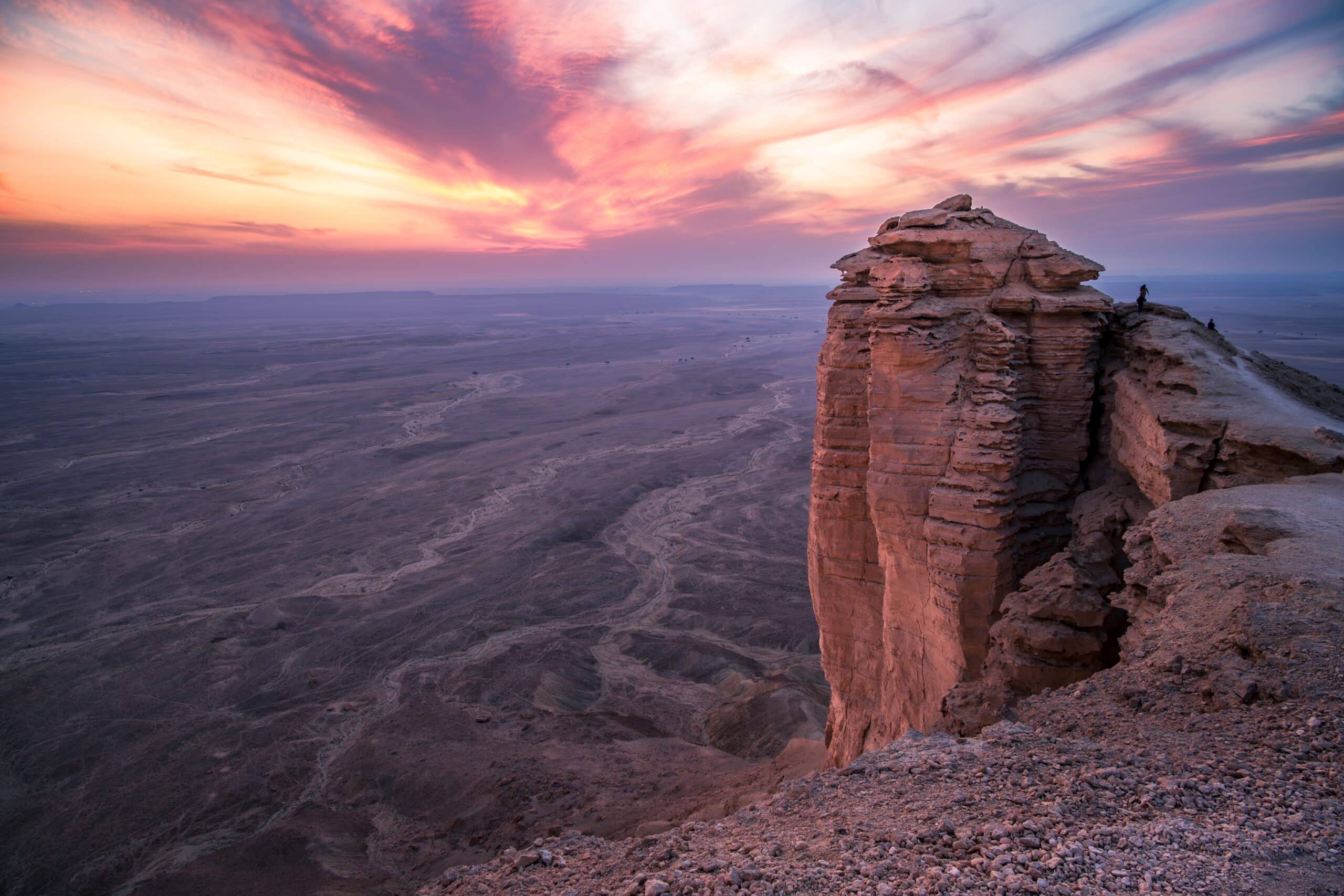
Saudi Arabia occupies a vast and commanding geography, yet its identity is shaped less by scale than by depth. Stretching across deserts, mountains, coasts, and sacred cities, the Kingdom represents continuity rooted in land, belief, and memory. It is a place where geography and meaning are inseparable, where terrain shapes worldview, and where history is not distant but present in daily rhythm.
For millennia, Arabia served as a crossroads of trade, migration, and faith. Caravans crossed its deserts carrying incense, spices, and ideas, linking Africa, Asia, and the Mediterranean world. These routes fostered exchange long before modern borders, shaping a culture attentive to hospitality, survival, and trust. Movement across harsh landscapes demanded cooperation, discipline, and respect for natural limits.
At the heart of Saudi Arabia lies spiritual centrality. Islam emerged here, anchoring the land with purpose that transcends geography. Sacred cities remain living spaces rather than preserved relics, shaping national identity through responsibility as much as reverence. Faith informs daily life not as abstraction, but as structure.
The country’s landscapes reinforce introspection. Deserts stretch uninterrupted, mountains rise abruptly, and coastlines frame open horizons. These environments cultivate patience and scale awareness, reminding inhabitants of proportion between human ambition and natural permanence.
Modern Saudi Arabia exists in a moment of transformation, yet change unfolds alongside tradition rather than in opposition to it. Urban expansion, infrastructure, and cultural initiatives reflect adaptation rooted in continuity. Progress is framed as stewardship, not replacement.
23. Riyadh: Capital of Convergence and Authority
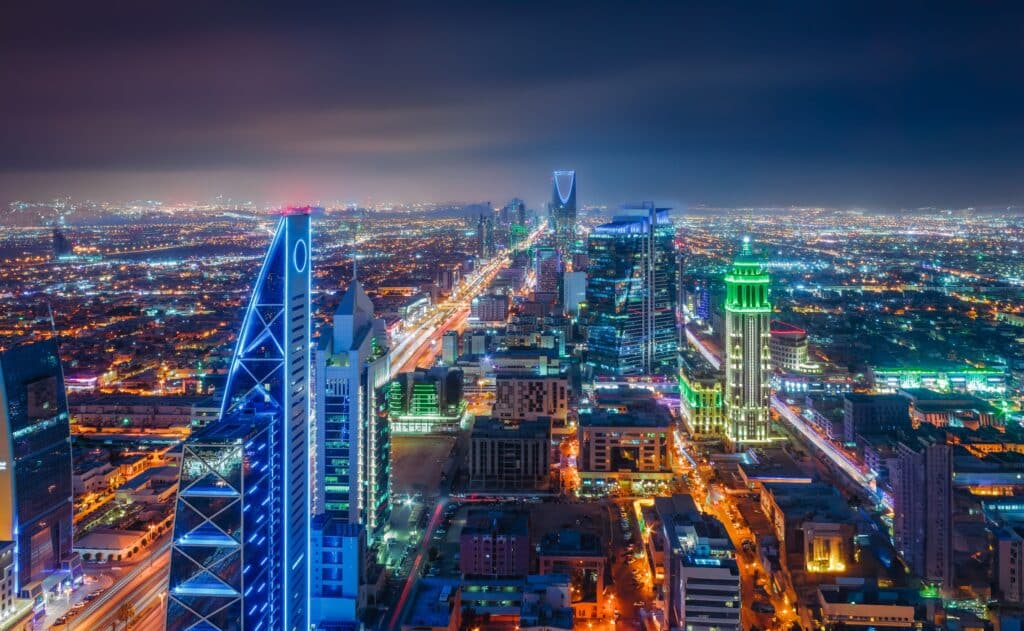
Riyadh rises from the Najd plateau as the political and administrative heart of Saudi Arabia, shaped by authority, scale, and deliberate order. Once a fortified settlement sustained by wells and trade routes, it has evolved into a modern capital without severing ties to its origins.
The city’s layout reflects governance through structure. Broad avenues, institutional districts, and expanding neighborhoods express control over space rather than density. Riyadh does not compress; it extends, reinforcing clarity and hierarchy.
Historical roots remain visible in Diriyah, where the Saudi state first consolidated power. Mud-brick architecture and palm-lined valleys anchor modern ambition in ancestral ground. This continuity reinforces legitimacy through place.
Daily life in Riyadh balances formality and routine. Government institutions define rhythm, yet markets, mosques, and family gatherings sustain social cohesion. The city’s pace is measured, shaped by responsibility rather than display.
Riyadh represents Saudi Arabia’s governing core. It shows how authority emerges from stability, and how leadership remains anchored in geography as much as policy. In its ordered expansion, Riyadh reflects a nation asserting continuity while shaping its future.
22. Makkah: Sacred Center of Human Direction
Makkah stands as the spiritual axis of Islam and one of the most significant cities in human history. Its importance transcends nationality, language, and time, anchoring global faith to a specific place and orientation.
The city’s geography is defined by enclosure. Mountains surround the sanctuary, focusing movement inward toward the Kaaba. This physical concentration mirrors spiritual intention, reinforcing unity through direction.
Pilgrimage defines Makkah’s rhythm. Millions arrive annually, yet the city functions with discipline shaped by centuries of adaptation. Infrastructure serves ritual, ensuring continuity across generations.
Makkah is not preserved—it is lived. Markets, residences, and worship coexist, reinforcing the city’s role as both sacred and inhabited. Reverence here is practiced through responsibility rather than spectacle.
Makkah represents Saudi Arabia’s spiritual core. It demonstrates how faith shapes space, movement, and collective purpose. The city stands as a reminder that meaning, when anchored to place, becomes enduring.
21. Madinah: City of Reflection and Settlement
Madinah occupies a quieter yet equally profound role as the city of settlement, reflection, and community. Where Makkah represents arrival, Madinah represents continuity through living example.
Palm groves and volcanic plains surround the city, creating an environment that fosters contemplation. The Prophet’s Mosque anchors the city’s identity, yet daily life flows gently around it.
Historically, Madinah shaped Islamic social organization, governance, and ethics. Its legacy lies in balance—between authority and compassion, discipline and mercy.
Modern Madinah preserves this calm. Urban growth remains measured, reinforcing serenity rather than urgency. Pilgrims and residents coexist through shared rhythm.
Madinah represents Saudi Arabia’s moral center. It shows how values are sustained through practice, and how cities can embody restraint without diminishing significance.
20. Al-Ula: Memory Carved in Stone and Silence
Al-Ula lies in northwestern Saudi Arabia as a vast open-air archive of human presence. Carved sandstone cliffs, tombs, and ancient settlements reveal civilizations shaped by trade, belief, and adaptation.
The landscape commands attention through scale and stillness. Rock formations frame valleys once vital to caravan routes linking Arabia to the wider ancient world.
Al-Ula’s power lies in preservation through restraint. Archaeology here emphasizes context rather than reconstruction, allowing landscape to speak alongside history.
The region reflects Saudi Arabia’s deep temporal reach, extending identity far beyond modern borders.
Al-Ula represents memory anchored in land. It reminds visitors that history does not disappear—it settles, waiting to be understood.
19. Jeddah: Gateway of the Red Sea
Jeddah stretches along the Red Sea as Saudi Arabia’s most outward-facing city, defined by openness, exchange, and maritime rhythm. For centuries, it has served as the Kingdom’s primary port, welcoming traders, pilgrims, and ideas from across the Islamic world.
The city’s identity is inseparable from the sea. Coral reefs line the coast, while harbors and promenades structure urban life. Movement defines Jeddah—ships arrive, pilgrims pass through, and commerce flows continuously between land and water.
Historic Al-Balad anchors the city’s memory. Coral-stone houses with carved wooden balconies reflect adaptation to climate and trade-based prosperity. These structures speak of a cosmopolitan past shaped by Indian Ocean routes and multicultural settlement.
Modern Jeddah expands vertically and horizontally, yet its social character remains informal and fluid. Cafés, markets, and seaside spaces sustain interaction, reinforcing hospitality as civic culture rather than ritual obligation.
Jeddah represents Saudi Arabia’s maritime identity. It shows how openness can coexist with tradition, and how cities shaped by arrival remain adaptable. As the Kingdom’s coastal threshold, Jeddah balances continuity with exchange, standing confidently between desert interior and global sea.
18. Taif: Highlands of Climate and Cultivation
Taif rises in the western highlands as a city defined by elevation, climate, and cultivation. Positioned above the coastal plain, it offers relief from heat and a landscape shaped by terraces, orchards, and mountain air.
Historically, Taif served as a seasonal refuge and agricultural center. Grapes, roses, and fruit flourish here, sustained by cooler temperatures and attentive land management. The Taif rose, harvested for perfume, reflects precision and patience embedded in local practice.
The city’s geography fosters introspection. Mountains frame settlements, and movement slows as elevation increases. This environment has long encouraged retreat, reflection, and measured living.
Taif’s social life remains grounded. Markets and farms sustain community ties, while religious and family structures reinforce continuity. Urban growth remains moderate, shaped by terrain rather than ambition.
Taif represents Saudi Arabia’s cultivated highlands. It shows how geography moderates rhythm and how adaptation to environment produces stability. In its elevation, Taif offers not escape, but balance—reminding the Kingdom of diversity within its landscapes.
17. Rub’ al Khali: Desert of Scale and Silence
The Rub’ al Khali, or Empty Quarter, stretches across southern Saudi Arabia as one of the largest continuous sand deserts on Earth. Its vastness defines the limits of human presence and the scale of natural endurance.
Dunes rise and shift endlessly, shaped by wind rather than time. Life here is minimal yet precise. Survival depends on deep environmental knowledge passed through generations of desert dwellers.
The desert’s power lies in restraint. It resists settlement, cultivation, and permanence, reinforcing humility through scale. Movement across it demands discipline, planning, and respect for natural law.
Despite its emptiness, the Rub’ al Khali holds cultural weight. It shapes national identity through contrast—against cities, coasts, and sacred centers. The desert remains a reference point for endurance and origin.
The Empty Quarter represents Saudi Arabia’s elemental core. It shows how absence becomes presence, and how silence instructs more than abundance. In its vastness, the desert anchors identity through proportion and perspective.
16. Asir Mountains: Southern Elevation and Tradition
The Asir Mountains rise along Saudi Arabia’s southwestern edge, introducing greenery, rainfall, and architectural tradition distinct from the desert interior. This region reflects adaptation through elevation and isolation.
Terraced farming lines mountain slopes, sustaining crops through rainfall rather than irrigation. Villages cluster along ridges, reinforcing defense, cooperation, and visual connection to land.
Asir’s architecture is distinctive—stone houses decorated with geometric patterns express identity through form and color. Craft and tradition remain visible, sustained through continuity rather than revival.
The region’s climate shapes rhythm. Mist, rain, and cooler temperatures encourage slower pace and seasonal awareness. Social life centers on village cohesion and shared labor.
Asir represents Saudi Arabia’s southern character. It shows how diversity emerges within unity, and how geography produces cultural variation without fragmentation. In these mountains, tradition remains elevated—literally and figuratively.
15. Dammam and the Eastern Province: Oil, Coast, and Continuity
Dammam sits on the eastern coast of Saudi Arabia along the Arabian Gulf, anchoring the Kingdom’s industrial and maritime activity. Unlike historical centers shaped by pilgrimage or agriculture, Dammam has emerged from resource-driven development, yet its identity remains tied to both land and water.
The coastline defines rhythm here. Ports and shipping lanes structure urban movement, while fishers and small-scale traders coexist with industrial infrastructure. Water remains central even amid modernity, framing life and commerce.
Oil extraction transformed the landscape and economy, yet continuity persists in social structures and communal spaces. Neighborhoods, markets, and family networks sustain interaction, ensuring that development does not dissolve local coherence.
The Eastern Province balances tradition and innovation. Mosques, souks, and public spaces preserve cultural life, while highways and industrial complexes illustrate national ambition. Residents navigate between these layers, maintaining daily rhythm rooted in place.
Dammam represents Saudi Arabia’s eastern interface. It demonstrates how resource-driven transformation can coexist with local continuity. Coastal proximity and industrial activity are reconciled with human scale and social memory, reflecting adaptability within enduring framework.
14. Al-Hijr (Madain Saleh): Desert Tombs and Silence
Al-Hijr, also known as Madain Saleh, lies in the northern desert as a UNESCO World Heritage site preserving Nabataean tombs carved into sandstone cliffs. Its significance lies not in scale but in the dialogue between human craft and geological permanence.
The landscape is stark and monumental. Cliffs rise above open desert, and tomb façades blend with rock formations, expressing design attuned to environment. Silence dominates, broken only by wind over stone.
Daily life here is minimal; the site exists as observation rather than habitation. Visitors follow trails without intrusion, reinforcing respect for continuity and heritage. The desert frames the tombs, underscoring endurance over time.
Al-Hijr represents Saudi Arabia’s deep history and capacity for preservation. It shows how human presence can harmonize with extreme landscapes, and how memory can be embedded in stone without spectacle.
13. Najran: Oasis of Continuity and Southern Culture
Najran lies in southwestern Saudi Arabia as a desert oasis enriched by seasonal water and fertile soil. Its identity reflects agricultural innovation, trade connectivity, and southern cultural distinctiveness.
Date palms, irrigation channels, and terraced gardens define rhythm. Farming is intertwined with local knowledge, transmitted through generations. Seasonal cycles govern planting, harvest, and communal cooperation.
Najran’s architecture conveys continuity. Forts, mosques, and residential compounds illustrate adaptation to climate and social organization, reinforcing community cohesion through spatial design.
Trade routes historically connected Najran to Yemen and interior Arabia, fostering exchange and cultural integration without diluting local identity. Social life emphasizes hospitality, intergenerational continuity, and ritual observance.
Najran represents the Kingdom’s southern depth. It shows how oasis communities sustain culture and economy in arid lands, balancing productivity with environmental awareness and long-term continuity.
12. Ta’if Rose Gardens and Agriculture: Fragrance in Elevation
Beyond urban Ta’if, the highlands’ terraced gardens cultivate roses, grapes, and fruit, demonstrating how elevation shapes agriculture, labor, and landscape interaction.
Rose farming is seasonal and deliberate. Petals are harvested by hand at dawn, distilled for perfume, and distributed nationally and internationally. Each step requires precision, patience, and environmental understanding.
The gardens reflect broader social structure. Families and villages coordinate labor, transmitting knowledge orally and practically. Work is communal, rhythm aligned to climate rather than clock.
Ta’if’s agricultural landscape blends utility and beauty. Terraces contour the land, conserving soil while sustaining production. Mountains frame movement, slowing pace and encouraging observation.
These gardens illustrate Saudi Arabia’s capacity to integrate environment, tradition, and economy. They show how human effort can enhance rather than overwhelm landscape, producing continuity and refinement simultaneously.
11. Al-Qassim: Heartland of Agriculture and Rural Resilience
Al-Qassim occupies central Saudi Arabia as a region defined by fertile plains, date palm groves, and enduring rural life. Its identity emerges from balance between agricultural productivity and social cohesion.
Date palms dominate the landscape, sustaining economy, culture, and ritual life. Planting, harvesting, and irrigation follow inherited patterns adapted to arid climate. Knowledge is transmitted orally, reinforcing continuity across generations.
Villages maintain interdependence. Markets, mosques, and communal spaces structure daily interaction, anchoring rhythm in locality rather than urban abstraction.
Al-Qassim demonstrates how the Kingdom’s interior thrives through resilience and continuity. It shows that agricultural heartlands anchor national identity, balancing productivity with ecological awareness and social cohesion.
10. Yanbu: Red Sea Port and Industrial Horizon
Yanbu stretches along the Red Sea as a port city balancing industrial ambition with maritime heritage. Its docks, refineries, and shipping lanes define rhythm, yet the sea shapes identity more than industry alone.
Historically, Yanbu served as a coastal gateway linking Arabia with Africa and the wider Indian Ocean. Traders, pilgrims, and sailors moved through its harbors, blending local and external influences into the city’s character.
Modern development emphasizes industrial growth, yet daily life maintains maritime continuity. Fishing, boat transport, and coastal communities persist alongside refineries, ensuring that human presence remains in dialogue with water and wind.
The Red Sea itself frames experience. Coral reefs, calm waters, and changing tides dictate movement and adaptation. Residents interact with natural cycles even as urban expansion presses inland.
Yanbu represents the Kingdom’s balance between past and present. It demonstrates how a city can integrate globalized industry without losing maritime rhythm. Here, continuity emerges from alignment with environment rather than mere infrastructure.
9. Al-Wajh: Historical Port of Silence and Sun
Al-Wajh lies further north along the Red Sea, characterized by flat coastal plains and quiet harbors. Unlike larger ports, its identity derives from measured presence, historical memory, and maritime rhythm.
The town’s harbor is modest yet functional, reflecting centuries of small-scale trade and fishing. Boats move predictably, and tides dictate timing for departure and return. Life unfolds with attention to natural forces rather than external schedules.
Al-Wajh retains historical traces of Ottoman and local settlement, visible in fort remnants and simple coastal architecture. These structures reflect adaptation and continuity rather than grandiosity.
The surrounding desert meets the sea gradually, reinforcing isolation and introspection. Movement slows, sound softens, and observation replaces urgency.
Al-Wajh represents coastal balance. It shows how maritime communities sustain economy, memory, and ecology without imposing upon either. Here, human life harmonizes with natural rhythm, producing stability in silence.
8. Tabuk: Northern Frontier and Wadi Passage
Tabuk lies in northwestern Saudi Arabia as a city defined by proximity to desert, mountains, and historical trade routes. It functions as a northern gateway connecting interior Arabia to Mediterranean corridors.
Wadis dominate landscape. Seasonal rivers carve channels through sandstone and gravel plains, shaping settlement, agriculture, and passage. Life revolves around these waterways, however intermittent.
Historically, Tabuk anchored military, trade, and pilgrimage routes. Caravans and travelers relied on its wells, fortifications, and markets, reinforcing its role as mediator between regions.
Modern Tabuk integrates urban expansion with natural geography. Residential areas and infrastructure follow valleys, preserving alignment with environmental rhythm.
Tabuk represents northern continuity. It shows how human settlement can persist at desert margins through adaptation, coordination, and respect for landscape limits.
7. Al-Ukhaydir Fort and Desert Outposts
Al-Ukhaydir lies deeper in the northern desert as a remnant fortification along caravan routes. Its walls and towers express control, yet placement reflects cooperation with terrain rather than imposition upon it.
The desert surrounds dictate movement, water access, and defensive necessity. Fort construction demonstrates human ability to negotiate extreme environments without dominating them completely.
Daily life historically balanced travel, trade, and survival. Caravans relied on fort protection, while desert dwellers maintained seasonal patterns of mobility and labor.
Al-Ukhaydir represents endurance at threshold spaces. It shows how strategic settlements balance environmental awareness with security, producing continuity and purpose in sparse landscapes.
6. Wadi Dawasir: Life Between Valleys
Wadi Dawasir stretches along a series of fertile desert valleys in central Saudi Arabia. Its seasonal rivers, palm groves, and terraced farms create pockets of sustenance within otherwise arid land.
Agriculture defines rhythm. Date palms, cereals, and vegetables are grown through careful timing, irrigation, and communal labor. Knowledge is passed across generations, ensuring continuity.
Villages cluster around water sources, emphasizing cohesion and interdependence. Markets, religious spaces, and family networks anchor daily life.
The surrounding desert teaches restraint. Survival depends on observation, adaptation, and respect for seasonal variation. Wadi Dawasir embodies resilience rooted in geography rather than infrastructure.
This wadi represents central Arabia’s capacity for sustainable settlement. It shows how water, land, and human discipline coalesce to create enduring life amidst arid expanses.
5. Al-Ahsa Oasis: Life Sustained by Water
Al-Ahsa lies in eastern Saudi Arabia as one of the world’s largest oases, a landscape where water transforms desert into sustained human habitat. Springs, canals, and wells support a rhythm of cultivation that has persisted for centuries.
Date palms dominate the terrain, their shade and fruit defining both economy and culture. Farmers coordinate planting, irrigation, and harvest according to inherited schedules, ensuring continuity through observation and practice rather than mechanization alone.
Communities cluster around water sources, forming villages where markets, mosques, and social spaces anchor daily life. Knowledge of soil, irrigation, and seasonal change is transmitted orally, embedding environmental awareness into culture.
Al-Ahsa reflects Saudi Arabia’s capacity for adaptation. It demonstrates how settlements can thrive in arid regions through care, cooperation, and attention to natural cycles. Here, water is not merely resource; it is structuring principle, shaping rhythm, architecture, and society.
The oasis is a living archive. Centuries of cultivation, trade, and habitation coexist with modern urban expansion, revealing continuity without erasure. Al-Ahsa reminds visitors that life in extreme landscapes depends on discipline, patience, and respect for natural forces.
4. Najran Heritage Villages: Southern Tradition Preserved
Najran’s heritage villages lie near the southern border, nestled among fertile valleys and desert margins. These settlements combine architecture, agriculture, and social cohesion in ways uniquely responsive to climate and geography.
Stone and mud-brick homes cluster along narrow lanes, forming neighborhoods organized for shade, wind protection, and collective defense. Terraces and irrigation systems sustain crops, particularly dates and grains, ensuring food security.
Social life emphasizes interdependence. Families collaborate across labor, ritual, and trade, transmitting knowledge through practice rather than text. Religious and cultural traditions guide daily routines, linking present communities to ancestors.
The surrounding terrain dictates pace. Hills, wadis, and seasonal rivers shape movement, interaction, and agricultural planning. Residents adapt to natural cycles rather than imposing arbitrary schedules.
Najran’s villages exemplify southern continuity. They show how cultural and environmental adaptation coalesce, producing resilience, stability, and identity. Here, settlement is inseparable from landscape, and memory is built into stone, soil, and daily practice.
3. Farasan Islands: Red Sea Sanctuary
Farasan Islands lie off Saudi Arabia’s southwest Red Sea coast as an archipelago where marine and terrestrial ecosystems converge. Coral reefs, mangroves, and open water shape life, while human presence remains modest and integrated.
Fishing and limited agriculture sustain local communities. Boats move rhythmically with tides, and coastal foraging relies on knowledge of currents and seasonal cycles.
The islands’ remoteness reinforces ecological continuity. Wildlife thrives alongside settlements, including coral species, seabirds, and marine mammals. Conservation is embedded in local practice, not imposed externally.
Farasan exemplifies harmonious coastal living. It shows how islands can sustain human habitation without ecological disruption, demonstrating respect, adaptation, and balance.
2. Tabuk Heritage Sites: Caravan Roads and Ancient Forts
Beyond the city of Tabuk, the northern deserts contain forts, waystations, and caravan routes marking historic connectivity across Arabia. These sites illustrate adaptation to arid expanses, linking movement, survival, and trade.
Forts provided water, shelter, and protection for travelers. Architecture responds to environment—thick walls, elevated positions, and compact design conserve heat and regulate flow.
Desert movement shapes rhythm. Caravans, seasonal travelers, and nomadic groups relied on alignment with climate, trade, and safety. Social networks extended across sparsely populated areas, reinforcing cooperation.
These heritage sites embody northern Arabia’s continuity. They show how survival and culture emerge in relation to environment, where infrastructure responds to natural limits and memory anchors identity.
1. Al-Soudah and Asir Highlands: Elevation of Perspective
Al-Soudah lies in the southwestern Asir region as a highland landscape of mountains, fog, and terraces. It represents elevation in both geography and thought, offering perspective shaped by climate, cultivation, and continuity.
Villages adapt to steep terrain. Stone houses, agricultural terraces, and communal spaces respond to rainfall and slope, producing harmony between human presence and landform.
Forests, seasonal streams, and cooler temperatures moderate lifestyle. Residents coordinate planting, harvest, and daily movement with environmental rhythm rather than arbitrary schedules.
Al-Soudah exemplifies the Kingdom’s highland character. It shows how geography shapes social and cultural continuity, blending natural elevation with human adaptation. Here, perspective emerges through alignment with environment, producing reflection, resilience, and rooted identity.