
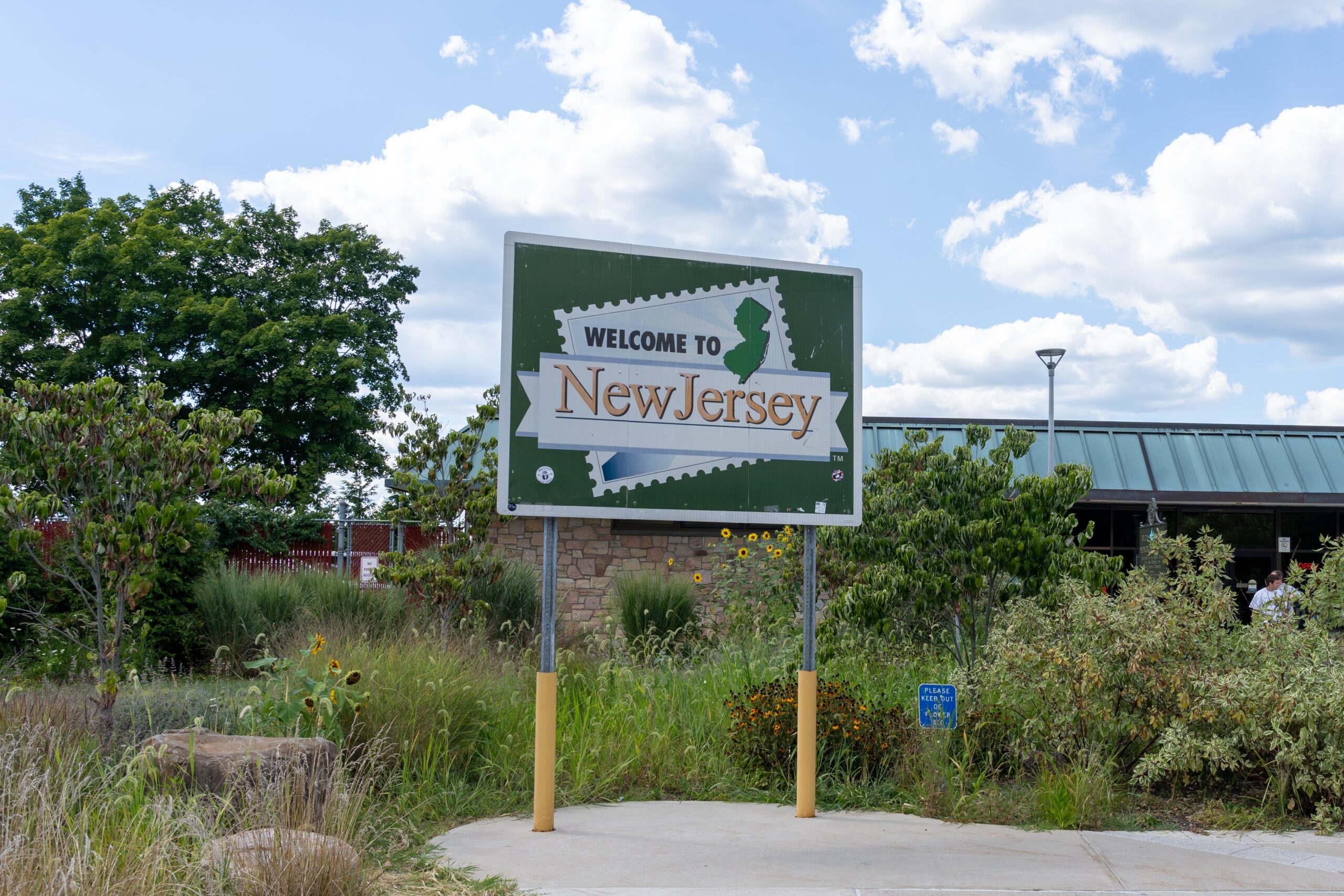
New Jersey exists in the narrow but powerful space between giants. Framed by New York and Philadelphia, shaped by the Atlantic Ocean and the Delaware River, it is often mischaracterized as a corridor rather than a destination. Yet New Jersey is not a passageway—it is a convergence. History, industry, nature, and identity overlap here with unusual density, creating a state that reveals itself only to those who slow down and look closely.
Few places in America contain so many contrasts in such proximity. Salt marshes give way to refineries; colonial towns sit minutes from financial centers; farmland persists beneath the shadow of highways and skylines. New Jersey’s story is not one of isolation, but of interaction—between urban and rural, old and new, ambition and restraint.
This is one of the nation’s oldest places of settlement and one of its most continuously reinvented. The state helped shape the American Revolution, fueled industrial expansion, and absorbed waves of immigration that left lasting cultural imprints. Yet despite its density, New Jersey maintains a surprising intimacy. Towns retain identities. Accents shift by county. Loyalties are local, specific, and deeply felt.
New Jersey resists simplification. It cannot be reduced to clichés or compressed into a single narrative. Its beauty is not always immediate, but it is persistent—found in quiet streets, preserved shorelines, working-class pride, and the layered memory of place.
This guide explores New Jersey not as a stereotype, but as a lived landscape: complex, resilient, and essential to understanding the American experience.
22. The Jersey Shore — Beyond the Boardwalk
The Jersey Shore is often imagined as spectacle—boardwalk lights, summer crowds, and seasonal excess—but its true character emerges outside the peak months and beyond the obvious landmarks. Stretching more than 130 miles, the shoreline is not a single place but a chain of distinct coastal communities, each shaped by geography, history, and local rhythm.
In the north, towns like Sandy Hook and Sea Bright balance recreation with preservation, where protected dunes and maritime forests coexist with historic military installations. Farther south, Asbury Park tells a story of reinvention—once grand, then faded, now culturally resurgent—where music, architecture, and community pride intersect along the oceanfront.
The central shore blends tradition and family ritual. Boardwalks in Point Pleasant and Seaside Heights preserve mid-century Americana, while quieter towns nearby maintain year-round stability beneath the seasonal surge. Further south, Cape May stands apart—architecturally elegant, historically preserved, and deliberately unhurried.
Yet the shore is more than tourism. It is labor and livelihood. Fishing fleets, marina workers, environmental scientists, and storm-recovery planners shape daily life. Hurricanes and rising seas have reinforced a deep awareness of impermanence, prompting a coastal culture built on adaptation rather than denial.
In winter, the shore empties and reveals its truest form: wind-swept beaches, silent streets, and a horizon that belongs entirely to itself. This quieter season reflects the enduring soul of the Jersey Shore—resilient, working, and far more complex than its summer reputation suggests.
21. Newark — Industry, Culture, and Renewal
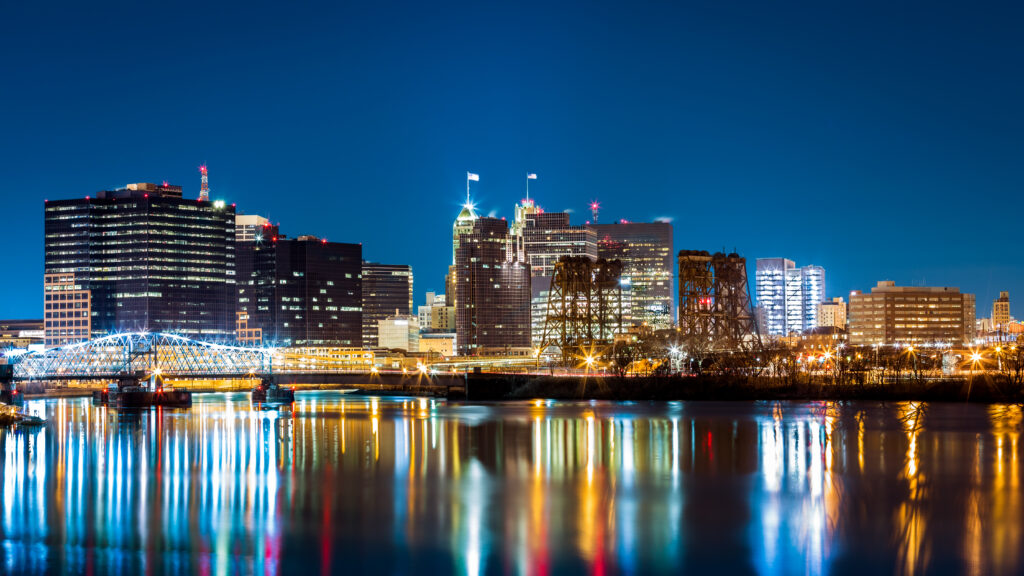
Newark is one of America’s great misunderstood cities. Often viewed through the lens of its past struggles, it is in fact a place of remarkable endurance, cultural richness, and ongoing transformation. As New Jersey’s largest city, Newark has long served as a gateway—absorbing migration, labor, and ambition from across the world.

Industry built Newark. Rail lines, shipping corridors, and manufacturing once defined its skyline and workforce. Though many factories closed, the city never emptied. Instead, it adapted. Immigrant communities revitalized neighborhoods, preserving traditions while reshaping the city’s cultural fabric.

Institutions anchor Newark’s renewal. Universities, arts centers, and historic landmarks—such as the Cathedral Basilica of the Sacred Heart—reinforce continuity amid change. The city’s jazz legacy, literary contributions, and architectural heritage speak to a depth often overlooked.
Neighborhoods retain strong identities, bound by shared history and resilience. Community organizations and local businesses form the backbone of daily life, sustaining social ties that survived decades of economic pressure.
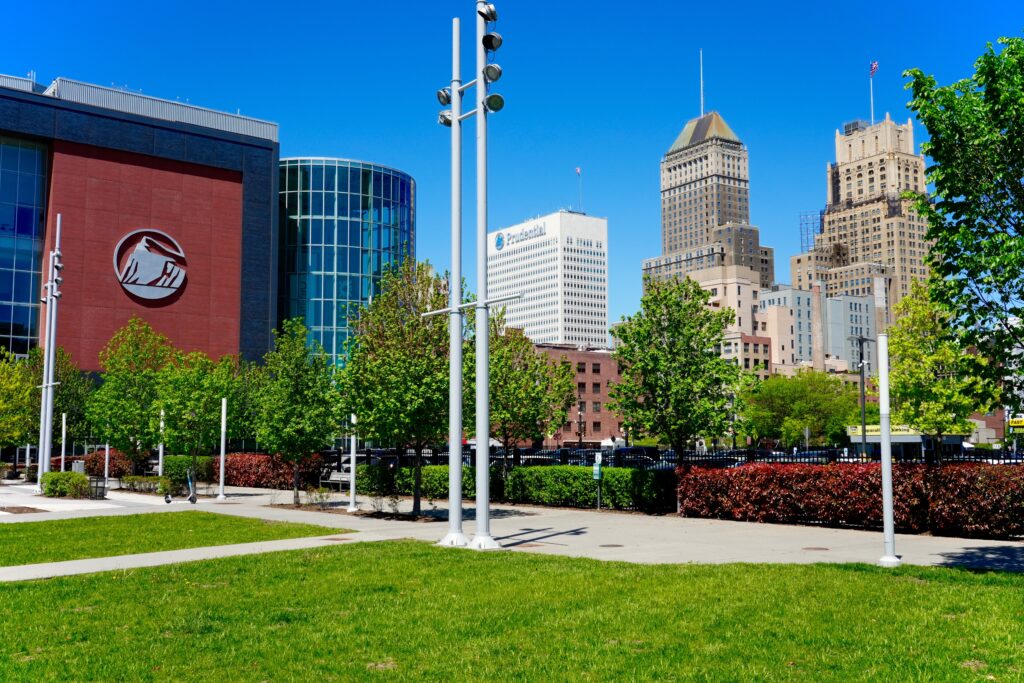
Newark’s story is not one of erasure, but of persistence. It demonstrates that cities are not defined solely by cycles of decline or growth, but by the people who remain, rebuild, and reimagine. In Newark, history is not hidden—it is carried forward.
20. Princeton — Thought, Tradition, and Quiet Authority
Princeton occupies a unique place in New Jersey: intellectual, measured, and deeply rooted in continuity. Though globally known for its university, the town itself reflects a broader philosophy—one that values reflection, preservation, and deliberate pace.
The university’s presence shapes the town’s rhythm, but does not overwhelm it. Gothic architecture, shaded pathways, and carefully maintained green spaces create an environment designed for contemplation. Ideas here are not rushed; they are examined, challenged, and refined.
Beyond academia, Princeton preserves a small-town sensibility. Independent bookstores, cafés, and historic homes line streets that encourage walking rather than haste. Cultural life exists quietly—concerts, lectures, and exhibitions integrated into everyday experience rather than staged as spectacle.
Princeton’s influence extends beyond its borders. Research, policy, and leadership cultivated here ripple outward, shaping national and global discourse. Yet the town remains grounded, protective of its scale and character.
This balance—between global reach and local restraint—defines Princeton’s enduring appeal. It represents New Jersey at its most contemplative: thoughtful without pretension, influential without noise.
19. The Pine Barrens — Wilderness in Plain Sight
The New Jersey Pine Barrens defy expectation. Spanning over a million acres, this vast wilderness exists within one of the most densely populated states in America, yet feels profoundly remote. Flat, sandy, and seemingly endless, the Pines form an ecosystem unlike any other in the Northeast—subtle, resilient, and quietly ancient.
At first glance, the landscape appears sparse: scrub pines, cedar swamps, tea-colored rivers. But closer attention reveals remarkable complexity. Rare orchids bloom in hidden wetlands, carnivorous plants thrive in nutrient-poor soil, and wildlife adapts to conditions that appear inhospitable but are delicately balanced. The Pine Barrens are not empty; they are finely tuned.
Human history here is equally distinctive. Once the site of iron furnaces, glassmaking towns, and early industry, the region declined when resources proved insufficient for sustained growth. Entire villages were abandoned, leaving behind foundations, cemeteries, and legends. These “ghost towns” lend the Pines an atmosphere of quiet mystery rather than fear.
Local communities persist on the margins of the forest, shaped by self-reliance and deep familiarity with the land. Traditions, dialects, and folklore endure, including the enduring myth of the Jersey Devil—a symbol less of menace than of the Pines’ refusal to be fully understood.
Protected today by strong conservation laws, the Pine Barrens represent a rare American achievement: a preserved wilderness within reach of millions. They remind visitors that New Jersey’s identity includes silence, shadow, and resilience—and that wildness can survive even under immense pressure.
18. Atlantic City — Reinvention on the Edge of the Sea
Atlantic City has always lived between ambition and uncertainty. Founded as a seaside resort, it rose to prominence as a place of leisure and escape, its grand hotels and iconic boardwalk drawing visitors from across the East Coast. Later, legalized gambling reshaped its identity once again, transforming the city into an experiment in economic reinvention.
The boardwalk remains the city’s defining symbol—weathered, resilient, and still pulsing with life. Casinos rise like modern monuments, while historic piers and faded signage recall earlier eras of optimism. Atlantic City is not polished; it is layered, carrying visible evidence of every transformation it has undergone.
Beyond the spectacle lies a city grappling with complexity. Neighborhoods exist far from the casino lights, shaped by working-class life, long-term residents, and a determination to remain rooted. Cultural institutions, small businesses, and community initiatives attempt to diversify an economy once dependent on a single industry.
The ocean defines Atlantic City’s emotional landscape. It offers beauty and threat in equal measure, reminding the city of both its allure and vulnerability. Storms, erosion, and climate pressures have intensified awareness of impermanence, reinforcing a sense that reinvention is not optional but necessary.
Atlantic City’s story is unfinished. It is a place still searching for balance—between entertainment and stability, past glory and future possibility. In its imperfections, the city reveals a uniquely American truth: reinvention is rarely clean, but it is often courageous.
17. Hoboken — Density, Memory, and Modern Life
Hoboken is small in size but immense in character. Tucked along the Hudson River, it stands as one of New Jersey’s most urban, walkable, and historically layered cities. From its waterfront, Manhattan rises in full view, yet Hoboken maintains an identity distinctly its own.
The city’s streets reflect its immigrant past. Row houses, corner taverns, and narrow sidewalks tell stories of dockworkers, factory laborers, and families who built tight-knit communities within limited space. Hoboken was shaped by proximity—to shipping lanes, to New York, to opportunity—and by the constant movement of people through its borders.
In recent decades, Hoboken has undergone rapid transformation. Former industrial buildings have become residences and offices, attracting professionals drawn to both convenience and charm. Despite this change, the city has retained a strong sense of continuity. Longtime establishments coexist with new cafés; traditions persist alongside innovation.
Hoboken’s resilience is perhaps best illustrated by its relationship with water. Flooding has repeatedly challenged the city, prompting investments in infrastructure and design that reflect a forward-looking approach to urban living. Here, adaptation is not theoretical—it is necessary.
Culturally, Hoboken balances nostalgia and momentum. Music history, local pride, and civic engagement remain central to its identity. The city thrives not because it has erased its past, but because it has integrated it into daily life.
Hoboken exemplifies New Jersey’s ability to evolve without losing itself—a compact city carrying the weight of memory while embracing the demands of modernity.
16. The Delaware Water Gap — Where New Jersey Becomes Vast
At the northwestern edge of New Jersey, the land opens unexpectedly into grandeur. The Delaware Water Gap, carved by millennia of patient water cutting through ancient Appalachian ridges, is the state’s most dramatic natural threshold. Here, New Jersey sheds its crowded reputation and reveals a landscape defined by scale, silence, and geological time.
Towering forested cliffs frame the Delaware River as it flows calmly through the gap, creating a corridor that feels both monumental and serene. Hiking trails trace ridgelines and riverbanks, offering expansive views where mountains fold into one another in blue-green layers. In autumn, the forest ignites in color; in winter, frost and snow strip the land to its essential forms.
Human presence remains understated. Small towns and historic inns sit quietly nearby, shaped by generations who lived in rhythm with the land rather than in dominance over it. The area’s history—Native American pathways, colonial travel routes, and early conservation efforts—adds depth without diminishing the wilderness.
The Water Gap is also a place of transition. It marks the meeting point of states, ecosystems, and eras, where the familiar gives way to the unexpected. Visitors often arrive surprised, discovering a New Jersey few imagined possible.
In its openness, the Delaware Water Gap offers something rare: space to breathe, to slow down, and to encounter the state not as a network of roads and cities, but as a living landscape shaped by forces far older than human settlement.
15. Cape May — Elegance at the Edge of the Continent
Cape May occupies a singular place in New Jersey’s identity. Positioned at the southernmost tip of the state, it feels both geographically and emotionally distinct—an island of elegance shaped by sea air, history, and light. This is where New Jersey turns outward, facing the open Atlantic with grace.
The town is best known for its extraordinary collection of Victorian architecture. Painted ladies line tree-shaded streets, their ornate details preserved with unusual care. These buildings are not relics; they are lived-in expressions of continuity, lending Cape May a sense of timelessness rare in coastal resort towns.
The ocean defines daily life. Broad beaches stretch beneath wide skies, and the rhythm of tides sets the pace of mornings and evenings. Beyond recreation, Cape May is deeply connected to the natural world. It is one of North America’s most important bird migration sites, where seasons are marked by wings as much as by weather.
Despite its beauty, Cape May is not precious. Fishing boats still leave the harbor, local businesses maintain year-round rhythms, and the town’s cultural life extends beyond tourism. There is a seriousness beneath the charm—a respect for preservation, environment, and place.
Cape May’s power lies in balance. It welcomes visitors without surrendering identity, honors the past without stagnation, and offers refinement without distance. At the edge of land and sea, it remains both destination and refuge.
14. Morristown — Revolution, Memory, and Modern Purpose
Morristown stands at the intersection of American history and contemporary New Jersey life. Nestled among rolling hills, it is a town shaped by revolution—not metaphorically, but literally. During the American Revolutionary War, Morristown served as a strategic winter encampment for George Washington’s army, imprinting the town permanently with national significance.
That history remains visible. Green spaces, preserved headquarters, and museums are integrated into the town’s fabric, not isolated as monuments but woven into everyday life. Morristown does not treat history as spectacle; it treats it as inheritance.
Beyond its past, the town functions as a vibrant modern center. A walkable downtown, cultural institutions, and a strong sense of civic engagement give Morristown an energy that feels purposeful rather than hurried. The surrounding landscape—wooded hills, parks, and trails—softens the town’s edges and reinforces its connection to place.
Morristown’s identity is shaped by continuity. Generations have adapted the town without erasing its character, allowing growth while preserving scale. It serves as a reminder that New Jersey’s story includes leadership, endurance, and thoughtful evolution.
In Morristown, history does not rest quietly behind glass. It informs the present, lending the town a quiet confidence rooted in experience. It is a place where memory strengthens identity—and where the past continues to speak with relevance and clarity.
13. The Jersey Shore Barrier Islands — Life Between Land and Sea
The Jersey Shore is often misunderstood as a single destination, when in reality it is a chain of distinct barrier islands, each shaped by geography, culture, and time. From north to south, these slender stretches of sand form a living boundary between the Atlantic Ocean and the mainland, constantly reshaped by wind and tide.
Life on the barrier islands is defined by impermanence. Houses are raised, dunes are restored, and boardwalks rebuilt, reflecting a collective understanding that the shoreline is never fixed. This awareness fosters a culture of adaptation rather than denial.
Each island carries its own identity. Some are lively, animated by seasonal crowds and traditions of recreation. Others remain quieter, shaped by year-round communities attuned to the rhythms of weather and water. Fishing, boating, and beachgoing coexist with conservation efforts aimed at preserving fragile ecosystems.
The barrier islands also hold deep emotional resonance. For generations, they have been places of memory—summer rituals, family gatherings, first freedoms. Yet beneath nostalgia lies a present-day reality shaped by environmental pressure and resilience.
These islands illustrate New Jersey’s relationship with the Atlantic: intimate, contested, and enduring. They are neither purely natural nor fully engineered, but negotiated spaces where human desire meets elemental force. To understand the Jersey Shore is to understand a way of living that accepts uncertainty as part of beauty.
12. The New Jersey Highlands — Forests Above the Fray
Stretching across the northern reaches of the state, the New Jersey Highlands offer elevation not only in terrain but in perspective. This region of ridges, forests, and reservoirs provides both physical refuge and essential resources, supplying water to millions while remaining remarkably wild.
The Highlands are characterized by depth—deep woods, deep time, deep silence. Ancient rock formations underlie forests of oak, maple, and hemlock, creating a landscape that feels grounded and enduring. Trails wind through hills that rise unexpectedly from surrounding lowlands, revealing views that challenge assumptions about the state’s topography.
Human settlement here has been cautious. Small towns and rural communities exist in conversation with the land, shaped by forestry, farming, and conservation rather than industrial scale. The Highlands have become a focal point for environmental protection, reflecting recognition of their irreplaceable value.
This is a region where preservation is not abstract. It is visible in protected watersheds, limited development, and a cultural commitment to restraint. The Highlands demonstrate that growth and protection need not be opposing forces, but complementary ones.
In the Highlands, New Jersey reveals a quieter strength. Away from highways and shorelines, this elevated landscape anchors the state—geographically, ecologically, and ethically—reminding visitors that some of the most important places are those that choose endurance over attention.
11. Lambertville & the Delaware River Towns — Small-Scale Grace
Along the Delaware River, a string of small towns offers a counterpoint to New Jersey’s urban intensity. Lambertville stands among the most distinctive, a place where scale, history, and artistry align with unusual harmony. Facing Pennsylvania across the river, the town feels both connected and self-contained.
Lambertville’s streets rise gently from the water, lined with preserved homes, galleries, and cafés that reflect a culture attentive to detail. Former industrial buildings have been repurposed rather than erased, creating continuity between past and present. The river remains central, shaping both geography and mood.
Beyond Lambertville, neighboring river towns share similar qualities—walkability, civic pride, and an intimate relationship with their surroundings. These communities have resisted overdevelopment, favoring stewardship over spectacle. Their economies often center on arts, antiques, and local enterprise rather than large-scale commerce.
The Delaware itself is a quiet constant. Flowing steadily, it anchors the region historically and emotionally. Once a route for trade and migration, it now supports recreation and reflection, offering a sense of openness rare in the state.
These river towns demonstrate how New Jersey’s identity includes refinement at small scale. They are places where attention matters, where history is lived rather than displayed, and where connection—to water, land, and community—remains intentional.
10. Sandy Hook — Where History Meets Horizon
Sandy Hook occupies a singular position in New Jersey’s geography and imagination. Extending like a curved finger into the Atlantic, it is both barrier and gateway, offering expansive views of ocean and skyline while remaining rooted in quiet preservation.
The peninsula’s beaches are broad and contemplative, shaped by wind and tide rather than boardwalk culture. Here, the sea feels closer, less mediated. Dunes rise and fall, grasses shift, and the soundscape is dominated by waves and birds rather than voices.
History is deeply embedded at Sandy Hook. Fortifications, lighthouses, and military structures recall centuries of coastal defense and maritime navigation. These remnants are not isolated relics; they exist in dialogue with the natural environment, weathered and reclaimed by time.
Sandy Hook is also a place of transition. It marks the meeting of river and ocean, of urban proximity and ecological sensitivity. From its shores, New York City appears both near and distant, a reminder of scale and contrast.
Preserved as part of a national recreation area, Sandy Hook represents a commitment to restraint. Development has been limited, allowing landscape and memory to dominate. In doing so, it offers one of New Jersey’s most powerful experiences: standing at the edge of land, aware of history behind and horizon ahead.
9. The Meadowlands — Nature, Infrastructure, and Reinvention
The Meadowlands present one of New Jersey’s most complex landscapes. Stretching across northern counties near major highways and cities, this region defies easy categorization. It is neither fully natural nor entirely engineered, but a negotiated terrain where wetlands, industry, and urban life intersect.
Once dismissed as wasteland, the Meadowlands have undergone a profound reassessment. Vast salt marshes remain, supporting migratory birds and resilient plant life adapted to brackish conditions. Elevated walkways and observation points reveal an ecosystem alive with motion and sound, often overlooked by those passing at speed.
Infrastructure dominates the skyline—bridges, rail lines, stadiums, and distribution centers—yet these structures coexist with water and grass in a strange equilibrium. The Meadowlands demonstrate how modern society overlays itself upon nature rather than replacing it entirely.
Environmental restoration efforts have transformed the region into a case study in reclamation. Pollution has been reduced, habitats restored, and public access expanded. The result is not pristine wilderness, but functional resilience—a landscape acknowledging damage while working toward balance.
The Meadowlands embody New Jersey’s pragmatism. They reveal a willingness to confront complexity without retreating into nostalgia or denial. In this region, progress is measured not by erasure, but by integration—an ongoing conversation between land, water, and human ambition.
8. Asbury Park — Sound, Soul, and Revival
Asbury Park is inseparable from music. Its identity has long been shaped by rhythm and voice, by venues where artists found audiences and communities found expression. Positioned along the Atlantic, the city carries both the promise and fragility of coastal life.
Once a thriving resort town, Asbury Park experienced decades of decline as tourism patterns shifted. What distinguishes its story is not the fall, but the nature of its return. Revival here has been cultural rather than cosmetic, rooted in creative energy and community memory.
The boardwalk anchors the city, restored but not sanitized. Historic buildings stand alongside modern spaces, creating a layered streetscape where past and present coexist. Music venues remain central, supporting both established and emerging artists, while murals and public art reinforce a sense of shared ownership.
Asbury Park is also a place of contrasts. Wealth and struggle exist side by side, reminding visitors that renewal is uneven. Yet the city’s openness—socially, culturally, and creatively—has become its defining strength.
The ocean remains a constant presence, shaping mood and movement. It offers both beauty and reminder: that survival requires adaptation. Asbury Park’s revival feels authentic because it does not deny its scars. Instead, it transforms them into sound, story, and shared experience.
7. The Raritan Bayshore — Tides of Memory and Community
The Raritan Bayshore stretches quietly along the inland edge of New Jersey’s coastal world. Facing not the open Atlantic but a sheltered bay, this region has long supported maritime communities shaped by fishing, trade, and proximity to larger cities.
Towns along the Bayshore maintain a modest scale. Waterfront parks, marinas, and historic districts reflect lives lived close to water without spectacle. The bay itself is calm, its tides gentle, creating an atmosphere distinct from ocean-facing shores.
History runs deep here. Shipbuilding, oyster harvesting, and coastal commerce once defined the economy, leaving traces in architecture and local culture. Today, these traditions persist in memory and practice, informing a strong sense of place.
Environmental restoration has become central to the Bayshore’s identity. Efforts to protect wetlands and improve water quality reflect a recognition that the bay’s health is inseparable from community well-being. Nature and human activity are understood as interdependent rather than competing.
The Raritan Bayshore reveals another dimension of New Jersey’s coastal life—quieter, reflective, and grounded. It offers a reminder that not all shorelines are dramatic. Some are defined by continuity, patience, and the slow rhythm of tides shaping both land and lives.
6. The Ironbound — Newark’s Living Mosaic
Within Newark lies the Ironbound, a neighborhood whose vitality reshapes perceptions of the city itself. Defined not by monuments but by daily life, the Ironbound is a place of layered migration, culinary richness, and enduring community bonds. Its streets tell stories in multiple languages, shaped by waves of Portuguese, Brazilian, Spanish, and Latin American influence.
The neighborhood’s name recalls its geography—encircled by rail lines and industry—yet the Ironbound feels remarkably open. Restaurants, bakeries, cafés, and small shops animate the streetscape, turning routine errands into social encounters. Food is central here, not as trend but as inheritance, connecting generations and cultures.
Industry remains present, but it does not dominate. Residential blocks sit alongside warehouses and rail yards, reflecting a long-standing coexistence between labor and home life. This balance has fostered a culture of resilience, where adaptation is practiced rather than theorized.
Community institutions—churches, cultural organizations, and local businesses—anchor the neighborhood. Celebrations spill into public spaces, reinforcing a sense of belonging that transcends economic fluctuation. The Ironbound thrives because it remains rooted, resisting erasure even as surrounding areas change.
In the Ironbound, New Jersey’s diversity becomes tangible. It is a reminder that the state’s strength lies not only in landscapes and history, but in neighborhoods where global stories converge and continue to evolve.
5. Watchung Reservation — The Elevated Quiet
Rising above surrounding suburbs, Watchung Reservation offers an elevated pause within New Jersey’s densely settled north. This protected landscape of wooded hills, lakes, and basalt ridges provides a sense of separation without isolation—a place where quiet is accessible rather than remote.
The reservation’s terrain is shaped by ancient volcanic activity, lending it a distinct topography. Trails follow ridgelines and descend into shaded valleys, revealing waterfalls, overlooks, and pockets of surprising solitude. The land feels enclosed, protective, as though holding its own stillness against the surrounding pace of life.
Human presence here is respectful and measured. Paths are well maintained, yet development is restrained. Recreation exists alongside preservation, allowing visitors to engage with the landscape without overwhelming it. Families, hikers, and cyclists share space with wildlife, reinforcing a sense of coexistence.
Historically, the Watchung Mountains offered refuge and perspective, used by Indigenous peoples and later settlers alike. Today, the reservation continues that tradition, offering mental and physical retreat rather than strategic advantage.
Watchung Reservation demonstrates how New Jersey integrates nature into daily life. It is not wilderness at a distance, but landscape as companion—an essential counterbalance to density and movement. In its elevated quiet, the reservation reminds visitors that respite does not require escape, only attention.
4. The Sourland Mountains — Subtle Wildness
The Sourland Mountains occupy a modest rise in central New Jersey, yet their character is outsized. Unlike dramatic ranges, the Sourlands assert themselves quietly, offering forests, farmland, and winding roads that feel intentionally removed from major corridors.
This region is defined by texture rather than spectacle. Stone fences line fields, wooded trails slip between ridges, and historic farmsteads anchor the land to centuries of cultivation. The Sourlands are deeply agricultural, yet conservation efforts have preserved open space and ecological integrity.
The mountains support a network of small communities shaped by proximity to nature and commitment to stewardship. Local markets, vineyards, and cultural events reinforce a lifestyle grounded in land rather than speed. Growth here has been cautious, reflecting an understanding that scale matters.
Ecologically, the Sourlands serve as a vital habitat corridor. Forests and wetlands support biodiversity while buffering development pressure. The landscape’s resilience lies in its continuity—fields still farmed, woods still walked, traditions still practiced.
The Sourland Mountains embody a New Jersey often overlooked: rural, deliberate, and quietly enduring. They offer proof that preservation need not be dramatic to be meaningful. In their subtle wildness, the Sourlands provide grounding—a reminder that the state’s richness includes places content to remain understated.
3. The Palisades — Stone, River, and Vertical Time
Rising abruptly along the Hudson River, the Palisades form one of New Jersey’s most striking natural landmarks. These sheer basalt cliffs stretch northward in a continuous wall, their dark stone faces recording a geological history far older than the cities that now surround them. The Palisades are not merely scenic—they are elemental.
From below, the cliffs appear imposing, almost architectural. From above, they reveal wooded trails, quiet overlooks, and moments of unexpected calm. The contrast between vertical stone and flowing river creates a landscape defined by tension and balance. The Hudson moves steadily past, while the cliffs remain unmoved, bearing silent witness to centuries of change.
Human interaction with the Palisades has been shaped by restraint. Early quarrying threatened their integrity, prompting some of the earliest conservation efforts in the region. Today, preserved parkland allows access without exploitation, reinforcing the idea that protection is itself a form of progress.
The Palisades occupy a liminal space—between New Jersey and New York, nature and metropolis. They offer perspective not only in elevation, but in time. Standing atop the cliffs, the modern world appears briefly diminished, framed by stone that predates it entirely.
In the Palisades, New Jersey asserts a rare authority: the power of endurance. They remind visitors that amid density and development, permanence can still exist.
2. Long Beach Island — Fragile Beauty and Coastal Rhythm
Long Beach Island stretches slender and exposed along the Atlantic, a narrow ribbon of sand defined by light, wind, and water. Unlike the mainland shore, the island feels deliberately provisional—its shape constantly negotiated by tides and storms.
Life here is organized around awareness. Homes are elevated, dunes are protected, and daily routines respond to weather and season. The ocean is not background scenery but a governing presence, shaping both economy and identity.
The island’s communities retain distinct personalities, yet share a common relationship with impermanence. Summer brings intensity—crowds, commerce, energy—while winter restores stillness. This seasonal rhythm defines Long Beach Island as much as geography.
Fishing, boating, and beach culture persist alongside environmental stewardship. Efforts to preserve dunes and wetlands reflect recognition that survival depends on respect rather than control. The island’s beauty is inseparable from its vulnerability.
Long Beach Island offers clarity. It strips coastal life down to essentials: shelter, horizon, movement. In doing so, it reveals a New Jersey defined not by excess, but by adaptation—living with the ocean rather than against it.
1. Paterson & the Great Falls — Power, Labor, and Legacy
At the heart of Paterson lies the Great Falls of the Passaic River, one of the most powerful waterfalls in the eastern United States. Their roar is both natural spectacle and industrial memory—a convergence of force that shaped not only a city, but a nation.
Founded as America’s first planned industrial city, Paterson was built around the Falls. Waterpower fueled mills, factories, and innovation, drawing workers from across the world. Silk, locomotives, and textiles emerged from this energy, embedding Paterson in the story of American industry.
The Falls themselves remain unchanged in spirit. They surge and crash with the same intensity that once drove machinery, now framed by preserved parkland and historic structures. Observation points allow visitors to witness both natural power and human ambition in a single view.
Paterson’s surrounding neighborhoods reflect the complexities of industrial legacy. Immigration, labor movements, and cultural exchange shaped a city resilient through challenge. The Great Falls stand not as relic, but as reminder—of ingenuity, struggle, and transformation.
In Paterson, New Jersey confronts its industrial soul directly. The Falls do not romanticize the past; they assert it. They remain a place where raw force meets human vision, anchoring the state’s identity in labor, diversity, and enduring strength.