
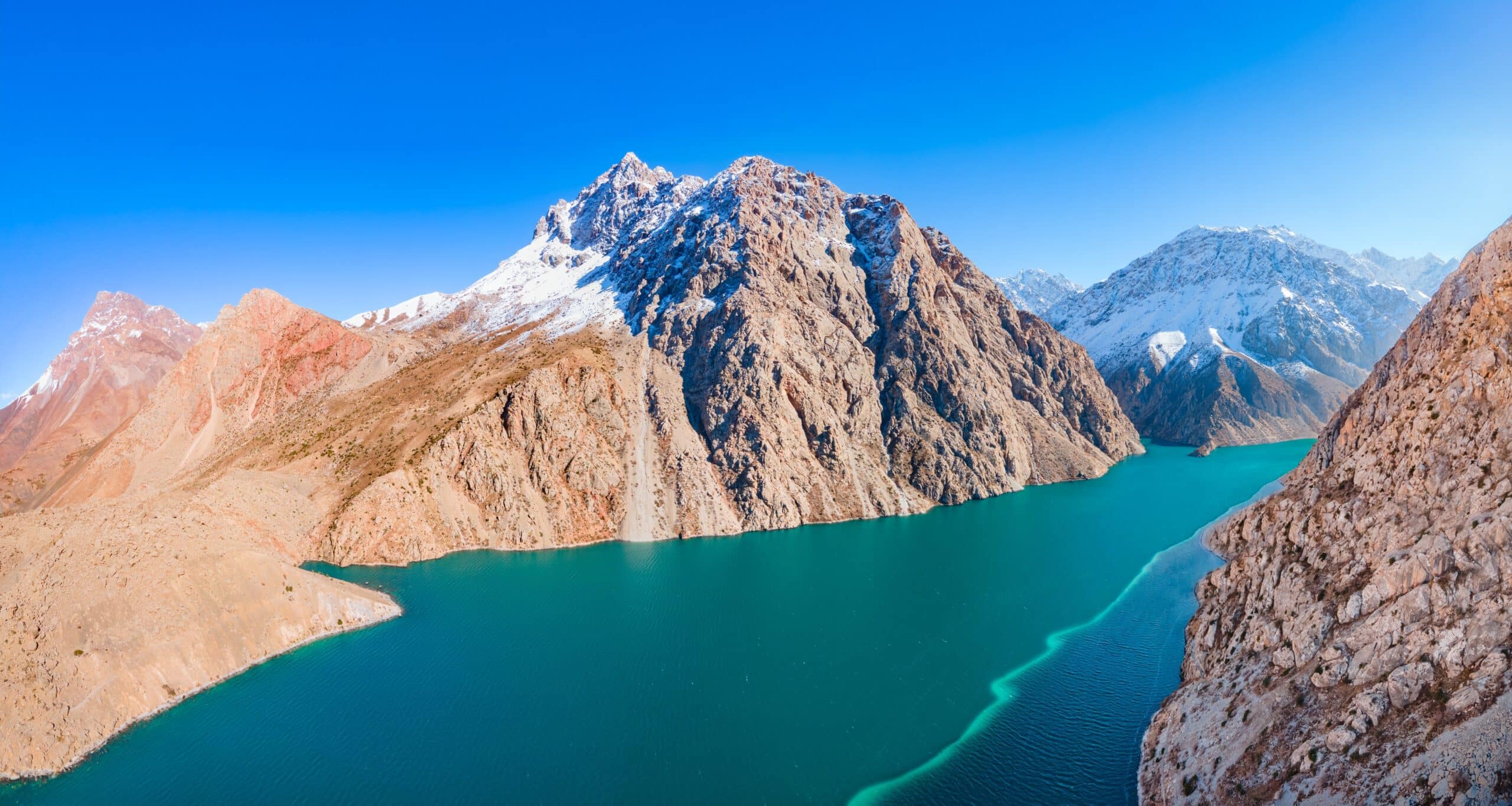
Tajikistan occupies the mountainous heart of Central Asia, where elevation defines nearly every aspect of life. More than ninety percent of the country rises into hills, plateaus, and towering ranges, creating a geography shaped by height, isolation, and endurance. Here, land does not spread outward easily; it ascends.
The Pamir and Alay Mountains dominate the landscape, fracturing movement into valleys and passes. Geography restricts access while sharpening orientation. Rivers cut narrow corridors through stone, shaping settlement along their edges. Distance is measured not only in kilometers, but in elevation gained and terrain crossed.
Communities form where land allows continuity. Valleys collect water and soil, while high plateaus demand adaptation and restraint. Roads follow rivers and passes, respecting slope rather than overriding it. Geography governs rhythm, encouraging patience and seasonal awareness.
Tajikistan inspires through intensity. The land offers little softness, yet sustains life through persistence and precision. Mountains impose limits clearly, teaching that survival depends on understanding terrain rather than resisting it.
This is a country where scale is vertical. Horizons rise instead of stretch. Space feels compressed by elevation, drawing attention inward and upward. Geography shapes identity through effort, endurance, and clarity.
To travel in Tajikistan is to move through landscapes that reward attentiveness. Valleys, passes, and peaks do not compete; they define necessity. Together, they form a geography that anchors culture, memory, and movement in the physical reality of height and stone.
21. Dushanbe
Dushanbe lies in a broad valley in western Tajikistan, surrounded by low mountains that moderate climate and movement. Geography here is transitional. The city occupies a rare pocket of openness within an otherwise rugged landscape.
Rivers descend from nearby hills, providing water and fertile ground. Geography encourages settlement through accessibility rather than defense. The valley allows expansion, yet mountains remain visible, reinforcing awareness of surrounding terrain.
Movement through Dushanbe is fluid compared to the rest of the country. Roads spread outward across flatter land, easing travel and connection. Geography supports orientation and exchange rather than isolation.
Dushanbe inspires through contrast. The city demonstrates how openness can exist within mountainous environments without erasing geographic identity. Land provides space while maintaining connection to elevation.
The capital reflects a Tajikistan where valleys act as anchors. Dushanbe reminds visitors that geography can offer relief without abandoning the defining presence of mountains.
20. Pamir Highway
The Pamir Highway crosses eastern Tajikistan through some of the highest inhabited terrain in the world. Geography here is vast and vertical. Plateaus stretch between mountain ranges, while passes rise beyond tree line into exposed elevation.
The road follows ancient corridors shaped by rivers and valleys. Geography dictates route and rhythm, making travel slow and deliberate. Weather, altitude, and slope control movement more than distance.
Movement along the Pamir Highway is immersive. Each ascent and descent reinforces scale and isolation. Geography strips travel to essentials: fuel, shelter, and orientation.
The highway inspires through endurance. The land demands resilience, showing how geography can define experience through sustained effort rather than single moments.
The route reflects a Tajikistan where movement itself is shaped by terrain. The Pamir Highway reminds visitors that geography can transform travel into an act of adaptation and respect.
19. Hisor Fortress
Hisor Fortress stands west of Dushanbe at the edge of fertile plains backed by hills. Geography here is strategic and grounded. Elevated terrain provides oversight, while surrounding land supports settlement.
The site balances defense and accessibility. Geography allows visibility without isolation, anchoring authority in landscape.
Movement toward Hisor follows gentle slopes, reinforcing gradual approach. Geography shapes perception through anticipation.
Hisor inspires through stability. The land supports continuity by offering both protection and provision.
The fortress reflects a Tajikistan where geography anchors power and persistence. Hisor reminds visitors that endurance often begins where land balances openness with oversight.
18. Khujand
Khujand sits in northern Tajikistan where the Syr Darya River bends through a wide valley at the edge of the Fergana Basin. Geography here is open and connective, shaped less by extreme elevation than by passage. The river provides water, fertile soil, and a natural corridor linking mountains to lowlands.
Unlike the high Pamirs, Khujand’s landscape allows expansion. Plains spread outward, supporting agriculture and trade. Geography encourages exchange rather than isolation, making the city a historical gateway between Central Asia’s uplands and its broader basins.
Movement through Khujand follows the river. Bridges and roads align with its flow, reinforcing orientation by water rather than slope. Geography eases travel, creating rhythm through continuity instead of effort.
Khujand inspires through openness. The land does not demand endurance through hardship, but through consistency. Geography teaches that resilience can also grow from connection, repetition, and accessibility.
The river moderates climate, softening extremes and sustaining orchards and fields. Geography supports settled life, allowing density and continuity without compression. Space feels breathable, shaped by horizontal reach rather than vertical constraint.
Khujand demonstrates how lowland geography shapes identity differently within a mountainous country. The city reflects a Tajikistan where not all endurance is forged at altitude. Here, persistence comes from flow rather than ascent.
The city teaches that geography does not need to be severe to be formative. Khujand reminds visitors that rivers can anchor culture as powerfully as peaks, and that endurance sometimes follows the steady movement of water across open land.
Seasonal change reinforces this rhythm. Floods, harvests, and trade cycles return predictably, shaping memory through repetition. Geography here favors continuity over drama, teaching that longevity can arise from stability as surely as from struggle.
17. Zeravshan Valley
The Zeravshan Valley runs across northwestern Tajikistan, carrying water from the mountains toward lower plains beyond the country’s borders. Geography here is linear and sustaining. The river defines movement, settlement, and agriculture, carving a dependable corridor through otherwise rugged terrain.
Mountains rise on either side, but the valley itself opens gently, allowing cultivation and travel. Geography balances enclosure and access. Slopes provide protection, while the river supplies continuity. Life gathers along its banks, shaped by soil and flow rather than elevation alone.
Movement through the Zeravshan Valley follows the river’s course. Roads, paths, and settlements align with water, reinforcing orientation by direction rather than height. Geography simplifies navigation while preserving connection to surrounding highlands.
The valley inspires through reliability. Seasonal cycles repeat with consistency, shaping memory and routine. Geography teaches endurance through repetition, reminding visitors that survival often depends on predictable patterns rather than dramatic change.
Fields and orchards spread where water reaches soil. Geography supports density without confinement, allowing communities to grow while remaining tied to land. The valley feels lived-in rather than conquered, shaped by long use rather than rapid expansion.
The Zeravshan Valley demonstrates how rivers anchor identity. It reflects a Tajikistan where not all resilience is forged in isolation or altitude. Here, endurance comes from alignment with steady movement and shared resources.
The valley teaches that geography can nurture continuity quietly. Zeravshan reminds visitors that landscapes shaped by water often preserve culture through connection, cooperation, and flow, proving that persistence may arise as much from gentleness as from hardship.
Over time, trade, agriculture, and settlement have followed the same corridor, reinforcing the valley’s role as a conduit rather than a barrier. Geography here does not interrupt movement; it organizes it, shaping a rhythm of life that endures through consistency.
16. Nurek Dam
Nurek Dam rises along the Vakhsh River in southwestern Tajikistan, where a deep valley narrows between steep, rocky slopes. Geography here is constrictive and forceful. The river accelerates through elevation change, concentrating energy where terrain tightens its course.
Mountains frame the site closely, directing water into a single channel. Geography creates inevitability: flow must pass here. The dam responds to this compression, anchoring itself where slope, volume, and gravity converge.
Movement around Nurek is shaped by scale. Roads descend toward the river in long curves, emphasizing height and containment. Geography controls access, making approach gradual and deliberate. The structure appears not as an interruption, but as an extension of the valley’s logic.
Nurek inspires through alignment. The land’s constraints are not resisted but harnessed. Geography teaches that endurance can emerge from working precisely within limits, transforming pressure into stability.
The surrounding landscape remains stark. Sparse vegetation and exposed rock reinforce the primacy of terrain over settlement. Geography reminds visitors that human intervention here depends entirely on understanding elevation, flow, and restraint.
Nurek Dam demonstrates how geography organizes power. The site reflects a Tajikistan where rivers and mountains define possibility, showing that infrastructure gains meaning only when shaped by land rather than imposed upon it.
The dam also reveals the dual nature of constraint. What limits movement also concentrates strength. Geography channels force into usefulness, teaching that resilience often depends on recognizing where land naturally gathers energy and allowing form to follow terrain.
Standing above the reservoir, the valley widens slightly, offering contrast between confinement and release. Geography frames this transition clearly, reminding visitors that landscapes of pressure often contain moments of balance where endurance is quietly sustained.
15. Sarazm
Sarazm lies in northwestern Tajikistan near the Zeravshan River, where open plains meet the foothills of rising mountains. Geography here is expansive and transitional. The land spreads outward gently, offering fertile soil and access to water while remaining closely tied to surrounding highlands.
This openness supported early settlement. Geography allowed agriculture, trade, and movement without isolation. Rivers provided continuity, while nearby elevations offered protection and resources. Sarazm’s location reflects balance rather than dominance.
Movement across the site is unhurried. The land does not compress experience; it allows space for observation and orientation. Geography encourages reflection through openness, emphasizing continuity over constraint.
Sarazm inspires through longevity. The land has sustained human presence through predictable cycles of water and soil. Geography teaches endurance through stability rather than hardship.
The site demonstrates how gentle terrain can preserve deep history. Sarazm reflects a Tajikistan where not all resilience emerges from mountains. Here, endurance grew from access, exchange, and fertile ground.
Sarazm teaches that geography shapes identity quietly. Open landscapes can anchor culture just as firmly as enclosed valleys, reminding visitors that continuity often arises where land invites settlement rather than testing it.
14. Shirkent National Park
Shirkent National Park stretches across southwestern Tajikistan, where ridges, valleys, and plateaus interlock. Geography here is layered and diverse. Elevation shifts rapidly, creating varied ecosystems within short distances.
The park’s terrain supports seasonal movement rather than permanent settlement. Valleys collect water and vegetation, while higher ground remains sparse. Geography demands flexibility, shaping life through adaptation rather than permanence.
Movement through Shirkent is physical and deliberate. Trails climb and descend repeatedly, reinforcing awareness of slope and exposure. Geography enforces attention, shaping experience through effort.
Shirkent inspires through variation. The land demonstrates how diversity in terrain sustains resilience. Geography teaches that endurance often depends on the ability to move between environments rather than remain fixed.
The park reflects a Tajikistan defined by geographic complexity. Shirkent reminds visitors that layered landscapes foster strength through adaptability, showing how land shapes survival by offering multiple paths rather than a single solution.
13. Gorno-Badakhshan Highlands
Gorno-Badakhshan occupies eastern Tajikistan, covering much of the Pamir Mountains. Geography here is vast, elevated, and exposed. High plateaus and towering peaks dominate the region, shaping life through altitude and isolation.
Settlement is sparse. Geography restricts agriculture and concentrates life near water sources. Distances feel amplified by elevation, turning movement into a measured undertaking.
Roads traverse long stretches of open plateau before climbing into narrower valleys. Geography emphasizes scale through emptiness, reinforcing awareness of space and exposure.
The highlands inspire through enormity. The land communicates endurance through survival at elevation, where climate and terrain impose constant negotiation. Geography teaches resilience through adaptation to thin air and limited resources.
Gorno-Badakhshan reflects a Tajikistan where geography defines identity profoundly. The region demonstrates how endurance emerges not from comfort, but from sustained coexistence with extreme land.
Here, silence and openness shape perception. Geography strips experience to essentials, reminding visitors that resilience often arises where land offers little beyond space, height, and necessity. The highlands stand as a testament to endurance shaped by altitude and scale rather than density or connection.
12. Faizabad
Faizabad lies in eastern Tajikistan, near the Afghan border, where the Panj River traces a deep boundary through mountainous terrain. Geography here is peripheral and defining. The river marks not only a political edge but a physical divide shaped by steep slopes and swift water.
Mountains press closely on both sides, limiting expansion and focusing settlement along narrow terraces. Geography encourages compact living, where access to water and arable land determines placement. The landscape feels contained yet exposed, shaped by both enclosure and frontier.
Movement through Faizabad follows the river’s course. Roads cling to valley edges, reinforcing awareness of boundary and direction. Geography slows travel, making proximity more significant than distance.
Faizabad inspires through position. The land teaches endurance through edge conditions, where stability depends on balance between isolation and connection. Geography reinforces vigilance, shaping life through constant negotiation with terrain and border.
The town reflects a Tajikistan where geography defines identity through placement. Faizabad demonstrates how peripheral landscapes foster resilience by demanding awareness, adaptability, and sustained attention to land and flow.
Here, endurance is shaped by proximity to change. Geography reminds visitors that borderlands are not margins but concentrated zones where land, movement, and identity intersect continuously.
11. Zorkul Plateau
The Zorkul Plateau lies in far eastern Tajikistan, high within the Pamir Mountains near the borders with Afghanistan and China. Geography here is elevated, open, and exposed. The plateau stretches wide at altitude, offering space without shelter.
Wind and cold dominate perception. Geography limits vegetation and settlement, shaping life around seasonal movement rather than permanence. The land feels expansive yet unforgiving, defined by thin air and distance.
Movement across Zorkul is slow and deliberate. Paths extend across open ground, where orientation depends on horizon rather than landmark. Geography emphasizes scale through emptiness, reinforcing isolation.
Zorkul inspires through enormity. The land teaches endurance through exposure, where survival depends on preparation and restraint. Geography strips experience to essentials, making resilience a matter of balance rather than force.
The plateau reflects a Tajikistan where geography amplifies solitude. Zorkul demonstrates how high open landscapes shape endurance differently from enclosed valleys, demanding awareness of climate, altitude, and time.
Here, resilience feels elemental. Geography reminds visitors that endurance can arise not only from resistance, but from coexistence with vast, unyielding space where land offers little beyond ground, sky, and necessity.
10. Panj River Corridor
The Panj River flows along Tajikistan’s southern frontier, carving a deep channel between steep mountains as it defines the border with Afghanistan. Geography here is linear and decisive. The river is both lifeline and boundary, shaping land, movement, and perception simultaneously.
Sheer slopes descend toward the water, limiting settlement to narrow terraces and flood-resistant edges. Geography compresses life close to the river, where access to water determines survival. Expansion is constrained, reinforcing density and attentiveness to terrain.
Movement along the Panj follows its course closely. Roads trace the riverbank, shaped by bends and elevation changes. Geography dictates pace and direction, making travel an act of alignment rather than control.
The Panj inspires through duality. The river separates while sustaining, reminding visitors that geography can divide space while uniting necessity. Endurance here grows from coexistence with constant flow and constraint.
The corridor reflects a Tajikistan where rivers shape identity as strongly as mountains. Geography teaches resilience through adaptation to movement that cannot be stopped or redirected.
Here, endurance is shaped by vigilance. Seasonal changes in water level reinforce respect for land and flow. The Panj River Corridor reminds visitors that resilience often develops where geography demands constant attention, balancing dependence with caution along a landscape that is never still.
9. Anzob Pass
Anzob Pass cuts through the mountains of central Tajikistan, linking northern regions with the capital area. Geography here is elevated and decisive. The pass forms a narrow threshold where altitude and weather govern movement.
Steep slopes rise abruptly from the roadway, compressing travel into a confined corridor. Geography dictates timing and caution, making passage seasonal and deliberate. Snow, wind, and visibility define accessibility more than distance.
Movement through Anzob is marked by ascent and exposure. The road climbs steadily, reinforcing awareness of height and vulnerability. Geography transforms transit into an encounter with terrain rather than a simple crossing.
Anzob inspires through transition. The land teaches endurance through patience and respect for conditions beyond control. Geography frames resilience as the ability to wait, adapt, and proceed carefully.
The pass demonstrates how geography controls connection in mountainous countries. Anzob reflects a Tajikistan where a single route can determine regional continuity, reminding visitors that endurance often depends on a few critical passages through difficult land.
At the summit, perspective briefly expands before descent begins. Geography offers momentary clarity, reinforcing that resilience is sustained not by ease, but by the willingness to move through constraint with awareness and restraint.
8. Alichur Plateau
The Alichur Plateau stretches across eastern Tajikistan within the high Pamirs, defined by wide open space at extreme altitude. Geography here is elevated and austere. The land extends outward with little vegetation, shaped by wind, cold, and thin air.
Water appears sparingly in rivers and marshes fed by meltwater. Geography limits permanent settlement, favoring seasonal movement and adaptation. Space feels vast yet demanding, offering scale without shelter.
Movement across Alichur is slow and exposed. Orientation depends on horizon and sky rather than landmark. Geography emphasizes distance through emptiness rather than obstruction.
The plateau inspires through severity. The land teaches endurance through coexistence with exposure, where survival depends on preparation and restraint. Geography strips experience to essentials, reinforcing awareness of climate and altitude.
Alichur reflects a Tajikistan where geography defines resilience through openness rather than enclosure. The plateau demonstrates how endurance can arise from sustained presence in vast, uncompromising space.
Here, resilience feels elemental. Geography reminds visitors that strength can emerge not from overcoming land, but from adapting fully to its scale, silence, and necessity.
7. Darvoz Valley
The Darvoz Valley lies in southwestern Tajikistan, where the Panj River slices deeply between steep mountain walls. Geography here is narrow and forceful. Slopes descend abruptly to the river, leaving little space for settlement beyond thin terraces carved into rock.
The river dominates life. Geography compresses agriculture, movement, and habitation into a single corridor shaped by flow and elevation. Expansion is nearly impossible; endurance depends on precision and adaptation.
Movement through Darvoz follows the river’s edge. Roads cling to the valley wall, reinforcing awareness of height and exposure. Geography slows travel, making distance secondary to terrain.
Darvoz inspires through concentration. The land teaches endurance through attentiveness, where survival depends on reading slope, erosion, and water level. Geography demands respect rather than speed.
The valley reflects a Tajikistan where geography enforces resilience through confinement. Communities persist by aligning closely with the land’s limits, shaping life through necessity rather than choice.
Here, endurance is communal. Geography binds settlements together along a shared lifeline, reminding visitors that resilience often grows strongest where land offers few options but clear direction.
6. Jafr Valley
The Jafr Valley cuts into central Tajikistan’s mountainous interior, shaped by a river descending from high ridges. Geography here is enclosed and layered. Steep slopes rise on both sides, narrowing the valley floor and shaping compact settlement.
Water sustains life in limited space. Geography restricts agriculture to narrow strips, forcing careful management of soil and slope. The land demands efficiency rather than abundance.
Movement through Jafr is deliberate. Roads follow the river’s bends, frequently constrained by rock walls. Geography dictates pace, reinforcing patience and awareness of terrain.
The valley inspires through restraint. Geography teaches endurance through careful alignment with land, where resilience emerges from making the most of limited opportunity.
Jafr reflects a Tajikistan where geography tests endurance quietly. There is no dramatic isolation, only sustained negotiation with confined space. Communities persist through attentiveness and cooperation shaped by terrain.
Here, resilience is incremental. Geography reminds visitors that endurance often grows through daily adaptation rather than singular challenge, shaped by repeated engagement with land that allows little excess.
5. Shugnan Valley
The Shugnan Valley lies in eastern Tajikistan within the Pamir Mountains, where the Panj River threads between steep slopes and high plateaus. Geography here is elevated and enclosed. Mountains rise sharply from the valley floor, shaping settlement into narrow bands along water.
The river sustains life in an otherwise severe environment. Geography restricts agriculture and expansion, forcing communities to adapt carefully to limited arable land. Every usable surface reflects deliberate engagement with terrain.
Movement through Shugnan follows the river’s course. Roads cling to the valley edge, reinforcing awareness of slope, exposure, and boundary. Geography slows travel, turning movement into a continuous negotiation with land.
Shugnan inspires through resilience. The land teaches endurance through adaptation rather than comfort. Geography emphasizes survival shaped by altitude, climate, and constraint.
The valley reflects a Tajikistan where geography defines cultural persistence. Shugnan demonstrates how enclosed highland environments foster strength through sustained coexistence with land that offers little margin for error.
Here, resilience is precise. Geography reminds visitors that endurance often emerges where terrain demands constant attention, shaping life through vigilance, cooperation, and respect for elevation and flow.
4. Bulunkul Basin
The Bulunkul Basin lies high in eastern Tajikistan near the Alichur Plateau, surrounded by barren ridges and open sky. Geography here is elevated and severe. The basin collects cold air and limited water, shaping one of the country’s most extreme environments.
Climate dominates perception. Geography restricts vegetation and settlement, forcing life into seasonal patterns and careful adaptation. Space feels wide yet unforgiving, shaped by altitude and exposure.
Movement across Bulunkul is deliberate and slow. Orientation depends on horizon and terrain rather than infrastructure. Geography emphasizes endurance through exposure rather than confinement.
Bulunkul inspires through stark clarity. The land teaches resilience through coexistence with cold and distance. Geography strips life to essentials, reinforcing awareness of climate, shelter, and time.
The basin reflects a Tajikistan where geography tests endurance at its limits. Bulunkul demonstrates how resilience can emerge from sustained presence in extreme conditions.
Here, strength is quiet and persistent. Geography reminds visitors that endurance does not always announce itself through struggle; sometimes it exists simply through continued life in land that offers little beyond space, cold, and necessity.
3. Yakhsu River Valley
The Yakhsu River Valley cuts through southern Tajikistan, descending from mountain interiors toward broader lowlands. Geography here is directional and sustaining. The river shapes settlement by providing water through otherwise rugged terrain.
Mountains rise on either side, but the valley opens intermittently, allowing agriculture where slope eases. Geography balances enclosure with opportunity, shaping life through selective access to land.
Movement through the Yakhsu Valley follows the river’s course. Roads mirror its bends, reinforcing orientation through flow rather than elevation. Geography dictates pace, turning travel into alignment with water.
The valley inspires through continuity. Geography teaches endurance through steady movement, showing how resilience can be sustained by dependable flow rather than dramatic constraint.
Communities along the Yakhsu depend on repetition. Fields, paths, and crossings reinforce memory through use. Geography supports persistence by offering predictable conditions within a defined corridor.
The Yakhsu Valley reflects a Tajikistan where rivers quietly anchor life. It reminds visitors that endurance often develops where land provides consistency rather than challenge, shaping resilience through long-term coexistence with water, slope, and direction.
2. Fedchenko Glacier Region
The Fedchenko Glacier Region lies deep within eastern Tajikistan’s Pamir Mountains, where ice dominates geography and scale overwhelms human presence. This is one of the longest mountain glaciers in the world, stretching through a landscape shaped by cold, altitude, and geological time. Geography here is absolute. Ice determines movement, visibility, and survival.
The glacier occupies a high-altitude corridor between massive peaks, carving valleys through pressure and flow rather than erosion alone. Surrounding slopes are steep and barren, offering little vegetation. Geography eliminates softness, reducing the land to stone, ice, and sky. Life exists only at the margins.
Movement in this region is slow and deliberate. Routes follow moraine lines and glacial edges, reinforcing constant awareness of instability. Geography resists permanence; the land shifts gradually but relentlessly. Distance is measured not in kilometers but in effort and exposure.
The Fedchenko region inspires through scale. Geography teaches endurance through humility, showing how resilience emerges not from mastery but from restraint. Survival depends on preparation, patience, and respect for forces that cannot be negotiated.
Here, endurance is elemental. Geography strips experience to essentials, demanding alignment with cold, altitude, and time. The glacier embodies persistence beyond human scale, reminding visitors that endurance can exist independently of human intention.
The Fedchenko Glacier Region reflects a Tajikistan where geography asserts dominance without compromise. It stands as a reminder that resilience is not always about adaptation to land that supports life, but about recognizing landscapes where endurance belongs to the earth itself.
1. Khujand Highlands
The Khujand Highlands rise north and east of the city of Khujand, where fertile lowlands gradually give way to rolling uplands and ridged terrain. Geography here is transitional. The land lifts gently, shaping climate, agriculture, and movement without abrupt separation from the valley below.
These highlands form a buffer between plains and mountains. Slopes support pasture, orchards, and scattered settlements adapted to elevation and seasonal change. Geography encourages dispersal rather than concentration, shaping life through balance rather than confinement.
Movement through the Khujand Highlands follows ridgelines and shallow valleys. Roads climb gradually, reinforcing awareness of ascent without strain. Geography shapes rhythm through gentle elevation rather than force, allowing continuity between lowland and upland life.
The highlands inspire through moderation. Geography teaches endurance through adaptability, showing how resilience can grow where land offers both support and limitation. Life here depends on reading slope, water access, and seasonal variation.
Here, endurance is steady. Geography allows communities to persist by shifting activity with altitude and season, reinforcing long-term alignment with land rather than fixed dependence on a single zone.
The Khujand Highlands reflect a Tajikistan where geography mediates extremes. Visitors encounter a landscape that emphasizes resilience through balance, reminding that endurance often grows strongest not at the limits of survival, but in places where land allows gradual transition, continuity, and measured adaptation across space and time.