
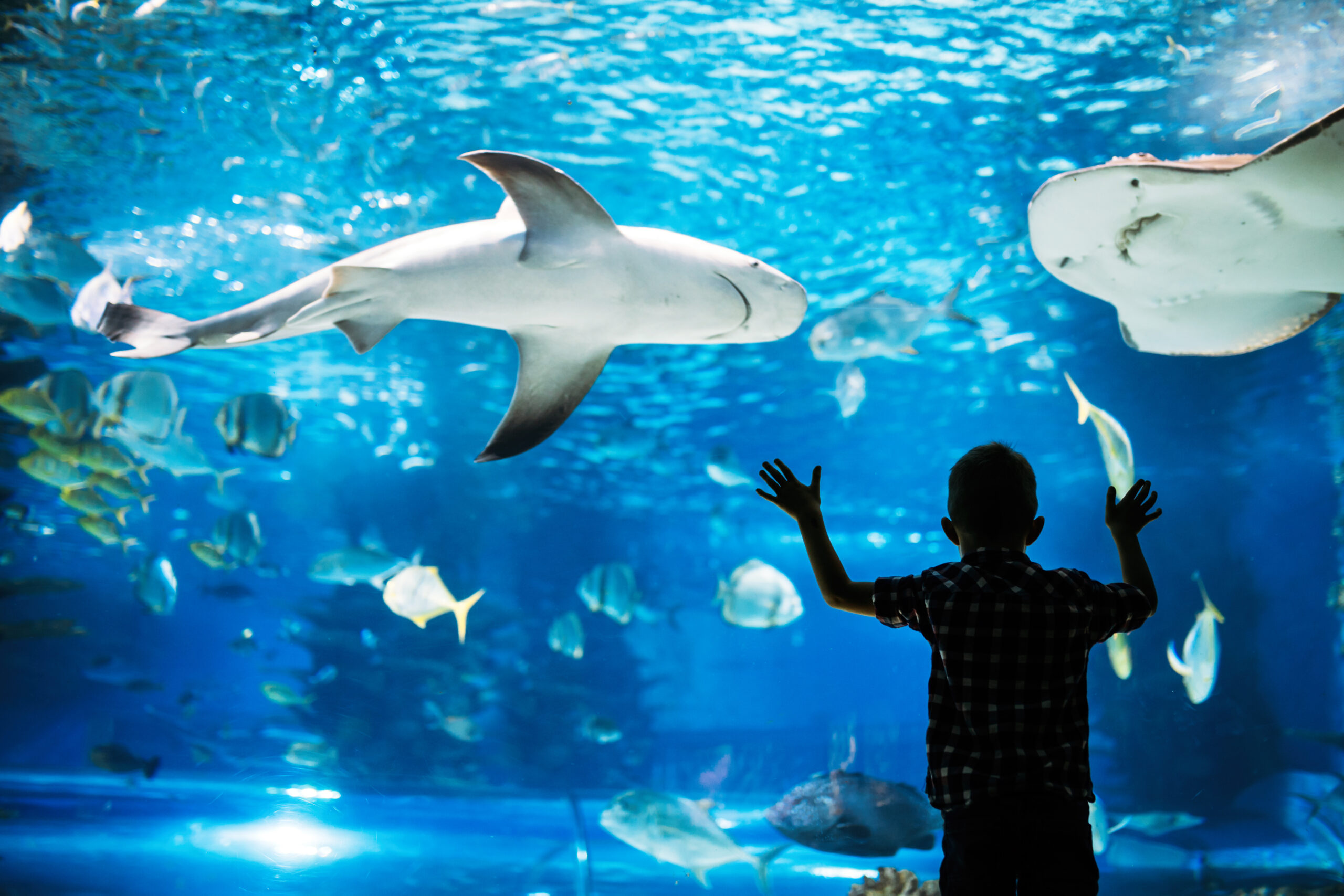
Water has always invited human imagination outward. Long before maps were complete or oceans crossed with certainty, the sea existed as promise and threat, abundance and erasure. Aquariums are born from this ancient tension: the desire to bring the unknowable closer, to frame the vast within walls of glass, to look steadily at what once lay beyond reach.
The modern aquarium is neither mere spectacle nor simple archive. At its best, it is a negotiated space — between curiosity and responsibility, between wonder and restraint. These institutions do not replicate the ocean; they translate it. They slow time, alter scale, and give form to environments that otherwise resist containment. In doing so, they ask quiet but insistent questions: What does it mean to observe? What is owed to what we display? How small must the world become before care becomes possible?
This guide approaches the world’s largest aquariums not as rankings of excess, but as places shaped by intention. Ordered from the smallest volumes to the greatest, the progression is meant to be felt rather than calculated. Each chapter lingers not on technical achievement alone, but on atmosphere — on light and movement, architecture and silence, human posture before water.
As the liters increase, so does the moral weight. Small tanks teach intimacy. Larger ones challenge humility. At the far end of scale, enormity ceases to impress and begins instead to trouble, reminding us that even the grandest contained sea is still a fragment of something immeasurably larger.
What follows is not a celebration of conquest over nature, but a meditation on proximity. These aquariums are places where the ocean pauses long enough to be seen — and where we are invited, briefly, to consider how seeing might lead to care.
20. Monterey Bay Aquarium, USA (Approx. 4.5 million liters)

Monterey Bay Aquarium opens directly onto the Pacific, and this geographic honesty defines its character. The building does not attempt to isolate the ocean from its exhibits; instead, it allows tides, weather, and light to participate actively in the experience. The sea is not background here — it is authority.
The famed kelp forest rises vertically through multiple floors, its long fronds swaying with tidal rhythm rather than mechanical cue. Fish weave through the forest with practiced ease, their movement shaped by currents drawn straight from the bay outside. The effect is quietly hypnotic, a reminder that life organizes itself without choreography.
Natural light governs the space. Morning, fog, and late afternoon each rewrite the scene, teaching visitors that the ocean is not a static image but a changing condition. The aquarium’s educational voice is confident but unforced, grounded in research and stewardship rather than spectacle.
Monterey Bay Aquarium does not ask to be admired. It asks to be trusted — as a place where science, humility, and proximity converge.
19. Lisbon Oceanarium, Portugal (Approx. 5 million liters)
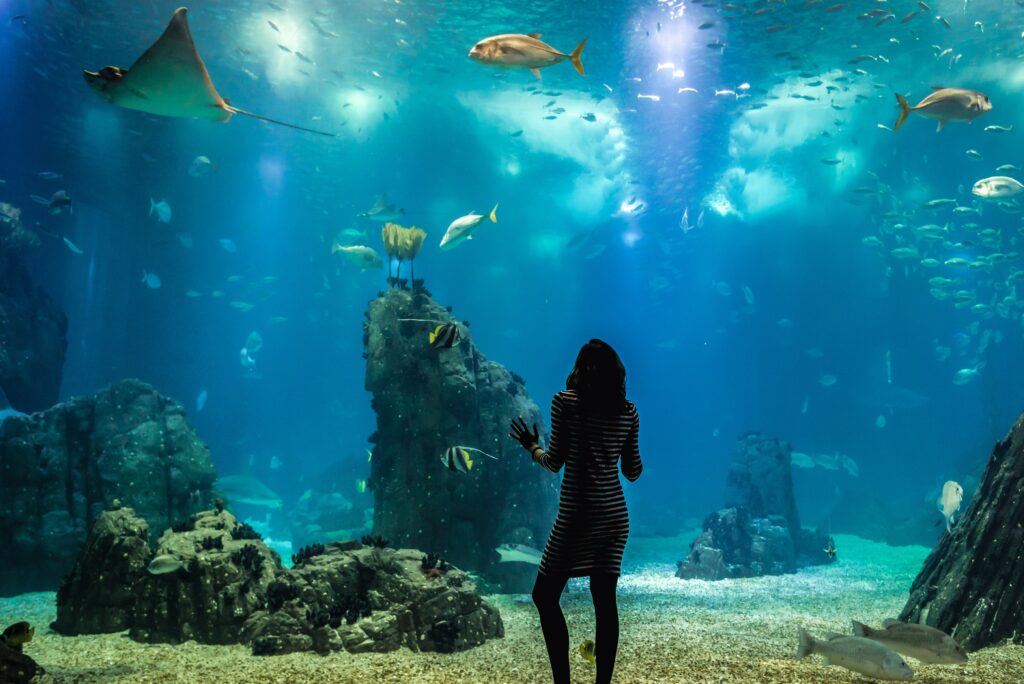
Floating gently within the Tagus estuary, Lisbon Oceanarium feels less like a building than a vessel at rest. The approach requires crossing water, an intentional transition that quiets the body before the encounter begins.
At its heart lies a vast central tank representing the global ocean. Visitors circle it slowly, returning again and again to the same water from different angles. Sharks pass without menace, fish drift without urgency, and no single species claims dominance. The choreography suggests balance rather than hierarchy.
Surrounding habitats introduce regional seas, yet the central ocean remains visible throughout, reinforcing the idea of connection over division. Light is soft, sound restrained, and the architecture deliberately unobtrusive.
Lisbon’s oceanarium teaches continuity. It reminds visitors that all seas are one sea, and that scale need not overwhelm to inspire reverence.
18. Vancouver Aquarium, Canada (Approx. 6 million liters)
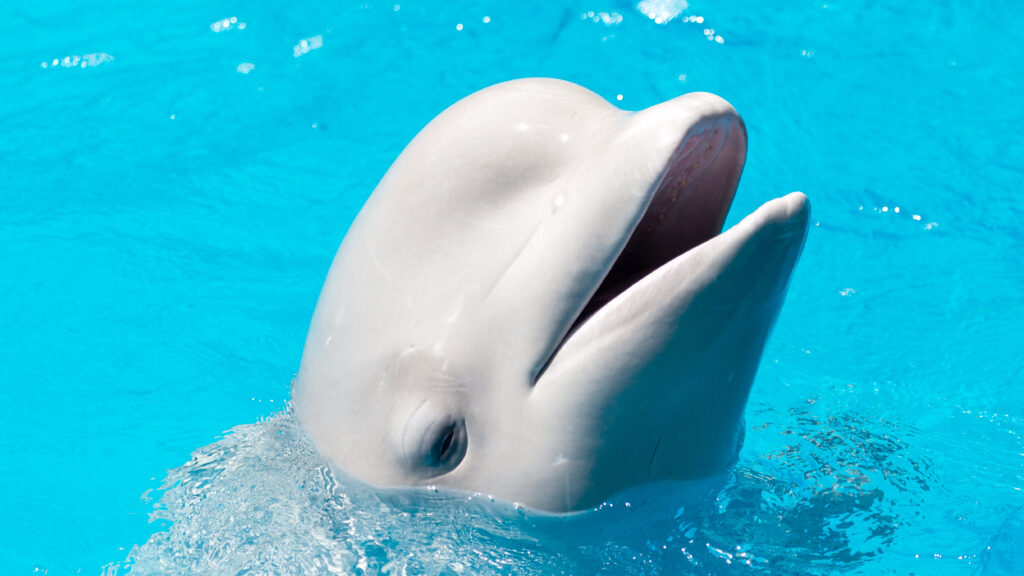
Set within the forested calm of Stanley Park, the Vancouver Aquarium exists in dialogue with its surroundings. The transition from trees to tanks is gentle, almost imperceptible, reinforcing the sense that marine life is part of a broader ecological conversation.
Exhibits prioritize realism over drama. Habitats are shaped by scientific understanding and ethical commitment, presenting animals within environments designed for welfare rather than spectacle. Conservation here is not a theme but a foundation.
Natural light filters wherever possible, and interpretation emphasizes responsibility alongside wonder. The aquarium asks visitors not only to look, but to consider their role within shared systems.
Vancouver’s strength lies in its restraint — an aquarium grounded in care rather than conquest.
17. Shanghai Ocean Aquarium, China (Approx. 9 million liters)
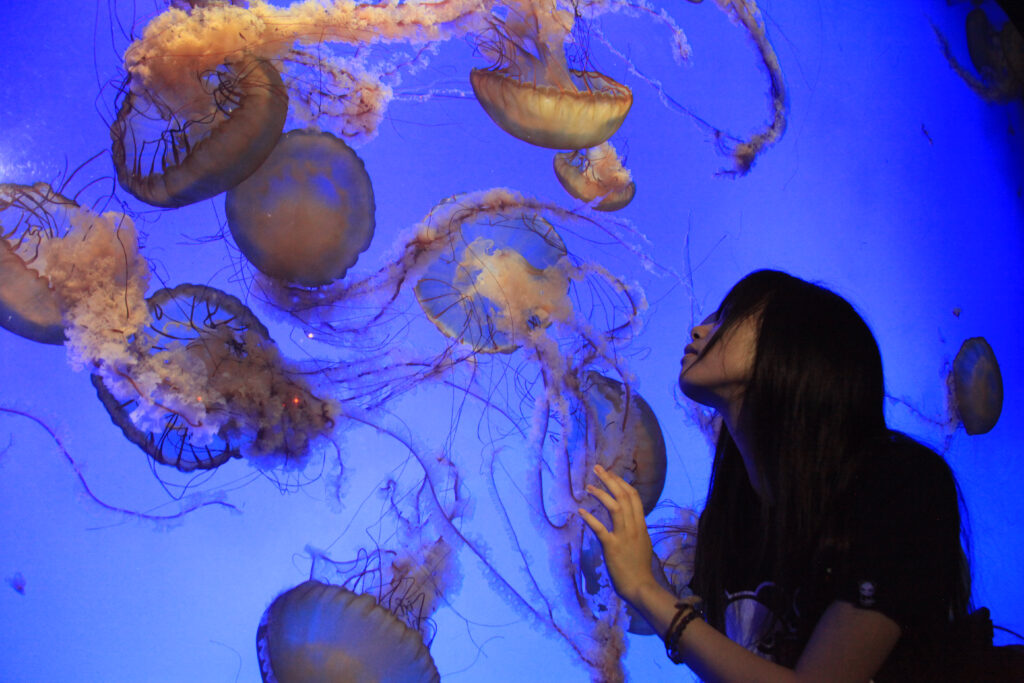
Shanghai Ocean Aquarium unfolds as a journey rather than a destination. Its long underwater tunnel guides visitors steadily forward, creating a sense of passage through evolving marine environments.
Habitats shift gradually from river systems to reefs to open ocean, without abrupt division. Sharks glide overhead, schools drift alongside, and the city beyond the glass recedes entirely. Movement becomes the primary language.
Scale here is cumulative. Rather than confronting visitors with a single monumental tank, the aquarium builds immersion through duration — through the simple act of continuing onward beneath water.
Like Shanghai itself, the aquarium is defined by flow, momentum, and forward motion.
16. Dubai Aquarium & Underwater Zoo, UAE (Approx. 10 million liters)
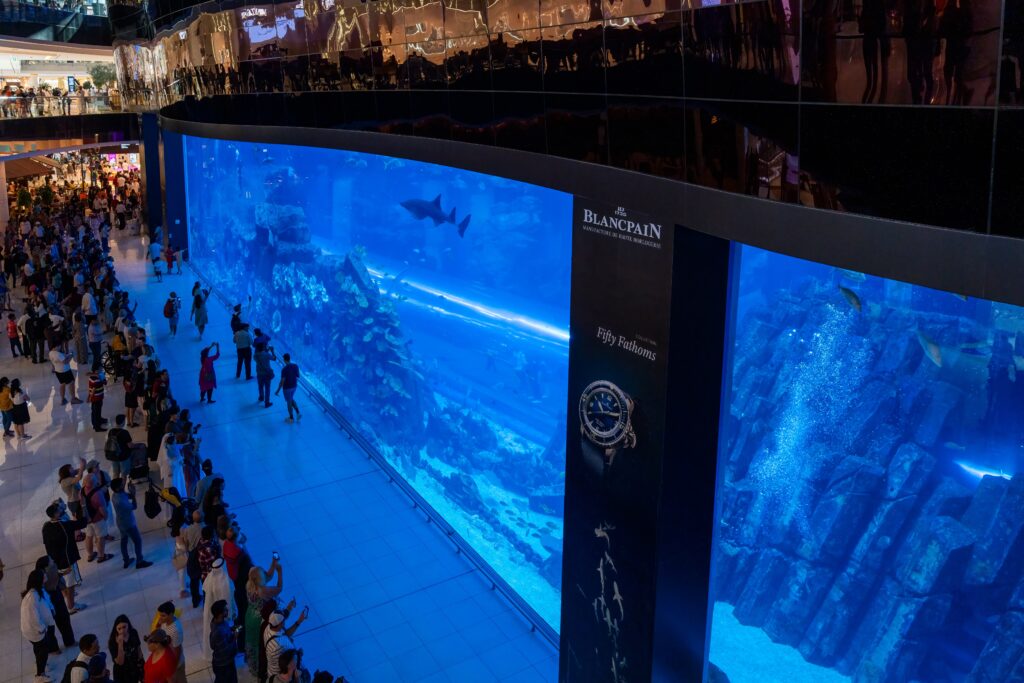
Suspended within one of the world’s largest shopping complexes, the Dubai Aquarium presents a striking paradox: a vertical ocean framed by commerce. The tank rises multiple stories, visible from afar, interrupting consumption with contemplation.
Sharks and rays circle endlessly, their movement slow and ritualistic. The underwater tunnel briefly removes visitors from spectacle into immersion, dissolving the mall into refracted light and shadow.
Nature here is curated, displayed, and contained — yet still powerful enough to command attention. The aquarium reminds visitors that even within excess, the ocean retains its capacity to quiet and unsettle.
15. Osaka Aquarium Kaiyukan, Japan (Approx. 11 million liters)
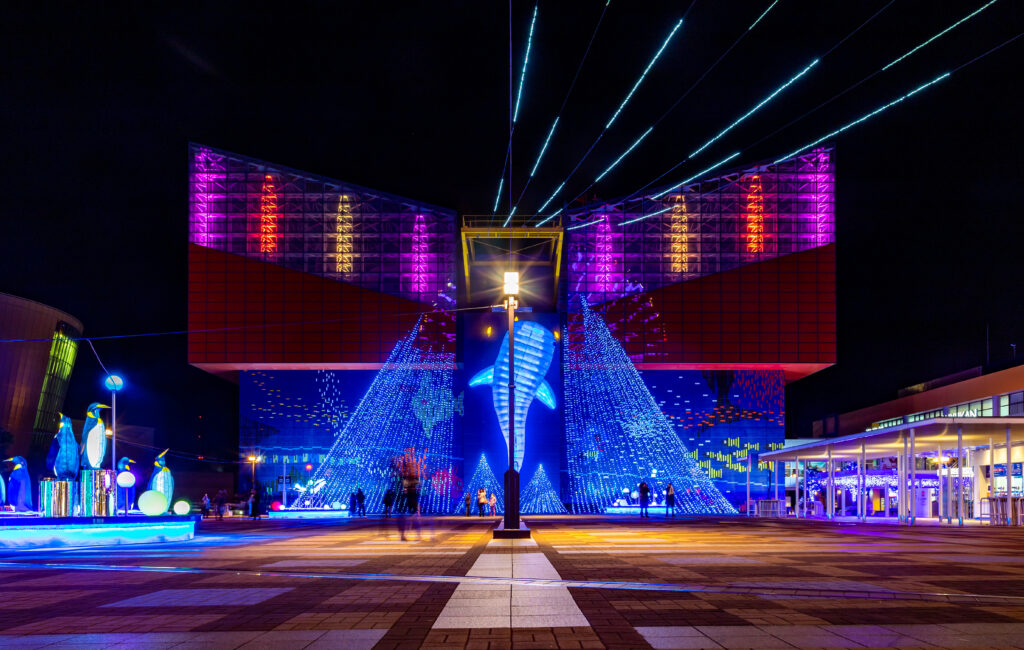
Kaiyukan is structured as a descent. Visitors spiral downward from surface waters into deeper realms, preparing perception for increasing scale.
At its center, a massive Pacific Ocean tank reveals whale sharks gradually, encountered repeatedly from different levels. Each appearance feels earned, shaped by perspective rather than surprise.
The design is precise and restrained. Education is embedded in movement, allowing understanding to emerge through repetition and time.
Kaiyukan trusts patience — and is rewarded with depth.
14. Poema del Mar, Gran Canaria, Spain (Approx. 12 million liters)

Poema del Mar is an aquarium composed in darkness and restraint, where absence becomes as meaningful as presence. From the moment of entry, light is rationed carefully, drawing visitors inward and away from the assumptions of spectacle. The world outside dissolves, replaced by a sequence of shadowed chambers that recalibrate attention.
Its central ocean tank is revealed slowly, not announced. The viewing window stretches wide and low, closer to a horizon than a wall, encouraging the eye to wander rather than settle. Fish emerge from deep blue-black space and recede again, their movement softened by distance and depth. Sharks pass without urgency, rays glide like passing thoughts. Nothing performs. Everything exists.
Sound is absorbed by design. Footsteps dull, voices fall instinctively, and silence becomes a shared condition. Time loosens. Visitors often remain longer than intended, drawn into a rhythm that feels closer to night diving than exhibition viewing.
Poema del Mar trusts darkness to teach reverence. It suggests that the ocean reveals itself most honestly when we stop demanding clarity, and allow mystery to remain intact.
13. Moscow Oceanarium, Russia (Approx. 12 million liters)
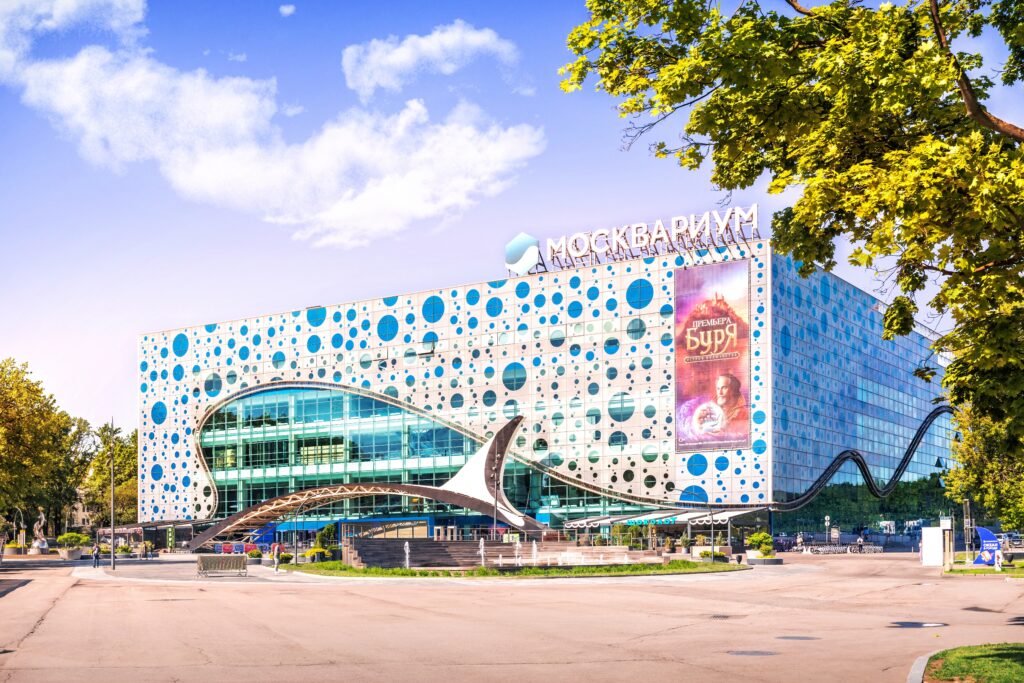
The Moscow Oceanarium brings distant seas into a city defined by scale, severity, and inwardness. Its architecture favors contrast — between light and shadow, warmth and cold, immersion and withdrawal. Entering its spaces feels deliberate, almost ceremonial.
Arctic and deep-sea environments resonate especially strongly here. Ice-toned light cuts through darkness, revealing forms shaped by endurance rather than beauty. Fish appear suddenly, then vanish. The choreography feels intentional, echoing the rhythms of environments where survival depends on timing and restraint.
Rather than offering escape, the aquarium confronts visitors with unfamiliar conditions. The ocean here is not gentle or forgiving. It is vast, cold, and indifferent — a mirror to the city’s own historical relationship with endurance.
Moscow’s oceanarium is ambitious and inward-looking. It does not soften the sea to comfort, but sharpens it to be understood.
12. Yokohama Hakkeijima Sea Paradise, Japan (Approx. 15 million liters)
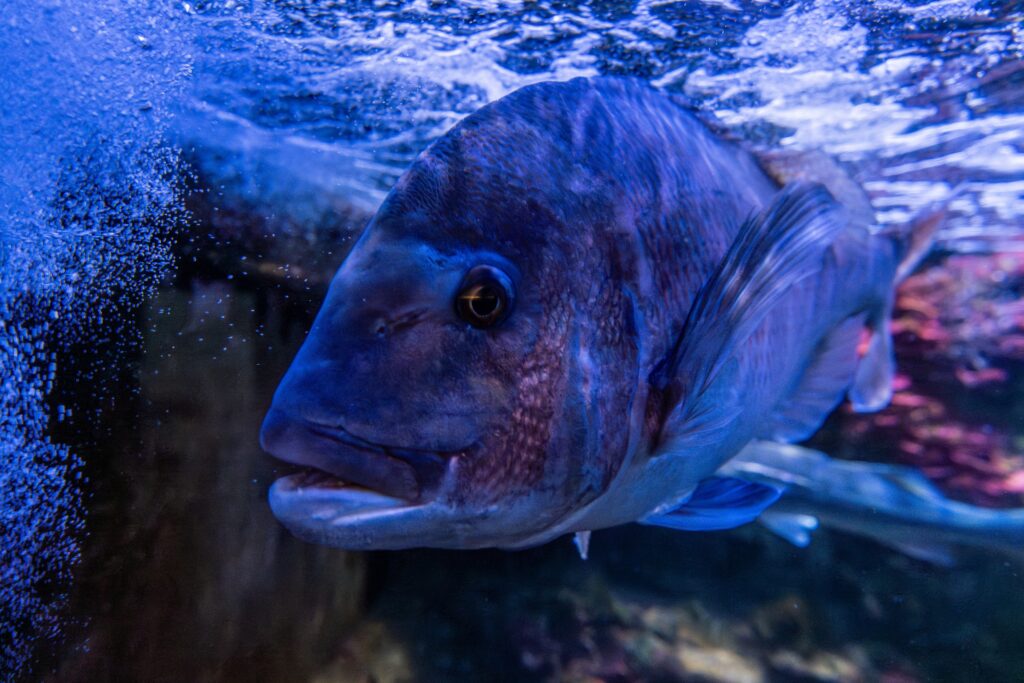
Hakkeijima Sea Paradise spreads outward across a coastal island, dissolving the boundary between aquarium, city, and shoreline. Salt air, wind, and distant ship horns remain present throughout the experience, reminding visitors that the sea here is not sealed away.
Scale is horizontal rather than monumental. Multiple exhibits unfold gradually as one walks, allowing marine life to coexist with leisure, transit, and everyday rhythm. Families move between observation and rest, between education and play, without sharp division.
This integration softens hierarchy. The ocean is not elevated above daily life, but woven into it. Fish tanks sit alongside open water, reinforcing continuity rather than separation.
Hakkeijima suggests a gentler relationship with scale — one where the sea does not demand cathedral walls to command respect.
11. uShaka Sea World, South Africa (Approx. 17.5 million liters)
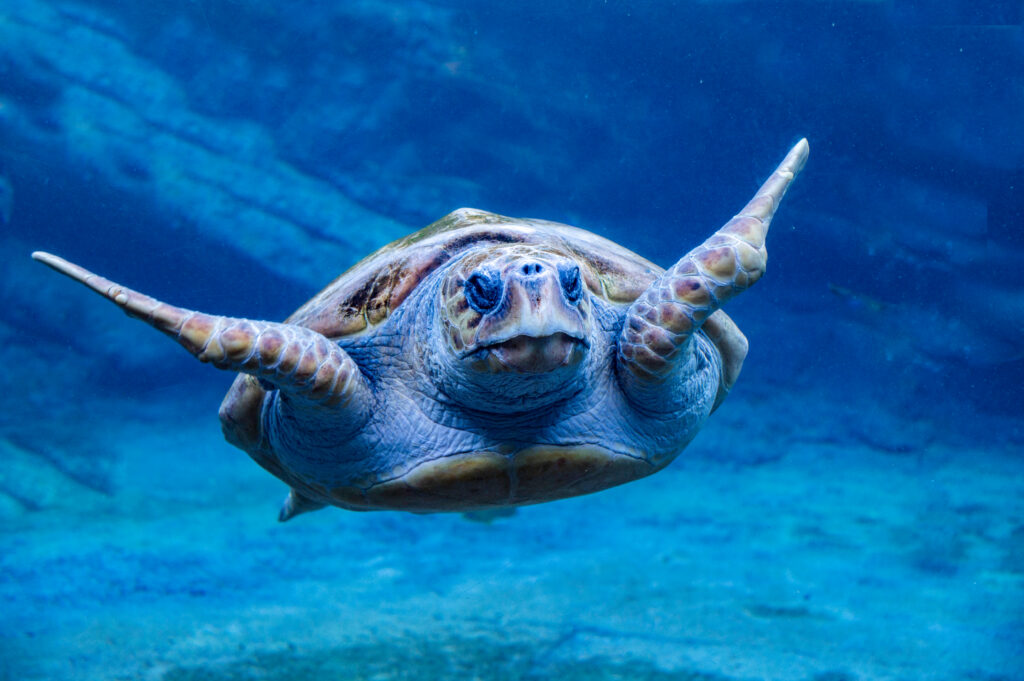
uShaka Sea World carries the energy of the Durban coastline directly into its architecture. Warm light, open air, and the constant suggestion of surf animate its spaces, giving the aquarium a sense of motion even at rest.
Exhibits emphasize movement and interaction. Sharks carve clean trajectories through water, schools scatter and reform, and predators and prey participate in ancient, visible choreography. The ocean here feels muscular, alive, and immediate.
Cultural context matters deeply. Education is celebratory rather than solemn, woven into narratives of coastal identity and shared heritage. Marine life is not abstracted from human experience, but placed within it.
uShaka pulses with vitality. It asks not for quiet reverence, but for engagement with a living, breathing sea.
10. Georgia Aquarium – Ocean Voyager, USA (Approx. 24 million liters)
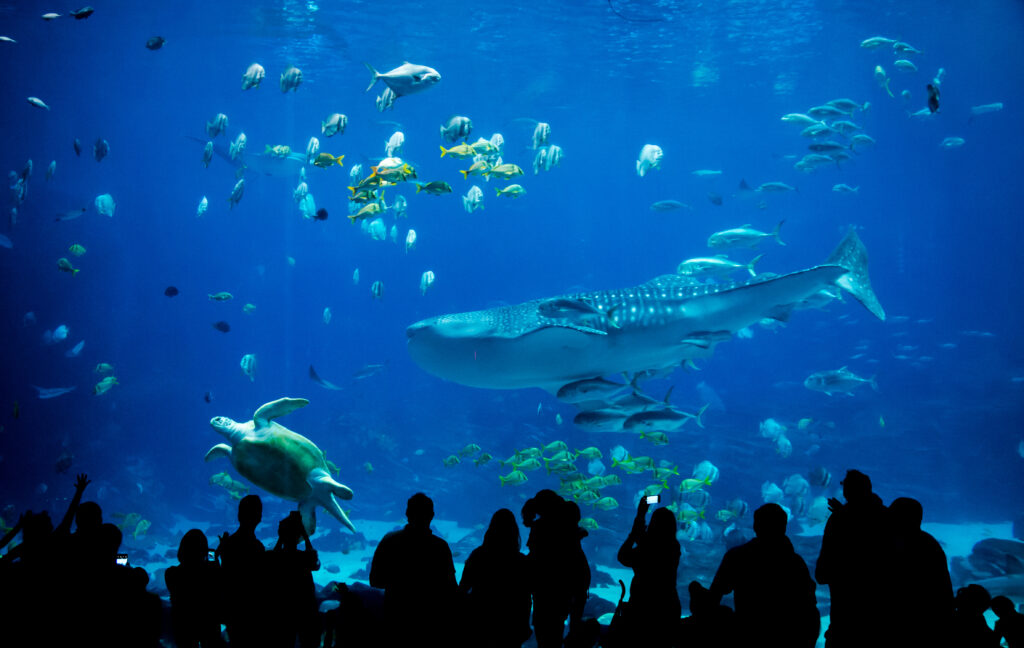
Inland Atlanta hosts an improbable sea. The Georgia Aquarium’s Ocean Voyager gallery asserts its presence with confidence, a vast marine volume set far from any natural horizon. Upon entry, the body instinctively slows, recalibrating to scale.
Whale sharks dominate perception through mass and composure rather than force. Their spotted bodies drift with ancient calm, accompanied by manta rays tracing wide, mathematical arcs. Schools of fish assemble and dissolve like weather systems, patterns forming and breaking without urgency.
Architecture disappears by design. Thick acrylic walls dissolve into invisibility, leaving the illusion of open water suspended in air. Long tunnels draw visitors beneath passing giants, producing moments of shared stillness where conversation fades.
Ocean Voyager believes in awe as a gateway. In this inland sea, wonder arrives first — and with it, the possibility of care.
9. Okinawa Churaumi Aquarium – Kuroshio Sea, Japan (Approx. 25 million liters)
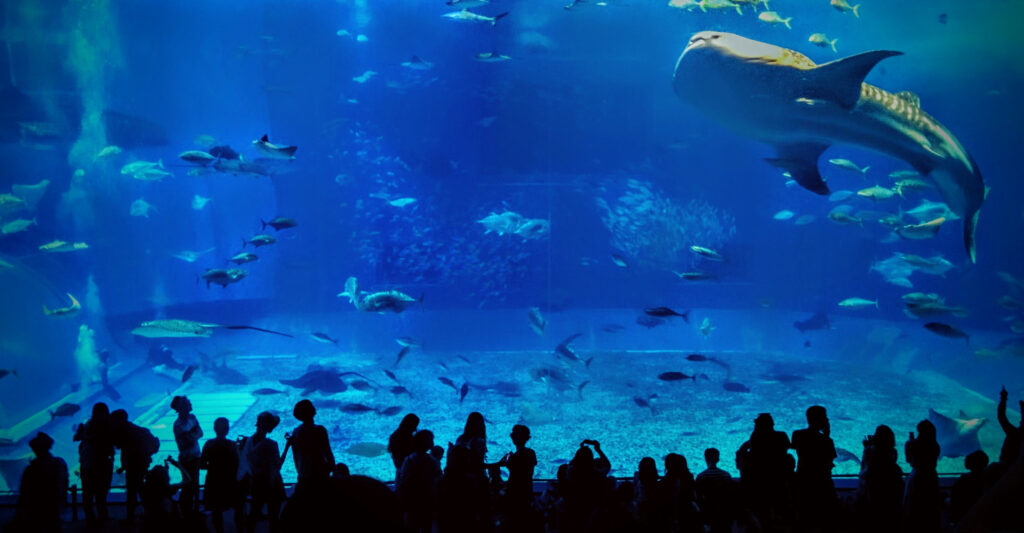
Okinawa Churaumi Aquarium feels inseparable from its setting, as if the surrounding coral sea simply rises inland and pauses behind glass. The Kuroshio Sea tank mirrors the Pacific outside with remarkable fidelity, borrowing its light, rhythm, and calm authority.
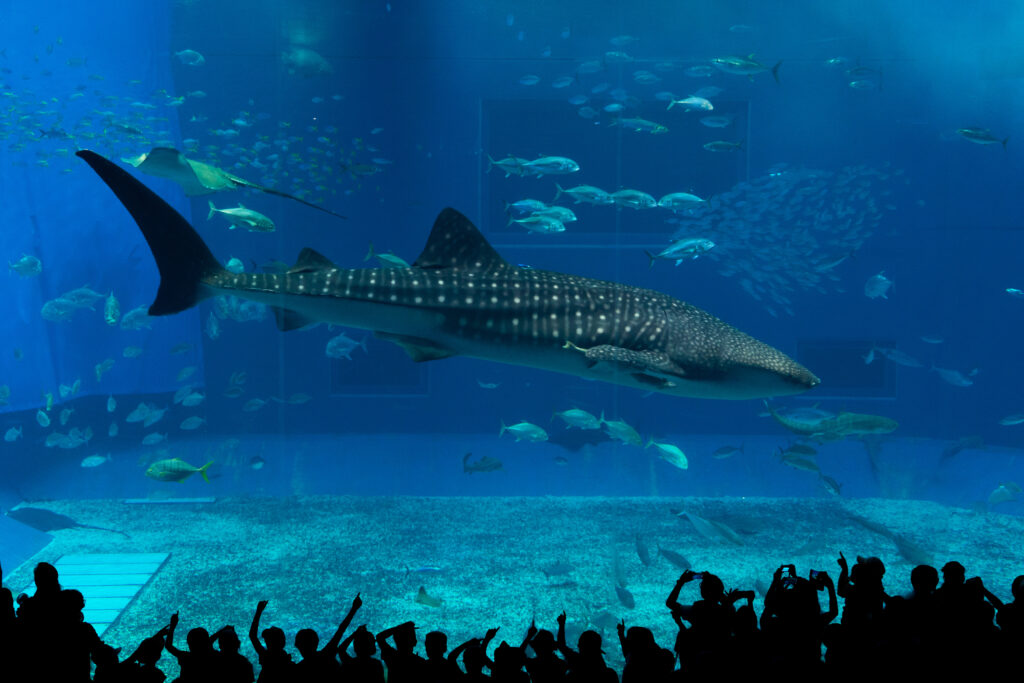
Sunlight enters generously through high windows, scattering downward like it would through open water. Whale sharks move with meditative ease, their vast bodies unhurried, accompanied by manta rays whose wings trace slow, inevitable arcs. Schools of fish circulate continuously, never drawing attention to themselves, yet shaping the space through quiet persistence.
The architecture encourages stillness. Benches face the tank like pews, inviting long observation rather than quick consumption. Visitors linger, breathing synchronizing unconsciously with the movement before them.
Churaumi’s power lies in gentleness. Grandeur here does not overwhelm; it aligns. The aquarium suggests that true scale is felt not through domination, but through harmony with the living sea.
8. L’Oceanogràfic, Valencia, Spain (Approx. 42 million liters)
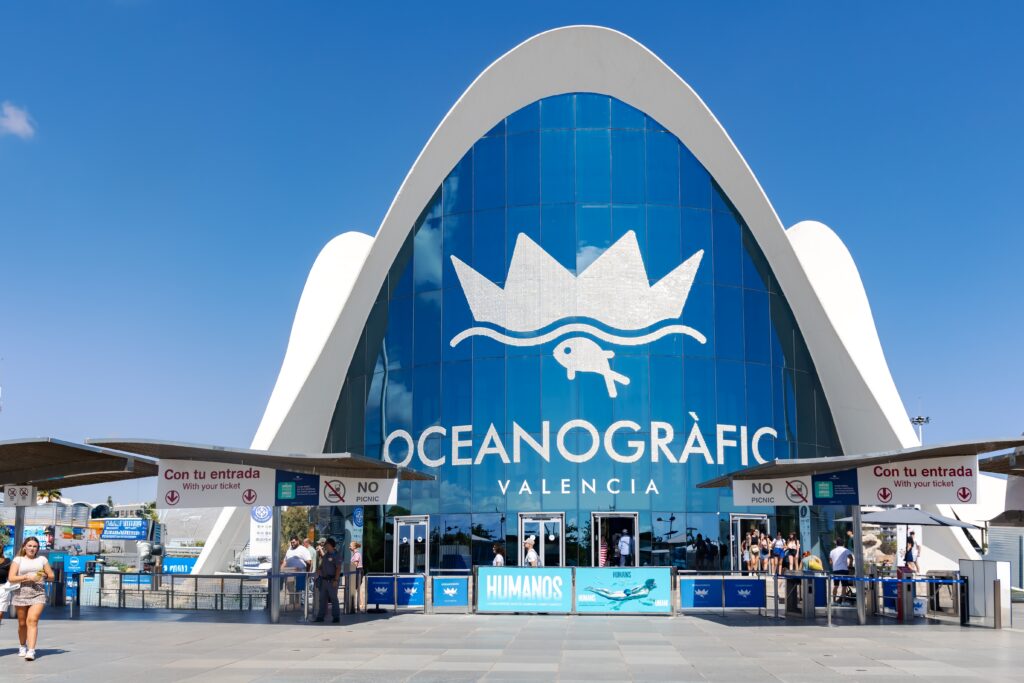
L’Oceanogràfic unfolds as a marine city, dispersed across water and sky. Designed by Santiago Calatrava, its white structures resemble shells and vertebrae caught mid-motion, architecture echoing biology rather than enclosing it.
Rather than confronting visitors with a single monumental tank, the aquarium offers a sequence of climates — Arctic chill, Mediterranean clarity, tropical warmth, abyssal darkness. Movement between them is physical and sensory; temperature shifts, light changes, and sound recalibrates.
Marine life appears within carefully contextualized spaces. Belugas glide through pale light, sharks through darker blues. Awe accumulates gradually, through comparison and contrast.
L’Oceanogràfic suggests that understanding the ocean requires plurality. Scale here is distributed, not concentrated — knowledge built by moving, noticing, and returning.
7. S.E.A. Aquarium, Singapore (Approx. 45 million liters)
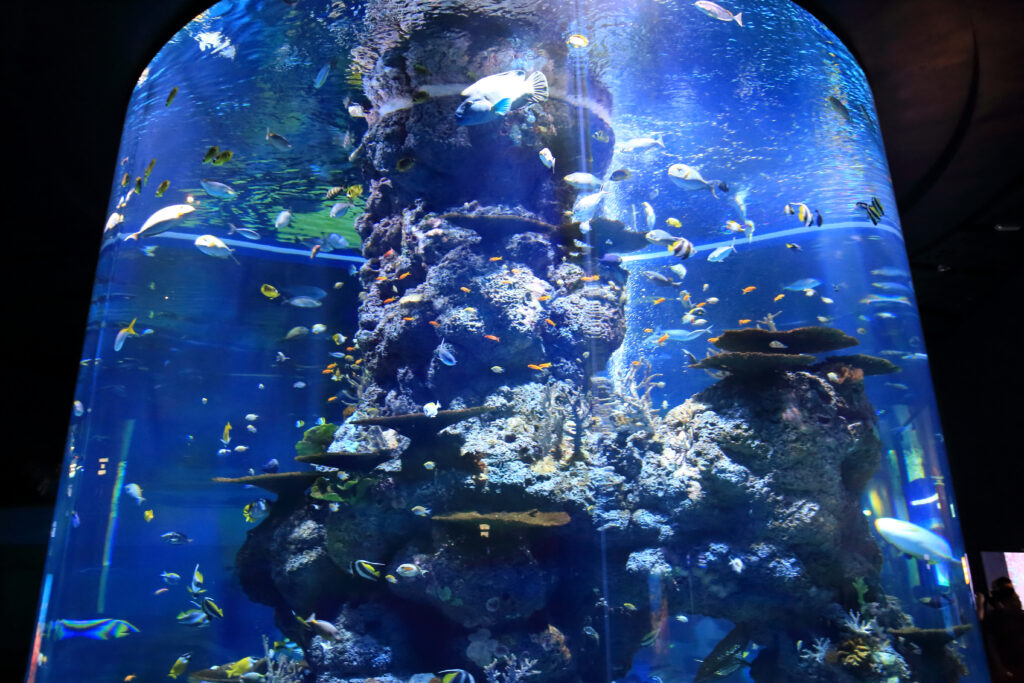
The S.E.A. Aquarium is designed as a descent. Corridors darken slowly, acoustics soften, and the outside world recedes step by step. The transition is deliberate, guiding attention downward.
The Open Ocean Habitat appears suddenly — a vast, shadowed volume framed by one of the world’s largest viewing panels. Sharks, rays, and immense schools of fish move like constellations through deep blue space. Silence becomes architectural; voices feel intrusive.
Precision governs every detail. Flow is exact, education embedded, spectacle restrained by discipline. Awe here feels engineered, but no less genuine for it.
Singapore’s aquarium understands that wonder can be designed — and that careful design can still honor the sea’s enormity.
6. Chimelong Ocean Kingdom (Secondary Tanks), China (Approx. 48 million liters)
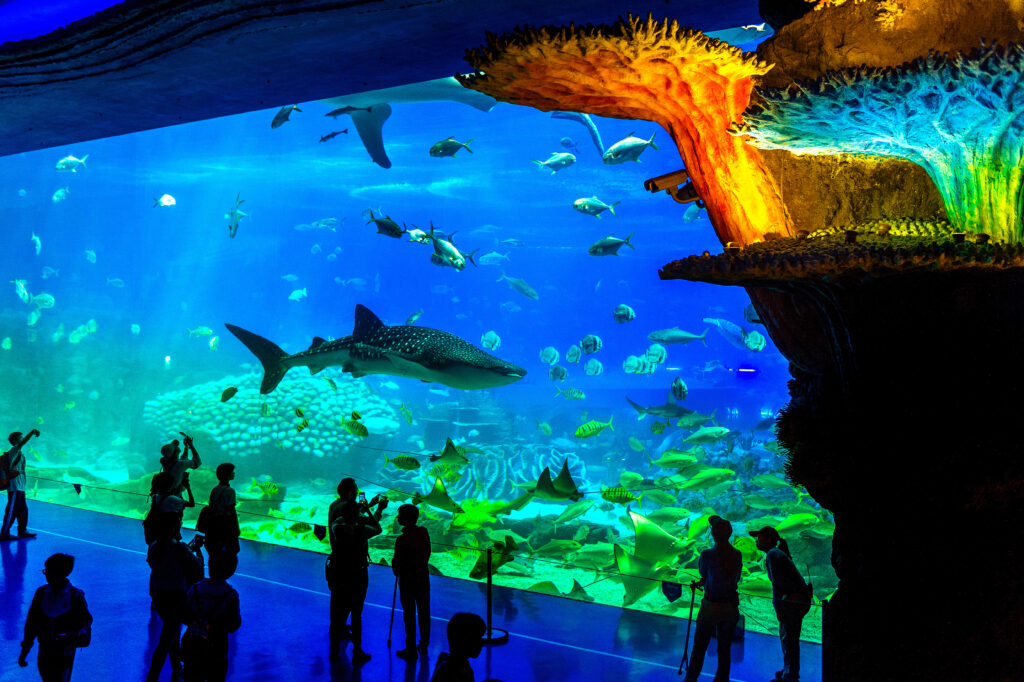
Chimelong Ocean Kingdom embraces scale without apology. Its secondary tanks alone surpass many aquariums in total volume, hosting dense ecosystems of sharks, rays, and schooling fish.
Color is saturated, movement constant, light theatrical. Schools assemble into living walls, then dissolve. The experience is exuberant, overwhelming, and confident.
Yet beneath the spectacle lies genuine immensity. The animals move with their own gravity, indifferent to framing or flourish.
Chimelong’s secondary seas demonstrate scale as emotional language — excess handled with certainty.
5. Chimelong Spaceship Aquarium, China (Approx. 56 million liters)
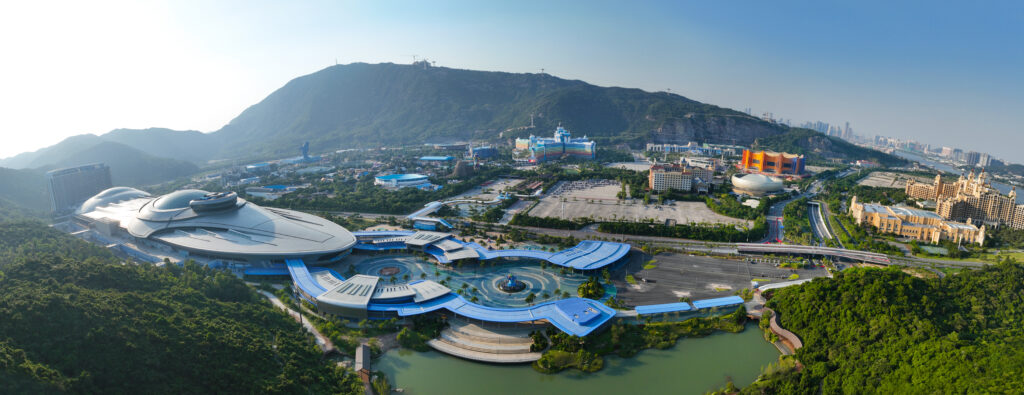
Chimelong Spaceship Aquarium announces a new era of scale. Its architecture abandons metaphor and embraces mass, a vast, low structure whose curves suggest orbit rather than ocean.
Inside, perception recalibrates. Tanks stretch laterally and vertically, volumes too large to grasp at once. Whale sharks, rays, and immense schools move with planetary gravity. Pathways feel suspended within water rather than beside it.
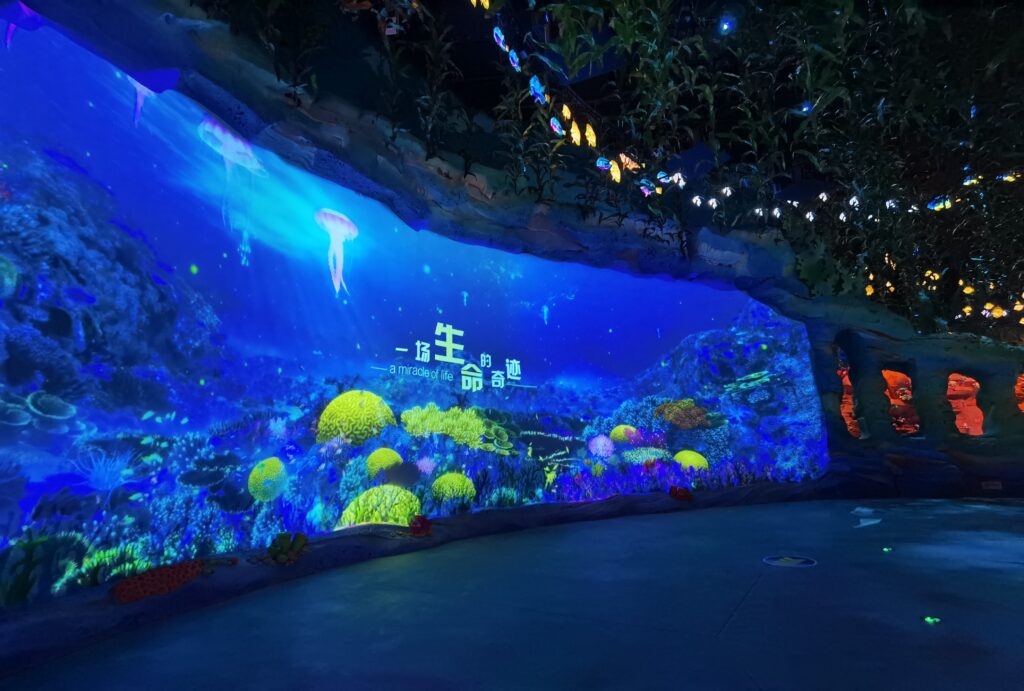
Light is cool and controlled, reinforcing dislocation from ordinary measure. The human body feels suddenly small.
Chimelong Spaceship does not invite contemplation — it enforces recalibration, reducing humanity to witness.
4. Oceanário de Lisboa – Central Tank Expansion, Portugal (Approx. 60 million liters)

The expansion of Lisbon’s central ocean does not announce itself with spectacle; it deepens an existing calm until it becomes unmistakable. The tank feels less like an exhibit than a stable climate — a living volume whose boundaries soften as the eye adjusts. Visitors orbit it slowly, returning again and again, learning its rhythms through repetition.
Fish, sharks, and rays share the space without hierarchy. Movement is continuous but unhurried, patterns forming and dissolving with quiet inevitability. No single species claims dominance; instead, relationships emerge — proximity, spacing, tolerance — the grammar of coexistence.
Architecture recedes deliberately. Platforms are positioned to encourage circling rather than stopping, reinforcing continuity over climax. Light is even and patient, allowing the water itself to do the work of revelation.
The expansion amplifies Lisbon’s philosophy rather than altering it. Grandeur here reinforces unity. Scale becomes an argument for patience, suggesting that understanding the ocean requires time spent within a single, shared volume.
Lisbon’s great sea teaches that power need not shout. It can persist, steady and complete, inviting attention through balance rather than force.
3. SeaWorld Abu Dhabi, UAE (Approx. 75 million liters)
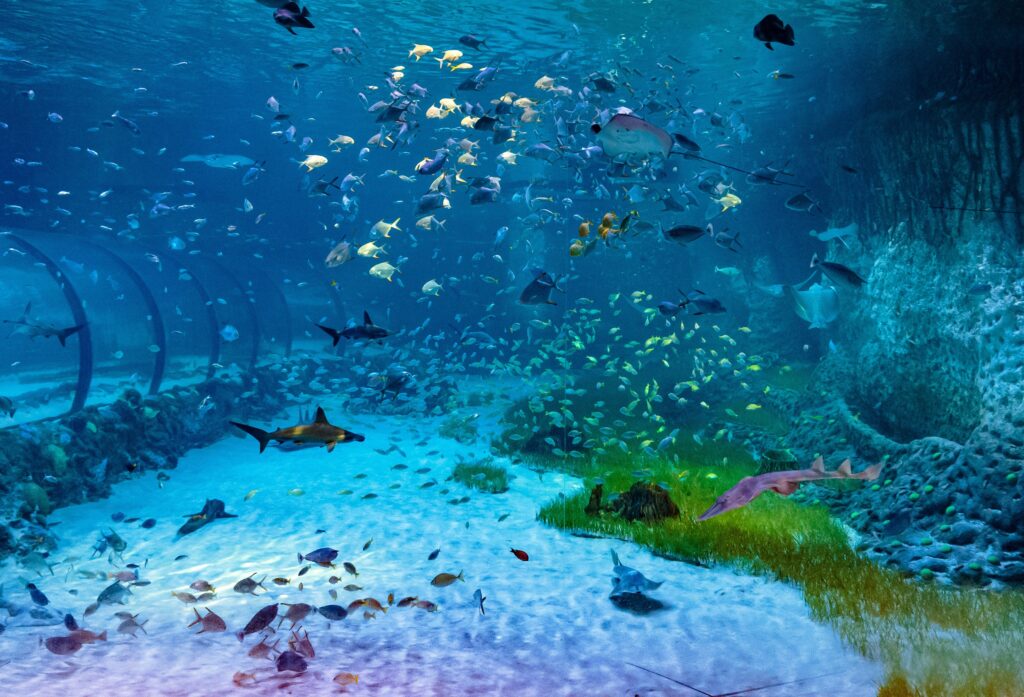
SeaWorld Abu Dhabi rises from the desert like a sustained impossibility. Within its walls, a polar ocean is maintained beneath arid sky, an achievement that announces itself immediately through contrast. Heat and brightness fall away, replaced by controlled cold, diffused light, and vast water.
The aquarium’s scale supports ecosystems rather than scenes. Animals move through space that feels inhabited rather than staged, their behavior shaped by continuity and depth. The architecture prioritizes function, allowing the environment to dominate perception.
Sound is muted, temperature regulated, and transitions gradual. Visitors move slowly, aware that such conditions exist only through constant care.
Here, scale serves stewardship. The ambition is not merely to astonish, but to sustain complexity where it should not naturally exist. The experience carries a quiet tension — awe tempered by awareness of cost.
SeaWorld Abu Dhabi leaves visitors with a question rather than a triumph: not whether such scale is possible, but what responsibility it demands.
2. The Seas with Nemo & Friends, EPCOT, USA (Approx. 215 million liters)
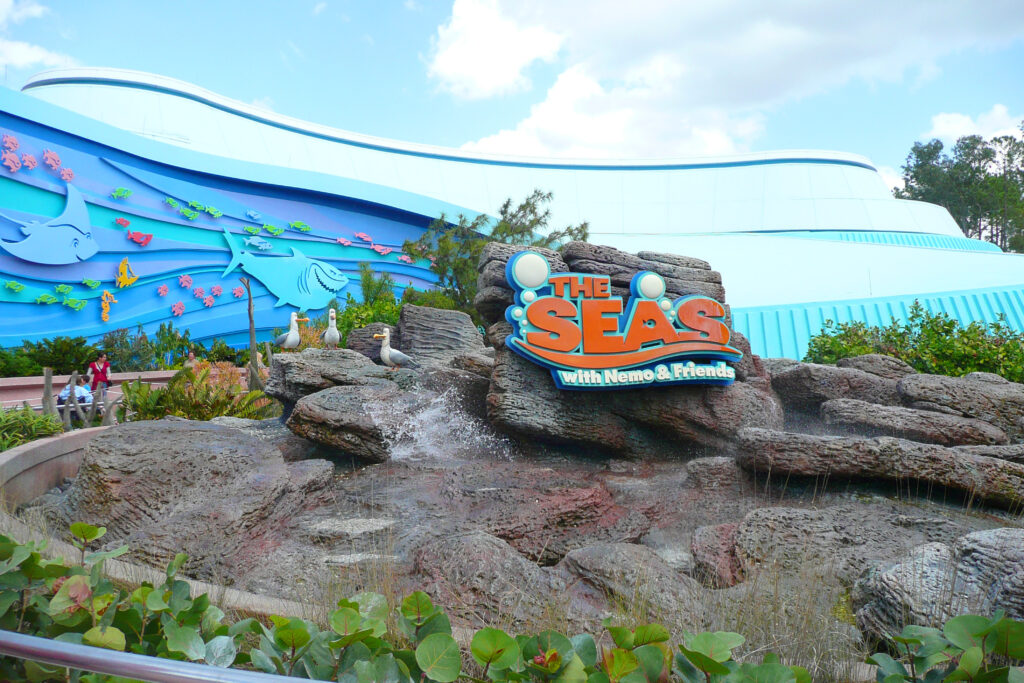
At EPCOT, the ocean becomes planetary. The central tank is so immense that it resists intimacy, its volume flattening individual drama into vast blue presence. Animals appear as punctuation marks within long sentences of water.
Manatees drift slowly near the surface. Sharks trace distant arcs. Schools of fish pass without gathering attention. Space itself becomes the dominant subject.
The viewing area encourages stillness. Visitors stand quietly, aware that nothing here performs for them. The environment simply exists, too large to respond to human expectation.
This aquarium offers humility rather than wonder. It demonstrates scale beyond encounter — an ocean reduced only enough to be seen, but never mastered.
Standing before it, one feels not invited, but permitted to observe briefly before yielding again to enormity.
1. Chimelong Ocean Kingdom – Whale Shark Exhibit, China (Approx. 250 million liters)
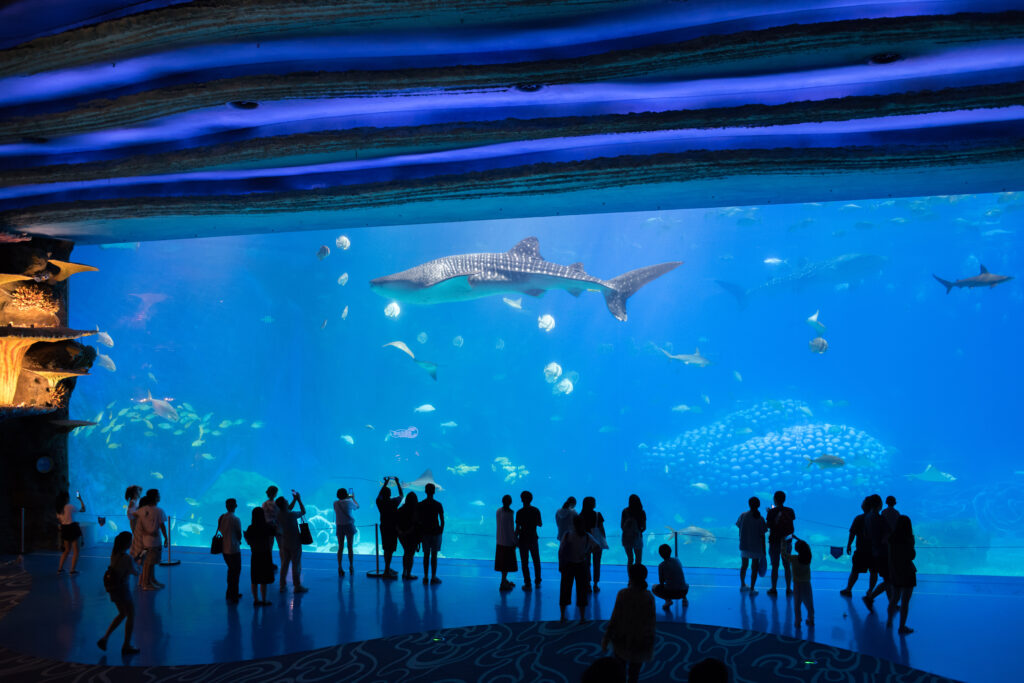
The world’s largest aquarium does not conclude with triumph, but with weight. Chimelong Ocean Kingdom’s whale shark tank is a body of water so vast it resists comprehension, even after prolonged looking.
Standing before it, language falters. The animals move with solemn deliberation, their size absorbed into a volume that dwarfs comparison. Human presence feels incidental — a thin line of observers before a contained sea.
The tank functions less as an exhibit than as an environment with its own gravity. Light, depth, and distance dissolve the sense of enclosure. What remains is immensity, held but not tamed.
At this scale, awe gives way to ethics. The question is no longer how impressive such containment is, but what it obligates. The largest aquarium leaves the smallest certainty: that power, once achieved, must answer to care.