
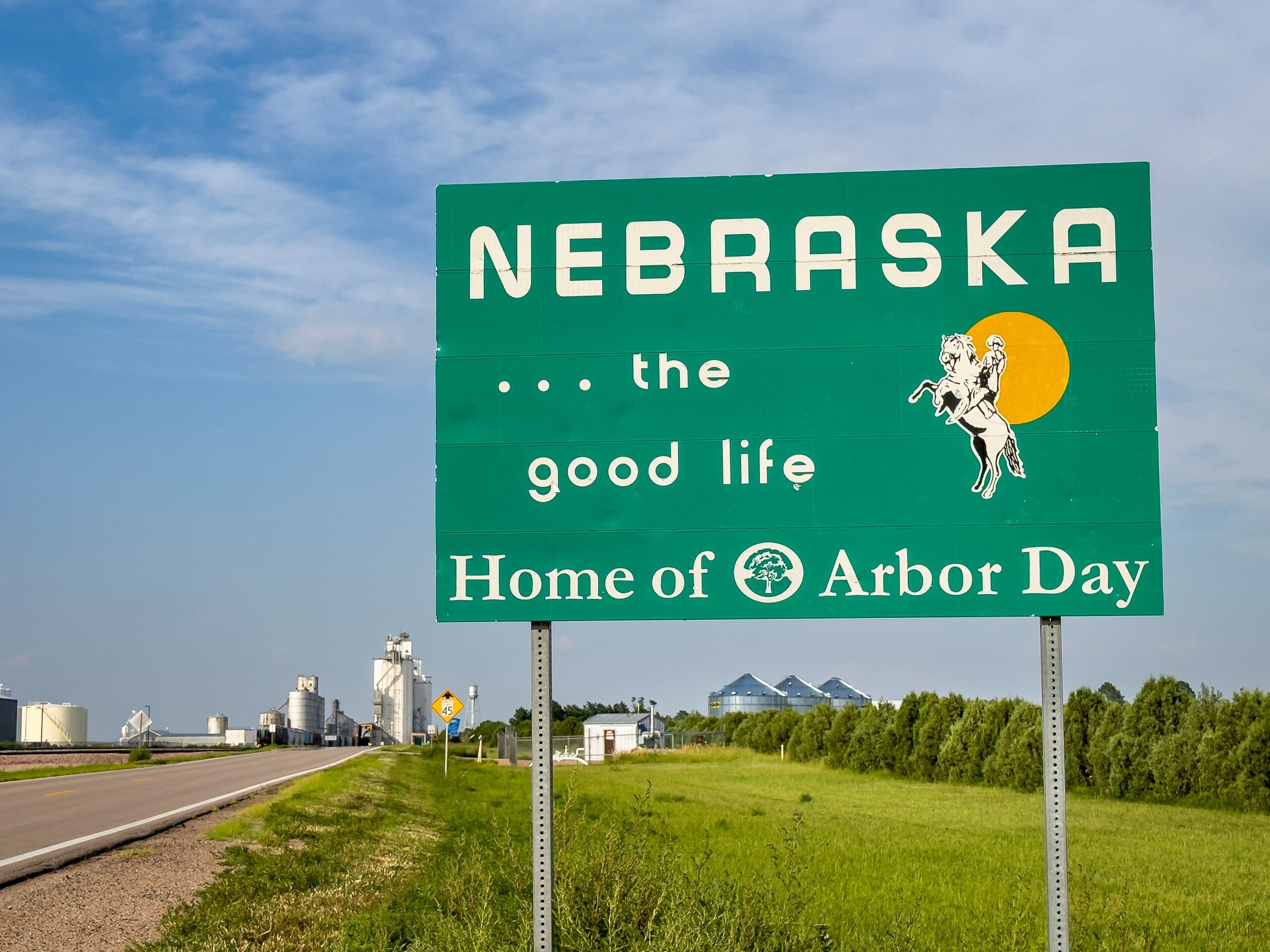
Nebraska reveals itself slowly. At first glance, it appears understated—flat, agricultural, unassuming. But linger, and the state unfolds into something far richer: a land shaped by rivers older than memory, skies vast enough to humble thought, and communities rooted in endurance rather than spectacle.
This is the heart of the Great Plains, where the Missouri and Platte Rivers once guided Indigenous nations, fur traders, settlers, and railroads westward. Nebraska’s history is inseparable from movement—migration, homesteading, and the promise of land. Yet paradoxically, it is also a place that teaches stillness. The open prairie invites reflection; the silence carries weight.
Nebraska is not defined by a single landscape. The Sandhills roll like an inland sea of grass. The Niobrara River cuts emerald corridors through limestone bluffs. Pine forests rise unexpectedly in the northwest, while fertile farmland stretches endlessly in the east. Each region tells a different story, united by resilience and respect for the land.
Its towns and cities reflect a grounded spirit. Omaha balances cultural ambition with Midwestern humility. Lincoln pulses with youthful energy and civic pride. Smaller towns preserve rhythms shaped by seasons, weather, and shared responsibility.
Nebraska does not seek admiration. It offers something rarer: authenticity. Here, beauty is not curated—it is lived. The state rewards those who look beyond first impressions, offering depth instead of drama, meaning instead of noise. Nebraska is not a place you conquer; it is a place that slowly invites you in.
20. Omaha: Culture, River, and Reinvention
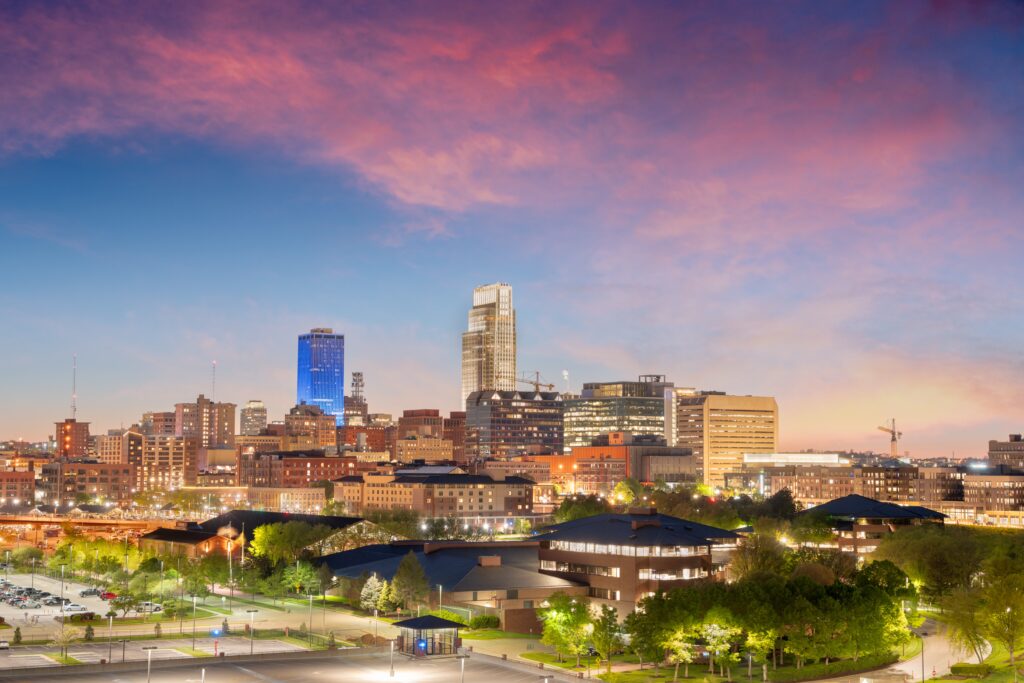
Omaha stands at Nebraska’s eastern edge, shaped by the Missouri River and centuries of transition. Once a frontier trading post, it grew into a transportation hub that connected the plains to the nation. Today, Omaha is Nebraska’s most cosmopolitan city—yet it remains grounded, approachable, and unmistakably Midwestern.

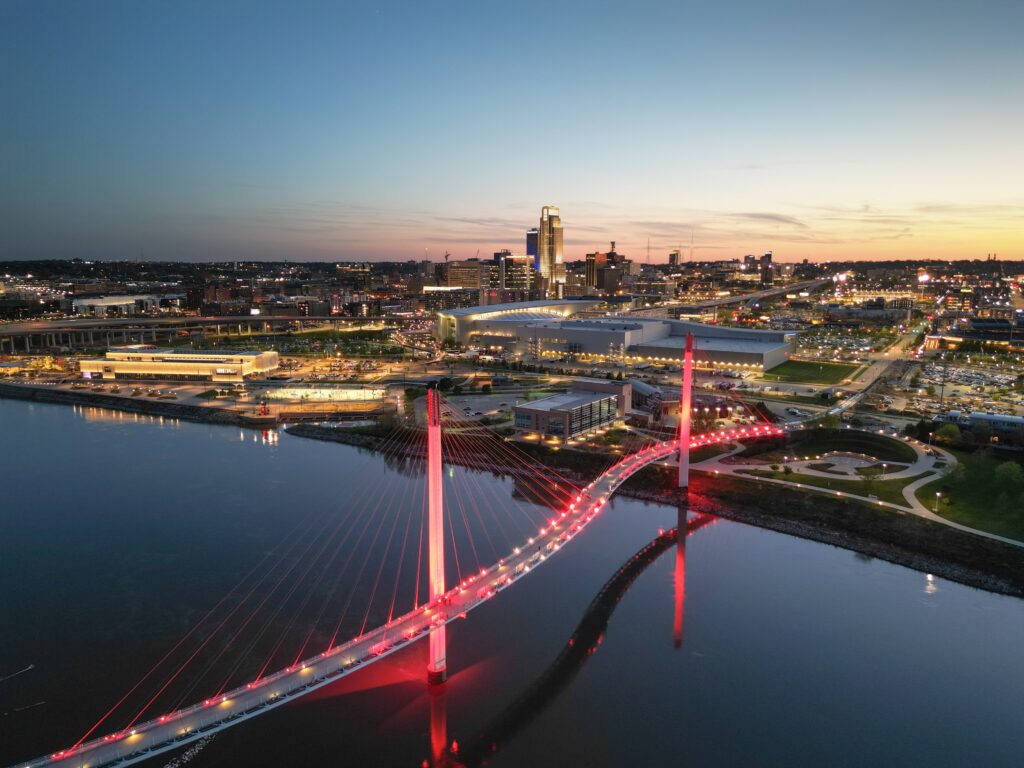
The city’s Old Market district anchors its historic heart. Cobblestone streets, brick warehouses, and iron lampposts house galleries, cafés, and performance spaces. Nearby, the riverfront has been reimagined as a place of gathering, where trails, parks, and bridges reconnect the city with its defining waterway.
Omaha’s cultural life is surprisingly rich. The Joslyn Art Museum, Holland Performing Arts Center, and a vibrant music scene reflect ambition without pretension. Culinary innovation thrives alongside classic steakhouses, honoring the city’s livestock legacy while embracing global influence.
Neighborhoods like Dundee and Benson reveal Omaha’s creative pulse, where local businesses and community pride shape daily life. The city’s past—railroads, stockyards, migration—remains visible, but it no longer defines its future alone.
Omaha embodies Nebraska’s evolution: a city that respects its roots while confidently stepping forward, proving that the plains can nurture both tradition and innovation.
19. Lincoln: Youth, Ideas, and Civic Identity
Lincoln is a city shaped by ideas. As Nebraska’s capital and home to the University of Nebraska, it blends academic energy with civic purpose. The result is a place that feels thoughtful, engaged, and quietly progressive.
The Nebraska State Capitol rises above the city as a striking Art Deco tower, visible for miles across the plains. It symbolizes transparency and ambition—values deeply woven into Lincoln’s identity. Around it, tree-lined neighborhoods and bike-friendly streets create a sense of livability rare in capital cities.
The university infuses Lincoln with youth and creativity. On game days, the city transforms as red-clad fans gather in a collective ritual that transcends sport. Yet Lincoln’s culture extends beyond football. Music venues, independent bookstores, and farmers’ markets animate its social life.
Nature is never far away. Wilderness Park and Pioneers Park offer wooded trails and prairie restoration areas within city limits, reinforcing Lincoln’s relationship with land and conservation.
Lincoln represents Nebraska’s intellectual heart—a city where community engagement, education, and tradition coexist comfortably.
18. The Sandhills: Nebraska’s Hidden Sea
Covering nearly a quarter of the state, the Sandhills are Nebraska’s most unexpected landscape. Vast grass-covered dunes roll endlessly beneath open sky, forming one of the largest intact grassland ecosystems in the world.
Despite their name, the Sandhills are alive—anchored by deep-rooted grasses that prevent erosion and support cattle ranching. Life here follows ancient rhythms. Ranches span generations, and stewardship of land is not optional; it is inherited responsibility.
Rivers such as the Niobrara and Dismal flow clear and cool through the dunes, carving green corridors that feel almost surreal. Wildlife thrives in quiet abundance, and human presence remains light, respectful.
The Sandhills are not dramatic in the traditional sense. Their power lies in scale, silence, and continuity. To stand here is to understand Nebraska at its purest—vast, resilient, and profoundly alive.
17. The Platte River & the Great Migration of Cranes
Each spring, the Platte River becomes one of the most extraordinary stages of life on the continent. Hundreds of thousands of sandhill cranes converge along its shallow channels, transforming Nebraska into the epicenter of an ancient migration that predates human settlement.
The Platte itself is modest in appearance—wide, braided, and deceptively calm—but it is precisely this character that makes it vital. Its shallow waters provide safe nighttime roosts, while nearby fields offer abundant food. For several weeks, the river becomes a living corridor of sound and motion as cranes arrive at dusk and lift off at dawn in vast, synchronized waves.
Witnessing the migration is a humbling experience. The sky fills with silhouettes, the air resonates with calls that feel primal and timeless. Conservation centers near Kearney and Grand Island allow visitors to observe quietly, emphasizing respect over spectacle.
Beyond the cranes, the Platte River defines Nebraska’s agricultural heart. Its waters nourish fertile lands, sustain wildlife, and shape settlement patterns. The river is both lifeline and witness, linking the state’s ecological past with its present.
The annual migration is not merely a natural event; it is a reminder of continuity. In a world of constant change, the Platte River remains faithful to its role, hosting one of nature’s most enduring rituals.
16. Chimney Rock & the Oregon Trail Legacy
Rising abruptly from the plains, Chimney Rock stands as one of the most recognizable landmarks of westward expansion. For 19th-century emigrants traveling the Oregon, California, and Mormon Trails, this slender spire signaled progress, hope, and survival.
Approaching Chimney Rock today, its isolation feels deliberate. The surrounding prairie stretches endlessly, reinforcing the emotional impact it once had on weary travelers. Diaries from the era often mention it with awe, relief, or longing—it was proof that movement mattered, that distance had meaning.
Nearby Scotts Bluff and Courthouse Rock complete a landscape shaped by both geology and history. Trails, ruts, and interpretive sites preserve the human stories layered upon ancient stone. These landmarks do not glorify hardship; they quietly acknowledge it.
The region invites contemplation. Wind moves through grass much as it did centuries ago, and the sky remains vast and indifferent. Chimney Rock does not dominate the land—it punctuates it, offering a fixed point in an otherwise fluid world.
This is Nebraska as passageway, where dreams moved westward and landscapes became symbols. Chimney Rock endures not because it is grand, but because it witnessed resolve.
15. Scotts Bluff National Monument: Stone and Sky
Scotts Bluff rises dramatically above the North Platte River, its layered cliffs forming one of Nebraska’s most visually striking landmarks. For travelers along historic trails, the bluffs marked a turning point—a place where the plains gave way to the promise of mountains.
Today, Scotts Bluff National Monument preserves both natural beauty and historical memory. Trails wind upward through grasslands and pine groves, revealing expansive views that stretch across multiple states on clear days. The elevation offers perspective—literal and emotional.
The monument’s geology tells a story millions of years old, shaped by erosion and time. Its history adds another layer: Indigenous presence, emigrant passage, and modern preservation efforts coexist within the same space.
Scotts Bluff balances scale with intimacy. From below, it feels monumental; from above, the land unfolds gently. This duality reflects Nebraska itself—powerful yet restrained.
Standing atop the bluff, one understands why this place mattered. It was a marker of progress, a source of reassurance, and now a place of reflection. Scotts Bluff does not shout its significance; it allows silence to do the work.
14. The Niobrara River Valley: A Living Corridor
The Niobrara River Valley feels like a secret held gently by the land. Flowing eastward across northern Nebraska, the river creates a lush, green ribbon through dry prairie and sandstone bluffs, forming one of the state’s most biologically diverse regions.
Here, ecosystems converge. Eastern hardwood forests meet western pine stands, northern boreal plants mingle with prairie grasses, and waterfalls tumble unexpectedly from limestone cliffs. The river’s clarity invites canoeists and kayakers to drift slowly, absorbing a landscape shaped more by time than by human intervention.
The Niobrara National Scenic River protects this delicate balance. Its banks shelter bald eagles, elk, and songbirds, while its waters sustain fish and aquatic life rare elsewhere in the state. Human presence remains light—cabins, small towns, and conservation lands blend quietly into the surroundings.
Waterfalls such as Smith Falls, Nebraska’s tallest, punctuate the valley with moments of surprise. Yet the true power of the Niobrara lies not in spectacle but in continuity. It has long sustained Indigenous peoples, settlers, and now a renewed culture of conservation.
The Niobrara River Valley is Nebraska’s reminder that life flourishes where patience and balance prevail.
13. Valentine & the Northern Plains
Valentine stands as the gateway to Nebraska’s northern plains and the Niobrara region. Small and unassuming, the town embodies prairie resilience—practical, welcoming, and deeply connected to land and water.
Life here moves at a measured pace. Ranching remains central, shaping both economy and identity. Conversations are grounded, relationships long-standing, and the landscape omnipresent. The surrounding Sandhills stretch outward, reinforcing a sense of openness that defines daily life.
Valentine’s charm lies in its authenticity. It is not a curated destination but a working town that serves as a base for exploration. From here, visitors venture to rivers, bluffs, and wildlife refuges, returning to simple comforts and quiet evenings.
The town’s proximity to nature fosters respect rather than dominance. Outdoor recreation coexists with stewardship, reflecting a culture shaped by seasons and survival.
Valentine represents Nebraska’s rural heart—a place where land is not scenery but responsibility.
12. Ashfall Fossil Beds: Deep Time Preserved
Hidden beneath Nebraska’s plains lies one of the most remarkable paleontological sites in North America. Ashfall Fossil Beds preserves a moment frozen in time—an ancient catastrophe caused by volcanic ash drifting east from what is now Idaho.
Millions of years ago, herds of prehistoric animals gathered around a watering hole, unaware of the slow-falling ash that would eventually bury them. Today, their remains lie exactly where they fell, offering scientists and visitors a rare glimpse into deep time.
The site’s interpretive center allows quiet observation. Fossils emerge from sediment with astonishing clarity—rhinos, horses, camels—all preserved in haunting stillness. Unlike dramatic displays, Ashfall’s power lies in restraint.
This place challenges perspective. It reminds visitors that Nebraska’s history extends far beyond human presence, that the land has witnessed cycles of creation and loss far older than memory.
Ashfall Fossil Beds transform the plains into a portal through time, revealing Nebraska’s ancient story beneath its modern surface.
11. The Pine Ridge: Forests Above the Plains
The Pine Ridge rises unexpectedly from Nebraska’s northwestern corner, a rugged escarpment where ponderosa pines replace grasslands and elevation reshapes perspective. This region feels closer to the Rocky Mountain foothills than to the Great Plains, challenging assumptions about Nebraska’s geography.
Here, forested ridges, deep canyons, and red sandstone formations create a dramatic landscape shaped by erosion and wind. The terrain supports wildlife uncommon elsewhere in the state—mountain lions, bighorn sheep, and dense bird populations thrive among the pines.
The Pine Ridge has long held significance for Indigenous tribes and later settlers, serving as both refuge and resource. Today, public lands such as Fort Robinson State Park preserve this layered history. Trails wind through scenic valleys, past historic cavalry posts and quiet meadows.
What distinguishes the Pine Ridge is its sense of separation. Distances are long, towns sparse, and silence profound. The region invites contemplation rather than conquest. Weather shifts quickly, reminding visitors that nature still dictates terms here.
The Pine Ridge expands Nebraska’s identity, revealing a wildness often overlooked.
10. Alliance & Carhenge: Playful Monumentality
Alliance offers one of Nebraska’s most unexpected landmarks: Carhenge. Rising from a field on the town’s edge, this whimsical replica of England’s Stonehenge, constructed from vintage automobiles, blends humor with ingenuity.
While Carhenge attracts visitors, Alliance itself reflects prairie pragmatism. Rooted in railroad history, the town grew as a transportation hub, shaping its layout and economy. Wide streets, grain elevators, and historic buildings tell a story of movement and industry.
Carhenge symbolizes Nebraska’s creative spirit—a reminder that art can emerge anywhere. It resists pretension, inviting curiosity rather than reverence. The installation has become a cultural touchstone, celebrating both place and imagination.
Alliance balances seriousness with playfulness, showing that Nebraska’s character includes wit alongside endurance.
9. Courthouse Culture & County Seats
Across Nebraska, courthouses anchor county seats both physically and symbolically. Rising above main streets, these buildings represent governance, community, and continuity.
Constructed in architectural styles ranging from Classical Revival to Art Deco, Nebraska’s courthouses reflect periods of optimism and civic pride. They are not merely administrative centers but gathering places for festivals, markets, and daily encounters.
Surrounding them, small towns maintain a rhythm shaped by agriculture, weather, and tradition. Local cafés, hardware stores, and family-owned businesses form social infrastructure as vital as roads or bridges.
Courthouse squares reveal Nebraska’s communal values. Decisions are debated face-to-face, and history is preserved through shared memory rather than spectacle.
In these towns, Nebraska’s essence becomes clearest—not in grand gestures, but in steady presence.
8. Lake McConaughy: Water in the Wide Land
Lake McConaughy stretches across western Nebraska like an improbable mirage. Created by the construction of Kingsley Dam on the North Platte River, it is the state’s largest reservoir and one of its most dynamic recreational landscapes.
The lake’s vastness surprises first-time visitors. White sand beaches, sculpted by wind and water, contrast sharply with the surrounding prairie. On summer days, the shoreline fills with boaters, anglers, and families, drawn by the rare combination of open water and open land.
Yet Lake McConaughy is more than leisure. It plays a vital role in irrigation and flood control, underscoring Nebraska’s long relationship with water management. The lake embodies the state’s ability to adapt natural systems for survival while maintaining balance.
Sunsets here are expansive and dramatic. As light fades, the lake reflects the sky’s shifting colors, reinforcing the sense of scale that defines Nebraska. Even in its busiest moments, the lake never feels crowded—space remains abundant.
Lake McConaughy reveals how Nebraska reshapes its environment thoughtfully, blending utility with insight.
7. The Agricultural Heartland: Fields of Continuity
Nebraska’s agricultural heartland is both landscape and livelihood. Fields stretch beyond the horizon, planted in precise patterns that reflect generations of knowledge and adaptation.
Corn and soybeans dominate, nourished by rich soil and careful stewardship. Pivot irrigation systems arc gracefully across fields, symbols of modern farming intertwined with ancient cycles. Agriculture here is not romanticized—it is lived, measured by seasons, weather, and resilience.
Rural communities anchor this vast working land. Grain elevators punctuate skylines, serving as landmarks and economic centers. Towns thrive on cooperation, where harvest brings collective effort and shared reward.
The agricultural heartland reveals Nebraska’s defining values: patience, responsibility, and continuity. Land is not consumed; it is tended. The rhythm of planting and harvest offers stability in an uncertain world.
In these fields lies the quiet foundation of the state’s identity.
6. North Platte & Buffalo Bill Cody
North Platte stands at the crossroads of railroads, rivers, and legend. The city’s identity is inseparable from William “Buffalo Bill” Cody, whose life bridged frontier myth and modern performance.
The Buffalo Bill Ranch preserves his legacy, offering insight into the man behind the myth. Cody’s Wild West shows popularized the American frontier globally, shaping perceptions that persist today.
Beyond history, North Platte remains a transportation hub. Union Pacific’s Bailey Yard—the world’s largest railroad classification yard—operates continuously, underscoring the city’s enduring role in movement and logistics.
The Platte River flows nearby, grounding the city in the same waters that guided travelers west. North Platte balances heritage with industry, legend with labor.
5. Railroads: Steel Lines Across the Plains
Railroads shaped Nebraska more profoundly than any other force. Steel lines stitched the plains together, enabling settlement, trade, and connection.
Towns emerged along tracks, their existence tied to schedules and shipments. Railroads transformed Nebraska into a national artery, linking coasts and carrying grain, cattle, and people.
Today, freight trains still roll endlessly across the state, their presence a reminder of Nebraska’s strategic importance. The rhythm of passing trains remains woven into daily life.
Railroads reflect Nebraska’s foundational role—not flashy, but essential.
4. Missouri River Towns: Nebraska’s Eastern Threshold
Along Nebraska’s eastern edge, the Missouri River forms both boundary and lifeline. Its towns—Nebraska City, Brownville, and others—carry a different rhythm from the plains, shaped by water, trade, and early settlement.
These communities were among Nebraska’s first points of contact with the wider world. Steamboats once docked here, carrying people, goods, and ideas inland. The river brought opportunity but also unpredictability, flooding fields and reshaping shorelines.
Nebraska City retains a dignified calm. Tree-lined streets, historic homes, and orchards reflect a long-standing relationship with the land. Brownville, smaller and more intimate, preserves a 19th-century atmosphere that feels gently suspended in time.
The Missouri River towns reveal Nebraska’s quieter elegance. They do not dominate the landscape; they adapt to it. Life here unfolds with awareness of cycles—river levels, seasons, and shared memory.
These towns are reminders that Nebraska’s story began not only on the plains, but at the water’s edge.
3. Nebraska City & Arbor Day: A Culture of Trees
Nebraska City holds a unique place in American environmental history as the birthplace of Arbor Day. In a state defined by open land and wind, the act of planting trees became a radical gesture of care and foresight.
J. Sterling Morton’s vision took root here in the 19th century, transforming the town into a living symbol of stewardship. Today, Arbor Lodge State Historical Park preserves Morton’s home and expansive arboretum, where tree-lined paths offer shade and reflection.
The surrounding orchards reflect the region’s agricultural diversity. Apples flourish here, nurtured by fertile soil and river influence. Each spring, blossoms soften the town’s edges, reinforcing a sense of renewal.
Nebraska City embodies a philosophy deeply embedded in the state’s character: improvement through patience. Trees are planted not for immediate reward, but for generations to come.
2. Homestead National Historical Park: Land and Promise
Near Beatrice, Homestead National Historical Park marks the site of the first legal claim under the Homestead Act of 1862. Here, the idea of land ownership reshaped the nation.
The park’s restored prairie and tallgrass ecosystem honor both the settlers and the land itself. Trails wind through grasses once cleared by hand, offering perspective on the labor and ambition that defined westward expansion.
Interpretive centers explore the Homestead Act’s legacy—its promise, its hardship, and its lasting impact. The narrative is nuanced, acknowledging both opportunity and displacement.
Homestead National Historical Park stands as Nebraska’s moral center, where idealism met reality.
1. Indian Cave State Park: Stone, Forest, and Memory
Indian Cave State Park rises dramatically above the Missouri River, where forested bluffs and sandstone formations create one of Nebraska’s most visually striking landscapes.
The park takes its name from petroglyphs carved into rock, silent witnesses to Indigenous presence long before settlement. Trails lead through dense forest, revealing seasonal color and sweeping river views.
Indian Cave feels ancient and contemplative. It is a place where Nebraska’s layers—geological, cultural, and emotional—intersect most clearly.
Here, the state’s story comes full circle: land, people, and memory bound together.