
South Africa is a country of extraordinary breadth, where landscapes, cultures, and histories converge with rare intensity. Often described as “a world in one country,” it contains an astonishing range of environments and identities—towering mountains and open savannahs, cosmopolitan cities and rural heartlands, ancient traditions and contemporary expression. This diversity is not fragmented; it is interconnected, shaped by movement, encounter, and resilience.
The nation’s history is complex and deeply influential. Indigenous civilizations, colonial expansion, and the trauma of apartheid have all left indelible marks on South Africa’s social and cultural fabric. Yet the country is equally defined by its capacity for renewal. The transition to democracy reshaped not only political structures, but the collective imagination, placing dialogue, dignity, and reconciliation at the center of national identity. The philosophy of ubuntu—recognizing humanity through others—remains a guiding force in everyday life.
Nature plays a defining role in shaping South Africa’s character. Two oceans meet along dramatic coastlines, deserts open into vast skies, and fertile valleys give way to wildlife-rich plains. These landscapes are not merely scenic; they influence livelihoods, belief systems, and patterns of settlement. Wildlife conservation, agriculture, and coastal culture all reflect deep relationships with land and sea.
South Africa is also a country of voices. Eleven official languages reflect its multicultural reality, while music, storytelling, and visual art serve as powerful tools of memory and self-definition. Creativity flows naturally through cities, townships, and rural communities alike.
In our article we explore South Africa’s most remarkable destinations—places that reveal its natural grandeur, cultural complexity, and enduring spirit. Each chapter invites travelers to experience a nation defined not by a single story, but by the strength of many.
19. Cape Town: Where Land and Ocean Embrace
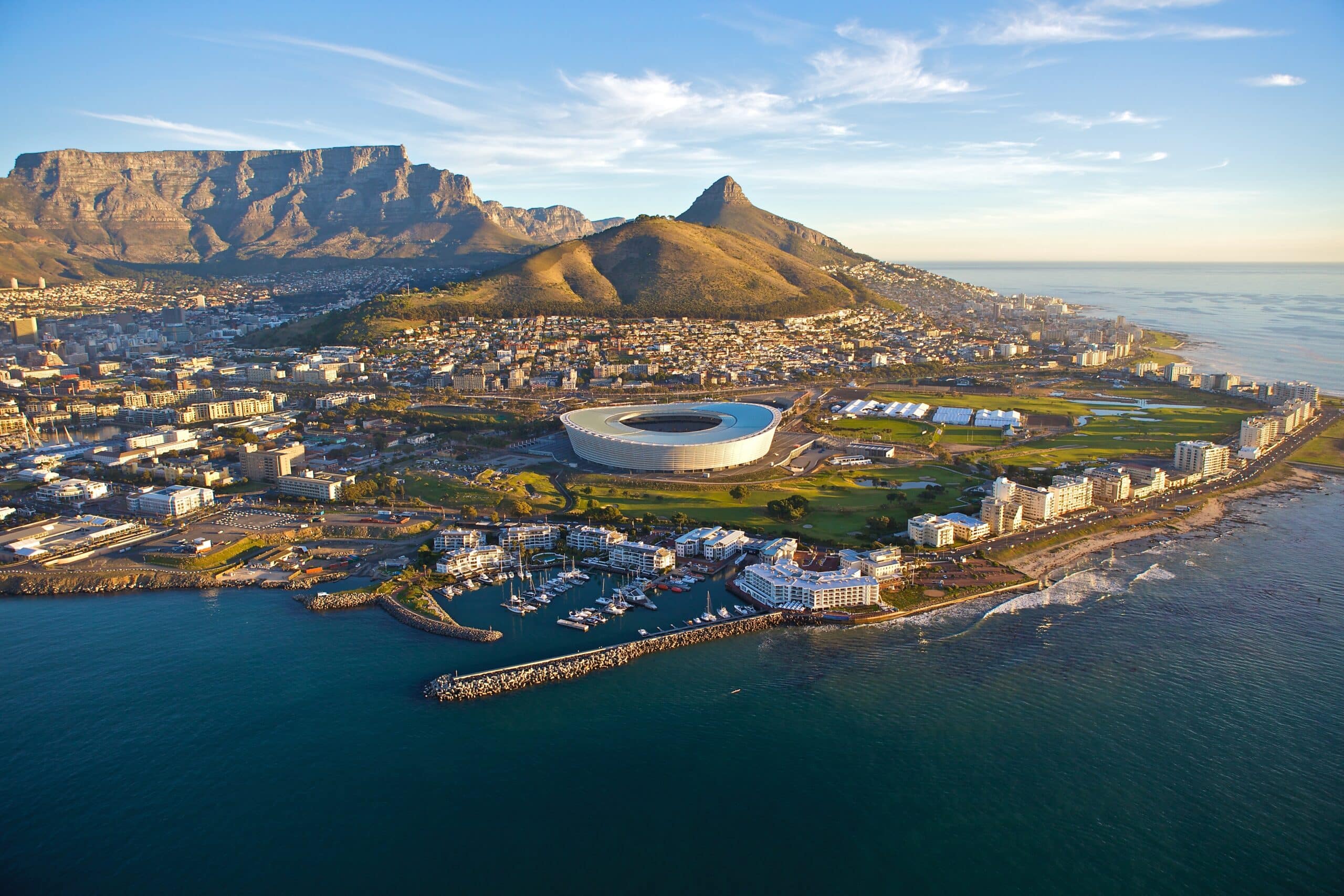
Cape Town is one of the world’s most visually compelling cities, shaped by a rare meeting of dramatic landscape and layered history. Framed by the iconic Table Mountain and the Atlantic Ocean, it offers a powerful balance between natural grandeur and urban life. The city’s beauty is immediate, yet its meaning unfolds gradually through exploration and reflection.
Table Mountain rises above Cape Town with quiet authority, its flat summit often crowned by drifting cloud. From its heights, the city stretches outward toward the sea, revealing beaches, harbors, and neighborhoods shaped by centuries of migration and exchange. The surrounding coastline is raw and restless, reinforcing the elemental character of the region.
Cape Town’s past is inseparable from South Africa’s struggle for justice. Robben Island, visible across the water, stands as a stark reminder of apartheid’s legacy and the resilience of those who endured imprisonment for freedom. Today, it serves as a place of learning and remembrance rather than division.
The city’s neighborhoods reflect extraordinary cultural diversity. The colorful streets of Bo-Kaap preserve Cape Malay heritage, while creative districts pulse with art, design, and innovation. Food culture blends African, Asian, and European influences, telling stories of adaptation and survival through flavor and tradition.
Cape Town is both expressive and introspective. It invites admiration, but also understanding. Few cities so clearly reveal how beauty, history, and identity can coexist in constant dialogue.
18. Johannesburg: Pulse of Modern South Africa
Johannesburg is South Africa’s most dynamic and forward-moving city, defined not by age or scenery, but by ambition and reinvention. Born from the discovery of gold, it grew rapidly into the country’s economic and cultural engine. Today, it remains a place of constant motion, shaped by opportunity and resilience.
The city offers an unfiltered view of South Africa’s recent history. In Soweto, streets and memorials tell powerful stories of resistance, sacrifice, and political awakening. Museums and cultural centers confront the realities of apartheid with honesty, ensuring that memory remains an active force in shaping the future.
Johannesburg is also a center of creativity. Artists, designers, musicians, and entrepreneurs transform former industrial spaces into galleries, studios, and markets. Contemporary African expression thrives here, bold and unapologetic. The city’s cultural influence extends far beyond its borders, shaping trends and conversations across the continent.
Though sprawling and intense, Johannesburg rewards curiosity. Its neighborhoods reveal layers of struggle and hope, reflecting a city continuously redefining itself. Conversations flow easily, ideas circulate freely, and ambition remains visible everywhere.
Johannesburg does not seek approval. It asserts presence. To experience it is to encounter modern South Africa in motion—complex, unfinished, and full of possibility.
17. Kruger National Park: The Language of the Wild
Kruger National Park is one of Africa’s most important wildlife sanctuaries, preserving ecosystems that have existed for thousands of years. Spanning vast savannahs, rivers, and woodlands, it offers an experience defined by scale, patience, and respect for nature’s rhythm.
The park is home to extraordinary biodiversity, including the iconic Big Five, as well as countless bird species, reptiles, and smaller mammals. Wildlife here moves freely, guided by instinct rather than human presence. Safaris are shaped by observation and silence, not control or predictability.
Early mornings and late afternoons reveal Kruger at its most powerful. Soft light filters through trees, animals emerge cautiously, and the land feels ancient and alert. Each encounter feels earned, reinforcing humility and awareness.
Kruger is not entertainment—it is education. It teaches attentiveness and restraint, reminding visitors of humanity’s place within the natural world. Conservation efforts here are vital, protecting not only species, but balance itself.
This landscape represents South Africa’s wild heart, offering perspective that extends far beyond the park’s boundaries.
16. Stellenbosch and the Cape Winelands: Cultivated Beauty
Stellenbosch lies at the heart of South Africa’s Cape Winelands, surrounded by rolling vineyards and mountain ranges softened by light. This region reflects a slower, more reflective side of the country, shaped by land, tradition, and careful cultivation.
Historic estates blend Dutch colonial architecture with contemporary design, creating spaces that honor heritage while embracing innovation. Winemaking here is both art and science, refined through generations and adapted to modern sustainability.
Beyond vineyards, the region supports a rich cultural life. Art galleries, markets, and restaurants celebrate local produce and creativity, reinforcing the relationship between landscape and expression. The surrounding mountains frame every view, grounding beauty in geography.
The Winelands invite pause. They reveal how patience, craftsmanship, and respect for land can shape identity. This is a place where South Africa’s agricultural roots meet refined cultural expression, offering harmony rather than spectacle.
15. Drakensberg Mountains: Spine of the Nation
The Drakensberg Mountains rise dramatically along South Africa’s eastern interior, forming a natural backbone that separates highland plateaus from coastal plains. Known locally as uKhahlamba, meaning “Barrier of Spears,” these mountains command attention through scale, silence, and spiritual presence.
Jagged peaks, sweeping escarpments, and deep valleys define the landscape, while mist often gathers along ridgelines, softening the terrain into shifting layers of light and shadow. Rivers originate here, feeding communities and ecosystems far beyond the mountains themselves. The Drakensberg is not only scenic—it is essential.
This region also holds extraordinary cultural significance. Ancient San rock art sites, preserved within caves and overhangs, reveal spiritual beliefs, rituals, and daily life stretching back thousands of years. These paintings transform the mountains into a vast open-air archive of human expression.
Hiking trails wind through grasslands, forests, and alpine environments, offering solitude and reflection. Villages scattered along the foothills maintain traditions shaped by altitude, weather, and collective memory.
The Drakensberg invites humility. It offers no spectacle without effort, rewarding those who move slowly and observe carefully. These mountains represent endurance—geological, cultural, and spiritual—standing as one of South Africa’s most profound landscapes.
14. Durban: Rhythm of the Indian Ocean
Durban is South Africa’s warmest and most outward-looking city, shaped by the Indian Ocean and centuries of cultural exchange. Its subtropical climate, long beaches, and oceanfront promenade give the city a relaxed openness distinct from the country’s inland centers.
The sea defines Durban’s identity. Waves roll steadily toward wide sands, while fishing, swimming, and daily walks shape the rhythm of life. Along the Golden Mile, public space belongs to everyone, reinforcing a sense of accessibility and community.
Durban is also a cultural crossroads. Indian, Zulu, African, and colonial influences blend naturally, shaping language, food, music, and belief. Markets overflow with spice, color, and conversation, while cuisine—especially the city’s iconic street food—reflects shared heritage and adaptation.
Inland, townships and neighborhoods tell stories of struggle, creativity, and resilience. Art, dance, and faith remain essential expressions of identity, rooted in everyday life rather than institutions.
Durban feels generous and alive. It offers movement without pressure, culture without separation. The city reveals a South Africa shaped by openness to the world, carried on warm air and ocean rhythm.
13. The Garden Route: Journey Through Living Landscapes
The Garden Route stretches along South Africa’s southern coast as one of the country’s most celebrated journeys. Rather than a single destination, it is a sequence of landscapes unfolding gradually—forests, beaches, lagoons, and cliffs connected by winding roads and shifting light.
Ancient indigenous forests line the route, their towering trees forming quiet sanctuaries of green and shade. Coastal sections open suddenly to wide oceans and rocky headlands, where waves crash relentlessly against stone. Inland, rivers and lakes create reflective spaces shaped by water and patience.
Small towns along the route maintain individual character, each influenced by geography and community. Life here follows nature’s pace, balancing tourism with local tradition and environmental awareness.
Wildlife thrives throughout the region, from marine life offshore to birds and mammals in protected reserves. Conservation efforts emphasize balance rather than domination, preserving ecosystems that support both people and nature.
The Garden Route is not about arrival—it is about movement. It invites exploration without urgency, revealing South Africa’s ability to weave beauty, biodiversity, and human presence into a single living corridor.
12. The Wild Coast: Untamed and Ancestral
The Wild Coast remains one of South Africa’s most unspoiled regions, stretching along the Eastern Cape with dramatic cliffs, rolling hills, and open shoreline. This is a place where land meets ocean without mediation, shaped by weather, tradition, and time.
Rural villages dot the landscape, maintaining ways of life closely connected to land and ancestry. Cattle graze freely, paths follow natural contours, and community structures reflect deep-rooted social bonds.
The coastline itself is powerful and unpredictable. Waves crash against cliffs and beaches stretch wide and empty, reinforcing the sense of isolation and freedom. There are few developments, allowing the natural environment to dominate experience.
Cultural identity here is strong. Oral history, ritual, and daily practice sustain connection to ancestors and place. Visitors are welcomed respectfully, but the land does not adapt itself for convenience.
The Wild Coast offers perspective. It strips away excess and distraction, revealing South Africa’s raw continuity between people, land, and memory.
11. Pilanesberg National Park: Wildlife in Ancient Craters
Pilanesberg National Park lies within the remains of an ancient volcanic crater, creating a landscape unlike any other in South Africa. Rolling hills, rocky outcrops, and open plains form a natural amphitheater shaped millions of years ago.
The park supports a wide range of wildlife, including the Big Five, thriving within a carefully managed ecosystem. Unlike larger reserves, Pilanesberg offers intimacy—encounters feel close, quiet, and deliberate.
Geological formations influence vegetation patterns, creating diverse habitats within a compact space. Early mornings reveal soft light and movement, while evenings bring stillness and reflection.
Pilanesberg represents South Africa’s commitment to conservation, restoration, and balance. It offers a concentrated wilderness experience grounded in ancient geology and modern stewardship.
10. The Karoo: Vastness and Inner Stillness
The Karoo is a landscape of profound openness, stretching across central South Africa with wide horizons, arid plains, and an almost meditative sense of scale. Often misunderstood as empty, the Karoo reveals its depth slowly, through silence, light, and subtle detail.
Semi-desert terrain dominates the region, shaped by time and endurance rather than abundance. Low shrubs, distant mountains, and long roads define movement, while the sky feels unusually expansive. Daylight sharpens contrasts; nightfall reveals some of the clearest stars in the southern hemisphere.
Life in the Karoo has always required resilience. Small towns emerged as rest points along historic routes, developing strong communal identities rooted in mutual reliance. Architecture reflects practicality and heritage, while local traditions emphasize storytelling, hospitality, and patience.
Despite its apparent harshness, the Karoo supports remarkable biodiversity. Seasonal blooms transform sections of the land, and wildlife adapts ingeniously to limited resources. The environment teaches restraint and awareness, rewarding attention rather than speed.
The Karoo offers clarity. It removes distraction and noise, inviting reflection and humility. In this vast interior, South Africa reveals a quieter strength—one defined not by excess, but by endurance and presence.
9. Bloemfontein: City of Memory and Law
Bloemfontein occupies a unique place in South Africa’s national story. As one of the country’s three capital cities, it serves as the judicial capital, symbolizing law, order, and constitutional continuity. Yet beyond formality, it is a city shaped by reflection and memory.
Wide streets, open spaces, and historic buildings give Bloemfontein a measured, composed atmosphere. The city played a central role during pivotal moments in South Africa’s political development, and its museums preserve narratives of struggle, reconciliation, and identity.
Bloemfontein also supports a strong educational presence, with universities and cultural institutions contributing to intellectual life. This creates an environment where debate, scholarship, and civic engagement are deeply valued.
Surrounding landscapes transition gently into grasslands and farmlands, reinforcing the city’s grounded character. Life moves at a deliberate pace, encouraging conversation rather than urgency.
Bloemfontein may not dazzle visually, but it carries weight. It represents South Africa’s commitment to justice, memory, and thoughtful governance—quiet foundations upon which transformation continues.
8. Mapungubwe: Kingdom of Origins
Mapungubwe National Park protects one of Southern Africa’s most important archaeological landscapes. Long before colonial borders existed, Mapungubwe was the center of a powerful kingdom that thrived through trade, agriculture, and spiritual authority.
Situated at the confluence of the Limpopo and Shashe rivers, the region supported advanced social organization as early as the eleventh century. Artifacts discovered here—including gold objects and ceramics—reveal connections to distant trade networks reaching Asia and the Middle East.
The landscape itself is striking. Sandstone formations rise above river valleys, while baobab trees stand as ancient witnesses to human continuity. Wildlife moves freely through this terrain, reinforcing the sense of deep time and balance.
Mapungubwe’s hilltop royal site reflects structured governance and sacred hierarchy, offering rare insight into precolonial African civilization. This challenges outdated narratives and restores historical depth to the region.
Mapungubwe is both archaeological and symbolic. It affirms Africa’s long-standing complexity, reminding visitors that South Africa’s story began long before modern history recorded it.
7. Augrabies Falls: Power of the Orange River
Augrabies Falls National Park showcases one of South Africa’s most dramatic natural forces. Here, the Orange River plunges violently through a narrow granite gorge, creating a thunderous display of movement and sound.
During flood season, the river swells into a massive torrent, reinforcing the raw power contained within an otherwise arid region. The surrounding landscape is stark and beautiful, shaped by erosion, heat, and survival.
Rock formations, desert vegetation, and resilient wildlife reflect adaptation to extremes. Walking trails reveal panoramic views where water, stone, and sky converge with intensity.
Augrabies embodies contrast—violence and beauty, movement and permanence. It demonstrates how water shapes land and life, even in the most unforgiving environments.
This destination reveals South Africa’s elemental force, reminding travelers that nature remains a defining authority.
6. Blyde River Canyon: Carved by Time
Blyde River Canyon is one of the largest and most striking canyons in the world, yet it remains gentler in character than its size suggests. Located in Mpumalanga, this immense geological formation unfolds through sweeping curves, forested slopes, and dramatic rock faces shaped over millions of years.
Unlike arid canyons elsewhere, Blyde River Canyon is lush and alive. Subtropical vegetation clings to its cliffs, rivers carve steadily through stone, and waterfalls appear unexpectedly along its edges. The canyon’s depth and scale create shifting perspectives, revealing new forms with every change in light.
Lookout points such as God’s Window and the Three Rondavels offer panoramic views that feel expansive without overwhelming. Below, the river moves calmly, sustaining ecosystems and communities downstream. The landscape feels balanced—powerful yet accessible.
The region holds cultural significance as well, with local traditions rooted in respect for land and continuity. Trails and viewpoints encourage slow exploration rather than conquest, reinforcing connection rather than dominance.
Blyde River Canyon offers perspective. It reminds visitors that beauty can be vast without being harsh, and that time, rather than force, shapes the most enduring forms.
5. Hermanus: Where Ocean Meets Silence
Hermanus is a coastal town defined by intimacy with the sea. Set along cliffs overlooking Walker Bay, it is one of the world’s best land-based whale-watching destinations, offering moments of quiet wonder rather than spectacle.
During whale season, southern right whales glide close to shore, their presence slow and deliberate. There is no urgency here—only observation and patience. Even outside the season, the ocean defines daily life through rhythm and sound.
The town itself is understated. Walkways follow the cliff edge, allowing uninterrupted connection with water and horizon. Art galleries, cafés, and small markets reflect creativity without excess, shaped by community rather than tourism pressure.
Hermanus encourages stillness. It invites travelers to listen, to watch, and to experience the ocean as a living presence rather than a backdrop.
4. Soweto: Heart of Resistance and Renewal
Soweto is not simply a township; it is one of the most important cultural and historical landscapes in South Africa. Its streets witnessed resistance, courage, and transformation that reshaped the nation’s future.
During apartheid, Soweto became a focal point of political awakening. The 1976 uprising, led by students demanding educational freedom, marked a turning point in global awareness of South Africa’s struggle. Memorials and museums preserve these moments with dignity and honesty.
Today, Soweto is vibrant and evolving. Music, art, and entrepreneurship thrive alongside deep community ties. Homes, markets, and gathering spaces reflect pride rather than marginalization.
Soweto represents continuity between past and future. It stands as a place where memory fuels momentum, and where identity is shaped through resilience and expression.
3. Coffee Bay and Hole in the Wall: Coastal Mythology
Along the Wild Coast lies Coffee Bay, a place defined by legend, wind, and open shoreline. Nearby, the Hole in the Wall—a natural rock arch carved by waves—stands as both geological wonder and cultural symbol.
The coastline here feels elemental. Grass-covered hills roll toward the sea, interrupted by cliffs and hidden coves. The ocean is powerful and unpredictable, reinforcing respect rather than control.
Local communities maintain strong cultural traditions, with storytelling and ritual deeply connected to the land. Visitors are welcomed, but the region remains guided by its own rhythm.
Coffee Bay offers raw beauty. It is not curated, only lived.
2. Kimberley: Where Earth Was Opened
Kimberley occupies a pivotal place in South Africa’s economic and social history. The discovery of diamonds here transformed the region, altering migration patterns, labor systems, and global trade.
At the center lies the Big Hole, an immense excavation created entirely by hand. It stands as both engineering feat and moral reminder, reflecting ambition, exploitation, and consequence.
Museums and preserved streets reveal the layered realities of the diamond era, balancing innovation with hardship. Kimberley confronts its past directly, offering context rather than celebration.
This city reveals how South Africa was shaped not only by ideology, but by resource and labor. Kimberley remains a place of reflection—where depth is measured not only in meters, but in meaning.
1. Cape of Good Hope
The Cape of Good Hope lies at the southwestern edge of the African continent, where the Atlantic Ocean presses against steep sandstone cliffs shaped by wind and tide. Geography here is exposed and decisive. The peninsula narrows into a rugged promontory, projecting into open sea with little protection from shifting currents.
Contrary to popular belief, it is not the southernmost point of Africa, yet it represents a symbolic threshold. Geography compresses land into a final rise of rock and fynbos before surrendering to ocean. Waves strike relentlessly against the base of cliffs, carving ledges and scattering spray high into coastal air.
Movement toward the Cape follows a winding road through Table Mountain National Park. Vegetation remains low and wind-shaped, adapted to thin soils and maritime exposure. Geography defines resilience through specialization. Plants survive not by height, but by flexibility and root strength anchored into stone.
The meeting of cold Benguela and warmer Agulhas currents offshore creates volatile seas. Geography dictates caution; wind shifts quickly, and visibility can change within minutes. Yet the same forces sustain marine life along the coastline, reinforcing balance between harshness and abundance.
The Cape inspires through boundary. The land teaches endurance at the edge, showing how resilience develops where continents conclude and oceans begin. There is no gradual transition—only rock, wind, and horizon.
Endurance here is elemental. Geography offers no shelter from scale, only perspective shaped by vastness. Visitors encounter a landscape that reinforces resilience as steadfast presence—standing firm where land meets open water, shaped continuously by forces larger than itself.