
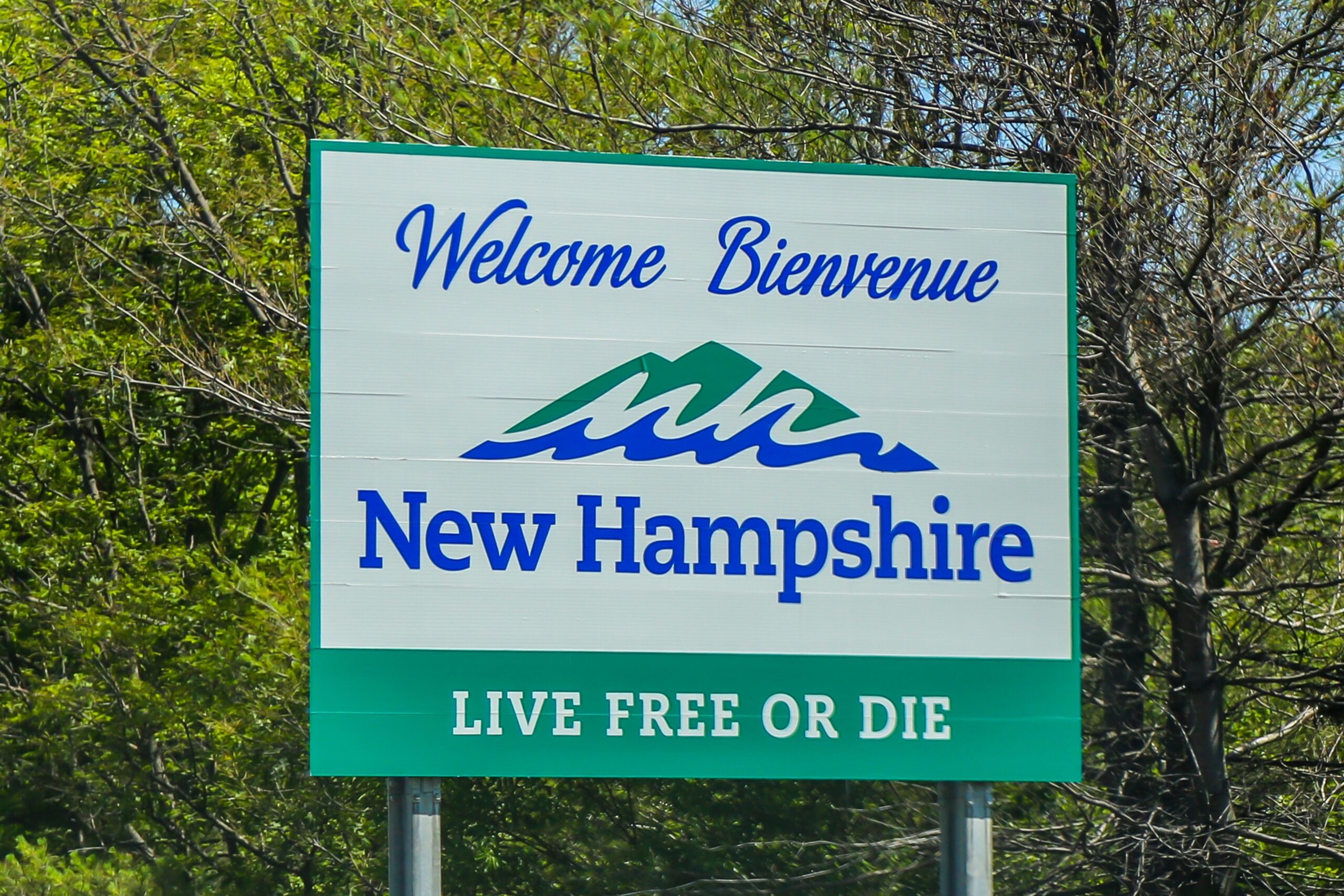
New Hampshire is a state defined less by spectacle than by substance. It does not announce itself loudly, nor does it seek to impress through scale or excess. Instead, it reveals its character slowly, through granite hills, restrained towns, and an enduring commitment to independence that shapes both landscape and mindset. This is a place where freedom is not abstract but practiced—through local governance, personal responsibility, and an abiding respect for land and community.
Geographically modest yet symbolically weighty, New Hampshire sits between powerful neighbors and larger narratives. It borrows cultural influence from Boston, wilderness from the North, and Atlantic perspective from its narrow coastline, yet it remains unmistakably its own. The state’s motto, Live Free or Die, is not a slogan but a lived ethic, visible in town meetings, minimal intrusion of authority, and a civic culture built on participation rather than performance.
Nature here is intimate rather than overwhelming. Forests press close to villages. Mountains rise suddenly from quiet valleys. Lakes and rivers are woven into daily life, shaping work, recreation, and memory. The land is not ornamental—it is functional, productive, and deeply respected.
Historically, New Hampshire has been both industrious and contemplative. Early mills harnessed rivers; farms coaxed sustenance from thin soil; towns nurtured ideas that traveled far beyond state borders. Today, innovation coexists with tradition, and progress is measured against continuity rather than novelty.
To know New Hampshire is to understand restraint as a virtue. Meaning here is earned through attention—through seasons, conversation, and return visits. It is a place that does not demand admiration but rewards commitment.
19. Portsmouth — History at the Water’s Edge
Portsmouth is New Hampshire’s most outward-facing city, shaped by centuries of maritime exchange and Atlantic weather. One of the oldest settlements in New England, it has long served as a gateway—between river and sea, colony and world, past and present. Yet for all its history, Portsmouth remains lively rather than preserved, its heritage woven into daily life instead of frozen behind museum glass.
The Piscataqua River defines the city’s rhythm. Swift, tidal, and powerful, it once carried merchant ships, naval vessels, and the ambitions of a young nation. Portsmouth prospered through shipbuilding and trade, and that legacy endures in its compact waterfront, where working docks coexist with restaurants, galleries, and walkable streets.
Neighborhoods like Strawbery Banke offer a layered view of American life, revealing how generations adapted to changing economies and tastes. Brick Federal houses stand beside modest wooden homes, telling stories of merchants, laborers, and families bound to the sea.
Portsmouth’s cultural life is sophisticated yet grounded. Music venues, theaters, and independent bookstores thrive alongside fisheries and boatyards. The city attracts visitors without surrendering authenticity, maintaining a human scale that encourages walking, conversation, and discovery.
Above all, Portsmouth embodies continuity. It has modernized carefully, honoring its past by integrating it into the present. The ocean remains close, the wind constant, and history an everyday companion rather than a distant memory.
18. The White Mountains — Elevation, Weather, and Endurance
The White Mountains form New Hampshire’s emotional and geographical core, rising abruptly from surrounding lowlands to introduce scale, severity, and reverence. This is not a gentle landscape. It demands respect, attentiveness, and humility from all who enter it.
Mount Washington dominates the range, infamous for some of the most extreme weather on Earth. Winds can reach hurricane force, temperatures plunge without warning, and clouds erase visibility in moments. The mountain has long served as a proving ground—for scientists, hikers, and anyone seeking to measure themselves against natural authority.
Yet the White Mountains are more than a single summit. Valleys, notches, and forests create a complex terrain shaped by glaciers and time. Trails lead through spruce and birch before breaking onto open rock, where views stretch across New England and into Canada. Each ascent is earned, reinforcing a culture of preparation rather than conquest.
Historically, the mountains inspired early conservation efforts and the birth of American tourism. Grand hotels once welcomed city dwellers seeking fresh air and moral restoration. Today, stewardship has replaced spectacle, with preservation guiding access.
The White Mountains teach endurance. They remind visitors that beauty can be severe, that permanence is an illusion, and that nature remains indifferent to ambition. In these peaks, New Hampshire reveals its most uncompromising self.
17. Concord — Civic Life and Quiet Authority
Concord, the capital of New Hampshire, reflects the state’s preference for function over display. It is not grand in scale nor dramatic in appearance, yet it carries authority through steadiness and continuity. Power here is close to daily life, woven into the rhythms of a small city rather than elevated above it.
At the center stands the gold-domed State House, the oldest state capitol in the nation where legislators still meet in their original chambers. Its openness is striking. There are no gates or grand approaches—citizens walk freely across the grounds, reinforcing the state’s enduring belief that government should remain accessible and accountable. Town-meeting traditions echo here, shaping a political culture rooted in participation rather than spectacle.
Beyond politics, Concord is a city of ideas. Writers such as Henry David Thoreau found inspiration along the Merrimack River, whose broad flow continues to shape the city’s sense of time and perspective. Bookstores, libraries, and community spaces foster thoughtful exchange, while neighborhoods maintain a quiet dignity defined by tree-lined streets and historic homes.
Concord balances reflection and responsibility. It governs without flourish, confident that legitimacy is earned through trust. In this measured capital, New Hampshire’s civic values find their clearest expression.
16. Lake Winnipesaukee — Water, Light, and Summer Memory
Lake Winnipesaukee is New Hampshire’s shared summer memory, a landscape where generations return to the same coves, docks, and rhythms. With more than two hundred islands and an endlessly irregular shoreline, the lake resists uniformity. It is a collection of places rather than a single destination.
Mornings often begin in mist, the surface of the water softening the horizon. As the day unfolds, boats trace familiar paths, laughter drifts across coves, and life slows to a seasonal pace. Towns like Meredith, Wolfeboro, and Center Harbor thrive on this rhythm, balancing tourism with deeply rooted local life.
Yet Winnipesaukee is not simply recreational. It is a social anchor, an economic engine, and a cultural inheritance. Stewardship matters here. Water quality, shoreline protection, and responsible access are treated as shared obligations rather than abstract concerns.
What distinguishes Winnipesaukee is continuity. Families pass down camps and traditions. Memories accumulate like layers of light on water. Change comes carefully, guided by an understanding that the lake’s value lies in what it preserves as much as what it offers.
15. Hanover and Dartmouth College — Learning at the Edge of Wilderness
Hanover sits along the Connecticut River, marking New Hampshire’s western boundary and intellectual frontier. Anchored by Dartmouth College, the town blends scholarship with landscape, creating an environment where learning is shaped by proximity to nature.
Dartmouth’s campus balances classical architecture with wooded surroundings, reinforcing a dialogue between inquiry and experience. Outdoor culture is not peripheral here; it is integral. Students hike, ski, and paddle as part of daily life, reflecting the state’s belief that knowledge deepens through engagement with place.
Hanover itself is compact and thoughtful. Bookstores, cafés, and quiet streets support a culture of conversation rather than display. The town draws international perspectives while maintaining intimacy, its rhythms defined by semesters, seasons, and the river’s steady flow.
The college’s influence extends throughout the Upper Valley, shaping research, culture, and civic life. Hanover demonstrates how education can thrive without separating itself from landscape, embodying New Hampshire’s integration of intellect and restraint.
14. Mount Monadnock — Solitude and the Singular Peak
Mount Monadnock rises alone from the southwestern landscape, isolated yet unmistakable. Its form is so distinctive that it gave its name to a geological term describing solitary mountains worldwide, though none carry the same clarity of presence.
Accessible yet demanding, Monadnock is among the most frequently climbed mountains on Earth. Trails lead steadily upward, moving from forest into open stone, where exposure and wind sharpen awareness. The summit offers wide views across New England, earned through effort rather than granted by elevation.
Monadnock has long drawn artists, writers, and philosophers. Its simplicity invites interpretation. It stands as a symbol of self-reliance, persistence, and quiet strength—qualities deeply embedded in New Hampshire’s identity.
In its solitude, Monadnock teaches that significance does not require scale. It endures by standing apart.
13. The Seacoast — Salt Air and Measured Horizons
New Hampshire’s coastline is brief, stretching just eighteen miles, yet it carries a density of character that far exceeds its length. This is not a coast of spectacle or excess, but of endurance and labor, shaped by tide, weather, and restraint. The Atlantic here feels elemental rather than ornamental.
Towns such as Rye, Hampton, and North Hampton balance access with preservation. Rocky headlands alternate with modest beaches where dunes are protected and development remains subdued. Fishing boats still work the harbors, sharing space with recreational craft, reminders that the sea is both livelihood and landscape.
The Seacoast has long been a threshold—between land and ocean, security and risk. Early settlers faced a harsh maritime environment, and that legacy endures in the region’s pragmatic culture. Buildings are sturdy, streets compact, and public access valued. Even in summer, when visitors arrive in numbers, the coast retains a sense of purpose.
Here, the ocean reinforces New Hampshire’s ethic of proportion. Beauty is present, but never indulgent. The horizon remains open, the wind persistent, and the reminder constant: nature is powerful, and humility is essential.
12. The Quiet Lakes — Still Water and Local Knowledge
Beyond Lake Winnipesaukee lies a constellation of smaller lakes—Squam, Newfound, Ossipee, Sunapee—each possessing its own temperament. These waters are quieter, favored by those who value reflection over activity and continuity over novelty.
Surrounded by low mountains and forest, these lakes shape a slower rhythm of life. Mornings are hushed, afternoons unhurried, evenings reflective. Wildlife is abundant. Seasonal residents often become stewards, learning the nuances of water levels, weather, and shoreline ecology.
These lakes have inspired literature and conservation alike. Squam Lake, immortalized through writing and film, exemplifies New Hampshire’s commitment to preservation without exclusion. Access is balanced carefully with protection.
In these still waters, New Hampshire’s deeper values surface: attentiveness, restraint, and respect for shared resources.
11. The North Country — Distance, Silence, and Resilience
The North Country is New Hampshire’s most remote region, extending toward the Canadian border in broad forests, long winters, and small, resilient towns. Here, distance shapes daily life. Roads stretch between settlements. Winters isolate. Self-reliance becomes necessity rather than ideology.
Communities such as Berlin, Littleton, and Colebrook were built on logging and industry, then tested by economic change. Adaptation followed, not through spectacle but persistence. Outdoor recreation, small-scale manufacturing, and community ties sustain the region today.
Nature dominates. Snow arrives early and lingers. Rivers cut through valleys. Moose and black bear are neighbors rather than curiosities. In this environment, humility and preparation matter.
The North Country reflects New Hampshire’s most elemental self—where freedom is paired with responsibility, and endurance defines success.
10. Franconia Notch — Passage, Loss, and Reverence
Franconia Notch is a narrow mountain corridor carved between steep granite walls, guiding travelers through one of New Hampshire’s most powerful landscapes. It is both passage and destination, a place where motion slows in deference to stone.
Once home to the Old Man of the Mountain, the Notch embodies the state’s relationship with impermanence. The collapse of the Old Man in 2003 was mourned deeply—not as the loss of an attraction, but of a shared symbol. Its absence reinforces the lesson that nature remains sovereign.
Cannon Mountain rises sharply above the valley, waterfalls trace cliff faces, and trails lead upward into cloud and wind. Even the highway feels subdued, yielding to the land’s authority.
Franconia Notch invites reverence. It reminds visitors that meaning persists beyond loss, and that landscapes shape identity through presence and change alike.
9. Keene — Culture at a Human Scale
Keene sits in the Monadnock Region as a small city shaped by balance rather than ambition. Its wide central square, framed by brick buildings and mature trees, reflects a civic vision rooted in accessibility and community. This is a place where scale matters, where cultural life flourishes without overwhelming the rhythms of daily existence.
Keene State College plays a vital role in the city’s identity, supporting arts, education, and public dialogue. Theater, music, and visual arts thrive here, sustained by audiences who value participation as much as performance. Seasonal festivals and farmers’ markets turn the central square into a gathering place rather than a showcase.
Beyond the city, rolling hills, farms, and forests keep Keene grounded. Many residents live between town and land, maintaining New Hampshire’s tradition of blended rural and civic life. Trails lead quickly from neighborhoods into open countryside, reinforcing the city’s connection to landscape.
Keene demonstrates how culture can be sustained through care and intention. It offers a model of community where creativity is woven into everyday life, not separated from it.
8. Village Life — Continuity and Responsibility
Village life remains the foundation of New Hampshire’s social structure. Across the state, small town centers—often anchored by a common, church, post office, and general store—serve as the primary arenas of civic life.
Here, governance is personal. Town meetings are not symbolic; they are functional expressions of democracy. Neighbors debate budgets, infrastructure, and education face to face. Decisions carry weight because consequences are shared.
These villages value continuity. Families often remain for generations, sustaining traditions while adapting to change. Schools double as community hubs. Volunteerism fills gaps where bureaucracy would otherwise intrude.
Village life in New Hampshire is not nostalgic—it persists because it works. It reinforces accountability, proximity, and trust, proving that scale can enhance rather than limit civic strength.
7. Industrial New Hampshire — Rivers of Labor and Reinvention
New Hampshire’s rivers once powered an industrial revolution that transformed forests and towns alike. The Merrimack, Contoocook, and Androscoggin fueled textile mills, paper plants, and machine shops, drawing immigrant labor and shaping urban centers.
Cities like Manchester and Nashua grew rapidly, their brick mills symbolizing both opportunity and hardship. Labor movements, social reform, and community identity emerged alongside industrial success.
As manufacturing declined, these cities faced difficult transitions. Rather than erase their past, many repurposed it. Former mills now house businesses, residences, and cultural institutions, anchoring renewal in history.
This adaptive reuse reflects New Hampshire’s pragmatic approach to progress—preserving meaning through function rather than monument.
6. Farming Landscapes — Stone Walls and Stewardship
Agriculture in New Hampshire is defined by persistence. Thin soils, short growing seasons, and rocky terrain demand care rather than conquest. Stone walls trace old boundaries through woods and fields, reminders of labor invested over centuries.
Farms tend to be small and diversified—dairy operations, orchards, vegetable farms, and maple sugaring enterprises that align with seasonal rhythms. Farmers’ markets and local food networks strengthen community bonds and regional resilience.
These landscapes reflect stewardship. Land is valued not for yield alone, but for continuity. Farming here reinforces New Hampshire’s ethic of attention, responsibility, and respect for limits.
5. Seasons — Time as a Governing Force
In New Hampshire, the seasons do not merely pass; they govern. Time here is experienced physically, shaping habits, architecture, labor, and social rhythm. The year unfolds not as a blur but as a sequence of distinct, demanding chapters, each with its own rules and responsibilities.
Autumn arrives first as a spectacle and then as instruction. Forests blaze into reds and golds, drawing visitors from afar, but for residents, fall is a season of preparation. Wood is cut and stacked, harvests gathered, roofs repaired, and homes sealed against the cold ahead. The beauty is undeniable, yet it carries an implicit warning: winter is coming, and readiness matters.
Winter asserts itself with authority. Snow narrows roads, quiets towns, and simplifies daily life. Travel slows. Conversations shorten. Communities adapt through routine and cooperation, checking on neighbors and sharing resources. Isolation becomes reflective rather than lonely, and endurance becomes a shared expectation. Winter teaches patience, restraint, and humility before nature.
Spring arrives hesitantly, bringing mud, runoff, and uncertainty. It is not sentimental. Fields thaw slowly, and rivers swell. Only gradually does renewal take hold. Then summer appears almost suddenly—generous, luminous, and fleeting. Lakes fill with life, town greens host gatherings, and long evenings stretch outward as if borrowed.
These seasonal contrasts shape character. They demand attentiveness and adjustment, discouraging excess and encouraging respect for limits. In New Hampshire, time is not abstract. It is felt, measured, and obeyed.
4. The First-in-the-Nation Primary — Democracy at Eye Level
New Hampshire’s first-in-the-nation presidential primary places the state briefly at the center of national attention, yet the process remains remarkably intimate. Here, democracy unfolds at eye level. Candidates are expected to meet voters face to face—not behind podiums alone, but across diner tables, in town halls, libraries, gyms, and living rooms.
Scale is the defining element. The state is small enough that voters expect access and large enough that their judgment carries national consequence. Questions are specific and unscripted. Residents are informed, skeptical, and unafraid to challenge rhetoric with lived experience. The process tests not just policy positions but temperament, clarity, and authenticity.
The primary reinforces New Hampshire’s civic culture. Participation is not viewed as optional or ceremonial; it is a responsibility. Citizens take seriously their role as early evaluators of leadership, understanding that their scrutiny shapes the broader national conversation. The expectation is not enthusiasm alone, but discernment.
What makes this tradition endure is its alignment with the state’s deeper values: suspicion of concentrated power, insistence on accountability, and belief that democracy functions best when proximity replaces spectacle. The absence of grandeur sharpens focus.
In an era dominated by media saturation and mass rallies, New Hampshire’s approach remains deliberately human. It affirms the idea that leadership should withstand direct encounter—and that citizens, when trusted with responsibility, rise to meet it.
3. Learning Beyond Campuses — Libraries, History, and Curiosity
Education in New Hampshire extends far beyond formal campuses. While respected institutions anchor the state’s academic life, learning here is fundamentally decentralized—woven into libraries, historical societies, lecture halls, and informal community spaces.
Public libraries serve as civic anchors. They are quiet refuges and gathering places, offering access not only to books but to dialogue, research, and shared inquiry. In small towns especially, libraries function as intellectual commons, reinforcing the idea that knowledge belongs to everyone.
Historical societies preserve more than artifacts. They safeguard local memory—town records, family histories, maps, and stories that give texture to place. This emphasis on local history strengthens civic identity and reminds residents that understanding begins close to home.
Education in New Hampshire favors curiosity over credentials. Learning is often self-directed, rooted in lived experience rather than abstraction. Workshops, seasonal lectures, and community discussions sustain a culture of inquiry that is modest but persistent.
This approach reflects the state’s broader values. Knowledge is respected, but authority is questioned. Expertise is welcomed, but independence is prized. The result is an informed citizenry shaped by continuity rather than trend.
In New Hampshire, learning is not confined to youth or institutions. It is a lifelong pursuit, quietly sustained by access, curiosity, and shared responsibility.
2. The Forests — Managed Wilderness and Working Land
New Hampshire is among the most heavily forested states in the nation, yet its woods are neither untouched wilderness nor exhausted resource. They are managed landscapes—working land shaped by generations of stewardship.
Forests here serve multiple purposes. They provide timber, wildlife habitat, recreation, and ecological balance. Logging exists alongside conservation, governed by long-term planning rather than short-term extraction. The goal is continuity, not depletion.
Trails wind through working forests, reinforcing coexistence rather than separation. Hikers, hunters, foresters, and landowners share space under an unspoken agreement of responsibility. Access is often granted by trust rather than regulation, reflecting a culture that assumes care rather than misuse.
These forests shape identity. They frame towns, buffer farms, and absorb seasonal extremes. They teach patience through slow growth and renewal, reminding residents that permanence requires restraint.
The forest ethic mirrors New Hampshire’s broader philosophy: use without excess, protection without exclusion, and stewardship over exploitation. The land is not static—it is tended, renewed, and respected.
1. Faith, Modesty, and Moral Independence
Religious life in New Hampshire is defined by understatement. Faith exists, but it rarely seeks dominance. Churches serve communities quietly, emphasizing service, conscience, and moral responsibility over spectacle or authority.
Congregations tend to be small and locally rooted. They function as support networks—organizing aid, preserving tradition, and offering continuity rather than prescription. Belief is personal, and expression is restrained.
This modest approach aligns with the state’s cultural temperament. Moral independence is valued. Individuals are expected to govern themselves ethically, without reliance on institutional enforcement. Faith supports civic life but does not overshadow it.
The result is a religious landscape marked by tolerance and privacy. Diversity exists without friction, and belief coexists comfortably with skepticism. In New Hampshire, conviction does not require proclamation.